Tag: Artificial intelligence

  • Samsung steps up Microsoft cooperation

    Samsung steps up Microsoft cooperation

    Samsung Electronics Vice Chairman Lee Jae-yong met with Microsoft CEO Satya Nadella in Seoul Wednesday and vowed to increase cooperation with the U.S. company in artificial intelligence and cloud computing. Nadella is visiting Seoul this week for the first time in four years and delivered a keynote speech at Microsoft Korea’s “Future Now” artificial intelligence (AI) conference Wednesday.

    The two met in the morning before the conference and agreed to step up partnership in artificial intelligence, cloud computing and big data, said a Samsung spokesman.

    Microsoft currently uses Samsung’s semiconductors for cloud servers, and Samsung could sell more of its chips to the American partner in the near future.

    Media reports in Seoul say, as a result of the meeting, some Samsung devices, including smartphones, will be embedded with Microsoft cloud services in the future. Samsung already uses Azure, a Microsoft cloud computing platform, for its system air conditioners to collect data on the surrounding environment, including temperature and humidity, so the machines run more efficiently.

    The two executives might meet on a regular basis and exchange ideas on tech development, according to reports. The two leaders met in Seoul four years earlier.

    During his keynote speech at the conference at a hotel in western Seoul, Nadella mentioned Samsung as one of several Korean companies that had developed offerings based on Microsoft’s Azure platform.

    “Take the example of Samsung Electronics’ IoT [Internet of Things]-based air conditioner that runs on Azure. By taking into account environmental factors, like the number of people, the smart air conditioner can save up to 25 percent in energy and 30 percent in costs,” he said.

    Other sections of the Microsoft CEO’s speech were centered around the need to use artificial intelligence responsibly.

    “We need to ask ourselves not only what computers can do, but what computers should do,” he said, addressing an audience of over 1,500 programmers and businesspeople.

    He also spoke of the necessity to find ways to develop AI for “people who don’t have the ability to participate” in the digital economy.

    As an example, Nadella shared the case of Korea University Prof. Lee Seong-whan using Microsoft’s deep learning Cognitive Toolkit. Lee, who heads the brain and cognitive engineering department, analyzes brain signals in the development of computer systems that amputees can use to move prosthetic arms or robotic arms.

    Earlier on Tuesday, Samsung hosted “Tech Forum 2018,” an event for developers in Silicon Valley. Around 150 developers and designers were invited to the Samsung Research America center there.

    Kim Hyun-suk, president and CEO of Samsung’s consumer electronics division, said in opening remarks that the company was developing many “unfamiliar acquaintances,” which he believes will shape Samsung’s future innovation.

    “Samsung encounters a vast number of customers, rapidly changing technologies and new staff from various backgrounds,” he said. “Our strength is in selling more than 500 million consumer devices a year. We will expand contact points with our customers to reach into the smallest corners of their living spaces and bring innovation to their lifestyles in general.”

    Kim added that in terms of working with various employees, the company will continue to develop a corporate culture where global staff can cooperate and freely suggest ideas. Samsung also introduced the company’s developments in future technologies and held open discussions.

  • LG, E-mart develops smart-cart robot

    LG, E-mart develops smart-cart robot

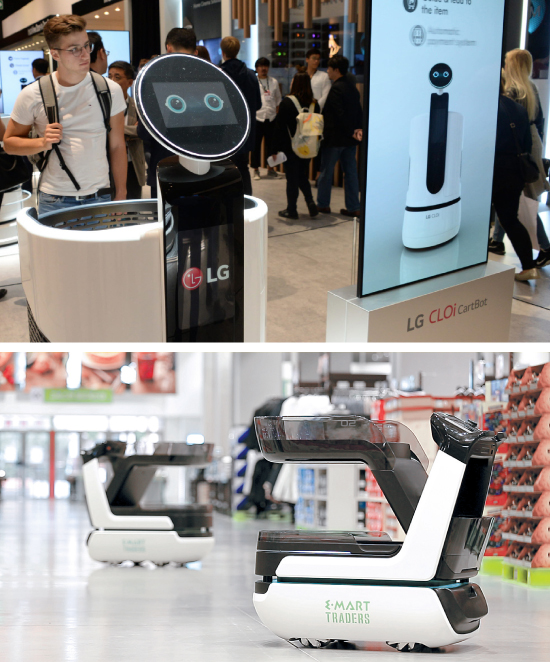
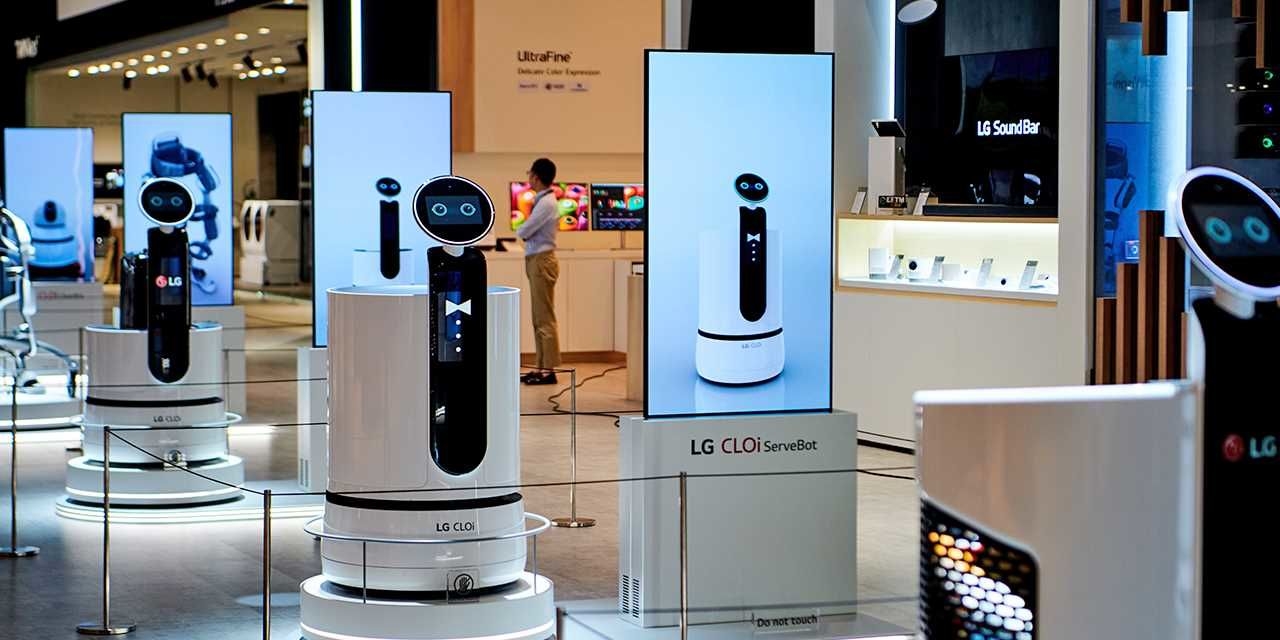
    LG Electronics has signed an agreement with E-mart to develop a new type of service robot that can assist shoppers at its South Korean supermarkets. Under the agreement, the two companies will develop what they call a smart-cart robot that can automatically identify obstacles and follow shoppers as they walk through aisles. LG said the new robot will free visitors from the hassle of pushing heavy carts by themselves.

    The South Korean tech giant said the robot will be developed by its research lab, which has been releasing various robots under the CLOi brand.

    So far, LG has released eight different products under the brand, which are suited for different tasks, including guiding, cleaning and even mowing lawns. The company unveiled the CLOi SuitBot, which can help workers lift and move heavy objects easier as well.

    LG said it has been making efforts to bolster its robot business by joining forces with different clients, including airports, bakeries and retail shops.

    CLOi stands for clever, clear, close operating intelligence, LG said.

    The company has been making investments in robotic firms, including Robotis, AI startup Acryl and US-based robot maker Bossa Nova Robotics.

  • GreyOrange installs advanced Sorters across Asia from Saudi Arabia to the Philippines ahead of world’s busiest shopping days

    GreyOrange installs advanced Sorters across Asia from Saudi Arabia to the Philippines ahead of world’s busiest shopping days

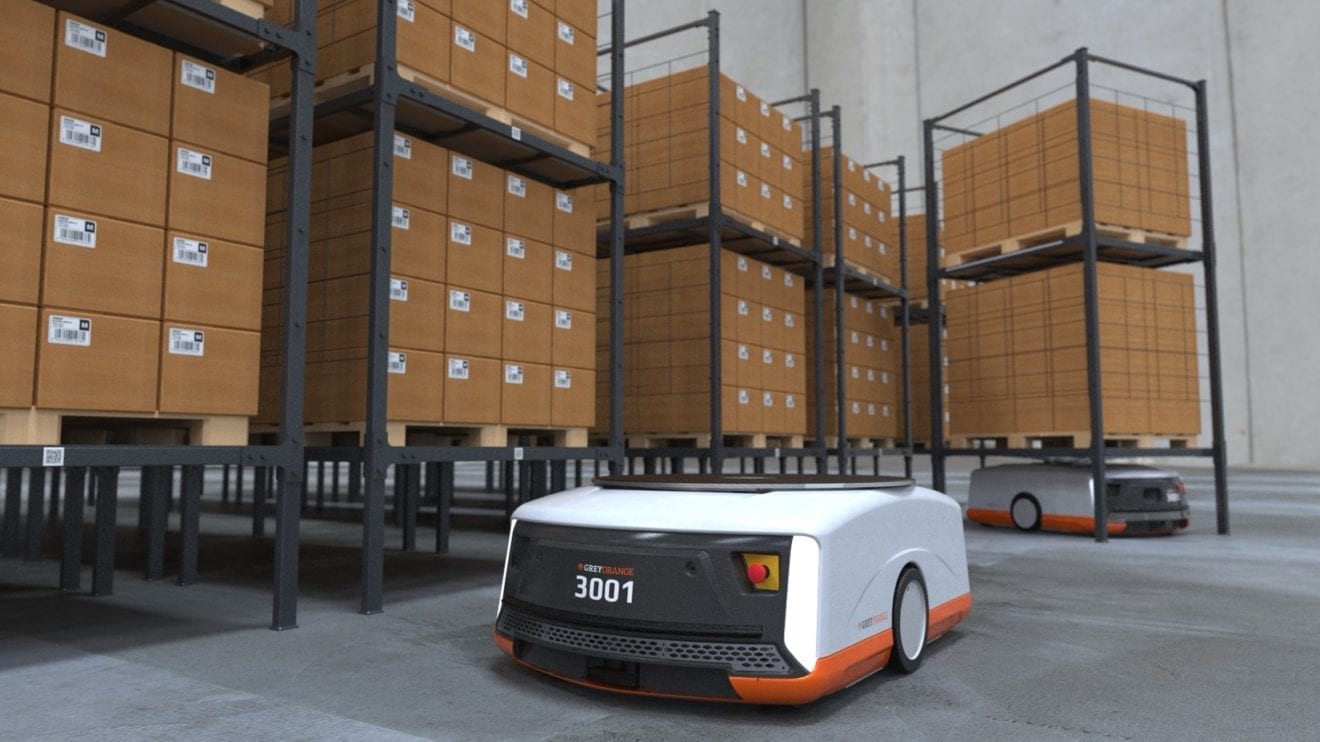
    Robotics and warehouse automation company GreyOrange announced plans for the installation of its newest Linear Sorters in several locations across Asia; in Saudi Arabia, India and the Philippines. Equipped with advanced software, these high-speed Linear Sorters will deliver the flexibility and scalability required by retail, FMCG, e-commerce and third-party logistics(3PL) operators to manage high volumes for e-commerce and omnichannel distribution.

    These companies anticipate and have planned to cope with the high volumes over the next months for the ongoing festive season around Diwali and the world’s biggest ecommerce event – Singles Day on 11 November. Logistics operators across Asia are expecting that the surge in volumes would follow through Black Friday and Cyber Monday sales at the end of November, and through the Christmas and year-end shopping season.

    In Riyadh, a leading express courier company in the Kingdom of Saudi Arabia has acquired the latest sortation system from GreyOrangeTM for its customised configurations; as such automation contributes immensely in improving productivity in managing parcels for distribution across the Middle East.

    One of the world’s leading FMCG companies in India, has deployed a high-end GreyOrange sortation system at its distribution center near Mumbai. The company specialises in Food, Home Care, Personal Care and Refreshment products and numerous brands. The Sorter will handle some of its categories including leading household brands. It will result in faster fulfilment and reduce turnaround times.

    Nalin Advani, CEO – Asia-Pacific, GreyOrange said, “The growth in e-commerce across Asia has taken many by surprise. With annual growth rates of 12-18% in many markets, e-commerce and third party logistics operations need Sorters that can deliver the high performance they want in terms of throughput and the versatility of a scalable and responsive supply chain.”

    Another unique sortation system has been installed in a large distribution center near Mumbai. It is mainly used as an Order Consolidation Item Sorter for fashion store retail distribution to over 1000 stores in India. This single Sorter performs double duty sorting for both its inbound load as well as consolidating the outbound load.

    In the Philippines, one of the country’s fastest growing logistics company that provides innovative solutions for e-commerce payments and deliveries, has installed a GreyOrange sortation system to handle its fast-growing volume of parcels. At this central facility in Manila, the sorter will auto-sort the parcels for 480 destinations and hubs across the Philippines.

  • Unstaffed shop to open in Tokyo on trial basis

    Unstaffed shop to open in Tokyo on trial basis

    A Japanese railway network operator is testing an unmanned store in a Tokyo railway station. The store will use artificial intelligence in place of cashiers to transact with customers in a trial expected to last about two months. The venture was opened by East Japan Railway, otherwise known as JR East, this week at the Akabane Station in Tokyo’s north.

    It has some 80 cameras mounted in the ceiling and on shelves recording customer behaviour before the AI software detects which items customers select.

    Customers pay using stored value cards issue by railway companies for transit.

    If the concept proves a success, JR East says it will begin rolling the technology out in stations across the city.

    The store is loosely modelled on unmanned stores opened in Mainland China, along with the Amazon Go concept in the US.

  • TabSquare raises S$10 Million to fuel AI-powered restaurant solutions

    TabSquare raises S$10 Million to fuel AI-powered restaurant solutions

    TabSquare, a leading provider of AI-Powered Smart In-Restaurant solutions, today announced it has raised S$10 million (US$7.2 million) in Series B financing led by Kakaku.com.

    Tabsquare’s platform has three critical elements: consumers, restaurants and F&B brands; now strengthened with the latest funding round.

    Founded in 2012, TabSquare has rapidly grown to be the leading in-restaurant technology provider in Singapore.

    The company’s main products are the SmartTab eMenu and the SmartKiosk – applicable to both sit-down and counter-service restaurants.

    The company’s products use AI to make personalised menu recommendations and improve customers’ ability to order, pay and deliver feedback.

    Chirag Tejuja, Co-Founder said, “TabSquare’s fast-paced growth proves there is a strong
    demand for innovative and effective technology that can solve issues commonly faced by restaurants in the region such as low restaurant profitability, high staffing costs and language barriers.”

    Through 6000 devices that serve more than 12 million diners and 6 million orders annually, TabSquare’s AI-Powered solutions leverage consumer data and learning algorithms to better predict demand, personalize offerings and improve the overall diner experience which aims at creating greater efficiencies and profits for restaurants.

  • SK Telecom puts its smart speakers in Paradise

    SK Telecom puts its smart speakers in Paradise

    SK Telecom will develop artificial intelligence-based (AI) hospitality services for the Paradise Hotel Busan, the mobile carrier said Wednesday.

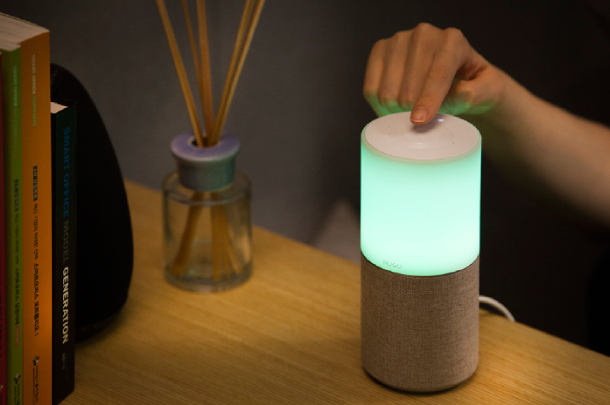
    The company hopes to use its AI technology to improve various hospitality services offered at the hotel, located near Busan’s famed Haeundae Beach. It will start by placing the latest version of its voice-powered smart speaker Nugu, dubbed the Nugu Candle, in about 100 hotel rooms this year.

    The Nugu Candle, released in July, offers more mood-lighting options than its predecessors in 17 different colors from its own light-emitting diodes (LED).

    The device can answer customers’ verbal inquiries about hotel facilities and tourist information about surrounding areas.

    The device will also be used in restaurants and wine bars inside the hotel. The smart speaker is not capable of controlling lamps in the room or curtains yet, a spokesperson from the mobile carrier said.

    But the partnership could expand to offering more AI-based hospitality services in the future, and the device will be given software upgrades to support new features.

    “We will keep striving to make sure AI becomes a natural part of our customers’ lives,” said Park Myung-soon, head of SK Telecom’s AI business unit.

    It’s not the first time Nugu has been placed in hotels. An earlier version of Nugu is being used at the Walkerhill Hotel in eastern Seoul. The company placed Nugu in all 250 rooms at the Walkerhill about two weeks ago, according to the company.

    That device can control some room settings, like temperature, through voice commands.

    KT is the mobile carrier’s largest competitor in putting AI technology into hotels. KT introduced a hotel version of its GiGA Genie smart speaker in July.

    The hotel version has a 10.8-inch display and it understands English, unlike the original GiGA Genie for homes. It can control lighting, room temperature, televisions and order things from the front desk on voice commands. The hotel version is currently being used in the Novotel Ambassador Hotel & Residence in Dongdaemun and L’escape Hotel in central Seoul.

    Kim Chae-hee, senior vice president of KT’s AI business unit, at a press event held in July said KT will continue to target hotels as customers increasingly look for services that don’t require them to interact with hotel staff face to face.

  • Vietnamese firms should see Industry 4.0 as a business opportunity: VCCI

    Vietnamese firms should see Industry 4.0 as a business opportunity: VCCI

    The Vietnam Chamber of Commerce and Industry has high hopes that Industry 4.0 will open more doors and opportunities for Vietnamese companies.

    On September 29, the chamber (VCCI) partnered with Vietnam Solomon Technology Company Ltd., to hold a conference in Hanoi, to heighten awareness among local companies about the inevitable transformation to Industry 4.0.

    VCCI deputy chairman Hoang Quang Phong said that finding effective ways to run businesses should be an ongoing discussion for both business owners and regulators in Vietnam.

    He said the fourth industrial revolution will have strong impacts on many industries including manufacturing, automation, transportation, finance, education, healthcare and agriculture.

    Phong believes that artificial intelligence and other technologies will provide a platform for businesses to improve productivity, innovate new products and services, reduce raw material consumption and costs to meet consumer demands.

    New technologies for automation and artificial intelligence were introduced at the conference for businesses to gain an overview of an innovative, sustainable industry in the future.

    For instance, Vietnam, Solomon introduced AccuPick, a technology that can identify complex shapes of an object with high precision in a very short amount of time.

    Solomon also introduced the Delco Eco Farm, and other artificial intelligence based business ideas at the event.The company said AccuPick can be used in automotive, mechanics, food and other industries to boost productivity.

  • Artificial intelligence to hit Vietnam hard

    Artificial intelligence to hit Vietnam hard

    Vietnam’s among top 3 ASEAN countries that will face AI-related employment problems, a new study has found.

    The study was carried out Cisco, a multinational technology conglomeratem and Oxford Economics, a firm that specializes in global forecasting and qualitative analysis.

    Results of the study were revealed at the World Economic Forum on ASEAN 2018 in Hanoi on Wednesday.

    Cisco ASEAN regional director Naveen Menon said the study looked into 430 jobs in 21 different industries across six different countries (Vietnam, Singapore, Indonesia, Malaysia, Thailand and the Philippines) to project potential impacts over the next decade.

    It found that 28 million workers out of a 630 million workforce in the six countries would be affected by AI.

    Singapore would be the worst hit with 21 percent, followed by Vietnam (13.8 percent), the Philippines (10 percent), Indonesia (8 percent), Malaysia (7.4 percent), and Thailand (2 percent).

    Around 6.6 million out of the 28 million workers are likely to become “redundant” in the next 10 years, Menon said, adding that these people would have to switch jobs, learn new skills, or look for jobs in a different country.

    “For instance, manpower in the Philippines would have to relocate to Vietnam since some particular jobs are no longer needed there,” Menon said.

    Luong Thi Le Thuy, CEO of Cisco Vietnam, acknowledged the potential impacts and said that industries are looking to apply technology to overcome the challenges and grab new opportunities.

    Vietnam has been an attractive destination for foreign investors because of its low labor costs, but this advantage could change in the coming five to 10 years since the majority of Vietnamese workers are still unskilled, she said.

    Cisco recommends that countries and businesses provide opportunities for employees to be re-trained and prepare for “change-ready skills”, she added.

  • Flipkart acquires AI-led startup to get next 200 million online shoppers

    Flipkart acquires AI-led startup to get next 200 million online shoppers

    In a move aimed at getting the next 200 million online shoppers to its platform, e-commerce major Flipkart has acquired Liv.ai, an artificial intelligence-led speech recognition startup. The company, however, did not disclose the deal amount.

    Post the acquisition, Liv.ai will become a Flipkart centre of excellence for voice solutions, and help accelerate an end-to-end conversational shopping experience for its users, Flipkart said in a statement.

    Founded in 2015, Liv.ai is the first Indian company to build speech to text application programming interfaces (APIs) that enable speech to text conversion in 10 Indian languages including Hindi, Bengali, Punjabi, Marathi, Gujarati, Kannada, Tamil, Telugu and Malayalam.

    US retail giant Walmart has recently completed its US $16 billion transaction to buy 77 percent stake in Flipkart.

    “The next wave of growth of internet users is coming from tier II+ cities and 70 percent of these current internet users are native/vernacular language speakers and this proportion is only increasing,” Flipkart CEO Kalyan Krishnamurthy said.

    Given the complexities in typing on vernacular keyboards, voice will become a preferred interface for new shoppers, he added. He explained that building a voice interface is complex, especially in Indian context given multiple languages and accents.

    The team at Liv.ai has been able to solve this through multiple technological innovations including deep neural net-based methods and this expertise is a big capability add-on for Flipkart, he said.

    “Ultimately, we want to give our customers a conversational e-commerce experience and believe that with the voice interface the opportunities are endless including discovery, search, engagement, transactions etc,” Krishnamurthy said.

    Flipkart said this will help build voice and speech capabilities to help get next 200 million online shoppers, who will prefer native language interaction on the web. As per industry studies, Hindi internet user base is likely to outgrow English user base by 2021 and along with Marathi and Bengali users, will drive the volume growth.

    Liv.ai co-founders Subodh Kumar, Kishore Mundra and Sanjeev Kumar, along with the entire Liv.ai team will join Flipkart as a part of the deal.

    The team under the leadership of Ravish Sinha, Vice President Flipkart, will act as a centre of excellence to drive further developing the voice solutions, integration with Flipkart app and developing use cases for various categories.

  • Channeling Artificial Intelligence in beauty

    Channeling Artificial Intelligence in beauty

    Since time immemorial women have been using various aids to enhance their beauty. Between the ancient times and the advancement of scientific techniques, we have seen the phenomenal growth of the beauty and cosmetics business. We have seen the modernisation of beauty treatments from ancient Egypt to the present day. We have also seen and experienced the heights of product innovations, using research and development of cosmetic techniques. New ingredients are being researched and used and then promoted as the next best beauty discovery. Even ingredients from ancient texts are being combined with scientific techniques to formulate beauty products. Each product claims to be better than the previous one.

    We have also been through basic customised beauty care, formulating products for different skin and hair types. Even here, there is a kind of generalisation and the theory of ‘different skin types’ does not take into account the many differences there are between one individual and the other. Through these years, branding has become important. The customer starts believing that using a certain branded product will make her look like the brand’s ambassador. Actually, the product she uses has not really taken into account her personal characteristics and features. But, Artificial Intelligence is changing all of this.

    What is Artificial Intelligence? Actually intelligence itself is difficult to define, so one can imagine how complex the concept of Artificial Intelligence must be! In fact, the definition itself has undergone changes, since the developments have been so rapid. The basic and simple definition refers to ‘machine that imitate human behaviour’. However, this is too simple a definition, because a machine maybe made in a way that it imitates human behaviour, but can it imitate human intelligence? Experts say that computer programmes can be made to imitate human behaviour, but the programme must be such that it ‘must be able to do many different things in order to be called intelligent’.

    As far as Beauty is concerned, programming has helped to prepare a database that can take many individual characteristics into account, so that it is possible to manufacture a product that is specifically meant for an individual, rather than conforming to broader specifications of ‘skin types’. Advances in technology can help to further machine learning with Artificial Intelligence, so that it becomes possible to find a custom made product for each individual.

    When I started my first herbal salon, more than four decades ago, I followed the principle of customised beauty care, at the client card level. The details of the individual client would be noted down in the Client Card. Apart from the basic, details of allergies, history and past treatments would also be noted down. In a way, we were preparing a data base. But, now with computer programming, it is possible to create an immense data base, with more detail. The customer herself can refer to the virtual card and refer to it while searching for a custom based product.

    There are beauty brands abroad, who are adopting Artificial Intelligence to create personalised products that are specifically tailored for customers. The ‘search’ for products will also have to be detailed and specific, so that the customer can make the connection among the different categories of products, ingredients, the different key words in order to select the best suited product. Most online retailing outlets do have ‘chats’ where the customer can be helped to find the products best suited. However, machines will have to be programmed to take many other distinctions into account, like geographical location, climate, skin colour, ethnic background, and so on.

    With the help of Artificial Intelligence, the customer may be able to find a skin profile that is totally personalised and unique, so much so that it may not fit any other person. If such detailed data is taken into account by product developers, it maybe possible to make similar products, with or without a particular ingredient, which is suited to one, but not to the other. In fact, one can consider including the medical aspect to find solutions for skin problems. Medical professionals or pharmacists may also be involved to work out the different aspects of the programming.

    It seems the possibilities are limitless with further development of technology. But, I still feel that at some point, the human factor must come in. For instance, only a human being can say whether a particular product feels good or not, whether it really does all that it promises to do. We cannot rely totally on machines and Artificial Intelligence.

  • Hyundai Mobis finds a job for AI

    Hyundai Mobis finds a job for AI

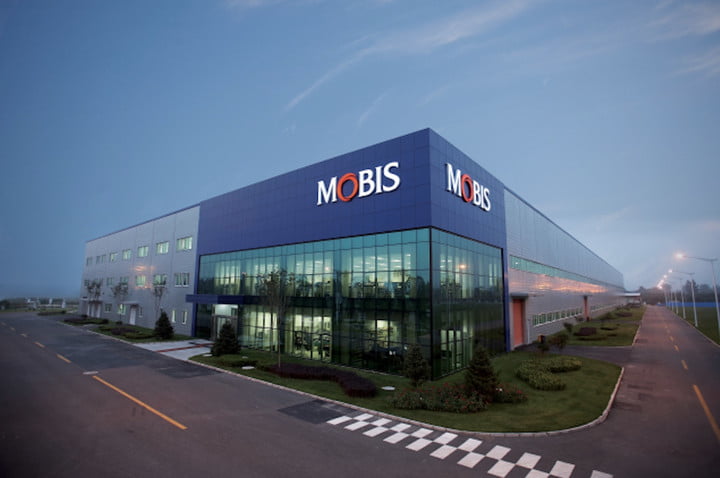
    Auto parts maker Hyundai Mobis announced Sunday that it has developed artificial intelligence-based software and a chatbot equipped with a deep learning algorithm to speed up its research in smart car technology.

    The artificial intelligence-based software is called Maist, short for Mobis Artificial Intelligence Software Testing, and has been co-developed by a research team at the Korea Advanced Institute of Science & Technology led by Professor Kim Moon-zoo.

    Maist is designed to test different software that is to be installed in cars. According to Hyundai Mobis, installing Maist will double the efficiency of the software development process.

    “About 50-70 percent of the testing process will be done by Maist from now on, allowing researchers to engage in more creative works,” an official at Hyundai Mobis said.

    The chatbot is called Maibot, short for Mobis AI Robot, and is able to search through the lab’s cloud, home to more than 200,000 research cases, to find material that a user is looking for. The algorithm will allow Maibot to become more advanced, Hyundai Mobis said.

  • How AI affect online grocery shopping experience

    How AI affect online grocery shopping experience

    AI will soon revolutionise the online grocery shopping experience, according to research released today ahead of next month’s Consumer Goods Forum Global Summit in Singapore.

    The research, compiled by IGD, is based on a survey of 223 senior industry members across 42 different markets and a series of in-depth interviews. It predicts digital transformation will reshape online food and grocery retailing. In China, already the world’s largest online shopping market, online grocery sales will grow by 286 per cent within four years and account for 11.1 per cent of the nation’s total grocery spending.

    The online store of the future will contain five key features:

    Personal micro stores

    “Personal micro stores” will offer individualised and online-exclusive products as well as personalised promotions, recommendations, advertising and loyalty schemes. More than two-thirds of respondents (69 per cent) believe some retailers will apply personalised pricing and promotions in future. An additional 77 per cent think almost all digital communication to consumers by retailers will be personal.

    “AI will help to unlock personalisation,” explains Simon Mayhew, online retail insight manager at IGD. “The store’s layout will be dynamic and able to predict the customer’s reason for shopping. So, if you need a meal for tonight, your homepage will display only the relevant solutions. When generally browsing, you will only see the products and pack sizes likely to meet your needs. Many products will only be buyable online where there is no constraint on shelf space, and in high-value categories, there will be customisable products, so you can create your own ideal shampoo or cereal.”

    Smart personal assistants

    Tomorrow’s online grocery stores will act as a smart personal assistant, connecting with various devices, preventing shoppers from running out of products and supporting their lifestyle goals. Nearly two thirds (60 per cent) of the experts surveyed predict that smart devices automatically re-ordering products will become a firmly established way of shopping for many people. The shopping experience will also be more inspirational, through personalised planners and sophisticated digital assistants like chatbots. Seventy-one per cent of respondents expect some retailers to provide a service to offer personalised dietary guidance.

    “Smarter devices will make shopping simpler and more inspiring,” says Mayhew. “The online store will help stop you running out of products. Shoppers will subscribe to have their favourite products delivered regularly and AI will predict when you may run out and make or suggest a reorder. Household devices, such as washing machines, will connect to your store and reorder when necessary. This will lock in customer loyalty.

    “The online store will offer more than just groceries, it will also help around the house. With populations urbanising and tending to live in smaller properties, businesses will offer services that prevent the need for space-hungry appliances, such as home cleaning and laundry.”

    Faster and more efficient

    Tomorrow’s online grocery store will be more efficient for shoppers, making it easier and quicker to order products. Login and payment will be available through facial, voice or touch recognition technology. Shoppers will incur less waste, with a greater choice of pack sizes and meal planners to help manage quantities and advise on using leftovers. A better fulfilment service will be on offer with more deliveries, on time and in full and products delivered at the right quality and freshness.

    “For retailers and manufacturers, the online store of the future provides both opportunities and challenges,” says Mayhew. “Data from the online store will guide product development. Retailers will see gaps in their ranges through unfulfilled search requests and have a better understanding of product quality through ratings, reviews and feedback to chatbots.

    “Fulfilment will benefit from robotics and supply chain forecasting will be more accurate. This will mean online pickers have fresher products to select, helping overcome one of the biggest barriers to shopping online. Unattended deliveries to homes, cars, and even ‘straight to the fridge’, will grow in popularity.

    “Improvements in service will reduce the number of returns and make deliveries quicker. We will see greater collaboration in the supply chain, including manufacturers pooling resources to sell directly to consumers. However, there will also be new challenges and potential inefficiencies. Shoppers will expect faster deliveries, and this means smaller, more frequent orders.”

    Frictionless experience

    Tomorrow’s online grocery store will deliver a frictionless combined offline and online shopping experience for consumers. People will switch seamlessly from shopping online and instore with data cross-referenced between the two. This will help bring more personalisation to the physical store and help shoppers find their favourite products quickly and discover new ones. This is an opportunity that many companies need to work on with over half (53 per cent) of survey respondents saying they haven’t or have only just started to integrate their online and offline teams.

    “Before visiting a physical store, you will be able to look online to check in-store, real-time availability, access product information, get product usage ideas and read reviews”, says Mayhew. “When you arrive at the physical store you will then benefit from personalised offers and recommendations. An online app will help you find products and pay for your shopping without cash.”

    Invisible stores

    Tomorrow’s stores will – at times – be invisible, with shoppers buying products from shoppable digital content such as videos, photos and social media. In the future, people can be shopping at any time. There will be no limits to when you can be shopping. China has been leading the merging of media, entertainment and shopping, and Europe and North America will follow.

    “You won’t even need to visit your online store to buy products,” says Mayhew. “Alongside voice ordering, the majority of digital content you see will be shoppable. You could be watching a video or see a still image and just click on it to buy the product.”

    Danger in downplaying

    IGD’s team says there are three primary reasons why no grocery retailer or supplier can afford to downplay online retail:

    • Across most of the world, online is already a fast-growing channel.
    • Online and offline are merging, with an online store vital to complement physical stores.
    • The digital world evolves faster than the physical one and online stores will become increasingly compelling.

    The research house says tomorrow’s shoppers will expect more choice, convenience, inspiration, personalisation and transparency and online stores will play an increasing part in meeting these needs.

    “Grocery retail is seeing an unprecedented amount of change, driven by changing shopper expectations and the ability to meet these using transformative technologies,” says Joanne Denney-Finch, IGD’s CEO. “This offers great opportunities for companies of all sizes. The winners will put the needs of their shoppers first, be prepared to act decisively, maintain the highest everyday standards and exhibit tremendous agility.”

    The report, free to download from IGD, will be presented in detail at the Consumer Goods Forum Global Summit from June 12-15.

    Peter Freedman, the forum’s MD, says the IGD research report sets out a clear, consumer-centric vision of tomorrow’s online shopping experience.

    “It gives us all something to aim towards and it ties nicely to the theme of this year’s Global Summit – Consumer Centricity in a Data-Driven World.

    “And it highlights the importance of the CGF’s positive change agenda – such as using new technologies to deliver accurate product information on the digital shelf, designing out product and packaging waste, and retailer-manufacturer collaboration for growth.”
  • Alibaba demonstrates smart ordering in cafe and restaurants using voice AI

    Alibaba demonstrates smart ordering in cafe and restaurants using voice AI

    Alibaba Machine Intelligence Technologies has unveiled an intelligent speech interaction technology aimed at “smart ordering” in cafes and restaurants. The new technology lets buyers order their food item or coffee by speaking to a smart ordering machine.

    The Alibaba DAMO Academy unit, which focuses on fundamental AI research, said the machine will understand the customer order requests and display the order onscreen in a split second.

    Buyers can modify their orders as many times as they want, and the machine is expected to catch all the changes and update immediately. For example, a customer might say: “I want to order two large cups of cappuccino. Oh, please make them with less sugar and decaf. To go. And sorry. That should be three cups of cappuccino, two large and one small.” The smart ordering machine will then display the full order as two large cups and one small cup of decaf cappuccino, all with less sugar than usual and note that it’s for takeout.


    Smart ordering is possible through the team’s latest research in spoken language understanding (SLU), a field that involves both speech processing and natural language processing. First, the team develops a multi-modal speech interaction solution that can capture both voice and visual features, taking into account such things as the speaker’s pace, pauses between words, pronunciation, breaths and facial expression. Next, the team builds a reinforcement-learning model that allows for revisions and intent detection. All are important in the SLU field, making it possible to apply the latest SLU technology into commercial use.

    The solution is currently only for Chinese-speaking customers. The smart ordering machine is expected to roll out to the market in the next few months, and the technology solution will be available on Alibaba Cloud to benefit small and medium-size enterprises.

    Zhijie Yan, Head of Intelligent Speech Interaction at Alibaba Machine Intelligence Technologies said, “Our multi-modal speech interaction solution, underpinned by our insights in spoken language understanding, can be used in different scenarios including food and beverage ordering, customer service, voice commands for home appliances and in smart cars, and voice response to inquiries in shopping malls or airports.” “With the smart ordering machine as a perfect example, we believe the solution would greatly enhance the customer experience and make running a business more efficient,” added Yan.

    In December last year, Alibaba introduced far-field voice-recognition technology to ticketing kiosks in Shanghai metro stations, allowing passengers to use their voices to tell the kiosks their destination, and the machines will recommend the best route.

  • Citi rolls out Facebook Messenger bot in Singapore

    Citi rolls out Facebook Messenger bot in Singapore

    Citi has launched its first natural language chatbot for Facebook Messenger in Singapore ahead of a wider roll out around the world.

    The bot uses natural language processing to communicate with customers in an intuitive way, addressing their everyday questions about things like real-time account and transaction information.

    Citi says that it has been piloting the bot with 600 customers and employees to refine the service, which also covers credit card bill summaries, rewards and points balances and frequently asked questions.

    The bank has previously said that it plans a second phase to introduce more features such as card activation, ability to lock and unlock credit cards and transaction alerts for cards among others.

    “Facebook Messenger is an exciting new way to access Citi and will greatly enhance our overall customer experience’” says Anand Selva, head, Asia Pacific consumer banking, Citi.

  • JD.com launches new accelerator to develop AI and blockchain technologies

    JD.com launches new accelerator to develop AI and blockchain technologies

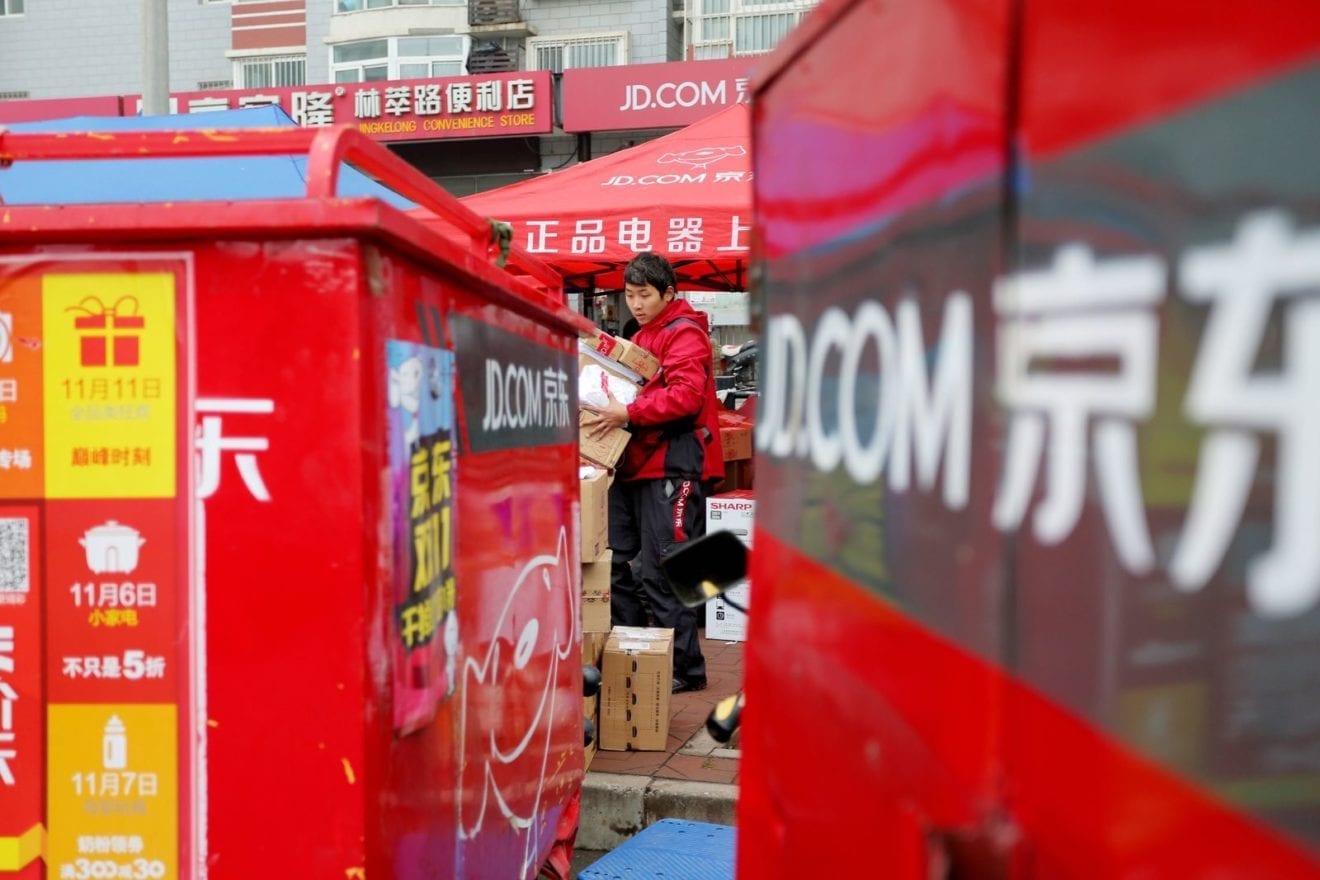
    JD.com, one of China’s largest e-commerce companies, has launched a new accelerator program called AI Catapult that focuses on blockchain and artificial intelligence startups.

    Based in Beijing, AI Catapult will start with an inaugural roster of companies that include Bluzelle, a blockchain startup based in Singapore providing database services, Bankorus, a leading Chinese robo-advisory provider, CanYa, an Australian cryptocurrency startup, Nuggets, a London-based e-commerce payments and ID platform built on blockchain technology, Republic Protocol, an open source decentralized dark pool exchange, and Devery, a blockchain-powered product verification protocol.

    JD.com said the purpose of the program is to partner with innovation startups to build new businesses and create real-world applications of their technologies at scale.

    Uri Ferruccio, the director of strategy and investment for JD.com’s AI Platform and Research Division, said AI Catapult “will support JD.com as it explores how AI can improve the scalability, security, privacy and efficiency of blockchain, and enable novel and improved applications in areas such as distributed AI.”

    Bowen Zhou, vice president of JD.com’s AI Platform and Research Division, added, “We are excited to work with some of the world’s most innovative startups to explore ways we can scale these cutting edge technologies for the future of retail and other industries, as well.”

    The program will begin in March and will provide selected startups with the opportunity to cooperate with business units throughout JD.com’s retail business and implement their technologies.

    The firm also plans to invest in the growth of the AI and blockchain ecosystem through future commercial, strategic and research partnerships.

    JD.com already uses blockchain technology in its supply chain to track products and AI to control its logistics drones and automated package sorting centers. The firm joined the Blockchain in Transport Alliance earlier this month to explore the use of blockchain for global freight and logistics. It is also working with Walmart, IBM and Tsinghua University National Engineering Laboratory for E-Commerce Technologies on blockchain applications for food tracking, traceability and safety in China.

    JD.com has over 266 million customers and recorded 658.2 billion RMB, or about US$100 billion, in gross merchandise value in 2016.