Tag: asia

  • Eslite to open in Japan with partner

    Eslite to open in Japan with partner

    Taiwanese bookstore chain Eslite is planning to expand into Japan. The prominent bookstore business is using the move to build its international profile, and has announced its plans as amounting to a “new starting point for cross-culture ventures”. Eslite’s Japanese partner has yet to be named.

    The firm’s long-term plan is to expand into Southeast Asia, and it has been contacted by multiple potential partners, according to chairperson Mercy Wu. It is currently considering potential different modes of partnership.

    Eslite is a prominent name in the books industry in Taiwan, with 42 stores nationwide, as well as an additional three in Hong Kong and one in Suzhou.

  • Karen Millen helps Coast recover

    Karen Millen helps Coast recover

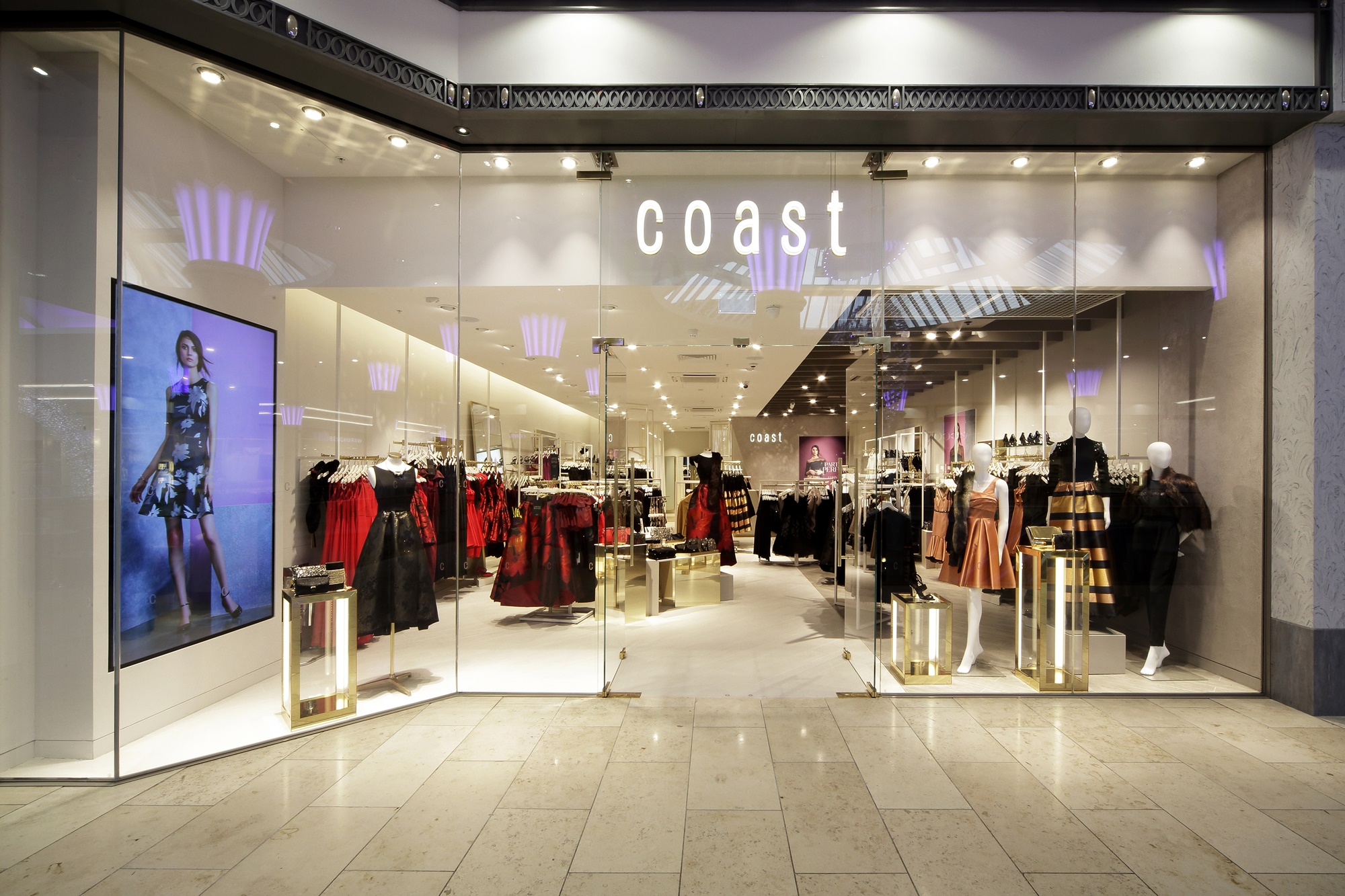
    British clothing retailer Karen Millen has bought a stake in fashion label Coast following the brand’s administration by PwC. The purchasing company has agreed to take on Coast’s UK concessions portfolio and online businesses, saving 600 jobs in the ailing firm. It will be trading through cooperating wholesale and franchise businesses. Coast’s standalone stores were excluded from the deal.

    Karen Millen CEO Beth Butterwick said: “We are excited to be welcoming over 600 Coast employees to the family. With its beautiful fabrics, stunning colours and signature designs, Coast is a much-loved fashion brand that has dressed women for all occasions since 1996. Our expertise and infrastructure puts us in a unique position to create a lean and profitable business, ensuring it remains a thriving destination in department stores and online.”

    Coast was originally part of a group owned by Karen Millen’s parent company, Icelandic bank Kaupthing.

    Coast gift cards and returns will be honoured by its new owners.

  • Qualtrics Expands XM Solutions Capabilities To Help Organisations Close Experience Gaps Faster

    Qualtrics Expands XM Solutions Capabilities To Help Organisations Close Experience Gaps Faster

    Qualtrics, the leader in experience management, announced the expansion of XM Solutions to help customers close experience gaps and harness the power of the world’s leading Experience Management (XM) Platform™. There are now over 45 expert-built solutions spanning automated projects, guided programmes and full-service research, designed by industry and research experts to accelerate customer experience, employee experience, and market research.

    For years, organisations have struggled to quickly set up experience management and market research programmes, while ensuring programmes were best-in-class. With XM Solutions, Qualtrics’ team of PhDs and industry experts have created solutions to help customers quickly and confidently launch their programmes and drive business outcomes. Solutions include both guided programmes – designed to accelerate customer experience and employee experience programmes with pre-configured surveys, expert-validated methods, and dashboards tailored to your business – as well as automated projects for quick-turn research projects that yield near-immediate results.

    “XM Solutions will improve the speed and accuracy with which organisations can launch their experience management programmes,” said Ryan Smith, co-founder and CEO of Qualtrics. “Our team of experts have designed packaged solutions that leverage the learnings from thousands of customer experience, employee engagement and research programmes running on the Qualtrics platform. This will help any organization–large or small–jumpstart its experience management and research programmes, and make it easy to scale those programmes to fit the organisation’s needs.”

    Leveraging XM Solutions, customers can more quickly and confidently conduct comprehensive customer, employee, product and brand research in a fraction of the time. From pricing, to customer NPS, to brand awareness studies, XM solutions delivers fast results with automated setup, streamlined distribution, and smart analysis for research of all sizes.

    “XM Solutions have made it possible to simultaneously enhance our suite of research capabilities and reduce costs,” said Andrew Mun, Consumer Intelligence Manager at Kia Motors America. “These out-of-the-box solutions have changed the way Kia conducts research and improved our speed to insights. In a highly competitive industry, that means the difference between success and failure.”

  • Philippine Airlines to fly new A350 to Los Angeles

    Philippine Airlines to fly new A350 to Los Angeles

    Philippine Airlines’ new Airbus A350-900 is set to make a temporary appearance on the carrier’s Manila-Los Angeles route starting September 28, with the aircraft taking on one flight per week for a period of approximately one month. The short-term deployment comes as the airline prepares to permanently fly its latest aircraft on its non-stop flights to New York starting October 30.

    According to Philippine Airlines’ current schedule, the A350 will take over flights PR112 and PR113 every Friday until October 19, with its Boeing 777-300ER operating the flights on all other days. PR112 and PR113 operate four times a week on Wednesdays, Fridays, Saturdays and Sundays.

    Philippine Airlines Manila-Los Angeles A350 schedule:

    Flight No. From To Departs Arrives Days
    PR112 Manila (MNL) Los Angeles (LAX) 1125 1000 Sept 28, Oct 5, 12, 19
    PR113 Los Angeles (LAX) Manila (MNL) 1230 1825+1

    The airline’s other daily flight on the route, PR102/PR103, also will continue to be flown by the 777-300ER throughout this period.

    The temporary deployment gives passengers a small window during which they can experience the aircraft when flying to the US ahead of its deployment to New York at the end of next month.

    Philippine Airlines’ A350 notably features the airline’s new long-haul business class seat product, a variant of Thompson Aero’s Vantage XL seat. Along with reclining to a fully flat position, these seats are also notably laid out in a 1-2-1 configuration that offers direct aisle access to all passengers, a benefit not offered with the airline’s 2-3-2 business class layout on board its 777-300ER.

    A total of 30 seats are offered in the business class cabin, with each offering 24 inches of width, 44 inches of pitch (legroom) when in a seated position and reclining to provide a 78-inch-long flat bed.

    Philippine Airlines took delivery of its first A350 back in July and earlier this month began flying the aircraft on its first long-haul service to London.

  • Skoda names new compact the Scala

    Skoda names new compact the Scala

    Skoda says it will rename its Rapid compact hatchback the Scala when the new model goes on sale next year. The car’s name comes from the Latin word for “ladder,” Skoda said in a statement.

    The Scala was previewed as the Vision RS concept that was unveiled at the Paris auto show this month.

    The name change signifies the step up Volkswagen Group’s Czech subsidiary has made with the new car, Skoda CEO Bernhard Maier explained in the statement. “This is a completely new development that sets standards in terms of technology, safety and design in this class,” he said.

    The Scala will be pitched further upmarket compared with the current budget Rapid to create a more credible rival for cars such as the Ford Focus.

    “I think the problem of the current Rapid is maybe it’s too low-market. Maybe we went too far toward value for money,” Bjorn Kroll, Skoda’s head of product marketing and the brand’s commercial leader on electric cars, said at a preview of the concept ahead of the Paris show. “With this one, we tried to balance it out.”

    Skoda said the car would offer innovative features that “have only been seen in higher segments,” without being specific about those features.

    The Scala will be engineered for Europe on the VW Group’s small-car MQB A0 platform. The current model uses a version of the low-cost PQ platform.

    The name change also signifies a break with the Rapid sold in China and Russia. A future replacement for the Rapid in those markets is expected to use an updated version of the PQ platform to keep costs down.

    Instead of a badge, the Scala will feature the word Skoda affixed to the tailgate — the first Skoda to feature this, the brand said.

    The range is expected to include an RS high-performance version using the same plug-in hybrid drivetrain previewed by the Vision RS concept. It combines a 150-hp, 1.5-liter gasoline turbo engine with a 102-hp electric motor to accelerate the car from 0 to 100 kph (62 mph) in 7.1 seconds. The 13-kWh battery provides a range of 70 km (43 miles), compared with 50 km (31 miles) in the discontinued VW Golf GTE plug-in hybrid.

    Skoda sold 35,206 units of the Rapid notchback and Spaceback hatchback in the first half of this year across Europe, down 2.7 percent compared with the year before, figures from JATO Dynamics show. The notchback will be discontinued in Europe, Skoda said.

  • Softbank, Toyota form JV for mobility services in Japan

    Softbank, Toyota form JV for mobility services in Japan

    Japan’s Softbank and automaker Toyota announced plans to form a joint venture by April 2019 to provide launch Mobility-as-a-Service (MaaS) in the country. The company, called Monet Technologies, will combine Toyota’s mobility services platform and information infrastructure for connected vehicles with Softbank’s Internet of Things platform, the companies said in a joint statement.

    Initially, Monet plans to roll out just-in-time vehicle dispatch services for Japanese public agencies and private companies to meet user demand. Those services include on-demand transportation service and corporate shuttles.

    By the second half of the 2020s, Monet intends to launch an autono-MaaS (autonomous mobility as a service) businesses, using Toyota’s e-Palette battery electric vehicles.

    These vehicles will deliver meals with food prepared in the vehicles, provide hospital shuttles where onboard medical examinations can be carried out onboard.  These vehicles can also serve as mobile offices, Softbank said.

    Softbank said Monet will roll out its mobility services in Japan before focusing on future expansion to the global market.

    The joint venture will have initial capital of 2 billion yen ($17.49 million), and this will be increased to 10 billion yen in future.

    Softbank will own 50.25% of the JV and Toyota take the remaining 49.75%.

    SoftBank Corp representative director and CTO Junichi Miyakawa will be president and CEO of the new joint venture.

  • Bosch to launch IoT software services in China

    Bosch to launch IoT software services in China

    Bosch and Huawei have struck a partnership to accelerate the development of the Internet of Things (IoT) in China. The collaboration will see the pair makes Bosch’s IoT Suite software services available in China on Huawei Cloud. The software platform of Bosch connects web-enabled objects to facilitate data sharing across a multitude of digital services and business models. The first service made available to Chinese consumers via Huawei Cloud will be the Bosch IoT Remote Manager – a service for managing and controlling gateways, sensors, and devices. Additional services from the Bosch IoT Suite will follow in 2019.

    The pair also said a Chinese automotive manufacturer has chosen to deploy the Bosch IoT Suite on Huawei Cloud for updating its vehicles’ firmware over the air (FOTA). The service is expected to be rolled out to millions of connected cars in China over the coming years.

    “The demand for IoT solutions in China is rising. The partnership between Bosch and Huawei Cloud marks a decisive step for Bosch in one of the fastest growing IoT markets in Asia,” said Dr. Stefan Ferber, CEO of Bosch Software Innovations, a wholly-owned subsidiary of Bosch.

    Bosch Software Innovations has been active in China since 2012 and has implemented IoT projects ranging from Industry 4.0 to connected transportation. The company expects China’s market for IoT platforms to grow by close to 70% over the coming years, Ferber said.

    Bosch and Huawei also intend to develop an integrated end-to-end IoT offering as a result of the partnership.

    Huawei is developing IoT hardware gateways that will be pre-configured with Bosch IoT Gateway Software and managed through the Bosch IoT Remote Manager to run on Huawei Cloud.

    This close integration will provide customers with a more complete IoT solution that is easier to deploy and manage, the companies said.

  • Worldpay launches new cross-border payment options

    Worldpay launches new cross-border payment options

    UK-based Worldpay has introduced new payment solutions aimed at providing eCommerce businesses with more choices to disburse funds to partners and customers and across country borders.

    Worldpay’s dynamic payment solutions combine the enhanced Worldpay Bankout solution, which now delivers 154 direct bank disbursement destinations (up from 65), and Worldpay FastAccess – enabled by Visa Direct.

    With these payment options, partners and customers need no longer wait for days to receive funds or refunds as they now can obtain them via card in near real-time – through a mobile wallet or directly to a local bank account.

    Bankout is targeted at businesses needing to make a large number of global payments to – or on behalf of – their customers and suppliers. With 89 new local markets, Worldpay now provides seamless cross-border payouts for businesses in local currencies without the expense of making multiple international bank transfers.

    Dynamic payouts allow businesses to make faster, seamless card-based payouts in near-real time within a maximum of 30 minutes. Building on its launch in the United States last year, FastAccess is now available to Worldpay customers in over 50 new markets across Europe and Asia.

    The new payment solutions are targeted at wide range of industries. For example, travel and tourism companies and marketplaces can pay out funds to accommodation vendors or disbursements to travellers in a variety of countries and currencies; gaming businesses can provide near-instant payouts to customers; insurance companies can save costs by replacing local checks with bank transfers; and marketplaces can allow independent sellers to retrieve funds more quickly.

  • StarHub pursuing network sharing to cut costs

    StarHub pursuing network sharing to cut costs

    Singapore’s StarHub has revealed it is pursuing network sharing arrangements to further cut costs, after announcing a planned 12% reduction in the operator’s workforce.

    The operator could reach a commercial network sharing agreement shortly and be reaping financial benefits by the end of next year, the company’s CEO Peter Kaliaropoulos.

    The company’s new CEO, who took his position in July, said sharing of facilities is a necessity once an industry hits maturity.

    StarHub and smaller rival M1 have already indicated that they are evaluating further collaboration on mobile infrastructure sharing to reduce costs.

    Earlier this month, StarHub announced it will cut 300 jobs as part of cost reduction efforts aimed at saving S$210 million ($152.3 million) over the next three calendar years.

    According to the report, Kaliaropoulos believes StarHub needs to be leaner and more agile and focus its resources on growth areas such as its enterprise business.

    The company is under particular pressure due to the recent entry of Australia’s TPG as Singapore’s fourth mobile operator. Kaliaropoulos warned that the Singapore market may not be large enough to sustain four mobile operators, hinting that the smallest player may find it difficult to survive.

  • Foot Locker’s Newest Store Features a Barber Shop and Gaming Zone

    Foot Locker’s Newest Store Features a Barber Shop and Gaming Zone

    Foot Locker is diving headfirst into experiential retail with the debut of its Hong Kong “power store,” a 26,000-square-foot sneakerhead paradise where shoppers can get a haircut or hang out and play Xbox in between trying on shoes.

    Located in the city’s bustling Kowloon shopping district, the store is one of four the company plans to open throughout Asia in the 2018 fiscal year, with three in Singapore and one in Malaysia rounding out the pack. Only the Hong Kong location, however, qualifies as a power store, which Foot Locker’s chairman and CEO Dick Johnson described on the company’s last earnings call as an effort “in key markets to create more immersive and community-oriented customer experiences.”

    Power stores in Liverpool, England, and Oxford Street in London likewise feature collaborations with local artists, on-site barber shops, sneaker cleanings and gaming zones, all designed to enhance the in-store experience at a time when many sneaker fans do much of their shopping online or via app.

    The company is betting on its new Asia outposts to help drive sales as its growth in the U.S. and Europe have flagged slightly in recent quarters. It is also launching e-commerce in Singapore for the first time, complementing its in-store offerings.

    Throughout the year, the company plans to open 45 new stores and close 120 less profitable locations, and Johnson said power stores are in the works for the domestic market, with the Detroit area up first. The trick, he said, is finding “the right property, the right lease terms and the right construction period to make it happen.”

  • TomTom loses Volvo contract

    TomTom loses Volvo contract

    Dutch navigation firm TomTom said on Tuesday it had lost a contract with automaker Volvo. The company said the contract to provide location and navigation services to Volvo, which was announced in 2016, had been ended before it was due to go into force in 2019. That fed into concerns of critics who said a deal Google made last month with Renault, another TomTom customer, meant the company risked being relegated to third place in its main market, with lower margins.

    Volvo could not immediately be reached for comment on the contract. ING analysts said in a trading note that they believe the Swedish automaker had switched to Google, rather than the current leading player in the navigation market, HERE.

    “Now that Google is making inroads, the mapping business has become a three-player market with TomTom, HERE and Google, which is clearly less attractive for TomTom than the two-player market it was before,” they said.

    TomTom shares lost a quarter of their value in one day on Sept. 18 after Google announced a far-reaching supply deal with a group of automakers including Renault, Nissan and Mitsubishi.

    Though the Volvo news knocked shares lower, TomTom reported better than expected third-quarter results on Tuesday, with core earnings rising to €62.4 million euro ($72.2 million) from $41.1 million a year earlier.

    Group sales were slightly higher at $254 million euros, from $253 million in the third quarter of 2017.

    While sales of the company’s traditional satellite navigation devices continued to fall, that was offset by sales to automakers and map licensing to customers Apple and Uber. The company also raised its full-year revenue outlook to $984 million from $955 million.

    TomTom this month announced plans to sell its fleet management business, saying it would instead focus its energy on making digital maps used in highly automated driving — the business on which it has pinned its future.

    It said it has seen “strong interest” for the fleet subsidiary, valued at roughly $810 million.

    Harold Goddijn, CEO and co-founder, said recent new deals with PSA Group and BMW showed the viability of the company’s products.

  • Real Singapore retail sales rise 2.4 per cent in August

    Real Singapore retail sales rise 2.4 per cent in August

    Singapore retail sales rose 2.4 per cent in August, after excluding the impact of motor vehicles on the figure. Including vehicles, retail sales posted a year-on-year decline of 0.4 per cent. They rose 2 per cent month on month, excluding cars.

    By category, August delivered a mixed bag for retailers, year on year. Jewellers drove the watches and gem sector up 6.3 per cent while apparel and footwear sales rose 6 per cent. Recreational goods rose 4.4 per cent and sales in department stores by 3.3 per cent.

    But sales of computers and phones dropped 3.8 per cent, partly due to declining computer sales. Food retailers experienced a 3.5 per cent decline and optical goods and book vendors, 2.3 per cent.

    Petrol stations had the highest movement, up 10.4 per cent, reflecting high fuel prices.

    The total of Singapore retail sales in August, including motor vehicles, was estimated at S$3.8 billion, of which online sales accounted for 4.6 per cent.

    Sales of food & beverage services from restaurants, cafes and fast-food retailers, increased 3.2 per cent in August, reaching $728 million.

  • LVMH names Sophie Brocart as CEO of Jean Patou

    LVMH names Sophie Brocart as CEO of Jean Patou

    Last month, LVMH named Guillaume Henry new Creative Director of Jean Patou. Guillaume Henry is coming back to Fashion Week, resurrecting the Jean Patou maison with LVMH’s backing. The former creative director of Carven and Nina Ricci was handpicked by LVMH’s Sidney Toledano for the role and is expected to debut his vision for Jean Patou in 2019.

    To support Guillaume Henry, LVMH has announced Sophie Brocart as CEO.

    These changes are in preparation of a global brand transformation.

    “Jean Patou is a very exciting project. It is just at the beginning, but we are all there to support Guillaume Henry’s creativity,” Brocart said to FashionNetwork.com.

    Born in 1880 in Normandy, Jean Patou, the son of a tanner and nephew to a furrier was well experienced in the area of design before deciding to venture out on his own and open a small dressmaking salon in Paris in 1912 . Success came quickly to Patou who sold his entire 1914 collection to a single American buyer, however, he was forced to put his craft on hold when he was mobilized in August of the same year for World War I. Reopening his salon in 1919, Patou began to work on eliminating the flapper look and on improving the design for sportswear.

    Patou began the tradition of previewing his fashion collections to the press and it was also Patou who invented the first designer label—the pockets of his creations were embroidered with the letters “J” and “P”.

    Brocart will leave her position at Kirkwood and LVMH will announce her substitute.  She will keep her position as head of mentoring at LVMH, as she believes that talents need to be cultivated and it is very interesting to see people growing.

    Brocart joins Patou from Nicholas Kirkwood, where she has been CEO of the London shoe designer for the past four years. The appointment marks a meteoric rise for Brocart, who has been the mentor in chief of young talent within the LVMH orbit, notably guiding the winners the LVMH Prize. She also worked with Jonathan Anderson, after LVMH took a substantial stake in the Northern Irishman’s signature business, J. W. Anderson.

    While at Kirkwood, she was instrumental in developing the fledgling house, which last month staged its debut show in London Fashion Week. A brilliant piece of staging entitled Evidence, a vision of a dystopian universe on a set crammed with laptops, fridges, graffiti and monitors on which an 18-year-old “positive hacker” from California showed 360-degree images of Kirkwood’s new footwear – notably his new floral posh punk boots. In a word, Brocart is an out-of-the-box-thinking executive.

    Her appointment is very much on-trend with LVMH, which likes to move around and promote decision-makers from within its own ranks. Also last month, the group named Jenny Galimberti, the former communications director of Louis Vuitton, to be the new CEO of J.W. Anderson.
  • Malaysia, Japan in talks on Asian aircraft project

    Malaysia, Japan in talks on Asian aircraft project

    Malaysia is in discussions with the Japanese government for an Asian aircraft project, which is still at the ideation stage, with Malaysia looking at possibly supplying components. Entrepreneur Development Minister Datuk Seri Mohd Redzuan Yusof said the idea, envisioned to be like Airbus, for an Asian aircraft came from the Japanese government.

    “They (Japanese government) invited us to consider participating in the Asian aircraft project in view that we have the base here in relation to what we do to support the global aircraft industry, namely CTRM (Composites Technology Research Malaysia Sdn Bhd) is supplying tier 2 (aerospace parts) to Airbus. That will become our base to open up more if the ideation from Japan do materialise in the near future,” he told a press conference at the Malaysian Economic Summit 2018 today.

    He said it has not prepared the framework of its understanding between the various countries in Asia for the project, given that there is only an ideation coined.

    Adding that it has yet to have the first meeting, he hopes the next engagement will be held in late November in Japan.

    “I interacted with the Japanese counterpart. They coined the idea of having an Asian aircraft using the entrepreneurship kind of approach to develop this vendor (system), which is already in the industry, expand their capacity and capability, reaching certain level then combining our resources and technology to realise (this project).”

    Meanwhile, he said the Ministry of Entrepreneur Development (MED) is reviewing all the policies and initiatives regarding the development of entrepreneurs and SMEs with the intent to make it more holistic, integrated and targeted.

    Mohd Redzuan said it is the ministry’s mission to widen and coordinate entrepreneurial activities to be more targeted, inclusive, encompassing all segments of society including the B40s and M40s.

    “MED will focus among others on providing proper training and facilitation for entrepreneurs based on industry needs such as business advisory, loans and funding to stimulate the interest of potential and new entrepreneurs to establish their own startups. At the same time, assistance will be extended to them to ensure growth and sustainability of their businesses,” he said.

    He said it is the mandate of MED to provide support and facilitation to local entrepreneurs so that they may move forward and withstand the competition and challenges of the global market.

  • Vera Wang Launched Bridal Jewelry With Chow Tai Fook

    Chinese-American fashion designer Vera Wang and Chow Tai Fook, the jeweller, have collaborated on a fine jewellery collection to launch this week in China. Hong Kong will follow. The Vera Wang Love collection targets modern Chinese brides with a penchant for diamonds, casting pieces in 18K gold and platinum – including engagement rings, wedding bands, and fine fashion items in precious stones. The diamonds used are traceable and nano-inscribed for individual identification.

    Vera Wang said the sophistication, quality, technical capabilities and vast consumer reach of Chow Tai Fook enabled her to create both wedding and fashion signature pieces at the highest quality from the attainable to the most exclusive.

    Kent Wong, Chow Tai Fook’s MD, added: “The intrinsic value of “traceable” marks carried by T Mark diamonds perfectly aligns with Vera’s design philosophy, resulting in beautiful, modern pieces of jewellery.”

    The Vera Wang and Chow Tai Fook collection debuts October 19 at Chow Tai Fook stores in Shanghai, further expanding to Beijing, Chengdu, Hong Kong and other cities later.