Tag: asia

  • Experts fear foreign rivals too strong for Vietnam ride-hailing firms

    Experts fear foreign rivals too strong for Vietnam ride-hailing firms

    Vietnamese ride-hailing services are struggling to compete with foreign firms Grab and Go-Viet due to a lack of resources.

    FastGo last month claimed to have 15,000 taxi and motorbike partner drivers in Hanoi and Ho Chi Minh City, but they are not a common sight on the streets unlike the ubiquitous red and green uniforms of Go-Viet and Grab drivers.

    VATO, which received funding of $100 million from local transportation firm Phuong Trang, is also having trouble expanding after launching in May, its CEO Tran Thanh Nam admitted to the media.

    Another competitor, Aber, run by a group of young Vietnamese based in Europe, had said August 10 it would “temporarily cease app operations for an upgrade.” It has not made a return so far.

    Bui Danh Lien, former chairman of the Hanoi Transport Association, said operators need to give drivers a steady income to keep them and at the same time offer customers plenty of discounts and cheap fares, and “this is a tough challenge.”

    Economist Do Hoa told local media that the ride-hailing market is “a race to spend money”, and those without deep pockets won’t be able to compete.

    Grab and Go-Viet are willing to charge their customers as low as VND1,000 (4.3 cents) for a ride, he pointed out.

    “Vietnamese ride services are not financially capable of sustaining such losses like the foreign companies.”

    Even major players like Grab and Uber report big losses in Vietnam. According to the General Department of Taxation, Grab, with a total registered capital of only VND20 billion ($881,000), has incurred losses of nearly VND1 trillion ($43.48 million) during its three years in Vietnam.

    But this cash burn strategy is how Grab and Uber are eating up traditional taxi firms’ market share. In 2014-15 they launched promotion after promotion, including free rides and discounts, to attract customers. They expanded their driver networks by offering subsidies and big rewards based on performance.

    Other options

    Though the lack of funding is a weakness of local ride-hailing firms, there are other ways for them to grow, Dr Nguyen Duc Thanh, head of the Vietnam Institute for Economic and Policy Research said.

    “Since the lack of resources is a disadvantage for Vietnamese ride-hailing apps, they should not enter the cash burn race.”

    Going head-to-head with bigger rivals is not the right strategy to follow, he said.

    “They can enter niche markets like delivery, car rentals and long-distance ride services. Instead of trying to divide market share in the beginning, newcomers should think of a long-term strategy to build a solid foundation.”

    Nguyen Manh Hung, former chairman of the Vietnam Automobile Transport Association, was quoted by Tuoi Tre newspaper as saying local firms are unable to compete with Grab and Go-Viet because they are divided.

    If they join hands they could compete, he said.

    Go-Viet, the Vietnamese operation of Indonesia’s Go-Jek, came early last month seeking a share of the market that Grab has been dominating after the departure of Uber.

    Go-Jek founder and chief executive Nadiem Makarim said Go-Viet has grabbed a 35 percent share of the motorbike ride-hailing market in HCMC within six weeks of its launch on August 1.

  • Pan Malaysia to form JVCO with Singapore’s Baker & Cook

    Pan Malaysia to form JVCO with Singapore’s Baker & Cook

    Investment holding company Pan Malaysia has entered into a partnership with Singaporean artisan baker and food store Baker & Cook.

    The 50-50 joint venture will serve to diversify Pan Malaysia’s business to include F&B retail outlets, trading as Baker & Cook and Plank Sourdough Pizza. Pan Malaysia’s investment is being made through its wholly owned unit Megafort.

    Under the agreement, Baker & Cook will manage day-to-day operations while Megafort handles concession and sub-franchisee agreements.

    The stock exchange filing announcing the joint venture read: “The group (Pan Malaysia) intends to diversify its business profile and income stream, and it believes that the JV is expected to contribute positively to the earnings of the group in the future.”

  • Chocolate maker Mars sees India as a key accelerate market

    Chocolate maker Mars sees India as a key accelerate market

    US-based chocolate maker Mars sees India as a key ‘accelerate’ market and is ramping up its distribution network in the country to tap the high growth potential, a senior company official said.

    According to a report: The company, which has brands such as Snickers, Mars, Bounty, M&M, Double Mint, Boomer, Orbit, Galaxy and Twix in India, also plans to introduce one more brand in the next six to eight weeks to enhance its presence here.

    “India is a key ‘accelerate’ market in Mars Wrigley Confectionery Asia, Australia, Middle East and Africa (AMEA),” Andrew Leakey, Mars Wrigley Confectionery General Manager – India said.

    The company is investing to strengthen its distribution network and is building a sustainable supply chain here to expand its reach beyond metros and some key cities. The company has stronger growth ambitions and is taking a long-term view on the Indian market, he said.

    Presently, Mars Wrigley products are distributed through around 3,00,000 outlets and it is eyeing to take the number to over 5,00,000.

    “With our continued focus on growth in the India market through our expanding distribution network, flexibility to scale as per demand, ongoing efforts to build sustainable supply chain and strong market potential, we anticipate one-fourth of our growth contribution for AMEA region, coming from India, over the next few years,” he further said.

    However, he declined to share revenue or other financial details.

    Last year, Mars Inc integrated its Mars Chocolate and Wrigley segments in India, creating Mars Wrigley Confectionery (MWC) to tap high growth potential here.

    “We are taking a long term view over the business in India and the company is less concerned about the immediate paybacks,” he was quoted as saying.

    Leakey said that the company looks to introduce “products which are more relevant to the Indian market”.

    The company has an innovation centre in Bengaluru which is helping it to localise some of the flavours here.

    Asked about growth, he said, “Confectionary market is growing with CAGR of 9 percent in last 5 years and we are growing double than that and we would continue to grow at that rate.”

    To expand its reach in the mass market, Mars has introduced a small Rs 10 pack of Snickers as in India around 80 percent chocolates are sold in the Rs 10 price segment, he added.

    “Since we have launched it, we have doubled our distribution of Snickers,” he was further quoted by PTI as saying.

    Mars has manufacturing plants in Pune, Baddi (Himachal Pradesh), Hyderabad and Bengaluru and has plans to expand capacity when the demand increases.

  • Delpozo to arrive in South Korea with KLH International

    Delpozo to arrive in South Korea with KLH International

    Spanish luxury designer brand Delpozo has entered into a partnership with South Korean firm KLH International to open six locations in South Korea.

    Two of the Delpozo South Korea stores have already begun trading, with the third opening shortly. The remaining three are planned to launch within two years.

    The first Delpozo South Korea store in Seoul, at 63sqm, launched September 14 at the Lotte World Tower. The second location in Lotte Busan measures 57sqm and opened five days after Seoul. The third – and largest at 100sqm – opens early next month in Hyundai Mainwill.

    Grupo Perfumes y Diseno has owned the Delpozo brand since 2013. The company’s president and owner Pedro Trolez said the partnership marks further expansion in the Asian market.

    “We are very excited about opening the first three locations, with more expected for the next two years,” he said.

    KLH International CEO Thomas Hahn said the launch will “give a new impulse into the stagnant women’s clothing market”.

  • SK-II opens ‘shop of the future’ in Shanghai

    SK-II opens ‘shop of the future’ in Shanghai

    An SK-II smart store has opened in Shanghai, an enhanced version of the global beauty brand’s technology-packed showcase which opened in Tokyo in May.

    The SK-II Future X Smart Store features facial recognition, computer vision, and AI technology augmented by the brand’s proprietary skin science and diagnostics. The store employs an algorithm that supports self-service shopping to provide consumers with a personalised and immersive experience.

    The experience begins with a large-scale digital wall that reads visitor’s facial expressions as well as head, eye and mouth movements. Each expression correlates to a different colour scheme, while eye blinks trigger energy lines to pass across the screen.

    Visitors can also explore the “Miracle Water” Lab, which offers an immersive experience of how SK-II Facial Treatment Essence works on the skin. They can also use a proprietary skin scan that performs its analysis while customers sit in a booth. An interactive skincare wall will then display a comprehensive analysis of each user’s skin condition, together with a set of tailored recommendations based on the results.

    Using a special bracelet designed in cooperation with e-commerce channel One Jingdong, consumers can purchase the products they need by just waving their wrists on a scanner, without the need for a mobile application on-site.

    The Shanghai store will also see the debut of the Facial Treatment Essence Smart Bottle, a new packaging feature that interacts with a companion app to enhance consumers’ skincare regimen at home.

    CEO Sandeep Seth said the role of retail in driving how consumers experience products in today’s post-digital world is vastly different than when the company started, especially in the rapidly evolving Chinese beauty market.

    “In shifting our focus to bring innovation to consumers around the shopping experience versus product technology, SK-II is leading the way to create a new model for how we build and evolve our relationship with our consumers in China and globally.”

  • Singapore fines Grab, Uber combined S$13m, moves to open up ride-hailing market

    Singapore fines Grab, Uber combined S$13m, moves to open up ride-hailing market

    Singapore slapped ride-hailing firms Grab and Uber with fines and finalised restrictions to open up the market to competitors after concluding that their merger in March has driven up prices.

    Uber Technologies Inc sold its Southeast Asian business to bigger regional rival Grab in March in exchange for a 27.5% stake in the Singapore-based firm.

    While the combined S$13 million (RM39.4 million) fine was small compared with the firms’ multi-billion dollar valuations, that and the other measures imposed by the Competition and Consumer Commission of Singapore today represent the strongest censure by a regulator since the deal was unveiled.

    The anti-trust watchdog said it would require that Grab drivers not be tied to Grab exclusively and that Grab’s exclusivity arrangements with any taxi fleets be removed.

    Uber will also be required to sell its car rental business to any rival that makes a reasonable offer and will not be allowed to sell those vehicles to Grab without the watchdog’s permission. The car rental business, Lion City, had a fleet of some 14,000 vehicles as of December.

    Fining Uber S$6.6 million and Grab S$6.4 million, the regulator said effective fares on Grab rose 10-15% after the deal, and that the firm now holds a Singapore market share of around 80%.

    Uber said it believed the decision was based on an “inappropriately narrow definition of the market” and would consider appealing.

    Grab said it completed the deal within its legal rights, and did not intentionally or negligently breach competition laws. It would abide by remedies set out by the regulator, it added.

    Indonesia’s Go-Jek, which plans to launch services in Singapore, said it welcomed the regulator’s steps. “We’re encouraged to see the measures being taken to level the playing field. “It will have a significant effect on our strategy and timeline.”

    Other new entrants to the market include Singapore-based Ryde.

    Grab said it had not raised fares since the deal and argued that all transport firms, including taxi operators, should be subjected to non-exclusivity curbs.

    Grab has also been told to maintain its premerger pricing algorithm and driver commission rates, which the regulator said would protects riders against excessive price surges, and drivers against increases in commissions that they pay to Grab.

    The watchdog said it would suspend the measures on an interim basis if a Grab rival was able to garner over 30% of total rides in the ride-hailing services market in a month. It would remove the measures if a rival attained 30% or more of total rides matched in the market for six consecutive months.

    Rival services include third-party apps for calling cabs and private vehicles as well as taxi-booking services such as those provided by taxi operator ComfortDelGro Corp Ltd.

    Uber and Grab have a month to appeal the Singapore regulator’s decision.

    The deal remains under anti-trust review in Vietnam, which has warned that it could be blocked if the firms’ combined market share in Vietnam exceeds 50%.

    Jerry Lim, Grab’s country head in Vietnam, said he believed the local regulator will consider the market’s unique competitive dynamics and regulatory landscape in its investigation.

    In the Philippines, where the deal has been approved, the competition watchdog has said it is monitoring Grab’s compliance with conditions intended to improve the quality of service, with any breaches possibly resulting in fines.

  • Flipkart acquires Israeli startup Upstream to strenghten pricing capability

    Flipkart acquires Israeli startup Upstream to strenghten pricing capability

    India’s leading e-tailer Flipkart on Tuesday said it has acquired Israel-based Upstream Commerce startup for an unspecified amount to strengthen its selection and pricing capability.

    “The acquisition enables us to help sellers boost sales and serve customers better with Upstream’s advanced and data science-based intelligent solutions,” said the city-based retail giant Walmart-owned company in a statement here.

    A leader in real-time pricing and product assortment optimisation solutions, the eight-year-old Tel Aviv-headquartered startup builds cloud-based, automated competitive pricing and product analysis tools.

    “The acquisition will also help us to have an overseas centre to support our business in India with its 20-member team based in Israel,” a company spokesperson told IANS.

    Post-acquisition, the startup will continue to work in Tel Aviv and become one of Flipkart’s global centers for data science work.

    “Upstream’s solutions will enable us to give insights to our sellers, help them optimise product assortment, pricing strategy and find gaps in the market,” noted the statement.

    The buyout is in line with Flipkart’s vision to solve e-commerce challenges through innovations and will help provide wider selection and better pricing for its customers.

    “We have spurred e-commerce growth across the country and solved local problems through innovations. With Upstream, we will have tech and talent presence across Asia, Israel, the US and some global hubs for innovation,” said company’s Chief Executive Kalyan Krishnamurthy on the occasion.

    Backed by YL Ventures as a leading investor since its inception in 2010, the startup will be one of Flipkart’s excellence centres to do cutting-edge data science work.

    Upstream Chief Executive Amos Peleg said Flipkart’s choice to have presence in Israel through the acquisition was a vote of confidence in his team, technology and domain expertise.

    “We share the same passion for technology and vision for the contribution of data science in future and success of online retail as Flipkart,” said Peleg.

    Though Flipkart has been developing machine learning algorithms to improve the selection and pricing parametres for sellers and helped thousands of small and medium businesses get online, it is betting on Upstream providing it with automated pricing and planning better selection.

    “Upstream’s expertise will be a huge addition for us and our in-house AI capabilities, which will share actionable insights with sellers to help them make informed decisions on products and their pricing,” added Flipkart’s Marketplace Head Anil Goteti.

    The 11-year-old e-shopping portal claims to have over a lakh sellers and offers a whopping 80 million products across 80 categories, including smartphones, books, media, consumer electronics, furniture, fashion and lifestyle.

  • Korea’s Goobne Chicken enters Malaysian market

    Korea’s Goobne Chicken enters Malaysian market

    South Korean fast-food chain Goobne Chicken has expanded into Malaysia, opening its first outlet in My Town Shopping Center.

    The brand plans to test the market under a franchise agreement with a local partner and has chosen its first location at one of the city’s largest shopping malls, housing more than 400 retail and dining options.

    Located on the fourth floor, the 115sqm store can seat 64.

    “Our employees in overseas management, product development and marketing departments have performed a thorough market study for the Malaysian entry,” said a Goobne Chicken spokesperson.

    “We plan to win over Malaysian consumers with our locally-tailored menu and marketing campaign.”

    Goobne operates 12 outlets overseas, including in Hong Kong, Macao, Japan and Indonesia.

    The company says it will open its first Vietnam restaurant in Ho Chi Minh City in November.

  • Alibaba invests in China’s YCloset

    Alibaba invests in China’s YCloset

    Chinese e-commerce giant Alibaba Group has invested for a second time in fashion rental platform YCloset, injecting an undisclosed sum.

    The Beijing-based YCloset is set to use to funds plans to expand its current team, upgrade the recommended algorithm system and continue to build its warehouse and cleaning operation centre.

    The start-up will also cooperate with Alibaba’s used goods platform and social media outlet Xian Yu.

    This is the second time Alibaba has closed on an investment round in YCloset. The first, back in September 2017, saw Alibaba join fellow investors SB China Capital and Sequoia Capital to complete a $50 million series C round in the start-up.

    Founded in 2015, YCloset charges users a monthly subscription fees (RMB499 or US$72.3) to rent clothes and accessories, and stocks hundreds of fashion and luxury brands such as Kenzo, Acne Studios and Self-Portrait.

    It claims to have more than 15 million registered users across 40 cities in China including Beijing, Shanghai, Guangzhou and Shenzhen.

    The news follows Alibaba’s ceding control of its Russian business to form a new venture with a state fund and two technology firms, and news that chairman Jack Ma plans retire in September 2019.

    Alibaba’s revenue rose 61% to 80.9 billion yuan ($11.77 billion) in the April-June period.

  • PE Funds are interested in a jewelry company

    PE Funds are interested in a jewelry company

    The stock added as much as 11 percent, the most since May 2016, after Italian daily Il Sole 24 Ore said KKR and Bain Capital are among private-equity funds that could be studying a dossier on Pandora.

    Sole, which did not cite anyone for its reporting, said the jewelry maker is a “perfect target” for buyout funds.

    Before Tuesday, Pandora shares were down more than 60 percent from a May 2016 peak as the bracelet maker has battled weak retail sales in the U.S., competition from cheap imports in China and a phalanx of hedge funds betting against it.

    The market value of Pandora is now roughly $7 billion compared with a 2016 peak of $18 billion. The stock is currently trading at a price-to-earnings ratio of 8.2. That’s the lowest among a peer group of nine international jewelry companies, which have an average PE ratio of 15 (including Pandora’s), according to data compiled by Bloomberg.

    Johan Melchior, a Pandora spokesman, said he didn’t immediately have any comment, when contacted by phone.

  • Shopee For Men launched in Thailand

    Shopee For Men launched in Thailand

    Shopee Thailand has launched a new in-app shop, Shopee For Men.

    The shop is a one-stop portal for male shoppers to access more than 20,000 products from more than 300 retailers, including top brands such as Asus, Bosch and Converse.

    Shopee will run Super Men’s Day on the 23rd of every month, featuring special deals and flash sales on popular men’s products.

    According to a Nielsen study, Thai men are shopping online more often than women and spending about 15 per cent more on average, per purchase. Shopee says that trend is mirrored on its platform, with categories such as motor, sports & outdoor and men’s apparel the most popular.

    Agatha Soh, head of marketing at Shopee Thailand said the Shopee For Men has teamed up with leading brands such as Unilever, Nivea for Men, Warrix, Gatsby, G-Shock, Electrolux, American Tourister, and Asus.

    “With a huge variety of products across various categories, Shopee For Men provides a comprehensive assortment designed to meet all male users’ needs.”

    Shopee For Men will also provide zero-interest instalments on selected electronics, sports and lifestyle items.

    “Through Shopee For Men, we aim to increase our community of male users and take another stride to become the number one online shopping destination in Thailand,” Soh said.

  • Facebook just lost two top executives

    Facebook just lost two top executives

    Facebook just lost two of its top executives, with Instagram co-founders Kevin Systrom and Mike Krieger announcing their departures.

    They join at least seven senior Facebook executives who have announced their departures this year.

    “Kevin and Mike are extraordinary product leaders and Instagram reflects their combined creative talents,” Facebook CEO Mark Zuckerberg said in a statement. “I’ve learned a lot working with them for the past six years and have really enjoyed it. I wish them all the best and I’m looking forward to seeing what they build next.”

    The departures come at a tumultuous time for Facebook, as it continues to lose senior executives. The company — which calls its top ranks a family and prides itself on keeping executives around — has been battling privacy scandals and declining community support.

    Instagram had become something of Facebook’s shining star, so the simultaneous exits of its two founders leave some big shoes to fill.

    Here are some other Facebook executives who have said they’re leaving so far in 2018:
    Jan Koum, co-founder of Facebook-owned WhatsApp, announced his exit in April in a Facebook post saying it was time to “move on.”

    “I’ve been blessed to work with such an incredibly small team,” Koum said in a statement at the time. “The team is stronger than ever and it’ll continue to do amazing things. I’m taking some time off to do things I enjoy outside of technology, such as collecting rare air-cooled Porsches, working on my cars and playing ultimate frisbee.”

    Koum led WhatsApp for nearly a decade and joined Facebook’s leadership team in 2014 when the social media giant bought WhatsApp for $19 billion.

    Elliot Schrage, head of communications and public policy, said in June he was leaving Facebook after more than 10 years.

    “I’ve decided it’s time to start a new chapter in my life,” Schrage said in a post to his Facebook page. “Leading policy and communications for hyper growth technology companies is a joy — but it’s also intense and leaves little room for much else.”

    Schrage didn’t address his next steps, but did include lengthy praise and words of gratitude for Facebook, Zuckerbergand COO Sheryl Sandberg.

    In July, Colin Stretch, Facebook’s top lawyer, announced he’d be leaving the company after more than eight years.

    “When my wife Alyse and I made the decision a few years ago to move back to DC from California, we knew it would be difficult for me to remain in this role indefinitely,” he said in a Facebook post. “As Facebook embraces the broader responsibility Mark has discussed in recent months, I’ve concluded that the company and the Legal team need sustained leadership in Menlo Park.”

    As general counsel, Stretch represented Facebook before Congress to address Russian interference in the 2016 presidential election.

    “I often stop myself and ask how I got so lucky to be a part of this,” Stretch said in the post announcing his exit.

  • Myntra launches loyalty program, ‘Myntra Insider’

    Myntra launches loyalty program, ‘Myntra Insider’

    Myntra has announced the launch of its loyalty program, Myntra Insider. A first of its kind in the country, the program is a comprehensive package, designed to strengthen engagement with its users to drive stickiness on the platform.

    This open-to-all program allows Myntra to democratise fashion for every registered user through unique rewards and experiences.

    The Myntra Insider program hinges on three pillars – it rewards members for purchases as well as engagement such as browsing new categories, sharing feedback, wish listing etc. It offers a host of exciting perks across fashion and lifestyle, with offers from sellers on Myntra and lifestyle partners such as Zomato, TataSky, BigBasket, PhonePe, BookMyShow, EROS NOW, Zoom Car, Gaana to name a few.

    Myntra Insiders will be able to avail special privileges such as early access to sales, priority customer support, special birthday offers and more, depending on their Insider level.

    Based on their level of fandom, users are categorized to be either, Insider, Select, Elite or Icon, with each level offering greater benefits and privileges over the previous. The program will also offer unique experiences to its users such as a session by a stylist, modelling on Myntra content/platform and co-creating designs and styles for Myntra.

    Speaking about the program, Ananth Narayanan, CEO, Myntra-Jabong, said, “Myntra Insider is our endeavour to engage deeply with our users and celebrate our fans. We aim to encourage casually involved users to interact and indulge with Myntra and grow in their journeys to become our icons. The uniqueness of our program is two fold – our uniquely crafted experiences for our biggest fans and gamification of engagement through personalisation and inter-activity. We aspire to have 10 million Myntra Insiders signed up over the next 12 months. We want to make visiting Myntra a habit for our users and aim to get our fans to visit us over 100 days a year and make a purchase every month.”

  • NTUC Enterprise acquires Kopitiam

    NTUC Enterprise acquires Kopitiam

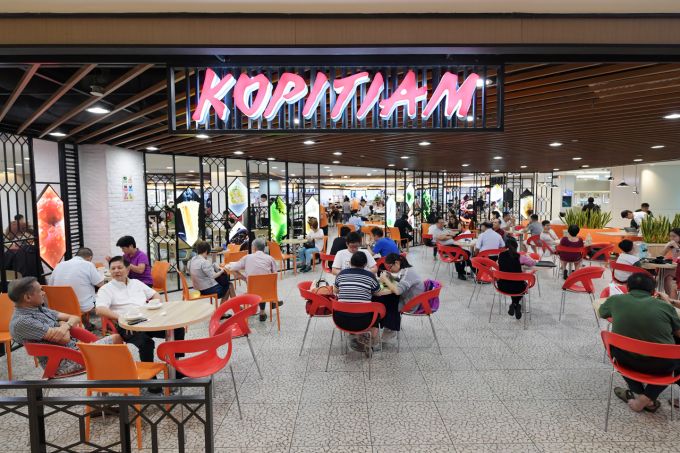
    Singapore’s renowned Kopitiam food centres have been bought by NTUC Enterprise Co-operative to protect the chain from commercial investors.

    In a press release announcing the deal, NTUC Enterprise said by investing an undisclosed sum in acquiring the business it could satisfy its social mission of ensuring cooked food remained affordable and accessible to Singaporeans.

    After the deal is settled, expected to be later this year, the Kopitiam outlets would complement NTUC Enterprises’ existing Foodfare food centres, operated independently by their own management teams.

    However the two businesses would look to sharing technology knowhow and resources and other behind-the-scenes processes.

    Kopitiam was founded 30 years ago and has now grown to 56 foodcourts, 21 coffee shops and three hawker centres across the island, serving some 350,000 meals each day and employing more than 1000 people.

    “Kopitiam and NTUC Foodfare share the common objective of making quality cooked food affordable and accessible to all,” Kee Teck Koon, executive director at NTUC Enterprise, said in a statement.

    “We will leverage our combined strengths to contribute to improving the vibrancy and resiliency of this daily essential sector in Singapore, with the ultimate goal of creating better experiences for our customers, and opportunities for our employees and other stakeholders.”

  • Malaysia’s Berjaya Land Q1 earnings up 44%

    Malaysia’s Berjaya Land Q1 earnings up 44%

    Berjaya Land Bhd’s (BLand) net profit for the first quarter ended July 31 rose 43.8% to RM16.58 million from RM11.53 million a year ago mainly due to Sports Toto Malaysia Sdn Bhd (STMSB) reported higher profit contribution from lower prize payout and operating expenses; and lower finance costs.

    Its revenue also jumped 1.2% to RM1.62 billion compared with RM1.60 billion in the previous year’s corresponding quarter, mainly due to higher new vehicle sales volume reported by HR Owen Plc; and higher revenue from the gaming business segment operated by STMSB.

    The directors expect the number forecast operation (NFO) business to be satisfactory and will continue to maintain its market share for the remaining quarters of the financial year ending April 30, 2019. The performance of the hotels and resorts business is also expected to remain satisfactory whilst the property market outlook is expected to remain lukewarm.

    “The group also expects to record a significant gain upon the successful disposal of the proposed Berjaya Vietnam International University Town One Member Ltd Liability Co (disposal) and proposed Vietnam subsidiary disposal accordingly in due course, going forward,” BLand said.