Tag: asia

  • Off-White is opening a store in Siam Paragon

    Off-White is opening a store in Siam Paragon

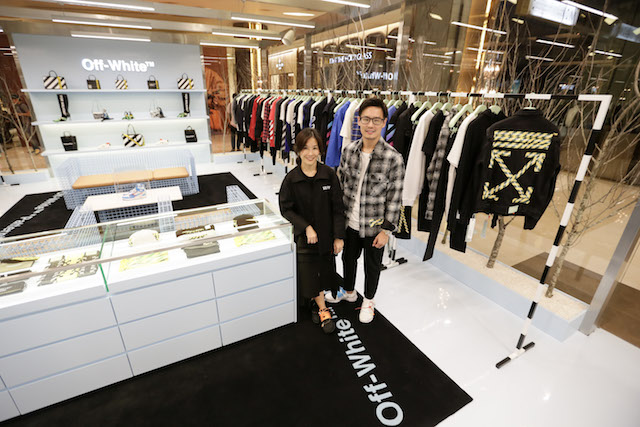
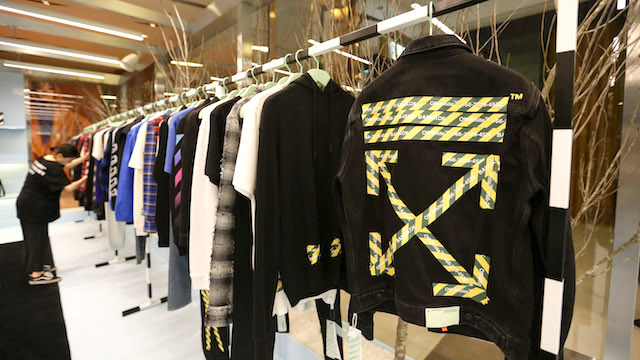
    The first Off-White Thailand store has opened in Bangkok.

    The high-end street-fashion label has chosen Siam Paragon for its first store in the market.

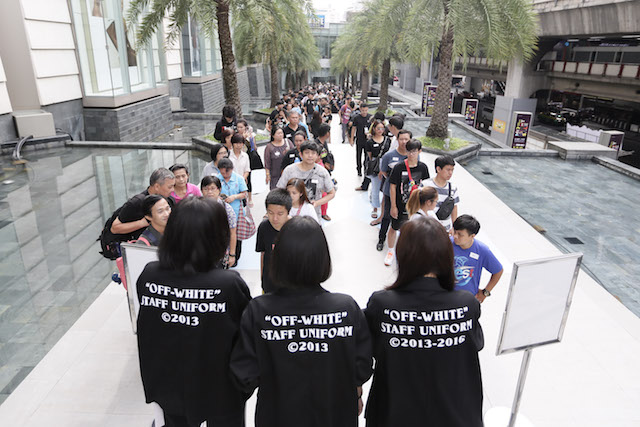
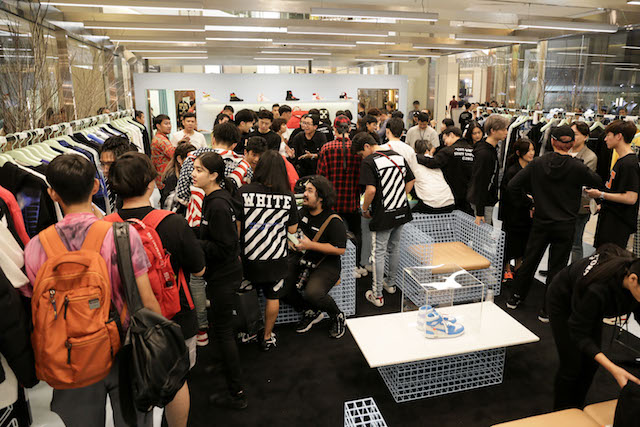
    The store opened last weekend, drawing a queue of more than 300 fans of the brand, drawn by exclusive offers for early customers and the availability of limited-edition items.

    Off-White Thailand has been launched in partnership with local retail operator PP Group.

    The boutique is located on the upmarket Bangkok shopping mall’s M floor.

    PP Group executives Olarn Puipunthavong and Suwadee Puengbunpra at the Siam Paragon Off-White store opening.

    Off-White is an Italian streetwear and luxury fashion label founded by American creative designer Virgil Abloh in Milan, Italy in 2012. The brand specialises in seasonal men’s and women’s lifestyle and streetwear and has more than 25 stores globally. Off-White products are also stocked by internationally renowned department stores including Barneys in the US, Selfridges and Harrods in the UK and Le Bon Marche in France.

  • US, Japan keen to invest in Vietnam infrastructure

    US, Japan keen to invest in Vietnam infrastructure

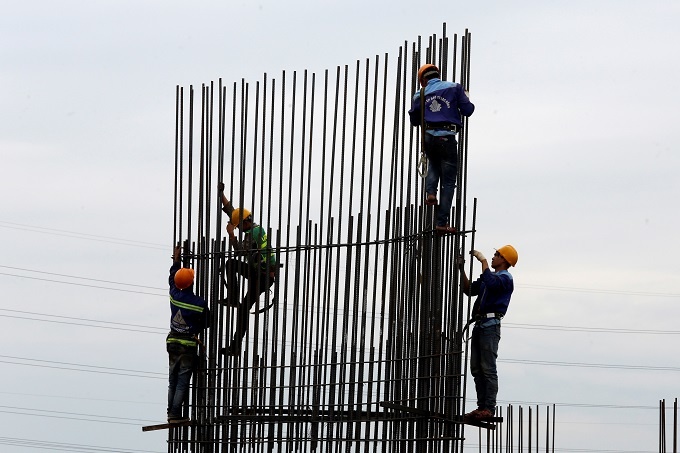
    Vietnam’s plans for building and expanding airports and seaports have attracted the interest of companies in the U.S. and Japan.

    Joel Szabat, deputy assistant secretary in the U.S. Department of Transportation’s Office of Aviation and International Affairs, said his country wants to strengthen ties with Vietnam in the transport infrastructure area, especially airports and seaports.

    He told Deputy Minister of Transport Le Dinh Tho at a meeting Tuesday that his department would facilitate U.S. investment in Vietnam’s infrastructure projects in the form of public-private partnerships (PPPs).

    But Vietnam needs to have more policy consistency and open policies, Szabat said.

    Last month Japan’s Secretary of State Tsukasa Akimoto told Deputy Minister of Transport Nguyen Ngoc Dong that many Japanese investors are eyeing key transport projects in Vietnam.

    They are interested in the Long Thanh International Airport and high-speed north-south railway, he said.

    At the meeting with Szabat, Tho said Vietnam is focusing on five areas of transport infrastructure: roads, aviation, waterways, railways, and network connections to boost logistics.

    One of its national infrastructure projects is the north-south expressway measuring over 2,100km in length, of which “650km will be built in 2017-2020 under the PPP model,” he said.

    With the country’s railway network being obsolete, there is need for an upgrade to both its long-distance and inner-city railways, he noted.

    “Our ministry is considering feasibility studies for the north-south high-speed railway.”

    The transport ministry is set to report on the high-speed railway to the National Assembly next year.

    It is now consulting various agencies for a feasibility study for the Long Thanh airport in the southern Dong Nai Province, which is expected to be approved by the government at the end of next year.

    Vietnam has 21 airports, eight of which receive international flights. Given the rapid rise in traffic, it plans to build, expand or upgrade several including Noi Bai in Hanoi and Tan Son Nhat in HCMC.

    The ministry this month approved changes to the upgrade plans for Tan Son Nhat Airport, including the addition of a third terminal and a 250-hectare expansion of the airport.

    Besides building a new terminal, T3, to the south with a capacity of 20 million passengers a year, the ministry also seeks to expand the two existing terminals to increase their capacity to 30 million passengers a year.When the work is complete, the airport’s size will increase from the current 545 hectares (1,350 acres) to 791 ha.

    The airport currently handles 36 million passengers a year against a designed capacity of only 25 million.

    Tho said Vietnam has two major ports, Lach Huyen in the north and Cai Mep-Thi Vai in the south, which can accommodate ships of up to 100,000 DWT.

    “However, network connections for logistics in ports remain underdeveloped.”

  • Japanese banks to offer instant money transfers using blockchain

    Japanese banks to offer instant money transfers using blockchain

    Japan will this month become the first major economy to launch a domestic payments system based on blockchain technology when three Japanese banks start offering customers free real-time money transfers via a new mobile app. The launch of the MoneyTap system, which secured approval for its licence from the ministry of finance last week, could be an important step in helping Japan to achieve its goal of reducing the use of cash, which still accounts for 80 per cent of transactions in the country. The new platform has been developed by SBI Ripple Asia, a joint venture between Japan’s SBI Holdings and US blockchain specialist Ripple.

    It will be launched by three of the country’s mid-sized lenders: SBI Net Sumishin Bank, Suruga Bank, and Resona Bank. Japanese banks charge customers about $3 to transfer even small amounts of money to other accounts via the Zengin domestic payments system, which only operates until 3pm on weekdays, meaning people often have to wait a day or more for money to arrive. That is much more expensive and slower than in many other countries. “We would like to change peer-to-peer and interbank payments in Japan, which are very inefficient,” said Takashi Okita, chief executive of SBI Ripple Asia and a former official at Japan’s Financial Services Agency.

    “The FSA is trying to reduce cash as a percentage of the economy and once people use the new MoneyTap system they will never go back,” he said. “The banking industry in Japan is still living in the non-internet era — even the banks realise they have to change.” Alipay, the mobile payments arm of China’s Alibaba, launched a service in June to provide a quicker and cheaper way for people to send money from Hong Kong to the Philippines over its GCash blockchain system using Standard Chartered as its banking partner.

    Ripple caused a stir in the payments industry in April by teaming up with Banco Santander to offer a service based on Ripple’s blockchain messaging technology that allows the Spanish bank’s customers in the UK, Spain, Poland and Brazil to send money in many currencies around the world. More than 100 financial institutions have registered with Ripple to use its blockchain-based messaging system, known as XCurrent, which allows banks to co-ordinate the transfer of money between currencies in seconds.

    The launch of MoneyTap in Japan will mean it is the first big country to have a blockchain-based system for transferring money between different banks. Mr Okita said SBI Ripple Asia had been working with a consortium of 61 Japanese banks on the new system and it hoped more of them would sign up to use it soon. He also plans to expand its offering to include cross-border payments. The MoneyTap app does not use Ripple’s XRP cryptocurrency, which is meant to be a cheap and universal bridge currency, providing an alternative to the expensive nostro and vostro accounts of correspondent banking. But Mr Okita said this option would be open in future to any banks that wanted to use it.

  • Asia’s Aversion to Bank Accounts Is a Big Deal

    Asia’s Aversion to Bank Accounts Is a Big Deal

    There’s a flaw in the forecast for an ever-rising Asia: a vast gap in the financial system. Big slices of the population don’t have a bank account.

    It’s hard to see the region reaching its full potential, let alone surpassing the U.S. as an economic superpower, until this bridge is crossed. An economy without broad use of banks cannot grow into a superpower.

    East Asia and the Pacific seem to be making progress on this. Seventy-one percent of adults have a bank account or equivalent at a mobile money provider, a bit more than the global proportion of 69 percent, the World Bank reckons. But the details are less encouraging. That 71 percent is little changed from four years ago. In Southeast Asia’s biggest economy, Indonesia, just 49 percent own an account.

    In the most populated members of the Association of Southeast Asian Nations, a group of 10 nations lauded for their economic progress and potential, the proportion is well below 50 percent. India is doing better at about 80 percent, but short of where it needs to be.

    This lopsided nature further reveals itself in the size of the overall pie. Indonesia overtook Singapore in 2016 as the largest financial-services market in Asean, according to PwC. On one level, this is a function of Indonesia’s huge population and gross domestic product. Yet almost every Singaporean has a bank account — around 96 percent — and the city is home to an array of sophisticated finance operations.

    You can see the potential for a place like Indonesia to pull ahead and meet its destiny. Just imagine where it would be if its people and businesses were fully banked! Until then, some of the more bullish projections about Asia must be tempered.

    What’s so great about a bank account? Once a person has an account, they have a better chance of fully participating in the economic life of their country, and their country has greater odds that gender, racial and income inequality can be addressed. Panelists at the World Economic Forum on Asean in Hanoi this month, in which I participated, wrestled with the subject.

    The more transactions that continue in cash, the harder it also is to tackle corruption. Indonesia’s anti-graft agency is taking action, but also meeting stiff resistance from factions within the government and parliament, says Transparency International. Not to pick on Indonesia. The Philippines, another seriously underbanked economy, and India struggle as well.

    Technology may hold part of the answer. As mobile payment systems proliferate around the globe, it’s entirely possible developing countries will just leapfrog over the bank branch and ATM structure and go mostly digital.

    It’s tough for banks to cover the 17,000 islands that make up Indonesia, for example. Almost twice as many Indonesians have mobile phone subscriptions as have bank accounts, the International Finance Corp. estimates. That’s spurring a surge in e-payments and investment from KKR, Warburg Pincus and Sequoia as well as Google, Alibaba and Tencent, the Nikkei Asian Review reported.

    However economies get there, it’s the destination that’s important. Without a financial system to service heavyweights, Asia can’t rule the world.

  • Everstone puts on the block a piece of Burger King India

    Everstone puts on the block a piece of Burger King India

    Five years after setting up the franchise for Burger King in India, homegrown PE firm Everstone Capital is set to offload a minority stake in the quick service restaurant (QSR) chain. Everstone, which holds about 88% of Burger King India, will offload 20%, valuing the chain at $300-350 million, according to two people aware of the development.

    As per the proposed transaction, about 30-35% of Burger King India will be sold through secondary and primary offerings. Parent Burger King Worldwide holds 12% of Burger King India.

    Advisory firm EY has been mandated to run the sale process, which is expected to be launched in a few weeks, said one of the persons cited above. Everstone will remain the controlling stakeholder after the transaction.

    F&B Asia Ventures, a pan-Asian food and beverage business platform controlled by Everstone Capital, owns and operates Burger King’s branded restaurants in India and Indonesia. Everstone joined hands with US fast-food chain Burger King Worldwide in 2013 to set up the franchise for the two countries.

    Burger King India grew 68% to post sales of Rs 237 crore in FY17 from Rs 141 crore in FY16. In FY17, the company generated average sales of Rs 2.7 crore from each of its 88 outlets opened till March 2017, while rival Westlife Development, which runs McDonald’s in the south and west, posted average sales of Rs 3.6 crore from each outlet. Burger King, however, notched up higher numbers than Jubilant FoodWorksNSE -0.78 %, where average sales per outlet were at Rs 2.1 crore from both its brands, Dominos, Dunkin’ Donuts, ET reported last year.

    Since its first outlet was opened in November 2014, Burger King India has grown into 140 outlets in more than 30 cities in India and is expected to cross 200 by FY19. The chain is present in Amritsar, Ahmedabad, Bengaluru, Chandigarh, Chennai, Hyderabad, Kochi, Ludhiana, Mumbai, Delhi-National Capital Region and Pune.

    If the deal materialises, it will be Everstone’s second part exit from the food and beverages (F&B) portfolio in the past year. In December, Everstone sold a stake in Massive Restaurants, owned by Jiggs Kalra and son Zorawar Kalra, to PE firm Gaja Capital.

    Brands on its F&B Asia platform include Harry’s, Domino’s (Indonesia), Burger King, Pind Balluchi and Duck & Rice. The fund has invested over `1,200 crore in the sector so far. Besides F&B Asia, Everstone also owns Pan India Foods Solutions, a platform with brands such as Spaghetti Kitchen, Copper Chimney, Gelato Italiano, The Coffee Bean & Tea Leaf, Bombay Blue and Noodle Bar.

    “Investor interest in Indian QSR is driven by the same trends that are driving consumption theme across categories such as demographics, urbanisation and eating out,” said Harminder Sahni, managing director of retail consultancy firm, Wazir Advisors. Multinationals have the advantage of global brand equity and experience. Indian brands are too young to compete as of now and have to tackle issues such as product development, supply chain, store expansion and consumer connect, Sahni added.
  • AirAsia begins first direct flight between Taipei and Chiang Mai

    AirAsia begins first direct flight between Taipei and Chiang Mai

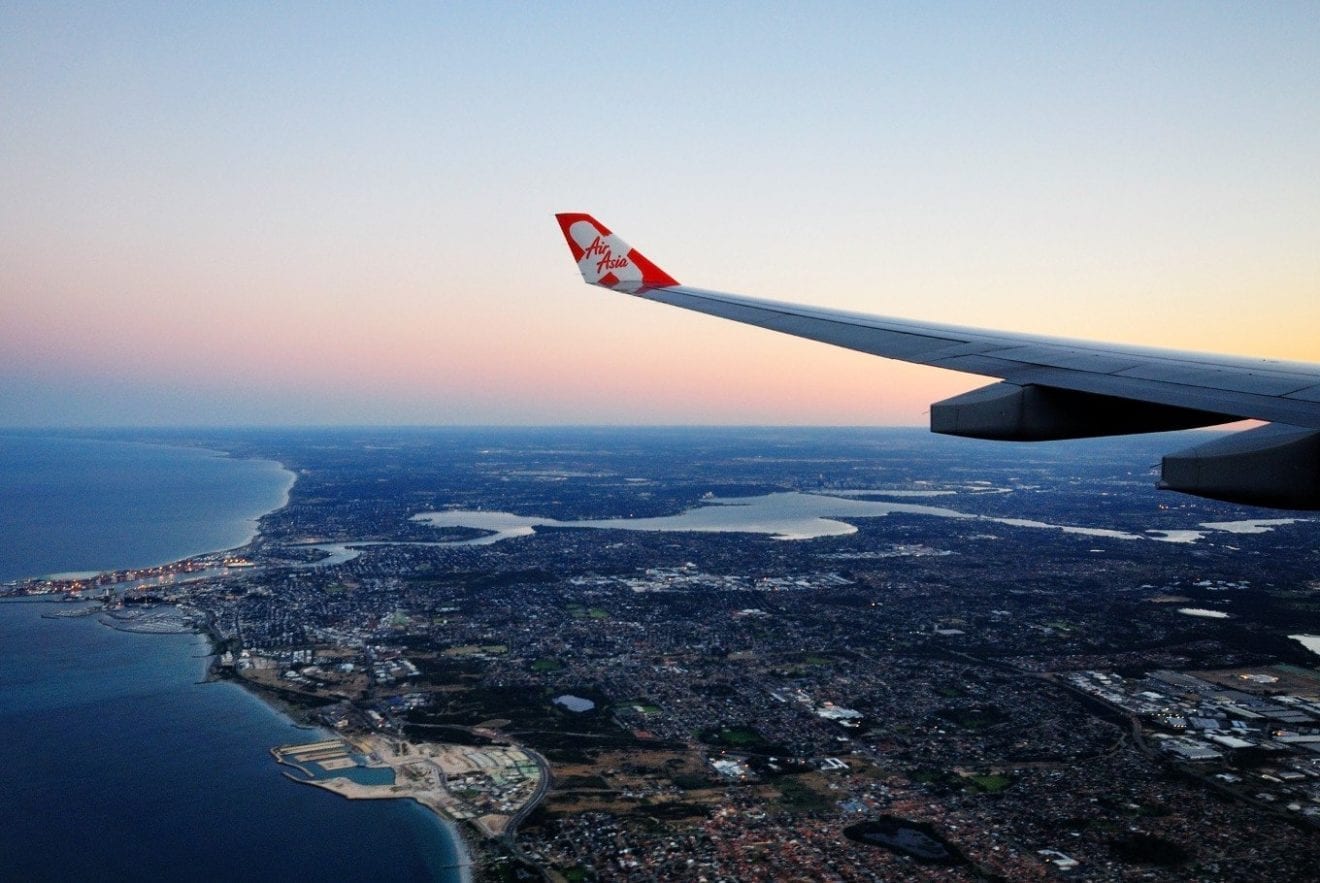
    Malaysian low-cost airline launched its first direct flight between Taipei and Chiang Mai on September 30th, the only budget airline route available in Taiwan connecting to the city in northern Thailand, reports said Monday.

    As a promotion, individuals will be able to book a ticket for a single trip between Oc.t 2, 2018 and Mar. 30, 2019, at NT$930 (US$30) before tax from midnight Oct. 2 through Oct. 7.

    The Taipei-Chiang Mai route marks the seventh international route operated by the airline in Taiwan, in addition to Taipei/Kaohsiung-Kuala Lumpur, Taipei-Sabah, Taipei-Manila, Taipei-Cebu, and Taipei-Clark.

    According to Al Chen, AirAsia’s sales manager of in Taiwan, Thailand has always been one of the most popular Southeast Asian tourist destinations for people in Taiwan. Chiang Mai, crowned the Best City in Asia 2017 by Travel and Leisure magazine, caters to the various needs of tourists seeking a laid-back, adventurous, cultural, or nature-filled travel.

  • Jollibee goes to London

    Jollibee goes to London

    Brits are about to have a taste of “bida ang saya” (joyful experience) as Jollibee Foods has started its expansion in the United Kingdom with a ceremonial launch of its first store on Sept. 25.

    Cabinet secretaries visited the store on the sidelines of an investors’ roadshow in the UK, a month before its grand opening next month.

    JFC officials, led by chief executive officer (CEO) Ernesto Tanmantiong and JFC president and head of Jollibee International Business for Europe, Middle East, Asia and Australia Dennis Flores, welcomed the government officials.

    “We are truly delighted and excited to be opening and introducing Jollibee to this part of the world. I, together with our Jollibee International and store teams, sincerely appreciate your presence here. We are sincerely humbled by your visit as we partner for economic progress and help contribute to bringing honor to our country,” said Tanmantiong.

    Tanmantiong noted that as JFC has done in Vietnam, Brunei, Singapore and Hong Kong, it also envisions to successfully serve the Filipino community as well as the British in the UK.

    The Cabinet officials’ visit coincided with the Philippine Economic Briefing in the UK, where they presented before the UK-Association of Southeast Asian Nations Business Council the latest updates on various government programs.

    The officials present were Finance Secretary Carlos Dominguez III, Trade Secretary Ramon Lopez, Tourism Secretary Bernadette Romulo-Puyat, Public Works Secretary Mark Villar, Transportation Secretary Arthur Tugade, Budget Secretary Benjamin Diokno, National Economic and Development Authority director general Ernesto Pernia and Bases Conversion and Development Authority president and CEO Vivencio Dizon.

    Lawmaker Pia Cayetano and Philippine Ambassador to the UK Antonio Manuel Lagdameo joined the Cabinet officials.

    “From our family, to our people, to those who invested in us, to our suppliers and to our customers, the journey has become not just our own, but a journey of the Filipino people. We look forward to traveling to the next destinations together,” Tanmantiong said.

    The UK store, which is opening on Oct. 20, is among the latest branches JFC is opening abroad.

    JFC will also open stores in Macau and New York this year.

    “(JFC’s) success is becoming the success of the Philippines as they represent, in a way, the dynamism and world class, hardworking and happy character of Filipinos,” Lopez told.

    Lopez said the economic team is pleased to be part of the JFC milestone in the UK.

    JFC is the parent company of Jollibee and has 12 brands with over 4,000 stores across 20 countries.

    In 2013, JFC became the number one restaurant company in Asia in terms of market capitalization and is now the world’s largest Asian restaurant company.

  • HSBC is making a bet on Asia millionaires

    HSBC is making a bet on Asia millionaires

    HSBC Holdings is planning to increase its wealth-management staff in Asia as chief executive officer John Flint bets on growth in the region.

    The bank plans to add more than 1,300 positions, split roughly between retail and private banking, by 2022, according to the heads of the two divisions, which between them currently employ just over 32,000 people in the region. The bulk of the hires, some of which could be internal, will be in Hong Kong and Singapore.

    The wealth strategy is part of Mr Flint’s plan to grow HSBC by expanding in Asian markets including Greater China and South-east Asia. The CEO, promoted in February, said in June that HSBC will pour as much as US$17 billion by 2020 into expanding the region’s business and improving technology. The bank aims to grow revenue from Asia by at least US$1 billion during the same period.

    “We have a real opportunity to do more and that’s to further build on Hong Kong and to materially build what we do today in Singapore,” Kevin Martin, the firm’s Asia-Pacific head of retail banking and wealth management, said in an interview. “Both businesses need to do it in concert,” he said, referring to the retail and private banking units.

    THe London-based bank’s plans for wealth management in Asia, which is dominated by global banks such as UBS Group AG, Citigroup Inc and Credit Suisse Group AG, come as regional firms including DBS Group Holdings Ltd. and BOC Hong Kong (Holdings) Ltd are also expanding amid an unprecedented rise in the region’s assets.

    HSBC said on Monday that Antonio Simoes, who was head of UK and Europe, will run global private banking from Jan 1. Peter Boyles, who currently runs the group, will retire after 43 years at the company.

    Offshore wealth in Asia, excluding Japan, has been growing at about 10 per cent a year, according to Boston Consulting Group data, faster than the 5 per cent globally. Offshore wealth from China alone amounted to about US$1 trillion this year, the consulting firm estimated.

    Hong Kong’s wealth managers expect to double the money they handle over the next five years to about US$2 trillion, the city’s Private Wealth Management Association said in a recent report published with KPMG China, citing the increasing interest of Chinese nationals looking to diversify their holdings.

    “The wealth that the Chinese have already offshore is a massive piece of opportunity for us,” said Tan Siew Meng, Asia-Pacific head of global private banking at HSBC.

    The expected growth in the industry may exacerbate Hong Kong’s shortage of relationship managers, according to the Private Wealth Management Association’s report. Two-thirds of respondents said a “limited talent pool” was the biggest supply-side constraint.

    Mr Martin said the 1,300 staff boost is “not a big scary number” given that his retail bank, including subsidiary Hang Seng Bank Ltd, employs about 31,000 people in the Asia-Pacific region. Staff within the group may transfer to the wealth business, he said. Hiring will be both internal and external, and include relationship managers, product specialists and advisers, Ms Tan said. Her private bank had 1,100 employees in the region at the end of last year.

  • ASUS Handpicks SmartOSC for Its Ecommerce Push in Singapore

    ASUS Handpicks SmartOSC for Its Ecommerce Push in Singapore

    ASUS, one of Fortune magazine’s World’s Most Admired Companies, that is dedicated to creating products for today and tomorrow’s smart life, has appointed SmartOSC to be its ecommerce partner, following a competitive pitch in April. The event marked an important milestone in ASUS strategy to differentiate and enhance its offering for the Singapore market.

    Emma Ou, Country Manager of ASUS Singapore shared: “The current ASUS’s website is the best place to explore our wide range of products. Adding the ecommerce site will deliver a more convenient and immediate shopping solution in addition to all our brick and mortar stores at our brand stores and authorised retailers. Hosting our own ecommerce site is also align with our ongoing effort in providing our customers a seamless O2O shopping experience and an attractive rewards programme. Throughout the entire pitching process, SmartOSC demonstrated a holistic view of our requirement and passion for our brands. We get great ideas and constant feedbacks from their team for realizing our vision”.

    According to research firm Statistica’s report on Singaporean consumer ecommerce market, electronics & media is currently one of the leading ecommerce verticals accounted for 26% of total revenue. With user penetration is at 68% in 2018 and is expected to hit 72% in 2022, ecommerce is a captivating opportunity for any brands and retailers. Moreover, the research firm also reports that Asia contributed for almost 80% of all B2B e-commerce volume worldwide in 2017 and Southeast Asia is proving itself to be an attractive B2B procurement market in the region.

    SmartOSC will work closely with ASUS team to provide consulting, user-centric experience design, technical implementation and integration services. After launch, the website will be the one-stop shopping destination for both B2B and B2C customers. Customers will be able to order a wide range of product available across ASUS distribution network, and there will be options build customized gaming hardwares from its famous Republic of Gamers (ROG) product line.

    “ASUS is exactly the kind of ambitious partner SmartOSC is excited to work with. It gives us the opportunity to think out of the box and work on a project that goes beyond conventional requirements. We are confident that our ecommerce expertise and technical capability will make us a genuinely valued partner to ASUS.” Thai Son, CEO of SmartOSC, said.


  • Polish Active Wear and Lifestyle Brand “4F” Opening its First Store In Thailand

    Polish Active Wear and Lifestyle Brand “4F” Opening its First Store In Thailand

    Polish activewear and lifestyle brand 4F has launched in Thailand.

    The brand, recognised globally for its functional, contemporary design approach, opened its first retail store in the country at Siam Discovery.

    Local agent Sport Lifestyle Lab owner Hidekazu Fujii said: “Health and fitness is becoming increasingly popular in Thailand, as people look to eat healthier diets, gets more exercise or dress for it. We’re seeing more and more Thais embracing the athleisure trend by mixing and matching sportswear pieces into their everyday look. We saw an opportunity to introduce 4F to the market and Siam Discovery is a perfect central location for young Thais to shop. It gives tremendous exposure and opportunity for the brand to grow.”

    The firm is expected to open pop-up stores throughout Bangkok to make the brand more accessible to the local market.

    4F currently operates more than 200 retail and wholesale outlets in 35 countries.

  • NIKE, Inc. reports fiscal 2019 first quarter results

    NIKE, Inc. reports fiscal 2019 first quarter results

    NIKE, Inc. has reported fiscal 2019 financial results for its first quarter ended August 31, 2018. For the quarter, double-digit revenue growth was driven by the continued success of the Consumer Direct Offense, which fueled growth across all geographies as well as wholesale and NIKE Direct, led by digital.

    “NIKE’s Consumer Direct Offense, combined with our deep line up of innovation, is driving strong momentum and balanced growth across our entire business,” said Mark Parker, Chairman, President and CEO, NIKE, Inc. “Our expanded digital capabilities are accelerating our complete portfolio and creating value across all dimensions as we connect with and serve consumers.”

    Diluted earnings per share for the quarter were US $0.67, an increase of 18 percent driven by strong revenue growth, gross margin expansion, selling and administrative expense leverage, and a lower average share count, partially offset by a higher effective tax rate.

    “We are delivering stronger global growth and profitability than we anticipated entering this fiscal year,” said Andy Campion, Executive Vice President and Chief Financial Officer, NIKE, Inc. “While foreign exchange volatility has increased, our underlying currency-neutral momentum continues to build as we transform how NIKE operates, drives growth and creates value for our shareholders.”

    First Quarter Income Statement Review

    – Revenues for NIKE, Inc. increased 10 percent to US $9.9 billion, up 9 percent on a currency-neutral basis.

    Revenues for the NIKE Brand were US $9.4 billion, up 10 percent on a currency-neutral basis driven by double-digit growth internationally and in NIKE Direct, strong momentum in North America, and growth in almost every category led by Sportswear.

    Revenues for Converse were US $527 million, up 7 percent on a currency-neutral basis, mainly driven by growth in Europe and Asia.

    – Gross margin increased 50 basis points to 44.2 percent primarily due to higher average selling prices, favorable full-price sales mix and margin expansion in NIKE Direct, partially offset by higher product costs.

    – Selling and administrative expense increased 7 percent to US $3.1 billion. Demand creation expense was US $964 million, up 13 percent primarily driven by sports marketing investments, brand campaigns and key sports moments. Operating overhead expense increased 5 percent to US $2.1 billion driven by investments in capabilities to drive the Consumer Direct Offense, particularly in NIKE Direct and global operations.

    – The effective tax rate was 14 percent, which reflects the new U.S. statutory rate and implemented provisions of the U.S. Tax Cuts and Jobs Act.

    – Net income increased 15 percent to US$1.1 billion driven primarily by strong revenue growth, gross margin expansion and selling and administrative expense leverage while diluted earnings per share increased 18 percent from the prior year to US $0.67 reflecting a 2.5 percent decline in the weighted average diluted common shares outstanding.

  • Astro Malaysia Q2 earnings fall 93%

    Astro Malaysia Q2 earnings fall 93%

    Astro Malaysia Holdings Bhd’s net profit for the second quarter ended July 31 fell 93% to RM16.58 million from RM246.34 million a year ago due to an increase in FIFA World Cup content, merchandise sales and higher net finance costs.

    The decrease in earnings before interest, tax, depreciation and amortisation (ebitda) was mainly due to higher content costs from FIFA World Cup and merchandise sales, while higher net finance cost was mainly due to unfavourable unrealised forex movement arising from unhedged finance lease liabilities and vendor financing and increase in interest expenses from borrowings.

    Revenue for the quarter of RM1.42 billion was marginally lower by 0.2% mainly due to a decrease in subscription and advertising revenue.

    For the six months period, net profit plunged 57% to RM191.31 million from RM442.17 million mainly a year ago due to decrease in ebitda and increase in net finance costs.

    Revenue for the current period of RM2.73 billion was lower by 0.7% against corresponding period of RM2.75 billion, mainly due to a decrease in subscription and advertising revenue.

    The board of directors declared a second interim single-tier dividend of 2.5 sen per ordinary share in respect of the financial year ending Jan 31, 2019 amounting to RM130.35 million.

    Astro chairman Tun Zaki Azmi said Astro continues to be cash generative, cost disciplined and proactive in its capital management whilst navigating through a challenging market and competitive media environment.

    Astro CEO Henry Tan said it experienced increased content costs for the 2018 FIFA World Cup. In addition, financial results were affected by the reduced need to advertise during the tax holiday period from June 1 to Aug 31, 2018 and the depreciating ringgit.

    Nevertheless, it continues to have stable revenues across TV and radio with diversification from digital platforms, e-commerce, licensing income and theatrical sales.

    “Going forward, we expect the group’s second half performance to improve and we will remain focused on key business drivers. Astro is committed to improving customer experience beginning with a new interface for premium customers on TV and Astro GO allowing for a seamless viewing experience across all screens and the introduction of 4K Ultra HD offerings,” said Tan.

  • SSENSE Launches Chinese Online Store

    SSENSE Launches Chinese Online Store

    Canada’s Ssense has developed a Chinese language version of its online store as it seeks to boost sales in greater China.

    Described as a “personalised shopping experience” the site is in simplified Chinese and includes product descriptions and customer care services directly targeting customers in China.

    Mandarin-speaking customer care representatives will be available at certain times of the day to assist shoppers, and taxes or duties applicable to Chinese customers will be included on the price list.

    Chinese is the fourth language to be used on the Ssense platform.

  • U.S. Polo Assn. accelerates China growth with China Open sponsorship

    U.S. Polo Assn. accelerates China growth with China Open sponsorship

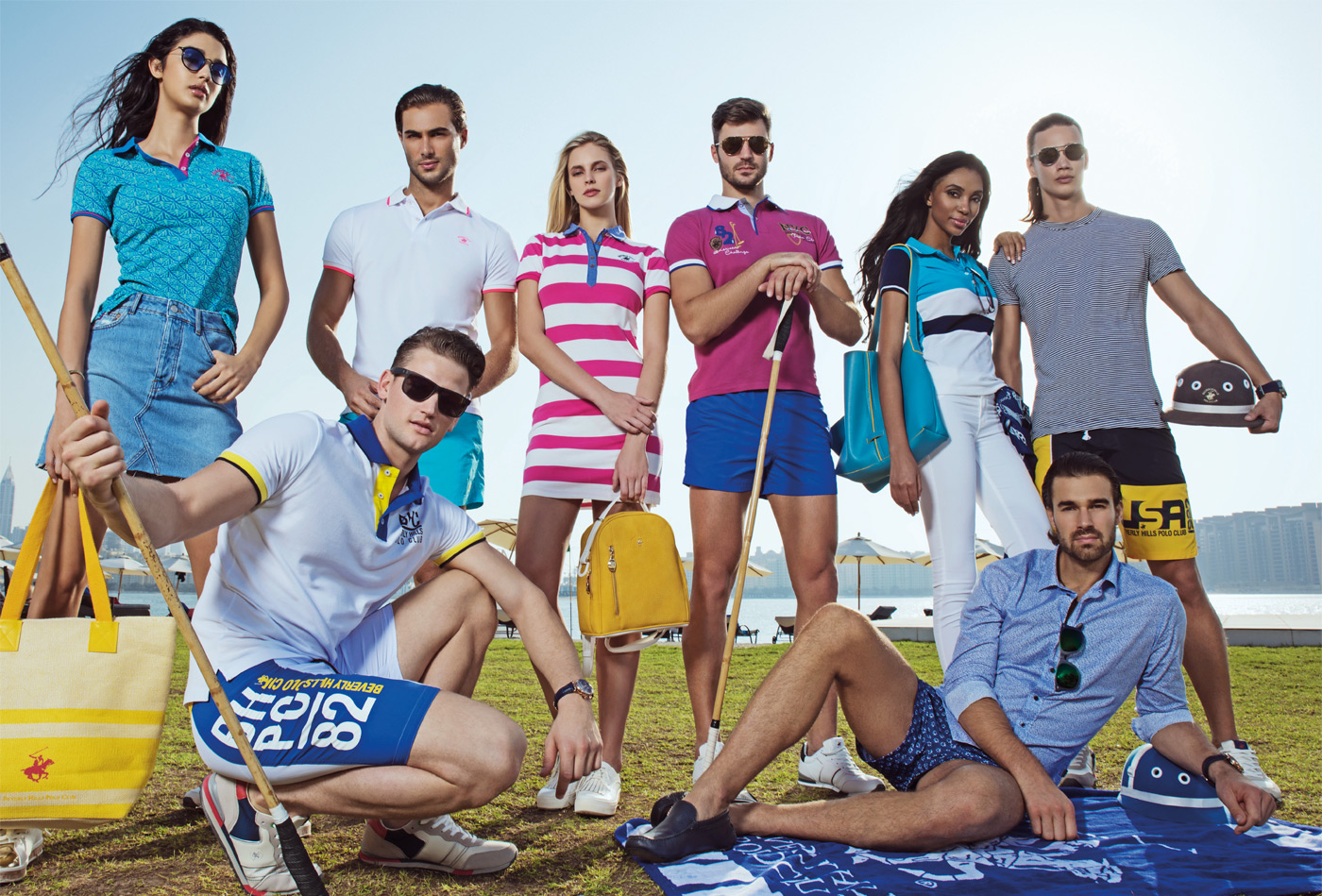
    The United States Polo Association, via its licensing arm and broadcaster — USPA Global Licensing — announced that U.S. Polo Assn. will return as the official apparel sponsor of the 2018 China Open Polo Tournament.

    Partnering with Chinese licensing partner, Yicai Brands Management, the West Palm Beach, Florida-based U.S. Polo Assn. will provide official jerseys for players and uniforms for staff of the event.

    The tournament will take place on Sunday, September 30, at the Tang Polo Club in Beijing and is recognised as one of the largest and most watched international polo tournaments in China. This year, four international polo teams will participate including Brunei, England, Malaysia and China.

    “We are excited to be the official apparel sponsor for the prestigious China Open Polo Tournament,” said USPAGL President and CEO, J. Michael Prince.

    “This will be another opportunity to build global brand awareness while also engaging consumers and sports fans in the sport and lifestyle of polo in one of the most important markets in the world.”

    With a global footprint worth $1.6 billion in retail sales and a presence across 166 countries, China has become the American brand’s premier market for growth, as it eyes a $2 billion dollar global sales target.

    In the next five years, U.S. Polo Assn. plans to have over 300 retail stores in China, representing one of the largest retail footprints for an international apparel brand in the Chinese marketplace. Earlier this year, the company also relocated its Chinese operations to the city of Changshu (nicknamed “Apparel City”) at the Changshu Brand Operations Centre, which specialises in product design, research & development, marketing, social media and e-commerce.

    “With our amazing partner, Yicai, U.S. Polo Assn. is building a significant brand presence in China while also driving tremendous long-term growth,” added Prince.

    The Chinese agreement comes after the brand announced expansion plans for the UK and Ireland, as part of a new strategy under new creative director Craig Prest. Earlier this year, the brand also inked a sponsorship deal to dress the U.S. national team at the 2018 Westchester Cup in the UK.

  • Apple cuts costs for the iPhone XS’s big display

    Apple cuts costs for the iPhone XS’s big display

    Apple shaved some parts from the display in its largest new iPhone, helping keep costs under control in what has become the priciest component of its phones in recent years, according to a new cost analysis of the device.

    TechInsights, an Ottawa, Ontario-based firm which rips open phones to analyze their contents and estimate the cost of the parts inside, said on Tuesday that the iPhone XS Max with 256 gigabytes of storage capacity contains about $443 in parts and assembly costs, compared with $395.44 for the 64-gigabyte version of last year’s iPhone X.

    Apple released a trio of new phones earlier this month, including an update to last year’s iPhone X, called the iPhone XS, that starts at $999, and the budget-minded iPhone XR that starts at $749.

    But it was the iPhone XS Max – with a 6.5-inch display that uses OLED technology for richer colors – that pushed new pricing boundaries, starting at $1,099.

    In its cost analysis released on Tuesday, TechInsights found that the single priciest part of the iPhone XS Max – the display – cost $80.50, compared with $77.27 for last year’s iPhone X, which featured a smaller 5.8-inch screen.

    The relatively small increase in cost despite the larger screen size was because Apple appeared to have removed some components related to its so-called 3D Touch system, which makes apps respond differently depending on how hard users press the screen.

    “All told, what they took out adds up to about $10, so this $80 estimate would have been about $90,” Al Cowsky, who oversees cost analysis at TechInsights said in an interview.

    “They had a trade-off in cost.”

    Apple declined to comment on the study.

    But Bob O’Donnell of TECHnalysis Research said Apple likely made the right decision to focus on ensuring it could deliver a larger-screened model this year economically.