Tag: asia

  • Uniqlo Asia helps the parent’s sales power record quarter

    Uniqlo Asia helps the parent’s sales power record quarter

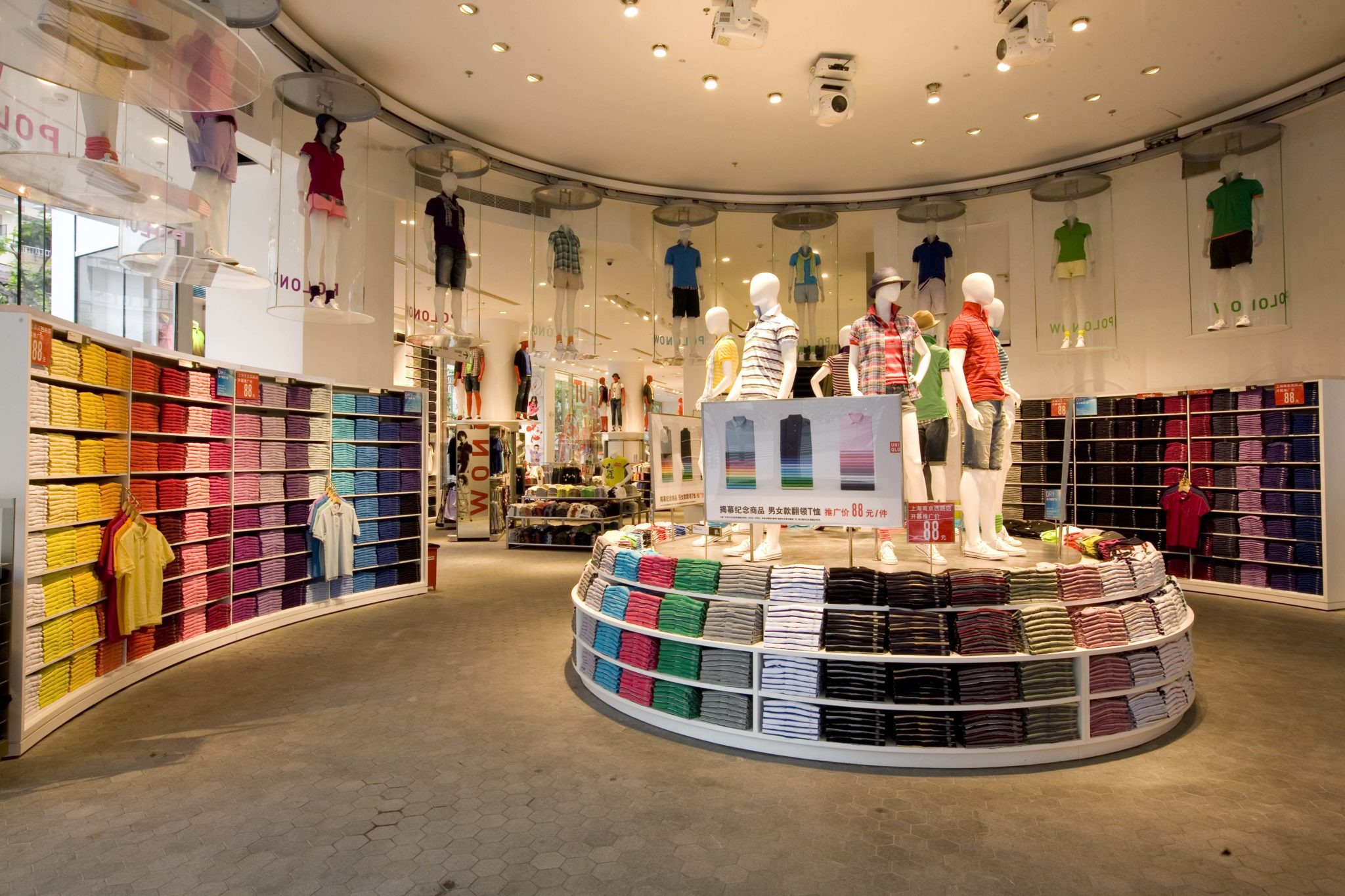
    Solid overseas growth helped Japanese apparel retailer Fast Retailing post a record quarterly profit.

    Uniqlo Asia sales proved the star of the business.

    For the three months to May, Fast Retailing’s operating profit was 68.4 billion yen (US$608 million), 37 per cent ahead of a year ago. Overseas sales exceeded domestic sales for the third consecutive quarter.

    For the first nine months trading, overseas sales rose 28 per cent year on year and overseas operating profit lept 65 per cent, driven largely by Asian sales of its largest retail brand, Uniqlo.

    In Japan, sales rose 8 per cent for the first nine months of the year, despite a static store count of just over 800. Online sales there rose 33 per cent and now account for 7.8 per cent of domestic sales.

    Fast Retailing’s relatively new value chain GU increased sales by 6 per cent in the nine months, but discounting saw operating profit fall by 20 per cent in the latest quarter.

  • Android Auto finally learns Korean Language

    Android Auto finally learns Korean Language

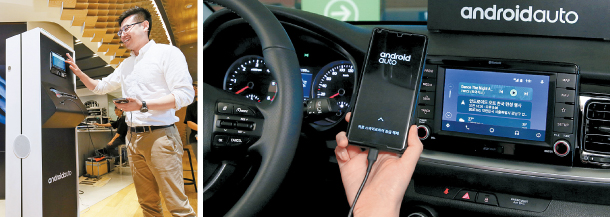
    Android Auto, Google’s three-year-old software for cars, is finally available in the Korean language and can now be used in a majority of Hyundai and Kia vehicles in Korea.

    Google Korea, Hyundai Motor and Kakao jointly announced the launch of the smartphone-based virtual dashboard in Korea on Thursday, effective on the same day. The Android software, when connected to an Android smartphone, enables drivers to make calls, send text messages, use a navigation map, listen to music and much more, all through Google Assistant voice commands.

    “The primary task of drivers is safely driving,” said Lawrence Kim, a lead product manager at Google Android Auto, “but observation of drivers showed they do so many other tasks with their smartphone – sending text messages, reading news and making calls. It’s a far-from-safe situation, which led us to think about how to seamlessly integrate smartphones with the vehicle.”

    He noted that the software is not designed to simply mirror the app on the smartphone. Google has customized the user interface for the car display.

    Google joined forces with Kakao Mobility, the transportation arm of Kakao, to develop a navigation map based on the Kakao Navi app as an alternative to Google Maps. The Korean government’s ban on Google’s use of mapping data has led to Android Auto’s later-than-expected debut here. Google Maps users in Korea can only get access to public transportation routes – save for subways – and simple street maps.

    Hyundai Motor and its sister carmaker Kia Motors were the first in the world to introduce Android Auto in their vehicles in 2015, but availability was confined to outside of Korea until Thursday. The software is compatible with all cars currently sold by Hyundai Motor and Kia Motors – totaling over 40 including the Avante, Sonata, Santa Fe from Hyundai and the K5, K7 and K9 from Kia.

    Drivers only need to download the Android Auto app from the Google Play store, connect their smartphone to their vehicle via a USB cable and install the system in the car. The software is activated by pressing a voice-recognition button on the steering wheel or saying “Okay Google.”

    Choo Kyo-woong, director of the infotainment development group at Hyundai Motor, said the carmaker currently does not support wireless connection with the smartphone, citing the issue of smartphone battery exhaustion.

    Android Auto’s entry in Korea comes amid growing competition in the auto infotainment market. Consumers are increasingly attracted to entertaining and safe driving and customized car systems. There is no downright leader in the market, yet, but Google has a great competitive edge, given that the Android system captures more than an 80 percent share of smartphones in Korea.

    Naver currently sells Away, a car infotainment display based on its self-developed artificial intelligence platform, at over 300,000 won ($266). Naver’s portal and chat app rival Kakao has its own service based on its Kakao I AI platform. SK Telecom has combined Nugu AI platform with T Map, a navigation app that controls more than 60 percent of the navigation market in Korea. KT is preparing to unveil its system, Giga Drive.

    Apple’s CarPlay is already available for owners of the iPhone 5 or later models in almost 40 countries around the world, including Korea. Unfortunately, its functions are limited here because navigation is not available.

  • The Long Road to Reviving Indonesia’s Cacao Industry

    The Long Road to Reviving Indonesia’s Cacao Industry

    Indonesia had to import about 200,000 metric tons of cacao beans last year, but it was not supposed to happen.

    The tropical archipelago used to be a beacon of cacao bean production, with a record 850,000 tons of raw beans in 2009, or about six times more than two decades earlier, according to Central Statistics Agency (BPS) data.

    Until then, Indonesia was the third-largest cacao bean exporter in the world behind the Ivory Coast and Ghana. However, seeing that much more value could be added by processing beans domestically, the government slapped a tax on raw bean exports in 2010 and told global manufacturers to build cocoa processing plants in Indonesia.

    Switzerland-based cocoa and chocolate maker Barry Callebaut expanded its Indonesia operation by establishing a plant in Makassar, South Sulawesi, in 2013 and another in Gresik, Central Java, in 2016. United States-based agricultural giant Cargill also established a processing facility in Gresik in 2014.

    But then a deadly disease decimated many cacao trees, forcing farmers, most of them only using simple farming techniques, to switch to planting corn, coconut or oil palm. Indonesia had about 1.3 million hectares of cacao plantations in 2012, which have continued to decline to an estimated 1.1 million hectares last year. Yields also fell to around 660 kilograms per hectare last year from 1.1 tons just five years earlier.

    The Indonesia Cocoa Industry Association (AIKI) estimates that the country produced around 260,000 tons of beans last year, down 31 percent from a year earlier.

    Soetanto Abdoellah, chairman of the Indonesian Cocoa Board, said the country now has to import beans from Ghana, the Ivory Coast and Cameroon to meet local demand.

    The Fall

    According to Rudyanto Hady, sourcing sustainability manager at Barry Callebaut, the production decline can also be ascribed to farmers’ limited skills and a lack of funds to develop new plantations.

    “Most cocoa farmers in Indonesia are smallholders, which make up more than 95 percent of the total cocoa plantation area, with the remaining areas held by private firms and state-owned companies,” Rudyanto said.

    Farmers are meanwhile also struggling with aging cocoa trees, most of which were planted between the 1990s and 2000s, in addition to diseases that afflict trees.

    All these factors have created a negative perception of cocoa as a commodity among farmers, who deem it an unprofitable crop that cannot improve their livelihoods.

    Misnoto, a 49-year-old farmer from Lampung, said black pod disease infected half a hectare of his cocoa trees.

    Another farmer, Sutaji, said farmers in the province, including himself, are struggling to improve yields.

    “We are now still learning how to improve yields from our cocoa plantations,” said Sutaji, who has a 3-hectare cocoa plantation.

    Temptation of Palm Oil

    AIKI chairman Piter Jasman said farmers often lack technical assistance, which affects local cocoa production and makes other cash crops, such as oil palm, to be considered as more lucrative alternatives.

    “If the government does not push the national production then production from cocoa plantations will continue to decline and eventually subside over the next few years, like in Malaysia,” Piter said.

    The neighboring country produced around 247,000 tons of cocoa beans in 1990, which dropped to a mere 3,000 tons by 2014 as farmers switched crops amid a palm oil boom.

    Lampung farmer Sutaji noted that oil palm could be an attractive option for farmers like him, who can produce around 700 kilograms of cacao per year, earning him Rp 17.5 million ($1,220). On the other hand, the same area under oil palms can earn him up to Rp 31.5 million per year.

    Demand

    Still, both local and foreign chocolate companies are heavily invested in Indonesia’s downstream cocoa industry, with most having established processing facilities in the country.

    Indonesia’s average cocoa bean production capacity rose to 800,000 tons a year from 350,000 tons since the government started to impose an export duty on the commodity, said Piter of AIKI.

    The total export value of processed cacao – including cocoa cake, cocoa butter, cocoa powder and chocolate liquor – amounted to nearly $1 billion in 2016, close to 2010’s peak of $1.1 billion.

    Chocolate confectionery is an expanding business in Indonesia, projected to grow 42 percent to Rp 19.5 trillion by 2019, data from a research firm Mintel shows.

    While Singapore and Malaysia each currently consumes about 1 kilogram of chocolate per capita per year, it is only 600 grams for Indonesia, indicating more room for growth.

    Closing the Gap

    Mahendra Siregar, who was a deputy trade minister and instrumental in Indonesia’s tax policy on cacao bean exports in 2010, said the current government seems to have abandoned the initial plan to boost the country’s cocoa processing industry.

    “We want the cocoa processing industry to accelerate, just like palm oil. We want the raw material to be processed in the country,” Mahendra said.

    “We encouraged local investors and even invited foreign investors to develop their upstream businesses here. But now, with the declining cocoa production … it’s like we already invited them here, they already established here, but now we only have a small cocoa supply [for processing],” he said.

    Mahendra said the processing industry still has a future, but it depends on consistent government policy.

    The National Cocoa Movement (Gernas Kakao) was set up in 2009 to plant new cacao trees and intensify production in existing plantations. It distributed subsidized cocoa seeds and fertilizers to farmers and provided them with technical assistance.

    But the program was terminated in 2013 after efforts to expand the main cocoa producing areas from Lampung and Sulawesi to other provinces spread the government’s pool of instructors too thin.

    “We need to hurry to implement and revive Gernas Kakao, otherwise the processing industry business will soon melt away,” Mahendra said.

    Private-Sector Assistance

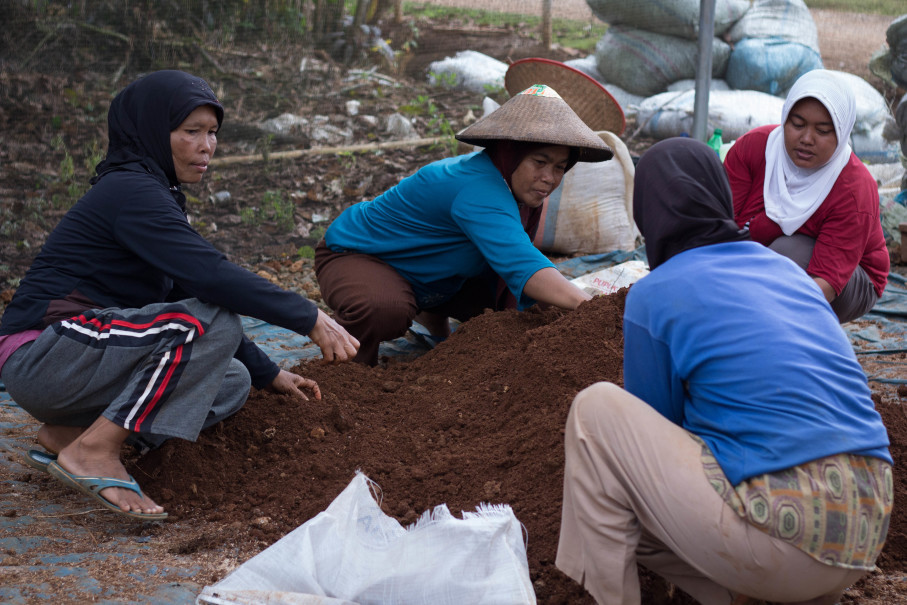
    Cocoa farmers in Lampung are also trying to boost bean quality and yields with assistance from Barry Callebaut, the world’s largest producer of chocolate and cocoa products. The company is helping them improve their farming techniques to boost the quality of the fruit.

    It works with thousands of smallholders in Lampung and Sulawesi to implement cocoa sustainability programs, allowing farmers to produce high-quality beans that can be sold under a sustainability scheme. The beans can also be certified as premium quality, which either improves farmers’ incomes or earn them incentives from the company, Rudyanto said.

    Cocoa can also be cultivated along with other trees and plants, such as coconuts and cloves, giving farmers additional income from the same land.

    Muksininin, a 33-year-old farmer from Bumi Mulyo village in Lampung, said he still prefers to grow cocoa because the trees do not need constant attention.

    “Cocoa trees are easier to manage compared with oil palms, rubber trees, or even vegetables,” Muksininin said.

  • Big expansion plan for Burger King Thailand

    Big expansion plan for Burger King Thailand

    Fast food chain Burger King is preparing to open 16 new stores by the end of this year in Thailand.

    Prapat Siangjan, Burger King Thailand GM, said the company also plans to open 15 stores annually in 2019 and 2020, taking the network to 131. The stores will be opened near tourist spots and petrol stations, where higher than average spending is considered likely.

    “Customers at petrol stations spend one-and-a-half-times more than at original stores,” said Siangjan, “because we can stay open from breakfast until late at night, and not only at lunch and dinner time as is the case with retail complexes.”

    Other areas of the Burger King Thailand business continue to expand, with last year’s newly introduced delivery channel showing monthly sales figures that indicate double growth year on year.

    This year’s expansion will cost the company THB375 million (US$11.3 million).

  • AEON receives the Best Design Excellence Award at  Money Expo 2018

    AEON receives the Best Design Excellence Award at Money Expo 2018

    Mr. Praphan Rangsiyopas (left), Executive Vice President of Marketing, AEON Thana Sinsap (Thailand) Public Company Limited celebrate on winning “The Best Design Excellence Award” on size 850 – 1,000 sq.m. in Money Expo Booth Design Awards 2018. The prestigious award was given to financial institutions and organizations participating in the 18th Money Expo 2018, ceremony will be presided over by Dr. Somkid Jatusripitak, Deputy Prime Minister (right) at The Athenee Hotel Bangkok.

    AEON booth was designed under the concept “AEON TO THE INFINITE WEALTH… Growth through Financial Technology” that demonstrates the continuous development of AEON through the outstanding structure and patterns. The continuous lines represent the growth of a large tree with a stable foundation, as well as soft curved lines that signify the infinity symbol of never-ending prosperity and wealth.


  • Frost & Sullivan collaborates with Seoul Fintech Lab to support Fintech startups in Korea

    Frost & Sullivan collaborates with Seoul Fintech Lab to support Fintech startups in Korea

    Frost & Sullivan has signed a Memorandum of Understanding with the Seoul Metropolitan Government (SMG) to support activities such as commercialization, investment promotion, support for advancement of Fintech startups into the global market.

    The formal signing of the memorandum took place at Four Seasons Hotel, Hong Kong on Tuesday, July 10 witnessed by the representatives from the Seoul Metropolitan Government, and the Financial Hub Korea, Financial Supervisory Service (FSS). The agreement was signed by Kim, Dae Ho, Director, Seoul Metropolitan Government and Shivaji Das, Asia-Pacific Partner in Charge, Frost & Sullivan.

    Frost & Sullivan’s collaboration with SMG also aims to help startups accelerate the pace of their market commercialization. Under this agreement, Frost & Sullivan will also assist in uncovering potential overseas fintech startups and hold joint events of mutual interest with the Seoul Fintech Lab.

    Shivaji Das shared that Frost & Sullivan was well-placed to assist SMG, given the company’s strong track record and expertise in Fintech. With its global presence, broad industry coverage and strong business network, the company is able to actively work with other key partners in building a converged development platform that can accelerate new startups towards transformational growth.

    “We are honoured to be partnering with the Seoul Metropolitan Government to contribute towards the overall growth of the Fintech ecosystem in Korea. Through our combined efforts, we hope to help drive innovation and help startups develop amidst the rapidly evolving market environment,” said Shivaji Das.

    Frost & Sullivan works with their clients to execute Fintech projects and have also developed several Fintech-related reports under their global FinVision research subscription incorporating the relevant research from 4 different core groups; Digital Transformation, Banking & Financial Services, Visionary Innovation Group and TechVision.

    The Seoul Fintech Lab is an initiative by the Seoul Metropolitan Government to develop the Korean fintech ecosystem by equipping Korean fintech businesses with the necessary skills, knowledge and resources to succeed globally. The lab is also set to be an incubator for new startups.

  • Centara Makes Life Easier for Chinese Travelers by Accepting WeChat Pay for Online Bookings

    Centara Makes Life Easier for Chinese Travelers by Accepting WeChat Pay for Online Bookings

    Centara Hotels & Resorts, Thailand’s leading hotel operator, has announced that it is now accepting WeChat Pay transactions on its websites for online room reservations. This is in addition to the 15 hotels that already deploy nearly 100 EDC devices for QR code scanning on WeChat Pay, making it the largest hotel group in Thailand offering Chinese tourists omni-channel payment solutions. Bills for accommodation, restaurants and spa treatments can be paid directly from smartphones. The company expects to have WeChat Pay at all Centara Hotels & Resorts globally by the end of 2018, thus providing convenience to customers, especially Chinese guests.

    Thirayuth Chirathivat, Centara Chief Executive Officer, said: “A seamless payment experience for consumers using any channel is an element of our platform for expansion, which should see us double both revenue and the number of our properties over the next five years. As consumer behavior evolves, Centara has adopted an omni-channel strategy to stay relevant and to provide a great customer experience. We embrace these types of disruptive opportunities to better serve our guests and stay on top of the industry.”

    Chinese tourists account for almost one third of all foreign travellers to this country. Thailand is welcoming an ever-increasing number of Chinese visitors, for whom the kingdom remains the top travel destination. This year, the Ministry of Tourism and Sports expects more than 10 million Chinese tourists to travel to Thailand.

    WeChat Pay is the payment solution of WeChat, one of the largest social networks in China. WeChat Pay has become the main cashless payment method for daily small transactions in China and has more than 800 million active users in its database.

    “The number of Chinese tourists booking with Centara keeps growing. They are a significant customer base for all businesses in Thailand. Centara’s Chinese website receive hundreds of thousands of visits from Chinese users. Almost half the visits come from a mobile device. Earlier this year we signed an agreement with TreePayCo.,Ltd., a payment platform facilitator to develop a system that allows Chinese customers to use their mobile phones to make e-payments outside of China for accommodation and services at Centara properties. WeChat Pay users and Chinese travellers can stay and enjoy the whole trip with Centara with only a few quick taps on their smartphone. Today’s consumers are connecting their omni-channel experiences with the likeability of the brands. In order to maintain our brand leadership, we are committed to providing seamless guest satisfaction across touchpoints.”Thirayuth added.

    Other than the 2 main websites, Centara’s 15 hotels also welcome WeChat QR code payment. These are: Centara Grand and Bangkok Convention Center at Central World, Centara Grand at Central Plaza Ladprao, Centara Grand Mirage Beach Resort Pattaya, Centara Grand Beach Resort Samui, Centara Grand Beach Resort & Villas Hua Hin, Centara Grand Beach Resort & Villas Krabi, Centara Grand Beach Resort Phuket, Centara Villas Samui, Centara Villas Phuket, Centara Kata Resort Phuket, Centara Karon Resort Phuket, Centara Mae Sot Hill Resort, Centara Hotel Hat Yai, Centra by Centara Government Complex Hotel & Convention Centre Chaeng Watthana and COSI Samui Chaweng.

  • Moschino being creative at the high tea at Ritz-Carlton, HK

    Moschino being creative at the high tea at Ritz-Carlton, HK

    From 14 July to 16 September 2018, Café 103 will collaborate with Moschino for a specially crafted afternoon tea brimming with delightful Italian flavors.

    Housed in an exclusive bear-shaped tea set stand paying homage to the label’s most recognizable character, the Moschino Afternoon Tea promises to be a new benchmark for the midday pastime.

    The creativity of Moschino is expressed through a new combination of stylistic elements that conveys its vision of a disenchanted future.

    Since Jeremy Scott’s appointment as Creative Director in 2013, capsule collections have been introduced in collaboration with iconic characters, figures and restaurants such as Betty Boop, Barbie, Looney Tones, McDonald’s, The Powerpuff Girls, SpongeBob and more. Even though Moschino is an expression of contemporary fashion, it stands apart from the chorus and sings solo to give its own personal rendition of the music of today.

    Executive Pastry Chef Richard Long incorporates iconic elements of the Italian luxury fashion house into the afternoon tea treats, turning Moschino’s eccentric playful touches to edible pleasures. Crunch Chocolate Passion Tart reveals layers of gastronomic pleasure under the fashion house’s double question mark logo – chocolate coating with almond bits, rich chocolate cream and passion fruit puree at the core.

    Gianduja Lollipop features the hazelnut chocolate ganache signature of Piedmont region, and is adorned with Moschino’s most beloved teddy bear motif to melt any heart.

    Gold Fresh Couture is inspired by the fragrance notes of the label’s iconic cleaning spray perfume of the same name – white peach, vanilla and rhubarb. Poached white peach and rhubarb compote add a fruity sweetness to the generous spread of vanilla white chocolate cream housed in a golden chocolate box resembling the catchy gold perfume bottle.

    Sicilian Pistachio Apricot is composed of layers of apricot compote, Sicilian pistachio cream and apricot jelly. A chocolate Moschino zipper puller lies atop to reinforce brand presence.

    Chef Richard’s very own version of Chocolate Pear Brownie highlights deliciously contrasting textures – crispy butter crumbles sandwiching moist chocolate cake infused with soft pear fillings.

  • H1 car imports slow down to a crawl in Vietnam

    H1 car imports slow down to a crawl in Vietnam

    More than 126,000 autos were sold in Vietnam in the first half of the year, 106,600 of them locally assembled and over 19,000 imported ones.

    The Vietnam Automobile Manufacturers’ Association (VAMA) says that sales of locally assembled cars increased 10 percent over the same period last year, while that of imported cars plunged 49 percent.

    As a whole, sales were down 2 percent over H1 in 2017, VAMA said.

    It noted that the decline in sales of imported cars was mainly because of a government decree that took effect this year, setting tough conditions for car imports.

    The decree stipulates that traders will only be permitted to import automobiles if they can provide valid vehicle registration certificates issued by authorities from the countries of origin.

    Original quality control certificates for each vehicle and letters of authorization regarding recalls of defective vehicles from the manufacturers are also be required, along with copies of quality assurance certificates provided by the countries of origin.

    The regulation also requires importers to have one car from each batch shipped to Vietnam to go through emissions and safety tests.

    The decree was met with strong opposition from importers who said that it cost them more time and money, but the Ministry of Industry and Trade countered it by saying the new rules would protect consumers and facilitate fair competition.

    However, in March this year, the government removed the condition for local testing of autos, and June auto imports saw a 45.6 percent surge dominated by Thailand.

  • Telekom Malaysia launches cheaper broadband plans, says more to come

    Telekom Malaysia launches cheaper broadband plans, says more to come

    Telekom Malaysia Bhd (TM) unveiled new broadband plans Thursday and pledged that it will continue to come up with more packages in line with the government’s aspiration for cheaper services by year-end.

    “We will continue, of course. This is the continuation of giving better and better (plans) to our customers, be they households or businesses. We started back in 2010 (launched unifi), then we had the upgrades in 2016 and 2017. So it is a continuation,” said acting group CEO Datuk Bazlan Osman.

    Speaking at a briefing on the new plans, Bazlan said it will consider feedback from customers, stakeholders and the government, and will continue to come up with more packages, based on demand.

    TM unveiled unifi Basic, a broadband-only plan at 30Mbps with a 60GB monthly usage quota for RM79 per month. This plan is only for households with monthly income of RM4,500 and below.

    The RM79 per month is 56% lower than the current 30Mbps unifi Home plan, which is priced at RM179 per month. Unifi Basic is available starting Aug 15 and pre-orders open on July 15.

    TM will provide upgrades of up to 800Mbps for existing unifi Home customers under its unifi turbo plan. Starting Aug 15, they will be upgraded in phases up to 10 times the current broadband speed, for the same price.

    For example, an existing 30Mbps unifi Home customer will be upgraded up to 300Mbps while a 100Mbps unifi Home customer will be upgraded up to 800Mbps. New customers who subscribe to any existing unifi plan before Dec 31 will also enjoy the speed upgrade in phases, beginning 2019.

    In addition, TM will upgrade over 340,000 Streamyx customers in unifi coverage areas to unifi while those who are not in unifi coverage areas will have double the speed they get now.

    Executive vice-president Imri Mokhtar said TM will continuously invest in fixed and wireless technologies to bring high speed broadband to its customers with more than 350,000 Streamyx customers expected to enjoy faster broadband soon.

    “Though the broadband plans unveiled today are primarily for home customers, we certainly have not forgotten our SME customers,” he said, adding that new plans for its business/SME customers will be announced in the next few months.

    Meanwhile, the unlimited unifi Mobile postpaid plan was announced today at a promotional price of RM99 per month, available from July 15 exclusively for its existing broadband customers.

    “These new plans mark our commitment to bring better affordability/price, speed and coverage for all Malaysians to enjoy a seamless digital experience with unifi. We expect the new broadband plans to place Malaysia alongside the top broadband nations in the region,” said Bazlan.

  • Singapore retail sales up in May

    Singapore retail sales up in May

    Retail sales in Singapore edged up marginally in May, with growth constrained partly by lower motor vehicle sales, according to Thursday’s (July 12) Department of Statistics release.

    May’s retail takings were up 0.1 per cent from the same month a year ago, with a total estimated sales value of S$3.8 billion, of which online retail sales contributed 4.3 per cent. Excluding motor vehicles, the rise was more significant, at 2.2 per cent.

    With increased shopping before the Hari Raya Puasa festive period, furniture and household equipment saw the biggest jump in sales, at 9.1 per cent. Sales at petrol service stations rose 8.8 per cent, due partly to higher petrol prices; after removing the price effect, the rise was just 0.8 per cent.

    Sales of apparel and footwear, medical goods and toiletries, and department stores industries also saw increases of between 2.7 per cent and 6.8 per cent.

    In contrast, sales of computer and telecommunications equipment fell 11.3 per cent, while those of motor vehicles fell 8.4 per cent. Takings from optical goods and books, recreational goods, minimarts and convenience stores, supermarkets and hypermarkets, and food retailers saw smaller decreases of between 0.8 per cent and 3.2 per cent.

    Lower vehicle sales also weighed down the month-on-month figures, though to a smaller degree. On a seasonally-adjusted basis, retail sales rose 0.1 per cent in May compared to April 2018. Excluding motor vehicles, retail sales rose 0.4 per cent month on month.

    Sales of food and beverage services rose on both a year-on-year and a seasonally-adjusted month-on-month basis: up 1.2 per cent compared to a year before, and up 0.6 per cent compared to the previous month. The total sales value of food and beverage services was estimated at S$689 million, up from S$681 million in May 2017.

  • Older consumers do their shopping online

    Older consumers do their shopping online

    Consumers in their 50s and 60s are an emerging force in e-commerce as older customers with plenty of money to spend. Data confirm they are increasingly shopping online and via mobile apps.

    Data from e-commerce website Auction released showed that online purchases by consumers in their 50s and 60s have more than doubled compared to five years ago.

    Comparing the sales record from the year’s first half, consumers in their 50s spent 130 percent more than they did in 2014. Shoppers in their 60s increased their online spending by 171 percent.

    Combined, shoppers in their 50s and 60s accounted for 27 percent of all Auction customers in the first half of this year. In 2014 their share was just 17 percent.

    “We see more proactive PC and smartphone users among people in their 50s and 60s and their increase is wielding influence over the e-commerce market, which in the past was mainly about consumers in the 20s and 30s,” said Seo Eun-hee, who is in charge of Auction’s marketing team.

    Seo added that the growing purchasing power of older customers is a sign that e-commerce is no longer a channel confined to specific generations.

    Auction’s report also analyzed which products were popular with older consumers.

    Although it is generally thought that younger shoppers are more willing to spend money on themselves – the “you-only-live-once (YOLO)” lifestyle – Auction’s data suggested that is no longer the case.

    Belying the traditional Korean image of the prudent, family-centered older generation, shoppers in their 50s and 60s are apparently splashing out on clothes, luxury goods and travel. Sales of tickets for flights, cruises, golf vacations and tour packages rose more than 114 times. Fashion items sold almost eight times more this year compared to 2014 while sales for luxury-branded goods nearly tripled.

    More seniors were also looking for simpler alternatives to home-cooked meals as purchases of instant food and home-meal replacements also tripled during the same period.

    Smartphones are one factor that has boosted the number of older consumers shopping online. Mobile versions of e-commerce sites are generally simpler and intuitively easier to understand than those of PCs.

    In late June, e-commerce website WeMakePrice announced that “senior” is one of the four keywords that define the e-commerce trend in this year’s first half.

    Purchases by consumers above 50 rose 36 percent year-on-year during this period. The number of members of the website in this age group also increased 2.6 percent year-on-year.

    Like Auction, the list of products most purchased by senior consumers had high price tags: bars of gold, laundry machines and refrigerators. In fact, seven among last year’s 10 bestselling products of consumers aged above 50 were home electronics, whereas in 2016 there were two and in 2015, zero.

    This increase is notable in that it signals senior consumers now have more trust in the products they buy online.

  • Jumbo Group to expand in Bangkok

    Jumbo Group to expand in Bangkok

    Singapore restaurant chain Jumbo Group has entered into a 10-year franchise agreement with Thailand’s C J Seafood.

    The agreement authorises C J Seafood to establish and operate a Jumbo Seafood restaurant in Bangkok, which is expected to open by the end of this year.

    A company announcement stated that this new agreement forms part of the group’s plans to expand and strengthen its presence in Asia. It has already established franchises in Vietnam and Taiwan, making Thailand the group’s third franchise outpost in the region.

  • There is no sugar monopoly in Malaysia, say refiners

    There is no sugar monopoly in Malaysia, say refiners

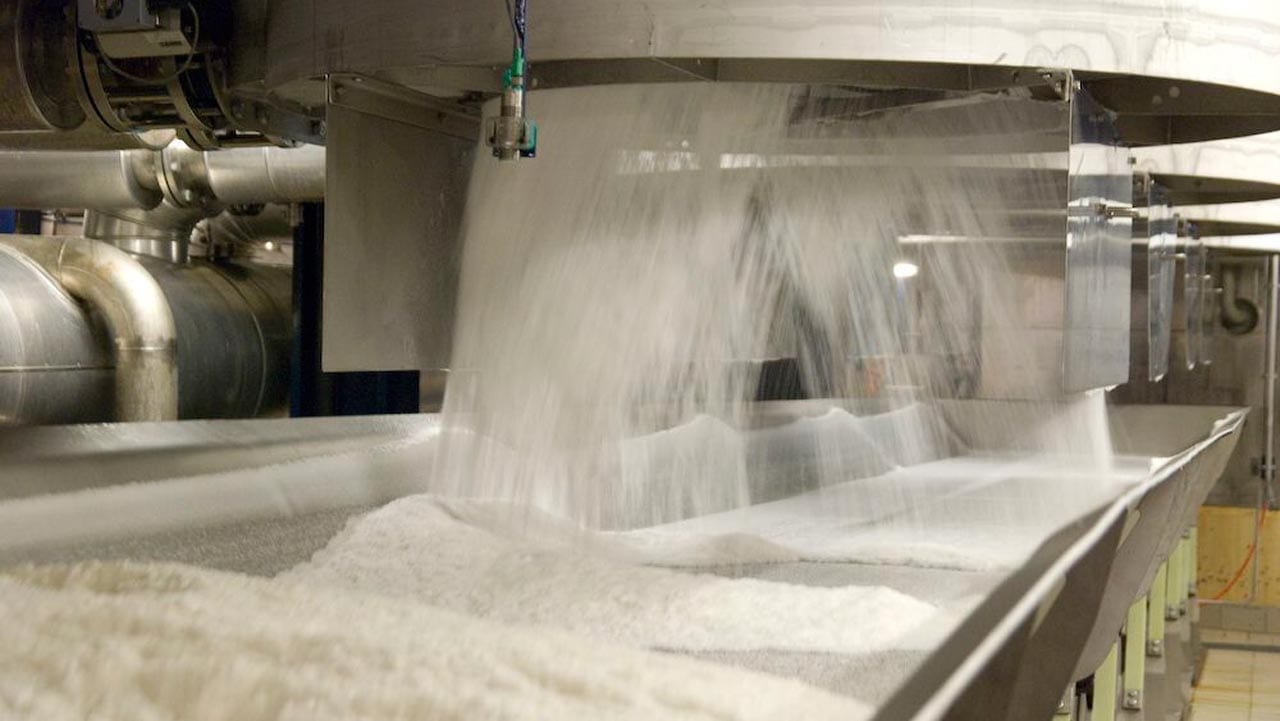
    MSM Malaysia Holdings Bhd and Central Sugars Refinery Sdn Bhd (CSR) have clarified that there is no sugar monopoly in Malaysia and that the price of the commodity is controlled by the government and is among the lowest in the world.

    The two refiners said the local players operate within a challenging business environment to ensure a steady supply of sugar to Malaysian consumers while maintaining a decent sugar stockpile for the nation.

    “The facts to date, while the costs of doing business have increased, such as minimum wage, gas and electricity tariffs, the ceiling price of refined sugar has remained at RM2.95/kg,” they said in a joint statement.

    As sugar is gazetted under the Price Control and Anti-Profiteering Act 2011, sugar in Malaysia is among the cheapest in the world. Currently, the ceiling price for coarse grain sugar is set at RM2.95/kg and fine granulated sugar at RM3.05/kg.

    Despite that, the industry is adversely affected with illegal activities such as sugar smuggling and infiltration of illicit sugar, which are threats to matters concerning halal, quality control and other mandatory certification requirements.

    “Nevertheless, the local refiners are committed to provide a stable environment for the consumer whilst maintaining highest standards of sugar quality even at the current controlled price.”

    In Malaysia, there are two sugar refiners – MSM under FGV Holdings Bhd and CSR under Tradewinds (M) Bhd – operating five sugar refineries, including a new one in Tanjung Langsat, Pasir Gudang, Johor, which is scheduled for commissioning this month.

    The current total capacity of the existing four refineries is 2.0 million tonnes a year. Domestic demand in Malaysia is 1.5 million tonnes a year, leaving Malaysia with an excess capacity of 500,000 tonnes annually. With the new refinery in Johor, total capacity will be 3.0 million tonnes a year.

    Apart from local brands, they said, there are importers that bring in and market a variety of sugar brands in Malaysia including SIS, Taikoo, Waitrose, Billington, Tate & Lyle, which provides for a competitive landscape.

    Food and beverage manufacturers buy sugar through the NY#11, the global commodity trading platform for raw sugar. Local refiners will then execute the buying on behalf of these companies, import the sugar that has been procured and refine it for them for a fee.

    As part of the local refiners’ duties, a certain amount of sugar is stockpiled to ensure adequate supply in the country during times of high global prices, the refiners said.

    “Due to the relatively lower world raw sugar prices today, many opportunistic parties that operate without the overheads and responsibilities that local refiners have, are trying to import sugar and profit from the low prices. These companies may not have the necessary certifications such as the halal certification and will cease operations once world raw sugar prices go higher than the ceiling price. It will then be left to local sugar refiners to address the instability by the void left behind by these opportunistic players.”

  • Rise of robots fuels slavery threat for Asian factory workers

    Rise of robots fuels slavery threat for Asian factory workers

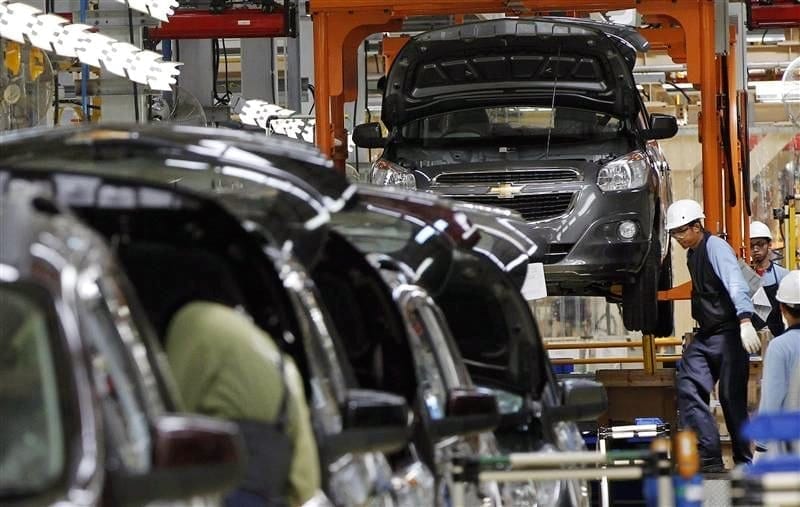
    Drastic job losses due to the growth of automation in the region – a hub for many manufacturing sectors from garments to vehicles – could produce a spike in labour abuses and slavery in global supply chains, said risk consultancy Verisk Maplecroft on Thursday.

    More than half of workers in Cambodia, Indonesia, Thailand, Vietnam and the Philippines – at least 137 million people – risk losing their jobs to automation in the next two decades, the United Nations’ International Labour Organization (ILO) says.

    The risk of slavery tainting supply chains will spiral as workers who lose their jobs due to increased robot manufacturing will be more vulnerable to workplace abuses as they jostle for fewer jobs at lower wages, said Alexandra Channer of Maplecroft.

    “Displaced workers without the skills to adapt or the cushion of social security will have to compete for a diminishing supply of low-paid, low-skilled work in what will likely be an increasingly exploitative environment,” she said.

    “Without concrete measures from governments to adapt and educate future generations to function alongside machines, it could be a race to the bottom for many workers,” the head of human rights at Britain-based Maplecroft said in a statement.

    Farming, forestry and fishing, manufacturing, construction, retail and hospitality are the sectors in Southeast Asia where workers are most likely to be replaced by robots, Maplecroft said in an annual report, with Vietnam the country at most risk.

    Workers in the garment, textile and footwear industry – mostly women in countries such as Cambodia and Vietnam – face the biggest threat from automation in the region, Maplecroft said.

    The five countries the report lists are already considered high-risk for modern slavery as labour abuses are rife, wages low and the workforce dependent on low-skilled jobs, the firm said, with automation set to make things worse.

    “Automation has always posed a risk to low-skilled jobs, but governments and business can determine how it impacts on workers,” said Cindy Berman of the Ethical Trading Initiative, a group of unions, firms and charities promoting workers’ rights.

    “Technology can be disrupting, but it can also be part of the solution by creating opportunities for better jobs,” its head of slavery strategy.