Tag: asia

  • H&M probes alleged Myanmar factory abuses as pressure intensifies

    H&M probes alleged Myanmar factory abuses as pressure intensifies

    H&M is investigating 20 alleged instances of labour abuse at Myanmar garment factories that supply the world’s second-largest fashion retailer, it told Reuters, just weeks after top rival Zara-owner, Inditex, said it was phasing out purchases from the Southeast Asian country.

    A British-based human rights advocacy group tracked 156 cases of alleged worker abuses in Myanmar garment factories from February 2022 to February 2023, up from 56 in the previous year, indicating a deterioration of workers’ rights since a military coup in February 2021.

    Wage reduction and wage theft were the most frequently reported allegations, followed by unfair dismissal, inhumane work rates, and forced overtime, according to a report by the non-governmental organisation, the Business and Human Rights Resource Centre (BHRRC).

    “All the cases raised in the report by BHRRC are being followed up and, where needed, remediated through our local team on the ground and in close co-operation with relevant stakeholders,” H&M said in a statement.

    “We are deeply concerned by the latest developments in Myanmar, and we see increased challenges to conduct our operations according to our standards and requirements,” the Swedish retailer said.

    The BHRRC has been tracking allegations of workers’ rights abuses in garment factories since the military junta took power in Myanmar, plunging it into political and humanitarian crisis. The tracker includes abuse cases at 124 separate factories.

    The BHRRC said it tracks cases of alleged abuses through sources including union leaders, international media, and local media such as Myanmar Labour News, and seeks to verify reports by checking with brands and interviewing workers. Reuters did not independently verify its findings.

    There have been 21 cases of alleged abuses linked to Inditex suppliers over the two-year period, and 20 linked to H&M suppliers, according to the report. Inditex declined to comment on the report.

    A spokesperson for Myanmar’s military government did not reply to a request for comment on the findings. The Myanmar Garment Manufacturing Association did not reply to a request for comment.

    The decision by Inditex to exit came after Primark and Marks & Spencer announced plans to exit last year, in a trend that some say could ultimately leave garment workers worse off. Spanish fashion retailer Tendam also plans to stop sourcing from Myanmar, it said in its response to a BHRRC survey of brands published alongside the report.

    “We do have a plan to leave the country but it has not been announced yet,” Tendam wrote, without detailing its reasons. Tendam did not immediately reply to a request for comment.

    Primark told Reuters it expects its final orders from Myanmar suppliers to ship before the end of this year, but has also increased its presence on the ground. “As we work towards our exit, we’ve doubled the size of our Ethical Trade team on the ground, enabling us to more regularly visit the factories we still work with and giving us greater visibility,” Primark said.

  • China’s JD beats revenue estimates despite slowing economy

    China’s JD beats revenue estimates despite slowing economy

    Chinese e-commerce firm JD.com beat Wall Street estimates for second-quarter revenue on Wednesday, as its focus on lower-priced products to attract customers amid an economic slowdown paid off.

    JD.com saw increased traffic on the back of purchases ahead of the holiday season and as people attending offices and social functions continued to upgrade their wardrobes.

    Revenue grew 7.6 percent to 287.9 billion yuan (US$39.7 billion), compared with analysts’ average estimate of 278.85 billion yuan, Refinitiv Eikon data showed.

    After China abandoned its stringent COVID-19 lockdown policies, consumption failed to rebound immediately amid a slowdown in the country’s overall economy.

    Recent official economic data has also been gloomy, with the consumer price index tipping into deflation in July.

    Retail sales rose just 2.5 percent, slowing from a 3.1 percent increase in June, despite the summer travel season.

    Analysts had expected retail sales to grow 4.5 percent.

  • Gentle Monster to launch in Thailand

    Gentle Monster to launch in Thailand

    Set to open this August 25, the first flagship store in Thailand will occupy a 340 sqm space in Emquartier, marking another milestone for the luxury brand’s success. Drawing inspiration from its signature futuristic and avant-garde aesthetics, the store promises to echo the brand’s experimental approach to design.

    Gentle Monster’s fans can eagerly anticipate an array of exclusive offerings, including the Bold Collection with its galactic motifs and the collaborative collections with the French luxury house, Maison Margiela.

    To commemorate its store launch in Bangkok, the brand is set to release a ‘Bangkok Limited Edition’ collection this coming September.

    Originating from Seoul in 2011, Gentle Monster, founded by Hankook Kim, has consistently captivated audiences with its unconventional beauty and boundary-pushing designs.

  • Marimekko drafting SEA expansion, by entering Vietnam and Malaysia

    Marimekko drafting SEA expansion, by entering Vietnam and Malaysia

    Finnish lifestyle brand Marimekko is accelerating its expansion plan in Southeast Asia, eyeing entering Vietnam and Malaysia this year under a franchise partnership with Jaspal Group.

    The expansion, which will include the launch of online stores in both markets, comes after the brand disclosed its Singapore debut with the first store scheduled to open at Ion Orchard next month.

    “These fast-growing markets provide interesting opportunities for Marimekko’s international growth and hence support our company’s objective to scale the Marimekko business in the upcoming years,” said Natacha Defrance, Marimekko’s senior VP of Sales, Region East.

    While Marimekko’s first Vietnam stores are set to open in the Lotte Mall Westlake in Hanoi and Takashimaya shopping mall in Ho Chi Minh City later this year, the brand’s first stores in Malaysia will be located in Suria KLCC mall at Petronas Twin Towers and in The Exchange TRX mall.

    Marimekko will join Jaspal Group’s portfolio of brands, including Diesel, Melissa and Asics. The Thai retail operator has a presence in four Asian countries.

    “We see a growing interest in Asia towards the Finnish design house renowned for its bold prints and colours, so now is a good time to make Marimekko available to local consumers and tourists alike in Vietnam and Malaysia,” said Yosathep Singhsachathet, deputy CEO at Jaspal Group.

    The Finnish lifestyle brand said Asia, where it has seen growing demand for its products, is its most important geographical area for international growth. The brand has 80 stores and shop-in-shops in Asia Pacific.

  • Canada probes Ralph Lauren on alleged use of forced labor in China

    Canada probes Ralph Lauren on alleged use of forced labor in China

    Canada’s corporate ethics watchdog said on Tuesday it was investigating Ralph Lauren’s Canada unit to probe allegations the apparel retailer’s supply chain and operations in China used or benefited from the use of Uyghur forced labor.

    The Canadian Ombudsperson for Responsible Enterprise (CORE) said it had published an initial assessment report after complaints filed by a coalition of 28 civil society organizations in June 2022 against the Polo shirts maker.

    CORE said the report published detailed allegations the company had supply relationships with Chinese companies that use or benefit from the use of Uyghur forced labor.

    The watchdog said it was also looking into similar allegations for Canada-based mining and property investment firm GobiMin.

    Ralph Lauren and GobiMin did not immediately respond to Reuters’ requests for comment.

    A similar investigation was launched by CORE into Nike Canada and Dynasty Gold in July over allegations they have or had supply chains or operations in China identified as using or benefiting from the use of Uyghur forced labor.

    In the last couple of years, several large US and Canadian multinational companies have been accused of using Uyghur forced labor either directly or in their supply chains.

    CORE monitors and investigates human rights abuses mainly by Canadian garment, mining and oil and gas companies operating abroad.

  • Bulgari opens concept store in Tokyo’s Omotesando

    Bulgari opens concept store in Tokyo’s Omotesando

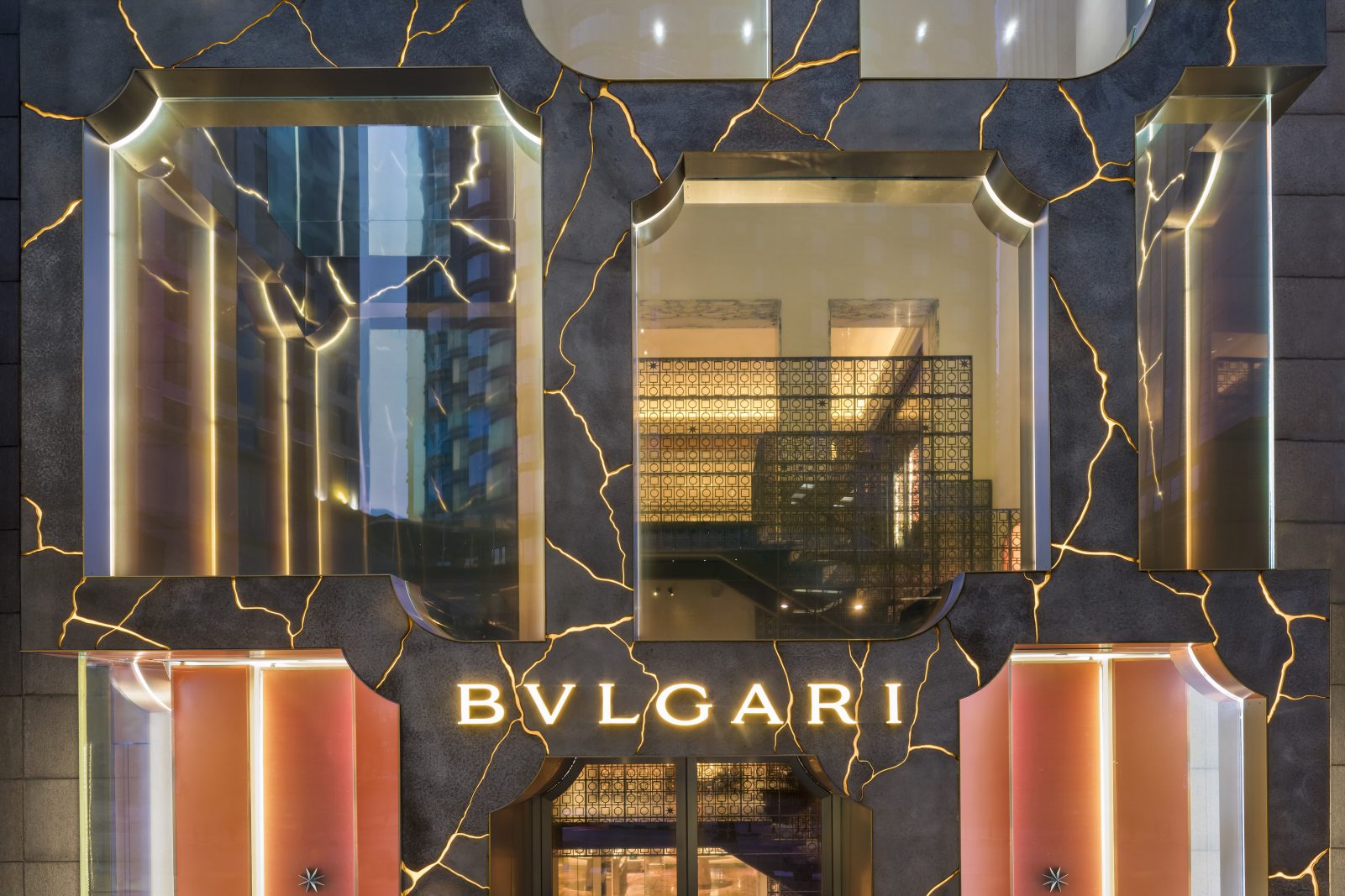
    Luxury jeweller Bulgari has opened its concept store on one of the most bustling shopping streets in Japan’s Tokyo, Omotesando.

    The store is inspired by Rome and has yellow as the dominant colour flowing throughout the store, seeking to deliver the sensation of a vacation to the Italian capital, with sunshine and great architecture.

    The store boasts a saffron-coloured facade with a variety of accessories such as necklaces, watches, and bags.

    Bulgari originally opened its doors in Japan more than 37 years ago, and in 2007, it opened its largest store in Tokyo’s famed Ginza retail district.

    The company now operates in major cities in Japan including Sapporo, Sendai, Tokyo, Yokohama, Chiba, Nagoya, Kyoto, Osaka, Kobe, Okayama, Hiroshima, Matsuyama, and Fukuoka.

  • DB Schenker unveils plans for RedLion2

    DB Schenker unveils plans for RedLion2

    German logistics firm DB Schenker on Monday announced plans to invest more than €100 million for a new zero-emissions logistics facility in Tampines, which is scheduled to be completed by the first half of 2025.

    Dubbed RedLion2, the 600,000-sqft facility will be the company’s largest investment in Singapore, surpassing the previous investment record for Red Lion, a S$163 million (€101 million ) warehouse opened in 2020 at the free trade zone of the Airport Logistics Park of Singapore.

    DB Schenker said the future facility aims to support the semiconductor and healthcare industries and will be designed to house advanced automation solutions, including intelligent conveyor systems, automated storage and retrieval systems, and autonomous guided vehicles.

    RedLion2 will also be equipped with several sustainable features, including over 4,000 solar panels, to ensure that the facility is carbon-negative. With the addition of RedLion2, DB Schenker’s facilities in Singapore will occupy over four million square feet of land across 17 facilities.

    The company said it plans to partner with local small and medium-sized enterprises to test new ideas within the logistics industry through an innovation sandbox. It currently has around 1,900 employees based in the city-state, with plans to add 600 staff in the next 7 years.

    Catherine Soo, cluster chief executive for Singapore and Malaysia, told local news why SIngapore was chosen for this expansion project: “We see a lot of companies relocating or expanding to Singapore, and we can complement them by providing a logistics surface for everyone to grow together. This drives us to put Singapore at a higher level of importance than other countries.”

    “Other countries in Asia-Pacific where we have operations are fighting for the same investment from us, but DB Schenker Singapore has been able to deliver a very strong track record,” she noted.

  • DHL promotes new head of global air freight

    DHL promotes new head of global air freight

    DHL Global Forwarding, the air and ocean freight specialist of DHL Group, has announced changes in its global leadership team with Thomas Mack, current executive vice president for air freight, set to move into a new senior advisor role. 

    Max Sauberschwarz, who currently holds the role of Senior Vice President Global StarBroker, DHL Global Forwarding’s air charter organisation, will assume the role of Head of Global Air Freight on 1 October 2023. 

    Max Sauberschwarz has more than 15 years of experience in logistics and has held several senior management roles in the air freight sector. He joined DHL Global Forwarding in 2019 as Senior Vice President Global StarBroker. 

    The two will report directly to Tim Scharwath, CEO of DHL Global Forwarding, during the transition, after which Mack will leave the company into retirement in October 2024. Thomas Mack joined the company five years ago as Head of Global Air Freight where he was heavily involved in transforming the organization into one of the world’s leading providers of integrated air freight services, working closely with DHL Express to leverage valuable synergies within the group.

  • Telegram comes to its senses and makes Stories available to everyone

    Telegram comes to its senses and makes Stories available to everyone

    If Telegram is one of the messaging apps you use then you probably already know that a little less than a month ago it finally got a long-awaited feature: Stories. Besides being one of the last messaging apps to adopt Stories, Telegram even made the arguably bad decision of putting them behind a paywall.

    Okay, to be precise, Stories weren’t exactly paywalled. While those with a Premium Telegram subscription could create and upload them, others could only watch. Now if that is not blatantly greedy we don’t know what is. Thankfully, the company has come to its senses and announced that everyone will be able to post Stories on their profile from now on.

    But wait, isn’t this change unfair to those who have already paid for the $4.99 Premium subscription plan? Well, no. The rest of the story-related perks that came with a Premium subscription are still exclusive to it. Among these is the ability to go into stealth mode, which allows you to watch other people’s Stories without them knowing (creepy if you ask us…).

    Other Premium features with Telegram Stories include longer captions, permanent view history (meaning you can see who’s viewed your stories even after they expire), showing up higher on other people’s feeds, and an increased cap of up to 100 stories. Outside of Stories, a Premium membership also gets rid of all ads on the platform, and enables larger file uploads and faster downloads, and transcriptions.

    Uploading a Story on Telegram is quite straightforward and similar to competitors like Instagram. You can tag other people, use photos and videos from your library or directly shoot from the app. Telegram’s twist on the format comes in the form of customizable expiration times. You can choose between 6, 12, 24, and 48 hours.

    If you paid that 5 bucks just to be able to upload Stories on Telegram, now is the time to unsubscribe. Just make sure you have your app updated so you get the feature.

  • Vietravel Airlines seeks to lease three more aircraft from Cambodian carrier

    Vietravel Airlines seeks to lease three more aircraft from Cambodian carrier

    Vietravel Airlines, which has leased one aircraft from Cambodia Airways, has asked the carrier for three more this year.

    In June, Vietravel Airlines took delivery of an Airbus A319 to increase its fleet to four. It will get an Airbus A320 from the Cambodian carrier next month.

    If it can lease three more planes from Cambodia Airways before the end of this year, it will expand its network to South Korea and Japan, and better serve the travel boom during the Lunar New Year holidays early next year.

    The deal will also help start more services to tourist destinations in Vietnam and Cambodia.

    The carrier, launched in early 2021, hopes to increase its fleet to 25 aircraft by 2025 and to 50 by 2030.

  • Ola Electric Announces MoveOS 4

    Ola Electric Announces MoveOS 4

    Ola Electric has announced a software upgrade for all Ola scooters. This latest software upgrade packs a lot of features and enhancements to the already existing features and functionalities. The company says the beta release for MoveOS 4 will take place on September 15th, followed by a public rollout somewhere around late October.

    Ola Electric has introduced their in-house developed Ola Maps, while the scooters are currently using ‘MapMyIndia’. Alongside this, some additional new features are Geofencing, Timefencing, Ride Journal, Concert mode and hill descent control system.

    To address the safety concern Ola Electric has introduced a tamper alert system that notifies both owners and bystanders in case any tampering is detected. The other features include personalised proximity settings, auto turn indicator cut-off, new trip metres, and headphone controls for music and calls. “Take-me-home” lights and favourite contacts have also been seamlessly integrated into the scooter’s functionalities.

    Ola has also introduced ‘Garage mode’ that facilitates the centralised control of multiple Ola electric scooters through a single interface. The company will also be offering application widgets and cruise control in Eco Mode. The company introduced the energy insight feature that provides users with deeper insights such as distance travelled, Fuel Saved and CO2 savings. Which will help users to track their energy consumption patterns.

    The company has made a significant change in the overall application itself, featuring a sleek dark mode for improved user experience. Over-the-air (OTA) updates can now be seamlessly implemented. The application will also be updated and will have features, including a hill hold setting, regen setting, and call settings.  The company says the application will now support biometric app lock options, which will use facial recognition or fingerprint authentication to open the app.

    A few enhancements are done to the pre-existing features such as regeneration, hill hold, charging time prediction, riding range etc. Also with MoveOS 4 document syncing, contact syncing, pairing, and touch response is now faster. Hypercharging has also been improved.

  • VinFast becomes 3rd biggest EV maker globally

    VinFast becomes 3rd biggest EV maker globally

    VinFast has become the third most valuable electric vehicle maker behind Tesla and BYD with a market cap of US$85 billion.

    Its shares listed on the U.S.’s Nasdaq stock exchange Tuesday at $22 and closed at over $37 billion.

    VinFast’s market cap is higher than all EV startups in the U.S. combined.

    It also exceeds that of Ford Motor, GM, BMW, Volkswagen, and Mercedes-Benz.

    American company Tesla leads the industry with a market cap of $738 billion followed by China’s BYD with $87 billion.

    VinFast is followed by another Chinese company, Li Auto, with $40 billion.

    But data from Bloomberg shows that shares of EV companies that listed through special-purpose acquisition companies, like VinFast, have plummeted after listing.

    U.S. firms Lordstown Motors lost 99% of its value since its listing in October 2020 and Faraday Future 98% since July 2021.

  • UBS Agrees to Pay $1.4 Billion to Settle Legacy US Fraud Case

    UBS Agrees to Pay $1.4 Billion to Settle Legacy US Fraud Case

    Not all the legal headaches UBS is facing have to do with Credit Suisse. It reached a settlement with the US in a legacy residential mortgage case of its own making.

    According to a statement, UBS and its US-based affiliates announced last night that it reached an agreement with the US Department of Justice (DoJ) to settle a legal dispute involving residential mortgage-backed securities.

    Under the settlement, UBS will $1.435 billion to resolve all civil claims brought by the DoJ in connection with past RMBS transactions in the United States. The amount is fully covered by provisions made in previous quarters.

    The case was filed in November 2018 and alleged misconduct related to UBS’ underwriting and issuance of residential mortgage-backed securities issued in 2006 and 2007. The settlement for the dismissal of the complaint resolves the last case of the DoJ Working Group tasked with investigating the conduct of banks and other businesses in creating and issuing RMBS, which helped trigger the 2008 financial crisis, according to a statement from the US Attorney’s Office for the Eastern District of New York.

    After an extensive investigation, the US filed a complaint alleging UBS defrauded investors in connection with the sale of 40 RMBS issued in 2006 and 2007, further alleging UBS «knowingly made false and misleading statements» to buyers of the securities relating to the characteristics of the mortgage loans underlying the RMBS. The bank’s actions violated the Financial Institutions Reform, Recovery, and Enforcement Act, and the claims in the case were based on alleged violations of mail, wire, and bank fraud statutes, among others.

    With this resolution, UBS will pay for its conduct related to its underwriting and issuance of residential mortgage-backed securities.  The substantial civil penalty, in this case, serves as a warning to other players in the financial markets who seek to unlawfully profit through fraud that we will hold them accountable no matter how long it takes, said US Attorney Breon Peace.

    The statement went on to say the claims resolved in the settlement are allegations only and there has been no determination of liability.

    With the amount of the UBS settlement, the total amount of civil penalties paid by 18 banks, originators, and rating agencies comes to over $36 billion. The institutions are Ally Financial; Aurora Loan Services; Bank of America; Barclays; Citigroup; Credit Suisse; Deutsche Bank; General Electric; Goldman Sachs; HSBC; JPMorgan; Moody’s; Morgan Stanley; Nomura; Royal Bank of Scotland; S&P; Société Générale; and Wells Fargo.

  • Boris Collardi’s Discoverer Now Works for UBS

    Boris Collardi’s Discoverer Now Works for UBS

    Marcel Roca worked in human resources at Credit Suisse for nearly half a century, bringing in big banking names. Now he works for Iqbal Khan’s asset management unit at UBS.

    Marcel Roca (pictured below) has taken on a new role in UBS’ Global Wealth Management (GWM) business headed by former Credit Suisse banker Iqbal Khan, finews.com research reveals. Roca will report to the division’s head of HR Andrea Saxer, and is expected to work for Switzerland’s largest bank until the end of the year.

    Roca will be a familiar name to many Swiss bank executives. The HR specialist was with Credit Suisse for over four decades through 2021, rising to the level of Managing Director. He helped set up the Talent Recruiting unit, which sought out future executive talent.

    Among his discoveries are Boris Collardi who, after a brief tenure at Credit Suisse, moved to Zurich-based private bank Julius Baer, advancing to CEO in 2009 at the tender age of 34. Collardi later briefly became a partner at Geneva-based private bank Pictet and now serves as a board member and minority shareholder at Zurich-based EFG International.

    UBS declined to comment about his involvement with UBS. Zurich-based consulting firm DR-RH, where he worked as a partner and external consultant, confirmed that Roca temporarily stepped aside because of the UBS mandate. DR-RH is run by two former Credit Suisse executives and acts as a personnel broker between independent asset managers and private banks.

    UBS may have pulled off a coup by hiring Roca, who is likely to know the best talent at Credit Suisse because of his long tenure there. After acquiring Credit Suisse in March, UBS is keen to keep Credit Suisse personnel and their Rolodexes of rich clients.

    With the takeover, UBS committed itself to the clear goal of becoming a $5 trillion global private banking giant.

  • Rice traders desperate, make advance payment two months before harvest

    Rice traders desperate, make advance payment two months before harvest

    The rice harvest in the Mekong Delta is still more than a month away, but traders are already asking to buy and even putting down deposits.

    The paddy has barely bloomed in the still green fields in Hon Dat District in Kien Giang Province, but traders have been making a beeline to them.

    On Aug. 8, three of them arrived at the 10-ha field belonging to Nguyen Van Pho and asked to buy his paddy at VND8,300 (US$0.35) per kilogram.

    But he refused since he expects a price of VND8,500 or more. “This year, traders are willing to buy paddy when it is still green,” he said. “They are willing to pay a deposit of VND5 million per hectare of paddy. This is the first time I have seen such a situation.”

    Phan Van Dong, who has worked as an intermediary between farmers and traders for more than 10 years in the province’s Giong Rieng District, said he has never seen rice prices as high as now.

    They have gone up to VND8,300 per kilogram from VND7,500 just a week ago, he said. “There are dozens of intermediaries like me and only a few hundred hectares of paddy. We are competing with each other to buy.”

    The Vietnam Food Association said foreign importers are actively seeking to buy Vietnamese rice, and willing to pay $10-20 more per ton compared to period before India imposed the ban in late July.

    India accounts for more than 40% of world rice exports, and non-basmati white and broken rice accounted for around 10 million tons of a total of 22 million tons of Indian rice exports last year, according to the U.S. Department of Agriculture. With the ban taking effect, global insiders have raised concerns about food price rises.

    In Can Tho City and Hau Giang Province too, traders are making advance payments to buy paddy though harvest is a month or two away.

    For the past 10 days, Nguyen Thanh Tam of Can Tho’s Thoi Lai district, who is growing high-quality rice on five hectares, has been pestered by traders to sell his grain at prices that have increased from VND6,200 per kilogram to VND7,500.

    The director of a rice export company in Can Tho said his company has deposited money to buy paddy grown on 30,000 hectares and expected to be harvested in the next five or six weeks.

    “To ensure we get sufficient amounts of paddy for processing for export, we have had to increase our purchase prices to VND7,500-7,800 per kilogram for normal rice and to VND8,300-8,500 for fragrant rice.”

    But he said this would mean big losses for the company since prices were lower when it had signed the export contract with a foreign partner.

    Ngoc Quang Phat Company in Can Tho said it needs 20,000 tons of rice for export, but it is difficult to buy that quantity now.

    It had signed deals with farmers to buy 50,000 tons of paddy at VND6,500 per kilogram (VND6.5 million per ton) in advance, but many are now asking it to hike the price.

    Global supply is scarce, pushing Vietnam’s export prices to record levels.

    Economist Tran Huu Hiep said the scramble occurring now is because most rice exporters cannot buy their own lands and farm the grain.

    Deputy Minister of Agriculture and Rural Development Tran Thanh Nam said the links between rice companies and cooperatives remain weak.

    The former buy 50% of their rice through traders, he said.

    He said there are 180 rice exporters in Vietnam, but only half have tied up with cooperatives to secure supply. “Businesses should step up cooperation with rice cooperatives.”

    On Aug. 6, Prime Minister Pham Minh Chinh instructed the Ministry of Agriculture and Rural Development and other ministries and local authorities to ensure this year’s target of 43 million tons of paddy, equivalent to 20 million tons of rice, is achieved.

    By early August more than 24 million tons had been harvested in the country. According to the ministry, if there are no abnormal changes in the weather, the output will be adequate to meet both domestic and export demand.

    Vietnam, which is the world’s third largest rice exporter after India and Thailand, estimates exports to be 7-7.5 million tons.