Tag: asia

  • Techcombank chairman’s daughter to buy 82 million shares

    Techcombank chairman’s daughter to buy 82 million shares

    Ho Thuy Anh, daughter of Techcombank’s chairman Ho Hung Anh, has registered to buy 82 million shares of the bank on the market.

    The transaction, to be completed between Aug. 25 and Sept. 19, will increase her stakes in Vietnam’s largest private bank from 0.64% to 2.97%.

    With the TCB share trading at around VND33,000, the deal is estimated to be worth around VND2.7 trillion (US$113.35 million).

    At the end of June, the senior Anh and his family owned around 17.7% of the bank.

    Techcombank saw its profits plunge 20% year-on-year in the first half to VND11.3 trillion.

  • Gold price jumps up

    Gold price jumps up

    SJC gold price rose 0.15% to VND67.75 million ($2,844.25) per tael Wednesday morning, highest since Jan. 28.

    Gold ring price was stable at VND56.85 million per tael. A tael equals 37.5 grams or 1.2 ounces.

    Spot gold was up 0.2% at $1,900.30 per ounce, while U.S. gold futures rose 0.2% to $1,929.40.

    The dollar index was sitting below two-month highs, while a rally that took U.S. Treasury yields to nearly 16-year highs took a pause, giving some respite to gold that does not yield any interest.

  • Capilano introduces Hot Chilli Honey for bold flavour seekers

    Capilano introduces Hot Chilli Honey for bold flavour seekers

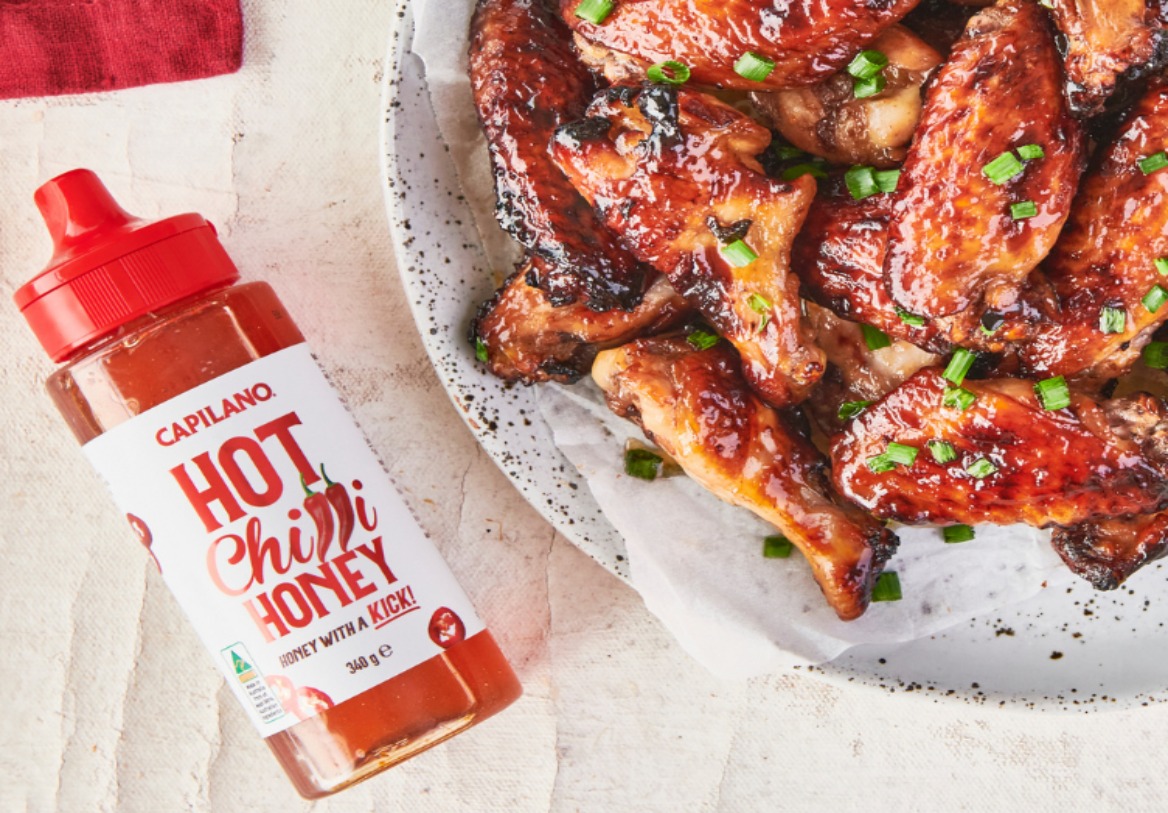
    Honey maker Capilano has launched a Hot Chilli variant for consumers looking for that “spicy kick” in their food.

    Recommended for drizzling over pizza, wings, ribs, burgers, or toast, the company said the new Hot Chilli is set to redefine honey’s role in home cooking and give food an extra “wow” factor.

    Capilano Hot Chilli Honey combines 100 percent pure Aussie honey from its network of more than 800 beekeepers with savoury, spicy flecks of habanero chilli to create a savoury-style honey for use as condiment.

    In addition, the spicy honey is made with no preservatives or other nasties.

    Fiona Tavian, GM for innovation, Capilano, said studies show that an average Australian household consumes chilli every ten days, and suggest that five million adults enjoy hot sauce once a week.

    “We know Australians are always looking for ways to add excitement to their meals and prioritize natural ingredients,” said Tavian.

    “What a great way to support Aussie beekeepers by tapping into this huge appetite for Chilli products! “

    Capilano’s Hot Chilli Honey is available in a 340g squeeze pack for an RRP of $7.50 at Woolworths and will be stocked in Coles beginning October 2.

  • Coles posts $1 billion profit as customers demand value

    Coles posts $1 billion profit as customers demand value

    With inflation and cost-of-living pressures rising, Coles says its Dropped & Locked value campaigns and own brand offerings boosted sales in FY23.

    For the 52 weeks to June 25, sales from continuing and discontinued operations reached $41.5 billion – up 5.3 percent – while tax-paid profit rose to $1 billion.

    Supermarket sales reached $36.7 billion, up 6.1 percent, with online sales of $2.8 billion, up 1.1 percent as customer shopping behaviour normalized with the return to in-store shopping.

    Due to rising cost pressures, the Exclusive to Coles range delivered $12.4 billion in this financial year, up 9.6 percent.

    The sales growth was attributed to the retailer’s Dropped & Locked value campaigns and the successful execution of trade plans during Easter, Christmas, and Mother’s Day.

    Coles completed 46 store renewals and opened 17 new stores and closed six, taking the network to 846 supermarkets.

    Sales in Coles’ liquor division reached $3.6 billion driven by strong performance of the Liquourland banner. Online sales increased 22.6 percent to $203 million driven by on-demand delivery and express delivery through Uber Eats and DoorDash.

    The Ready-to-Drink category was the strongest performing segment with its Exclusive Liquor Brand sales increasing by 8.5 per cent for the year.

    Coles Group CEO, Leah Weckert, said the business is continuing to “invest, innovate and drive sustainable growth” since its demerger.

    “Cost of living is the number one focus for our customers right now and we continue to invest in providing value through ‘Dropped & Locked’, everyday trusted pricing, weekly specials, Flybuys and our exclusive brand portfolio.

    “These initiatives are resonating with customers and we remain well positioned to grow in the current environment as more customers choose to eat at home.”

    During the year, Michael Courtney was appointed CEO of Coles Liquor while Anna Croft became the chief commercial officer.

    Moving forward, the retailer says cost of living pressures “are likely to remain” for many Australian households and the business will continue to invest in its physical and digital footprint.

  • Gasoline prices up in 5th straight time

    Gasoline prices up in 5th straight time

    Gas prices went up for the fifth time in a row on Monday, having increased non-stop since early July.

    The popular gasoline RON95 was 2.54% higher at VND24,600 per liter. Biofuel E5 RON92 rose 2.23% to VND23,330.

    Diesel fell for the first time in more than three months, dropping 1.79% to VND17,980.

    According to the Ministry of Industry and Trade and the Ministry of Finance, China used its oil reserves to prevent OPEC+ countries from reducing their supply.

    RON92 was 3.14% more expensive at $102.76 per barrel.

    But diesel dropped 0.3% to $116.72 per barrel.

  • Changi inks agreement to help develop Cairo Cargo City

    Changi inks agreement to help develop Cairo Cargo City

    Changi Airports International (CAI) has signed an agreement with Cairo Airport Company, which is expected to help position Cairo International Airport as a cargo and logistics hub. 

    The Singapore-based airport consultancy firm will work with the airport operator in Egypt for a feasibility study for the development of Cairo Cargo City, a new area at Cairo International Airport that has been earmarked for cargo and logistics development. Another consultancy agreement was signed for the passenger business. 

    Cairo International Airport is one of the busiest airports in Africa and the largest airport in Egypt in terms of passenger and cargo traffic. 

  • Check out the new promo videos for Apple Pay

    Check out the new promo videos for Apple Pay

    Last month when Apple started promoting hashtags for Apple Pay on X, we wondered whether this was the start of a marketing campaign for the service. Apple has indeed started to promote Apple Pay using a tagline that was one of those seen with a hashtag on X: #PayTheAppleWay. For the tech giant, it is a volume business; Apple gets .15% (not 15%) of the value of each transaction that is paid using Apple Pay. So for every $100 invoice paid by Apple Pay, the company gets 15 cents.

    That might not sound like a lot, but the feature is expected to gross Apple $4 billion this year. There is no denying that it is a convenience and with the Apple Watch, you don’t even need to pull your iPhone out of your pocket to settle up at the cash register. Using Apple Pay means that there is no more fumbling for your wallet so you won’t drop all of your credit cards on the tile floor while the long line of shoppers behind you starts grumbling.

    Most retail stores do accept Apple Pay, and Android users can use Google Pay or Samsung Pay if they own a Galaxy device. But since it is Apple promoting its mobile payment service, let’s focus on Apple Pay. The company has produced two 30-second spots and two 15-second spots (perfect for YouTube) to promote Apple Pay.

    The first ad, titled “The Dance,” shows a woman trying to pay for a purchase at the register, but she’s having issues. She’s either inserting her credit card into the terminal too fast or too slow. The cashier explains that there are two beeps that she needs to listen for, and, well, you can guess the rest. There’s a long line of disgruntled shoppers behind her. Meanwhile, at an adjacent register, a shopper uses Apple Pay and completes his transaction in seconds. Cue the tagline: “Pay the Apple way.”
    The next 30-second spot for Apple Pay is called “Captcha” which is the test that all of us have been put through to prove that we are human and not a robot. Sometimes it involves clicking on a small square, other times we have to click on the three squares out of nine that show a railroad crossing, a bridge, a car, etc. By the way, Captcha is owned by Google. In this ad, a woman is ready to buy a product online when asked to complete a Captcha by clicking the squares showing a traffic light.

    The woman, who might be overthinking her responses, keeps giving incorrect answers and can’t be confirmed as a human. This might feel very familiar to many of our readers; I’ve experienced this too many times to count. Finally, she visits another online retailer and buys a completely different product. This retailer has a payment option that reads “Pay with Apple Pay.” One tap and the transaction is completed.

    The two 15-second spots are just edited versions of the above 30-second ads. You will surely see these, if you haven’t already, while watching your favorite television shows and sporting events over the next few weeks.
    Apple Pay is part of Apple’s second-largest business segment, Services. This business unit generated $21.21 billion in revenue for Apple during the fiscal third quarter which not only topped the figure that Wall Street analysts were estimating but was also an 8.2% increase year-over-year. Per Forbes, the “Pay the Apple Way” campaign is rolling out in two countries right now, the U.S. and the U.K.
    Apple Pay’s success relies on recurring use of the service and like most of the businesses found under the Services umbrella, it relies less on selling more new iPhone units every year. Most of the offerings found in this business segment depend on monthly subscriptions (like Apple Music, or Apple TV+). Since Apple Pay is a volume business, it makes sense for Apple to promote it every now and then.
  • VN-Index tiptoes up after plunge

    VN-Index tiptoes up after plunge

    Vietnam’s benchmark VN-Index rose 0.15% to 1,179.76 points Monday.

    The index closed 1.77 points higher after losing 55.49 points on Friday.

    Trading on the Ho Chi Minh Stock Exchange (HoSE) fell by 38.49% to VND22.17 trillion ($930.73 million).

    CTG of state-owned lender VietinBank led with a 4.2% rise, followed by BID of state-owned lender BIDV, up 3.2%.

    TPB of private TPBank went up 2.2% and BCM of Becamex Investment and Industrial Development closed 2.1% higher.

    SSB of Southeast Asia Commercial Bank (SeABank) lost 3.1%, and GVR of Vietnam Rubber Group was down 2.8%.

    Foreign investors were net buyers to VND82.45 billion, mainly buying VIC of private conglomerate Vingroup and CTG of state-owned lender VietinBank.

    The HNX-Index at the Hanoi Stock Exchange, where mid and small-caps list, was up 0.85% while the UPCoM-Index at the Unlisted Public Companies Market was up by 0.26%.

  • Tims China aims to open 1700 Popeyes eateries across China

    Tims China aims to open 1700 Popeyes eateries across China

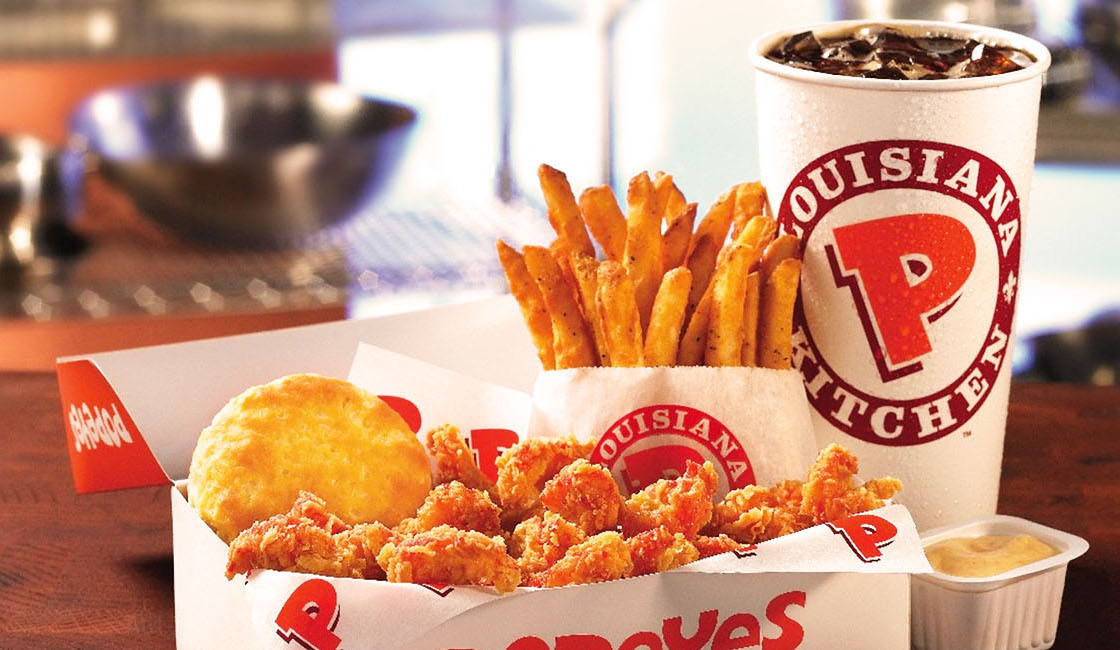
    TH International Limited has set a goal to open 1,700 Popeyes eateries across China in the next decade, a source with direct knowledge of the matter said, after it relaunched the Cajun-inspired fast food chicken chain Popeyes in the country last Saturday.

    TH International, also known as Tims China, took over as the exclusive operator and developer of the Restaurant Brands International-owned Popeyes brand in China from TFI TAB Food Investments in March.

    Tims China, which also operates the Tim Hortons coffee chain in China, also aims to increase the number of Popeyes restaurants in Shanghai to 10 by the end of this year, the source said, declining to be named as the information was not yet public.

  • A2 Milk reports $1.6 bn in sales despite soft performance in China

    A2 Milk reports $1.6 bn in sales despite soft performance in China

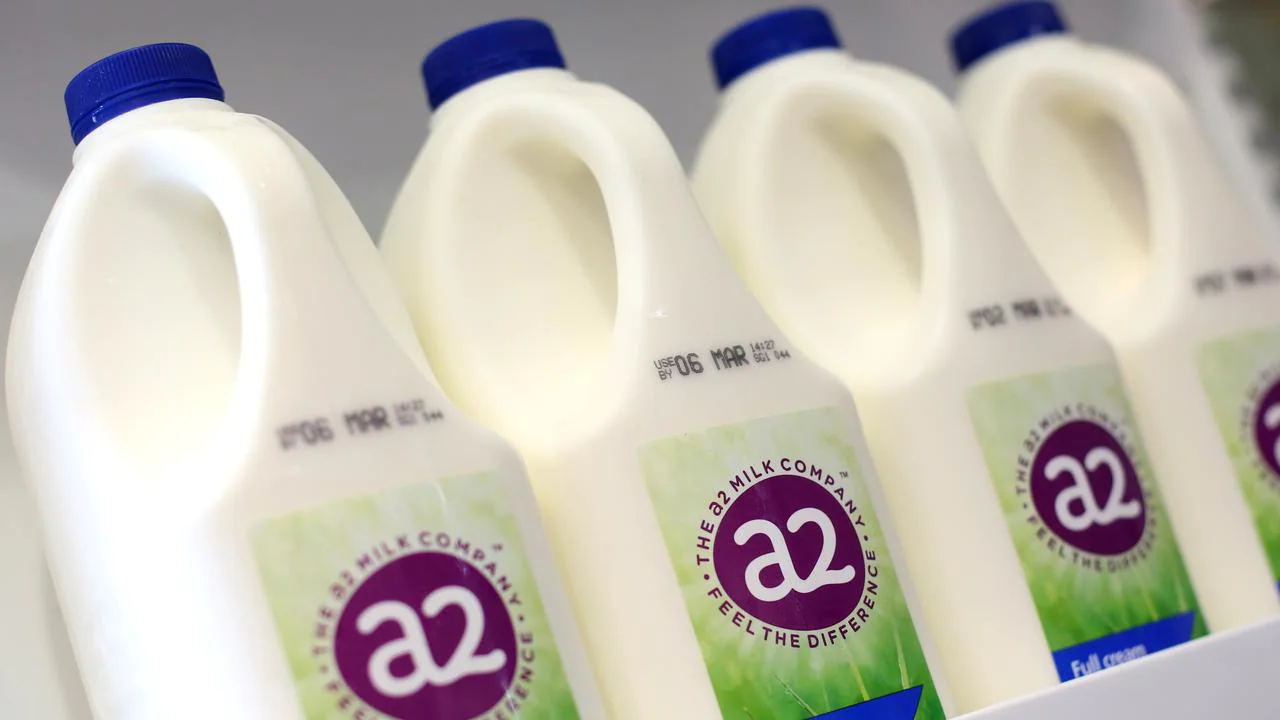
    Specialty dairy company A2 Milk’s full-year profit is up by a third, driven by strong growth in its China section, despite challenging market conditions.

    Though it was expecting growth in the Chinese market to slow next year.

    Key numbers for the year ended June compared with a year ago:

    • net profit $155.6m vs $114.7m
    • revenue $1.59b vs $1.45b
    • underlying earnings $219m vs $196m
    • no dividend vs no dividend but a maximum $150m share buyback.

    Chief executive David Bortolussi said sales from the company’s China label infant milk formula (IMF) exceeded its sales in English-speaking countries for the first time, with the total sales for infant milk formula totaling more than $1.1 billion.

    “I’m proud of what our team has achieved this year, growing sales by 10 percent while the core China IMF market declined by 14 percent is a remarkable achievement,” he said.

    “The China IMF market has become increasingly challenging as a result of lower birth rates and increased competitive intensity.

    “Notwithstanding, we are well-positioned to continue to invest and grow share in FY24 to emerge in a stronger position when the market recovers.”

    Bortolussi said achieving reregistration of the company’s China label IMF product was critical to maintaining access to the company’s domestic market.

    Bortolussi expected to see a double-digit decline in the Chinese infant milk formula market in the 2024 financial year, but said the company expected to achieve “low single-digit group revenue growth”.

    “This is due to volume declines driven by the rolling impact of fewer newborns in recent years on later-stage IMF products, and a lower number of newborns expected in CY23 due to the lagged impact of Covid-19 prior to an expected increase in CY24,” he said.

    “The company will continue to execute its growth strategy in FY24, focusing on growing share in China IMF as well as commercialising opportunities in adjacent categories and new markets.”

    A2 expected to continue to gain market share in IMF, with growth dependent on the extent of market share gains in a declining market, he said.

  • WhatsApp may soon get new text formatting tools

    WhatsApp may soon get new text formatting tools

    WhatsApp is already one of the best messaging apps, but there’s always room for improvement. That’s why we’re getting new updates that bring important new features almost every month. Recently, the app added support for high-resolution photos and promised to bring support for HD videos very soon too.

    On top of that, we’ve just learned that WhatsApp is working on additional text formatting tools that will make communications easier and even more fun. The fine folks over at WabetaInfo spotted a brand-new feature in the latest beta version of WhatsApp, which indicated that Meta’s developers have started to implement new text formatting tools.

    There’s proof about three new text formatting options, which will be added on top of the already available italics, bold, strikethrough, and monospace options.

    The first one is called “Code Block” and is aimed at software developers and programmers who might want to send code snippets to their friends or colleagues. This particular text formatting tool will prevent the confusion created when code snippets were not being displayed accurately in the chat window.

    Another interesting text formatting tool, Quote, will receive a small yet important improvement. WhatsApp plans to introduce a new option that will allow users to highlight portions of a text that they want to quote. Currently, you can only quote entire messages, not parts of them.

    Last but not least, one of the latest beta versions of WhatsApp had a new formatting tool that allowed users to create lists of items. That will basically eliminate the need to manually add bullet points to every item that you want to be included in your list.

    The report mentions that these features are now in development, so it may take some time until WhatsApp actually releases them for everyone to use. Still, it’s nice to know what we’ll be getting in future updates, even if these new features won’t be available for a long time.

  • Berjaya Corp acquires more shares in 7-Eleven Malaysia

    Berjaya Corp acquires more shares in 7-Eleven Malaysia

    Berjaya Corporation Bhd’s subsidiary, Inter-Pacific Securities Sdn Bhd (IPS), acquired 16.80 million ordinary shares (equivalent to 1.51% equity interest) in 7-Eleven Malaysia Holdings Bhd (SEM) through direct transactions, for a cash consideration of approximately RM30.77 million.

    This brings the combined equity interest of BCorp and its subsidiaries in SEM to about 14.37%.

    The acquisitions were funded internally by IPS and have no expected material impact on BCorp group’s financials for the current fiscal year.

  • Automation in Retail: A New Era of Continuous Improvement

    Automation in Retail: A New Era of Continuous Improvement

    In the ever-evolving landscape of the retail industry, one constant remains: the relentless pursuit of continuous improvement to exceed customer demands. This journey, which aims to enhance operational efficiency, reduce waste, and elevate customer satisfaction, has historically been fraught with challenges. However, an impactful collaboration, stemming from automation, is positioned to transform the continuous improvement narrative, introducing a new era of efficiency and optimisation in the retail sector.

    The concept of continuous improvement is what guides retailers toward achieving operational excellence. It hinges on the belief that processes can always be refined, and that even the most efficient systems can be further evolved.

    Beneath the surface of seemingly well-oiled processes, inefficiencies often lurk, casting shadows over operational intelligence. These inefficiencies have the potential to manifest as bottlenecks, excessive handoffs, or redundant steps. The challenge, however, lies in uncovering these hidden obstacles. Traditionally, this task has been a difficult undertaking, reliant on manual observations, interviews, and painstaking data collection – all of which requiring additional time that retailers don’t have. Despite even the best efforts, critical insights can remain obscured, and process enhancement opportunities may go unnoticed.

    A Paradigm Shift

    Enter process mining – a paradigm-shifting technique that sheds light on inefficiency. This innovative approach harnesses the power of data analytics to unveil the complexities of processes. By analysing event logs and transaction data, process mining constructs visual representations of processes in action. These process models vividly depict the journey from start to finish, enabling retailers to visualise and optimise the throughput time, cancellations, and return rates in real time, while also providing a holistic view to identify drawbacks and potential problems.

    Process mining offers a holistic view of operational reality, enabling retailers to see the ‘as-is’ state of their processes. It surpasses the limitations of traditional methods, delivering insights that are not skewed by human perception or biases, laying the foundation for effective continuous improvement.

    From Data to Insight: The Role of Automation

    That said, the raw data extracted through process mining barely scratches the surface. This is when automation steps in, assuming the role of the facilitator in the process of optimisation. Automation acts as the bridge between data and actionable insights, translating analytical findings into tangible process enhancements.

    In this coordination, automation is not confined to mundane tasks. It serves as the catalyst for change, driving improvements in processes with precision and speed. It identifies bottlenecks, suggests alternative workflows, and ensures that processes remain aligned with business goals.

    As an example, consider a customer-centric scenario. A retail organisation utilises process mining to analyse their order fulfillment process. The analysis uncovers a recurrent delay at a specific stage of the process, leading to prolonged delivery times. Automation takes the reins, triggering real-time notifications to relevant stakeholders whenever delays occur. This proactive intervention prevents bottlenecks from snowballing, resulting in improved delivery times and enhanced customer experiences.

    With the integration of process mining and automation a retailer’s decision-making evolves into a data-driven process. Traditionally, decisions were often influenced by subjective opinions or intuition. However, the combination of process mining and automation emphasises the importance of objective insights based on data, resulting in decisions that are now supported by factual evidence, reshaping the decision-making landscape. For example, with the integration of process mining and automation, a retailer can modernise its inventory management, relying on data-driven insights to optimise stock levels, streamline restocking processes, and enhance operational efficiency.

    This shift is pivotal, as it fosters a culture of continuous learning and adaptation. Rather than relying on conjecture, retailers can rely on data-backed decisions, enhancing the precision and impact of their improvements.

    A Future of Autonomy

    As technology progresses, the mutually beneficial partnership between process mining and automation creates the foundation for a transformative future. We stand on the verge of entering an era where processes can not only be optimised but can also adapt and evolve autonomously. The concept of self-learning processes, capable of analysing their own inefficiencies and iteratively enhancing themselves are becoming a reality.

    This trajectory promises an operational excellence, where retailers possess not only the tools to identify issues but also the capacity to proactively address them. The synergy of process mining and automation lays the groundwork for a self-optimising ecosystem, one where efficiency is a continuous cycle, not a sporadic event.

    Embracing the Journey: The Human Element

    Amid this technological shift, the human element remains essential, especially within the context of the rapidly changing retail industry. While process mining and automation provide the framework, it’s human expertise that guides the execution, ensuring that adaptability and foresight are woven into every decision. The qualities of human intuition, creativity, and expertise in the retail sector enrich the process with the level of skill required to make meaningful change.

    The combination of process mining and automation is driving a significant transformation in continuous improvement, particularly in a landscape as dynamic as retail. From uncovering hidden inefficiencies through process mining to translating insights into tangible enhancements using automation, this collaboration fosters a new period of operational excellence that is acutely attuned to market shifts and customer preferences. As technology advances towards self-enhancing processes, the human factor guarantees that these improvements are not just functional, but also transformative, as human insights refine automated actions and strategies. Throughout this journey, the integration of data-driven insights and human ingenuity remains the key driver of continuous improvement, allowing retailers to anticipate and respond to foreseeable changes with agility and innovation.

    For more information, please visit: https://appian.com/

    Author: Gordon Maddock, Regional Vice President, Broad Markets, Appian APAC
  • Food tech company Enough raises 40 million euros

    Food tech company Enough raises 40 million euros

    Food technology company Enough, which has partnerships with Unilever and Marks & Spencer, has raised $43.5 million, attracting investment despite signs of a slowdown in the alternative meat and protein sector.

    Enough, which ferments fungi to produce protein for plant-based chicken, mince and dairy products, said the funding round was led by venture capital firm World Fund and CPT Capital, which was an early investor in Beyond Meat and has a stake in Upside Foods.

    Other participants in the fund-raising for Britain- and Netherlands-based Enough included existing investors such as AXA IM Alts and the Olympic Investments company of the Onassis shipping family.

    “Enough has made great strides in the past few years to launch our new factory in the Netherlands and scale up to work with customers across the UK and Europe,” said CEO Jim Laird, a former chief executive of plant-based meat producer Quorn.

    “With this new funding, we will accelerate that growth,” he added.

    Companies involved in producing alternative-sources of meat and protein say they are helping in the battle to protect the climate, since meat from a laboratory has less impact on the environment than traditional farming.

    Nevertheless, there are signs that consumers’ demand for plant-based meat may be waning, with Beyond Meat cutting its annual revenue forecast earlier this month.

  • Mentos rolls out candy-inspired air fresheners

    Mentos rolls out candy-inspired air fresheners

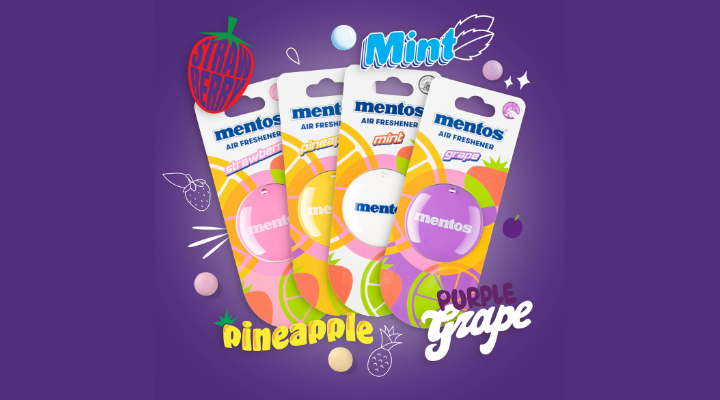
    Perfetti Van Melle, maker of Mentos, has partnered with Balco Brands to launch a candy-inspired air freshener range.

    Available in four fragrances: Grape, Mint, Strawberry, and Pineapple, the gel-based air freshener can be hung anywhere, with the scent lasting up to 30 days.

    Marta Ballesteros, global licensing manager at Perfetti Van Melle, said Balco Brands was able to grasp the value of its company’s icons, such as Mentos.

    “Our popular confectionery has been reinterpreted into a uniquely original and innovative air freshener gel that offers an amazing fruity and minty fragrance experience,” she added.

    “Sold in more than 130 countries, including here in Australia, there is no doubt Mentos is a much-loved brand.”

    Balco Brands’ brand director Kathryn Trivella, said the company set out to create fragrances that encapsulated Mentos’s fun and fresh attributes reminiscent of the candy.

    “Whether for car, home, or office, we are confident the innovative gel design and prominent branding will appeal to those who regularly purchase air fresheners and attract the many millions of us with an affinity to the Mentos candy!” said Trivella.

    The Mentos Air Freshener range is available for an RRP of $4 online and in Kmart stores nationwide.

    Asembl, a leading brand extension agency representing Perfetti Van Melle, brokered the partnership.