Tag: asia

  • YouTube Music rolls out redesigned Now Playing with comments section

    YouTube Music rolls out redesigned Now Playing with comments section

    Long gone are the days when we had to hunt for music through friends, exchange tapes, or enjoy our favorite songs solely at concerts or parties. Now, we can pick from numerous streaming services vying for our attention by bringing in fresh features. While YouTube Music isn’t exactly famous for having the most cutting-edge features compared to rival apps, it has been moving forward nicely by at last including long-promised live lyrics- and now releasing even more updates.

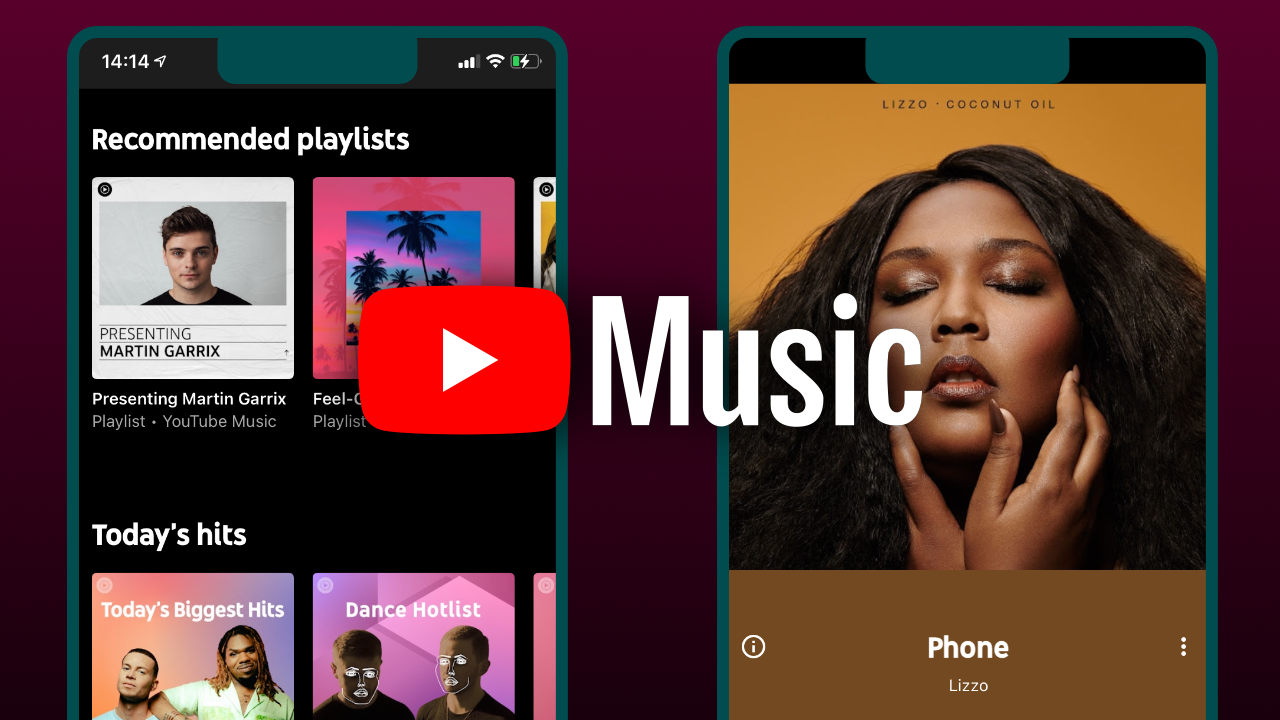
    YouTube Music is introducing the newest redesign of the Now Playing interface on both Android and iOS. This update includes a comments section and new buttons attached to the carousel. These buttons were previously hidden by default and needed users to tap on the artwork to access them.

    The new design makes YouTube Music look even more like the main YouTube app, with the comments section being a copy of what you see on the main YouTube app. The carousel now features buttons to Like, Dislike, view or add Comments, Save, Share, Download the track, or switch to its Radio. Before, only four of these choices appeared when you tapped the album art.

    For some time, YouTube Music might be the sole music streaming app with a live comments section until competitors catch up if they ever choose to. By enhancing the competitiveness of the YouTube Music app against its rivals, Google could be aiming to draw in more users.

    One of the advantages of YouTube Music is that if you already have a YouTube Premium subscription, you get access to Music Premium as well (which means no ads, offline and with your screen off streaming). Or in other words, you can save money by not subscribing to other music streaming services.

  • Google Maps tests the use of some colors that copy Apple Maps

    Google Maps tests the use of some colors that copy Apple Maps

    While Google Maps is still considered the top mapping and navigation app for mobile devices, Apple Maps has made an incredible turnaround after the fiasco that was the original launch of the service back in 2012 with the release of iOS 6. Apple was forced to start from scratch to revise the app and has done a pretty decent job of doing so, And now Google appears to be testing some new color options for Google Maps that match some of the shades used by Apple Maps.
    Google Maps is testing a lighter blue color to represent water and any difference to the hue used by Apple is very minor. On the other hand, Google appears to be moving away from Apple by using a darker green color to indicate areas like parks and forests. Previously, Google and Apple both used a lighter shade of green to represent such areas.
    But Google Maps is also testing the use of gray, instead of white, to signify a road, and dark gray to represent a highway. All of these color changes being tested bring Google Maps in line with Apple Maps’ color scheme. And if you use Dark theme on both apps, Google Maps’ implementation of it remains darker than Apple Maps. Dark theme on the mapping apps is an acquired taste with some drivers complaining that it is harder to view the maps on the apps using a darker background
    You can go into the settings for both apps and keep them in Light mode if that is what you prefer. Additionally, Google Maps is also giving the driving directions at the top of the screen a darker green background color although you will have to use it under real-world conditions to see what impact the darker color has on you.
    The updated version of Google Maps is reportedly rolling out today to Android users although it has yet to hit my Pixel 6 Pro running Android 14 beta 5.2.
  • UBS Slows Digitalization After Significant Cyberattack

    UBS Slows Digitalization After Significant Cyberattack

    The bank engaged in an extensive review after being one of the banks affected by a Russian ransomware attack early in the year. The first casualty? Going digital.

    It is a small section in UBS’s full second-quarter report, but a telling one. Buried on page 41 is a small but substantial tidbit. The bank has just finished a post-incident review after January’s ION XTP ransomware attack.

    To jog people’s memory given the constant diet of entirely unfamiliar names and acronyms from the criminal fringes of cyberspace, ION XTP is the one with derivatives. It paralyzed the trading operations at several banks, although you wouldn’t know it from ION itself, characterizing the entire thing as a cleared derivatives cyber event…contained to a specific environment.

    UBS had told us about it in its first quarter report, saying the event had disrupted its exchange-traded derivatives clearing activities, although it managed to restore them after 36 hours with workarounds.l

    If nothing else, it made waves and caused a great deal of anxiety. A senior US Treasury Department official weighed in with a virtual «keep moving…there is nothing to see here» exercise over the cyber assault from Russian ransomware gang LockBit, according to a report at the time.

    We’ve now arrived at the legendary financial institution post-incident review. A career killer to some and the unwelcome originator of dozens of findings and remedial actions for many others. UBS maintains it identified needed improvements to its framework and will «take actions» to enhance cyber-risk assessments and controls over third-party vendors.

    That’s unremarkable in most contexts, except this attack had very significant ramifications, a key one being that it seemingly chips away at a cherished cornerstone of UBS’s strategy under previous CEO Ralph Hamers.

    But don’t take my word for it. Let’s hear what the company says in its quarterly report.

    Although we are continuing our efforts regarding innovation and digitalization, to ensure there is the right focus during this initial period of integration we have reprioritized some UBS changes, the bank wrote.

    Turgid stuff indeed. You could make a case for switching a few clauses around for clarity. Still, it sounds pretty transparent and clear. I don’t know about you, but it doesn’t much so

  • RongViet Securities meet 75% of profit target in H1

    RongViet Securities meet 75% of profit target in H1

    Total consolidated revenue of RongViet Securities in the first six months of 2023 reached VND352.1 billion.

    The recovery of the market helped the company’s investment portfolio revert to VND186.3 billion from the depreciated valuation expense, thereby reducing the total cost to VND146.8 billion.

    As a result, RongViet recorded a consolidated pre-tax profit of VND205.3 billion and a net profit of VND160 billion, completing 75.8% and 73.9% of the full-year plan, respectively.

    As of June 30, the total assets on the consolidated financial statements reached more than VND4.481 trillion, and equity reached VND2.248 trillion, officially erasing all accumulated losses at the end of 2022.

    VDS stock of RongViet has been taken out of warning status by the HOSE since Aug. 17.

    RongViet’s earnings per share (EPS) in the first six months of 2023 reached VND761.

    Return on assets and return on equity in the first six months reached 3.7% and 7.5%, respectively, much higher than the industry average.

    With these results, the VDS stock price has doubled compared to the beginning of the year, bringing the market capitalization of RongViet to more than VND3.2 trillion.

    According to RongViet, with the direction from the beginning of the year to adapt to the new age and advance at a solid pace, it has taken firm steps to be more confident in H2.

    With the stock market having been more positive recently, the company expects to soon exceed the target of VND270.8 billion in pre-tax profit (consolidated) as approved by the General Meeting of Shareholders.

    RongViet’s main goal in H2 is to continue stabilizing and developing staff, promoting development and client services based on maximizing the advantages of the financial-investment products and services, using RongViet technology to bring the best investment efficiency and client satisfaction.

    Although investment banking activities are still facing many difficulties due to the general market situation, the company’s representative said that they would strive to accompany clients to accelerate the progress of M&A projects, trying to close key deals in 2023.

    At the same time, it will closely and regularly coordinate to promptly support clients in solving difficulties and problems in corporate financial consulting and capital mobilization activities.

    As the bond market is still facing many difficulties and losing investor confidence, RongViet is one of the few companies that can fully meet the new regulations on private bond issuance as well as affirm the trust of investors to continue to successfully issue new bonds from Q4 of 2022 until now.

    The company said that it would ensure full payment of bond principal and interest upon maturity and fully comply with legal regulations on information disclosure, bond offerings to investors, and periodic reporting obligations for state management agencies.

    In terms of the ratio of total debt to equity as of June 30, RongViet maintained a very safe ratio (by a factor of one) and was much lower than the maximum of five times stipulated by the Ministry of Finance.

    After successfully implementing the issuance in March with a total actual issuance value of VND311.1 billion, in June, the company continued to offer the second batch of bonds of the year worth VND700 billion.

    Thanks to the trust and support of clients, domestic and foreign investors, and the reputation that has been affirmed for many years, the progress of the second batch of bonds of RongViet is positive and has been completed at more than 86% of the expected issuance value in less than a month.

    With the vision of becoming one of the leading, modern, and most effective financial institutions in Vietnam, RongViet has built and started implementing a comprehensive digital transformation strategy for 2021, with four pillars: optimize and build excellent operating systems; enhance client experiences; develop new platforms and business models; and build strong IT infrastructure and security.

    Over the past few years, RongViet has continuously improved the financial-investment ecosystem and launched many digital platforms to bring new values to investors.

    Prominent products and services include eduDragon, an online stock investment learning system; smartDragon, an investment analysis platform; and iBot, a virtual investment assistant on Telegram.

    In early 2023, RongViet launched the brand new iDragon Pro trading app, bringing superior securities trading experiences to clients.

    At the end of July 2023, the U.K.-based Global Banking & Finance Review honored iDragon Pro as the Best Trading App Vietnam 2023.

    Also in July 2023, it officially put into operation the Data Warehouse, a comprehensive data platform, after more than 11 months of efforts by the company’s staff with the consultancy of experts from CMC Group and IBM Vietnam.

    The project is an important milestone that helps to improve the efficiency of management and use of data at RongViet as a foundation to continue to successfully implement digital transformation projects such as human resource management, customer relationship management, and a comprehensive reporting system.

    With great advances in the application of technology to perfect the ecosystem of financial-investing products and services in many utilities throughout the investment journey of clients, the Vietnam Wealth Advisors Summit 2023 named RongViet as the Digitalization Product of the Year and honored its contribution to financial services development.

    With the motto Creating a Prosperous Future, RongViet aspires to bring prosperity not only to clients, partners, and shareholders but also to employees, the community, and society.

    This is evidenced by RongViet being honored as one of the”Best Companies to Work for in Asia” for two consecutive years in 2022 and 2023 at the HR Asia Awards. This award recognizes efforts to build a humane, dynamic, and creative working environment where members share culture, vision, and career development.

    Besides building effective business activities, the company also wishes to share its development results with the community and society through meaningful and practical programs and activities.

    Rong Viet has maintained annual charity programs for the past 12 years, such as Accompanying to School: Realizing Dreams to Support Poor Students and Sharing Love to Help Difficult Circumstances.

    To contribute to building and developing Vietnam’s financial market and foster the young generation, RongViet plans to launch RongViet Invest, a knowledge and real-world investment competition for university students nationwide, in Q3.

    The goal of the program is to become an annual playground where students across the country can learn, direct their careers, and experience being a real investor in the stock market.

    Thereby, it aspires to contribute to building a new generation of investors with knowledge, experience, and bravery to join hands in building a sustainable Vietnamese stock market.

  • Arnott’s opens $65 million automated hub in Western Sydney

    Arnott’s opens $65 million automated hub in Western Sydney

    Biscuit and snack maker Arnott’s has opened an automated distribution centre in Huntingwood, Western Sydney, to amplify its domestic and international operations.

    The new centre, valued at $65 million, is adjacent to the group’s largest biscuit-making site and will serve as a pivotal thoroughfare for more than 60 per cent of its inventory.

    With a span of 43,000sqm, the hub can hold 28,000 pallets, nearly four times more than its previous capacity, and is built with a “sophisticated one-touch” logistics system that leverages robots and automation.

    In addition, the site incorporates a minimal touch point automation and a new palletising system with a 35-metre-high bay.

    Tom Vicars, director of procurement and logistics at Arnott’s, emphasised the project is a significant investment to modernise the group’s network and ensure systems and processes are in place to remain competitive.

    “We intend for Western Sydney to be the beating heart of our national operations, and you need only step into the warehouse to get a sense of the sheer scale of what we are hoping to achieve,” said Vicars.

    “Its success is largely a testament to our working relationships with our automation partner, Daifuku, and logistics partner, Linfox.”

    Michael Jee, executive GM at Daifuku, said the solutions within the facility are designed to streamline the process from manufacturing to delivery.

    “With automation meaning, products are inducted,  stored, monitored, and prepared for delivery with minimal human intervention,” he continued.

    “This one-touch philosophy means that products and orders are managed and prepared  faster, improving delivery times to store and providing unparalleled visibility  and productivity.”

    Alongside the launch, Arnott’s installed 2,464 solar panels on the centre’s roof, expected to generate more than 1500 GWh of renewable energy and will help supply up to 22 per cent of the Huntingwood’s site electricity needs.

  • Fever-Tree launches two new cocktail mixer flavours

    Fever-Tree launches two new cocktail mixer flavours

    Premium cocktail mixer brand Fever-Tree has unveiled two new flavours – Classic Margarita Mixer and Sparkling Mojito Mixer.

    The company says its latest release is designed to be mixed with premium spirits and both deliver bar-quality cocktails without any artificial flavourings, sweeteners or preservatives.

    The Classic Margarita Mixer is crafted with Mexican limes and blended with Italian blood oranges along with a pinch of Scottish sea salt while the Sparkling Mojito Mixer is made from Mexican limes and contains Moroccan spearmint.

    Andy Gaunt, MD of Fever-Tree, said this is just the beginning of growth and innovation in the cocktail mixer category for the brand.

    “As was the case with carbonated mixers, the non-carbonated category is ripe with opportunity, and bound for tremendous growth.”

    The range retails for $19 and is available across Dan Murphy’s stores nationally.

  • Meta took down more than 7,000 fake accounts related to pro-China propaganda

    Meta took down more than 7,000 fake accounts related to pro-China propaganda

    Fake accounts on social media aren’t something new. Most likely, many of us have come across at least one fake account during our time on social media. Facebook reportedly holds the largest number of fake accounts compared to any other social network in the world. However, it appears that Meta has managed to eliminate at least some of them.

    Meta shared details about a network of fake accounts that had spread pro-China propaganda on Facebook. The company mentions that the takedowns were tied to “individuals associated with Chinese law enforcement” who also ran similar fake accounts on other platforms.

    The company often shares updates about taking down fake accounts that are up to no good, but what Meta’s security researchers found this time is pretty big. Meta got rid of 7,704 Facebook accounts, 954 Pages, 15 Groups, and 15 Instagram accounts, making it one of the largest networks of fake accounts ever discovered by the company.

    Meta found several groups of fake accounts from various parts of China. The way the groups acted, made it seem like they might have been working together from a shared place, maybe an office. Each group had a specific schedule, being most active in the morning and afternoon. They took breaks for lunch and dinner and then had another burst of activity in the evening, so basically, they had a full-time job.

    Ben Nimmo, who’s in charge of global threat intelligence at Meta, calls this move “the most prolific covert influence operation that we know of in the world today.” He also points out that the people running these accounts were also busy on X, Reddit, YouTube, TikTok, and Pinterest.

    As per Meta, the fake accounts aimed to share pro-China messages, including positive commentary about China, criticisms of the US, and Western foreign policies. The company did verify that it discovered proof connecting these fake accounts to an earlier pro-China operation cleverly called Spamouflage that showed up in 2019.

    In addition, the company also shared that it stopped numerous malicious domains and efforts to create fake accounts and Pages linked to the Russian Doppelganger operation, which aims to mimic official news and government websites to spread false articles undermining support for Ukraine. This operation has broadened its scope from France, Germany, and Ukraine to the US and Israel.

  • Swiss Pension Funds Investing in Rapid Charging Stations

    Swiss Pension Funds Investing in Rapid Charging Stations

    Zurich-based energy transformation specialist EIP is putting the assets of Swiss pension funds into a joint venture for electric mobility. The partners want to set up 100 new domestic charging stations for e-cars.

    Energy Infrastructure Partners (EIP), a Zurich-based energy transformation asset manager, signed an agreement with French e-charging station operator Electra on behalf of a group of Swiss pension funds, according to a statement Tuesday.

    EIP manages the Credit Suisse Investment Foundation (CSA), which focuses on investments in Swiss energy infrastructure, for domestic pension funds. EIP will manage 49.9 percent of the new joint venture with Electra on behalf of CSA, and is expected to contribute 200 million euros,in initial capital by 2026.

    The goal of the joint venture is to increase Electra’s installed charging stations in Switzerland and Austria. Plans call for an expansion of 100 fast-charging stations in each country by 2026. In addition to sites already secured in Switzerland, primarily in Geneva and Lausanne, Electra says it has an extensive pipeline of sites currently under review.

  • YouTube now gives its creators a way to wipe content violation warnings from their channel

    YouTube now gives its creators a way to wipe content violation warnings from their channel

    In a surprising move this morning, YouTube published a change to the Community Guidelines that govern what content creators can and cannot do on the platform. Under this new rule, creators that —knowingly or unknowingly— violate any of these guidelines will now get a chance to right their wrong and lift the warning from their channel.
    The announcement was made via a video posted to the official YouTube Creators channel and the YouTube Official Blog which included detailed instructions on what to expect and what creators should do in case of a violation warning. Under these revised guidelines, creators who receive a warning for policy violations now have an intriguing option at their disposal — an educational training course.
    Here’s the great part: once the creator successfully completes the course, YouTube will remove the warning from their channel, just as long as they don’t violate the same policy for the next 90 days. It’s like a friendly handshake agreement to play by the rules. However, should the creator fail to follow through, the video in question will be removed and a strike will be applied to the channel.

    If the creator violates the same policy again, but after the 90 period, the video in question will be removed and the creator will be issued another warning. However – and surprisingly – another chance will be given to take another training course and once again wipe the warning from the channel.

    This change represents a significant shift in how YouTube deals with policy violations. In the past, YouTube would move to immediately remove the video in question and apply a lifetime warning to the channel. Now, it’s all about education and second chances.
    It is clear that monetization is a big motive for the policy change. Previously, policy warnings were more general and affected the entire channel, whereas with the new policy, warnings are more specific on what was breached. Giving creators a chance to fix warnings before they become strikes will allow for more content to stay up on YouTube and avoid the 3-strike rule that has been known to get channels terminated from the platform.
  • H&M Indonesia Boosts Productivity, Compliance, Employee Engagement, and Sustainability with YOOBIC

    H&M Indonesia Boosts Productivity, Compliance, Employee Engagement, and Sustainability with YOOBIC

    H&M Indonesia today revealed outstanding results from its partnership with YOOBIC, the leading employee experience platform for frontline teams in the retail and hospitality spaces. Adopted across the global retailer’s more than 60 stores and 290 frontline staff in Indonesia, YOOBIC’s all-in-one solution has significantly elevated employee engagement, communication, and productivity, as well as enhancing efficiency, compliance, and sustainability.

    Recognizing the considerable progress made since rolling out YOOBIC in 2022, H&M Indonesia received the coveted “Project Launch of the Year” title at this year’s YOOBIC Frontline Excellence Awards. The judges commended the retailer for achieving an impressive 99% user engagement rate and 97% compliance in operational, visual, and cash office standards since implementing the YOOBIC platform.

    The adoption of YOOBIC’s comprehensive frontline employee experience platform has greatly improved communication within H&M Indonesia. With features like private messaging, video calls, and group chats, staff members can easily interact with each other, fostering a strong sense of community and teamwork. Social media-style newsfeeds further enhance this environment by providing a space for co-workers to share announcements, success stories, and sources of inspiration. Frontline staff can also use the platform to directly communicate with store managers and company leaders, sharing advice, concerns, and feedback.

    Armed with YOOBIC’s unified digital platform, H&M Indonesia’s customer-facing staff also have the ability to automate and expedite manual tasks, enabling them to better manage their time and focus on higher value objectives, including building customer relationships. The clothing brand’s retail leaders, meanwhile, have hailed YOOBIC’s digitization of daily operations as a game-changer. Electronic checklists give store managers the ability to easily follow their team’s task completion, while the inclusion of real-time analytics and automated dashboards allows for the tracking of key performance indicators (KPIs) and compliance by HQ, ensuring that shopper experiences consistently meet the highest standards across all locations.

    YOOBIC’s extensive L&D capabilities have proved a hit with H&M Indonesia as well, bolstering the company’s dedication to ongoing employee growth. Store leaders can now seamlessly integrate training into their team members’ workflows, delivering interactive courses directly to their mobile devices in easily digestible chunks. This microlearning approach is enriched with data, providing managers with comprehensive insights into their employees’ progress and needs.

    “With YOOBIC, we’ve been able to harness frontline digitization and real-time analytics to solve a number of stubborn operational challenges, including difficulties around communication, productivity, compliance, and training,” said Karina Soegarda, Communications Manager, H&M Indonesia. “YOOBIC’s digitization of manual processes has also allowed us to cut paper usage by 30%, boosting our company-wide commitment to greater sustainability.”

    “Through real-time data sharing and digital task management, H&M Indonesia boosted productivity, launched 25 campaigns in six months, and elevated decision-making with analytics, all while making a significant reduction to paper usage,” said YOOBIC’s Paul Mabire, Head of Sales, APAC. “We’re proud to partner with a brand so committed to operational excellence and employee engagement — we can’t wait to keep innovating together!”

    YOOBIC’s collaboration with H&M Indonesia is an important element of the company’s wider expansion strategy in the Asia Pacific (APAC) region. According to the CBRE Asia-Pacific Retail Flash Survey report of January 2023, 71% of APAC retailers are planning to expand or open new stores this year. By 2025, retail sales in Southeast Asia, Australia, and New Zealand are projected to reach $1.77 trillion, positioning the region as the fourth-largest global market by 2050.

    YOOBIC stands ready to support APAC’s retail boom, providing a mobile-friendly and digitally-enabled workplace experience that enables retail staff to excel while fostering engagement and loyalty. YOOBIC’s comprehensive platform for frontline employee experience has been extensively tested and proven successful in hundreds of thousands of retail stores worldwide. Constantly evolving with product innovations and incorporating new technological features including AI features, YOOBIC effectively drives frontline employee communication, training, and operations, meeting the evolving needs of the industry.

  • Vietnam’s tuna export orders to increase

    Vietnam’s tuna export orders to increase

    The Vietnam Association of Seafood Exporters and Producers (VASEP) forecast tuna export orders will increase sharply in the last months of the year due to decreasing inventories in major export markets.

    VASEP said the stockpiled quantity of tuna in the U.S., one of the main markets of Vietnam has begun to decrease and importers were considering speeding up imports.

    By the end of the year, major markets such as the U.S. will have many festivals, so consumer demand will increase. Meanwhile, preferential tariffs are an advantage that has pushed EU importers to seek orders from Vietnam.

    Over the past seven months of this year, Vietnam’s tuna exports reached nearly $445.6 million, down 31% year-on-year, VASEP said.

    While exports of high-value fresh, frozen and dried tuna products decreased 46%, shipments of processed and canned tuna goods saw a modest rise of 4% to over $204 million, it said.

    Besides, exports to the EU, Mexico, Israel and Thailand had recorded high growth over the same period of 2022.

    The EU market showed signs of recovery, with a growth rate of 28% in June and July, earning Vietnam a turnover of $12 million per month. Notably, in the bloc, exports to the Netherlands also continuously grew remarkably while that to Germany maintained an increase of 30% in June and July.

    Vietnamese tuna exports to Mexico and Chile also recorded hikes of 100% and 90%, respectively. Meanwhile, tuna shipments to Thailand also soared 65% in the last two months.

    According to Nguyen Ha, tuna market expert of VASEP, in the context that exports to the main traditional markets had all declined, Israel had emerged as a potential market.

    In the first half of this year, Vietnamese tuna exports to Israel hit nearly $25 million, up 92% over the same period last year.

    Frozen tuna meat and fillets still accounted for the highest proportion of 47%. The export value of this product group saw a yearly hike of 29%. Meanwhile, the export turnover of canned tuna increased 375% and other processed tuna products surged 83%.

    Despite being a small country, with no natural resources and limited domestic labor resources, Israel’s consumer demand was quite large and solvency was high, so there remained ample room for Vietnam’s tuna exports to the market, Ha said.

    Especially, the Vietnam-Israel FTA (VIFTA), signed on July 25, would open up opportunities for Vietnam’s seafood exports, including tuna, to access the Israeli market and lucrative Middle East region, Ha said.

    To penetrate the Israeli market, VASEP Secretary General Truong Dinh Hoe suggested that tuna exporters ensure product quality, carefully study market information, promote credibility and be responsible.

    He vowed that VASEP would accompany, research carefully and disseminate market information to businesses.

    To facilitate tuna exports, businesses petitioned the Ministry of Agriculture and Rural Development and the Ministry of Industry and Trade to grant more quotas for imported raw tuna as domestic tuna raw material could meet only 25% of demand for processing and export, the Binh Dinh Fishery JSC Co suggested.

  • Steel prices hit 3-year low

    Steel prices hit 3-year low

    The price of steel has plunged to the lowest in three years to around VND13.5 million ($562.09) per ton amid declining demand.

    Hoa Phat Group, which accounts for 30% of the domestic market, has lowered its rolled steel prices by 2.17% from a week ago to around VND13.53 million per ton.

    Other companies such as VAS, Tungho and Thep My sold their steel at the same price. This is the 18th decline in steel prices this year.

    Although August is considered a high time for construction work, sellers have been posting low sales.

    Hung Vu, a steel seller in Hanoi’s Ha Dong District, said that since early July sales have plunged 60% year-on-year. Most manufacturers have cut production.

    Hoa Phat in the first seven months produced nearly 3.5 million tons of steel, down 30% year-on-year. Its sales also dropped 23% to 3.46 million tons.

    In the first seven months, Vietnam imported 31% less steel than last year, according to the Ministry of Industry and Trade.

    The Vietnam Steel Association expects the price drop to persist in the coming months.

    Vietcombank Securities said in a note that prices would not recover this year as demand from China remained low.

  • Google Chrome may finally be getting a massive upgrade to reading mode

    Google Chrome may finally be getting a massive upgrade to reading mode

    Reading mode is awesome, but it has gotten stagnant. Most of the best phones available right now have Google Chrome pre-installed and while it is awesome that the browser comes with a reading mode for text-heavy pages, it feels… Stagnant.

    Not only that, but if you are on any of the Chrome beta channels, your experience becomes even weirder. Sometimes you can’t turn on reading mode and other times, it cuts off big chunks of the content that you’re there to read in the first place.

    So, it is obvious that it is time for an upgrade. And given that Google seems to be running an experiment over on the Canary version of Chrome for desktop, we may actually know what we’re in for. And that’s a reading mode that can also read aloud.

    So, Chrome Canary. What is it? Well, it’s a developer-first version of Chrome. It’s plenty experimental, it changes often and if you’d like to join in on the fun: you can run it on your phone and computer. Oh, and its users get to test out features ahead of time.

    Now, hold on to that last bit, because — as someone who uses Canary on the daily, just out of preference — not all changes stick. And it is a real bummer, because some of them are totally awesome, but oh well. You can’t win ‘em all!

    Anyway: reading mode. The latest update on the desktop version of Canary, as you can see above, comes with a new secret treat: a reading mode that can actually read text aloud to you.

    Right now, the voice that executes that role is being described as monotone and robotic, but this is Google we’re talking about. They have the power and prowess to improve that… As long as the feature sticks.

    What are the chances of this actually making its way to the mobile version of Canary and then Chrome stable? Well, pretty big, as long as testing goes well. But, before that happens, let me raise you this:

    Did you know that your Android phone can already do this? If not, know that as long as you’ve got Google Assistant installed and running, you can prompt it — while on the article page in question, such as this one — and ask it to read it aloud. It works quite well.

    So, while adding such a feature to phones may sound redundant, it may also serve as a shortcut to prompting Assistant to do that. Plus, it may solve another issue: granting phones that aren’t really compatible with Google Assistant such a feature. Will that be the case?

    We’ll see if the testing period goes well.

  • Spotify added new ones for Android

    Spotify added new ones for Android

    Alright, let’s hear it. “Widgets suck!”, “they are archaic!” and “nobody uses them!”. Did I get that right? Well, mister-sir, if that was the case, then would one of the biggest streaming platforms — Spotify, which we all got installed on some of the best phones available today — update its widget selection for Android?

    “Ah, but manufacturers and developers are so outdated with people’s needs” you say? Well, then let me raise you this: what is one of the most used features on Spotify? Discover weekly, which allows you to find new artists and jams to rock out to.

    Now, can you guess what these new widgets are adding? That’s right: recommendations based on your listening habits, which is pretty much like an instant-discovery queue. But before I defend the concept of widgets further, let’s explain these new ones from Spotify.

    It took two years for Spotify to update its selection, so I don’t know how archaic the concept is, but I can certainly back up the statement that it is stagnant at times. Anyway, the new widgets total out at two types with both seeming really intuitive.

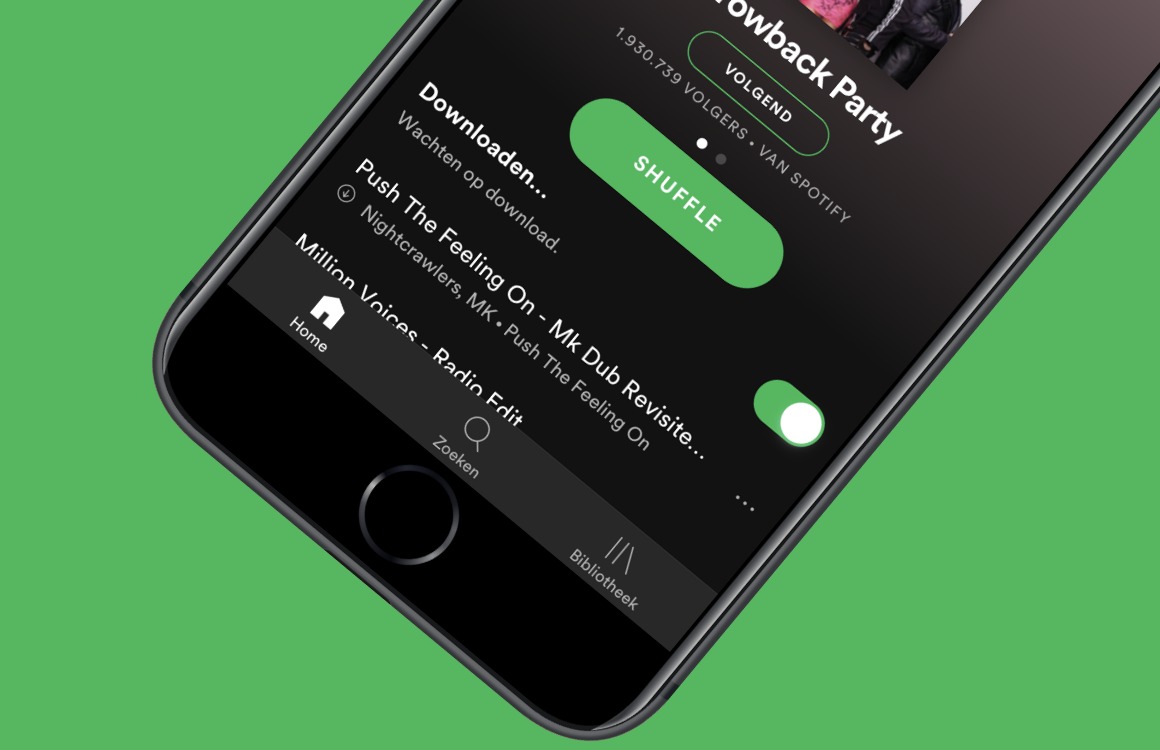
    First off we’ve got the new generic widget, which shows you what you are listening to, the song’s cover artwork — and now that’s what you call a complete package! — and, of course, media controls such as play, pause, next, etc.

    But then we’ve got the new widget, which incorporates all of the above, but also expands on the concept. It can go from a 3×2 size up to a 5×2, which allows for up to five personalized suggestions to show up beneath what is currently playing.

    And, yes, those can be anything from songs and albums to podcasts and audiobooks (where applicable). This new widget was announced last month in July, but it rolled out with version 8.8.50, which means that you may have a Spotify update pending right now.

    But beyond that, my last argument regarding widgets is this: imagine that you have a household tablet that you use for smart home and media controls. Now, wouldn’t having all necessary controls in a sleek and clean manner directly on your home screen just make sense?

    Hence, widgets can really be cool. Are they cool enough to make the transition from this theoretical tablet to your phone? That, in my opinion, depends on style. But it’s absolutely better that we have them still be a thing in 2023.

  • Netflix continues to add subscribers in the U.S. after cracking down on password sharing

    Netflix continues to add subscribers in the U.S. after cracking down on password sharing

    Once Netflix started its plan to crack down on password-sharing in May, the video streamer started to add new subscribers. A report in BroadbandTV News cited stats from Antenna which revealed that after a 12.9% decline in the number of gross additions to its U.S. subscriber list in April, Netflix saw that figure rise 27.8% in May and an incredible 128.9% in June. July showed a 25.7% drop off in U.S. gross additions.
    Still, the company did manage to add 2.6 million U.S. subscribers in July after signing up 3.5 million in June. Since the beginning of the crackdown in May, Netflix has added 7.5 million U.S. subscribers which seems to indicate that the company has done a good job in convincing password borrowers that they still want to watch the platform’s content even if they have to pay for it with their own money.
    Netflix no longer offers the basic ad-free service in the U.S. which means that besides the ad-supported tier, U.S. Netflix subscribers can choose between Standard and Premium. Priced at $15.49 monthly, Standard includes unlimited ad-free movies, TV shows, and mobile games and can be used by two supported devices at a time. Content is streamed in Full HD and one person who doesn’t live with the subscriber can be added for $7.99 per month.
    The Premium service, which costs $19.99 per month, includes unlimited ad-free movies, TV shows, and mobile games and four supported devices can use the service at a time. Content is streamed in Ultra HD, Netflix spatial audio is included, and six supported devices can download content for offline viewing. Up to two extra members who don’t live with the subscriber can be added for $7.99 per month per subscriber.
    Discussing the elimination of its old Basic package, Netflix wrote, “We’ll be interested to see how this impacts the composition of Netflix subscriptions and sign-ups overall in the coming months.” For the quarter that ended June 30, Netflix doubled projections by adding 5.9 million subscribers worldwide bringing its total globally to 238.3 million.
    Meanwhile, some of the new content on Netflix includes PainKiller, a series about the Sackler family and how it pushed doctors to prescribe its Oxycontin painkiller. The second season of Heartstopper also recently dropped on the platform.