Tag: asia

  • WhatsApp begins rollout of instant video messages in chats

    WhatsApp begins rollout of instant video messages in chats

    WhatsApp continues on its quest to revolutionize communication by adding more and more methods to share your thoughts. Now, in addition to its popular voice messages, WhatsApp is adding video to the mix.

    The popular messaging app has announced the rollout of instant video messages where its users can easily create and share brief personal videos directly within a chat. This was also shared by Meta’s CEO, Mark Zuckerberg by a message on his Instagram channel, followed by a video on how the feature will work.

    Video messages can be up to 60 seconds long, which the company believes is long enough to add a personal touch to users’ interactions and allow them to share their experiences more vividly. They are also very easy to use, making use of the same button WhatsApp users are already using to send voice messages, employing a neat little trick to switch from audio to video mode.

    Tapping on the microphone icon will switch to video mode and holding the button will start to record video. Additionally, a swipe-up feature allows you to record hands-free.

    Upon opening a video message in a chat, the video will automatically play without sound, but you can easily enable the audio by tapping on it. Video messages are protected with end-to-end encryption to ensure your privacy, providing a secure communication experience.

    The rollout of video messages has already begun, and over the next few weeks, it will become available to all users. This follows the release of a brand new WhatsApp standalone app for Wear OS after years of relying on notifications for users to view their messages on their smartwatch. We hope this trend of releasing timely features continues for WhatsApp as it can only benefit its users, especially when there are so many different messaging app options to choose from.

  • New Zealand’s Epic Brewing enters liquidation

    New Zealand’s Epic Brewing enters liquidation

    Auckland craft beer brewer Epic Brewing Company has gone into liquidation. Companies Office records show the business was placed into liquidation by a special resolution of shareholders on Tuesday.

    Damien Grant and Adam Botterill of Waterstone Insolvency were appointed liquidators.

    Owner Luke Nicholas developed the Epic brand in 2005 while working as head brewer for the Steam Brewing Company, the brewing arm of the Cock and Bull pubs in Auckland in Hamilton.

    In 2007 Nicholas and a silent partner bought the Epic brand from the Cock and Bull and continued to use its brewing facility and supply its four pubs.

    Epic Brewing Company have been pushing boundaries and winning awards for more than a decade. (Video first published in November 2019)

    The brewery developed a reputation for producing beers that were big on flavor and aroma – brews like Hop Zombie and Armageddon became cult classics among craft beer drinkers for their use of highly sought-after US hops.

    With the launch of Epic Blue in 2019, the company became one of New Zealand’s first craft brewers to produce a low-carb beer.

    The day’s talking point and stories you don’t want to miss, delivered to your inbox

    According to its website, Epic has 15 employees and operates a taproom in Onehunga.

    The first liquidator’s report is due on August 1.

  • Techcombank redefines Vietnam’s banking landscape through digital innovation

    Techcombank redefines Vietnam’s banking landscape through digital innovation

    Technological and Commercial Joint Stock Bank (Techcombank) is redefining banking services by using digital corporate identity and setting innovation benchmarks.

    The bank ended H1 with 12.2 million customers, adding around 1.4 million new customers during the period, with 45.3% acquired digitally and 43.8% through ecosystem partners.

    It set a record for customer acquisition in the first half of the year, with even more than across the whole of 2022.

    The number of retail customer transactions through e-banking channels grew to 499.7 million during Q2, up 16.4% quarter on quarter, while total transaction value amounted to about VND2.3 quadrillion, up 6.8% in comparison with the previous quarter.

    Techcombank also launched a new merchant proposition, extending integrated and customized digital offerings to Vietnamese households and micro-SMEs.

    The bank was one of the first in the market to launch an instant notification application for multi-cashiers and owners. This solution significantly removes transaction bottlenecks and allows businesses to optimize efficiency.

    Techcombank’s relentless pursuit of customer-centricity has yielded remarkable results.

    Today, more than 90% of the bank’s retail transactions are conducted digitally, marking a 40% surge in new digital customers in 2022.

    The remarkable retention rate of 88% further affirms Techcombank’s triumphant adaptation to the digital age.

    Techcombank’s unwavering commitment to digitalization extends far beyond the corporate banking sphere. The bank has successfully broadened its reach, providing basic accounts to millions of customers.

    In a mere two years, its active digital customer base has skyrocketed from 2 million to nearly 5.3 million, Pranav Seth, chief digital officer of Techcombank, underscored the potential of digitalization to democratize access to banking services, at the Singapore Regional Business Forum (SRBF), held on July 7 in Hanoi.

    Seth said that by seamlessly integrating the bank’s digital corporate identity with lending capabilities, they had unlocked unparalleled support for businesses participating in the digital economy.

    “This integration has propelled Techcombank to trailblazer status in the digital economy, enabling it to provide critical financial assistance to enterprises navigating this transformative landscape,” he said.

    As Techcombank continues to leverage digitalization to enhance services and expand its market presence, it stands as an unparalleled exemplar for other banks navigating the treacherous waters of the digital economy.

    The bank’s success underscores the transformative potential of digitalization, offering a tantalizing glimpse into the future of banking in an increasingly interconnected and digital world.

    During the SRBF, Techcombank unveiled two pivotal partnerships that promise to reshape Vietnam’s banking landscape. The first was a strategic alliance with the esteemed Singapore Business Federation, aimed at fostering cooperation between Vietnamese and Singaporean businesses.

    The second was an audacious collaboration with global titans Kyriba, Deloitte Vietnam, and PWC, targeting the pioneering of revolutionary payment and treasury management solutions in Vietnam.

    On July 24, Techcombank announced its financial results, which showed steady performance during the second quarter in an environment that remains challenging.

    The bank continued to outperform the market in credit and deposit growth, while NPL and CAR stayed at healthy levels.

    The result shows increases in CASA balances, and the ratio improved to nearly 35% at the end of the period.

    Beyond the normalization of interest rates and aggressive customer acquisition strategies, CASA is expected to further benefit from the targeted propositions that are being developed in corporate as well as retail banking.

    Besides, its funding position remained robust, with a regulatory loan-to-deposit ratio of 80.4% on June 30 and a short-term funding to medium- and long-term loan ratio of 31.6%.

    Techcombank achieved PBT of VND11.3 trillion and TOI of VND18.6 trillion, broadly stable versus Q1.

    Total assets grew 17.4% year on year to VND732.5 trillion in H1.

  • Gold prices decline

    Gold prices decline

    SJC gold price fell 0.22% to VND67.1 million ($2,833.91) per tael Wednesday morning.

    Gold ring price gained 0.09% to VND57.05 million per tael. A tael equals 37.5 grams or 1.2 ounces.

    Globally gold struggled for momentum on Wednesday as traders refrained from making big bets ahead of the U.S. Federal Reserve’s policy decision due later in the day.

    Spot gold inched 0.1% lower to $1,963.59 per ounce, while U.S. gold futures edged 0.1% higher to $1,965.30.

    “Broader markets are looking for an extended rate pause through the rest of the year, while Fed officials could push back by leaving the door open for one more hike in September or November,” said Yeap Jun Rong, a market strategist at IG.

    While most traders see rates holding in the 5.25%-5.5% range in 2023, 35% see a chance for another 25 basis-point hike in November, according to CME’s Fedwatch tool.

  • Motorbike taxi driving unsustainable for laid off workers

    Motorbike taxi driving unsustainable for laid off workers

    More than a few workers made unemployed by increasing layoffs in Vietnam recently have become motorcycle taxi drivers only to realize it’s not a lasting solution.

    After starting his workday at 5 a.m., at 10 a.m. Le Van Manh had completed only one trip, which made him VND40,000 (around $1.7) in cash.

    Manh started working as a motorbike taxi driver four months ago, after two years suffering from his old factory’s unstable business performances.

    “The factory started layoffs, forced us to work overtime, and cut down on our salaries,” he said.

    His income as a factory worker used to be around VND20 million, but was reduced to only half that starting last year. Not being able to get by with that income, he quit his job and turned to ride-hailing applications, hoping for better financial rewards.

    Manh spent around 12 hours a day on the road after his career turning point. Things went smoothly at first, as he was able to earn between VND400,000 and VND500,000 a day during the first two months working as a motorbike taxi driver.

    But the number of drivers has increased over the recent months, and Manh now has to share his customer pool with his new “colleagues,” and thus, earn a lower income of only VND300,000, or even VND100,000 sometimes, per day.

    “I can only complete around 10 trips a day now, compared to over 20 trips a day before,” he said.

    According to data published by the General Statistics Office of Vietnam, more than 149,000 workers lost their jobs in Q1 this year, 13% higher than the previous quarter. Of these laid off workers, most worked in companies in the FDI sector based at industrial areas in and around the provinces of Dong Nai, Binh Duong, Bac Ninh, Bac Giang.

    The Private Sector Development Research Board projected that the layoff wave could continue in this year’s second half, due to both external and internal challenges for businesses.

    Not requiring any educational background or specific skill sets, motorbike taxi drivers are the first career choice for many laid off workers to make a new living.

    Hoang Van Trieu, a former truck driver at a Binh Duong-based wood warehouse, started working as a full-time motorcycle taxi driver three months ago, after becoming unemployed when his company went bankrupt. Having expected that the new occupation would help him cover his living expenses, he got depressed after a while.

    “I spend about 10 to 11 hours a day, in exchange for between VND300,000 and VND400,000,” he said. “I cannot get by if I maintain this as my full-time job.”

    He is now trying to look around for other career opportunities. The best scenario he can think of is being able to find an office job, which allows him to leave at around 4 p.m. or 5 p.m., so that he can hit the road and start the second “working shift” of his day as a motorcycle taxi driver until before midnight.

    Ride-hailing applications, of which the most popular in Vietnam are Grab, Gojek, and Be, were once considered a life saver for those that were looking for another occupation, including laid off workers looking for career chances or fresh graduates waiting for a job after finishing school.

    The Vietnam General Confederation of Labor estimated in 2021 that there were over 200,000 partner drivers working with Grab, which rose from around 175,000 in 2018. Of these, around 26% graduated from a higher educational institution or equivalent.

    Gojek reported that the platform surpassed 200,000 drivers in mid-2021, while Be announced that the number of its partner drivers surpassed 100,000 at the beginning of the same year.

    Drivers’ daily income was as high as between VND500,000 and VND600,000 at that time.

    However, things have become harder for drivers recently. The supply of drivers increased and the fees taken out by the applications rose and currently range between 30% and 39% of the amount charged to customers. All of these mean it has become harder for drivers to maintain their income.

    Nguyen Dinh Vuong, former worker at a Hanoi-based leather company, decided to return to his hometown after months of suffering from this “high cost, low reward” job. He spent around 12 hours working a day to get between VND300,000 and VND400,000 in return. With this income, he did not have much left after paying his bills.

    “Motorcycle taxi drivers in Hanoi have to work at least 12 hours to earn enough to get by,” he said. “The cost of living in my hometown Thanh Hoa is lower, so I spend less, and don’t have to work that hard.”

    According to him, many former industrial workers, who were laid off due to the downfall in the orders, are trying their best to get by, in the hope of an economic recovery that will lead to improved business performances and thus, higher demand for labor.

    Dr. Huynh Thanh Dien, an economic expert, made a prediction aligning with this hope. He projected that the labor market would soon retrieve a state of stability and temporary motorcycle taxi drivers would soon be able to return to their occupations.

    He also warned that partner drivers for ride-hailing applications should not be considered a long-term career goal, as the job cannot provide a stable income in the long run. Instead, it should be treated as a temporary “cover” occupation only while the economy follows its natural rhythm and proceeds on its way to recovery.

    In the meantime, these people have no other choices than optimistically enduring.

    “The economy can’t be gloomy forever,” Manh said. “As I heard from the news, the situation is predicted to become better in 2024, so I will try to get by and wait until then.”


  • Changi to strengthen SEA and China network in H2

    Changi to strengthen SEA and China network in H2

    Changi Airport is looking to strengthen its connectivity to more points in Southeast Asia and China in the second half of the year as the airport regained more than 80 percent of capacity in the month of June.

    On a quarterly basis, Changi Airport saw 14.6 million passenger movements from April to June 2023, which was 87 percent of what was registered for the second quarter of 2019. Meanwhile, airfreight throughput from April to June 2023 totalled 418,000 tonnes, sliding 10.8 percent year-on-year.

    Changi said air cargo demand remained weak due to softening demand amid inflationary pressures. In Q2, Changi’s top five air cargo markets comprised Australia, China, Hong Kong, India and US with India emerging on the top 5 for two consecutive quarters since the start of 2023.

    In June, the airport’s passenger movements crossed the 5-million mark for the first time since January 2020, or 88 percent of the baseline passenger numbers back in June 2019, before the pandemic. Air cargo volumes stood at 135,000 tonnes for the month, representing a year-on-year decline of 17 percent.

    Regaining more than 80 percent of its capacity before Covid, the airport said it plans to strengthen connectivity to more points in Southeast Asia and China in the second half of the year. As of 1 July, 99 airlines operate over 6,300 weekly scheduled flights at Changi Airport, connecting Singapore to 148 cities in 49 countries and territories worldwide.

  • ChatGPT app for Android is now officially available on the Play Store

    ChatGPT app for Android is now officially available on the Play Store

    Chat GPT, the revolutionary AI-powered chatbot, has been making headlines in the tech world for its ability to simulate human-like conversations through the use of its advanced language model. Although initially the most popular way to use the tool was via its official website, it soon became obvious that its users wanted to take Chat GPT with them on the go with the convenience of just launching a mobile app rather than a browser.

    This became half a reality when OpenAI, the AI research company that developed Chat GPT, released an app for iOS devices. When the iOS version was released, OpenAI promised that an app for Android was soon to follow.
    Two months later, OpenAI followed its promise and opened pre-registrations for Android users interested in installing the app. Once registered, the app was to install on your phone automatically once it was available.

    Fortunately, we didn’t have to wait long as the app is now fully available on the Google Play Store with its listing stating that “This official app is free, syncs your history across devices, and brings you the newest model improvements from OpenAI. With ChatGPT in your pocket.” This is great news for those that already use Chat GPT on their desktops and would like to have their chat history available everywhere.

    Just as with the iOS app, ChatGPT Plus subscribers will have exclusive access to the next-gen GPT-4 language model, early access to features, and faster response times. Free subscribers, however, will be using OpenAI’s standard GPT-3.5 language model.
    In addition to the new official app, Android and iOS users alike have the option to utilize the ChatGPT chatbot through the Bing app, which now offers a Bing Chat widget that can be conveniently added to their mobile device’s home screen. Your move Google.
  • No special consumption tax on online games

    No special consumption tax on online games

    The government has rejected a proposal by the Ministry of Finance to slap a special consumption tax on online games and sought more scientific data to tax sugary drinks.

    But in a recent decision, it instructed its agencies to use other legal means to limit playing time.

    Earlier this year the ministry had suggested imposing the tax on online games as a means to dissuade people from playing them, saying they have negative impacts on players’ health and society.

    But industry insiders and experts criticized the proposal, saying gaming has the potential to become a new industry.

    The tax would decrease the competitiveness of Vietnamese game producers and cause them to move overseas, they said.

    The ministry had also proposed taxing sugary drinks since they cause obesity, but the government has asked for more scientific data to back that claim.

    It also tasked the ministry with studying the possibility of taxing e-cigarettes to ensure Vietnam’s international commitments would not be breached.

  • Fintech startup GIMO completes $17M fund-raising round

    Fintech startup GIMO completes $17M fund-raising round

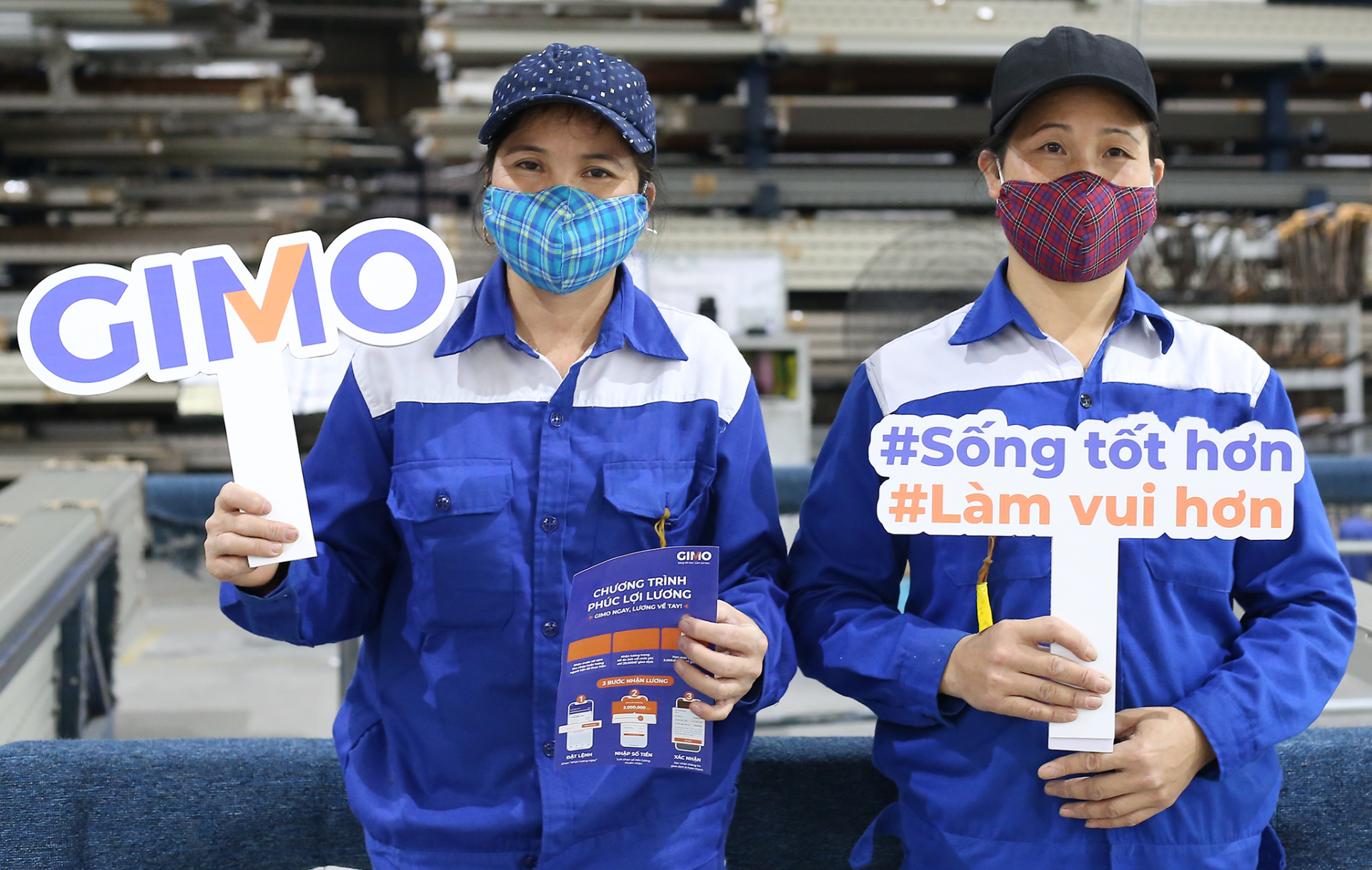
    Vietnam-based fintech startup GIMO, which seeks to provide flexible salary payments to blue-collar workers, has completed its Series A funding round, raising $17.1 million.

    The final closing, comprised of a mixture of equity and debt financing, is led by venture fund TNB Aura, with participation from the company’s existing backers including Integra Partners, Resolution Ventures, Blauwpark Partners, ThinkZone Ventures, and Y Combinator, according to a press release of the company.

    “We look forward to working closely with the GIMO team in breaking down barriers to financial inclusion for millions of blue-collar workers across Vietnam,” said Charles Wong, founding partner of TNB Aura.

    GIMO offers near-instant payroll to blue-collar workers whenever they need it.

    It allows employees to access their earned salary via a mobile app integrated with the company’s payroll system. Users can also keep track of their workdays and daily earnings.

    GIMO currently serves 500,000 workers from medium to large-sized multinational manufacturing companies across Vietnam.

    Despite the economic slowdown in 2023, the company has demonstrated a solid growth rate of 15% and is on track to reach 2.5 million underbanked employees by 2025.

    The funding will be used to develop its products, increase customer experience, and establish strategic partnerships.

    Research by professional services firm KPMG in 2022 showed that an average user draws their earned pay two to three times per month, almost simulating bi-weekly and weekly pay.

    A flexible pay cycle takes the burden off blue-collar workers’ shoulders by helping them pay for financial emergencies and everyday bills.

  • Catfish export decline slows down

    Catfish export decline slows down

    According to the Vietnam Association of Seafood Exporters and Producers, the decline in pangasius fish exports has started to reverse.

    Exports to mainland China and Hong were worth US$48 million in June, down 15% from the same period last year. They had declined by 66% and 30% in April and May.

    Similarly exports to the U.S. last month were down by only 51% to $23 million compared to 66% and 53% in April and May.

    In the first half of the year, overall exports were 38% lower at $885 million due to weak demand in major export markets such as China, the U.S. and Europe due to high inflation.

    The prospects of higher demand for pangasius in the U.S. and China in the second half are still uncertain due to the slow economic recovery and large inventories in those markets, SSI Securities Corporation said.

    But Vietnamese exporters will start to see profits improve thanks to lower input and transport costs.

  • Pepper exports rise in volume

    Pepper exports rise in volume

    Vietnam exported 153,000 tons of pepper worth US$483 million in the first half of this year, up 24% in volume but down 13.7% in value year-on-year.

    According to the General Department of Vietnam Customs, the average price stood at $3,184 per ton, a decrease of 29.7% from a year earlier, due to weaker global demand.

    Pepper exports to the U.S., UAE, India, Germany, the Netherlands, the U.K., and South Korea declined by 20-70%.

    China and the U.S.were Vietnam’s biggest markets, accounting for 35% and 16% of its exports.

    According to the Vietnam Pepper Association, China has large inventories of pepper and so will import less in the second half of this year. It had imported 46,169 tons in the first five months of the year.

    Other major importers like the U.S. and the European Union will also import less pepper due to their economic situation and high inventories.

    The price of black pepper in Vietnam is currently VND67,000-69,000 ($2.8-2.9) per kilogram, down VND3,000-5,000 from a year ago, and that of white pepper is VND103,000, down VND6,000.

  • Netflix adds new feature to iOS, Android to help you quickly find content to watch

    Netflix adds new feature to iOS, Android to help you quickly find content to watch

    Netflix announced today that it is adding a new feature to its popular mobile phone app. Called My Netflix, this is a one-stop shop for both iOS and Android users that features shortcuts to help you find something to stream on the platform. The new My Netflix Hub will show you the content you recently downloaded, the movies and television shows you gave a thumbs up to, shows and movies you’ve saved to My List, trailers that you’ve viewed, what content you’re in the middle of watching, content you’ve recently viewed and more.

    With the My Netflix Hub, you can check it out wherever you are to get ideas of what to watch next including shows and movies that you’re in the middle of watching, or content that you’ve downloaded to view at any time. Even with the capabilities of the My Netflix Hub, you can always visit your Home tab or other parts of the app to see the entire Netflix library.

    The My Netflix Hub learns more about you the more you use it. So if you save more medical dramas or give a thumbs up to every episode of Grey’s Anatomy, you’re apt to find more medical dramas in the My Netflix Hub. The Hub is rolling out today to iOS users and will be available on Android devices early next month. Check to see if the My Netflix Hub has arrived by opening the app and looking for the tab on the bottom right corner of the display.
    If the My Netflix Hub hasn’t been added to your iOS Netflix app, you can try to manually update the app by opening the App Store and tapping on the profile picture in the upper right corner. You’ll see a list of apps that are in a queue to be updated. Scroll down until you see “Netflix” (that is, if it appears on the list) and tap on “Update.” Wait for the app to be updated before you open the Netflix app to check whether the My Netflix Hub has arrived on your iPhone. I can tell you that the update has hit the Netflix app on my iPhone 11 Pro Max running iOS 16.6.
  • Costco fined for mislabelling seafood origin

    Costco fined for mislabelling seafood origin

    Costco Wholesale Australia Pty Ltd has paid penalties totalling $33,000 after the ACCC issued it with two infringement notices for alleged false or misleading labelling of the country and place of origin on lobster products and failing to comply with the Country of Origin Food Labelling Information Standard.

    In early January 2023, Costco sold two packages of lobsters from its Casuarina warehouse in Western Australia which were labelled ‘Kirkland Signature PREVIOUSLY FROZEN WHOLE COOKED WA LOBSTER’ and ‘Australian Lobster’. Other packages were also displayed for sale with the allegedly misleading labels. In fact, the lobsters were imported from Canada.

    The ACCC also alleges that Costco did not comply with the specific Country of Origin Food Labelling Information Standard because it used the Australian-made kangaroo logo as well as a full bar chart indicating that the lobsters were exclusively Australian when they were not.

    “Selling goods with an incorrect country or place of origin label is a breach of Australian Consumer Law,” ACCC Deputy Chair Mick Keogh said.

    “Many shoppers pay a premium to purchase Australian seafood rather than imported products, which makes the accuracy of the labelling a crucial part of enabling consumers to make an informed choice.”

    “While a small number of consumers were impacted in this instance, this conduct involved a large and sophisticated business,” Mr Keogh said.

    “This action by the ACCC is a reminder to all businesses, large or small, of the importance of ensuring that country of origin labelling is accurate and complies with the Country of Origin Food Labelling Information Standard.”

    Costco is one of the world’s largest retailers and operates warehouse outlets in 13 countries. Costco operates 15 warehouses in Australia.

    The Country of Origin Food Labelling Information Standard 2016 applies to most food available for retail sale in Australia, including food that is imported into Australia for retail sale.

    The standard requires that if a product is grown, produced or made in Australia, the label must contain a ‘standard mark’ label which includes the kangaroo in a triangle logo which indicates the product is of Australian origin; a bar chart indicating the percentage of Australian ingredients in the food; and explanatory text which states whether the product was grown, produced or made in Australia.

    In addition to the Country of Origin Food Labelling Information Standard, section 29 of the Australian Consumer Law also prohibits businesses from making false or misleading representations about the place of origin of the goods they supply to consumers.

  • HCMC hotel business gloomy as foreign tourists keep away

    HCMC hotel business gloomy as foreign tourists keep away

    Hotels in Ho Chi Minh City are suffering from low occupancy rates due to a sharp drop in international visitor arrivals and domestic tourists’ preference for traveling to beaches.

    In May, amid a wave of hotel closures and conversions into office buildings, the Norfolk Hotel in District 1 with over 100 rooms stopped operating.

    In mid-June many hotels in tourist areas such as Bui Vien Street, Bui Thi Xuan Street and Le Thanh Ton – Ly Tu Trong in District 1 temporarily closed due to lack of customers.

    The latest accommodation market report by real estate consultancy Savills Vietnam said hotel occupancy rates in the second quarter were down 8 percentage points quarter-on-quarter.

    All segments suffered as foreign visitor arrivals to the city fell by 13% quarter-on-quarter. The rate of overnight guests in the city was only 19%, the lowest in the country.

    Hotels are currently relying on business guests since the city is a transit point between various provinces and cities.

    Troy Griffiths, deputy general director of Savills, said recovery in international tourism has been slower in Vietnam than other countries in the region.

    He pointed out that the number of visitors from China, the second biggest market, was 78% down in the first half from 2019, the year before Covid.

    Trang Minh Ha, chairman of investment firm North Stars Asia, said the third quarter, when it is the rainy season, is the low tourist season in HCMC, and so occupancy and room rates would continue to be low.

    The number of hotels that close permanently or temporarily could rise sharply, he said.

    The economic difficulties post-pandemic, boring and monotonous tourism products and Vietnam’s difficult visa policies have kept tourists away, he said.

    The city needs to strengthen programs on attracting visitors to compete with countries such as Thailand, Singapore and Indonesia, he said.

    “HCMC’s hotel industry is waiting for an optimistic signal from the economy for recovery. However, the market may have to wait until the end of 2024 for a solid positive signal.”

  • Google Assistant and AI might help Pixel users understand what they are reading online

    Google Assistant and AI might help Pixel users understand what they are reading online

    code found in the latest beta version of the Google app (version 14.29) indicates that Google Assistant will soon be able to use generative AI to help summarize passages found on the internet. While browsing the web, a user can tap on a “Summarize” button when the Google Assistant’s presence is requested with the iconic “Hey Google” call out. Or, you can ask the Assistant to “Summarize this” to see a quick summary of what you are reading on the screen.

    The Summarize suggestion will appear when browsing the internet using Chrome or when an app opens a web page in a Custom Tab (also powered by Chrome). At the moment, the feature does not work as requests for the Assistant to summarize a passage from a website return an error message as seen in the embedded image below.

    While it isn’t clear if and when this feature will be made available, it is a strong possibility that the Google Assistant’s AI summary of internet content will be limited to Pixel phones and tablets only. Google Assistant is supposed to be more optimized and offer faster responses on a Pixel handset.
    The problem with relying on AI to summarize a document is the same problem that is typical with artificial intelligence: the possibility that summaries from Google’s AI service will contain “hallucinations.” These AI platforms are “trained” using information derived from humans and could contain biases and outright incorrect data. But this is something that you need to keep in the back of your mind anytime you use AI to interpret information.
    The Google app right now will also help answer your queries using generative AI on Android and iOS. All you have to do is tap the “Generate” button to the right of your question on the Google app and you’ll see more enhanced information related to your search. Again, you’ll need to watch out for hallucinations and biases, if any.