Tag: asia

  • Spotify to raise prices of its Premium plan in the US

    Spotify to raise prices of its Premium plan in the US

    Spotify will no longer remain one of the few music streaming services in the US not to increase its subscription prices. Just about every other player in the market raised prices in the last year or so, while Spotify benefited from influx of customers that decided to switch services. Unfortunately, that didn’t last long, as Spotify is about to raise prices too.

    Spotify plans to raise the monthly subscription prices in the US by $1. That means that the price of the ad-free $9.99 plan will become $10.99 per month in the United States. Spotify is reportedly expected to announce as early as next week, but only for the US market.

    The bad news is price hikes will be announced for many other markets too in the following weeks, although it’s unclear where and when these changes will be introduced. Spotify has been keeping the price of its premium plan stuck on the $9.99 psychological threshold for quite some time, but that’s about to change for customers in the US.

    Currently, Spotify offers a free, ad-supported plan that provides access to over 80 million songs, podcasts and audiobooks, downloadable podcasts, the ability to take the music with your when traveling abroad (for 14 days only), and the option to pick and play any track on mobile (select playlists only).

    The Premium plan still costs $9.99 and doesn’t have the limitations that the free plan has. On top of that, it allows subscribers to download music and podcasts, play songs in any order, and listen to the highest music quality. Of course, there will be no ads running while listening to Spotify if you’re subscribed to the Premium plan.

    Students get 50% off Premium for up to 4 years, while Premium Duo offers two people living together the option to get their own Premium account for 1 discount price. Also, the Premium Family covers up to 6 people living together each getting their own Premium account for 1 discount price. The Family plan comes with Spotify Kids and explicit filter.

  • Diana Unicharm to sell cat food

    Diana Unicharm to sell cat food

    Diana Unicharm, a leading personal hygiene products manufacturer, is set to distribute Japanese cat food brand Silver Spoon.

    Takahiro Okada, CEO of Diana Unicharm, said the company would import the product from Japanese joint venture partner Unicharm and sell it through supermarkets, pet stores and e-commerce platforms in Vietnam.

    Since Covid broke out, the pet industry has thrived as families choose to raise dogs or cats to soothe themselves.

    Statistics from Pet Fair Asia, the organizer of an annual international tradeshow for pet supplies, show pet care industry sales in Southeast Asia are US$4 billion, with Vietnam accounting for $500 million.

    The Vietnamese market is forecast to grow at 11% a year.

    Diana Unicharm, one of the biggest makers of sanitary napkins and diapers in Vietnam, targets annual revenues of $1 billion by 2030.

    As of last year it had a 40% share of the child care segment, 58% of the women’s care segment and 88% of the adult care segment.

  • India’s rice export ban gives Vietnam golden y

    India’s rice export ban gives Vietnam golden y

    Vietnam’s rice exporters could raise prices and sign long-term contracts with buyers now that India, the world’s largest supplier, has ordered an export halt.

    Indian government on July 20 announced a ban on non-basmati white rice as retail rice prices climbed 3% in a month after heavy monsoon rains caused significant damage to crops.

    India accounts for more than 40% of world rice exports, and non-basmati white and broken rice accounted for around 10 million tons of a total of 22 million tons of Indian rice exports last year, according to the U.S. Department of Agriculture. With the ban taking effect, global insiders have raised concerns about food price rises.

    Professor Vo Tong Xuan, an economist and expert in rice farming, said given the situation, the second half of the year will offer a golden opportunity for Vietnamese rice exports.

    In the first half of the year, the average export price of Vietnamese rice increased by 11% to US$539 a ton.

    After this ban, Xuan thinks the price could be as high as $600 per ton on average and high-quality varieties that can be sold at $700 a ton.

    The professor said India’s sudden export ban will “create big impacts” on importing countries because they cannot find replacing rice shipments from countries with small supply.

    Therefore, Vietnam and Thailand will be their next destinations. He forecast that Vietnam’s export turnover in the second half of this year could increase dramatically.

    The director of a rice export company in Can Tho said that in July, the company’s rice export orders increased by 20% from the previous month and by 30% compared to the same period last year.

    “Two days after the news that India banned rice exports, many buyers have asked us to sign them long-term contracts to ensure supply, but we’re still considering the offer,” said the director.

    He added that in the first half of this year, the company’s rice export price increased by 22% over the same period last year.

    After the ban, he forecasted that export prices could increase by 30-40% compared to last year.

    The Rice Exporters Association says that rice is a staple for more than 3 billion people, and nearly 90% of the water-intensive crop is produced in Asia, where the El Nino weather pattern usually brings lower rainfall. Global prices are already hovering at their highest level in 11 years.

    According to official data, India’s rice shipments reached a record 22.2 million tons in 2022, more than the combined shipments of the world’s next four biggest exporters of the grain – Thailand, Vietnam, Pakistan and the U.S. India exports rice to more than 140 countries.

    Nguyen Duy Thuan, CEO of Loc Troi Group, agrees that India’s ban on rice exports is an opportunity for rice-exporting countries and that Vietnam can take advantage of this opportunity to act as a sustainable rice supply source for the international food market.

    However, he noted that Vietnamese rice still has many challenges to face in terms of quality and export scale.

    “In particular, farmers are yet to have access to high-quality varieties and therefore the rice yield has not reached the optimal level,” Thuan said.

    Meanwhile, their farming techniques are still limited, resulting in many fertilizers and pesticides, affecting the rice’s quality and the environment.

    In addition, the large-scale management capacity of Vietnam’s rice industry is still limited, Thuan added.

    Thuan suggested that Vietnamese rice needs to improve quality and traceability in the supply chain to gain trust from consumers and regulators.

    Professor Xuan said the government needs to take specific actions to monitor planting areas and create favorable legal corridors to support businesses.

    “At the moment, in order to secure a large rice output for export, businesses need to associate long-term cooperation with traders and farmers, and ensure benefits for them,” Xuan said.

    With import partners, businesses should ask them to sign long-term contracts to ensure stable export activities and also help farmers feel more secure in production.

    Forecasting for this year’s supply, Xuan said that Vietnam has quite favorable weather and the yield could be high. He said that Vietnam can produce nine million tons of rice this year.

    Data from the Ministry of Agriculture and Rural Development shows that rice exports in the first six months reached 4.27 million tons in volume and $2.3 billion in value, up 22.2% and 34.7%, respectively against the same period last year.

    The U.S. Department of Agriculture has raised its forecast for Vietnam’s rice exports 2023 to 7.2 million tons, up from 7.05 million tons in 2022. Vietnam will rank third in the world in rice exports this year, after India and Thailand.

  • Can technology make us more productive in the workplace?

    Can technology make us more productive in the workplace?

    Increasing workplace productivity is a typical objective shared by many business owners. We want everyone on our team to get as much done as possible while maintaining a pleasant work atmosphere since this helps us to grow our businesses.

    Despite having the same aim, company owners approach productivity improvement uniquely. Some may strive to conduct team-building activities, while others may simplify specific procedures. If you want to increase workplace productivity, you may do it by using modern technologies. Here are a few ways technology might assist in boosting efficiency in your office.

    How does technology help make us more productive?

    Many businesses integrate new technology into the workplace to boost staff productivity by decreasing mistakes, shortening timeframes, and lowering worker stress. Cloud computing has already influenced enterprises’ capacity to operate from anywhere, including mobile devices.

    Artificial intelligence (AI) will significantly affect sectors and enterprises during the next decade.

    Of course, introducing new technology into the workplace can be overwhelming at first. It’s also important to remember there is little point in introducing new software without a rigorous onboarding process. For example, employees might already be familiar with a free VPN for PCs in the office, and it’s easy to implement.

    Let’s look at different types of technology and how they help improve productivity in the workplace.

    Communication software

    An excellent place to begin is using communication software. Even if your staff members work in the same office, having technologies to assist them interact can help them operate more efficiently. This is especially true if you still converse by email. Providing your staff with chat software is an excellent choice.

    They can swiftly send messages, share files, and do other things using software like Microsoft Teams. This facilitates talks through email and provides a central location for your staff to address significant issues.

    Cybersecurity technology

    VPNs assist in improving online privacy and security by protecting your IP address, location, passwords, and data from possible hackers. A VPN can even enhance your business’s next digital marketing campaign.

    Your company may be transmitting data between web programs like Dropbox or within Office 365, and a VPN establishes an extra layer of protection and security between the source and destination of the data.

    Another valuable piece of cybersecurity technology is the firewall. It’s a virtual framework comprising hardware, software, or a combination that can prevent hackers, fraudsters, and other criminals from accessing your data.

    A firewall also stops hackers from entering your system in the first place, as opposed to a virus protection tool, which prevents them from installing a virus once they’ve entered. When activated, a firewall inspects the millions of data that move in and out of your company’s network. It prevents it from entering if it detects something unlawful, malicious, or harmful.

    Project management software

    If your company works on massive projects, having software that can coordinate all relevant duties is important. You may use project management software to define goals, allocate tasks to specific individuals, measure progress, and exchange files.

    Attempting to do this without specialist software may result in errors, miscommunications, and delays. Even if you already use project management software, looking into alternative possibilities is good since you could find something better suited to your needs.

    Automation tools

    Automation tools can help your staff save time. You can automate them if they have basic and repetitive duties that they must complete daily. You may automate email answers, meeting scheduling, communications to prospective clients, data input, and other tasks.

    A simple automation software solution may sometimes save your staff a significant amount of time throughout their day. They can then use this time to concentrate on more vital duties. They can now do more in less time, resulting in increased production.

    Enhanced internet hardware

    A dependable internet connection is an essential component of a productive office. If your staff needs to wait for items to load or transfer files, it will only slow down their workday. Moreover, frequent internet disconnects cause dissatisfaction and might slow down your staff. This is why having the proper gear for your internet connection is critical.

    Some smaller offices, for example, may require a single router to which everyone may connect. Larger workplaces may need hubs or wifi extenders to reach everyone successfully. Similarly, other businesses may need to rely on technology such as SD-WAN networks to provide the entire office with safe and reliable internet access. If your employees need help with their internet connections, one of the most important things you can do is look into ways to enhance them.

    Recreational and atmosphere

    Finally, technology may assist you in creating a more joyful workplace. It makes no difference what productivity techniques you apply if your staff are unhappy at work. Installing wireless speakers across the office and playing background music is a simple option that can significantly boost productivity.

    You could even arrange a virtual quiz event or start a fantasy sports league for your team. These are accessible technological applications that will make your employees’ days more enjoyable, increasing their productivity.

    Conclusion

    Technology is a wonderful thing that can help improve our experience in the workplace, just like it does when we are off the clock. Implementing new technology in the office will boost productivity through automation and project management while providing security for your business.


  • % Arabica returns to the Philippines

    % Arabica returns to the Philippines

    Arabica PH returns! The Japanese coffee shop has announced that it will be back in the Philippines this year with upcoming new branches in Bonifacio Global City (BGC), Taguig City.

    In a Thursday, January 5 Instagram post, Arabica Journal – the global account of the brand – posted rendered layout images of the two new Philippine stores as a “sneak preview,” showing minimalist, modern interiors and the brand’s iconic percentage symbol logo.

    “Manila, we will restart our project this year with these stores. We cannot wait to serve our coffee from the world to you once again,” they said.

    Arabica PH reposted the images on Friday, January 6, with the caption: “MABUHAY PILIPINAS! We are coming back bigger and better!” The branches’ opening dates and exact locations have yet to be confirmed.

    The Philippine return of the independent coffee brand from Kyoto has been met with excitement from the brand’s former patrons, especially after three of Arabica PH’s branches suddenly closed with no warning in late January 2021. Even the brand’s Instagram page was suddenly no longer available, much to customers’ confusion and concern.

    A day later, it was announced that Arabica’s franchise period and contract with its Philippine partner had already ended, and a new partner would soon be in the picture. Before this, the Arabica Headquarters had already been experiencing “communication issues” with the Philippine franchise partners. On February 2, Arabica PH was back online once again, with a new Instagram account to boot.

    Arabica PH said then that expansion plans were already being discussed with new franchise partners, and the plans were not limited to just Metro Manila but would also include other Philippine regions.

    Arabica PH opened its first branch in Bonifacio Global City in Taguig City in 2018, followed by a second BGC branch and another at The Podium in Mandaluyong City. The brand currently has 140 stores worldwide, and advocates a “simple love for coffee and design.”

    Arabica PH’s former partners since 2017, mother-daughter duo Allue and Dr. San San Hortaleza, built a new “proudly Filipino” coffee brand called Angkan Coffee, which has branches in BGC, The Podium, and a soon-to-open one in Capitol Commons.

  • Google Messages could soon feature end-to-end encryption for cross-platform messaging

    Google Messages could soon feature end-to-end encryption for cross-platform messaging

    Rich Communication Services (RCS) is the messaging platform available on the Messages by Google app for Android. Similar to Apple’s iMessage, RCS runs off data connectivity, not cellular connectivity. This allows it to send and receive huge messages, share higher-quality images and videos, deliver read receipts and typing indicators, and offer end-to-end encryption.

    But like a chat made up of iMessage users that loses all of its great features when an Android user dares to join the group, the same thing happens when an iPhone user joins a chat session made up of RCS users. One of the features that both RCS and iMessage users lose when someone from a rival platform joins a group chat is the aforementioned end-to-end encryption.

    As Google said in a blog post it published on Wednesday, “This is why Google is strongly supportive of regulatory efforts that require interoperability for large end-to-end messaging platforms.”
    Google writes, “For interoperability to succeed in practice, however, regulations must be combined with open, industry-vetted, standards, particularly in the area of privacy, security, and end-to-end encryption.” And this makes sense. Otherwise, you’ll have a situation where end-to-end encryption would be a mess. “Group messages would have to be encrypted and delivered multiple times to cater for every different protocol,” the company says.

    As a result, Google announced that it is supporting Messaging Layer Security (MLS) which would allow end-to-end encryption to remain in effect between two large messaging platforms like iMessage and RCS. MLS is a protocol developed by the Internet Engineering Task Force (IETF) and now enables “practical interoperability across services and platforms, scaling to groups of thousands of multi-device users.”

    Google plans on integrating MLS into Google Messages. The goal is to have users of the Google Messages app enjoy secure group chats with all members of a group chat regardless of the messaging app they are using.
  • T-Mobile is making things worse for people struggling financially

    T-Mobile is making things worse for people struggling financially

    Just when you think T-Mobile is done delivering bad news, something new comes along. Just today, it was reported that customers are having a meltdown at stores after learning about the new fee for offline payments and now the carrier has dropped two more bombs.
    The Mobile Report spotted a change to the company’s terms and conditions and found two potentially worrying things. One of the clauses says that “you may still incur charges while an account or service is suspended.” This means that the company has the right to charge you even when you are not using their services because of a non-payment suspension.

    And even though the website uses the word “may,” The Mobile Report has received a screenshot of an internal document that says that customers will be charged during account suspension.

    This went into effect on July 19 and employees have apparently been told that the charges are not prorated – meaning customers will be charged the full amount for the entire billing period – and they will not be credited.
    As is the case with the offline payment fiasco, employees will have to deal with disappointed customers and this time around, T-Mobile doesn’t even explain why it has made this change.
    Verizon is the only of the big three carriers that does not charge customers during non-payment suspensions.
    Besides that, T-Mobile also says it’s “not responsible for any… …information, goods, or services provided by third parties.” So if you do business with a third party and something goes wrong, you can raise a dispute but it would be up to T-Mobile if it wants to help and it can walk away scot-free.
    This means that customers will have to be a lot more careful about where they shop from as T-Mobile can simply refuse to help if something goes wrong with the device you were provided or you were misguided about a plan by an authorized retailer.
  • UK coffee chain EL&N launches in Malaysia

    UK coffee chain EL&N launches in Malaysia

    London-based EL&N has made its first foray into Asia with a store at the Pavilion shopping centre in Kuala Lumpur, Malaysia.

    The site, which features indoor and terraced seating, is the boutique café chain’s 30th globally and its second market entry in the last two months following its Bahraini debut in Amman in June 2023.

    EL&N currently operates 15 outlets across Europe, 12 of which are in its native market, and 14 across the Middle East, primarily in Saudi Arabia.

    “We are so thrilled to finally be opening our first outlet in Malaysia, Kuala Lumpur. Today marks the first EL&N in Asia and myself and the team are so proud and excited to be bringing the brand to such an incredible part of the world. The store location is an absolute dream come true for us and we are so confident that our Malaysian clientele are going to love everything we have on offer, from the unique interior design moments to our fusion of European dishes with some localised twists,” said Alexandra Miller, Founder EL&N.

    Pavilion Kuala Lumpur features more than 700 retail units, with its food and beverage offer including several boutique café operators.

    Japanese specialty café group % Arabica, Taiwanese chain HWC Coffee and Hong Kong-based The Coffee Academïcs all operate in the shopping centre, alongside Italian coffee roaster illycaffé. US coffee chains Starbucks and The Coffee Bean & Tea Leaf both operate two stores at the mall.

    Indonesian value-focused chain Kopi Kenangan and South Korean bakery café chain Paris Baguette also made their Malaysian debuts at Pavilion Kuala Lumpur, joining domestic boutique brands Dome Café, Artelier Coffee and Tom&Danny.

    EL&N, which is also expected to open outlets in India soon via a franchise partnership with Reliance Brands, is the latest international brand to launch or announce its upcoming entry in Malaysia.

    In July 2023, Indonesian specialty coffee roaster and café chain Tanamera Coffee opened its first Malaysian store in Kuala Lumpur, while Moroccan café chain Bacha Coffee announced it will debut in the southeast Asian country at the Suria KLCC shopping centre in the capital city.

    Additionally, Saudi Arabian coffee chain Barn’s has partnered with Premier Fine Foods to open stores in Kuala Lumpur as part of plans to reach 300 outlets across southeast Asia by 2033.

    World Coffee Portal research forecasts the total Malaysian branded coffee shop market will exceed 2,700 outlets by 2025.

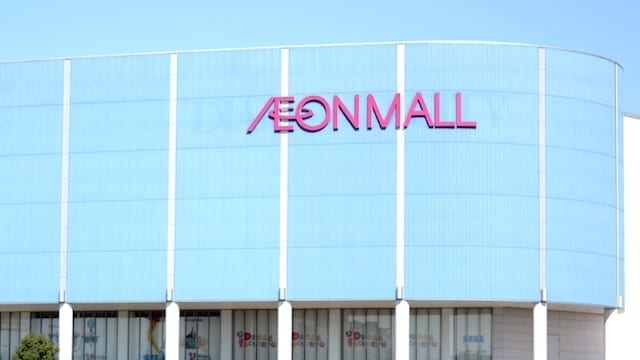
  • Aeon Vietnam secures $41 million loan to fuel expansion

    Aeon Vietnam secures $41 million loan to fuel expansion

    DHL Supply Chain has announced a landmark investment of €500 million into Latin America over the next years (until 2028) as part of a strategy to strengthen its capabilities in high-demand sectors like healthcare, automotive, technology, retail and e-commerce.

    Projects in the pipeline include decarbonizing the domestic fleet through greener alternatives; building, developing and retrofitting real estate assets and warehouses in the market; as well as significant investments into new technologies, robotics and automation solutions.

    DHL Supply Chain is confident in its plans for the region, citing its proximity to large consumer markets in North America as well as booming sales markets which make it attractive for industries to invest and therewith request additional logistics support.

    The company has been growing its operations in Latin America with more than 240 locations. In Mexico last year, it acquired NTA, a company focused on logistics services for the pharmaceutical industry.

    In Brazil, it recently announced the expansion and modernization of its distribution centre located in Goiás, while expanding its operations and presence in Extrema Minas Gerais for various clients in pharmaceuticals and retail fashion. It also opened a new distribution centre in Pudahuel, Chile, and expanded its presence in Mexico with new warehouses in Tijuana and Monterrey, including a new campus in the State of Mexico, which will serve the e-commerce, retail, fashion, consumer, medical devices, aerospace, electronics, and automotive sectors.

    Following the announcement of the investment, DHL Supply Chain Mexico inaugurated a new center of excellence for electric vehicles to provide synergy to the automotive industry in the region.

  • Fish exports expected to recover from late Q3

    Fish exports expected to recover from late Q3

    The Ministry of Agriculture and Rural Development (MARD) forecast that aquatic product exports will bounce back at the end of the third quarter and reach the yearly revenue target of $10 billion.

    It reported that in the first six months of this year, the export value of aquatic products hit nearly $4.2 billion, down over 27% year-on-year.

    To achieve the yearly target, many businesses have diversified products, focused on intensive processing, and invested in value chains.

    Meanwhile, the MARD and localities will further provide fishermen with market information and guide them to implement solutions to deal with the European Commission (EC)’s “yellow card” warning against Vietnamese seafood, and step up inspections and handling of cases of illegal, unreported and unregulated (IUU) fishing, towards a sustainable fishery sector.

    Competent agencies will also work to remove obstacles relating to the Chinese and US markets, diversify export markets, and coordinate with banks to support businesses.

  • Netflix discontinues the Basic plan in the US and UK

    Netflix discontinues the Basic plan in the US and UK

    Netflix is going ahead with its strategy to completely remove the Basic plan to force customers into choosing more expensive plans or ads. Back in June, Netflix quietly removed the Basic tier in Canada, a move that was expected to extend to other regions in the coming months.

    Earlier today, Cord Busters noticed that that the Basic plan has been discontinued in the UK and US. New customers in these two countries will no longer be able to choose the cheapest Netflix plan starting today, although Basic tier subscribers get to keep their plan until they change to another tier.

    The information has been confirmed by Netflix on its support page: “the Basic plan is no longer available for new or rejoining members. If you are currently on the Basic plan, you can remain on this plan until you change plans or cancel your account.”

    Netflix launched its ad-supported tier in late 2022 as “Basic with Ads” for £4.99 / $6.99 per month, but its name was changed a few months ago when it received a few upgrades like video quality from 720p to 1080p and two simultaneous streams.

    The renamed Standard with Ads plan offered almost the same perks as the Basic plan, but with one big difference: it forced subscribers to watch several minutes of ads per hour. Other differences between the two plans are the number of simultaneous streams and the video quality.

    With the removal of the Basic tier, customers in the UK and US will now have to pay at least £10.99 or $15.49 per month if they want Netflix in their homes or on the go without having to watch ads. It’s pretty clear that Netflix wants more customers to choose its Standard with Ads tier rather than a plan that doesn’t run ads, unless it’s one that’s priced a lot higher.

  • Gold price up

    Gold price up

    SJC gold price gained 0.07% to VND67.25 million ($2,844.76) per tael Thursday morning.

    Gold ring price rose 0.26% to VND57.1 million per tael. A tael equals 37.5 grams or 1.2 ounces.

    Globally gold prices inched up on Thursday, hovering near an eight-week peak on bets that the U.S. Federal Reserve might soon hit pause on its interest rate-hiking cycle.

    Spot gold rose 0.1% to $1,978.59 per ounce. U.S. gold futures were little changed at $1,981.30.

    The dollar index wobbled near a more than one-year low, making gold cheaper for holders of other currencies.

    The Fed is expected to raise rates by 25 basis points (bps) in their meeting next week, keeping them in the 5.25%-5.5% range until cuts are seen 2024 onwards, per CME’s Fedwatch tool.

  • Google’s new Weather interface will feature improved short-term forecasts

    Google’s new Weather interface will feature improved short-term forecasts

    Google has started to offer its updated Weather interface on both of its large-screened Pixel devices, the Pixel Tablet and the Pixel Fold. So far though, the new Weather interface has yet to be pushed out to Pixel phones. The new interface includes a larger, bolder current temperature reading and a transparent system navigation bar.
    Perhaps more important than the redesign is the improved accuracy of the short-term weather forecasts delivered by the interface. Android Police notes that the interface will now update weather data multiple times each hour. This data comes from the Multi-Radar Multi-Sensor (MRMS) system that uses multiple radars and algorithms to help improve the accuracy of hazardous weather forecasts and warnings.
    Also being used to improve the accuracy of the forecasts for the Google Weather interface is High-Resolution Rapid Refresh (HRRR) which is an atmospheric model that updates every 15 minutes. Both MRMS and HRRR are systems belonging to the National Oceanic and Atmospheric Administration (NOAA).
    More accurate weather forecasts will help Pixel Tablet and Pixel Fold users plan their day around a  precise and accurate weather forecast. And when the weather changes abruptly, the Google Weather interface will show users the latest forecast in time to prepare for the new weather activity on the way.
    It isn’t clear when the Pixel handsets will get the new weather interface. Right now, to get the Google Weather interface on your Pixel phone, open the Google app and swipe the carousel underneath the search bar until you see the local weather and temperature. Tap on it and about half the page will be dedicated to the current weather. Tap the three-button overflow menu icon on the right of the screen where you’ll see the “Weather/Today” heading and a menu that includes an option to “Add to homescreen.”
    Once you add the weather icon to the homescreen of your Pixel phone, you’re just a tap away from seeing Froggy, the latest temperature, and the forecast. Since it is available on Android 13 for the Pixel Fold and Pixel Tablet, we are not simply awaiting the update to Android 14 to see it on Pixel handsets. But when it does become available on Pixel phones, it will allow users to get the information they want without having to scroll to the bottom of the screen.
  • AirAsia Partners with Green Rebel for Meatless Menu Options

    AirAsia Partners with Green Rebel for Meatless Menu Options

    Indonesia’s premier plant-based protein brand, Green Rebel, has teamed up with Malaysian budget airline, AirAsia, to provide meatless alternatives of traditional Southeast Asian delicacies for the inflight menus on regional routes.

    Beginning today, Green Rebel’s vegan Pak Nasser’s Plant-Based Nasi Lemak will be available on AirAsia’s Malaysia routes, while passengers on Philippines routes will be able to taste vegetarian Sisig. Two other plant-based dishes — Nasi Rendang with assorted vegetables and Rendang with Coconut Rice — will appear on the menus on select AirAsia’s Indonesia flights starting later this week.

    Santan, AirAsia’s food service subsidiary, has replaced traditional meat ingredients with Green Rebel‘s plant-based proteins for these recipes. The substitution includes products like Beefless Rendang, Chick’n Chunks, and Plant Mince. Classic dishes like Nasi Lemak have been elevated using basmati and wild purple rice, served with Green Rebel Chick’n Chunks, eggplant curry, French beans, and potatoes. Guilt-Free Sisig, a popular Filipino dish, uses Green Rebel’s Plant Mince, seasoned with calamansi, onions, and chili peppers.

    “Green Rebel is the first plant-based alt meat brand to partner with AirAsia in Malaysia, the Philippines and Indonesia,” Green Rebel co-founder and CEO Helga Angelina Tjahjadi, said in a statement.

    Tjahjadi says Green Rebel and AirAsia have aligned values, “in particular a commitment to sustainability and flavour localisation.”

    Green Rebel says its food technology ensures the plant-based protein not only imitates the mouthfeel of meat but also absorbs deep flavours and marination, making it perfect for Asian culinary methods like braising, stewing, steaming, hotpot, grilling, and even deep frying. Made from 100 percent natural plant-based ingredients, all Green Rebel products are free from MSG, preservatives, and refined sugar. The protein base includes non-GMO soy and shiitake mushrooms, and is flavoured using Asian spices and herbs for an authentic taste experience.

    Green Rebel has a strong commitment to sustainable, affordable, and tasty plant-based meat alternatives. The company conducts independent Life Cycle Assessments on its products and has found its plant-based beef and chicken alternatives have significantly less global warming potential compared to their traditional counterparts.

    “We discovered that our meatless beef has 91 percent less global warming potential than local beef, and similarly our meatless chicken has 84 percent less global warming potential than local chicken,” Tjahjadi said.

    “We are looking at savings on carbon emissions by 90 percent, water use by 72 percent, land use by 90 percent, and overall energy use by 81 percent to produce plant-based meat in comparison to animal-based meats.”

    The new partnership supports AirAsia’s environmental commitments, which align with the Paris Agreement’s 1.5-degree Celsius policy. AirAsia has been working on measures to reduce its carbon footprint, including reducing 221 tonnes of CO₂ emissions per aircraft per year through an optimization solution implemented in 2022.

    “We’re excited at the possibilities as mindfulness about healthy and sustainable eating grows in this part of the world,” said Tjahjadi.


  • Sydney startup RecycleSmart raises $1 million on Birchal

    Sydney startup RecycleSmart raises $1 million on Birchal

    Australian investors have poured more than $1 million into plastics recycling service RecycleSmart, as co-founder Marco Prayer says he has invested his entire career to proving the business benefits of the circular economy.

    Sydney-based RecycleSmart provides households with a way to dispose of recyclable plastics that are unsuitable for regular recycling bins, offering to pick up unwanted waste from a customer’s doorstep.

    The startup accepts soft plastics, clothes, shoes, and small e-waste, with those materials sorted and transferred to specialist recycling partners like APR Plastics, Mobile Muster, and the Red Cross, which accepts unwanted but wearable clothing.

    The company claims to have facilitated 115,000 pick-ups since 2019, keeping 400 tonnes of hard-to-recycle waste out of landfill.

    RecycleSmart closed its Birchal equity crowdfunding raise on Thursday night, booking $1.04 million from 965 investors.

    While the business got its start by selling its services to NSW councils, it now hopes to use the new funding to expand in capital cities nationwide, while expanding its DTC and B2B offerings. Co-founder and chief technical officer Marco Prayer says RecycleSmart will use funding from the “astonishing” raise to power its launch in Melbourne, with the goal of covering as many major metro areas as possible by the end of 2023.

    “We need to make sure that the recyclers have the capacity to manage, that we have the right infrastructure in place, that everything is safe, but so far, so good,” Prayer said on Monday.

    Without delving into specific revenue figures, Prayer says RecycleSmart is enjoying “healthy” margins, and states its core business model is scalable, meaning expansion won’t come at too high a cost.

    Reaching more councils remains a priority, but RecycleSmart hopes to diversify by reaching out to household customers, building managers, and even businesses themselves.

    The company says its DTC offering would allow users to schedule pickups for $5 a bag, with a minimum of two bags per pickup.

    Beyond the cost to customers, RecycleSmart is conscious of the need to prove the efficacy and sustainability of its process to would-be customers.

    Australian households are still adapting to the high-profile collapse of the RedCycle soft plastic recycling scheme in 2022, which highlighted the difficulties in recycling some forms of single-use plastic.

    The business is “trying to really deliver as much transparency as possible to our customers,” Prayer said, using social media to show how its partners repurpose the materials RecycleSmart collects.

    “We know very well that the first step is establishing trust with anyone in the waste industry, and if you want to play that role, we know that we have to go an extra mile and verify as much as possible,” he added.

    What appears to captivate Prayer is the possibility of working with major businesses as they adopt a circular economy model.

    Like fellow Australian recycling startup Seabin, RecycleSmart collects data on the types of waste it receives.

    It then passes those findings onto councils, enabling city planners to run education campaigns for residents confused about how to best dispose of their waste.

    But Prayer sees a massive opportunity in providing that same data to businesses, given the increasing push for sustainability and traceability across the supply chain.

    “We strongly believe that there’s going to be an opportunity for businesses to leverage RecycleSmart to really ‘green up’ their operations,” he said.

    Prayer also touts the benefits of integrating the startup’s offerings into a business’s overall operations.

    “A simple example is that we hope shopping online at The Iconic, for example, if you spend more than $100 with them, they give you [cash back] to spend with RecycleSmart for your next pickup.”

    Pointing to businesses like meal delivery service HelloFresh, which prioritises recyclable packaging, Prayer said ensuring packaging circularity is a powerful customer retention tool.

    “That is going to be the game changer,” he added.

    “I mean, I’ve invested basically my professional life into believing that result is definitely achievable.”

    Participants in the equity crowdfunding raise are largely existing supporters, Prayer said, suggesting that building that engaged fanbase — and proving their demand for recycling solutions — could build RecycleSmart’s appeal to brands.

    The $1 million raise comes at a unique point for the equity crowdfunding sector, which has seen a 26% year-on-year decrease in funding value through choppy economic conditions.

    However, Birchal co-founder Matt Vitale today pointed to RecycleSmart, among others, as recent success stories.

    “We are a couple of weeks into the new financial year and Birchal has achieved over $6 million in funding volume across five campaigns already, more than double compared to this time last year,” he wrote on social media Monday.

    The number of successful equity crowdfunding rounds over the last year also surpassed the number of ASX IPOs, Vitale added.