Tag: asia

  • Central Bank of China governor rejects bitcoin as legitimate payment method

    Central Bank of China governor rejects bitcoin as legitimate payment method

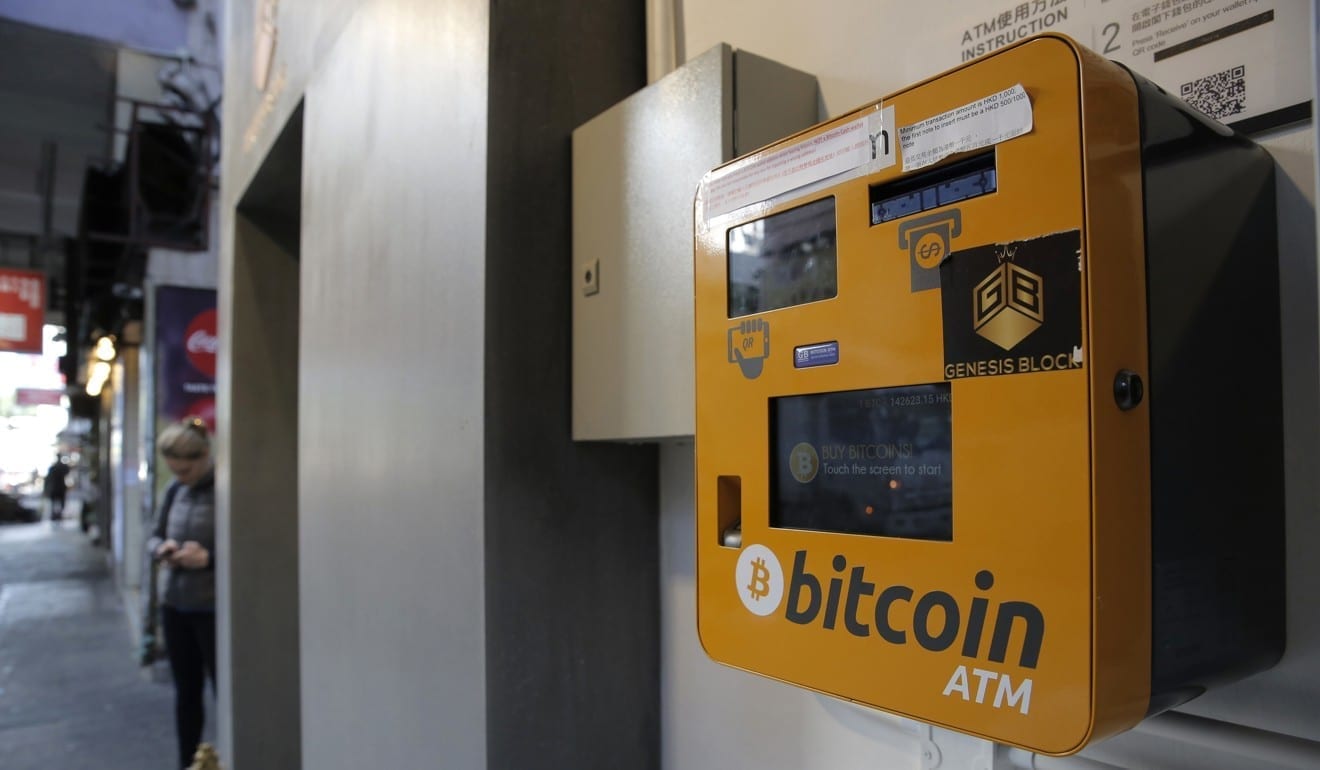
    China does not recognize bitcoin and other digital currencies as legitimate forms of payment, the central bank governor, Zhou Xiaochuan, said on Friday.

    “We do not currently recognize bitcoin and other digital currencies as a tool like paper money, coins and credit cards for retail payments,” Zhou said on the sidelines of the annual parliament session. “The banking system does not accept it.”

    China has taken a string of steps in recent months to clamp down on the cryptocurrency market, including closing exchanges and banning so-called initial coin offerings (ICOs) ­— digital, token-based fundraising rounds.

    Zhou’s remarks added to pressure on bitcoin after the US on Thursday said “potentially unlawful” online trading platforms for cryptocurrencies, may be giving investors an unearned sense of safety and should be registered with the regulator.

    Zhou said China paid close attention to the blockchain and distributed ledger technologies that bitcoin is built on, but that some applications of the technology had grown too quickly.

    “If they spread too rapidly, it may have a big negative impact on consumers. It could also have some unpredictable effects on financial stability and monetary policy transmission,” said Zhou.

  • Xiaomi Redmi 5 full-screen budget smartphone to launch in India soon

    Xiaomi Redmi 5 full-screen budget smartphone to launch in India soon

    Xiaomi will be launching a new smartphone in India on March 14. Manu Kumar Jain, Xiaomi global vice president, made the announcement on Twitter on Wednesday, hinting at a phone that is “compact” and “powerhouse”. The phone featured in the promo photo resembles Xiaomi Redmi 5, the company’s first full-screen smartphone for the budget segment.

    Just like Redmi 5, the cut out of the phone has a tall display with most likely an 18:9 aspect ratio. Redmi 5 launched in China in December last year. The smartphone was accompanied by a Plus variant with a taller display. Xiaomi Redmi 5 and Redmi 5 Plus retail in China at a starting price of 799 Yuan or approximately Rs 7,500.

    Xiaomi sells multiple variants of the two phones in China. Xiaomi Redmi 5 is available in two variants – 2GB RAM + 16GB storage and 3GB RAM + 32GB storage – priced at 799 Yuan (approximately Rs 7,500) and 899 Yuan (approximately Rs 8,500) respectively.

    The Plus model is also available in two variants – 3GB RAM + 32GB built-in storage and 4GB RAM + 32GB built-in storage which are priced at 999 Yuan (approximately Rs 9,500) and 1299 Yuan (approximately Rs 12,700) respectively.

    Xiaomi Redmi 5, Xiaomi Redmi 5 Plus

    Xiaomi Redmi 5 comes with a 5.7-inch 18:9 screen with 1440 x 720 pixels resolution. Redmi 5 Plus has a 5.99-inch 18:9 display with 2160 x 1080 pixels resolution. Redmi 5 is powered by Qualcomm’s Snapdragon 450 processor whereas Redmi 5 Plus runs Snapdragon 625 processor. Redmi 5 comes with a 3,200mAh battery while Redmi 5 Plus is powered by a 4,000mAh battery.

    Common features of the two phones include 12-megapixel rear camera and 5-megapixel front-facing camera. Connectivity options include 4G, VoLTE, dual-SIM, Bluetooth and Wi-Fi. Both the phones include a fingerprint reader and run on Android 7.1.2 Nougat-based custom MIUI ROM.

  • BOI Philippines approves 2 online retailers

    BOI Philippines approves 2 online retailers

     The Board of Investments (BOI) has pre-qualified Zalora Shopping and CJO Shopping Co. Ltd., the first two online retailers to be registered under the country’s domestic retail trade law.

    So far, the BOI has already registered a total of 25 foreign retailers with total investments of R40 billion. These retailers have created 29,000 jobs since 2000.

    BOI Director for legal and compliance services Marjorie O. Ramos-Samaniego, who announced the recently pre-qualified online retailers at the Euro-PH Advocacy Forum on Retail Competition, said both firms were subjected to the current rules under the Republic Act 8762 or the Domestic Retail Act of 2000. The law requires minimum capital requirement of $2.5 million.

    Since they have no physical stores, the online retailers’ warehouses will count as their store where under the law a retailer is required to invest $830,000 per store.

    In February, 2017, the Ayala Group Acquired 49 percent stake in BF Jade E-Service Philippines, which owns and operates Zalora Philippines, the country’s largest online fashion platform offering a wide range of fashion and lifestyle products.

    Last year, Zalora said it was investing in a new warehouse that is five times bigger than its existing facility in Carmona, Cavite to accommodate more volume on strong orders from online shoppers. CJ O Shopping Co., Ltd operates as an online shopping company in South Korea and internationally. It provides various shopping channels, such as TV home, T-commerce, Internet, and mobile shopping, as well as catalogue and e-Catalog services.

    The company offers various product lines, including fashion, luxury goods, beauty, household appliances, jewelry, kitchen, household goods, and travel and baby products. CJ O Shopping Co., Ltd was founded in 1995 and is based in Seoul, South Korea.

  • Digital currency is inevitable, likely to overtake fiat Bank of China admits

    Digital currency is inevitable, likely to overtake fiat Bank of China admits

    Zhou Xiaochuan, the central bank’s governor, made these certain remarks relating to cryptocurrencies at this year’s National People’s Congress During his press conference, he admitted the fast growth of cryptocurrencies and spoke on how it could be better used in the country. Nevertheless, the bank is not comfortable with digital currencies like the Bitcoin and is slowly finding ways in which to regulate them as they believe digital currency is inevitable.

    The Governor of the central bank made it clear during the congress that digital currency is inevitable and have a higher likelihood to replace paper money. He further noted that for effective regulations to be availed, new technologies and regional trials have to be conducted.

    “The central bank is researching digital currency. Issuing a digital currency does not depend on a technology application but on the ability to reduce costs and improve the convenience of retail payments.” Referring to Bitcoin’s extensive growth, the vice governor advised that “speculative products” should be closely monitored.

    Although harsh on the current cryptocurrencies, in mid-2017, the People’s Bank of China established a digital currency research institute which was tasked at developing a state-controlled digital currency to cater for an increased demand of a digital currency.

    The governor’s remarks are similar to the ones issued by the same bank in early January 2016. In its earlier remarks, the central bank stated that they were looking into issuing their own digital currency in the soonest time possible.

    Although China’s economy is not yet conversant with digital money it’s seeking the help of the industry to carry out research and development of a digital currency. Zhou noted that the latest crackdown on the cryptocurrencies like Bitcoin is meant to strengthen investor and consumer education and protection.

    This follows the government’s move to further extend its whip on those dealing with cryptocurrencies. It even forced a popular social media platform, WeChat, to close down and closely monitor all accounts that are dealing with cryptocurrency. Especially those belonging to cryptocurrency exchanges.

    This made it hard for mainland residents who traded in cryptocurrencies and used WeChat as a tool of trade. Investors were forced to rely on offshore accounts. Those who didn’t have offshore accounts preferred over-the-counter to continue with the cryptocurrency trading.

    Nevertheless, with the government admitting digital currency is inevitable, it is just a matter of time before we start hearing some good news again from a one-time crypto “leading” nation.

    Do you think the PBoC and the government will eventually issue their own state-backed digital currency or will they adopt the already available digital currencies?

    Let us know your thoughts in the comments section


  • India shifts to gold discount but Akshaya Tritya seen reigniting demand

    India shifts to gold discount but Akshaya Tritya seen reigniting demand

    Gold was sold at a discount in India as demand remained subdued for a fourth straight week while buying in the rest of Asia picked up as prices fell for a third consecutive week.”Many consumers are busy in paying advance tax. Since this is last month of the fiscal year, they have to pay taxes by March end,” said Ashok Jain, proprietor of Mumbai-based wholesaler Chenaji Narsinghji.India’s fiscal year runs from April to March.Dealers in India were offering a discount of up to $3 an ounce over official domestic prices, compared with a premium of $2 last week. The domestic price includes a 10 per cent import tax.”Retail demand is very weak.

    Despite the correction in prices, consumers are showing little interest in buying,” said Harshad Ajmera, the proprietor of JJ Gold House, a wholesaler in the eastern Indian city of Kolkata.In the local market, gold was trading at 30,405 rupees per 10 grams, after hitting a 15-month high of 30,839 rupees last month.India’s gold imports in February dropped a quarter from a year ago to 63 tonnes as higher prices curtailed demand in the world’s second-biggest consumer of bullion, provisional data from precious metals consultancy GFMS and bank dealers showed.

    Weddings and Akshay Tritiya festival, when buying gold is considered auspicious, could lift demand in April, Ajmera said.Meanwhile in China, there was some good buying through the mid week, with gold selling at a premium of $6-$8 over benchmark rates this week, down slightly from $8-10 last week.

    Gold prices extended losses into a third session on Friday as the dollar strengthened against the yen on hopes of easing tensions between the United States and North Korea and ahead of U. S. non-farm payroll data later in the day.Benchmark spot gold prices have fallen for a third straight week.

    Premiums of 70 cents to a $1.20 were being charged in Hong Kong last week, while in Singapore, premiums were unchanged at the 80 cent level.”There was a pick up in demand when prices fell below $1,320 last week … There is buying on dips and we expect prices to go down further, which should see some buying,” said Ronald chief dealer at Lee Cheong Gold Dealers in Hong Kong.

    In Japan, premiums were unchanged from last week at 50 cents despite good demand.The demand in Japan was strong due to lower prices in Japanese yen terms, but have started to wane towards the end of the week, a Tokyo-based trader said.

  • Parkson Holdings to expand in new malls, pull out from less popular ones

    Parkson Holdings to expand in new malls, pull out from less popular ones

    Parkson Holdings is looking to open in several new locations with a presence in newer and more exciting malls while exiting those that do not fit in with the company’s market dynamics.

    The Malaysian department-store operator with a regional presence said it was looking at a few strategic areas in Damansara, Bukit Jalil, Klang and Melaka as possible locations for new stores.

    “In China, we plan to open two in the near future, with a few more in the pipeline,” a company spokesperson said.

    The spokesperson said the dynamic and evolving nature of the retail industry means that certain older malls have become less relevant compared to other newer malls with features appealing to shoppers.

    “Hence, the closing and opening of stores is part and parcel of the business,” the spokesperson said, referring to last month’s closures of two stores in the heart of the city.

    Currently, Parkson has 114 stores in the region with 44 in Malaysia occupying a total of five million sq ft.

    While exiting from malls that do not fit into the brand image, the spokesperson said the company will take up larger spaces on a net lettable basis in newer malls. The spokesperson noted that the company’s strategy will ensure that the brand stays relevant, noting that both MyTown and Sunway Velocity malls which are only 1km apart have Parkson stores and cater to different markets.

    The spokesperson said Velocity catered for the young and fashionable while MyTown catered more for the family crowd.

    “They are observed to have different racial and cultural mix,” the spokesperson said.

    Besides the two closures in Kuala Lumpur, the regional mall operator also closed Parkson Flemington in Ho Chi Minh City, Vietnam, on Feb 26. It closed the Sungei Wang Plaza’s 107,000 sq ft outlet, which opened in 1987, on the same day.

    The spokesperson said while Sungei Wang Plaza used to be a popular hangout several decades ago, the market dynamics have changed.

    The company closed the 220,000 sq ft Maju Junction outlet, located at the Jalan Sultan Ismail-Jalan Tunku Abdul Rahman intersection, in early February. It was an anchor tenant of the mall and started operating there in 2014.

    On the closures, the spokesperson said: “Over time, market dynamics change vis-a-vis customer demographics, profile, alternative locations and competition from new competitors.

    “We have to react quickly to be at the right place where the market and customers congregate. Those that do not have these criteria may have to be replaced.”

    Henry Butcher Retail managing director Tan Hai Hsin said the main challenge of Sungei Wang Plaza was the ownership structure.

    “It is a strata-titled shopping centre with hundreds of owners. When external retail market and consumer shopping behaviour changed, the strata-titled shopping centre is not able to react to the changes quickly due to its multiple ownership.

    “Firstly, it requires consensus from the owners in the mall before any action on refurbishment and reconfiguration can be done. “Secondly, it is difficult for the management to change the configuration of the retail shops based on market changes due to multiple ownerships.

    This challenge also applies to the strata-titled Pertama Complex and Campbell Complex.

    According to CapitaLand Malaysia Mall Trust in a report from last year, the retail industry remains challenging. The opening of various new malls in the Klang Valley within a stone’s throw of each other and an oversupply of mall space have impacted the retail scene.

    While the more popular malls never seem to lack visitors, those with lesser pull have suffered. The emergence of online retail is another factor.

    On the closure of Parkson Flemington in Ho Chi Minh City, the spokesperson said: “As in every business, we have to know our market and this applies to all the markets we are in. Our strategy is to identify and be present in such markets with the right demographics, population size, disposable income and, of course, the right location.

    “In order to have the sustaining power to remain ahead, we have to diversify our offerings and stay focused on our customers’ needs and wants.”

    Parkson became one of the leading retailers in Vietnam by building a chain of retail stores in Ho Chi Minh City, Hanoi, Haiphong, and Danang. Competition came. Since 2014, Parkson has yet to open any new stores in Vietnam. Parkson Flemington was the fourth store that closed since it entered that market in 2005.

    The Malaysia-based retailer has six stores in Vietnam, 48 in China, one in Myanmar and 15 in Indonesia. The Malaysian retailer also operates the Centro retail brand in Indonesia.


  • Singapore’s BreadTalk Unit Forms Joint Ventures To Operate Bakeries In China

    Singapore’s BreadTalk Unit Forms Joint Ventures To Operate Bakeries In China

    Singapore baker BreadTalk unit Shanghai Star Food F&B Management has formed joint ventures with Wu Pao Chun Food of Taiwan to operate Wu Pao Chun bakeries, BreadTalk said in a filing Monday.

    The joint ventures will run Wu Pao Chun bakeries in Beijing, Shanghai, Shenzhen and Guangzhou. Shanghai Star will hold 80% of the Shanghai joint venture and can own up to 40% of the Beijing, Shenzhen and Guangzhou joint ventures. Both companies expect to conclude joint ventures for Singapore and Hong Kong later.

    The deal isn’t expected to have any material effect on the earnings per share and net tangible assets of BreadTalk for the financial year ending Dec. 31. The filing didn’t disclose further financial details.


  • Royal Dragon Vodka launches with Ever Rich Duty Free in Taiwan

    Royal Dragon Vodka launches with Ever Rich Duty Free in Taiwan

    The Imperial 1L, Good Luck Edition 1L and Luxury Gift Set are part of the Royal Dragon Vodka assortment available in arrivals and departures stores in Taoyuan, Kaohsiung, Taichung and Songshan International Airports.

    Yam Seng Sales and Marketing Director Jesreen Sidhu commented: “Expanding our presence to dynamic duty free markets such as Taiwan is an essential element of our continued success. Royal Dragon Vodka continues to gain strong traction in Asia and we are extremely pleased to partner with Ever Rich Duty Free, where we see great potential for the range.”

    Singapore-based Yam Seng Pte Ltd, a company owned by the Tuli family, was appointed regional TR agent for Royal Dragon Vodka last year. Sunil Tuli has worked in the global DF and TR industry since 1984.

  • HSBC launches Singapore-dollar income bond fund for local retail investors

    HSBC launches Singapore-dollar income bond fund for local retail investors

    The fund will primarily invest at least 50 per cent in SGD denominated bonds issued by governments, government agencies, supranational bodies or companies that are Singapore and non-Singapore based issuers. All other investments will be hedged to SGD. The fund also invests across various countries and sectors which tend to behave differently at different market cycles enabling diversification.

    Puneet Chaddha, CEO, Southeast Asia, HSBC Global Asset Management, said: “We launched the fund because our retail customers want to grow their capital faster than the average savings rate but in a way that’s risk weighted and diversified. This fund gives them access to growth with limited downside exposure.”

    “Being located in the heart of Asia, Singaporeans understand the underlying economic growth of the region. Moreover, the diverse nature of the fund’s investment allocation across a multitude of Asian countries and sectors will provide confidence in the growth potential but with the added assurance of minimizing currency risk.”

  • Verifone Introduces Next-Generation Engage Solutions in Thailand and Malaysia as Cashless Economies Evolve in APAC

    Verifone Introduces Next-Generation Engage Solutions in Thailand and Malaysia as Cashless Economies Evolve in APAC

    The future of cash as the dominant payment method in Asia Pacific is changing as a result of technology innovation, government-sponsored programs, increasing smartphone penetration, and evolving consumer behavior. As governments throughout Asia Pacific create initiatives for cashless economies, Verifone will deliver next-generation of Engage payment solutions in the region including: the e285 mobile point-of-sale (mPOS) in Thailand and the flexible V205c and V200t in Malaysia.

    Verifone Engage is a family of interactive, commerce-enabling payment devices that allow merchants to connect with customers in new ways. Packed with features, functionality, and versatility, Engage leverages the power and performance of our flexible open architecture to transform the POS into rich, two-way conversations.

    The Thailand government’s e-payment initiative is creating opportunities for businesses to drive the country’s financial transactions towards digital methods. Five commercial banks (Kasikornbank, Siam Commercial Bank, Bangkok Bank, Krungthai Bank and Government Savings Bank) have been approved to introduce QR code payments.

    By connecting directly with banks, Verifone’s mPOS solution supports the national e-payment initiative while removing the need for a third-party gateway, and providing increased security and reduced costs to merchants.

    Built for businesses of all sizes, the PCI PTS 5.x-certified e285 accepts EMV, magnetic stripe and contactless payment options, while the touchscreen easily supports signature capture. With a compact and vibrant touchscreen, this solution also displays and accepts payments with QR codes which will become a standard payment method in Thailand. To further reduce the cost of ownership for Banks, the e285 comes with integrated remote estate management and electronic receipt management solution.

    Verifone V205c and V200t in Malaysia

    In Malaysia, the central bank has started on a 10-year e-payment strategy and check volume has declined 42 percent since 2011. However, security at the POS is a primary concern since the outdated PCI PTS 3.x standard remains widespread.

    Verifone’s V205c and V200t are the first PCI PTS 5.x- certified solutions in Malaysia and offers the highest levels of security at the POS.

    Since PCI PTS 5.x certifications are valid through 2026, merchants of all sizes – from large retail chains to local convenience stores – are assured of long-term investment and compliance free of the additional costs associated with technology updates.

    While the V205c is a countertop solution with dial-up and Ethernet connectivity, the V200t is a flexible device with both countertop and portable functionalities owing to its added 3G connectivity and long battery life. Both solutions offer enough memory to support rich multimedia and value-added applications so merchants can interact with customers like never before.

    To help merchants start, run, and grow their businesses, all three Engage solutions are capable of supporting Verifone Connect, a secure and adaptable, end-to-end product that not only enables the acceptance of payments but allow businesses to increase consumer engagement and drive efficiency. Paired with any Engage device, Connect empowers merchants to better manage their businesses with next-generation software and services. Key features include payment services, estate management, business solutions with merchant and consumer-facing apps, and new device purchasing.

    Verifone will deliver these solutions and services through its partners in Thailand and Malaysia. In Malaysia, AEON Credit will deploy the V205c and V200t solutions through our partner Revenue Harvest.


  • Aldi Eyes Store Expansion In China

    Aldi Eyes Store Expansion In China

    Aldi South, the German discount supermarket giant, is planning to open up to 50 branches in China, as reported on Thursday.

    Aldi South, one of the leading low-budget supermarket chains in Germany, has put together a team for its expansion in China, the Lebensmittel Zeitung, a German weekly newspaper for executives in the food industry and in commerce. It will be one of the biggest expansion plans in the history of the company.

    Aldi South has already opened its first online shop in China on the platform of Tmall, which is run by Alibaba group in China.

    The company has not commented on the report.

    The discounter offers groceries including wine, snack, breakfast and organic food products at its flagship Tmall store through its Australian suppliers.

  • BOI approves IKEA Philippines registration

    Swedish furniture maker IKEA has secured a certificate of registration from the Board of Investments (BOI) to open stores in the Philippines.

    The registration certificate was given to Ikano Pte. Ltd., the franchise holder of IKEA in Southeast Asia, BOI Legal and Compliance Service Director Marjorie Ramos-Samaniego told reporters on the sidelines of the EU-Philippines Advocacy Forum on Retail Competition in Makati City on Friday.

    In December 2016, Ikano pre-qualified as a foreign retailer in line with the Retail Trade Liberalization Act of 2000.

    Samaniego, however, said that IKEA still needs to secure its incorporation papers from the Securities and Exchange Commission.

    IKEA Southeast Asia posted a help wanted ad on professional networking site LinkedIn for a Design Manager, specifically for the Manila office. The posting was published in January, with a deadline set on Feb. 28, 2018.

    IKEA, which stands for Ingvar Kamprad, Elmtaryd, and Agunnaryd, is a multinational furniture retailer and franchiser with 387 stores in 48 countries.

    The acronym stands for the name of the company founder, the farm in which he was raised by his parents, and the village where he grew up.

  • Qualtrics Leapfrogs Reactive Customer and Employee Experience Tools with New Prescriptive Offering

    Qualtrics Leapfrogs Reactive Customer and Employee Experience Tools with New Prescriptive Offering

    Qualtrics, the leader in experience management, today announced significant enhancements to its award-winning Qualtrics Experience Management (XM) PlatformTM, making it easier than ever for organisations to close experience gaps––the difference between what organisations think they are delivering and what customers and employees actually experience. With the launch of the iQ Directory, Qualtrics now offers organisations a single-system-of-record for all experience data. Powered by a layer of artificial intelligence and machine learning, the iQ Directory enables advanced, intelligent features throughout the Qualtrics XM platform––including predictive capabilities that forecast individual behavior such as employee attrition and customer churn. The announcement was made at the Qualtrics 2018 X4 Experience Management Summit in Salt Lake City.

    Based on over 15 years of leadership in the insights and analytics industry, Qualtrics announced the revolutionary XM Platform one year ago. Used by over 75 percent of the Fortune 100 and 99 of the top 100 U.S. business schools, the Qualtrics XM Platform helps companies like Allianz, JetBlue, Microsoft and Yamaha measure, prioritise, and optimise the experiences they deliver across the four core experiences of business—customer, product, employee and brand experiences.

    “The experiences companies deliver are more important today than they have ever been. Customers don’t just buy a product anymore, they buy an experience. And it is the experience companies provide that makes or breaks a brand,” said Ryan Smith, co-founder and CEO of Qualtrics. “Similarly, employees don’t want a job description where they are cogs in a machine. They want their work to be an experience they can talk about and share. Companies today essentially compete on the experiences they provide and they are turning to the XM Platform to help them measure, improve, and act on these key experience programs.”

    Two enhancements to the Qualtrics Experience Management Platform announced today include important extensions to the Qualtrics iQ™ group which was announced last year—a collection of advanced, intelligent features built on artificial intelligence, machine learning and advanced analytics to improve the experiences organisations deliver. The newest elements of Qualtrics iQ include the iQ Directory and Predict iQ:

    iQ Directory:

    The Qualtrics iQ Directory is a live, organised chronicle that captures the emotions, sentiments, beliefs and preferences of an audience. The iQ Directory contains all experience data, or X-data, collected over time, creating a system of record of all interactions and opinions each person has of an organisation.

    iQ Directory enables a company to take a person-centric view, helping companies gain a better understanding of an individual person’s unique journey with the company. Because each new interaction builds upon past information, this rich collection of experience data makes new interactions smarter over time, allowing a brand to customise future touch points for each group based on past preferences and therefore ensuring a better overall experience.

    As the iQ Directory is now recorded as transactional data with each data point providing a record of each interaction throughout the individual’s journey, it is possible to pinpoint key drivers and changes in sentiment over time. The application of machine learning helps predict how an individual might respond in a certain situation, empowering a company to be predictive in its outreach rather than just reactive.

    The Qualtrics iQ Directory enables companies to interact with people at the right moment, with the right message, via the best channels, making interactions feel like an ongoing conversation rather than transactional pings along a customer or employee journey.

    Predict iQ:

    Predict iQ helps companies understand which customers are likely to leave and what they can do to prevent customer attrition before it happens. Using neural network, open-source algorithms to make its predictions, Predict iQ utilises Qualtrics Actions, allowing users to set up triggers to send emails, create tickets, or ping any third-party service for immediate action to be taken when needed. Easy-to-use and requiring only minutes to set up, Predict iQ makes deep learning accessible to anyone.

    Predict iQ centralises all churn analysis and reduction efforts in one place and is deeply integrated into existing feedback collection, so there’s no need to move data around to get predictions. Predict iQ also complements Stats iQ, allowing companies to use Stats iQ to understand and fix systemic issues while leveraging Predict iQ to save individual customers. All this can be done while larger-scale initiatives are being put in place, providing results from day one.

    Certified XM Solutions:

    Designed by the world’s leading researchers, practitioners and consultants, Certified XM Solutions are packaged projects and programs with expert content, workflow, and automation––built directly into the Qualtrics platform. These community-driven solutions provide complete industry-specific experience management programs including everything from best practices, to content, to technical implementation, to survey design, to contact frequency guidance, to data analysis, and recommended next steps.

    Qualtrics Certified XM Solutions currently include experience management solutions that span employee engagement solutions, customer experience solutions, product and brand experience solutions for many industries including financial services, education, government, retail, B2B, and more.

    Qualtrics Certified XM Solutions are designed to reduce the time, risk and cost of implementing an experience management program from the ground up. Ideal for customers who want a pre-packaged solution to get up and running quickly when they have little capacity, low in-house expertise, or when time is of the essence, Qualtrics Certified XM Solutions are easy to implement and are built for change and growth.

    Because Certified XM Solutions are powered by the flexible Qualtrics Experience Management Platform, it is easy to scale programs as organisations grow and needs evolve. The solutions are designed for use by any organisation, from the smallest start-up to the largest global enterprise.

    Continued Growth for XM Platform

    Qualtrics recently launched a global Qualtrics Partner Network to support the fast-growing XM ecosystem, including founding partners J.D. Power, Kantar TNS and Walker Information. Qualtrics opened new international offices in France, Japan, Poland and Singapore in recent months, and the company has grown to over 1,600 employees, all to support expanding demand for the XM Platform.

    These latest enhancements to the Qualtrics Experience Management Platform are available now as part of the CX, EX and RC solutions.

  • Oporto to sets footprint in Singapore

    Oporto to sets footprint in Singapore

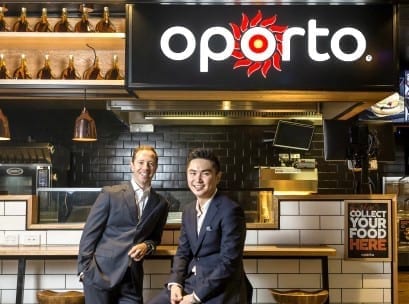
    Chicken franchise Oporto has partnered with Aura Group to fuel its Asian expansion plans.

    After signalling the company’s intention to move into Singapore late last year, Oporto CEO Craig Tozer said he’s confident the brand is well-positioned for international growth beyond New Zealand, backed by record sales growth and continued domestic expansion.

    “Taking our brand internationally has always been a key focus,” he said.

    “Having found the right master franchise and supply partners, we are excited to announce that Oporto will be expanding into Asia, with the first restaurant to open in Singapore mid-April 2018.”

    Oporto wants to have 10 restaurants open across Singapore over the next five years, with plans to open three stores this year.

    The inaugural restaurant is located at shopping and dining precinct Holland Village in central Singapore.

    Later in 2018, Oporto also plans to expand its beverage category to introduce alcohol, in auditioning to relaunching its loyalty app and in-store experience program.

  • Aeon expects sales to increase 10-20% during promotion period

    Aeon expects sales to increase 10-20% during promotion period

    Aeon Co (M) Bhd expects sales to grow between 10% and 20% during its promotion period, the Aeon Day and Thank You Day sales promotions.

    Executive director Poh Ying said the “Aeon Day” sales promotion would be held on every 8th and 28th day of the month while the “Thank You Day” on every second and last weekend of the month.

    “These promotions will benefit 1.2 million Aeon members who have played a pivotal role in spurring our growth,” he said after launching the Aeon 2018 Promotions today.

    He said for “Aeon Day”, members would receive RM5 cash vouchers for every RM100 spent or RM3 cash vouchers for every RM60 spent, while for “Thank You Day”, they would receive RM5 cash vouchers for every RM80 spent, RM10 cash vouchers for every RM150 spent and RM30 cash vouchers for every RM300 spent, all excluding the Goods and Services Tax.

    “With the rising cost of living and the inflation, many consumers are looking for more ways to stretch their money, especially for groceries.

    “The cash vouchers can help our customers obtain greater savings in the long-run,” he added.

    Poh said that consumer spending sentiment this year was expected to be good due to the upcoming election as well as the implementation of measures to curb inflation.

    “Along with the consumer-friendly 2018 Budget and the better ringgit, I believe these factors will drive consumer spending and the growth of the retail industry,” he added.

    Meanwhile, Poh said Aeon had allocated between RM400 million and RM500 million in capital expenditure this year to be used, among others, to renovate new and existing stores in Taman Maluri, Kuala Lumpur, Kuching and Johor.

    To date, Aeon operates 33 departmental stores cum supermarkets and manages and operates 26 shopping malls, three MaxValu and three MaxValu Prime supermarkets, nationwide.