Tag: asia

  • Garuda Indonesia Workers’ Union Demands Revamp of Management

    Garuda Indonesia Workers’ Union Demands Revamp of Management

    Flag carrier Garuda Indonesia’s employees union urged the government to revamp the company’s management and board of directors, saying they feared the carrier will keep losing money in years to come if no change is forthcoming.

    The head of the union, Serikat Pekerja Garuda (Sekarga), Ahmad Irfan said rs on Tuesday (23/01) they had written a letter to President Joko Widodo outlining their demands, but have yet to receive any response.

    “We also want to discuss this with the State-Owned Enterprises Minister next month,” said Ahmad, adding that the union is confident the government will be on their side.

    Ahmad said the union made the decision to complain to the president directly after Garuda’s aircrew and employees repeatedly asked for a meeting with its board of directors but were turned away each time.

    The union has been demanding that Garuda reduces the size of its board of directors from nine directors to six.

    However, when the carrier appointed a new management team they actually added three new directors to the board.

    “Such a waste,” Ahmad said.

    Ahmad also questioned the directors’ ability to end Garuda’s financial problems since none of them has any experience in the aviation industry. He did not name the directors.

    The carrier reported a $222 million net loss in the first nine months of last year, more than five times the $44 million it lost in the same period in 2016.

    Garuda Indonesia president director Pahala Mansury said in September the losses were due to higher fleet costs and increasing fuel expenses.

    The union also criticized massive delays of Garuda flights from Denpasar, Bali, on Dec. 2. The poorly handled incident affected both domestic and international flights.

    He said the delays were not caused by the Mount Agung eruption, but due to a scheduling mishap stemming from teething problems with its new Sabre online system adopted in August last year.

    Garuda’s Response

    Garuda Indonesia’s vice president and corporate secretary Hengki Heriandono said he appreciated the union’s effort to help solve the carrier’s problems.

    “All of our employees are committed and care about the company’s future. We will listen to all their demands and suggestions,” Hengki said.

    He said safety will always be the carrier’s main priority.

    According to him, the government can revamp Garuda’s board of directors and management at any time as long as it is done according to the law and good governance principles.

    Hengki said Garuda has already talked to aircraft manufacturers to delay deliveries of new planes to help the company reduce costs by 25 percent.

    The carrier will also maximize the use of its aircraft in profitable routes.

    Reuters reported the carrier expects to turn around its financial performance this year, targeting $4.9 billion in revenue, up from an estimated $4 billion last year.

    It also forecasts a net profit of $8.9 million in 2018.

    The company plans to issue $750 million in global bonds to refinance its debt, and a separate bond issuance totaling Rp 2 trillion ($160 million) to fund business and operational expenses.glo

  • TAS Offshore posts RM1.56 million net loss in Q2

    TAS Offshore posts RM1.56 million net loss in Q2

    Shipbuilding firm TAS Offshore Bhd swung to the red registering a net loss of RM1.56 million for the second quarter ended November 30, 2017 against a net profit of RM489,000 in the previous corresponding period, due to unrealised forex losses as a result of the strengthening ringgit.

    Revenue however, jumped three times from RM2.92 million to RM11.71 million on progressive revenue recognition on shipbuilding contracts.

    TAS Offshore told Bursa Malaysia that despite signs of demand and supply finally finding a balance, the group will be cautious in its operation since the market is still uncertain due to the US shale oil industry.

    “However, in the long term, we envisage the oil price outlook to be positive due to the increase in demand for energy when industrial and development activities increase in tandem with the population growth and the demand for offshore support vessels will return.”

    For the first half of the year, TAS Offshore, however, reported a net profit of RM673,000 versus a net loss of RM642,000 in the same period a year ago, while revenue leaped over three fold from RM5.17 million to RM22.14 million.

    The stock closed unchanged 33.5 sen with some 147,000 shares changing hands.

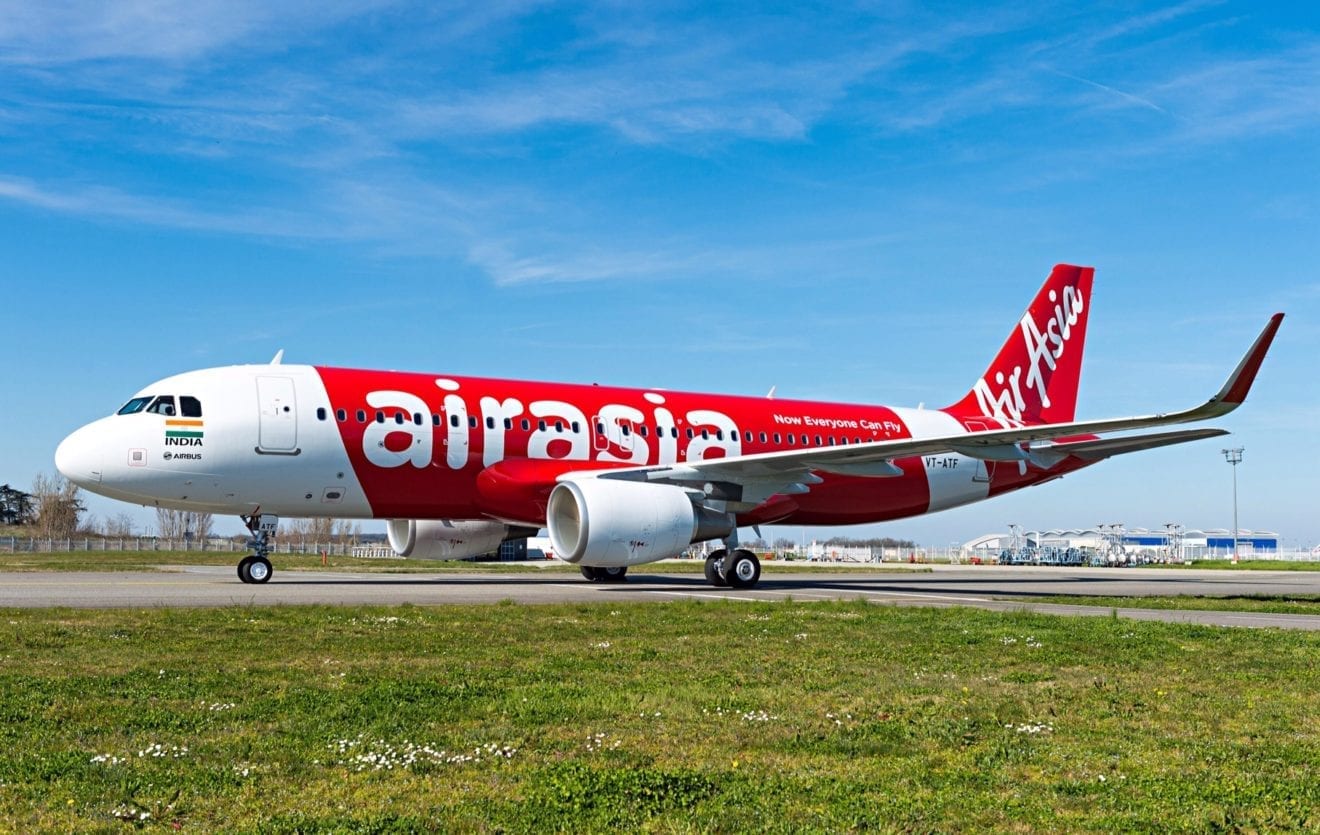
  • AirAsia and Uber partner over seamless travel

    AirAsia and Uber partner over seamless travel

    AirAsia passengers will be able to book or schedule rides from Uber through AirAsia once they have booked their tickets and become eligible for promotions.

    The ride-sharing company Uber and Asia’s fourth biggest airline have announced a partnership to provide ‘a seamless, affordable and convenient door-to-door experience for travellers’.

    AirAsia and Uber said that this partnership extends beyond promo codes and discounted rides to joint marketing efforts and technological integration. The airline is one of a number of airlines to team up with the ride-sharing company, joining American Airlines and Jet Airways. In the case of American Airlines, this has involved messages sent from the carrier to customers’ phones reminding them to book an Uber as well as discounts.

    Like American Airlines, AirAsia will incorporate a “deeplink” feature that allows Uber riders to request or schedule rides when confirming, booking or checking in for flights.

    Commenting on the partnership, Brooks Entwistle, Uber Chief Business Officer, Asia Pacific said, “Uber is thrilled to partner with AirAsia to offer customers exactly what they’re asking for – a seamless, affordable, and convenient travel experience. By working together, we can provide a service that allows customers to request their Uber ride to the airport in step with their itinerary and have their Uber driver partner waiting for them when their flight lands. So, whether you’re trying to get home to see your family, or heading to an important business meeting; your travel experience should be seamless, from door-to-door!”

    Tan Sri Tony Fernandes, AirAsia Group Chief Executive Officer, said: “AirAsia is always looking to complement its award-winning inflight experience with services outside the plane that meet our exacting standards. We have found the right ride partner in Uber. Working with Uber allows our guests to plan their entire trip from the moment they step out of their home right until they arrive at their destination, providing amazing travel comfort and peace of mind.”

    The two companies will work together  in the 52 cities in 16 markets across Asia Pacific and the US, where AirAsia operates and the Uber app is available.

    Both asserted that they were the right partners for each other, as ‘leading brands in their respective categories’. AirAsia has been named Skytrax World’s Best Low-Cost Airline for nine years in a row from 2009 to 2017 and boasts an annual passenger traffic within Asia Pacific of 60 million while Uber is available in over 500 cities in more than 70 countries worldwide.

  • Carrefour steps up e-commerce push, chases Tencent deal in China

    Carrefour steps up e-commerce push, chases Tencent deal in China

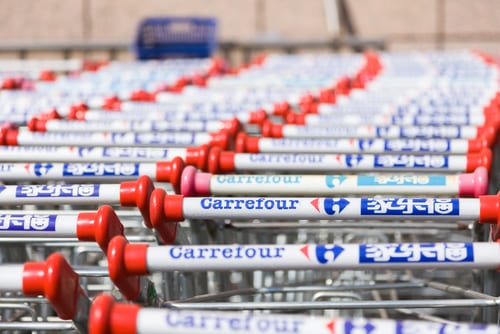
    Carrefour is to cut jobs, boost ecommerce investment and seek a partnership in China with Tencent in the face of competition from Amazon, sending its shares higher on Tuesday.

    Alexandre Bompard, who took over as CEO in July, is trying to overhaul Carrefour’s French hypermarket business as well as expand online retail. Amazon’s purchase of Whole Foods in the United States last year has prompted speculation that the tech company could be targeting food retail in Europe next.

    Bompard plans to invest 2.8 billion euros ($3.4 billion) in digital commerce by 2022, six times its current investment, as Carrefour plays catch-up in online food retail.

    “Carrefour has reached a turning point in its history. We have a huge ambition and I am well aware of the magnitude of this challenge,” Bompard told a news conference.

    Under pressure to increase profits, Bompard also announced cost savings of 2 billion euros by 2020, including a voluntary redundancy plan for 2,400 employees at its French head office and plans to sell or close 273 underperforming stores Carrefour bought from Spanish retailer Dia in 2014.

    Carrefour shares rose around 6 percent, their biggest one-day gain since October 2015.

    “Consumer trends are changing, and Carrefour is adapting accordingly,” said Benoit de Broissia, analyst at Paris-based investment firm Keren Finance, which owns Carrefour shares.

    The group, the world’s second largest retailer with more than 380,000 employees, is targeting 5 billion euros in sales in food e-commerce by 2022 – an amount that would be six times greater than at present, which would represent a 20 percent market share in France.

    Carrefour’s online sales accounted for just 1.7 percent of its total French food sales in 2016, while more digital-savvy rival Leclerc managed 8 percent, according to analysts at brokerage Bernstein.

    Carrefour has struggled for years to reduce its reliance on hypermarkets, particularly in France, where it makes 47 percent of its sales.

    Bompard, previously CEO of electronics retailer Fnac Darty, ruled out closing any of the 247 French hypermarkets, proposing instead to reduce selling space whenever it was relevant and to transfer five hypermarkets to lease management contracts.

    In China, Carrefour remains loss-making amid fierce competition from local players and a buoyant online market.

    A partnership between rival French retailer Auchan AUCH.UL and Alibaba has also increased the pressure on Carrefour’s China business.

    In response, Bompard announced a potential deal with Tencent and local retailer Yonghu to take a stake in Carrefour China. Carrefour would still be the largest shareholder.

    UNION ACTION

    Bompard’s plan to shed 2,400 jobs out of a total French HQ workforce of 10,500 could set the chief executive on a collision course with France’s trade unions, including Force Ouvriere, which has already called for a walkout on Feb. 8.

    Carrefour is the largest private sector employer in France, which accounts for 44 percent of its operating profits.

    Bompard also said if the Dia stores did not find buyers and had to be closed there could be more redundancies.

    “This is a plan destined to please shareholders. We remain vigilant and still fear as many as 4,500 jobs could go,” Dejan Terglav, secretary general at the Force Ouvriere (FO) trade union said.

    French Economy Minister Bruno Le Maire also said the government would be “very vigilant” on the staff cut plans.

    Other big European retailers are also cutting jobs. Britain’s supermarket group Tesco said on Monday it would cut a net 800 jobs from its UK business to simplify operations and cut costs.

    Bompard also outlined plans to accelerate growth in supermarkets and convenience stores globally, especially in Brazil in where it wants to open 20 new Atacadao cash and carry per year.

    His plans followed Carrefour’s warning last week that its 2017 operating profit could fall by 15 percent amid weak sales, marking its second profit warning in six months.


  • Bitcoin Renews Sell-Off As South Korea Clamps Down

    Bitcoin Renews Sell-Off As South Korea Clamps Down

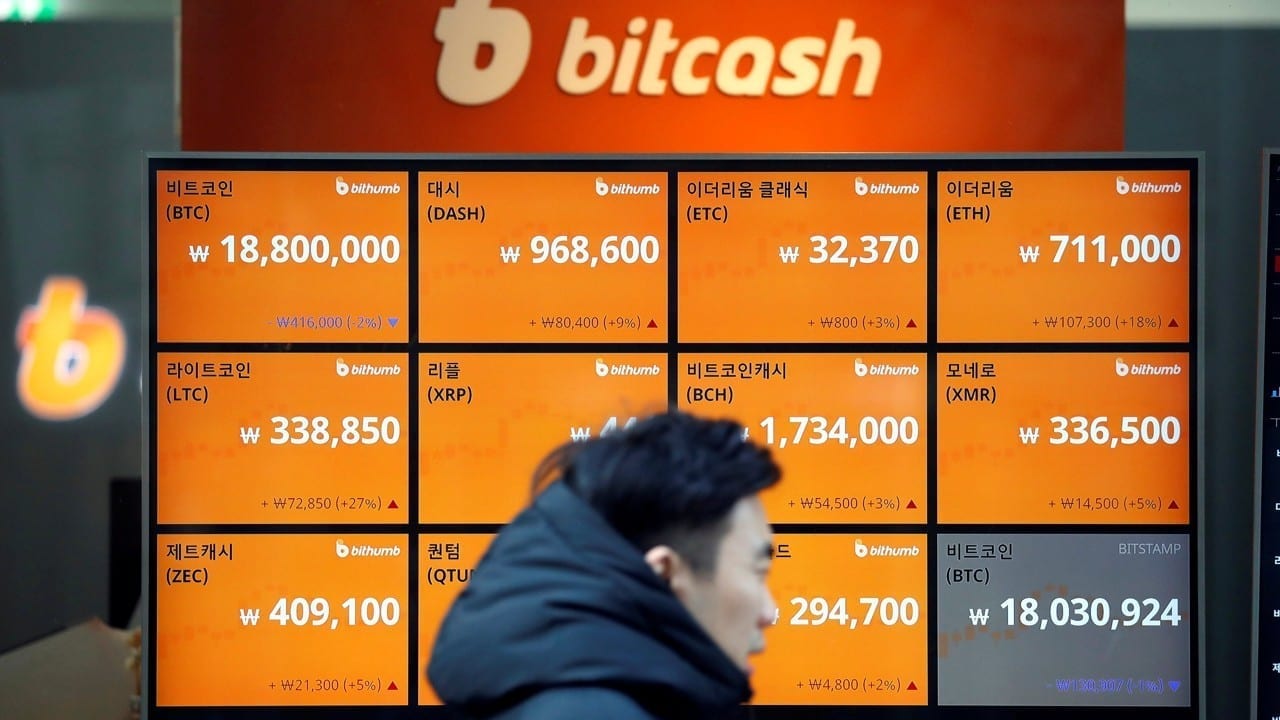
    Bitcoin’s descent continued on Monday, sliding 9% in late-morning trading after the cryptocurrency crumbled last week amid growing concerns from regulators in the U.S. and Asia.

    X Monday’s drop followed reports that South Korea, where cryptocurrency trading has boomed, might try to tax the market and make it share details of user transactions. Meanwhile, more research in recent days has raised fresh concerns about security and fraud in the crypto-space, on top of longstanding concerns of a bubble.

    Bitcoin sank 9% to $10,451.04, according to CoinDesk. Ethereum fell 8.7% to $957.48.

    As reported, South Korea said it would “collect up to 24.2 percent of corporate and local income taxes” on the nation’s cryptocurrency exchanges this year. The government will make those exchanges share data related to user transactions with banks late this month or early February.

    Last week, cryptocurrency traders also appeared to be spooked as the chorus of warnings from regulators grew louder. South Korea has been weighing whether to shutter local cryptocurrency exchanges, while a China central bank official said centralized trading of such digital assets and related businesses should be outlawed.

    The SEC also said “significant investor protection issues” needed to be looked at before sponsors begin offering cryptocurrency funds to retail investors.

    Research by Ernst & Young has also found that more than 10% of the funds generated by initial coin offerings are stolen by hackers. Research from Chainalysis found that at least $90 million of Bitcoin alone was stolen through scams, ransomware and hacking.

    Among Bitcoin-related stocks, Bitcoin Investment Trust , an investment vehicle that attempts to track Bitcoin, sank 5.4% in the stock market. Overstock.com, which has made a bigger push into blockchain — the record-keeping technology behind Bitcoin transactions — rose 4.9%.

  • Frasers Commercial Trust Q1 DPU down 4.4% on lower occupancies

    Frasers Commercial Trust Q1 DPU down 4.4% on lower occupancies

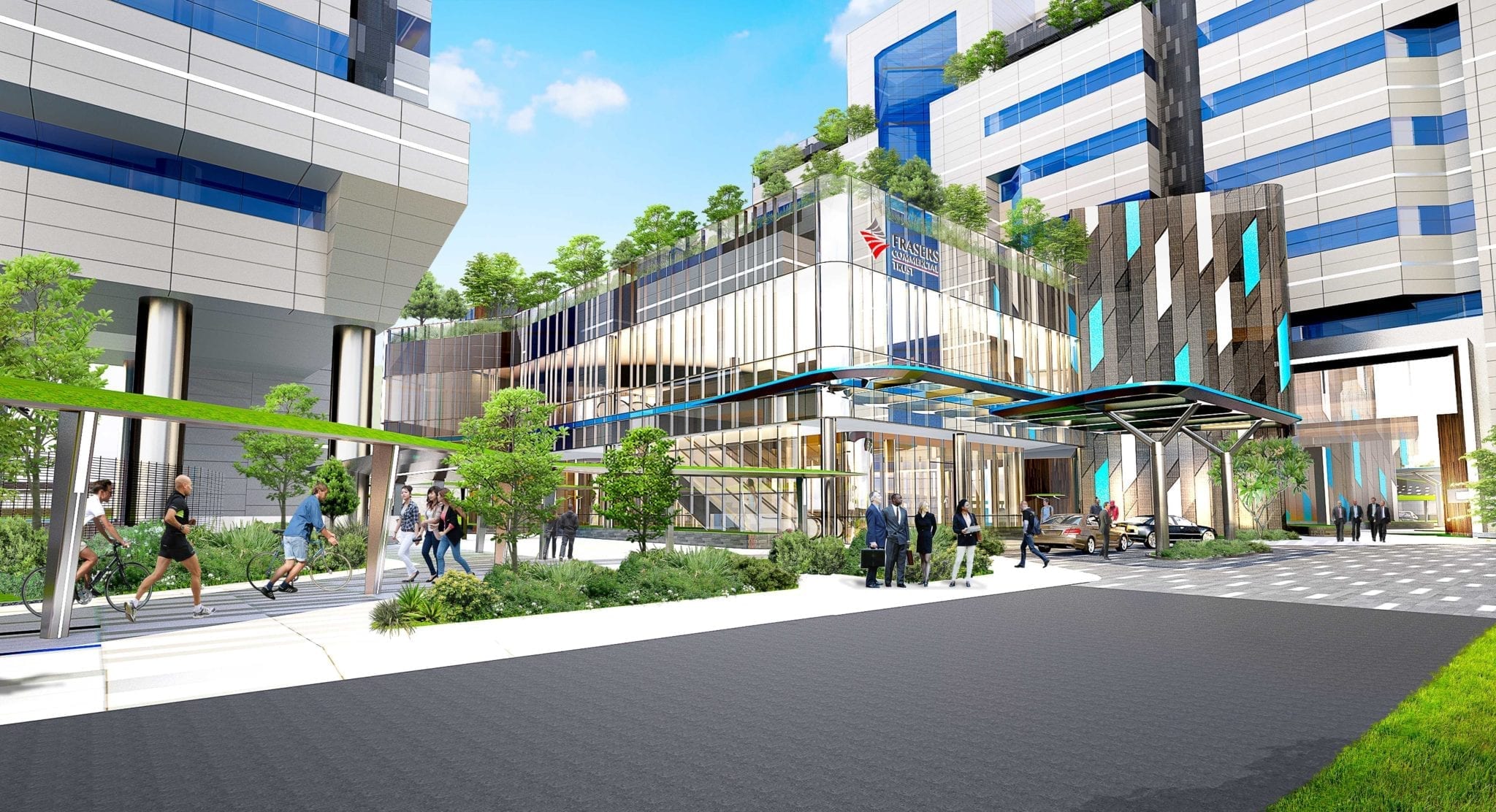
    Frasers Commercial Trust (FCOT) has posted a first-quarter distribution per unit (DPU) of 2.40 Singapore cents, down 4.4 per cent from 2.51 Singapore cents in the same period a year earlier as property income fell while the number of issued units had increased.

    The topline took a hit from lower occupancy rates at Alexandra Technopark, China Square Central, 55 Market Street and Perth’s Central Park.

    Gross revenue for the first quarter ended Dec 31, 2017 dipped 11 per cent to S$35.3 million from the same period a year earlier. China Square Central was impacted by planned vacancies to facilitate asset enhancement works at the retail podium.

    A weaker Australian dollar also dented takings.

    Net property income fell 14.9 per cent to S$24.9 million. Half of this came from FCOT’s three Singapore buildings and half from its three properties in Australia.

    In December, FCOT announced its maiden acquisition in the United Kingdom. It expects to complete its purchase of a 50 per cent stake in Farnborough Business Park by the end of January.

    Meanwhile, the S$45 million makeover of Alexandra Technopark announced a year ago is slated to be completed in the middle of this year.

    China Square Central’s retail podium will also undergo a S$38 million asset enhancement starting in the first quarter of 2018 with completion expected by mid-2019.

    FCOT had a 80.3 per cent average occupancy rate as at Dec 31 and an average committed occupancy rate of 86.6 per cent.

    WeWork Singapore, the co-working space operator, has committed to lease around 28,700 sq ft of space at one of China Square Central’s heritage shophouse blocks, FCOT added in its results filing on Monday.

    WeWork will take up the space in phases starting with 16,800 sq ft in the second half of 2018.

    Jack Lam, chief executive of the Reit manager, said: “We are delighted to welcome WeWork to China Square Central … The take-up by WeWork is a strong testament to the attractiveness of China Square Central as a work and business location. We foresee rising demand for co-working facilities and other non-traditional workplace formats in light of the continuous evolution of work culture and reshaping of the business ecosystem.”

    First-quarter earnings per unit was 1.64 Singapore cents, down from 2.36 Singapore cents in the same period a year earlier.

    Net asset value per share was 1.55 Singapore cents as at Dec 31.

    FCOT had a gearing of 34.8 per cent as at Dec 31, and an interest coverage ratio of 4.3 times.

    The counter added two Singapore cents or 1.31 per cent to close at S$1.55 on Monday.

  • WeChat launches first pop-up store in Shanghai

    WeChat launches first pop-up store in Shanghai

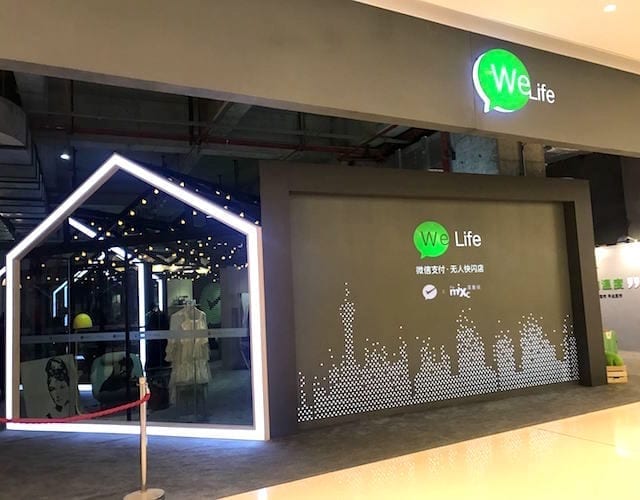
    Chinese messaging app WeChat has launched its first cashierless pop-up store in Shanghai.

    The Tencent company has teamed with more than 300 merchants, including EasyGo and Elle, as well as shopping mall The Mixc to build up its first “flash retailing” pop-up store.

    By scanning a QR code via WeChat, customers can enter the store. The system verifies the customer’s identification and gains access to their digital wallet WeChat Pay. All products have RFID tags to identify them and their price. Buyers can easily check the bill by scanning codes.

    The Bai Zhenjie company, which applies WeChat Pay to the retail industry, says the concept of flash retailing is constantly being polished. Face-recognition technology and a credit-evaluation system are expected to also be applied to the stores.

  • TransCo close to deal to bolster third telco bid

    TransCo close to deal to bolster third telco bid

    The Philippines’ state-run National Transmission Corporation (TransCo), the owner of the nation’s power grid, is close to a deal with the private operator of the grid National Grid Corp (NGCP) to use NGCP’s transmission facilities as the backbone for its bid to become the nation’s third operator.

    TransCo has sent a draft memorandum of agreement for a deal involving use of the grid’s inter-plant fiber transmission equipment for telecoms facilities, ABS-CBN News reported.

    TransCo has previously expressed an interest in forming a partnership to apply for the third telco license. The government has meanwhile reportedly approached the Chinese government with an offer for one of China’s state-run operators to play the role, and plans to hold the allocation as a beauty contest.

    But according to the report, while NGCP has stated that it is eager to participate in the government’s plan to improve telecoms services in the nation and break the PLDT-Globe duopoly, it does not agree that TransCo should be party to the deal.

    An NGCP spokesperson told the publication that any deal involving allowing a third party or the government to use NGCP’s available network capacity should be negotiated with NGCP.

    The company also said it is not interested in ownership in a third player and is willing to allow use of the equipment at minimum or even no cost.

  • Siam Makro to open 15 stores in India

    Siam Makro to open 15 stores in India

    Thailand conglomerate Charoen Pokphand (CP) Group plans to invest Rs1000 crore (US$157 million) over the next five years to open Siam Makro wholesale stores in India.

    Siam Makro, the company’s retail arm, will open 15 wholesale cash-and-carry stores in India, starting with Delhi-NCR, over the next three years under a new brand, Lots Wholesale Solutions.

    “India and the US are the two priority markets for us for future growth,” says MD Tanit Chearavanont of CP Wholesale India.

    The company hopes to open its first two stores, each covering more than 50,000sqft (4600sqm) in NCR by the end of the second quarter.

    CP Group has cash-and-carry businesses in Thailand, China, Cambodia and Myanmar. It has 123 Makro cash-and-carry outlets in Thailand, and 60 outlets in China under the brand Lotus.

    “We bring with us 28 years of experience in serving various business-to-business customers, such as hotels, restaurants and cafes, traders and service customers, through different cash-and-carry formats, large and small,” says Chearavanont. Hotels, restaurants and cafes, which account for about 28 per cent of the company’s business in Thailand, are seen as the largest segment in India as well.

    CP Group, which entered India in 2016 through CP Foods, its agro-industrial and food unit, is looking at making India its innovation hub for technology and digitisation, says Chearavanont.

    CP Wholesale India director (development and expansion) Sameer Singh says the company will look at competitive pricing to take on existing wholesalers in India. “We are also working on possible limited-period credit for customers. We are in discussions with banking institutions to finalise a strategy.” added Singh.

  • Malaysian Automotive Association bullish on NAP 2018

    Malaysian Automotive Association bullish on NAP 2018

    The Malaysian Automotive Association (MAA) is hoping that the review of the National Automotive Policy (NAP), which will be announced by the government in mid-2018, will improve the automotive industry and help boost vehicle sales.

    MAA president Datuk Aishah Ahmad said the government has not engaged with MAA on the review of the NAP and that the details of the NAP 2018 have not been discussed with the industry.

    “It’s just preliminary announcement that there are some changes in the NAP and we hope whatever announcements they make will be good for the industry and will boost industry sales and assist the industry for us to expand sales and make more money,” she told a press conference on the automotive market review for 2017 and outlook for 2018 today.

    Last week, International Trade and Industry Minister Datuk Seri Mustapa Mohamed said NAP 2018 is still a work-in-progress, with consultations to continue for another four to five months. NAP 2018 will focus on mobility, next-generation vehicles, big data, lifestyle and connectivity.

    With NAP 2018 also focusing on parts and components, Aishah concurred that this is a growth area based on industry figures.

    She said NAP 2014 has helped reduce the prices of energy-efficient vehicles (EEV) slightly as EEV producers enjoyed incentives on local components.

    Meanwhile she said the strengthening ringgit will help industry players, especially those who trade in US dollars and Japanese yen, as they will have better margins.

    MAA is projecting a total industry volume (TIV) of 590,000 units in 2018, a 2.3% growth from 2017. This takes into account of factors like economic growth, rising cost of doing business, rising cost of living, continuation of the strict lending guidelines and ride-hailing services.

    The TIV of new motor vehicles registered in 2017 declined marginally by 0.6% to 576,635 units in 2017 from 580,085 units in 2016.

    Aishah said the local automotive market was subdued for much of last year.

    For the second consecutive year, the TIV contracted, reflecting perhaps a down-cycle of the market that started in 2016.

    “Despite our country’s economic recovery and the aggressive promotional campaigns undertaken by MAA members, sales remained essentially flat in 2017. This can be attributed to the inflationary pressures affecting consumers’ disposable income, which consequently resulted in cautious consumer spending,” said Aishah.

  • Affinity Equity to bid on Stylenanda

    Affinity Equity to bid on Stylenanda

    Hong Kong’s Affinity Equity Partners has joined a bidding scramble for Korean budget fashion and cosmetics brand Stylenanda.

    Also in the race are LVMH-backed L Catterton, L’Oreal and Shiseido, with the bid worth up to KW500 billion (US$467 million), insiders say.

    Parent company Nanda has received letters of intent from potential bidders, including a local department-store chain, to sell a stake of up to 70 per cent.

    Launched in 2005, Stylenanda saw its sales soar to KW170 billion last year. While it started as a fashion brand, it has lately been focusing more on its cosmetics business. Now more than half of its sales come from its budget cosmetics brand 3CE.

    For its fashion business, the firm is focusing more on upscale boutique shops.

    CEO Kim So-hee, who owns the company outright, in 2016 sought to sell a sizeable portion along with management rights. There were negotiations with such candidates as Hyundai Department Store and TPG, but these collapsed.

    Meanwhile, L Catterton has been buying stakes in Korean companies in recent years, including US$80 million in YG Entertainment, $50 million in cosmetics maker Clio, and US$230 million in eyewear brand Gentle Monster.

    Affinity has also been buying into Korean firms. In August it bought plastic container company Lock&Lock for KW629.3 billion.

  • China leads for L’Occitane International

    China leads for L’Occitane International

    China and Hong Kong, along with Brazil, had the highest sales growth in local currencies for French cosmetics company L’Occitane International for the nine months to the end of December.

    China sales grew 23.4 per cent in local currency, with same-store sales up 17.4 per cent.

    Hong Kong had 9.7 per cent growth at constant exchange rates, thanks to strong travel-retail sales in Asia, particularly Greater China, Korea and Japan.

    The group’s net sales reached €1 billion (US$1.2 billion), or 3 per cent growth at constant rates for the period. Unfavourable foreign-exchange rates knocked down sales at reported rates by 0.6 per cent.

    Same-store sales growth for the nine months further improved to 1.4 per cent from a 0.1 per cent drop for the six months to September 30. The improvement was mainly contributed by holiday offerings in the third quarter that fueled same-store sales growth in China, Hong Kong, Taiwan, Russia and other key markets.

    Sell-out sales accounted for 74.1 per cent of net sales, amounting to €741.9 million, down 1.4 per cent at reported rates but up 2.5 per cent at constant rates. This growth was primarily from positive same-store growth as well as non-comparable stores and other sales, including new and renovated stores, marketplaces and spa businesses.

    Web sell-out channels (own e-commerce and marketplaces) delivered encouraging growth of 21.2 per cent to reach 14.3 per cent of total sell-out sales.

    Sell-in sales accounted for 25.9 per cent of the group’s total sales, amounting to €259 million and an increase of 4.4 per cent at constant exchange rates. Like-for-like growth was 8.2 per cent.

    The increase was primarily driven by travel retail, distribution, B2B and web-partner channels of the L’Occitane en Provence brand. The emerging brands Erborian and Melvita continued double-digit growth.

    The group opened 16 stores and renovated 118 during the nine months, compared to 56 store openings and 79 renovations for the same period a year earlier.

  • Amazon Go, a high-tech version of a 7-Eleven, finally opened on Monday

    Amazon Go, a high-tech version of a 7-Eleven, finally opened on Monday

    No cashiers, no lines, no registers – this is how Amazon sees the future of in-store shopping.

    The online retailer opened its Amazon Go concept store to the public on Monday, selling milk, potato chips and other items typically found at a convenience shop. Amazon employees have been testing the store, which is at the bottom floor of the company’s Seattle headquarters, for about a year.

    The public opening is another sign that Amazon is serious about expanding its physical presence. It has opened more than a dozen bookstores, taken over space in some Kohl’s department stores and bought Whole Foods last year, giving it 470 grocery stores.

    But Amazon Go is unlike its other stores. Shoppers enter by scanning the Amazon Go smartphone app at a turnstile. When they pull an item of the shelf, it’s added to their virtual cart. If the item is placed back on the shelf, it is removed from the virtual cart. Shoppers are charged when they leave the store.

    The company says it uses computer vision, machine learning algorithms and sensors to figure out what people are grabbing off its store shelves.

    Amazon says families can shop together with just one phone scanning everyone in. Anything they grab from the shelf will also be added to the tab of the person who signed them in. But don’t help out strangers: Amazon warns that grabbing an item from the shelf for someone else means you’ll be charged for it.

    At about 167 square metres, the store will also sell ready-to-eat breakfasts, lunches and dinners. Items from the Whole Foods 365 brand are also stocked, such as cookies, popcorn and dried fruit.

    The company had announced the Amazon Go store in December 2016 and said it would open by early 2017, but it delayed the debut while it worked on the technology and company employees tested it out.

  • Singapore completes public safety trials with NEC

    Singapore completes public safety trials with NEC

    NEC and NEC Asia Pacific have announced the completion of three safety and security test bed projects, held in and near Singapore’s Jurong Island, under the Safety and Security Industry Program (SSIP) 2020.

    The SSIP 2020 is led by the Ministry of Home Affairs (MHA), Singapore Economic Development Board (EDB) and is being conducted in collaboration with JTC.

    The three trials were conducted over a period of 12 months from September 2016, and were aimed at using data analytics and security insights to address Singapore’s safety and security needs.

    They involved early detection of suspicious behavior, off-site security clearance of authorized personnel and on-the-spot enrollment for first-time visitor access to controlled areas.

    In the first trial, NEC provided and tested a system that utilized its high performance NeoFace Facial Recognition software together with the Intelligent Complex Event Processing engine which correlates audio and video analytics, to detect suspicious behavior and identify Persons of Interest (POIs) in both indoor and outdoor areas.

    The second trial facilitated off-site security clearance for entry of authorized personnel into Jurong Island, thus reducing congestion at checkpoints. NEC provided and tested a Bus Sensors Monitoring Management System using customized tamper-proof security sensors to prevent unauthorized opening of vehicle doors during bus journeys.

    The third trial tested the feasibility of an automated system to provide a more efficient method of enrolling first-time visitors for entry into Jurong Island. The system leveraged NEC’s biometric solution to expedite clearance of such visitors via on-the-spot facial and fingerprint recognition enrollment at car inspection bays.

    For all the three trials, the technologies provided real-time monitoring and alerts to the simulated Command Center, to inform the authorities of activities which may require law enforcement action.

  • UAE firm in deal to supply naptha to Lotte Chemical Titan

    UAE firm in deal to supply naptha to Lotte Chemical Titan

    Lotte Chemical Titan Holding Bhd’s wholly owned subsidiary Lotte Chemical Titan Sdn Bhd has entered into a three-year sales contract with United Arab Emirates-based Abu Dhabi National Oil Co  for the supply of refined products and paraffinic naphtha.

    The group announced in a stock exchange filing that the contract runs from Jan 1, 2018 to Dec 31, 2020.

    Pricing of the supplies will be based on the market price of the commodity during the loading month. The estimated quantity is between 600,000 tonnes and 1 million tonnes a year.

    ADNOC is a major feedstock supplier of naphtha to Lotte and had previously supplied the commodity in a one-year contract.

    Lotte’s shares gained 0.39% to close at RM5.18 with some 731,300 shares done.