Tag: asia

  • Grab cuts 1000 jobs

    Grab cuts 1000 jobs

    Singapore-based Grab Holdings, Southeast Asia’s leading ride-hailing and food delivery app, is cutting 1,000 jobs or 11 per cent of its workforce, its CEO said on Tuesday, citing the need to manage costs and ensure more affordable services long term.

    In a letter sent to employees late on Tuesday and seen by Reuters, chief executive Anthony Tan said the cuts, the biggest since the start of the pandemic, were not “a shortcut to profitability” but a strategic reorganisation to adapt to the business environment.

    “Change has never been this fast. Technology such as generative AI (artificial intelligence) is evolving at breakneck speed. The cost of capital has gone up, directly impacting the competitive landscape,” Tan said in the letter.

    “We must combine our scale with nimble execution and cost leadership, so that we can sustainably offer even more affordable services and deepen our penetration of the masses.”

    Tan said that even without layoffs, Grab had managed costs and should hit its target for group adjusted EBITDA breakeven this year.

    The “superapp”, founded in 2012, offers deliveries, rides and financial services in eight Southeast Asian countries, including Indonesia, Malaysia, the Philippines, Singapore, Thailand, and Vietnam.

    Its shares were up 4.7 percent premarket after Tan’s announcement to staff. The stock had climbed as much as 5.6 percent premarket, extending earlier gains on a Bloomberg News report of the cuts.

    The layoffs follow a similar move last year by Indonesian tech firm GoTo, which offers rides, e-commerce and financial services. It has undergone strict cost-cutting, including axing 12% of its workforce in 2022. It laid off a further 600 staff in March.

    Its incoming CEO is planning to head the firm only temporarily and quit after improving profitability, sources told Reuters last week.

    In May, Grab reported a quarterly loss of $250 million but said revenue in the first quarter of this year rose 130.3 percent to $525 million from a year ago.

    In February, it issued an upbeat forecast for full-year revenue for 2023 and brought forward its profitability timeline.

    The US-listed Grab’s last job cuts were in 2020, when 360 people were laid off in response to the impact of the pandemic. The company had 11,934 staff as of the end of 2022, including about 2,000 from its acquisition of a grocery chain last year, its latest annual report said.

    In September last year, it said it had no plans to undertake mass layoffs despite the weak market. In December, Tan told staff the company was freezing most hiring, payrises for senior managers, and cutting travel and expense budgets.

  • South Korean c-store chain CU launches in Kazakhstan

    South Korean c-store chain CU launches in Kazakhstan

    South Korean convenience store chain CU is setting its eyes on the Central Asian region, entering Kazakhstan under a partnership with CU Central Asia, the c-store operation arm of local ice cream manufacturer Shin Line.

    CU’s first store there is set to open next year. The chain’s parent company BGF Retail said it plans to open more than 500 locations in the country in the next five years and is also considering expanding into neighbouring markets.

    The company expanded into Malaysia in 2020 through a 10-year franchise agreement with MyNews. Since then, the chain has opened more than 130 stores in the country. Before Malaysia, BGF Retail also launched the CU chain in Mongolia and currently operates about 320 stores in the market.

    Founded in 2012 by BGF Retail, CU is one of South Korea’s biggest c-store chains with more than 16,000 outlets as of last year, according to Statista.

    BGF Retail reported a 6.5 per cent increase in net income for the first quarter of this year, reaching 27.7 billion won (US$20.6 million).

  • LPBank appoints new CEO

    LPBank appoints new CEO

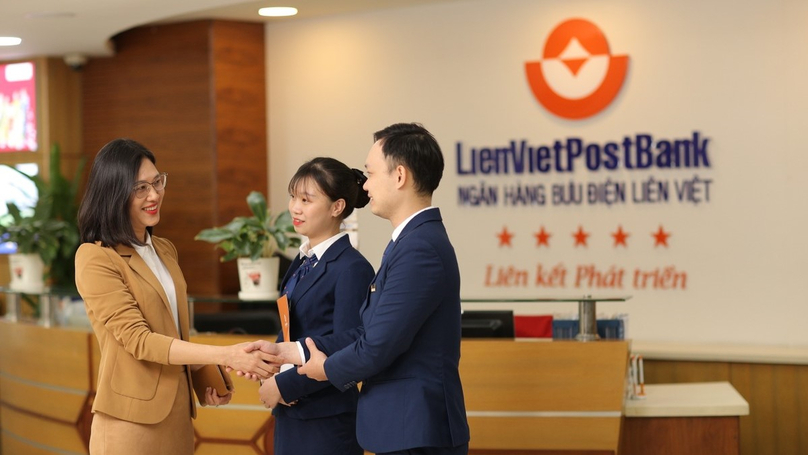
    Lender LPBank, formerly LienVietPostBank, has named Ho Nam Tien its new CEO.

    Tien, 52, has been with the bank since 2010 and has 30 years of experience in the financial and banking sector, including in senior positions at several companies.

    He replaces Pham Doan Son, who resigned as CEO in March due to personal reasons.

    LPBank is focused on digital transformation in the next five years and has ambitions of becoming the top retail bank in Vietnam.

    LPBank targets a pre-tax profit of VND6 trillion this year, up 11% from 2022.

    The company eyes to increase its capital by VND11 trillion ($468 million), mostly by rights issue.

  • Instagram enables download of public Reels in the US

    Instagram enables download of public Reels in the US

    Instagram introduced Reels in 2020, and since then, this feature’s popularity has grown, reaching over 2.35 billion monthly active users. Now, Instagram is rolling out a new feature for its users in the US.

    Adam Mosseri, CEO of Instagram, announced on his broadcast channel that the company will allow users to download Reels to their camera roll. The process is simple: just tap the share button and select the download option.

    It’s important to note that only Reels from public accounts can be downloaded, and even if you have a public account, you can choose to turn off the Reel download option.

    Mosseri did not mention whether the downloaded Reels would have watermarks, but based on the picture he uploaded, it is safe to assume that downloaded Reels will indeed bear watermarks, much like they do right now.

    Currently, every Instagram user can download and share their own Reels on different platforms. However, with this new feature, users will also be able to share other people’s Reels on platforms like TikTok, for example.

    TikTok has had this feature for years, and videos with the TikTok logo are now prevalent on various social platforms, contributing to the Chinese video-sharing app’s increasing popularity.

    It’s worth noting that although videos with TikTok’s logo are no longer promoted by Instagram’s algorithms, their number on the platform remains substantial. With this new update, there is a chance for Instagram’s logo to appear frequently on its rival platforms as well.

    While it is likely that this feature will eventually be available for users worldwide, the exact timeline for its global release remains unknown. We will have to wait and see when that happens.

  • Google tests badge for Messages that quickly points out RCS chats

    Google tests badge for Messages that quickly points out RCS chats

    Rich Communication Services (RCS) is the platform that Google offers Android users in its Messages by Google app. Similar to iMessage in iOS, RCS uses your phone’s data connection and Wi-Fi instead of the cellular connection used for SMS/MMS messaging. With RCS, users can type messages with as many as 8,000 characters as opposed to 160 for SMS. RCS also offers end-to-end encryption, read receipts, typing indicators, high-quality images and video, and text inside blue bubbles.

    Yup, RCS is very much like iMessage. So much so in fact, that if an iOS user were to infiltrate a group chat held by Android users, all of these features would disappear and everyone’s texts would be inside green bubbles-just like with iMessage when an Android user joins a previously all iOS chat.

    Google has added a new feature that now shows you from the Messages home screen in Android which of your conversations are eligible to use the RCS platform. Previously, you could figure this out by opening a conversation and looking at the text field at the bottom of the screen. If the conversation was with someone using an Android phone and RCS, you would see the words “RCS message.” If you were texting an iOS user or an Android user using a non-RCS messaging app, you’d see the words “Text message.”
    With the new feature, which shows up in the latest beta release to Google Messages (version 20230615_02_RC00), a badge that looks like the Google Messages icon appears on the bottom right of the avatars on individual and group conversations that will use the RCS platform when you tap to reopen them. Nothing shows up on the avatars that belong to those conversations on your Messages home screen that were conducted using SMS/MMS instead of RCS. The RCS badges have appeared on my Pixel 6 Pro running Android 14 Beta 3.1.
    If you don’t have the Messages by Google app on your Android phone, tap on this link to install it from the Google Play Store. To see which version of Google Messages your Android phone is running, go to Settings > Apps > See all xxx apps and scroll down until you see the Messages app. Tap on it and scroll to the very bottom and you’ll see which version of the app you have.
    Since this feature is on the beta version of Google Messages, it should be available to all Android users running the Messages by Google app soon.
  • L’Oreal Group ANZ appoints Alex Davison as its new CEO

    L’Oreal Group ANZ appoints Alex Davison as its new CEO

    Alex Davison has been appointed the new CEO of L’Oreal Group ANZ, succeeding Rodrigo Pizarro.

    Davison has served as the CEO of L’Oreal Greece for the past three years. According to the group, Greece has continuously been among the fastest-growing markets in Europe under his leadership, with the company achieving three years of double-digit growth, and building market share in every business channel.

    “This aligns with my personal leadership values and I’m looking forward to working with the team as we build brands tailored for Australian and New Zealand consumers, and a business focused on sustainability and diversity,” said Davison.

    He also oversaw the group and was honoured in Greece as a ‘Top 20 Company Changing the World for Good’, award by Fortune magazine.

    In 2016, Davison began working for the L’Oreal Group as the UK GM of the business division for Dermatological Beauty. Prior to that, he worked for Procter & Gamble for 17 years.

    L’Oreal purchased Australian luxury cosmetics business Aesop from Brazil’s Natura & Co Holding earlier this year for US$2.525 billion (A$3.7 billion).

  • Ernest Hillier Chocolates enters administration

    Ernest Hillier Chocolates enters administration

    Australian confectioner Ernest Hillier Chocolates has appointed voluntary administrators to sell off its business and related entities.

    Established in 1914, the company is Australia’s oldest chocolate brand and operates a manufacturing facility in Coburg, Victoria. Its Ernest Hillier and Newman’s brands have been stocked across supermarkets for many years.

    Administrators Alan Walker and Glenn Livingstone from WLP Restructuring Partners are seeking urgent expressions of interest from interested parties who could recapitalise or acquire the business’ assets.

    Partner Alan Walker, said it is “unfortunate” that such a “storied” chocolate brand has encountered distress amid rising operating costs.

    “We are working closely with all affected parties as we move with urgency to understand the business’s affairs and find a suitable buyer or investor.

    “While this process is underway, we have had to make the unfortunate decision to cease manufacturing activity and stand down employees at this stage.”

    He added the brand’s existing relationships with large multi-national food and beverage providers alongside its supply agreements may “appeal to potential suitors”.

    The first statutory meeting of creditors will be held on June 30.

  • Gold prices fall

    Gold prices fall

    SJC gold price fell 0.15% to VND67.1 million ($2,852.04) per tael Wednesday morning.

    Gold ring price dropped 0.18% to VND56.45 million per tael. A tael equals 37.5 grams or 1.2 ounces.

    Globally gold traded in a narrow range on Wednesday as traders refrained from making big bets ahead of Federal Reserve Chairman Jerome Powell’s congressional testimony, which could offer further insight into the central bank’s interest-rate hike plan,.

    Spot gold was almost unchanged at $1,936.99 per ounce. U.S. gold futures too were little changed at $1,948.20.

    Powell’s congressional testimonies due on Wednesday and Thursday will be scanned for U.S. interest rate outlook.

    Two Federal Reserve policymakers and an economist nominated to join them on the Fed’s Washington-based board on Tuesday said their focus is on bringing down too-high inflation so that the U.S. economy can get back to sustainable growth.

  • WhatsApp update adds option to automatically silence unknown callers

    WhatsApp update adds option to automatically silence unknown callers

    WhatsApp users have been spoiled lately, as Meta’s acquisition rolled out several important updates in the last few months, something that doesn’t happen too often. Today’s update introduces a couple of privacy features that we’re pretty sure users will find extremely useful.

    As the title says, a new option to automatically silence unknown callers is now available for WhatsApp users. Specifically designed to prevent spam, scams, and calls from unknown people, the new feature provides increased protection and peace of mind.

    The new feature can be enabled from the Privacy tab / Calls and while all calls from unknown numbers will be silenced, they will still be shown in the Call list just in case you recognize one of the numbers or you know it’s coming from someone important.

    In addition to the Silence Unknown Callers feature, WhatsApp announced that it’s bringing Privacy Checkup to its app. It’s a step-by-step feature meant to guide users through important privacy settings and familiarize them with certain levels of protection.

    WhatsApp users can now select “Start checkup” from their Privacy settings to browse through multiple privacy layers that increase the security of messages, calls and personal information.

    These two new features should be available globally for all WhatsApp users, but make sure to update to the latest version of the app before trying to use either of them.

  • Google apps like Maps, Translate, Calendar and Lens are getting integrated into the iOS Chrome app

    Google apps like Maps, Translate, Calendar and Lens are getting integrated into the iOS Chrome app

    There are some changes being made by Google to the iOS version of Chrome in order to “help you quickly get more done from your browser.” Google notes that Chrome is using “AI to detect addresses on webpages.” Press on an address inside of a webpage and you’ll see an option to “View with Google Maps in Chrome.” Tapping on this option will reveal a mini Google Maps in Chrome that will allow you to “Get Directions” to the address on the webpage that you tapped, or open the full Google Maps app.
    Tap on a date listed on a webpage in the iOS version of Chrome and you’ll see two options: one to add that date to the Google Calendar app, and one to add that date to Apple Calendar. If you choose to add it to Google Calendar, contextual information will be used to fill out some of the blanks and you can adjust some of the information to meet the particulars of the appointment you are adding to the calendar.
    Now here’s another cool feature coming to the iOS version of Chrome. Tap on a passage found on a website written in a foreign language and a toolbar will appear on the display that includes a “Google Translate” option. Tap on it and the section of the webpage you wanted to be translated will appear in English (or your home language).
    And in the coming months, the search/URL bar at the top of the iOS version of Chrome will include the iconic Google Lens camera icon on the right side of the bar found near the top of the screen. Tap on it and you can “use your camera to search with new pictures you take and existing images in your camera roll.” Think of Lens as another way to access Google’s search engine using photos to input what you want to search for. Currently, an icon for Lens can be found in the search bar near the top of the iOS Google Search app.
    It isn’t clear when these new features are coming to the iOS version of Chrome so it will be a matter of trial and error until you find that each of these new features is available on your iPhone.
  • Tata Motors Expands EV Focus

    Tata Motors Expands EV Focus

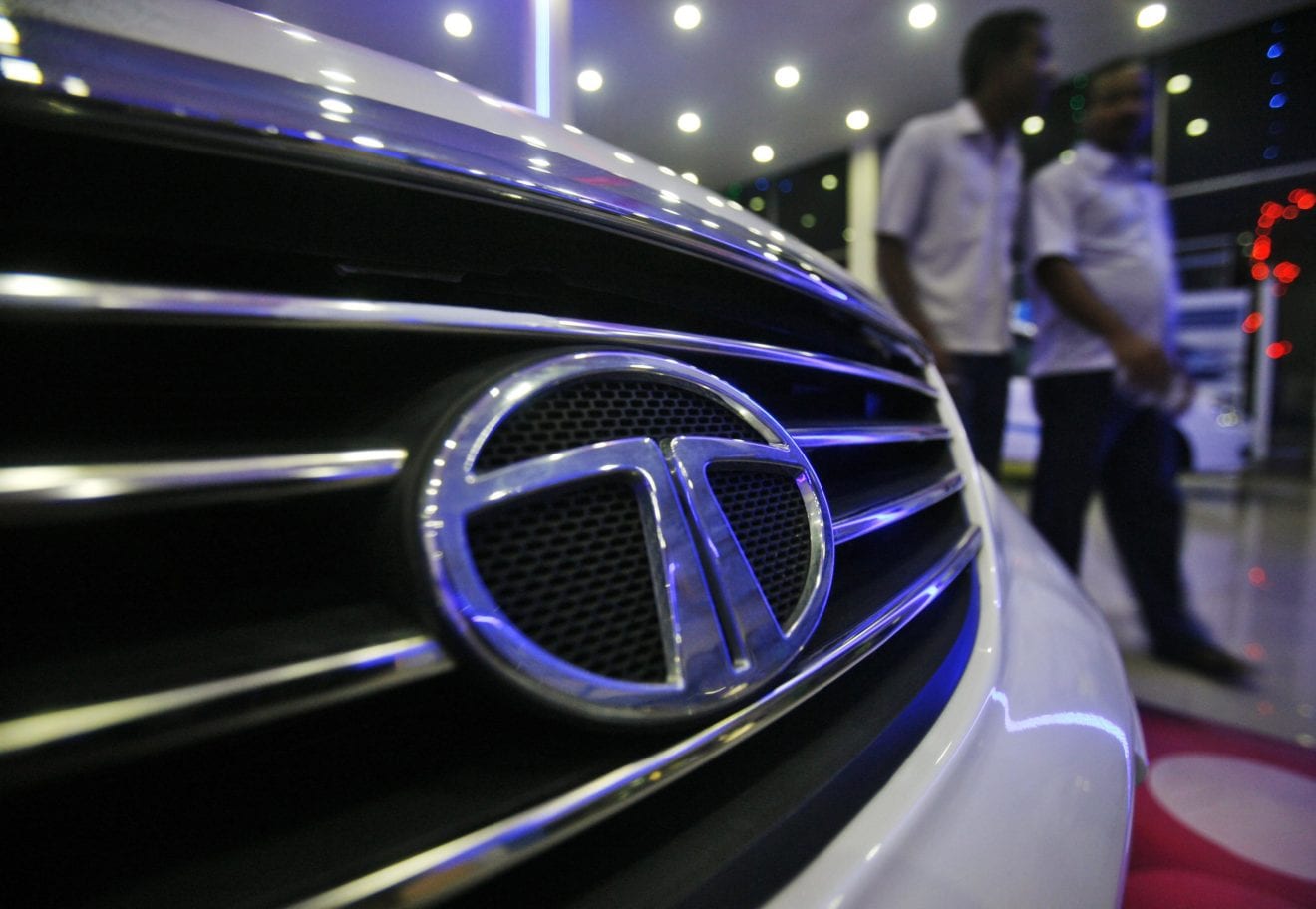
    Tata Motors is placing a significant emphasis on the electric vehicle (EV) sector with a series of product launches in a bid to substantially increase its market share by 2030. According to the company’s recently published annual report for the fiscal year 2022-23 (April-March), Tata Motors anticipates that EVs will account for 25 percent of its product portfolio within five years and reach 50 percent by 2030.

    In the March quarter, Tata Motors achieved a major milestone by surpassing annual EV sales of 50,000 units, constituting 12 percent of its overall sales. Over the past three years, Tata Motors, as the leading player in India’s EV market, witnessed a remarkable surge in volumes, escalating from 1,300 units to over 50,000 units.

    The company foresees a considerable surge in EV demand as more options become available to consumers. During the fiscal year 2023-24, Tata Motors aims to focus on achieving substantial volume growth, making strategic investments, maintaining healthy underlying unit economics, and remaining competitive in the market. N Chandrasekaran, Chairman and Non-executive Director, expressed confidence in the company’s future prospects, asserting that Tata Motors is rebounding after several challenging years and remains committed to fulfilling its financial obligations while contributing to a greener future.

    Tata Motors presently boasts the widest range of EV offerings in India, encompassing hatchbacks, sedans, and sports utility vehicles (SUVs) catering to both premium and mass market segments. Moving forward, the automaker intends to capitalize on this strategic advantage by expanding its EV sales and after-sales network, as well as charging infrastructure throughout the country. By implementing these initiatives, Tata Motors aims to tap into the untapped potential and broaden its customer base.

    Jaguar Land Rover (JLR), Tata Motor’s subsidiary, is also making significant strides in the EV domain. The company has set its sights on transforming Jaguar into a fully electric luxury brand, and its strategic plan is progressing as intended. Adrian Mardell, the interim CEO, announced that the first new all-electric Jaguar vehicle will be unveiled in 2024, with customer deliveries commencing in 2025. Later this year, JLR plans to commence pre-orders for the inaugural pure electric Range Rover. Despite the challenging market conditions, JLR remains committed to delivering on its “Reimagine” strategy and is confident in the unwavering support and dedication of its skilled workforce.

  • Domino’s app has a new feature that will deliver pizza to places without an address

    Domino’s app has a new feature that will deliver pizza to places without an address

    So let’s say you’re at a nondescript park playing in a pick-up softball game and after the game is over, you want to reward your teammates by ordering a few pizza pies. However, there is a little problem. The park you’re at doesn’t have a name and there isn’t an address for it that you know of. Well, if you order your pizza from the Domino’s app, you’re still okay even if you don’t have an address to accompany your order.
    That’s because Domino’s Pizza announced today a new feature called Pinpoint Delivery that when selected as a delivery option on the Domino’s app will allow the user to drop a pin on a map. This will allow the world’s largest pizza company to deliver a Pizza to a park (like our example), a baseball field (also part of our example), the beach, a pool, a campfire and other locations. If you don’t mind sharing your pizza with seagulls, this could prove to be a great idea.

    Christopher Thomas-Moore, Domino’s senior vice president – chief digital officer, said, “Domino’s is proud to be the first quick-service restaurant brand in the U.S. to deliver food to customers with the drop of a pin. We’re always striving to make customers’ experiences even better and more convenient, and Domino’s Pinpoint Delivery does exactly that.” The Pinpoint Delivery feature allows Domino’s to deliver to “a countless number of dynamically created hyper-local spots without a typical address.”

    While using this feature, consumers will still be able to track their order using Domino’s Tracker, see the GPS location of the driver, and have an ESTPA (estimated time of pizza arrival). When the driver arrives at the pickup spot, the customer will receive an alert. After the alert is received, the customer will activate a visual signal on his phone to help the driver spot him.
    Domino’s says “Domino’s Pinpoint locations are delivery locations without traditional addresses selected by customers who order online, pre-pay with credit, debit, or Domino’s gift cards, and agree to receive up to five text notifications that provide updates on their order. Customers and delivery experts will meet at specific locations designated in the Domino’s app that may be adjacent to places like parks, baseball fields, and beaches. Message and data rates may apply.”
    So the next time you’re lying on a towel at the beach and you get a message from your stomach that it wants you to order a pizza, using the Domino’s app and Pinpoint Delivery can make it happen. You can download the Domino’s app for iOS by tapping on this link, or for your Android phone by clicking on this link.
  • Chinese increased demand boosts Vietnam’s durian exports

    Chinese increased demand boosts Vietnam’s durian exports

    Vietnam’s durian export value reached more than US$500 million in the first five months, an increase of more than 18 times against the same period last year.

    According to the General Department of Customs, during the period, vegetable and fruit exports stayed at $2.03 billion, up 43% over the same period last year.

    The main contributor to the increase in Vietnam’s farm exports was durian.

    In May, the export value of durian reached the highest level ever, at $332 million, more than 10 times higher than the previous month.

    In the first five months, durian export value hit $503.4 million, more than 18 times higher than the same period last year. Among the import markets, China was the biggest buyer with a value of $477 million.

    China controls its technical barriers for food safety and hygiene, but the quality of Vietnamese goods has increasingly improved and consumers favor their competitive prices, a representative of a fruit and vegetable export company in HCMC, who wants to stay unnamed said.

    Vietnam currently has 293 farming areas and 115 durian packing facilities granted with official codes to export to China.

    In May, Vietnamese durian entered its harvest season, contributing to increasing export volume and value.

    Two weeks ago, some 700 trucks, most of them carrying durian, were stuck trying to enter China from Vietnam’s Lang Son Province, prompting Vietnamese authorities to negotiate with their Chinese counterparts to solve the congestion.

    China has agreed to extend the working time for customs clearance of farm products from Vietnam by two more hours to 10 p.m. (Hanoi time).

  • 15-inch MacBook Air to be launched in Vietnam in mid-July

    15-inch MacBook Air to be launched in Vietnam in mid-July

    First MacBook Air laptops with 15-inch screens will be officially sold in Vietnam in the second or third week of July at a starting price of VND32.99 million (US$1,398), some Apple authorized resellers said.

    Vietnam will be the second group of markets selling the latest laptop model of Apple.

    In the U.S. market, 15-inch MacBook Air laptops were pre-ordered right after its launching ceremony on June 6 and delivered to users one week later.

    15-inch MacBook Air is like the enlarged 13-inch version with no design changes. But many people has been waiting for this model because it is Apple’s only thin and light laptop with a large screen and good prices.

    Four configuration versions of 15-inch MacBook Air will be sold in Vietnam, with the 8-GB RAM, 256-GB memory version costing VND32.99 million, and the 512- GB memory version costing VND37.99 million.

    The device is available in four colors: blue, black, silver, gray and gold.

  • Changi Airport outlines top priorities for cargo

    Changi Airport outlines top priorities for cargo

    Singapore Changi Airport saw muted cargo volumes in March compared to the same period last year, as the Asia Pacific hub recorded 152,000 tonnes. For the first quarter, air freight movements at Changi totalled 417,000 tonnes, sliding 9 percent year-on-year. The group said demand remained soft, especially in the first two months of the year, no thanks to global economic uncertainty and inflationary pressures. Collegues talk to Lim Ching Kiat, executive vice president for air hub and cargo development, to find out more about the group’s top priorities for cargo.

    What are Changi’s top priorities for cargo? What’s the group’s overall direction?
    While global air cargo demand has weakened, Changi Airport remains optimistic on long-term growth, especially in Southeast Asia. Despite the recent economic headwinds, Southeast Asia’s air trades with the rest of the world continued to expand over the past four years. Given the expectation of strong long-term progress with urbanisation and industrialisation, Southeast Asia is primed for growth in manufacturing, trade and logistics. Singapore, being in the heart of Southeast Asia, will have a critical role to play in global supply chains, contributing to the flow of international goods.

    Towards this end, while cargo connectivity remains critical for Changi Airport to anchor its position as a leading air cargo hub, our other priorities are to raise service quality in cargo handling and unlock capacity for long-term sustainable cargo growth by leveraging automation and digitalisation. At the same time, we are also putting in place steps to reduce the carbon impact of cargo activities in order to strengthen our resilience and secure our competitiveness as an air cargo hub.

    To raise service quality in cargo handling, we firmly believe in taking a collaborative approach by working closely with our partners in the air cargo community. One key development is Changi Airport Group’s introduction of a cloud-based community data-sharing platform—the Changi Air Cargo Community System (ACCS). This is an open ecosystem of collaborative and community-based applications that aggregates data from all parties involved in the cargo handling process. Within that system, we developed a truck dock slot booking (TDSB) application, which aims to even out cargo lodgement and collection at our cargo handler’s air freight terminals, thereby reducing waiting time, optimising resources, and providing greater insights to airport landside activities. This move to digitalise provides greater predictability for forwarders, trucking companies, and cargo handlers. It also supports Changi Airport’s sustainability efforts to reduce carbon and tailpipe emissions. We have since completed the pilot and plans are underway for community-wide implementation later this year.

    In the area of automation, CAG, together with our partners, has been investing in resources to trial autonomous solutions like autonomous tractors to reduce the manpower resources required for point-to-point transportation of baggage and cargo. Ongoing trials are promising and we expect to trial fully driverless operations for baggage delivery by 2024. On the digital front, solutions such as the tracking of all motorised ground support equipment will help optimise equipment deployment, boosting productivity and improving the quality of cargo handling capabilities. Additionally, we are working closely with our cargo handlers on warehouse automation and digitalisation projects to improve productivity and efficiency, as well as increase capacity.

    Can you share more about the recent partnership on cargo with Brussels Airport? What are the opportunities in the Asia-Europe market?
    In 2022, Europe remained Changi’s second largest region by air trades. Belgium-Singapore is a key air trade lane for high-value cargo such as biopharmaceuticals. Both countries place strong importance on international trades and advanced manufacturing, and have been established as key trusted pharmaceutical hubs in Asia and Europe respectively. Changi Airport and Brussels Airport share similar ambitions in shaping our air cargo hub and place strong priorities in areas such as cargo operations excellence and digitalisation.

    Under the MOU signed on 2 March 2023, Changi Airport and Brussels Airport will jointly drive initiatives to enhance capabilities in pharmaceutical logistics, undertake studies and trials in the fields of digitalisation and sustainability, as well as exchange best practices in the handling of special cargo segments and community-wide cargo initiatives to transform the air cargo supply chain.

    On the environmental sustainability front, under the ambit of Pharma.Aero, both airports will be actively participating in the Green Air Pharma Logistics project. Together with other Pharma.Aero members, we aim to define the parameters and framework for a green air pharma lane and develop a set of standards and measurements to quantify and qualify the lane.

    How important is the refinery expansion by Neste for Changi and Singapore?
    To enable the adoption of sustainable aviation fuel (SAF), CAG had been working closely with industry and regulatory partners on stakeholder engagement, as well as facilitating trials. Neste’s refinery expansion will provide for up to one million tonnes of annual SAF production capacity in Singapore. Having domestic SAF production will enable Changi Airport’s airline partners to achieve their sustainability objectives with lower carbon footprint compared to importing SAF from other production locations. In addition to building this production capability, Neste has established an SAF supply chain to Changi Airport to offer blended SAF directly to airlines operating at Singapore Changi Airport.

    Since July 2022, Singapore Airlines and Scoot flights out of Changi Airport have been using a blend of regular jet fuel and SAF as part of a year-long trial. With Neste’s refinery expansion, we look forward to working with more airline partners to promote the acceleration of SAF uplift in Changi Airport.

    How has the concept of sustainability evolved from an airport perspective? Can ‘sustainable’ be ‘profitable’ in the long run?Over the past years, sustainability has evolved into a license to grow for many businesses and industries. Although airports account for only about 2 percent of global aviation emissions, we form the common platform upon which a multitude of aviation partners operate. As such, it is a priority for us to work hand in hand with the airport community to achieve responsible and sustainable growth.

    Over 99 percent of CAG’s Scope 1 and Scope 2 emissions come from the use of electricity in operating our passenger terminals. As such, we concentrate our efforts in raising building energy efficiencies through constant upgrading of our systems to the best-in-class energy efficient models. For example, past upgrading of our chiller plants has seen up to 30 percent savings in energy consumption, which achieves not only cost savings but also carbon emissions reduction. We are also expanding on-site generation of solar energy, which offers energy resilience against the backdrop of fluctuating energy prices and volatile macro-economic conditions.

    Most of our efforts in reducing Scope 3 emissions centre around working with airline partners and ground handling agents at Changi Airport. Our recent development on SAF (detailed above) is one example. As an industry, more work has to be done to address the SAF price premium through balancing supply and demand. Different types of policy levers are being employed around the world, ranging from mandates to incentives. We are in close engagement with the Civil Aviation Authority of Singapore in its development of a Singapore Sustainable Air Hub Blueprint, which will set out tangible pathways to achieve sustainability goals for the Singapore aviation industry.

    To decarbonise ground operations including those pertaining to air cargo, we started working with our ground handling agents in 2017 to transition towards electric baggage tractors. Today, we have installed a network of more than 100 EV charging points to support a 100 percent electric baggage tractor fleet at Changi Airport. Moving forward, all new airside light vehicles, tractors and forklifts will have to be electric from 2025. This target was developed with cost parity and availability of viable electric variants in mind. In the longer term, we aim to have all airside vehicles running on cleaner energy by 2040. In tandem, we are working towards a community roll-out of the TDSB initiative, which aims to reduce truck waiting time, hence reducing carbon and tailpipe emissions.

    CAG is committed to zero carbon growth up to 2030, with absolute emissions to be capped at 2018 levels even as we continue to grow our business and strive for cost parity while stepping up our sustainability efforts. At the same time, we will aspire for net zero carbon emissions by 2050 as Singapore transitions towards renewable energy and through technological advancement.

    What can you say about Singapore’s status as a major logistics hub? Do you see any opportunities with intermodal operations?
    In today’s highly dynamic environment, intermodal transport has emerged as an alternative and risk mitigation transportation strategy. The utilisation of intermodal operations can provide companies with more transportation options. It provides a middle ground between cost, transit time and efficiency. It could also help overcome geographical challenges, enable cost efficiencies in transporting products to new markets, while also securing supply chain resilience.

    Singapore is home to the world’s 2nd busiest container port and 10th busiest international air cargo airport. Changi Airport has been working closely with PSA Singapore to drive intermodal transportation cargo flows through Singapore. Singapore’s modern port infrastructure, state-of-the-art air cargo facilities and close proximity between the air and sea ports allow seamless intermodal transshipments. During the Covid-19 pandemic which saw different transportation disruptions, Singapore’s uninterrupted operations and ability to handle intermodal transportation was a source of helpline for global shippers and logistics players.