Tag: asia

  • Boom predicted for China Singles’ Day

    Boom predicted for China Singles’ Day

    Three days out from China Singles’ Day, retail experts are predicting Alibaba’s annual e-commerce sales event will continue to set records.

    With the Chinese online giant expanding it to a 24-day shopping and entertainment bonanza, the global marketing hype is likely translate to record cross-border e-commerce demand, according to marketing research company eMarketer Retail.

    Global payments processor Worldpay has released new data showing that last year’s event grew by 39 per cent globally. When sales peaked, Worldpay was processing 44,505 payments a minute.
    Meanwhile, more and more international brands have been opting to participate in this year’s 11.11 shopping festival.

    Worldpay’s transaction data supports findings from the Global eCommerce Leaders Forum (GELF), which revealed the rise in consumer spending power in China is translating into growing sales on international e-commerce sites as growing numbers of shoppers seek genuine products from trusted global brands.

    Fastest growth

    Retailers in Australia and Hong Kong are seeing the fastest growth, with sales rising by 105 and 71 per cent year on year respectively, says Worldpay. While the volume of sales has plateaued in Mainland China, the average spend per purchase continues to rise at a rate of 9 per cent.

    “Since its inception as a local celebration of singledom, Singles’ Day has risen to become the world’s top grossing-online shopping holiday, and the event knows no boundaries,” says Worldpay Asia Pacific GM Phil Pomford.

    “For international businesses looking to break into the huge Chinese e-commerce market, November 11 should be an important landmark in the calendar year.

    eMarketer Retail analyst and editor-at-large Andria Cheng agrees. “For international brands this event will continue to mark Alibaba’s biggest pitch and showcase for them to get on board its platform and test the waters regarding Chinese consumer demand and promise,” she says

    “The fact more than two-fifths of this year’s 140,000 brands at the shopping extravaganza come from outside of China speaks to the continued international hope and bet that Chinese consumers will pick up the slack left by the slowing domestic growth for many brands.”

    Threefold increase

    According to marketing technology company Criteo, sales on Singles’ Day have increased threefold, with shoppers browsing online up to four days earlier.

    “This makes it the main sales peak of the season, impacting most retail categories, and is a major opportunity for both shoppers and retailers,” says Criteo GM Alban Villani, who covers Southeast Asia, Hong Kong and Taiwan.

    Analysing more than 5.1 million online transactions in Southeast Asia between October 1 and December 31 last year, it found that retail sales spiked by 254 per cent on November 11.

    Between November 9 and 12 there had been a rise of 28 per cent in average online traffic on key retail companies’ websites, and shoppers had started buying as early as November 7.

    Shoppers are increasingly buying via apps, accounting for nearly half of all transactions and 73 per cent of mobile transactions.

    Meantime, a forecast from eMarketer Retail shows that retail e-commerce sales in China will grow by 33.1 per cent this year to reach $1.13 trillion, representing 23.1 per cent of total retail sales.

    Retail m-commerce, which includes products and services ordered via mobile devices, will increase by almost 42 per cent in China this year, reaching $881.96 billion, and accounting for nearly three-quarters of all retail e-commerce sales, says eMarketer Retail.

    Close competition

    Alibaba says $18.2 billion worth of products were sold on its platforms during Singles’ Day last year, up 32 per cent from the previous year. By comparison, says eMarketer Retail, JD.com’s 618 Festival, which involved 18 days of discounts from June 1 to 18, was reported to have brought in $17.6 billion this year.

    Worldwide e-commerce sales are expected to reach $2 trillion this year. Almost half of these sales will be generated by consumers in China. eMarketer Retail says retail e-commerce sales worldwide will increase at four times the rate of retail sales this year, jumping 23.2 per cent to $2.2 trillion.

    Also, Alibaba has overtaken Google this year to be the second company to Facebook for display ad revenue, with a spend of $14.62 billion.

    Meanwhile, Worldpay has advice for retailers opting in to the Alibaba festival… “To turn browsers into buyers, it is essential to tailor the online shopping experience to local tastes. For Chinese consumers, this means focusing on your mobile proposition. Shoppers expect to use their preferred payment option – increasingly e-wallets like Alipay and WeChat Pay.”

    For Singles’ Day last year, Worldpay processed a total of 14.9 billion transactions altogether worth £451.1 billion (US$594.1 billion).

    Worldpay provides payment technology and services to about 400,000 customers. It can process payments across 146 countries and 126 currencies, helping its clients accept more than 300 different types of payment.

  • Precita flagship store in Ho Chi Minh City

    Precita flagship store in Ho Chi Minh City

    Emerging jewellery brand, Precita, has opened a stylish flagship in the centre of Ho Chi Minh City in Vietnam, designed by a Hong Kong company.

    With its traditional focus being on monetary value, the Vietnamese jewellery market is proving a challenge for international brands. With that in mind, Stefano Tordiglione, chief designer for the company bearing his name, sought to create a balance between sensitivity and boldness, introducing fashionable jewellery pieces in a modern and chic light with an eye on the classic vogue. His client was Ben Thanh Jewelry JSC.

    Stefano Tordiglione Design - Precita 10

    Visitors to the bright, 150sqm store are drawn in by the jewellery cabinets with smooth lines of subtle blue edging. The grandeur and the historical structure of the Vietnamese building is softened by soft stucco white walls and large wall cabinets reminiscent of windows, where a sense of contemporary feel is highlighted in a touch of sky blue – the brand’s colour.

    Stefano Tordiglione Design - Precita 5

    The feature wall behind the circular display unit highlights a geometric pattern reinterpreting the word ‘Precita’ in oak and glass, a unique expression of the brands identity created by the designer.

    Stefano Tordiglione Design - Precita 2

    A VIP area displays higher-value items in a secluded area inside the boutique.

    “Here transparent cabinets and mirrors are accompanied and differentiated by wooden lines, which descend to hold them suspended in an atmosphere of lightness and curiosity,” explains Tordiglione.

    “The floor is a deliberately open space that looks out over the entryway, inviting a breath upon entry and exit with an ample double-height space over the 8m-high facade.”

    The materials were chosen to represent the character of the brand. The cabinets are off-white, with subtle recalls of the Precita pattern in relief, rose-gold coloured metal edging the glass and brand pattern and colour.

    Stefano Tordiglione Design - Precita 11

    “The brand logo frame is given modern assurance by a scraped concrete background, while clean grey stone flooring is surrounded by oak to add warmth. Wood also holds the legs of the cabinets where they meet the floor, giving a sense of lightness. The store lights marry form and function, illuminating the precious pieces and also forming a starry night from the exterior.”

    Stefano Tordiglione Design - Precita 3

    The facade, inspired by American 1950s style, stands unique and clean.

    Explains Tordiglione: “It expresses the defining elements of the store in layers – the cool blue lines against clean beige stone, the unique Precita pattern that forms the visual identity of this new brand.

    Stefano Tordiglione Design - Precita 7

    Together with the repeated light fixtures, they all combine to create a tone of graceful dynamism.

    “At night the LED lights come on, framing and confirming the presence of a new brand, and a refreshed way of thinking about jewellery.”

    Stefano Tordiglione Design Ltd completed the project in May of this year. Precita currently has three stores in Ho Chi Minh City.

  • New store for Zara Vietnam

    New store for Zara Vietnam

    Zara Vietnam opens its first Hanoi store tomorrow in Vincom Centre Ba Trieu.

    According to an announcement on the Spanish fashion brand’s website, the three-storey store will face Doan Tran Nghiep street and offer styles for women, children, teens, and men. It will feature hoodies and coats as the capital faces winter.

    Zara arrived in Vietnam two months ago, launching at Vincom Centre Dong Khoi in Ho Chi Minh City, covering 2400sqm over two levels.

    Swedish fast-fashion brand H&M, which also entered Vietnam with a store in Vincom Centre Dong Khoi, will follow on Saturday with its first Hanoi store at Vincom Mega Mall Royal City Thanh Xuan.

  • Visual search on Zalora Group apps

    Visual search on Zalora Group apps

    Online fashion destination Zalora Group has launched a visual search feature on its Android and iOS mobile apps.

    By clicking the search button, users can take a photo of their favourite clothing item or accessory and instantly see similar products available on the online fashion destination. It is a result of a partnership with artificial-intelligence company ViSenze, which specialises in visual commerce.

    ZALORA App Visual Search


    “We understand the pain of not being able to describe the perfect dress or shoe in a text search, and wanted to give our customers the simple joy of shopping for what they like by simply taking pictures of fashion items,” says Zalora Group chief technology officer Karthik Subramanian.

    ViSenze CEO Oliver Tan says Zalora is one of its earliest partners in the region.

    More than 20 million customers across Asia have downloaded the Zalora app, and to date more than half of the company’s orders come from mobile devices. Founded in 2012, the company has a presence in Hong Kong, Indonesia, Malaysia, Singapore, Taiwan and the Philippines. Zalora is part of Global Fashion Group.

    ViSenze delivers intelligent image-recognition software for retailers, its clients including Asos and Rakuten. The company has offices in China, India and Singapore as well as the UK and US.

  • Hong Kong retail start recovering

    Hong Kong retail start recovering

    A “steady if cautious” Hong Kong retail recovery is clearly underway, according to a report from Savills released today.

    “The retail sector is slowly coming to life after four years of painful adjustment which has seen the emergence of a ‘tenant’s market’, a rare occurrence in Hong Kong’s landlord-dominated retail scene,” observed Simon Smith, head of research and consultancy with Savills.

    Over recent months, he said, retailers have been taking the opportunity to upgrade for little or no extra cost and examples include Pandora which moved within IFC Mall and Hourglass, which runs Patek Philippe, relocating within Tsim Sha Tsui from the Imperial Hotel to a better site in the Holiday Inn.

    In further evidence of upgrade demand, Harry Winston has taken the space previously occupied by Ferragamo in the Mandarin Hotel and will open in early 2018. Alternatively, retailers are cutting overheads as they find that renewal negotiations are yielding significant savings as landlords discover a new pragmatism.As reported, Topshop has renewed the lease on its Queen’s Road Central store at a discount of about 50 per cent.

    While landlords of high street shops remain on the back foot, larger shopping centres, such as  Harbour City, IFC Mall and New Town Plaza, are proving relatively immune to the downtown, says Smith.

    In IFC Mall, Italian menswear brand Boggi opened recently while Brunello Cucinelli has launched a new flagship in the same mall.

    “As street-shop rents have fallen heavily while centre rents have only seen a minor adjustment, the gap between the two has narrowed considerably and tenants are now finding that a prime street front pitch can be a viable alternative to taking space in a nearby mall. This is the narrowest the gap has been since 2009 and represents a return to the norm after seven years of major gains in street shop rents.”

    Strength in regions

    Savills also notes that regional and district malls such as Popcorn in Tseung Kwan O and Tuen Mun Town Plaza are doing relatively well.

    “Hong Kong’s tight geography, excellent transport infrastructure and dense retail environment has helped this type of mall defend against the threat from online. The appeal of air conditioned spaces in the summer months and the lure of enhanced F&B offerings have also helped boost the appeal of local malls. We have also seen landlords putting more effort into marketing campaigns with better events, more pop-up stores and creative TV and online advertising,” said Smith.

    “Most malls now have a very well-established cyber-presence via websites and apps. Click-and-collect is making some limited headway locally, with brands such as Zara, Burberry, L’Occitane, Watson’s Wine, Chow Sang Sang and Starbucks all offering the service.

    “In a mixed market some trade categories are performing well and pharmacies in particular are expanding aggressively at the moment. Not every landlord wants them but they are often prepared to pay above-market rents. F&B is also out-performing, driven in part by a richly valued stock market and rising wages.”

    Nick Bradstreet, head of retail with Savills, said luxury fashion is turning around in Hong Kong even though brands have been closing stores in Macau and Mainland China over the past year or so. Luxury sales in China have actually surged over the past six to nine months.

    “Cosmetics retailers are reporting fairly stable business, but after a period of rapid expansion, many brands are still culling store numbers. Electrical goods retailers are consolidating in what is a very competitive marketplace,” he said.

    Savills prime street shop rental indices remained flat over the third quarter while rents in prime malls continued to drift off marginally. The latest September retail sales figures from government recorded a seventh consecutive month of rises attributable in part to a strong inbound tourist numbers. Jewellery, watches, clocks and valuable gift sales outperformed, rising by 14.7 per cent year-on-year, with strong growth also noted for medicines, cosmetics and Chinese drugs.

  • New Look goes to the red zone

    New Look goes to the red zone

    Fashion retailer New Look’ has plunged into the red, posting a loss of £10.4 million in the half-year to September.

    Owned by South African investment firm Brait, New Look’s latest half-year result contrasts with a £59.3 million profit in the same period last year.

    Same-store sales fell 8.4 per cent, while total sales dropped 4.5 per cent to £686 million.

    While the company said it has “adequate liquidity and cash position to continue trading, it is reportedly in talks to renegotiate terms of a £1.2 billion debt burden.

    New Look’s former CEO Anders Kristiansen left suddenly in September and his interim replacement, executive chairman Alistair McGeorge, said the results reflected a “challenging retail environment on the UK high street”.

    “The immediate focus in this period of transition will be to deliver stability and get the business back to basics by reconnecting with the New Look customer and recovering our broad appeal. While we are not anticipating a reversal in fortunes overnight, I am confident we will implement the necessary changes to get the company back on track.”

    Like rival fashion retailers, New Look has been hit hard by the fall in the value of the pound following the Brexit vote, which has boosted import costs, fuelled inflation and dented consumer confidence.

  • Topshop Hong Kong saves money in rent

    Topshop Hong Kong saves money in rent

    Renewing the lease for its Queen’s Road shop in Central, fashion brand Topshop Hong Kong has halved the rent.

    It now has a rate of HK$1.5 million (US$192,000) a month for its 12,000sqft (1100sqm) store on one of Hong Kong’s busiest shopping streets, reports Asia real-estate intelligence group Mingtiandi.

    The new deal gives the UK-based retailer of youth-oriented apparel and accessories another three years in the podium of the Asia Standard Tower for around $125 a square foot per month. Topshop had balked at the $3 million it had been paying for the space since signing its previous lease in 2013, the Hong Kong Economic Times reports.

    The cut-rate deal is the latest sign of an adjustment in Hong Kong’s retail real-estate scene as landlords scramble to deal with fashion brands and luxury retailers scaling back their footprints in the face of declining sales and recalibrated expectations, says Mingtiandi.

    It represents a return to leasing rates seen before a surge of demand from fashion brands prompted a rents rise several years ago. Topshop moved into its Queen’s Road space in 2013 after agreeing to double the amount former tenant Chinese Arts and Crafts had been paying for the street corner.

    Swatch last month took over two underground shops in the Central Building on Pedder Street for about $350 a square foot per month, after Hugo Boss moved out midway through its lease. Signing its lease in 2014, Hugo Boss had been paying more than double the rate that Swatch negotiated.

    At the end of its lease, jewellery retailer Chow Tai Fook walked away from the underground shop for which it had been paying $3 million a month in Nathan Road, Mongkok. The landlord has been looking for a tenant to take over the space at $1.5 million a month, says Mingtiandi.

    In Causeway Bay, Prince Jewellery and Watch is reported to have renewed its lease of a six-storey, 7300sqft shop on Russell Street for $1.8 million a month, about 38 per cent less than it had been paying since 2013.

  • Rise in sales for Ralph Lauren Asia

    Rise in sales for Ralph Lauren Asia

    Ralph Lauren Asia sales rose marginally in the second quarter as the company continued with its turnaround strategy.

    Group-wide global sales, however, fell 9 per cent to US$1.7 billion, as the troubled brand pursued initiatives aimed at increasing the quality of sales, reduced promotional activity and improved distribution. North American revenue fell 16 per cent to $877 million.

    However, on the positive side, the average unit sale across Ralph Lauren’s direct-to-consumer network was up 5 per cent year-on-year.

    Ralph Lauren Asia sales reached $217 million, up 4 per cent on a constant-currency basis, driven by strength in both retail and wholesale channels. Same-store sales rose 3 per cent driven by improved store footfall and conversion of browsers into shoppers.

    “I am pleased with the progress we are making as we continue to strengthen the foundations of our business and elevate the expression of our iconic brand,” said Ralph Lauren, executive chairman and chief creative officer. He said incoming CEO Patrice Louvet has “already proven to be an invaluable partner who is embracing our core values, bringing unique expertise and uniting and empowering our capable teams”.

    Louvet said that while there remains a lot of work to be done to restore the company to its previous level of success, he is encouraged by the early progress being made in strengthening the brand and better connecting with consumers.

    “Faint light at end of long tunnel”

    Neil Saunders, MD of GlobalData Retail, said that while the results again showed declining sales, there is “finally a faint light at the end of Ralph Lauren’s long tunnel of reinvention”. Net profit rose 215 per cent, largely due to the streamlining of the business reducing costs, favourable exchange rates and reduced product discounting, improving gross margin.

    “While the turnaround plan is delivering a bottom line improvement, the impact on the top line is less obvious,” observed Saunders.

    He also believes there is more work to do in consolidating the company’s ranges and choice.

    “The company still has too many sub-brands, capsule collections and labels. In theory, these are supposed to cater to different constituents of the market. In practice, there is no real delineation between many of the elements, and the result is a confused mass of product that is vaguely referred to as ‘Ralph Lauren.’ Trimming back here is necessary if the brand is to have any chance of cutting through in a very crowded and competitive marketplace,” he said.

    “One of the positives we take from both this and the previous set of results is that Ralph Lauren and his new CEO, Patrice Louvet, seem to be working well together. The dynamic between the two gentlemen is crucial as it will ultimately determine whether the turnaround plan succeeds or fails. As the founder and iconic head of the brand, Ralph Lauren’s input and vision are vital, but it remains important that he allows a CEO to steer the business towards more fruitful waters. After some false starts, this now seems to be happening,” Saunders concluded.

  • Muji expansion in Thailand at Siam Discovery in Bangkok

    Muji expansion in Thailand at Siam Discovery in Bangkok

    Muji Thailand has opened another store in Bangkok, its second in little more than a month.

    On Wednesday, Muji opened its doors in the Siam Discovery shopping centre.

    MUJI at Siam Discovery_3

    Yuki Yamamoto, director and GM of Muji’s parent Ryohin Keikaku Co and Naratipe Ruttapradid, senior executive VP operations division with Siam Discovery’s parent Siam Piwat (pictured) performed the opening honours.

    Mr. Yuki Yamamoto, Director and General Manager, Ryohin Keikaku Co., Ltd.  along with Miss Naratipe Ruttapradid, Senior Executive Vice President Operations Division at Siam Piwat Co., Ltd. opened the new ‘MUJI’ store at 2 nd Floor, Siam Discovery. Customers will get special offer and can buy the special exclusive tote bags at Bath of 99 only at MUJI, Siam Discovery branch.

    Muji Thailand reopened its store inside the Zen department store at Bangkok’s CentralWorld shopping centre in September. That store, which originally opened on the fifth floor of Zen in 2012, has been relocated to the fourth floor.

    It is the largest of all Muji outlets in Thailand with a floor area of 878sqm.

  • Estee Lauder Companies sales rises

    Estee Lauder Companies sales rises

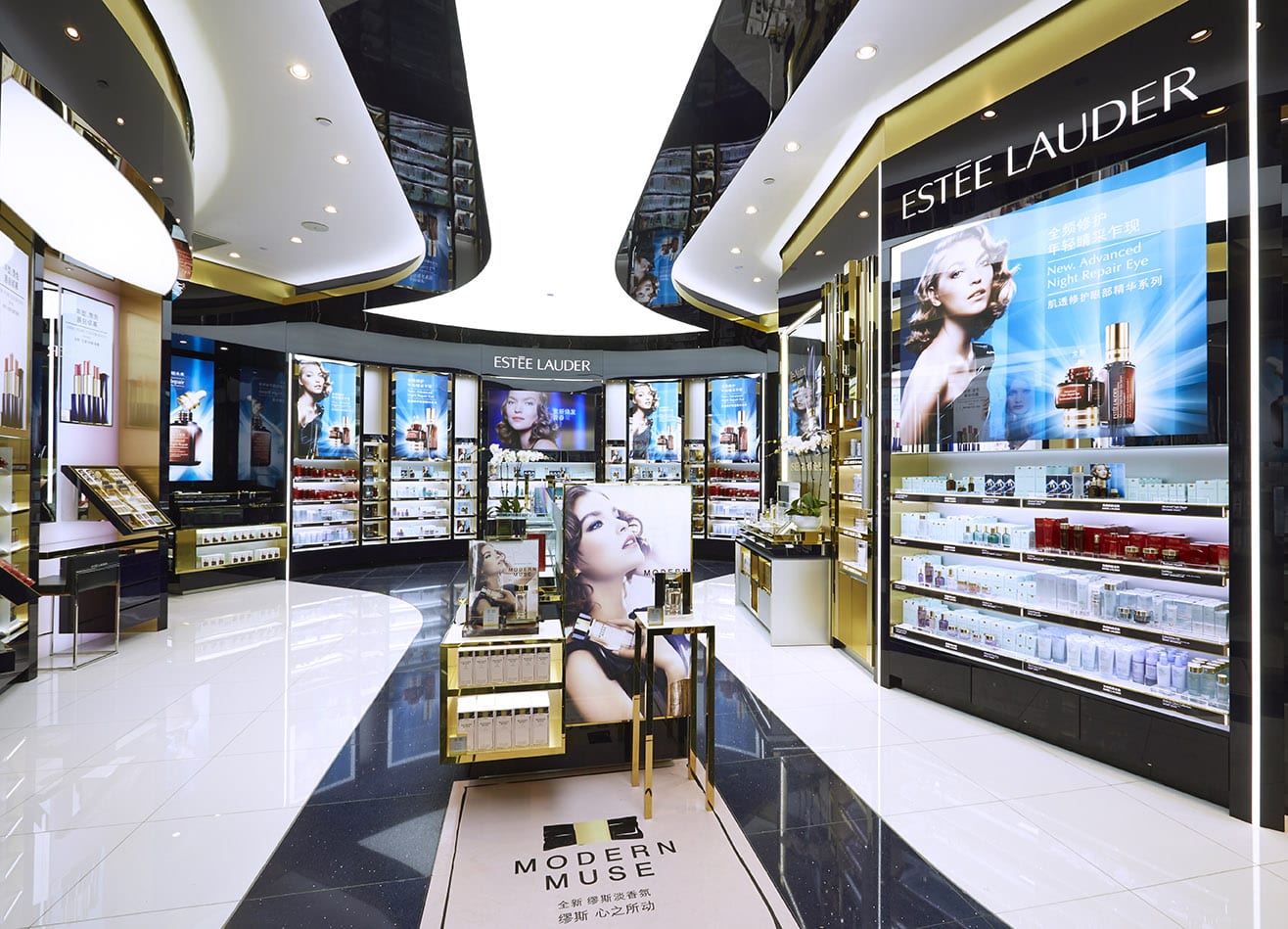
    Led by double-digit growth in China and Hong Kong, Asia/Pacific sales increased sharply for Estee Lauder Companies for its first quarter to the end of September.

    It says the higher sales in China reflected strong gains for every brand except designer fragrances. Estee Lauder, Mac, La Mer, Tom Ford and Jo Malone led the sales growth.

    Sales benefitted, in part, from continued demand for makeup products, an acceleration in skincare sales and targeted expansion of consumer reach.

    Hong Kong’s increased sales reflected solid domestic growth and a rise in tourism. Growth was primarily driven by Estée Lauder, La Mer and Mac.

    Operating performance was lower in Japan.

    Overall, the company achieved net sales of $3.27 billion, up 14 per cent on the same period last year.

    Incremental sales from the company’s acquisitions of Becca and Too Faced contributed about four points of reported sales growth. Net earnings rose 45 per cent to $427 million.

    “Building on the global momentum of the past fiscal year, we benefitted from continued acceleration in China, Hong Kong, travel retail and global online, strength in several developed and emerging markets in Europe, and incremental sales from Becca and Too Faced,” says president/CEO Fabrizio Freda.

    “Our online and travel-retail channels and most luxury and mid-sized brands posted double-digit sales gains.”

  • SingPost to invest S$16 mil in island-wide Smart Post Office network

    SingPost to invest S$16 mil in island-wide Smart Post Office network

    The redeveloped SingPost Centre in Paya Lebar was officially launched on Monday (Oct 9) with the first “smart” post office and a new FairPrice supermarket that will serve as a testing ground for new initiatives in retail technology.

    Located next to the Paya Lebar MRT station, the centre houses a shopping centre, the country’s largest post office and SingPost’s flagship Philatelic Store.

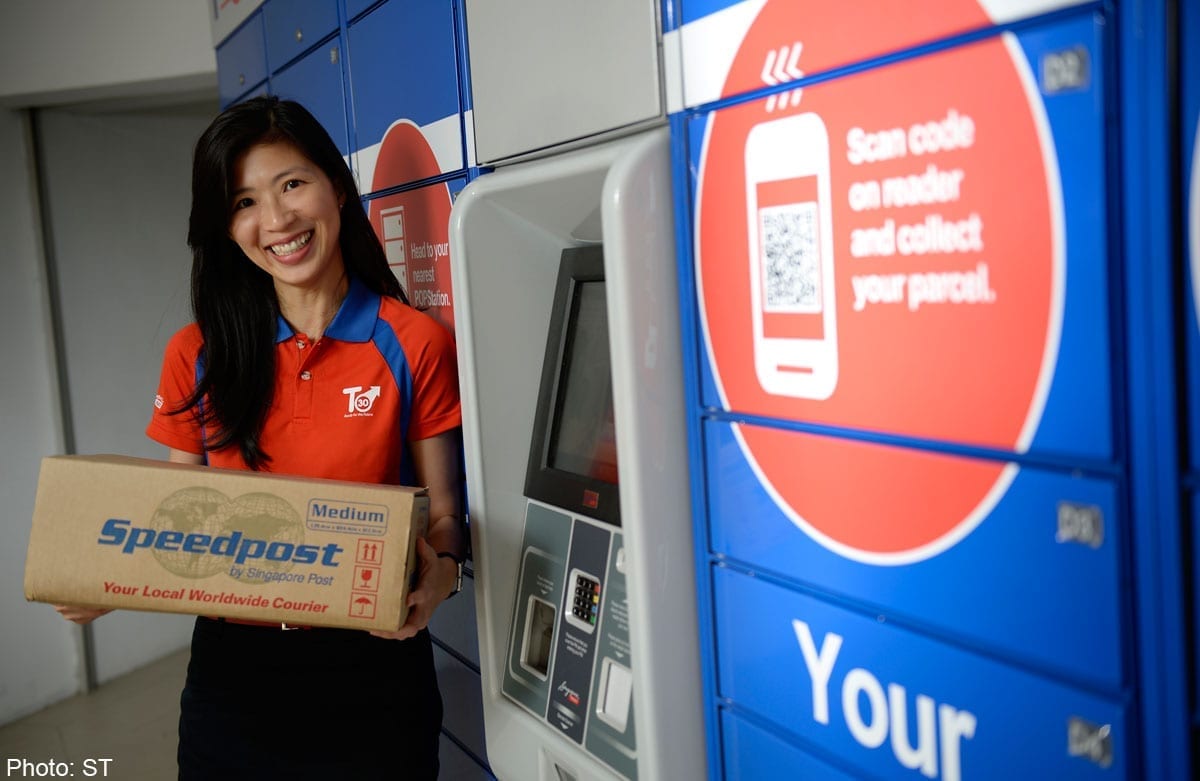
    The 5,328 sq ft General Post Office is the first of SingPost’s smart post offices, featuring a dedicated self-service area with POPStation lockers, upgraded SAM machines offering remittance and other postal services and a drop box for registered articles, accessible at all hours.

    The new drop box allows customers to skip the queue by weighing their parcels and printing labels at the SAM machines before depositing them, said SingPost head of post office network and digital services Bernard Leong.

    Unmanned smart post offices will be rolled out in estates with young families, such as Punggol and Sengkang, in the next one to two years, he added.

    Mr Mervyn Lim, SingPost’s deputy group chief executive (corporate services), said: “The launch of SingPost Centre underscores SingPost’s transformation for a future where technology is changing how people shop, dine and play.”

    The mall’s committed occupancy rate as at Sept 30 was about 80 per cent, he added.

    The five-storey mall, managed by CapitaLand, has 130 tenants including Golden Village, FairPrice, a Kopitiam foodcourt and a rock-climbing gym.

    Apart from bubble tea chain Gong Cha’s return to Singapore later this year (2017) with its flagship outlet in the mall, other new F&B concepts include a food hall designed to look like the old Tanjong Pagar Railway Station and Taiwanese hotpot chain Upot.

    FairPrice’s 22,000 sq ft supermarket, also launched on Monday, is piloting several new initiatives, including the FairPrice@SingPost mobile app that allows customers to locate products with in-store navigation and check stock availability.

    The app, available for download on Apple and Android app stores, also gathers data on shopping habits to deliver user-specific promotions.

    The store will integrate the Scan2Go system currently in use at its Bukit Timah Plaza outlet, where customers can scan purchases with a personal handheld scanner as they shop and pay at self-checkout counters.

    It is also the first supermarket to feature self-checkout counters that can be converted to cashier-assisted ones in under a minute, to accommodate crowd sizes.

    Refrigerated lockers will be piloted at the SingPost Centre branch for the self-collection of online purchases, while an “experiential corner” in the store will allow brands to engage customers using augmented and virtual reality, digital games and interactive booths.

    Speaking at the launch, FairPrice chief executive Seah Kian Peng said: “This technology-driven supermarket will serve as a “living lab” to pilot new and innovative retail technologies, designed to revolutionise the grocery shopping experience.”

  • Singles’ Day sales set to soar

    Singles’ Day sales set to soar

    Worldpay, a global leader in payments, is predicting another record-breaking China Singles’ Day for businesses around the world, as the eCommerce extravaganza goes global.

    New data from Worldpay reveals that last year’s event grew by 39% globally1, with sales outstripping Black Friday by 137%.2 Online shopping activities peaked at 17.24 GMT3, at which point Worldpay was processing 44,505 payments per minute.

    The payments processor is expecting 11 November to make history again this year, as more and more international brands opt to participate in the shopping festival.

    According to Worldpay, retailers in Australia and Hong Kong are seeing the fastest growth, with sales rising by 105% and 71% respectively year-on-year.4

    Although the volume of sales has plateaued in mainland China, the average spend per purchase continues to rise, at a rate of 9%,5 as more and more shoppers tend to splurge on big ticket-items.

    Worldpay’s transaction data supports recent findings from the Global eCommerce Leaders Forum (GELF), which revealed the rise in consumer spending power in China is translating into growing sales on international eCommerce sites, as more Chinese shoppers than ever before are seeking genuine products from cherished global brands.

    Phil Pomford, General Manager for Asia Pacific at Worldpay said: “Since its inception as a local celebration of singledom, Singles’ Day has risen to become the world’s top grossing-online shopping holiday, and the event knows no boundaries. Our data reveals how fast Singles’ Day is growing internationally, so for international businesses looking to break into the huge Chinese eCommerce market, 11 November should be an important landmark in the calendar year.

    “To turn browsers into buyers, it is essential to tailor the online shopping experience to local tastes. For Chinese consumers, this means focusing on your mobile proposition. Shoppers expect to use their preferred payment option – increasingly e-wallets like Alipay and WeChat Pay – and merchants should offer a cutting edge checkout experience to attract tech savvy consumers.”

  • ShopBack unveils close to USD40M in funding

    ShopBack unveils close to USD40M in funding

    ShopBack the one-stop lifestyle portal that powers smarter purchase decisions, raised USD25M in its latest funding round, bringing the company’s total funding raised to date close to USD40M. The round was led by Credit Saison, the largest credit card and retail finance company in Japan. More than 10 institutional investors participated in the round, including new investors Blue Sky and Intouch Holdings PLC, as well as existing investors SoftBank Ventures Korea, Singtel Innov8, Qualgro and East Ventures.

    “Cashback served as the cornerstone for ShopBack’s establishment in Malaysia and laid the foundation for us to build smarter shopping solutions,” said Alvin Gill, ShopBack Malaysia’s Country General Manager, “Living up to our value proposition as ‘The Smarter Way’, we have recently added service aggregation features for the rides to simplify purchase decisions for our users. We strive to become the one-stop shopping and lifestyle portal for every Malaysian.”

    Today, ShopBack powers close to 1,000 orders per hour, with an annualised sales figure of over USD300M for more than 1,300 partner merchants across the online retail, travel and lifestyle verticals. Over three and half million consumers across six countries in the Asia Pacific have signed up with ShopBack since the company’s inception in 2014.

    “ShopBack’s business model builds on the explosive growth of ecommerce in the Asia Pacific to drive tangible value for its users and cost-efficient sales generation for its partner merchants,” said Sean Lee, Partner of SoftBank Ventures Korea, “The model enables ShopBack to leverage user insights across shopping categories and develop smarter shopping solutions such as cross-category recommendations.”

    “The ShopBack team has demonstrated the ability to build a pool of loyal users in a sustainable and scalable manner, which is the backbone of all successful businesses. We have high confidence that the team is able to deliver on their vision in the region, hence the follow-on 18 months after our initial investment,” said Sean

    The three-year-old start-up previously disclosed two seed funding rounds totaling to over USD1M. This latest round of funding will be used to drive three key areas of development – acquiring world-class talent, launching new product features and establishing market leadership.

    Talent is key to long term success

     According to Heang Chhor, Managing Partner of Qualgro, “ShopBack consistently meets our high bar for delivering very strong growth. It has demonstrated exceptional ability to adapt and execute fast in very different markets across Southeast Asia. This rests on an innovative and fast-moving talent pool, that ShopBack has been able to attract, grow and motivate.”

    “Speed and results-orientation are key in the region, and ShopBack’s mantra of “Fail fast, learn fast and iterate faster”, has seen them rapidly become a regional platform for ‘The Smarter Way’ to shop online.”

    ShopBack’s presence in six countries is driven by a team of more than 130 people. The management team hails from ecommerce and technology background with experience in scaling companies across the region, including Alvin Gill who was previously the Chief of Staff to the CEO at ZEAL Network, a publicly-listed online lottery company with revenues in excess of EUR100M per annum.

    Prior to ZEAL Network, Alvin was in the investment banking industry before joining ZALORA Malaysia. He led the Buying Division and contributed, for the categories he controlled, a significant revenue growth towards the business. His experience and knowledge in Business Intelligence helped the company solve and streamline multiple operational challenges during his tenure.

    Proven product-market fit laid foundation for ShopBack’s regional growth

    ShopBack’s core business model is built on a strong foundation of multiple experimentations and iterations. It transformed from a one-day flash sale site to a perennial Cashback platform which enables it to deliver value to customers and partner merchants all year round.

    “We have witnessed ShopBack’s growth journey and the founders’ dedication to the business from the early days,” said Edgar Hardless, Chief Executive Officer of Singtel Innov8. “With the flourishing e-commerce market in the region, we believe ShopBack is strongly positioned to realise their regional growth aspirations.”

    ShopBack believes rapid and effective localisation is critical for players operating in a fragmented region like the Asia Pacific. While its core service offering remains the same across geographies, different marketing and product strategies are adopted to better address the needs of customers in each market.

     “This new round of funding leads to the start of the year-end shopping festival, with the nearest being Alibaba’s 11.11 Singles’ Day. Our customised marketing approach has efficiently lifted the awareness level for Taobao, Tmall, and AliExpress in Malaysia, which resulted in a 400% increase in orders during 2016’s 11.11 Singles Day compared to 2015. We look forward to upscale the performance this year with an impactful campaign including up to 50% cash rewards and special rebates for our users,” added Alvin.

  • UnionPay Records Strong Growth in Spending by Cardholders During Singapore Golden Week 2017

    UnionPay Records Strong Growth in Spending by Cardholders During Singapore Golden Week 2017

    UnionPay, the Official Payment Card for Singapore Golden Week (SGW), revealed that total spending by UnionPay Cardholders in Singapore grew 40 percent year-on-year during the 17-day-long event held from 29 September to 15 October 2017. The growth was contributed by a surge in UnionPay card usage by locals and tourists during the SGW 2017 period, and boosted by the increase in participation by merchants and consumers in this year’s SGW.

    Into its second edition this year, SGW is a lifestyle event designed to bring fresh new experiences to local consumers and tourists as part of Singapore Retailers Association’s (SRA) efforts to inject vibrancy into the local retail scene. This year, SGW presented a wider range of golden privileges – featuring offers at over 300 participating merchant outlets island wide, up from the 200 participating merchant outlets last year. Shoppers also enjoyed better golden rewards – in the form of shopping e-Coupons redeemable on SRA’s GoSpree mobile app worth a total of S$25,000, up from S$10,000 last year; as well as golden experiences – with over 1,100 complimentary golden taxi rides made available for the public over the three SGW 2017 weekends.

    Following the close of SGW 2017 on 15 October, UnionPay revealed that spending by UnionPay Cardholders during the event grew 40 percent year-on-year, spurred by broad increases in spending across luxury goods, department stores, supermarkets, duty-free goods and food & beverage categories. Total spending by local UnionPay Cardholders in particular during the SGW 2017 period also doubled year-on-year, driven by growth in spending in fashion, supermarkets and food & beverage categories.

    “With a bigger and better Singapore Golden Week this year, we are delighted to see positive growth in spending by UnionPay Cardholders across the board. We received very positive feedback on SGW from customers and non-customers alike, some even complimented us on Facebook. Our local and overseas Cardholders gave their stamp of approval for SGW via strong spending – all in all we are delighted that this year’s event appealed to a broader range of consumers from different walks of life. UnionPay’s payment products and services have been gaining momentum through our participation in the Great Singapore Sale and Singapore Golden Week, and this will spur us on to continue rolling out programmes that delight our customers, as well as consumers in Singapore,” said Mr. Wenhui Yang, General Manager of UnionPay International Southeast Asia.

    “We are happy to see the expansion of SGW’s appeal to both locals and tourists this year. During the SGW 2017 period, SRA’s GoSpree mobile app gained more than 1,500 new members, bringing the total number of GoSpree members to more than 33,000 to date. We also saw a 15 percent increase in downloads of the GoSpree app from Chinese tourists, with over 1,300 e-Coupons redeemed during SGW 2017. As we continue to improve on the event, we hope to see more locals and tourists be part of the Singapore Golden Week festivities,” said Ms. Rose Tong, Executive Director of Singapore Retailers Association.

  • Michael Kors Asia sales down with 30 per cent

    Michael Kors Asia sales down with 30 per cent

    Michael Kors Asia sales soared 30.4 per cent in the second quarter as the US luxury fashion company continued to progress its Runway 2020 strategic growth plan.

    Sales in Asia – the group’s fastest-growing market, totalled US$124 million, up 33.5 per cent when measured on a constant currency basis.

    Globally, sales rose a more modest 5.4 per cent to $1.15 billion and earnings rose 37 per cent in the quarter to September 30.

    “This is a transformative time for Michael Kors Holdings Limited as we established our global fashion luxury group with the recently completed acquisition of Jimmy Choo,” observed John D Idol, the company’s chairman and CEO, said.

    “We believe that bringing together these two iconic brands further strengthens our growth opportunities, increases our product and geographic diversification, and importantly, creates a platform for future acquisitions. We look forward to capitalising on the great opportunities that lay ahead for our brands and believe that we are well positioned to drive long term growth as we expand our global fashion luxury group.”

    Idol said the results were better than expected, crediting the Runway 2020 strategy aimed at being more innovative in product, brand engagement and customer experience.

    Analysts seemed to agree: “Michael Kors has been on a long journey of reinvention, but these latest numbers suggest the brand is starting to reach its destination of re-establishing itself as a well-regarded premium player,” said Neil Saunders, MD of GlobalData Retail.

    “The sales line bears witness to this, with revenue in most regions and divisions up over the prior year. Perhaps this isn’t surprising given the very soft comparatives from 2016, but this is the first time in over a year that sales in the Americas, for example, have grown – proof the company is clawing back some of the ground it has lost.”

    Michael Kors’ turnaround has been in part spurred by an expanded product offer, with the new autumn season offer up by 40 per cent. The company says it delivered higher average unit retail sales across multiple categories through innovative fashion and reduced discounting and promotional activity.

    Footwear sales rose in double-digit figures. Social media engagement grew to more than 38 million followers and e-commerce sales improved, especially in Asia, North America and Europe. During the quarter, the brand opened a net 56 new stores, driving its direct retail sales up by 8 per cent.

    In China, Michael Kors’ image was boosted by the appointment of actress Yang Mi as its first brand ambassador. She is considered one of the most influential trendsetters in China.

    Not catching Coach just yet

    While impressed with the improvement, Saunders believes the process of rebuilding is gradual, and Michael Kors is not yet achieving the kind of momentum from which Coach is benefitting.

    “The same-store sales numbers hint at this, as while the -1.8 per cent decline is better than in previous quarters, it underlines the fact that Michael Kors still fails to pull in custom.

    “One of the reasons for this is that Michael Kors is much more directional than a brand like Coach and, as such, its appeal is not as wide. The latest fall and winter collections are a case in point. While these contain some staple items like the Mercer handbag with its classic silhouette, they also feature edgy products like floral lace dresses and studded bomber jackets aimed at a more particular type of customer,” said Saunders.

    “This targeting is not wrong. Indeed, it is what a good brand needs to do. However, it limits growth and means that Michael Kors likely has more difficulty in connecting with customers across the US in a way that more middle-of-the-road Coach does not. That said, as Michael Kors widens its product range and becomes more of a lifestyle brand, we expect it to pick up more custom from consumers who will shop around the edges of the offer. This will help trade as the firm moves into 2018.”

    Saunders said the addition of Jimmy Choo to the Michael Kors empire should add around $105 million of incremental revenue to the next quarter’s sales line.

    “As useful as this near-term benefit is, it is the longer-term objectives for the iconic shoe brand that are most interesting. Michael Kors has a difficult balancing act between trying to expand its new addition and retain the exclusivity that is at the heart of its success. The aim of moving to $1 billion of revenue suggests an aggressive push to open new stores and expand e-commerce.”

    He said that strategically, the decision to buy Jimmy Choo and its latest Michael Kors collections suggest the company is looking to move into a more exclusive and distinct part of the luxury market.

    “As much as we support this tactic, we caution that it means progress will remain slower than at other brands and that it will ultimately limit the size of the business.”