Tag: asia

  • Blockchain technology impact stretches way beyond Bitcoin

    Blockchain technology impact stretches way beyond Bitcoin

    Blockchain technology – the foundation beneath Bitcoin – has “immense potential to disrupt and transform the world of money, business, and society” in the years ahead.

    The technology tops a new list of IT projections from Dimension Data, which also cites artificial intelligence, machine learning, robotics, and virtual and augmented reality as having the greatest potential to deliver disruptive outcomes and reshape digital business next year.

    “Companies that have not started the digital investment cycle are at high risk of being disrupted,” says Dimension Data Group CTO, Ettienne Reinecke.

    Blockchain, he says, has gone from strength to strength.

    “Last year, when we looked at the top digital business trends for 2017, we predicted that centralised transaction models would come under attack. We were spot on. In the financial services sector, we’ve seen the US and European capital markets moving onto Blockchain platforms, and similar activity in markets such as Japan. Considering how conservative and compliance-focused this sector is, that’s quite remarkable.

    “It’s ironic that the cybercriminals who perpetrated the recent WannaCry ransomware attack could hold a federal government to ransom and demand to be paid in Bitcoin. Bitcoin might be a crypto-currency, but it’s based on Blockchain, and if cybercriminals are confident that Bitcoin provides a safe mechanism for the payment of ransoms, it indicates just how secure the distributed ledger approach is. I believe that Blockchain has the potential to totally re-engineer cybersecurity, but the industry has yet to come to terms with it,” says Reinecke.

    He predicts Blockchain will also deliver on the promise of Internet of Things (IoT) in the year ahead.  “In the world of IoT you’re generating millions of small transactions that are being collected from a distributed set of sensors. It’s not feasible to operate these systems using a centralised transactional model: it’s too slow, expensive, and exclusive. To extract the true value from IoT technology you have to be able to operate in real time. Once a sensor alert is received from a control system you must react to it, meter it, and bill for it instantly – all of which negates the viability of a centralised transactional authority. The cost of the transaction has to be near-zero or free, and the cost elements of a centralised model simply don’t support the potential business model in IoT,” he explains.

    In 2018, some interesting applications of Blockchain and IoT in the area of cybersecurity will emerge. Significant attacks have recently been launched from low-cost IoT endpoints, and there’s very little incentive for manufacturers of these devices to incur the cost of a security stack, which leaves them extremely vulnerable. Blockchain can play a fundamental role in securing these environments.

    Wireless feeds IoT

    Another exciting trend to look forward to is the boom in new wireless technologies that will enable IoT and bring us a step closer to the dream of pervasive connectivity. Some of these advancements will include 5G and Gbps Wi-Fi, new controls, virtual beacon technology, and low power, long distance radio frequency.

    There’s also a “digital fight-back” coming on the part of certain incumbent players. Established businesses that have proactively transformed into digital businesses, modernised their architectures, and embedded high levels of automation into their operations have a window of opportunity to claw back market share in the year ahead. That’s because there’s been an increase in the number of cloud-born start-ups themselves starting to be disrupted in certain industries.

    “I predict that a number of digitally transformed incumbents will successfully start reclaiming their markets because they have more credibility, longer histories, an established customer base, and assets that can stand the test of time,” says Reinecke.

    Andy Cocks, CTO for Dimension Data Asia Pacific, concurs with Reinecke and adds: “Blockchain has immense potential to disrupt and transform the world of money, business, and society. But, it is the companies that have not started the digital investment cycle which are at the highest risk of being disrupted.”

  • Aerin Beauty introducing its fragrances

    Aerin Beauty introducing its fragrances

    Lifestyle brand Aerin Beauty has arrived in Singapore, introducing its fragrance collection at The Shoppes at Marina Bay Sands.

    Founded by Aerin Lauder, a granddaughter of Estee Lauder, the brand also has beauty and home decor products, which may be introduced later.

    There are nine scents in the collection, each available as eau de parfum sprays or rollerball bottles as well as body creams.

    Each bottle has been designed drawing inspiration from the founder’s everyday life and featuring natural elements such as flowers and stones.

  • Tigers to pioneer same day bicycle deliveries for online fashion brand holymesh

    Tigers to pioneer same day bicycle deliveries for online fashion brand holymesh

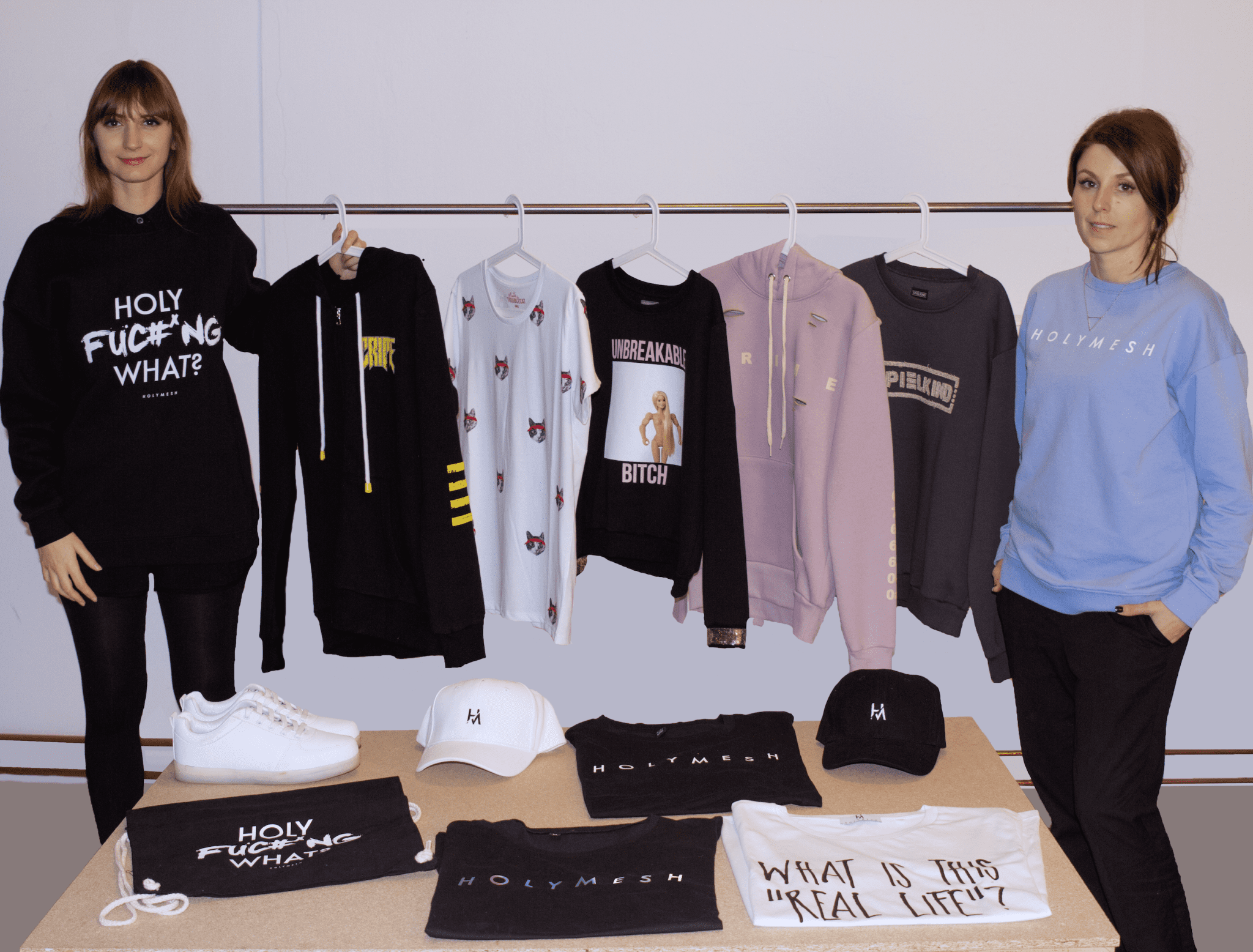
    Tigers Germany has won the exclusive contract for online start-up fashion brand HOLYMESH in Germany, Austria, and Switzerland.

    The Hong Kong-headquartered supply chain specialist has doubled its Cologne e-commerce fulfilment complex to support HOLYMESH, a favourite with German YouTube influencers.

    Tigers Germany will pioneer a new same day delivery service, initially in Cologne, in order to introduce an efficient, green final mile solution.

    “We are supporting HOLYMESH with both B2B and B2C solutions, including shipping from their production centres in Italy and China, as well as developing bespoke packaging solutions and fulfiling quality controls both at shipping and on arrival at our facility,” said Andreas Niklasch, Managing Director, Germany and Switzerland, Tigers Germany.

    “Each B2C package is a bespoke undertaking, from cardboard packing and label taping, to adding the respective documents, such as autographs from YouTube influencers, and other promotional material.”

    Tigers handles sorting and checking into stock for HOLYMESH, storage, Electronic Data Interchange (EDI) order transfers, in addition to processing returns, quality check Web Map Service (WMS) data maintenance, repacking and relabelling.

    HOLYMESH famously partners with YouTube influencers in Germany to exclusively develop, produce, and distribute clothing and accessories collections.

    “Tigers is a flexible and innovative logistics partner, providing us with the support we need to optimise processes, as our company continues to grow, and the influencer business continues to change rapidly,” said Jasmina Borgard, Managing Director, HOLYMESH.

    Tigers Cologne’s team of 20 has over 100 years’ industry experience, including expertise in e-commerce for fashion brands.

    “Our Cologne e-commerce fulfilment center has doubled in space in less than a year due to increasing demand,” added Niklasch.

    “We offer high flexibility, processing between 200 and 1,500 orders daily, in addition to a dedicated customer service to provide solutions further tailored to each of our customers.”

    “We are planning to launch a same day bicycle delivery service in Cologne, further boosting our offerings.”

    Tigers Germany works with a wide range of industries, including fashion, automotive, industrial goods, pharmaceuticals, and chemicals.

    Tigers recently launched a new rail freight service, Tiger Rail, on the new Silk Road, offering customers a 16-day transit time both east and westbound, between Duisburg, Germany, and Hefei, Chongqing, and Chengdu, China.

  • Tesla cuts Model 3 part orders to Taiwan supplier Hota

    Tesla cuts Model 3 part orders to Taiwan supplier Hota

    Luxury electric carmaker Tesla plans to slash by 40 percent its orders for parts for the new Model 3 mass-market sedan from Taiwanese auto component maker Hota Industrial Mfg from December, according to a media report.

    Shares of the parts maker dropped nearly 9 percent after the Economic Daily News reported, citing Hota Chairman Shen Kuo-jung, that Tesla had told the firm orders would be cut to 3,000 sets per week from 5,000 sets starting December, due to a “bottleneck” in the production of Model 3.

    Tesla may delay scheduled weekly shipments of 10,000 parts in March by a few weeks until May or June, the report added.

    Hota, which makes gears and axles for vehicles, and Tesla did not immediately respond to a request for comment.

    Earlier this month, Tesla said production bottlenecks had left the company behind its planned ramp-up for the new Model 3 sedan. It began production of the model in July.

  • Phee Group brings logistics solutions to Myanmar’s shores

    Phee Group brings logistics solutions to Myanmar’s shores

    Singapore-based, multinational shipping and logistics pioneer, Phee Group, has established Phee Central, a 60,000 square feet logistics centre in Myanmar to cater to a diverse array of logistics needs from businesses in the growing market. It is breaking into this new business segment after having specialised in freight forwarding for over 24 years in Myanmar. This was done with the support of International Enterprise (IE) Singapore, government agency promoting international trade and partnering Singapore companies to go global.

    An investment of US$5 million, the ISO 9001: 2015 and HACCP and GMP certified Phee Central, a multi-temperature storage facility, is situated a mere 25 kilometres from the BSW, MIP and AWP ports and less than 25 kilometres from Yangon International Airport.

    The facility serves a valuable logistics function with the potential to greatly optimise supply chains. Built on 3.2 acres of elevated ground with an around-the-clock security system, Phee Central is equipped with high capacity backup generators to provide an uninterrupted power supply. It is the first of its kind to support a state-of-the-art column-free design that maximises capacity and improves efficiency.

    Phee Central distinguishes itself through delivering a higher standard of reliability matched by advanced technologies. Its Warehouse Management System (WMS) relays live updates of inventory statuses for each client’s warehouse activities. This data is accessible in real-time via web-enabled storage technology, ensuring both reliability and accuracy. Other value-added services include contract logistics, freight consolidation, carrier management, customs brokerage and trade compliance management.

    Ben Phee, group managing director of OV Logistics and Phee Group, said, “It has always been our aspiration to provide a more extensive array of services that offer a peace-of-mind to our clients. With Phee Central, we are not only able to achieve this, we are also able to reduce the wastage of resources and materials due to inadequate storage. Coupled with our temperature-controlled delivery system, we are confident in delivering highly reliable all-rounded logistics solutions for our clients.

    Above all, Phee Central illustrates our commitment to serve the Singapore and Myanmar community. On this note, we are honoured to be recognised by the respective Myanmar authorities for our professional experience and contribution to this country and supported by IE Singapore to realise our commitment of investing and expanding in Myanmar possible more rapidly.”

    Phee Group has been working with IE Singapore on its expansion strategy in Myanmar. Its entry into specialised logistics solutions is timely as Myanmar’s economic reforms and rising middle class have attracted many foreign investments in various sectors of the economy, including food and beverage, hospitality and pharmaceutical equipment and medicines. This brings demand for specialised supply chain solutions such as temperature controlled logistics facilities. As the local logistics infrastructure is still in nascent stage, demand for such services presents opportunities for Singapore logistics companies. Phee Group has risen to bridge the market gaps with its new warehouse, Phee Central.

    Said Law Chung Ming, group director of Transport & Logistics Group for IE Singapore, “It is important for Singapore companies to constantly transform themselves to capture opportunities in fast-growing regional markets such as Myanmar. Having established in Myanmar for over 20 years, Phee has built a firm understanding of the market needs, putting it in a good position to provide specialised cold chain logistics solutions. To build their business in Myanmar, we worked with the company to develop Singaporean talents with specific, customised skill sets in specialised logistics and market-readiness.”

    IE Singapore supported Phee Group by developing a manpower strategy to improving its recruitment, training and retention processes for its operations at Phee Central warehouse. This included market attachments to help their new employees better understand the environment and the cold chain business landscape in Myanmar. Through IE’s support, Phee Group is able to achieve greater regional growth and expansion.

    Headquartered in Singapore, Phee Group crafts unique integrated logistics solutions and practices that are thorough and reliable. Benchmarked to meet the conditions of the Myanmar marketplace, they also effectively resolve complex operations in a simple manner.

    Phee is also looking to partner Singaporean companies to tap onto its logistics solutions, as well as share its insights and networks in the ASEAN market which it has operated in for over two decades.

  • Paul & Shark sportswear opens Elements flagship

    Paul & Shark sportswear opens Elements flagship

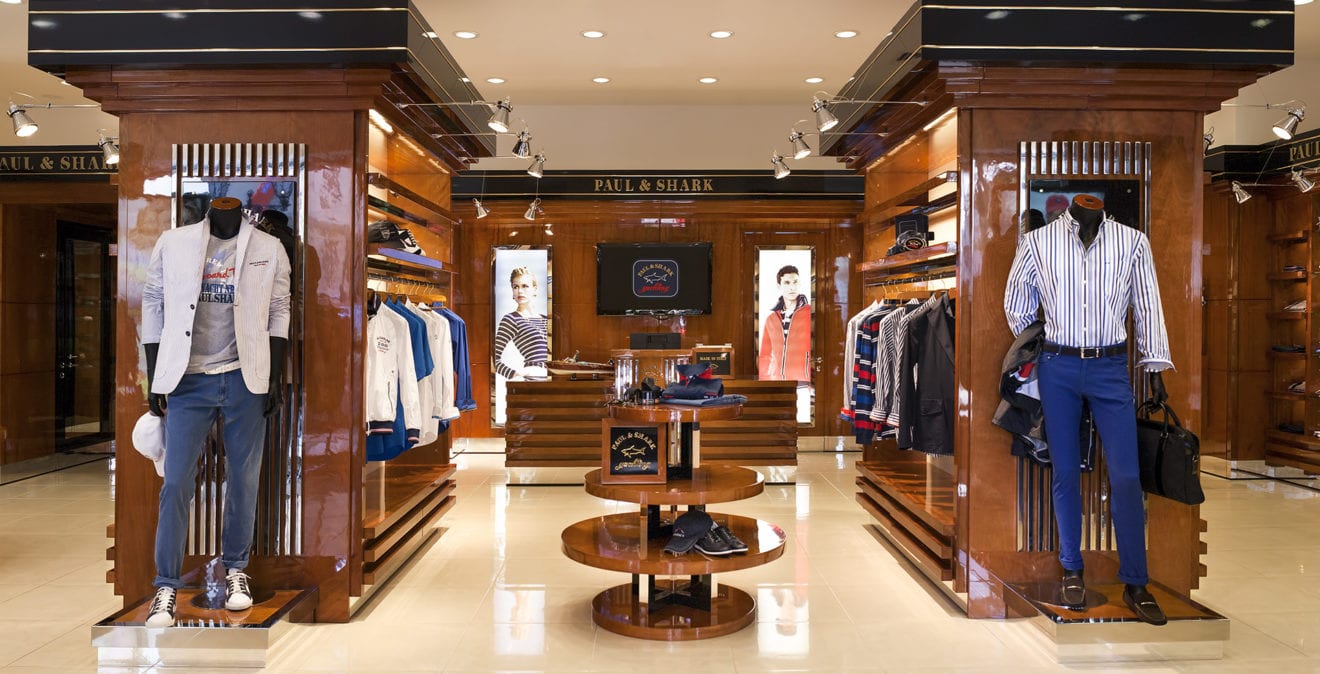
    Paul & Shark sportswear has taken more than year to reach the city after landing at Hong Kong International Airport with a boutique store.

    Its new a flagship at Elements mall in Tsim Sha Tsui covers 140sqm and features a minimalistic design in white with the brand’s iconic blue using mirrored steel, marble, metal, glass and wood.

    To mark its opening, the brand presented a photo exhibition by Chinese visual artist Chen Man focused on the shark spirit. It will be open until the end of Tuesday.

    A special guest at the official opening was Hong Kong Women’s Federation honorary president Pansy Ho. Paul & Shark is donating a share of the proceeds of sales to support the federation, which supports women’s leadership and gender equality, and protects women’s legal rights.

    Paul & Shark was founded in 1975 and is distributed in 73 countries and 458 cities, including Singapore.

  • Singapore eyewear market looking at U$400m, says report

    Singapore eyewear market looking at U$400m, says report

    The Singapore eyewear market is expected to reach US$400 million in value in the near future, says a new study.

    The Ken Research report notes amplified demand for premium eyewear brands as consumer awareness grows, with an emphasis on individualisation.

    “The market is transitioning toward a large number of diverse products and short product cycle,” says Singapore Eyewear Market by Type (Spectacles & Contact Lenses), by Sunglasses and Eyeglasses and by Sales Channel – Outlook to 2021.

    Also, the market is set to benefit from a $49 billion merger announced by spectacles maker Luxottica and lens manufacturer Essilor, especially with an expected strong demand for prescription spectacles and sunglasses because of an aging population and increasing awareness about eyecare.

    The research also notes a 1.3 per cent increase in people with myopia. The aging population has also strengthened demand for spectacles to correct presbyopia and for ready-made reading glasses. Presbyopia has increased by 3.3 per cent.

    Despite continuous growth over the past five years, e-commerce has only a meagre share of the Singapore eyewear market, says the study.

    While more than 75 per cent of customers prefer to buy eyewear products at optical shops, higher use of mobile devices and the internet have encouraged major companies to start offering their products online, the latest being Owndays and Zoff.

    The report also provides information on frames, glass, contact lenses and distribution channels as well as major industry players.

  • Miu Miu pop-up lands at Harbour City

    Miu Miu pop-up lands at Harbour City

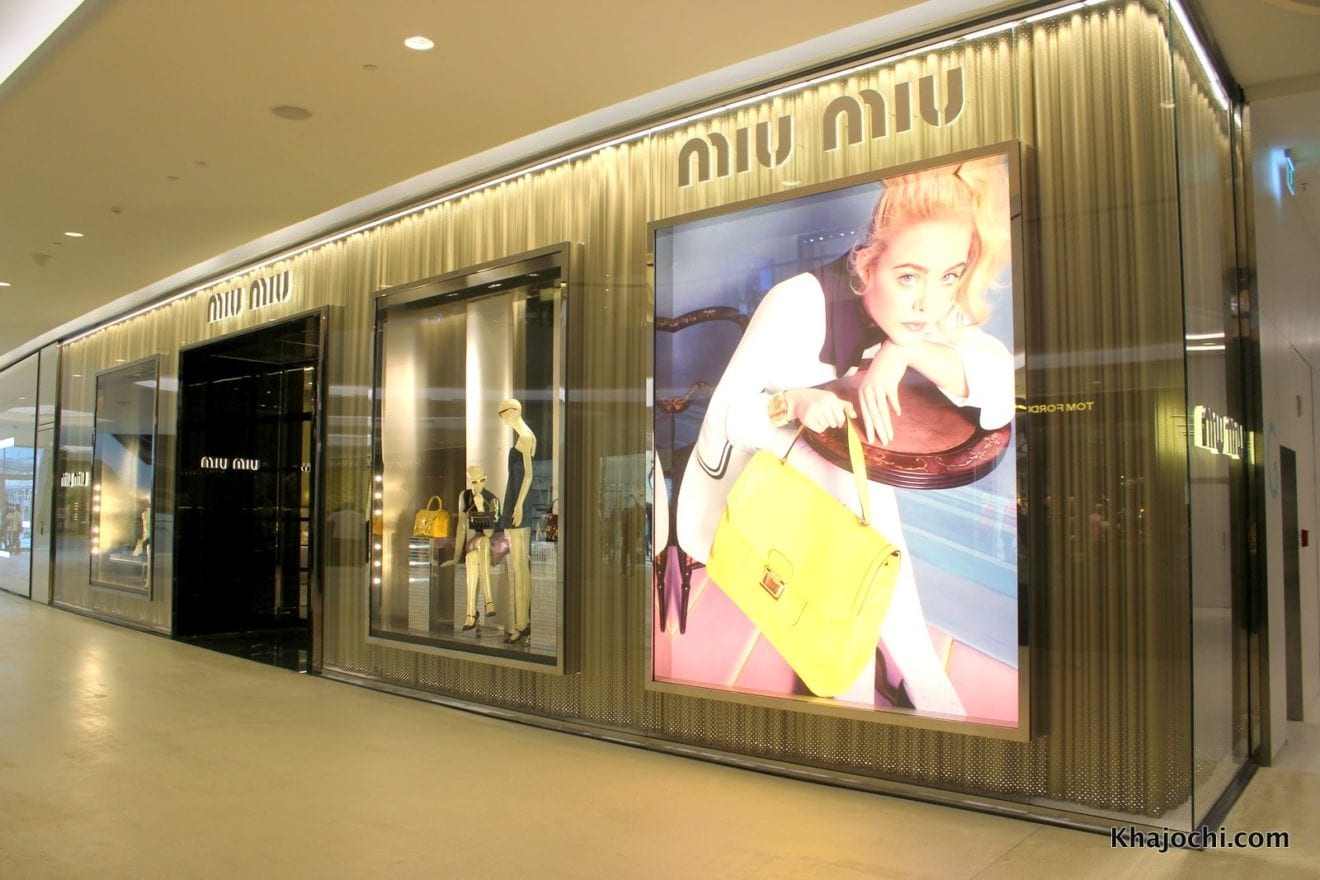
    The Miu Miu Lady pop-up exhibition is in the midst of its Hong Kong stop, part of a global tour.

    At the centre of the Miu Miu pop-up are two giant handbags decorated with the jewel buckle for which the Prada-owned brand is renowned.

    The Hong Kong pop-up is located at Harbour City where it will remain until November, before the installation is packed up and shipped to Macau where it will be erected at Galaxy macau Resort from November 25 to December 10.  Already, the display has run at Kuala Lumpur, Shanghai and Nanjing.

    Readers can watch the time-lapse video of the Miu Miu pop-up being built here.

    In Hong Kong, a limited edition green version of the bag is exclusively available at the pop-up shop.

    Miu Miu hosted a cocktail party to launch the pop-up early this week.

    Besides the oversized bags, the pop-up features a series of short movies portraying the history of the Miu Lady bag.

  • Chinese millennials driving luxury goods sales

    Chinese millennials driving luxury goods sales

    Chinese millennials are driving faster growth than expected for worldwide sales of luxury goods, says consultancy Bain & Co.

    It says there is a thriving demand in China for items such as high-end handbags, shoes and jewellery.

    After stalling in 2016, revenues from personal luxury goods are set to rise 6 per cent at constant exchange rates this year to €262 billion (US$308 billion), Bain forecasts in an annual report compiled with the help of Altagamma, the trade association for Italian luxury brands. Earlier projections were for 2 to 4 per cent growth.

    Already, stronger earnings are being reported by luxury retailers including Brunello Cucinelli and LVMH, which owns Bulgari and Louis Vuitton.

    Bain says retailers’ efforts to connect with younger buyers and to bridge a price divide between Europe and Asia (more expensive) were also paying off.

    “Luxury goods companies have rethought strategies and are now regaining the trust they lost from customers,” says Bain partner Federica Levato, who co-authored the report.

    She says this year’s growth is “healthier”, being driven by a rise in volumes rather than in prices, and is balanced between tourist purchases and local buyers.

    Chinese buyers now make up 32 per cent of the luxury goods market, more than any other nationality, thanks to increased purchases in both their home market and abroad.

    As a whole, the industry could notch up annual growth rates of 4 to 5 per cent until 2020, says the Bain report, with online sales growing steadily and expected to reach a quarter of all sales by 2025, up from the present 9 per cent.

    Millennials already represent a third of the market, with the later “generation Z”, which grew up with smartphones, starting to make a dent in the luxury market, says Bain.

    Brands have been increasingly turning to social media or pairing up with pop stars and influencers, and branching into casualwear and streetwear, with t-shirts, sneakers and denim.

    However, while 65 per cent of luxury firms will grow sales this year, only 35 per cent will manage to increase their operating profit, says the report.

  • Meats eatery offers visual feast as well

    Meats eatery offers visual feast as well

    A focal point of the new Meats eatery in SoHo, described as a “meat bar”, is a custom-made  rotisserie and robata grill.

    Guests can sit in front of the glass-fronted kitchen to watch the chefs as they marinate, grill, roast and carve.

    On Staunton Street, the bar offers casual dining without reservations, offering sharing-style dishes. As well as slow roasting and grilling, its kitchen even prepares smoked meat.

    Brought to Hong Kong by Pirata Group, Meats has warm lighting, eclectic mismatched seating and vintage touches, thanks to Melbourne’s boutique interior design firm Samantha Eades. Exposed raw building materials are offset with European tiles and hand-painted depictions of forest animals on textured walls.

    Head chef Paddy McDermott says the knowledge and science behind preparing meat “almost takes us back to our primal instincts”.

    “I’m fascinated by the skill that goes into knowing how to use the whole animal, respecting unappreciated cuts of meat to create amazing dishes.”

    Each table has tongs, miniature meat cleavers and carving forks for diners. A one-page menu divides the offering into Small, Meats, Sides, Veggies and Sweets.

    Meats dishes that can be seen turning on the rotisserie include rustic Iberian porchetta with crispy crackling and aromatic herbs. Another slow-cooked signature is the chicken, which is salted overnight and basted in its own juices. A feature dish is appropriately titled Chef Give Me Meats!, which includes exclusive items not listed the menu.

    As well as wines, the bar offers bourbons, cocktails and craft beers by the bottle and draught.

    Meats seats up to 78 diners, including discrete corners and casual counter stools.

    Pirata Group, run by Manuel Palacio and Christian Talpo, also has the restaurants Pirata, The Optimist, Pici and TokyoLima.

  • NBN Co to deploy G.fast from 2018

    NBN Co to deploy G.fast from 2018

    Australia’s NBN Co, the state-owned company building the national broadband network, has revealed it will deploy the G.fast copper acceleration technology on its network from 2018.

    The company will adopt G.fast for the fibre-to-the-building and fibre-to-the-curb components of its networks to provide an upgrade path for these users to ultra-fast speeds.

    G.fast and the more advanced XG FAST can accelerate the speeds of VDSL lines to fibre-like speeds. XG FAST can deliver speeds of up to 1Gbps depending on the condition and length of the copper last mile.

    NBN Co said its trials of the technology in 2015 achieved speeds of 600Mbps over a 20 year old stretch of 100 meter coper cabling. But the average age of a copper connection in Australia is 35 years.

    “Adding G.fast to the toolkit for the FTTC and FTTB networks will allow us to deliver ultra-fast services faster and more cost effectively than if we had to deliver them on a full FTTP connection,” NBN Co chief strategy officer JB Rousselot said.

    The NBN project as envisioned by the previous labor government would have delivered FTTP connections to 93% of Australian premises, with fixed wireless and satellite technologies reaching the remaining 7%. But this plan was controversially scrapped by the current government in favor of a multi-technology mix of FTTP, FTTN, FTTC, HFC, fixed wireless and satellite.

    “Our FTTP and HFC end-users already have the technology to support Gigabit services and adding G.fast over FTTC provides the upgrade path for our FTTN end users to ultimately receive Gigabit speeds too,” Rousselot continued.

  • MSY Technology fined for misleading warranties

    MSY Technology fined for misleading warranties

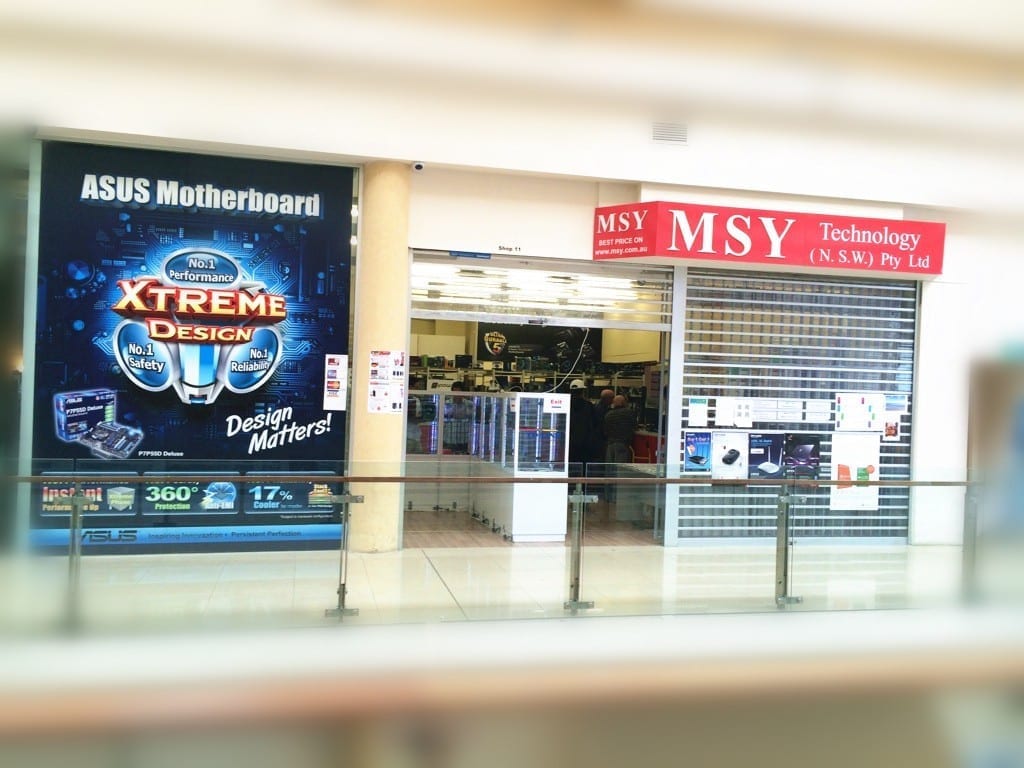
    Consumer electronics retailer, MSY Technology, has been fined $750,000 for misleading warranties.

    The Federal Court has penalised MSY Technology Pty Ltd, MSY Group Pty Ltd, and M.S.Y. Technology (NSW) Pty Ltd (MSY Technology) a total of $750,000 for misrepresenting consumers’ rights to remedies for faulty products.

    The Australian Competition and Consumer Commission (ACCC) took the electronics retailer to court late last year claiming MSY breached the Australian Consumer Law by misrepresenting consumers’ rights to repairs, replacements or refunds when they purchased faulty products.

    “Businesses much ensure their refund and returns policies, and any representations accurately reflect their obligations under consumer law,” said ACCC deputy chair Delia Rickard.

    MSY Technology, which operates 28 retail stores across Australia and online, selling computers, computer parts, accessories and software, admitted that it made false or misleading representations on the MSY website, and in oral and e-mail communications to consumers about their rights.

    “These proceedings and the penalties imposed signal to businesses that the ACCC will not hesitate to take appropriate enforcement action where it identifies misleading representations about consumers’ rights,” Rickard said.

    “This is the second time the ACCC has taken action against MSY entities. The court imposed penalties in 2011 for misleading consumer warranty representations.”

    The Federal Court also made other orders by consent including injunctions, a comprehensive ACL compliance training program, publication orders, and payment of $50,000 towards the ACCC’s costs.

    Following the commencement of proceedings, the ACCC announced MSY Technology made admissions and agreed to joint submissions on liability and relief (including penalty) that were filed with the Court.

  • Singapore named most robust data center market

    Singapore named most robust data center market

    Despite a large amount of supply coming through 2015–2016, the data center market in Singapore continues to lead some of its large neighbors in the Asia-Pacific (APAC) region in a race to the top of data center location rankings.

    According to Cushman & Wakefield’s Data Center Risk Index, Singapore is the most robust market out of 10 Asian countries in terms of business operations for data centers. Out of 10 Asian countries included in the index, Singapore scored 84.50 out of 100, ahead of Korea (83.23), Hong Kong (78.73) and Japan (76.48).

    The Data Center Risk Index identifies the top risks likely to affect data center business operations. It considers such criteria as energy, internet bandwidth, ease of doing business, political stability, natural disaster and energy stability.

    Singapore ranks strongly for network infrastructure, diverse connectivity to major APAC markets, its pro-business environment and political stability.

    Singapore has seen an influx of new data center capacity in the last two years, with an additional 130 MW on top of the existing capacity of 240 MW at the beginning of 2015.

    There has been some price and vacancy pressure, particularly among smaller data center players.

    However, over the medium to long term, Singapore should be able to expand its capacity by another 100 MW on the back of the Smart Nation initiative, as the government pushes for a national digital transformation program.

    Local data center providers such as Singtel, Keppel Data Centres and ST Telemedia stand to be the primary beneficiaries of this, while the international data center providers will continue to focus on winning international deals from medium to large enterprises coming into Singapore.

  • Nike CEO says Undifferentiated, mediocre retailers won’t survive

    Nike CEO says Undifferentiated, mediocre retailers won’t survive

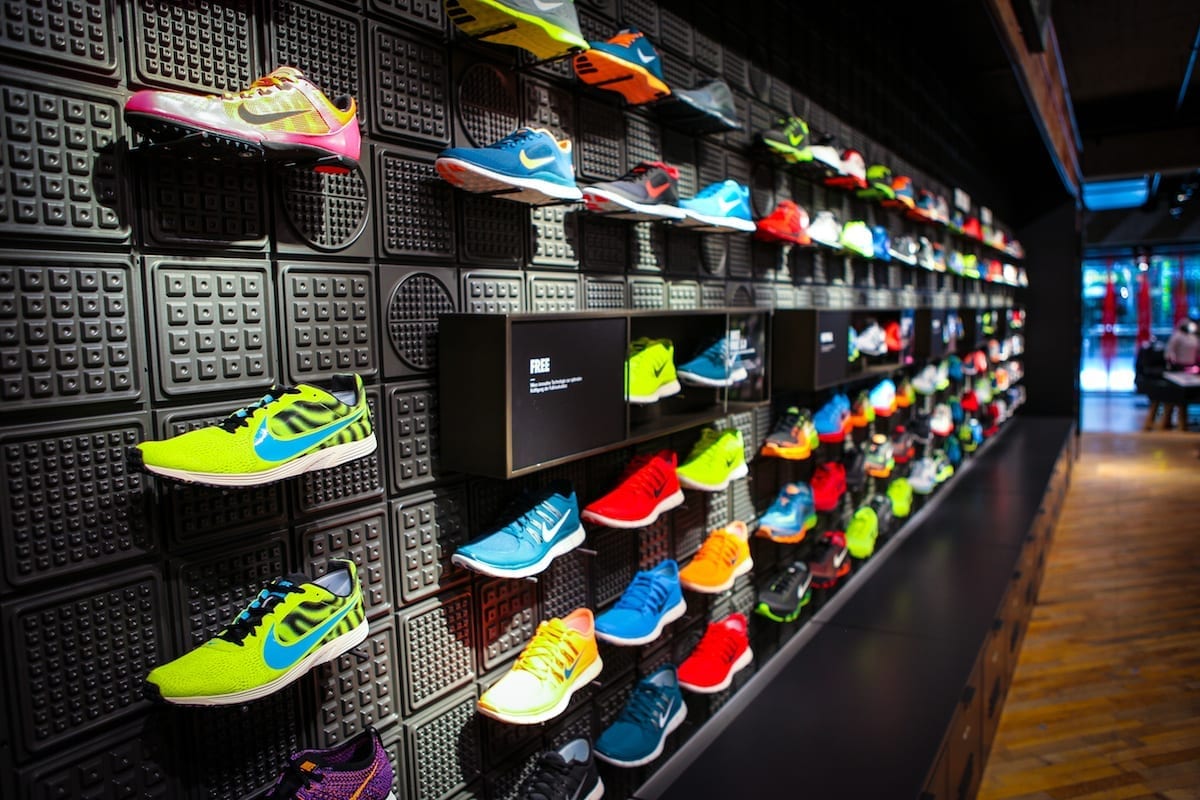
    Sportswear giant Nike has a message for its thousands of retail partners around the world: shape up or ship out.

    Speaking at an investor day in the US yesterday, Nike brand president Trevor Edwards outlined a step-change for the iconic business in the way it deals with its retail partners, saying that “undifferentiated, mediocre retailers won’t survive,” and committing Nike to “moving away from this over the next five years.”

    Nike, which currently has 30,000 retail partners globally, plans to select around 40 “differentiated retailers”, such as Nordstrom, Footlocker and Amazon, for special collaborations and branded space in-stores.

    No-names were mentioned in terms of who might be on the chopping block in the coming years, but the company is drastically stepping up its direct-to-consumer efforts as part of its plan to reach its $50 billion annual sales target by 2020 – a goal set in 2015 that investors have previously expressed scepticism about.

    To service its ambitions Nike laid out a raft of new targets under a “triple double strategy” laid out by chairman, president and CEO Mark Parker.

    “The consumer today expects a premium experience, with innovative product and services delivered faster and more personally,” Parker said. “Fueled by a transformation of our business, we are attacking growth opportunities through innovation, speed and digital to accelerate long-term, sustainable and profitable growth.”

  • M1 launches 10Gbps symmetrical PON

    M1 launches 10Gbps symmetrical PON

    Singapore’s M1 has upgraded and expanded its suite of services for corporate customers, including through the introduction of the world’s first 10Gbps symmetrical passive optical network.

    The new symmetric PON service will allow M1 to provide low-latency 10Gbps symmetrical speeds with guaranteed bitrates across Singapore, for applications including SDN, cloud computing and 4K or 8K video transfers.

    In addition, M1 has introduced a new unified operations monitoring centre to provide real-time information on both network service and public or private cloud IT infrastructure to enterprise customers.

    This will include early warning of impending equipment failure to allow companies to conduct proactive maintenance to rectify potential faults before they occur.

    Finally, M1 has expanded its fiber network to the famous Shenton Way and Orchard Road major streets and the Buona Vista housing estate in Singapore.

    This will allow the operator to offer high-speed corporate connectivity services to more than 55 shopping malls, offices and commercial buildings in those areas.

    “The corporate segment is a key growth sector for M1, and we have accelerated our investments in technology, infrastructure and expertise to better serve our customers,” M1 chief corporate sales and solutions officer Willis Sim said.
    “With the successful launch of our symmetrical PON solution, next-generation unified operations monitoring centre and fibre to the building infrastructure, M1 can offer advance customised high bandwidth connectivity to meet the growing requirements of Internet of Things, smart nation, cloud and big data solutions from our customers.”