Tag: asia

  • More APAC enterprises benefiting from IaaS

    More APAC enterprises benefiting from IaaS

    The proportion of businesses in Asia Pacific reaping the benefits cloud infrastructure services has increased significantly in the last quarter, according to a global survey from Oracle.

    Nearly three quarters of respondents (74%) believe Infrastructure as a Service (IaaS) makes it easier for businesses to innovate, a 9% increase over last quarter. The research also found that 65% of businesses believe IaaS delivers exceptional operational performance in terms of speed and availability, an 18% quarter-over-quarter increase.

    Over half of respondents (61%) found their organization experienced improved productivity from their migration to cloud, while just over half (53%) found their IT teams have greater scope to work on other value-adding projects.

    The study also revealed that two thirds of businesses (67%) believe that companies not investing in IaaS will struggle to keep up with those that are using it. The index also highlighted that moving to IaaS has significantly cut time to deployment of new applications and services and slashed maintenance costs for over two thirds of respondents (70%).

    “The responses clearly show that companies are getting increasing levels of benefit from using cloud infrastructure and it is being felt beyond the domain of the IT department,” commented Chris Chelliah, Oracle’s APAC group VP and chief architect for technology and cloud.

    “These investments are driving significant improvements in productivity and giving organizations the ability to shift resource to projects that make valuable contributions from those that are just keeping the lights on.”

  • Mattress retailer launches in Japan

    Mattress retailer launches in Japan

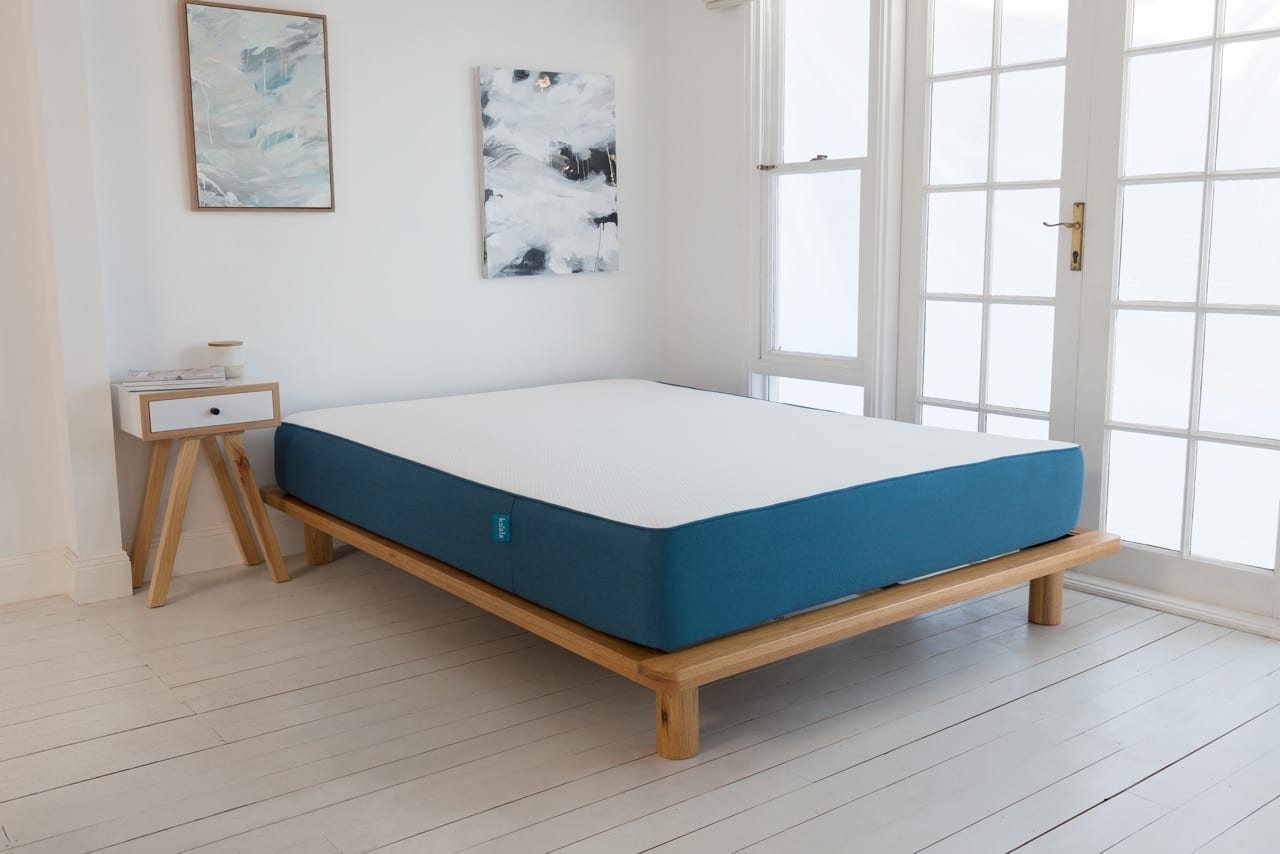
    Online-only mattress company, Koala, is making headway in Asia, with the company recently launching in Japan.

    This brings Koala’s global footprint up to three international markets, following the company’s launch in Hong Kong in February and New Zealand last year.

    Operations in Japan have been “up-and-running” for at least two weeks, according to Koala’s head of communications, Matthew Overington.

    “We launched the website, we’re making sales and fulfilling orders. The response has been positive so far,” he told.

    Overington said the Japanese site has almost the same volume of traffic – but not sales – as Koala’s other markets, including Australia.

    “It’s early days, so we’re ramping up,” he said.

    The company, which is led by a local country manager, currently offers next-day delivery to customers across Japan and is actively working to make faster delivery possible.

    Koala’s signature four-hour delivery service will likely launch in Tokyo to start, with expansion into other major cities later this year, according to Overington.

    The move was funded by a recent $10 million investment from Silicon Valley-based debt financier Partners for Growth.

    This marks the first outside investment in Koala, since Australia cricket captain Steve Smith provided an undisclosed amount of seed money in 2015.

    Besides growing the business in Japan, Koala plans to use the $10 million Series A funding round to enter new markets and expand the range of products it offers beyond mattresses and pillows, to include linens and furniture, such as bed bases.

    “Basically we’re looking for the next stage of growth for the business,” Overington said of the investment.

    “We solicit funding to accomplish the next round of business goals and it’s tested against our performance and vision for the future…[Funding] is off the back of strong confidence that we’re on the right track.”

    This is largely thanks to Koala’s data- and research-driven approach, according to Overington. For instance, the company didn’t just take the same mattress it sells in Australia to the Japanese market. It designed a new, slightly firmer mattress specifically to appeal to Japanese consumers’ sleep preferences.

    “Everything we do is research-led. We think very carefully about the nuances of each market,” he said.

    Some nuances, however, are hard to predict. Overington noted that consumers in Japan have made far fewer customer service calls than consumers in Australia did at launch.

    Perhaps it’s a cultural difference, or representative of the fact that we have all the information they’re looking for on the site,” he suggested.

  • Cisco launches IoT lab in Hong Kong

    Cisco launches IoT lab in Hong Kong

    Cisco has launched its first smart city pilot program in Hong Kong, the Digital Living Lab.

    The Digital Living Lab is supported by Cisco’s new IoT operations platform Cisco Kinetic, which is designed to help extract, compute and move data from connected things to IoT applications to deliver better outcomes and services.

    Cisco and its partners have established a low-power RAN gateway (LoRaWAN) at Hong Kong Science Park to kick start the IoT program. The gateway will be used to provide demonstrations of IoT-enabled applications that are new to Hong Kong and helpful to the wider community.

    The company is also providing 80 IoT explorer kits to schools, startups and other organizations in Hong Kong to support their teaching and learning in IoT based technologies and facilitate data analytics and R&D development for IoT applications.

    “The ‘Smart Region’ initiative led by HKSTP and The Chinese University of Hong Kong (CUHK) is to make Hong Kong Science Park a testbed and wondrous showcase of the Smart City vision. We are glad that Cisco, as a worldwide leader in smart city technology, is launching ‘Digital Living Lab’ that aligns with our agenda in developing into a smart city,” HKSTP CTO George Lee commented.

    As well as HKSTP, Cisco’s partners in the program include Avnet, Pixel Networks, the Smart City Consortium (SCC) and the Technology Incubation Network (TIN).

  • Android ransomware abuses accessibility services

    Android ransomware abuses accessibility services

    ESET researchers have discovered DoubleLocker, an innovative Android malware that combines a cunning infection mechanism with two powerful tools for extorting money from its victims.

    “DoubleLocker misuses Android accessibility services, which is a popular trick among cybercriminals,” commented Lukáš Štefanko, the ESET malware researcher who discovered DoubleLocker.

    “Its payload can change the device’s PIN, preventing the victim from accessing their device and encrypts the victim’s data. Such a combination hasn’t been seen yet in the Android ecosystem.”

    On top of being ransomware, DoubleLocker is based on the foundations of a particular, already documented banking Trojan. According to Štefanko, the functionality for harvesting users’ banking credentials and wiping out their accounts can be added easily.

    “The additional functionality will turn this malware into what can be called ransom-banker,” warns Lukáš Štefanko, who claims he spotted a test version of such a ransom-banker in the wild in May 2017.

  • Pizza chain’s customers complain of data breach

    Pizza chain’s customers complain of data breach

    Customers of pizza chain Domino’s Australia are complaining their personal data has been leaked, prompting eerie personalised emails from scammers.

    Many took to social media to complain about phishing emails addressing them by their first names and mentioning where they live.

    But Domino’s insists there’s been no “unauthorised access” to its systems, although it is investigating a potential issue with a former supplier.

    “It was a bit eery (sic) getting all these spam emails that somehow knew my name and suburb and initially were making it past the spam filter,” Mitchell Dale posted on Domino’s Facebook page.

    “The decision to try to keep me in the dark and not announce what had happened is why I will not be ordering Dominos again.”

    “Nothing better than waking up finding out your data has been breached,” Dylan James posted on Facebook.

    “Why haven’t you informed anyone yet?”

    In an undated statement on its website, Domino’s Australia said there was no evidence to suggest there had been unauthorised access to its systems.

    “We are investigating a potential issue with a former supplier’s systems that may have led to a number of customer email addresses, names and store suburbs (related to pizza orders) being accessed,” it said.

    “Domino’s acted quickly to contain the information when it became aware of the issue and has commenced a detailed review process.”

    The company did not say when it first became aware of the issue and insists no financial information has been accessed.

  • Coles catching up to Woolies on price

    Coles catching up to Woolies on price

    Coles has stepped up its price investment in a bid to catch up with Woolworths’ renewed momentum amid a warning that promotional fatigue may be setting in among shoppers as the supermarket wars rage on.

    UBS analyst Ben Gilbert’s latest report, citing a survey of 1.5 million prices, has found that Coles’ prices from January to August have decreased faster than Woolworths quarter-on-quarter.

    Coles’ prices have dropped 1 per cent in Q317, 2 per cent in Q417 and 2 per cent in the first quarter of FY18, while Woolworths has made little-to-no change over the same period.

    Gilbert said that industry feedback suggests Coles is investing to catch-up with Woolworths rather than simply accelerating its investment, reaffirming his assessment that the market is still rational.

    “We continue to believe the market is rational, with a step-up in sequential investment at Coles more so the result of ‘catch up’ to Woolworths vs. a step-up in discounting,” Gilbert said.

    “That said, the market remains competitive, with share of basket on promotion high, Aldi cutting prices across fresh and new competition coming [Kaufland & Amazon],” he continued.

    Gilbert warned that increasing promotional intensity in both cold grocery and fresh categories is leading to promotional fatigue among customers, and that there remains an opportunity for the big-two in reducing the breadth of their high-low offerings.

    Since committing circa $1 billion into prices and service last year, Woolworths has gained the upper-hand over its rival Coles with IBISWorld data released on Wednesday morning finding that the giant increased its market share in 2016-17 for the first time in several years.

    IBIS reckons Woolies will continue to gain share over 2017-18, moving to 36.8 per cent of the total market compared to Coles’ 30.9 per cent and Aldi’s 8.6 per cent.

    “[Coles] is likely to invest strongly in prices in 2017-18, which should see its market share remain relatively stable,’ IBISWorld’s senior industry analyst Nathan Cloutman said.

    But Coles is moving fast in other areas, according to Gilbert, who noted that the Wesfarmers-owned chain is aggressively rationalising its range through a simplification of its supply chain.

    “Range rationalisation remains a major cost-out opportunity for both retailers through simplification of supply chain. We believe Coles is further advanced, albeit needs to be careful not to cut too far, and provide an opportunity for Woolworths to establish a competitive advantage around range,” Gilbert said.

    IBIS reckons ranging changes will likely be dominated by a shift to private label over the next twelve months, with Woolworths’ recent decision not to stock Coke’s new no-sugar product providing evidence that the big-two are cracking down on excessive SKUs. The research firm’s data says private-label products account for approximately 25 per cent of total sales in the supermarkets and grocery stores industry.

    Fresh challenge

    According to IBIS, the imminent entry of AmazonFresh is making online sales increasingly important in the supermarkets and grocery stores industry. IBISWorld anticipates revenue in the online grocery sales industry will grow at an annualised 12.4 per cent over the next five years.

    “Woolworths and Coles are constantly improving their online sales channels by expanding their click and collect options and investing in consumer data analytics,” said Cloutman.

    “Despite this, Australians spend significantly less time and money on online grocery shopping than in comparable countries, such as the United Kingdom and the United States.”

    Costco is also accelerating its move towards online sales, with the company currently trialling an online delivery service for businesses based in Melbourne. IBISWorld found that despite growing strongly, online grocery sales are expected to still represent a small share of total grocery sales at 2.0 per cent in 2017-18.

  • SoftBank goes live with eSIM management platform

    SoftBank goes live with eSIM management platform

    Japan’s SoftBank has gone live with Gemalto’s On Demand Subscription (ODC) remote subscription management platform to allow customers to directly connect their eSIM-enabled secondary devices to the operator’s mobile network.

    SoftBank users will be able to take advantage of direct internet connectivity for eSIM-enabled smart watches, wearables and other secondary devices without the need to tether them to a smartphone.

    SoftBank arranged in April to adopt the Gemalto platform for both consumer and industrial IoT devices.

    Gemalto said it expects eSIM to become the default identification module for all cellular IoT devices. The vendor has to date delivered more than 50 eSIM subscription management servers for both consumer and M2M applications to mobile operators in Asia, Europe and North America.

    In the consumer space, the company has partnerships with OEMs including Samsung, Limmex, Microsoft and Lenovo. The vendor is currently the only fully GSMA security accreditation scheme-subscription management (SAS-SM) certified supplier.

  • Airtel-Tata Teleservices merger good for the industry

    Airtel-Tata Teleservices merger good for the industry

    The planned merger between Bharti Airtel and Tata Teleservices’ consumer mobile business is a positive for both the deal participants and the industry as a whole, according to Fitch Ratings.

    Airtel announced last week that it plans to absorb Tata Teleservices’ consumer mobile business as well as its spectrum assets in the 850-MHz, 1800-MHz and 2100-MHz bands.

    Because the merger is being conducted on a cash and debt free basis, with Airtel only required to take on certain additional spectrum expenses, the deal is expected to slightly improve Airtel’s credit profile, Fitch Ratings said.

    It is also expected to help arrest the decline in Airtel’s ebitda and bolster its 4G network position.

    “Bharti will gain about 178.5 MHz of spectrum in the 850-MHz, 1800-MHz and 2100-MHz bands in 17 Indian telecom coverage areas, the right to use Tata Telecom’s extensive fiber network and 42 million subscribers that will add to its existing Indian subscriber base of 281 million,” Fitch Ratings said in a research note.

    “We estimate the consumer mobile business of Tata Telecom generated revenue of around $1.1 billion to $1.2 billion and a small [positive] ebitda in FY17, compared with Bharti’s revenue of $14.7 billion and ebitda of $5.4 billion. Bharti’s revenue market share will increase by 4-5 percentage points to around 37%-38%.”

    Tata Group will meanwhile be able to exit the consumer mobile segment, avoiding potential future losses. The group’s consumer mobile business been a drain on the company’s profit for some time. The company plans to retain Tata Teleservices’ enterprise fixed line and broadband business.

    Finally, the deal marks another move towards industry consolidation in India’s formerly overcrowded mobile market, Fitch noted.

    “[This consolidation] has been accelerated by the entry of aggressive new operator Reliance Jio. Since Jio’s launch in September 2016, the industry has consolidated into three large operators from over 10 participants,” the company said.

    “Weaker telcos have had to exit the market by selling their operations to the stronger telcos, which have had to rethink their long-term plans.”

  • China Telecom, Huawei complete 400GE tests

    China Telecom, Huawei complete 400GE tests

    China Telecom Guangzhou’s Research Institute and Huawei have completed the first 400 Gigabit Ethernet (400GE) test, confirming that the technology possesses the qualities required for commercial deployment.

    The tests over China Telecom Guangzhou’s network and terminal key laboratory verified 400GE port functions including line-speed forwarding, multi-service stacking, and fault reporting.

    China Telecom Guangzhou Research Institute was responsible for determining network requirements and test case design and overseeing the test. Huawei supplied backbone routers supporting 400GE port forwarding.

    Huawei said that under real-world network traffic conditions at full bandwidth 400GE ports experienced zero packet loss in line-speed forwarding.

    Multi-service stack tests also indicated that bundled 400GE and 100GE ports could implement precise load balancing, that the transmission distance was as far as 10 km and that protocol-based forwarding, loopback and fault reporting functions were all normal.

    The trial was conducted as part of the two companies’ 400GE R&D partnership, which they announced in 2016. This partnership is aimed at developing live-network service requirements, application scenarios, standards formulation, and technology R&D.

    “In the final release of the 400GE technology standard, China Telecom Guangzhou Research Institute and Huawei performed the world’s first 400GE port tests based on requirements of the live network, realizing a combination of network requirements and technical R&D,” China Telecom Guangzhou Research Institute IP technology research owner Zhu Yongqing said.

    “The test results reached expectations. In the future, we will cooperate with Huawei and other partners to promote development of the 400GE industry and maturation of the supply chain, ultimately driving the development of China Telecom’s network and the national broadband infrastructure.”

    The standardization process for 400GE is expected to be complete by the end of the year.

  • Cambodia aims to launch its first satellite in 3 years

    Cambodia aims to launch its first satellite in 3 years

    The Cambodian government plans to launch its first communications satellite by as early as 2021, and will conduct a feasibility study within a year.

    The satellite project is projected to cost around $150 million and the satellite will have a lifespan of seven years, the Bangkok Post reported, citing comments from an official at the Telecom Regulator of Cambodia (TRC).

    TRC and the Ministry of Post and Telecom have partnered with Royal Blue Skies and Beijing-based China Great Wall Industry Corporation, and these partnerships are expected to allow Cambodia to launch a satellite within three years, compared to the standard of seven, the official said.

    China Great Wall Industry Corporation already has experience launching a satellite in Laos and will be able to take this experience to the Cambodian project.

    The feasibility study will be used to gauge the potential demand for satellite services and determine how much the government should invest in the project.

    In March, a new subsea cable was launched connecting Cambodia with Malaysia and Thailand. The 1,300km Malaysia-Cambodia-Thailand (MCT) cable system was built by a joint venture between Cambodia’s EZECOM, Telekom Malaysia and Symphony Communication of Thailand.

  • Mitsubishi to accelerate R&D, capital spending

    Mitsubishi to accelerate R&D, capital spending

    Japanese automaker Mitsubishi is planning to inject more than 600 billion yen ($5.35 billion) in capital spending and research and development (R&D) over the next three years through fiscal 2019 in a bid to turn around its business after recent scandals, the Nikkei said.

    The new plan calls for spending 5 percent of annual sales on equipment and the same proportion on R&D.

    Funds will be used by the company for the development of electrified vehicles and for production in China and Indonesia.

    Mitsubishi Motors will release the specifics of the capital injection in a new medium-term plan due Wednesday, the business daily said.

  • Sussan Retail Group hones in on revitalised hub

    Sussan Retail Group hones in on revitalised hub

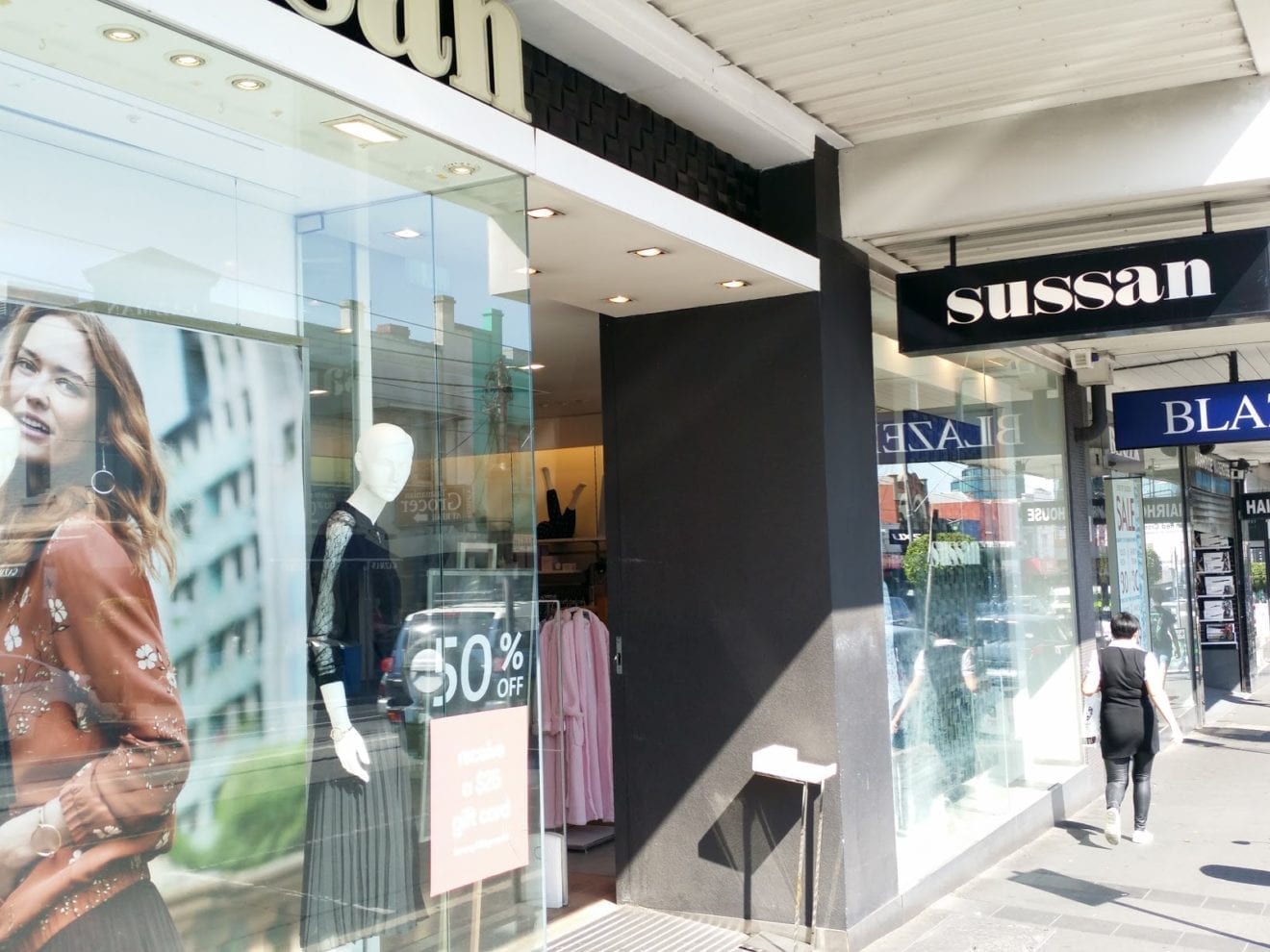
    The Sussan Retail Group will open a Sportsgirl outlet at Centre Road, Bentleigh in Melbourne, adding to its retail footprint on the revitalised strip that is attracting national tenants.

    The group, which already has its Sussan and Suzanne Grae stores on the road, has secured a five-year lease at over $80,000 per annum.

    Mark Talbot, Fitzroys division director, who secured the lease said there has been a string of national tenants seeking to lease prime retail spaces in the strip with Suzanne’s store openings representing a counter move to the perceived challenges of the current retail climate.

    “The renewal of the area around the train station and level crossing has seen traffic and pedestrian flows improved, and they see the project underpinning the growth of the strip in the long-term,” Talbot said.

    Talbot added that’s why the Sussan Retail Group chose the precinct for their new store as they see Centre Road as an established, secure, highly sought after location.

    Sportsgirl is expected to open ahead of the crucial Christmas trading period.

    According to Talbot, the growing number of residential projects around the area had further bolstered the immediate catchment of the strip, also creating further demand for food and hospitality services.

    Talbot said he has also just leased a nearby premises to cult burger restaurant and food truck Mr Burger, which has opened as the group’s first concept store with a new menu.

    It is also its first permanent location in Melbourne’s bayside region, which Talbot said again pointed to the security and high regard for the retail road.

    Fitzroys’ Walk the Strip report shows it is the more recent revolution of medium density mixed-use retail and residential developments that has further accentuated the extended trading cycles of centres such as Centre Road, Bentleigh and added to their vibrancy.

    Extended trading hours, social advancement and changes in entertainment trends and lifestyle choices have seen a proliferation of food and beverage outlets in the area, encompassing cafes, restaurants, take-aways or licenced premises.

    The Mr Burger lease was also struck at over $80,000 per annum.

  • Goobne grows in Hong Kong after China rebuff

    Goobne grows in Hong Kong after China rebuff

    Korean chicken franchise Goobne has opened a seventh outlet in Hong Kong, in a residential area in Tseung Kwan O.

    It is part of the brand’s strategy to focus on profitable markets as its business in Mainland China has been hit by the Beijing/Seoul dispute over the deployment of the THAAD missile system in South Korea.

    “We had two branches in China but now are left with one in Suzhou,” says a company spokesperson. “Our store in China is not very profitable.”

    Another chicken franchise, BBQ, which has more than 150 stores in China, said in May that it was unable to expand as its local partner refused to invest further in Korean firms.

    Goobne, meanwhile, has 11 stores in  Japan and Macau as well as China and Hong Kong. Its monthly sales overseas reached 1.5 billion won (US$1.3 million) on average this year, with its Hong Kong sales accounting for about 1.3 billion won.

    “We are doing well in Hong Kong,” says the spokesperson. “The first store in Tsim Sha Tsui alone showed more than 400 million won in sales monthly last year.”

  • New W hotel collaborates with Xu Zhi fashion label

    New W hotel collaborates with Xu Zhi fashion label

    Last week a fast-food brand partnered with a fast-fashion label: now a luxury hotel is teaming with a Chinese fashion label…

    In time for Shanghai Fashion Week, W Hotels Worldwide unveiled an exclusive capsule collection by Chinese fashion brand Xu Zhi to mark the opening of the first W hotel in Shanghai.

    Six distinct looks and several travel accessories make up the Xu Zhi for W Hotels collection, inspired by the city’s glamorous past as well as the edgy design of W Shanghai – The Bund.

    “W has always been associated with high-octane fashion,” says luxury brand management senior director for Asia Pacific for Marriott International, Carol Zhoul. “We have always dedicated ourselves to aspiring artists and young fashion designers.”

    “W has always been one of my favourite hotel brands – they bring so much passion to the design of their properties,” says designer Xuzhi Chen of Xu Zhi. “Both W and I design with bold innovation and a contemporary attitude.”

    Hosted at the new hotel, Xu Zhi’s runway presentation was W’s first show at Shanghai Fashion Week. Nearly 400 guests attended the “Sleepless Shanghai” event, with VIPs being granted backstage access to the hotel’s high-design suite Cloud on the Bund, where the capsule collection was displayed amid the suite’s neon art and hanging bed.

    The collection is available at W Hotels The Store online.

    W Shanghai – The Bund, with 374 guest rooms, was designed by GA Design showcasing historic and modern influences while offering skyline views of the city’s new financial district.

  • Ikea pet range ‘covers all the basics’

    Ikea pet range ‘covers all the basics’

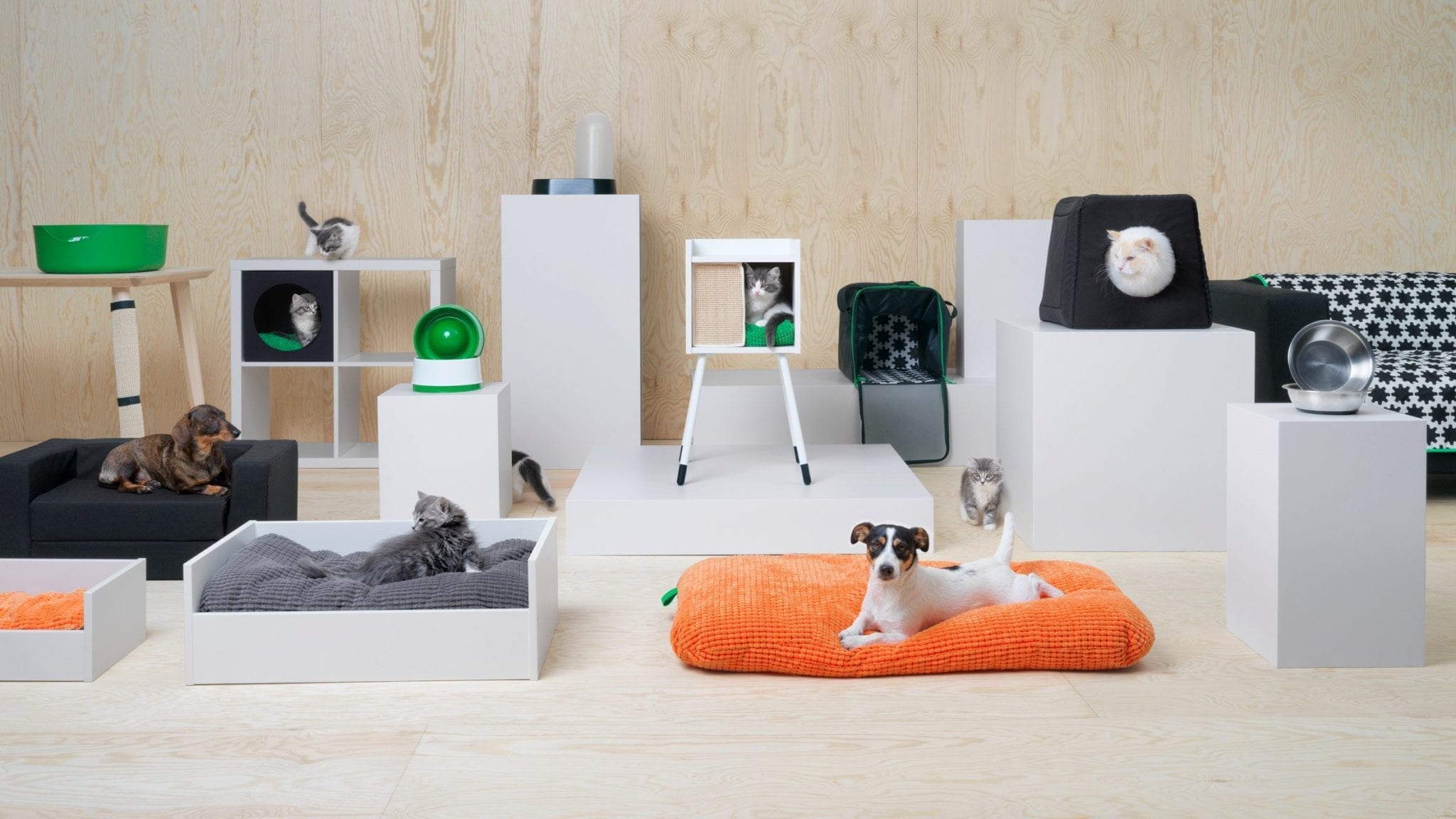
    As animals are part of the family, an Ikea pet range has been introduced with 62 specially designed products.

    The Swedish homewares retailer’s Lurvig pet collection ranges from a cat hideaway resembling a treehouse to a bowl that encourages dogs to eat slowly, reports Freshout.Today.

    Designer Inma Bermudéz says she saw a gap in the market for affordable but attractive pet products covering such basics as sleep, eat, play, travel and walk.

    “Created by pet-loving designers with support from veterinarians, the range covers all the bases of our shared life with pets indoors and out.”

    Bermudéz says the items were designed with the natural needs and behaviours of animals in mind, such as how they sleep, eat or play.

    “Dogs will definitely chew on their toys and bring in dirt from their daily walks. Cats will definitely scratch on most surfaces and are sensitive to smell and texture. So safe, durable materials are very important.”

    Highlighting the influence of a vet in the design process is the “slow-feed bowl” for dogs, many of which tend to overeat. The bowl’s internal surface is designed to prevent dogs from eating their meal “in one or two gulps”.