Tag: asia

  • Acne Studios launching 48-hour online pop-up

    Acne Studios launching 48-hour online pop-up

    Swedish fashion brand Acne Studios is about to launch a 48-hour online pop-up store offering a handpicked selection of its classic style, show pieces and exclusive items.

    Discounts of up to 75 per cent are being offered during the retrospective, which launches on October 24 “exclusive” to Hong Kong, India, Japan, Malaysia, New Zealand, Singapore, South Korea, Taiwan and Thailand.

    Based in Stockholm, Acne Studios is a multidisciplinary luxury fashion house, founded in 1996 as part of the creative collective Acne, an acronym for Associated Computer Nerd Enterprises but later changed to Ambition to Create Novel Expressions. The fashion house specialises in men’s and women’s ready-to-wear fashion, footwear, accessories and denim.

  • EleVen by Venus Williams makes Asian debut

    EleVen by Venus Williams makes Asian debut

    Athletic apparel line EleVen by Venus Williams has partnered with luxury department store Lane Crawford for an exclusive capsule collection.

    It is an eight-piece line of elevated sportswear, all items featuring a quick-dry performance fibre with breathability. It is all white as a nod to Venus Williams’ tennis background, and was created to empower women to express their individuality with confidence while exercising.

    Available exclusively in Asia, it can be found at Lane Crawford online, or in the Hong Kong, Beijing and Shanghai stores. It is the brand’s debut in the Asian market.

  • Travel focus in Uniqlo’s Wherever You Go campaign

    Travel focus in Uniqlo’s Wherever You Go campaign

    Recognising the growing interest in travel in Southeast Asia, Japanese fashion brand Uniqlo has introduced a Wherever You Go campaign featuring short films of ordinary people having extraordinary travel experiences around Japan.

    Featuring key pieces from its latest collection, the films aim to inspire people to immerse themselves in new cultures and novel experiences, and highlight how Uniqlo LifeWear suits travel and adventure in varied climates and destinations.

    “The campaign tells the story of what LifeWear is about – apparel that never stops evolving because life never stops changing,” says Uniqlo Asean marketing director Masahiro Endo.

    Starting today, season one of the campaign features five travellers from Southeast Asia who share their experiences and inspirations around the cities of Japan.

    For the campaign’s second season, Uniqlo is running a contest to find people to feature in the movie. Entry is by sharing travel photos, stories or inspirations on Instagram. The prize is an all-expenses-paid, four days/three nights’ trip to Tokyo for two worth US$5000. The contest runs until November 30.

  • It’s time for Shop.org to rebrand

    It’s time for Shop.org to rebrand

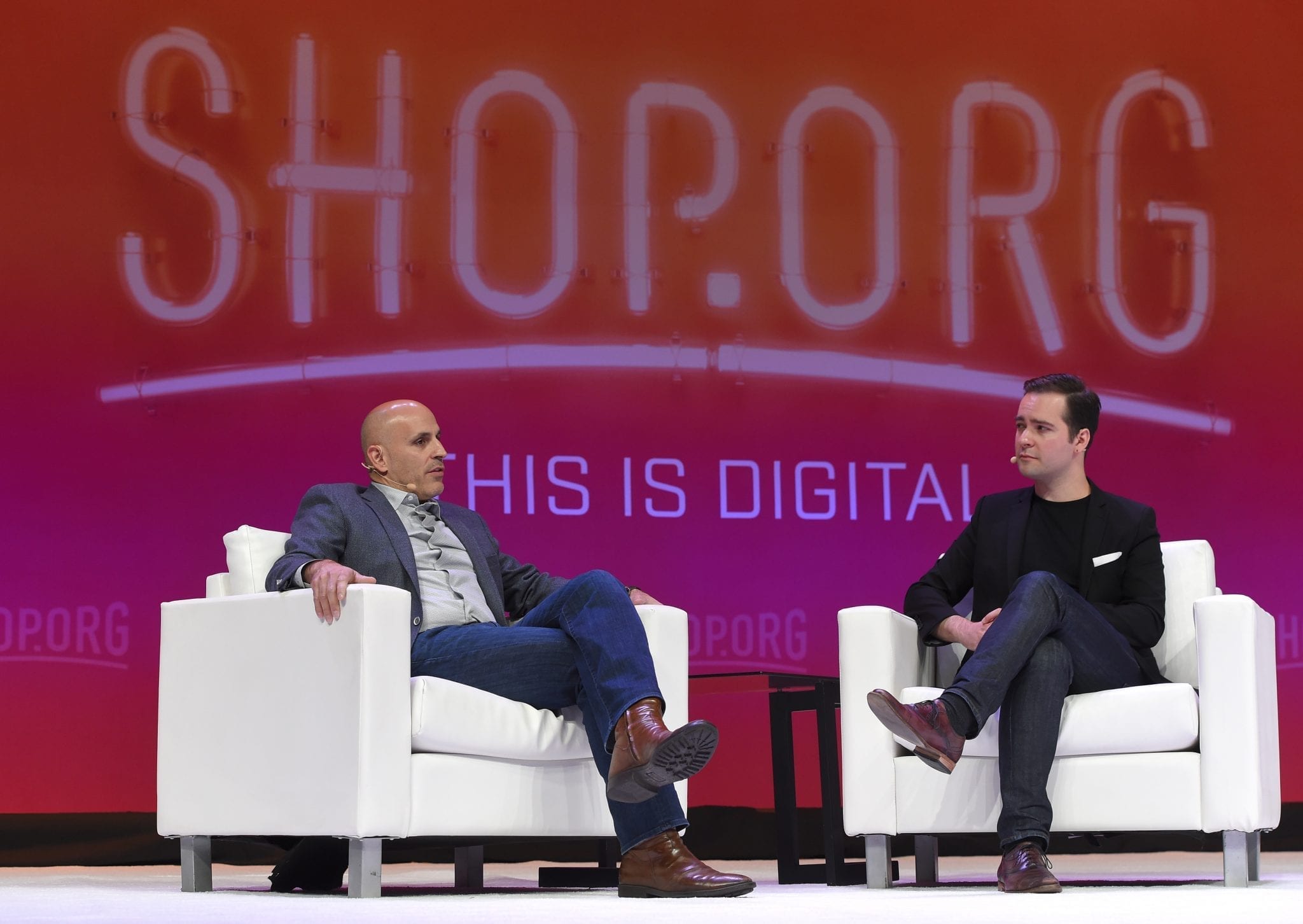
    I just got back from the US, having visited Shop.org in Los Angeles and let me tell you: don’t be fooled by deceptive distinctions between different forms of commerce. It’s all one experience in the eyes of the shopper. Let me explain.

    Throughout 2017, my quest has been to help retailers figure out what the future of retail looks like. To fulfil this mission, I’ve represented Retail Directions at major retail events, both locally and globally, and shared my findings with the retail community down under.

    At Shop.org, I joined more than 3,500 retail industry attendees at what can best be described as a preeminent annual conference focused on digital retail.

    Held on a truly impressive scale, with 200+ exhibitors, a myriad of high-profile keynote speakers and an array of content streams that made my head spin, the event labels its purpose as “delivering insights into what’s next for the digital retail industry”.

    However, just like I found at its local counterpart Online Retailer, you can’t talk about the modern consumer and stay focused on a single facet of the retail commerce ecosystem. Retailers must no longer adopt and master digital. Instead, they must become digital if they want to stay relevant with the transformed, connected society.

    Here’s my three key takeaways from Shop.org:

    1. The industry needs to drop commerce distinctions

    An insight not just limited to Shop.org. All the conferences I’ve attended, whether their core theme is e-commerce, payments, or traditional retail, end up delivering the same message: commerce is now borderless and technology plays a key role in the creation of a seamless consumer and brand experience.

    With omnichannel retailing now entrenched as a fundamental part of modern retailing, distinctions between forms of commerce are no longer relevant, necessary or helpful. It’s all retailing, and it’s all about the consumer. And, in this reality, savvy retailers are using technology wisely to gain a competitive advantage.

    Perhaps, it’s time for Shop.org to rebrand (wink).

    1. New tech is alluring but mostly impractical (for now)

    The conference was flooded with venture capitalist-funded technology start-ups, many of which seemed to be doing a lot of the same thing just with different branding.

    The expo floor wasn’t dissimilar to “Hooli-Con” from the satirical comedy Silicon Valley, there was even a lonely guitarist, sitting on fake grass, strumming calming melodies among the technology overload.

    Retailers always seems to be caught in the rip of new technology trends, struggling to make sense of what will truly deliver ROI and what is simply an alluring mirage.

    Out of all the hyped emerging tech, voice and artificial technology have the strongest use cases, with voice poised to reframe the practise of merchandising through acute personalisation and the convenience of “one best answer”.

    This is where AI and machine learning comes in – to digest and analyse consumer data and behaviour and deliver unprecedented competitive intel and personalised suggestions.

    Of course, there was a lot of talk about Augmented Reality and Virtual Reality as well. And, while AR is in play and fun e.g. Disney’s in store AR treasure hunts, for the most part its relevancy to mainstream retail is currently limited.

    As for Virtual Reality, the high price point and the limited adoption of AR leads me to believe that VR as a viable technology for retail is all hype for the time being.

    1. Logistics is the battleground of the future

    For the modern consumer, speed, convenience and price are trumping brand equity.

    Perhaps the most acute example of this battle is Walmart vs Amazon, both investing in strategy, technology and infrastructure to help customers get products as easily as possible. This is why Amazon acquired Whole Foods and partnered with Kohls.

    Speaking at the conference, Walmart’s U.S. e-commerce president Marc Lore shared how the retailer may leverage its 4,600 US-based stores, all within 90 per cent per cent of the population, to roll out a new grocery delivery concept – Walmart may come into your house and put milk in your fridge, and groceries in your pantry. Can you fathom that?

    A caveat here, while the retail giants of this world fight for the last mile, I stand by what I said in a keynote I delivered at Seamless earlier this year – if you play Amazon at its own game you’re going to lose.

    Exceptional shopping experiences delivered through technology-fortified stores and a borderless digital brand are key to remaining relevant and deflecting the pending Amazon invasion of Australia.

    Solar Conclusion     

    Shop.org was a fascinating three-day retail event, delivering vibrant ideas about the future of retail and the evolution of the consumer.

    That said, I’m reminded about the Latin saying, “nihil sub sole novum” – there is nothing new under the sun. Retail remains about holding the consumers attention, wherever THEY choose to shop.

    The key is to recognise that consumers have fundamentally changed, and retail must embrace digital – not just to sell online, but more importantly to stay connected with their audience and remain relevant in all channels, including brick and mortar.

    I repeat, it’s all one experience in the eyes of the shopper.

  • Gift theme for Chow Tai Fook Yoho Mall store

    Gift theme for Chow Tai Fook Yoho Mall store

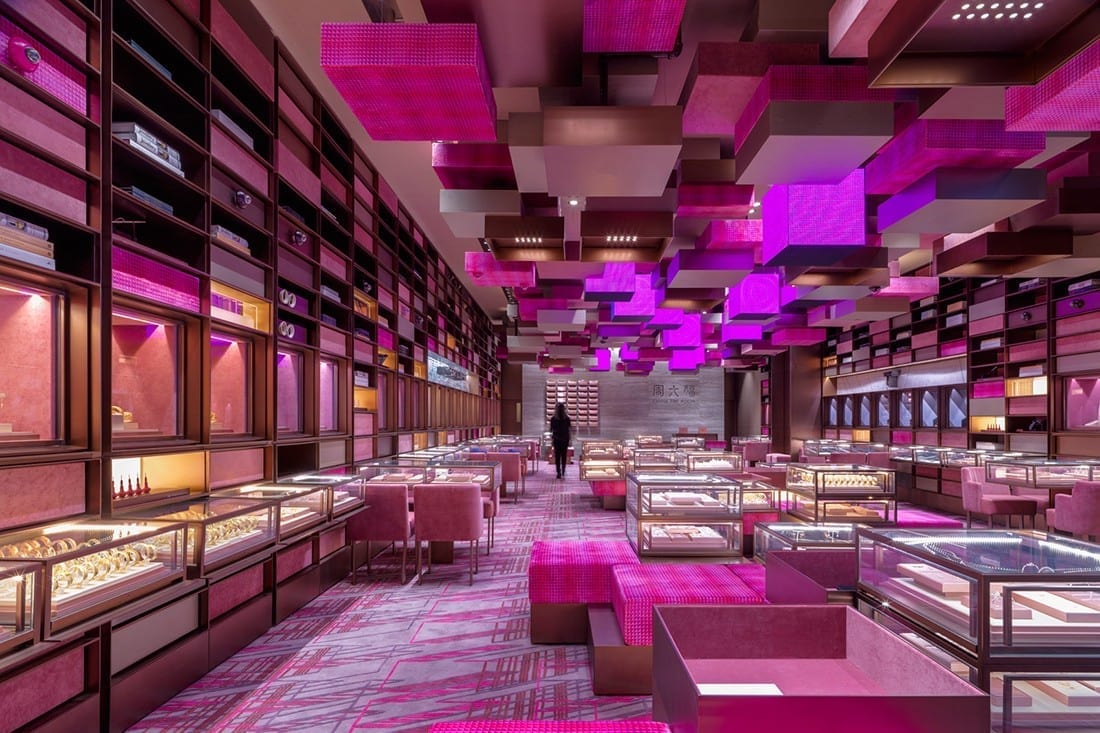
    Signature gift boxes have inspired the dramatic design for the new Chow Tai Fook Yoho Mall store.

    Rather than the usual gold palette of jewellery store, Hong Kong design practice One Plus Partnership takes a more colourful approach with 1070 stylised gift boxes installed across the 25,800sqft (2397sqm) shop’s walls and ceiling.

    These are echoed in the sub-shaped upholstered seating units as well as display cabinets. The carpets and digital signs reflect the brand’s abbreviated name (FTF) in different colours, while the layout also moves beyond convention to promote engagement between shoppers and staff. Instead of the classic long glass display unit, the shop displays its pieces in cabinets on both sides and in the centre. The display cabinets are  glass boxes with some extending out slightly to serve as mini consultation tables.

    In the centre area, groups of display cabinets are surrounded by the colourful, casual sitting cubes, which are made from different fabrics, patterns and shades of pink to resemble the brand’s gift wraps.

    Digital screens feature graphics and information about the products, while spliced screens at the entrance show motion graphics highlighting the design theme of the store.

    On display in the shop are jewellery production tools, sketches and prototypes. These are not just decoration, but can be used by staff members to explain to customers the production procedures behind every piece of jewellery.

  • AirAsia Japan to launch operations on 29 October

    AirAsia Japan to launch operations on 29 October

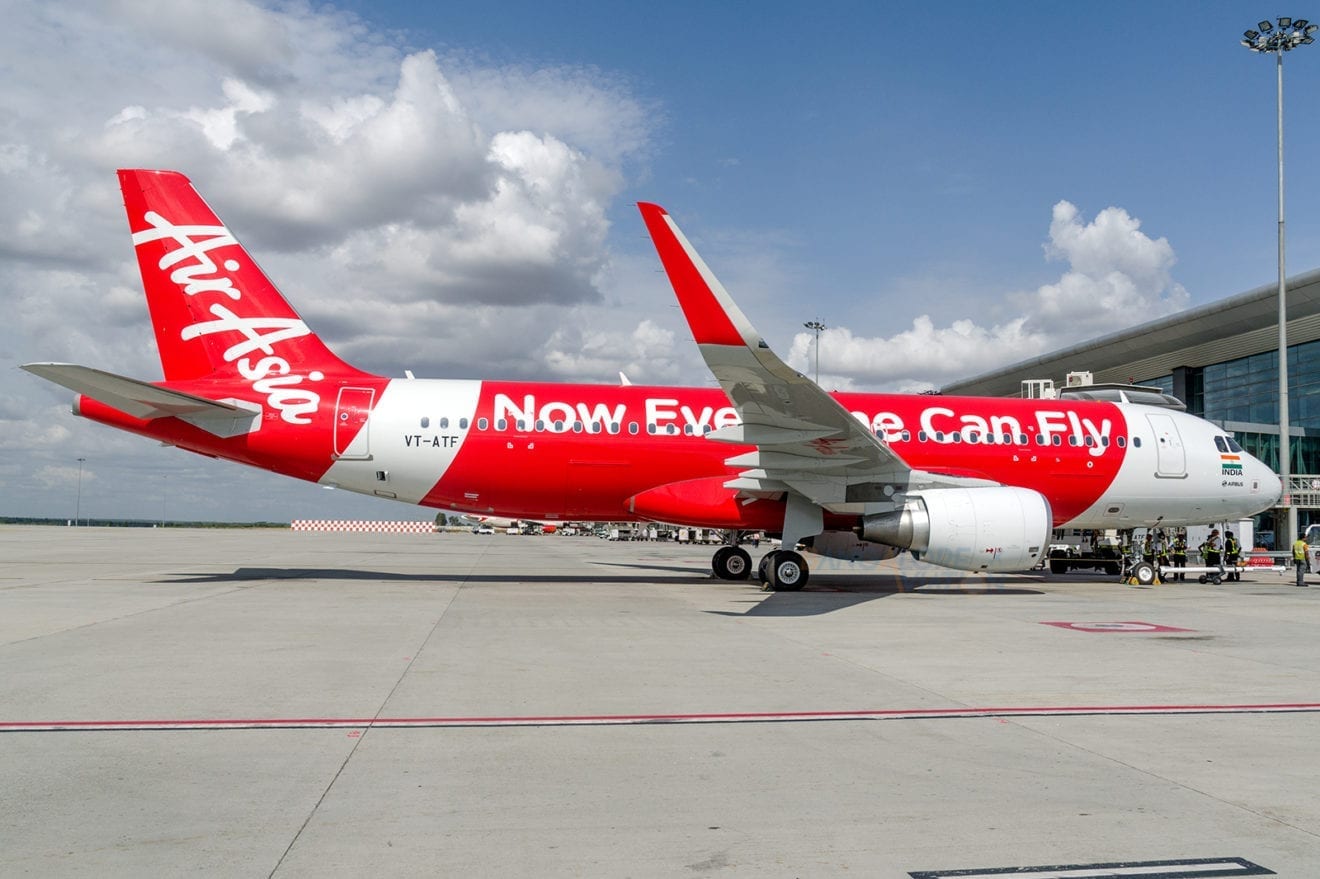
    The reborn AirAsia Japan will commence services on 29 October with a service from its Nagoya hub to Sapporo, two years after receiving its air operator’s certificate.

    The carrier says in a statement that it will operate twice-daily on the route, which FlightGlobal schedules data shows it will compete against five other carriers, including Jetstar Japan, All Nippon Airways and Skymark Airlines.

    “We are honoured to be the first airline to be based in Nagoya’s Chubu Centrair International airport and we are committed to connecting as many guests as possible at low fares to AirAsia’s extensive network, as well as bridging communities and cultures for the benefit of the local economy,” says chief executive Osamu Hata.

    AirAsia holds a 49% stake in AirAsia Japan, while shareholders Rakuten, Octave Japan Infrastructure Fund, Noevir Holdings and Alpen hold the other 51%.

    This is the Malaysian budget carrier’s second attempt into the Japanese market, following the October 2013 breakdown of its joint venture with ANA Holdings. The shell of that first carrier was used to launch Vanilla Air shortly after.

    The new carrier was granted its AOC in October 2015, and had planned to launch services during the northern spring of 2016. The launch was however repeatedly delayed, and Jetstar Japan has in the meantime announced plans to start a base at Nagoya in 2018.

    Flight Fleets Analyzer shows that AirAsia Japan has two Airbus A320s in its fleet.

  • Hermes Singapore transforms artfully into ‘home’

    Hermes Singapore transforms artfully into ‘home’

    In a special exhibition, the Hermes Singapore flagship store at Liat Towers has been transformed to spotlight the luxury French brand’s collection of home furnishings and bespoke creations.

    Described as a “gallery of whimsy and surprise”, the Through The Walls exhibit was crafted by set designers Jean-Christophe Vaillant and Herve Sauvage. It shifts the focus from the brand’s iconic scarves and Birkin handbags to tableware, lighting, wallpaper and furniture.

    Leather, a reminder of Hermes’ start as a saddlemaker, is used imaginatively, as is bamboo crafted with carbon fibre and steel to form seats. The centrepiece of the installation is a closet for scarves that resembles a leather wallet from the outside and stores up to 130 pieces.

    Hermes co-deputy artistic director Charlotte Macaux Perelman says Singapore is an ideal location for the exhibition given the brand’s presence in the city since the 1970s. “We have never had a home-furnishings event here or really highlighted our home collection,” she says.

    It took two weeks to transform the top two levels of the store to showcase more than 120 objects from the Hermes home universe, including the brand’s new Lien d’Hermes collection.

    The retail space has been reworked as a “home” to give an appropriate setting for the objects.

    A feature is the stairwells of the store where wallpaper from the collection has been ripped and layered decoupage-style. In one corner, a dining table looks as though it had been pushed through a wall while elsewhere a coffee table appears to have fallen through the roof.

    There are even such whimsical touches as sounds: a cat meowing, a door closing, birds’ wings flapping. But the deconstructed world starts in the store windows, where neon signs for the event are framed by plates broken in half.
    “As a brand, our pieces are undoubtedly quite traditional and rigorous, but we like to introduce fantasy as well, especially in things like our textiles, wallpaper and tableware,” says Perelman.

    Through The Walls runs until October 29.

  • HP develops POS solution for retailers

    HP develops POS solution for retailers

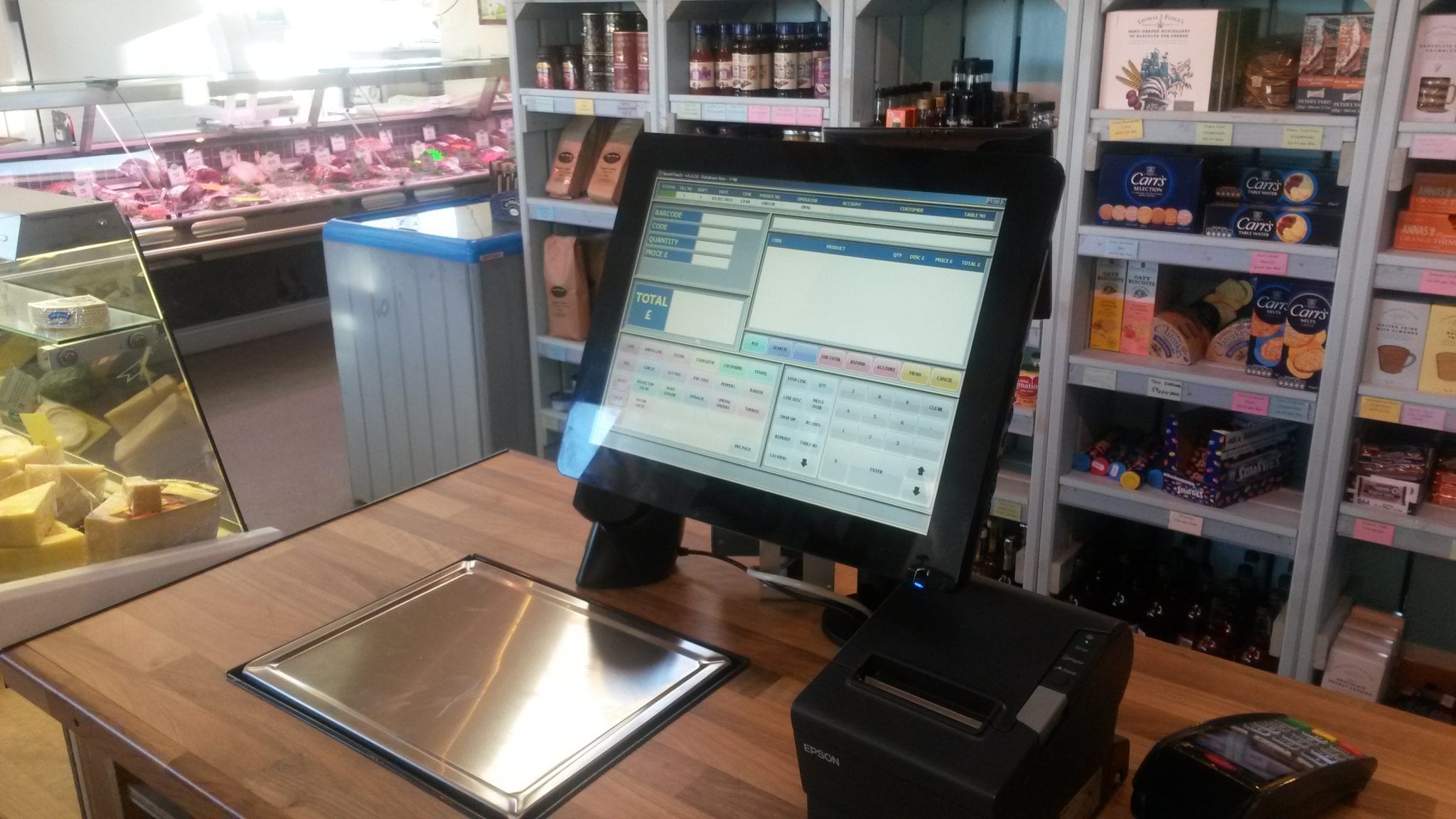
    HP has developed a point of sales solution aiming to reimagine how technology can transform the in-store experience for customers.

    HP ElitePOS supports several use cases including interactive signage, employee attendance, and self-service applications like a customer check-in and access to additional product offerings in the “endless aisle”.

    For retailers who want a clean and clutter-free counter space, or who need greater versatility in the placement of their point-of-sale terminal, the display can be separated from the input/output (I/O) base for maximum placement versatility.

    With point-of-sale devices increasingly targeted by hackers, security continues to be top of mind for the retail industry. According to Verizon’s 2016 Verizon Data Breach Investigations Report, 64% of breaches in the retail industry that contained data loss were caused by point-of-sale intrusions.

    “As the retail and hospitality industries undergo a revolutionary shift, the point-of-service device will be a critical hub in delivering the in-store experience for customers,” IDC VP of retail insights Leslie Hand said.

    “But with this rapid transformation in digital business also comes increased threats, in the form of targeted attacks and malware. Retail POS systems, including the new HP ElitePOS, must be able to balance the growing needs of the customer and the brand while also acting as a guardian of the  sensitive information that passes through the device on a daily basis.”

  • Huawei unveils APAC enterprise cloud strategy

    Huawei unveils APAC enterprise cloud strategy

    Huawei has announced its newest enterprise service strategy designed to support companies undergoing cloud transformation in Asia Pacific.

    The enterprise cloud strategy will focus on four key areas including cloud innovation, creating a digital platform, supporting smart operations and enabling businesses.

    As enterprises embrace digital transformation, they will face a new set of challenges across strategy, planning, requirement analysis, business integration, application system evaluation, technology selection, roadmap design, deployment, operations & maintenance (O&M) management, and information security.

    Cementing the company’s commitment to becoming an industry cloud enabler and strategic partner to enterprises in Asia Pacific, Huawei is investing $500 million globally in the development of cloud-based professional services, a cloud platform and cloud ecosystem. This will provide customers with end-to-end cloud transformation service solutions enabling them to build, use, and manage their cloud platforms effectively.

    To drive this strategy forward, Huawei will continue to increase its investment in the development of service solutions and Global Service Centers (GSC), as well as tools, platforms and verification labs for professional services. In the next five years, Huawei will also focus on research and development of industry clouds, increasing their annual investment by more than 50%.

    Additionally, to meet enterprise demand for ICT talent in the cloud era, Huawei will provide a new certification scheme to train ICT architects, ICT developers and industry-specific ICT experts. By 2021, it is estimated that more than 150,000 cloud and industry-specific ICT professionals will have been certified by Huawei.

    Huawei has made strategic investments and works with partners to build a cloud network that has global coverage, providing complete solutions that help Chinese companies go global, as well as help companies outside China enter the Chinese market.

    One of these partners is Orange Business Services (OBS), who has launched a global public cloud offering together with Huawei, that includes consulting, auditing and managed services for cloud infrastructure and applications.

    Named Flexible Engine, the new IaaS/PaaS platform is offered in combination with specialist support (‘Cloud Expert Services’) to assist enterprises in their migration to the cloud, featuring optional managed services to run applications. The suite of services will equip enterprises with the technology to digitally transform their business operations and support businesses in their expansion plans across China, Southeast Asia and Europe.

    The services run on the strength of OpenStack technology, an open-source software platform for cloud computing. Open standards and interoperability are key to meeting the demands for large, scalable public cloud solutions by delivering economies of scale and avoiding the danger of propriety lock-in.

  • Optus Satellite to provide NBN satellite services

    Optus Satellite to provide NBN satellite services

    Optus satellite, a subsidiary of major Australian operator Optus, has announced its first foray into providing satellite services over the National Broadband Network (NBN), via a partnership with Southern Phone.

    The partners are now providing Sky Muster satellite broadband services to customers in regional and rural areas.

    NBN plans to use satellite broadband services for the roughly 3% of the of the population – mostly in rural and remote areas – that won’t be covered by fixed line or fixed wireless NBN services.

    Southern Phone is a regional telecommunications service provider based in New South Wales. The company’s managing director David Joss noted that only 80,000 of the expected 240,000 Sky Muster satellite broadband services have been connected to date, leaving a significant potential market.

    “We see this service as a viable and effective alternative to a traditional NBN connection. For some consumers, this will be the first time they’ve been able to connect to a broadband service,” Optus Satellite VP Paul Sheridan added.

    “This new partnership will help us connect with even more regional customers and importantly, make sure that those customers are able to have the same level of support that a customer in a metro area would.”

  • Dolce & Gabbana net profit soars, revenues up 9%

    Dolce & Gabbana net profit soars, revenues up 9%

    Dolce & Gabbana closed the financial year 2016/17 on March 31, 2017 with a turnover of 1.296 billion euros, a 9% increase on the previous year, according to the balance sheet consulted. D&G Srl, which controls the group, obtained a 57.6 million euro dividend from Dolce & Gabbana Holding.

    The latter oversees Dolce & Gabbana Trademarks, owner of the group’s brands, and Dolce & Gabbana Srl, in charge of the label’s operations in Italy and abroad.

    D&G’s consolidated balance sheet showed a net profit of 80 million euros, around four times higher than the 17.93 million achieved by the company in 2015/16, and an EBITDA of 168 million euros.

    This result is due largely to an increase in sales, particularly in Italy, which represents 24% of total turnover, with the rest of Europe making up 27%, the Americas 13%, and Japan 6%.

    Dolce & Gabbana’s strong presence in its domestic market has led the firm to further its initiatives abroad.

    On 4 October , the brand organised a runway show in the Isetan Department Store, Tokyo, for which the creative duo Domenico Dolce and Stefano Gabbana designed a special collection.

    In the same month, the label also opened its first outlet store in Mexico, in the Premium Outlets Punta Norte mall, in the northwest of the country.

    For the holiday season, the brand has plans for a large-scale operation with London-based luxury department store Harrods. These will include the launch of exclusive products, as well as a number of in-store interventions organised by Dolce & Gabbana from 2 November to 28 December, such as in stores-in-stores, a Christmas tree, window displays and a traditional Italian market.

    Breaking down the brand’s results by distribution channel, Dolce & Gabbana’s wholesale increased 8.7% in 2016/17, retail grew 7.1% to 769 million euros, while licensing revenue fell 9.2% to 61.2 million euros.

  • M1 launches data-centric mobile plans

    M1 launches data-centric mobile plans

    Singapore’s M1 has expanded its data-heavy mySIM mobile plans to bundle the offers with handset subsidies.

    M1 launched a range of SIM-only plans in 2015 that offered large data allocations for customers who do not need a new handset.

    Building on the popularity of this plan, M1 has unveiled the new mySIMe bundled mobile plans, which start at S$40 for 5GB of local data, 100 minutes of voice calls and 100 SMS. M1 has also introduced a S$70 plan with 15GB of data and a S$90 plan with 30GB.

    The high-end S$118 plan meanwhile offers unlimited local data, SMS and voice, while a S$15 add-on can provide unlimited voice calls for the three other plans in the range.

    In addition, a S$10 Data Passport add-on will allow customers to use their local data bundles across 56 destinations worldwide, and a S$12 per month add-on will allow customers to share their plan bundles across up to three lines – this is not available for the unlimited plan.

    Our SIM-only mySIM plans have proven to be popular with our customers. We are now giving them the option to get their favorite smartphone or tablet at a more affordable price with the mySIMe plans,” M1 CMO P Subramaniam said.

  • Infiniti Motor Company aims to rev up retail

    Infiniti Motor Company aims to rev up retail

    With a chance to boost retail innovation in Hong Kong, Infiniti Motor Company has partnered with venture capital firm Nest to launch Infiniti Lab Global Accelerator 3.0 under the theme “The Future Consumer”.

    Infiniti has invited seven high-potential startups, two from Hong Kong and the others from Canada, Germany, Mexico, Sweden and the US, to its global headquarters to develop technologies to enhance the customer journey. The program will involve testing, evolving and refining their technologies to win over investors and industry leaders.

    The Hong Kong startup ventures are ActiMirror and Cove.

    “These exciting startups will have access to the Infiniti network of executives and ecosystem partners, and benefit from intensive business coaching and mentoring as well as exposure to established investors across Asia,” says Nest CEO Lawrence Morgan. “We have created a bespoke 10-week program for our startups and look forward to working with these high-potential businesses.”

    Chance to pitch

    Following the program will be Demo Day on December 13 at which the entrepreneurs will pitch their ideas to a panel of investors. They also have a chance to pitch their business cases to key decision makers from Infiniti and the Renault-Nissan Alliance.

    “We are dedicated to supporting top entrepreneurial talent around the world and helping bring their ideas to life through comprehensive startup programs and world-class partnerships,” says Infiniti Motor Company GM for global business transformation Dane Fisher.

    To launch the venture, Infiniti hosted a panel discussion about the future consumer and using emerging technologies to  improve the customer experience. As well as Fisher, Visionaries 777 head of business development David Castaneda, Bluebell Group digital director Benoit Lavaud, and Red Ant Asia regional director Elisa Harca, Regional Director, Red Ant Asia discussed how disruptive technologies such as AI, Big Data and VR will transform consumer experience.

    Headquartered in Hong Kong, Infiniti is represented in 50 international markets. Launched in 1989, it offers a range of premium automobiles built in China, Japan, the UK and the US. The brand is known for its design and innovative driver-assistance technologies. Last year it became a technical partner of the Renault Sport Formula One team.

  • Second Crystal Jade Jiang Nan restaurant opens

    Second Crystal Jade Jiang Nan restaurant opens

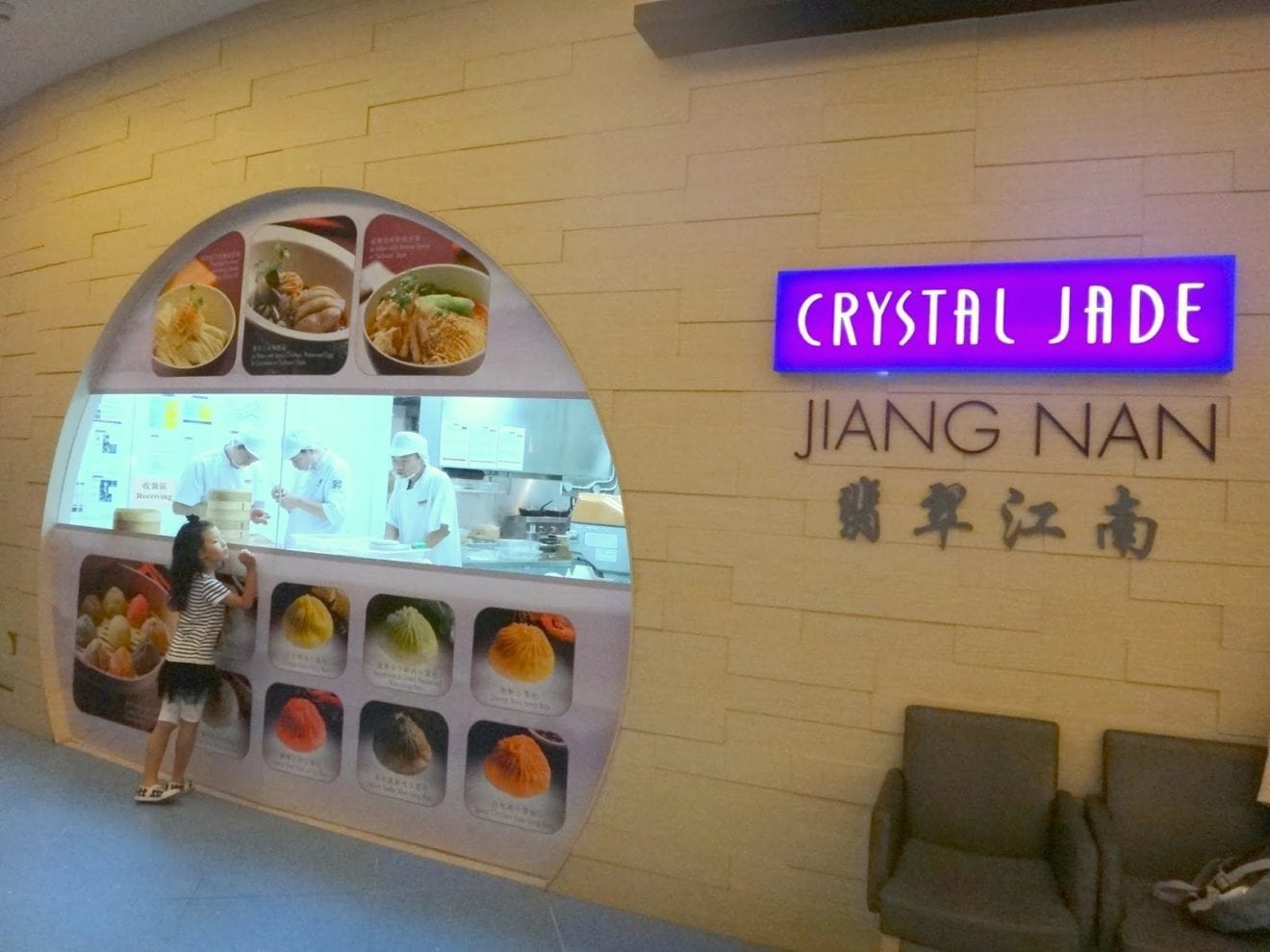
    Crystal Jade Jiang Nan has a new sister restaurant at Yoho Mall II in Yuen Long, opening on the first anniversary of the Wanchai flagship restaurant in Tai Yau Plaza.

    With two semi-private VIP rooms seating up to 10 guests each, the new venue can accommodate 130 diners and features an open-plan design that is visible to passers-by in the shopping arcade. Features include partition screens at varying angles, with artifacts, timber, glass and low-level vintage lighting.

    As well as Jiang Nan cuisine, the new restaurant offers handpicked wines and teas.

    Jiang Nan cuisine is marked by its delicacy and complex cooking processes. It fuses southern Chinese characteristics of freshness, crispness and tenderness with northern Chinese saltiness, vibrant colours and richness. The region’s cuisine is also famed for small dishes paired with teas.

    From Singapore, Crystal Jade Culinary Concepts Holdings has restaurants in 14 shopping malls in Hong Kong, including the airport. Internationally, the brand has reached 25 cities in 10 countries, including China, Indonesia, Japan, South Korea, Thailand, the Philippines and the US.

  • Queensland Officeworks sale sets record low yield

    Queensland Officeworks sale sets record low yield

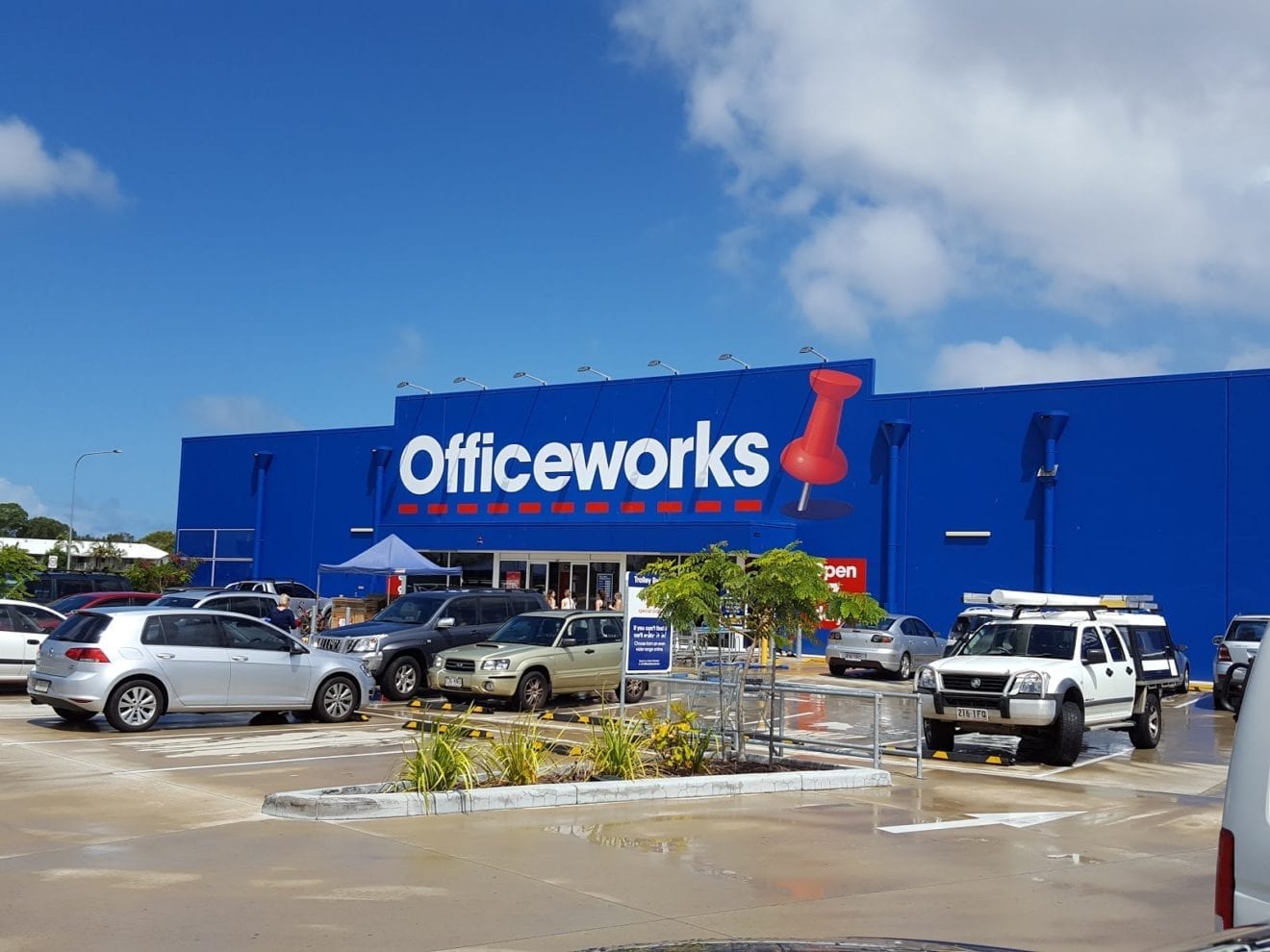
    A newly developed Officeworks in Queensland has been sold on what is understood to be a national record low yield for an Officeworks store.

    The 1,661sqm Officeworks store at North Lakes in Brisbane’s high-growth northern corridor has pre-sold on a 10-year lease-back for $7.093 million, reflecting a record 4.8 per cent yield.

    Savills’ Peter Tyson and Jon Tyson handled the marketing and sale on behalf of Officeworks Limited to a private Melbourne-based investor with Joel Wald of MMJ Real Estate acting for the buyer.

    Tyson said Officeworks North Lakes attracted intense buyer interest nationally with more than 180 separate enquires and multiple offers.

    “This was a very hotly contested offering, resulting in what is believed to be a new national benchmark yield for a freestanding Officeworks,” he said.

    “New single tenant investments with long lease security and blue-chip covenants such as Officeworks are highly sought after by the marketplace due to their bond-like attributes.”

    Officeworks developed the new store with parking for 57 cars on a 4,029sqm high profile corner site on Flinders Drive in the North Lakes Business Park.

    “Officeworks viewed the location as strategic as the new store will join a growing list of retailers lining up in the North Lakes precinct,” Tyson said.

    “These retailers include Queensland’s only Costco Wholesale outlet, Queensland’s biggest Bunnings Warehouse, as well as Ikea’s recently opened store in the nearby Westfield North Lakes regional shopping centre.”