Tag: asia

  • Blackstone exits German outdoor clothing brand Jack Wolfskin

    Blackstone exits German outdoor clothing brand Jack Wolfskin

    Blackstone is handing over control of German outdoor clothing brand Jack Wolfskin to hedge funds in exchange for debt after the business failed to attract bidders.

    The largest of the shareholders will now be Bain Capital Credit, HIG Bayside Capital and CQS, who will jointly own more than 50 per cent of Jack Wolfskin. They will also inject further financing of US$29 million to boost its liquidity.

    The debt for equity swap will leave Jack Wolfskin with $110 million in debt, less than one third the level pre-sale. Blackstone bought the brand in 2011, reportedly paying nearly $1 billion and with ambitions to take it global

    Jack Wolfskin CEO Melody Harris-Jensbach said in a statement the move completes the financial restructuring and leaves the company in a stronger shape to pursue expansion.

    “Added to this is an encouraging trading scenario. Following a positive business performance in line with our budgets, we are starting to see growth again in the German-speaking countries, which are traditionally our core market, as well in our focus markets.

    “This trend is gathering additional momentum due to the high level of orders for our 2017 autumn and winter collection and positive feedback from our customers on our new product developments.”

    Bain Capital Credit’s Gauthier Reymondier described Jack Wolfskin as “a very strong outdoor brand”, number one in German-speaking countries and number three among the international outdoor brands in China.

    “We are committed to supporting Jack Wolfskin and now that the restructuring has been completed, we are well positioned to develop the company further in the coming years.”

    While the general international retail environment has proved challenging for Jack Wolfskin, it has also been struggling with the transition to taking direct control of its China operations.

    In 2015, the brand had 700 outlets in China. In Hong Kong, its products are impossible to buy, even though the company’s website lists about a dozen resellers, none of whom still stock it.

  • Queenstown retail centre’s first stage complete

    Queenstown retail centre’s first stage complete

    The first stage of the NZ$130 million Five Mile Retail Centre development at the gateway to Queenstown has opened, after the site’s conversion from an abandoned construction project into a state-of-the-art shopping precinct.

    The 14,000sqm site is now home to retailers including Countdown, Briscoes Homeware, Rebel Sport, Warehouse Stationery, Number One Shoes, Supercheap Auto, and ANZ Bank.

    The complex will also eventually accommodate 800 carparks (including 250 underground) food operators, offices, serviced apartments and a child care centre.

    Australasian design firm The Buchan Group was appointed by Queenstown Gateway Ltd in 2012 to complete architecture, master planning, interior and graphics works for the project, located beside Queenstown Airport.

    The site had been home to a 2.4ha hole created from a construction project that was abandoned when the previous developer was placed into receivership in 2008.

    The Buchan Group Principal David Thornton said the first stage of the Five Mile Retail Centre had finally created an inviting gateway to Queenstown from the eastern approach through to Frankton.

    “Our vision was to design a development befitting the region that reflected the unique characteristics of the stunning surrounding vistas,” he said.

    “This meant not only designing a modern retail centre that was appealing to locals and visitors, but also one that was suitably striking for one of the best locations in the Frankton and Shotover region.

    “The buildings also frame view shafts to Double Cone, Peninsula Hill, Cecil peak and Walter Peak, ensuring the development highlights these natural assets.”

  • Dick Smith sites prove hard to sell

    Dick Smith sites prove hard to sell

    Nearly half of all Dick Smith stores nationwide have been re-leased to a range of categories and big brands, however many of the smaller regional locations remain vacant, according to real estate firm, Colliers.

    Former Dick Smith stores in locations like Levin, Gisborne, Richmond and Wanganui are still empty.

    “Although the former Dick Smith’s stores are typically in the best retail locations in these markets, the issue is around the lack of demand from national brands to enter these smaller cities and towns,” said Leroy Wolland, Colliers national director of retail.

    Wolland anticipated these challenges for the smaller regional store locations earlier this year when the Dick Smith’s stores closed down.

    “The hesitancy for the bigger brands moving into these locations is around the lack of catchment size.”

    “So it’s likely these sites will be back-filled with local retailers as opposed to national branded retailers.

    “We are working on a few options for these locations.”

    Most of the Dick Smith’s stores in the major cities were leased to larger, high profile retailers.

    Wolland says Colliers has also completed deals with international retailers Witner Shoes and Footlocker who have snapped up ‘high street’ sites in Wellington and Auckland.

    “We have also leased a number of stores to new Australian pet retailer, Petstock.

    “The opportunity presented by the closure of the Dick Smith’s chain accelerated these brands’ rollout into New Zealand,” said Wolland.

    Colliers has also successfully leased stores around the country to homeware retailers Bed Bath & Beyond and Lighting Plus as well as to The Clearance Shed, Hot Spring Spas, Repco, Pricewise and NZ Uniforms.

    The Golf Warehouse, Curtain Studio, Citta Homewares and electronic retailers Jay Car, Noel Leeming and PB Tech have also taken over stores.

  • Big two slice bread prices

    Big two slice bread prices

    Coles is slicing the cost of its bread in a move that could open another front in the major supermarkets’ price war. Australia’s supermarket giants have already fought fiercely on milk and meat, and the Wesfarmers-owned chain has now cut the price of more than 30 varieties of loaves and rolls by as much as 35 per cent.

    Coles general manager of bakery Jon Haggett said lower prices are key to luring more customers.

    “We know bread is a household staple and always on the shopping list,” he said.

    A range of Tip Top branded products will also be discounted, and Woolworths is matching at least one of those.

    Coles managing director John Durkan told investors in June that he wanted “Coles to be famous for its fresh bread”.

    He said plans were underway to convert an additional 180 stores to include full bakeries as Coles works towards offering fresh-baked bread in every store.

    Woolworths bakes bread on-site at more than 630 of its supermarkets.

    A Woolworths spokesperson said it was also focused on lowering prices on bakery goods and, as of Thursday, its most popular products will be markedly reduced in price.

    Brumby’s Bakery owner Retail Food Group said it was not worried by the moves.

    “Brumby’s Bakery is confident they will be able to sustain their customer base should there be a price war between major supermarket brands,” a statement from the company said.

    It said Brumby’s, as a specialty bread retailer, offers artisan and quality goods, while major supermarkets base their business on scale and quantity.

  • Kmart slashes prices and looks abroad

    Kmart slashes prices and looks abroad

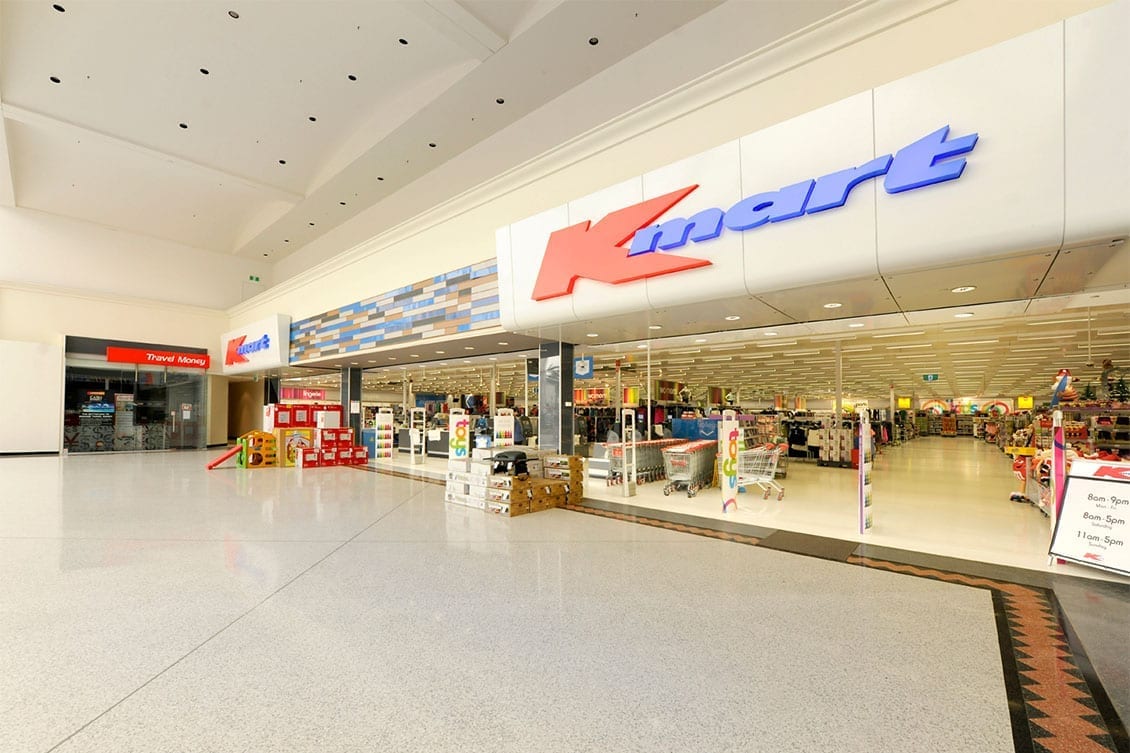
    Kmart CEO Ian Bailey is expecting increasingly cash-strapped consumers to show out in force for his latest round of price cuts, as the DDS chain looks to a customer-first strategy that widens its price differential with competitors.

    The discount department chain will slash prices by as much as 20 per cent on selected items across its entire range, with 320 products set to be reduced later this week.

    Speaking to us, Bailey said that the move was a reinvestment of cost savings, born from a shift in manufacturing from China to Indonesia, stressing that the cuts weren’t a threat to earnings and would drive sustainable profitability.

    “There’s a strong reaction from customers when we lower our prices, even if we’re already the lowest price on the market,” Bailey said.

    He explained that price investment was primarily for customers and was less about making a defensive play against competitors, but he told shareholders last week that the introduction of international players such as Amazon and Decathlon into the market has prompted Kmart to put “more energy” into assessing its customer offer.

    The plan, which will see key lines such as men’s and children’s tees reduced by 50 and 25 cents respectively, is not the first price cut for the discount department store in recent years and is likely not the last, so long as cost savings can continue to be leveraged, Bailey indicated.

    It’s part of a broader ambition flagged for the brand at Wesfarmers’ strategy day last week, to double annual sales to around $10 billion and lift earnings from $470 million to $1 billion.

    Bailey, who sees the target as an aspiration, said last week that the $80 billion market Kmart plays in is relatively static and that achieving Kmart’s goals would require taking market share from competitors.

    Kmart goes global

    Kmart is looking at alternative growth verticals to achieve its lofty goals, laying the groundwork on an international expansion that’s seen its products trialled in Thailand and India recently.

    Bailey has struck a deal with Southeast Asian retail giant Central Group to launch Kmart’s products in select Robinson Department Stores in Thailand, as concessions.

    While Wesfarmers aren’t interested in taking the Kmart brand overseas, partly due to confusion with the American owned Kmart, the conglomerate is interested in launching Kmart’s products in other countries, leveraging synergies with withstanding production.

    “We have this range of products that we design, develop and produce and then we only offer it to the population of Australia and New Zealand,” Bailey said.

    “Many of our competitors are global competitors who are [selling] across the world, so it’s a logical step for us to say, ‘how do we connect our product with customers elsewhere’.”

    Bailey laid out a 3-5 year timeframe for accelerating growth on the wholesale venture, where Kmart still controls replenishment, ranging and display.

    “The next two-years from here are really about learning, which is us working very closely with Robinsons and maybe a couple of others to really make sure we’ve got a model that works with the end-customer in Thailand or whichever other country we pick,” Bailey explained.

    Kmart doesn’t intend to open its own stores overseas at this stage, but Bailey has already outlined his desire to make wholesale a strong vertical for the business in the medium term.

    Analysts sceptical; Wesfarmers backs stores

    Back at home analysts remain unconvinced that Kmart can emerge unscathed from the entry of Amazon and other competitors, with widely reported Morgan Stanley research predicting that Kmart and Target could lose $201 million in earnings annually to Amazon by 2026.

    While Kmart’s focus on everyday low prices and direct sourcing has seen it emerge as the jewel in Wesfarmers’ Department Stores division in recent years —outpacing its struggling sister company Target with third quarter sales growth of 2.5 per cent this year— concerns remain over its ability to go toe-to-toe with the American e-commerce giant.

    Kmart’s online offer remains an identified point of weakness among some analysts, with delivery currently offered at 3-5 days for metro customers, slower than many domestic competitors and far behind Amazon’s next-day model, which it is looking to roll-out in Australia.

    Bailey said Kmart are working hard on the online side of the business and that a relatively seamless omnichannel strategy was a focus for the team. He doesn’t, however, intend to compete with Amazon or other pure play retailers on their core strengths.

    “We aren’t static in the online space, our offer will continue to improve, but if you compare us to an online pure play player like an Amazon that’s their core expertise and they’ll be very good at that,” Bailey said.

    “We’ve expressly not grown online at an incredible rate until we know we can do it with good economics,” he added.

    Bailey and Department Store CEO Guy Russo are backing Kmart’s network of 217 physical stores across the country in their bid to secure and expand market share, having recently completed a portfolio review that will increase the number of Kmart stores and decrease the number of Target stores.

    The move will see Kmart open between 8-10 stores a year alongside an estimated 35 refurbishments, which is part of a store renewal process to a new format that is currently two-thirds complete.

  • Vietnam fastest growing stock market in region

    Vietnam fastest growing stock market in region

    The Vietnamese stock market has surpassed its counterparts in the Philippines, Indonesia and Thailand to become the fastest-growing market in the region in the first six months of the year.

    In late May, Thang, an investor in Hanoi, decided to re-activate his securities trading account after five years of closure.

    The crisis which broke out 10 years ago plunged the VN Index from 1,180 points to 200 points and swept away VND3 billion worth of Thang’s assets.

    But Thang decided to return to the stock market as it is now very promising.

    The VN Index has increased by 17 percent over the beginning of the year, nearly hitting the 780 point threshold, the highest peak since 2008.

    The index increase in the first six months was even higher than the increase for all of last year.

    In 2016, the average trading volume was reported at VND3 trillion per trading session and there were only a few of sessions with trading value of VND5 trillion. “The market is thriving not because of supporting information or any big deals and agreements, but because of strong cash flow into the market,” an expert said.

    Meanwhile, in the first six months of 2017, the sessions with trading value of VND5-5.5 trillion were of everyday occurrence. There were sessions with trading value of VND7.5 trillion.

    It was not by chance the cash flowed strongly to the stock market in the first months of 2017.

    The appearance of goods commodities has made the market more attractive. Vietnam Airlines (HVN), Vinatex (VGT), Masan Consumer (MCH), VIB and FPT Telecom (FOX) have appeared on UpCom right on the first days of the year.

    In February, Vietjet (VJC) made its debut, followed by Petrolimex (PLX), a petroleum distributor and Kido Food (KDF), the largest ice cream manufacturer.

    These are all well-known names in the Vietnamese market and all of them are leading in their business fields.

    Analysts believe that stocks are more attractive investment channels than gold and dollars. The VN Index has increased by 17 percent, while the prices of many shares have increased by tens of percent, or 3-5 times in the last several months.

    Securities companies have also made big contributions to the strong cash flow when providing capital to investors to buy on margin.

    The financial leverage helped investors loosen their purse strings. Securities companies prepared for the ‘game’ last year with hundreds of billions of dong worth of bonds issued.

    The 10 top securities companies alone can provide $2 billion in capital to investors to buy on margin.

  • Vietnam urged to focus on making 2-wheel vehicles

    Vietnam urged to focus on making 2-wheel vehicles

    While the Ministry of Industry and Trade (MOIT) and experts have decided that Vietnam needs to develop an automobile industry of its own, other experts believe that the ‘automobile dream’ is ‘far away’ and that Vietnam should focus on making 2-wheel vehicles.

    After five years of joining the market, Pega has announced it has succeeded in making electric vehicles, becoming the first Vietnamese brand in 2-wheel vehicle manufacturing.

    Pega’s products now have 85 percent of component value made domestically. Its main factory, covering an area of 15,000 square meters, located in Song Khe – Noi Hoang IZ in Bac Giang province, is designed to make 40,000 products a month.

    Pega’s major partners, the suppliers of components, have factories in Ha Dong district in Hanoi, Vinh Phuc and Bac Ninh. They are all prestigious companies which ensure high quality products. Vietnam’s bamboo-made bicycles worth thousands of dollars have also been launched into the domestic market and exported.

    Luong Thi Phi Loan, director of the Thien Chi Community Support & Development Center, a business in Binh Thuan province that manufactures and exports bicycles, said 80 percent of materials used on the bike are bamboo. The company has received numerous orders from the US and Germany.

    Vietbamboo is also a successful bamboo bicycle manufacturer with products sold between VND15 million and VND40 million.

    Analysts said that Vietnam has great opportunities to manufacture 2-wheel vehicles. It has a highly rated ecosystem with experienced component manufacturers which can satisfy requirements in materials, manufacturing standards, quality control and testing.

    Vietnam is one of the biggest personal 2-wheel vehicle consumer markets in the world.

    Analysts believe that it will continue to be a lucrative market in the upcoming years as demand has been increasing.

    To implement the localization plan, at first enterprises need to master the design and research, then seek component suppliers.

    They can also consider either making products in Vietnam or outsourcing to the ‘world’s production base’ – China.

    The localization will allow enterprises to stabilize production, satisfy market demand in the long term, and provide reasonable post-sale services.

    This will settle a problem now that manufacturers change design regularly and users have to throw away used vehicles because they cannot find high-quality spare parts.

    Le Hoang Long, CEO of Pega, said Vietnam now has excellent capability of making 2-wheel vehicles. He can also see great opportunities to cooperate with technology partners like Bosch and Panasonic to make electric scooters with smart features.

  • Chunghwa Telecom to deploy 4CC CA this month

    Chunghwa Telecom to deploy 4CC CA this month

    Taiwan’s Chunghwa Telecom plans to introduce four-carrier aggregation (CA) by the end of the month to take advantage of its refarmed 1,800-MHz spectrum following the nation’s 2G switch-off. The operator also plans to increase its number of 4G base stations by 40% this year, mostly in urban areas.

    With the upgrade to four-carrier aggregation, Chunghwa Telecom expects to boost peak speeds to up to 500Mbps, up from 300Mbps over three-carrier aggregation.

    The upgrade will first commence in urban and commercial areas of Greater Taipei as well as some northern Taiwan High Speed Rail Corp stations. By the end of the year, the upgrade is to be extended to all metropolitan areas as well as 12 train stations.

    In remote areas, Chunghwa plans to deploy UMTS 900 base stations to allow subscribers to continue making calls over 4G after the 2G switch-off.

    The operator has a capex budget for the year of NT$30.3 billion ($993.7 million), to be spent primarily on 4G and fiber deployments.

    Chunghwa Telecom had 7.12 million 4G users by the end of March, around two thirds of its total subscriber base. The company also had the largest number of 2G hold-outs at the time of the 2G switch-off at the start of the month – around 60,000.

  • AirAsia’s new inflight menu celebrates Asian flavors

    AirAsia’s new inflight menu celebrates Asian flavors

    In-flight meals are not usually the most exciting cuisine. During trips, travelers usually make do with cup noodles or overpriced hotdog sandwiches at the airport prior to their flights.

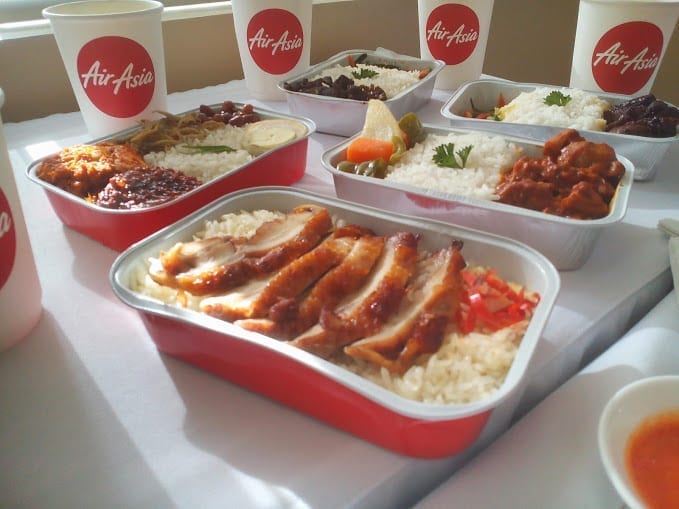
    Frequent travelers will be happy to have the option of enjoying appetizing and affordable meals on their way to a destination. Nasi lemak from Malaysia, green curry from Thailand, and beef bulgogi from Korea are just a few of the gourmet meals you can now enjoy onboard AirAsia, whether you’re traveling on international or domestic flights.

    AirAsia unveiled its Santan inflight menu and catalogue featuring the best of Southeast Asian flavours at a press event held in Bohol in partnership with Amorita Resort.

    Santan or coconut milk is a popular ingredient used in different Southeast Asian cuisine, and is featured in some of the inflight meals. The new inflight menu and catalogue features hot meals, savory snacks, healthy food selections, a variety of beverages, and special gift items and merchandise.

    Nasi lemak, a fragrant rice dish cooked in coconut milk and pandan leaf, served with traditional anchovies chili paste, cucumber, and various side dishes, is considered the national dish of Malaysia. AirAsia’s in-flight version manages to deliver big on flavor, with its savory coconut milk-infused rice and chicken in spicy sambal sauce.

    Chicken rice is popular in hawker stalls and restaurants in Singapore. The Hainanese roast chicken with seasoned rice served with a tasty secret chili, ginger and garlic sauce that’s sure to be a crowd-pleaser

    Thai green curry, an aromatic chicken curry infused with authentic spices from Thailand like kaffir lime leaves and Thai basil served with fragrant white rice, is also a hit with travelers.

    Are you a fan of Korean food? Try AirAsia’s spicy beef bulgogi, a stir-fried beef dish served with japchae or Korean glass noodles.

    For true blue Pinoys, there’s also our signature chicken adobo from the Philippines.

    Pasta lovers and kids will enjoy the Chicken Lasagne, a blend of classic creamy cheese and chicken with assorted vegetables. Dessert selections include red velvet cake, chocolate meringue and chocolate chip cookies.

    AirAsia, which has been voted the World’s Best Low Cost Carrier for nine straight years, aims to reinvent flight hospitality with its inflight meal options.

    “Gourmet experience onboard doesn’t have to be expensive and as an added value for our guests, we are keeping our pricing at affordable levels and at the same time maintaining the high quality and flavour of all our meals,” said AirAsia Philippines’ head of ancillary Karlo Sanchez.

    Hot meals are available onboard and via online pre-booking on all AirAsia flights across their network, extending as far as India, China, Australia and United States. A la carte hot meals cost P150 while combo meals with a choice of drinks and brownie are priced at P180 via online pre-booking.

    To enjoy greater savings, AirAsia encourages guests to pre-book their meals or to purchase their meals in advance online. Guests who pre-book will be assured of meal availability and will enjoy priority meal service onboard.

  • Zalora embarks on company-wide project to deliver operational speed to employees

    Zalora embarks on company-wide project to deliver operational speed to employees

    SAP announced that ZALORA has selected SAP S/4HANA to enhance its operational capabilities and streamline processes for real-time business decisions.

    Founded in 2012, ZALORA is Asia’s online fashion destination, serving markets across Southeast Asia, Hong Kong and Taiwan. With more than 30,000 products online from over 500 international and local labels, ZALORA provides fashionistas access to the latest fashion goods from across the world. To meet the growing needs of its expanding online business, ZALORA looked to SAP for a reliable, scalable and industry-grade enterprise resource planning (ERP) system.

    Before adopting SAP S/4HANA, ZALORA’s accounting processes required manual input for details such as revenue and product costs, which were computed outside of its accounting system. This posed a challenge for the business due to the reliance on human input rather than processes for data integrity and reporting. Without an integrated solution, business information was often presented in silos with no flow between other key systems, presenting a lack of real-time data that were crucial to operations and planning.

    “To support our continued growth as a leading online fashion retailer, we needed a platform capable of automating and streamlining existing processes and the capacity for large scale expansion,” said Parker Gundersen, ZALORA Group CEO. “SAP’s S/4HANA solution fulfilled our objectives of visibility, compliance, automation, productivity and sustainability. We’re very excited that SAP’s real-time insights allows us to better meet the needs of our digital business.”

    SAP S/4HANA® is a business suite that helps organizations to run their core business processes digitally and live. Characterized by simplifications and high effectiveness, SAP S/4HANA is a system of intelligence which automates processes and provides end users with active decision support in real-time based on data from both internal and external sources. With SAP S/4HANA, ZALORA will be equipped to handle extremely high volume orders per day during peak sales periods and promotions and gain real-time customer and business insights.

    At the core, ZALORA also foresees that it will become more productive from enhanced real-time oversight of critical financial data that will grant insight and address issues in merchandising, sales, supply chain, finance and control, and compliance, through a single platform.

    ZALORA will also be leveraging the expertise of IBM for the implementation across its business. IBM will support ZALORA by working closely with its project teams to migrate ZALORA systems to the SAP S/4HANA platform.

    “Online businesses are increasingly driven to innovate and discover new ways to deliver values to their customers along the entire purchase journey,” said Khor Chern Chuen, Managing Director of SAP Singapore. “ZALORA has transformed the way people shop and interact with their favourite brands, and this project highlights how the company is blazing the trail in digital transformation. We are excited to work with ZALORA, one of the fastest growing online fashion retailer in Asia, to accelerate their business and provide a better experience for their customers and increase business value as an e-retailer.”

  • Honda recalls 2.1 million vehicles worldwide over fire risk

    Honda recalls 2.1 million vehicles worldwide over fire risk

    Honda Motor said on Friday it would recall about 2.1 million vehicles worldwide to replace battery sensors due to the risk of fire.

    Chris Martin, a spokesman for the Japanese automaker said the recall would include 1.15 million Honda Accord vehicles from the 2013-2016 model years in the United States, and nearly 1 million elsewhere, to replace a 12-volt battery sensor.

    The company said it had received four reports of engine compartment fires in the United States and at least one in Canada, in areas that use significant amounts of road salt during the winter. There have been no reported injuries.

    The automaker has received 3,972 U.S. warranty claims relating to the issue.

    The battery sensors may not be sufficiently sealed against moisture intrusion, Honda said. Over time, moisture may introduce road salt or other material into the battery sensor, leading to rust and eventual electrical shorting of the sensor.

    Due to the large size of the recall, Honda said dealers would initially adopt a temporary fix by applying an adhesive to prevent moisture intrusion, and then later replace the sensor.

    The company first received a claim of an engine compartment fire from Canada in 2015 and began investigating the issue. In early 2016, it received a claim of a similar fire in China.

    Honda introduced a redesigned battery sensor in June 2016. After an investigation of the China incident, the automaker said it initially believed the “future occurrence rate was estimated to be low,” but continued to probe the matter after receiving additional reports of fires.

  • Chinese market no longer land of opportunity for Korean products

    Chinese market no longer land of opportunity for Korean products

    China’s consumer market that once offered vast opportunities for South Korean exporters has become less penetrable as Chinese firms make goods that compete with imports, industry data showed on July 14th.

    Samsung Electronics, which in 2012 ousted Apple Inc. to hold the top market share for smartphones in China, fell to eighth place in the first quarter of this year. Samsung’s market share in handsets hit 17.7 percent in 2012. It dropped to 4.9 percent in 2016. In the first quarter this year, its market share was a marginal 3.1 percent.

    China’s own brand Huawei raised its market portion from 9.9 percent to 18.9 percent over the past five years. Another local firm OPPO, who had no presence in 2012, soared to grab 18.7 percent during the period. Together with Vivo, the three are dominating the Chinese smartphone market.

    Industry officials say that data indicates THAAD may not be the only cause of falling South Korean exports to China as firms there are quickly catching up in technology and no longer relying on foreign products.

    South Korea’s auto exporters have also been nudged out by Chinese companies, data showed. Hyundai Motor and its sister firm Kia Motors reported their market share in China had been cut in half compared with five years ago.

    The carmakers said their numbers fell from 8.6 percent to 3.8 percent. They were routed by Chinese local labels, which claimed 46.1 percent of the market, followed by European (21.4 percent) and Japanese (17.6 percent) automakers.

  • Siemens launches Digitalization Hub in Singapore

    Siemens launches Digitalization Hub in Singapore

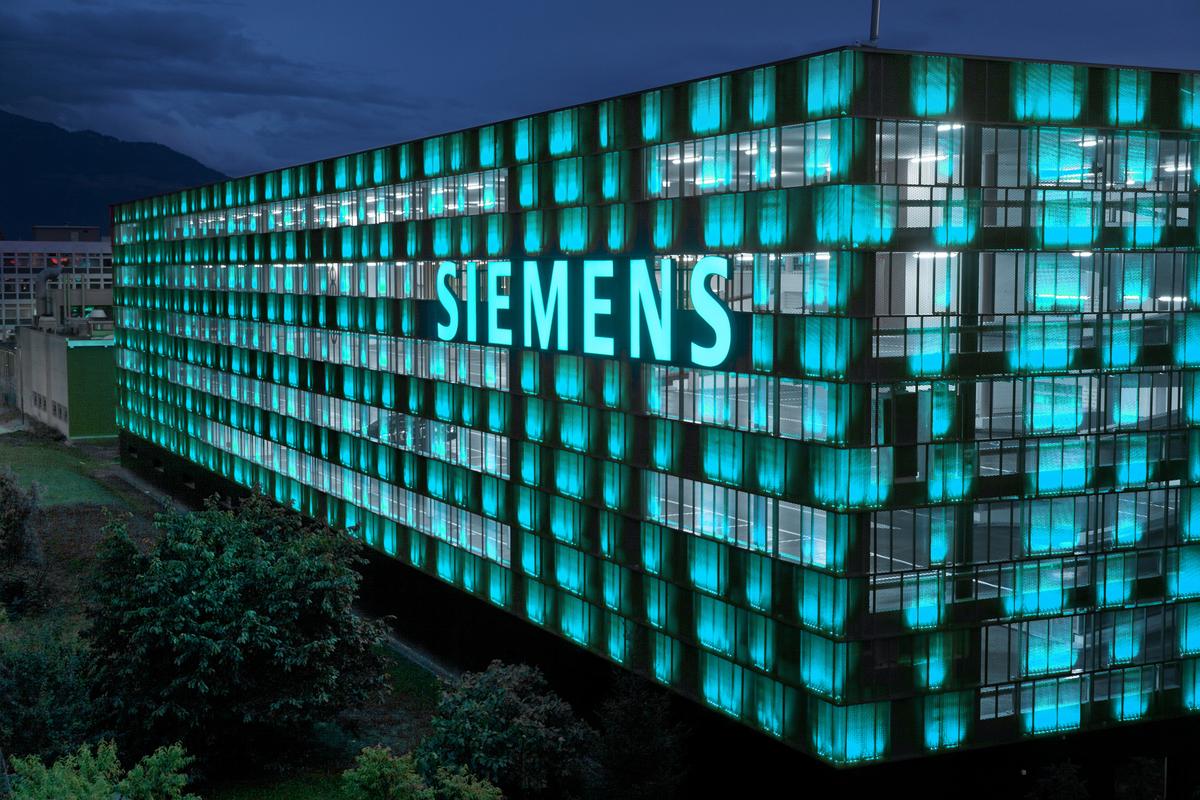
    Siemens has launched its first fully integrated Digitalization Hub in Singapore in a bid to bring its expertise and innovations in the IoT to the Southeast Asian market.

    The company will be co-creating future digital applications with customers and partners to build a digital ecosystem.

    Supported by the Singapore Economic Development Board (EDB), the Hub brings together data scientists, solution architects, software engineers, system experts and domain specialists from the urban infrastructure, industrial and healthcare sectors. These professionals will experiment, learn, develop and test-bed innovations and future-ready digital solutions that help businesses become more efficient and sustainable.

    An integral part of the Digitalization Hub concept is MindSphere, an open, cloud-based IoT operating system that offers data analytics, connectivity capabilities and tools for developers, applications and services. This platform helps evaluate and process data to gain insights and optimize asset performance for maximized productivity.

    “Singapore is the ideal location for this Hub because of its distinctively advanced industrial and urban infrastructure development, combined with the government’s Smart Nation thrust to enable a digital economy,” Siemens CEO Joe Kaeser said.

    Sixty specialists from a variety of disciplines will work at the Hub at the outset. The number of digitalization experts is expected to reach 300 by the year 2022. The key target areas for the Hub are urban infrastructure, advanced manufacturing and healthcare.

    To mark the launch of the Siemens Digitalization Hub, three collaboration agreements were signed with Singapore partners. Nanyang Technological University, Singapore (NTU Singapore) will partner with Siemens to create and showcase data-driven innovations for urban infrastructure.

    SP Group will collaborate with Siemens to build a next-generation energy management software platform for SP’s 24/7 control centers, to enable more robust planning, surveillance and predictive maintenance of Singapore’s electricity network.

    The electronics arm of Singapore Technologies Engineering, Singapore Technologies Electronics, and Siemens also signed a partnership agreement to co-create and proactively market innovative digital use cases in the field of transportation (roads, harbors, airports and mass transit).

  • Telkomsel trials FDD-LTE Massive MIMO

    Telkomsel trials FDD-LTE Massive MIMO

    Indonesia’s Telkomsel has completed Indonesia’s first FDD-LTE massive multiple input multiple output (Massive MIMO) field trial in collaboration with ZTE.

    The achieved a nearly four-fold increase in data throughput compared to existing 2×2 MIMO FDD-LTE networks to 468Mbps.

    It was conducted at one of the largest and most densely populated cities in eastern Indonesia – Makassar. The trial used ZTE’s FD-LTE Massive MIMO solution n existing commercially available handsets and MiFi units in a simultaneous 4 handsets / MiFi configuration.

    ZTE and Telkomsel have now agreed to continue with the next phase of FDD-LTE Massive MIMO field trials before a potential wider rollout to the Telkomsel LTE network.

    “We are constantly improving our technology and readiness of our next-generation networks to cope with the growing global trend,” Telkomsel VP of technology and system Indra Mardiatna said.

    “This is in line with our vision of digital transformation to always be at the forefront of implementing the latest mobile cellular technologies that will provide substantial benefits to the people of Indonesia in the future.”

    ZTE is currently collaborating with over 20 major operators worldwide on Pre5G development, trials and deployments, and has been conducting Pre5G Massive MIMO pilot projects since 2015.

  • Over 50 retailers eyeing New Zealand

    Over 50 retailers eyeing New Zealand

    International retailers are continuing to fuel a race for space in the Pacific region, with over 90 groups seeking to roll out stores in Australia and 50 retailers eyeing New Zealand, according to a new CBRE report.

    According to the property firms research, despite the pick-up in activity in recent years – international brand penetration rates in Australia and New Zealand remain low relative to other developed nations.

    The penetration rate in Australia is 28 per cent, which is low relative to other countries in the region including China, Singapore and Hong Kong, all of which have penetration rates in excess of 45 per cent.

    New Zealand’s penetration rate is even lower at 16 per cent, which CBRE said highlights significant catch-up potential in both countries.

    Alistair Palmer, national director of CBRE’s Retail Services Group, said the research also highlighted that international retailers were increasingly viewing the Pacific as one region.

    “Previously, international retailers focused on Australia followed by entry into New Zealand, usually after a few years,” Mr Palmer said.

    “Recent developments indicate that international retailers increasingly view the Pacific as one region, with an initial target of the three main gateway cities of Sydney, Melbourne and Auckland followed by secondary cities in both countries. This is evident by the international penetration rate of Auckland being on par with Brisbane but growing at a more significant pace, on par with Sydney, in the past year.”

    One of the downsides for domestic retailers has been a significant increase in competition for sites and a related increase in rents.

    However, CBRE said that displaced domestic retailers could increasingly seek secondary centres and this will have a positive impact on centres and locations that currently struggle as a result of low retailer demand.

    The report also tips that there will be a shift in the type of international retailers entering the region.

    The head of CBRE’s Pacific Retail Occupier team, Tim Starling, said luxury retailers were the largest group to enter Pacific last year and this trend was expected to continue for a further two to three years. However, a slow-down was then expected as these groups approach their store targets.

    “Over the next five years, we expect mid-range fashion and specialist clothing brands to show a rising contribution to brand entry rates in Australia and New Zealand,” Starling said.

    “These retailers will have a more wide-ranging impact than the luxury brands, as they tend to focus only on CBD or prime regional centre locations.”

    CBRE’s report highlights that the retail landscape in Australia and New Zealand has already undergone significant change, with the arrival of international brands having driven up CBD rents, leading to regional shopping centre redevelopments and the activation of new retail precincts in both countries.

    McNabb said a strong preference for international brands, food and beverage and retail-tainment from the younger demographic was supporting this change, as was an increase in tourist arrivals from China.

    Chinese tourist arrivals have tripled in Australia and quadrupled in New Zealand over the past decade, which is supporting retail trade, particularly in the major CBD markets.

    “Chinese tourists not only spend more per visit, but they also have a higher appetite for goods purchase to take home, as opposed to western tourists,” McNabb said.

    “Another market driver has been Australia and New Zealand’s consumption per capita, which has grown at twice the rate of the U.S. over the past decade. This has contributed to the sales productivity of some international brands being among the highest in the world which, coupled with low international brand penetration rates, is making this region highly attractive.”