Tag: asia

  • Myanmar’s First Private Bank to modernise banking operations with Misys

    Myanmar’s First Private Bank to modernise banking operations with Misys

    First Private Bank (FPB) has chosen Misys FusionBanking to streamline operations and digitalise as it takes a significant role in contributing to Myanmar’s growing economy. The bank, which received the first banking licence in Myanmar in 1992, aims to facilitate access to financial services for all and will transform its retail, corporate and digital offering to bring new products and enhanced services to customers quickly and efficiently.

    “The market here has been through immense change across all industries, and banking is no exception. As we come into a period of expected rapid growth, competition is heating up and customers are demanding superior products and services,” said Dr Sein Maung, Chairman at FPB. “Our mission is to deliver efficient, transparent and trustworthy banking to all and we know that requires a slick, modern technology platform at the core. Misys technology is flexible and scalable and will form the foundation for efficient, digital banking here at FPB.”

    Myanmar’s economy is expected to grow an average of 7.1 percent per year in the next three years. Amidst increasing competition, FPB will be able to provide consumers and businesses with relevant and innovative products and services and shape an enhanced digital experience. This will enable it to capture a greater share of the country’s retail and corporate banking market, including opening up services to those that are currently unbanked.

    This project will see Misys FusionBanking Essence and Digital Channels provide an efficient, connected front, middle and back office with advanced analytics to support the bank in better understanding consumer needs. FPB will be able to launch personalised products quickly and cost effectively in line with demand. Customers will be able to view and access their accounts across channels, get salaries credited electronically, transfer money and pay bills from different branches or on the go via mobile. The FusionBanking Insight analytics module will also enable the bank to track performance and obtain a consolidated view of customer preferences.

    Meanwhile, Misys FusionBanking Trade Innovation and Corporate Channels will help the bank provide unified online commercial banking services and digitalised, efficient trade finance capabilities. The move will ensure rapid access to trade finance and working capital for corporate clients, and support Myanmar’s businesses in expanding into international markets. With an automated trade finance solution, the bank can grow volumes quickly and securely with minimal impact on operations.

    “Creation of a stable banking system has a powerful part to play in supporting this phase of Myanmar’s economic and social growth,” said Simon Paris, President at Misys. “Developing regions can often leap-frog mature banking market challenges, since they are not saddled with legacy technology and processes and can modernise faster. Digital services like those we are providing to FPB make a significant difference. This is especially true in a country where many locals are underbanked but now have access to the latest smartphones, having skipped chunkier mobile models of yesteryear. Bringing modern technology into the bank to support this changing dynamic and drive inclusive financial services is aspirational and speaks to a positive future.”

    Big Byte International was instrumental in the deal which saw Misys chosen over other core banking vendors for its modern, componentised technology and expertise in the region. Amit Johari (AJ), CEO, Big Byte International said, “With the launch of our third entity in Myanmar, Big Byte International will continue to provide consulting, sales and support services to banks and FIs across Asia. Myanmar is our key growth market in addition to Singapore and India.”

    With a growing customer base in Myanmar and Asia Pacific, Misys will help FPB to incorporate best practices, processes and technology. Misys FusionBanking will replace the bank’s partially computerised distributed branch system.

  • VoIP and SIP trunking revenues growing strongly

    VoIP and SIP trunking revenues growing strongly

    The benefits of VoIP access and SIP trunking services are prompting enterprise customers to transition to fully converged, IP-based networks, without having to overhaul existing IT networks, according to Frost & Sullivan.

    The research firm forecasts that market revenue will grow at a compound annual growth rate (CAGR) of 21.5% from 2015 to 2020, and a user base at a CAGR of 18.1%.

    Businesses aiming to lower operational expenditure and obtain significant returns on investments are being drawn to SIP trunking’s attractively priced services, layered with value additions such as voicemail, mobility and collaboration tools.

    Disruptive pricing, packaging, feature/functionality and business models within the existing VoIP access and SIP trunking market, as well as the emerging Communications Platform as a Service (CPaaS) space, are accelerating adoption among enterprises and heating up competition among service providers.

    “There are significant opportunities for providers of IP-based voice access to build on current successes and branch out into the emerging CPaaS arena,” said Frost & Sullivan Digital Transformation Industry Analyst Michael Brandenburg.

    “CPaaS offerings are emerging as an on-demand alternative to traditional communications services, prompting companies to build, buy or partner, to enable an application program interface (API)-level integration with voice services.”

    While the current adoption of CPaaS is largely limited to app developers and aggressive startups, customer demand for multiple ways to communicate with businesses, including voice, video and text messages will drive adoption among larger enterprises as well.

    “This is the right time for service providers to penetrate the emerging CPaaS arena through mergers and acquisitions that add breadth and depth to the existing portfolio and customer base,” noted Brandenburg.

    “Targeting competitors such as start-up CPaaS providers and API developers will provide complementary network footprint and service capabilities, helping the market grow significantly.”

  • ALC and NFF agree key freight strategy priorities

    ALC and NFF agree key freight strategy priorities

    With less than a fortnight until the Federal Budget is handed down, it was an opportune moment for the peak bodies representing the nation’s freight logistics and farming sectors to underscore their common interests and agree priority areas for action.

    “This meeting allowed ALC and the NFF to explore the key infrastructure issues involved in getting produce from the farm into our cities and ports,” ALC Managing Director Michael Kilgariff said.

    “We know Australian households want to purchase the freshest possible produce when they do their shopping. We also know that Australia’s high-quality agricultural produce represents an enormous export opportunity. However, industry can only meet the expectations of domestic and international consumers if we have a safe and efficient supply chain.”

    “This requires governments to make the necessary regulatory improvements and infrastructure investments, including constructing major projects such as the Inland Rail linking the ports of Melbourne and Brisbane, with efficient linkages to the ports of Newcastle, Botany and Kembla.

    NFF Chief Executive Officer Tony Mahar said the meeting was a good chance for NFF members to provide their perspective on the National Freight and Supply Chain Strategy.

    “Agriculture is an industry that competes on the global stage. In order to maintain and build our international competitiveness, strategic infrastructure investment is vital.”

    “Farmers are some of the best innovators in growing our produce, but only so much can be done on farm. Once our products leave the farm gate we are heavily reliant on our transport and infrastructure networks to reach consumers. Getting this right is fundamental, which is why we have had these discussions with ALC to identify where key productivity gains can be made.”

    “ALC and NFF will use the outcomes from this meeting to shape our respective contributions to the ongoing development of the National Freight and Supply Chain Strategy. This will help ensure the Strategy is relevant to the needs of the freight and logistics industry, farmers and consumers,” Mr Kilgariff and Mr Mahar concluded.

  • Private hospitals struggle to stay open in Vietnam

    Private hospitals struggle to stay open in Vietnam

    Many private hospitals in HCM City are on the verge of shutting down as most average patients prefer cheaper prices at public hospitals. Diep Van Phat, chairman of the International Phuc An Khang Hospital (Ipak), ordered employees to stop receiving patients as the hospital will shut down on April 28.

    Ipak Hospital was converted into a modern hospital from five blocks apartment buildings with an investment of VND2.5trn (USD109m).

    It was hoped that Ipak could reduce the overload at several hospitals in District 2, District 9 and Thu Duc District and some patients from Dong Nai Province.

    However, hundreds of doctors and nurses haven’t received their wages for February and March as the hospital lacks patients.

    Two firms have been invited to invest in Ipak but nothing has progressed. The hospital has incurred VND60bn (USD2.6m) in debt.

    About 4,000 patients who have just registered their health insurance here will be transferred to other hospitals and 50% of the employees have no idea where to go to after the hospital is closed.

    The 72-story Phu Tho Hospital in Tan Phu District was closed several years ago after being put into operation for only six years.

    Debts to the employees and shareholders haven’t been settled.

    The hospital is being offered at VND390bn (USD17m) but hasn’t attracted any buyer.

    No one believes the hospital can thrive and the price is deemed too high for a regular real estate investment.

    City International Hospital in Binh Tan District is also struggling. It was opened in 2014 with an investment of USD80m.

    But now they have to cover USD1m in losses every month.

    Tran Thi Lam, chairman of Hoa Lam Corporation, the hospital’s investor, hopes that the city authorities and the Ministry of Health will support them with more access to funds and co-operation with public hospitals.

    Many private hospitals in Vietnam don’t participate in primary health care activities so patients can’t use their health insurance there and eventually are put off by private hospitals.

    Meanwhile, the people with health insurance in public hospitals are complaining about the treatment difference.

    Experts have also complained about private companies being hired to supply equipment in many public hospitals and can earn huge commission fees.

    Some tests, operations and health check-ups in public hospitals actually have higher fees than in private hospitals.

    It’s clear that with better equipment, the patients will be first to enjoy the benefits but it’s also creating a disparity as patients who don’t use health insurance are offered better customer services.

    61-year-old Nguyen Van Tuan said he felt self-pity sometimes. “I wait from morning until noon to have my name called and the health check-up is sloppy. People with money are guided by the hospital employees to the designated rooms and taken care of. The process is much quicker too,” he said.

    Dr Le Van Toan who retired from a local public hospital to opened a private clinic said it’s like there was a “private hospital” inside the public hospital where patients were treated like gods.

    But everywhere else is overcrowded and patients sleep or eat out in the hallways.

  • Samsung Pay early access program launches in Hong Kong

    Samsung Pay early access program launches in Hong Kong

    Samsung has launched an early access program for Samsung Pay in Hong Kong, in collaboration with local banks.

    Customers with American Express, Citibank, Dah Sing Bank and Standard Chartered Bank cards are able to register to participate in the early access program.

    The service is expected to launch more widely in the second quarter, adding support for other card issuers including Bank of China (Hong Kong).

    Samsung Pay is a mobile payment system that supports both NFC and Samsung’s own Magnetic Secure Transmission (MST) technologies.

    It uses three levels of security – biometric authentication, card tokenization and the Samsung Knox mobile security platform, as well as the ability for users to lock or wipe Samsung Pay remotely should their phone be lost or stolen.

    To date, Samsung pay has launched in 12 markets worldwide and is in early access in a further four. Over 240 million transactions have been processed by Samsung Pay in the past 18 months.

    Samsung has partnered with payment technology companies American Express, Mastercard and Visa for the mobile payment service.

    “As a global leader in information technology, Samsung has always aspired to create better and more fulfilling experiences for our users through meaningful innovations,” Samsung VP and head of IT and mobile communications Yiyin Zhao said.

    “We hope to offer our consumers a payment service that is truly safe, simple, and widely-accepted. We are also thankful for the support of Mastercard. Together, we are creating a more complete payment experience, further enhanced with promotions, to bring mobile payments capability to more users than ever before.”

    Mastercard division president for Hong Kong, Macau and Taiwan said a recent survey by the payment card company indicates that more than four in 10 Hong Kong consumers have made purchases via their mobile device in the past three months.

    “This partnership demonstrates Mastercard’s commitment to delivering innovative solutions for the rapidly evolving mobile payments space,” he said.

    Compatible Samsung Pay devices include the Galaxy S8+, Galaxy S8, Galaxy S7 edge, Galaxy S7, Galaxy S6 edge+ and Galaxy Note5, with more compatible devices due to launch soon.

  • Mobile app marketer MobAir to open Shanghai office

    Mobile app marketer MobAir to open Shanghai office

    MobAir is taking eMarketer’s prediction that total mobile ad spend in China will climb 58% in 2017 seriously.

    The mobile growth platform for brands, which counts AliExpress, Trivago, and Baidu as clients, is investing in Shanghai with a new office.

    The office will allow the startup to offer personalized services to local partners and broaden its footprint.

    Through MobAir, China-based CMOs will be able to take advantage of the company’s portfolio of user acquisition mobile services.

    “China’s app economy is accelerating in growth, putting it within striking distance of Japan and the United States,” Barak Aviad, CEO of MobAir said in an announcement.

    “Gaming apps are the biggest market winners regarding revenue. Therefore, our company, equipped with years of experience in utility and gaming verticals, sees enormous potential in the Chinese mobile market in terms of app advertising growth,” he added.

    MobAir has worked with leading brands in social casino and gaming to roll out successful campaigns on mobile.

    Launched in 2015 and a Global Digital Marketing Group company, it offers a performance-based mobile app marketing platform for large-scale user acquisition.

    Its native advertising solutions target premium customers and drive loyalty.

    MobAir is no stranger to China. The company has worked Chinese advertisers and publishers since its launch. According to the announcement, the company is looking expand its list of clients with China’s gaming giants.

    With the new Shanghai office, the company now operates six offices across Asia, Europe, and the Middle East.

  • Fiat Chrysler may add more self-driving supplier partners

    Fiat Chrysler may add more self-driving supplier partners

    Fiat Chrysler Automobiles may seek more supplier partners to help it develop and build self-driving vehicles, Chief Executive Officer Sergio Marchionne said on Wednesday.

    The Jeep and Ram brands are strong enough to exist as standalone entities outside FCA, Marchionne also said on a conference call with analysts after the company reported record first-quarter results. But he did not elaborate on whether there were any plans for a spin-off of either, like with Ferrari.

    The automaker reported an 11 percent jump in first-quarter operating profit, boosted by strong sales in North America, its most profitable market. Shares jumped about 10 percent on the news.

    FCA currently has a partnership with Alphabet Waymo self-driving unit. Marchionne said Waymo has an “unbeatable solution” to help build self-driving vehicles, including versions of the Chrysler Pacifica hybrid minivan, but that FCA is looking at additional partners.

    “Between now and the next three years, we need to provide viable solutions to take people around,” Marchionne said, citing Waymo’s new test program in Phoenix offering ride sharing in self-driving Pacificas.

    But FCA is considering more partners “because banking all of our solutions on one possible outcome is going to be disastrous,” Marchionne said. FCA continues to work with Waymo “in a very intense way,” he said, but “we need to look at optionality in more than one dimension” to build self-driving cars.

    FCA is retooling several U.S. plants to produce redesigned versions of the popular Jeep Wrangler and Ram 1500 pickup later this year and early next. Marchionne said the company would continue to produce several versions of the current models for several months in 2018 after the new versions begin production.

    New models from premium brands Maserati and Alfa Romeo should help boost FCA’s gross margins. Marchionne said Alfa, long a cash drain on the company, could be profitable in the fourth quarter, while Maserati has returned double-digit margins over the past three quarters. Both brands have launched new luxury utility vehicles in the United States.

    Marchionne said FCA hopes to resolve emissions certification issues “in a few weeks” with the U.S. Environmental Protection Agency and the California Air Resources Board.

    In the meantime, he said FCA will try to meet future emissions regulations without relying so heavily on diesel engines, but with a combination of gasoline engines and electric motors.

  • Malaysia Airlines offers to lease A330s from Alitalia

    Malaysia Airlines offers to lease A330s from Alitalia

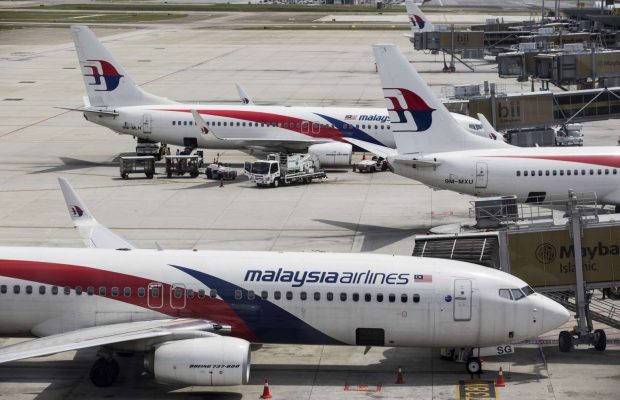
    Malaysia Airlines has offered to lease Airbus A330 jets from Alitalia if the struggling Italian airline is wound up, the Asian carrier’s chief executive told on Wednesday.

    Alitalia is preparing for special administration proceedings after workers rejected its latest rescue plan, making it impossible for the loss-making airline to secure funds to keep its aircraft flying. Workers are hoping the Italian government will step in with an alternative rescue deal.

    Malaysia Airlines could take between six and eight Airbus A330s from Alitalia, CEO Peter Bellew told in Dubai.

    An Alitalia spokesman declined to comment.

    Malaysia Airlines is emerging from a turnaround after twin tragedies since 2014, when flight MH370 disappeared in what remains a mystery, and flight MH17 was shot down over eastern Ukraine.

    Its load factors – or how full its planes are – averaged around 80% in the three months to March 31, Bellew said.

    Malaysia Airlines wants to lease between six and eight A330s or Boeing 777s for use from 2018 and a further seven to nine for 2019, he said.

    This is an increase on the six for 2018 and six for 2019 he told last month he was interested in.

    “The world really is awash right now” with large aircraft, Bellew said. “There are really good deals out there at the moment. It’s a buyer’s market right now.”

    Bellew also said he planned to make a decision on an order for 30-35 new Airbus A330neo or Boeing 787-9 widebody planes in the next four to six months to replace its A330s from the end of 2019.

    “If the prices are good … we will do an order,” he said. “But if the price isn’t right, we won’t do it.”

  • Nokia narrows losses for Q1

    Nokia narrows losses for Q1

    Nokia has reported a first quarter net loss of €435 million ($472.7 million), an improvement from the €712 million loss recorded in the same quarter a year earlier.

    Operating profit actually grew 9% year-on-year during the quarter, but net profit was impacted by higher operating expenses accrued as the company invested in digital health and digital media businesses and faced increasing licensing-related litigation costs.

    Revenue declined by a lower than expected 4% to €5.38 billion, with the revenue decline in Nokia’s networks business slowing to 6% from 14% in the previous quarter.

    Networks revenue fell to €4.9 billion, with ultra broadband networks accounting for €3.59 billion of this total and IP networks and applications making up most of the remainder.

    Nokia Technologies revenue grew 25% year-on-year to €247 million, mostly due to higher patent and brand licensing income and the acquisition of French consumer electronics company Withings in June last year.

    “Nokia’s first quarter 2017 results demonstrated our improving business momentum, even if some challenges remain,” Nokia CEO Rajeev Suri said.

    “We slowed the rate of topline decline and generated healthy orders in what is typically a seasonally weak quarter for us. We also continued to see expansion of cross-selling across our full portfolio, delivered excellent gross margins and improved group-level profitability.”

    Suri said he is cautiously optimistic about Nokia’s performance in the year ahead, and expects to meet its guidance of ahieving a profit for the full year.

    But net sales for the year are expected to decline in line with the expected “low single digit percentage” decline in the primary addressable market for the company’s networks business.

  • South Korea’s Kia invests in Indian factory after China troubles hit profit

    South Korea’s Kia invests in Indian factory after China troubles hit profit

    South Korean carmaker Kia Motors Corp signed a deal on Thursday to invest about $1.1 billion to build its first factory in India, aiming to tap a fast growing market at a time when its China sales are sagging.

    The Hyundai Motor Co affiliate posted a 19 percent slump in first-quarter net profit as anti-Korean sentiment and a conflict with dealers hit its China sales, sending its shares down 2.2 percent in a flat market.

    Production at the factory in Anantapur district, Andhra Pradesh state, would begin in the second half of 2019, the company said.

    Kia is expected to leverage Hyundai’s supply chain network built around its factories in the neighboring state of Tamil Nadu to gain a foothold in the Indian market, tipped to become the world’s third-largest by 2020. Hyundai is India’s No.2 automaker by sales.

    The plant, which will have production capacity of 300,000 vehicles a year, will produce a compact sedan and a sport utility vehicle tailored for the Indian market, Kia said in a statement.

    It will break ground in the fourth quarter of this year.

    “Our new India plant will enable us to sell cars in the world’s fifth-largest market, while providing greater flexibility for our global business,” Kia Motors President Park Han-woo said in a statement.

    Reuters reported in February that Kia was close to finalizing Andhra Pradesh as the site for its first Indian factory..

    The announcement came after Kia and Hyundai Motor suffered a March sales slump in China, their biggest market, and sharply cut production in the wake of Seoul’s decision to deploy a U.S. anti-missile system, which angered China.

    “The fall in consumer sentiment in China is stemming from a political issue, a situation which is beyond the control of an individual firm and is difficult to be resolved within the short term,” Han Chun-soo, Kia’s chief financial officer, said during an earnings conference call.

    Kia would adjust its China production to reduce inventories, cut costs and launch new models including a small crossover to minimize the impact of the political row, he said.

    Kia also said its first-quarter profit was hurt by a cost of 160 billion won ($141.53 million) to recall vehicles over an engine issue in North America and South Korea.

  • 3.4b smartphones to be ready for m-payment by year-end

    3.4b smartphones to be ready for m-payment by year-end

    The install base of smartphones compatible with mobile payment platforms Apple Pay, Samsung Pay or Android Pay is on track to reach 3.4 billion by the end of the year, IHS Markit has predicted.

    The company estimates that by the end of 2017, 11% of active smartphones worldwide will be ready for Apple Pay, 61% will be compatible with Android Pay and 3% with Samsung Pay – but this overlaps with the compatibility of Android Pay.

    The total install base of compatible smartphones is meanwhile predicted to grow even further to 5.3 billion by 2021.

    But to date Apple has launched Apple Pay in just 15 international markets, Samsung has rolled out Samsung Pay in 14 and Android Pay is available in 10, leaving a large addressable market untapped.

    “To reach [the large install base of compatible] smartphones, Apple, Samsung and Android must strategically expand mobile payments services and build partnerships with banks and financial institutions,” IHS Markit mobile and telecoms analyst Ruomeng Wang commented.

    “Despite Apple Pay having a 10-month head start on Samsung Pay, Samsung has been catching up with Apple in terms of total available markets,” he noted.

    Use of the payment platforms is also increasing online. IHS Markit said currently 38 payment platforms and 2 million small businesses are supporting Apple Pay on the web, while Android Pay allows users to make payments on the Google Play store as well as multiple mobile web sites in the US.

    “Compared to Apple and Google, Samsung doesn’t have the same level of content, app platforms or web browsers designed to keep customers engaged. In order to tie customers to Samsung’s ecosystem, Samsung must actively expand Samsung Pay’s support for online retail,” Wang said.

  • Aldi enters Chinese retail market

    Aldi enters Chinese retail market

    The German retailer has a unique retail model that has captured market share around the globe, but it’s entry in China will be a little bit different.  On April 25 the company announced it had launched its Chinese presence through a collaboration with online retailer TMall Global.

    The collaboration was announced at a fashion show organized by the two companies, where models were wearing clothes from the retailer.

    “In recent years, retailers from different countries have put Tmall Global as a top choice when considering entering the Chinese market, and have achieved astounding sales,” Tmall Global general manager Alvin Liu was quoted as saying on Kejilie.com.

    “Tmall Global is very honored that we can collaborate with Aldi this time to explore new retailing opportunities together, and we believe that Aldi, known for its top-quality products, will be able to better meet the demand of Chinese consumers.

    The story reported Aldi China CEO Christoph Schwaiger as describing the collaboration as the start of Aldi’s journey in China.

    “We will try our very best to fulfil the promise to provide Chinese consumers with premium lifestyle products, and will proactively boost the growth of China’s retail scene and consumer spend,” he was quoted as saying.

    Since March 20 when Aldi did its first trial on the Tmall platform, hundreds of SKUs (stock keeping units) have already been put online to complement the usual spending habits of consumers in China’s first and second tier cities.

    During the trial period, products such as milk powder (for adults), honey and mixed nuts were bestsellers, and even ran out of stock. To solve the problem, Aldi was forced to ship in new stocks from Australia.

  • Apple to hold educative sessions at Apple Stores to increase customer engagement

    Apple to hold educative sessions at Apple Stores to increase customer engagement

    It may just be a marketing gimmick, but Apple’s latest initiative has all the elements to attract the crowd in its stores. The tech giant is planning to mobilize the mass to its stores by arranging educative sessions, dubbed “Today at Apple”, which would be organized by experienced professionals and will impart wisdom on a varied list of topics ranging from literature to coding.

    This initiative is aimed at building a better engagement between Apple enthusiasts and the brand by providing creative outlets and sessions, completely free of cost. The sessions will be held by experienced Creative Pros, who will make use of the varied products that Apple has to offer in order to educate the participants.

    Apple’s Senior Vice President of Retail, Angela Ahrendts said: “Today at Apple’ is one of the ways we’re evolving our experience to better serve local customers and entrepreneurs.”

    “We’re creating a modern-day town square, where everyone is welcome in a space where the best of Apple comes together to connect with one another, discover a new passion, or take their skill to the next level. We think it will be a fun and enlightening experience for everyone who joins,” she added.

    So if you are a photography enthusiast getting ready to sharpen your skills via six “How To” sessions at the nearest Apple store, that would cover shooting, organizing, editing and more or if you think you have elevated from all the basic stuffs, you can participate in the photo walks. If you are a coder, you can learn how to tinker around with Swift Playgrounds, which shares the same ethos that professional developers regularly apply in their day to day coding activities.

  • Online retail growth reflects changing consumption

    Online retail growth reflects changing consumption

    China’s online retail sales posted robust growth in the first quarter of the year, reflecting a changing consumption pattern, official data showed. Online retail volumes reached over 1.4 trillion yuan ($203 billion) in the first three months, up 32.1 percent year-on-year and more than double the pace of total retail sales, the Ministry of Commerce said on Wednesday.

    Online consumption of services such as tourism, dining and entertainment continued to rise, with sales of travel and take-away food rising by 64 percent and 163 percent, respectively.

    Central and western regions posted stronger growth in online spending and online shoppers in third- and fourth-tier cities.

    “Ten years ago, people said e-commerce would not take off in China. But as soon as you overcome the payment barrier, consumers here are so much more ready than in other countries to take it on,” said Richard McKenzie, a partner at consultancy Oliver Wyman.

    With the advent of better logistics, it is no wonder that online marketing is bringing more sales growth, said Vishal Bali, managing director of Nielsen China.

    “Physical and online stores don’t have to be against each other. That means more connection and integration, which is not simply for retailers but also affects consumer behaviour, manufacturers and other areas of industry,” he said.

    According to research firm Mintel, the cross-border shopping market is expected to post an annual growth rate of 15 percent from 2016 to reach 1.3 trillion yuan by 2021.

    “Haitao, or shopping directly from overseas sites, is likely to be more relevant to brands looking at initial market entry. Retailers and brands should therefore play to their different national specialties when attempting to differentiate themselves from their competitors,” said Matthew Crabbe, Mintel’s Asia-Pacific director of research.

    Another trend the Ministry of Commerce observed is that online players such as Alibaba Group Holding Ltd and JD.com Inc are expanding offline to improve the consumer experience with convenience stores as an emerging market.

    For instance, Alibaba and Shanghai-based retail conglomerate Bailian Group Co announced a partnership in February to jointly design bricks-and-mortar stores to deliver enhanced customer services through technologies such as geo-location, facial recognition and big-data driven customer management systems.

  • Korean banks expand in Vietnam

    Korean banks expand in Vietnam

    Following Shinhan Vietnam’s successful acquisition of ANZ Vietnam’s retail business, fellow Korean banks have also expanded their sizes and market share in Vietnam, seizing the lead in the foreign bank race on the Vietnamese market.

    Shinhan getting stronger

    Shinhan’s takeover of ANZ Vietnam’s retail arm has made its competitors worry, as Shinhan seems to get closer to becoming the champion of foreign banks in Vietnam, especially as the growth rate of the current leader HSBC Vietnam has been wildly fluctuating over the last five years.

    Despite a relatively low chartered capital of only VND4.547 trillion (US$200 million) and being less active than HSBC Vietnam—the number one foreign bank in Vietnam in terms of chartered capital, total assets, and profit, in 2016 Shinhan Vietnam’s profit exceeded VND1 trillion (US$44 million).

    This amount far outstripped numerous, similar-sized domestic banks and all foreign banks in Vietnam. Shinhan Vietnam’s profit was lower than HSBC Vietnam’s only.

    According to the acquisition agreement with ANZ, Shinhan Vietnam will have eight ANZ’s branches and transaction offices in Hanoi and Ho Chi Minh City, carrying on the entirety of the ANZ retail banking staff and 125,000 individual clients in Vietnam, as well as AUD1.1 billion (US$824 million) in outstanding loans and deposits.

    With 20 years of experience on the Vietnamese market and the takeover of ANZ’s retail business, Shinhan Vietnam’s position is getting steadier.

    At present, Shinhan Vietnam has a large number of corporate clients, primarily made up of Korean investors in Vietnam.

    Before the agreement with ANZ, Shinhan Vietnam had been continuously expanding its network. At the middle of April 2017, the State Bank of Vietnam permitted it to open a representative office and four branches and transaction offices in Hanoi and Ho Chi Minh City.

    Korean banks make foray into Vietnam

    Following Shinhan Bank, many other Korean banks are increasing their influence in the Vietnamese market. This expansion is easy to understand, as Korea is the biggest foreign investor in Vietnam.

    Currently, two of the eight 100% foreign-owned banks in Vietnam are from Korea (Shinhan and Woori Bank). Besides, many big Korean banks are starting to join the Vietnamese market by establishing branches or representative offices.

    These include Kexim, KEB Hana, Industrial Bank of Korea, Kookmin, Busan, and Nonghyup.

    In terms of size and market share, Shinhan and Woori Bank are in the lead among all foreign banks in Vietnam. They are formidable competition even to well-established Vietnamese banks.

    By providing good services and competitive interest rates, Korean banks are luring away a large number of clients from domestic banks.

    For instance, in Shinhan Vietnam, the outstanding loan balance of Vietnamese corporate clients accounts for at least 50% of its total corporate credit.

    In addition, Shinhan’s interest rates for home loans, car loans and consumer loans are lower than in many domestic banks. This has attracted a huge number of individual clients, especially from the middle and high income bracket.

    Besides Shinhan, newbie Woori also plans to deploy plenty of retail products in Vietnam in the course of 2017, such as cards, unsecured loans, and mortgages.

    Abundant capital, modern technology inherited from parent banks, knowledge of the Vietnamese market, and the huge number of corporate clients make up the rare advantages for Korean banks to successfully join the Vietnamese retail market, likely making domestic and other foreign banks worry.