Tag: asia

  • Lego Malaysia opens seventh store

    Lego Malaysia opens seventh store

    Lego Malaysia has just opened its seventh store, a flagship on the sixth floor of the Pavilion Elite shopping mall on Jalan Bukit Bintang.

    “Lego has been a global household name for generations, taking creative play to new heights year after year,” said Tan Lian Ann, MD of ALJ Distributors, which owns the Lego store.

    “The brand has and continues to come up with interesting products for all ages.

    “We are thankful to Lego Trading Malaysia and Pavilion Elite for collaborating with us on this latest venture to provide consumers with a new shopping experience. Together, we look forward to continuously bring high-quality Lego Play experiences, not just to children, but also to adult fans and enthusiasts,” said Tan.

    The 279 sqm store aims to provide an interactive and vibrant shopping experience.

    Aside from showcasing innovative displays alongside its products, the store invites visitors to experience Lego Play – from building personalised mini figures to selecting specific bricks from its Pick-A-Brick wall.

    The flagship also offers products normally sold only at LegoShop.com or in Lego stores in the US and Europe.

  • Tokyo boosts Valentino sales

    Tokyo boosts Valentino sales

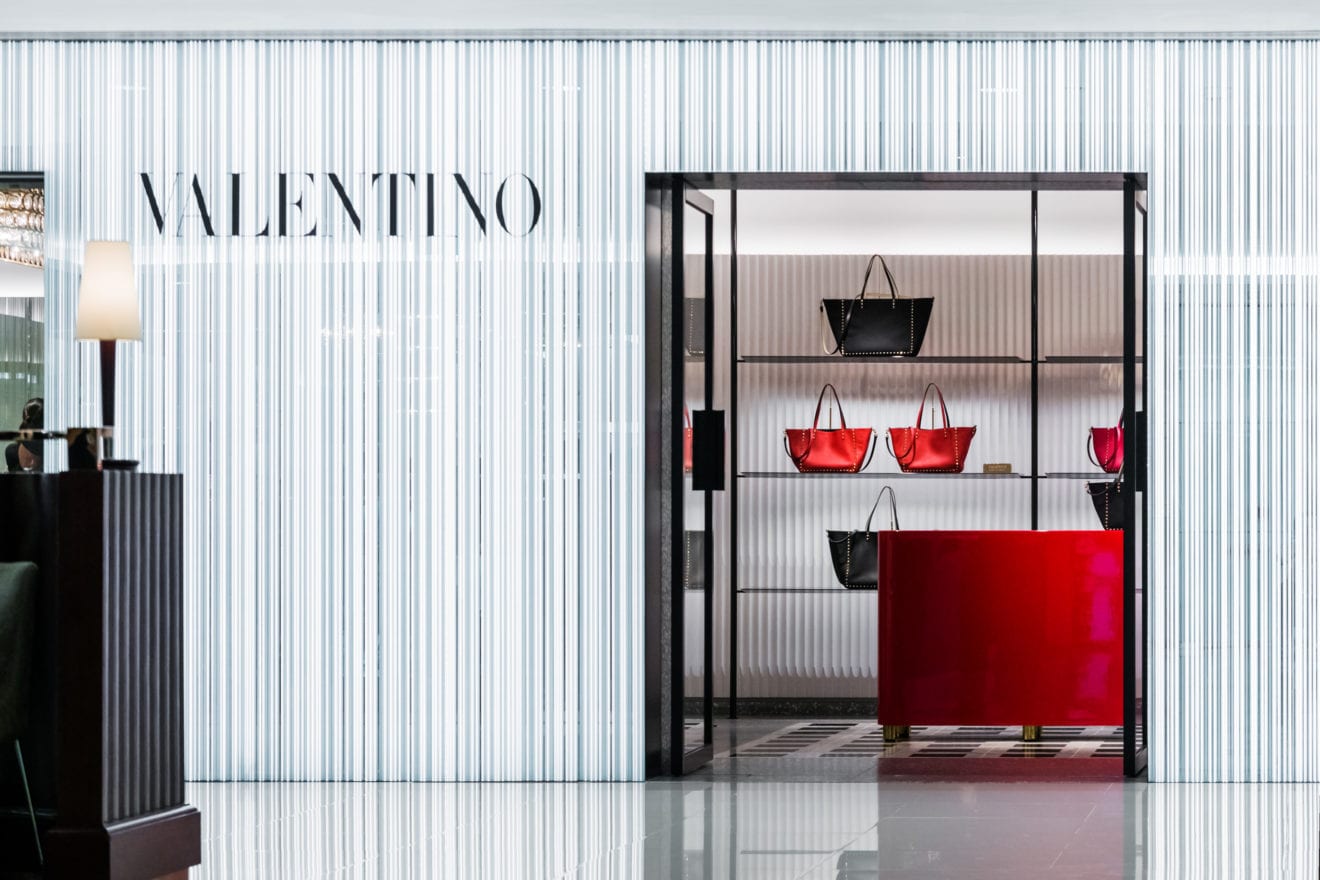
    Luxury fashion retailer Valentino boosted sales by 12.4 per cent last year, reaching €1.11 billion.

    Following a stunning 47 per cent growth in Valentino sales the previous year, the company has trebled its turnover in the four years since Qatari royal family acquired the business in 2012.

    A major factor in last year’s growth was the expansion into Japan, where it opened a new flagship in Tokyo’s Omotesando district. Two more stores are planned for the city, the first in Ginza and another in a location yet to be disclosed, but possibly Roppongi.

    The US continues to be the brand’s largest market accounting for about 20 per cent of sales.

    Valentino currently operates 175 of its own stores internationally, with retail sales accounting for 55 per cent of sales and the balance wholesaling. The company is on track to open 20 more physical stores this year, along with boosting its online presence and sales through both its own website and those of multibrand retailers.

    Profit for last year was €206 million, up 14.4 per cent on 2015.

    While privately owned Valentino sales and profit results are released due to a mid-term intention to launch an IPO. GM Stefano Sassi said in a press statement there was no decision at this time on timing for the float.

    “There is nothing planned for 2017, and the project will be re-evaluated based on the most favourable market conditions.”

  • AT&T and Akamai extend their global alliance

    AT&T and Akamai extend their global alliance

    Akamai and AT&T have renewed their global alliance, extending it through 2019.

    The agreement will keep Akamai’s CDN and web security services on AT&T’s business solutions menu, including the addition of DDoS capabilities. Akamai will also be able to further extend it’s server footprint out onto AT&T’s edge.

    The partnership between AT&T’s IP network and Akamai’s CDN and cloud networking infrastructure was put in place just over four years ago. AT&T moved its own CDN infrastructure onto Akamai’s platform, and gained access to AT&T’s network. Things seem to have gone pretty well since.

    There was a time not so many years ago that every network out there wanted to have its own CDN infrastructure. It seemed like the two industries were about to merge, but it never fully happened and Akamai is still going strong.

    The fact that CDNs and networks remained separate in most cases was perhaps a sign that the more general cloud opportunity would also not gel that well purely within telecoms walls.


  • Miniso Singapore plans 20 more stores

    Miniso Singapore plans to open 20 more stores by the end of this year, taking its network in the city to 46.

    In an interview with The New Paper, Miniso Singapore director Alex Zhang said locals were responding well to its eclectic offer of homewares, electronics, bags and household items.

    And he is confident the brick-and-mortar model will continue to serve the brand well, despite growing volumes being sold online.

    “From what we observed, Singaporeans still enjoy the experience of shopping in malls. People here still love seeing the designs and products in person before buying them.”

    Miniso Singapore opened its first store in December 2015 and now has 26 operating across the city. The brand was founded in China, opening its first Japanese store in 2013. Despite its Chinese base – it has 1000 stores trading in the mainland already – it tries to position itself as a Japanese brand, a sort of discount version of Muji. That strategy has attracted criticism in the past.

    Miniso has also opened stores in Hong Kong, Australia, Vietnam, Russia and Turkey.

  • Cloudbric opens IDCs in Hong Kong and Vietnam

    Cloudbric opens IDCs in Hong Kong and Vietnam

    Web application firewall (WAF) service provider Cloudbric announced the opening of five internet data centers, including facilities in Hong Kong and Vietnam, in response to the growing, global demand for cloud services.

    The new data centers are located in New Jersey (US), Hong Kong, Binh Duong and Ho Chi Minh City (Vietnam) as well as Amsterdam (the Netherlands)

    Additionally, with Cloudbric’s growing partnership base, the expansion of IDCs means Cloudbric’s customers can benefit from greater WAF infrastructure and experience elite security better than ever.

    Enterprises of all sizes rely on and often expect websites to be up and running without any lapses. Maintaining this uptime depends on strategically placed data centers to handle high-volume requests. As a result, Cloudbric is not only increasing its network capacity through its IDC expansion but also introducing an all-inclusive, fully-managed WAF service to a wide range of IT service and solution providers.

    Regarding Cloudbric’s current partnership model, VP of Product & Technology TJ Jung says “From individuals to small or mid-size businesses and enterprises, we are growing our service to reach all parts of the globe by engaging in partnerships with different solutions providers in the IT industry, and Cloudbric is excited to continue in this endeavor. Partnering with data centers, for example, means Cloudbric can be deployed on their own infrastructures instead of relying on external networks – making the delivery of Cloudbric’s advanced WAF to their clients a seamless process.”

    Utilizing the precise, trusted technology created by Penta Security Systems, Cloudbric’s WAF can intelligently recognize and block both unknown and known web attacks with its logic analysis engine. Through Cloudbric, various service providers can also benefit from quality customer service and a user-friendly, intuitive dashboard and extend it to their own end users. With new IDCs and thus even greater bandwidth, Cloudbric’s ability to withstand cyber attacks such as DDoS attacks is augmented.

    Cloudbric currently has plans to open ten additional IDCs in Q2, specifically in cities across North America, the Middle East, and South America. Cloudbric will continue to appeal to various service providers in its expansion of WAF infrastructure.

  • Singtel and Globe launch Tustwave MSS in Philippines

    Singtel and Globe launch Tustwave MSS in Philippines

    Singapore’s Singtel is bringing its Trustwave portfolio of managed security services to the Philippines, in collaboration with Globe Telecom.

    Under the collaboration, Globe is providing Trustwave’s services through its advanced security operations center (ASOC) in Manila, a new facility operated by Singtel’s Trustwave subsidiary.

    Globe’s ASOC will combine threat intelligence from Globe with global threat visibility from the global network of nine Trustwave ASOCs.

    The services will be supported by an ecosystem of global cyber security providers including Palo Alto Networks, FireEye and Arbor Networks.

    Singtel acquired a 98% stake in Trustwave for $810 million in a deal announced in 2015. In December that year, Singtel and Globe also signed a memorandum of understanding to strengthen Globe’s cyber security capabilities.

    Singtel and its managed security services business unit Trustwave also recently expanded their collaboration with Palo Alto to bring managed security services to multi-national businesses and government agencies, and the new agreement extends Singtel and Trustwave’s partnership.

    “As the leading cyber security services provider in the region, our deep global capabilities allow Trustwave Managed Security Services to monitor, assess and defend our customers’ operations round-the-clock against cyber attacks,” Singtel CEO group enterprise and Trustwave chairman Bill Chang said.

    “The launch of Trustwave Managed Security Services is timely as it complements the Philippine government’s National Cybersecurity Plan 2022.”

    The government’s plan is aimed at safeguarding the Philippines’ critical information structures, as well as governments, businesses of any size and all citizens using the internet.

  • Korea looks elsewhere as Chinese shoppers vanish

    Korea looks elsewhere as Chinese shoppers vanish

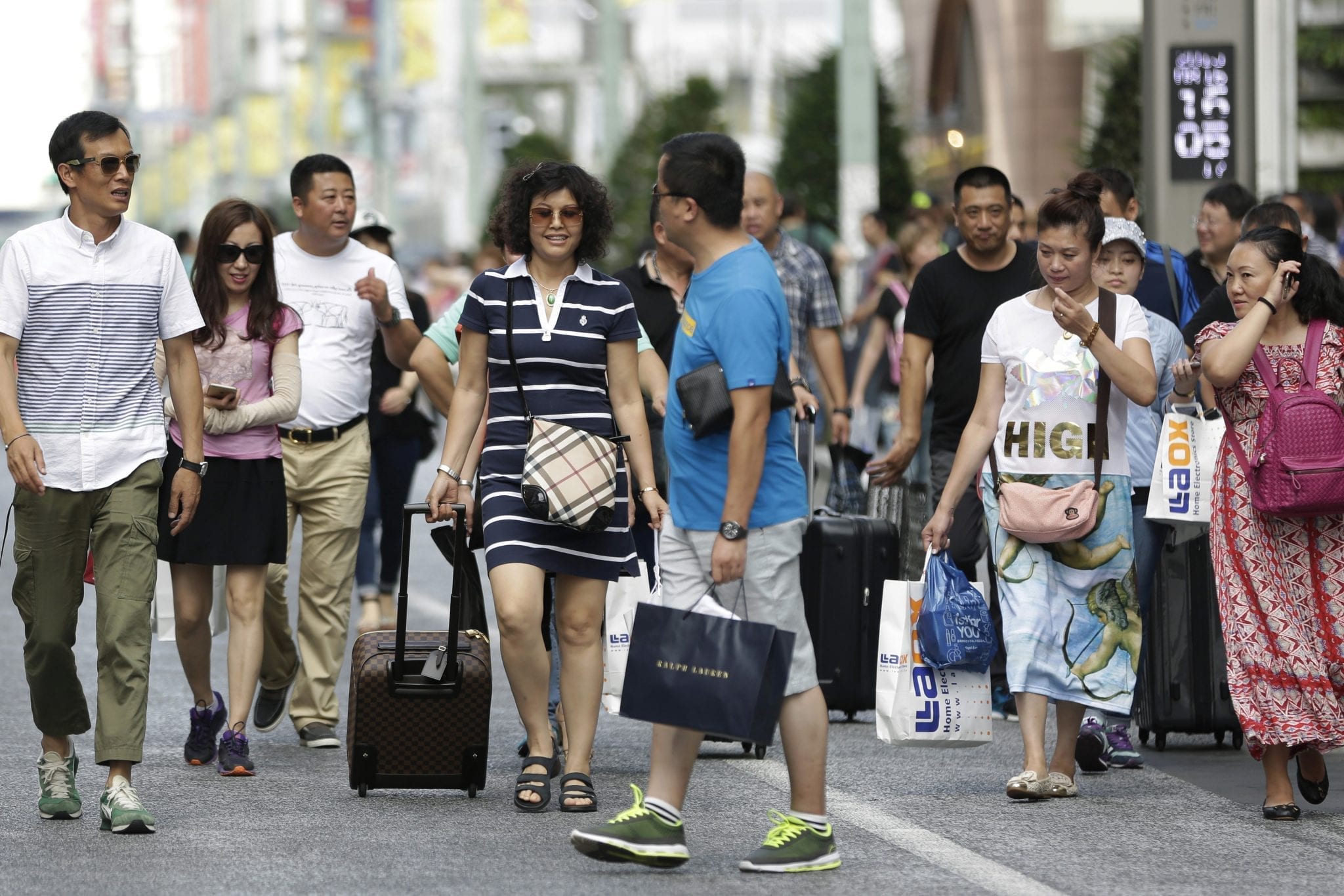
    South Korea has stepped up efforts to overhaul its dependence on Chinese shoppers by shifting the focus to other Asian countries.

    The country’s tourism sector – especially the duty-free retail industry – is bearing the brunt of the fallout triggered by the stationing of an advanced US missile defense system in Korea.

    In what appears to be acts of retaliation by Beijing against Seoul’s decision reached in July to host a Terminal High Altitude Area Defense (THAAD) battery, since Wednesday, all package trips from China to South Korea have been banned at the behest of authorities.

    China has vehemently objected to the missile move, saying THAAD’s high-power radar can be used to spy on its own military.

    This week, Chinese airlines have cut back on South Korea-bound flights and Chinese cruises are no longer making stopovers at local ports in popular tourist destinations.

    The slew of restrictions by Beijing has caused concerns among the local tourism and related sectors, such as the duty-free business, as they have heavily depended on Chinese visitors as sources of profit. Not only did they account for half of all foreign travellers last year, but they were big spenders who spent at least US$2000 per person buying things in Korea.

    In an effort to minimise the impact, Korea’s central and provincial governments are pushing to diversify foreign visitors to Southeast Asians and those from the Middle East, where Korean pop stars and TV drama series have gained huge popularity.

    Busan, South Korea’s largest port city, plans to bolster designing various tour programs that target Middle Eastern visitors, who are mostly big fans of Korean dramas, its city government said earlier.

    The city will also work with local businesses to develop medical and cruise tours for visitors from the Middle East, India, Mongolia and Russia.

    North Chungcheong Province, which has Cheongju International Airport, is pushing to increase flights to Taiwan, Vietnam, Russia and Japan.

    Related to such moves to diversify, the culture ministry said Thursday it plans to hold tourism exhibitions in Vietnam and Singapore next month to promote South Korea.

    Aside from state and provincial efforts, local firms, led by duty-free operators, are rushing to diversify their customer bases to tide over current difficulties. Hanwha Galleria, the duty-free unit of Hanwha Group, recently clinched deals with two travel agencies in the Middle East to secure foreign customers.

    It also plans to work with local hospitals to offer medical treatment services for Middle Eastern visitors as part of their tour programs.

    “The purchasing power of Middle Eastern customers on average is 30 per cent higher than people from China. We see (the THAAD issue) as a chance to boost our duty-free business through focusing more on individual tourists and VIP marketing,” Hanwha Galleria said.

  • Smart’s 2016 revenue grows 26% on mobile data growth

    Smart’s 2016 revenue grows 26% on mobile data growth

    The Philippines’ Smart Communications has reported a 26% increase in revenues for 2016 to 25.5 billion pesos ($509 million), in a result attributed to sustained growth in the company’s mobile data business.

    Smart, the wireless subsidiary of incumbent operator PLDT, said mobile data revenues for the year grew a strong 42% to 17 billion pesos.

    During the year, data revenues edged out voice calls and text messages as the operator’s largest wireless revenue source for the first time. Total usage reached 148,000 terabytes, up 49% from 2015.

    “The shift to data and digital services continues to gain momentum. With access to PLDT’s extensive fixed line network, Smart is rolling out the country’s fastest mobile internet network to address the growing demand of our subscribers for data services at home, their schools and offices and while on the go,” PLDT chief revenue officer Eric R. Alberto said.

    To help meet the steep rise in demand for mobile data, Smart has accelerated its rollout of LTE and 3G data networks and is incorporating the use of low-brand frequencies such as 700-MHz. The upgrade has now been completed in Metro Davao and is now underway in Metro Manila and Metro Cebu.

    Smart is also adopting LTE-A technology in selected areas, and recently entered a 5G partnership  with Huawei aimed at preparing its network for an evolution to the standard.

  • Honestbee Thailand launches in Bangkok

    Honestbee Thailand launches in Bangkok

    Singapore on-demand online grocery concierge and delivery service Honestbee has launched in Bangkok.

    In partnership with retail chain Villa Market, Honestbee is offering customers a faster and easier way to obtain their daily groceries through concierge shoppers. Honestbee has been training the shoppers to select the best quality groceries and deliver them the same day.

    Under the partnership, Honestbee will use all Villa Market’s outlets throughout Bangkok as well as its bistro and cooking studio The Gastro, and the Villa Market Holiday Store.

    Honestbee co-founder/CEO Joel Sng says the company has been doing some trial runs during the past few months.

    Honestbee Executive - Mr Joel Sng

    He says Honestbee is committed to help Villa Market and other speciality stores work online through technology such as website and mobile apps, plus logistics. Honestbee also aims to create flexible jobs.

    Honest Bee website


    Honestbee’s one-stop app service will offer a range of more than 11,000 products from grocery chains and gourmet/specialty food suppliers. These include organic foods, fresh fruits, imported frozen meats, wines, specialty drinks, hampers, seasonal products and kitchen supplies from partners including Ahmad Tea London, Happy Flavour, Ja Guem Song, K-Market, Meyer, Perfect Earth Organics, Pierre Herme Paris, Pipper Standard, Simply W and Wishbeer, with more to come.

    Prices are the same as in store, and deliveries are to the customer’s doorstep. There is a special voucher promotion to help launch the service.

    As well as Singapore, Honestbee already has a presence in Hong Kong, Indonesia, Japan, Malaysia and Taiwan.

    Established in 1974, Villa Market was a retail pioneer when the only outlets to buy groceries in Bangkok were markets and small grocery stores.

  • Alibaba to open Malaysian distribution hub

    Alibaba to open Malaysian distribution hub

    Chinese e-commerce giant Alibaba is to open a Malaysian distribution hub at KLIA Aeropolis to serve its growing business in Southeast Asia.

    According to unnamed sources quoted by financial press, Alibaba founder Jack Ma and Malaysian prime minister Najib Razak will announce the project at an event in Kuala Lumpur next week.

    The new centre will be a major feature of a 1 million sqm KLIA Aeropolis development adjacent to the city’s international airport, under development by Malaysia Airports Holdings. The plan is to create a regional distribution hub, boosting air freight traffic and attracting US$1.58 billion of domestic and foreign investment.

    “Kuala Lumpur International Airport (KLIA) has existing facility for Alibaba Group to pilot their distribution services here, and if (Alibaba) decide to expand in the future, there is the option to build more on other (undeveloped) sites in KLIA Aeropolis,” one source told Reuters.

    While Alibaba invested $1 billion to buy Singapore-headquartered online retail Lazada and has built a 14.4 per cent stake in Singapore Post, this will mark the company’s first investment in Malaysia.

    The KLIA Aeropolis is part of a planned Digital Free Trade Zone being established in Malaysia, details of which will be released during Ma’s visit to the country next week. Ma has been appointed a digital economy advisor to the Malaysian government.

  • China drives Tiffany Asia sales growth

    China drives Tiffany Asia sales growth

    Tiffany Asia sales rose 9 per cent on the back of new store openings in 2016, with a solid fourth quarter balancing out a difficult year.

    In the Asia-Pacific region, total sales of US$1 billion in the full year were approximately equal to the prior year and total sales of $284 million in the fourth quarter were 9 per cent up on 2015 as the company benefited from store network expansion.

    Tiffany Asia opened four new stores last year and another in Japan, taking its network to 85 in Asia-Pacific and 55 in Japan. Globally, it opened 11 and closed five.

    Same-store sales declined 9 per cent for the full year, but 2 per cent in the final quarter. On a constant-exchange-rate basis, total sales rose 1 per cent in the full year and 10 per cent in the fourth quarter, while comparable store sales declined 7 per cent and 1 per cent, respectively.

    “During the year, management attributed performance in this region to increased purchasing by local customers and declines in spending by foreign tourists. In addition, there was strong retail sales growth in China, increased wholesale sales in Korea, a decelerating rate of retail sales decline in Hong Kong and varying performance in other countries,” Tiffany said in its results announcement.

    In Japan, total sales rose 12 per cent to $604 million in the full year and 15 per cent to $185 million in the fourth quarter; comparable store sales increased 16 per cent and 19 per cent, respectively, while wholesale sales declined in both periods.

    On a constant-exchange-rate basis, total sales in the full year were approximately equal to the prior year while total sales in the fourth quarter were 8 per cent above the prior year with comparable store sales growth of 5 per cent and 12 per cent, respectively, partly offset by a decline in wholesale sales. Management attributed sales growth in both periods to higher spending by local customers, with declines in spending by Chinese tourists.

    Worldwide results

    Worldwide quarterly net sales increased 1 per cent to $1.2 billion and same-store-sales were unchanged from the prior year. Net earnings were $158 million, compared with $163 million in the prior year.

    For the full-year, sales reached $4 billion, down 3 per cent on 2015, reflecting a 5 per cent decline in same-store-sales. Performance was generally soft across all jewellery categories. On a constant-exchange-rate basis net sales and comparable store sales declined 3 per cent and 5 per cent respectively.

    Net earnings were $446 million, compared with the prior year’s $464 million.

    Chairman and interim CEO Michael J Kowalski said the company expects the macroeconomic and geopolitical challenges of the past year to continue in 2017.

    “We strongly believe that Tiffany’s strategies are sound and that we have meaningful growth opportunities. Our management team is focused on accelerating the execution of our strategies to deliver extraordinary products, communications and experiences that will delight our customers around the world. Through strong leadership and this accelerated execution, we believe we are well-positioned to deliver attractive total shareholder return over the long-term,” he said.

    Tiffany “failing to connect”

    Analyst Neil Saunders, MD of GlobalData Retail, said while Tiffany sales in the final quarter were soft, they at least indicate the declines which have plagued the company for a long period are starting to level off.

    But he maintains a lot of work lies ahead to reconnect with customers.

    “Although the business is making some progress, that progress is patchy and does not indicate a company that is back to full health. Indeed, under the detail of the numbers it is clear that Tiffany still has issues in a number of regions, including the Americas and Europe.

    “Part of the decline in the Americas is down to lower tourist spend which is impacting some flagship stores; that said, trend is now starting to dissipate and the effect on results is only slight compared to where it was at the start of the year. However, in the final quarter this was exacerbated by disruption at the Fifth Avenue flagship store which, due to its proximity to Trump Tower, saw customer traffic dip by around 14 per cent over November and December, and sales drop by 7 per cent in the final quarter. Given that this store usually contributes almost a tenth of company sales, it is reasonable to attribute some of the decline to this exceptional factor,” Saunders said.

    “The troubles, however, run wider than flagships and tourists. Tiffany is a brand that is increasingly overlooked by American consumers, especially younger demographics. Just as was the case at the start of the year, Tiffany is still failing to connect with many shoppers segments and continues to lose ground to rivals.”

    Saunders says jewellery has become a less-significant holiday purchase.

    “Jewellery is no longer at the top of the Christmas list. For a brand like Tiffany, where lavish gifting is an important driver of buying, such a trend is distinctly unhelpful.”

    Looking ahead, he says, it is clear Tiffany wants to re-establish its relevance and to project a much more distinctive image.

    “The advertising during the Super Bowl, which highlighted Lady Gaga as the face of the brand, was a good start. However, it is not enough: it needs to be accompanied by a step change in products, store environments, and the general approach to selling. There is a need for a more fundamental and deeper shift in the brand’s direction.

    “Fortunately, recent changes made to the management team, including the appointment of Reed Krakoff as chief artistic officer and the hiring of three new board members, should act as a catalyst for this change.”
  • Metro Retail income reaches P789m

    Metro Retail income reaches P789m

    Cebu-based Metro Retail Stores posted P789 million (US$15.7 million) net income last year, up from P758 million in 2015.

    Net sales for the fourth quarter grew 7.4 per cent to P10.67 billion, reports the retailer, part of the Gaisano Malls group.

    Sales grew steadily during the quarter, says the Visayan retailer, with overall net sales hitting P34.4 billion for the year, up by P2.1 billion.

    During the year the company ramped up its supply chain and logistics modernization program. It inaugurated a warehouse in Cebu, and bought delivery trucks equipped with tracking devices.

    Chairman/CEO Frank Gaisano says the company is looking to sustain this growth trajectory this year, with initiatives in place to boost sales and improve store-by-store profitability.

    The company has a 50-strong store network – 25 supermarkets, 13 hypermarkets and 12 department stores.

  • CITIC Telecom posts record $109.5m profit for 2016

    CITIC Telecom posts record $109.5m profit for 2016

    Hong Kong-based CITIC Telecom International has reported a record high operating profit of HK$850.1 million ($109.5 million) for 2016, up 6% from the prior year.

    During the year, CITIC Telecom launched its new City Link roaming services supporting data sharing in mainland China, Hong Kong and Macau, based on a network of more than four million Wi-Fi hotpots in the three markets.

    This launched helped the operator capture a 57% share of Macau’s 4G market, and increase its mobile broadband users by 17%.

    CITIC Telecom also achieved 100% coverage in Macau with its optical network, and completed the acquisition of 340,000 square feet for CITIC Telecom Tower, which once complete will become one of the largest data centers in Hong Kong.

    Internationally, the company commenced the process of acquiring Linx Telecommunications, which serves 14 countries in Europe and Asia. This deal was completed last month.

    The company also recently completed the acquisition of Singapore-based cloud, technology and managed services provider Acclivis Technologies and Solutions, and achieved growth with its data flow trading platform DataMall through a collaboration with China Mobile.

  • Max’s Group eyes more stores as profit grows

    Max’s Group eyes more stores as profit grows

    Max’s Group, the listed dining group, has reported a 12 per cent increase in profit last year as sales rose across all of its banners.

    The company recorded total income of of P561.74 million for 2016, up from P501.39 million the prior year.

    And CEO Peter H. King says better is to come this year. “We remain bullish on the pace of our global business. Our focus this year is to boost recurring income by accelerating store development. Nonetheless, we shall constantly be on the lookout for fresh territories.”

    Max’s Group’s brands include Yellow Cab Pizza, Pancake House, Sizzlin’ Steak and Max’s Restaurants.

    President  Robert F. Trota said the company was able to execute successful strategies amidst “a rapidly intensifying competitive environment”.

    “Overall, it was another productive year for us.”

    Restaurant sales rose 10 per cent to P9.42 billion driven by the opening of 77 new stores and solid same-store sales performance.

    Max’s group now has 623 stores, including 49 overseas. It is targeting 1000 outlets by 2020, 200 of them offshore, and has budgeted P750 million to P800 million to open between 60 and 70 this calendar year. It already operates stores in the UAE, the US, Singapore, Egypt, Jordan and Vietnam.

    The company’s online and delivery business performed exceptionally well last year, with revenues up 24 per cent to P1.08 billion.

  • Herr Seoul opens in Central

    Herr Seoul opens in Central

    Herr Seoul has opened its first store outside Korea.

    The prestigious Seoul barbershop has chosen bespoke menswear destination Attire House for its offshore debut, which opened this week.

    HERR_in_Seoul

    Founder Sangyoon Lee visited Hong Kong to meet customers and local influencers and share his knowledge of men’s grooming, entrepreneurship at his young age and Herr’s mission to be “the ultimate gentleman’s paradise”.

    HERR_at_AttireHouse

    Established in 2013 in Seoul, Herr believes it has “set the trend of men’s grooming in Korea as it encourages men to release their dapper potential by providing professional knowledge of personal care and offering highly skilled stylists for the finest and latest haircuts”.

    HERR_interior

    Customers are encouraged to take dwell time and build a relationship with their barber.

    TaylorOfOldBondStreet_grooming_kit

    Herr Seoul has collaboration projects with luxury fashion giants, watchmakers and hotels, including Louis Vuitton, Gucci, Tod’s, Club Monaco, Patek Philippe, and the Four Seasons Hotel.

    HERR_cupboard1

    Herr currently has three branches in Seoul – next to Hyundai Card Headquarter, Lotte Department Store in Myeong-dong and the Four Seasons Seoul providing full grooming services.

    HERR_sink2

    HERR_barberchair1

    Attire House, the  brainchild of Brandon Chau and Roger Chan, is a two-story, 5000 sqft ‘gentlemen’s haven’ in Central established in December 2016, offering ready-to-wear attire, bespoke tailoring, grooming and a mixologist’s bar.