Tag: asia

  • Asian shares rattled by Trump policy worries, dollar soft

    Asian shares rattled by Trump policy worries, dollar soft

    Asian shares slipped on Tuesday as stringent curbs on travel to the United States ordered by President Donald Trump brought home to investors that he is serious about carrying out his controversial campaign pledges.

    Global stocks posted their biggest loss in six weeks on Monday after Trump signed an executive order to bar Syrian refugees indefinitely and suspend travel to the United States from seven Muslim-majority countries, sparking widespread protests.

    European bourse are expected to remain fragile after big losses on Monday, with spread-betters seeing opening losses of as much as 0.1 per cent in major indexes, including Britain’s FTSE, Germany’s DAX and France’s CAC.

    “Investors are becoming worried as it appears as if he was setting fire to geopolitical risks that already exist,” said Yoshinori Shigemi, global market strategist at JPMorgan Asset Management.

    Trump’s move drew criticism from some US policymakers, and business leaders, with technology companies, which depend on talent from around the world, planning to discuss a legal challenge.

    “His stance is really inward-looking, making investors nervous about his ’moderateness’,” said Masahiro Ichikawa, senior strategist at Sumitomo Mitsui Asset Management.

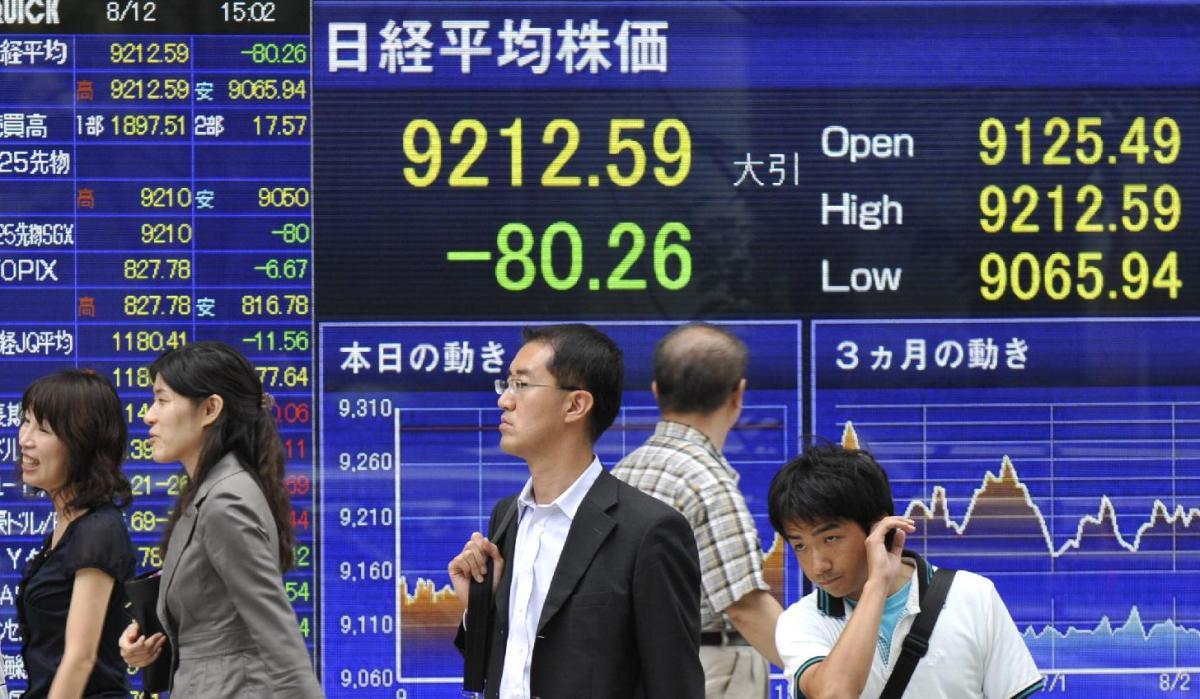
    MSCI’s broadest index of Asia-Pacific shares outside Japan fell 0.5 per cent while Japan’s Nikkei dropped 1.7 per cent, its biggest fall in almost three months.

    On Monday, the US S&P 500 Index fell 0.6 per cent, its biggest fall in a month, though it remained well above levels seen before the November 8 presidential election.

    MSCI’s gauge of the world’s 46 stock markets shed 0.6 per cent, its largest loss in a month and a half.

    The mood soured further when Trump fired the federal government’s top lawyer after she took the extraordinarily rare step of defying the White House.

    US stock futures ESc1 shed 0.3 per cent on Tuesday and the dollar extended losses against the yen.

    Still, most share prices were up on the month, supported by signs of accelerating momentum in the global economy and hopes of large fiscal stimulus from Trump.

    MSCI’s ex-Japan Asian shares index was up 5.7 per cent this month while its index of world markets was up 2.5 per cent. They were also higher than their levels before the US elections.

    In the currency market, the dollar was broadly weak and fell 0.3 per cent against the yen to 113.49 yen. It was down 3.1 per cent so far this month, after three straight months of sizable gains.

    The Japanese currency showed no reaction after the Bank of Japan kept its policy on hold, as expected. A string of recent data has suggested the economy is slowly regaining traction.

    The euro edged up to US$1.0710, consolidating after its rebound this month from its 14-year low of $1.0340 set on January 3.

    In a possible sign of increased anxiety among investors, the safe-haven Swiss franc strengthened to a seven-month high of 1.0637 franc per euro on Monday.

    Worries are also growing about a political shift to populist leaders in Europe.

    French bond yields rose to the highest level since September 2015, on rising uncertainty over the Presidential election later this year.

    Conservative leader Francois Fillon, seen as the front-runner, is now battling to contain a scandal over allegedly unlawful payments to his wife while the Socialists on Sunday picked a hard-left candidate, possibly helping popular far-right leader Marine Le Pen.

    Italian debt yields climbed to 1 1/2-year highs partly as early elections could be called following a ruling from the country’s constitutional court last week.

    Italian assets have also been hit by worries over its banking sector after UniCredit, the country’s biggest bank, revealed on Monday it expects to book a net loss of around 11.8 billion euros ($12.6 billion) for 2016 and fall short of European Central Bank capital requirements.

    By contrast, the yield on German debt fell on Monday even as data showed inflation in Germany hit a 3 1/2-year high in January.

    News that Germany posted a national inflation rate of 1.9 per cent stoked talk of an unwinding of monetary stimulus by the ECB, even though the inflation outcome was below expectations.

    Elevated uncertainty about Trump’s policies, including a lack of detail so far on his plans for tax cuts and fiscal spending, offset optimism on the US economy.

    Data on Monday showed US consumer spending accelerated in December while inflation showed some signs of picking up last month.

    The core PCE price index, the Federal Reserve’s preferred inflation measure, rose 1.7 per cent on a year-on-year basis after a similar gain in November.

    “We’ve seen a jump in US economic sentiment after Trump’s victory. But the improvement in hard economic data remains moderate,” said Haruka Kazama, senior economist at Mizuho Research Institute.

    “And if Trump takes more steps to limit permits for immigrants, that would surely boost inflation as the US is now near a full employment,” she added.

    The Federal Reserve, which will start its two-day policy meeting today, is widely expected to keep interest rates unchanged as it awaits greater clarity on Trump’s economic policies.

    Oil prices dipped as rising US drilling activity offset efforts by OPEC and other producers to cut output in a move to prop up the market.

    Brent crude futures LCOc1, the international benchmark for oil prices, were trading at $55.14 per barrel, down 0.2 per cent from Monday’s settlement price.


  • Tourism expected to drive Hải Phòng forward

    Tourism expected to drive Hải Phòng forward

    Favourable transport infrastructure and the beautiful landscape are expected to boost tourism in the northern port city of Hải Phòng.

    Cát Bi International Airport and the Hà Nội-Hải Phòng expressway, which were put into service in early 2016, have helped reduce travel time from Hà Nội to Hải Phòng.

    Direct flights between Hải Phòng and countries such as Thailand and the Republic of Korea, localities such as HCM City and Phú Quốc Island District in Kiên Giang Province in the south, Đà Lạt City in the Central Highlands province of Lâm Đồng and Nha Trang City in the central coastal province of Khánh Hoà have been launched.

    Along with favourable transport infrastructure, efforts made by agencies to promote tourism and the involvement of large investors have turned Hải Phòng into a popular tourist destination.

    At a workshop on Hải Phòng tourism held by the municipal Department of Tourism, leading experts in this field from across the country discussed ways to boost local tourism through social communication and developing standard tourism products.

    Various tourism promotion activities have been conducted in Cát Hải District, which is the administrative management unit of the Cát Bà Archipelago, an attractive tourist site with leisure, exploration and ecological tourism in the Cát Bà National Park in the island commune of Việt Hải.

    Firms such as Vingroup, Sungroup and Him Lam have invested in luxurious resorts in Cát Bà and Đồ Sơn. Once operational, the projects are expected to become ideal destinations for both domestic and foreign holidaymakers.

    According to the Vietnam National Administration of Tourism (VNAT), Hải Phòng, particularly Đồ Sơn beach town, has experience in tourism development.

    The northern port city welcomes a large number of visitors every year. In 2017 the locality is expected to greet 5.7 million tourists, the agency said, noting that the target is within reach as about 5.6 million tourists visited Hải Phòng last year.

    Nguyễn Quý Phương, head of VNAT’s Travel Department, at a recent workshop on tourism development in Hải Phòng said the city should make a breakthrough in tourism and consider the sector a driving force for local economic development.

    He also suggested the city step up State management to synchronously conduct tourism activities.

    To that end, Hải Phòng should revamp the municipal Tourism Department, ensuring it has enough human resources capable of implementing the city’s guidelines and plans, Phương said.

    At the same time, it is necessary to develop spearhead tourism products, such as leisure tourism on Cát Bà Island in a sustainable manner, he added.

    Nguyễn Thị Hà, director of Viettravel Hải Phòng, described tourism products as decisive to tourism promotion, saying Hải Phòng should connect with other localities to promote tourism products for the northern coastal region.

    Travel companies will introduce products for their customers, she said, underlining the need for Hải Phòng to turn into an attractive and safe destination, different from others in culture and landscape.

    Channels should be built and updated with new mechanisms, policies and information about tourist attractions and Hải Phòng’s connection with foreign and domestic localities, Hà suggested.

    In particular, information about Cát Bi International Airport needs to be updated more regularly for partners and tourists, she added.

    Trần Thị Kim Quy, deputy director of Hùng Vương Investment JSC, investor of international brand names such as Cát Bà Resort and Flamingo Đại Lải in the northern province of Vĩnh Phúc, said the Cát Bà Archipelago has advantages for tourism development, with the most noteworthy being its biodiversity and Cái Bèo, the most ancient fishing village in Việt Nam.

    However, Cát Bà has failed to fully tap its potential, she said, suggesting Hải Phòng extend the duration of tourism projects on the islands to 70 years and shorten the time for administrative procedures while upgrading infrastructure in Cát Bà.

  • Nokia launches a digital assistant for telcos

    Nokia launches a digital assistant for telcos

    Nokia has announced the launch of MIKA, the first digital assistant customized for the telecommunications industry.

    MIKA (multi-purpose intuitive knowledge assistant) is designed to provide voice-activated access to information for telecoms engineers, to reduce the time needed to find essential information needed to maintain complex multi-technology network environments.

    MIKA is powered by the Nokia AVA cognitive services platform, and provides access to the AVA knowledge library of best practice gathered from Nokia’s network projecs around the world.

    The platform combines augmented intelligence with automated machine learning based on Bell Labs learning algorithms.

    “Finding the right information is a daily challenge for telco engineers tasked with boosting network quality,” Nokia head of global services Igor Leprince said.

    “MIKA taps into the power of the Nokia AVA platform to provide quick and accurate answers, avoiding time wasted on fruitless searches. MIKA is customized to support the specific needs of telecoms, and can deliver recommendations based on experience from networks around the world.”

    Nokia also introduced a new predictive repair service, which will enable operators to reduce costs by predicting hardware failures and recommending replacements up to 14 days in advance. The vendor said the service can achieve up to 95% accuracy.

    Predictive repair will be available to operators using Nokia’s 3G and 4G equipment.

  • Laos targets more international flights

    Laos targets more international flights

    Lao PDR’s Department of Civil Aviation says its priority is to encourage more international airlines to serve the capital Vientiane.

    In an interview the department claimed there were more direct flights to Laos, many of them charter flights during the peak tourist season November to April.

    Flights from China are on the increase. Previously, only China Eastern Airlines operated flights, but now Sichuan Airlines and Hainan Airlines, both serve the country direct from China.

    Nations with direct flights  to Laos include China, Vietnam, Thailand, South Korea, Singapore and Malaysia, the report said.

    Civil aviation officials are keen to see more airlines serve the capital to balance traffic to Luang Prabang, the country’s main tourist destination. Most airlines prefer to fly to the World Heritage town as flights quickly turn a profit, although there is a significant dip in bookings during the monsoon season June to October.

    Up until 2015, traffic rights were difficult to obtain particularly to Luang Prabang where there was virtual ban on low-cost airlines. However, 2016 saw a change in policy and low-cost airlines opened services from neighbouring countries.

    South Korea airlines serve Laos with both schedule and charter flights. Japanese airlines previously offered charter flights.

    Foreign airlines have access to three locations in Laos – Champasak, Luang Prabang and Vientiane, it added.

    Airline seat quotas on flights between Vientiane and Bangkok have been increased in a bid to promote trade, investment and tourism between the two destinations.

    Thai and Lao PDR officials approved, last year, a revised Thai-Lao accord that increases the ceiling on seat capacity on routes between the two countries to as many as 14,500 seats weekly depending on the route.

    The agreement paved the way for designated carriers, registered in both countries, to add more flights on routes that have been restricted for years.

    The seat capacity ceiling on the Bangkok-Vientiane route increased more from 2,100 to 14,500 seats weekly. Most of the flights use A320 with a maximum of 200 seats.

    On the Bangkok-Luang Prabang route, the weekly ceiling  increased from 1,000 to 10,000 seats.

    The seat quotas for other customs and immigration enabled airports increased from 450 to 2,100 per week.

    Thai Airways International, Bangkok Airways and Thai AirAsia operate flights to and from Laos there are two airlines; Lao Airlines and Central Airlines.

    Raising the seat capacity ceiling will now allow Thai Smile and Nok Air to apply for traffic rights.

    Thai Smile introduced a new flight connecting Bangkok to Luang Prabang, a world heritage town in Laos starting 16 January.

    The airline offers four weekly flights on Monday, Wednesday, Friday and Sunday using an Airbus A320 aircraft on the route.

    According to the Ministry of Information, Culture and Tourism, arrivals to Laos were expected to reach 4.3 million by the end of last year, representing an increase of 4% over 2015.

    Foreign visitor arrivals increased from 2.7 million in 2011 to 4.1 million in 2015.

  • Final Wii U models discontinued in Japan

    Final Wii U models discontinued in Japan

    Production on new Wii U sets has ended, according to Nintendo’s Japanese website. A pagedetailing the models of the console that are currently in production indicates that the final two sets have been discontinued, officially marking the end of the system’s lifespan.

    Following the release of its third quarter earnings financial report this morning, the company’s website updated to show that the remaining Wii U models have been discontinued in Japan. These include the 32 GB Splatoon bundle and the standard 32 GB Deluxe model.

    Nintendo announced last November that it planned to cease production on the console by the end of the year. Rumors flew that Nintendo would stop making new Wii U units ahead of the Nintendo Switch’s full reveal, which came in October. The Wii U’s follow-up does away with many of its predecessor’s features, including the tablet controller’s second screenand the Miiverse social community.

    The Wii U, which launched in 2012, suffered at retail throughout its lifespan. The console’s performance was a letdown to fans and Nintendo alike, as reflected by diminishing sales returns and game releases over the years.

    The Switch will hit stores on March 3, giving retailers just enough time to clear out Wii U stock and make room on their shelves for Nintendo’s latest console.

  • Positioning Malaysia as hub for Islamic funds

    Positioning Malaysia as hub for Islamic funds

    The Securities Commission Malaysia (SC) launched its latest Islamic capital market (ICM) initiative with the unveiling of a five-year Islamic Fund and Wealth Management Blueprint, which vision is for Malaysia to be a leading international centre for Islamic fund and wealth management (IFWM) and to drive further development and growth of the ICM.

    IFWM, despite having a longer history than sukuk and banking in general, continues to be the Cinderella of the ICM. This is despite the fact that there are almost 1.5 billion Muslims in the world and the size of the Muslim professional and middle classes with an increasing amount of disposable income and affluence, continues to grow both at home and in the diaspora.

    Wealth management in the form of estate planning, inheritance and pension provision in old age is vital both for investment and social security reasons. It is set to proliferate, especially following the launch in January of the dedicated RM100 billion Islamic pension fund, Simpanan Syariah, by the Employees Provident Fund (EPF), which has confirmed its plan to increase the fund by an additional RM50 billion next year.

    But, why has IFWM been slow to take off as the industry enters its fifth decade in its contemporary history? The reasons are manifold. The three main asset classes in investment portfolios are usually gilts (bonds and certificates of various sorts including sukuk), real estate and equities. While in the conventional system, all the above asset classes are tried and tested and culturally accepted, the same is not true of Muslim markets. The old adage that Arabs (and many Muslims) prefer to invest in bricks and mortars because they are tangible and can be “felt” is still having a psychological impact in the investment psyche of some Muslims, including high net worth (HNW) ultra-conservative ones. This despite the fact that the real estate sector, especially in the Gulf Cooperation Council countries, has seen several bubbles over the last few decades which has seen market collapses and affected ordinary investors badly. Governments have lowered the ceiling of exposure to real estate of banks and also banned gearing — stopping individuals borrowing money to speculate in property.

    In the equities market, Saudi Arabia and Malaysia are the two largest ICM markets by far, accounting for most of the estimated US$70 billion to US$80 billion (RM310 billion to RM354 billion) global Islamic equities market, of which the kingdom accounts for an estimated US$30 billion to US$40 billion and Malaysia RM132.4 billion.

    But, they pale in insignificance compared with the conventional counterpart, which has assets under management (AUM) in excess of a few trillion dollars. The sudden proliferation of the sukuk market over the last decade has detracted from the development of the equities market as financial institutions spent more resources in innovating sukuk structures as opposed to equity offerings, which on the whole remain vanilla.

    These asset classes, of course, are subject to the vagaries of economic cycles. Even global sukuk issuances in 2016 for instance is set to top US$80 billion, way below the US$130 billion in the halcyon days of 2012.

    IFWM, like most of the direction of investment financing in the industry has traditionally been geared towards HNW people. The Islamic finance industry has failed to democratise the syariah-compliant investment space, in particular access to capital markets. How many sukuk are aimed at retail and ultra-retail investors? Here Malaysia has set the standard with Dana Infra, which has issued retail sukuk to part fund the LRT expansion in Kuala Lumpur.

    Given that sukuk is now a globally acceptable investment asset class, it is not unusual to see the Californian State Pension Fund as an investor in such certificates. At least, in the equities side, Malaysia’s Islamic unit trusts and the Saudi National Commercial Bank (NCB’s) Al Ahli Islamic equity fund suite have pioneered access to syariah-compliant products. But, whether they have enjoyed the same government support in terms of tax and other incentives is a moot point.

    It is against the above challenging background that Second Finance Minister Datuk Johari Abdul Ghani launched the SC Blueprint on behalf of Prime Minister Datuk Seri Najib Razak.

    Malaysia has an impressive record of launching blueprints and master plans for the various segments of the Islamic finance industry, backed by the requisite legal, regulatory and enforcement frameworks. This is because it is the only country where Islamic finance has been treated in a holistic, systemic way. The Islamic asset and wealth management blueprint is the latest and, perhaps, belated manifestation.

    Najib in his message in the blueprint was to the point: “The IFWM Blueprint is a further demonstration of the country’s continuing leadership in Islamic finance as we seek to develop yet another new growth driver for the industry to enhance its value proposition and ensure its sustainability.”

    The three strategic thrusts of the blueprint are predictable — strengthening Malaysia’s positioning as a global hub for Islamic funds; establishing Malaysia as a regional centre for syariah-compliant sustainable and responsible investment; and developing Malaysia as an international provider of Islamic wealth management services.

    Similarly, the 11 recommendations of the blueprint, once again, feigns ambition than substance. There are interesting themes, including enhancing market access and international connectivity; promoting the growth of private equity; facilitating new digital business models, products and services for IFWM; and providing targeted incentives to strengthen international competitiveness.

    SC chairman Tan Sri Ranjit Ajit Singh reiterated at the launch: “As part of the holistic development of Malaysia’s Islamic markets and consistent with the Capital Market Masterplan II, the blueprint will also drive greater internationalisation of the Islamic fund and wealth management industry through enhanced cross-border capabilities and connectivity.”

    The reality, unfortunately, is that the Malaysian IFWM industry and institutional investors have been frustrating, parochial and ultra-conservative in their cross-border activities save for a few forays in Asean and Australia. For the blueprint to realise its potential, a mindset change by Malaysian asset managers is similarly required!

  • Check out which industry dragged Singapore’s retail sales in November

    Check out which industry dragged Singapore’s retail sales in November

    The said industry posted a 13.5% decline.

    Due to the 17% growth in motor vehicle sales, overall retail sales in Singapore posted a 1.1% spike. Without the said industry, retail sales would have slumped 2.1%. Guess which industry posted the heaviest drag.

    According to the Department of Statistics, retail sales of computer & telecommunications equipment declined 13.5% in November compared to last year.

    Likewise, retail sales of watches and jewellery, wearing apparel & footwear, furniture & household equipment, supermarkets, f&b, department stores, mini-marts & convenience stores, and petrol services fell between 1.1% to 6% during the said period.


  • Synchronised ideas for major expansion

    Synchronised ideas for major expansion

    THE old adage, “when going gets tough, the tough get going” still rings true in today’s challenging economic climate.

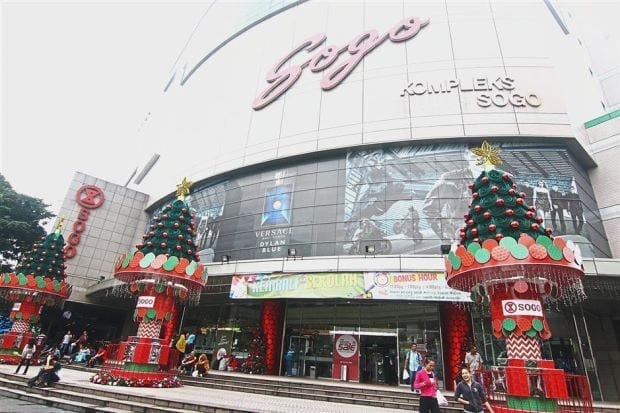
    This is the mindset of Sogo Malaysia group deputy chairman Datuk Andrew Lim and group managing director Datuk Alfred Cheng, who are exploring a joint venture to set up six flagship stores in the country within the next five years.

    Lim said they both had a synchronised idea of taking the Sogo group forward.

    “Through a 50:50 joint venture, we hope to bring an additional layer of excellent retailing into the Malaysian context by offering international and domestic shoppers a wholesome shopping experience,” he said.

    Speaking about the country’s retail industry, Lim noticed a lack of quality retailing.

    “In order to have a vibrant retail industry in Malaysia, we must have different niches – mass retailing as well as quality retailing,” he said.

    Lim further explained that quality retailing means offering a better grade of goods and services at value-for-money prices.

    “As consumers trade up, they will be looking for quality merchandises that commensurate with their income and status.

    “Apart from that, the country also has a plan to upgrade Malaysia to a first-world economy and as such, the retail services will figure prominently.

    “Based on all these assumptions, we are positive about the retail industry in Malaysia, despite current sentiments.

    On the outlook of the retail industry, Lim pointed out that the focus of decision-making had shifted from big stores to individual customers.

    Lim is positive about Malaysia‘s retail industry despite current sentiments about the economy.

    Lim is positive about Malaysia‘s retail industry despite current sentiments about the economy.

    “Gone are the days when store merchandises are laid out on the racks and customers will just walk in and purchase.

    “The thrust of retailing now has to be customer-relevant.

    “Millennials and internetters change their tastes very fast, and to serve this generation of shoppers, we have to intensively tweak our merchandise offerings on a weekly basis.

    “What will distinguish us as a quality retailer is by offering a personalised shopping service and rapid response to customers’ changing needs,” said Lim.

    With an investment of up to RM30mil each flagship store, the stores will be located within prominent commercial developments in capital cities of the country.

    “Each of these stores will have at least 18,581sq m (200,000sq ft) retail space and will be a representation of the local community.

    “To offer products and services catered to individual locations, the demographic profile of each vicinity will be studied within a 10km radius, not taking into account foreign visitors,” said Lim, adding that the interior and tenants of each store would also be based on needs of customers within the area.

    At present, there is only one Sogo KL Department Store nationwide, with a nett lettable space of about 65,032sq m (700,000sq ft).

    Now in its 23rd year of operation, Sogo Malaysia has continuously been developing talents and honing skills of employees through training and professional courses while investing on systems to build a strong back bone, leading to the preparation for expansion.

    Lim added that Malaysia was also an interesting place to visit for both foreign and local tourists.

    “We view the economic future optimistically due to the fact that the millennials and Internet generation also wants to feel living experiences.

    “Malaysia has the natural advantage of having different cultures in one locality along with amazing beaches, rainforests, caves and mountains,” concluded Lim.


  • Little CNY cheer for retailers as consumers curb their spending

    Little CNY cheer for retailers as consumers curb their spending

    Usually, at this time of the year when Chinese New Year (CNY) is just around the corner, Ms Evelyn Ng, a shop assistant at a candy store, would be very busy at work. These days, however, business has been lukewarm — so much so that the shop will be moving out of 112 Katong in a few days.

    “Look around — does it feel like it’s just days away from CNY?” said Ms Ng, pointing to the mall’s vacant atrium space, which, in better times, would be filled with vendors, especially during the festive period. “I am managing some S$200 worth of sales like I do on usual days,” she said.

    The uncertainty plaguing the economy and the jobs market have dampened shoppers’ mood at malls in the run-up to CNY. Shops in several malls we visited over the past few days reported lower earnings compared with the same period in previous years, and atrium spaces were uncharacteristically empty.

    A cashier at an international fashion store at 313@Somerset, who declined to be named, said that sales are “40 to 50 per cent” lower, compared with the CNY period in the past two years. “We now have two to three assistants per floor, compared with about six last year,” she said.

    Mr Pushpendra Sharma, founder of SpacesGenie.com — an online retail spaces booking and listing platform — said demand for atrium space has been lacklustre amid the slump for brick and mortar retailers.

    Singapore’s traditional retailers have been hit by a double whammy of an economic slowdown and the rise of e-commerce. But those who have adapted to the new landscape are faring better. For example, home decor retailer Crate and Barrel said its business this festive season had improved from the past year. “We are certainly responding to the trend of consumers going digital through our communication efforts,” said Mr Samuel Stephen Wright, brand manager at Crate and Barrel Singapore.

    Some mall owners noted that the unusually short period this time — of about one month — between Christmas and CNY may have resulted in consumers cutting down their spending.

    A City Square Mall spokesperson said the shopping centre has seen “healthy level of footfall and in-mall spending redemptions” during Christmas, which is expected to continue through CNY. Similarly, a Frasers Centrepoint Malls spokesperson said its promotions have been “well-received through Christmas, and we expect it to carry on into the CNY period”. “However, with such a short gap between the celebrations for the two festive periods, there is a higher tendency for shoppers to combine their spending.”

    With the first two days of CNY falling on a weekend, mall managers expect a large number of shops and eateries to be open during the public holidays. Mall owners said there has been no let-up in promotional efforts to spur consumer spending. For example, at Northpoint in Yishun — which is owned by Frasers Centrepoint — there is an ongoing lucky draw promotion that runs until June 30. A lion dance performance and red packet giveaways, among other initiatives, are also on the cards.

    Ms Ameerah Khairudin, 20, who works in the Orchard Road area, said there was “no point spending when it is so tough to find jobs”. She said: “We see so many people losing jobs. It worries me.” Retiree Gloria Leong, 68, noted that the malls are quieter. But with retailers desperate to drive up sales, she said: “I have not seen shops offering such hefty discounts during peak season before. Given the smaller crowd, we find it easier to shop around these days.” Rumi Hardasmalani

  • Teenie Weenie deal is a big one

    Teenie Weenie deal is a big one

    The deal with V-Grass represents the biggest cross-border merger and acquisition agreement in Korea’s fashion industry.

    E-Land Group said proceeds from the sale will help the company reduce its debt level to 240 percent by the first quarter from the current level, which is above 300 percent.

    The final price is lower than the previously reported range of 1 trillion won. “After we adjusted our position on the operation of E-Land’s women’s wear unit in China, we finally agreed on the deal,” said a source at E-Land familiar with the deal.

    The company said that since Teenie Weenie’s book value stands at 120 billion won, it would obtain a profit worth 750 billion won through the sale.

    However, it will still own 10 percent of the fashion brand’s shares for three years to “maintain a stable partnership” with the Chinese company. “The reason why E-Land keeps a 10 percent stake is that both companies need to cooperate on production and business and generate synergy after the deal,” E-Land said in a statement.

    The board of directors at V-Grass passed the takeover agenda on Tuesday, and the shareholders are expected to cast a vote on Feb. 10.

    Following the decision, the Chinese retailer is expected to pay the price for sale on Feb. 20.

    The Nanjing-based company captured Chinese consumers’ shifting purchase behaviors in favor of more premium brands. But since the sale price is higher than its market capitalization, the company will pay with debt.

    On E-Land’s end, the sale is its latest effort to restore financial liquidity. The group had sold three properties in Mapo District, western Seoul, and Gangnam District, southern Seoul, last year, a move that brought in 250 billion won.

    The company will push forward to secure cash through sales of other properties. By the first quarter, it will sell 200 billion won worth of real estate and then 500 billion won later this year.

    The fashion group also plans to take E-Land Retail public in a capital-raising effort by the first half of this year, a move that E-Land believes will reduce its debt level to 200 percent.

    E-Land has been accumulating more debt as some of its brands like New Balance have lost traction among young consumers.

    Other analysts believe the group is excessively focused on physical expansion, increasing the number of brick-and-mortar stores even though more are turning to online and mobile shopping.

    Faced with headwinds, E-Land Group companies saw their credit ratings downgraded in December by the Korea Investors Service.

    There are 1,300 Teenie Weenie stores in China. Last year, the brand earned 421.8 billion won in sales while generating 112 billion won in operating profit and 86.3 billion won in net profit.

    V-Grass was established in 1997 and specializes in high-end women’s fashion.


  • Vietnam targets vegetable, fruit export value at $3b

    Vietnam targets vegetable, fruit export value at $3b

    Việt Nam expects to achieve US$3 billion as its total export value of vegetables and fruits this year, exceeding the vegetable and fruit industry’s target of $2.4 billion.

    “After many years of export value under $1 billion, in recent years, the export value has made a breakthrough, which is why it was able to exceed the target this year, although there were many difficulties,” Huỳnh Quang Đấu, deputy chairman of the Việt Nam Vegetable and Fruit Association told.

    This year and beyond, the vegetable and fruit industry will face long-term difficulties, including climate change, which would result in a reduction of vegetable and fruit output and quality, and land accumulation for the industry, Đấu said.

    Meanwhile, most enterprises of the industry are small- and medium-sized units with less capital, said Đấu, adding that technical barriers in vegetable and fruit importing countries have also increased further.

    However, in recent years, Việt Nam’s vegetable and fruits have entered markets with strict ruless, such as the United States, Japan, South Korea and Taiwan, as well as Australia, New Zealand and Chile, following 4-5 years of successful negotiation by the Ministry of Agriculture and Rural Development. Further, farms and enterprises have produced vegetable and fruit products meeting the quality and food safety standards in those countries, he said.

    “That would be the basis for promoting exports this year and beyond,” Đấu said.

    Nguyễn Đỗ Anh Tuấn, head of the ministry’s Institute of Policy and Strategy for Agriculture and Rural Development, said this year, enterprises and farmers would pour in investment into fruit, cashew and shrimp because those products have great potential in production and business.

    In particular, they would invest in high-technological and clean agriculture to create leading brands for the global market, he said. The enterprises would focus on processing farming, forestry and fishery products to create new value and improve the level of Việt Nam’s products in the international market.

    Fruit has great potential as people’s income increases, so does the demand for high-quality fruit, he said.

    Last year, the nation’s total export value of vegetables and fruits was $2.4 billion, $200 million higher than the yearly target.

    Solutions

    Meanwhile, Mai Văn Trị, director of the Southern Fruit Research Institute (SOFRI), said export value of the vegetable and fruit industry has not met the industry’s potential because there are many kinds of fruits with low prices that do not have high export volume despite the high output.

    For instance, Việt Nam mainly exported dried jackfruit or material of fresh jackfruit. Trị said local enterprises could process soft dried jackfruit to reduce the import of this product, Some other kinds of vegetables and fruits such as pomelo and purple sweet potato have output which just meets local demand, but not high enough to export.

    Enterprises have not diversified their fruit processing and not seen sustainable development in material region for export processing, he said.

    Đinh Cao Khuê, general director of Đồng Giao Export Food Joint Stock Company, said, so far, there are a small number of vegetable and fruit material regions nationwide that meet the demand of the processing industry.

    In the north, there are pineapple regions in Đồng Giao, Ninh Bình and Lao Cai provinces, which produce a total of 70,000 tonnes per year, of which 50 per cent is used for local consumption and 50 per cent is for export processing.

    Lục Ngạn District in Bắc Giang Province and Thanh Hà District in Hải Dương Province have high longan output, but the period for harvesting and processing this product is just one-and-a-half months. Meanwhile, other special fruit products, including orange in Hà Giang Province, Hàm Yên-Tuyên Quang Province, Cao Phong-Hòa Bình Province and Lục Ngạn-Bắc Giang Province, have output that is enough to meet domestic consumption requirements.

    In fact, Việt Nam has many areas that can be used develop material regions of vegetable and fruit for export processing, bringing higher economic efficiency to provinces, Khuê said.

    Central highlands provinces such as Đắk Nông and Gia Lai could develop material regions of passion fruit, Japanese sweet potato, sweet corn, spinach and pepper because there is high demand for these products in the global market. Meanwhile, the northern provinces of Lào Cai, Sơn La and Lai Châu are suitable to grow pineapple instead of rubber trees, which have a low level of development in these provinces.

    The state needs to plan and develop material regions connecting with the development of processing factories and expanding the regions to neighbouring provinces, Khuê said. Đồng Giao Export Food JSC has enough material of pineapple for export processing because along with material regions in Ninh Bình Province, the company must combine with regions in the neighbouring provinces of Thanh Hóa, Thái Bình, Hải Dương and Bắc Giang, as well as Hà Giang and Tuyên Quang.

    Additionally, Khuê said Việt Nam should promote advertising at international fairs for farming products to study and expand export markets, including fairs in Germany, France, Russia and Japan.

    Phạm Công Dũng from the Department of Agricultural Forestry and Fishery Processing and Salt Industry said the Ministry of Agriculture and Rural Development has promoted restructuring of agriculture and planned material regions with advantages.

    For export activities, the ministry has cooperated with relevant state offices to enhance trade promotion activities for Vietnamese fruit products to increase market share, he said.

    Each trade office of Việt Nam in foreign countries would conduct marketing activities for local fruits for the Vietnamese community living abroad and the locals.

    The ministry would control further import of fruits through technical barriers under international rules to protect local fruits in a legal manner and stop illegal fruit imports, he said.

  • Telkom Ready to Face Google Balloons in Indonesia

    Telkom Ready to Face Google Balloons in Indonesia

    PT Telekomunikasi Indonesia Persero (TLKM) or Telkom signals it is ready to block the expansion of Google’s hot air balloon as part of Google’s Project Loon across Indonesia, by increasing the number and capacity of its satellite.

    “We continue to add satellites to expand internet services that reach remote rural areas. So, do not let the balloon (Google Loon) over Indonesia,” said Director of Network and IT Solution Abdus Somad Arief.

    Abdus said in addition to continuing to build fiber-optic network infrastructure, Telkom also utilizes satellite technology to equalize communication access across the country. Moreover, he added, Indonesia with 17,000 islands, is unlikely to be completely reachable with optical cable network, Telkom’s satellite then should continue to be developed.

    Still cited by Antara, it is known around mid-2015, Google actively expanded in a number of countries, including Indonesia, bringing Internet networks in remote locations which are difficult to access with optical cable infrastructure, with balloons that acts like a satellite.

    The balloons used in the project fly with solar power, the company plans to expand its worldwide internet network coverage by creating Wi-Fi networks in the air using the balloons.

    Telkom’s efforts to block the Google Loon are reflected from the company’s planned launch of Telkom 3S Satellite scheduled on February 15, 2017, at around 4:39 AM, with launch site at the Guiana Space Center of Kourou, Guyana, France.

    Telkom 3S satellite will occupy an orbital slot of 118 degrees of east longitude which is above Kalimantan and currently is occupied by Telkom-2 satellite.

    With satellite’s active period about 15 years since its launch, Telkom 3S has a capacity of 49 transponders, consisting of 24 C-band transponders (24 TPE), 8 extended C-Band transponders (12 TPE), and 10 Ku-band transponders (13 TPE).

    “If Telkom 3S satellite [is launched], Telkom has three active satellites orbiting, i.e., Telkom 1, Telkom 2, and Telkom 3S Satellites,” he said.

    Abdus added Telkom has experienced in satellite management for 40 years; it is the time to make satellite with its self-produced technology. For Telkom 3S Satellite, in terms of local content, Telkom is no longer user, but it is capable of build its own.

    Telkom since 1976 has been managing satellite, Telkom through a center of excellence, especially in satellite field is ready to take part to build the nation.

  • Dutch to Indonesia trade mission drums up business for Royal HaskoningDHV

    Dutch to Indonesia trade mission drums up business for Royal HaskoningDHV

    As part of a high level Dutch trade mission to Indonesia, Royal HaskoningDHV has managed to secure two contracts as part of the development of the $300 million Kuala Tanjung Port, as well as enter discussions to pilot a hospital development project in the country of more than 260 million peopale.

    A consortium of Dutch Government officials, including Prime Minister Rutte, Ministers Schultz van Haegen and State Secretary Dijksmarecent, recently travelled to Indonesia on a trade mission. A number of Dutch businesses joined the mission, including professional services firm Royal HaskoningDHV.

    The mission, aside from drumming up mutually beneficial business and political ties between the countries, whose history dates back centuries, also involves collaboration on a number of different projects, from a CEO summit focused on improving the working relationship between Dutch and Indonesian businesses, to investment and collaboration programmes in key sectors, from hospitals to shipping. Additionally, a key discussion point on the agenda related to efforts in solving a pressing problem for Jakarta: the city is sinking at 10 centimetres per year due to unsustainable use of groundwater from beneath the city – endangering up to 5 million people in the north of the city that face immanent flooding. The Dutch government, through the Dutch water sector, is involved in the development process for a lasting solution to sustainable water management for the city.

    Regarding the work, Royal HaskoningDHV Indonesia Resident Director Berte Simons, remarks “Since the Indonesian government asked the Dutch government for assistance in 2007, the Dutch water sector is contributing to a lasting solution to sustainable water management of the city. No small task in this area where space is scarce, stakeholder interests are large and government budgets limited. We are proud to contribute to the National Capital Integrated Coastal Development (NCICD) strategy that not only should be a sanitation, water supply, civil and hydraulic engineering feat but also one in which inclusive urban and socio-economic solutions are key.”

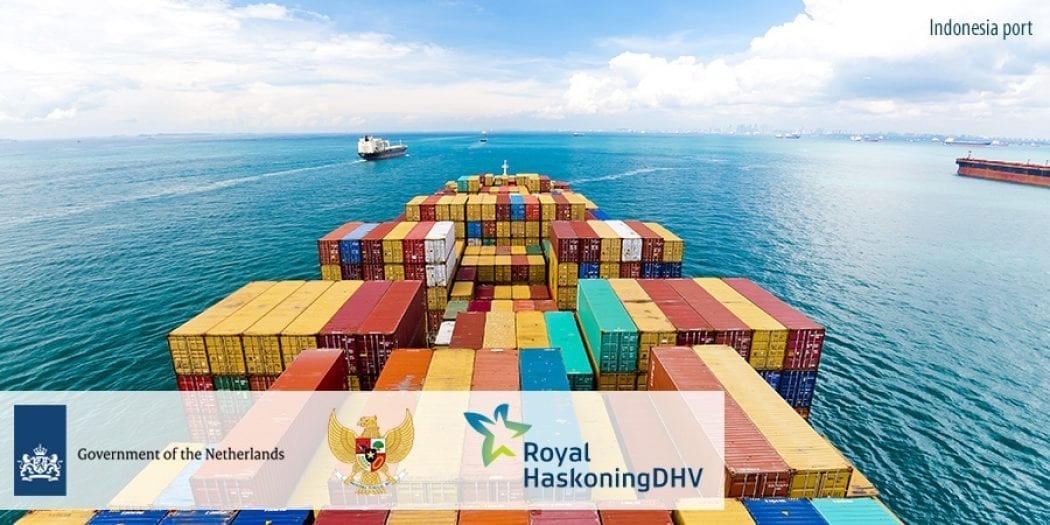
    For Royal HaskoningDHV, with around 350 employees working on projects for production sites in the country, the mission thus far resulted in signing two contracts with the Indonesian port operator Pelindo I for the development of Kuala Tanjung Port in North Sumatra. The port, which is expected to cost around $300 million, is part of the country’s wider maritime highway vision led by President Joko Widodo – which includes a total of 24 new strategic ports in the country. The value of the contracts for Royal HaskoningDHV has not been disclosed.

    Members from Royal HaskoningDHV’s healthcare practice, including Eduard Boonstra, the firm’s Business developer for the segment, also took part in trade discussions surrounding hospital development in Indonesia. The country, whose healthcare expenditure falls in the middle range in relation to its neighbours, offers considerable opportunities for joint benefit from work with Dutch providers – the country has one of the world’s most effective healthcare systems. The firm will work on a pilot project to deliver economically viable hospital designs that are able to contribute to the improvement of the public as well private health sector in Indonesia.

    Eduard Boonstra, remarks, “Together with the Ministry of Health, BPJS and local health authorities, we expect to work on a pilot project after successfully having performed a feasibility study regarding the improvement of the primary care system in Yogyakarta within the framework of Universal Health Coverage. We are proud to be recognised by leading Indonesia hospital operators as integrated design partner in the development of modern, efficient and patient safe hospitals which enable us to further build up our track record in Indonesia.”

  • Garuda Indonesia to operate Boeing B-737-800 to serve Sorong-Jakarta route

    Garuda Indonesia to operate Boeing B-737-800 to serve Sorong-Jakarta route

    Garuda Indonesia will operate Boeing 737-800 to serve Sorong-Jakarta route, in order to increase its service to the people in Papua.

    The state-owned airline company’s Sorong sales manager Radhitya Prastanika said here on Monday that the service is scheduled to begin early in April.

    He stated that Garuda Indonesia wished to support the government in opening an easier access to Raja Ampat tourist destination by operating the wide-body aircraft.

    “We are now waiting for an official letter from the security authorities of Sorongs Domine Eduard Osok airport regarding the safety of the airport for the landing of the aircraft,” he remarked.

    He noted that Boeing 737-800 has 162 seats, consisting of 150 seats in the economy and 12 seats in the business class.

    “Garuda Indonesia wishes to provide comfort to people in Sorong by providing a Boeing aircraft and adequate facilities,” he added.

    He said Garuda Indonesia plans to increase the number of planes and new routes to Papua and West Papua provinces this year.

  • More Filipinos shifting to brandy, 3-in-1 coffee mixes

    More Filipinos shifting to brandy, 3-in-1 coffee mixes

    Great Taste, a local coffee brand, moves up six notches to become the fifth most chosen brand of Filipino consumers in 2014. According to Kantar Worldpanel Philippines’ Brand Footprint ranking, Great Taste leaps to 5th from 11th place due to a 40% increase in Consumer Reach Points (CRPs). However, Nescafe still clinches the top spot with Lucky Me trailing close behind.

    Kantar Worldpanel’s Brand Footprint research provides information on real consumer behaviour. Consumer Reach Points (CRPs), which form the basis of the ranking, is an innovative metric that measure how many households around the world are buying a brand (penetration) and how often (frequency), providing a true representation of the shopper’s choice.

    According to Alexandre Duterrage, General Manager at Kantar Worldpanel Philippines, Great Taste attracted 2.9 million additional shoppers in 2014. It also experienced an increase in frequency of purchase by 4 times more on the average. “Based on the data that we have, the success of Great Taste is propelled by the shift from traditional “pure black coffee” to 3-in-1 coffee mixes, particularly Great Taste White and the introduction of multi-serve packaging formats,” he said.

    Meanwhile, Nescafe recorded 890 billion CRP in 2014, 44 billion more than Lucky Me (846 CRP). Completing the top 5 are Surf (648 billion CRP), Milo (518 billion CRP) and Great Taste (515 billion CRP).

    The 10 Most Chosen Brands in the Philippines revealed by Kantar Worldpanel’s Brand Footprint study are:

    Ten Most Chosen Brands in Philippines

    Rising brands

    Kantar Worldpanel Philippines also listed the top 10 rising brands in the country, which recruited an average of 74 million more homes compared to 2013. Among these emerging stars, only 3 local names found their way to the top 10: Great Taste, Datu Puti and Silver Swan.

    Rising Brands in Philippines

    As most brands struggled to grow in 2014, Datu Puti and Silver Swan managed to maintain their ranking in terms of consumer touchpoints (both with a -1% CRP %change). Kantar Worldpanel notes that stable ranking can be attributed to commercials about the product’s system usage (i.e. using vinegar and soy sauce of the same brand when cooking), and the introduction of new flavours especially for the vinegar category where both brands have product offerings.

    Other PH Brand Footprint highlights:

    1. Importance of personal and home hygiene

    – Calla (a detergent brand manufactured by Peerless) lands into the top 20 Home Care items, surpassing 13 brands. It enticed more households with its budget-friendly offer and gentle-to-hands proposition.
    – Silka and Charmee’s positions in Health & Beauty inched up with a CRP increase of 7% and 5%, respectively. Filipino endorsers, product quality and affordable prices are amongst their success factors.

    2. Products with social function grew well – seen in Health & Beauty and Beverages

    – Dove enhanced consumer touchpoints by 9%, moving up one notch in the health & beauty sector ranking. Thanks to its crusading campaign for real beauty which resonates with consumers emotionally and encourages purchase not only in Philippines but across the world.
    – Krem Top is now amongst the top 20 Beverages in Philippines, jumping by 8 points as it reached more shoppers with the help of its “Change for the Better” campaign which aims to challenge individuals to always strive to become better.

    3. Speed and convenience

    – Ready-to-eat snacks and drinks such as Presto, Clover, Dutch Mill, Pepsi and Royal Tru Orange performed well (CRP growth rates in order: 3%, 4%, 9%, 10% and 18%) as consumers are increasingly turning to FMCG to satisfy hunger between meals.