Tag: asia

  • Google News app on tablets to get a Material You redesign

    Google News app on tablets to get a Material You redesign

    Material You has been the de facto design language for Android since its unveiling back in 2021. Since then, Google has been hard at work updating all their apps to fit the new design, including those used in tablets, but there was one app that was partly overlooked, Google News.
    Back in May, with Google News version 3.53, the Material You design philosophy began to be implemented by making the bottom navigation bar taller, giving it a slight hue, and adding a pill-shaped indicator for whatever tab you’re now viewing. This revamp was still in the early stages at the time, as the Material You features did not yet adhere to the Android theme colors.
    However, now with version 5.71, the story begins to change. This version brings that same redesign of the Google News app in tablet view. As before, a navigation rail with Material Design 3 (MD3) components was added, even if only available in landscape orientation.
    The new look was documented with screenshots via the Google News Telegram group, as seen below:
    In this redesign, the page content is now separated from the header and navigation rail by staying enclosed in its own section with rounded corners on top. The shape of the search bar was also modified slightly, but the navigation rail is visible on tablets and phones if used in landscape orientation.
    The navigation rail seems to be a common theme for Google when it comes to implementing Material You. It has already used a similar design in Google TV and Google Drive, and if the trend continues it is sure to make its way into other Google apps as well.
    I happen to like the navigation rail, as I believe it makes the design cleaner and less cluttered. The ability to expand it to view more content per category highlights its flexibility and adaptability to any app it may get implemented on.
  • Google widens its testing of WhatsApp-like feature for its Messages platform

    Google widens its testing of WhatsApp-like feature for its Messages platform

    Android users, you can’t complain about how messaging on the platform is behind the times if you’re using one of the messaging apps offered by your carrier. If you want features like end-to-end encryption, read receipts, typing indicators, and no character limit (vs. 160 limit with SMS), Android users need to be using the Google Messages app which can be downloaded from the Google Play Store.
    It sounds a lot like Apple’s Messages app, right? And here’s the thing. When are Android users using RCS Chat to message fellow RCS Chat users, what color their text bubbles are? Did you say blue? And what do you think happens in a group chat when an iOS user joins the convo? All of these features disappear. Sound familiar?
    Last October Google started beta testing a feature already employed by some of the better third-party messaging apps. Replacing delivery indicators such as Sent, Delivered, and Read (which are all self-explanatory), Google turned to the tried and true checkmark system. One single checkmark in a circle indicates that a message has been sent. Two checkmarks in a circle icons side-by-side reveal that a message has been delivered. And if those two side-by-side checkmarks in a circle icons appear filled out, it means that the message has been read.
    Android Police notes that Google has extended the beta test to more Android devices and this writer discovered the checkmarks on a Pixel 6 Pro running Android 13 QPR2 Beta 2.1. To see if this feature is available for your phone, simply engage in a chat with one of your Android-using pals (make sure that they are using the Google Messages app) and check to see how the read receipts are being handled on your device. The use of a checkmark system as a delivery indicator can be seen in third-party messaging apps such as WhatsApp, Messenger, and Signal.
    Google, as you might know, has been asking Apple to support RCS in the hope that both Android and iOS users can live in peace and harmony. As expected, Apple has not agreed to Google’s request.
  • Consumer Reports urges dark chocolate makers to reduce lead, cadmium levels

    Consumer Reports urges dark chocolate makers to reduce lead, cadmium levels

    Last month, Consumer Reports said 23 of the 28 dark chocolate bars it tested included potentially harmful levels of lead, cadmium or both for people who eat more than one ounce of chocolate a day.

    Five had elevated levels of both metals: two from Theo, and one each from Hershey-owned Lily’s, Mondelez-owned Green & Black’s, and Trader Joe’s.

    Consumer Reports said many consumers eat dark chocolate for its potential health benefits and relatively low sugar levels, but “there’s nothing healthy about ingesting heavy metals.”

    The chocolate makers did not immediately respond to requests for comment.

    The National Confectioners Association, a trade group, said the California health guidelines that Consumer Reports used and considered “the most protective available,” are “not food safety standards” and that chocolate remains safe to eat.

    Consumers have been sued at least nine times by Trader Joe’s over its dark chocolate since Consumer Reports released its study.

    Hershey’s and Mondelez have also been sued over the magazine’s findings, as have other chocolate makers, including Godiva and Lindt (LISN.S).

  • Nearly 35,000 PayPal user accounts were hacked due to reused passwords

    Nearly 35,000 PayPal user accounts were hacked due to reused passwords

    Nearly 35,000 PayPal user accounts have been breached by so-called “credential stuffing”. PayPal managed to stop the two-day intrusion and reset the affected users’ passwords.

    In fact, PayPal’s own servers weren’t hacked. The reason for the hack was the so-called “credential stuffing”, a technique the hackers used to gain access to the user accounts. This type of attack is when a hacker uses previously leaked login info – and if the user has reused it for their PayPal account, the hacker can get access.

    The intrusion reportedly lasted two days, between December 6 and December 8, 2022, and it affected 34,942 user accounts. It is possible that the hackers were able to access a significant amount of personal information for the affected users, including full names, birth dates, postal addresses, social security numbers, and individual tax identification numbers. On top of that, hackers had access to transaction histories, connected credit and debit card details, and PayPal invoicing data.

    However, PayPal was able to stop the attack and reset the passwords for the users so the hackers would lose access. The popular online payments platform reassures that no unauthorized transactions were attempted. The affected users also get two free years of credit monitoring from Equifax.

    All in all, this could have become a very bad situation if the hackers were trying to make transactions from the affected users’ accounts. Fortunately, this didn’t happen. The entire situation shows that not reusing the same password across platforms (especially PayPal or other payment platforms) is of primary importance.

    Basically, PayPal wasn’t hacked; so if the users had not reused passwords, they wouldn’t have been hacked either. So, better not to reuse passwords. If you’re having trouble remembering all your passwords, you can use a service like 1Password or other password managers. Also, you can benefit from PayPal’s two-factor authentication for an even tighter security of your account.

  • Messenger rolls out default end-to-end encrypted chats to more people

    Messenger rolls out default end-to-end encrypted chats to more people

    End-to-end encrypted chats isn’t a new feature for Messenger. Six years ago, the feature was introduced via Secret Conversations, but default end-to-end encrypted chats has been a beta feature for very long time (and it still is). However, Meta has decided that now would be a good time to enroll more Messenger users into the beta program.

    In a new announcement released this week, Meta revealed that it has started to expand testing default end-to-end encryption for Messenger gradually. The feature should become available for more people over the next few months. According to Meta, people who will receive the beta feature will be notified in individual chat threads.

    As far as the method of choosing who’s going to get their chats upgraded with an extra layer of protection, Meta says that it’s been designed to be random “so that there isn’t a negative impact on our infrastructure and people’s chat experience.”

    But that’s not the only thing messenger users will get in the coming months. Along with default end-to-end encrypted chats, Meta announced the introduction of some new features, like chat themes, custom emojis and reactions and a few more, which will be available into Meta’s end-to-end encrypted experience.

    Group profile photos is another new feature that will allow Messenger users to pick group profile photos for different chats. The link previews feature has been redesigned for end-to-end encrypted chats to let users see where a link is taking them before they actually click on it.

    The new Active Status feature lets Messenger users see when you’re active. Thankfully, the feature can be turned off, which comes in handy if you don’t want to be disturbed. Finally, Bubbles (a circle with a friend’s picture) allows Messenger users to read and reply to messages while Messenger users to read and reply to messages while they’re using other apps. It needs to be enabled to make the bubble appear whenever you receive new messages. Sadly, Bubbles is only available on Android for the time being.

  • Screenshot reveals a new feature is coming to the Google Messages app

    Screenshot reveals a new feature is coming to the Google Messages app

    Some of the better third-party messaging apps, like WhatsApp, allow you to create a profile that includes a picture or avatar. On WhatsApp you can check out the profile created by one of your contacts by tapping the magnifying glass icon found on the upper right of the display and typing in his or her name in the search bar when that name appears on the top of your chat page, press on it. You will see that person’s WhatsApp profile.
    It would appear that Google is going to allow Android users employing the Google Messages app to create their own profiles. The page was discovered by going to settings and searching for profiles. We need to point out that Android Police says that Esper’s Mishaal Rahman actually discovered the Profile page, so we should give credit where credit is due. The page, currently, is not functional though.
    The tipster says that if implemented by Google, Google Messages users can create a profile with a photo, name, and email address. Based on the screenshot, it appears that users will be able to decide who can view their profiles. We’d expect the options to include one setting that would allow anyone who sends you a message to view your profile if you send back a response. Another setting would allow only your contacts to see your profile, and the third and most restrictive option would allow only you to view your profile.
    Other controls would allow you to receive a notification when one of your contacts makes a change to his/her profile, and one that would send you a notification when a new contact is found.
    Currently, we have no idea when or if Google plans to launch this feature. It’s probably a good idea since most people are not going to remember every person they’ve ever engaged in an online chat. A quick look at a user’s profile might restore their memories.
  • Luxury giants bank on Chinese return as Western shoppers sober up

    Luxury giants bank on Chinese return as Western shoppers sober up

    The focus of the luxury industry is shifting back to China, with hopes that its high-end spenders will once again splurge on designer goods during Lunar New Year festivities as Beijing relaxes Covid curbs after three long years.

    Quarterly results from LVMH and Europe’s other luxury goods companies will offer glimpses of the toll of last year’s Covid-related disruptions in China, even as the companies roll out pricey new collections tied to the Year of the Rabbit.

    They are expected to see a deceleration in sales growth over the quarter as the post-pandemic splurge on designer fashions begins to ease in the United States and Europe.

    Consensus estimates cited by UBS are for fourth-quarter sales growth of 7 per cent at LVMH, which releases full-year results on Thursday, and for a sales decline of 2 per cent at Kering, which reports results on February 15. Hermes, which reports fourth-quarter results on February 17, is expected to show sales growth of 17 per cent, a decline from 24 per cent in the third quarter.

    The industry’s showing in China will highlight the hit from lockdowns and its subsequent exit from a zero-Covid policy, which has spurred a surge of infections in the world’s second-largest economy. Luxury spending by Chinese nationals had dipped from 33 per cent of the global personal luxury goods market in 2019 to as little as 17 per cent last year, according to estimates from consultancy Bain.

    “We do believe they will come back to the luxury sector in a heavy way, to catch up on what they couldn’t do in 2022,” said Caroline Reyl, head of Premium Brands at Pictet Asset Management, referring to Chinese consumers.

    End-of-year trading updates last week from Britain’s Burberry and Cartier-owner Richemont gave investors a peek at the knock.

    Richemont missed market estimates after sales in China plunged by a quarter. Customer traffic at its stores dwindled and staff at times were not available. Many stores reduced hours or closed temporarily. Burberry’s like-for-like sales growth slowed sharply to 1 per cent in the quarter to the end of December after a 23 per cent fall in mainland China.

    But Burberry said it was optimistic consumers in China would start spending again and Richemont saw a rebound there before the holiday, adding to rising expectations for the months ahead.

    China is forecast to become the luxury industry’s biggest market by 2025. The luxury sector is among the largest expected winners from China’s loosening of restrictions that kept shoppers out of stores for months, with shares at LVMH, Europe’s most valuable listed company worth about US$433.1 billion and Hermes recently hitting historic highs.

    At Paris fashion shows, which run through the end of this week, Chinese buyers, a staple at such events before the pandemic hit, still haven’t returned in droves.

    Although the Chinese are expected to initially resume travelling within Asia, Europe is a region that particularly stands to benefit from a return of Chinese tourists. Reyl told Reuters she believes Chinese shoppers may begin to return to Europe in a noticeable way at the end of the second quarter or during the second half of this year.

    In the United States, some Americans are cutting back discretionary spending due to decades-high inflation. Credit card data from Citigroup showed that luxury spending in the United States in December was down 10 per cent year-on-year and, compared to 2019, turned negative, down 2 per cent, largely due to weaker business in department stores and online platforms.

    However, travelling Americans likely continued boosting the fortunes of luxury labels in Europe, with US nationals leading a recovery in tax-free shopping in Europe, according to December data from Global Blue.

  • Gojek Vietnam’s co-founder resigns

    Gojek Vietnam’s co-founder resigns

    Indonesian ride-hailing and delivery service company Gojek has named Sumit Rathor as the new GM of its Vietnam operations.

    Rathor has succeeded Tuan Duc Phung, former GM of Gojek Vietnam since 2020. According to a Gojek statement, Phung has decided to pursue other professional challenges outside the company.

    With over 20 years of experience in strategic planning, operations and finance, Rathor joined Gojek in 2019 as a regional manager for Indonesia, in charge of the Central and East Java areas.

    “Vietnam is an important market for Gojek, and we expect that our energy and acumen, along with our market experience, inherited from our previous triumphs, will enable us to maximize the market’s potential,” said Rathor.

    After entering Vietnam in 2018 under the name GoViet, Gojek Vietnam rebranded in 2020 to attract more customers and grow the business. The Indonesian company provides transportation, food delivery, and logistics services and has offices in Vietnam, Thailand, Singapore, and Indonesia.

    According to local sources, this is Gojek Vietnam’s third CEO change since its establishment.

    Last month, Grab Vietnam also appointed former MD at Grab Thailand, Alejandro Osorio, as MD at Grab Vietnam, supervising overall company operations and the development of the Vietnam business.

  • AirAsia lops 23% off fares

    AirAsia lops 23% off fares

    AirAsia welcomed the new year with a 23% off sale for all flights on bookings made by 15 January 2023.

    While the booking period runs from 9 to 15 January, the travel dates are open from 1 February to 27 September 2023.

    The deal is valid on flights to all destinations in the group network (airline codes AK, FD, D7 and XJ). It excludes flights with the airline code QZ.airasia

    It includes trips to Kuala Lumpur, Langkawi, Kota Kinabalu, Singapore, Bangkok, Taipei, Tokyo, New Delhi, Gold Coast Auckland and more.

    To secure the discount, click on the ‘flights’ icon on the homepage of the AirAsia Super App or via the airline group’s booking website.

  • Tesla Uses Its Profits As A Weapon In An EV Price War

    Tesla Uses Its Profits As A Weapon In An EV Price War

    Tesla earns more money for every vehicle it sells than any of its global rivals. Now, Chief Executive Elon Musk is using that superior profitability as a weapon in the EV price war he started.

    Tesla, once one of the auto industry’s biggest money losers, has over the past year built a commanding lead over most major rivals in profit per vehicle, a Reuters analysis of industry data shows.

    Tesla earned $15,653 in gross profit per vehicle in the third quarter of 2022 – more than twice as much as Volkswagen AG, four times the comparable figure at Toyota Motor Corp and five times more than Ford Motor Co, according to a Reuters analysis.

    For most of this year, Tesla joined rivals in aggressively raising prices on its most popular vehicles, such as the Model Y SUV. Shortages of semiconductors and other materials kept auto industry production down, allowing companies across the industry to focus on higher-margin models and book strong profits, even as sales volumes fell.

    Tesla’s decision to reverse course and spend its production-cost advantage on price cuts now challenges the profit-over-volume strategies established automakers such as GM have pursued since the 2008 financial crisis, and doubled down on during the pandemic.

    To control production costs, Tesla has invested heavily in new manufacturing technology – such as the use of large castings to replace small metal parts. Tesla brought battery manufacturing and other parts of its supply chain in-house, and standardized vehicle designs to improve economies of scale.

    Using production-cost advantages to fund price cuts has a long history in the auto industry.

    Henry Ford slashed prices on his Model T in the early 20th Century as his innovative mass-production system revved up. During the 1980s and 1990s, Toyota used the cost lead provided by its lean production system to offer features at prices Detroit automakers struggled to match. Now, Toyota is rebooting its strategy under pressure from Tesla.

    Growth in electric vehicle demand outpaced the overall market in the United States and globally during 2022. That emboldened automakers to push EV prices higher. Ford hiked prices for its electric F-150 pickup by 40% during 2022.

    But analysts are warning the global EV market could soon have more production capacity than demand.

    By 2026, North American EV demand will hit a level of about 2.8 million vehicles a year, said industry forecaster Warren Browne. But North American EV factories will be capable of assembling more than 4.5 million vehicles, putting overall capacity utilization at just under 60%, he said.

    In China, the end of central government subsidies is accelerating a market share war among rivals in the world’s largest EV market.

    “Tesla has taken the nuclear option to bully the weaker, thin margin players off the table” in China, said Bill Russo of Automobility, an industry consultancy in Shanghai. “Big pie, fewer slices, more to eat for those that remain.”

    Startups such as China’s Xpeng Inc had benefited from Tesla’s price hikes. Now, Xpeng is cutting prices in China – but with less financial leeway than Tesla. Xpeng reported gross profit of $4,565 in the third quarter, and a net loss of $11,735 a vehicle, according to company data analyzed by Reuters.

    “We hope more people can access smart vehicles after we make our cars increasingly affordable,” Xpeng said in a statement.

    Vietnamese EV startup Vinfast said Thursday it will use price promotions to fight back against Tesla.

    Chinese EV market leader BYD Co Ltd announced price increases effective Jan. 1 after Beijing phased out EV subsidies. So far, BYD has not responded to Tesla’s latest price cuts in China. However, BYD’s gross margins of $5,456 per vehicle give it more headroom in a price war than VW, Toyota or GM.


  • Whatsapp has new feature to undo send messages

    Whatsapp has new feature to undo send messages

    For many phone owners, the person they message the most is themselves. No, it has nothing to do with egotistical behavior and has everything to do with using common sense. Sometimes when you need to jot down a note you’re caught without paper or a pen. While an app like Google Keep is ideal for these situations, some would rather send a message to themselves.
    But if WhatsApp is their preferred messaging app, this could not be done unless the user opened a group chat and included himself as one of the group members, and then sent a message to this group. Who wants to go through all that just to remind yourself that the dog walker is on vacation, or to save a story or video that you just viewed online? The Meta-owned app has fixed this by disseminating an update that allows WhatsApp subscribers to send messages to themselves.
    A WhatsApp user can now select themself to be the lone recipient of a message he or she is going to send via the app. After typing the message you want to send yourself, the app puts up a notification that points out that the message you send is protected by end-to-end encryption. Unless you have multiple personalities, this doesn’t matter. But it does mean that WhatsApp or any other person that isn’t you, can not read or listen to the message.
    Meta had this feature beta tested by iPhone users and is rolling it out now for all users. It has been made available on Android and does work on this writer’s Pixel 6 Pro running Android 13 QPR2 Beta 2.1.
    WhatsApp has added more than just the ability to message yourself. Following the update, you can undo the “Delete for me” feature to bring back a message that you’ve accidentally erased from your WhatsApp account. To see how this works, you can just send a test message to yourself (which you can do now) and long-press on the test message. Tap the trash can icon on the top of the screen and you will see a pop-up. Select Delete for me and a bar at the bottom of the screen will appear that says “Message deleted for me” with the word UNDO on the right side of the bar. Tap it to undo the deletion and the message will return.
    You also can now control who will be able to see when you’re online. From the WhatsApp app tap the three-dot menu icon on the top right of the screen and go to Settings > Privacy > Last seen and online. You can tap Nobody on the top quarter of the display so that no one can see when you were last on WhatsApp. Underneath you can choose who can see when you’re online. The options are Everybody and Same as last seen. Select the latter option and if you have Nobody picked for last seen, no one will be able to see if you’re online.
    When you are about to message one of your WhatsApp contacts, under that person’s name, it will show the last time he or she was seen on the app. So if you’re a private person you might want to follow the directions in the above paragraph so that no one knows when you were on WhatsApp last and whether you are on now. On the other hand, you might want your contacts to know when you are available to have a conversation on the platform.
    Another new feature will allow users to search for a past chat by the date it took place. This helps if you can’t find a specific chat but you know the date when it occurred.
  • Vietnam cryptocurrency miners install more rigs as Bitcoin climbs

    Vietnam cryptocurrency miners install more rigs as Bitcoin climbs

    Cryptocurrency prices have surged this month, prompting Vietnamese to install mining rigs although it’s not yet a lucrative trade.

    The price of Bitcoin increased from $18,000 to $21,000 on Jan. 14 and has moved sideways since then. The prices of many other cryptocurrencies, including ETC, Aleo, Kat, and ERG have also risen this month.

    Thien Binh, a seller of cryptocurrency mining rigs in Vietnam, said that people had bought many second-hand Asic rigs to mine Doge over the past week.

    On average, an old Asic Baikal G28 model costs VND13 million ($550.8), one-third the cost of a new machine. If the current Doge price of $0.08 remains unchanged for months, miners will break even after 9-10 months.

    A veteran miner said: “We are buying more rigs because mining is still easy now. We will eventually make profits if the Bitcoin price maintains its current level ($21,000).”

    Binh Minh, who owns many rigs in the southern province of Dong Nai, said some people have heavily invested in installing big networks of rigs to mine ETC and Bitcoin.

    Some miners are depositing their rigs at solar farms to cut down electricity costs and increase profits. Most miners use grid electricity.

    According to Hoang Quan, the administrator of a cryptocurrency mining community with nearly 70,000 members, mining is not lucrative at the moment, thanks to the current price of electricity and cryptocurrencies. But he said the recent increase in cryptocurrency prices is still good news ahead of the Tet holiday (Lunar New Year), which falls in late January.

    Some experienced miners said that although the Bitcoin price is rising, the cryptocurrency market is inherently unpredictable, and miners may face more difficulties in the coming time.

    Vietnam had the second highest rate of cryptocurrency use among 74 economies surveyed in 2021, according to market data provider Statista.

    However, cryptocurrency has not been recognized as legitimate currency in Vietnam. Its central bank has warned that owning, trading and using cryptocurrency is risky and comes with no legal protection.

  • Food delivery platforms see gross merchandise value rise 37.5%

    Food delivery platforms see gross merchandise value rise 37.5%

    The total gross merchandise value (GMV) of food delivery platforms in Vietnam hit $1.1 billion in 2022, up from $800 million in 2021, said Singapore-based venture outfit Momentum Works.

    Of the total GMV, Grab accounted for the biggest share with 45%, followed by ShopeeFood 41%, Baemin 12% and Gojek 2%, the firm said in its latest report “Food delivery platforms in Southeast Asia,” which was issued in January.

    Last year total GMV in Southeast Asia grew at a modest 5% to $16.3 billion, mainly driven by the relatively smaller markets of Malaysia, the Philippines and Vietnam, while larger markets – Indonesia, Thailand and Singapore – recorded declines, Momentum Works stated.

    The three largest markets all recorded a GMV decline in 2022, due to various factors. For example, thepost Covid reopening of the ecoomy reopening in Singapore shifted food services demand offline, while in Thailand the withdrawal of government subsidies after October 2022 as well the floods in the second half of the year played significant roles.

    Malaysia, the Philippines and Vietnam, the three smaller markets, have recorded significant growth, as players including Grab and ShopeeFood expanded their market penetration, according to the firm.

    Grab has taken market share leadership in Malaysia and Vietnam from Foodpanda and ShopeeFood respectively, and now contributes 54% of the region’s total platform GMV.

    ShopeeFood has reduced market-share-grabbing incentives, while Foodpanda/DeliveryHero is rumored to be in the process of exiting a few markets in the region, according to Momentum Works.

  • Tuna becomes billion-dollar export for first time

    Tuna becomes billion-dollar export for first time

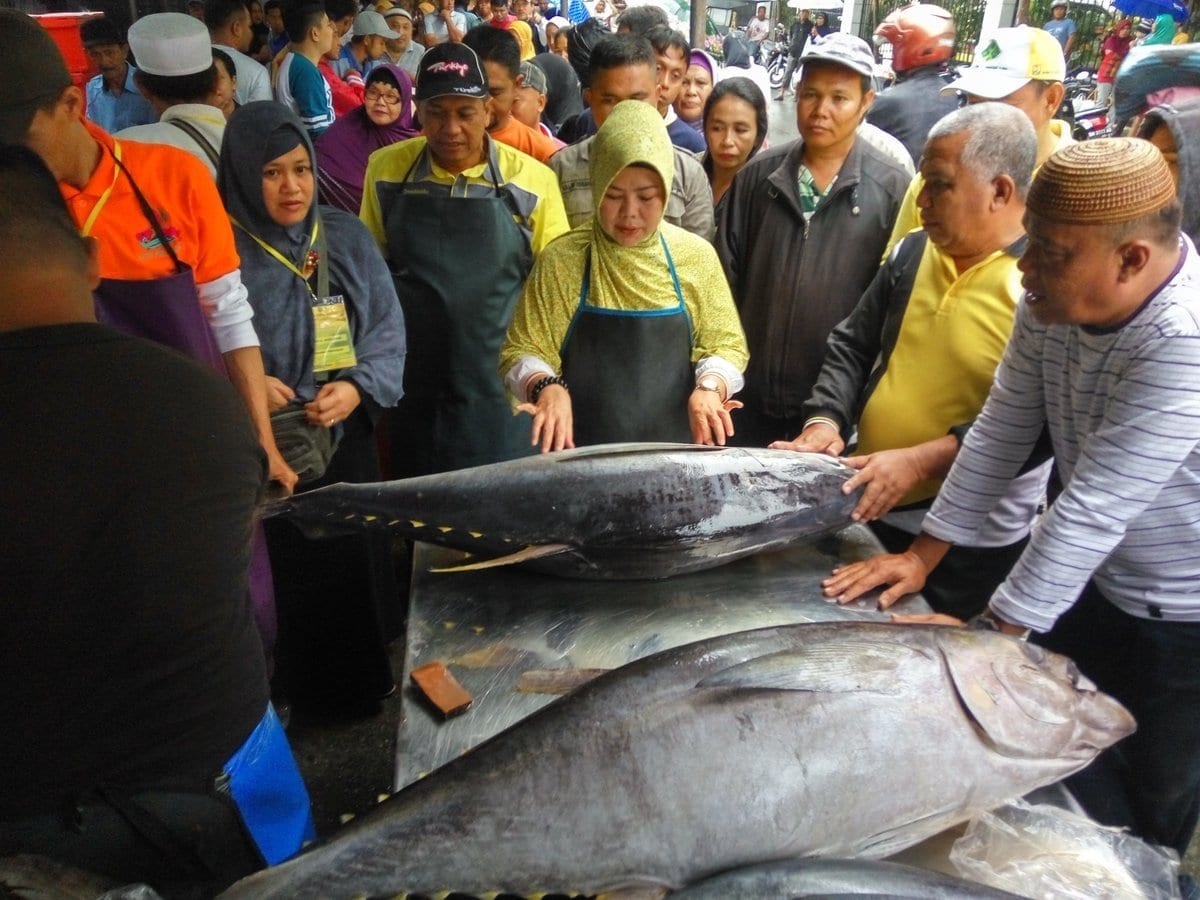
    Despite a sharp fall in exports before the end of 2022 due to global inflation, tuna still brought home US$1 billion in revenue last year, up 34% from 2021, becoming a billion-dollar commodity for the first time, data showed.

    Tuna products of Vietnam were shipped to 99 markets, of which the U.S., the EU, members of the Comprehensive and Progressive Agreement for Trans-Pacific Partnership (CPTPP), Israel, Thailand, Saudi Arabia, Russia, the Philippines, and Egypt were the largest importers, accounting for 92% of total exports, according to the Vietnam Association of Seafood Exporters and Producers (VASEP).

    Germany, Spain, and Belgium were the biggest EU buyers of Vietnamese tuna. Notably, shipments to Germany and Spain shot up 161% and 117% last December, respectively.

    Tuna exports to Japan, a CPTPP member, grew fast in the last quarter of 2022. The value surged 131% year on year in December alone, helping raise the export turnover to CPTPP markets to nearly $136 million, up 48%.

    Meanwhile, strong declines were recorded in shipments to many other markets, VASEP said, noting that after dropping in November, tuna exports to the U.S. fell by another 38% in December. However, last year’s exports to this market still rose 44% to approximate $487 million.

    VASEP forecast the export in the first quarter of 2023 will be unable to sustain its 2022 performance, but markets may recover in the latter half of this year. Free trade agreements are the driver for tuna exports in the year’s beginning.

  • Indonesia surpasses Thailand as Vietnam’s largest car exporter

    Indonesia surpasses Thailand as Vietnam’s largest car exporter

    Indonesia surpassed Thailand as Vietnam’s largest car exporter in 2022, with 72,671 cars exported.

    According to statistics released by Vietnam Customs, Vietnam imported 173,467 cars in 2022, an 8.5% increase from 2021.

    Indonesia, Thailand and China were the biggest car exporters to Vietnam, but Indonesia surpassed Thailand to be the country that exported the most cars to Vietnam, with 72,671 cars exported in total, a 64.2% increase from 2021, and worth $10.5 billion.

    Thailand exported 72,032 cars worth $1.42 billion to Vietnam in 2022, a 10.9% decrease in number from 2021. The number of cars imported from Indonesia and Thailand amounted to 144,703 cars, accounting for 83% of all imported cars. China stood in third place, exporting 17,240 cars to Vietnam in 2022.

    For the first time in decades, the number of cars sold in Vietnam in 2022 reached 508,547 cars, according to statistics from the Vietnam Automobile Manufacturers’ Association and TC Motor.