Tag: asia

  • Telstra names Robyn Denholm COO

    Telstra names Robyn Denholm COO

    Telstra has named Robyn Denholm as its new chief operations officer, replacing Kate McKenzie, who retired in July after working with the Australian incumbent for 12 years.

    Denholm will assume her new role in early 2017, and will be based in Sydney. Acting COO Brendon Riley will return as group executive global enterprise and services while acting GES group executive David Burns will return as group MD network applications and services, Telstra said in filing Monday.

    “Robyn has been a senior executive and director in a range of complex technology environments which make her ideally qualified for the role, leading a highly capable team within Telstra,” Telstra CEO Andrew Penn said. “She also brings strong understanding of the Australian market and Telstra as the leading network provider, as Juniper has been a valued partner of Telstra.”

    Australian-born Denholm was most recently EVP, CFO and COO of Juniper Networks. She is a board member of renewable energy and electric vehicle company Tesla Motors and the Swiss robotics, power and automation technology company ABB.

    Denholm served at Juniper Networks from 2007 to mid-2016.  She joined Juniper after 11 years with Sun Microsystems most recently as senior vice president of corporate strategic planning.

    Hutchison Telecom HK appoints Cliff Woo as CEO, replacing Peter Wong

    Hutchison Telecommunications Hong Kong Holdings Limited (HTHKH) has appointed Cliff Woo Chiu-man (pictured) as new chief executive and executive director, with effect from January 1, 2017.

    Woo, 62, will succeed Peter Wong King-fai, who will retire from his position on the same day, after working for the company for over 20 years.

    A 30-year telecoms veteran, Woo is currently serving as chief technology officer of Hutchison Asia Telecom Limited and director of Hutchison Telecommunications (Australia) Limited.

  • AirAsia signs component support deal for A320neo jets

    AirAsia signs component support deal for A320neo jets

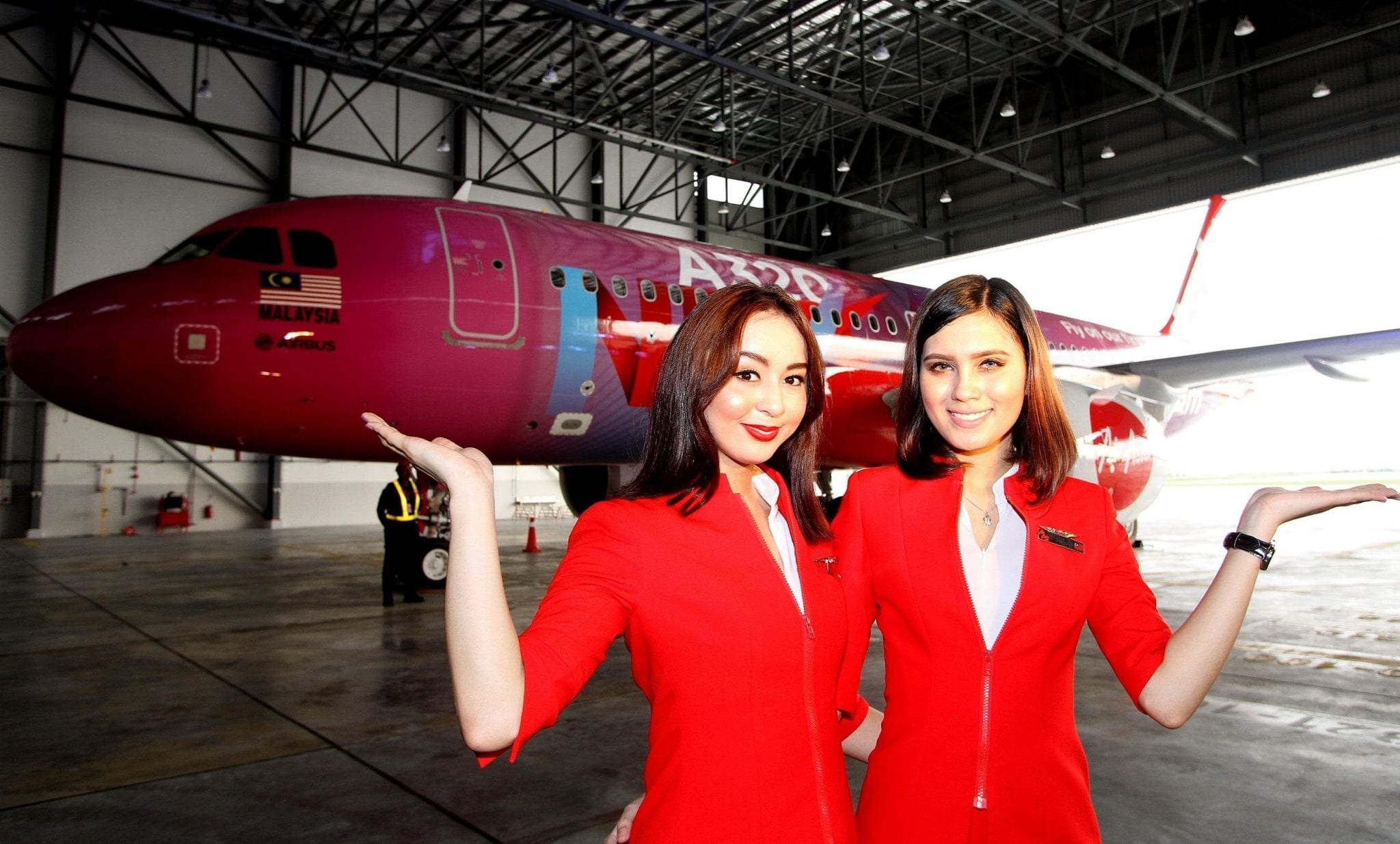
    AirAsia and Air France Industries KLM Engineering & Maintenance (AFI KLM E&M) has inked a component support agreement for the airline’s fleet of Airbus A320neo passenger jets, which is ultimately scheduled to number 304 aircraft.

    AirAsia took delivery of its first A320neo on Sept 7 this year in Hamburg.

    The contract between the two groups includes component repair services and solutions designed to maximise aircraft availability.

    “We are delighted to find a strong partner in AFI KLM E&M and one that is as dynamic as us. Operating a new-generation aircraft at such a large scale requires adaptive, world-class support, and we have the utmost confidence that AFI KLM E&M will be able to provide us with the responsiveness, reliability and performance needed,” said AirAsia Group CEO Tony Fernandes in a statement yesterday.

    AFI KLM E&M came up with an ultra-competitive support offer which is specially tailored for the carrier.

    With its experience of large-scale support, AFI KLM E&M is able to offer maintenance solutions for large fleets like that operated by AirAsia.

    “We are very honoured that AirAsia is extending its trust to us by awarding AFI KLM E&M with the support of its brand new A320neo fleet,” said Air France CEO Franck Terner.

    AFI KLM E&M currently provides component support for AirAsia’s A330 fleet operated by AirAsia X, its budget long-haul subsidiary.

    That support agreement was signed in 2009 and was extended in 2013.

  • Airtel investing in cable to Myanmar

    Airtel investing in cable to Myanmar

    India’s largest mobile operator Bharti Airtel has announced it is investing in a new fiber cable between India and Myanmar.

    The operator plans to use the new fiber asset to offer end-to-end connectivity solutions in the Myanmar market.

    The 6,500km terrestrial cable will connect to Airtel’s landing stations in Chennai on the east coast and Mumbai on the west.

    Bharti Airtel CEO for global voice and data Ajay Chitkara told the publication that Myanmar is experiencing strong uptake of digital services as one of the last major growth frontiers in Asia, and the company aims to take advantage of that growth by introducing new connectivity services.

    Myanmar liberalized its telecoms sector in 2011, resulting in a rush of foreign entrants into the market and strong subscriber growth and development.

    But Telenor Myanmar, which launched services in September 2014 after securing one of two mobile licenses allocated through a tender process following the opening up of the sector, believes that the market’s hyper growth era has now ended.

    News of the terrestrial cable project came as China Telecom Global and Nepal Telecom announced they have linked China and Nepal through the Himalayas and plan to use the new terrestrial cable to offer IP services to the Nepalese market.

  • Mulberry expansion plan in Asia

    Mulberry expansion plan in Asia

    Mulberry Asia, a new joint venture between the British fashion brand and Challice Limited, has announced plans to open four stores in Hong Kong, China and Taiwan and a Chinese language eCommerce site.

    The move was announced along with the company’s half year results which saw sales rise 10 per cent, but the company posting a loss due to investments, mainly in a new collection.

    Mulberry will cease its current distribution agreement with Club 21, although its new partner Challice shares the same ultimate ownership.

    Mulberry Asia will locate its head office in Hong Kong from where it will manage all retail, digital fulfillment and wholesale distribution for the region. Challice will hold a stake of about 40 per cent in the new business.

    The company says it expects to post losses for two years during its establishment phase, moving into profit in year three.

    Mulberry CEO Thierry Andretta said the new venture would progress the group’s international strategy of developing its retail and omnichannel model “in a key luxury market where we see significant growth opportunity”.

    Subject to a number of practical issues, including obtaining Chinese trading licenses, Mulberry Asia is expected to be operational from Spring 2017.

    Analyst said Mulberry Asia was an impressive direction to take.

    “It will allow the brand to better serve its customers in North Asia and provide it with a solid foundation to further grow its business in this region. However, investment in product design and creativeness must continue so that Mulberry stands out in the increasingly difficult and crowded Asian market.”

    Footfall rises

    Meanwhile, while investment to create the new collection has had a negative impact on gross margin, down 2.4 percentage points to 59.1 per cent, it has successfully driven footfall into stores and turned its wholesale business around. Revenue was up 10 per cent in the half year, compared with an 11 per cent decline in the same period last year.

    Strachan says modern totes and bucket bags have improved the desirability of Mulberry’s offer, appealing to a new, younger shopper demanding more on-trend innovative pieces but with the craftsmanship and quality credentials that the brand continues to leverage and showcase.

    “Mulberry has achieved impressive UK like-for-like growth, despite tough 2015/16 comparatives, benefiting from international visitors taking advantage of the weak pound and high demand for British heritage brands. The opening of its new Covent Garden store was fortunate timing to showcase its new collections to this influx of lucrative shoppers,” said Strachan.

    “Conversely, the devaluation of the pound has hit the sales performance in some of its tourism-driven stores in Europe and the US, and has led to higher UK production costs and running costs of overseas subsidiaries.”

  • More stores closing the door in Hong Kong

    More stores closing the door in Hong Kong

    A “new wave” of Hong Kong store closures lies ahead, because many retailers have over-extended their footprints, says OC&C Strategy’s Pascal Martin.

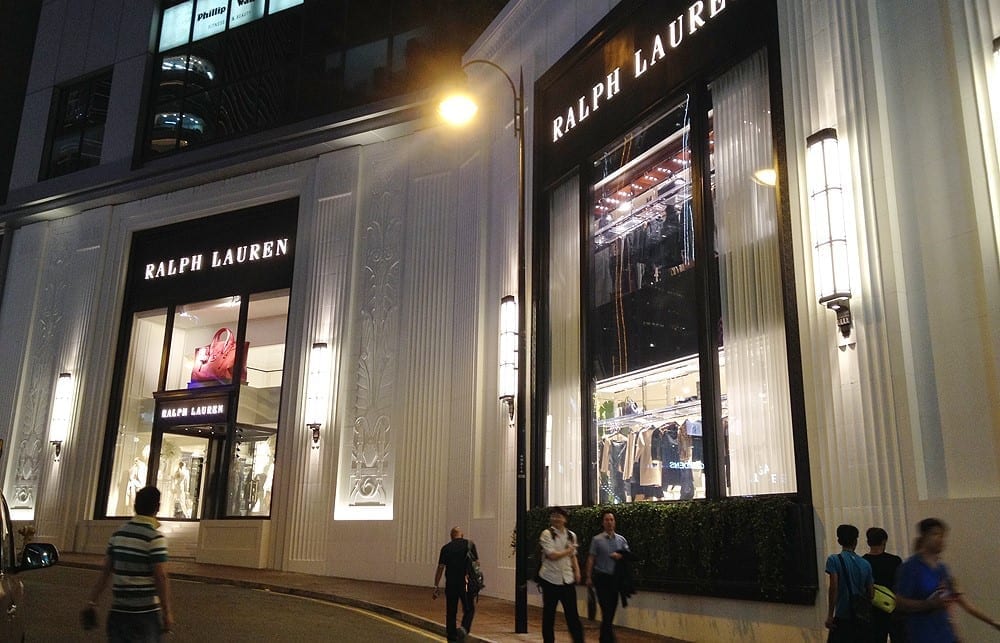
    Commenting on the sudden closure of the Ralph Lauren flagship store in Causeway Bay this week, Martin said there will be a continuing wave of closures for the next one to two years because the lease contracts attached to each location have different terms, and in most cases tenants wait until the right time in which they can exit without incurring high penalties. The market will probably return to ‘normal’ in 2018, he said.

    “There is a common thread between the closing of Forever 21, Abercrombie & Fitch and Ralph Lauren. These three brands are experiencing challenges in terms of their overall performance. Therefore we think that they probably need to adjust their cost structure.”

    OC&C predicts that luxury and premium brands are more likely to adjust their store networks, the closures ahead “maybe not as spectacular” as the closures of those three flagships.

    More regular size stores will close because many brands over-extended their footprint in Hong Kong when there was a strong stream of Chinese tourists who were hungry for foreign brands.

    “Many of these brands had, and some continue, to have more stores in Hong Kong than in their home city. Now, they are investing more in their home city flagship stores including examples such as Louis Vuitton on the Champs-Elysees in Paris and Burberry on Regent Street in London, putting more emphasis on their roots and history, serving Chinese tourists who have upgraded their travel destinations to such global capital cities. At the same time, they have been closing a number of stores to adjust to a lower but more sustainable business in Hong Kong.”

    Martin said the exorbitant rent levels of flagship stores in Hong Kong can have significant impact on global brands’ overall bottom line. For example, Forever 21 took a big gamble opening in Causeway Bay because it takes exceptional levels of productivity to stay profitable given the level of rent they had to pay for such a large space there.

    “That being said, the Hong Kong retail context is creating opportunities for new players to take over spaces that are freed-up by store closures such as the above. And, new tenants can probably do that with better rent conditions than their predecessors in the same spaces.”

    OC&C predicts that brands that have upward momentum in their home markets and want to accelerate their momentum in Asia are the best candidates to take over large flagship space in Hong Kong, as long as these spaces are in good locations, like Victoria’s Secret taking over the Forever 21 location in Causeway Bay. Brands with on-going strong momentum like Zara and H&M may also be interested in taking up these vacant spaces.

    “Until recently, Hong Kong was often a key part of a brand’s strategy to build brand equity with Chinese tourists in view of entering China. This is still true to some extent, but now brands rely more on building brand equity directly with Chinese visitors in their flagships in Europe and the US, as well as online, rather than in Hong Kong. Therefore they rely less on opening flagships in Hong Kong as they once did. Hence, brands are more rigorous in their pursuit to achieve self-sustaining economics even in their flagship brand-building stores.”

    Martin said landlords will target the ‘up-momentum brands’ first in order to maximise rent.

    “If they are not successful with such brands, they will have to downgrade their expectations to less known but newer brands in smaller spaces, or to more experiential offerings, i.e. gyms, restaurants, who need large spaces but cannot afford apparel-brand level of rents.”

  • Target China learning fast as it gains momentum

    Target China learning fast as it gains momentum

    Target China is continuing to learn about the vast mainland market as it builds brand awareness in the region in preparation for a major push.

    Vincent Lau, GM China with Target Corporation, told the Omni-Channel Retailing Conference half-year seminar yesterday that China represented a steep learning curve for the US$73.8 billion US-headquartered value retail business.

    “We had to forget everything we know. Being number two in the US market doesn’t resonate into anything in China.”

    Lau said that while 96 per cent of Americans recognised the distinctive red circles of the Target logo, it was probably the opposite in China. “They just see a bullseye.”

    Target believes its US brand promise “Expect more, pay less” is relevant to Chinese. But the stock range had to be adjusted to local market expectations. To date, Target is strong in mother and baby products and dry grocery lines, where it has localised sourcing and range.

    “We keep an open mind. We test and we learn. We want to see what [Chinese consumers want] and why.”

    Partnering with Alibaba has been crucial for Target in building the brand there. On Singles Day, or 11.11, Target was one of the US retailers to sign on to Alibaba’s Buy+ Virtual Reality shopping experience where shoppers online could ‘walk the aisles’ of a target store in Harlem.

    Lau declined to reveal sales figures but said every product on the digital shelf had sold multiple numbers during the 24-hour online sales.

  • Luxury-brand in China rising from grave

    Luxury-brand in China rising from grave

    Luxury-brand sales are reviving in mainland China, with Macau paying the price.

    As China’s currency depreciates, the narrowing price gap is keeping mainland luxury shoppers at home, further contributing to Macau’s retail slump, reports the Macau Business Daily.

    Some brands in China are expecting this year to return to the figures of their sales peak in 2012, says partner Bruno Lannes of Shanghai-based consulting firm Bain. He says luxury sales in the mainland have risen an estimated 4 per cent after three years of decline.

    According to the latest data from the Macau Statistics and Census Services (DSEC), retail sales of watches, clocks and jewellery have fallen 21.2 per cent year-on-year, with the overall volume of retail sales dropping 5.9 per cent in the third quarter.

    More than 45 per cent of retailers interviewed by DSEC expect their sales volume to decrease for the present quarter. Meanwhile, visitor numbers from the mainland edged up 0.4 per cent year-on-year in October, but have fallen by the same amount over the first 10 months of this year.

  • Ralph Lauren Hong Kong closes flagship

    Ralph Lauren Hong Kong closes flagship

    Following other international fashion labels, Ralph Lauren Hong Kong has closed its flagship store.

    Four years ago, its then CEO Ralph Lauren said the company was transforming its presence in China, “a region we believe will become an important driver of growth for us over the long term”.

    He was announcing plans to open 60 stores in greater China by 2015. A year after the announcement, the label launched its first men’s flagship store in Asia, in the Landmark Prince’s in Hong Kong’s Central district, and in October 2014 opened a “mansion” store at the Lee Gardens complex, offering accessories, watches and jewellery as well as men’s and women’s fashions.

    Now its 20,000 sqft (1858 sqm) store in Causeway Bay has been closed overnight, with a representative of the brand saying the closure was “part of our strategic and financial plan”.

    “We are redeploying assets to focus on new concept stores and transition away from unprofitable formats and locations,” the spokeswoman says.

    Ralph Lauren will combine its men’s and women’s flagships in the newly renovated Prince’s Building location, she says.

    The move is part of a new strategy from Stefan Larsson, who replaced Lauren as CEO a year ago (Lauren is still executive chairman and chief creative officer). Larsson previously worked for Swedish fast-fashion retailer H&M for 15 years.

    The restructuring will cut more than 50 stores and 1000 jobs worldwide, saving the company between US$180 million and US$220 million a year, reports The South China Morning Post.

    Meanwhile, American fast-fashion label Forever 21 has announced it will close its multi-storey Causeway Bay flagship store. British label Paul Smith has already closed its Times Square store, and Italian luxury clothing and accessories label Tonino Lamborghini has also closed more than 10 stores and in-store counters.

    Abercrombie & Fitch is set to leave its prime location in the Pedder Building in Central, which will leave it without a stand-alone store in Hong Kong. This follows it closing about 50 stores in the US this year. But the US company plans to open a flagship store in Beijing.

  • Alipay reaches Australian stores

    Alipay reaches Australian stores

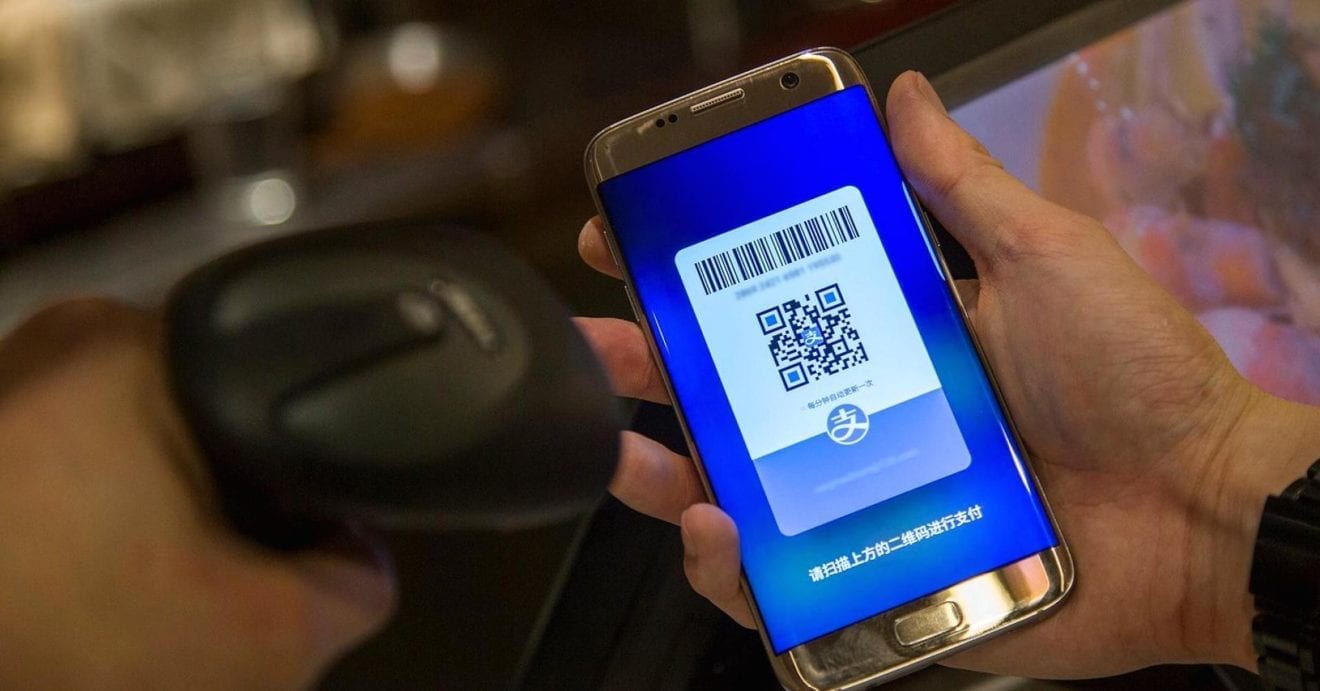
    Innovative Australian payments provider Quest Payment Systems is launching Alipay in Australian stores.

    Its collaboration with Alipay, the world’s largest mobile and online payment company, will make it easy for Chinese nationals to pay for purchases in-store using their mobile phones, and in their own currency.

    Quest has designed the software to integrate with POS systems to ensure a seamless experience for both retailers and customers.

    Tourism Australia says Chinese visitors spent a record AU$8.9 billion over the 12 months to March this year. On average, Chinese tourists spend about AU$8000 each visit to Australia.

    Quest has already enabled Alipay at select stores within The Chemist Warehouse and My Chemist pharmacy groups, with full rollout planned for early next year.

    Quest innovation manager Luke Fuller says Alipay customers in Australia simply need to scan a code displayed on a payment terminal screen in order to pay from their mobile phone. “It’s simple, intuitive and ensures the customer can see exactly what their purchase will cost in both Australian dollars and their local currency.”

  • 44 BKK outlets moving ownership

    44 BKK outlets moving ownership

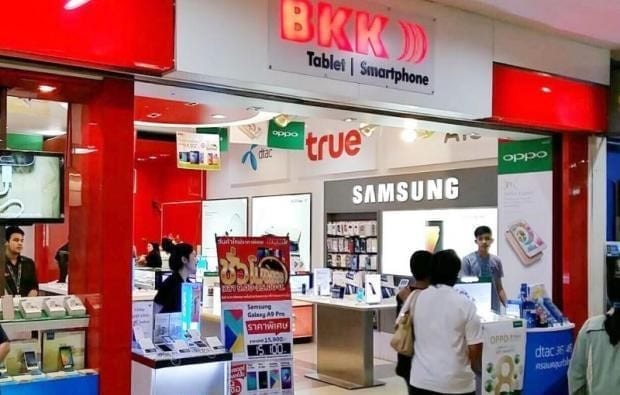
    Bangkok-based IT chain store Com7, under the Banana brand, has taken over 44 BKK outlets from Bangkok Telecom 999.

    The TB184 million (US$5.1 million) deal is a bid by Com7 to drive its expansion into the mid- and entry-level segments.

    “This is our first acquisition for the purpose of pursuing growth,” says Com7 chief executive Sura Khanittaweekul. The roll-out is expected to be completed in the first quarter of next year.

    Com7 will keep the BKK branding on its acquired stores, most of which are in high-density areas. At least 10 of the stores compete directly with Com7.

    BKK Telecom 999 still has 36 BKK branches.

    Sura says the acquisition will enable Com7 to expand more quickly as it will not need to build its own stores. It will be able to tap the mid- and entry-level markets with handsets priced below TB10,000 a unit.

    Com7 aims to expand its retail shops to 500 branches by the end of next year, up from 365. It launched Bananastore.com in August to extend its sale channels online.

  • China drives Ikea growth

    China drives Ikea growth

    China has been cited as one of the major contributors to a year in which Ikea’s profits surged 19.6 per cent.

    Ikea growth was strongest in China, while the company’s largest markets were Germany, the US, France, Britain and Sweden.

    The Stockholm-headquartered furniture and homewares retailer reported a profit of 4.2 billion euros ($US4.5 billion). Total sales rose 7.1 per cent to 34.2 billion euros for the 2016 financial year ending in August, the company said.

    In the past year Ikea has opened 12 new stores and 19 pick-up and order points worldwide, and in the coming year planned to open its first stores in Serbia and in Hyderabad, India.

    “Growth and profitability give us freedom to choose our own way, the flexibility to move fast and the independence to think and invest long term,” Peter Agnefjall, Ikea Group CEO, said in a statement.

    The retailer registered 783 million visits to its 340 stores in 28 countries during the 12-month period but was also expanding its online offers. In addition, 49 stores are operated by other franchises.

    As part of its efforts to reduce its environmental footprint, the company said it was to invest 1 billion euros in sustainable materials. This included forestry and firms involved in recycling, renewable energy and developing biomaterials.

    It said 71 per cent of the energy it used in 2016 came from renewable energy sources such as solar and wind farms. Ikea plans to be energy independent by 2020.

  • MasterCard Myanmar issues travel card

    MasterCard Myanmar issues travel card

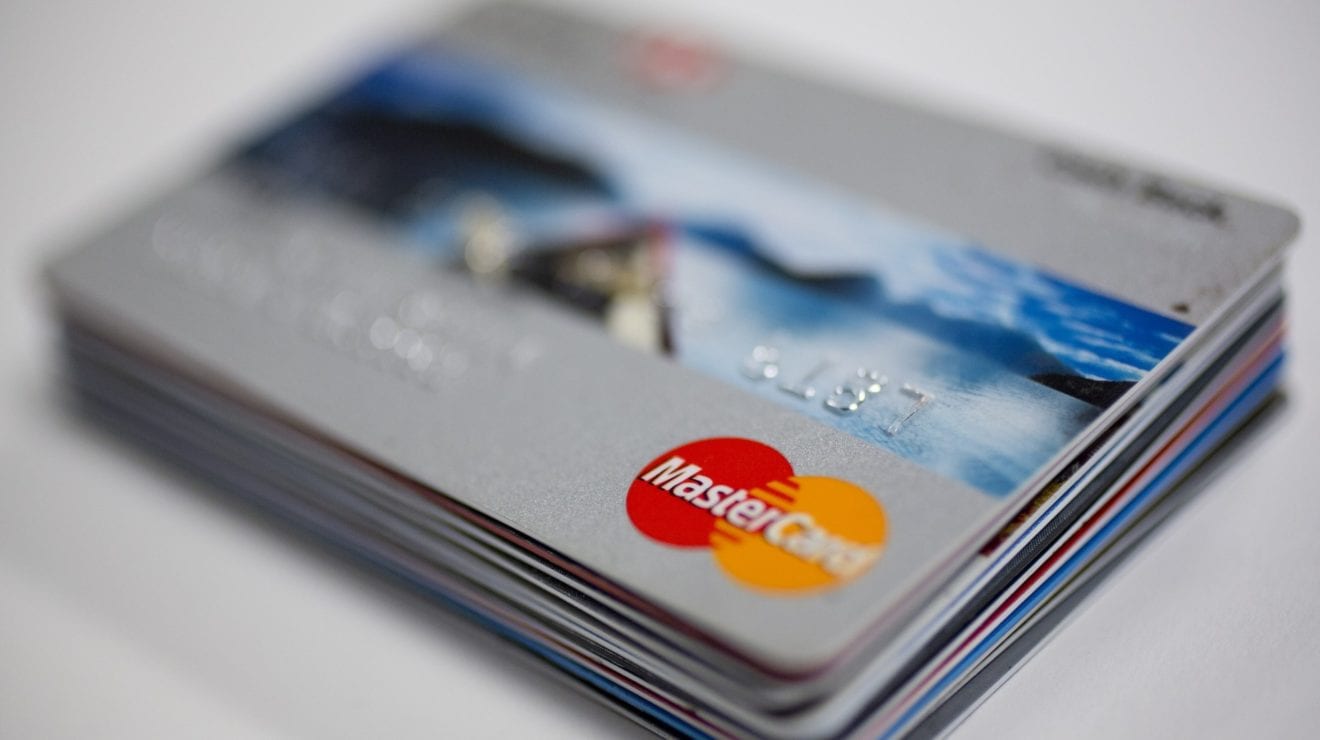
    MasterCard Myanmar and CB Bank have announced their first payment product, a prepaid travel card.

    The CB Bank Easi Travel Prepaid MasterCard is reloadable and is designed for Myanmar residents travelling outside of the country. It is the first such card product for Myanmar and is part of its evolving electronic payments ecosystem.

    CB Bank executive vice-chairman/CEO Kyaw Lynn says the bank continues to pioneer the electronic payments sector in Myanmar.

    Mastercard Southeast Asia president Matthew Driver says that part of the allure of a frontier market like Myanmar is in seeing the vital steps of financial inclusion play out. “By far, most people in Myanmar remain unbanked and don’t have access to financial services, but the payments infrastructure is rapidly developing with ATMs, POS terminals and now prepaid cards.”

    It is expected that more than 500 restaurants, retail outlets and hotels in Myanmar will be accepting payment cards by the end of the year.

    Overall consumer optimism is high in Myanmar (96 points on the latest MasterCard Index of Consumer Confidence). A MasterCard survey has shown that nearly two-thirds of people who have travelled abroad intend to do so again within the next 12 months.

  • Shinsegae support for handcraft market

    Shinsegae support for handcraft market

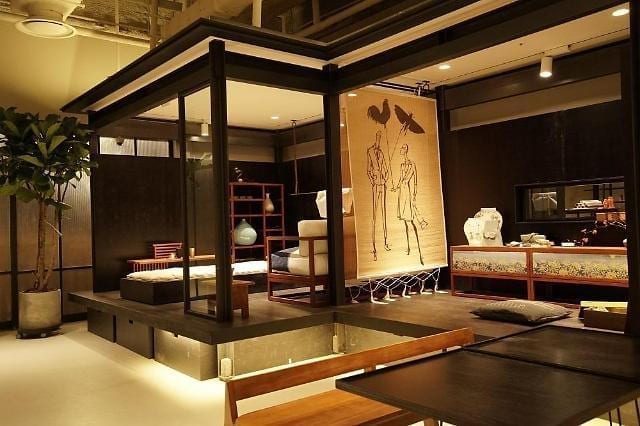
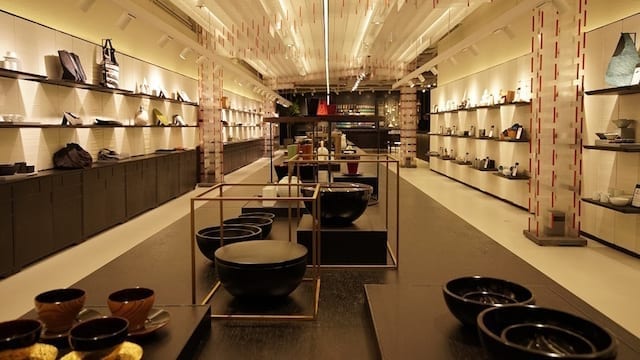
    Shinsegae Duty Free has launched Han Soo, an open space where visitors can experience and buy Korean traditional handcrafted items, at Mesa Building mall in Seoul’s shopping district of Myeongdong.

    The 1016 sqm store displays products made by dozens of artisans, including 15 government-certified craftspeople.Works span from simple pottery to furniture, including traditional items integrated with modern elements.

    shinsegae-duty-free-han-soo-2

    Officials expect Han Soo to become an important venue for foreigners wanting to experience Korean traditions and goods. It will offer not only the craftworks, but also introduce the raw materials used to produce them. There will also be special exhibitions.

  • Cross-border eCommerce ‘set to skyrocket’ in China

    Cross-border eCommerce ‘set to skyrocket’ in China

    Cross-border eCommerce (CBEC) is set to skyrocket in China according to a new report from international think tank Fung Global Retail & Technology.

    To capitalise on this, international retailers need to complement their existing expansion strategy with online sales platforms, says Fung Global MD Deborah Weinswig.

    Cross-border eCommerce is the most efficient platform to reach increasingly affluent and sophisticated Chinese shoppers seeking products from overseas, says the report, The International Retailers’ Guide to Cross-Border E-Commerce in China.

    With Chinese authorities relaxing the rules, online purchases of overseas products are expected to increase to US$285 billion in value in 2018, up from US$136 billion last year.

    As well as authenticity being less of a concern, eCommerce purchases attract less taxes so are cheaper for consumers, writes Weinswig. As a result, it is projected that a quarter of the population will shop on foreign sites or through third parties in 2020, up from 15 per cent this year.

    “We expect CBEC will drive the next leg of eCommerce growth as Chinese eCommerce companies and international retailers launch globalised versions of their portals. By selling through CBEC, international retailers can reach Chinese shoppers regardless of whether or not they have a physical presence in China.”

    China is already the largest eCommerce market in the world, with the use of CBEC via such marketplaces as JD Worldwide and Tmall Global being attributed to the continuing rise of the upper middle class with its growing use of the internet and belief that international brands are of higher quality.

    Regulations formalised

    Most shoppers seek items related to wellbeing such as cosmetics and organic foods, expensive or hard to find domestically, says the report. Many foreign eCommerce companies have launched Chinese websites, and since late 2014 authorities have been formalising regulations including tax reforms and expediting customs clearances.

    Japanese companies in particular are targeting Chinese CBEC shoppers, using mobile apps such as Rakuten and China’s Wandou.

    Choosing the right platform is crucial, writes Weinswig. Options include…

    • Online marketplaces such as Alibaba’s Tmall Global, a third-party eCommerce platform that lets brands open a storefront. International distributors using this platform include Macy’s, Metro, Shiseido and Uniqlo.
    • Online direct sales such as Amazon.cn, Jumei Global Store, Kaola.com (for smaller brands) and Vipshop. Distributors buy from the retailers to resell to consumers.
    • Hybrid eCommerce platforms such as JD Worldwide that combine elements of an online marketplace and online direct sales. JD Worldwide partners include eBay, Lotte, Rakuten and Unilever.
    • Overseas shopping platforms.

    “To succeed in the Chinese market, international retailers are advised to have a strategic plan for CBEC that complements their China strategy,” writes Weinswig. “International retailers will need to decide which cross-border channels to sell on, driven by considerations of each platform’s targeted clientele and product category, costs, track record and suite of value-added services.”

    Fung Global Retail & Technology is based in Hong Kong, London and New York.

  • Gucci Roppongi designed by Gucci

    Gucci Roppongi designed by Gucci

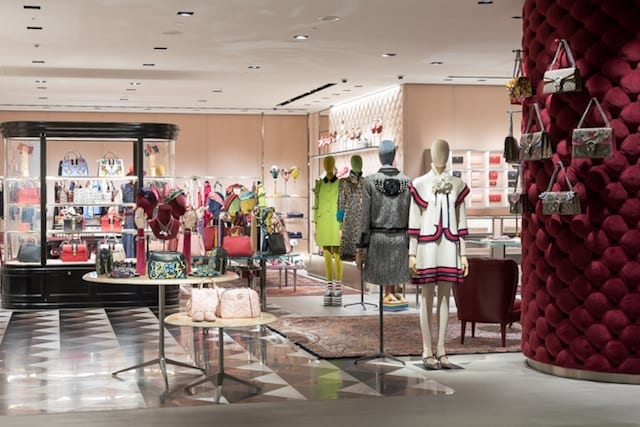
    Just opened, Gucci Roppongi in Tokyo is the first-ever Japanese flagship store designed by Alessandro Michele, the Italian fashion brand’s creative director.

    gucci-new-flagship-store-tokyo-at-roppongi-hills-3

    Covering 228 sqm, the store is in Westwalk Roppongi, Minato-ku.

    gucci-new-flagship-store-tokyo-at-roppongi-hills-2

    It features both women’s and men’s collections including ready-to-wear, footwear, handbags, luggage, accessories and jewellery.

    There are also special items such as exotic clutches and rare Gucci handbags exclusive to the boutique.