Tag: asia

  • Minister hopes festival will promote Indonesian pearl to the world

    Minister hopes festival will promote Indonesian pearl to the world

    Maritime Affairs and Fisheries Minister Susi Pudjiastuti hopes that the Indonesian Pearl Festival (IPF) 2016 will introduce Indonesias original pearls to the world.

    “I hope the Indonesian South Sea Pearl (ISSP) would be introduced to pearl stakeholders and enthusiasts. The exhibition which has been held regularly would open access to the people,” the minister said when opening the IPS in Jakarta Wednesday.

    The exposition displays the Indonesian sea kept pearls to the public she said.

    It was the duty of everyone to introduce the Indonesian pearl to pearl stakeholders and enthusiasts, the minister said.

    If the ISSP is recognized as a new commodity which has a high value, it would benefit Indonesia, as it would serve as a new source of economy to Indonesia.

    The Indonesian pearl has good potential for the world market and therefore, noted designers are called on to present the latest pearl designs, she stated.

    “Many people will come to know and love the pearl when they see the creative and up to date designs,” the minister added.

    If the Indonesian pearl potential is cultivated properly it would boost the Indonesian economy, Minister Susi reminded earlier.

    Pearls have become the target of illegal export practices, she said, and added that in 2014 the pearl exports to Hong Kong were worth US$49.8 million.

    The figure is very different from the Indonesian pearl export data.

    In 2015, Hong Kong imported pearls from Indonesia worth $34.2 million. But Indonesias pearl export data to Hong Kong showed that it was worth only about $1 million.


  • Indonesia explores opportunities in brownfield investments

    Indonesia explores opportunities in brownfield investments

    Indonesia is planning to open up state-owned run infrastructure, such as toll roads, to private investors in an effort to generate fresh funding for new projects.

    President Joko “Jokowi” Widodo said on Wednesday that he would ask some state-owned enterprises (SOEs) to sell their concessions in major toll roads, such as the Jagorawi toll road in East Jakarta, to private investors.

    Jagorawi, which connects Jakarta to Bogor and Ciawi in West Java, is the country’s oldest toll road and is currently managed by state-owned toll road operator Jasa Marga.

    “For Jasa Marga and [state construction firm] Waskita Karya, which own many toll roads, your job is to build a toll road, not to own it,” the President said on Wednesday in Jakarta, during the 2016 Indonesia Infrastructure Week.

    Not many investors, he added, wanted to invest in greenfield infrastructure projects, which refers to fresh projects, and instead preferred to put their money in brownfield projects, which refers to projects that are already operating and generating cash flow.

    National Development Planning Board (Bappenas) head Bambang Brodjonegoro, meanwhile, said it was possible for SOEs to offer a concession-sharing scheme to private investors. The SOEs, for example, could sell shares of their subsidiaries that are in charge of toll-road management.

    “They can sell some [portion of shares], like 30 to 40 percent. The SOEs will still own the main concession [for the toll road],” he said.

  • BI Revises Regulation on E-Money

    BI Revises Regulation on E-Money

    Bank Indonesia (BI) will make another revision to regulation on electronic money and introduce electronic wallet in the Bank Indonesia Regulation. The new regulation on the payment transaction processing is expected to be finalized in November 2016.

    Bank Indonesia deputy governor Ronald Waas said that one of the revision points is related to the expansion of electronic money basis. Currently, Ronald revealed, there are two types of electronic money, namely server-based and card-based electronic money. BI is considering adding gadget-based money as a new category.

    “Currently we have Samsung Pay and Apple Pay. They don’t use cards,” Ronald said in Jakarta on Wednesday, November 9, 2016.

    Ronald explained that there are two categories of e money, namely Know Your Customer (KYC) and non-Know Your Customer (nKYC).

    In the new regulation, BI has planned to require electronic money issuer with total active members of no less than 300,000 to register the electronic money.

    “[Electronic money issuer] with below 300,000 users doesn’t need to obtain a permit, but they need to report. In addition, they have to establish a legal entity,” Ronald said.

    In terms of minimum balance, Ronald clarified that there would be no revision regarding the matter. The minimum balance for non-registered electronic money is Rp 1 million (US$77), while that for registered one is Rp 10 million (US$770).

  • CAT to cut network leasing rates by 10%

    CAT to cut network leasing rates by 10%

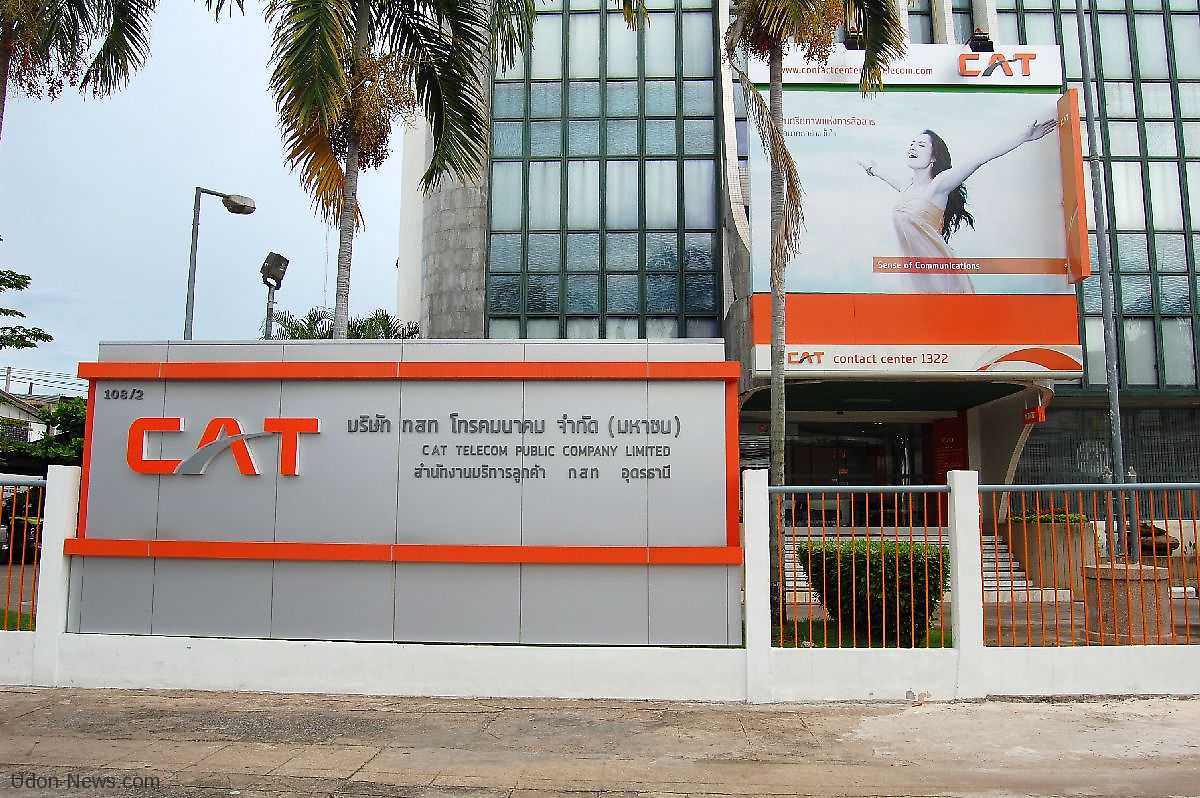
    Thai state-owned operator CAT Telecom will cut its wholesale 850-MHz network leasing prices by 10% to help the companies using the network under an MVNO model improve profit margins.

    CAT plans to implement the price cuts by the end of the year, citing comments from president Col Sanpachai Huvanandana.

    Several MVNOs had asked CAT to lower its rates to help reduce operating costs and help MVNOs struggling to compete stay above water.

    But Sanpachai insisted that the rates are not too high, and that it is instead competitive pressures and low ARPUs that are leaving MVNOs finding it difficult to compete.

    CAT currently has five companies providing 3G services on the operator’s 850-MHz network – TrueMove subsidiary Real Move, Samart i-Mobile, Penguin operating unit the White Space, 168 Communication and Data CDMA.

    According to the report, Samart i-Mobile recently returned 300,000 mobile numbers to save rates on numbering fees after determining that the company can not profitably provide services due to a high network leasing cost. Thai mobile operators pay a fee of 1 baht ($0.029) per month per mobile number.

  • SmarTone signs pre-5G partnership with Ericsson

    SmarTone signs pre-5G partnership with Ericsson

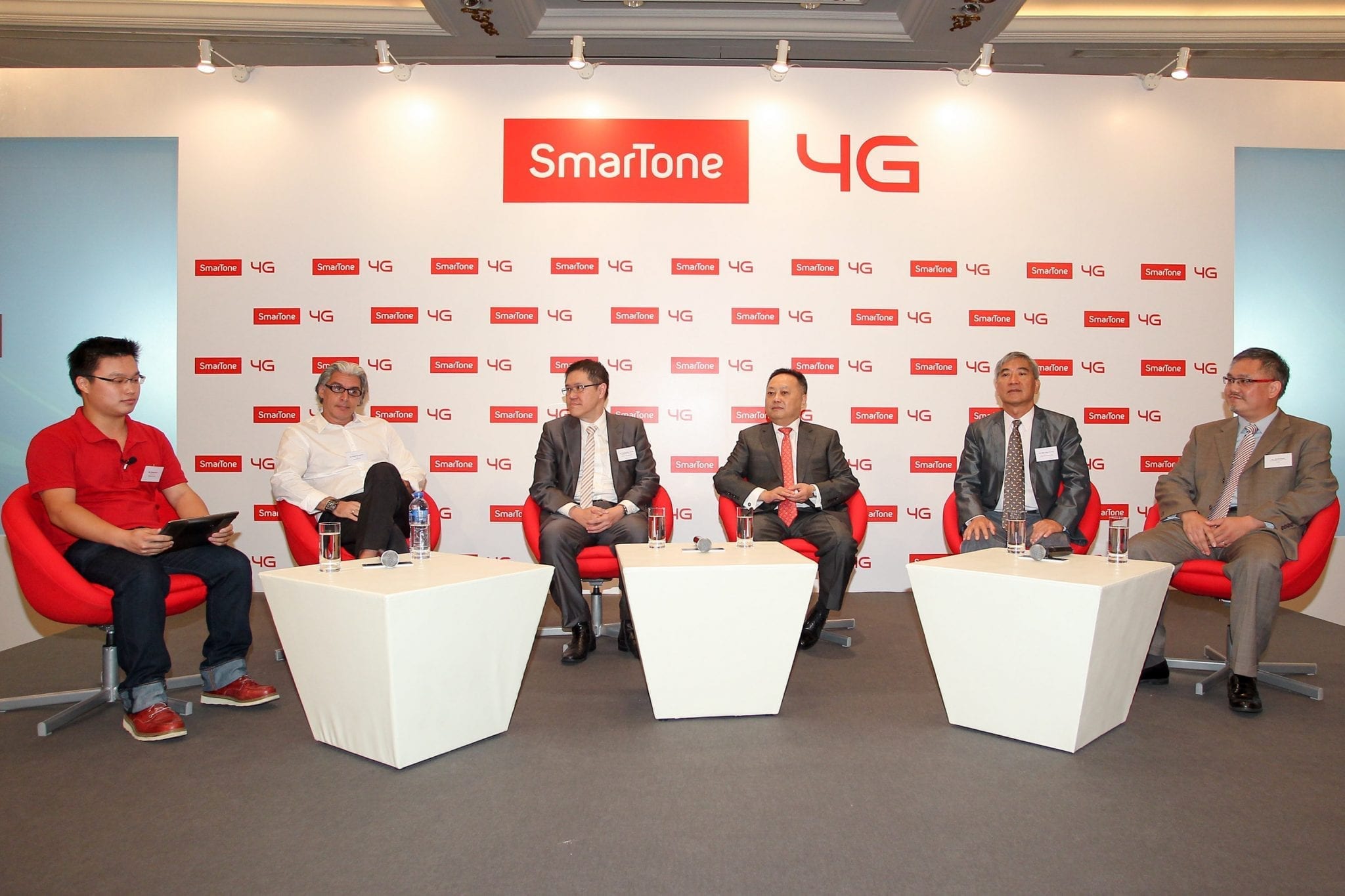
    Hong Kong’s SmarTone has contracted Ericsson as its sole supplier for core and RAN equipment over the next five years, as part of a partnership aimed at paving the way for 5G deployment.

    The companies plan to conduct early trials and pilot deployments of key pre-5G technologies from this quarter.

    Ericsson will help SmarTone upgrade and expand its network infrastructure and refarm more spectrum for LTE, and will deploy NFV and SDN technologies to improve network performance and efficiency.

    The companies have been working to introduce technologies including LTE-Advanced and LTE-Advanced Pro to the SmarTone network.

    “SmarTone is pleased to extend our strategic partnership with Ericsson to pave the way for 5G in Hong Kong,” SmarTone CTO Stephen Chau said.

    “[We] will continue to invest in spectrum and pre-5G technologies within the next few years to provide a superior customer experience and to evolve our network into an advanced, dynamic and cloud-based network architecture.”

    He said the deployment will help the company capture future business opportunities from new types of applications including VR and M2M applications such as the IoT.

    SmarTone was established in 1992 and publicly listed in 1996. The company provides voice, mobile and fixed broadband services in Hong Kong and Macau.

  • Pertamina`s profit up 209 pct in third quarter

    Pertamina`s profit up 209 pct in third quarter

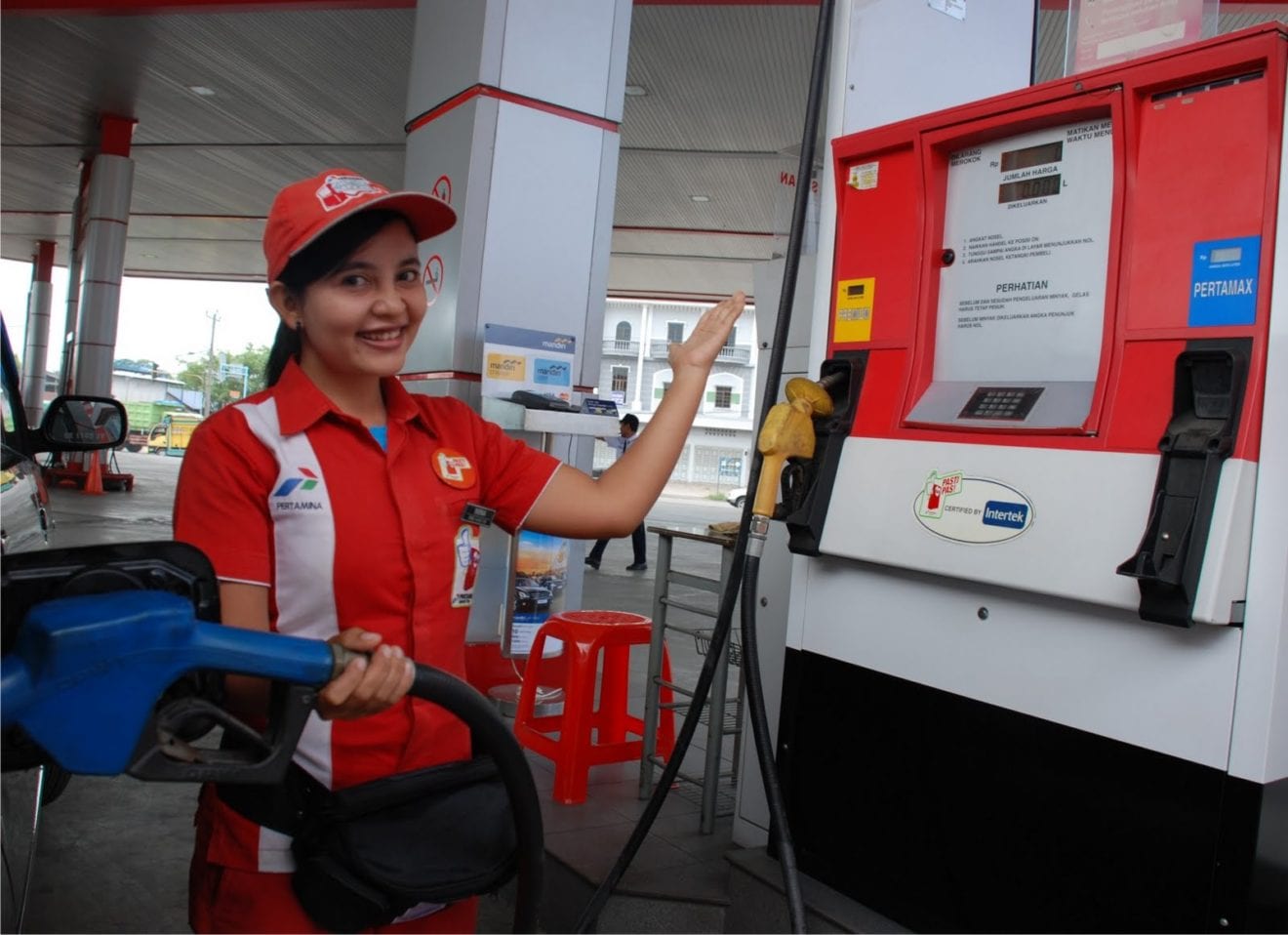
    PT Pertamina made a net profit of US$2.83 billion in the third quarter of this year, 209 percent more than the US$914 million it made in the third quarter in the previous year.

    The president director of the state-owned oil and gas company, Dwi Soetjipto, on Tuesday credited the achievement to improved operational performance and efficiency as a result of various initiatives and breakthroughs.

    He said although the profit soared, corporate income was down 16.8 percent to US$26.62 billion from US$32 billion in the previous period due to a relatively lower price of crude.

    “What is encouraging is that net profit performance has been good as a result of enhanced efficiency and initiatives like the Breakthrough Project,” he added.

    Dwi Soetjipto noted that the company continued to improve its operational performance by increasing efficiency and successfully cut costs up to 27 percent in the first month of this year.

    “Until September 2016, around US$1.6 million had been saved through Breakthrough Projects,” he revealed.

    The companys downstream performance in the third quarter reached 646,000 barrels of oil equivalent per day, consisting of 309,000 barrels of oil and 1,953 mmscfd of gas per day.

    This was 12.3 percent more compared to the same period before.

    Meanwhile, the geothermal power production reached 2,233 GwH electricity equivalent.

    He stressed that the company continued to develop infrastructure including gas, processing and marketing infrastructure.

    Several projects such as Gresik-Semarang, Muara Karang-Muara Tawar and Tegal Gede gas pipeline projects have been completed up to 70 percent.

    The first RDMP (Refining Development Master plan Program) phase of the refinery project in Balikpapan, Kalimantan, is expected to be completed in June 2019 and it will become operational in September 2019 while the first phase of the project is expected to be completed in the middle of 2021 when its production will meet Euro 5 standard.

    The New Grass Root Refinery project in Tuban, East Java, a joint venture between Pertamina and Rosneft of Russia, is expected to be completed by the end of 2021. The production there will also meet Euro 5 standard.

    The RDMP of the refinery project in Cilacap, Central Java, which is a cooperation project with Saudi Aramco, is expected to be completed in 2022, also with Euro 5 Standard in production.

    “As for the New Grass Root Refinery project in Bontang (Kalimantan), it has been decided that it would be referred to Pertamina for completion, a goal expected to be achieved tentatively by 2023 with Euro 5 Standard production,” Dwi Soetjipto explained.

  • Samsung offices in South Korea raided over corruption scandal

    Samsung offices in South Korea raided over corruption scandal

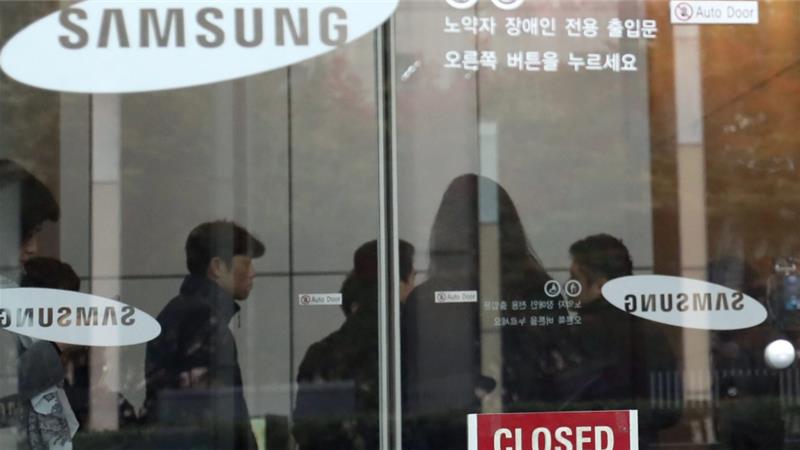
    South Korean prosecutors investigating a confidante of President Park Geun-hye for corruption have searched the offices of Samsung, according to local media.

    Samsung, the world’s largest manufacturer of smartphones, televisions and memory chips, is suspected of having secretly funded the sporting activities of the daughter of Choi Soon-sil, Park’s friend, it was reported on Tuesday.

    Samsung, which is already reeling from the disaster surrounding its Galaxy Note 7 smartphone, confirmed that its offices had been raided but gave no further details.

    The company is suspected of having transferred $3.1m to a company owned by Choi in Germany.

    The money was allegedly used to pay for daughter’s training as a dressage rider.

    Growing scandal

    Tuesday’s raid also came just as Park agreed to cede some control of state affairs as the result of the damaging corruption scandal that has engulfed her administration.

    In what is being considered a major political concession, Park told the speaker of the National Assembly that she would accept a prime minister chosen by the opposition-controlled legislature “and let him control the cabinet”.

    The prime minister is normally a largely symbolic post in South Korea, where power is firmly concentrated in the executive.

    It was a double surrender by Park – effectively jettisoning her own nominee for prime minister and relinquishing some of her extensive powers to whoever parliament chooses.

    It was reported from Seoul, said that Park’s concession “doesn’t go perhaps as far as some opposition members were demanding – that all affairs should be handled by the prime minister and that the president should simply step back altogether – but it does allow some ground for work to start on some agreement”.

    Park is facing a growing scandal over Choi’s alleged influence on state affairs despite her having no official position in the government, with tens of thousands of protesters in Seoul demanding Park’s resignation over the weekend.

    Choi has been arrested on charges of fraud and abuse of power.

    The charges relate to allegations that Choi used her personal relationship with Park to coerce donations from large companies like Samsung to non-profit foundations she set up and used for personal gain.

    She is also accused of interfering with government affairs, including the nomination of senior officials.

    Unhealthy influence

    Reports of the unhealthy influence Choi wielded over Park have sent the president’s approval ratings plunging to record lows and led to mass street protests calling on her to resign.

    In a bid to restore public trust, Park reshuffled her advisers and senior cabinet members, and nominated a liberal candidate for prime minister from outside her conservative Saenuri Party.

    But opposition parties had pledged to block her nominee on the grounds that they were not properly consulted.

    During their meeting, Chung Sye-kyun, the parliamentary speaker, told Park that her biggest priority should be to alleviate widespread public concern and anxiety.

  • Singaporean middle-income earners spend the most online

    Singaporean middle-income earners spend the most online

    Check out what do Singaporeans buy based on monthly income.

    On average, shoppers spend S$155 a month, or S$1,860 a year, on retail purchases and travel bookings online. Those with monthly salaries between S$4,000 and S$5,000 spend the most at S$194 a month, which is 20% more than those earning S$5,000 – S$6,000.

    These are some key findings from a study by Personal finance comparison site SingSaver.com.sg and online shopping rewards portal ShopBack.

    Together, they polled 1,979 Singaporeans aged 21 to 60 about their online shopping habits and how they save money at digital stores.

    Fashion is a number one spend category for shoppers with a monthly income under S$6,000. Electronics is the next most popular category for those earning S$3,000 – S$5,000 a month, and Health & Beauty for those earning less than S$3,000 a month. Only shoppers earning S$4,000 – S$5,000 a month count travel as part of their top 3 online expenditures.

    Meanwhile, respondents who earn over S$6,000 a month spend more on online groceries than fashion purchases and electronics.


  • Zalora partners with Calvin Klein Asia

    Zalora partners with Calvin Klein Asia

    Zalora has partnered with Calvin Klein Asia to launch Calvin Klein Jeans, Calvin Klein Underwear and Calvin Klein Performance at Zalora.com.

    The partnership significantly expands the distribution of Calvin Klein presence in five key markets including Singapore, Hong Kong, the Philippines, Taiwan and Malaysia.

    Zalora will launch the Fall 2016 season, offering more than 300 assorted products spanning womenswear, menswear, underwear, bags and small leather goods.

    Parker Gundersen, CEO of Zalora Group said Calvin Klein enjoys tremendous appeal across Asia.

    “With strong partners like Calvin Klein, we remain well ahead of the competition in terms of product assortment and ability to serve the millions of consumers throughout Asia seeking trusted and convenient access to fashion online,” he said.

    The shop has its own dedicated address and the products are also available on Zalora’s app.

  • Toys R Us Singapore plans two new stores

    Toys R Us Singapore plans two new stores

    Toys R Us Singapore plans two new stores, despite the current downturn in the retail market.

    Country manager Raymond Burt told Channel NewsAsia the first will open before Christmas and a second will follow in early 2017.

    The announcement came at the opening of the chain’s latest store at VivoCity, its ninth store in the city state.

    The locations of the new stores were not revealed although it is believed the new VivoCity outlet, with 30,000 sqft of floor space, will remain the largest in Singapore.

    “We will continue to grow here as we still see Singapore as a growth market,” Toys R Us APAC president Andre Javes said.

    “We don’t want to make decisions just based on the current economic situation which is tough… but this market has been a good one for the past 32 years and we have no issues investing more.”

    Javes, who described the toy category as “recession-proof” said he expects the company to benefit from a raft of branded merchandise opportunities related to Hollywood blockbuster movies scheduled for release in coming years.

  • Retailers need to embrace changing Chinese tourist demographics

    Retailers need to embrace changing Chinese tourist demographics

    Increasing numbers of Chinese tourists are travelling alone – and retailers in Asia seeking to cash in on their growing spawning power need to find ways to embrace the trend.

    Traditionally, Mainland Chinese tourists have travelled in groups – sold packages before they leave home and effectively herded into shopping destinations, often with commissions paid to tour organisers or guides.

    But that is set to change soon with the Beijing-based government tightening the rules on cheap package tours.

    South Korea is a case in point where the trend has been identified early and active work is underway to appeal to the new demographic.

    Duty-free operators and department stores have stepped up customised marketing targeted at shoppers in their 20s and 30s and deep-pocketed travelers from China, as they have become the main customers over the past few years.

    The shifting focus took on a new urgency as the Chinese government has been moving to tighten regulations on cheap tour packages, raising concerns among South Korean businesses relying on them as the biggest source of travel income.

    Out of 5.98 million Chinese nationals who visited South Korea last year, nearly 60 per cent were independent travelers, according to the state-run Korea Tourism Organization.

    Lotte Duty Free, which is operated by Hotel Lotte, offers a “personal shopper service” for VIP customers to pair them up with stylists who give advice and suggest products that may suit their needs.

    The nation’s largest duty-free operator has about 600,000 customers registered for VIP programs and also provides airport pick-up services for those who spend a certain amount of money.

    Shilla Duty Free, which is operated by Hotel Shilla, said it regularly holds “beauty classes” to advise on the best cosmetic products and offer makeup services to attract Chinese customers in their 20s and 30s.

    Tourism officials stress efforts to develop a wider array of options for Chinese travellers to encourage them to revisit in the future.

    “We have focused on attracting more independent travelers over the past years not only from China and Japan but also Southeast Asian nations and the Middle East to meet their diversifying needs and upgrade the tourism industry’s competitiveness,” Hwang Myung-seon, a senior official at the Ministry of Culture, Sports and Tourism, said.

  • Two more stores for Brooks Brothers Hong Kong

    Two more stores for Brooks Brothers Hong Kong

    US apparel brand Brooks Brothers has opened a flagship store at Gateway Harbour City in Tsim Sha Tsui, as well as a concept store at Times Square, Causeway Bay.

    Brooks Brothers is known for creating the button-down collar and seersucker suits, and its new boutiques showcase the same classic looks as featured at its first Hong Kong store at IFC Mall.

    Brooks Brothers opened its original store in New York in 1818.

  • CenturyLink to sell data centers for $2.15b

    CenturyLink to sell data centers for $2.15b

    US-based global operator CenturyLink has arranged to sell its data centers and colocation business to a consortium led by BC Partners and Medina for $2.15 billion.

    CenturyLink plans to use the net proceeds from this sale to partly fund its acquisition of Level 3 Communications announced last week

    Under terms of the agreement, the consortium will assume ownership of CenturyLink’s portfolio of 57 data centers at closing. The data center portfolio includes approximately 195 megawatts of power across 2.6 million square feet of raised floor capacity.

    Post-sale, the company will continue to focus on offering customers a wide range of IT services and solutions, including network, managed hosting and cloud.

    Though it will no longer own the data centers, CenturyLink will continue to offer colocation services as part of its product portfolio through its commercial relationships to be entered into at closing with the BC Partners/Medina-led consortium.

    “After conducting a thorough review process, we are pleased to have reached an agreement with BC Partners,”  CenturyLink CEO Glen F. Post III said.

    “We believe this transaction will benefit customers, employees and investors. Both CenturyLink and BC Partners have a strong customer focus and are committed to ensuring a seamless transition of the customers and their colocation environments.”

  • Nissan expects sales growth to slow in China, U.S. in near term

    Nissan expects sales growth to slow in China, U.S. in near term

    Nissan Motor Co Ltd on Monday said its sales growth in the world’s two biggest auto markets is likely slow in the near term as consumer tax breaks end in China while U.S. tastes move away from the automaker’s main area of focus.

    Japan’s second-biggest automaker by sales, which earlier blamed a strong yen for a 19 percent drop in second-quarter profit, made the comments after growth in Chinese and North American retail vehicle sales outperformed many markets in April-September.

    Sales in China in the six-month period grew 3.8 percent from a year prior, and Nissan’s head of operations in the country, Jun Seki, expects double-digit sales growth for calendar 2016, aided by economic incentives aimed at stimulating demand.

    “But as the government’s small-car subsidies wind down at the end of the year, we’re expecting to see a slowdown in sales early next year, and see single digit growth for the year,” Seki told reporters at Nissan’s Yokohama headquarters via telephone.

    Nissan also said recent growth in China’s auto market was due mainly to rising demand for local brands. In response, the automaker said it would further promote its China-only Venucia brand.

    The automaker sells almost a quarter of its output in China, and around 40 percent in North America.

    Its North American retail vehicle sales rose 5.4 percent in April-September. But it said demand growth was peaking and that any additional growth had been limited by its dependence on sales of sedans, at a time when low fuel prices had boosted demand for petrol-guzzling sport utility vehicles.

    Aggressive buying incentives for its sedans had also crimped profit margins, Nissan said.

    The automaker on Monday nevertheless kept its operating profit forecast at 710.0 billion yen ($6.80 billion) for the year through March, down 10.5 percent from a year prior, and said it continues to expect sales of 5.6 million vehicles.

    It also said it still expects the domestic currency to average 105 yen to the U.S. dollar and 120 yen to the euro.

    Earlier, Nissan said yen strength was responsible for July-September operating profit falling 19 percent to 163.9 billion yen – a result that still beat the 154.5 billion yen average of 10 estimates from analysts surveyed by Thomson Reuters I/B/E/S/. For April-September, profit fell 14 percent.

    Nissan raised its exposure to the strong yen at the start of the business year in April as it has been exporting its Rogue SUV crossover model from Japan to North America to meet demand.

  • Philippines Inspect Plane Order at PT Dirgantara Indonesia

    Philippines Inspect Plane Order at PT Dirgantara Indonesia

    Under Secretary for Finance and Material, Department of National Defense of the Philippines (General Retirement) Raymundo Elefante, said that his country is currently interested in purchasing Indonesian defense products to modernize the Philippines’ weapons and combat equipment.

    Raymundo said that two NC212i airplanes he had inspected at PT Dirgantara Indonesia (PTDI) is part of the Philippines’ airplane procurement program. The planes will be delivered to the Philippines’ early next year. “Aircraft produced by PTDI will be used in various conditions such as natural disaster, medical evacuation, and other conditions,” Raymundo said while inspecting the two airplanes at PTDI’s aircraft factory complex in Bandung, November 4, 2016.

    Raymundo said that his country decided to choose NC212i because of its competitive prices. In addition, the Philippines also currently wait for its ship order from PT PAL.

    Raymundo however, did not provide detailed information on the ship orders. PT PAL had delivered one of the Philippines’ ship order and another one will be finished next year.

    Budiman Saleh, Director of Commerce and Restructuring of PT Dirgantara Indonesia said that the two NC212i plane was the first airplane purchase by the Philippines in the last 20 years. “We have to respect [the Philippines] and its modernization program. This is the first purchase by the country after 20 years,” Budiman said.