Tag: asia

  • China Mobile deploys wideband Massive MIMO

    China Mobile deploys wideband Massive MIMO

    China Mobile Shanghai and Huawei have jointly deployed the world’s first wideband Massive MIMO site to help improve 4G network spectral efficiency.

    China Mobile has been focusing on the design of wideband Massive MIMO as part of its research on 5G. The technology been oriented specifically towards large-scale commercial use by the operator.

    Wideband Massive MIMO allows a single module to support the activation of three 2.6-GHz carriers, potentially allowing for a three-fold increase in the spectral efficiency of cells.

    The live deployment in Shanghai has achieved peak cell throughput rates of 72Mpbs using an uplink 8-stream capability configuration, as well as 630Mbps downlink.

    Huawei said the technology supports a smooth transition to CloudRAN architecture, while its in-house developed chips and optimization techniques helps provide processing capabilities four times higher than that of the industry standard.

    The technology is particularly suited to meeting specialized coverage requirements such as high-rise buildings.

  • Airline Sriwijaya Air offering Initial Public Offerings (IPO) in Indonesia

    Airline Sriwijaya Air offering Initial Public Offerings (IPO) in Indonesia

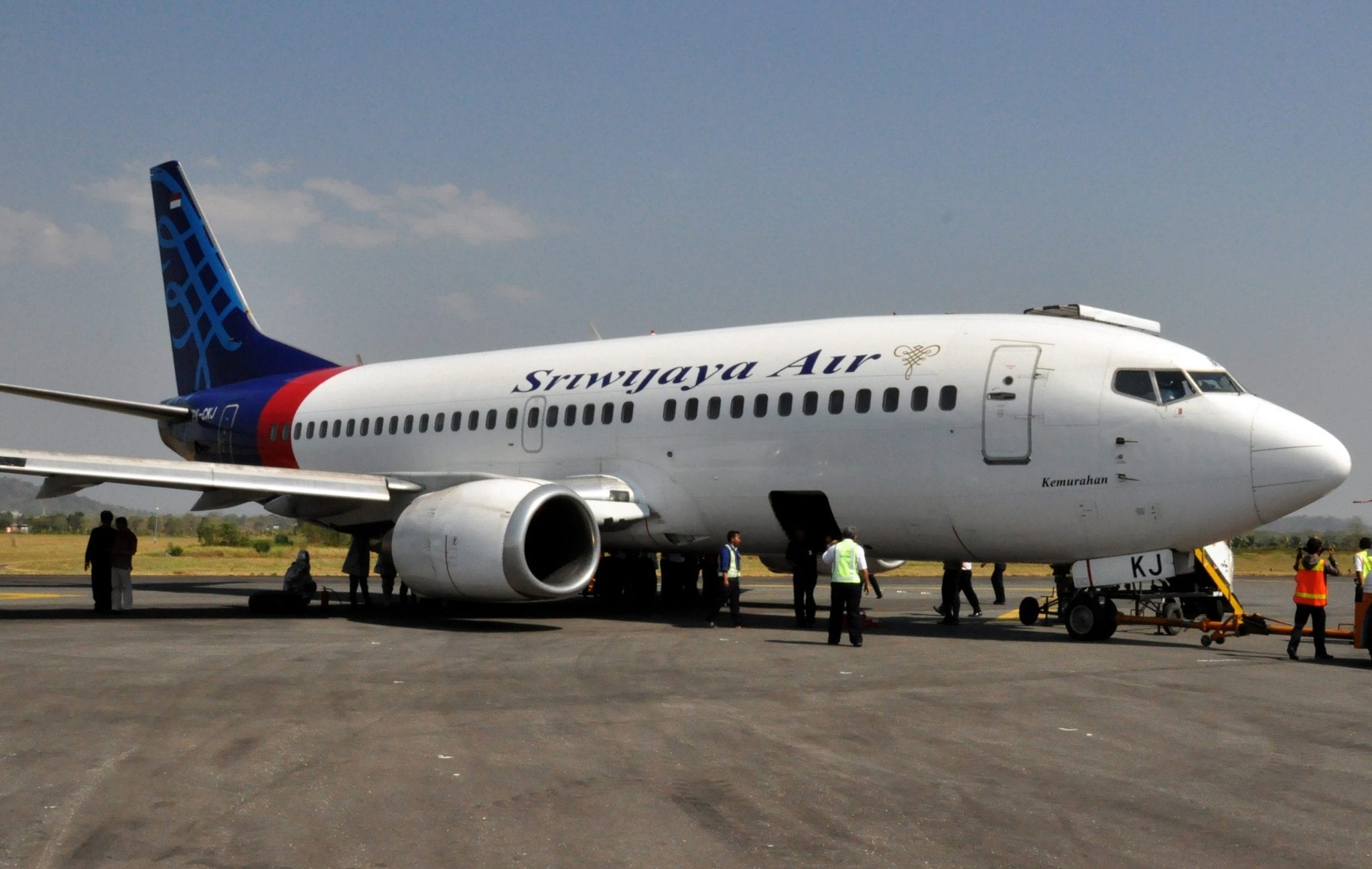
    Currently, Sriwijaya Air serves 46 domestic routes as well as seven international routes in the Asia Pacific with 51 narrow-body Boeing jets. With the larger fleet (after additional airplanes are purchased), the airline wants to add several domestic and regional routes as well as one to Jeddah (Saudi Arabia).

    Chandra Lie did not inform how much the company expects to raise from the initial public offering on the Indonesia Stock Exchange (IDX). In February 2011 Indonesia’s national flagship carrier Garuda Indonesia conducted an IPO on the IDX in which it raised IDR 3.3 trillion (approx. USD $252 million) by selling a 28 percent stake.

    Sriwijaya Air, founded by the brothers Chandra Lie and Hendry Lie in 2003, is Indonesia’s third-largest airline, controlling about ten percent of the domestic air passenger market. It currently carries about 800,000 passengers per month. The airline will move its administration and operational activities to the Cengkareng Business City complex from its current base at the Soekarno Hatta International Airport.

    The aviation industry in the Asia-Pacific region remains among the world’s fastest growing regions in terms of air passengers. Recently, the Indonesia National Air Carriers Association (INACA) says, whereas worldwide the number of air passengers is growing at a pace of nearly 7 percent (y/y), Indonesia’s air passenger growth is estimated at around 15 percent (y/y) in 2016.

    Number of Air Passengers in Indonesia 2011 – 2015:

    2011 2012 2013 2014 2015
    Air Passengers
    (in million)
    62.4 66.4 68.6 72.6 82.4

    Source: BPS

  • Dtac taps Nokia to revamp core network

    Dtac taps Nokia to revamp core network

    Thailand’s Dtac has become the market’s first mobile operator to implement an SDN-ready IP/optical network using equipment from Nokia.

    Dtac is implementing the technology to replace its existing IP core routing and DWDM infrastructure, in order to achieve the capacity to serve Thailand’s fast-growing mobile subscriber base.

    The deployment also includes Nokia’s security gateway for Dtac’s LTE network.

    “Over the last two years we’ve seen demand for mobile broadband grow exponentially,” Dtac CTO Prathet Tankuranun said.

    “As we prepare for future advanced technologies we’ve made a strategic choice for an SDN-ready IP/Optical network because it gives us the control and agility needed to run an efficient network that can rapidly adjust to evolving demand patterns. This deployment with Nokia is an important next step in our migration towards full SDN automation.”

    Nokia Thiland head Sebastien Laurent added that the deployment “provides the foundation for an SDN-centric network and will allow dtac to implement on-demand services while also easing operation and maintenance demands.”

  • Ericsson deploys Elastic RAN for SoftBank

    Ericsson deploys Elastic RAN for SoftBank

    Ericsson has completed the first commercial deployment of its new Elastic RAN for Japan’s SoftBank, and entered an agreement to build a 5G trial network in parts of Tokyo with NTT DoCoMo and Intel.

    SoftBank has implemented Ericsson’s Elastic RAN at Tokyo station, one of the biggest train stations in the world.

    The deployment allows for an unlimited number of cells to be co-ordinated across a network to improve flexibility in the aggregation of different network carriers.

    Ericsson said tests indicate that downlink throughput has increased by up to 40% during peak hours for commuters using three-carrier aggregation compatible smartphones.

    “The Japanese market is highly developed, and our customers enjoy using the latest mobile broadband technologies with their smartphones and applications,” SoftBank SVP and deputy head of technology Hideyuki Tsukuda said.

    “We are excited to partner with Ericsson in the first introduction of the Elastic RAN solution to enable peak performance of the most advanced smartphones in the world, in the densest and most challenging areas of our network.”

    He said SoftBank plans to continue deploying the RAN across these dense urban areas.

    Ericsson separately announced an agreement with DoCoMo and Intel to build a 5G trial network in parts of the city from 2017.

    Ericsson will provide 5G radio, baseband, virtualized RAN and core networks, while Intel will contribute its chipset in user devices. The trial will use the 28-GHz spectrum band that the Japanese government is considering designating for 5G use.

  • StarHub launches device leasing service for SMEs

    StarHub launches device leasing service for SMEs

    StarHub has launched a new service that provides SMEs with the devices, software and technical support necessary to meet their IT needs at a monthly flat fee.

    The “device subscription service” was designed to help SMEs seeking to make a successful start quickly, raise productivity with an IT upgrade, or scale up operations by adding employees.

    StarHub has partnered HP to provide desktop and notebook PCs, as well as print devices for the new Device Subscription Service.

    SMEs can choose from a variety of price plans to access the right combination of devices that best address their needs over 24 or 36 months. All new and existing StarHub Business Fibre Broadband or Business Mobile customers can enjoy a limited-time offer of S$15 ($10.60) monthly savings for every Device Subscription Service plan subscribed.

    After this discount, the Office User plan charges S$43.00 per month for the use of an HP desktop while the Mobile User plan, priced at S$48.00 per month provides access to an HP notebook. A printing plan can also be selected for S$22 or S$35.00 per month depending on device.

    SME customers can subscribe to Device Subscription Service on top of StarHub’s Smart Office Suite, to enjoy a bundle consisting of fiber broadband, mobile connectivity, office phone service, and related hardware, software and IT support.

    All HP devices from Device Subscription Service will come pre-installed with Windows 10 Pro, McAfee internet security software and the option to subscribe to business productivity tool, Office 365, allowing customers to start sending emails and enjoying protection from cyber malware right from the point they turn on the devices, alleviating the hassle of purchasing and installing the software separately themselves.

    Device Subscription Service provides a dedicated technical helpdesk as well as next business day, on-site technical support for devices. This will also save customers the hassle of sending faulty devices to a service center for repair, allowing them to fully focus on their core business.

    “Rising business costs and hiring difficulty remain top concerns among local SMEs. With Device Subscription Service, StarHub can help SMEs manage these challenges effectively by lowering upfront IT investment as well as taking away the complexity of maintaining an IT team,” StarHub vice president of enterprise solutions, services and delivery Sebastian Tan said.

    “As the IT spending is incurred as a monthly expense rather than an upfront capital investment, SMEs will be able to better allocate resources towards growing their core business.”

  • Lawmaker wants increase milk production, consumption

    Lawmaker wants increase milk production, consumption

    Legislator of Commission X of the House of Representatives (DPR), Dwita Ria Gunadi wants to increase milk production and consumption because the per capita milk consumption in the country is still lower than other Asian countries.

    “The per capita milk consumption in 2015, based on data from the Agriculture Ministry was only 12.1 liters per annum,” Dwita Ria Gunadi said in a written statement here on Thursday.

    The per capita consumption is still is still lower than the per capita consumption of India, which reached 48.62 liters per annum, Singapores 44.5 liters and Malaysias 36.2 liters.

    Indonesias per capita milk consumption is even lower than that of Thailand, which reached 33.7 liters per annum, the Philippines 17.8 liters and Vietnams 14.3 liters.

    Dwita reminded that the milk imports of Indonesia should meet domestic need, which has exceeded 80 percent.

    “This condition is a cause for concern because our land has potential for developing and breeding milch cows,” Dwita, who is a member of the Greater Indonesia Movement Party, (Gerinda) said.

    She has also started a discourse to boost production though among others, the allocation by local governments of funds to breeders for stimulating milk production.

    It was earlier noted that the fresh milk production of milch cows in the Malang District of East Java, increased from 117,235 tons in 2014 to 132,052 tons in 2015 and during the first semester of 2016 it was pegged at 66,593 tons.

    “In order to increase production and consumption of milk, we provide milch cow assistance to breeders. This year, 92 heads of milch cows were provided, and next year this assistance will continue, but the number will not be as big as this year,” Sudjono, the head of Malangs Animal Husbandry Service, said on November 4.

    He added that over the past five years the number of milch cows provided for breeders accounted for 826 heads.

    The farmers, who got the assistance, were those from milch cow production centers, such as Wajak, Pujon, Ngantang, Poncokusumo and the Jabung sub-districts.

    According to the Cooperatives, Small and Medium-Scale Enterprises (SME) Minister Puspayoga, milch cow farmers must increase and maintain the quality of their milk production. All milk produced domestically, including by members of cooperatives, should be absorbed by the milk-processing industry (IPS) in order to meet the domestic need and reduce imports.

    An executive from one of the countrys food and drinks company, PT Nestle Indonesia, argued that to increase productivity and improve the quality of milk, local milch cow farmers should adopt sustainable breeding practices.

    “The key to increasing production and improving quality is to adopt sustainable breeding practices and to optimize cowshed cleanliness,” R Wisman Djaja, PT Nestle Indonesias director for Sustainability agriculture Development and Procurement Affairs, had said in Malang, East Java last month.

    The government, according to Minister Puspayoga, is now trying to resolve the constraints being faced by milch cow farmers and milk processing industries.

  • Husein airport expected to serve international flights

    Husein airport expected to serve international flights

    Bandung, West Java – Indonesia’s state-owned airport services company, PT Angkasa Pura II, expects the Husein Sastranegara airport in Bandung, West Java, to start handling international flights from Bandung to cities in China or Bandung to Bangkok (Thailand) in 2017.

    “The airport expansion project will be completed by the end of 2016. The new terminal will handle international flights. Among the potential markets is Bangkok or Phuket,” Angkasa Pura II”s general manager Dorma Manalu said here on Wednesday.

    He added that the number of international direct flights from Bangkok and China to Indonesia has been increasing.

    “Currently, the international flights from China are mostly to Manado, North Sulawesi and Pontianak, West Kalimantan,” Dorma noted.

    According to him, nearly a 100 million Chinese tourists are visiting Indonesia every year, reflecting a good opportunity for Angkasa Pura II to start direct flights from Bandung to China or Thailand.

    So far, direct international flights from Husein Sastranegara airport are for Bandung-Singapore, Bandung-Kuala Lumpur and Bandung-Johor Baharu (Malaysia).

    “These are far fewer as of now, considering that the airport is now being expanded. Also, the airport is not too far from Bandung downtown,” Dorma explained.

    Earlier, the management representatives of the Commercial Aircraft Corporation of China (COMAC) visited Kertajati international airport in Majalengka, West Java.

    The President Director of the airport, Virda Dimas, explained that the Chinese corporation management was interested in Indonesia’s aviation industry and wants to confirm its plans to open international flights from the country to Kertajati since there is a fairly large Chinese market.

  • Retail space vacancy expands 8.4% in Q3

    Retail space vacancy expands 8.4% in Q3

    It is the highest vacancy level since 1Q11.

    Island-wide, overall vacancy for retail spaces rose 8.4% in 3Q16, recent figures from Urban Redevelopment Authority showed. According to CIMB, this has been the highest level since 1Q11.

    The brokerage firm noted that well-positioned malls integrated with major transport nodes will continue to withstand this waning demand for retail spaces.

    CIMB noted that this was manifested by the portfolios of CapitalLand Mall Trust, Fraser Centrepoint Trust, Mapletree Commercial Trust and SPH REIT.

    “We expect retail landlords to focus on F&B and retail-tainment/lifestyle offerings to combat the drop in consumers’ purchasing power,” the firm argued.

  • Jollibee Japan opening confirmed

    Jollibee Japan opening confirmed

    Following a signing ceremony in Japan last month, founder Tony Tan Caktiong of Filipino fast-food franchise Jollibee says the group may open stores in Japan in 2018.

    Attending the Jollibee Japan ceremony were the leaders of Jollibee Foods and egg producer Ise Foods, as well as President Rodrigo Roa Duterte.

    Caktiong says he plans to open the franchise to cater to Filipinos either living or visiting Japan, as well as introduce the meals to the Japanese community. He has partnered with Ise Foods in Japan to ensure the food meets local expectations.

    Included in the Jollibee Japan partnership is the setting up of poultry farms in Manila, with the eggs to be used for the hamburger and breakfast meals Jollibee will be serving.

  • Internet Retailing Expo Indonesia Gears Up to Connect Indonesia’s Stakeholders

    Internet Retailing Expo Indonesia Gears Up to Connect Indonesia’s Stakeholders

    The Internet Retailing Expo (IRX) Indonesia, is gearing up to return with a loud bang. The 2ndedition of IRX Indonesia, to be held from 18 to 19 January next year at the Pullman Jakarta Central Park, will once again become the meeting place for marketplaces, multi-channel retailers and online retailers to meet their key suppliers and learn through peer knowledge sharing and best practice implementation case studies.

    IRX Indonesia was launched due to the huge potential of the internet retailing market, as it has started to grow significantly within Indonesia in the recent years.

    In 2017, IRX Indonesia is expected to attract 2000 visitors to an even more diverse exhibition with plenty of value-packed on-floor sessions and 75 leading solution providers in the areas of digital infrastructure and innovation, digital payments, last mile fulfilment and many others. More than 80 multichannel and ecommerce retailers will be sharing knowledge and experience during the six conferences sessions, workshops and clinics at IRX Indonesia 2017. All these under the themes of Connected Store of the Future, Payments & Security, Insight & Experience, Digital Sales & Marketing, Digital Merchandising, Multichannel Operations & Fulfilment.

    “IRX is the leading multichannel event in the retail calendar and takes place every March at the NEC Birmingham, United Kingdom. The UK is the most sophisticated internet retailing market globally. With over 200 exhibitors and 5000 visitors to the show, IRX welcomes retailers and technology providers from across the multichannel landscape,” said Richard Ireland, Managing Director, Asia, Clarion Events Pte Ltd. “Following its great success in 2016, IRX will be running its second show in Jakarta, Indonesia in January 2017 and plans to bring some of the expertise gained from the UK to Indonesia. Our event plans to help retailers looking to establish, along their journey to grow their online retail strategies.”

    Visitors to the event can expect industry tracks featuring a distinguished speaker panel of local and international industry who’s who, including, among others, Roy N. Mandey, Chairman, APRINDO; Ravi Kumar, COO, PT. MAP; Catherine Sutjahyo, CEO, Alfacart.com; Adrian Suherman, CEO, Lippo Digital Group; Aruni Therese Abeyesundere, Chief Marketing Officer, Pizza Hut;; Simon Torring, Regional Head of Merchandising (Digital), Sephora Digital SEA, Ankit Porwal, Business Director, L’Oreal Paris Indonesia; Ashley Amanna, Head of ECommerce, L’Oreal Indonesia; Pankaj Khushani, Head of Media Technology Solutions – SEA, India & Korea, Google; Rizkie Maulana Putra, Head of ECommerce Development, Samsung Electronics Indonesia; Tabah Yudhananto, Marketing Technologist, Digital Marketing, CRM Senior Manager, Blibli.com; and Cam Walker, CEO Indonesia, iflix.

    The conference will feature 6 streams alongside e-Commerce clinics and workshops on the exhibition floor. Special highlights for the event include SME Forum: “Building capabilities in a digital age”; CMO Forum: “The way marketers engage customers”; CEO Panel Discussion: “Omni Channel retailing: Digital Transformation, Customer First”; E-Commerce University; E-Commerce Clinics; Start-up & Innovation Zone: “Enabling Business value with Digital Transformation”; Indonesia – China Cross-Border Ecommerce Pavilion; and 3D VR Shopping Experience.

    IRX Indonesia will feature 50+ exhibitors including 8Commerce, Asian Delker Logistics, ATEX, Cashlez, Detrack, E2Pay, Egentic, ICUBE, Innovecto, Midtrans, MooCommerce, PaketID, Priceza, PT Kam and Kam, PT Kioson Komersial Indonesia, and SAP, and sponsors including BCA, Accenture, Telkom Indonesia, PT Pos Logistics Indonesia, Akamai, Anchanto, Go-Jek, Magento, Manhattan Associates, At Internet, aCommerce, Alto, FedEx, Gift Card Indonesia, Intramega Global, netCORE, Sprooki, and JNE.

  • Retail loss for APAC retailers to peak this holiday season

    Retail loss for APAC retailers to peak this holiday season

    Retailers in the Asia-Pacific region will experience both their highest sales and shrink distributions during the holiday season, according to the 2016 Retail Holiday Season Global Forecast.

    The report boldly predicts that 32 percent of the losses of the region’s retailers will  be due to internal and external theft, with apparel, children’s toys, holiday foods, electronics and cosmetics emerging the favorites among thieves.

    Theft from internal sources (primarily via employee theft and other sales reducing activities) and external factors (primarily via shoplifting/organized retail crime), which is referred to as shrink by retailers, are also forecast to reach 28 percent of annual retail sales.

    The study, underwritten by an independent grant from Checkpoint SystemsInc., was carried out by Ernie Deyle, a retail loss prevention analyst, and provides an analytical view of business risks that major retailers face during this holiday season.

    The 13 markets covered in the report include North America, Europe and Asia, and include the US, Belgium, France, Germany, Italy, Netherlands, Portugal, Spain, UK, Australia, mainland China, Hong Kong and Japan.

    “Building holiday inventories earlier and specifically for high-risk items may lead to increased sales reduction pressures, such as markdowns and shrink throughout the fourth-quarter,” said Mark Gentle, Vice President — Merchandise Availability Solutions Asia Pacific, Checkpoint Systems.

    According to the study, Australia is expected to record the highest shrink loss for this holiday season among all the Asia-Pacific markets surveyed at 35 percent, followed by Japan (31 percent), mainland China (30 percent) and Hong Kong (30 percent). The rate is more than 30 percent higher than the first two quarters of the year.

    In the Asia-Pacific region, the cost of retail loss to shoppers in 2016, as absorbed or passed on from retailers, is expected to be $32 per person on average, of which one-third will be incurred during the holiday season. These increases in losses place an enormous burden on retailers and, ultimately, on honest consumers who pay for it in higher prices.

    “For most retailers, wholesalers and distributors, inventory — including the space to store it — is the largest single cost of doing business. While reducing inventory means lower costs, insufficient inventory leads to out of stock situations, lost sales and unhappy customers. Therefore balancing these two factors is critical to profitability and growth, particularly in omnichannel environments,” said Gentle.

    “The use of advanced data analytic tools, inventory management strategies, along with technologies such as RFID will provide retailers with enhanced visibility to track merchandise as it moves through the supply chain to distribution centers, retail backrooms, and store shelves, helping retailers reduce losses due to shrink and other causes, ultimately increasing the financial contribution of each item.”

  • Marks & Spencer plans to close all stores in Chinese mainland after profits plunged

    Marks & Spencer plans to close all stores in Chinese mainland after profits plunged

    UK retailer Marks & Spencer announced on Wednesday that it will pull out of the Chinese mainland market and close all the 10 stores amid shrinking profits, according to a statement the company sent to the Global Times on Wednesday.

    “Our review has shown that our stores in Chinese mainland continue to make losses and as result we can no longer trade with a store presence in the Chinese market,” Adam Colton, managing director of Greater China at Marks & Spencer, said in the statement.

    The company didn’t disclose sales revenues in the Chinese mainland market.

    An employee at an Marks & Spencer store in Beijing told the Global Times on Wednesday that he feels sorry about the closures because business in Beijing was quite good and there were a lot of loyal customers. He did not know when his last day of work would be. The 1,500-square Beijing flagship store at the Place shopping mall was opened in December 2015.

    Intensified competition and relatively high prices were the main reasons behind Marks & Spencer’s retreat from Chinese mainland, experts noted.

    “In Chinese mainland, the traditional UK brand did not have much appeal for Chinese consumers. For example, the prices in its food shops were a bit more expensive than even imported food stores,” Wang Xinmiao, a Beijing-based retail industry analyst, told the Global Times on Wednesday.

    In addition, the company did not have much time to cultivate brand awareness and a loyal customer base because the Chinese apparel market had already been saturated with “fast fashion” international brands, such as Zara, H&M, GAP, and Uniqlo, which marched into the Chinese mainland market much earlier than Marks & Spencer, Wang said.

    In contrast, the UK retailer has built a profitable wholly-owned business in Hong Kong in large part because it entered the market as early as 1988, the statement noted. Marks & Spencer is planning to expand its business in Hong Kong by opening more food stores in the near future.

    A customer said he came on purpose to the Beijing shop here after he has known the closure news. He has lived in UK for years and he trusts M&S, and he will shop in Hong Kong after the end of business here.

    The UK retailer has been losing ground in other international markets. In addition to its closures on the Chinese mainland, the company outlined plans to shutter 53 stores in 10 international markets, including seven in France, while pulling out of Belgium, Estonia, Hungary and Lithuania.

    In the first half of 2016, the company’s pre-tax profit plummeted 88 percent to 25.1 million pounds ($ 31.39million), down from 216 million pounds in the same period a year ago, as reported by BBC on Wednesday.

  • Korean wealthy individuals to jointly buy a Homeplus store

    Korean wealthy individuals to jointly buy a Homeplus store

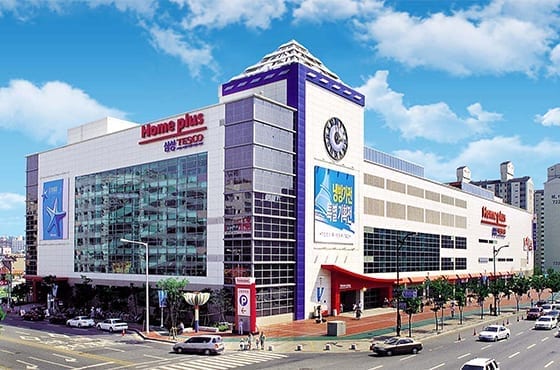
    A group of affluent individuals would come up with 90 billion won ($75.5 million) to jointly own a Homeplus Co. superstore outlet in the suburban city of Pyeongchon, Gyeonggi Province, evidence that retail investors are joining their institutional counterparts in search for alternative investment options amid prolonged low-interest rate environment.

    According to investment industry on Tuesday, Vestas Investment Management Co. was named as a preferred bidder to buy Homeplus’s Pyeongchon branch from Alpha Asset Management Co. The purchase price is expected to reach about 90 billion won.

    homeplus

    Vestas, a Seoul-based investment manager that specializes in real estate investment, will be creating a private equity fund in hands with wealthy retail investors for the takeover deal, raising 30 billion won through the individual investors and borrowing the remainder from financial institutions.

    The investment manager tapped demand from retail investors through preferred client service centers of banks and brokerage houses in affluent neighborhoods in Seoul last week. There are many clients who are seeking medium-risk and medium-return private equity investment products amid low-interest rate environment and they are willing to invest up to billions of wons, said a preferred client service center officer who asked to be unnamed.

    The elite client banking and brokerage service centers are planning to offer the real estate private equity fund from mid-November until the end of this year. The fund limits the number of retail investors to 49, requiring each individual to invest roughly 600 million won in average. Vestas Investment Management expects its real estate private equity fund to become popular among well-to-do retail investors as it carries lower risk compared to securities and delivers higher profits than bonds. This would be one of very few cases in Korea that a small group of rich individuals taking over a large-sized hypermarket by creating a real estate fund, market experts said.

    The Homeplus Pyeongchon branch is in Pyeongchon, a new town located on the southern outskirt of Seoul. The superstore with a total area of 28,582 square meters is four floors high above ground and two floors below. Sitting near a large-sized residential district with easy access to public transportations, the hypermarket outlet has steadily generated profits since it opened in 2008. The retail outlet is attached to a 12-year lease contract with household name Homeplus and it expects to deliver profits with annual return rate of between 5 and 6 percent.

  • Alibaba Singles’ Day to extend beyond mainland China

    Alibaba Singles’ Day to extend beyond mainland China

    Alibaba’s Singles’ Day – now dubbed 11.11.Global Shopping Festival – is set to expand into international territories for the first time this year.

    The online retail giant founded by Jack Ma plans to use the celebrations around the event and its catalogue of data to target shoppers in Hong Kong and Taiwan.

    Next year, Alibaba plans to target Southeast Asia too.

    The sales-shopping frenzy, which is poised to lure millions of Chinese buyers and has been extended to 24 days, commences on Friday morning.

    American singer Katy Perry and boy band One Direction have been lined up to perform at the countdown gala in Shenzhen, near Hong Kong, on Thursday.

    The biggest Singles’ Day yet

    Chinese websites are preparing to smash Singles’ Day records

    Singles’ Day began seven years ago and involved only 27 merchants, but since then the event has ballooned.

    Last year Singles’ Day raked in $14.3bn in sales, more than the combined online sales over the five-day period covering Thanksgiving, Black Friday and Cyber Monday in the US – $11.1bn.

    Chinese websites are preparing to smash singles day records

    According to global delivery firm Fastline International, Singles’ Day sales will soar by 50% this year – rocketing to $21.45bn and eclipsing Black Friday.

    “Such is the growth in China’s home shopping market,” said Fastline head of consumer research David Jinks.

    “Long gone are the days when Singles’ Day was only celebrated by single male students at Nanjing University. Today it is the biggest sales day on the planet.”

    While the event was not originally invented by Alibaba, the retailer has made it a fixture of the retail calendar.

    Based on an anti-Valentine’s concept, Singles’ Day launches on November 11 (11.11) because of its four single digits. It was historically a shopping day for singles, but is popular now with bachelors and couples alike.

    Singles’ Day and other similar events such as 8.8 have driven the growth of Alibaba, which reported a 55% sales increase in its third-quarter results last month.

  • AEON Provides Privileges for Northern Customer at the 11th Money Expo Chiangmai 2016

    AEON Provides Privileges for Northern Customer at the 11th Money Expo Chiangmai 2016

    AEON Thana Sinsap (Thailand) Public Company Limited will be offering information on its different financial services and special promotions at the 11th Money Expo Chiangmai 2016. Services include Personal Loan, Your Cash, Cash Withdrawal, AEON Credit Cards and Member Cards application service.

    AEON customers who make financial transactions at the expo will also be in with a chance to win a 1-Baht gold necklace, John Lang Ford Bag or AEON Umbrella. Furthermore, AEON customers who has the financial transaction that meet AEON’s conditions will receive Caggioni Luggage or Big C Gift Voucher valued at 2,000 Baht maximum. Additionally, AEON is giving a special interest 0% installment on gold.

    The 11th Money Expo Chiangmai 2016 will be held from Nov 18 – 20, 2016 at Chiangmai Hall, Central Plaza Chiangmai Airport.