Tag: asia

  • Reinvented Siam Discovery wins two awards

    Reinvented Siam Discovery wins two awards

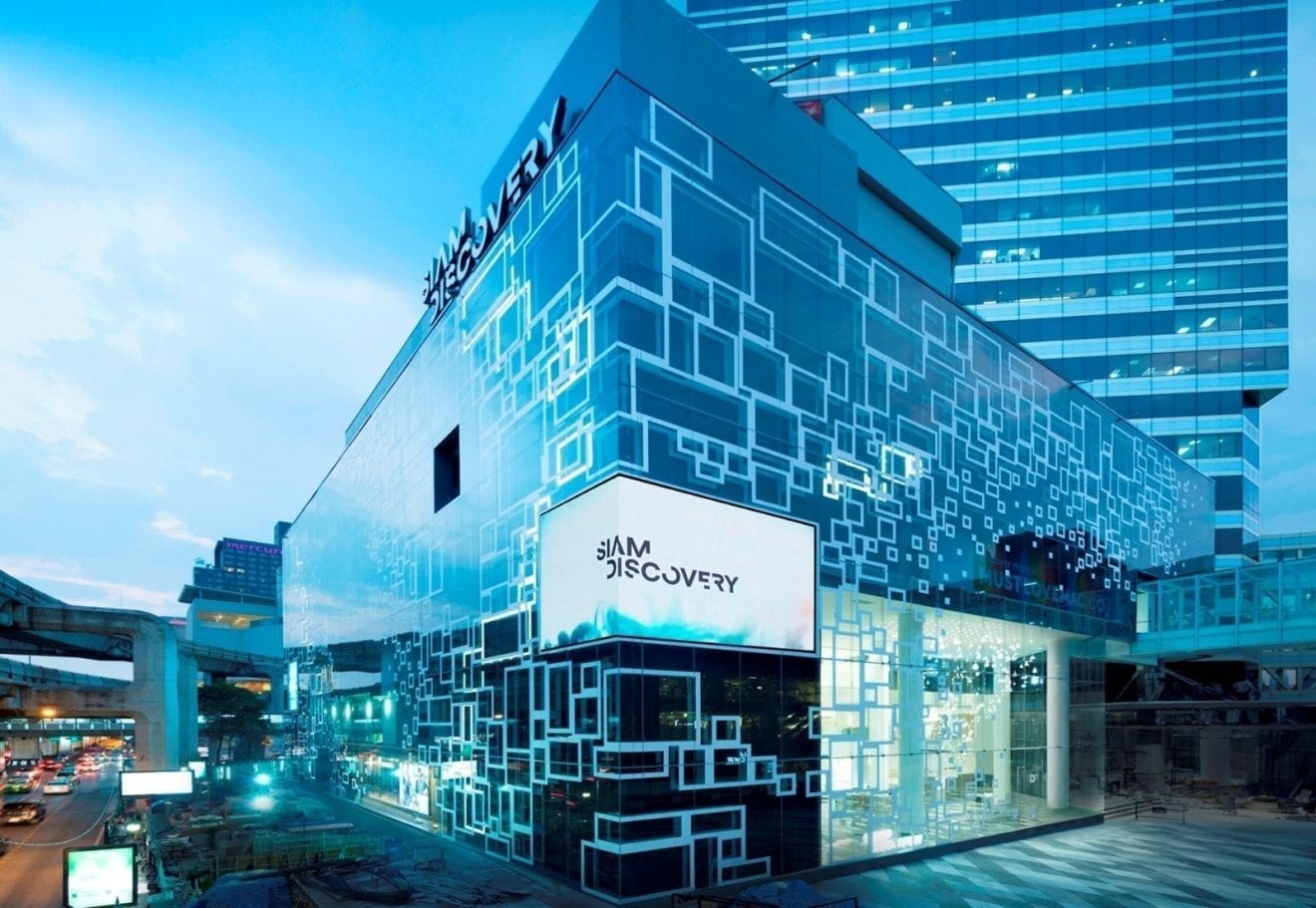
    Siam Discovery – The Exploratorium, Thailand’s first hybrid-retail destination and lifestyle specialty store which opened in May, has won two awards.

    A reincarnation of the old Siam Discovery, the store was named Best Retail Development and Best Commercial Development in the latest Thailand Property Awards.

    Best Commercial Development award from Thailand Property Awards 2016

    Best Retail Development award from Thailand Property Awards 2016

    Siam Discovery is owned by Siam Piwat, which also owns and runs Siam Center, Siam Paragon and Paradise Park shopping centres, and jointly owns megaproject IconSiam.

    “Siam Discovery has broken every rule of Thailand’s retail industry to offer exciting experiences and creativity,” says Siam Piwat CEO Chadatip Chutrakul.

    Chadatip Chutrakul, Chief Executive Officer of Siam Piwat and Oki Sato, Chief Consultant for the overall design inspiration for the new Siam Discovery

    “The awards reflect the success of the distinctive design and the ideas behind it by a team of design experts such as Nendo’s Oki Sato and Urban Architect, who came together and imbued the architecture of the refurbished Siam Discovery with elegance and uniqueness.”

    She says the new concept permeates “every single design detail” across more than 40,000 sqm, including open space.

    Dan Tantisunthorn, Charnchai Cherdchuwongthanakorn, Paiboon Jaikla_ Siam Piwat's Senior Executives collected award from Suwat Liptapanlop_ representative of the judges

    “Even the product displays and stores of more than 5000 brands are decorated to match the personalities of each specific Lifestyle Lab on each floor. This gives our customers the freedom to browse for products that suit their stories and interests, and make shopping both convenient and a fun exploration.”

    In their 11th edition, the Thailand Property Awards aim to boost the stability and efficiency of the country’s real-estate market and encourage entrepreneurs.

  • Singapore retail rents slip over latest quarter

    Singapore retail rents slip over latest quarter

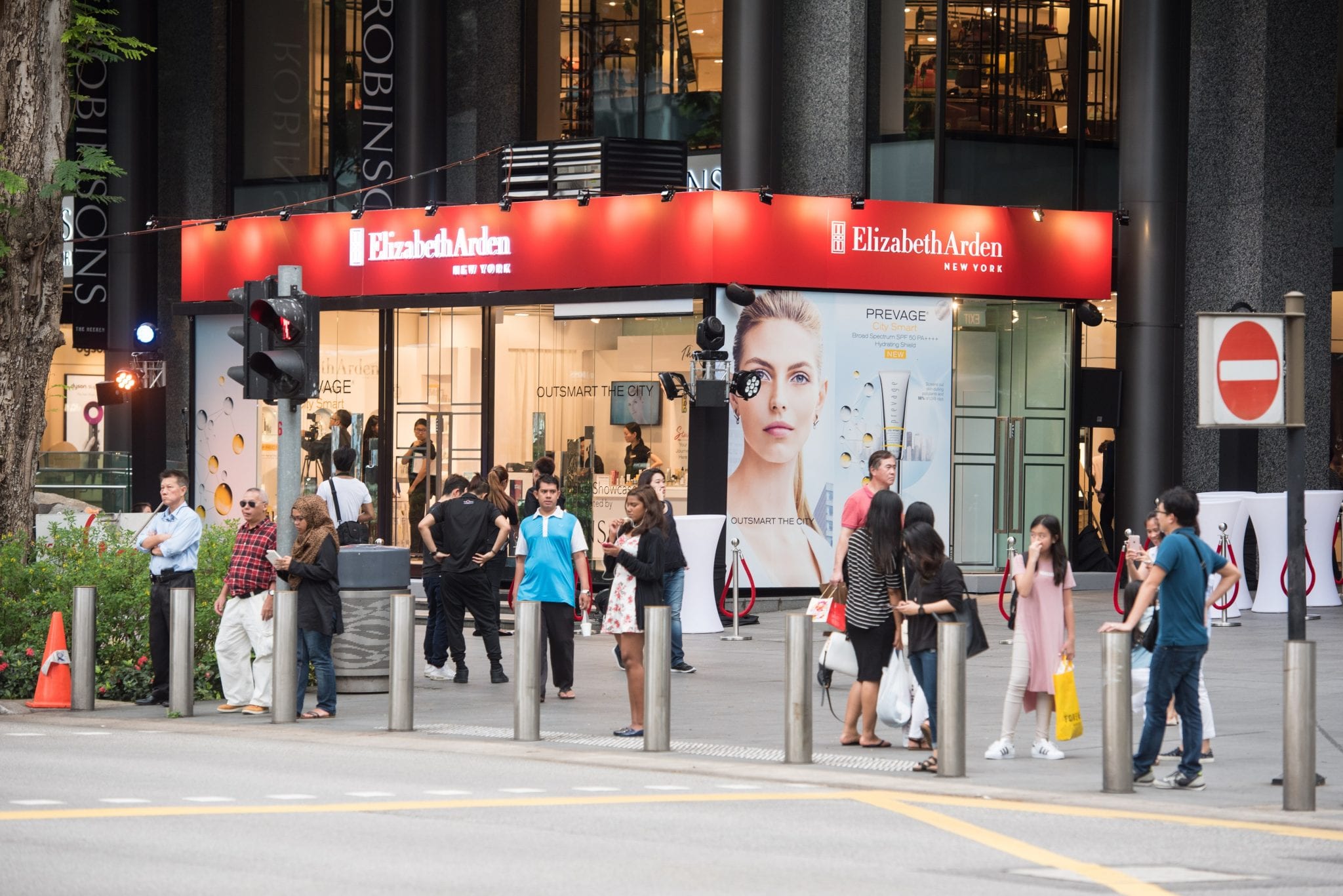
    Singapore retail rents slipped during the last quarter – but experts say the outlook is not too grim.

    According to Edmund Tie & Company Research, average monthly retail gross rents across the island eased by 1.2 per cent quarter-on-quarter to about $29.30 per sqft in the three months to September 30. This was 9.6 per cent lower than its peak in the first quarter of 2015, when the average monthly gross rent was about $32.40 per sqft.

    “The decline was primarily due to a subdued economic growth forecast, as well as job cuts across various industries that led to weaker consumer sentiments,” the company said.

    According to the Ministry of Manpower in September, the total number of workers made redundant in the second quarter of 2016 rose by 2 per cent quarter-on-quarter and 48 per cent year-on-year to 4800 workers.

    Rents in the other city areas led the overall rental decline in the latest quarter, falling by 3 per cent to about $20.10 per sqft per month. This was followed by the suburban areas, with average monthly gross rents declining by 1.5 per cent to $30.60.

    Orchard Rd holds firm

    Retail rents in Orchard and Scotts Rd precinct, however, stayed unchanged at $37.20 per sqft,

    notwithstanding the slower economy and fears over the impact on tourism of the spread of the Zika virus.

    “The resilience of this district was supported by the lack of new retail developments. While retailers in Orchard/Scotts Rd face strong competition for tourist dollars from regional countries, renowned global brands and local retailers are still attracted to set up shops there. The recent opening of several high-profile flagship stores in the area has further enhanced Orchard/Scotts Rd’s position as one of the top shopping attractions in South East Asia,” said Edmund Tie.

    “Overall, we anticipate the decline in rents to moderate in 2017, barring any external shocks. Landlords and retailers are adapting to the challenges by integrating technology with their physical stores to manage manpower constraints and tap on the growing eCommerce market.” The company cited the upcoming OUE Downtown Gallery along Shenton Way which will introduce a 11,000 sqft “trend gallery” comprising pop-up stores and retail counters on the first-storey, and a 4000 sq ft “social kitchen” fitted with 10 cooking stations available for bookings on the third-storey.

    A new F&B concept will also be introduced, whereby diners place their food orders via a mobile app. The food is prepared in a central kitchen and is subsequently placed in an assigned locker for diners to collect at a specified time. This significantly reduces the amount of leasable space required by the food establishment, as well as its reliance on manpower.

    In addition, the upcoming Singapore Post Centre in 2017 and the newly revamped Funan mall in 2019 will be introducing hands-free shopping. Shoppers will be able to browse through the products in-store, purchase the product and arrange for the product to be delivered directly to their homes. Not only does this provide greater convenience for shoppers, it also allows retailers to save on storage space in their physical stores, as logistic arrangements are done in the warehouse.

    “Separately, there is also a trend towards Click-to-Brick, where the shopping is done online and the merchandise is collected in the shops. Retailers that allow consumers to click-and-collect include Harvey Norman, Courts, NTUC, Decathlon, and Tangs.”

    Too early to write off brick-and-mortar

    Despite eCommerce gaining traction, Dr Lee Nai Jia, Edmund Tie & Company’s Southeast Asia head of research, believes it is too premature to write off the brick-and-mortar retail sector.

    “In order to remain competitive, landlords and retailers are continuously looking for ways to improve their business models and remain adaptable to challenges. Many landlords and retailers are making use of big data analytics to understand the underlying purchasing psychology, which helps them to redefine their marketing strategies to better cater to their customers’ needs.

    “Additionally, retailers are introducing experiential shopping and new retail concepts to increase footfall and encourage in-store sales. They offer hands-on activities for customers to experience at their physical stores. For example, Uniqlo’s SEA flagship store at Orchard Central will be reeling in Singaporean creatives and talents to hold a wide range of workshops in its three-storey flagship store. Similarly, K+ at Scotts Square and Naiise outlets at The Cathay, Orchard Gateway and Clarke Quay Central also provide dedicated spaces for workshops within their stores,” said Jia.

    “While it is still too early to judge the effectiveness of experiential retail in increasing footfall and in-store sales in Singapore, the concept has worked well for some brick and mortar retailers in the US, which saw eCommerce gaining an increasing foothold in the retail industry. A case in point was the success of Whole Foods in the US, which built on its success by creating personalised rewards and in-store experiences, including cooking classes, juice and coffee bars and consultations with nutritionists.”
  • Louis Vuitton buys Rimowa luggage

    Louis Vuitton buys Rimowa luggage

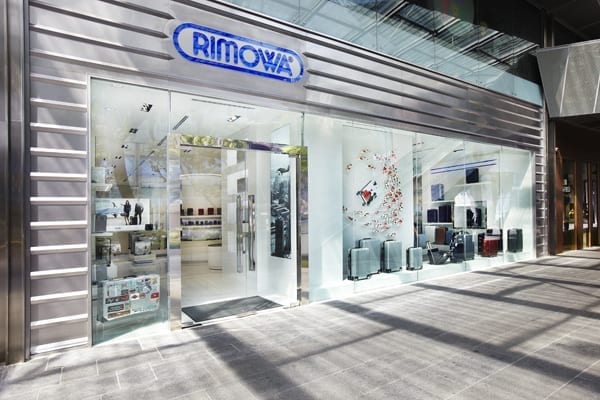
    French luxury group Louis Vuitton has bought a controlling 80 per cent stake in the Rimowa luggage business.

    Dieter Morszeck, grandson of the founder of Rimowa, believes partnering with the LVMH Group will preserve “the spirit of excellence and the long-term vision that have inspired his family and the company’s employees for over a century”.

    Morszeck will sell a majority stake to the LVMH Group while continuing to hold equity in the business and maintaining his leadership functions, resulting in Rimowa becoming the first German Maison of the LVMH Group.

    Upon completion of the transaction, Alexandre Arnault will be appointed co-CEO of Rimowa.

    Founded in Cologne in 1898, luggage and leather goods maker Rimowa has become renowned for innovative, quality luggage over the course of the 20th century.

    Since its creation by Paul Morszeck, innovation has been at the heart of Rimowa’s strategy. In 1937, his son Richard launched the first aluminium suitcase available on the market. The aluminium structure comprising parallel grooves makes the luggage instantly recognisable and has played its part in building the reputation of Rimowa among a sophisticated international clientele. His son Dieter designed the first waterproof metal case in 1976, since which time Rimowa suitcases have become the travelling companion of choice for the greatest filmmakers, photographers and journalists.

    Dieter Morszeck said: “My grandfather founded Rimowa more than a century ago and I joined the company 44 years ago. By entrusting this family venture to the LVMH Group, we are guaranteeing a promising future to all Rimowa employees. Over the past two years I have had the opportunity to establish close ties with the Arnault family, and in particular with Alexandre. Alexandre and I have discussed at length the attractive development prospects available to us and the common values that we share. I am delighted that he is joining Rimowa and I have full confidence in his ability to accelerate the development of the business by my side.”

    Arnault added: “Rimowa is a superb business which I have followed as a loyal customer for many years. It has revolutionised the luggage industry for over a century, its suitcases are renowned for their unique performance, quality and design. I am honored to join Rimowa and to be working alongside Dieter.”

    Morszeck has created the Rimowa Dieter Morszeck Foundation to which a substantial part of the sale proceeds will be donated. The foundation aims to support projects in scientific research, public health, education and humanitarian aid both in Germany and internationally.

  • Lotte, Shinsegae address Korean gender employment issues

    Lotte, Shinsegae address Korean gender employment issues

    Korean retail giants Lotte and Shinsegae are competing to improve employment conditions for women.

    The two companies are pushing forward with efforts to provide more opportunities for women to move up in their corporate hierarchies and implementing women-friendly systems as part of their company policies. Korean gender employment issues are of growing concern in a traditionally male-dominated business culture.

    According to industry watchers, Shinsegae’s discount store franchise E-Mart instituted a shortened work-hour system for all of its pregnant employees starting in April, with employees eligible regardless of whether they apply for the benefits or not, and offering them 100 per cent of their wages. Under the arrangement, pregnant employees have their work day shortened by two hours.

    The system had been difficult for female workers to take advantage of given both the company atmosphere which tended to discourage the practice, as well as reduced wages, said a company official.

    In addition, E-Mart announced in March a new leave of absence policy for employees having difficulties with pregnancy, and it also plans to implement its own maternity leave system that allows employees to take up to a year of maternity leave, on top of the legally-guaranteed period of 20 months (eight months for maternity, 12 for childcare). The latter has already been implemented by another Shinsegae franchise, Shinsegae Department Store.

    In contrast, Lotte’s women-friendly policies focus more on employing a greater number of women as new recruits.

    Since 2006, Lotte has been increasing the number of female employees at its affiliate enterprises by hiring more women through its recruiting process. In 2015, 35 per cent of new recruits were women, a rate that the group plans to increase to 40 per cent this year.

    Furthermore, Lotte also operates a special recruiting platform specific to retired female officers from the military, an endeavor which took off in 2011 with cooperation from the defense ministry.

    As a result, the number of women at Lotte with positions as section chiefs or higher now stands at 870, an increase from 95 in 2008, and 19 of the group’s board members are also female.

    Meanwhile, Lotte established eight additional daycare centers for its employees in the first half of 2016 for working mothers, while allowing women to automatically take their year-long childcare leave right after their maternity leave, so they won’t have to face unnecessary guilt or unwelcome comments from colleagues or bosses.

    “Chairman Shin Dong-bin seems to be taking extra attention to nurture female employees and their talent,” said a Lotte official. “Our goal is to create a work environment where women can work without facing gender discrimination.”

  • Thai police bust fake instant Nestle coffee factory

    Thai police bust fake instant Nestle coffee factory

    Thai police have busted a fake Nestle instant coffee factory in Bangkok’s northern suburbs.

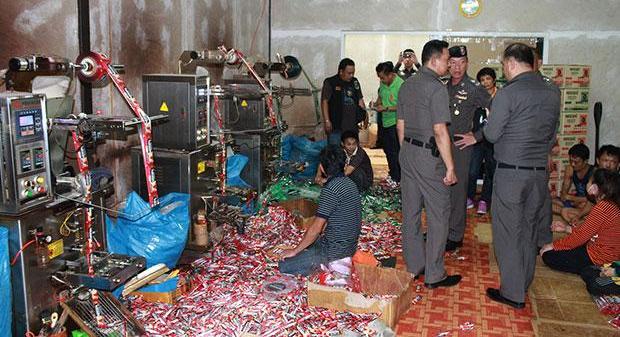
    Acting on a tip-off, a team of police descended on a business premises in Pathum Thani on Thursday armed with a search warrant. Inside they found 2 million THB worth of fake Nestle instant coffee, (equivalent to about US$60,000 at retail value).

    fake-nescafe

    They discovered machinery including four mixing machines, four packaging machines and 19 sacks of mixed instant coffee awaiting packaging, falsely branded Nescafe 3-in-1.  More than 89,000 sachets of fake instant coffee destined for distribution were seized, along with 280,000 empty packs.

    The factory was staffed by nine foreign migrant workers, including four Laos nationals.

    Police are now trying to track down the man running the factory, believed to be from Chiang Rai.

    Once caught he will be charged with producing and selling bogus food products and with producing and selling foods with unlicensed labels. The penalty, if convicted, is a prison term of up to 10 years and a fine of up to 100,000 baht ($3000).

  • CapitaLand Mall Asia plans expansion

    CapitaLand Mall Asia plans expansion

    CapitaLand Mall Asia is stepping up its investment in India.

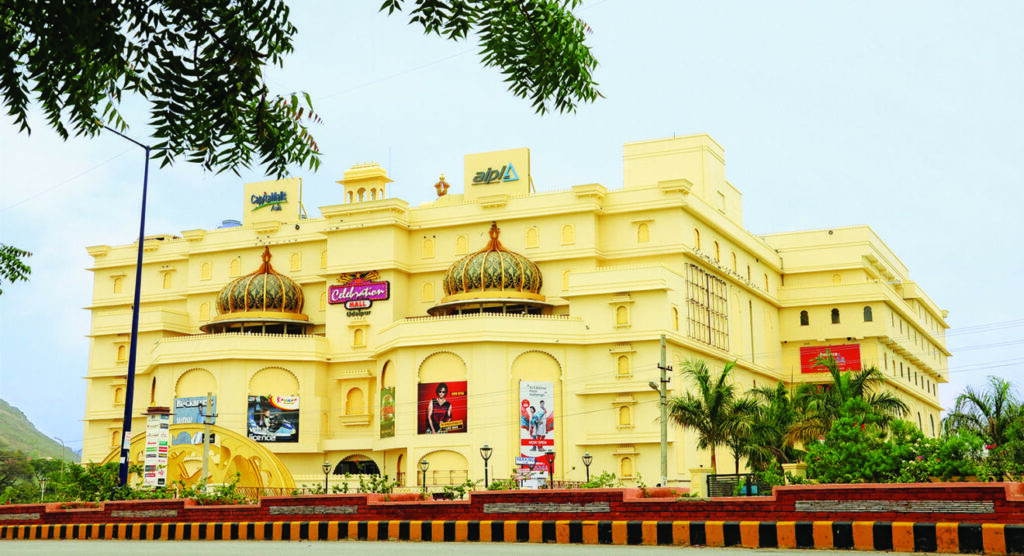
    During a visit by Singapore’s Prime Minister Lee Hsien Loong to The Celebration Mall in Udaipur (pictured) , wholly owned by CapitaLand Mall India Development Fund, CapitaLand Mall Asia announced plans to open two more malls in India over the next three years.

    The group already has four malls in the country.

    CapitaLand president/group CEO Lim Ming Yan says India has been looking to tap Singapore’s experience in urban planning as it plans to upgrade and build 100 cities.

    capitaland-mall-india

    “India thus presents opportunities for CapitaLand to share our expertise in real-estate development and management, particularly in integrated developments where we have established a strategic advantage, as well as in the shopping mall and serviced residence sectors where we have already gained a foothold in the country.

    “With more liberal rules on foreign direct investment in real estate, CapitaLand has been presented with a number of opportunities. We are also in discussion with several parties on management contracts for shopping malls and serviced residences.”

    Partnership

    CapitaLand’s two upcoming malls are opening next year and in 2019 respectively, Forum Mysore, and Forum Cochin.

    Both are being developed in partnership with real-estate developer Prestige, with whom CapitaLand also partners for three other malls, The Forum Neighbourhood Mall, Bangalore, The Forum Sujana Mall, Hyderabad and The Forum Fiza Mall, Mangalore. Including two other malls being developed in Jalandhar and Nagpur, CapitaLand is Singapore’s largest shopping-mall developer and manager in India with a total of eight malls.

    “In Asia, India is the next big retail prize after China,” says CapitaLand Mall Asia CEO Jason Leow.

    “India has a large and growing middle class with aspirations for a better life, and more than 400 million consumers between 15 and 34 years of age who are driving purchases in categories such as mobile phones, fashion, accessories and F&B.

    “Such favourable demographics are drawing retailers’ interest to India’s fast-growing consumer market, which is expected to be worth US$1.3 trillion by 2020.

    “As one of Asia’s leading mall developers, owners and managers, we are able to leverage our retail expertise and industry-leading network of about 15,000 leases to support local and international retailers who are keen to do business in India.”

  • South Korea is world’s top online FMCG market

    South Korea is world’s top online FMCG market

    South Korea was the world’s top market for online grocery sales for the 12 months preceding June 2016.

    This was the conclusion from the third annual Future of e-Commerce in FMCG (Fast Moving Consumer Goods) study by Kantor WorldPanel, a firm that tracks consumer buying behavior worldwide.

    The report noted that sales of groceries through e-commerce platforms reached $48 billion in the 12 months to June 2016.

    E-commerce now accounts for 4.4% of all FMCG sales. However, despite the growth of e-commerce, the growth of the entire FMCG market was flat performance during the same period, increasing just 1.6%.

    “FMCG growth is slowing, but our data shows that people are looking for more convenience, which can be met by shopping online. Grocery e-commerce, although currently small, with only one in four people shopping online, is growing fast,” said Stéphane Roger, the global shopper and retail director at Kantar Worldpanel.

    “We forecast it will grow to 9% of the market and be worth $150 billion by 2025. With new entrants such as Amazon expanding rapidly, the industry is facing a shake-up,” he said.

    E-commerce growth is also unequal, differing from country to country. Although connectivity plays a part, it is not clear whether it is the primary reason for the growth.

    For example, while South Korea is the world’s largest online FMCG market by value share (16.6%), US consumers only bought 1.4% of groceries online.

    Meanwhile, China’s netizens are catching up. The report noted that the country saw the biggest growth in the last 12 months, 47% – to a value share of 4.2%.

    Meanwhile, Europeans have a relatively low adoption of e-commerce in all countries except the UK with 6.9% of the market and France which has 5.3%.

    According to Kantar WorldPanel, France is a relatively unique e-commerce market with their success with the Drive model, where online purchases are collected from the store.

    Other conclusions:

    • Online buyers tend to continue to keep buying online after their first purchase.
    • Online buyers are less impulsive, based on comparative research across UK, France and China.
    • 50% of FMCG purchases in China is on beauty.
    • Online buyers splurge more on a single visit online.
    • 55% of online shoppers tend to use the same shopping list for the next purchase.
  • Huawei achieves 27Gbps 5G speeds with Polar Code

    Huawei achieves 27Gbps 5G speeds with Polar Code

    Huawei announced it has achieved downlink speeds of 27Gbps using Polar Code, a new innovation in 5G channel coding technology.

    During a field trial in both static and mobile environments, Huawei was able to demonstrate that polar code technology can simultaneously meet the typical use cases of the ITU’s 5G definition, which involves speeds in the tens of gigabits, 1ms latency and billions of connections.

    The company said polar code demonstrated three times the spectrum efficiency compared to current RAN networks.

    Polar code is designed to allow significantly higher spectrum efficiency than current cellular access technologies and to enable decoding with linear complexity.

    On the encoding side, polar code can optimize channel capacity close to the Shannon Limit, the theoretical highest capacity of a communications channel before noise introduces faults.

    The field trial also took into account the use of millimeter-wave and multiple parallel sessions based on short and large packet sizes.

    Last week Huawei and Canada’s Telus also announced the results of 5G lab trialsachieving peak speeds of 29.3Gbps, close to 200 times faster than the current LTE standard. The trials at the Telus and Huawei 5G Living Lab in Vancouver were designed to simulate real-world conditions.

  • Smartphone sales growth continues to slow

    Smartphone sales growth continues to slow

    The global smartphone market is on track to grow just 4.5% during 2016, rocked by a decline in sales in the premium segment, Gartner predicts.

    The research firm estimates that premium smartphone sales will decline 1.1% for the year, with owners having less incentive to upgrade to the latest models.

    Overall smartphone sales are on track to reach 1.5 billion units in 2016. While the market is slowing as smartphones reach global saturation, Chinese vendors are stimulating sales in the Android segment of the market by offering more affordable premium devices.

    But Gartner expects the market for premium smartphones to return to 3.5% growth next year as stronger replacement cycles emerge.

    The predicted upswing is also in anticipation of Apple’s expected launch of a new iPhone with a new design and features attractive enough to convince smartphone owners to upgrade.

    Total mobile phone shipments are meanwhile on place to fall 1.6% in 2016, while tablet sales are set to decline from 196 million units in 2015 to 177 million in 2016.

    Worldwide combined device shipments – which also include PCs, laptops and related devices, are expected to decline for the second consecutive year, falling 3% to 2.34 billion units.

  • BlackBerry Phones Will Live On for Die-Hard Fans in Indonesia

    BlackBerry Phones Will Live On for Die-Hard Fans in Indonesia

    BlackBerry Ltd. may have decided to stop making its iconic handsets, but that doesn’t mean the gadgets will disappear, especially in places where they’re still popular. Case in point: an Indonesian wireless company is already hatching plans to introduce its own version of the keyboard-equipped smartphone for those who can’t live without the device.

    PT Tiphone Mobile Indonesia Tbk, an affiliate of operator PT Telekomunikasi Indonesia Persero Tbk, has struck the first deal with BlackBerry to form a local joint venture called PT BB Merah Putih to make its devices in Indonesia. While the Canadian company is shifting its focus to software, Indonesia remains one of BlackBerry’s biggest markets. BlackBerry in the past launched dedicated phones and apps for the Indonesian market, home to 240 million people.

    Under the preliminary deal, Blackberry phones will be manufactured at a factory owned by a subsidiary of Tiphone Mobile for domestic sales, said Tan Lie Pin, Tiphone’s chief executive officer. Another local company is in talks to join the venture and details are being negotiated, she said in an interview.

    “More than six million people still use BlackBerry in Indonesia and we believe that BlackBerry can still grow in the Indonesian market,” Tan said. “We are very optimistic and excited.”

    BlackBerry CEO John Chen said this week the company would stop making phones and focus its attention on the more profitable and growing software business. The company plans to negotiate manufacturing agreements with multiple overseas partners. While Tan said Tiphone will manufacture phones for the Indonesian market, discussions on the venture are continuing with BlackBerry.

    BlackBerry’s popularity in Indonesia stems from its hugely popular instant-messaging app, BlackBerry Messenger, known as BBM. Many Indonesians still stick to BBM in order to connect with their curated groups of friends and family, even though some of them no longer use BlackBerry devices.

    BBM for iOS and Android devices ranked No. 1 in terms of downloads among chat apps in Indonesia in August, ahead of rival WhatsApp and Line, according to market researcher App Annie. Emtek Group, one of Indonesia’s biggest media and technology companies, signed a licensing agreement with BlackBerry in June in order to bring video content onto BBM and begin developing new applications and services for the messaging app.

  • High-end luxury car market hit hard

    High-end luxury car market hit hard

    The bottom may already be falling out of the high-end luxury car segment because of the gloomy economy, but Indonesia’s tax amnesty scheme seems to be exacerbating the situation.

    This segment groups super sports car and ultra luxury limousine brands, namely Ferrari, Lamborghini, McLaren, Aston Martin, Rolls-Royce and Bentley.

    From January to August this year, a total of 91 of these cars were registered here, according to the Land Transport Authority. This is down 27 per cent or about a quarter from the 125 units registered in the same period last year.

    This is in stark contrast to the total year-to-date registrations for the overall car market, which soared 71 per cent from 33,673 to 57,468.

    According to some dealers, the high-end luxury car segment has been particularly quiet in the past couple of months since the start of the Hungry Ghost Festival, a period when prospective buyers traditionally refrain from making big-ticket purchases.

    Pang Cheong Yan, managing director of Wearnes Automotive, said: “Generally, people are becoming more cautious as they are not sure how long this current economic climate will continue.”

    Mr Pang, who is in charge of the Aston Martin and Bentley brands, added that it did not mean that this group of buyers is “less rich”.

    “They are just not willing to spend on discretionary items.”

    Melvin Goh, chief executive officer of EuroSports Global, said that the wealthy are being “more careful with their spending”. EuroSports distributes Lamborghini and Zonda, among other brands.

    Mr Goh said: “Business sentiment is weak and this has affected the Lamborghini business. Fortunately though, we have the LP580-2 Coupe and Spider priced below S$1 million and these are still selling.”

    Mr Goh explained that the S$1 million mark is a psychological barrier for many people, so anything just below it becomes a “magic number”.

    Besides the economy, however, some dealers said that Indonesia’s tax amnesty scheme is also hurting their business.

    The director of a high-end luxury brand, who declined to be named, said that as many as 30 per cent of his customers are wealthy Indonesians and “this group is gone”.

    He said that many are “scrambling for cash” to pay the taxman after having declared their assets to the authorities.

    “As for the rest who still have spare cash, they won’t spend until they are in the clear.”

    The head of another high-end luxury dealership agreed. He said that while the large majority of his customers – up to 90 per cent – are Singaporeans, some of the remaining 10 per cent are also feeling the heat from the tax amnesty issue.

    “For now, they are not going to be seen spending any of their money on expensive cars.”

  • Garuda Indonesia expects US$25 million from intl cargo

    Garuda Indonesia expects US$25 million from intl cargo

    The Indonesian flight carrier, Garuda Indonesia, is expecting US$25 million from international cargo service by the end of 2016.

    “Currently, the average income from cargo per month is US$21 million. Business cargo, mainly catering to the international market, will continue to support the company’s revenue stream,” President Director of Garuda, Arif Wibowo, said here on Tuesday.

    According to him, one of the strategies developed by the company to increase the cargo capacity is to open international flights.

    “We should explore international markets and also enlarge our cargo capacity on overseas flights,” he added.

    He pointed out that the largest component of cargo business of Garuda currently comes from China, covering Canton and Shanghai, reaching about 20 tons per day.

    Meanwhile, the cargo capacity from Tokyo and South Korea is about 20 tons per day, and from Europe is around 14-15 tons per day.

    To capture the growth opportunity in the cargo business, in particular in the international market, Garuda is opening new routes and adding frequencies of domestic flights to a number of foreign countries.

    For instance, he stated, the Jakarta-Madina flight will be available in December 2016. Also, the Surabaya-Madina route will be opened.

    To support its flight expansion plans, Garuda provides 50 units of Boeing737 MAX, while its subsidiary, Citilink, provides 50 units of Airbus A320.

    Regarding the business expansion to China, Garuda will soon open an international flight on the Denpasar-Chengdu route in January.

  • Household consumption estimated to increase in third quarter

    Household consumption estimated to increase in third quarter

    Bank Indonesia estimated that household consumption rose in the third quarter of this year from 5.04 percent of the countrys Gross Domestic Products (GDP) in the second quarter of this year.

    One of the factors causing the increase was high consumption during Idul Fitri 2016, Executive Director of Statistic Department of the central bank Hendy Sulistiowati said here on Thursday.

    Increase in household consumption was also attributable to higher Consumer Confidence Index (IKK) that rose to 112.5 points from 111.6 points in the second quarter, Hendi said.

    “The quarterly increase in IKK, normally would result in an increase in household consumption,” she said.

    Household consumption has been the largest contributor to the countrys GDP accounting for 55.9 percent, followed by Gross Fixed Capital Formation (PMTB).

    Though rising quarterly, IKK fell monthly . In September IKK was 110 points down from 113.3 points in August.

  • Is it necessary to chase Google income?

    Is it necessary to chase Google income?

    Internet commercials are starting to take over the advertisement business from print and electronic media, especially television. Wide accessibility and ease of use are the internet’s main points of attraction. However, this poses new problems, as online advertisers are not bound by physical presence.

    Google’s business in Indonesia is a case in point, highlighting problems that accompany the advance of the digital economy, where the concept of space itself is being distorted. People can conduct business in places without having any physical presence there. The law of the land is failing to catch up to this new trend, with tax rules being one prominent example.

    Google’s business model allows such phenomena to arise. Payments for advertisements from Indonesia are sent to Google Asia Pacific Pte. Ltd. (GAP), a Singaporean company.

    Because of the tax treaty between Indonesia and Singapore, Indonesia must refrain from taxing the company’s income. Unless GAP has a permanent establishment (BUT) in Indonesia, such income cannot be taxed.

    The Directorate General of Taxation (DJP) claims that GAP’s business activities constitute a dependent agent BUT through the presence of PT Google Indonesia (GI). This view is contested by GI, which says GAP has no BUT in Indonesia. Moreover it refuses to cooperate with the DJP and resists investigation.

    The existence of a BUT as claimed by the DJP is doubtful. A dependent agent BUT exists when the agent (i.e. GI) basically conducts the non-resident taxpayer’s (GAP’s) business activities. The fact that there is an associated company in Indonesia and income sourced from Indonesia is not enough for the DJP to claim there is a BUT as a tax subject. The DJP needs to study the relationship between GAP and GI carefully. Is GI doing its own business or is it doing GAP’s business?

    Furthermore, even if the DJP makes the case that Google has a BUT in Indonesia, that does not mean that all of Google’s income can be attributed to that BUT. The next question is the functions performed by such a BUT. Are significant functions performed in order to generate all of the income?

    Profits attributed to the BUT are based on those significant functions performed there or the contributions of the BUT performed in GAP’s business. The DJP cannot tax profits that cannot be attributed to the BUT if functions related to those profits are not performed there.

    This approach is more or less the same as if the DJP accepted GI’s claim. If the DJP accepts the claim, then GI’s transactions with other members of the Google group will be treated as transactions between independent entities.

    Therefore, such transactions need to be priced properly by transfer pricing analysis. Such analysis will delineate GI’s role and responsibilities in the whole Google business model. From there, its contribution to the profits will be described, and on that basis we can calculate how much profit is attributable to GI.

    At the end of the day, both approaches look at the activities performed in Indonesia by GI. To be more precise, it depends on the company profiles and their roles and responsibilities in the whole business model of Google.

    Those factors determine the share/contribution in creating the value of the products of the group and thus the profit allocation. Creating a new BUT concept alone is not enough, because it does not solve the problem of attributing profits to the BUT.

    If the DJP really wants to capture the income, it should pay more attention to linking GI’s activities to Google’s income and maybe pursue GI through an audit, rather than trying to establish a BUT and attributing the profits later.

  • BlackBerry still exceedingly popular in Indonesia

    BlackBerry still exceedingly popular in Indonesia

    BlackBerry may have decided to stop designing its iconic handsets in-house, but that doesn’t mean the gadgets will disappear, especially in places where they’re still popular.

    A case in point is the Indonesian wireless company that is already hatching plans to introduce its own version of the keyboard-equipped smartphone for those who can’t live without the device.

    PT Tiphone Mobile Indonesia Tbk, an affiliate of operator PT Telekomunikasi Indonesia Persero Tbk, has struck the first deal with BlackBerry to form a local joint venture called PT BB Merah Putih to make its devices in Indonesia.

    While the BlackBerry is shifting its focus to software, Indonesia remains one of the Waterloo company’s biggest markets. BlackBerry in the past launched dedicated phones and apps for the Indonesian market, home to 240 million people.

    Under the preliminary deal, BlackBerry phones will be manufactured at a factory owned by a subsidiary of Tiphone Mobile for domestic sales, said Tan Lie Pin, Tiphone’s chief executive officer. Another local company is in talks to join the venture and details are being negotiated, she said.

    “More than six million people still use BlackBerry in Indonesia and we believe that BlackBerry can still grow in the Indonesian market,” Tan said. “We are very optimistic and excited.”

    BlackBerry CEO John Chen said Wednesday that the company would stop designing phones and focus its attention on the more profitable and growing software business.

    The company plans to negotiate manufacturing agreements with multiple overseas partners. While Tan said Tiphone will manufacture phones for the Indonesian market, discussions on the venture are continuing with BlackBerry.

    BlackBerry’s popularity in Indonesia stems from its hugely popular instant-messaging app, BlackBerry Messenger, known as BBM. Many Indonesians still stick to BBM in order to connect with their curated groups of friends and family, even though some of them no longer use BlackBerry devices.

    BBM for iOS and Android devices ranked No. 1 in terms of downloads among chat apps in Indonesia in August, ahead of rival WhatsApp and Line, according to market researcher App Annie.

    Emtek Group, one of Indonesia’s biggest media and technology companies, signed a licensing agreement with BlackBerry in June in order to bring video content onto BBM and begin developing new applications and services for the messaging app.