Tag: asia

  • Hang Nadim Airport to serve flights to China, Korea

    Hang Nadim Airport to serve flights to China, Korea

    The Citilink airline company will soon serve flights from Hang Nadim International Airport here to China and South Korea, according to the airports general manager, Suwarso.

    “Two international flights from Batam to China and South Korea have been approved and will soon be launched early next year, probably in February 2017,” Suwarso remarked here on Tuesday.

    According to him, the opening of two routes is part of an effort by the Riau Islands provincial government to increase the number of tourist visits, especially from East Asia.

    With the two new international flights, the Riau Islands provincial government hopes tourist arrivals will increase to enjoy the great tourism potential in the province.

    He said Citilink will operate Airbus A320 aircraft, with the capacity to accommodate 180 passengers, to transport tourists from China and South Korea to Riau Islands Province.

    “The Riau Islands province has formed a partnership with the tour and travel associations in China and Korea. So, with this partnership, these Batam-China and Korea routes could run smoothly,” stated Suwarso.

    He added that Indonesias free visa policy is also applicable to China and South Korea, so tourists from these countries will not need visas when visiting Indonesia.

    “Hang Nadim International Airport is open 24 hours and ready to serve international flights, so there is no problem anymore,” Suwarso noted.

    He said the airport had an international flights lounge area, with a capacity of up to 600 seats.

    International flights from this airport are currently served only by Malindo Air, travelling to Malaysia once per day.

    “If the international flights area becomes crowded, we are ready to increase the capacity of the international waiting room,” remarked Suwarso.


  • Jakarta-Surabaya rapid train to use existing track

    Jakarta-Surabaya rapid train to use existing track

    Coordinating Minister for Maritime Affairs and Acting Minister of Energy and Mineral Resources Luhut Binsar Panjaitan has said the development of the Jakarta-Surabaya rapid train will use the existing track.

    “For the rapid train, we will use the existing network. We will strengthen the bearing pads and make the crossings run over or under, so there will not be any gates that can harm anyone,” stated the minister at the State Palace complex in Jakarta, Tuesday.

    He mentioned that there are a thousand crossing points on the Jakarta-Surabaya railway network.

    The minister hoped the project survey, due to be conducted in partnership with Japanese representatives, could be done in the first quarter of 2017.

    “The Jakarta-Surabaya rapid train, which runs up to 200 kilometers per hour, will have an immense impact on the nations economy,” he remarked.

    The projects investment value is considerably large, reaching US$2.5 to 3 million.

    Minister Panjaitan explained that the agenda of his meeting with President Joko Widodo today includes reporting the results of his trip to Japan, which was a follow-up to the presidents agreement with Japans Prime Minister Shinzo Abe.

    “I met the prime minister along with his ministers and other officials,” he reiterated.

    He pointed out that the notions agreed upon by both country leaders included the Maritime Economic Cooperation, which was initiated last year.

    “We are now pursuing cooperation in a number of locations, including oil explorations in Natuna, economic development in Sabang, Patimbang harbor development in West Java, and farming advances in Merauke, Papua,” he remarked.

    He also mentioned cooperation in the education sector, where Japan will help with vocational training, while sending their professors to a number of technology corporations in Indonesia.

    “Partnerships in strategic industries are also included, which covers the rapid train project to be discussed with the minister of state-owned enterprises,” he continued.

    He added that from the string of agreements, those that will potentially be carried out during the first quarter of 2017 include the development of Patimbang Harbor.

    “Then, we will proceed with a joint survey for the Jakarta-Surabaya rapid train,” he concluded.

  • Trade ministry encourages small, medium industries to utilize e-commerce

    Trade ministry encourages small, medium industries to utilize e-commerce

    Indoensias Ministry of Trade has said it has been encouraging small and medium industries (SMIs) to take benefit of online trade (e-commerce) to market their products.

    “We are pushing the small and medium industries to take their products to various e-commerce platforms. Websites like Tokopedia, Bukalapak, Blibli and Lazada are all local e-commerce platforms and we encourage the SMIs to use them,” the Minister of Trade, Airlangga Hartarto, stated in Jakarta on Tuesday.

    He hoped that once the SMIs start fully utilizing the e-commerce platforms, the industry will start expanding.

    The fourth industrial revolution era hinges on embracing the internet and integrating it with products and services, he added.

    The minister further explained that internet usage is now part of people’s daily lifestyle and it has now become integral to the industrial world also.

    “Germany began doing it in 2013. If we start this year, we will make sure that we are not left behind,” he remarked.

    Additionally, the Ministry of Trade also encourages professional vocational training to enhance the quality of human resources.

    The minister mentioned the importance of undertaking research and forging collaborations with universities in the industrial sector.

    Minister Hartarto also pointed to the progress made in basic materials, and highlighted the fact that natural energy resources cannot last forever.

  • Credit Growth in Indonesia Remained Flat in September 2016′

    Credit Growth in Indonesia Remained Flat in September 2016′

    Slowing credit growth will also make it highly difficult for Indonesia’s overall macroeconomic growth to accelerate more markedly this year (the nation’s GDP is expected to expand by 5 percent this year, up from a growth pace of 4.7 percent last year). Juda Agung, Executive Director at the Economic and Monetary Policy Department of Bank Indonesia, said privately-held companies are now focusing on consolidation rather than on business expansion.

    But on the other hand, Agung added, the nation’s banks have also been more careful to disburse loans as the non-performing loan (NPL) ratio has increased. However (conflicting with Agung’s statement), in a recent Bank Indonesia survey the business community of Indonesia actually indicated that it was easier to obtain credit in Q3-2016 compared to the preceding quarter.

    Bank Indonesia expects credit growth to accelerate in the fourth quarter of the year on the back of the lower interest rate environment, the government’s successful tax amnesty program as well as the easier loan-to-value (LTV) ratio.

    The lender of last resort cut its benchmark interest rate (the 7-day Reverse Repo rate) to 5.00 percent in September 2016, while in late August 2016 it cut the LTV ratio requirement by lowering the minimum down payment that is required for first home purchases (when using credit) to 15 percent for houses sized larger than 70 m2 (from 20 percent previously). Meanwhile, the minimum DP for the purchase of a second home was lowered to 20 percent (from 30 percent previously), while that for a third home was lowered to 25 percent (from 40 percent previously).

    Nelson Tampubolon, Commissioner for Banking Supervision at Indonesia’s Financial Services Authority (OJK), informed that slowing credit growth is actually caused by slowing corporate credit. Consumer credit, on the other hand, has continued to grow, he stated.

  • 60 companies apply for MVNO licenses in India

    60 companies apply for MVNO licenses in India

    India’s Department of Telecom (DoT) has published a list of 60 companies applying for an MVNO license in various cities.

    The companies have between them applied for 70 state, city or sub-district specific licenses across 11 of India’s 22 telecoms circles.

    The DoT is offering MVNO licenses under a unified license arrangement, with an entry fee of 75 million rupees ($1.1 million).

    MVNOs seeking to offer services on a pan-India basis will need to pay a 1.5 million rupee license fee and a 10.25 million rupee fee for a national and international long distance license.

    There were no applications for the Bangalore circle and only one each for Punjab, Maharashra, Rajasthan and Tamil Nadu. By contrast, Gujarat received 22 applications, Mumbai received 12, Uttar Pradesh got 11 and there were eight in Delhi.

    Some companies applied for more than one city or circle specific license, with Mumbai’s Telenet Services making seven applications.

    MVNOs will be able to partner with multiple operators, but with the exception of data services, will be able to have only one MNO provider per access service type.

  • ITU Telecom World 2017 to be held in South Korea

    ITU Telecom World 2017 to be held in South Korea

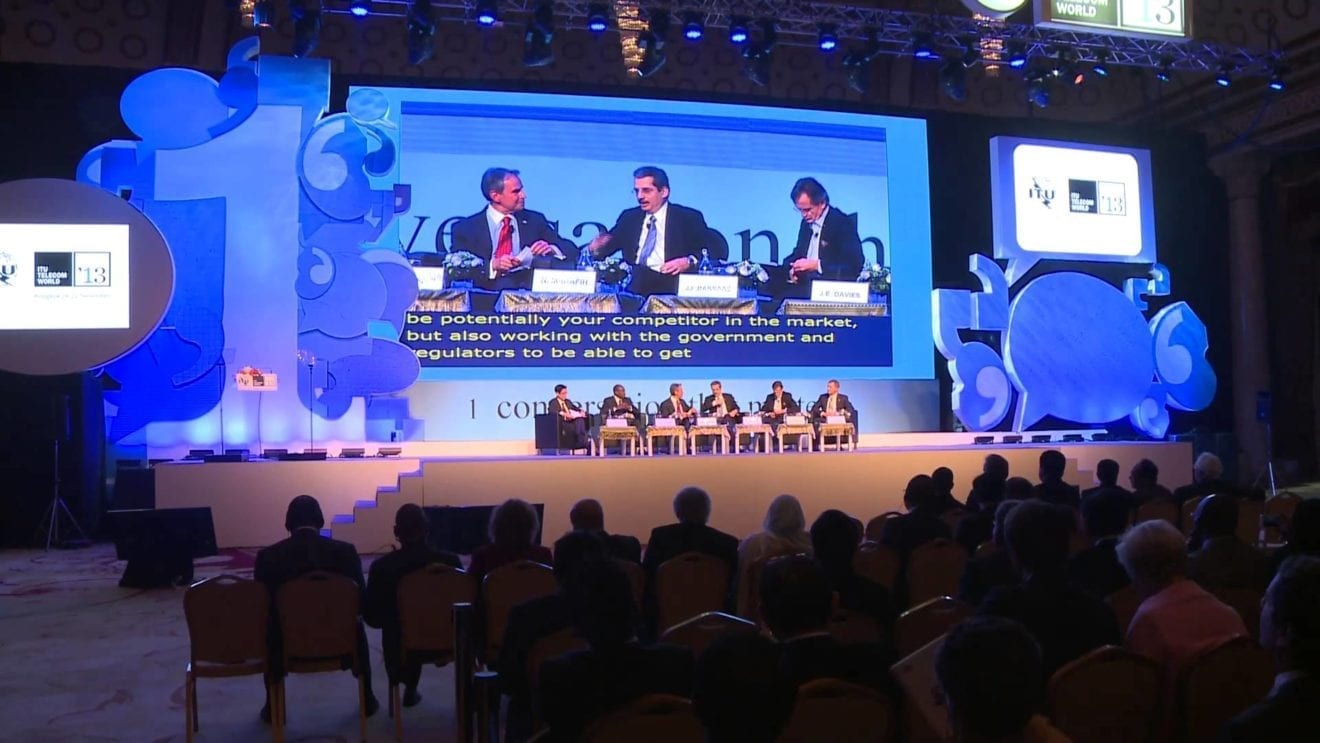
    South Korea’s Ministry of Science, ICT and Future Planning will host next year’s ITU Telecom World conference in the city of Busan.

    The event will take place on September 25-28. It will include an international exhibition designed to showcase new technologies in areas including smart cities, 5G, IoT, automation and AI.

    An accompanying forum will involve high-level discussions exploring the technologies, policies and strategies driving the digital economy, as well as the ICT-related efforts to meet the UN’s Sustainable Development Goals.

    In addition, the annual ITU Telecom World Awards will recognize innovation in ICT solutions with social impact from companies of any size, from SMEs ranging up to large corporations.

    “The Republic of Korea has been a terrific partner of ITU for many years,” ITU secretary-general Houlin Zhao said.

    “Busan will be a great setting for ITU Telecom World 2017 to continue our mission of promoting cross-sector partnerships in ICTs to achieve the Sustainable Development Goals.”

    ITU Telecom World 2016 will take place in Bangkok on November 14-17.

  • Korea and Singapore’s broadband lead narrows

    Korea and Singapore’s broadband lead narrows

    South Korea continued to have the highest average connection speed in the world at 27 Mbps while Singapore maintained its position as the country with the highest average peak connection speed at 157.3 Mbps.

    These were among the findings of the Akamai Technologies’ Second Quarter, 2016 State of the Internet Report.

    Both countries, however, registered declines in average connection speed and average peak connection speed, respectively, at 7.2% (South Korea) and 7.1% (Singapore) compared to the first quarter.

    Meanwhile, the global average connection speed decreased 2.3% quarter over quarter to 6.1 Mbps, while the global average peak connection speed increased 3.7% to 36 Mbps. The 10 Mbps broadband adoption rate grew 0.7% quarter over quarter, but 15 Mbps and 25 Mbps broadband adoption rates fell 0.8% and 2.1%, respectively.

    In Asia-Pacific, the report noted that 14 of the 15 surveyed countries had average connection speeds above the 4 Mbps broadband threshold. Indonesia registered a 148% gain in average connection speed in the second quarter and the only country to see its speed double compared to the previous year.

    In the mobile space, Akamai reported that average mobile connection speeds ranged from a high of 23.1 Mbps in the United Kingdom to a low of 2.2 Mbps in Venezuela. The report noted that in the upcoming quarters, it expects to see mobile speeds continue to climb as 4G LTE becomes deployed more broadly worldwide.

    In Asia-Pacific, South Korea (11.1 Mbps) also led the world in average mobile connection in the second quarter of 2016, followed by New Zealand (9.8 Mbps), Japan (9.5 Mbps), Taiwan (9.3 Mbps), Australia (8.9 Mbps), and the Philippines (8.5 Mbps).

  • Bitung ready to play role of Asia Pacific gate

    Bitung ready to play role of Asia Pacific gate

    Bitung Mayor Maximilian Jonas Lomban said he had a vision to make the city into a modern city serving as an Asian Pacific gate for Indonesia.

    The city could play the role of Asian Pacific gate for Indonesia, Lomban said at a meeting on the occasion of the 26th anniversary of the port city here on Tuesday.

    The port city is strategically located on the Pacific rim in North Sulawesi, he said at the meeting attended by the city leaders.

    “The position of the city would be more potential with the governments plan to provide it with facilities and supporting infrastructure that would make it competitive in the Asia Pacific region,” he said.

    He said Bitung would be a knot of various national strategic projects and there would be many national and international investors want to utilize the citys facilities and infrastructure.

    The mayor said among big projects being built and to be built in that area around and in the city include Special Economic Zone (KEK), Manado-Bitung toll road, Bitung International Ocean Going Ship Port and rail track Makasar-Bitung, which will automatically make the city the gate to the Pacific region.

    “The idea of Bitung as a Pacific gate for Indonesia would come to reality especially if Bitung is promoted into one of Indonesia tourist destinations,” Max said.

    Chairman of the Bitung City Council Laurents Supit, Bitung has been awarded a number of tokens of appreciation including from the finance ministry for good financial report and from the Transport Ministry for good service by its container terminal.

    Supit attributed the achievement to the ambition of the city people to transform Bitung into modern marine city.

  • Singapore Website Shutdown After Selling Fake Calvin Klein Products from Taobao

    Singapore Website Shutdown After Selling Fake Calvin Klein Products from Taobao

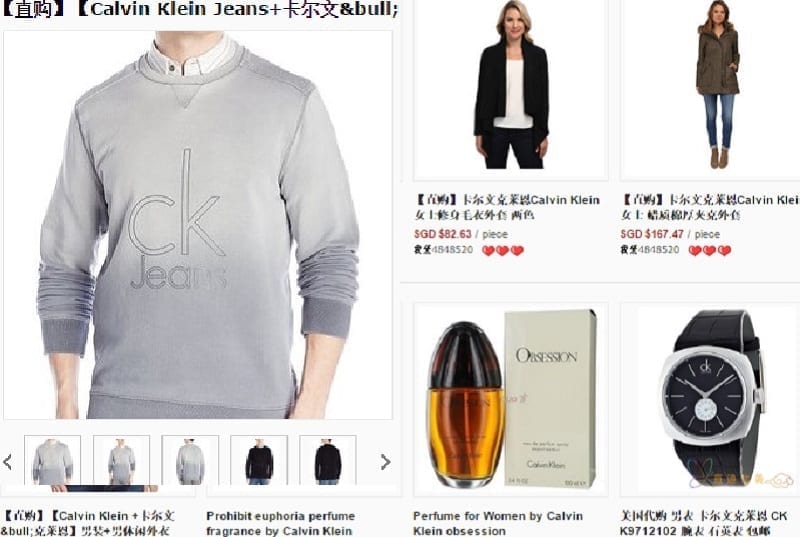
    Website SGbuy4u was found selling fake Calvin Klein goods after investigators successfully purchased imitation wallets and underwear from the website.

    Calvin Klein’s case against Singapore-based Global PSM marked the first reported suit that involved a summary judgment against a firm selling fake goods online in Singapore.

    Global PSM however, claimed that their business model was customer-to-customer service.

    2

    Users can search for and buy a variety of goods on the website and after a payment for an item has been made, Global PSM then passes on the order to Chinese shopping website Taobao. After the company has transferred payment, and the item has been delivered in China, it will then be shipped to the customer in Singapore.

    Calvin Klein filed cases and asked for summary judgment against Global PSM, freight forwarding company HS International and a Mr. Jeffrey Tan, the owner of the two firms, after two successful purchases.

    “The crux of the dispute lies in the proper characterization of the business and the involvement of each of the defendants in those business activities,” said Justice Chan Seng Onn was quoted as saying.

    Global PSM’s argument claimed that the company merely served as a courier, pointing the blame for the trademark breaches to original sellers on Taobao.

    Prosecution lawyers, however, countered that the SGbuy4u business does more than courier services as it collects payments, buys the fake goods on Taobao and has them delivered to their warehouse.

    While Justice Chan had expressed willingness to hold Global PSM accountable for trademark infringement, he ruled that some issues were needed to be clarified in relation to the involvement of the other defendants.

    “There is a pressing need for intellectual property law to keep up with technological advances in order to ensure that the law continues to protect intellectual property and rights owners in real and relevant ways,”the judge said.

  • Fortis Healthcare to take loan of Rs 77.6 cr from Singapore bank

    Fortis Healthcare to take loan of Rs 77.6 cr from Singapore bank

    Fortis Healthcare said it´s Mauritius subsidiary Fortis Healthcare international Ltd, has will take a loan of SGD 165 mln (Rs 77.6 crore) from Singapore-based Consortium of Bankers.

    “Fortis Healthcare Ltd has being holding the company, is giving guarantee on behalf of FHIL securing the payment of principle and interest thereon.,” said the Indian company.

    Fortis Healthcare Limited is a chain of super speciality hospitals in India.

    Currently, the company operates its healthcare delivery services in India, Dubai, Mauritius and Sri Lanka with 54 healthcare facilities (including projects under development), approximately 10,000 potential beds and 314 diagnostic centres.


  • Tata Motors Jaguar Retail sales up 70% at 17640 units

    Tata Motors Jaguar Retail sales up 70% at 17640 units

    Jaguar Land Rover, the UK’s leading manufacturer of premium luxury vehicles, today reported its best ever September retail sales of 61,047 vehicles, up 28% compared to September 2015. The month’s performance has been driven by strong sales of the Land Rover Discovery, Discovery Sport, the Range Rover Evoque and the Jaguar F-PACE, as well as solid sales in China.

    Jaguar Land Rover delivered solid retail sales growth across all key regions year on year, with China up 50%, Europe up 32%, UK up 30%, North America up 23% and other overseas markets up 3%. Jaguar Land Rover sold 434,025 vehicles in the first nine months of 2016, 24% up on the same period in the prior year.

    Commenting on the performance, Andy Goss, Jaguar Land Rover Group Sales Operations Director said, “September is always an important month for the automotive industry and we are proud of our results. Performance was strong in China and Europe, where collectively we sold almost 23,000 cars this month alone.

    “With the new Discovery launched in Paris this month and sales starting for the first locallybuilt Jaguar in China – the XFL, our British line-up continues to expand and delight in markets across the world.”

    Jaguar recorded its best September ever, with retail sales reaching 17,640 vehicles, up 70% on the previous year, reflecting the strong launch of the F-PACE as well as continued solid sales of the XE. Calendar year-to-date sales for Jaguar were 103,366 up 72% year-on-year.

    Land Rover strengthened its position as a world-leading manufacturer of all-terrain SUVs, with its strongest ever September sales of 43,407 vehicles, up 17% year-on-year. The strong sales were led by the Discovery Sport, retailing 12,838 vehicles, up 50% compared to last September, and Range Rover Evoque retailing 11,761 vehicles, up 53%. Calendar year-to-date sales for Land Rover reached 330,659 vehicles, 14% up on the prior year.


  • China’s National Day holiday retail sales growth slows slightly

    China’s National Day holiday retail sales growth slows slightly

    China’s retail sales rose at a double-digit pace during the week-long National Day holiday in October, data from the Ministry of Commerce showed, but growth slowed slightly compared with last year.

    Sales of retailers and catering firms increased 10.7 percent to 1.2 trillion yuan ($180 billion) during the Oct. 1-7 “Golden Week” holiday, the ministry said in a statement posted on its website late Friday. Revenues grew 11 percent a year earlier.

    In revenue terms, the holiday is more important for retailers than Chinese New Year as they vie for customers with promotions and discounts.

    During the National Day holiday, millions take time off work to travel, get married, and generally spend more money than usual on consumer products such as household appliances, mobile phones, jewellery, clothing and cars.

    Economists are closely watching China’s consumption data as the country’s leaders try to bolster the economy, which expanded at its slowest rate in a quarter of a century last year.

  • Combine all your rewards points and get more out of your luxury shopping

    Combine all your rewards points and get more out of your luxury shopping

    Shoppers can now save money on luxury brands by combining reward points from their different Visa credit cards.

    The “Points for Brands” campaign enables customers with Visa credit cards issued from leading financial institutions in Thailand, including Kasikornbank, Bank of Ayudhya (Krungsri), Krungthai Bank, Krungsri First Choice, Government Savings Bank, and Thanachart Bank to pool reward points for purchase of goods at selected luxury brands at a rate of 1,000 points for THB 100.[1] 

    There are more than 70 participating brands at The Emporium and The EmQuartier, including Coach, Kate Spade, DKNY, DVF, Proenza, COMME des GAçONS, Jimmy Choo, Valentino, EMPORIO ARMANI, Balenciaga, Calvin Klein, Hugo Boss, MCM, and Club 21.

    “This is the first time our cardholders can purchase luxury brands by redeeming points from across their portfolio of Visa credit cards, a rarity for premium categories,” said Suripong Tantiyanon, Visa Country Manager, Thailand.

    Exclusive to Visa cardholders, more information, along with help on how to redeem reward points, can be found at Points for Brands booth on M Floor at EmQuartier

  • Xiaomi opens its first store outside greater China

    Xiaomi opens its first store outside greater China

    Xiaomi phones are finally available offline in southeast Asia as the company has opened a shop outside greater China for the first time ever.

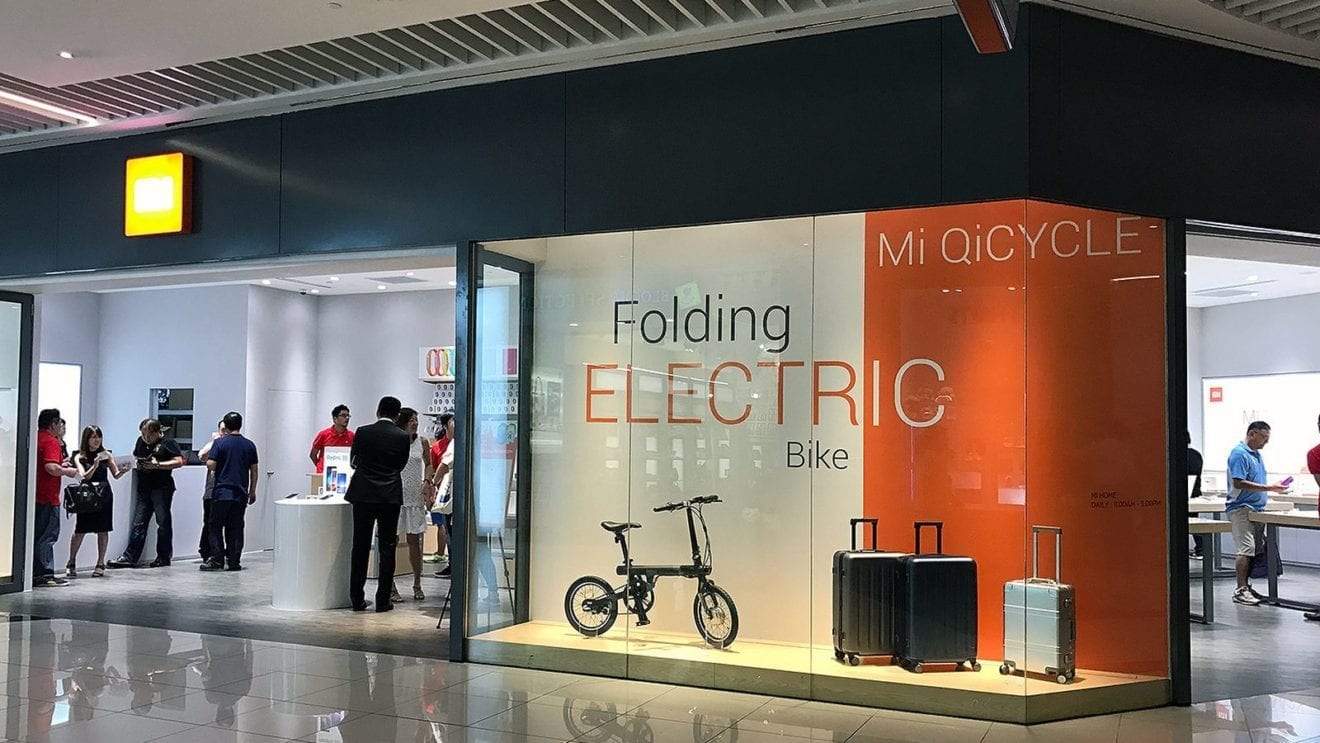
    The sunny island state of Singapore hosts the first Mi Home store to open outside of China, Hong Kong and Taiwan. The Singapore Mi Home store, located at popular shopping mall Suntec City, sells Xiaomi’s line of phones and accessories. But unlike other stores, it doesn’t stock the company’s other Mi ecosystem products such as the Mi TV or the Mi Rice Cooker.

    Xiaomi says that it plans to bring in more of its product lineup in time. But for now, customers will have to make do with the Mi Max, Mi 5, Redmi 3S, Redmi Note 3, Mi Band 2 and other accessories such as portable speakers and power banks.

    The Chinese manufacturer is using a local partner to run the store — unlike the ones in China, Hong Kong and Taiwan, which are run by Xiaomi itself.

    The company is also turning to regional online retailer Lazada to manage its online sales, an area it’s managed by itself in Singapore up to now.

    These moves to divest itself of retail responsibilities in Singapore could point towards a shift in Xiaomi’s current strategy. It’s possible the Chinese giant will focus on its home market to make up for ground lost to rivals Huawei, Oppo and Vivo.

    While the company continues to battle it out for India — the second largest smartphone market in the world after China — it’s likely Xiaomi will use the same retail strategy from Singapore across the Southeast Asian region as the company shifts its focus towards India, China and a possible US launch next year.

  • Macy’s plans to launch an e-commerce site in China in 2017

    Macy’s plans to launch an e-commerce site in China in 2017

    Macy’s Inc. says it will launch a Chinese e-retail site in 2017 in order to increase its digital presence in the world’s largest e-commerce market. The department store chain announced the plan last week in Shanghai.

    Macy’s began selling online in China last November when it opened a storefront on Tmall Global, a web shopping site for imported products operated by Alibaba Group Holding Ltd. While the retailer did not disclose its sales on Tmall Global, it said more than 300,000 consumers have taken advantage of the social media-like features of Tmall Global to follow Macy’s so they can learn about new products and other information.

    Alibaba says Macy’s has become one of the most popular sellers on Tmall Global where Macy’s sells 1,500 fashion products from such brands as Kipling, Anne Klein, Tommy Hilfiger and Fossil.

    Macy’s also has explored several ways to connect online with young Chinese consumers. For example, the retailer has broadcast live shows online to explain its history and introduce its U.S. stores to Chinese consumers. A Macy’s live online broadcast about last month’s New York Fashion Week attracted about 100,000 Chinese viewers and resulted in some 150 million posts to Chinese social network Weibo, according to Macy’s.

    Many Chinese consumers shop in Macy’s stores when they travel to the U.S. and China is important for the company, the retailer says. However, the Chinese and U.S. markets are very different, Dustin Jones, Macy’s managing director for China, said at the news conference. “Chinese consumers want to know many details, while U.S consumers only want to check out quickly,” Jones said. “We are still learning in China and we will speed up our expansion next year.”

    Macy’s only sells online in China, and does not operate physical stores. Macy’s did not comment on any plans to open stores in China, although Jones said it’s hard to reach Chinese consumers without physical locations.