Tag: asia

  • Nepal Telecom revs up rollout of new services

    Nepal Telecom revs up rollout of new services

    Nepal Telecom chose Tecnotree to supply its Agility Mediation and Interconnect system, which will enable the rapid rollout of new services for the telco’s 14 million subscriber base.

    The Tecnotree Agility Mediation and Interconnect system will replace Nepal Telecom’s existing systems for GSM and other networks – and supports mobile, fixed line and broadband lines of business as well as future services.

    The solution will be delivered as a turnkey project, including complete hardware and third party software implementation.

    “By enabling the integration of new and legacy network components we are pleased to help Nepal Telecom to execute its convergence strategy and achieve its objective of complete optimized Business Support Systems,” said Padma Ravichander, CEO of Tecnotree.

  • IIJ to sell prepaid data roaming SIMs in Taiwan

    IIJ to sell prepaid data roaming SIMs in Taiwan

    ISP and MVNO Internet Initiative Japan (IIJ) has arranged to sell a prepaid SIM card for Taiwanese visitors planning to visit Japan at all Taiwan 7-Eleven locations.

    The ready-to-use, data only Japan Travel SIM offers 1GB of data for 30 days for TW$780 ($24), with additional data packs purchasable at select locations in Japan.

    The service is being offered over NTT DoCoMo’s LTE and 3G networks, which offers download speeds of up to 375Mbps and upload speeds of up to 50Mbps in certain coverage areas.

    IIJ said Taiwan ranks third after China and South Korea in terms of the number of visitors to Japan. Total Taiwanese travelers to Japan increased 30% in 2015 to a record 3.67 million.

    Meanwhile 7-Eleven is the largest convenience store chain in Taiwan, with 5,045 locations as of April.

    Japan Travel SIMs will go on sale at Taiwanese 7-Eleven stores from July 18.

  • Dtac profit tumbles 90% to $4m in Q2

    Dtac profit tumbles 90% to $4m in Q2

    Thailand’s Dtac has reported a record 90% slump in net profit for the second quarter of the year, due to a steep decline in prepaid subscribers as well as high capex and other costs.

    Net profit for the quarter fell to 141 million baht ($4 million), in a result the operator also attributed on higher depreciation and amortization costs and lower ebitda, as well as a one-time 394 million baht restructuring cost.

    The company’s total subscriber base shrank by 524,000 to 25 million, with prepaid subscribers falling by 715,000. By contrast, postpaid net additions increased by 77% to 191,000.

    In its quarterly report, Dtac blamed the weak prepaid performance on “competitors’ aggressive subscriber acquisition activities through heavy handset subsidization and strong distribution channels.”

    To address the decline, Dtac has reintroduced prepaid handset subsidies and launched new Dtac prepaid branded SIMs targeting data-oriented users.

    Dtac’s 4G userbase meanwhile increased from 2.9 million in Q1 to 3.5 million in the second quarter, and the operator aims to grow this to 6 million by the end of the year.

    Blended ARPU for the second quarter grew 7% year-on-year to 211 baht as a result of the lower prepaid subscriber base, but declined 2.6% quarter on quarter as growth in data revenue failed to fully compensate for declining voice revenue.

    Capex meanwhile grew to reach 4.29 billion, or 22% of total revenue, as Dtac spent heavily on network rollouts. Network opex increased 3.9% year-on-year to 1.49 billion baht.

    For the full year, Dtac warned it expects intense market competition to continue into the second half. As a result, the company expects service revenues to slightly decline from the previous year, and plans to maintain capex at the same level as last year, which was around 20 billion baht.

  • NTT Com launches high-speed broadband in Myanmar

    NTT Com launches high-speed broadband in Myanmar

    Japan’s NTT Communications has launched high-speed internet services for enterprises in Myanmar, starting with the Yangon area.

    The company has secured a network service license from Myanmar’s Ministry of Transport and Communications, and has started offering the new Digi-Path Premier service in the market.

    The service provides dedicated, fully managed circuits from 1Mbps to connect enterprises with NTT Com’s global network, with 24/7 monitoring of circuits. Delivery of circuits can require as little as one month.

    NTT Com is also providing optional services including global IP address, web hosting, mail hosting, rental routers, managed firewalls, internet VPN and file transfers.

    NTT Com, along with NEC and Sumitomo, jointly deployed a 30Gbps core optical network between three major Myanmar cities in 2013, under contract from the Myanmar government. The operator established an office in the nation in October 2012, the first in the country from a foreign operator.

    The operator said it is now providing internet connections to enterprises globally including in seven Southeast Asian countries – Singapore, Malaysia, Indonesia, Thailand, Vietnam and Cambodia, as well as Myanmar.

  • Golden opportunity: why now’s the time for brands to move in Myanmar

    Golden opportunity: why now’s the time for brands to move in Myanmar

    In the street outside Yangon’s Shwedagon Pagoda, a Buddhist monk reaches into the folds of his burgundy robes for his mobile phone. He cuts a somewhat incongruous figure, tapping his screen against a backdrop of golden spires, with a steady stream of pilgrims and traffic all around. But this blend of ancient tradition with digital connectivity is now the way of modern Myanmar.

    The pace of change here is on a scale unseen in other fast-growth Asian markets. Just three years ago, buying a mobile SIM card meant handing over $2,000 in cash on the black market; now, there are now three competing networks and a SIM costs just $1.50. Ownership of mobile phones has already shot up to more than 50 per cent – a fact all the more remarkable given that only a third of people here have mains electricity in their homes.

    It is this prevalence of mobile connectivity right at the beginning of Myanmar’s growth curve that is proving such a strong accelerant of change. Mobile connectivity won’t just enable growth, it will direct it, leading entire business sectors – from banking to retailing – to leapfrog stages of development.

    The International Monetary Fund has predicted Myanmar will have the world’s fastest-growing economy this year, with GDP growth of 8.6%. Since the country embarked on a programme of ‘disciplined democracy’, investment has been increasing. The smooth transition to a civilian-led government earlier this year is giving many more businesses the confidence to invest and expand here.

    Economic growth and urbanisation are giving rise to social mobility, and with that, the world’s newest, youngest middle class. Myanmar is home to 51 million people, more than half of them aged under 30. By 2020, Boston Consulting Group anticipates that 10 million will be middle-class or affluent. These people won’t necessarily be wealthy by global standards, but they will have disposable income that puts fashion, fragrance and home appliances within reach. Later, they will be in the market for cars and overseas holidays.

    For brand owners, this represents unprecedented opportunity, and there is a clear early-mover advantage to be had. WPP’s global BrandZ study tracks the way consumers feel about different brands around the world. Some brands are so little understood by consumers, they are a ‘clean slate’ in consumers’ minds. In Myanmar, where shoppers have had little choice about where they shop and the brands they buy, about a third of all brands fall into this ‘clean slate’ category – double the global average.

    That means now is the time for brands to start making an impression, not just on people who are ready to buy, but also on those who are on their way up. Ford and Chevrolet are already here; Coca-Cola, KFC and Pizza Hut are among the other international brands to have launched in Myanmar.

    Consumers in Myanmar are open to trying new products and new brands, but while global brands can serve as shorthand for quality or safety, they are not a badge of honour and do not instantly command a premium. People are embracing the opportunities that digital connectivity offers, but do not seek an express route to ultra-modernity. The languorous pace of life here is seen as something to be treasured; thoughtfulness and self-control are admired, and modest attitudes to spending and thrift can make indulgence seem decadent.

    Brands need to be respectful of tradition, and understand that parents and grandparents are highly influential. BrandZ analysis shows that the strongest brands in Myanmar project idealism and a sense of adventure, but steer clear of individualism and rebellion. They also help consumers navigate what is becoming a sea of choice, emphasizing not just the features of a product but the difference it can make to the consumer’s life. This involves working closely with the traditional retail trade – local ‘Mom and Pop’ shops – which account for the vast majority of sales here. These stores are not just distribution points but trusted sources of information and advice.

    Norwegian mobile phone network Telenor has demonstrated how global brands can achieve local resonance. Its TV campaign reflects the importance of family as a young woman in the city calls her mother in the countryside for urgent cooking advice; she wants to cook ‘nan gyi thohk’ noodles from her home-town to impress her mother-in-law. The ad has been so popular that nan gyi thohk is now ‘the Telenor dish’.

    Similarly, the isotonic drink 100PLUS, from Malaysia, has established a powerful connection with consumers in Myanmar by reflecting what it feels like to be in a hot climate with so much that needs to be done.

    For now, access to television is higher than mobile penetration, but only just. Mobile internet is where consumers are increasingly getting their information, and going online in Myanmar means going on Facebook. Even President Htin Kyaw is a subscriber. Media plans need to be mobile-friendly, if not mobile-first.

    Success in this market requires a nuanced approach both to business and communications. The Buddhist monk on his phone appears to be straddling very distinct worlds; in fact, he is integrating the two in a uniquely Burmese way.


     

  • Bacardi targets Hong Kong-China commuters with John Dewar emporium

    Bacardi targets Hong Kong-China commuters with John Dewar emporium

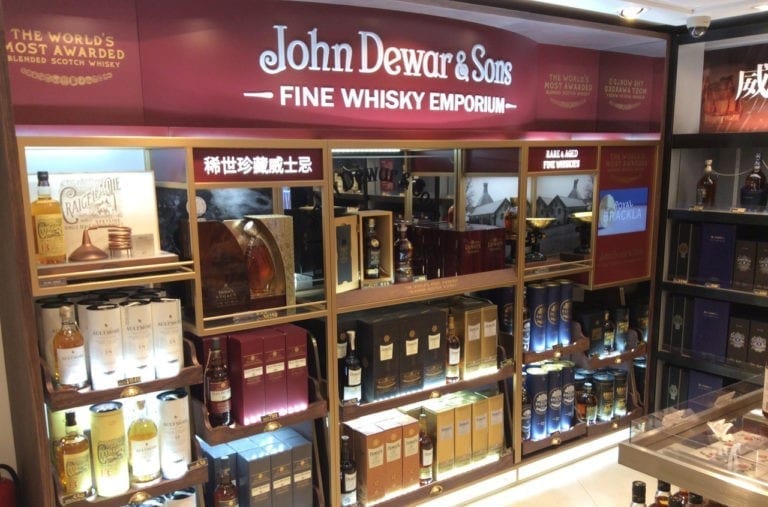
    Bacardi Global Travel Retail has unveiled the largest permanent merchandising installation of The John Dewar & Sons Fine Whisky Emporium in Hong Kong.

    The company has partnered with Chinese duty free retailer Sky Connection and sister company Anway for the opening at the Free Duty store inside Hong Kong MTR Lo Wu station.

    The station is home to train services between Hong Kong and mainland China, with over 100 million cross-boundary travellers using the location every year.

    Brand ambassadors are on hand at the three metre wide emporium to guide shoppers through the Dewar’s portfolio. It also showcases Aberfeldy Highland Single Malt Scotch Whisky, Aultmore of the Foggie Moss Speyside Single Malt, Craigellachie Speyside Single Malt and Glen Deveron, Royal Burgh Collection.

    “We have looked in detail at Chinese drinking habits and believe there is a strong opportunity to drive incremental basket spend in Scotch,” said Bacardi Global Travel Retail Regional Director Asia-Pacific Vinay Golikeri. “This opportunity will come from shoppers who were born during and since the economic reform.  They are already actively engaging with the ‘discovery’ opportunity and the brand intrinsics of the five single malts in our aged whisky portfolio.”

    Bacardi sees a US$40 million incremental opportunity in global travel retail whisky. “We are convinced the key to this prize is by leveraging the appeal of discovery brands such as ours with shoppers at the second stage of luxury,” said Golikeri.

    Anway/Sky Connection Merchandising & Buying Director Simon Au commented: “This is an exciting opportunity for us to bring something special to the high proportion of our shoppers who are whisky lovers and collectors. We’re delighted with the customer feedback – people are genuinely amazed to be able to purchase some of the world most awarded whiskies on their commute home.”

  • South Korea May Halt Volkswagen Sales

    South Korea May Halt Volkswagen Sales

    South Korea’s environment ministry has accused local VW officials of fabricating reports on emissions and noise-level tests.

    As a result, Volkswagen may have sales of its vehicles in South Korea suspended later this month. The environmental authority in South Korea, the National Institute of Environmental Research, will decide at a hearing on July 22 whether to suspend the sale of 32 VW Group models, which includes the Audi brand too, currently available in the market.

    Prosecutors last month raided the Seoul offices of the German automaker and arrested an employee as part of the investigation. The automaker stands accused of fabricating reports on 26 different VW Group models including the VW Golf and the Audi RS7.

    The South Korean unit of Volkswagen has seen sales slide dramatically in the first half of 2016. Sales are down 33 percent to 12,463 units for January through to June compared to the same period last year.

    Volkswagen has said it may take legal action to fight any decision to halt sales.

    The situation with VW isn’t without precedent.

    Earlier this year, South Korea suspended sales of the Nissan Qashqai after accusing the Japanese automaker of manipulating the model’s emissions control system. The local Nissan unit has filed a lawsuit against the environment ministry in response.

  • Blockchain comes to Myanmar microfinance

    Blockchain comes to Myanmar microfinance

    Infoteria Corporation and Tech Bureau Corporation (hereinafter “Tech Bureau”) have successfully transferred loan and deposit account data in the main system of BC Finance, one of the largest microfinance institutions in Myanmar, to mijin, the private blockchain placed on Microsoft Azure using ASTERIA WARP and mijin adapters.

    We hereby announce that this verifies that ASTERIA WARP and the private blockchain mijin are applicable in the operational process of microfinance and the private blockchain technology is applicable to account data recording. This is the world’s first demonstration experiment that used a private blockchain in microfinance.

    Process overview

    We recorded all transaction history (account data) of active accounts at a branch of BC Finance (which operates a total of 19 branches in eight states) in the private blockchain mijin using ASTERIA WARP and mijin adapter. BC Finance assigned a total of three accounts, including one loan account and two savings accounts, to one customer.

    Future plan

    (1) Plan to carry out an experiment for concurrent and consecutive operations over a certain period of time. This is scheduled to begin in the first half of July and continue for approximately six weeks.

    (2) Will consider developing an application that enables data writing and viewing from clients (terminals at each branch) to mijin.

    Upcoming developments

    The number of bank accounts in Myanmar is still limited to approximately two million for a population of more than 50 million, and bank services are available only to the affluent, who represent only a small portion of the population. Microfinance provides financial services such as loans and deposits to a broader segment of the population, and as such plays an important role in supporting Myanmar’s economic growth. Myanmar has achieved 7-8 percent economic growth since its democratization in the spring of 2011, and in the spring of 2016, the military government came to an end, encouraging the lifting of economic sanctions imposed by the U.S. Such factors are expected to facilitate further growth, and a significant increase in the number of BC Finance customers is expected.

    While the current system means rising costs of data management as the number of users grows, the introduction of the blockchain technology enables the safe and low-cost operation of account data. We expect that this will facilitate the growth of the microfinance business.

    Infoteria and Tech Bureau are focusing on the promotion and penetration of blockchain technology not only in Japan, but also overseas. The two companies plan to develop this alliance on a global scale by applying the results of this experiment to other countries.

  • Philippines: the rising star of Asian retailing

    Philippines: the rising star of Asian retailing

    Global food and grocery specialist IGD visited Manila during the May 2016 presidential elections. Here IGD’s senior retail analyst, Jenny Li, examines what is giving the country’s retail sector such a positive outlook.

    The Philippines is one of the fastest growing countries in Southeast Asia, with its GDP growth hitting 6.9 per cent in the first quarter of 2016.

    The country’s newly elected president, Rodrigo Duterte, is expected to implement further economic reforms and provide a better business environment through investments in infrastructure and cutting of red tape.

    All these factors allow us to project that the grocery market in the Philippines, currently worth US$99 billion, will see a 10 per cent compound annual growth rate and reach US$157 billion by 2020.

    Exciting times for modern retailers

    Similar to many developing countries, the Philippine grocery market is dominated by traditional trade whilst modern retailing makes up around 30 per cent. Yet the Philippines’ leading retailers, those with strong financial backing and entrepreneurial spirit, have made extraordinary progress in transforming the country’s modern retail landscape.

    SM Retail, Puregold and Robinsons Retail are the top three domestic players in the country. All of them are scaling up their footprint with significant store network expansion and consistent sales growth. SM Retail, for instance, opened 99 new stores in various formats in the past year; Puregold, another major retailer with 305 stores across the country, has reported an impressive 20 per cent increase in sales in the first quarter of 2016.

    Multichannel as the winning formula

    In IGD’s latest report “Philippines in Focus: Retail Landscape and Channel Outlook”, we’ve identified a number of key trends that are driving the country’s retail channel development. Among others, building a diversified portfolio is a notable growth strategy for most leading retailers.

    Modern retailing in the Philippines started with hypermarkets and supermarkets, but increasingly retailers are embracing a multi-format strategy by building their presence in smaller formats and online channels. This enables them to create differentiated offers to target a broader audience, with unique demographic profiles and different shopping needs. Also, emerging channels such as convenience stores and eCommerce are growing faster and are best placed to capitalise on the higher margins of discretionary spend categories.

    A subsidiary of the pan-Asian retail giant Dairy Farm, Rustan’s Philippines is the leader in premium retailing and it’s well established to target upscale shoppers. Over the past few years, the company has been developing Wellcome, a neighbourhood supermarket format combining daily staple products with competitive pricing. Meanwhile, its convenience store network, created via a joint venture with FamilyMart, is gaining popularity amongst busy office workers.

    Further implications

    It’s clear that the Philippine retail market presents great opportunities for future growth.

    If you are looking to invest in Asia or seeking to expand to new markets, the Philippines is one region to consider. However, success lies in the ability to build a solid understanding of the local market and establish strategic partnerships with local players, as well as provide relevant and flexible solutions to support retailers’ multichannel strategies.

    • Jenny Li works in the Asia-Pacific team at IGD and is responsible for managing research programs and tracking the latest industry trends in Asia. She regularly travels across the region, gaining market insight from visiting new stores and meeting local retailers and suppliers.
  • Primark sales flourish on new store openings

    Primark sales flourish on new store openings

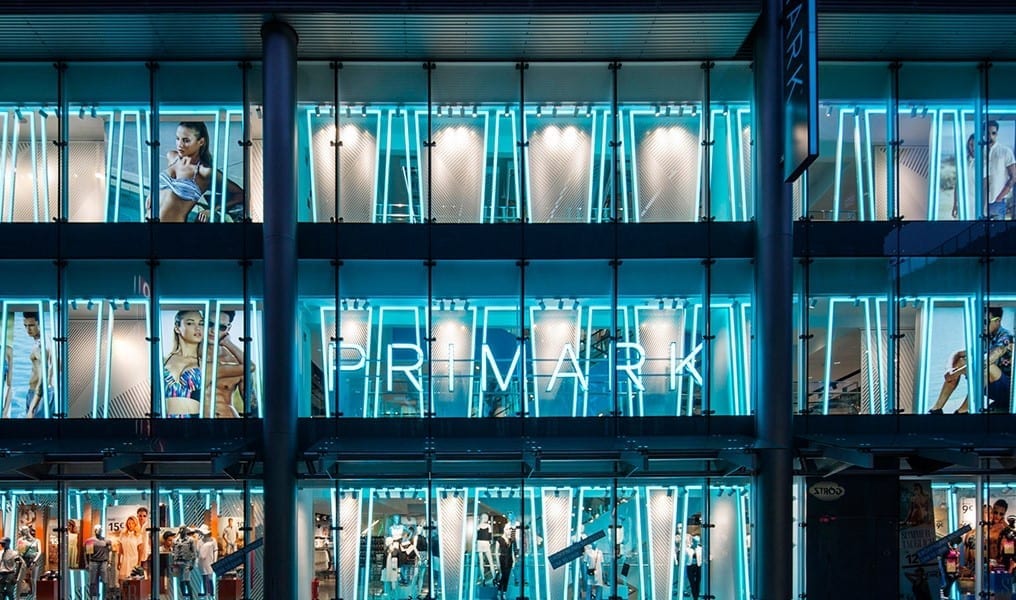
    Despite third quarter like-for-like sales being hit by unseasonal weather, especially in April, UK-based discount apparel chain Primark has posted a solid 40-week performance – with a strong third quarter boosting overall growth.

    Primark sales benefitted from the weakness of the pound towards the end of the quarter, and from the 800,000 sqft in selling space added since the beginning of the financial year.

    The company ended the period with 310 stores and 12 million sqft of selling space. Primark is continuing its march throughout Europe and the US, and opened 11 stores in the quarter, including three in the UK, its third in the US and its first in Arese, northwest of Milan in Italy.

    Early trading in these new stores has been promising, especially in its recent US and Italian ventures – while new stores in France continue to impress, highlighting the appetite for the brand in the country. Having previously been overly cautious with its store expansion strategy, Primark’s recent bold attitude is set to continue with plans to add a net 300,000 sqft of space in the fourth quarter – including two more stores in the US, and also doubling its Creteil store in Paris.

    Despite the uncertainty brought on by the UK’s EU referendum result, Primark remains optimistic and will forge ahead with its expansion plans. Given its strong value proposition and the clear demand for its offer, Primark is well placed to benefit as shoppers’ discretionary spend comes under further pressure – though retaining its competitive pricing will be crucial.

    Consumers now place far more importance on quality and value for money – ensuring Primark cannot scrimp on fabric, quality or fit. While Primark continues to shun the online channel, it must invest in its in-store experience, with focus needed on reducing queuing times at fitting rooms and at the till, as well as customer service.

  • YNAP pins hopes on expansion

    YNAP pins hopes on expansion

    Italian online fashion retailer Yoox Net-A-Porter (YNAP) aims to double sales and boost profits by 2020 as it expands in new markets, including Asia, but says it is still committed to Britain despite the vote to leave the European Union.

    The group says it is expanding its London headquarters and hiring several hundred new staff members despite Brexit. About a sixth of its total revenue comes from Britain.

    “We believe in this market. We believe in London and we continue to grow here,” says chief executive Federico Marchetti. “We have a very resilient business model thanks to our geographies being global.”

    YNAP says it plans to more than double revenues to around 4 billion euros (US$4.4 billion) by 2020. Its growth plans include further expansion in China and the rest of Asia.

    It also plans to offer jewellery and watches – Swiss watchmaker Richemont is a major shareholder – targeting sales of 100 million euros by 2020. This is part of a strategy to focus more on premium customers and fast-growing brands, as well as investing heavily in mobile. It says three-quarters of sales are set to come from mobile devices by 2020, from 41 per cent now.

    YNAP, a merger of Italy’s Yoox with upmarket rival Net-A-Porter, has its own multi-brand shopping websites but also runs online stores for luxury brands including Armani and Valentino. It added Prada this week.

    Finance chief Enrico Cavatorta says he expects synergies from the merger to take full effect from 2018, improving margins, and says the group should be cash positive from 2018.

  • Bespoke Club celebrates new flagship store

    Bespoke Club celebrates new flagship store

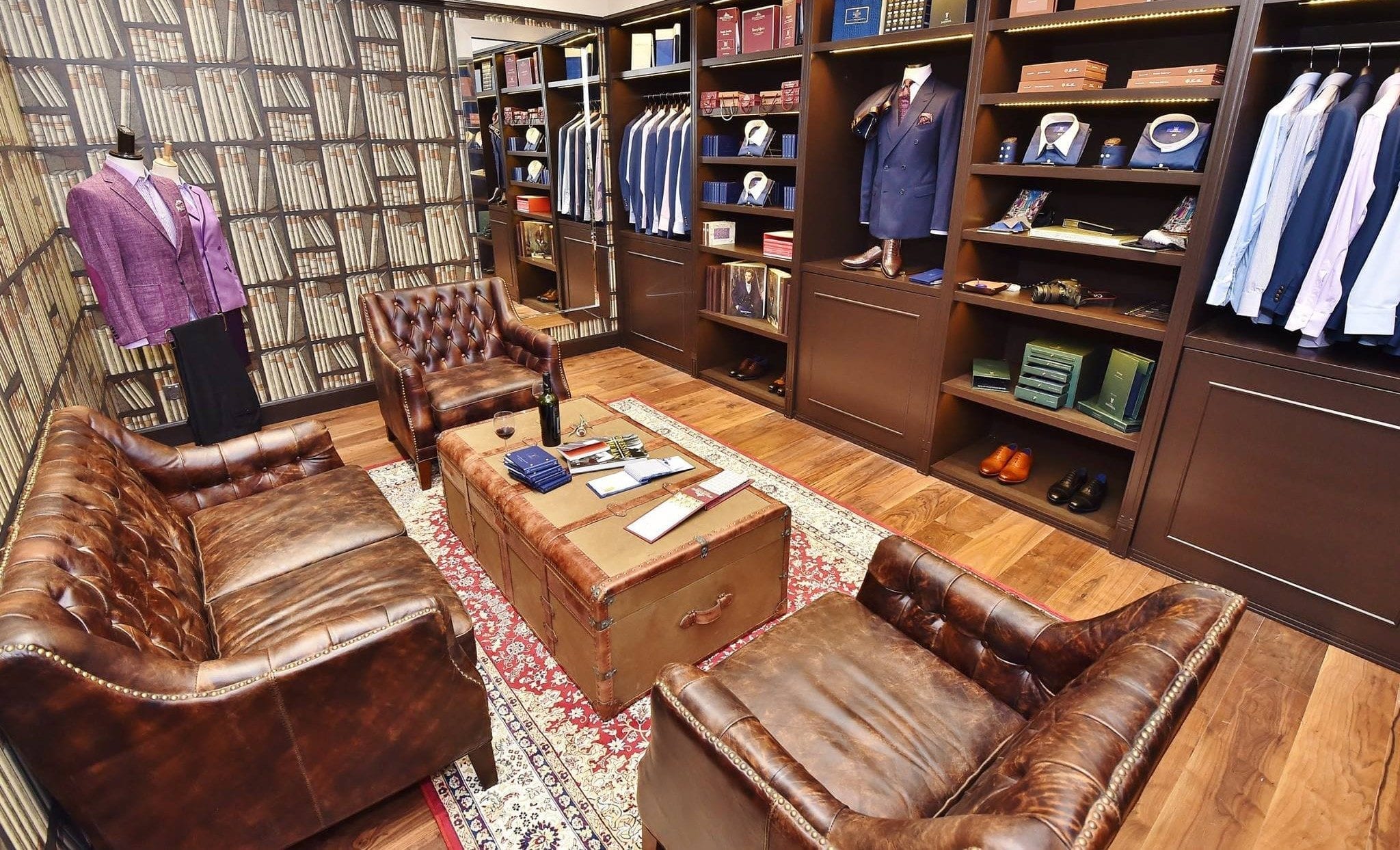
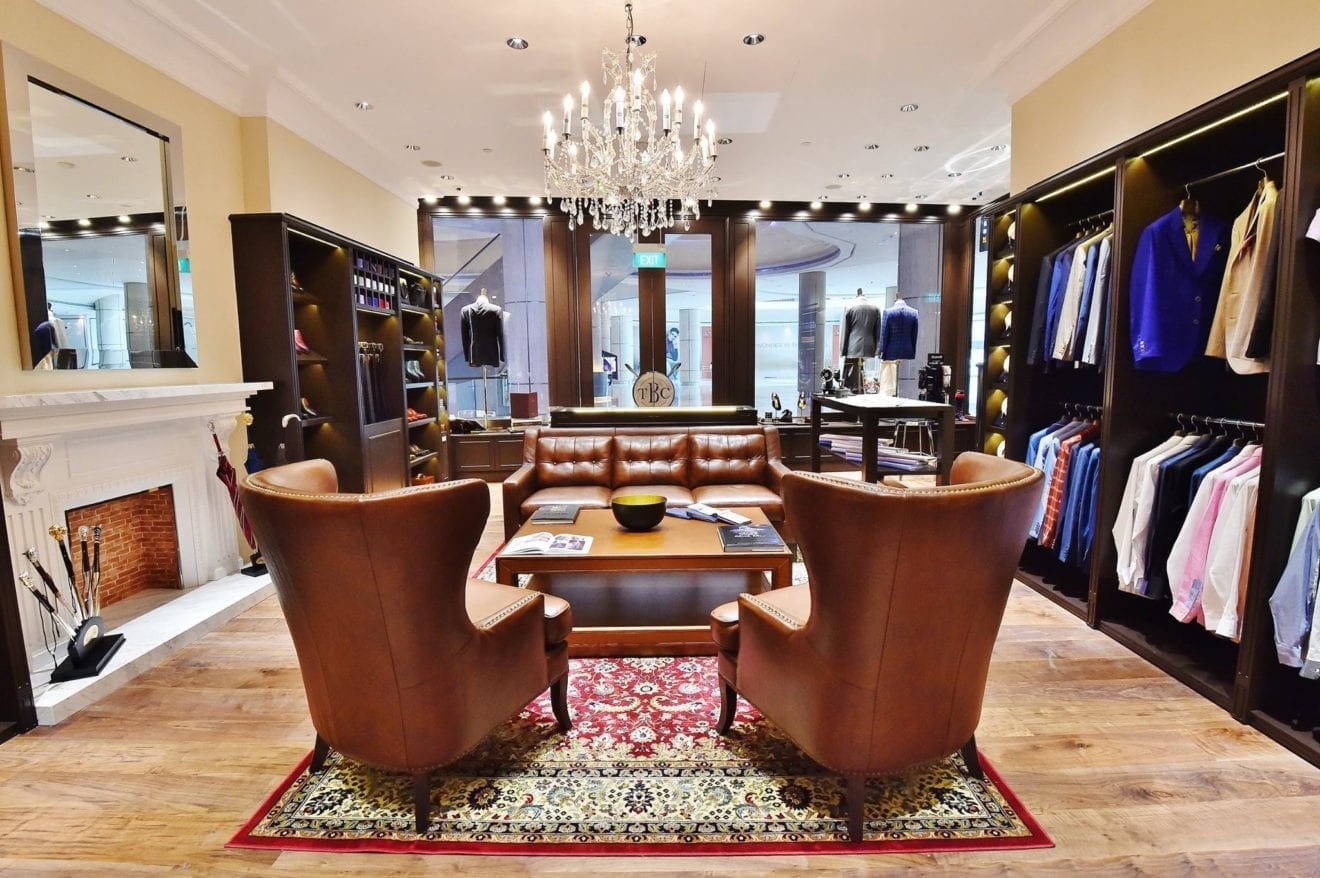
    Tailoring brand The Bespoke Club has launched its flagship store at Suntec Boutique, hosting a celebration attended by VIP clients, celebrities and other special guests.

    The Bespoke Club specialises in bespoke suits and shirts. Club patrons have complete governance over style, cut and materials, with access to more than 5000 European fine fabrics, haberdashery and accessories.

    bespoke

    It takes up to 50 hours of manual work to create a bespoke garment. Rolling the lapel, felling the collar, setting the canvas and sewing the buttons are all done by hand at The Bespoke Club. Its new store offers the style of a Savile Row boutique, and includes a personal shopping suite for privacy and discretion.

    However, clients do not need to visit the store – The Bespoke Club offers a personalised tailoring service at the client’s home or office.

    A range of packages is available, and there are special rates for corporate partners. Also available at The Bespoke Club are accessories, leather goods and custom-made shoes.

    Meanwhile, at the opening party, brand ambassador Srikant Ramaswami gave the opening speech on the essence of bespoke, while Buro 24/7 Singapore editor Norman Tan gave a presentation on the art of fine tailoring. As guests mingled over canapés, wine and champagne, Tan hosted a tie-a-bowtie competition with prizes for participants.

    Srikant Ramaswami - The Bespoke Club

    Reflecting the colours of the brand, the venue was dressed in blue and white.

  • PNJ sales slightly goes up

    PNJ sales slightly goes up

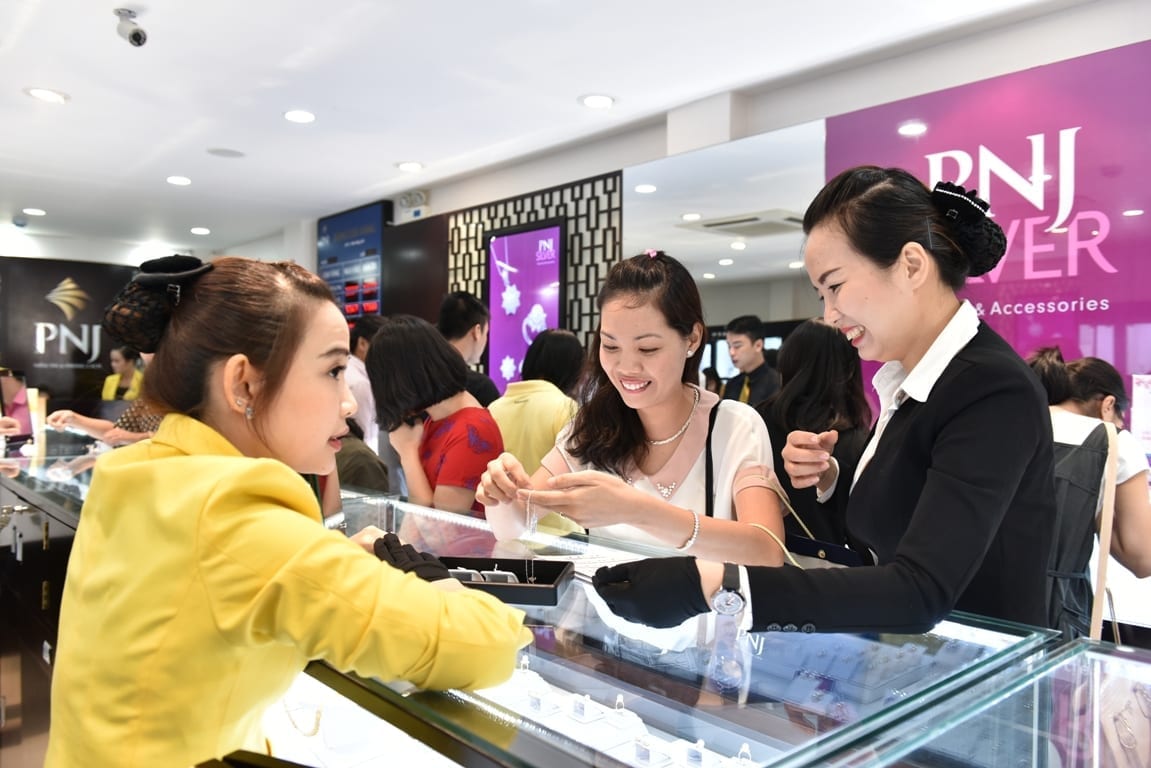
    Vietnam-based Phu Nhuan Jewelry (PNJ) has recorded US$178 million in sales and a pre-tax profit of VNĐ304.5 billion (US$13.65 million) in the first six months of this year.

    These are increases of 4 and 116 per cent respectively for the same period last year, says a PNJ official.

    During the period, the jewellery manufacturer also opened 13 stores, taking its total to 204 retail outlets, plus more than 3000 wholesalers, according to Viet Nam News.

    PNJ was named Employer of the Year in last year’s JNA Awards, which cover the international gemstone and jewellery sector.

    When PNJ restructured its jewellery workshop two years ago, a 35 per cent increase in productivity followed. It invested US$4.6 million to build a six-storey factory capable of producing four million units a year.

    PNJ launches about 20 jewellery collections a year.

  • The Salvation Army joins start-up ShopBack Singapore on its Social outreach

    The Salvation Army joins start-up ShopBack Singapore on its Social outreach

    The Salvation Army partners ShopBack Singapore, one of the top Cashback sites in Southeast Asia, to introduce the #ShopBackGivesBack outreach. The budding start-up’s first foray into social responsibility encourages shoppers to shop and do good.

    From now till 31 August 2016, ShopBack Singapore will make a $10 donation to The Salvation Army for every first purchase made by users who sign up for a free account at https://www.shopback.sg/salvationarmy. No minimum spend is required from user to initiate the gifting.

    “The name #ShopBackGivesBack was chosen as it serves as an apt representation of both our business and social responsibility outreach,” said Ms. Josephine Chow, Country Head of ShopBack Singapore. “The backbone of our business involves giving cash back to the online shoppers. In line with GSS, we invite Good ShopBack Samaritans to indulge in shopping while doing good for The Salvation Army.”

    The international charity organisation has been serving the underprivileged in the local community without discrimination. Throughout its 81 years of establishment in Singapore, The Salvation Army has launched several diverse social programmes to cater to a wide range of needs in society.

    “The Salvation Army has come a long way in identifying social needs and doing our best to help people who truly need relief from difficult circumstances. We are pleased to partner ShopBack Singapore in its initiative to give back to the community. With the support of ShopBack Singapore and its kind shoppers, we can continue to provide better care for abandoned and abused children, families in material need, elderly requiring nursing care, and other needy segments in Singapore,” said Colonel Lyndon Buckingham, Territorial Commander, The Salvation Army, Singapore, Malaysia and Myanmar Territory. ShopBack SG 2

    To foster the spirit of giving and buying this GSS, ShopBack Singapore will be raising the Cashback tier from up to 30% to 40% for the Good ShopBack Samaritans. They will also get to enjoy exclusive voucher codes to help them save more as they shop from over 500 online stores such as Taobao, Guardian, Expedia and Cathay Cineplexes.

    Injecting social responsibility into a company’s core at an early development stage

    Most people tend to associate social responsibility with large corporations. They are more entrenched in their respective fields and tend to have more resources to execute social responsibility on a greater scale, which translates to a bigger impact.

    “In spite of resource constraints, ShopBack Singapore is keen to tighten its belt, step forth and give back to society,” said Mr. Henry Chan, Co-Founder of ShopBack. “We applaud this initiative and give the team our full support to take #ShopBackGivesBack further. This social responsibility outreach will serve as a good initiative to explore different ways of giving back while maintaining a sustainable business.”

    Currently less than two years old, ShopBack is seeing a steady 20% month-on-month growth across the region in five markets, garnering at least six orders per minute for its online retail partners. The desktop-first Cashback site just launched its mobile app last week, which topped the Shopping Category for free apps in less than 24 hours.

    Moving forward, ShopBack Singapore will look into the option of Cashback donation to involve over 250,000 local users in the #ShopBackGivesBack outreach. With the integration of charity organisations such as The Salvation Army as one of ShopBack’s payout options, shoppers will then be able to donate their accumulated Cashback straight to the desired organisation without forking out cash from their wallets.

  • Bolloré Logistics Sponsors Honey Factory for Urban Beekeeping in Seoul

    Bolloré Logistics Sponsors Honey Factory for Urban Beekeeping in Seoul

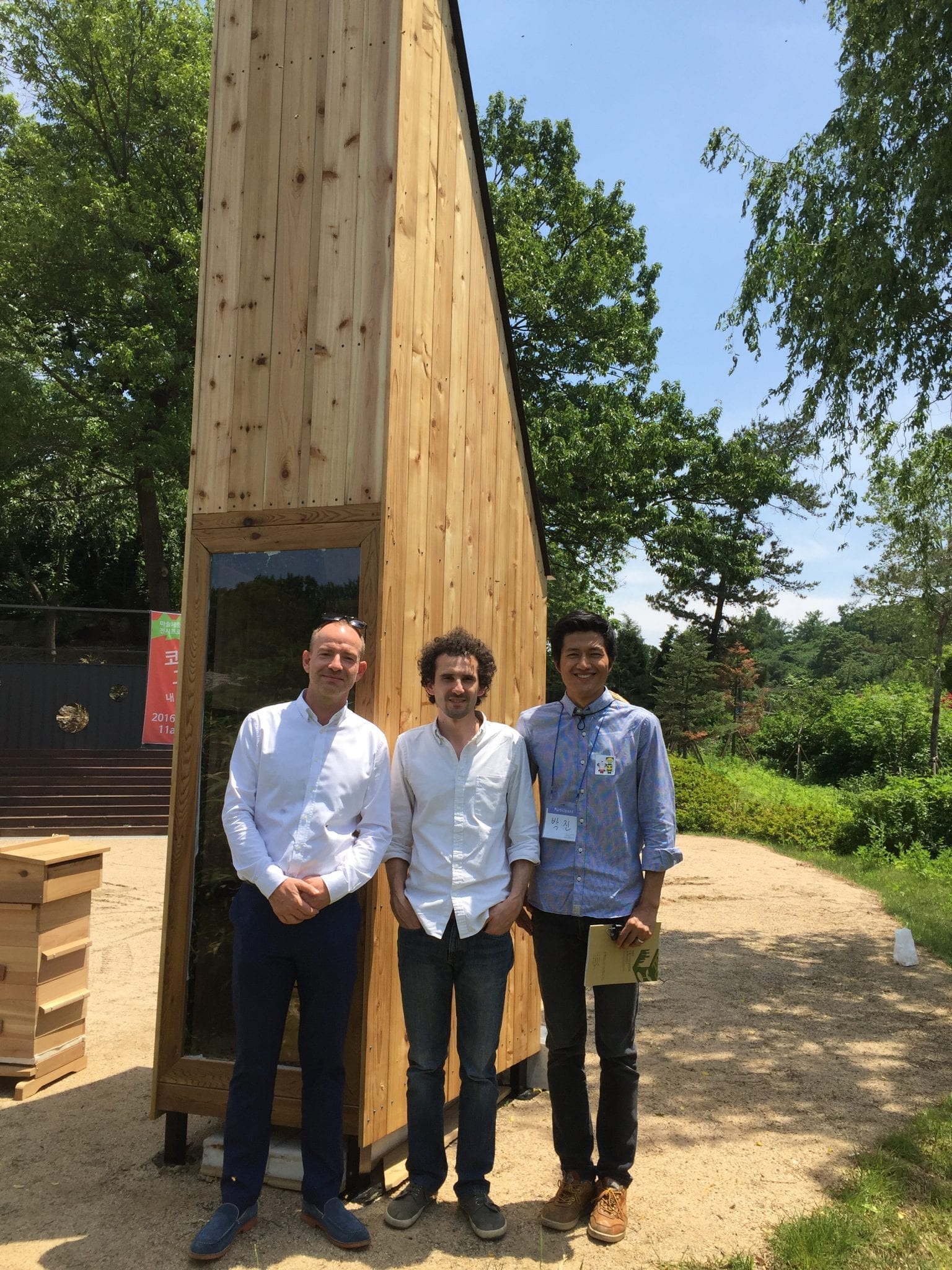
    In an effort to promote the idea of urban beekeeping and to provide information about its environmental benefits, Bolloré Logistics Korea recently sponsored a beehive structure called Honey Factory, in Seoul, South Korea.

    Currently installed in Seoul Children’s Grand Park, it was first introduced in Asia at the 2016 International Conference on Urban Agriculture during The 5th Seoul Urban Agriculture Expo that took place last May 19-22.

    Designed by Italian industrial designer Francesco Faccin, this wooden beehive has a 4.5-meter chimney that keeps curious children safe from the bees. It also protects the bees from harm due to bad weather and helps keeping it at constant temperature with optimal ventilation. Honey Factory is an ideal beehive for city parks as a standard hive can cover a radius of three kilometers.

    The first Honey Factory has also been operating since 2015 installed in the garden of the Triennale Design Museum in Milan, Italy, and carries out educational activities as well as producing great urban honey.

    This action is fully in line with the biodiversity action plan put into effect within the Bolloré Logistics Business Unit. Bolloré Logistics’ biodiversity strategy has three fundamental pillars based on the ARC concept (Avoid / Reduce / Compensate):

    (1) Embracing biodiversity as one of the company’s environmental concerns;

    (2) Working with customers and suppliers on biodiversity issues and the impact of our activities;

    (3) Make our sites models for biodiversity, all over the world.

    By sponsoring the first Honey Factory in Asia, Bolloré Logistics hopes to increase efforts to protect bees, as they play a vital role in maintaining biodiversity.