Tag: asia

  • Netflix teams with Globe in the Philippines

    Netflix teams with Globe in the Philippines

    Netflix has entered into a partnership with Globe Telecom, to provide access to viewers the Philippine telco’s mobile or broadband service.

    Globe customers will be able to subscribe to Netflix through Globe, and enjoy its content anytime, anywhere, on nearly any internet-connect screen, while conveniently charging the monthly subscription to their Globe mobile or broadband accounts.

    “The Filipino’s swift adaption to the digital lifestyle and our shift to smartphones also changed the way we enjoy entertainment,” said Globe chief commercial officer Albert de Larrazabal.

    “Our partnership with Netflix gives us this extensive library that will allow us to give our customers their much-awaited TV and movie titles whether they are at home or on-the-go,” said Larrazabal.

    Tony Zameczkowski, Netflix VP of business development in Asia Pacific, said Netflix content is now available to over 81 million members in 190 countries.

    “Our partnership with Globe brings us closer to consumers who love entertainment and enables us to connect even more Filipinos to our top-quality Netflix original shows and movies like Marvel’s Daredevil, Orange is The New Black, Narcos and many more,” said Zameczkowski.

    Netflix will also soon be available to customers on Globe’s new customized Broadband plans. Customers can now mix and match their preferred internet speeds that can be bundled with access to  content and entertainment devices ranging from smart HD TVs, speakers, streaming devices, gaming consoles and even security cameras.

  • Singapore’s EDB, MasterCard enter smart city alliance

    Singapore’s EDB, MasterCard enter smart city alliance

    The Singapore Economic Development Board has entered an agreement with MasterCard to help Singaporean companies build innovative solutions in urban mobility, tourism and trade.

    The announcement was made at the World Cities Summit 2016 being held this week at the Sands Expo & Convention Centre, Marina Bay Sands in Singapore.

    The two parties said they will focus on tackling some of the biggest urban challenges of our time in the next two years: how to promote mobility, tourism and trade while enabling seamless experiences and sustainable growth.

    MasterCard and the EDB in partnership with other Singapore-based companies plan to work together to design and build technology platforms in the three mentioned.

    In tourism, the goal is to help Singapore residents and visitors navigate the city state’s attractions easier and in a more connected way. In urban mobility, the platform will strive to ensure that residents and visitors have an easy time using the local transit system. In trade, the goal is to digitize and automate how companies buy, sell and pay each other.

    For each of these three areas, solutions will be designed and developed out of Singapore, further enhancing Singapore’s ability to create innovative products and services which are exportable and can be globally deployed.

    “We are happy to work with MasterCard to enable the creation of new solutions in the identified themes. This is in line with EDB’s drive for Singapore to be a hotbed for innovation and creation of new businesses, which in turn will contribute to economic growth and the creation of good jobs,” said Kelvin Wong, assistant managing director at EDB.

    In major cities around the world including London, Athens and Bogota, MasterCard is already working with local authorities and other technology companies to make public transport more accessible and more efficient.

    Ari Sarker, co-President MasterCard Asia-Pacific: “For many years, Singapore has been setting the benchmark for what it means to become a smart city and a smart nation.

    Since 2012, Singapore has been one of MasterCard’s global R&D Centers (MasterCard Labs) – which most recently launched the first commerce application for SoftBank Robotics’ humanoid robot Pepper.

    Earlier this year, MasterCard also teamed up with IBM to offer smaller merchants in Singapore and across the Asia-Pacific region market insights that integrate IBM Watson Analytics with insights based on aggregated and anonymized transaction data through MasterCard Advisors Local Market Intelligence (LMI).

  • Airtel cleared to buy 4G spectrum from Aircel

    Airtel cleared to buy 4G spectrum from Aircel

    India’s Bharti Airtel has received approval for its 35 billion rupee ($521.2 million) acquisition of 4G spectrum from Maxis-owned Aircel.

    The Telecom Ministry has agreed to allow Bharti Airtel to acquire 20 MHz of 2300-MHz spectrum in eight of India’s 22 telecoms circles.

    Airtel announced in a stock exhange filing that it has now concluded the acquisition in six of the eight circles – Tamil Nadu, Bihar, Jammu and Kashmir, West Bengal, Assam and North End.

    The operator announced it will issue a new market update once the transactions are closed for the remaining two circles of Andhra Pradesh and Orissa.

    Airtel was required to surrender 1.2 MHz of spectrum in one circle as the acquisition would have left the company is breach of regulations limiting operators from holding more than 25% of the total spectrum allocated in a single circle, sources told Press Trust of India.

    But Maxis, which owns 74% of Aircel, is facing legal action from an activist lawyer over proposed deals with Airtel and RCom. The lawyer, Prashant Bhushan, had called for the spectrum.

  • Smart commences enhanced Wi-Fi project

    Smart commences enhanced Wi-Fi project

    Smart Communications is rolling out enhanced WiFi to the Philippines’ major transportation hubs, government offices and key business establishments.

    The PLDT subsidiary has earmarked close to 1 billion pesos ($21.2 million) for the service expansion. The investment forms part of PLDT’s 43 billion pesos in capital expenditure for 2016.

    Smart said its free WiFi public hotspots are currently undergoing upgrades in all the four terminals of the Ninoy Aquino International Airport in Pasay City; Francisco Bangoy International Airport in Davao; Iloilo International Airport; Bacolod-Silay International Airport in Negros Occidental; and Dumaguete-Sibulan Airport in Negros Oriental.

    It  has also been expanded to cover more public areas such as city halls, schools, and establishments such as malls, restaurants, and coffee shops, and  terminals of major bus companies.

    Eric R. Alberto, Executive Vice President at PLDT and Smart, and ePLDT President and CEO, the aggressive rollout of the Smart Wifi footprint was made possible through key partnerships with government institutions and business establishments.

    Users of the service can avail of free connectivity for an initial number of minutes just to be able to check essential services such as email, after which they may purchase credits.

    Beyond providing internet access to as many people as possible, Smart WiFi is also designed as an essential tool for small and medium enterprises and institutions.

    “WiFi connectivity has been proven to contribute to business growth by equipping SMEs and various organizations with an indispensable tool to engage customers, build loyalty, and gather significant information that will help them understand customer needs,” said Alberto.

  • One more Japanese retail brand comes to Vietnam

    One more Japanese retail brand comes to Vietnam

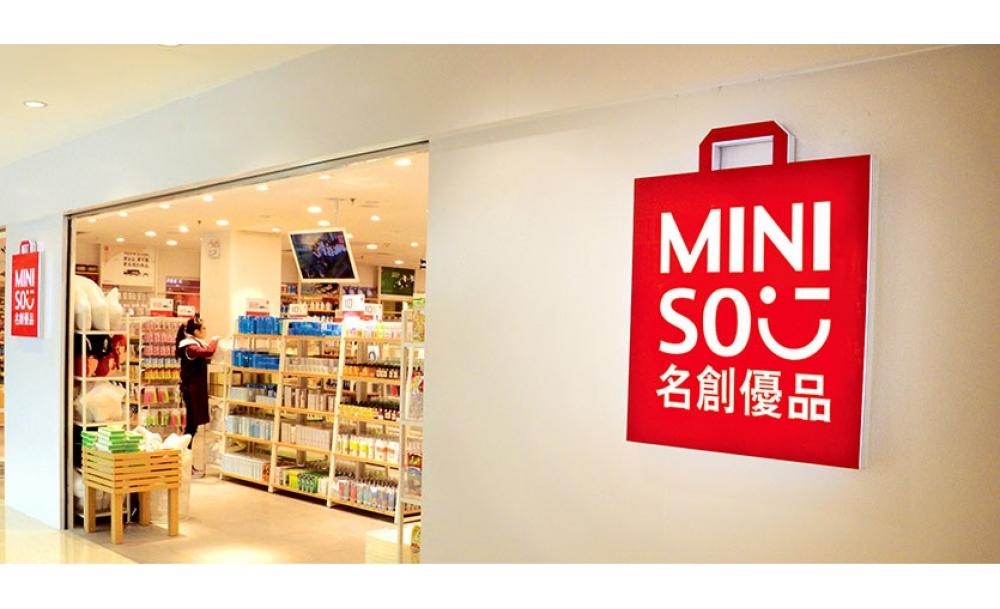
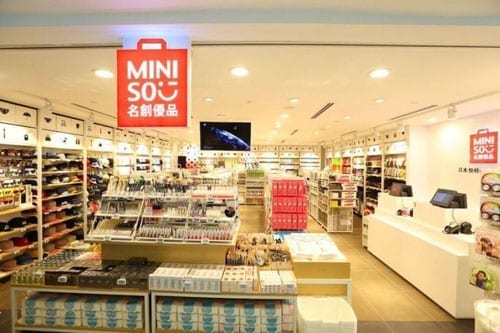
    Miniso, a Japanese lifestyle and fast fashion brand that sells merchandise such as homeware, bags and electronics at low prices, will be in Vietnam through a franchise deal inked with Vietnamese group Le Bao Minh.

    Le Thi Ngoc Hai – Chairwoman of Le Bao Minh Group – said the two sides signed the franchise deal in April 2016. “In August, we will open the first three stores in Hanoi and the number will double after a month. At the end of this year we will have 13 stores in Hanoi, Ho Chi Minh City, Da Nang, Vinh, Can Tho and Hai Phong,” she said.

    Le Bao Minh is the exclusive distributor of Canon brand in Vietnam.

    Explaining the group’s expansion into the retail sector, Hai said this plan has been implemented for three years.

    “We set up a team of experts to find opportunities for cooperation from world-renowned brands. When learning about Miniso, we find its appropriate to Vietnamese people. This Japanese brand has been very successful in Korea, Malaysia, China, the Philippines, and Thailand,” Hai said.

    Hai said with its own characteristics, Miniso will not directly compete with other retail brands in Vietnam. The targeted customers of Miniso are young people. This will be a new retail model in Vietnam.

    This group aims to open 200 shops in almost all provinces in Vietnam, creating stable jobs for about 5,000 workers in the next 5 years.

    miniso vietnam

    Miniso was founded in Japan in September 2013 by Miyake Jyunya and his Chinese partner and president of the company, Ye Guo Fu. They opened Miniso’s China office in Guangzhou the following month.

    Mr Jyunya leads a design team of about 30 in Japan, while the brand and business development team is based with Mr Ye in Guangzhou.

    The company’s first priority is to globalize the brand as they see greater business potential in other countries.

    To date, there are more than 1,110 stores in China, 25 in Hong Kong and four each in Macau and Japan. The Dubai store is currently under construction and the company will be expanding to countries such as Vietnam, Malaysia, South Korea, the United States and Italy.

    The company has increased its revenue five-fold in the past three years and reported a revenue of US$1 billion last year.

  • China’s large retailers report slower growth in 2015

    China’s large retailers report slower growth in 2015

    China’s large retailers registered slower growth last year, with brick-and-mortar stores under continuous pressure due to booming e-commerce, a report showed Thursday.

    The sales volume of the country’s top 100 retailers topped 4.13 trillion yuan ($613.6 billion) in 2015, up 22.4 percent year on year, down by 3.8 percentage points compared with 2014, according to a report released by China General Chamber of Commerce, a retail industrial guild and retail market data provider.

    Among them, brick-and-mortar stores posted a continuous slowdown in growth, with sales only rising 3.2 percent year on year.

    Chinese Internet giant Alibaba’s T-mall e-commerce platform was the top seller last year, followed by JD.com and Suning.com.

    The report pointed out that foreign retailers saw their market share in China decrease further last year, with fewer foreign players making it into the top 100, and slower sales growth.

  • Troubles may mount for Indian smartphone vendors and you can blame China

    Troubles may mount for Indian smartphone vendors and you can blame China

    It’s going to be a lot tougher to buy smartphones in India around the festive season beginning October, a time when Indians buy the maximum, fancy gadgets included.

    The reason is really very simple, plain economics-a demand-supply mismatch. There is, as of now a glaring shortage of mobile components in China, the country which sells the maximum number of smartphones in India, through companies like Xiaomi, LeEco, Huawei, Oppo, etc.

    Many Chinese manufacturing units in China have shut shops due to new technology, which requires more investment and hiring labour at higher rates.

    The display panel shortage comes as some of the panel makers, especially for the LCD displays which are largely used in the low-end smartphones and make up for majority of the smartphones sold in India, have shut shop recently, while others have not had significant increase in capacity.

    This is further aggravated by the fact that consumers are moving towards larger screens, 5″+ and especially at 5.5″, so there are fewer glass panels are coming out from the same capacity.

    Even though top Chinese handset and component makers mulled over investing around $3 billion in India, the country is still dependent on the Dragon nation.

    Some of the key components such as screen displays, 3G SOCs and flash memory will be short in supply, hitting the production plans of many vendors in the Indian market.

    “This is likely to impact local Indian vendors, the small ones as well as the heavy weights, more than it will impact the global vendors such as Samsung or Apple, who have a more secure supply chain, and Chinese vendors such as OPPO, vivo, Lenovo, Xiaomi and Huawei, who are able to secure better deals due to the large volumes they can commit,” said Kiranjeet Kaur, Research Manager Mobile Phones IDC Asia/Pacific.

    “The local country vendors have a disadvantage in this case. This shortage could also possibly lead to longer time to market and increased costs, and some of the costs may eventually get passed on to the consumers,” she added.

    It is noteworthy that Chinese companies such as Techno, Gionee, Coolpad, Holitech, Wingtech, Camera King, Galaxy Core, Poxiao, Vivo and Sprocomm, which took part in ‘China-India Mobile Phone & Component Manufacturing Summit’, explored avenues to tap the existing and emerging opportunities.

    “Going by the encouraging response of Chinese companies and definitive joint collaboration talks between the Indian and Chinese mobile and handset manufacturers, Chinese investment of $2-$3 billion (roughly Rs. 13,360 crores – Rs. 20,040 crores) over the next two years looks like a real possibility along with employment for one-two lakh people” Pankaj Mohindroo, national president, Indian Cellular Association (ICA), had said.

    However, IDC expects the Indian smartphone market to still pick up in Q2 of this year, with further gains coming in Q3.

    Jaipal Singh, Market Analyst Mobile Phones IDC India, said, “China-based vendors have extended their retail presence in the larger part of India and getting the shelf space along with the Indian vendors. Even as some of the eTailers are focusing more on profitability, which could mean lesser discounts this season, we believe the China-based vendors with presence in retail and push from the eTailers will drive the market this year.”

    The China-based vendors had 24% share in the Indian smartphone market in 2016 Q1, up from 12% a year ago. Almost two-thirds of their sales takes place through the online channels.

  • HTC 10 will launch in Malaysia on 14 July with RM 2799 price tag

    HTC 10 will launch in Malaysia on 14 July with RM 2799 price tag

    HTC Malaysia has announced that HTC 10 will be launched in Malaysia on 14 July 2016. The HTC 10 will be sold with the retail price RM 2,799 for the 32GB version.

    HTC 10 had been spotted at the SIRIM database in June featuring specifications such as 5.2 inch QHD screen, powered by Snapdragon 820 and equipped with 4GB of RAM and 32GB of storage.

    htc-10-rear

    HTC 10 has 12MP UltraPixel 2” f/1.8 rear camera with optical image stabilization and laser autofocus support and the front camera is using a 5MP Ultrapixel image sensor.

    The HTC 10 adopts a 3,000 mAh capacity battery that support Quick Charge 3.0 and it also features USB Type-C. The fingerprint sensor is at the front panel and it is running Android 6.0 Marshmallow with HTC Sense UI.

    In 11street , the HTC 10 is available for pre order now with the retail price of RM 2,799 for the 32GB model.


  • French sports equipment store Decathlon making big foray in Malaysia

    French sports equipment store Decathlon making big foray in Malaysia

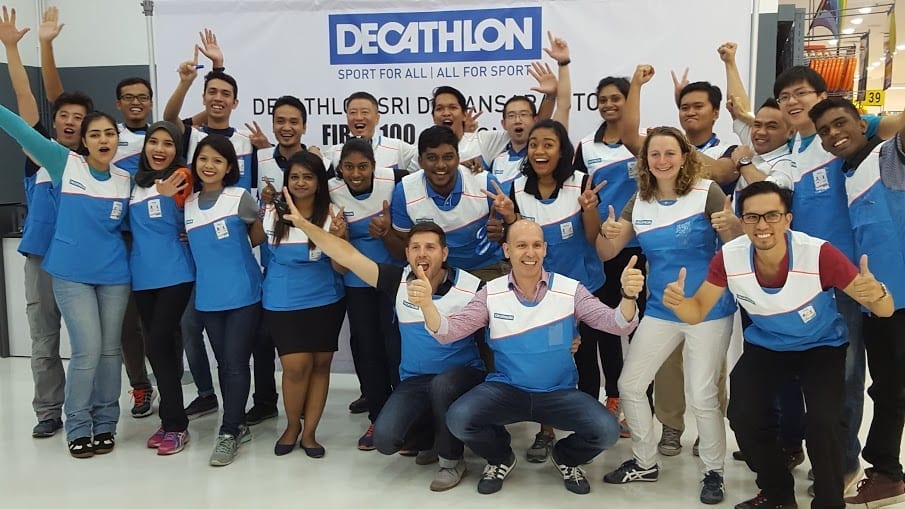
    French sports equipment chain store, Decathlon, is embarking on an aggressive expansion in Malaysia by targeting to open up to 60 stores within the next decade. Decathlon Malaysia chief executive officer Tom Meng said the expansion was in line with the company’s global strategy to triple its stores worldwide to 3,000 in the next 10 years from 1,000 currently.

    “For the first three years in Malaysia, we will open 10 stores with at least five in the Klang Valley,” he told Bernama at the launch of the company’s maiden Malaysian store in Kuala Lumpur recently. He, however, declined to reveal the investment commitment for the expansion.

    Meng said the company would also expand to other locations nationwide with Penang and Johor among the targeted destinations. He said the company’s strategy in the country was to open large stand-alone stores with retail areas of up to 6,000 sq m and offering only in-house brands. “Currently, we have over 20 such in-house brands,” he added.

    On its first store, Meng said the outlet, classified as a “retailer flagship store”, covered an area of over 2,500 sq m and offers more than 95,000 apparel, equipment and footwear products at competitive prices.

    Established in 1976, Decathlon currently has a presence in over 30 countries and has a staff of 70,000 globally. Malaysia is the third country in Asean to house a Decathlon store after Singapore and Thailand.

  • Subdued tourism and weak retail sales likely to hurt Hong Kong economy

    Subdued tourism and weak retail sales likely to hurt Hong Kong economy

    In the first quarter of 2016, Hong Kong’s economy had contracted 0.4 percent on sequential basis and grew 0.8 percent on year-on-year basis. This was the first contraction since 2014 amidst weak retail sales and trade sectors, sluggish consumer demand and cautious business spending.

    Fewer visitors and subdued tourist expenditure further weighed on retail sales in April. Moreover weaker trade growth led to high jobless rate in the trade and wholesale sector. Downtrend in retail and tourism sector continue to be present because of fewer tourists and tepid spending and cautious consumer confidence.

    Hong Kong’s retail sales’ value dropped for the 14th consecutive month in April. It declined 7.5 percent year-on-year to HKD 35.2 billion. The retail sector continues to be in doldrums amidst fewer tourists and weaker tourists spending. The luxury segment has weighed majorly on the nation’s retail sales, with the sales value of watches and jewellery, declining for the 19th consecutive month by 16.6 percent in April.

    Given the dull outlook for the country’s retail sector, Hong’s Kong’s retail property market might drop further even as retail shop rentals and prices declined 1.3 percent year-on-year and 7.8 percent year-on-year respectively in March. Additional rental concession and higher vacancy rates in core business district might be likely, noted OCBC Bank in a research report.

    In April, jobless rate in the retail sector grew to 5.3 percent amidst subdued tourist activities and luxury consumption. This was disappointing as compared to an average of 4.4 percent in 2014. This is due to weak business performance in retail sales in the midst of contracting tourist spending. The Hong Kong’s retail sector is expected to be limited by subdued inbound tourism activities amidst downturn in Chinese economy and external uncertainties. This might be a drag on employment in the retail sector.

    “Overall, HK’s labor market may worsen further with unemployment rate expected to rise to 3.5 percent over 2016,” added OCBC Bank.


  • End of Growth for Hypermarkets?

    End of Growth for Hypermarkets?

    Hypermarkets, which offer a wide range of products under one roof, once prospered in Korea. Recently, however, sales growth has stagnated with a rapid change in consumer behavior. 

    According to industry watchers, hypermarkets in Korea anticipated high growth this year, following poor performance in 2015 from widespread public fear of MERS in June. But their high hopes have proven to be overly optimistic. 

    Lotte Mart, one of Korea’s leading hypermarket franchises, only saw 0.2 percent year-over-year sales growth in June. Homeplus, Korea’s second largest retailer, even showed negative sales growth. 

    E-mart, a subsidiary of Shinsegae, and the largest retail hypermarket in Korea, also recorded negative growth in May (4.4 percent), but improved its performance in June, although not as much as anticipated. 

    “We can’t disclose our growth rate for June because of government regulations, but considering the base effect caused by the MERS incident, the rate is far from our expectations,” said an E-mart official. “The industry itself is at risk, and its low growth has become a fixated phenomenon.” 

    Among the three retail giants, Homeplus has been suffering most from negative growth in recent years, and starting this year the company decided not to disclose its monthly growth rate in order to avert potential negative influence that it may further pose in the industry.

    “The company policy is not to disclose monthly growth rates,” said a Homeplus official. “But it’s true that the industry is suffering.” 

    Industry experts point to changing consumer trends, with preference rapidly shifting from offline to online purchasing. 

    “There are so few customers at these hypermarkets nowadays,” said an industry official. “Department stores, on the other hand, are more crowded because they often deal with high-end products. But a rising number of consumers are shifting over to e-commerce platforms to purchase daily necessities, which are the main products offered by hypermarkets.”


  • Korean cosmetics makers fear losses from THAAD deployment

    Korean cosmetics makers fear losses from THAAD deployment

    South Korean retailers and cosmetics companies are closely watching China’s moves after Korea and the US decided to deploy an advance missile defense system in the country on July 8.

    Neighboring China lodged a swift protest against the decision announced in the morning which is expected to further heighten geopolitical risks.

    Local cosmetics makers and duty-free shops are on alert as they worry about losing Chinese market and consumers who account for a growing portion of their revenues.

    Customers shop for cosmetics at a local duty-free shop.

    On the day, cosmetics stocks like LG Household & Health Care and AmorePacific plunged more than 4 percent.

    “The THAAD issue was a huge blow to Cosmetic stocks earlier this year and it happened again,” an official at a cosmetics company said.

    South Korea’s cosmetics exports to China doubled on-year to US$1.08 billion in 2015, which accounts for nearly 40 percent of global sales, according to the Korea International Trade Association. South Korea is the second-largest cosmetics exporter to China following France.

    “There hasn’t been an immediate impact so far as China hasn’t took any trade-related actions but we still have to keep an eye on the issue,” she said.

    If ties between the two countries weakens, China could tighten regulations on safety and tariff issues, experts said.

    Retail companies, which started to see a rebound in the number of Chinese tourists to Korea after a sharp drop due to the Middle East respiratory syndrome outbreak hit the country last year, are in panic mode.

    “We are worried over the possible drop in the number of tourists coming here if political conflicts drag on for long,” said an official at a duty-free store in Seoul.


  • Thailand Future Fund secures adviser

    Thailand Future Fund secures adviser

    Vorapak Tanyawong, president of KTB, said yesterday that the financial adviser would propose the options for fund mobilisation to the government, with KTB having the nationwide network to distribute fund units to retail customers.

    The capital from selling fund units will be used to finance infrastructure projects, starting with the high-speed-rail project from Bangkok to Nakhon Ratchasima province.

    Separately, KTB yesterday unveiled the KTB PromptPay campaign, which offers prizes worth a total of Bt9 million.

    The campaign will run from July 15 to October 15.

    Songpol Chevapanyaroj, senior executive vice president and head of the bank’s global transaction banking group, said the campaign was part of a strategy to get existing customers to use KTB as their main bank.

    Under the scheme, the bank said fund transfers would be more convenient because there would be no fee if the amount was less than Bt5,000, while the cost of cash management was reduced as well.

    Vorapak said the benefit of being the main bank for customers was the cross-selling of products.

    The bank said it had received more than 300,000 PromptPay pre-registrations since it began accepting them on July 1.

    Official registrations for the scheme, which is designed to enhance e-payments, will be accepted from July 15.

    KTB said it had about 17 million depositors, and it hopes to bring in 8 million more under the campaign.

    Vorapak said the bank’s upcountry customers were more aware of using automated teller machines and digital banking, with transactions at branches declining, including those for retail vendors’ lottery reserves.

    He said retail vendors were migrating to booking lottery tickets via ATMs and KTB’s online channels because they could access reserves from those channels more quickly than they could through the branches.

  • Sony’s GEM expands into SE Asia

    Sony’s GEM expands into SE Asia

    GEM, the joint venture entertainment channel between Sony Pictures Television (SPT) Networks and Nippon Television Network (Nippon TV), is expanding into new Asian markets.

    The channel will launch in Indonesia, the Philippines and Singapore, making it available to viewers on over 10 pay-TV platforms across six markets in Asia.

    From August 1, it will roll out on Indovision, MyRepublic, Nexmedia, Skynindo and Transvision in Indonesia, ACCION’s distribution network of provincial cable affiliates in the Philippines, and Singtel TV in Singapore.

    GEM is already available on PPCTV in Cambodia, nowTV in Hong Kong and TrueVisions in Thailand.

    Since its launch in 2015, GEM has carved a niche in the premium Asian entertainment space offering first-run and exclusive dramas, comedies and variety entertainment shows from Japan and other northeast Asian markets.

    “We’re focused on taking GEM beyond the screen and into the lives of fans across the region via talent tours, local filming and fan meets. Our new series, ‘We are Asia – Dean Fujioka & Friends,’ marks the first original series for GEM, and will pave the way for more localized content in the future,” said Ang Hui Keng, SVP and GM of Sony Pictures Television Networks in Asia.

    In addition to the channel’s first original production, viewers can look forward to Nippon TV’s “The Music Day 2016 – Beginning of Summer”, which brings together Japan’s top artists in a festival that celebrates the very best of J-pop.

  • Global pay TV subs rise 2% in Q1

    Global pay TV subs rise 2% in Q1

    The worldwide number of pay television subscribers reported by informitv’s Multiscreen Index rose by 6.9 million or 1.7% in the first quarter of 2016.

    Three in five (60%) of the 100 leading pay-TV services in the latest index report showed net subscriber gains in the quarter.

    The greatest quarterly subscriber gains were in the Asia-Pacific region, where there were 5.35 million subscriber additions. Six operators in India added a total of 4.71 million between them, with SITI Cable Network reporting 1.1 million new digital subscribers.

    The 10 services with the largest quarterly subscriber losses had just under a million fewer television customers between them. They were headed by AT&T U-verse, which shed 382,000 subscribers, although these losses were almost matched by gains of 328,000 for satellite subsidiary DIRECTV.

    The top 10 services from the United States in the index closed the first quarter with just 18,000 subscribers more than at the start of the year, but they were down by over 880,000 year-on-year.

    In the United Kingdom and Ireland, Sky and BT added 136,000 television subscribers, while Virgin Media and TalkTalk lost 21,000.

    Canal+ in France lost the most subscribers in Europe, with its numbers declining by 200,000. Orange and Free added 234,000 subscribers in France.

    Also, 81% of around 400 million homes subscribing to the services covered by the index now have access to some form of multiscreen viewing. The actual adoption and usage of multiscreen services is much lower.

    “North, Central and South America still contribute over a third of the subscribers in the index,” said informitv analyst Sue Farrell. “They gained just 0.54 million subscribers, compared to 1.41 million in the first quarter a year ago.”

    “The Multiscreen Index shows an overall gain in subscribers, with more services gaining rather than losing television subscribers,” said the editor of the report William Cooper. “Although mature markets like North America are relatively saturated, it shows that there is still room for growth in other regions.”