Tag: asia

  • Red Bull apologises to Indonesia over offensive ad

    Red Bull apologises to Indonesia over offensive ad

    Red Bull has publicly apologised for shooting a commercial in which an athlete performed acrobatic stunts across one of Indonesia’s ancient holy temples, an official said Thursday.

    Red Bull has issued an apology in Indonesia’s national newspapers admitting it shot an advert at the 9th-century Borobudur temple “without permission from the appropriate authorities”

    The energy drink manufacturer issued an apology in national newspapers admitting it shot the video at the 9th-century Borobudur temple “without permission from the appropriate authorities”.

    The video — in which a famous “free running” athlete is shown jumping between the temple’s stone stupas — triggered outrage in Indonesia, where Borobudur is a revered Buddhist site and national icon.

    In one scene, the athlete is seen walking past a sign clearly stating “No Climbing” in both English and Indonesian before performing acrobatics throughout the UNESCO-listed heritage site.

    The video was shot secretly despite the crew having been issued a warning by temple guards, Borobudur Conservation Agency head Marsis Sutopo told AFP.

    “They must have shot again while our guards were not looking,” he said.

    The video, uploaded online on March 18, sparked outrage within Indonesia and prompted the government to threaten a legal suit against Red Bull.

    Authorities later issued a warning to the drink company after determining no physical damage had been incurred.

    Red Bull met with government officials in early June and agreed to place formal apologies in national newspapers.

    “We want to set an example because we painstakingly try to conserve this historical site,” education ministry official Hilmar Farid told AFP.

    “It was obvious as there was a “No Climbing” sign there too.”

    Red Bull have also been asked to shoot a new video explaining the importance of protecting holy sites, Farid added.

  • Starbucks barista from Indonesia Ryan Wibawa competes in the World Brewers Cup finals

    Starbucks barista from Indonesia Ryan Wibawa competes in the World Brewers Cup finals

    “It was like a dream come true,” said Wibawa, a Starbucks barista from Indonesia.  I felt very humbled and honored to represent my country in an international competition. The experience was the best teacher.”

    Wibawa was matched against 36 competitors from all over the world at the championships, which took place from June 23-25 in Dublin, Ireland. As part of the competition, he crafted three coffee beverages that were judged on aroma, flavor, taste, acidity, body and balance. Wibawa also had to impress the judges with his customer service skills.

    “The competition was hard, but it was a great challenge for me,” he said. “No words can describe the feeling,” he said. “From every competition I gain something, new knowledge, new friends and new skills.”

    Although a competitor from Japan took first place, Wibawa is proud to have ranked among the top 25.

    Wibawa was first exposed to coffee when he joined Starbucks two years ago. He learned quickly and developed an enthusiasm for all things coffee, which led to being selected as his district’s coffee master in 2014. A year later, he won Starbucks Indonesia’s Barista Championships and ranked number one in the Indonesian Brewers Cup Championship. In February 2016, he placed in the top three at the China and Asia Pacific (CAP) region’s Starbucks Barista Championships. His vast experience paved the way for competing in Dublin.

    “Participating in a world competition definitely had a different feeling,” said Wibawa. “The competitors from all around the world had excellent coffee skills. It was a tough competition and a great learning experience.”

    When Wibawa is not competing, he works at Indonesia’s first Starbucks Reserve store in Jakarta, where he delights customers with his coffee craft. He also shares his expertise by training other Starbucks partners at Indonesia’s third Starbucks Reserve location in Bandung.

    “I am very lucky and grateful to have a very supportive family, friends and all Starbucks partners,” he said. “They gave me the strength to compete in the World Brewers Cup competition.”

  • Capital Financial Indonesia Eyes Rp 715b From July IPO

    Capital Financial Indonesia Eyes Rp 715b From July IPO

    Sinarmas Sekuritas was appointed as the lead underwriter of the company’s share sale, with assistance from Jasa Utama Capital, Yulie Sekurindo, Phillip Securities Indonesia, Panin Sekuritas, Valbury Asia Securities and Erdikha Elit Sekuritas.

    Kirana Cemerlang Abadi currently owns 99.9 percent of the company’s shares. If the IPO plan goes smoothly, Kirana’s holding will be diluted to 52.38 percent.

  • Ngurah Rai Airport offers additional flights for Lebaran holidaymakers

    Ngurah Rai Airport offers additional flights for Lebaran holidaymakers

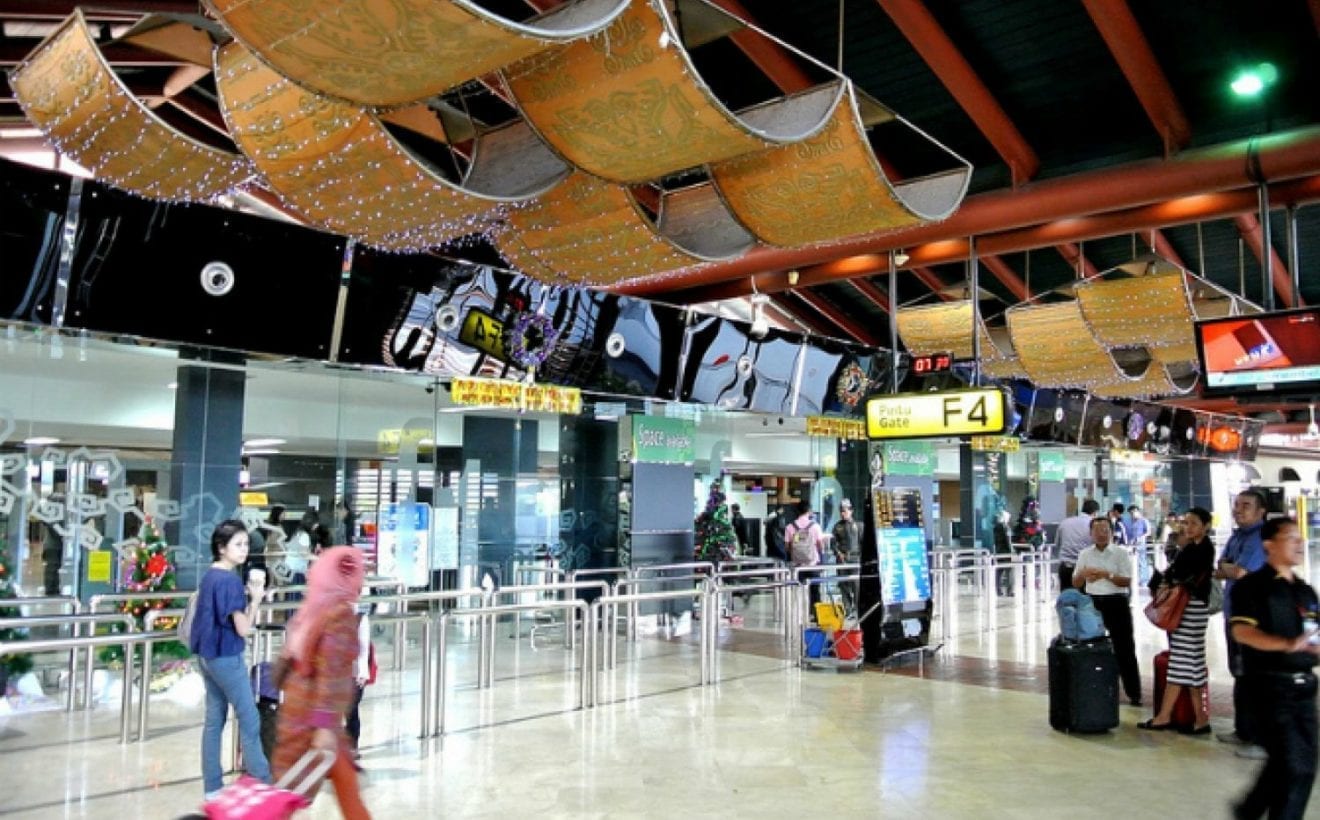
    Some airline companies at the Ngurah Rai International Airport in Bali have started offering additional flights to handle the influx of passengers during the post-fasting Lebaran holidays.

    PT Angkasa Pura-I General Manager Trikora Harjo explained here on Tuesday that the additional flights were provided for international arrivals and departures.

    Harjo revealed that a total of 419 passengers had used additional flights for international arrivals and departures on Tuesday.

    Similar to the long Lebarang holidays in previous years, the flow of passengers at the Ngurah Rai Airport is different compared to that in other regions of Indonesia.

    The Ngurah Rai Airport is always dominated by an influx of both local and foreign tourists keen on spending the long holidays of Lebaran.

    Harjo stated that the number of departures last year had reached 119,937, while this year, it was forecast to reach 151,548.

    Referring to the growth in the percentage of domestic passengers, Harjo has estimated that the flow of departing passengers will peak during the period between six and five days before Eid.

    On June 30, six days before Eid, the number of domestic passengers departing from the Ngurah Rai Airport had reached 15,026 aboard 112 aircraft. This figure indicated a 128 percent increase compared to the previous year.

    As of July 1, five days prior to Eid, the number of domestic passengers departing from Bali was recorded at 15,771, a 105 percent rise from the year before.

    The increase in the percentage of domestic passengers was anticipated as the last working day for both public and private institutions fell on Friday, July 1.

    In this way, the travelers opted to return to their hometowns on the same day as they would get to spend more time there.

    The Ngurah Rai International Airport served 226 additional flights, proposed by seven airlines for both domestic and international routes.

  • Average internet speeds grow 12% during Q1

    Average internet speeds grow 12% during Q1

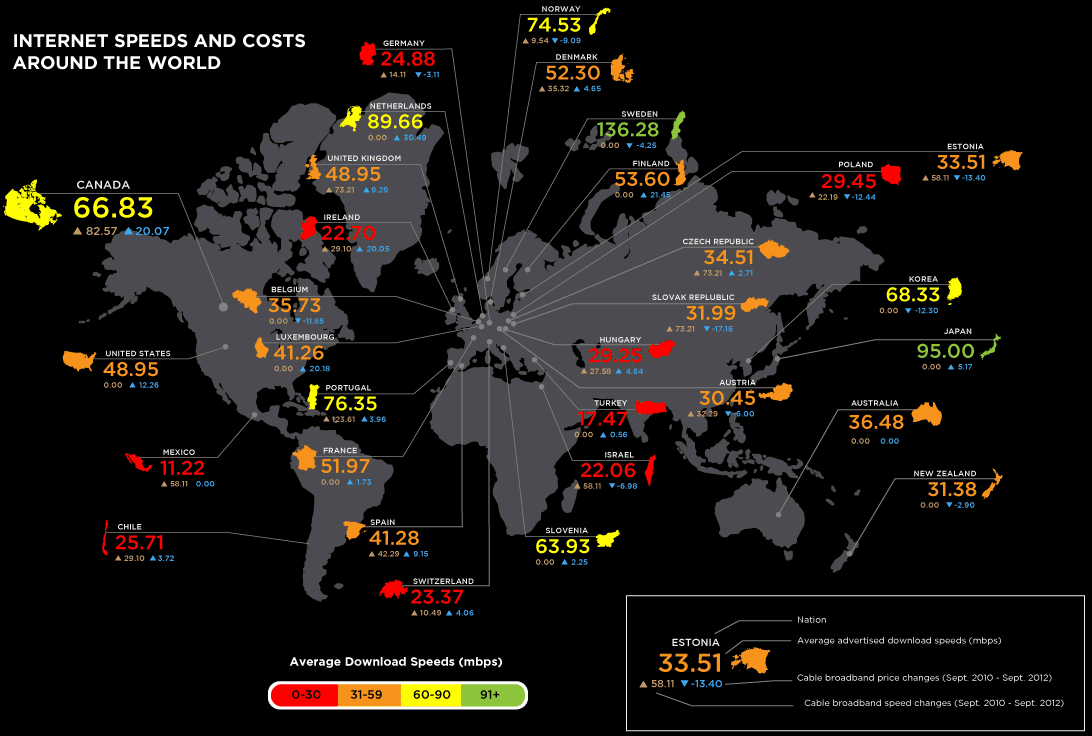
    Global average internet connection speeds grew 12% sequentially during the first quarter to 6.3Mbps, according to Akamai’s latest State of the Internet report.

    The report aslso shows that the global average peak connection speed increased 6.8% to 34.7 Mbps over the same period.

    Global broadband adoption of 10Mbps, 15Mbps, and 25Mbps connections also grew significantly during the quarter, posting year-over-year gains of 10%, 14%, and 19% at each threshold, respectively.

    Meanwhile, average mobile connection speeds ranged from a high of 27.9Mbps in the United Kingdom to a low of 2.2Mbps in Algeria during the period, while average peak mobile connection speeds ranged from 171.6Mbps in Germany to 11.7Mbps in Ghana.

    “What this means,” said Rob Morton, Director of Public Relations, Akamai Technologies, in a video message, “is that more people around the world can take advantage of video streaming with higher bit rates, resulting in a better quality viewing experience.”

    David Belson, editor of the State of the Internet Report, said the expectation is that this summer’s biggest sporting events will be watched by more online viewers than ever.

    “Global connection speeds have more than doubled since the summer of 2012, which can help support higher quality video streaming for bigger audiences across even more connected devices and platforms,” he affirmed.

    The report noted that at the country level, South Korea continued to have the highest average connection speed in the world at 29.0Mbps, an 8.6% gain over the fourth quarter of 2015, while Singapore maintained its position as the country with the highest average peak connection speed at 146.9Mbps, an 8.3% quarterly increase.

    It said South Korea also led the world across the 10Mbps, 15Mbps, and 25Mbps broadband tiers once again, with adoption rates of 84%, 69%, and 42% respectively, after seeing robust quarterly gains across all three metrics.

  • Globe defends need for 700-MHz to ISOC

    Globe defends need for 700-MHz to ISOC

    Globe Telecom has challenged the Internet Society-Philippines Chapter (ISOC) move to oppose Globe and PLDT’s proposed joint acquisition of San Miguel Corporation’s telecoms assets, including its 700-MHz spectrum holdings.

    ISOC recently wrote to the Philippine Competition Commission opposing the planned acquisition on grounds including the argument that there is nothing special about the 700-MHz band in particular.

    Globe chief technology and information officer Gil B. Genio has written his own letter to the society to clarify what the company called “erroneous facts” presented in the society’s objections.

    He said the 700-MHz band would allow the operator to expand its LTE footprint to areas that were previously unserved even by 3G.

    “The 700-MHz provides an additional capacity layer over existing 3G and LTE capacity layers using frequencies on the 1800-MHz, 2100-MHz band and the 2500-MHz bands. As a result of this layer, customers at the cell edge coverage of the high frequency capacity layers are served by the 700 MHz providing better experience to these customers,” he said.

    “As an off-shoot of these, the 3G and 4G layers using high frequency band are offloaded, providing additional capacity for better mobile data experience of our customers. Aside from its ability to carry information, the use of the 700-MHz band provides better coverage versus higher frequency bands (such as 2300 or 2600), and therefore mobile service providers can support more high speed users using the same tower or cell site footprint that currently exists today.”

    In response to ISOC’s argument that it is possible to deliver strong wireline connectivity without specturm assets, Genio said Globe has been seeking to aggressively roll out fiber in key cities.

    But he added that these efforts have been hampered by bureaucratic red tape as well as the challenges of providing effective backhaul to an archipelagic country.

    “We want to underscore the fact there has been a history of underinvestment in fixed broadband infrastructure in this country, which is why we are on catch up mode to lay down as much fiber optic cables in our primary cities and key development areas as we can,” he said.

    “Our situation in the Philippines is different compared to others as our primary means of broadband access remains wireless (mobile) broadband for now. In using wireless technology, it is more pervasive, however over the long term, it will have difficulty in matching the throughput rates or speed of fixed broadband network. Hence our desire to build more infrastructure as fast as we can.”

  • Alibaba launches internet-enabled smart car

    Alibaba launches internet-enabled smart car

    Alibaba Group has announced the launch of OS’Car, the first mass-produced internet car powered by the company’s YunOS smart car operating system.

    The company has developed OS’Car RX5 in collaboration with SAIC Motor Corp. The new car will be supported by a cloud-based platform that enables data streaming, modeling and reporting to augment the driving experience.

    YunOS provides drivers will features such as an intelligent map with accurate location tracking without Wi-Fi or GPS, as well as integrated screens including an intelligent rear-view mirror for safer driving.

    The vehicle supports voice commands – in fact audio is the primary mode for controlling the system. It can automatically recognize the driver through connected smartphones or smart watches and provide personalized services such as greetings or preferred music.

    “What we are creating is not ‘internet in the car’, but a ‘car on the internet’. This is a significant milestone in the automobile industry. Smart operating systems become the second engine of cars, while data is the new fuel,” Alibaba Group chairman Dr Wang Jian said.

    “Going forward, cars will become an important platform for internet services and smart hardware innovation. We will be embracing a world where everything is closely connected.”

    YunOS has been designed as an open platform to support third party hardware and services.

  • Singtel launches Singapore’s first OTT video portal app

    Singtel launches Singapore’s first OTT video portal app

    Singtel has expanded its media content portfolio with the launch of Singapore’s first OTT video portal app, open to the operator’s postpaid mobile customers.

    The operator’s new Cast portal will offer content from major providers including Viu and Nickelodeon, delivered over Singtel’s nationwide 4G network.

    Cast offers a choice of four content packs – premium, kids, Asian hits and Hallyu – with each priced at S$4.90 ($3.63) per month for a 12-month contract or S$6.90 per month contract-free. Customers can choose to pay an additional S$3 per month for an add-on pack including 1GB of data

    The premium pack offers a range of Korean and Japanese dramas, while the kids pack includes programming from the Nickelodeon and Nick Jr pay TV channels.

    Asian hits include popular movies from Singapore, Taiwan, Hong Kong and China, while Hallyu offers the most popular Korean entertainment.

    “Our customers are huge fans of entertainment on-the-go and we know that they want greater flexibility with what they watch and also when and how they watch it,” Singtel managing director of home consumer Singapore Goh Seow Eng said.

    “We are forging ahead in the OTT space through more strategic partnerships with strong content providers such as Viu and Nickelodeon. We look forward to partnering more top content providers to offer an ever-growing selection on Cast that will give our customers greater choice and the best entertainment experience.”

  • SGX announces independent research paper on retail sector

    SGX announces independent research paper on retail sector

    The Singapore Exchange (SGX) has launched an independent research report. The research paper covers the retail sector in four Asean countries, namely Singapore, Indonesia, Malaysia and Thailand.

    Titled “Asean Retail: Overview, Trends and Outlook, with a focus on SGX-listed Companies”, the report evaluates the growth potential for ASEAN’s retail industry in response to rising middle-class consumers, increasing spending power and rising e-commerce sales.

    The report is segmented into six retail subsectors and for each, covers an in-depth analysis of the key sector drivers and an overview of the SGX-listed companies that are in these sectors.

    There are currently 43 retail companies listed on the SGX, with a market capitalisation of $30 billion.

    According to the report, retail sales in Thailand, Singapore, Malaysia, and Indonesia are projected to collectively reach US$1 trillion ($1.3 trillion) by 2018. Asean consumers also have higher purchasing power propelled by fast-growing incomes while the e-commerce space has expanded, offering new opportunities for retailers.

    “Despite headwinds facing the retail sector recently, we recognise the need to keep investors informed of the sector’s longer-term growth outlook in ASEAN, which continues to be backed by strong demographic and macroeconomic fundamentals. The emergence of e-commerce also presents an exciting growth opportunity for the sector,” says Simon Lim, SGX Head of Equity Capital Market (Sectors).

    To download a copy of the research report, go to sgx.com/retailcluster.

  • Food Prices Spark Inflation in June

    Food Prices Spark Inflation in June

    The National Statistics Agency (BPS) head Suryamin said that inflation in June 2016 was 0.66 percent with increase in food prices as a factor. In addition, increase in air fares had contributed significantly to inflation. “An 8.27 percent increase in air fares had contributed to 0.08 percent of inflation,” he said yesterday, July 3, 2016.

    According to Suryamin, price hike occured in 38 out of 82 cities in the consumer price index (CPI) survey. Food commodity which contributed significantly to inflation was broiler chicken, which experienced price increase by 5.36 percent with 0.07 contribution to inflation. The increase occured in 74 out of 82 cities in the CPI. “Price increase occured due to price hike at the distributors,” he said.

    Suryamin said that food commodity with third highest contribution to inflation was fresh fish. Price of fish soared by 2.15 percent with 0.06 percent contribution to inflation. Other cause of inflation was broiler chicken eggs with 5.86 percent increase in price and contributed 0.04 percent to inflation. Other commodity was sugar which price had risen by 6 percent since early Ramadan. Its contribution to inflation was 0.04 percent. “Potato and carrot also contributed to inflation,” he said.

    Other commodities that contributed to inflation were rice, spinach, apple, electricity prices, gold and jewelries, and public transport fares, which contributed 0.02 percent each to inflation. Of 13 commodities that contributed to inflation, Suryamin said that only one had held back inflation. “The one that held back [inflation] was shallot,” he said.

    Director General of Horticulture, Agriculture Ministry, Spudnik Sujono has given his assurance that shallot and chili peppers supplies are safe until August.

  • Bioalpha banks on Indonesian,Chinese markets to boost growth

    Bioalpha banks on Indonesian,Chinese markets to boost growth

    Bioalpha Holdings Bhd is banking on its export markets in Indonesia and China to boost the group’s top line growth in the next two years.

    The firm, which produces halal-certified herbal and non-herbal based health supplement products, said that to date, Indonesia was its core market and expected sales from the region to grow by 50% in the next two years.

    At present, Indonesia sales made up more than 48%, or RM14mil, to the group’s turnover in financial year 2015 (FY15).

    “Indonesia’s market is still growing and in the last five years it has a compounded annual growth rate of about 37%,” managing director William Hon Tian Kok told recently.

    Hon said Bioalpha had gone into Indonesia after it recognised the huge potential in the market to offer its halal-certified products.

    “The risk in Indonesia is also lower because we have existed in the market since 2007 via our first sales office there,” noted Hon.

    But Hon has bigger plans for Indonesia, saying that the company aimed to turn its repackaging facility in the Riau province to a fully-fledged manufacturing plant in the long term.

    In May, Bioalpha’s unit Bioalpha International Sdn Bhd had entered into 60:40 joint venture with Mutia Restiana, a well-connected Indonesian to set up PT Herbal Malindo Makmur, for US$250,000.

    This was funded via internally generated funds.

    Hon said the PT Herbal’s acquisition not only solved product registration issues in Indonesia, but also enabled the group to repackage their semi-finished products in a 4,000 sq ft repackaging facility in Indonesia to be ready this August.

    Inevitably, the acquisition will also widen Bioalpa’s market share via small and medium enterprises and multinational corporations in Indonesia, and enable its existing clients in Malaysia to offer their products there, according to Hon.

    The group intends to double the number of product launches to 20 products in Indonesia by the end of 2017.

    Bioalpha’s second largest export market is China and it made up about 28% of the group’s revenue or RM8.3mil in FY15.

    While Bioalpha was backed by its strong research and development centre, Hon said the demand from China was a result of aggressive advertising and promotional activities that started in 2014.

    “We have about five original design manufacturers in Beijing.

    “And our focus will be the Muslim populated areas like Lanzhou, Xi’an, Xinjiang and Qinghai and we have identified four distributors in these provinces,” he said, adding that Bioalpla already has presence in the southern and central part of China.

    On the local front, Hon revealed that it was on the lookout to expand its retail chain of pharmacies via merger and acquisitions, with the idea of franchising them in the near term.

    Bioalpha now owns 13 retail pharmacies under the brandname Constant, mainly in the Klang Valley.

    Hon said Bioalpha bought Mediconstant Holding Sdn Bhd for RM5mil last year from Ng See Hein and Loh Peng Yeow in December last year with the aim to expand its housebrand supplements.

    “This not only reduce marketing costs but enable us to reach out to customers via new formulations,” he said. adding that domestic sales is expected to grow by 40% in the next two years.

    The company also has a 70:30 joint venture with MyAngkasa Holdings Sdn Bhd, the country’s largest cooperative organisation.

    MyAngkasa is a subsidiary of Angkatan Koperasi Kebanngsaan Malaysia Bhd that has 10,000 cooperatives under its umbrella and eight million members.

    “The earnings potential from this JV is also huge considering that the members can purchase our products on a special discount from our retail pharmacies,” he added.

    Bioalpha has its own organic herbal farms in Desaru in Johor and Pasir Raja in Trengganu.

    More than 20 types of herbs are being harvested at its 300-acre land in Desaru, Kota Tinggi.

    The other is a 1,000-acre farm in Pasir Raja, of which 123 acres are harvested, while the remaining 877 acres are currently being cleared.

    Hon said the company expected to produce about 400 metric tonnes of herbal medicines by 2020.

    The group is also known for its inhouse liquid fermentation process that is able to produce medicinal mushrooms strains.

    One of its bestsellers include tiger milk mushrooms, traditionally used to cure respiratory problems.

    Noteworthy is Bioalpha’s market capitalisation, which has more than doubled to about RM200mil now, compared to when it was first listed in the Ace Market in April, last year.

    The company has dividend policy of 30% of profit after tax and has recently proposed for a bonus issue of 166,666,666 new ordinary shares of RM0.05 each in the company on the basis of one bonus share for every three existing Bioalpha shares held at an entitlement date to be determined later.

    Hon is currently the major shareholder with a 17% stake, followed by Malaysian Technology Development Corp 16.1% interest and Perbadanan Nasional Bhd 10.3%.

    Shares of Bioalpha closed unchanged at 38 sen on Friday, arriving at a market capitalisation of RM190mil.


  • Indonesia’s Pertamina targets stakes in two Iranian oil, gas blocks

    Indonesia’s Pertamina targets stakes in two Iranian oil, gas blocks

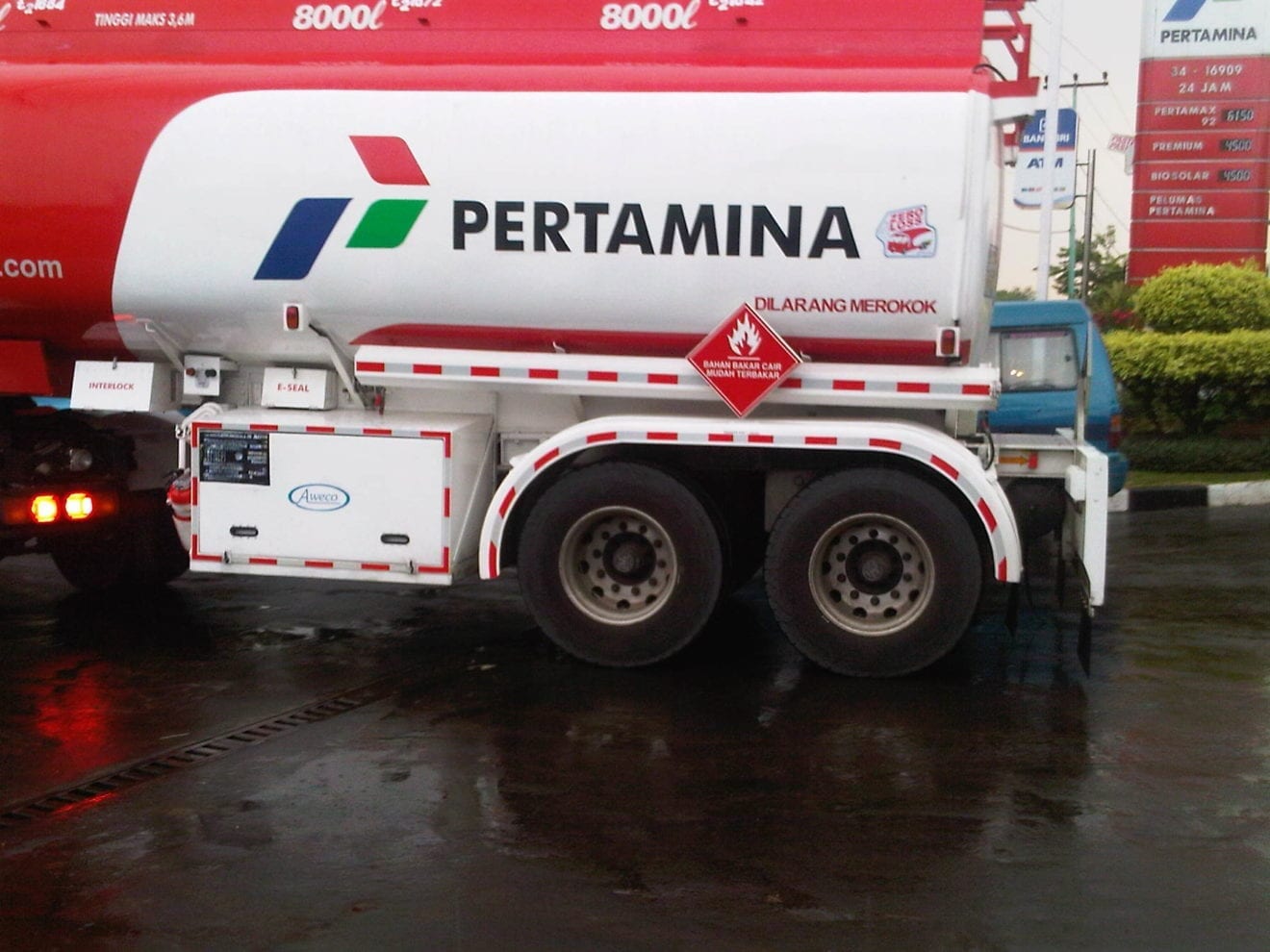
    Indonesia’s state-owned Pertamina will sign a memorandum of understanding with the National Iranian Oil Co. next month to develop oil and gas blocks in Iran.

    Under the initial agreement, Pertamina will be allowed access to data on four Iranian oil blocks, a senior company official said Friday.

    “There are two to four blocks that will be evaluated based on the initial study. Of the four, there are two blocks that will be our priority,” Syamsu Alam, Pertamina’s upstream director, said.

    Pertamina expects to get an additional production of 30,000 b/d from each block if it is allowed to acquire the blocks, Alam said.

    Indonesia and Iran have recently intensified efforts to cooperate. Pertamina and NIOC recently signed a heads of agreement for the latter to supply refrigerated LPG to the former. Pertamina is also planning to import a 1-million-barrel cargo of Iran Light crude oil in the third quarter of this year to test the grade at its 348,000 b/d Cilacap refinery in Central Java

    Pertamina has allocated a capital expenditure of $5.31 billion this year, of which 72% is for upstream business. The company plans to spend $2 billion on upstream mergers and acquisitions this year.

    The state-owned company’s overseas blocks produced 83,000 b/d in May 2016 compared with 75,000 b/d in May last year. The increase mainly came from the company’s 10% stake in the West Qurna block in Iraq.

    Pertamina has three producing oil and gas blocks located in Malaysia, Algeria and Iraq.

    The company produced 306,250 b/d of crude in Q1 2016, up 14.5% year on year. Gas production rose by 22.2% year on year in Q1 this year to 1.98 Bcf/day, Alam said. The company is targeting production of 327,000 b/d of crude and condensate and 1.926 Bcf/d of gas in 2016. The figure is equal to 659,000 b/d of oil equivalent, up 10% year on year.

    With limited options domestically, the company is looking at growing its production via acquisition of overseas blocks. It is in advanced talks with Russia’s Rosneft to take a stake of about 10%-15% in two oil gas blocks in Russia. The company is aiming to get 35,000 b/d of production and 200 million barrels of reserves from those blocks.

  • Indonesia plans emergency law to let foreigners buy apartments

    Indonesia plans emergency law to let foreigners buy apartments

    Property sector needs reform to attract investments, says minister. Indonesia plans to issue an emergency law – known as a perppu – to break an impasse of more than a decade in efforts to streamline unfriendly laws as the country aims to allow foreigners to purchase apartments in Indonesia.

    The government had in the past repeatedly tried to move forward and set regulations to allow foreigners to own apartments in South-east Asia’s biggest economy.

    But they were never able to get these implemented because the basic stipulation under Indonesia’s 1960 Agrarian Law is that foreigners just cannot own homes in the country, Coordinating Minister for Political, Legal and Security Affairs Luhut Pandjaitan said.

    “But the era has changed now. The property sector needs a reform so we could attract foreign investment. Foreigners should be allowed to buy apartments – but not landed houses – even if they don’t hold Kitas (Indonesia’s residence permit),” Luhut told The Straits Times.

    “It is similar to that in Singapore,” he added.

    Indonesia’s Constitution gives the President the right to issue a rule in lieu of law (perppu) when he determines that an emergency in the country requires it.

    A perppu is immediately effective after the President signs it, and Parliament can either let it remain effective or end it within a year after the perppu is issued.

    Luhut said the perppu that covers a new rule allowing foreign investors to buy apartments is one of between four and five perppu that Indonesia plans to issue by August, to resolve other obstacles hindering the government reform programme.

    “This is a revolutionary step to address such problems,” he said.

    A so-called debottlenecking working committee has been set up to identify problematic and protracted clauses in all laws.

    “We will comb all legislations that overlap with each other,” Purbaya Yudhi Sadewa, who heads the working committee, told The Straits Times.

    The perppu will supersede only the problematic clauses in each law and serve to bypass them, Luhut said.

    He added that one perppu could address problems in five to more than 10 existing laws, and about 80 per cent to 90 per cent of the existing laws can be harmonised.

    Issuing perppu is a normal practice that some foreign governments, such as the United States, also use, Luhut said, adding that the term used in the US is “presidential Act”.

    In May, President Joko Widodo signed a perppu that allows courts to increase penalties for sex crimes, which include for the first time chemical castration and death sentence, after the media highlighted a growing number of attacks against children.

    Previously, the maximum sentence for a child sex offence was 15 years’ jail. Indonesians have mostly welcomed the move.

    Amending existing laws through the normal process, by proposing Bills to Indonesian Parliament, can drag on for several years, and in some cases, proposed Bills were thrown out.

    Numerous government reform programs in Indonesia in the past decades have hit a snag due to conflicting laws that need amendment.

  • Durex maker looking for greater penetration in Indonesia

    Durex maker looking for greater penetration in Indonesia

    Reckitt Benckiser is aiming to expand its presence in Indonesia’s consumer market as the British multinational company plans to introduce several new brands.

    “We’re looking for an aggressive product and portfolio expansion. We’ll continue to work on building brands, entering new categories. The products will come in the near future,” Reckitt Benckiser Indonesia president director Ratanjit Das said during a recent interview.

    Das, however, declined to provide details regarding the brands or their expected launch schedule. The new brands will add to its list of 20 brands already being marketed in Indonesia, such as Durex condoms, Dettol antiseptic, Vanish stain remover and Strepsils throat lozenges.

    To deepen its presence, the company will meet head-to-head with its major competitors, namely Anglo-Dutch Unilever, American SC Johnson and Son and Japan’s Kao.

    Das said he was confident in the Indonesian market, citing the country’s relatively higher disposable income on the back of falling inflation and greater media use.

    “Consumers are becoming more and more aware of household products through the media. Therefore they’re ready to spend and more willing to experiment. So in the future, I would say it will be good for the FMCG [Fast Moving Consumer Goods] business, as well as for us,” he said.

    Data from the World Bank show that Indonesia’s GDP per capita rose significantly in the 2004-2014 period. GDP per capita stood at US$3,491.9 in 2014, an increase of more than three times from $1,150.3 in 2004.

    The Boston Consulting Group has also projected that 8 to 9 million people are expected to enter the middle-income bracket every year in Indonesia, until the total reaches 141 million in 2020.

    According to Reckitt Benckiser, the use of digital media has increased, especially social media like YouTube, and has helped the company advertise its products. At present, it primarily uses digital media to advertise its Durex products due to existing restrictions on condom advertising on television.

    Despite the company’s growing preference for digital media, offline activities still dominate Reckitt Benckiser’s marketing activities. For instance, it partners with the Health Ministry and the Indonesia Doctors Association (IDI) in its Healthy Life Mission campaign to introduce Dettol antiseptic at community centers.

    The company currently operates two factories in Cileungsi, West Java, and Semarang, Central Java.

    In terms of costs, Das said the exchange rate remained one of its biggest business challenges as many products were still imported. High logistics costs amid a lack of proper infrastructure are also two items of concern.

    No specific financial details are available regarding the company’s operations in Indonesia. However, its latest financial report reveals that 31 percent of its £719 million ($956.68 million) revenues in the first quarter of 2016 were generated from developing markets, including Indonesia.

  • MPPA increases stake in MatahariMall.com to 10%

    MPPA increases stake in MatahariMall.com to 10%

    With the acquisition, MPPA hopes to benefit from wider access to e-commerce as its development will remain strong this year. The Company views e-commerce in Indonesia is an enormous market and will continue to grow.

    The investment and partnership with MatahariMall.com is a new opportunity to foster O2O e-commerce components that encourage the sale contribution in the future. The relationship will improve MPPA’s position as the leading multi-format modern retailer in Indonesia, as well as contribute to a sound financial outlook going forward. MPPA takes advantage to secure a new opportunity to display and market the Company’s exclusive brand throughout Indonesia via e-commerce.