Tag: asia

  • McDonald’s Hong Kong opens toy museum

    McDonald’s Hong Kong opens toy museum

    In partnership with creative agency DDB and Tribal Hong Kong, McDonald’s Hong Kong has opened a concept store in Taikoo Shing.

    Featuring more than 1000 of the family restaurant’s toys dating back to 1980, the interactive McDonald’s Toy Museum at City Plaza was opened after a four-day campaign in which DDB and Tribal Hong Kong recreated McDonald’s advertisements from the past.

    Covering TV, newspaper, magazine, outdoor, radio and online placements, the campaign kicked off with McDonald’s iconic “fish symphony” TV spot, coincidentally created by DDB Group Hong Kong’s chief creative officer/MD Carol Lam in 1997.

    toy-museum-1

    toy-museum-3 toy-museum-2

    “Imagine paging through a glossy magazine and coming across an old McDonald’s ad, or hearing a crackly old radio spot on your favourite station,” says Lam. “The magic of our campaign lies in this stark contrast between old and new, creating a stolen moment for customers to reflect on a simpler time.”

    DDB Group Hong Kong’s digital arm Tribal drove the reach of the campaign through a mix of modern media channels including social media with the help of key opinion leaders, encouraging people to share their McDonald’s memories.

    The museum itself was brought to life by event agency Amaz, while Tribal’s QR code activation offered customers the chance to win prizes.

    “The retro campaign and Toy Museum give us the chance to honour our history while looking toward our bright future,” says McDonald’s Hong Kong director of marketing Esther Chung.


  • Fosun International acquiring French brand IRO

    Fosun International acquiring French brand IRO

    Chinese fashion retailer Fosun International will reportedly acquire French apparel brand IRO.

    IRO’s founders, brothers Laurent and Arik Bitton, will retain a 40 per cent stake, while Fosun will acquire the 25 per cent shareholding of the Marciano family, founder of the Guess Group, along with the remaining shares, making it the major shareholder.

    The deal, worth about €130 million (US$143.533 million), has been confirmed by a Fosun spokesperson quoted in the Chinese media.

    IRO was founded in Paris in 2004, with a men’s clothing series being added in 2011. Its followers include supermodels and fashion bloggers like Kate Moss, Rosie Huntington, Gigi Hadid and Aimee Song.

    With annual sales of about €60 million, IRO has stores in Paris, New York, London and Rome – all up, seven outlets in France and 25 internationally, including four in the US. It also has more than 40 counters in high-end department stores.

    Fosun has diverse interests covering fashion and retailing, and also owns the French resort group Club Med. The company has invested in many overseas consumer brands, including Greek fashion brand group Folli Follie, American high-end women’s clothing brand St John, Italian high-end custom men’s clothing Caruso, and fashion lifestyle brand Tom Tailor.

  • Garuda Indonesia Raking It In During Idul Fitri Holiday

    Garuda Indonesia Raking It In During Idul Fitri Holiday

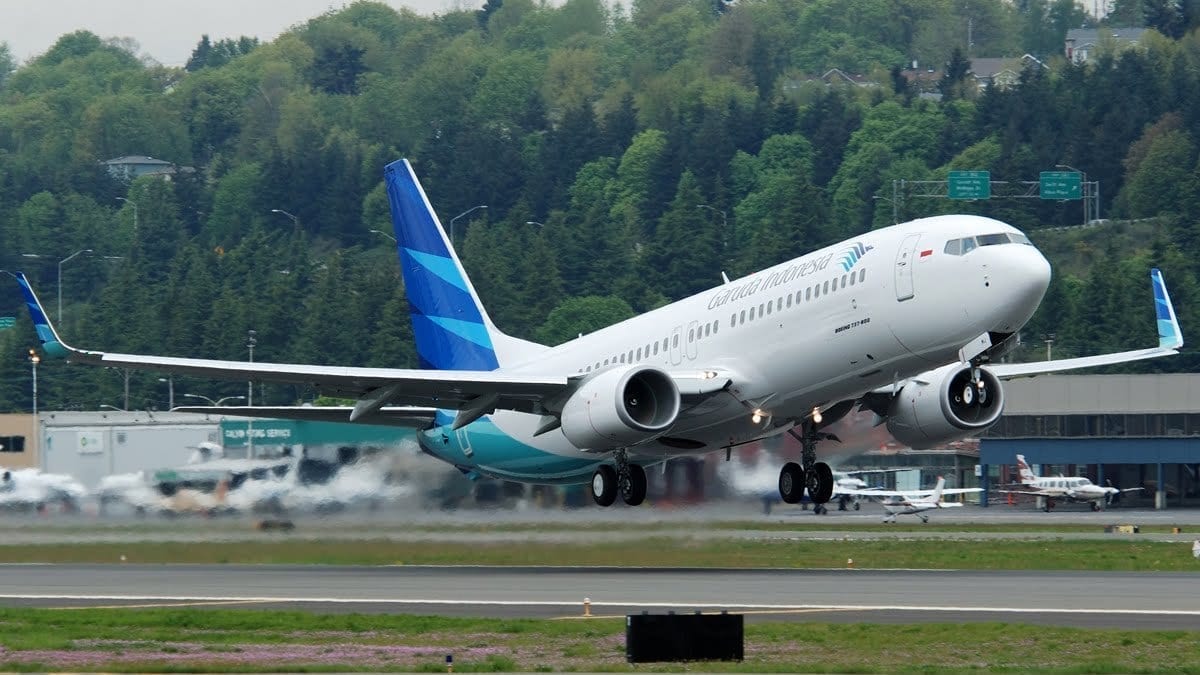
    Flag carrier Garuda Indonesia filled more seats on its domestic flights during the Lebaran exodus this year, as more people chose air travel to return to their hometown for Idul Fitri.

    The state-controlled airline’s average load factor — which indicates how much an airline makes use of its seat capacity — went up to 74 percent from June 24 to July 5, a day before Idul Fitri, on all of its domestic routes, Benny S. Butarbutar, Garuda Indonesia’s vice president of corporate communication, said on Saturday (09/07).

    Benny did not give a figure for last year’s Idul Fitri holiday.

    Still, the latest figure could mark a turnaround for Garuda. The full-service airline had seen its load factor dip to 69 percent in the first three months of this year, compared to 74 percent in the same period last year, as weak economic growth forced cost-conscious travelers to opt out of the airline’s services.

    Garuda added 32,000 more seats on 132 extra flights, 112 of which are on international routes, between June 24 to July 17 to cater for Indonesians during the annual Lebaran exodus, Benny said.

    “This represents a 35 percent increase in our extra capacity from the same period last year,” Benny said.

    The National Police estimated 17.6 million people made the travel back to their hometown during the Lebaran exodus this year. Ouf of that figure, 4.6 million chose air travel, up 7.6 percent from a year ago as people’s purchasing power has increased and local airlines offer new fleets and routes.

    Air travelers met with relatively few problems during this year’s Lebaran exodus compared to their peers taking land routes, who were met by hellish traffic jams on toll roads across Java.

  • HGC launches cloud backup service

    HGC launches cloud backup service

    Hutchison Global Communications (HGC) has launched a one-stop enterprise-grade cloud backup service to augment its cloud portfolio.

    The Backup-as-a-Service offering is designed to allow enterprises to back up files, operating systems and applications at he Wong Chuk Hang data center run by HGC GlobalCentre (HGCGC).

    HGC Cloud Backup supports a wide range of brands, operating systems, applications and cloud platforms. It is designed to allow companies to restore and retrieve specific stores of data without the need to recover the entire content of a backup.

    The service is being offered under a pay-as-you-go model and is supported by an online self-service portal.

    HGCGC data centers are designed to meet ISO information security standards, and customers can opt for a private leased line to further improve security.

    In order to enhance the service, HGC has also revealed plans to introduce data backup replication by the end of the year. Backup data will be stored at Kwai Chung as well as the Wong Chuk Hang data centers.

    “Launch of HGC Cloud Backup greatly enriches our portfolio of cloud services,”HTHKH COO Jennifer Tan commented.

    “This new Backup-as-a-Service capability – plus the planned dual data center backup and replication solution – will minimize the worrying risks associated with data storage. Customers will therefore be in a much better position to protect their digital assets and recover critical information during disaster incidents, thereby ensuring robust business continuity.”

  • LF Beauty to exploit Asian beauty boom

    LF Beauty to exploit Asian beauty boom

    Li & Fung Group subsidiary LF Beauty is seeking to cash in on soaring demand for beauty products in Mainland China and wider Asia.

    China’s skincare and cosmetics market is projected by the Hong Kong Trade Development Council to grow by an average annual rate of  of 12.8 per cent from this year through 2019 – considerably faster than the expected global rate of 6 per cent.

    “Asian beauty is now setting the pace for the world. China, South Korea, Japan as well as the entire Southeast Asian market, are very important for us. [That] represents about 4.5 billion in population,” said Gerard Raymond, president of LF Beauty, in an article published by China Daily.

    A large population base dominated by younger demographic distinguishes the Asian market from more mature western markets, he said.

    “The younger generation consumer knowledge and wealth is growing very fast. And they are very willing to try new and innovative things.”

    LF Beauty is partners with suppliers and retailers of product solutions including fragrances, skincare, color cosmetics, and in a one-stop-shop offer provides retailers with logistics support, merchandising systems and point-of-sale solutions.

    Raymond said in the China Daily report that “there never have been more opportunities for brands to stand out and keep pace with their consumers” than in the Asia region

    “It’s never been more challenging. In this competitive environment, we work to help many of the world’s best-loved brands to innovate, thrive and become market leaders,” he said.

    “We have seen that Chinese women now are very interested in beauty products from South Korea,” he said. “In this respect, we have already established a joint venture in South Korea, which allows us to transfer their knowledge to Chinese market directly and serve the demands of local consumers.”

  • Telenor Myanmar launches 4G services

    Telenor Myanmar launches 4G services

    Telenor Myanmar has officially launched 4G services, starting in capital city Nay Pyi Taw.

    With the launch the operator has become Myanmar’s second mobile operator to launch LTE services, following Ooredoo Myamar’s debut in May.

    Telenor Myanamr CEO Petter Furberg said in addition to the debut in the capital, the company is continuing to test 4G in other cities, and will progressively roll out the technology nationwide.

    “While Telenor users in Nay Pyi Taw now can enjoy 4G services we aim to expand the service to other cities gradually. To provide high speed 4G services all over the country Telenor will need more spectrum,” he said.

    “Telenor is looking forward to participating in the spectrum auctions planned by the Union Government later this year. Due to explosive growth of data and increasing data demand by the Myanmar people we believe it is urgently required to expand our services to 4G all over Myanmar.”

    He noted that 60% of the operator’s 16 million customers are now data users, and that Telenor has Myanmar’s largest internet network with more than 5,800 towers across the country in all states and regions.

    “Myanmar is experiencing an extensive growth of mobile subscriptions and we are also witnessing higher demand for mobile data,” Petter said. “Our 4G service is one more important step in the rapid development of the Myanmar telecom sector.”

  • AIS introduces self-service at contact centers

    AIS introduces self-service at contact centers

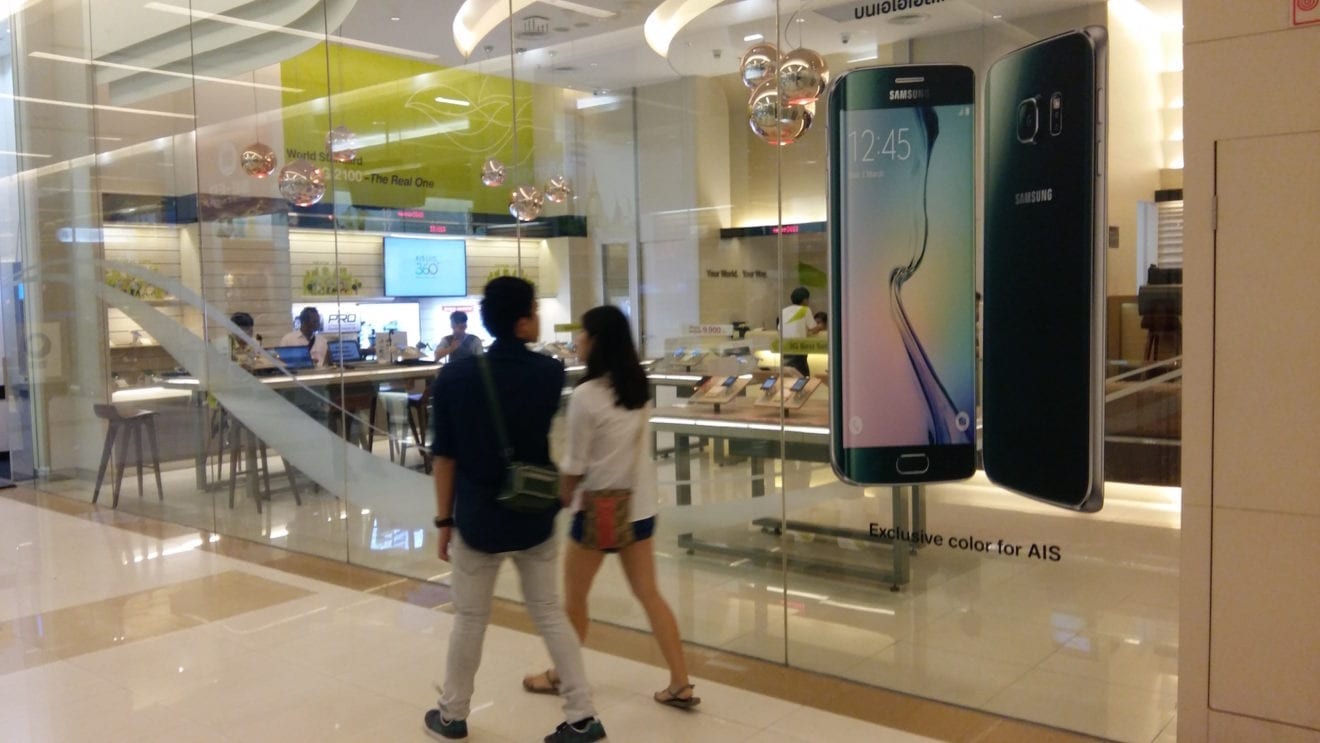
    Thailand’s AIS has upgraded its customer contact center system in a bid to provide a consistent, enhanced and personalized customer experience for its growing subscriber base.

    The new system now routes up to 70% of all customer calls to a self-service system.

    The self-service capacity allows subscribers to gain access to services such as activating their SIM card, subscribing to roaming services or selecting rewards, without dealing with long queues.

    Leveraging Avaya’s Self-Service solution, AIS’ Advanced Contact Centers (ACC) have streamlined customer care and enhanced personalized live agent support at its contact centers located in Bangkok and Korat.

    The centers currently employ 3,300 customer service employees, serving 40 million subscribers nationwide.

    Smartphone users in Thailand are expected to reach 20 million in 2016 and this is expected to soar further with the introduction of 4G commercial services this year. Demand for more sophisticated, seamless and highly reliable broadband connectivity from business is also expected to escalate as Thailand’s digital economy accelerates.

    ACC saw the digital transformation of its contact center as a critical enabler in the new economy. The new self service system will ensure a consistent customer experience for AIS’s 11 million calls it receives through its contact centers every month.

    In the past, each customer call routed to a live agent can cost between 50 to 100 baht ($1.42 to $2.84), depending on the competency level of the agent. In contrast, the new system means that each call costs only 1 baht for ACC.

    The new system also provides capabilities for ACC to identify and categorize AIS’s customer calls and the services they require before matching them with the right agents trained to help specific service requests or customer types.

  • Saigon retail market to be put to the test

    Saigon retail market to be put to the test

    Is there too much retail space in Saigon – downtown Ho Chi Minh City – the commercial hub of Vietnam?

    With more than 1.1 million sqm of retail space, it looks like the Saigon retail market is oversupplied. The closing of Parkson Paragon in the city’s District 7  last month only amplified such concerns.

    But Cushman & Wakefield Vietnam GM Alex Crane begs to differ. He says demand is there if the retail formats are built to meet the market.

    He believes with the population of 10 million, the city is far from overloaded with retailers. The main problem lies in the wrong location or design – and incorrect retail segments.

    “I think the real test will show in the opening of shopping malls in the city center. Let’s just wait,” Crane said.

    The malls he may well be referring to are the upmarket Japanese department store Takashimaya-anchored Saigon Center 2 under completion now in District 1 and The One opposite Ben Thanh market when will be connected to the underground rail network currently at easing stage prior to construction.

    When these malls are operating, it will be easier to evaluate the real positioning of the retailers and the real demand of the market, says Crane, who is optimistic that it is not about the balance of population and retail space, but the practical demand.

    To Sigrid Zialcita, MD of Research Department, the key for shopping malls is to have suitable retailers (for market demand) and logical space designs – as well as market-savvy managers.

    “Joining WTO and TPP is turning Vietnam into a rising star in the retail market,” added Zialcita.

    HCMC’s demand for F&B, household supplies and fast moving consumer goods remains high based on the young population. But retailers entering the market need to conduct careful research to ensure their positioning strategies meet the market.

    While the retail market requires constant change and adjustment to customer demands, globally there is a continuing trend towards ‘one stop shopping’. Vietnamese are increasingly looking to go to places where they can eat, entertain and shop in a modern, air conditioned mall.

    According to data from AT Kearney, Vietnam has been one of the top 30 rising retail markets for foreign investors since 2008. Retail and consumer merchandising revenue has increased considerably between 2011 and 2015.

  • Adidas Group India plans shopping app

    Adidas Group India plans shopping app

    Sportshoe brand Adidas Group India is planning to launch a shopping app by December, primarily to drive customer engagement through content and loyalty programs, as well as boost online sales.

    It is a significant move as it indicates increasing fragmentation in online fashion shopping, as most brands do not have independent shopping apps, reports Live Mint.

    With its app, Adidas is aiming to strengthen its online presence as brands and offline retailers adopt omnichannel strategies to offer customers access to products across physical stores via their mobile phones and websites.

    “Our engagement with consumers does not end in incremental sales,” says Adidas Group India’s senior eCommerce director Abhishek Lal. “Shopping is just a small fraction. We are planning an app and rewards program to increase engagement with the brand.”

    Separate apps will be rolled out for Adidas and its subsidiary Reebok India.

    Adidas is currently available on online stores such as Amazon India, Flipkart and Myntra, and online channels contribute 10 to 15 per cent of the company’s overall sales, says Lal.

    Other brands are already building online stores to reduce their dependence on the likes of Amazon India and Myntra. Leading the way is Madura Garments with two online stores, Abof and Trendin. Its brands include Allen Solly, Louis Philippe and Peter England.

    By launching an app, Adidas is also trying to tap into social commerce by offering content and creating communities of fashion followers.

    “Social commerce is complementary to pure play eCommerce, and also the way forward for us,” says Lal. “There is no history of a single-brand app yet, so it is hard to assess what the outcome will be.”

    Adidas has also expanded its omnichannel presence since its launch early last year. Adidas plans to bring about 400 stores under the omni-channel loop by December. Those already involved in the strategy have had their revenue grow about 3 to 5 per cent.

    “There has been some impact on revenue because of omni-channel,” says Lal. “A lot of sales were lost because sizes were not available in stores. There was also a lot of cross-selling. We have a brand called Neo which is available only online, so a lot of people walked into the stores and bought Neo on the tab. That is an upsell opportunity.”

  • Xiaomi continues quest for quality

    Xiaomi continues quest for quality

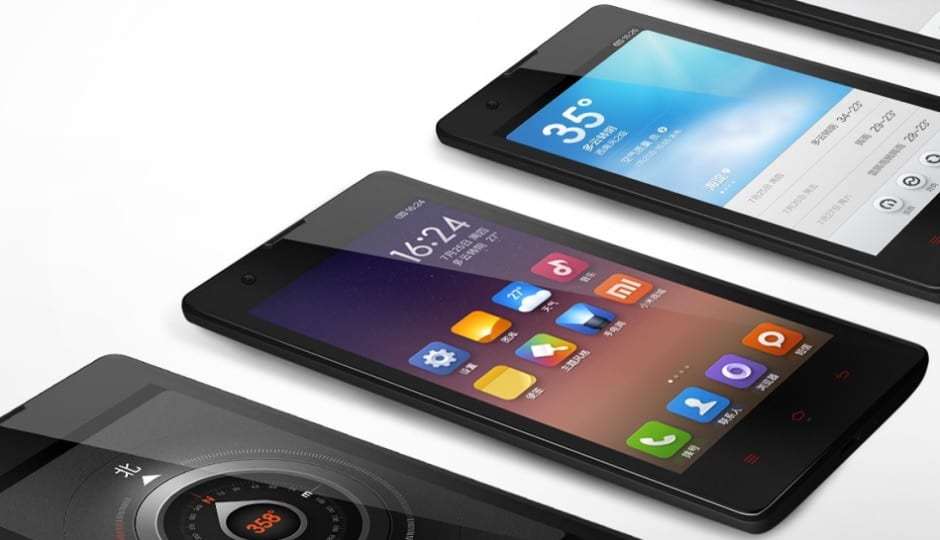
    Smartphone giant Xiaomi continues to distance itself from the lower end of the market, as Chinese buyers shift their attention mainly to device upgrades.

    Xiaomi international VP Hugo Barra says the company continues to direct its efforts at becoming a premium brand, reports the South China Morning Post.

    “Our customers are demanding premium products from us, so we are delivering higher quality with more premium components.”

    Research company IDC has forecast just 2 per cent growth this year for smartphone sales as more users chose to upgrade their handsets.

    Meanwhile, Xiaomi may expand its Mi Home experience centre across Hong Kong. Opened a year ago so customers can try out different products, it has been a successful retail experiment, says Barra.

    “Part of the strategy here is to think about how we can reinvent the retail experience to make it much more experience-focused … which helps the online business as well.”

    Xiaomi has just launched its latest 6.44in. Mi Max phablet and the Mi Air Purifier 2. The phablet, which will cost from HK$1799 (US$230), is considered one of the largest smartphones on the market.

    IDC estimates 20 per cent of smartphone sales last year were phablets, and by 2020 they are expected to account for 32 per cent of the market.

  • Valentino Omotesando flagship opens

    Valentino Omotesando flagship opens

    Valentino Omotesando, the Italian fashion label’s first flagship store for Japan, has opened in Tokyo.

    Valentino Omotesando flagship 2

    It covers 467 sqm on two floors at the Omotesando Hills Mall in Aoyama, and its interior design follows the new codes formulated by the brand´s creative directors, David Architects of London, and Maria Grazia Chiuri and Pierrepaolo Piccioli.

    Valentino Omotesando flagship 3

    Marble columns connect the two levels, while the facade has a sculptured terrazzo facade of pillars and glass walls.

    Valentino Omotesando flagship 7

    Valentino Omotesando flagship 4

    A feature of the opening is a special window installation featuring photos and videos by artist Mariporu, including personal material and introducing his Maripol, Little Red Riding Hood.

    Valentino Omotesando flagship 8

    Valentino Omotesando flagship 5

    Valentino Omotesando flagship 6

    Proceeds from the sales of a limited-edition canvas tote bag decorated with studs, priced at 15,000 yen (US$148), will be donated by Maison Valentino to help the victims of Kumamoto earthquake, three months ago.

  • New Ippin mall offers Japanese goods

    New Ippin mall offers Japanese goods

    An eCommerce company that sells printer inks and sanitary napkins, C-Connect, has launched Ippin, an online shopping mall that specialises in direct sales and distribution from Japan to other countries.

    Ippin not only sells products made in Japan, but also “Produced by Japan” and “Popular in Japan” items. Customers can buy directly from 18 regions and countries, though the initial target is mainly China and Southeast Asian countries.

    Categories include food, fashion, cosmetics, children’s and baby items, and electric appliances.
    Independent websites are provided for each country, such as China, Singapore and Malaysia, with recommended item rankings and payment methods (16 currencies) to suit the market, such as credit cards, Alipay and Paypal.

    Users can choose from three languages (English, Chinese and Japanese) with more to be introduced.

    C-Connect was founded in 2009.

  • Self-driving bus unveiled in Tokyo

    Self-driving bus unveiled in Tokyo

    Japanese technology firm DeNA Co. showcased its first self-driving bus in Tokyo on Thursday, unveiling a vehicle that runs on electricity and can carry 12 passengers.

    The EZ10 Robot Shuttle, developed in conjunction with French company Easy Mile, will first be used at a shopping facility in Japan’s Chiba prefecture next month and has a maximum speed of 40 kilometres per hour (25 miles per hour).

    Last month bus company PostBus unveiled a self-driving electric shuttle in the Swiss city of Sion. Automated driving technology is currently in the spotlight with the U.S. National Highway Traffic Safety Administration investigating a May 7 fatality of a Tesla Model S driver using autopilot technology.

    “We take safety very seriously,” Hiroshi Nakajima, general manager of DeNA’s automotive business, told a news conference. “Because we worry that there may be a serious accident, we take double or triple safety checks and begin from there.”

  • Toyota plans to cut 800 jobs in Thailand

    Toyota plans to cut 800 jobs in Thailand

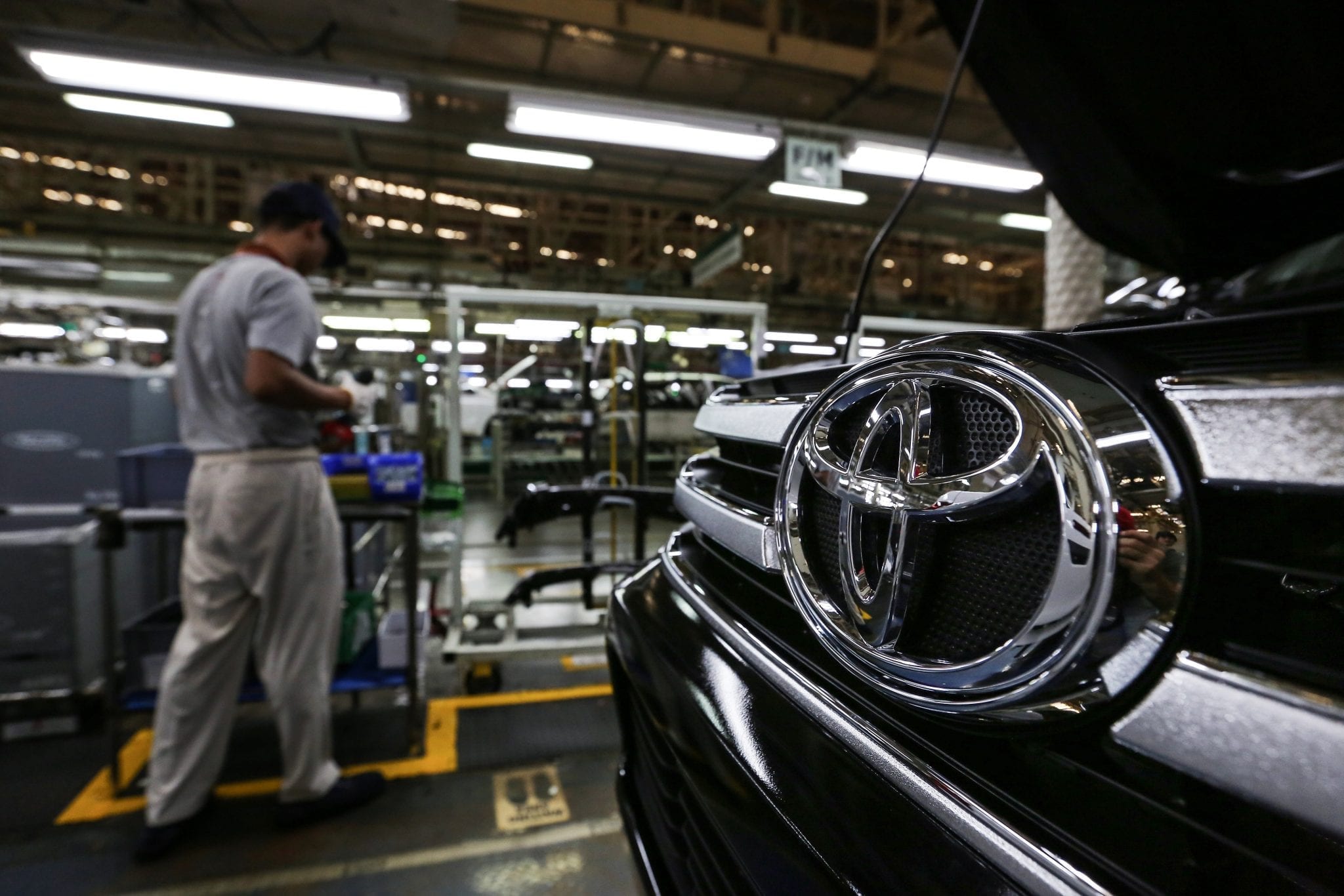
    Toyota Motor Corp’s Thai unit has launched a voluntary redundancy program aimed at cutting around 800 subcontractors in Thailand due to economic problems in the southeast Asian country and abroad.

    Thailand’s economic slowdown, along with uncertainty over the global economy, have affected both the domestic automotive industry and exports since the beginning of the year, it said in a statement.

    That has caused a reduction in production volume, overtime hours and monthly income offered to employees, it said.

    The company has offered the redundancy package to around 800 subcontractors but more workers have applied for the scheme, Phuphal Samata, the president of Toyota Thailand Worker’s Union, told Reuters.

    “There isn’t overtime payment anymore, so many subcontractors may want to find other work and take this compensation package,” he said.

    Toyota commands about a third of the local auto market and has 18,000 workers in Thailand, 40 percent of whom are subcontractors, he said.

    Thailand is a regional production and export hub for the world’s top carmakers. The sector accounts for around 10 percent of the country’s gross domestic product.

    Domestic auto sales have declined almost every month on a yearly basis since May 2013 following the ending of a government car subsidy scheme in 2012.

    In January, Toyota forecast Thailand’s total domestic car sales would fall 10 percent in 2016 from a year ago to 720,000 units. It sees its own annual auto sales falling 9.8 percent from last year.

    Job cuts at Toyota are unlikely to spread to other automakers as the firm has hired many workers since the car subsidy scheme, said Surapong Paisitpattanapong, spokesman for the Federation of Thai Industries’ Auto Industry.

    “I don’t think others will immediately follow suit because May’s auto production, exports and domestic auto sales are growing. There’s still hope,” he said.

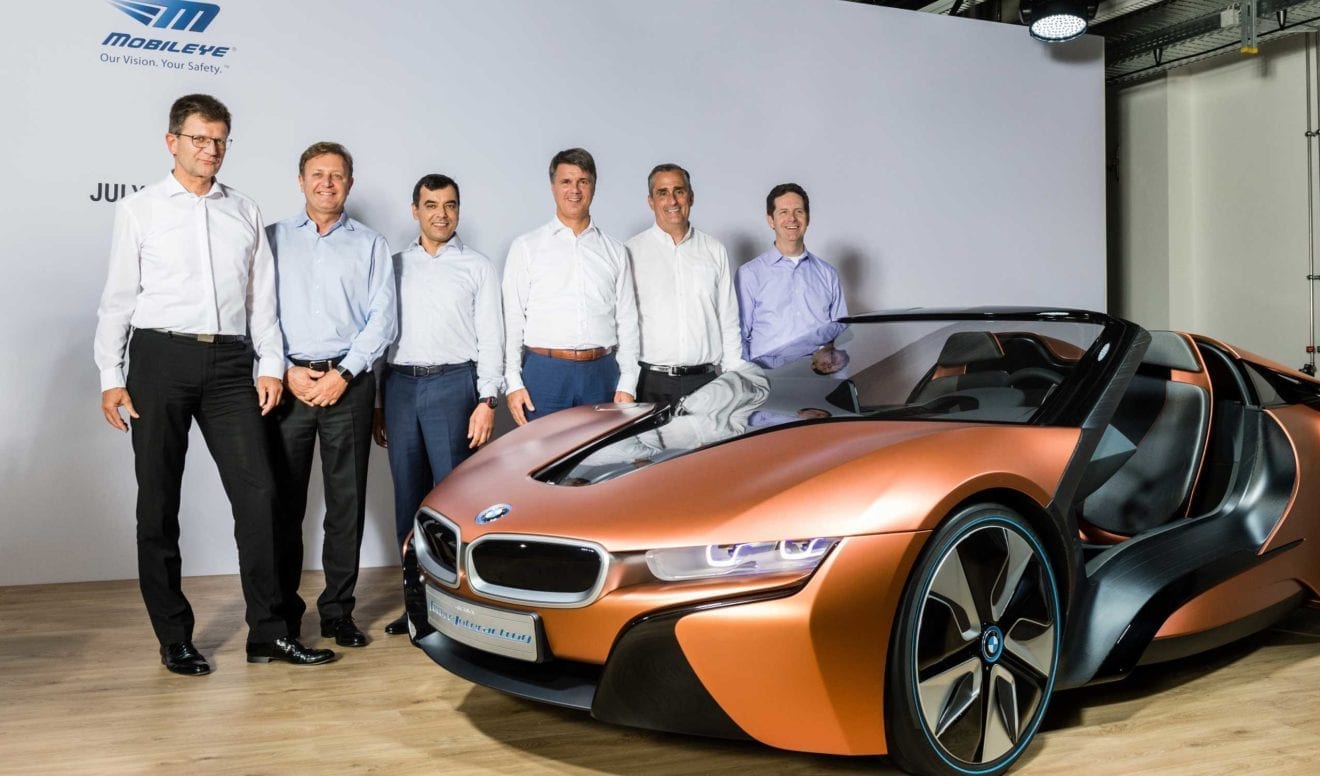
  • BMW to develop driverless car technology with Intel, Mobileye

    BMW to develop driverless car technology with Intel, Mobileye

    BMW is teaming up with Intel and Mobileye to develop new technology for the auto industry that could put self-driving cars on the road by around 2021.

    The alliance highlights a shift in the dynamics of research and development in the car industry, which until recently saw automakers largely dictating terms for suppliers to manufacture their proprietary technologies at specified volumes and prices.

    Now carmakers are increasingly striking up partnerships with technology firms using open technology standards, seeking to harness their expertise in areas including machine learning and mapping as they race against Silicon Valley companies such as Google, Tesla and Apple to develop driverless vehicles.

    “Highly autonomous cars and everything they connect to will require powerful and reliable electronic brains to make them smart enough to navigate traffic and avoid accidents,” Intel Chief Executive Brian Krzanich said on Friday at a joint news conference announcing the alliance.

    The three companies said their new platform would be made available to multiple carmakers and they expected vehicles with highly and fully-automated driving would be brought into mass production by 2021. It is too early to say which other carmakers would join the alliance, BMW Chief Executive Harald Krueger said at a news conference on the outskirts of Munich on Friday.

    Sophisticated cruise control systems already enable “hands off” driving as cameras and computers allow cars to automatically brake, steer and accelerate in traffic at low speeds. But drivers are required to stay in control.

    Now BMW, Intel and Mobileye will develop cars with even higher levels of automation described as “eyes off,” “mind off,” and “driver off”. This requires much more computing power and software know-how, forcing traditional carmakers to collaborate more closely with technology specialists.

    Both industries see huge revenue opportunities in the market for autonomous vehicles, although it is unclear how many drivers will be prepared to relinquish control and how quickly laws will be put in place to allow fully autonomous vehicles on the roads.

    But creating common technology standards would help all manufacturers update their vehicles faster, Intel Chief Executive Brian Krzanich said. “That will be critical for advancing the safety aspects of this.”

    A common approach to standards will also make it easier for regulators to understand and approve the roadworthiness of a vehicle while still leaving enough scope for individual car manufacturers to customize their cars, Mobileye Chairman Amnon Shashua said.

    Beyond technological hurdles there are legal questions over who is responsible when a crash occurs. On Thursday, the driver of a Tesla Model S car, operating in Autopilot mode, was killed in a collision with a truck in the United States, prompting an investigation by federal highway safety regulators.

    When asked about the crash, BMW CEO Harald Krueger said: “The accident is very sad …. We believe today the technologies are not ready for series production,” he added, explaining the alliance had not forecast that until 2021.

    “For the BMW group, safety comes first,” he said.

    As part of the new alliance, Intel, the world’s largest computer chip maker which has been looking to expand into the automotive electronics market, will supply the microprocessors – or central processing units – to control an array of sensors.

    Auto camera and software maker Mobileye will supply its Road Experience Management (REM) technology and make its latest EyeQ5 chip available to be deployed on Intel computing platforms.

    The three companies said they would demonstrate their technology in a prototype in the near future.