Tag: asia

  • Hilton hotel chain steadily expanding operations in Indonesia

    Hilton hotel chain steadily expanding operations in Indonesia

    Hilton Worldwide, a US-based global hotel chain, has steadily been expanding its operations in Indonesia to tap new market opportunities in a hospitality industry that is thriving on the back of steady economic growth and the free visas being offered to the citizens of most of the countries in the world.

    “We already have four properties under our management and eight others, which are under construction in Jakarta, Tangerang, Surabaya and Bali, will open within the next two years”, Hilton’s vice president for Southeast Asia and India William Costley told The Jakarta Post on Wednesday.

    The four properties already in operation are the Double Tree by Hilton in Jakarta, the Hilton in Bandung, the Conrad and the Hilton Garden Inn, both in Bali.

    Hilton, which manages more than 4,600 properties in 103 countries, is also looking for new opportunities in Lombok, Medan in North Sumatra, Balikpapan in East Kalimantan and Palembang in South Sumatra, Costley said.

    It is mostly a matter of finding the right partner for promoting Hilton service standards because Hilton has many brands to fit in with different locations, he said.

    “But we are always directly involved together with the owners in the process of designing and constructing every hotel we will manage and in training its human resources,” he added.

    Costley said the steady growth of Southeast Asia’s largest economy and the ASEAN open skies policy would boost business travel and the whole hospitality industry in many other cities across the vast archipelago.

    “We are quite excited about the prospect of the tourism industry, especially after the launching of the visa-free facility,” he said. “And I think the target of 20 million tourist arrivals in 2020 is not impossible.”

    He sees great potential for developing Indonesia into one of the most favorite tourist destinations and tourism is also the right kind of industry Indonesia needs because of its labor intensive, multiplier impact and, most importantly, this industry is friendly to the environment and earns a lot of foreign currency.

    “Take for example this Double Tree by Hilton hotel here, which has 253 rooms. It employs only two expatriates and the rest of the staff are locals,” Costley pointed out.

    Hilton Worldwide has a portfolio of 13 brands, including the Waldorf Astoria, the Conrad, the Hilton, the Double Tree by Hilton and the Hotel Garden Inn, which are promoted as landmark properties in Indonesia.

    Costley said the Waldorf Astoria, Hilton’s most luxury brand, which will be housed in a 74-story mixed-use building currently under construction on Jl. MH Thamrin in Jakarta, will open in 2018 with 181 rooms.

    Two other properties under construction in Ubud and Seminyak, both in Bali, will operate within the next two years and are also under the Waldorf Astoria brand, while the Hilton Bali (formerly the Grand Nikko) will operate later this year with 408 rooms, he added.

    The other four hotels in Hilton’s management portfolio that will open within the next two years are the Double Tree by Hilton in Surabaya and Karawaci in Tangerang and the Hilton Garden Inn in Kemang, Jakarta, and Karawaci.

    Costley said the Hilton group is strongly committed to strengthening and expanding its growing portfolio of landmark properties in such key destinations as Indonesia.

    Our Hilton Honors loyalty program has 55 million members around the world, and this huge data bank is surely an effective means of promoting Indonesia globally,” Costley added.

  • Alibaba Group Holding Ltd Should Stop Fooling Stakeholders on Counterfeits

    Alibaba Group Holding Ltd Should Stop Fooling Stakeholders on Counterfeits

    On Tuesday, founder and chairman of Alibaba Group Holding Ltd, Jack Ma wrote to its investors, customers, and traders highlighting that his recent words about counterfeited goods was taken out of context and his company has no tolerance for fake goods trading on its e-commerce portal.

    Mr. Ma said in his article: “When Alibaba went public in 2014, I told our customers, employees and investors that what we had earned was trust—in myself, my team, and our company’s mission, vision and values.” Mr. Ma further highlighted that with trust come great responsibility and Alibaba’s responsibility is to protect all of its stakeholders.”

    Last week, Mr. Ma released a statement saying that “counterfeited goods are better than original products,” after which Alibaba came under fire and many foreign brands owners challenged the company’s credibility and its efforts to fight against fakes traded on its e-commerce platform.

    He stated: “The problem is the fake products today are of better quality and better price than the real names. They are exactly the [same] factories; exactly the same raw materials but they do not use the names.”

    Yesterday, Mr. Ma indicated that whatever he said was an observation and has nothing to with the reality. He further added that “Failing to protect original designs, trademarks, and technology is akin to thievery, and it is detrimental not only to innovation but also to the integrity of the marketplace,” and Alibaba will never forgive any act of stealing.

    Last year, several leading foreign brands filed lawsuits against the Chinese e-commerce giant, accusing it of deliberately promoting the counterfeited goods traded on its websites.

    Kering SA, a French luxury goods holding company filed a lawsuit against the Chinese e-commerce giant last year, claiming that Alibaba is directly involved in the promotion of counterfeited goods. However, the company denied all such accusations and later, the case was resolved on mutual consent. Like Kering, many other foreign brands have alleged Alibaba of doing little to stop the trading of fake goods on its leading platforms including Taobao and Tmall.com. Likewise, many of them have even shifted to other e-commerce stores including those of JD.com Inc.

    Last year, Alibaba also narrowly escaped the US black list for notorious goods; however, it received official warning from the US trade officials to quickly resolve the issue and prevent sale of counterfeited goods on its leading online platforms such as Taobao. Mr. Ma saw this escape a huge victory and assured the trade officials that his e-commerce firm is 100% committed to lead the fight against global counterfeiting, both online and offline.

    The Chinese e-commerce giant has invested heavily and devoted significant efforts to develop an unparalleled level of technology to put a stop to this counterfeiting work. The Chinese e-commerce giant takes out full-bodied data processing and analytics to enable real time scanning of nearly 10 million new products a day by looking at key features such as pricing, trademarks, and buyer and seller identity. Despite such aggressive measures the world’s second largest retail network is yet to satisfy customer, trade officials, and most importantly brand owners.

    In his write up, Mr. Ma emphasized on the fact that a cooperation spread globally is needed to fight the counterfeited goods issue. It’s a “long term crusade,” he said, a battle against human greed for which there are no short term fixes and easy way out.

    Mr. Ma’s statement was not welcomed with gratitude by investors, brand owners, and trade officials. According to some analysts by terming the case a long term crusade, Mr. Ma has indicated that the counterfeited goods is likely to continue to trade on Alibaba’s online platform. He said he expected Alibaba to become the “fifth largest global economy” after Japan by 2020. This is likely to happen because China’s middle class consumption has increased massively, and the country’s middle class holds about $4.6 trillion in savings.

    Recently, Security and Exchange Commission (SEC) have inquired Alibaba to present complete details of the company’s accounting policies and for one of its delivery affiliate, after the company was accused of using inappropriate financial measures and not disclosing complete transactions of its delivery affiliate.

    In May, the Chinese e-commerce giant was handed a suspension from International Anti-counterfeiting Coalition (IACC), a supervisory body for retail industry after several leading members threatened to step down against Alibaba’s inclusion. Those members included Tiffany, Gucci America, and Michael Kors.

    Role of Chinese Government

    Though the Chinese e-commerce giant faces tremendous international criticism and pressure from trade officials, the government has done little to tackle the counterfeited goods issue i.e. no more than a few warnings. Even Mr. Ma himself proclaimed that the Chinese government can’t even ban his company for two hours due to its significant economic importance. We believe that there are solid reasons as to why the Chinese government can do very little to take action against Alibaba.

    The following revenue table clearly depicts that Alibaba’s retail business generates significant profits, which is a vital catalyst for growth in China’s deteriorating economy. The country’s GDP growth is at its slowest in the past 25 years, and with crude oil continuously remaining on a lower side, the Chinese government is shifting to services and retail sector to inject growth in the Chinese economy, and Alibaba is the big connection to it.

    It is indicated that Alibaba’s China retail business amounted to nearly 78% of total revenue generated in the quarter, while international retail also surged 15% year-over-year (YoY).

    Its international retail segment growth also highlights the company’s eagerness to expand its footing in the international market. We depicts Alibaba’s international retail revenue for the past six years.

    Though the growth is imminent but many analysts opine that is far below the expectations. As a result of counterfeited goods scandal, the company’s international retail revenue growth has plummeted 41% on average in the past five years.

    At the recent investor’s day conference, the Chinese e-commerce giant also released its annual revenue forecast estimating a 48% YoY surge, mainly driven by the acquisitions of Youku Tudou and Lazada the Asian e-commerce giant. It said: “The Company expects to record 6 trillion yuan ($912 billion) in gross merchandise volume (GMV) in fiscal 2020, nearly double 3.09 trillion yuan in fiscal 2016.”

    Despite achieving significant success, the Chinese e-commerce giant is surrounded by controversies since the past few years. Earlier on Wednesday, it also won the dismissal of a US lawsuit accusing the company of defrauding its stakeholders by “concealing a regulator’s warning about its ability to suppress counterfeiting on its websites.”

    Overall, analysts have been keeping a mix view on whether Alibaba is right or wrong; however, Mr. Ma indicates that his company works hard each day to ensure that its stake holders are protected and its consumers are not fooled by shoddy fake products. However, he asserted that to completely eliminate the issue from the root cause, a time period is required and global assistance is necessary.

    We believe that it is high time now that Alibaba should stop fooling customers and brand owners and should work with sincerity, rather than consoling and giving false hopes. Authenticity of the product is of key importance and Alibaba should return its stakeholders a favorable response or get ready to lose customers. We also believe that the Chinese government should embrace the rule of law. The government should stop promoting double standards and treat both foreign and domestic firms at permissible level. Has it been Amazon Inc or any other foreign e-commerce retail network, the consequences and treatment would have been different.


  • Philippines’ Ayala Land taking commercial development to Cebu

    Philippines’ Ayala Land taking commercial development to Cebu

    Ayala Land will team with conglomerate Aboitiz group to develop a commercial district on the central Philippine island of Cebu, part of a broader investment push outside its home base of Manila.

    The duo will manage the 10 billion Philippine peso ($215 million) project through a joint venture. The development will take place in the city of Mandaue, according to a filing by Ayala with the Philippine Stock Exchange. Its first phase will consist of office buildings, commercial facilities and residences on 17.5 hectares, targeted for completion in 2019.

    Though Cebu is known mainly as a resort region, it has become a hotbed of call centers and other outsourced businesses in recent years. Other companies are moving in as well, helping drive up income levels in the area. SM Group, the Philippines’ largest retail group, is already involved in the construction of a large-scale commercial facility on the island.

    Ayala Land, a core member of conglomerate Ayala Corp., has a track record of developing business districts in the Manila area. It has expanded into housing development in recent years as the Philippines’ middle class has grown.

  • Lulu opens new hypermarket in Malaysia

    Lulu opens new hypermarket in Malaysia


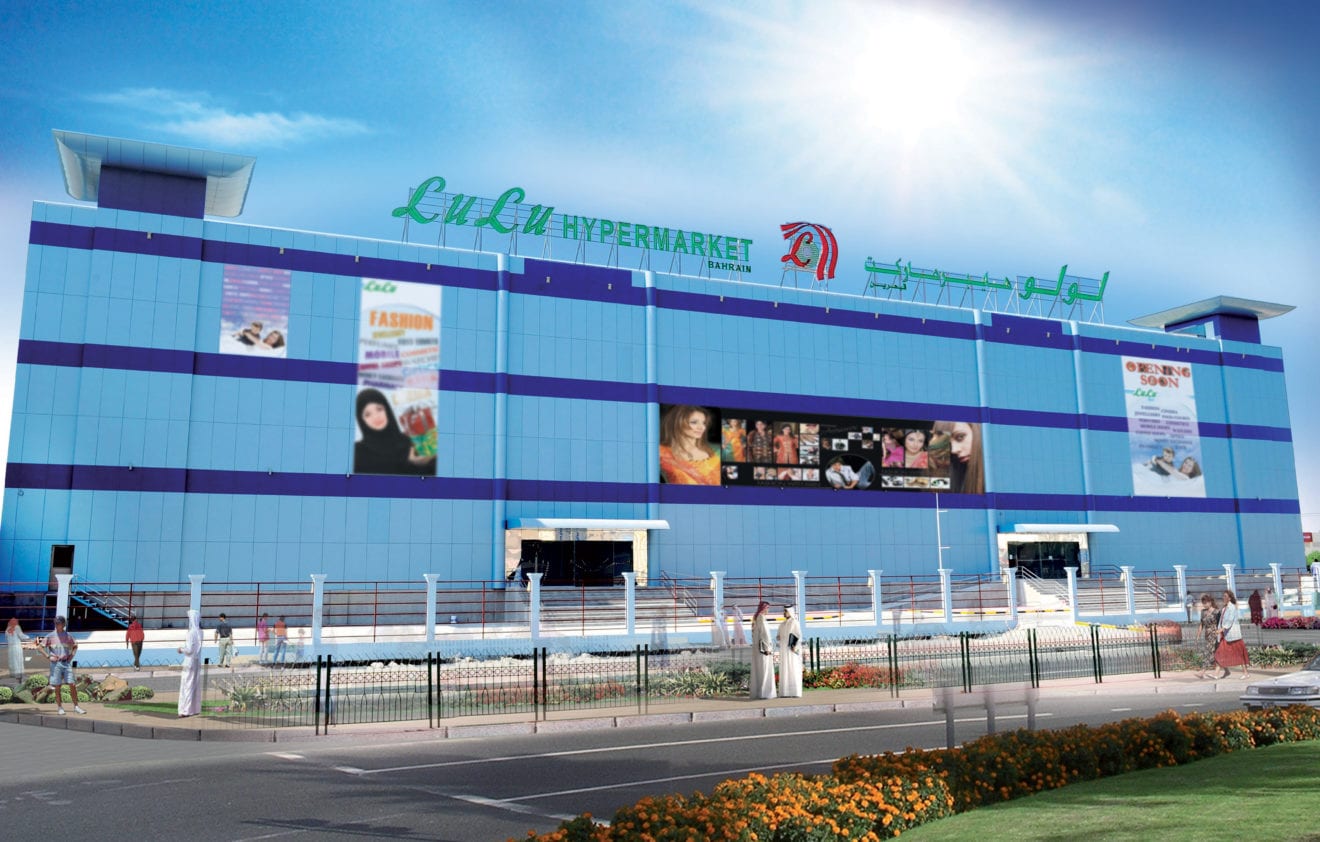
    UAE-based retail major Lulu Group has opened its first hypermarket in Kuala Lumpur, Malaysia, as part of its plans to further consolidate its retail presence in the Far Eastern region.

    The 250,000 sq ft hypermarket was inaugurated by the Malaysian Prime Minister Datuk Sri Najib Tun Razak in the presence of Dato Sri Dr Ahmed Zahid Hamidi, Deputy Prime Minister, Minister of Agriculture and other government  officials.

    Lulu had recently announced its plans to set up 10 hypermarkets in Malaysia over the next five years at an investment of $300 million.

    The new hypermarket is ideally located in the CapSqaure, Jalan Munshi area of Kuala Lumpur is expected to be one of its kind in the country and will attract large segment of population from all walks of life with its attractive product offers and range.

    It is spread in three levels and combines everything from grocery and supermarkets products to fashion, household and latest electronics and gadgets, said a statement from the retailer.

    Hot food from around the world, fresh seafood and locally grown produce are some of the key highlights in the supermarket area, it stated.

    Speaking at the launch, Najeeb Razak said: “We are very pleased to welcome Lulu brand to Malaysia as this will pave way for more international brands to come and invest in the country. I am also hopeful that Lulu will surely open many more hypermarkets and malls not only in Kuala Lumpur but also in other parts of Malaysia.”

    Yusuff Ali MA, the chairman, said: “With an initial investment of $300 million in the first phase, we plan to open 10 hypermarkets by the end of 2021 and a central logistics and warehousing facility in Malaysia. These projects are likely to generate more than 5,000 job opportunities for Malaysians.”

    “We also plan to set up contract farming to ensure continuous supply of high quality products and to support the Malaysian agriculture sector,” he added.

    Apart from the hypermarkets, Yusuffali also announced the group’s plan to invest another $500 million in setting up the largest shopping mall in Malaysia.

    “Today the whole world knows about Malaysia’s economic stability, investor friendly approach, liberalized policies and world-class infrastructure and we are confident about our success here and our hypermarkets encompass both supermarket and department store formats and we intend to bring a whole new world of shopping to the residents of Malaysia.”

    He added that other hypermarkets would be opening in Kota Baru (Kelantan), Shah Alam (Selangor), Johar Baru, Bangi, Ipoh (Perak), Malacca, Penang and Kuala Terengganu.

    One of the largest retail chain in the Middle East, Lulu currently operates 126 stores across the GCC, Egypt, India, Indonesia and employs more than 38,000 people from different nationalities.

  • Macau’s first apple retail store launched

    Macau’s first apple retail store launched

    APPLE Inc. launched its first retail store in Macau on Saturday, expanding the brand’s presence in Greater China to 41 stores.

    Hundreds of Apple fans queued at the new store at Galaxy complex in Cotai district before the store opened at 10 a.m.

    Macau is an incredibly important region for Apple, Denny Tuza, senior director for Apple Retail Asia Pacific told Xinhua, noting that”Macau is a rich commercial and industrialized city with 600,000 residents and 32 million tourists annually. The city has a unique hybrid urban culture, representing a peculiar blend of Oriental and Western influences.”

    This new two-layer outlet includes sales space where over 150 Apple latest designs are displayed for customers to experience hands-on, and a gathering place for workshops.

    According to Tuza, Macau store has 149 employees who are mainly hired locally, speaking nine languages including Mandarin, Cantonese and English and Portuguese.

    Apple also brought two free camp designed to help spark the imagination of kids ages 8 to 12, teaching them to make movies and create interactive books complete with their own illustrations and sound effects.

  • Another Vietnam asset for Mapletree Investments

    Another Vietnam asset for Mapletree Investments

    Singaporean real-estate investment firm Mapletree Investments has acquired Kumho Asiana Plaza Saigon, a mixed-use complex in Ho Chi Minh City’s CBD, taking its total assets under management in Vietnam to more than US$1 billion.

    As well as a supermarket, the plaza has mainly restaurants and is anchored by Hard Rock Cafe and Starbucks. It also has Grade A offices, serviced apartments and a hotel managed by InterContinental Hotels Group (IHG). It is Mapletree’s largest acquisition in Vietnam involving a completed income-producing property.

    Korean media outlets say that South Korea’s second-largest flag carrier, Asiana Airlines, and Kumho Industrial, the two joint-venture partners of the complex, have sold off their interest for US$215 million in a bid to improve their financial health.

    “Kumho Asiana Plaza is a rare asset given its attributes such as size, strong occupancy and location,” says Mapletree CEO Hiew Yoon Khong.

    He says the group will continue to seek similar investment opportunities in Ho Chi Minh City and Hanoi.

    Mapletree entered Vietnam in 2005, and most of its projects are developed within central business districts as well as four logistics parks across the country.

    One of its main current developments is Saigon South Place, a mixed-use project in Ho Chi Minh City that will comprise Grade A office towers, serviced apartment and residential buildings, as well as the current shopping centre SC VivoCity, which Mapletree jointly developed with Vietnam retailer Saigon Co.op.

  • RIP Ensogo Asia shuts down sites

    RIP Ensogo Asia shuts down sites

    Ensogo Asia has closed down all of its online stores as the online retailer appears on the brink of collapse.

    Following the resignation of its co-founder Kris Marszalek, the Singapore-based tech company said it will cut its financial support to its sales and marketplace business units in Indonesia, Thailand, Hong Kong and the Philippines.

    “These business units will be shut down. All staff have been informed and communications will be made to customers in the coming days,” the company said in a statement.

    Australian internet entrepreneur Patrick Grove founded Ensogo, formerly iBuy. Grove also established the online businesses iProperty and iCar under Catcha Group.

    Recently the company reported growth averaging more than 100 per cent in the first quarter, after the launch of a cross-border marketplace business in January. It said the number of suppliers had skyrocketed from 3141 in the fourth quarter of 2015 to 13,599 in the first quarter of 2016. The first three months saw US$8.2 million in gross merchandise value.

    As of the end of March 2016, however, Ensogo reported A$22.6 million (about US$17 million) in receipts from customers, while total cash was only A$17.6 million, a 64 per cent decline from A$29 million by the end of last year. Earlier this year the company, which is headquartered in Singapore and listed in Australia, laid off employees.

  • More than 1 in 4 cloud apps are high risk

    More than 1 in 4 cloud apps are high risk

    More than a quarter (27%) of third-party apps can be classified as high risk, according to research from CloudLock Cyberlab.

    Analysis conducted across 10 million users, 1 billion files, and nearly 160,000 unique applications found that cybercriminals can exploit weaknesses in high-risk apps to gain programmatic access to corporate platforms impersonating end users. 

    The shadow IT dilemma is meanwhile only becoming more challenging as usage is increasing exponentially year over year, the company said.

    The past three years saw nearly a 30 times increase in the number of apps detected, from 5,500 to nearly 160,000. Each application instance represents a backdoor through which hackers can infiltrate and externalize sensitive corporate assets.

    CloudLock Cyberlab said an organization may embrace its employees’ “shadow” exploration of innovative technology solutions and sanction a subset of these apps as Productivity IT, but it’s essential to closely monitor the connected third-party apps and identify cloud native malware in real time.

    Security conscious enterprises recognize the high risk associated with connected third-party apps and take immediate action. While apps can be banned for any number of reasons, including concerns around productivity, a clear majority are banned because of the security vulnerabilities they introduce. 

    The key recommendation is to reduce cloud app risk by establishing an acceptable use policy, with which organizations can significantly reduce the application risk level organization-wide. Automating whitelisting or banning of potentially risky applications is an effective strategy. 

    “The shift to the cloud creates a new, virtual security perimeter that includes third-party apps granted access to corporate systems,” said Ayse Kaya Firat, CloudLock director of customer insights and analytics.

    “Today, most employees leverage a wide variety of apps to get their jobs done efficiently, unwittingly exposing corporate data and systems to malware and the possibility of data theft.”

  • Eslite Spectrum to continue China expansion

    Eslite Spectrum to continue China expansion

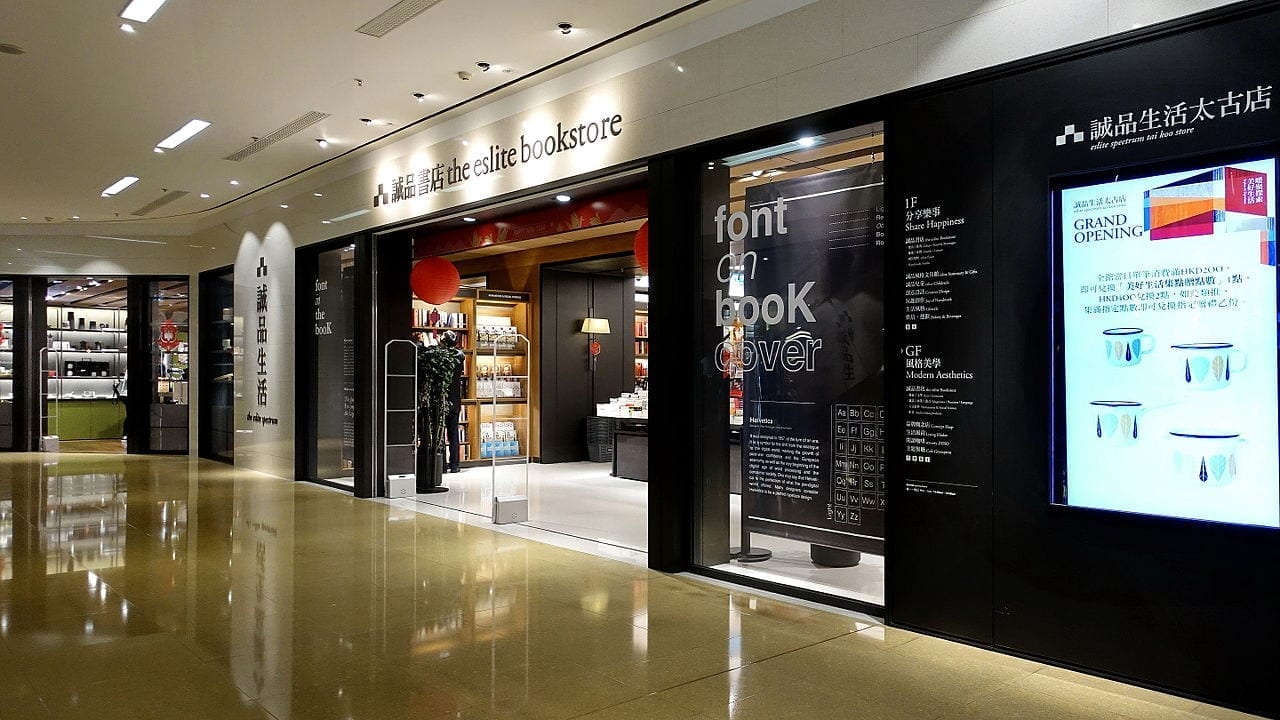
    Taiwan’s Eslite Spectrum, which runs bookstores, shopping malls and restaurants, plans to continue adding stores in the greater China market.

    President Wu Wen Chieh told the group’s annual meeting that after extending its reach into Hong Kong in 2012, the company had transformed into a cultural creative brand.

    Wu said the company has 46 outlets in Taiwan, Hong Kong and China through teaming up with cultural creative brands, and plans to enter Shanghai by opening a store this year. Its first China outlet launched in Suzhou in November. Another store is planned for Shenzhen in 2018.

    Eslite has three stores in Hong Kong, and Wu said that the company is studying the feasibility of opening more stores there.

    However, Eslite has closed two stores in Taipei and will shut down two others. Wu said the company is determined to open new stores in Taiwan this year.

    Chairman Wu Ching-yu told shareholders that the company has set its sights beyond the greater China market, with the aim of opening stores in Japan and the US.

    He said two property developers in Japan have made contact with Eslite, but Eslite will expand at a stable pace globally.

    Eslite last year posted NT$3.82 billion (US$118 million) in sales, up 9 per cent from a year earlier, and raked in NT$412 million in net profit, up 11.6 per cent.

  • Singapore’s MyRepublic denies reports of funding woes

    Singapore’s MyRepublic denies reports of funding woes

    MyRepublic’s CEO has rejected reports that the company is having difficulty raising funds required to make a bid to become Singapore’s fourth mobile operator, calling the claim “a bold-faced lie.”

    Malcolm Rodrigues told us that the company has already lined up $130 million worth of the $250 million in funding needed to roll out a network.

    Rodrigues was responding to a report stating that the company’s latest financial statement casts doubts onto whether the operator can afford to become a mobile operator.

    The report alleged that it had received a copy of the unlisted operator’s balance sheet that shows that MyRepublic lost S$9.36 million ($6.96 million) in Singapore last year, and has so far raised no funds required for the rollout.

    But Rodrigues denied this claim, asserting that the company has a loan facility for half the required amount, and expects DBS Group and Goldman Sachs to help the operator finish its fundraising for the mobile bid by the end of July.

    MyRepublic will be competing against Consistel, through subsidiary OMGTel, which has reportedly lined up at least S400 million worth of the S$1 billion in funding it plans to commit if it wins the mobile license.

  • Google, RingCentral partner to take on Microsoft

    Google, RingCentral partner to take on Microsoft

    The search giant Google and the cloud communications specialist RingCentral are joining forces to serve apps and UC to the enterprise.

    They’ve got a new offering called RingCentral Office Google Edition in the form of a plug-in in the Google Apps marketplace. It is intended to bring together RingCentral’s communications platform with Google Apps and related technologies like Google Hangouts.

    The idea is to be able to take on the likes of Microsoft, which itself moving to better integrate Office 365 and Skype.

    While the big tech companies have been very good at the cloud lately, they haven’t done that much in the cloud communications segment of the space, at least organically. Hence, despite the many infrastructure projects that Google for Google to seek out partners to better address the enterprise opportunity seems like a natural move.

    For Google it’s just another small piece of what has become a very big jigsaw puzzle. But it could be a big deal for RingCentral, whose quarterly revenues of $86 million would be more sensitive to the success of this new application package.

    RingCentral is one of the new generation of UC specialists that are finally shaking up the industry the way we all thought VoIP would do 10 years ago.


  • Thailand will tighten call drop regulations

    Thailand will tighten call drop regulations

    Thai regulator NBTC will introduce stricter standards governing the quality of mobile signals in an effort to address a growing number of complaints related to dropped calls.

    The NBTC will amend current regulations, which require operators not to exceed a dropped call rate of 15% across all calls, to instead require operators to maintain this rate in each of Thailand’s service areas.

    The new regulations, which are expected to come into effect in September, have been implemented in response to the fact that in more busy service areas with congested traffic dropped call rates are much higher than the average.

    In addition to the new regulation, the NBTC has given five mobile operators – AIS, Dtac, True Move, CAT Telecom and TOT – 15 days to resolve their dropped call problems.

    According to the report as of May there were 994 complaints involving dropped calls from AIS, 497 from Dtac, 386 from True Move, 32 from CAT and seven from TOT. Complaints are picking up now operators are focusing on customer acquisition strategies to maximize their 4G investments.

    Indian regulator Trai is also focusing heavily on the issue of call drops.

  • 3 Hong Kong launches prepaid plans for Apple SIM

    3 Hong Kong launches prepaid plans for Apple SIM

    Hong Kong mobile operator 3 has announced its support for Apple SIM, introducing a line of short-term LTE data plans that can be chosen and activated from compatible iPads.

    The operator has introduced day pass plans offering two days of connectivity for HK$38 ($4.90), seven days for HK$88 and 14 days for HK$168. These plans have fair use limits of 2.5GB, 3.5GB and 5GB respectively.

    Customers will also be able to choose monthly data pass plans for HK$168 for 1GB, HK$248 for 2GB or HK$298 for 3GB.

    Customers on Apple SIM LTE data plans will be charged a HK$2 administration fee every 30 days.

    Global  Apple SIM partner GigSky has meanwhile announced it had expanded its cellular data plans for Apple SIM to cover over 149 countries, up from just over 90. The prepaid packages are now available in all the top travel destinations, the company said.

    GigSky data plans are available in APAC markets including Hong Kong, Korea, Thailand, Australia, Pakistan, Indonesia, the Philippines, Singapore, Sri Lanka and Japan. The plans typically range from US$15 for 100MB of data over three days to $50 for 1GB of data over 30 days.

    Apple SIM is supported by the iPad Pro, iPad Air 2, iPad mini 3 and iPad mini 4.

  • Xiaomi taps China Unicom to boost offline sales

    Xiaomi taps China Unicom to boost offline sales

    Chinese smartphone maker Xiaomi has teamed up with the country’s second largest mobile carrier, China Unicom, to expand its sales through offline retailing channels.

    The partnership with Unicom signals a move to a more conventional sales operation for Xiaomi, whose sales have been heavily relied on internet channels.

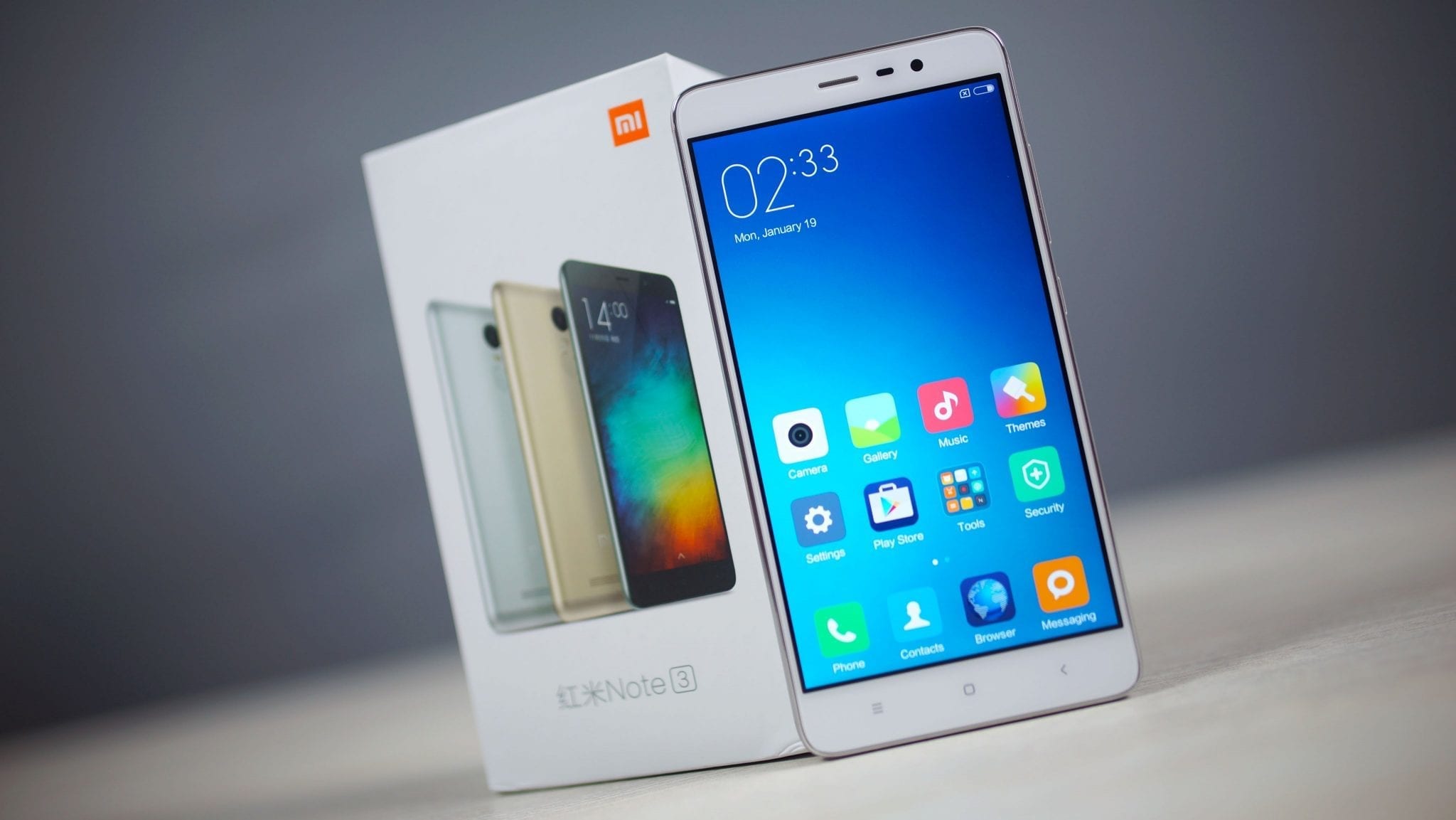
    Xiaomi launched a new customized 4G smartphone Redmi 3X for Unicom, as part of a strategic alliance the pair announced last Wednesday.

    The Redmi 3X smartphone, powered by 1.1GHz octa-core Qualcomm Snapdragon 430 processor and a 4100mAh non removable battery, will go on sale for 899 yuan ($136) through Unicom’s 30,000 own retail stores and more than 230,000 retailing partners.

    Xiaomi CEO and founder Lei Jun said so far more than two-thirds of the company’s smartphones have been sold through e-commerce platforms and the company’s official website.

    “The proportion of online sales is too big,” Lei said. “To maintain the rapid growth we have seen in the past four years, expanding offline retailing channels becomes the key.”

    Xiaomi said earlier this year it will open 200 to 300 of its own retail stores to bolster sales.

    Xiaomi and Unicom will also expand their cooperation beyond handsets to a wide range of products, such as Xiaomi TV, routers, wearable devices and air purifiers.

    China Unicom deputy general manager Xiong Yu said all of these Xiaomi products will be available at the operator’s offline retail stores across the country.

    The move fits into the operator’s broad efforts to transform its abundant bricks-and-mortar assets into a big retailing platform of various electronic products, Xiong added.

  • Aeon Indonesia dumps Ministop c-store partner

    Aeon Indonesia dumps Ministop c-store partner

    Aeon Indonesia has ended its partnership with its local partner in the Ministop c-store chain.

    The move will result in Aeon exiting the market temporarily while it seeks a new business partner.

    According to local media reports, Aeon teamed with Bahagia Niaga Lestari (BNL) in 2012. But after four years, the joint venture has managed to open just six stores.

    Aeon has meanwhile been expanding its Ministop network across Vietnam, the Philippines and South Korea.

    Aeon says it is committed to Indonesia and hopes to form a new joint venture.