Tag: asia

  • MemSQL brings enterprise security to real-time Analytics

    MemSQL brings enterprise security to real-time Analytics

    MemSQL has introduced new enterprise security capabilities to further the adoption of solutions requiring both speed and advanced security.

    With this additional functionality, enterprises can streamline the security and administration of MemSQL, resulting in wider adoption and maximum protection in performance environments.

    Specifically, MemSQL is introducing Role-Based Access Control (RBAC) for its distributed database platform. RBAC provides enterprises a flexible way to set security measures by user role and group—all while maintaining maximum performance.

    “More companies across more industries now view real-time workflows as a critical technology enabler,” said Nikita Shamgunov, CTO and co-founder, MemSQL. “In many cases, security cannot be compromised just to keep up with the data. With the addition of RBAC, MemSQL customers can scale the number of users and roles to tens of thousands without compromising performance—absolutely critical in today’s real-time world.”

    MemSQL customers can now use simple and robust security configurations to create a role with specific capabilities, which then can be associated with a user and specified access. The RBAC feature was extensively run with a rigorous set of functional and performance tests, including inside a FIPS 140-2 environment.

    Shamgunov said real-time is the new standard for processing and analyzing data. Historically, companies with stringent security requirements have been kept at arm’s length from achieving real-time results.

    By including RBAC in its latest release, MemSQL furthers adoption of real-time data in environments requiring comprehensive security. This includes global industries such as healthcare, IoT, and government.

  • Convenience stores: Staying relevant in harsh times

    Convenience stores: Staying relevant in harsh times

    For Malaysian consumers, the last couple of years have been a mercurial ride with the implementation of the Goods and Services Tax (GST) and the subsequent effects of it as well as other global and domestic events which have rippled through prices of goods and services.

    As cost of goods and services gradually increases, most consumers have cut down their spending, to save on essentials.

    Softening consumer confidence have also taken a toll on businesses. In particular, the retail sector was affected more significantly by lower consumer confidence.

    Nevertheless, at the start of 2016, statistics and reports have shown that consumer confidence in Malaysia are slowly recovering and there are signs of of it stabilising.

    According to Nielsen Global Survey of Consumer Confidence and Spending Intentions, the Malaysian consumer confidence remain stable at the start of the first quarter of 2016 with 79 percentage points (pp), dipping one point from previous quarter).

    Globally, the report showed that Malaysia held on to its ranking as 36 most confident country in the first quarter (1Q) 2016 (unchanged from last quarter). Of note, the average global consumer confidence is 98 pp (one pp from previous quarter). Consumer confidence levels above and below a baseline of 100 indicate degrees of optimism and pessimism.

    However, while there are signs pointing towards improvements in consumer sentiments in Malaysia, analysts and industry observers are still cautiously optimistic on consumer trends.

    SOURCE: Nielsen Global Survey of Consumer Confidence and Spending Intentions 1Q16

    SOURCE: Nielsen Global Survey of Consumer Confidence and Spending Intentions 1Q16

    Richard Hall, country manager of Nielsen Malaysia, pointed out in a statement, “With no real changes in the economic outlook, Malaysians’ confidence remains low and we see that this trend will continue to be the case until the pressure on the ringgit ease.

    “Only when the pressure of the ringgit improves, can consumers start to feel the burden of their day-to-day spending lessen.”

    Nielsen noted that while the nation’s fiscal status (52 per cent compared to 50 per cent in prior quarter) continues to top the list of major concerns among Malaysian consumers, nearly a quarter of the respondents have cited that job security is now their second top worry (22 per cent).

    “Recessionary sentiments among Malaysians continue to remain high (84 per cent, unchanged from last quarter) with only one in five respondents feeling positive that the country will be out of an economic recession in the coming 12 months (22 per cent, unchanged from prior quarter),” the survey reported.

    The survey also revealed that consumers in Malaysia would continue to reduce household spending even when economic conditions would improve with nearly nine in 10 Malaysian consumers changing their spending habits in the past year to improve saving (88 per cent).

    It said, the top three areas where consumers in Malaysia would continue to cut back even when economic conditions do improve are spending less on new clothes (65 per cent), reducing out of home  entertainment (56 per cent) and switching to cheaper grocery brands (51 per cent).

    “Despite the fact that none of the economic key performance indexes (KPI) indicate that the country is in a recession, consumers continue to believe that the current situation and the future for the country is not positive.

    “To change this attitude will require a step change in the current environment,” Hall observed.

    Affin Hwang Investment Bank Bhd’s research arm (Affin Hwang Capital) in a recent report highlighted  the main themes affecting consumerism include the implementation of GST and the weakened ringgit against the US dollar.

    “While the consumer sentiment is at its all-time low with consumers mainly worried about the higher costs of living, income levels and the economy, several macroeconomic indicators are pointing towards an improvement,” it pointed out.

    “Consumers have been hit by higher costs of living, with headline inflation spiking to a high of 4.2 per cent year-on-year (y-o-y) as of February 2016.

    “Both Malaysian Institute of Economic Research (MIER) and Nielsen surveys highlight job security and income worries as key concerns among consumers, in addition to the current state of the economy,” it said.

    In a separate report, the research arm of TA Securities Holdings Bhd (TA Securities) expected consumer sentiment to remain weak in 2Q and continue to remain flattish throughout the year.

    However, it pointed out that consumer sentiment level, according to MIER, have rebounded by 9.1 points, suggesting that consumers have adjusted their spending pattern to take into account the impact of GST their purchasing activities.

    “Coupled with financial aids given by the government through BR1M, reduction in employees’ EPF contribution, and increase in minimum wage for private and public sectors workers that will be implemented on July 1 this year, could lessen the impact of demand slowdown,” it added.


    Grocery retail retains growth despite headwinds

    A closer look into the consumer sector shows that while consumer sentiments is expected to remain subdued in the near-term, Malaysian consumers’ purchasing power is improving in certain categories.

    According to Nielsen, consumer purchasing power in the Fast Moving Consumer Goods (FMCG) category gained traction in 1Q of 2016 versus the same quarter in the prior year (4.7 per cent).

    It added, all FMCG super categories registered a healthier growth lead by beverage (8.8 per cent), grocery (4.3 per cent), household (3.9 per cent), health & wellness (2.7 per cent), snack & confectionary (two per cent) and personal care (1.7 per cent).

    “In spite of the FMCG industry having a strong start to last year due to the GST introduction in April 2015, we have been pleasantly surprised to see the majority of categories still in growth, with the modern trade leading the way.

    “While there has negative sentiments surrounding the increasing cost of living, consumers still need to buy groceries and it looks like they are not necessarily down trading their purchasing decisions,” Hall noted.

    In Malaysia, while hypermarkets still dominate the general FMCG or grocery markets, there are growth opportunities for convenience stores given that demand still remains strong for FMCG or grocery goods.

    In a report, the research arm of DBS Bank Ltd (DBS Group Research) pointed out, “There is room for Malaysia to grow its convenience stores as the number of convenience stores per one million total population lags behind Indonesia, Singapore and Thailand.

    “However, it leads Asean-5 in supermarket and hypermarket outlets-to-population ratio. Among the three main modern grocery retail formats, convenience stores registered the fastest growth from 2009 to 2014 at 17 per cent compounded annual growth rate (CAGR),” it said.

    It also noted that convenient stores offer products and services that are within reach of consumers compared to supermarkets and hypermarkets.

    “The layout of many Malaysia towns tends to be spaced out and it is common for people to commute in cars. As such, there are many big box hypermarket developments in Malaysia.

    “Hypermarkets are seen as a convenient place with a wide selection of products for consumers to visit. Supermarkets in suburban neighbourhoods play the role of supplementing hypermarkets, while convenience stores offer 24-hour service.

    It also pointed out that generally, purchasing habits for consumers in Asia have also shifted with convenience as a key factor in their purchasing habits.

    “Formats penetrate Asean food consumption in different manners. Supermarkets will always be a key feature in malls located in densely populated cities.

    “Convenience stores are strong in penetrating every corner of cities and in obscure locations outside them. Hypermarkets are capable of capturing consumption in more spaced-out locations with high automobile accessibility.

    “With modern and traditional grocery retailers situated in cities and neighbourhoods, it is convenient for consumers to pick up grocery items physically and even on the move,” it said.

    Convenience store retailers are likely to sustain growth, given their aggressive outlet expansion to meet demand for convenience, DBS Group Research observed.

    With that, BizHive takes a look at some of Malaysia’s top convenience store retailers.


    7-Eleven the ‘go-to’ convenience store

    Since its listing on Bursa Malaysia in 2014, 7-Eleven Malaysia Bhd (SEM) has grown by leaps and bound across the nation.

    With a market share of 82 per cent of the standalone convenience store segment as of March 2014, SEM, which manages the 7-Eleven convenience store chain in Malaysia, is the largest convenience store operator in the nation.

    TA03438

    As of Dec 31, 2015, SEM has a total of 1,944 stores serving more than 900,000 customers per day. According to its 2015 Annual Report, 1,793 or 92.2 per cent of its stores are corporate-owned while 7.8 per cent are operated by franchises.

    “Sales and profits both delievered impressive results despite the difficult retail market environment which was significantly impacted by the introduction of GST for the first time on April 1, 2015.

    “On top of this, consumer confidence was measured at a 10-year low level in 3Q15 which also subsequently impact consumers spending behaviour,” said Shalet Marian, independent none-executive/chairman of SEM, in her chairman’s statement from its 2015 Annual Report.

    “Despite the earlier mentioned headwinds in the the total FMCG retail market in 2015, the company has recorded a strong six per cent growth rate in total sales compared to the previous year.

    “Total sales amounted to RM2.006 billion although our same store sales showed marginal decline of 3.6 per cent as a result of the GST impact on sales values.”

    This year, according to previous news report, SEM expects to spend between RM85 million and RM90 million as part of its expansion plan which includes the opening of 200 new stores this year.

    SEM chief executive officer Gary Brown was quoted as saying that this expansion would see more outlets in Klang Valley, the east coast, as well as Penang, Johor and Melaka.

    “We will continue to invest in new stores and building our network. The investment also included refurbishment of our existing 200 stores this year,” he said to reporters after the group’s AGM.

    He was quoted as saying that the company had also set aside major capital expenditure to continue to upgrade its new information technology (IT) system.

    “The new IT system project which started in 2014 costing RM66 million is expected for completion by the middle of this year,” said Brown.

    Marian added, “Our plan is to continue to bring 7-Eleven true convenience to more and more customers in Malaysia and as such we expect to expand our store network by approximately 200 new stores in 2016.”

    In 2015, SEM had opened 199 new stores nationwide. As at December 31, 2015, the group has total cash reserves of RM126 million.

    Meanwhile, on SEM’s performance in 1Q16, the research arm of Maybank Investment Bank Bhd (Maybank IB Research) noted that its results were in line with expectations but the research house remains cautious of its earnings outlook.

    “We continue to expect new store openings and better contribution from its refurbished stores to help drive growth.

    “As a recap, for 2016 and beyond, we understand that SEM targets to open 200 stores per annum. Nonetheless, we remain cautious on its near term earnings as it will be facing some near term headwinds such as the minimum wage hike come July 1, 2016.

    “In the longer term however, we expect SEM to eventually pass the higher cost through to consumers via higher merchandise prices,” it opined.

    Aside from that, recently, SEM had signed a memorandum of understanding with Brahim’s SATS Food Services Sdn Bhd (BSFS), a 51 per cent owned subsidiary of Brahim’s Holdings Bhd (BHB).

    This will expose Brahim’s to a wider market via SEM’s close to 2,000 stores network all across Malaysia, which is in line with the objective of the strategic partnership between BHB and SATS Ltd (SATS) to venture into non-airline business in Malaysia.

    Analysts believe that this is a synergistic partnership as it could benefit both parties which are currently faced but headwinds in the consumer sector.

    “We understand that some convenience store players domestically has been facing some supply chain issues (such as product quality, consistency and choices) mainly due to dependence on multiple fresh food suppliers and scale and reach of the existing food suppliers.

    “Therefore, collaboration with a sizeable party could benefit SEM in the longer term in terms of cost efficiencies and consistency of product quality/choices while not having to move away from its core competence of managing convenience stores.

    “To note that fresh food and services as a percentage of merchandise sales has been fairly stable, at est. 10 per cent,” Maybank IB Research opined.

    Under this MoU, BSFS is expected to provide packaged ready to eat (RTE) meals such as panini sandwiches, the ever popular nasi lemak and fried rice that would be branded under 7-Eleven’s proprietary food service brand of  ‘Fresh to Go’.

    Looking ahead, Marian said, “Despite the current uncertainty and consumer confidence issues which impact our customers and their spending behaviour, I am confident about the growth prospects of our company as we are resilient and have positioned ourselves to maintain our market leadership position not just in 2016 but for the years beyond.”

    Bison: Malaysia’s largest home-grown retailer

    Incorporated in 2013 as Prempac Sdn Bhd and converted into a public limited company in 2015, Bison Consolidated Sdn Bhd (Bison) was successfully listed on Bursa Malaysia earlier this year in March.

    The research arm of CIMB Investment Bank Bhd (CIMB Research) cited Bison as Malaysia’s largest home-grown convenience store operator and has an estimated total market share of 8.6 per cent in 2015, with up to 255 outlets (including eight, WHSmith outlets).

    TA03439

    Through its subsidiaries, the group provides unique offerings under its main trade name ‘myNews.com’ a press and convenience retailing business.

    According to its initial public offering (IPO) prospectus, Bison also operates other outlets under the trade names of ‘newsplus’ ‘MAGBiT’, and THE FRONT PAGE’ as well as under the trade name of ‘WHSmith’ through its join venture with WH Smith Travel, an indirect wholly-owned subsidiary of UK-based WH Smith Plc.

    While it was incorporated in 2013, Bison’s conception can be tracked back to 1996 with the establishment of Bison’s first newsstand outlet under the brand name ‘MAGBiT’.

    CIMB Research highlighted that over the last few years, Bison has been registering positive and consistent revenue and core net profit growth, with a two-year compounded annual growth rate (CAGR) of 17.4 per cent and 7.5 per cent, respectively.

    “The double-digit revenue growth was mainly driven by higher merchandise sales, consumer services and advertising and promotion, which were boosted by the growth in the number of stores for the group,” it added.

    The research team also noted that for the past three years, Bison?s gross profit margin has expanded from 33.3 per cent in FY13 to 34.2 per cent in FY15.

    “The consistently better margins can be attributed to the increase in revenue from its consumer services as well as its advertising and promotion revenue, which carry no cost components due to its nature as fee income,” it said.

    In Malaysia, the retail convenience store sector has been viewed as largely underpenetrated.

    According to a study by Smith Zander, Malaysia’s retail convenience store penetration rate is 135 stores per million people, far below that of more developed countries in the Asian region, such as Singapore (162 stores/million people), Hong Kong (190 stores/million people), Japan (407 stores/million people), Taiwan (419 stores/million people) and South Korea (485 stores/million people).

    As such, CIMB Research believes that this industry still has plenty of potential to play catch-up.

    “Given Bison’s established and well-known presence in the domestic retail convenience store industry, management believes that the group is well positioned to capture the significant growth opportunities available,” it added.

    “With an estimated market share of 8.6 per cent (in terms of total number of outlets in 2015), Bison is the second-largest retail convenience store industry player in Malaysia.

    “Even though the retail convenience store scene remains highly competitive, we are not overly concerned as Bison has an extensive and strategic store network compared to the smaller players, which mostly hold less than one per cent of the market share (based on the latest publicly-available data collated by Smith Zander),” it commented.

    While Bison, like every other retailer, faces headwinds such as weak consumer sentiments, the research team said the group would be able to withstand these challenges as most of its earnings are derived from its merchandise sales which are mostly generated from food and beverages and small ticket items.

    It also noted that the group could benefit from its commission-based income from consumer services and advertising and promotions.

    It further pointed out that despite the overall weaker market conditions, Bison had managed to generate a healthy net profit growth of 7.4 and 7.5 per cent y-o-y in FY14 and FY15, respectively.

    Overall, CIMB Research forecast Bison to deliver a two-year profit CAGR of 31.1 per cent against 25.5 per cent revenue CAGR, based on the group’s net profit of RM13.5 million recorded in FY15.

    “We are forecasting for turnover to be fuelled by a conservative SSSG of 1.4 per cent over the next two years (in line with the historical three-year SSSG CAGR of 1.4 per cent) on the back of the group’s expansion plans for its outlets and increased income from its advertising and promotion as well as consumer services.

    “Our SSSG assumption has also factored in the potentially softer consumer spending backdrop amid concerns of mounting prices and a gloomier job outlook.

    “We highlight that despite the implementation of GST in April 2015 and rising living costs, the group still managed to chalk up commendable 19.3 per cent y-o-y growth for its FY15 revenue.”


    FamilyMart enters the fray

    The FamilyMart brand of convenience store, owned and founded by Japanese-based FamilyMart Co Ltd, has over 17,540 stores in seven countries worldwide, as at March 31, 2016.

    Ranked as the second largest convenience store chain in the world, the convenience store focuses on retailing convenience products, with emphasis on ‘nakashoku’ or ready-to-eat/take-out food and beverages.

    Earlier this year, FamilyMart as well as QL Resources Bhd’s (QL Resources) wholly owned subsidiary, Maxincome Resources Sdn Bhd have announced earlier this year that they will be bringing in the popular brand into Malaysia to serve the rising demand of consumers here.

    To note, Maxincome Resources has signed an area franchise agreement with FamilyMart which grants QL Resources via Maxincome Resources, the exclusive master franchisee rights to develop and operate FamilyMart convenience stores in Malaysia for 20 years, renewable for subsequent periods at the option of the Master Franchisee.

    With this agreement, QL Resources anticipates to open the first FamilyMart in Malaysia by December 2016.

    “FamilyMart Co Ltd’s philosophy and values resonate with QL Resources’ mission of providing nourishing agro-based products for the benefit of all. Their emphasis of delivering quality food is also a value that QL Resources, as a food company values and sees synergy in.

    “In addition to this synergistic effect, this expansion is a long-term investment which also opens up bigger growth opportunities in the consumer market for the group. It fits into our strategy of strengthening and expanding integration of the group’s value chain,” said QL Resources.

    Basing their target on the track record of FamilyMart stores in other countries, QL Resources aims to have 300 FamilyMart stores in Malaysia in five years.

    This development came as a surprise for analysts as the convenience store market in Malaysia has thriving competition with the presence of the dominant 7-Eleven chain as well as Bison’s retail convenience stores.

    However, analysts believe QL Resources’ foray into the convenience store sector as well as its experience as a food producer makes this franchise beneficial for the company.

    AllianceDBS Research Sdn Bhd (AllianceDBS) in a recent report, highlighted that the focus on read-to-eat food and beverage might bring synergistic benefits to QL Resources’ surimi-based products, snack foods, and processed poultry product businesses.

    “The strong FamilyMart brand name is also a positive factor – it already has a strong presence in neighbouring country Thailand with circa 1,200 stores. This venture will lengthen the value chain of QL Resources’ agro-food operations, and offers the chance to deliver another steady cash generation business if QL Resources manages to secure strategic locations for its outlets,” it opined.

    The research arm of Public Investment Bank Bhd (PublicInvest Research) also believed that through this convenience store concept, QL Resources would have the direct channel to consumers versus its current reach mainly to distributors.

    “With its manufacturing capabilities to support the food service industry coupled with product development, we believe QL Resources’ food brands can grow further on the platform of FamilyMart and potentially to other markets with FamilyMart’s presence,” it commented.

    The research team also pointed out that through reviews, the hroup had identified key factors that reveal more emphasis on lifestyle and quality preferences whilst having the convenience factor.

    These include consumer trends which sees rising importance in product quality and convenience, the rise in urbanisation to 80 to 85 per cent by 2027, young demographics with the median age at 27 to 28 years, Malaysia’s target of a GNI per capita of US$15,690 by 2020 and the 11th Malaysia Plan which aims to strengthen infrastructure thus the expenditure on public transport would serve only to create convenient store business opportunities.

    Overall, it said, “The FamilyMart contributions will only begin to bear fruit in the longer-term due to its initial expected six to seven year gestation period. In the medium term however, this move would only serve to enhance its branding recognition which could boost sales for its products.”

    AllianceDBS Research also believed that the earnings impact on FY16 to FY17F would likely be negligible given the expected number of store openings in the near term and the necessary gestation period.

    All in, there is a global drive towards convenience channels in Asia with more consumers opting for an easier and more convenient way to shop for their groceries.

    As the consumer sector slowly begins to stabilise from the support of the government and Malaysia’s recovering economy, the retail convenience store sector would likely see more room for growth in the country.


     

  • Cisco dives deeper into data center visibility

    Cisco dives deeper into data center visibility

    Cisco has announced Cisco Tetration Analytics, a platform designed to help customers gain complete visibility across everything — packet, flow, speed — in the data center in real time.

    Cisco Tetration Analytics gathers telemetry from hardware and software sensors, and then analyzes the information using advanced machine learning techniques.

    Tetration addresses critical data center operations such as policy compliance, application forensics, and the move to a whitelist security model. Through continuous monitoring, analysis, and reporting, the Tetration Analytics platform provides IT managers with a deep understanding of the data center that will simplify operational reliability, zero-trust operations and application migrations to SDN solutions and the cloud.

    With Cisco Tetration Analytics, organizations can understand what applications are dependent on each other throughout their data center and into the cloud, and move from reactive to proactive — make informed operational decisions and validate the effect of policy changes before they are implemented.

    Firms can also search across billions of flows in less than a second using Tetration’s forensics search engine and user interface, and continuously monitor application behavior to quickly identify any deviation in communication patterns.

    “Gaining much deeper visibility into the data center and automating actionable analysis across a company’s infrastructure marks a critical technology advancement in building secure digital business models like cloud, mobile and IoT,” said David Goeckeler, SVP and general manager of Cisco’s Networking and Security Business Group.

    “We believe the insights we gain from applications and the data center overall will enhance existing software solutions and drive the future development of new advanced software that will improve business operations, efficiency and customer experiences,” said Goeckeler.

  • Culture shift needed to maximize benefits of analytics

    Culture shift needed to maximize benefits of analytics

    While big data analytics is on every communications service provider’s (CSP) radar, investment levels are relatively minor for most organizations, with many barely scratching the surface, according to Pyramid Research.

    The company’s latest report states that the return on investment from telco analytics is far behind that of online companies like Amazon, Google and Facebook.

    Among those CSPs with more mature implementations, however, the focus has evolved from how to use technology to extract and manage the data, to how to effectively apply big data and real-time analytics to enhance the user experience, optimize investments and add value to third-party partners.

    Pyramid Research said operators who are able to make BDA work for them will be at a significant advantage over their competitors in a market environment characterized by diminished variations between operators and the services they offer.

    The extent to which BDA implementations are successful will be a significant factor in determining the market’s winners and losers, the company said.

    “Our industry survey demonstrates that one of the most challenging aspects of the telco BDA implementations is the need for a significant shift in the structure and culture of the organization,” said Ozgur Aytar, director of research at Pyramid Research.

    “To maximize the BDA opportunity, telcos should put into place the correct leadership structure, break down barriers to data access and create a collaborative environment where people from different parts of the organization can work together for mutual benefit,” said Aytar.  “It is important to recognize that BDA is not primarily a technological investment but a major organizational restructuring.”

  • Tata Teleservices may sell spectrum to pay DoCoMo

    Tata Teleservices may sell spectrum to pay DoCoMo

    India’s Tata Teleservices is reportedly considering pursuing a sale of part of its spectrum holdings to help raise funds for the compelled buyout of NTT DoCoMo’s stake in the operator.

    The company is looking into selling some of its 800-MHz and 1,800-MHz spectrum, and is sending feelers to rival operators that may be interested in the sale.

    Operators including Vodafone and Telenor had previously expressed an interest in acquiring part of Tata Teleservices’ spectrum, but the discussions at the time stalled due to a lack of clarity around spectrum trading regulations.

    But the operator’s efforts to sell its spectrum may well be complicated by the fact that most of its 1,800-MHz spectrum had been allocated under the earlier regulatory regime and is not eligible for trading.

    Indian spectrum trading rules also require operators to pay a substantial fee to liberalize the spectrum to be sold, which would reduce the potential proceeds.

    Tata Teleservices needs to raise money to fulfil its obligation to buy out NTT DoCoMo’s minority stake for $1.17 billion.

    DoCoMo announced in 2014 that it plans to exercise its option to compel Tata Group’s majority shareholders Tata Sons to buy out this stake for at least 50% of the acquired price, but the transaction has not yet taken place.

  • Omnichannel model for Zalora Thailand

    Omnichannel model for Zalora Thailand

    Former Rocket Internet subsidiary Zalora Thailand is to morph into an omnichannel retail business under its new owner Central Group.

    Zalora Thailand CEO Ali Fancy said in an interview with eThailand the online store plans to become Thailand’s largest fashion retailer after its merger with Central Group subsidiary COL, a process expected to take about six months.

    By matching Zalora’s online expertise with Central’s broad-ranging brick and mortar and mall experience, the company expects to form a fashion-focused online destination with an offline offer, appealing to all type of shoppers..

    Fancy says the merged company will continue to use the Zalora website and brand.

    Under Rocket Internet ownership, the Zalora businesses in Thailand and Vietnam (which Central has also bought) failed to make money.  However Central Group believes its 69 year history in Thai retailing and its huge infrastructure will enable Zalora to scale into a profitable business.

    Central Group boasts 4400 stores and malls across many categories and a One Card loyalty program of more than 10 million members.

    Zalora brings to the new partnership a strong social media presence and marketing program, with 1.6 million followers on Facebook alone.

  • Australia’s Cold Store Operator Seeks Partner for Asian Expansion

    Australia’s Cold Store Operator Seeks Partner for Asian Expansion

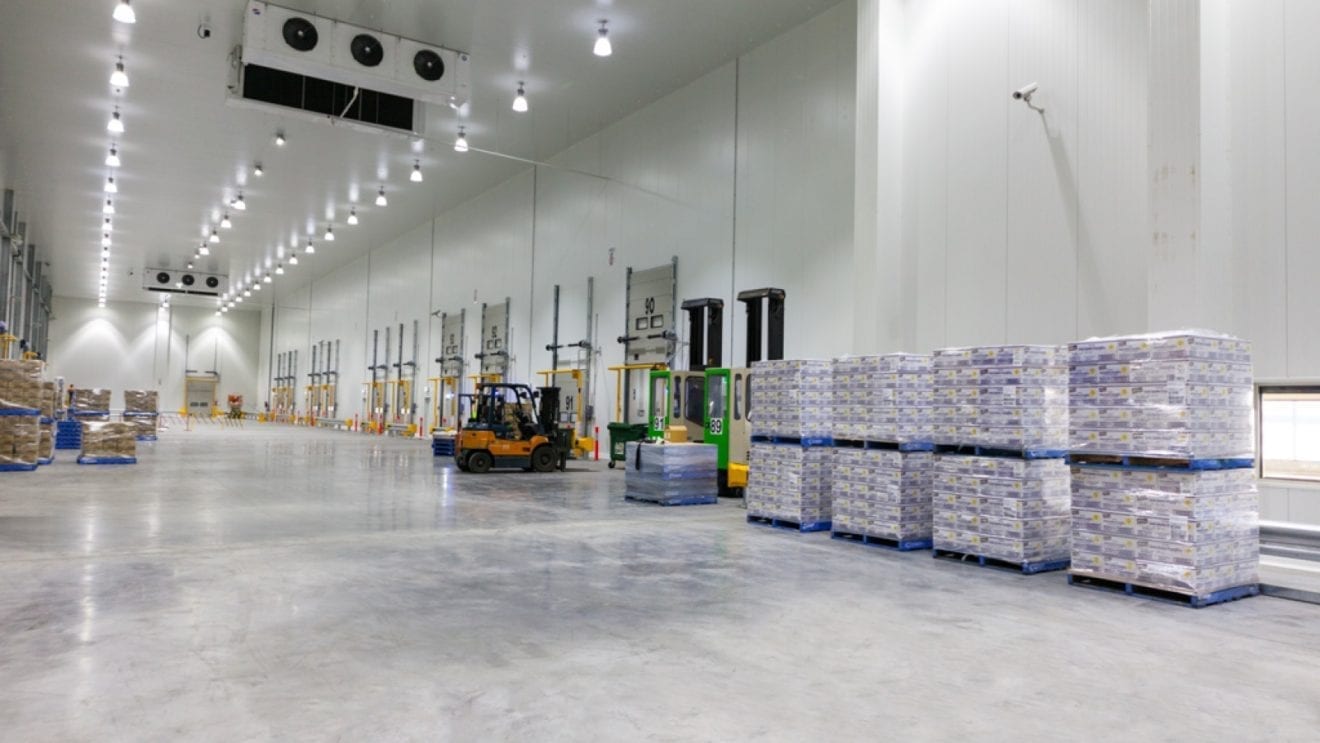
    Australia’s largest privately-ˇowned cold storage operator, Oxford Cold Storage is seeking an operational and financial partner to expand its world-ˇclass cold storage services across Asia.

    In a global first, Oxford is piloting a system of Automated Guided Vehicles (AGVs) in a third party temperature controlled environment to ensure accuracy, improve safety standards and allow for 24-ˇhour operation, delivering significant competitive advantage in the industry leader’s push for international expansion.

    Founded by the Fleiszig and Stern families over four decades ago, Oxford is a third-ˇgeneration business, now operated by brothers, Paul and Mark Fleiszig, alongside their cousin, Rodney Fleiszig. At the helm are brothers Stephen, Gabor and Luis Fleiszig. “Oxford is extremely well positioned to take advantage of the thriving Asian middle-ˇclass’ skyrocketing demands for produce. As this demographic develops, there is less time for people to wait for fresh food in a traditional market sense, so cold storage is becoming a vital component of the food chain,” said Oxford Director, Paul Fleiszig.

    Paul Profile Pic copy[3IxI]

    “We are at the forefront of logistics technology, designing our own systems with growth in mind to ensure scalability for the next phase, supported by our expertise in data mining and high-ˇdensity operation.” Delivering an annual turnover of $80 million within a robust growth industry (5% p.a. in Australia), Oxford was the first company to introduce a real-ˇtime radio frequency track and trace warehouse management system in 1995.

    “A key priority for us is staying ahead of the logistics technology curve through continuous improvement across warehouse operations. Our R&D team is responsible for ensuring we exceed national and international regulations, meeting the increased need for “paddock to plate” tracing while delivering the best possible service for our customers,” Paul explained.

    As the operator of the largest third-ˇparty temperature controlled warehouse in the country and 20th largest operator globally, Oxford offers racked storage for over 175,000 pallets, with the capacity to freeze 12,000 cartons and carcasses daily. Mike Robbins, Oceania Head of Physical Logistics at Nestlé Australia Ltd said: “Oxford Cold Storage is the most innovative operator in the Australian temperature controlled supply chain. The business invests heavily in technology, offering benefits within and beyond the warehouse.”

    “Oxford is extremely agile and are able to react quickly to changing customer requirements. Through the application of flexible IT solutions applied to operations optimisation Oxford have been able to deliver end to end supply chain efficiencies in warehousing, transport and inventory management.”

  • Visa and TAT launch the Amazing Thailand Grand Sale 2016

    Visa and TAT launch the Amazing Thailand Grand Sale 2016

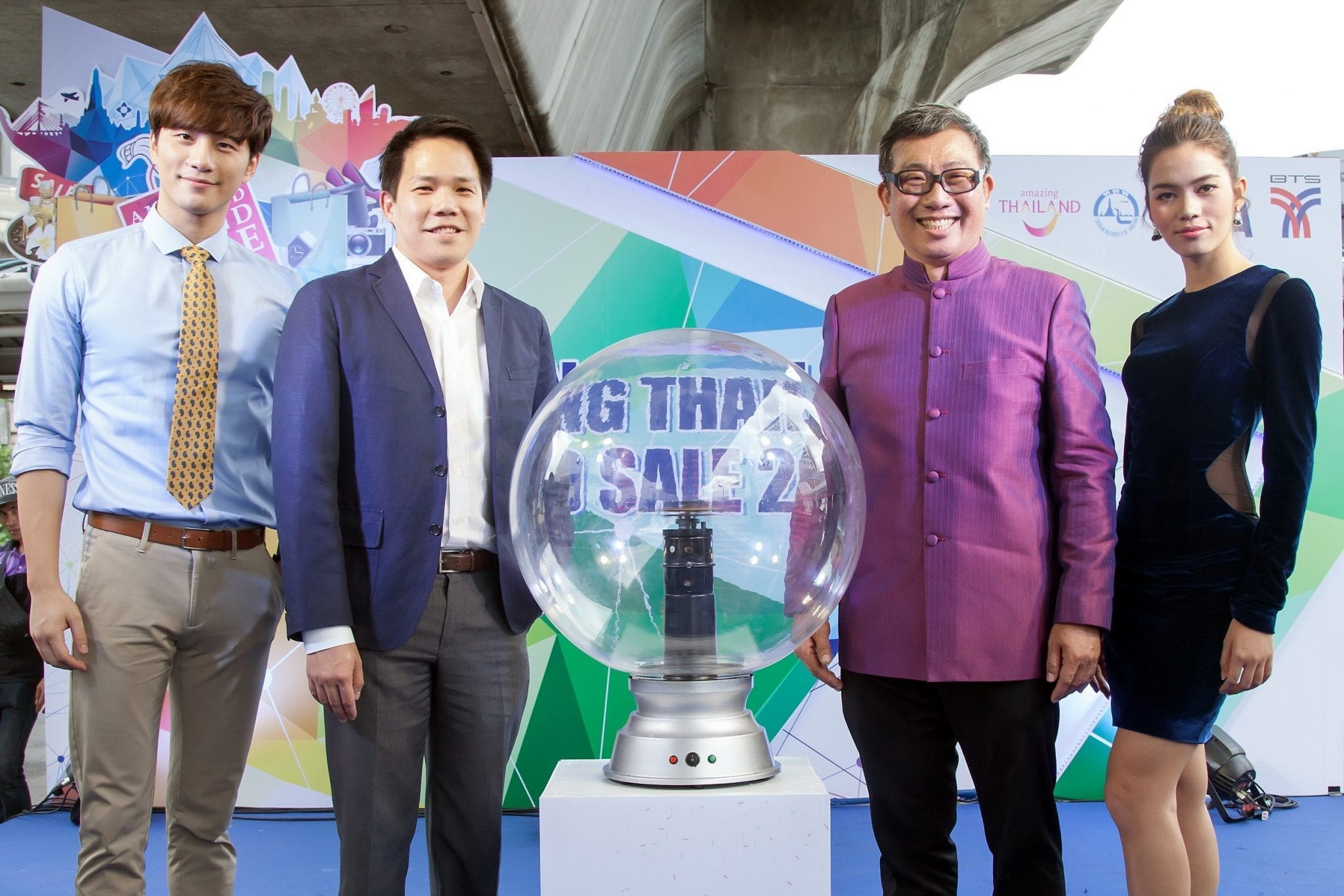
    Mr. Suripong Tantiyanon (second from left), Visa Country Manager, Thailand and Mr. Wiboon Nimitrwanich (second from right), Executive Director, Tourism Investment Department, Tourism Authority of Thailand presided over the launch of the Amazing Thailand Grand Sale 2016 campaign. More than 15,000 shops in 110 department stores and shopping centres in seven major tourist destinations of Bangkok, Pattaya, Chiang Mai, Phuket, Hat Yai, Hua Hin and Udon Thani participating in the campaign which starts today and ends on 31 August 2016. Visa cardholders get special privileges on top of the program.

    For every 500 Baht spent with their Visa cards during the campaign period, shoppers get two tickets to enter “The Travel 365 Days in Thailand” lucky draw. The grand prize includes two sets of flight tickets and accommodation, one for international traveler and another for Thai shopper. Winners can travel with a friend to any Thai airways domestic destinations and stay at any Centara Hotels & Resorts property throughout the year and up to ten days per visit. The campaign is back for its 18th successful year. Terms and conditions apply.

  • UnionPay expands card issuance and acceptance in Thailand

    UnionPay expands card issuance and acceptance in Thailand

    UnionPay, an international payment network, continues its expansion in Thailand with the announcement of two new card issuing banks. From June 2016, Kiatnakin Bank and Land and House Bank will join Bangkok Bank, Bank of China (Thai), ICBC Thai, Kasikorn Bank, and Krungthai Bank in issuing UnionPay debit and credit cards.

    Acceptance of UnionPay cards is also on the increase, with near complete nationwide coverage of ATMs and almost 90% of merchants now accepting UnionPay cards. This includes a wide variety of merchants and Thai cardholders can pay using their UnionPay debit or credit card at large department stores, airports and downtown duty-free shops, hotels and tourist attractions, as well as everyday spend merchants like convenience stores, chain supermarkets, cinemas and restaurants.

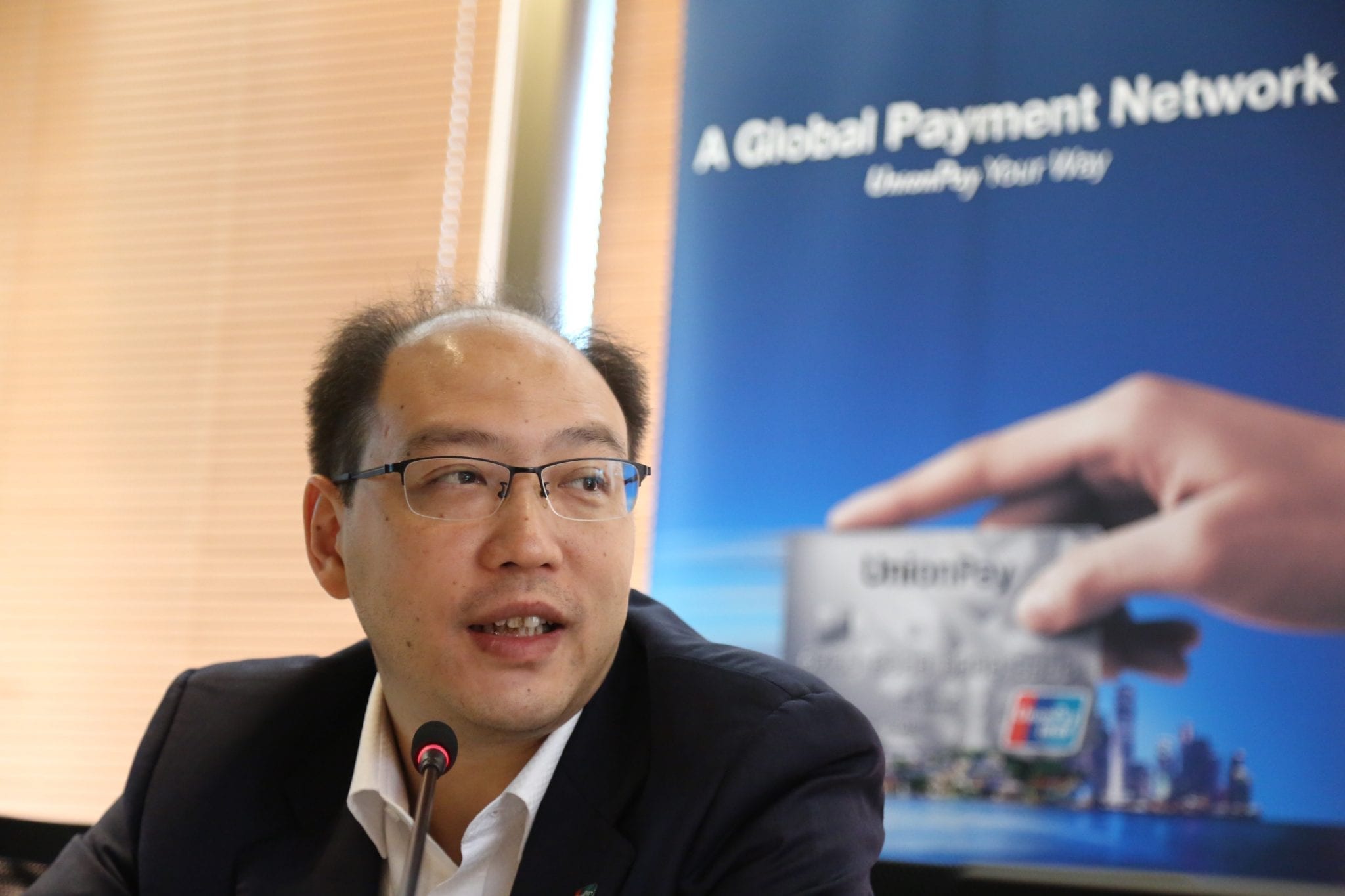
    “Thailand is a very important market for UnionPay International and we are delighted to see there are increasingly more opportunities for consumers to shop and pay using their UnionPay cards. We are intensifying our efforts to meet growing demand by expanding our acceptance network and enlarging our issuance scale both locally and regionally. In Thailand, we are bolstering card issuance by expanding our debit and credit portfolios rapidly to meet the specific demands of the market, and the addition of new card issuing banks will will offer more choices to Thai consumers and businesses. We are delighted to welcome both Kiatnakin Bank and Land and House Bank as valued partners to our growing network of card issuers,” said Wenhui Yang, General Manager of UnionPay International Southeast Asia.

    “Debit card usage is growing in Thailand and it is important we are able to support our customers’ needs. The introduction of the Kiatnakin Bank UnionPay debit card addresses these needs as well as giving our customers access to a global network, meaning they can use the card when they travel as well as in Thailand. We have worked closely with UnionPay International to introduce this card and we look forward to a long and fruitful relationship,” said Mr. Aphinant Klewpatinond, President and Chairman of Commercial Banking Business, Kiatnakin Bank.

    Mrs.Sasitorn Pongsatorn, President, LH Bank Public Company Limited, commented “LH Bank is committed to continuous development of our products and services. We have joined with Union Pay to launch the LH Bank Debit Chip Card as this will help make financial transactions or bill payment services without cash easier for our customers, who will also be able to benefit from discounts or privileges around the world. We believe the new LH Bank Debit Chip Card with UnionPay will meet our client’s financial lifestyle needs. New cards can be issued free of charge and withdrawing money from any ATM will also be free of charge with unlimited access nationwide.

    For those who are interested, the bank will offer free annual fee for the first year.

    UnionPay cardholders benefit from extensive range of benefits

    UnionPay cardholders can benefit from promotions and offers from a range of businesses in Thailand. Throughout June and July, holders of the recently launched Bangkok Bank Be1st Smart TPN UnionPay card will receive a 50% discount when buying movie tickets for any seat at Major Cineplex branches around Thailand. Travelers can also benefit when using their UnionPay debit or credit card at King Power shops at airports and duty free shops in Thailand. When spending THB 15,000 or more in a single receipt between now and August 31st, Union Pay cardholders can enjoy a THB 500 discount.

    UnionPay cardholders in Thailand can also enjoy special discounts and privileges at their favourite destinations such as Singapore, Tokyo, Osaka, Seoul, Hong Kong, Taipei, Kuala Lumpur, Paris and London as part of the company’s 2016 Global Airport Campaign which features 120 participating duty-free shops at 80 airports, including 16 of the busiest airports across the world.

    In addition to extensive benefits, UnionPay card members benefit from secure and convenient cashless ATM and POS transactions in 160 countries and regions including Thailand that accept the UnionPay card.

  • DFS City of Dreams Macau : Look Inside

    DFS City of Dreams Macau : Look Inside

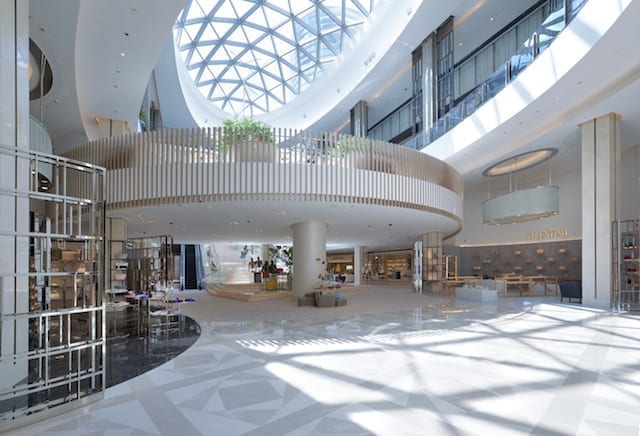
    An expansion of Macau’s DFS City of Dreams retail area has been launched, offering a lifestyle luxury shopping experience in the heart of the Cotai Strip.

    Three times larger than the former retail space, it was unveiled by gaming and entertainment group Melco Crown Entertainment and luxury travel retailer DFS Group. The area is being run by T Galleria by DFS.

    Styled like an edgy department store, the space uses elements of glass, marble and steel combined with warm wood accents, designed to be both dramatic and intimate. The space links dining areas, casinos, retail stores, entertainment attractions and hotels.

    Melco Crown Entertainment chairman/CEO Lawrence Ho says the group’s flagship property beings many firsts to Macau. “It features the largest collection of luxury brands in Cotai and creates an exciting luxury shopping scene for all aspirational, sophisticated and cosmopolitan leisure seekers in the region.”

    DFS Macau


    DFS Group chairman/CEO Philippe Schaus says Macau continues to be an important destination for its customers, “which is why we are thrilled to unveil a retail concept that is a first for DFS in terms of its scale, audacity and innovation”.

    Curated selection

    He says it is a first for Macau in terms of providing a curated and modern product selection across the major luxury categories. “T Galleria by DFS, City of Dreams will combine the breadth of a luxury shopping mall with the personalised service of a high-end department store.”

    Opening in phases from now until December, City of Dreams’ T Galleria by DFS will have the largest collection of luxury brands in Cotai, including beauty products and fragrances, fashion and accessories, and watches and jewellery brands.

    It will also introduce exclusive T Galleria signature customer services, including the first-ever shoe salon as well as a multi-brand lifestyle shopping area dedicated to men’s fashion and grooming.

    DFS Macau. 1

    Offering more than 50 men’s and women’s shoe brands across two floors, highlighted by exclusive-to-Macau brands such as Aquazzura and Rupert Sanderson, the shoe salon will be the largest in Hong Kong and Macau.

    The expanded beauty and fragrance section opens this month. When fully expanded, the 23,000 sqft (2136.7 sqm) space will comprise two wings and feature nearly 70 brands, making it the largest beauty hall in southern China. It will include Korean brands Hera, Laneige and Sulwhasoo.

    A first for men

    Also opening his month are 31 fashion and accessories brand outlets, including Dior, Fendi, Louis Vuitton, Miu Miu and Prada. And for male customers, for the first time at any T Galleria by DFS store there will be a multi-branded, lifestyle area that mixes ready-to-wear, accessories, shoes, watches and grooming all in one space.

    By the end of this year, the phased opening will culminate in a significantly wider jewellery offering, bringing key luxury brands Tiffany & Co. and Van Cleef & Arpels to City of Dreams, as well as new watch boutiques from Audemars Piguet and Vacheron Constantin.

    Dining outlets will also be integrated into the environment.

    DFS Macau. 2

    Developed by Melco Crown Entertainment, City of Dreams is an integrated resort that brings together a collection of brands including Crown, Dragone, Grand Hyatt and Hard Rock, with more than 20 restaurants and bars, the world’s largest water-based extravaganza in the Dancing Water Theater, and accommodation options.

    The mall extension follows a new package of social and economic policies for the city, released under the Macau government’s Five-Year Development Plan. By 2020, the government wants to see non-gaming income account on average for at least 9 per cent of all revenue generated by casinos, compared to an estimated 6.6 per cent in 2014.

  • Jollibee Manhattan opens

    Jollibee Manhattan opens

    Jollibee Food Corp has taken its Chikenjoy and other Filipino favourites to Manhattan.

    The third Jollibee store in New York is located in what is dubbed the busiest bus terminal in the world, Port Authority Bus Terminal, Manhattan’s major gateway. It is on 609 Eighth Avenue between West 39th and 40th streets.

    Jollibee Manhattan, which has 255 sqm in floor area, takes the total number of stores in the US to 34.

    Recently Jollibee hit a milestone when it opened its 1000th global store at The Dubai Mall. It has also opened two stores in Singapore in addition to the first one it set up on Orchard Road. The company now sets its sights on high-expansion growth in the US, Middle East, Europe, Australia and Southeast Asia.

  • Siam Center Unleashed the Creativity in  “Siam Center Art Traction” Art Exhibition

    Siam Center Unleashed the Creativity in “Siam Center Art Traction” Art Exhibition

    Siam Center, the Ideopolis, sparks the creative ideas in “Siam Center Art Traction”, on the 1st and 2nd floor of Siam Center until July 2016. The exhibition displays a wide range of well-selected art pieces by several artists from various fields of art, such as world-renowned Malaysian artists Jun Ong, well-known Thai artists like Jitsing Somboon, Anon Pairot and Rukkit Kuanhawate, and young artists from four leading universities in Thailand. Last but not least, the art lovers will meet Mr. P Water, the art installation by Propaganda.

    Chanisa Kaewruen, Senior Deputy Managing Director for Marketing Events and Business Relations, Siam Piwat Co., Ltd., revealed that Siam Center has played the leading role as the center of arts, fashion, technology and lifestyle. It always seeks for the world-class work of art to inspire people. Now, Siam Center is hosting Siam Center Art Traction between June and July 2016 to display the masterpieces of famous artists in different fields. The exhibition starts with Jun Ong and his PLASTIC PARTITIONS, using mixed art to serve as the board of idea. It displays questions and let the visitors give comments by pressing the button on LED screen, which projects the different levels of brightness. When the visitor presses the button three times, the blinking light will appear. It means the visitor absolutely agrees with the question. If pressed twice, the button will show the still light, which means the visitor simply agrees. If pressed once, the button will project the dim light, which represents the visitor’s disagreement.

    11. Artpiece from Museum road selected by Jitsing Somboon

    Two more exhibitions are held to promote the talent of students from the leading universities. First, Jewelry Degree Showcase by Silpakorn University displays the theses of senior students of Jewelry Design Department, Faculty of Decorative Arts, Silpakorn University. Moreover, the art workshops are weekly conducted on cold enamel, wire bending, drawing, gold leaf covering, knitting, crochet, stamping letters on metal plate and making wool accessories respectively. This exhibition will take place until July 31, 2016, at the area connected to BTS on the 2nd floor of Siam Center. Live Design Functional Art Project by Silpakorn University exhibits the theses of the senior students of Applied Art Study, Faculty of Decorative Arts, Silpakorn University, between June 23 and July 31, 2016, on the 1st floor of Siam Center.

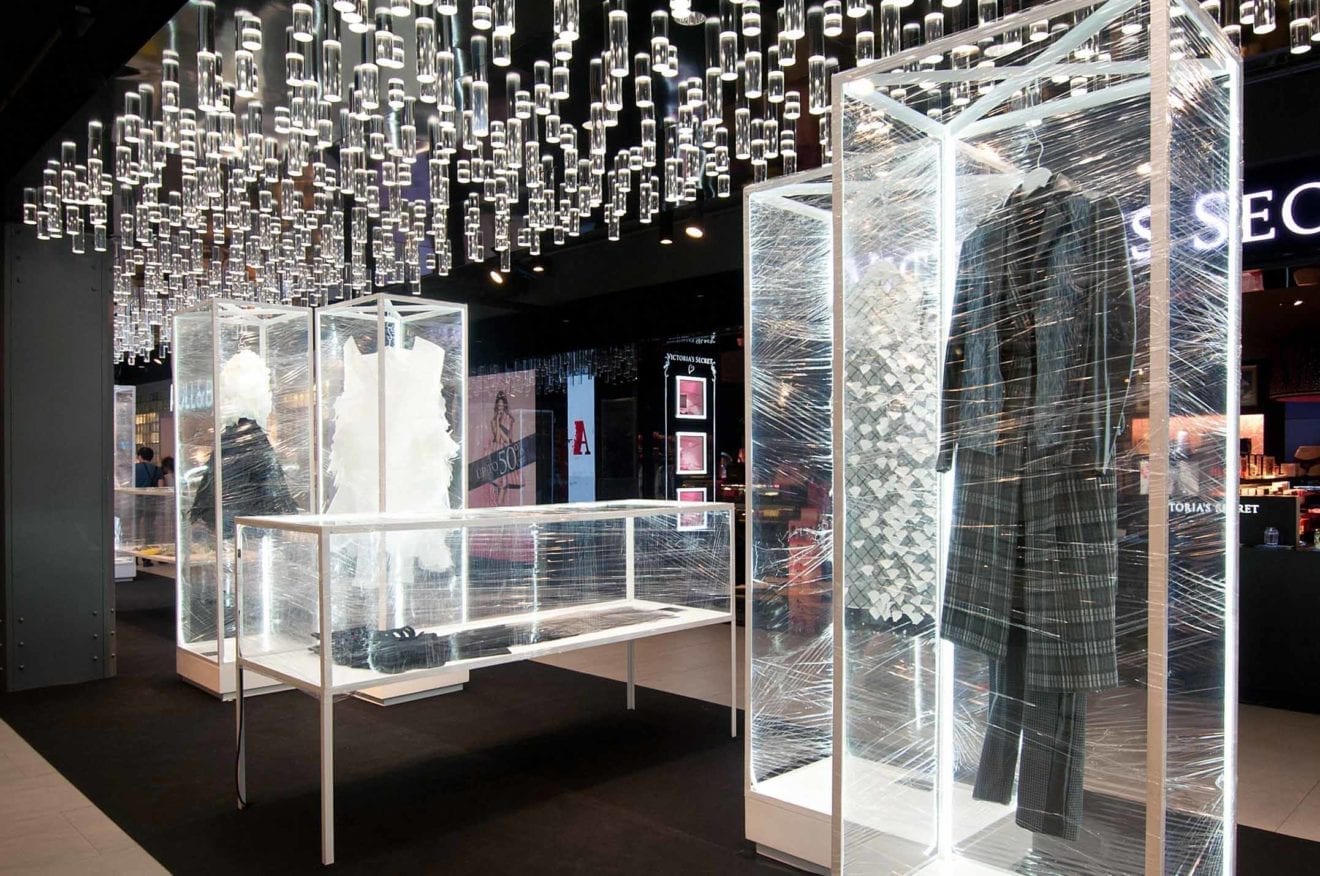
    Another must-visit exhibition is “Museum road selected by Jitsing Somboon”, which takes place until July 31, 2016, on the 1st floor of Siam Center. Jitsing Somboon, Creative Consultant of Greyhound, selected these impressive items from the fashion theses of senior students from four leading universities, namely Silpakorn University, Srinakharinwirot University, Rangsit University and Bangkok University. He admired the distinctiveness of these exhibits because they combined both old and new techniques. For the materials, some students selected the forgotten materials while others used new and bold materials to inspire the visitors. Therefore, the fashion items in this showcase were something beyond clothing. They were art objects displayed in one-sided glass cabinet covered with wrinkled plastic. He got this inspiration while taking a tour in museums and browsing through art pieces. That’s why he would like to reflect the value of the students’ work and their effort in an easily accessible way.

    In addition, Siam Center presents Art Installation by Rukkit Kuanhawate on the 1st floor of Siam Center and Donate It Forward by Anon Pairot, together with his partners, to encourage everyone in the society to do the good deeds. Moreover, the famous Mr. P by Propaganda comes back with his new look called Mr. P Water as an eye-catching art installation that welcomes everyone at Parc Paragon.

  • Globe Telecom offers new-gen Chromecast

    Globe Telecom offers new-gen Chromecast

    Globe Telecom in collaboration with Google now offers the new generation Chromecast, with the promise for a connected life for the home.

    Globe’s broadband subscribers can avail of the new and improved Chromecast for an add-on of only P99 (about $2) per month.

    The company said its customers today are no longer just tied in using their smartphones and PC’s at home for personal consumption, they also demand better content to share and experience on a bigger screen.

    The new Chromecast offers the solution to “cast” content from their personal device such as movies, shows, music, games to a bigger screen TV using their HDMI connection.

    The solution is now equipped with better connectivity with the latest 802.11ac dual band Wi-Fi and three antenna structure for a more faster, stable and less buffering streaming using the latest mobile devices.

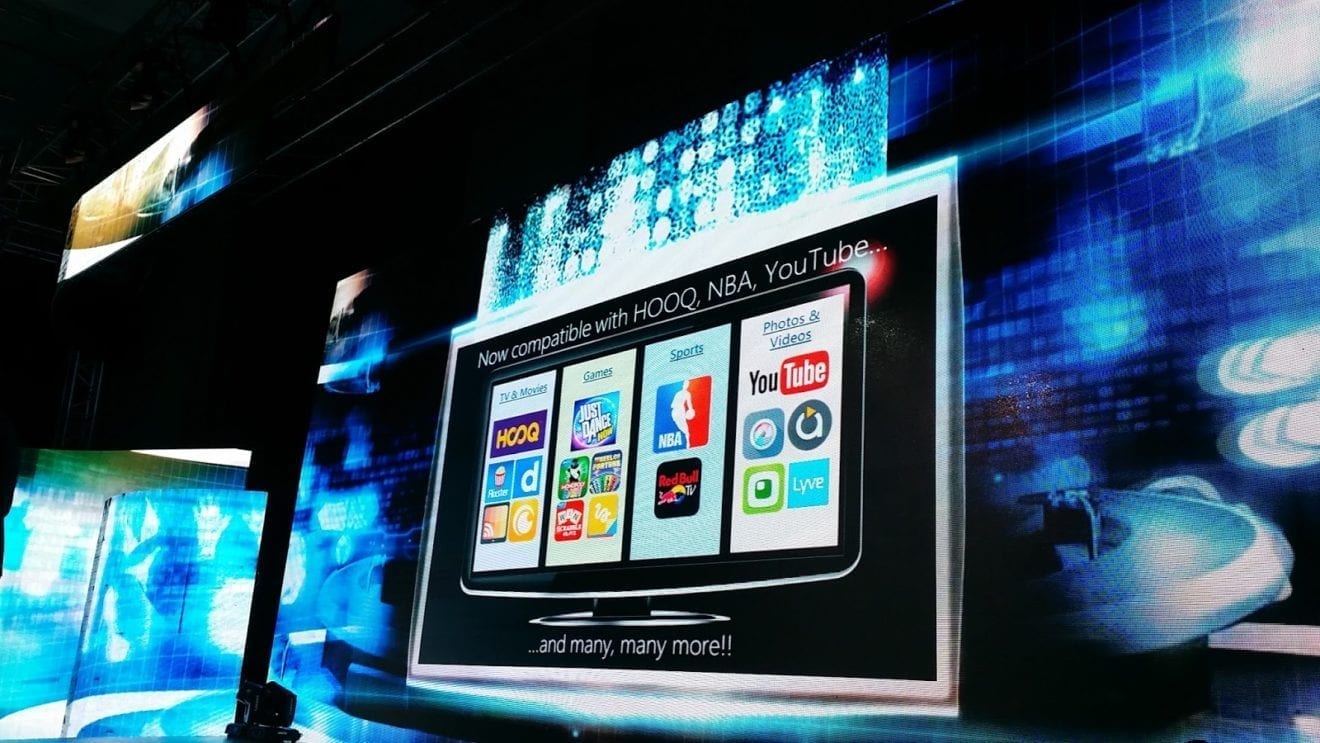
    Aside from being a better hardware, the new Chromecast is also fully compatible to cast with the latest entertainment apps including Globe exclusive digital content partners such as HOOQ, NBA and Spotify.

    “With our continuous partnership with Google, we stay true in providing new and meaningful innovations to fully maximize the digital lifestyle of our customers,” said Martha Sazon, Globe SVP for broadband business.

    “The latest installment in this is the new Chromecast, now with better features and compatibility to our content partners such as Spotify, HOOQ, NBA to a more immersive casting experience,” said Sazon.

  • Viacom expands direct-to-consumer offering

    Viacom expands direct-to-consumer offering

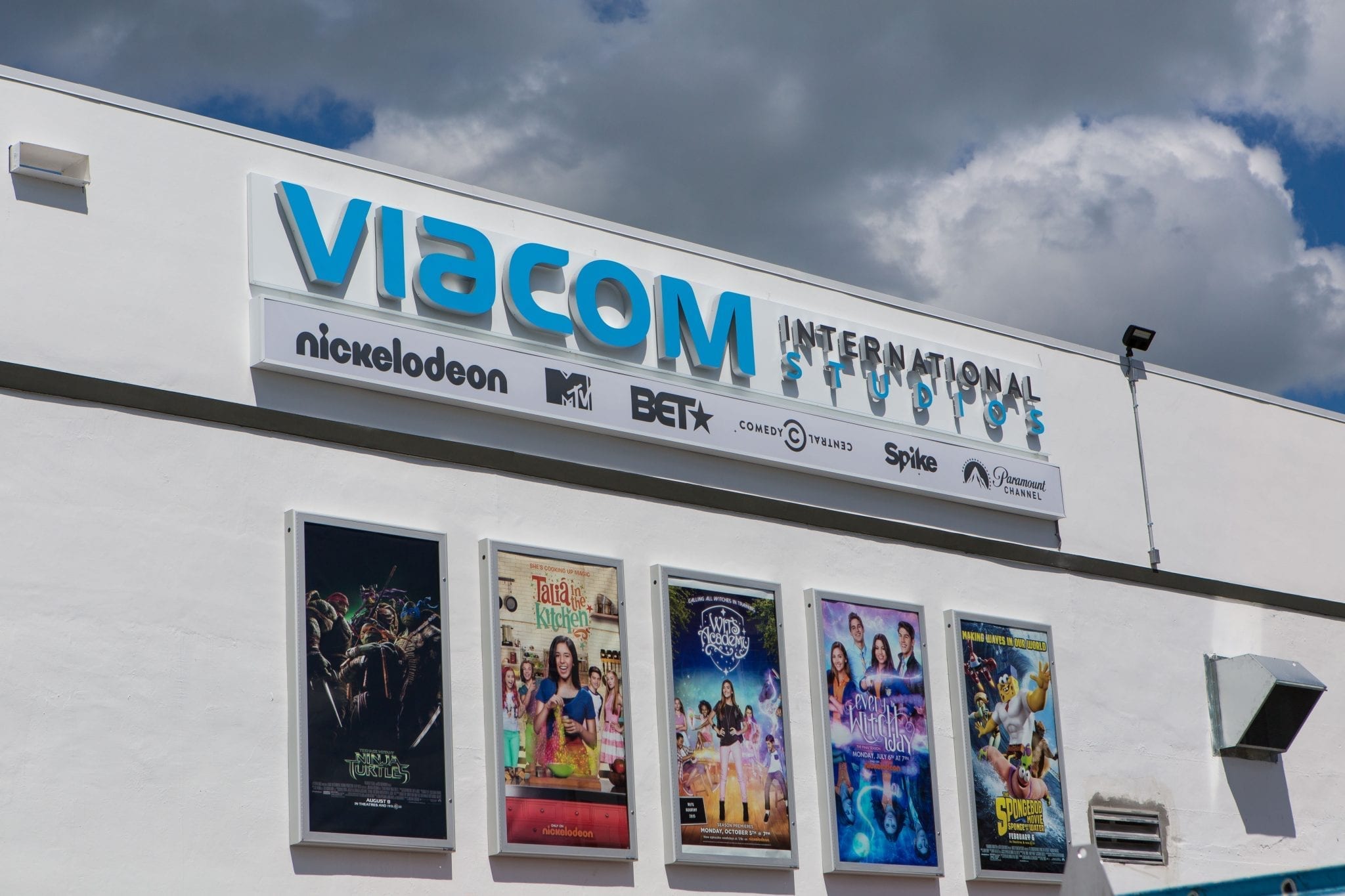
    Viacom International Media Networks (VIMN) has launched the BET Play direct-to-consumer, subscription video on demand (SVOD) application for the adult audience, giving consumers in 100 countries direct mobile access to BET’s content.

    BET Play offers fans an opportunity to watch English-language BET content — television series, documentaries, standup comedy, entertainment news and legendary musical performances — on their iOS and Android smartphones and tablets, as well as AirPlay-enabled television sets.

    “The launch of BET Play significantly expands the brand’s geographic availability by making it available direct to consumer in many markets where it has not previously had an established presence on TV,” said Michael D. Armstrong, EVP and general manager for international brand development at VIMN.

    The BET Play app also features a live linear feed of BET Soul, the premiere destination and leading music source for all soul music including R&B, Neo Soul, Alternative Soul, Classic Soul, relative Hip Hop, and Caribbean music.

    BET Play was designed to reach an international audience where they live – smartphones, tablets, and other digital devices – and creates an experience tailored to each of these screens.

    BET Play is the latest addition to the Viacom Play Plex suite of mobile TV apps, which offer smartphone and tablet users around the world access to the best content from all of Viacom’s international TV brands, anytime and anywhere.

  • Half of APAC cellcos have OTT partnerships

    Half of APAC cellcos have OTT partnerships

    Nearly every Asian mobile operator is interested in pursuing partnerships with OTT players to combat the growing problem of revenue loss, a survey suggests.

    The survey, conducted by Alepo ahead of Mobile World Congress Shanghai 2016, shows that just over half of respondents already have working partnership agreements with OTT providers.

    On the other hand, nearly two thirds of Asian operators are also directly competing with OTT providers with their own video, messaging or content service.

    Respondents indicated that declining voice revenues in the face of the growing popularity of OTT voice services is one of the main challenges operators face today. But revenue loss for OTT providers is higher for SMS than other services.

    Asked about the main obstacles to partnering with OTT providers, respondents named an inability or difficulty competing with the growing number of market entrants as the largest challenge, followed by difficulty controlling QoS of OTT services. Complications involved with billing for OTT services came third.

    By comparison, a lack of willingness to partner on the part of either the OTT provider and the operator were considered the least significant challenges.

    “It’s clear that mobile network operators in Asia Pacific recognize the emerging threat of OTT services on the bottom line and are proactively seeking new strategies and business models to overcome that,” Alepo director of marketing Danielle Elaine Smith said.

    “This report indicates that the implementation of those strategies is not limited by an unwillingness to partner by either the operators or the OTT providers, but rather by poor or outdated policy and charging control infrastructure that can’t adapt to meet the new realities of today’s dynamic APAC telecom markets.”