Tag: asia

  • Alfa goes all-out in RI e-commerce battlefield

    Alfa goes all-out in RI e-commerce battlefield

    Publicly listed retail giant PT Sumber Alfaria Trijaya, also known as Alfa Group, is stepping up efforts to intensify its presence in the e-commerce industry with the relaunch of its e-commerce platform on Monday.

    Alfacart.com, an online platform that serves as a complementary feature to physical Alfa outlets, was introduced Monday as the new name for the group’s Alfaonline.com, which was established in 2013.

    “This rebranding strategy is necessary as we want to create a full-fledged e-commerce business,” Alfacart CEO Catherine Hindra Sutjahyo told reporters.

    As a subsidiary of Alfa Group, which also owns minimarket chain Alfamart, grocery store Alfamidi and drugstore Dan+Dan, Alfacart aims to see its sales increase six-fold this year, from its 2015 figures, resting its optimism on untapped e-commerce potential in Indonesia.

    Catherine, however, refused to disclose a specific 2016 sales target.

    Alfacart plans to offer four lines of products, namely fashion, gadgets and electronics, daily necessities and lifestyle items.

    The company is targeting middle-class females and males aged 25 to 35 years old in big cities who are concerned with practicality and time efficiency and prefer to make purchases online.

    As one of its strategies to expand its business, Alfacart, Catherine said, would apply the online-to-offline ( O2O ) strategy to cater to Indonesia’s unbanked: those do not have access to bank accounts, savings and credit cards.

    The feature will enable Alfacart customers to order goods online through an application or website and pick up their purchases at one of the 7,000 Alfamart stores nationwide that have been integrated with Alfacart.

    “Alfamart has about 11,750 outlets nationwide, 7,000 of which are already integrated with Alfacart,” Alfacart chief operating officer and chief marketing officer Haryo Suryo Putro said, adding that the company will concentrate on providing services in the country’s major cities before expanding to smaller ones.

    In addition, Alfacart also allows small and medium enterprises to partner with the company.

    “Although we are selective in choosing our partners, our requirements are simple,” Ernest Tjahjana, the company’s chief commercial officer said, explaining that applicants only need to attach a copy of their tax registration numbers ( NPWP ) and identity card ( KTP ) to apply as a partner.

    In recent years, a growing number of e-commerce fashion, retail, and other businesses have been racing to provide the best online services to Indonesian customers.

    Some of them include an affiliate company of Djarum Group, Blibli, online marketplace Lazada and grocery delivery app HappyFresh.

    Based on data from idEA, the number of online shoppers in Indonesia hit 7.4 million last year, out of a total 250 million people in the country. This shows that the opportunity for e-commerce businesses to grow is still huge.

    Despite the growing number of e-commerce businesses in Indonesia, some have struggled to turn a profit here.

    Many foreign giants, such as Japan’s Rakuten and Germany’s Lamido — who both sell consumer products — exited the market. Clothing site Paraplou, travel booking site Valadoo and financial technology firm Inapay did the same.

    Alfacart’s Catherine, which was also a former director of Zalora Indonesia, acknowledged this was one of the main challenges in the e-commerce industry.

    “One of the biggest challenges in sustaining an e-commerce business is how to make it profitable in the long run,” she said.

  • Indonesia Revises E-Commerce Regulation

    Indonesia Revises E-Commerce Regulation

    Indonesia has one of the biggest economies in the Asia-Pacific region and its rate of internet adoption is one of the fastest in the world. So naturally, e-commerce in the region is starting to boom.

    According to Alibaba Group Executive Vice Chairman Joseph Tsai, Indonesia’s per capita GDP is about the same as China’s was in 2009, when Alibaba’s marketplaces really began to take off. Alibaba has taken steps to get a stake in the region, investing US$1 billion in Southeast Asia e-commerce platform Lazada, a Singapore-based company with extensive operations in Indonesia.

    To help help drive e-commerce growth in Indonesia, the government has made moves to open the country up to foreign e-commerce investment and expertise.

    Indonesia’s Investment Coordinating Board (BKPM) is finalising guidelines for foreign e-commerce investment. The new BKPM regulations will allow 100 percent foreign ownership for e-commerce businesses with a minimum investment of Rp100 billion (about AU$10.3 million) or businesses that create 1,000 jobs.

    The guidelines, however, limit foreign ownership to 49 percent for businesses investing below the Rp100 billion mark. The moves are designed to encourage big e-commerce investment from major players, while offering some protection to Indonesia’s local SMB e-commerce players.

    The removal of e-commerce businesses from Indonesia’s ‘negative investment list’ (which outlines business activities that are either entirely closed or conditionally open to foreign investment) provides a significant opportunity for foreign investment into one of South-East Asia’s fastest growing e-commerce markets.

    “I think this is the right time for Indonesia to aim to become the largest digital nation in Asia,” said Rosan Roeslani, Chairman of Indonesian Chamber of Commerce and Industry.

    “What this country needs is not only money but also know-how, which is why we invited incubators to come to Indonesia,” he said.

    “We have also talked about how we can get more start-ups to go through seed stage. One of the possibilities is to encourage big e-commerce players to spin their people off their company… We have not come out with the conclusion yet, but the government is very open for solutions,” he said.

    Indonesian President Joko Widodo is looking to make the country South-East Asia’s largest digital economy by 2020. The lifting of foreign ownership restrictions has been praised by those in the industry who welcome the injection of foreign capital and expertise.

    The removal of e-commerce from the negative list is part of Indonesia’s e-commerce roadmap, which was released earlier this year. The roadmap includes a list or proposals aimed at making it easier for e-commerce firms to operate in the country. Key elements of the roadmap include:

    • Government financied developments of logistics facilities and improvements to communication infrastructure
    • Government financing for start-ups in the form of grants and funds, as well as regulation for crowdfunding
    • Streamlining business licensing processesand increasing consumer protection regulationE-Commerce Regulation
    • Tax breaks for tech start-ups
    • Increased cyber security
  • Indonesian retailers making sales again

    Indonesian retailers making sales again

    Following a lacklustre trading year, Indonesian retailers are starting to find their sales figures turning around.

    Electronics, automotive parts and clothes have all seen an uptick in demand, reports The Jakarta Post.

    Ramayana Lestari Sentosa, which runs department stores for low- to middle-income consumers, has targeted its sale to grow by 7 per cent this year to Rp8.3 trillion (US$640 million) after shrinking 2.7 per cent last year, when the country’s economy had its weakest growth, at 4.79 per cent, since the 2009 global financial crisis.

    The latest Bank Indonesia retail sales index (IPR) shows 11.6 per cent growth year-on-year in March to 196.7, the highest level since July last year.

    Ramayana has 114 outlets in 54 cities.

    In Bandung’s electronics centre, ITC Kebon Kelapa, west Java, mobile phone retailers are finally seeing their sales pick up after plunging by up to 50 per cent at the start of the year.

    Retailer Ronny Suryadi says his sales plunged in January and February before picking up by 20 per cent in March when new models became available, dragging down the prices of the older phones. “Both consumers who prefer new types, although pricey, and old types with lower prices gain from the momentum, and as sellers we reap more revenues.”

    The index for information and telecommunications device sales was the highest at 409.9 in March, with the fastest growth (33.9 per cent year on year). The broader non-food index improved 12.4 per cent, while the food index grew 11.1 percent.

    “As non-food recorded higher growth than food, it shows that middle- and upper-income classes buy more,” says economist Enny Sri Hartati at the think tank Institute for Development of Economics and Finance (INDEF). It’s not bad, because the segment accounts for 40 per cent of the population.”

    Other than electronic devices, auto spare parts and accessories also had positive progress with 4 per cent growth, sitting at 110.2 on the bank index.

    Meanwhile, Nielsen’s first-quarter Consumer Confidence Index survey for Indonesia shows that 82 per cent of the 500 respondents say this year is the right time to spend more. The index has risen from 115 in December to 117 at the end of the quarter.

  • Indonesia sells 35 containers of kerupuk at Thaifex 2016

    Indonesia sells 35 containers of kerupuk at Thaifex 2016

    Indonesia’s traditional kerupuk (crackers) have become the star among other food commodities displayed at the Indonesian booth during Asia Thaifex 2016 in Bangkok, which is known as Asia’s biggest food and beverage expo.

    The snacks registered total orders of 35 containers worth Rp 12.9 billion ( US$950,000 ) at the event held from May 25 to 29, said an Indonesian trade attaché member in Bangkok, Rita Tri Mutiawati. The Trade Ministry and Industry Ministry collaborated on sponsoring Indonesian companies joining the event.

    “Thanks to the sponsorship of the Central Java administration’s trade and industry service center, Indonesia Selamat Sejahtera booked orders from China for 15 containers of prawn crackers, and South Korea also ordered 20 containers of fish crackers,” she said.

    Aside from kerupuk, Rita further said Indonesian seafood products manufactured by Fresh On Time were able to gain international buyers from the US, Mexico, and the European Union ( EU ) while similar products by Medan Tropical sealed a distribution agent in Thailand and the EU.

    From the 41 Indonesian companies who joined Thaifex, 21 were sponsored by the Industry Ministry, 10 were sponsored by the trade attaché and four were sponsored by the Central Java administration. Only six companies joining the event were without government sponsorship.

    The companies showcased their products ranging from seafood, instant seasonings, confectionaries, hot sauces, coffees, herbal medicines, biscuits, snacks, wafers, green tea, to cashew nuts. Indonesia’s representatives competed with 964 other companies in the event.

    “Thaifex is the door to export food and beverages products to other countries. Indonesian food and beverage manufacturers should not miss this opportunity,” Rita said, adding that there were one-to-one business matchings being made between Indonesian firms with other countries’ firms.

  • CJ CGV Opens 20th Store in Indonesia

    CJ CGV Opens 20th Store in Indonesia

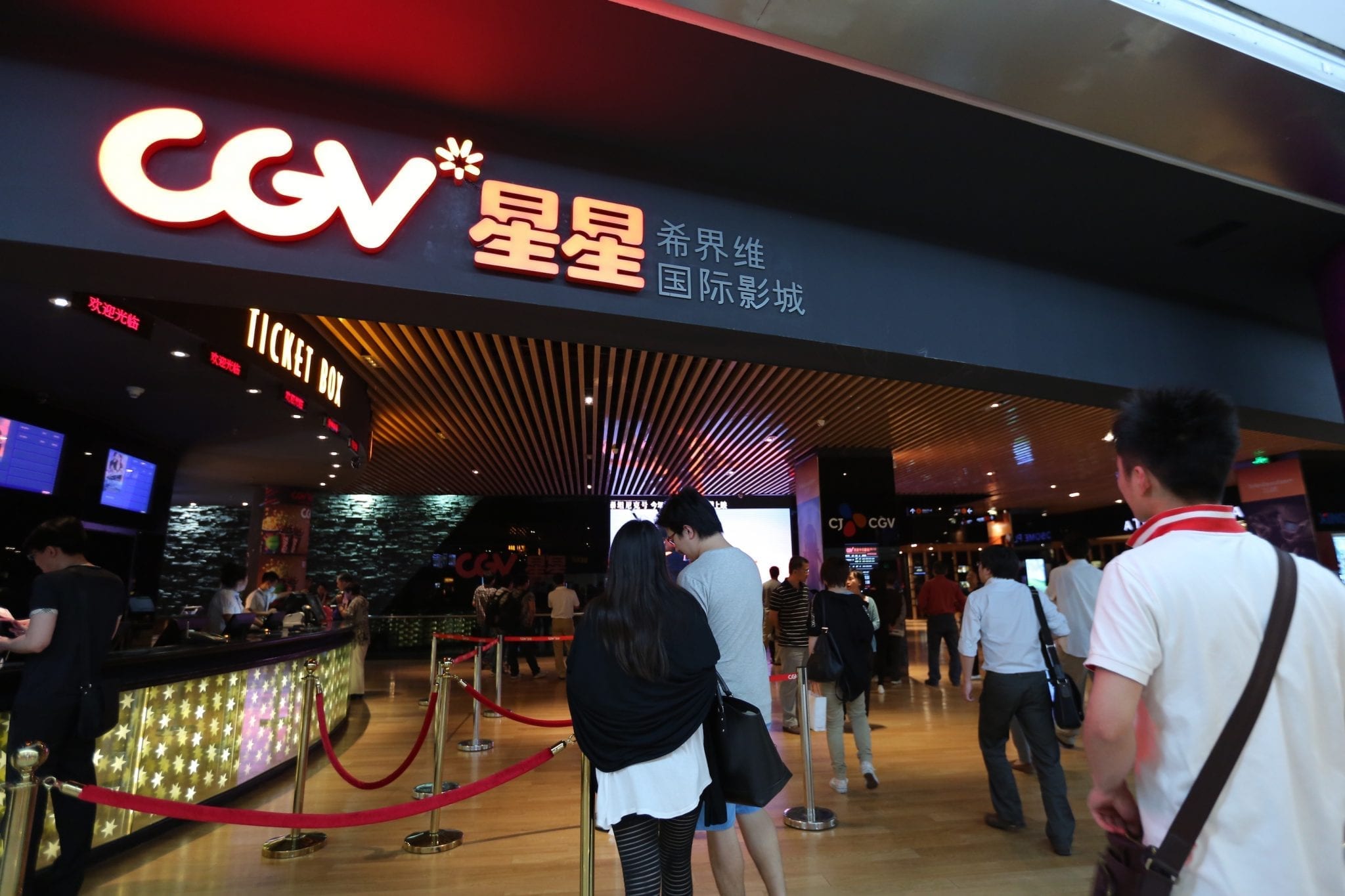
    CJ CGV announced on May 30 that it opened its 20th store “CGV Blitz Slipi” in West Jakarta of Indonesia on the 26th.

    With four screens and a total of 674 seats, CGV Blitz Slipi is located in “Slipi Jaya Plaza,” a large shopping mall situated at the center of office town and residential area. In a bid to offer the optimum viewing conditions, it has introduced premium 3S – Seat, Screen and Sound – services.

    The company now has 20 cinemas with 143 screens in two years and four months after CJ CGV started consignment management for Blitz Megaplex in January 2014.

    CJ CGV plans to open a total of eight more cinemas this year, including CGV Blitz Slipi. Based on this, it aims to generate about 60 billion won (US$50.4 million) in sales this year.

    Considering the fact that it turned over nearly 34 billion won (US$28.56 million) in 19 cinemas last year, CJ CGV is planning to aggressively double its market. It will also increase the number of audiences from 7 million last year to more than 10 million this year.

  • Alfamart to launch click and collect

    Alfamart to launch click and collect

    Alfamart is going to utilize its 10,000 store network as pickup points for its new online shopping platform Alfacart. Alfacart, the new e-commerce platform will carry one million products from sellers, and is expected to generation IDR1tn (US$70m) transaction. The existing shopping website Alfaonline will be replaced. The advantage of Alfacart over the other e-commerce players lies with its large store network of more than 10,000 throughout Indonesia. The retailer is also expected to be opening another 1,200 stores this year.

    We understand there are some players in the market but the high cost of last mile is still a concern,” said Sumber Alfaria president Hans Prawira, “We have presence in the market very close to shoppers.”

    E-commerce is due to boom in Indonesia

    With the growth in investment and acceptance of internet and mobile shopping, Indonesia is seen as the next frontier after China and India in Asia. The government wants e-commerce to become the backbone of its growing digital economy and leading players like Alibaba are also accelerating their expansion into Indonesia.

    Even though logistics is still a challenge due to underdeveloped infrastructure and the sheer size of the country, it is only a matter of time before we see the boom of e-commerce.

  • Lulu opens its first hypermarket in Indonesia

    Lulu opens its first hypermarket in Indonesia

    The UAE-based retail major Lulu Group marked its retail push into Indonesia with the opening of its first hypermarket in the country in capital Jakarta.

    The group has already announced plans to invest $500 million and set up 10 hypermarkets in the next three years in the country, as part of its expansion.

    The first Lulu hypermarket of the country was officially inaugurated by Joko Widodo, the President of Indonesia in the presence of Basuki Tjahaja Purnama, Governor of Jakarta; Thomas Trikasih Lembong, Indonesian Trade Minister; Ahmed Abdullah Al Mussali Al Awadi, UAE Ambassador to Indonesia; Husin Bagis, Indonesian Ambassador to UAE; and other ministers and dignitaries.

    Located in the Cakung sub district of East Jakarta with an area of over 200,000 sq ft., the new hypermarket is designed with customer convenience in mind and provides a one-stop shopping destination for the residents of the city.

    “With an initial investment of $300 million in the first phase, we plan to open 10 hypermarkets by end-2017 and a central logistics and warehousing facility in Jakarta. These projects are likely to generate more than 5,000 job opportunities for Indonesians,” said Yusuf Ali M A, chairman, Lulu Group.

    “We also plan to set up contract farming to ensure continuous supply of high quality products and to support the Indonesian agriculture sector,” he added.

    During the official visit to UAE last year, President Widodo had visited Lulu hypermarket in Abu Dhabi and expressed keen desire to have Lulu in Indonesia. He was especially impressed by the high standards of operations, quality of products and service and also the wide variety of products available in Lulu.

    The Lulu Group currently operates 126 stores across the GCC, Egypt and India and employs more than 38,000 people from different nationalities. It is also one of the largest retail chains in the Middle East.

  • Businesses to explore Indonesia

    Businesses to explore Indonesia

    Pakistan’s businessmen should take advantage from the large Indonesian market, an envoy said. Ambassador of Indonesia Iwan Suyudhie Amri, talking to the Lahore Chamber of Commerce and Industry (LCCI) Vice President Nasir Saeed, said bilateral trade needs to be enhanced as Pakistan and Indonesia are potential markets.

    Ambassador Amri said Pakistan’s rice and meat have great demand in Indonesia and therefore Pakistan’s businessmen should avail this opportunity.

    He said the LCCI is playing a significant role to strengthen the trade and economic relations between the two countries.

    Saeed said the implementation of Pakistan-Indonesia preferential trade agreement will begin a new era of cooperation and serve as a foundation for enhanced economic and trade cooperation.

    He said local businesses will increase exports to Southeast Asia’s largest economy under the preferential trade agreement.

    “There is also a lot of scope for Indonesia to make investment in Pakistan. Indonesia has a fairly advanced petro-chemical, rubber, plywood, telecommunication and tourism industry,” he added.

  • Temanggung to Establish Local TV Station

    Temanggung to Establish Local TV Station

    Temanggung administration will establish a local tv station as a medium for education in current globalization era.

    Temanggung administration official, Suyono, in Temanggung on Friday, May 27, 2016, said before the construction of the tv station building, his office had conducted a survey of local residents.

    “[Survey] result shows that the majority of Temanggung residents support the establishment of Temanggung tv station,” he said in the cornerstone-laying of the construction of Temanggung tv station by Temanggung Regent Bambang Sukarno.

    “Temanggung tv station is not only expected to bTemanggungecome a medium for communication and interaction of Temanggung residents, but also to be a medium for education, information for the residents; information has become a basic need,” he said.

  • Blancpain Osaka shop-in-shop opens

    Blancpain Osaka shop-in-shop opens

    As well as opening a Blancpain Osaka shop-in-shop, the Swiss watchmaker has a new flagship boutique on one of Hong Kong’s busiest streets.

    Blancpain-Hong-Kong

    Blancpain’s new Japanese concession is inside the Hankyu Department Store Umeda Main Store, on its seventh-floor luxury-watch outlet area, which has just been remodelled. Crafted by a Swiss cabinetmaker, the interior design of the Blancpain outlet features woodwork and mouldings along with streamlined furniture and displays.


    Blancpain Japan 1

    Visitors can see such Blancpain masterpieces as the Carrousel Volant Une Minute, the Fifty Fathoms Bathyscaphe and the Ladybird.
    Blancpain Japan 2

    Founded in 1735, Blancpain develops its components and tools in house, with a single watchmaker manually assembling each movement.

  • 9 in 10 telcos go Hadoop to fight revenue fraud

    9 in 10 telcos go Hadoop to fight revenue fraud

    Telecoms revenue fraud is a primary driver for increased Apache Hadoop adoption, according to a recent poll of telco and enterprise users by Cloudera and Argyle Data.

    Communication service providers lose around $38 billion to fraud every year.

    Conducted during a recent webinar to introduce Cloudera and Argyle Data’s joint fraud prevention platform, the survey indicated that over 90% of attending organizations already use or intend to use Hadoop for fraud prevention.

    About one-third (34%) of attendees said they already have Hadoop in place and may use the platform in their fraud prevention efforts.

    “Fraud prevention is a textbook use case for Hadoop-based analytics because the ROI is immediately visible,” said Vijay Raja, solutions marketing manager at Cloudera. “Real-time machine learning relies on large amounts of data to detect sophisticated revenue threats, making Cloudera the ideal platform on which to run Argyle Data’s threat analytics.”

    The platform enables mobile operators to reduce loss by detecting previously undiscoverable revenue threats, promising to deliver up to 350% improvement over rules-based offerings. The platform uses a native Hadoop architecture, combined with real-time data ingestion, analytics, and machine learning.

    “Unsupervised machine learning delivers everything telco fraud analysts need to be efficient at and deliver immediate ROI,” said Arshak Navruzyan, vice president of product management at Argyle Data.  “The Cloudera-Argyle Data solution interoperates seamlessly with all participants in the Hadoop cluster.

  • gen-E launches OpsCenter InfiniView BI platform

    gen-E launches OpsCenter InfiniView BI platform

    gen-E launched its business intelligence platform OpsCenter InfiniView, which “goes deeper and broader than current advanced analytics software” by combining and analyzing data across an entire business and comparing it against thousands of industry best practice KPIs.

    The automated results and recommendations are presented via a real-time dashboard view to help leaders make better decisions, improve efficiency, and gain full insight into the health and performance of their business.

    OpsCenter InfiniView analyzes aggregated data and adds context to the data streams on how it impacts each other. This provides a top-down business perspective on what is happening in the environment and the reasons behind it to see how and what needs to be done to adjust the KPI.

    “Though advanced analytics has certainly accelerated digital transformation initiatives of some companies, current market solutions stop at providing visual representations of data, leaving much of the heavy lifting of analysis to department heads and business leaders,” said Marc Hayden, gen-E CEO. “OpsCenter InfiniView provides decision making support through actual insights – it’s more intelligent business analytics.”

  • Intel India debuts three digital literacy projects

    Intel India debuts three digital literacy projects

    In a bid to bridge the digital divide in India, Intel has launched three projects to accelerate digital literacy at the grassroots level.

    Intel India aims to reach out to the population in rural areas, upskill citizens in tier two cities and beyond and encourage innovation at the local level.

    The chip manufacturing company will partner with state governments and the central government to set up 100 digital learning centers at Common Service Centres (CSCs) in rural areas. The company will work with state governments that are active on the Digital India program.

    “We are thrilled to see the progress made through our collaboration with the government of India on various initiatives like ‘Digital India’ that are bringing technology and innovation mainstream in India,” Robby Swinnen, General Manager, Intel Corporation (Asia-Pacific & Japan) said in a statement.

    Building on the momentum of its “Ek Kadam Unnati Ki Aur” initiative to accelerate access to technology in non-urban India, Intel India e-launched its latest “Unnati Kendra at Common Service Centre” (UK at CSC) in Karnal, the first in Haryana. The ‘UK at CSC’ will serve as the common access digital learning centers for people of the state.

    Intel India is working with the government to open a network of up to 100 ‘UK at CSC’ facilities across 10 states this year, with 10 such facilities already set up in the state of Telangana. The “Digital Unnati” website, set up in collaboration with the CSC e-Governance Services India Ltd, will enable Village Level Entrepreneurs (VLEs) to learn how to assemble a PC online and upskill their technology know-how.

    In addition, the Intel and Government of India’s Department of Science & Technology (DST) Innovate for Digital India Challenge will be launched later on in the year. The challenge supports local innovation and entrepreneurship and is a nationwide competition inviting technology solutions to solve real problems faced by citizens.

    “Intel India is fully committed to achieving the realization of a truly Digital India and has been supporting this vision by fostering innovation and upskilling of the non-urban population,” sums up Debjani Ghosh, vice president, sales and marketing and director, Intel South Asia.

  • Toyota resumes production in all Japan plants after quakes

    Toyota resumes production in all Japan plants after quakes

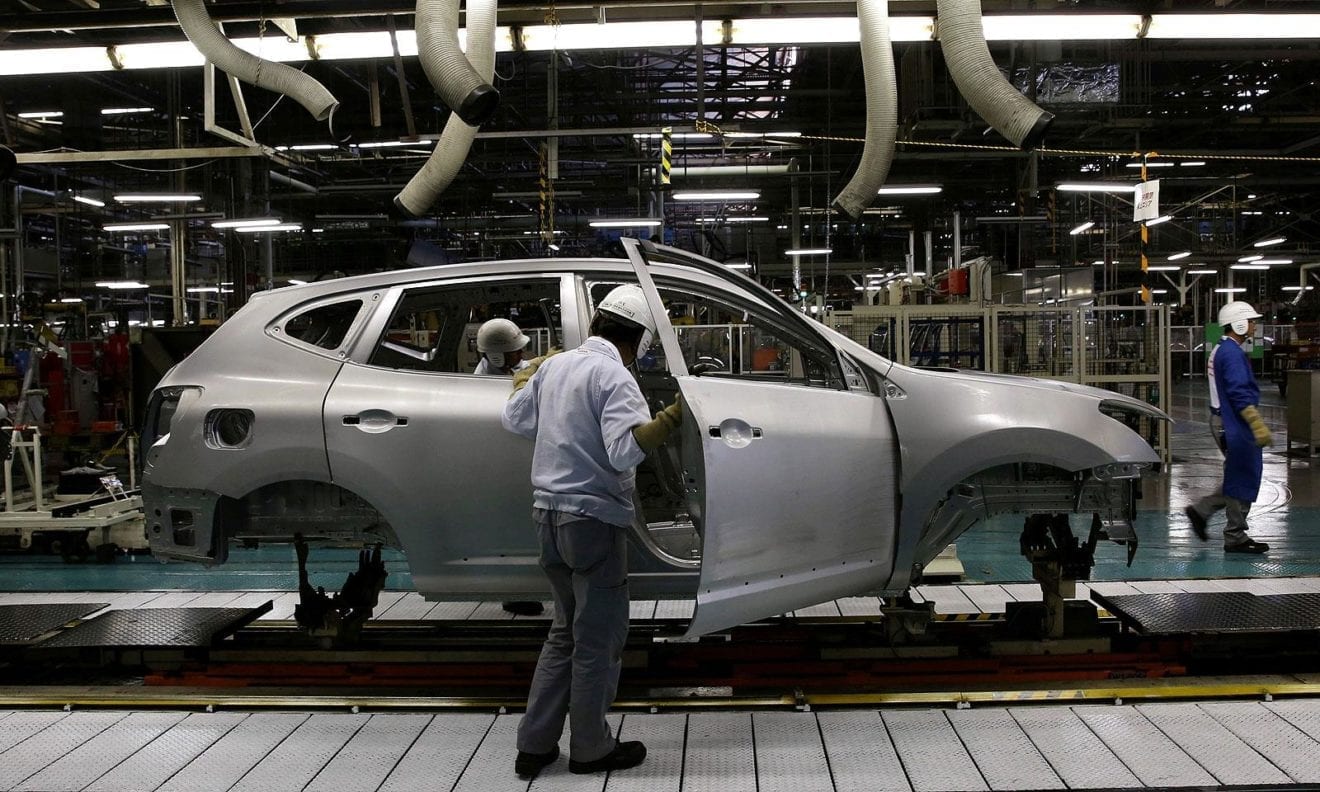
    Japanese carmaker Toyota Motors on Friday resumed production at all assembly lines in the country after operations were halted at most facilities due to powerful quakes that struck the nation in April.

    A company spokesperson told EFE news that the last five production lines that had remained closed due to the quakes were back online.

    The carmaker was forced to halt production in 26 of its 30 plants in Japan due to shortages of components manufactured by suppliers near the Kumamoto and Oita prefectures, which were the worst affected in the quakes.

    The temporary halt in operations in those assembly lines had affected the production of around 80,000 units, according to Japanese daily Nikkei.

    Transport and communications in several parts of Kumamoto and Oita are still experiencing disruption after the tremors, the worst since the March 2011 earthquake that caused a devastating tsunami.

    The recent quakes have also led to the temporary closure of factories owned by Japanese and foreign firms.

    Automotive manufacturers Mitsubishi and Honda Motors, and electronics giant Sony, also halted production at their Japan factories.

    The first 6.5-magnitude earthquake hit the area on April 14, followed on April 16 by a powerful 7.3-magnitude earthquake that caused building collapses and landslides.

  • Tesla calls out to build a million all-electric cars a year by 2020

    Tesla calls out to build a million all-electric cars a year by 2020

    Technology entrepreneur Elon Musk gave a public shout-out to the sharpest minds in manufacturing this week, calling on them to come help Tesla Motors Inc build a million all-electric cars a year by 2020.

    Musk says he is “hell-bent” on making the Silicon Valley automotive upstart a manufacturing powerhouse, but his vision relies on finding veteran auto engineers to ramp up volume ten-fold in four years – a challenge even for established carmakers.

    Tesla on Wednesday said it would build 500,000 cars in 2018, two years ahead of schedule, and close to 1 million by 2020. The same day Tesla said its vice presidents in charge of production and manufacturing were leaving.

    “You’re looking at a company with significant levels of management turnover at the highest ends, people without experience in the planning, design or build of vehicles, and you expect to crank it up at those kinds of volumes?” asked Michigan-based auto manufacturing consultant Michael Tracy.

    Putting aside the issue of capital requirements, auto experts point to a shortage of manufacturing engineers, whose ranks were thinning out even before the U.S. auto crisis hit in 2008.

    “It’s a constant issue we have in this country,” said Garth Motschenbacher, director of employer relations at Michigan State University’s College of Engineering.

    “For the longest time manufacturing was seen as the dirty end of engineering,” he said.

    At the same time, Alphabet’s Google and Apple are working on car programs and courting the same potential employees. So are established auto names like Ford Motor Co, General Motors Co and Toyota Motor Corp .

    A 2015 Deloitte report found it takes three months to hire skilled engineers, and the shortage is crimping manufacturers.

    Robust early reservations for the upcoming Model 3 mass-market car may have assured Musk of demand, but now comes the execution, said automotive recruiter Stephen Parkford.

    “It’s like reservations for a restaurant that’s not open yet. You got the menu, but you don’t have a chef!” he said.

    Hiring a highly proven production engineer from a traditional carmaker who arrived with his entire team could speed the process, Parkford said.

    But while young engineers will jump at the chance to work for Tesla, the “by-the-numbers, disciplined manufacturing guys” with 15-20 years experience will be harder to nab, said Cuneyt Oge, president of the Society of Automotive Engineers. One key obstacle is the high price of living in Silicon Valley.

    Musk needs a visionary auto industry veteran, Oge said. “But anyone with that kind of experience is going to say, ‘Hey, Elon, you can’t do this in two years.’”

    Tesla is known for pushing the envelope on design and technology but has stumbled in manufacturing, with prior launches marked by delays and quality issues.

    Traditional automakers have more human and financial resources than cash-burning Tesla: Tracy pointed to Nissan Motor Co Ltd’s ability in 2004 to bring in 200 engineers from Japan to help fix quality issues at its recently opened assembly plant in Canton, Mississippi.

    “Greybeards” are crucial to build and run factory systems, said Oge. “You can’t just defy the laws of business physics which require you to go down a learning curve collectively to build that systems know-how,” he said.

    While Tesla employees may cite Musk’s tirelessness and attention to detail, even bedding down inside his Fremont, California factory, others like consultant Tracy see a worrying sign.

    “If Elon is sleeping in a sleeping bag in a conference room off of the final assembly line, then there’s an awful lot happening in that factory that’s wrong,” Tracy said.