Tag: asia

  • DB Schenker to deploy robots for Prague facility

    DB Schenker to deploy robots for Prague facility

    DB Schenker is set to open a new automated fulfillment warehouse in the Prague region next year.

    Along with retail operations, the new 55,000-sqm distribution center will manage B2C e-commerce activities, including an extensive value-added services area addressing the demand for personalized products requested by consumers.

    The fulfilment center, which will be located near Prague Airport and a major highway that runs to Germany, is schedule to begin operating in the summer of 2023 to serve Central and Eastern Europe.

    DB Schenker said the current distribution center, also located in the Prague region, cannot accommodate the future demands of the customer. The current site will not be closed but used for reverse logistics services.

    The new distribution center will feature a highly scalable, modular G-T-P (goods-to-person) system combined with an extensive conveyor system and a high-performance cross-belt sorter provided by partner Körber.

    The facility will also feature one of the largest deployments of autonomous mobile robots in Eastern Europe. Körber’s software solution will control more than 100 AMRs that will be part of the highly automated logistics ecosystem.

    Despite the high automation level, the distribution center will require more than 1,000 operators at peak times, DB Schenker noted.

  • Spotify introduces new billing choice for Android users

    Spotify introduces new billing choice for Android users

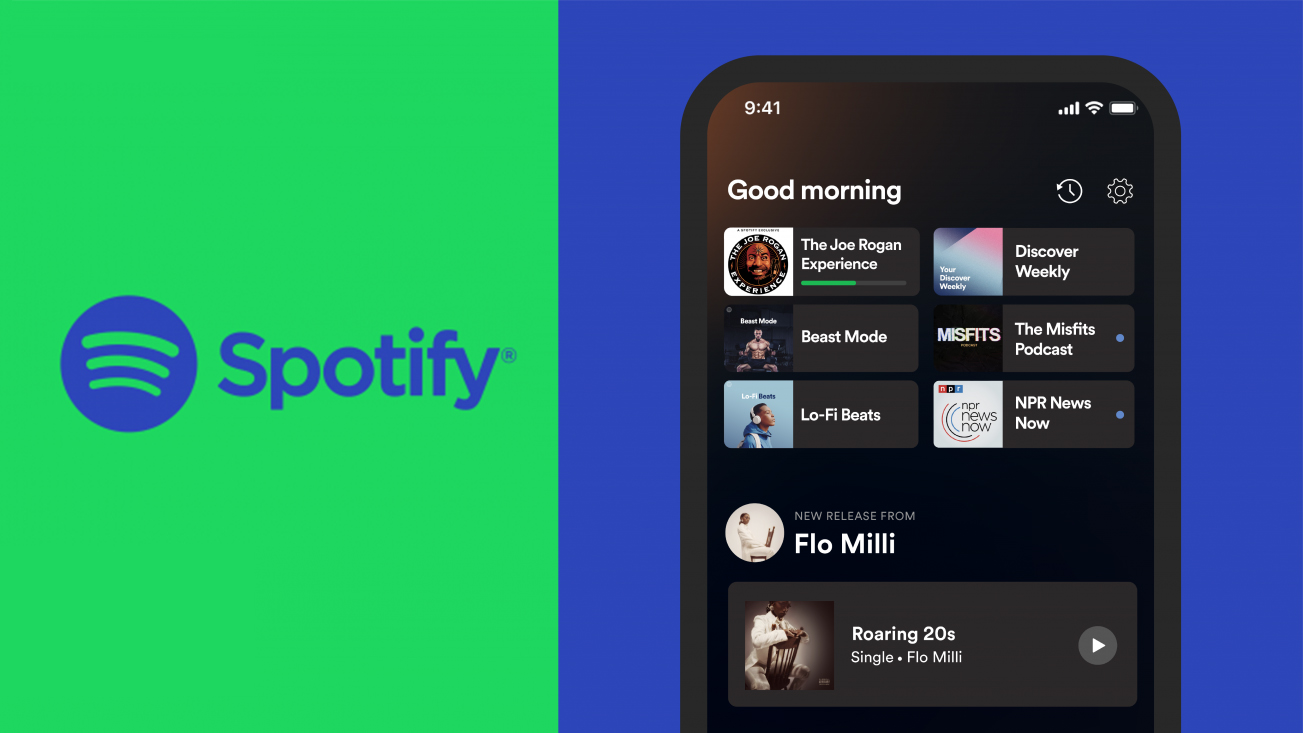
    Spotify and Google announced over the weekend they have partnered to offer customers using Android devices a new purchase experience. The new feature was unveiled in March but wasn’t released immediately. After months of working to build the so-called User Choice Billing (UCB), the feature is now rolling out to Android users.

    With the new User Choice Billing feature, Spotify users will be able to subscribe and make purchases using the payment option they want. Starting this week, UCB is making its way to Spotify subscribers in select markets around the world. Although Spotify did not mention where exactly the feature should be available in the next few days, it did confirm that it will expand the test to more markets in the coming weeks.

    Spotify is one of the first companies to implement UCB with Google. First tested with Google Play, the new feature is meant to provide users and developers more flexibility and choice when it comes to purchasing and selling products.

    Google Play’s user choice billing was initially introduced in Australia, India, Indonesia, Japan, and the European Economic Area, and later on expanded to the United States, Brazil, and South Africa. We can’t confirm if Spotify targets the same regions, but at least some of these countries should have the new user billing choice available.

    Bumble and Spotify are the first companies to partner with Google to provide their customers with new user choice billing, but more names might pop up in the coming months if the new feature proves successful.

    That said, if you’re living in one of the select markets where Spotify introduced the new feature, and you’re using an Android device, you should soon be able to choose how to pay for your Spotify subscription. If you’re using an iOS device, you’ll probably never benefit from this option, or at least not anytime soon.

  • WhatsApp Beta enables users to utilize the app on multiple phones

    WhatsApp Beta enables users to utilize the app on multiple phones

    WhatsApp is one of the staples of modern mobile communication. It offers safety through it’s end-to-end encryption and a list of features, which seems to have become ever-growing.

    Recently, the app got updated with a brand new feature called Call Links. Not much time has passed since then, and users enrolled in Beta already got some exciting news, which Whatsapp fans have been clamoring for: using a single account across multiple phones.

    The steps are very simple; however, keep in mind that this is only for a limited number of users on the Beta. The easiest way to check if you’ve got access to the feature is by tapping on the top right menu and checking for a “Link Device” option.

    If you see it, it’s pretty straightforward from there:

    1. Click on the Link Device button to generate a QR code
    2. Scan the QR code with your Companion device (phone or tablet)
    3. Presto! Now you have WhatsApp on both phones

    Naturally, make sure to have WhatsApp installed on your secondary device of choice. The process is very familiar to setting up WhatsApp Desktop, but again – this is a Beta. As such, bugs are expected, but your participation is sure to help clear them out quickly.

    WhatsApp seems to be looking to grow its services and it’s refreshing to see. Seasoned Android veterans are sure to have noticed how many apps are available, which allow users to utilize multiple WhatsApp accounts on a single device.That’s a sure sign that this is a sought-after feature, but it would be best served from the Meta-owned company, in order to ensure data safety. But still – maybe this is the next logical step in this update chain, but we will have to wait and see.

    Those of you who are already enrolled in the WhatsApp Beta program may want to check if the 2.22.24.18 update is available to them, though a wide rollout is still not unleashed. If you are excited to try this feature, make sure you enroll in the Beta program – you might be one of the lucky ones!

  • Lotus’s launches smart community centre flagship store

    Lotus’s launches smart community centre flagship store

    Thailand’s retail chain Lotus’s has opened a Smart Community Centre concept dubbed Lotus’s North Ratchapruek in the northwest of Bangkok.  Operated by Ek-Chai Distribution System, the $42 million project spans more than 47,000sqm and is home to 130 shops and a hypermarket, which features more than 28,000 products. A majority of tenants are new partners, who have opened a branch in conjunction with Lotus’s for the first time.  “The new Lotus North Ratchaphruek Smart Community Center w

    “The new Lotus North Ratchaphruek Smart Community Center will be a model for renovating existing Lotus branches and opening new branches in the future,” said Sompong Rungnirattisai, CEO at Ek-Chai Distribution System.

    Rungnirattisai said the company plans to roll out several hypermarkets next year by adopting concepts from the North Ratchapruek branch.

    Earlier this year, the operator disclosed it was to invest US$354 – $382 million in store openings, store revamps and the development of infrastructure and online systems.

    The company has recently shifted its focus to expanding omnichannel and introducing new retail formats, including the Smart Urban Supermarket concept, Smart F&B Heaven and Open Air Mall.

  • 6ixty8ight accelerates Southeast Asian expansion with Vietnam debut

    6ixty8ight accelerates Southeast Asian expansion with Vietnam debut

    At first glance, lingerie brand 6IXTY8IGHT’s retail store will draw you in with its pink facade, serving as a visual anchor. Its neonlight signages, with quirky quotes would make you want to whip out your phone for a quick snap; these are just the little details that will attract millennials. 6IXTY8IGHT was actually founded 2002 in Paris, by French lingerie designer, Marie Destombe, and Swedish business man, Erik Ryd. In the year 2003, Eric set up headquarters in Hong Kong, and launched the brand’s first store in Beijing.

    In an email interview with CEO of 6IXTY8IGHT, Ms. Jacqueline Porjé, she shared that the brand’s core audience is of the age between 15 and 25 years who love fashion and follow trends. But, “everyone who is young at heart can wear 6IXTY8IGHT!” she added.

    Porjé previously held the position of Assortment Director, a role she assumed since joining 6IXTY8IGHT in January 2015. In this position, she managed the brand’s overall product offering. She was promoted to Chief Executive Officer in 2017, where she now oversees the company’s assortment, finance, business development, operations, marketing and international expansion.

    So what makes 6IXTY8IGHT different from other lingerie brands out there? “We offer a wide selection of trending lingerie styles such as bralettes and wireless bras. We are also famous for offering pieces in a large array of colours, fun animal prints, comfortable modal fabrics, cotton-soft materials, feminine and girly lace and more,” Jacqueline stresses. 6IXTY8IGHT even recently launched their Lunar New Year offerings, paying homage to the Chinese horoscope with cute piglet motifs as well as a sizzling red collection.

  • No Last-Minute Savior in the Crypto Universe

    No Last-Minute Savior in the Crypto Universe

    The dramatic decline of the FTX crypto exchange has severely shaken investor confidence. For traditional financial institutions with crypto services, the debacle could represent an opportunity.

    A year ago today, the crypto scene was in a party mood. This time last year, the market capitalization of cryptocurrencies was at an all-time high of around $3 trillion, bolstered by bitcoin at just over $65,000. The golden age for digital assets had arrived. But what a difference a year makes.

    A year later, the jubilant mood has turned into caterwauling. Bitcoin has fallen by around 70 percent, and altcoins by even more in some cases. There is no longer any sign of enthusiasm and boundless optimism. Even the arrogance that some eccentric crypto celebrities displayed in the course of last year’s bull market evaporated. Evermore all-time records have been replaced by bankruptcies, scandals, losses, and layoffs now dominating the daily crypto news cycle. An ice age set in over the crypto landscape.

    Fallen Crypto Angel

    Investors who recently poured billions of dollars into promising and risky startups and protocols in hopes of historically high returns are in short supply these days. And one-time whiz kids like Sam Bankman-Fried aka «SBF,» the founder of crypto exchange FTX, are now fallen angels with tarnished halos. Representative of last year’s exuberance in the crypto industry is one of his statements to the «Financial Times,» even if it ultimately does not quite do justice to SBF’s inherently likable personality.

    At the time, the 30-year-old American said that a takeover of Goldman Sachs and CME Group was not «out of the question» if FTX beats the competition from Binance and Coinbase. How things have changed.

    His corporate empire collapsed at a staggering pace within the space of a few days after failing to find new backers. His tentative deal to sell his exchange to rival Binance and billionaire CEO Changpeng Zhao quickly fell through. In his hour of need, no savior appears to be on the horizon for the crypto icon. He and FTX rushed to the aid of industry neighbors such as Blockfi and Voyager Digital in this year’s crypto crash, albeit not entirely altruistically.

    No Savior in Sight

    It is not without a certain irony that SBF, of all people, has repeatedly spoken out in Washington in favor of stronger regulation of cryptocurrencies. Just a few months ago, he was warning some crypto exchanges were insolvent. One has to wonder if he had his own exchange in mind.

    Instead, he gambled with his trading firm Alameda Research, or more aptly, leveraged himself by running a hedge fund business and an exchange at the same time, backed by FTX’s own token FTT, which made up a large part of Alameda’s balance sheet.

    Classic Bank Run

    It dawned on investors at the start of the week that if the FTT token fell, so would Alameda’s value. As investors lost confidence, the run on the exchange began. A classic bank run. FTX faced a major liquidity shortage since there was no way to pay all those trying to withdraw all their money at once.

    The fly in the ointment for a crypto company like FTX is no lender of last resort is there to turn to when you desperately need money and have exhausted all other options.

    A lender of last resort provides liquidity to financial institutions that are experiencing financial difficulties. This can be the case in times of financial turmoil, when banks have doubts about lending to other banks and many people suddenly want to withdraw their money from their accounts. In most developing and developed countries, the lender of last resort is the country’s central bank. The central bank’s job is to prevent a bank run or panic due to a lack of liquidity from spreading to other banks.

    The Disservice of SBF

    Whatever happens next on the crypto scene, one thing is certain: regulators around the globe will work even more urgently on regulatory standards for the crypto industry. And that’s a good thing. Whether it’s a centralized exchange, a hedge fund, FTX, Alameda, or some combination, the most important thing is to restore investor confidence in digital assets.

    In retrospect, this is probably one of the biggest disservices SBF has done to its industry. Currently, many investors and market observers fear the start of a downward spiral in cryptocurrencies and more casualties, especially since FTX is at the center of the crypto world. Many large institutional investors have invested in the exchange. They now face big losses, which could jeopardize the future funding of the entire crypto ecosystem. At the same time, FTX and Alameda were major investors in the vast blockchain universe.

    A Flight to Quality?

    Unlike its main competitor Binance, FTX was primarily a crypto-derivative trading platform for institutions. But FTX’s precipitous and deep fall has now scared off banks, hedge funds, and asset managers who previously flirted with crypto firms due to counterparty risk.

    Traditional financial institutions like Goldman Sachs, on the other hand, which offer crypto services to their clients, may now find the FTX debacle playing into their hands. They could benefit from a flight to safety, so to speak. Because with or without FTX and Sam Bankman-Fried, the interest in digital assets remains.
  • Double Day e-commerce sales likely to be muted this quarter

    Double Day e-commerce sales likely to be muted this quarter

    Double Day sales this quarter will not match those of past years since inflation remains a worry for consumers, businesses have said.

    Sales on days such as November 11 and December 12 are the year’s highest as many firms and e-commerce companies run massive promotion programs.

    According to data from French online display advertisements provider Criteo, online retail sales on November 11, December 12 and Black Friday last year were 128%, 143% and 92% higher than on normal days.

    However, on October 10 sales in Vietnam increased by only 48% compared with 125% last year.

    Sales on November 11 and December 12 would not rise by as big rates as before, Mark Gubbels, Criteo’s commercial head for Southeast Asia, said, noting that consumers would be more cautious in spending.

    Retail sales increased only 17.1% year-on-year in October compared with more than 36% the previous month.

    Inflation accelerated after the end of the third quarter, surging by 4.3% year-on-year in October.

    Nguyen Chanh Chung, owner of cosmetics brand Lagivado, said demand would not be as strong this year as in the past, while e-commerce platforms would not offer as big promotions in the last quarter as they normally do.

    To attract customers, Shopee and Lazada are organizing live online music shows, while the former is also offering vouchers and discounts.

    Nguyen Manh Tan, marketing director of Haravan Technology Corporation, said consumers currently like omnichannel (combining online and offline sales), the direct-to-consumer model, conversational commerce, and livestreams on social networks.

    “E-commerce businesses should apply these four business models to approach and attract customers, increase revenues and cut costs and build their brand reputation.”

    There are around 100 e-commerce platforms in Vietnam with hundreds of thousands of vendors.

    In 2020 Shopee had 210,000 vendors and Tiki had 8,800, according to tax authorities.

    The e-Conomy Southeast Asia 2021 report by Google, Temasek and Bain & Co. forecast Vietnam to surpass Thailand by 2025 to become the second biggest Internet economy in Southeast Asia at US$57 billion after Indonesia ($146 billion).

  • US removes Vietnam from currency monitoring list

    US removes Vietnam from currency monitoring list

    Vietnam has been removed from the currency monitoring list by the U.S. Treasury Department.

    The U.S. Treasury Department remained satisfied with progress made by the Asian country in addressing U.S. concerns about its currency practices, it said in a semi-annual report Thursday.

    India, Italy, Mexico and Thailand were also removed from the list.

    It noted no major U.S. trading partner manipulated its exchange rates to gain unfair competitive advantage through June 2022, but said it would stay in close touch with Switzerland on its currency practices.

    Seven economies kept on the list were Japan, China, Germany, Malaysia, Singapore South Korea and Taiwan.

    The Treasury report again called out China for its failure to publish foreign exchange intervention and the broader lack of transparency around key features of its exchange-rate mechanism.

    A senior Treasury official said efforts by the U.S. Treasury and the International Monetary Fund had failed to make any headway with Beijing on the issue so far.

    Treasury noted that Japan had intervened in the foreign exchange market to stem the pace of depreciation in the yen, its first such move since 1998, and underscored its believe that such actions should be taken only rarely.

    “Treasury’s firm expectation is that in large, freely traded exchange markets, intervention should be reserved only for very exceptional circumstances with appropriate prior consultations,” it said.

  • MacBook Air M1 prices up by over $40 in Vietnam

    MacBook Air M1 prices up by over $40 in Vietnam

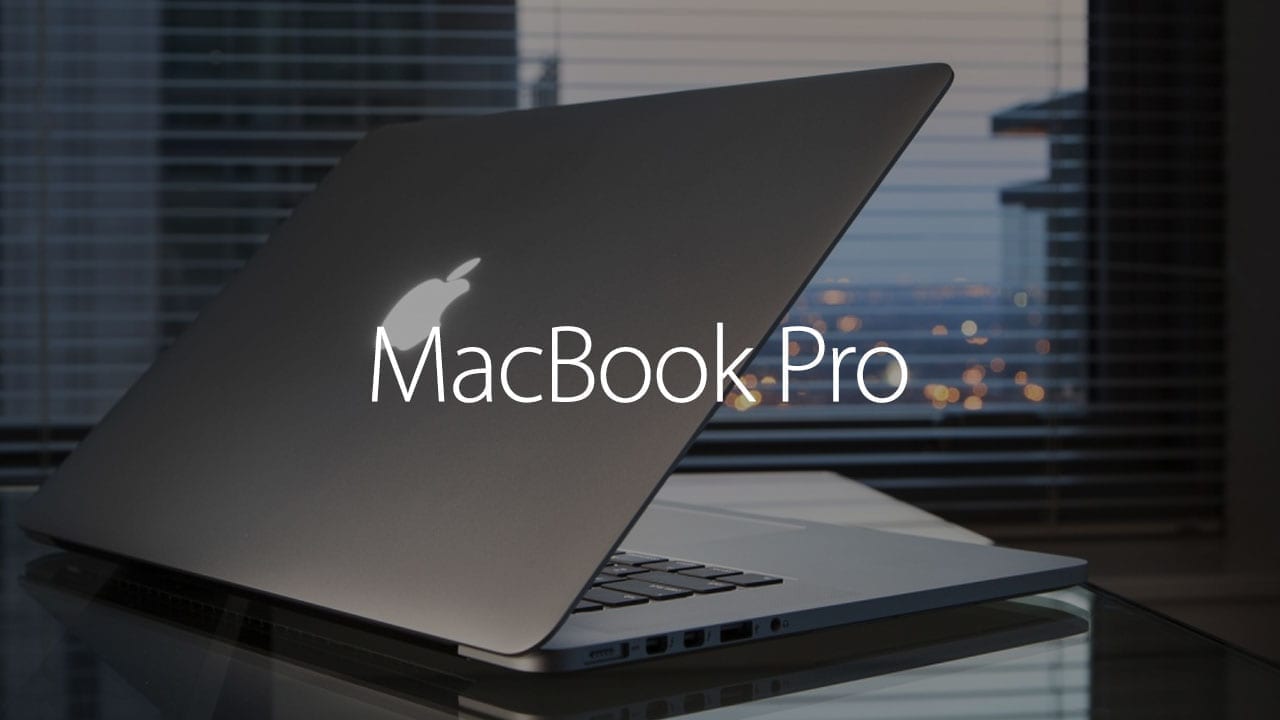
    Apple authorized resellers in Vietnam have increased the prices of MacBook Air M1 by over VND1 million (more than $40) against late July when promotion campaigns were on.

    In late July, the laptop’s selling prices were VND21.7-23 million, lower than the list price in the U.S. market.

    Now, the selling prices are VND23-24 million, with VND22.8 million the lowest price offered by some resellers.

    An unnamed manager with a reseller told local media that demand for electronic devices, including laptops and tablets had decreased several months ago, so Apple, distributors and resellers launched big promotion campaigns. Prices of MacBook Air M1 in July fell to the lowest.

    Retailers including CellphoneS and Di Dong Viet said MacBook Air M1 prices have climbed up now because of the dollar value rising against the dong and the promotion campaigns coming to an end. However, purchasing power remains high in the market, they said.

    “Among our total sales of MacBook models, MacBook Air M1 accounts for some 40%,” said the manager of a The Gioi Di Dong store who did not want to be named. CellphoneS has reported the corresponding figure at 30-35%.

    At ShopDunk, MacBook Air M1 sales over the past month rose 20% against July. “It is the cheapest among Mac models, while its M1 chip’s performance and efficiency is still very good,” said manager Pham Tuan Anh.

  • Apple might be building its own version of the metaverse

    Apple might be building its own version of the metaverse

    At this point, it is somewhat obvious that Apple is done with new hardware releases for 2022. After quietly launching a couple of new iPads and a new Apple TV, the American tech giant has decided to call it a year.

    Many are bound to be disappointed by the lack of a dedicated November/October event, as is the norm and the fact that we will not be getting new MacBooks this fall. Still, it seems Apple could be building momentum for something big – namely, its VR/AR headset.

    The latter is set to make its debut sometime next year, possibly at the company’s first event for 2023 in Spring. It is hardly a secret that Apple has big plans for AR/VR technology – Tim Cook even went as far as saying that that could be the “next big thing”.

    Now we are getting the first taste of just how far the Cupertino company is willing to go. Bloomberg’s Mark Gurman reports that Apple is now beginning to work on a whole “3D mixed-reality world” and is seeking new talent.

    This information is based on a recent Apple job listing and was first brought forward by Gurman himself in the latest edition of his Power On newsletter. According to the prominent tech pundit, whose track record concerning Apple leaks is impeccable, the Cupertino company could be building a virtual environment similar to Mark Zuckerberg’s “metaverse”.

    Gurman jokingly quips that the controversial term will never be officially used by the company. Regardless of how Apple decides to name this virtual universe, one thing is certain – the rumored VR/AR headset is only the beginning.

    With Google also set to enter the fray with a headset of its own sooner rather than later, no less than three American tech giants will be looking to pave the way for our VR/AR future. It seems Tim Cook was right – that truly is “the next big thing”.

  • Popeyes to return to South Korea

    Popeyes to return to South Korea

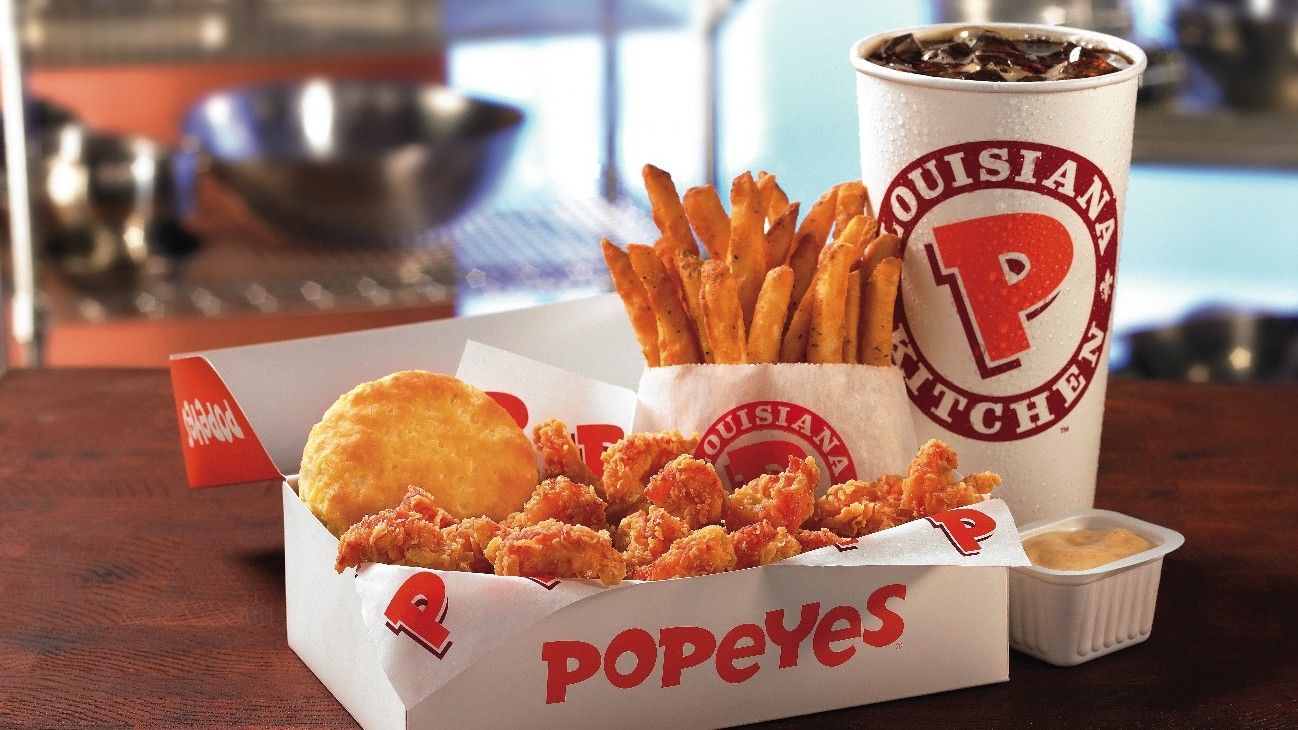
    American fried chicken restaurant chain Popeyes is returning to the Korean market after pulling the plug on its business here in December 2020.

    Its operator Restaurant Brands International (RBI) confirmed Monday it has signed an exclusive master franchise contract with its new partner NLC, a subsidiary of deep-sea fishery firm Silla. It will open its first store under NLC management by the end of this year.

    “We are thrilled to introduce Popeyes’ unique Louisiana-style chicken and various food items in Korea with NLC, a subsidiary of Silla,” Popeyes Louisiana Kitchen President David Shear said. “We are building a partnership with NLC based on strong trust and we will look forward to our future journey together.”

    RBI thought hard about bringing Popeyes back to Seoul because it has already failed once here. Silla is said to have convinced RBI with its distinguished strategy for Popeyes in an already saturated fast food restaurant market.

    NLC is confident about bringing local customers back to Popeyes with its representative Cajun chicken.

    “Chicken is one of the most loved food categories in Korea and we are proud to have brought back Popeyes, a globally well-known brand. We also believe our aggressive expansion of the fried chicken restaurant chain can greatly contribute to the country’s economy by creating new jobs,” an NLC official said.

    The Popeyes brand was first launched in New Orleans in 1972. It is one of the world’s largest chicken restaurant franchises, operating over 3,400 branches in more than 25 countries. It has been competing with global fast food chains like McDonald’s, Burger King and KFC with its New Orleans-style food including spicy chicken, chicken tenders and fried shrimp.

    In Korea, TS Food & System (TS F&S), an affiliate of TS Corporation, had been operating Popeyes with its master franchise contract signed in 1994 and opened nearly 200 restaurants here.

    However, it fell behind other chicken burger chains such as Mom’s Touch after poor business performance that had been afflicting them for a while, the contract with TS F&S was terminated as of the end of 2020.

    The brand has since been seeking a new local partner to reenter the Korean market. Daewoo Development Company – Engineering & Construction was one of the candidates that RBI was in touch with.

    Apart from Korea, Popeyes has successfully expanded its business to countries such as Spain, Switzerland, China, Brazil, Sri Lanka and the Philippines over the past few years.

    Last year, it opened restaurants in the United Kingdom, Mexico, Saudi Arabia, Romania and India.

  • Thai grocery retailer Big C eyes $500 million IPO

    Thai grocery retailer Big C eyes $500 million IPO

    Big C Supercenter, which runs supermarkets and convenience stores in South-east Asia, is considering going public again in Bangkok through an initial public offering that could raise more than US$500 million, according to people familiar with the matter.

    The Bangkok-based company is sounding out investment banks for proposals for the share sale, which could happen as soon as next year, the people said, asking not to be identified as the information is private.

    Discussions are ongoing and details of the potential offering such as fundraising size and timing could still change, the people said. An investor relations representative for Berli Jucker, the owner of Big C, said they have no information on the IPO plans so far.

    Big C was founded by Thailand’s Central Group in 1993 and opened its first store on Chaengwattana Road. The company raised about US$112 million in a Thai IPO in 2012.

    TCC Holding, controlled by Thai billionaire Charoen Sirivadhanabhakdi, in 2016 agreed to purchase a 58.6 per cent stake in Big C for 3.1 billion euros (S$4.34 billion) from French retailer Casino Guichard Perrachon. Big C was delisted in 2017 after Berli Jucker, a subsidiary of TCC, took it private.

    Big C operates 1,792 stores including convenience stores, supermarkets and hypermarkets in Thailand, Vietnam, Laos and Cambodia, according to its latest presentation. The company earlier this year acquired 18 Kiwi Mart stores in Cambodia and plans to rebrand them into Big C Mini stores.

  • Jollibee terminates Dunkin’ Donuts franchise business in China

    Jollibee terminates Dunkin’ Donuts franchise business in China

    Filipino foodservice giant Jollibee Foods Corporation will end its operation of Dunkin’ in China after struggling to expand the business.

    The joint venture agreement with the US coffee and donut chain began in January 2015 with Jollibee planning to open more than 1,400 outlets over 20 years across select Chinese regions, including Beijing. However, Jollibee has only opened seven stores in total to date.

    Jollibee’s partner Jasmine Asset Holdings and the US-based Dunkin’ Donuts Franchising organization have terminated the partnership and the seven Beijing stores will now close, which could result in the US chain exiting the market altogether.

    Richard Shin, Jollibee’s Chief Financial Officer, said it was the right decision to ‘reallocate’ the company’s resources. He added that Dunkin’ was not a core Jollibee business in China, stating that the market is more accustomed to tea than coffee.

    The Chinese branded coffee shop market presents an attractive opportunity for international brands, but a sustained period of trading restrictions since the start of the pandemic and a nationwide zero-Covid policy have impeded sales growth for businesses.

    In its third quarter reporting, US coffee chain Starbucks said its Chinese revenues fell 16%.

    However, the Seattle-based company predicts a turnaround in fortunes in its second-largest market, targeting a 50% increase in Chinese outlets to reach 9,000 locations in the country by 2025.

    Jollibee continues to scale its brands across China but will now focus on building its Taiwanese restaurant chain Yonghe King and porridge shop Hong Zhuang Yuan. The two brands currently have 418 and 55 stores respectively.

    Despite ending its association with Dunkin’, Jollibee retains two coffee businesses. The company acquired US-based The Coffee Bean & Tea Leaf for $350m in 2019 and also operates Vietnamese coffee chain Highlands Coffee.

    According to Jollibee’s second quarter results, shared in August 2022, The Coffee Bean & Tea Leaf achieved 16.5% revenue growth in the three months ended 30 June 2022 and operated 1,059 outlets.

    Highlands Coffee, which Jollibee highlighted in 2021 as ‘the fastest growing business in the Jollibee Group’, currently operates 525 stores.

    Jollibee also owns Taiwanese bubble tea brand Milksha, which has 269 outlets.

  • Skoda Slavia Monte Carlo Edition To Be Launched Soon

    Skoda Slavia Monte Carlo Edition To Be Launched Soon

    Skoda Auto India will soon introduce a Monte Carlo edition of its compact sedan, the Slavia. In a recent interaction with car&bike, Petr Šolc, Director – Sales & Marketing, Skoda Auto India said that the company wants its top-selling models Slavia and Kushaq to be well-established in the Indian market. And Skoda feels that one way to ensure that would be by introducing special edition models. While it has already launched the Kushaq Monte Carlo and the first-anniversary edition of the compact SUV, next the carmaker plans to introduce the Slavia Monte Carlo in India.

    Talking about the need for expanding the model line-up Šolc said, “We are going step by step. Of course, we are happy that we have introduced the Monte Carlo version of the Kushaq and we are looking if would it make sense perhaps for us to bring more of the special editions. Like a Monte Carlo on the Kushaq, but also on the Slavia. This is definitely also our ultimate goal to ensure that both these products are well established in the market.”

    The Skoda Slavia compact sedan, along with the Kushaq, has played a major role in the huge turnaround that the brand has witnessed in India. The compact sedan already accounts for average monthly sales of around 2000 units and the introduction of a top-of-the-line Monte Carlo trim is only going to add to the car’s volumes.

    Skoda’s Monte Carlo edition cars are designed to pay homage to the brand’s racing pedigree. Like the other Monte Carlo models, which we have seen in the Indian market so far, the Skoda Slavia Monte Carlo will also come in a special red exterior paint job with blacked-out accents. The car is also expected to get all-black wheels with red calipers, a blacked-out roof and the Monte Carlo badge. The cabin too will get an all-black treatment with red accents and possibly some add-on features like a bigger 10.1-inch touchscreen infotainment system.

    We expect the Monte Carlo edition to be based on the top-end Style variant of the car, and it will be offered with both the manual and automatic variants of the 1.0-litre TSI and the 1.5-litre TSI engine option. Expect at least a premium of Rs. 30,000 to Rs. 50,000 over the asking price of the Style variants of the Slavia for the Monte Carlo trims.

  • Toyota’s Upcoming Hybrid Sedan Teased Ahead Of Global Debut

    Toyota’s Upcoming Hybrid Sedan Teased Ahead Of Global Debut

    Electrification has been one of the key focus areas for Toyota in the global markets. Earlier this year Toyota showcased its all-electric range and now it has released a teaser image of its upcoming hybrid sedan, which is likely to be the successor of the Prius hybrid. In fact, it’s most likely the same mysterious model that it teased alongside the bZ4x crossover. The model is expected to share its underpinnings and powertrain with the bZ3 sedan which is sold in China and will make its debut on November 16.

    The teasers were released on the company’s Japanese social media handles, however, the brand is refraining from sharing any further details as yet. In fact, the company hasn’t even revealed its name yet, while we expect it use the venerable Prius moniker for this hybrid model. Both teasers show “Hybrid Reborn” lettering while the tapering roofline silhouette will remind you of the Prius sedan. Moreover, the word “reborn” itself hints at Toyota going with the Prius name for this new model rather than coming up with a new branding

    The fourth-gen Prius has been around since 2015, and it’s high time for a generation update. The previously teased bZ had a similar profile, but that was a different car since bZ brand is reserved for pure electric models. Toyota had earlier said that the Prius will remain one of the front-runners in its electrified range and we expect the next-gen model to be a plug-in-hybrid, followed by a hydrogen fuel-cell iteration.