Tag: asia

  • Hong Kong-born entrepreneur sets up shop in Saskatoon

    Hong Kong-born entrepreneur sets up shop in Saskatoon

    Most restaurant owners work impossible hours, and Patrick Chu is no different. But after three decades of 100-hour weeks in his native Hong Kong, running his traditional Chinese food restaurant in Saskatoon feels like a vacation.

    “I spent too much time on working. I was just very tired,” said Chu, who worked in supply management for a global construction company before emigrating to Canada last summer.

    Chu said he brought his three children to Canada because he wanted them to have the best education possible. After arriving in July, he decided to change careers entirely and start his own business, a traditional Chinese food restaurant.

    “For me, I just think opening a restaurant is a small business — it’s easier to manage. (And) I just want to bring some traditional Chinese flavour in here,” he said with a laugh, noting that while some of his family members ran restaurants in Hong Kong, he was “totally unfamiliar” with the industry.

    A lack of experience didn’t deter him from working to get his restaurant up and running. He renovated the First Avenue North space himself, doing everything from painting to replacing and repairing kitchen equipment. Then he started developing a menu that combined familiar dishes with traditional flavours.

    Taiji Eastern Cuisine, which opened its doors late last year, serves meals that will be familiar to most western customers. Ginger beef, sweet and sour pork and Singapore fried noodles are all staples. But according to Chu, Taiji’s are cooked differently, and are spicier and more flavourful than most western-style Chinese food.

    Chu said that since he opened the restaurant, he has faced numerous difficulties, including those shared by many newcomers to Canada. While the first couple of months were “very frustrating,” he’s managed to iron out most of the problems, and today business is growing and he enjoys every minute of it, he said.

    “Every time when the customer comes here they say the environment is very good, very clean, very bright and the food is very good — and they will come again,” he said. “I feel very happy, very happy.”

    Ganyo and Grant didn’t choose an easy industry. The wedding business is extremely competitive and subject to changing tastes, but Ganyo believes the business she and her daughter built will continue to grow and succeed.

    “I think with any business, you always have to be on top of these things and watch where it’s going,” she said. “But I still believe it’s going to be very hard to knock off that dream that little girls have. They dream of that day, and I just can’t see that all of a sudden diminishing.”


  • Watchmaker Tudor Says Hong Kong Market Could Get Even Worse

    Watchmaker Tudor Says Hong Kong Market Could Get Even Worse

    Tudor, Rolex’s sister brand, said the Hong Kong market may get worse as rich Chinese shop for luxury goods in markets with lower prices.

    Swiss watch exports to Hong Kong slid 25 percent in February, dropping for the 13th consecutive month, the Federation of the Swiss Watch Industry said Tuesday. There’s no swift turnaround in sight, according to Philippe Peverelli, chief executive officer of Tudor.

    “In mainland China we’ve already touched the bottom of the pool,” Peverelli said in an interview at the Baselworld watch fair. Demand has been improving there since the second half of 2015. “As for Hong Kong, I’ve never seen such a deep pool. We haven’t reached the bottom there yet.”

    The island city became the biggest export market for Switzerland’s timepieces almost a decade ago, luring well-off Chinese with lower luxury taxes on the mainland. In the past three years, however, the Chinese government’s crackdown on bribery and extravagance among government officials has weighed on the industry’s sales in the region, and currencies have made watches cheaper in other markets such as Japan.

    Last year Tudor got just under 60 percent of its sales from greater China, down from more than 90 percent in 2010. The company re-entered the U.S. and the U.K. in recent years and started selling its timepieces in duty-free retail shops in South Korea. The next country it plans to enter is Japan, which enjoyed a 22 percent gain in shipments last month.

  • Korea to legalise customised cosmetics formulation

    Korea to legalise customised cosmetics formulation

    Increasingly, retailers have begun to offer the on-the-spot bespoke mixing of cosmetics from base ingredients (including colours and scents) as a service for consumers eager for personalised beauty.

    In the past few years, Korea has established itself as a global market leader when it comes to cosmetics, particularly within the field of innovation. Until now, however, retailers in Korea have been unable to embrace the growing trend of personalised product formulation, due to the ban imposed as a result of safety concerns.

    The relaxation of the ban will allow Korean beauty players to start pushing the trend within the country, a move that, we reported, “is projected to further diversify and expand the country’s vibrant cosmetics industry.”

    The young demand personalisation

    Younger consumers increasingly expect a level of bespoke personalisation and interactivity in their beauty products and services, with on-the-spot formulation one of the key elements of this.

    In a recent new report, ‘The Impact of Millennials’ Consumer Behaviour on Global Markets ’, market research firm Euromonitor International states that a personalised, immersive shopping experience is key for the demographic, which is swayed by innovations like try-on technology, skin analysis and mirror apps.

    Personalisation and interactivity is important in beauty care for millennials, with a rash of digital solutions emerging to appeal to their need for individual solutions,” the report explained.

    The legal selection

    Korea is currently trialing the bespoke production of cosmetics at select stores, including duty free, across several specific product categories. These are reportedly: four types of fragrance, 10 types of skin care products, and eight types of colour cosmetics, including lipsticks.

    Following the trial, the government will assess the safety of the service, with a view to potentially implementing general legalisation across the country.

  • Victoria Beckham Opens Second Fashion Store

    Victoria Beckham Opens Second Fashion Store

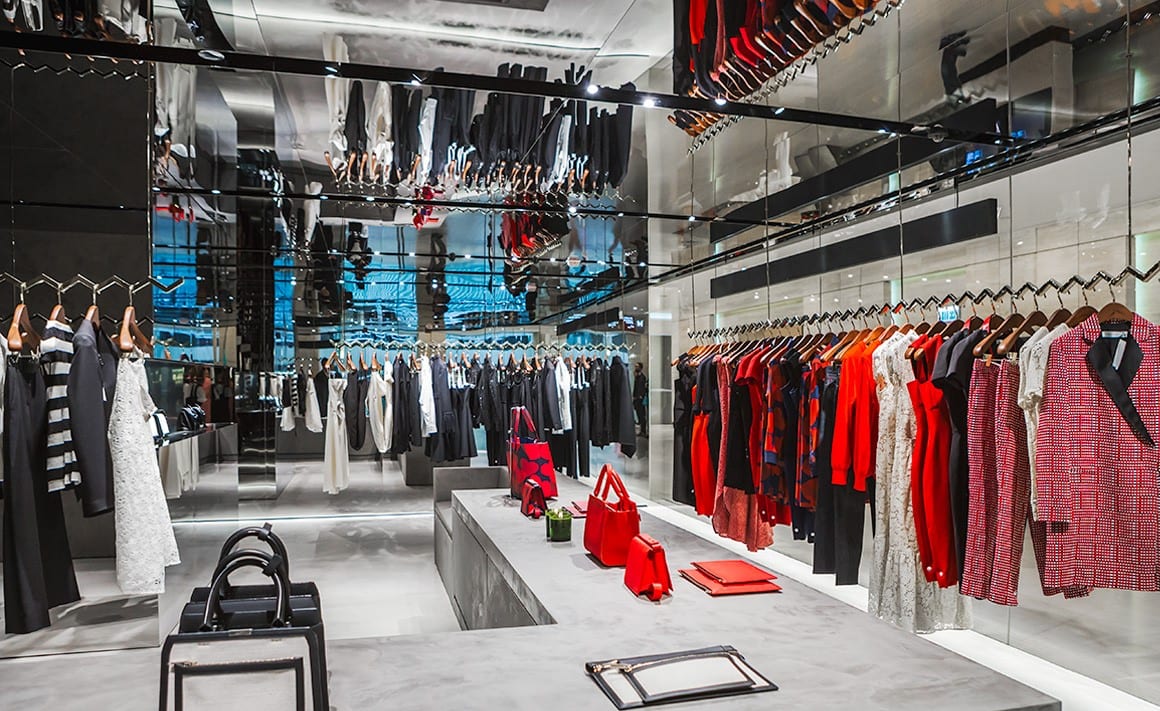
    Singer-turned-fashion designer Victoria Beckham unveiled her second fashion store in Hong Kong on Friday (16 Mar 2016).

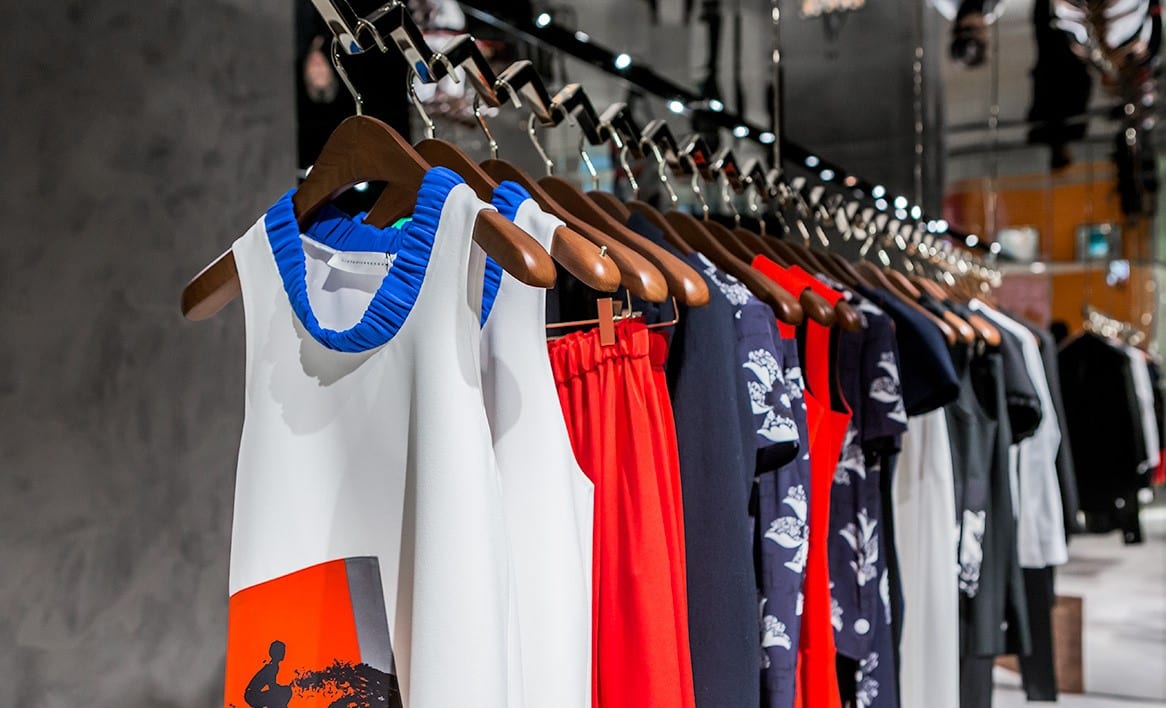
    The former Spice Girl launched the flagship store for her eponymous label in London in 2014, and she has now expanded her brand by opening a second retail space, which has been designed by the same architect Farshid Moussavi, in the region’s upmarket Central district.

    Victoria flew into Hong Kong last week to put the finishing touches to her store, and she tells the South China Morning Post she has been involved in all aspects of the project.

    “The process wasn’t easy… opening a store is a huge project. Together with my team, I’ve worked really hard to get to this point,” she said. “It’s important to me that I’m part of the decision making in all areas, whether that’s deciding what the changing rooms look like, to what fragrance we use in store, to what the receipts look like. I enjoy all of that, and I’m a perfectionist. I believe it’s all in the details.”

    Victoria decided to open up in Asia because she believes women there appreciate luxury, quality and well-made clothes. She adds, “I’m always struck by how aware Chinese women are when it comes to fashion… Their knowledge of trends and brands is so deep, that being here you feel like you’re really part of a fashion conversation.”

    victoria-beckham-store-6

    Victoria, who wore over-sized sunglasses and a black turtleneck dress, was surrounded by security as she opened the store in front of the large crowd. To celebrate the moment, she posted a picture of herself posing in the store and tweeted, “#VBHongKong is open for business!! I love u fashion bunnies.”

    She also posed with fans and they all made the peace sign with their hands, a nod to her Spice Girls days. In the caption, she wrote, “Loved meeting you all at my store today! #VBHongKong.”

    Victoria, a UNAIDS Goodwill Ambassador, will also attend an amfAR AIDS fundraising gala alongside Uma Thurman on Saturday (19 Mar 16).

  • Thai developers raise Bangkok’s Icon Siam investment to $1.6 bln

    Thai developers raise Bangkok’s Icon Siam investment to $1.6 bln

    Thailand’s Charoen Pokphand Group (CP) and two property firms have raised their investment
    in Bangkok’s Icon Siam development to 54 billion baht ($1.6 billion) to expand its shopping malls, an executive said on last Tuesday during an official press.

    Despite Thailand’s slowing economy and weak consumption, there had been strong demand for luxury condominiums and retail shops, Chadatip Chutrakul, the riverside project’s director,said.

    “We will increase investment by 4 billion baht to expand space,” Chadatip told reporters, adding that the company was targeting demand from domestic travellers and foreign tourists.

    CP, controlled by billionaire Dhanin Chearavanont, formed a joint venture with Siam Piwat Co, operator of luxury shopping mall Siam Paragon, and Magnolia Quality Development Corp to develop the luxury mixed-use project.

    Half of the budget will come from loans and the group has received financial support from Thai banks such as Kasikornbank, Thanachart Bank and Bank of Ayudhya, she said.

    The project, located on the bank of the Chao Phraya River in Bangkok, is expected to open in 2017. It will have two high-end retail complexes, two luxury waterfront condominium blocks and a museum and entertainment centre. Japan’s Takashiyama will open its first store in Thailand in the new centre, she said.

  • Overseas E-Retailers Represent 25% of China’s 500 Top Web Merchants

    Overseas E-Retailers Represent 25% of China’s 500 Top Web Merchants

    The 500 largest e-retailers in China ranked by annual web sales grew their combined online sales by 59.6% in 2015 to $198.30 billion from $124.22 billion a year prior, according to Internet Retailer’s newly published 2016 China 500. Now in its third edition, the e-commerce research ranks the 500 leading e-retailers in China based on their annual web sales. Of them, 398 are based in China while 102 hail from overseas; this latter group, which includes 52 U.S.-based web merchants, grew web sales by 124.0% to $21.31 billion in 2015. By comparison, U.S. online retail sales grew roughly 15% per year from 2011 to 2014, according to the U.S. Commerce Department.

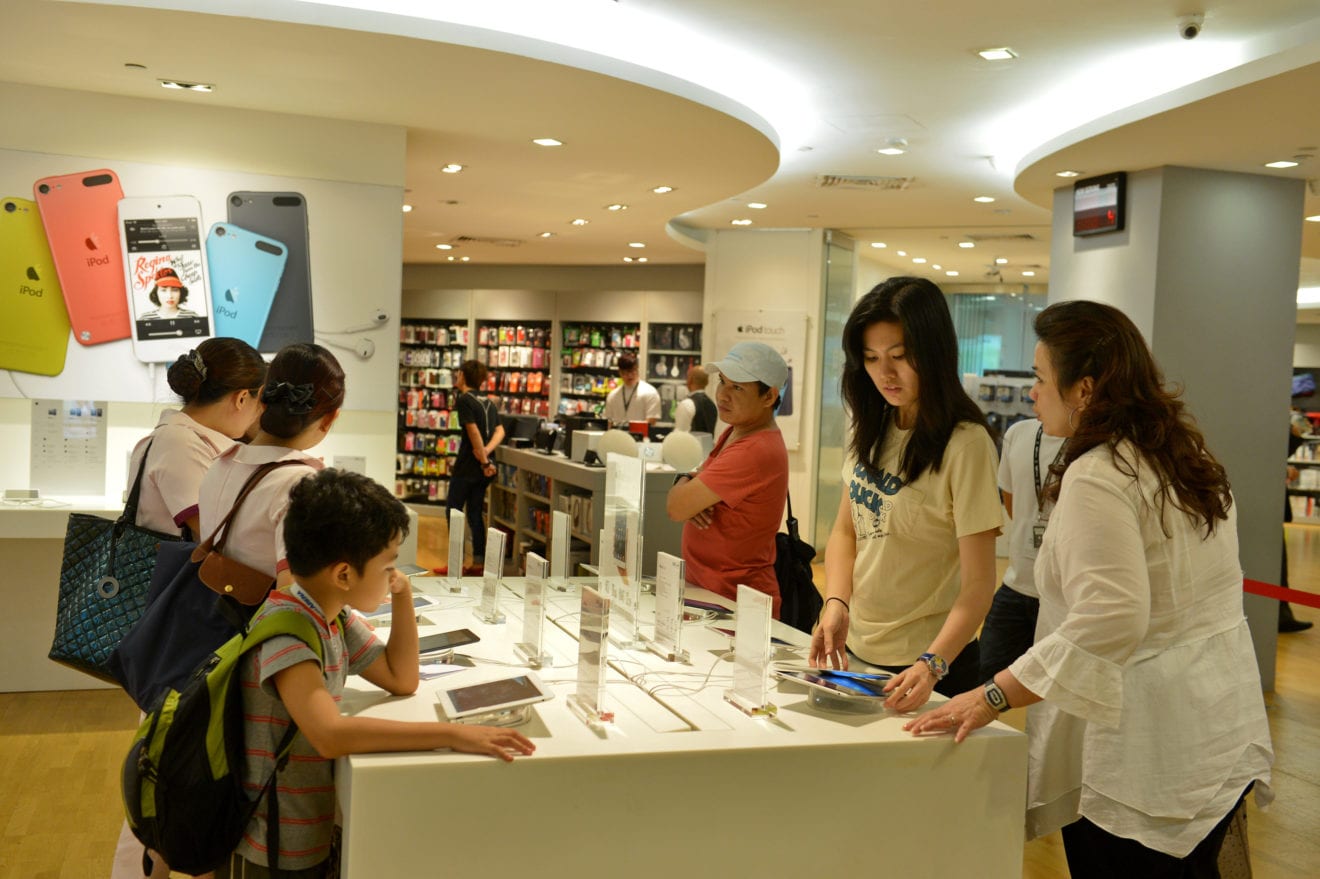
    The fastest-growing U.S.-based e-retailer in China, according to the data in the 2016 China 500, is no. 11-ranked Apple Inc., which increased its web sales in the country by nearly 150% in 2015 to $2.2 billion, up from $897.6 million a year earlier. Computers/electronics as a merchandise category among the 2016 China 500 e-retailers grew by 49.8% in web sales in China last year.

    More analysis of the fastest-growing e-retailers by merchant type and merchandising category can be found in the 2016 China 500. The database version provides 139 metrics for each retailer, including web sales, web traffic, conversion rates and other key metrics. A 45-page downloadable PDF executive report provides rankings, summary market data and in-depth analysis of competitive trends in China’s e-commerce market.


  • Retailer Uses RFID, Social Media and Cameras to Track Shopper Behavior

    Retailer Uses RFID, Social Media and Cameras to Track Shopper Behavior

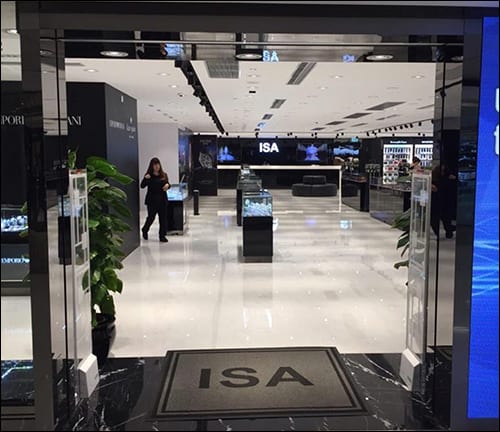
    ISA Fashion Boutique International Ltd., a seller of international luxury brands in Hong Kong, mainland China and Macau, has deployed an RFID-based inventory-management system provided by Hong Kong IT services company PCCW Solutions. The system enables the retailer to track the locations of products, engage with customers, learn their preferences and reduce labor costs based on inventory counts. The solution, known as Infinitum Retail, includes IP cameras as well as ultrahigh-frequency (UHF) RFID readers. As a result of the improved inventory management, the retailer says that it plans to deploy the system this year at all 11 of its stores. Alpha Solution Ltd. installed the technology.

    Traditionally, RFID has had limitations since it can track a tagged product, but not necessarily link that item with a particular customer, explains Jacky Ting, PCCW Solutions’ digital practice leader. By itself, RFID cannot enable a store to forward product information and promotions to shoppers. However, by linking RFID data to closed-circuit television (CCTV) camera images and social-media sites such as Facebook, a retailer can identify where shopper traffic is heaviest (using a camera-based heat map), understand how an individual responds to a product (by tracking the expressions on his or her face) and monitor comments that its customers make on social media (with their permission), using the store’s Wi-Fi network.

    The reader built into an ISA store’s EAS gate can capture the ID number of a customer’s RFID-enabled loyalty card, prompting the Infinitum Retail software to send promotional offers to that individual’s phone, based on his or her previous purchasing behavior.

    Infinitum Retail aims to overcome a variety of problems that stores face, says Wing Lee, PCCW Solutions’ senior VP, such as understanding which products interest customers, and then approaching them with relevant offers. ISA Boutique uses camera images only for tracking shoppers’ locations within its stores, Lee notes, while it could opt to use facial analytics in the future to identify each customer’s age, race, gender and response to products based on facial expressions.

    In 2012, ISA Fashion first installed an RFID system for counting inventory and tracking product locations at one of its stores with the help of Alpha Solution (see ISA Boutique Tracks Inventory, Shopper Behavior Via RFID). The system, which is still in use, employs tiny RFID labels attached to jewelry, as well as readers installed in display cabinets, to track when goods are on display and when they are removed from a cabinet. After Infinitum Retail was released in October 2015, the retailer began using the system to track all of its products, which also include clothing, leather goods, eyewear and watches, at three shops and one warehouse in Hong Kong, as well as a single shop in mainland China. The new solution includes the use of electronic article surveillance (EAS) hard tags for non-jewelry products.

    Infinitum Retail consists of RFID readers built into the EAS gate at the door, as well as a feature known as iR-Furniture—RFID interrogators built into shelves to read tags in real time. The system also includes readers installed at checkout terminals. In the warehouse, readers are used to identify when goods are received and then shipped to a store.

    At the warehouse, an EAS hard tag with a built-in EPC Gen 2 ultrahigh-frequency (UHF) RFID inlay is attached to each product other than jewelry. The inlay is read at the warehouse for inventory purposes, and the cloud-based hosted software is automatically updated to indicate, for instance, if a tagged item has been shipped, as well as to which store and when this occurred.

  • Hong Kong Ponders Plan to Boost Tourism From Mainland

    Hong Kong Ponders Plan to Boost Tourism From Mainland

    Beijing has reportedly asked Hong Kong officials to present a plan for boosting tourism from mainland China following a 3 percent decline last year amid growing anti-mainland sentiment in the territory.

    A plan for drawing tourists to Hong Kong could include cruises between the mainland and Hong Kong and an expansion of the number of cities from which people can travel to Hong Kong without joining a tour. Currently, residents of 49 mainland cities can travel to Hong Kong individually.

    Hong Kong and Beijing officials have also discussed ways to limit tour groups that force people to shop in Hong Kong.

    Joseph Tung, executive director of the Travel Industry Council of Hong Kong, said the mainland Chinese market is important to Hong Kong’s economy.

    “China is a main market, and everyone, all over the world, is trying to induce or promote tourism from China to their countries,” he said.

    The decline in mainland tourists is affecting Hong Kong’s economy, which is expected to grow 1 or 2 percent this year.

    Raymond Yeung, a senior economist with ANZ bank, said the mainland tourists who continue to visit Hong Kong are spending less.

    “The spending pattern of Chinese tourists has changed,” he said. “They no longer think Hong Kong is the place to buy luxurious products. With the opening of individual visas for Chinese tourists to go to Europe, traveling on an individual basis, this trend will continue.”

    Fear of disturbances

    Protests have also scared some mainland tour groups from visiting the city.

    In 2014, Hong Kong’s pro-democracy umbrella movement filled the city’s streets for nearly two months to protest Beijing’s decision to vet all candidates for the territory’s top job. Since then, local groups have staged demonstrations against traders from the mainland who cross the border to buy Hong Kong goods that then will be resold back home.

    In February, there was a violent riot in Mong Kok that injured dozens of people. The riot was sparked when police attempted to clear food stands during the Chinese New Year holiday. Protesters said they were demonstrating against the gradual erosion of Hong Kong local culture.

    But even if protests ease in Hong Kong, the new Chinese middle class, with its rising discretionary income, may increasingly choose to travel elsewhere.

    “A lot of the mainland tourists have been to Hong Kong many times, and they are all traveling farther, to Japan, Korea, Europe, the U.S.,” said Mariana Kou, a retail analyst at the brokerage firm CLSA. “But at the same time, even without this expansion, the local government is putting out a number of initiatives to try to support the tourism sector, by putting out a number of products and expanding their festival circuit and number of events.”

    Hong Kong authorities expect the number of tourists to drop another 2 percent this year.

  • Zizan Razak and Elizabeth Tan are the new faces of 11street!

    Zizan Razak and Elizabeth Tan are the new faces of 11street!

    Underlining its intent to localise and grow its business in Malaysia, 11street (www.11street.my), Malaysia’s most exciting e-mall, today announced Zizan Razak, prominent local actor-cum-entertainer and Elizabeth Tan, Malaysia’s YouTube sweetheart-turned-singer as its new Brand Ambassadors for 2016.

    “As we turn one in April, we felt it was necessary to have two youthful, engaging, and exciting Malaysians to better connect with our customers and community moving forward. Both Zizan and Elizabeth share these qualities and we are delighted to have them represent our brand in 2016,” said Hoseok Kim, CEO of 11street.

    They will both be officially unveiled and make their first appearance at 11street’s 1st Anniversary celebration, themed ‘11street’s Shocking Deals Come to Life’! The online marketplace invites all Malaysians to join the party – a fun-filled carnival with games, goodies and coupons to be given away.

    It will take place on April 11(Monday) from 11:00am to 7:30pm at NU Sentral Shopping Centre, Kuala Lumpur. Well-known celebrity influencers, such as Intan Ladyana and Atikah Suhaime will present to the jubilant birthday celebration. During the event, 11street will also be announcing its collaboration with Xpax, the main prepaid brand for youth under Celcom Axiata Berhad, to help people to save more in 2016.

    On the other hand, leading up to the anniversary, 11street is running various onsite promotions from 1st to 11th April 2016, where unlimited discount coupons will be given out to its loyal consumers.

    As a treat to both customers and fans, 11street is also announcing its “Fly High LIKE A STAR with 11street” contest. By just spending a minimum of RM11 on 11street mobile app and answering a simple question, participants will stand to win a breath-taking helicopter ride followed-by an intimate dinner session with Zizan and Elizabeth. For those who are interested, do participate the contest from 23rd March until 3rd April on 11street.

    11street will definitely ‘WOW’ you at it’s full of shock 1st year anniversary!

  • China Shun Ke Long Reaches Cooperation Agreement with Hengli To Advance Into Cross-Border e-Commerce

    China Shun Ke Long Reaches Cooperation Agreement with Hengli To Advance Into Cross-Border e-Commerce

    China Shun Ke Long, a supermarket chain store operator in Guangdong province, entered into a cooperation agreement with Hengli Limited, the wholly-owned subsidiary of Foshan Shunde Shente Trading Limited. The Group will sell cross-border goods, general goods and imported goods through the e-commerce platform “Hellogou” (www.hellogou.com), and the retail outlets of Hengli, advancing into the cross-border sales market.

    Pursuant to the agreement, the Group agreed to sell cross-border goods, general goods and imported goods through “Hellogou” and the retail outlets of Hengli. In addition, the Group agreed to provide various advisory services to Hengli, including to (i) look for new vendors for Hellogou and franchisees for its retail outlet; (ii) promote “Hellogou”; (iii) monitor the vendor portfolio and product mix of “Hellogou”; and (iv) provide training to the staff of Hengli Limited. With the duration of agreement of 5 years, the Group shall pay 2% commission to Hengli for those goods sold through “Hellogou”, and Hengli shall pay advisory fee equivalent to 70% of its revenue to the Group.

    “Hellogou” obtained the approval from Guangzhou Custom Bureau to operate cross-border online sale of goods and the approval from Guangdong Telecommunication Management Bureau to run value-added services online, which made “Hellogou” different from other ordinary e-commerce platforms. Hengli also had set up counters in 10 retail outlets of the Group to promote its “Hellogou” and display samples of oversea products. Customers could access “Hellogou” to complete the transaction online by using their mobile phones to scan the “Quick Respond Code” on the price tags of the samples of overseas products, and the goods will be delivered to the customers directly either from overseas or custom controlled warehouses.

    Mr. LAO Songsheng, Chairman and Executive Director of the Group, stated, “With a strong foothold in the third and fourth-tier cities in Guangdong province of the PRC, SKL possesses in-depth knowledge in the local market. In recent years, the Group has been committed to developing online-to-offline (O2O) retail business and accumulated extensive experience. With Chinese customers’ increasing demand for high-quality imported food and goods, the Group is optimistic towards the cross-border shopping industry. As we reached the agreement with Hengli, at a relatively low commission rate, we could sell high-quality fresh food and other goods through ‘Hellogou’, bringing consumers a wide range of cross-border goods. In the future, the Group will continue to focus on the development of O2O business in response to market trends. We will also enhance the operating platform to improve efficiency and drive revenue growth for the Group.”


  • Realty, retail to spur trade NPL

    Realty, retail to spur trade NPL

    NPLs in the property sector are expected to surge by 22 basis points to 4 per cent, while loan demand from this sector is expected to grow by only 3.8 per cent, down by 5.2 percentage points year on year because the property supply is becoming mature.

    However, the highest NPLs still be seen in the commercial and trading sector. TMB Analytics expects bad debt in this sector to expand to 4.45 per cent from 3.9 per cent in 2015.

    Naris Sathapholdeja, senior vice president of the research house, said NPLs in the property sector could result from medium-sized property developers upcountry having trouble selling residential units.

    Meanwhile, community-mall developers have faced less shopper traffic, so occupancy rates for retail space are low as well.

    Earlier, community malls were all the rage, but the economic slowdown has hurt consumers’ purchasing power, and the developers of this type of mall are not big names like listed retailer developers.

    Overall NPLs in the banking industry this year will touch 2.63 per cent, TMB Analytics said, up by 8 basis points from 2015, while lending growth is expected to be 4.1 per cent, slower growth than last year’s 4.3 per cent.

    Business loans should expand by 3.6 per cent, mainly from the construction industry if the government sticks to its announced investment schedule.

    As for the Thai economy, TMB Analytics says private investment will be needed to drive growth in gross domestic product. The research house has forecast GDP growth of 2.8 per cent, but that would require a 3.1-per-cent expansion in private investment and 15-per-cent growth in government investment. Otherwise, GDP growth might be no more than 2.5 per cent.

    Previously, TMB Analytics revised down its projection on GDP growth this year from 3.5 per cent to 2.8 per cent because it was clear the export sector would not return to its former health, so investment was the only hope for the economy apart from tourism.

    The research house has slashed its forecast for the export sector this year from growth of 1.8 per cent to a 4.5-per-cent contraction.

    Thailand will not see double-digit growth in export value any more because countries worldwide have shifted their growth mode from a manufacturing base to a service base, Naris said.

    Low inflation has closed off the chance for the Bank of Thailand to raise the policy interest rate, but the fragile global economy and the strengthening baht might encourage the central bank to reduce the rate.

    “We think if the central bank does cut the policy rate, it should do so in the first half of this year, because the US Federal Reserve will raise its rate in the second half,” he said.

  • Indonesia Sees Tourist Visit Increase in Early 2016

    Indonesia Sees Tourist Visit Increase in Early 2016

    Three big events namely, the Lunar New Year, cross-border promotion of Wonderful Indonesia Festival and total solar eclipse have boost the number of inbound tourists, particularly from China.

    I Gde Pitana, Deputy of Marketing Development of Foreign Tourism (Deputy BP3M) of Tourism Ministry, said that the majority of foreign tourists from China spent the Lunar New Year holiday in early February by visiting Bali as favorite destination, most of them came from Beijing and Heilongjiang Province using chartered planes.

    “People from those regions, which temperature were under 15 degrees celcius at that time, preferred to celebrate the Lunar New Year at warm places such as Bali,” he said.

    During the Lunar New Year, 23,000 tourists from 11 cities in China came to Bali using 65 units of chartered AB330 aircraft.

    Foreign tourist visits through Immigration Checkpoint of Bandar Bintan Telani (BBT) in Lagoi stood at 8,700 people, whereas 580 Chinese tourists visited Sulawesi to spent their winter holiday.

    The number of foreign visitors in January 2016 were 814,303, rose by 3.6% compared to the same period in 2015 of 785,937 foreign visitors. Besides China, Singapore and Europe are among the top countries on the list of countries of origin of foreign tourists.

    Pitana also hoped that total solar eclipse on March 9 could boost this year’s number of foreign tourist visits to Indonesia which is targeted to reach 12 million people.

  • Lippo Partners With GrabTaxi to Expand E-Commerce in Indonesia

    Lippo Partners With GrabTaxi to Expand E-Commerce in Indonesia

    Lippo Group, the Indonesian conglomerate founded by billionaire tycoon Mochtar Riady, will partner with GrabTaxi Holdings Pte for e-commerce deliveries in Southeast Asia’s largest economy.

    The founder’s grandson, John Riady, is spearheading Lippo Group’s foray into e-commerce with a $500 million investment in MatahariMall, an online version of its Matahari department store chain. Grab, a regional ride-hailing company, will help transport and deliver goods to bolster MahatariMall’s services, the companies said in a statement Monday.

    The partnership shows how local companies, familiar with consumer preferences, regulations and infrastructure challenges, are trying to tailor services to stay ahead of foreign rivals as competition heats up. Japanese e-commerce company Rakuten Inc. closed down its Indonesian unit as of March 1, while China’s JD.com Inc. has recently set up shop in Indonesia.

    “Speed is really important in this business,” said Ridzki Kramadibrata, managing director of Grab Indonesia. “You need to be able to do multiple things at the same time because if you can’t do that, the market will outgrow you and you will lose your opportunity.”

    Rising Incomes

    MatahariMall’s site allows customers to buy on the Web and pick up items from Lippo’s stores. Its rival Tokopedia, which is backed by Japan’s SoftBank Group Corp. and Sequoia Capital, has already formed a similar alliance with Go-Jek, a motorcycle taxi booking company, to deliver purchased items to customers.

    “Our combined knowledge of the Indonesian market will help us build the most effective online-to-offline experience — to ensure that online shoppers anywhere in Indonesia can receive or collect their purchases easily,” John Riady, a Lippo Group director, said in the statement.

    Grab’s alliance with Lippo also underscores its aggressive market-share acquisition strategy in Indonesia, where it competes with Uber Technologies Inc. and Go-Jek. Grab’s private car-hailing service grew 30 percent in Indonesia in February, according to the statement. It has more than 50 percent of the country’s motorcycle taxi market in March, it said.

    Technology startups are trying to capitalize on rising incomes and growing mobile-phone use in Southeast Asia, where 250 million consumers are now connected via smartphone and 100 million engage in online transactions, according to a report by Bain & Co. and Google Inc. released last week. The report predicts online sales across Southeast Asia to surge to $70 billion by 2020 from $6 billion now.

  • Governement Prepare Regulation for Foreign OTT Companies

    Governement Prepare Regulation for Foreign OTT Companies

    Communication and Informatics (Kominfo) Ministry is reported to have been preparing a regulation on foreign over the top (OTT) content provider companies operating in Indonesia. The regulation is expected to be issued at the end of March 2016. One of the articles in the regulation will oblige foreign OTT companies to form establish a legal entity in Indonesia. Bambang Heru Tjahjono,

    Director General of Informatics Application of the Kominfo, confirmed the plan. “Yes, [the regulation will be issued] at the end of March,” Bambang told us on Sunday, March 20, 2016.

    Bambang however, dismissed reports saying that the Kominfo would ban foreign OTTs who failed to establish a business entity in Indonesia.

    In an attempt to response to emerging foreign OTTs, Bambang said that the government will offer win-win solutions. “We will not necessarily ban foreign OTTs. The most important thing for Kominfo is [to focus on] customer service and consumer protection issues,” Bambang said.

    According to Nonot Harsono, Chairman of the Indonesian Telematics Society, regulation on foreign OTTs, particularly related to the obligation to establish a business entity in Indonesia, is required to maintain Indonesia’s sovereignty.

    Nonot explained that the presence of foreign OTTs in Indonesia without permanent business entity is comparable to vendors selling their merchandises inside a house without permission. The lack of license and business entity, Nonot added, could be considered as unethical conduct and ignoring the government’s sovereignty.

  • Some 2,000 foreign companies pay no taxes

    Some 2,000 foreign companies pay no taxes

    Some 2,000 foreign companies in Indonesia did not pay taxes in the past 10 years on the pretext of having suffered losses, Finance Minister Bambang Brodjonegoro reported to President Joko Widodo (Jokowi).

    “They always claimed that they suffered losses,” the minister said at the Presidential Office here on Monday.

    Several of the foreign companies should have paid an average of Rp25 billion in taxes per year, he said.
    As a result, the state lost Rp500 trillion in taxes during the past 10 years, he said.
    He said the government will make every effort to minimize tax evasion.
    The minister also reported to the president that many residents who have more than one income source do not comply with tax obligation.

    “Only 900 thousand of 5 million taxpayers really pay taxes. In total, they pay almost Rp9 trillion in taxes,” he said.

    He said the Finance Ministry, through the Directorate General of Taxation, will coordinate with the Center for Financial Transaction Report and Analysis (PPATK) to trace the transaction data of taxpayers.
    PPATK Chief Muhammad Yusuf said the center is committed to helping the Directorate General of Taxation.

    “Everyday, PATK receives reports of 150 thousand financial transactions. We are trying to develop this information, analyze it and cooperate with the tax authorities so that we can take certain steps,” he said.