Tag: asia

  • Garuda Indonesia Attains “5-Star Airline” Award for second year running

    Garuda Indonesia Attains “5-Star Airline” Award for second year running

    National flag carrier Garuda Indonesia has been awarded the ultimate “5-Star Airline” rating from Skytrax for a second year running. This year’s award was presented to the President & CEO of Garuda Indonesia, M. Arif Wibowo, by Edward Plaisted, CEO of Skytrax, at the Changi Exhibition Center during Singapore Airshow 2016.

    Indonesian Minister of State-Owned Enterprises Rini Soemarno, Indonesian Ambassador for Singapore I Gusti Ngurah Swajayam, and President Commissioner of Garuda Indonesia Jusman Syafii Djamal were present during the ceremony. Minister Rini Soemarno expressed her highest regards “for all Garuda management and staff, their hard work, and their success in maintaining the quality and standards that exemplify a “5-Star Airline”.”
    “We believe that recognition of Garuda Indonesia as a “5-Star Airline” for consecutive years will not only help to strengthen Garuda Indonesia as a global brand, but also support our efforts at “Nation Branding”, as laid out in the Indonesian government’s strategic program,” Rini added.

    As the national flag carrier, Rini said, Garuda Indonesia was succesfully representing the Republik of Indonesia with this achievement. “But success also brings a larger challenge for Garuda Indonesia, to continuously improve the quality of their service, and deliver this service to all customers on the ground and in the air.”

    The Minister finished by suggesting that the global achievement would be followed by better financial results, and extended her appreciation for Garuda Indonesia’s turnaround financial results which ended in net profit for 2015.
    M. Arif Wibowo, President & CEO, Garuda Indonesia, expressed that “The 5-Star rating reflects the hard work and deep commitment from both management and staff at Garuda who continuously deliver their best efforts to maintain and improve the company’s performance in all business aspects.

    “This achievement will be an important milestone for Garuda Indonesia in 2016, as well as being a challenge for everybody in Garuda Indonesia Group to constantly improve performance and deliver service excellence to all customers,” Arif said.
    The “5-Star Airline” certification was awarded following the ongoing Skytrax Audit, with comprehensive points covering all service aspects; pre-flight, in-flight and post-flight, including ground handling services, lounge, seat and cabin comfort, inflight meals and inflight entertainment.

    Skytrax CEO Edward Plaisted said that the “5-Star Airline” rating awarded to Garuda Indonesia for two years consecutively was a result keeping consistently high service standards.
    “In the globally competitive airline industry, Garuda Indonesia proved that they can survive and even perform to the highest values and service standards. The consistency of product and service quality is the most important part in a 5-Star certification audit, and we proudly announce that Garuda’s aircraft are offering the variety of classes that is a requirement of a 5-Star Airline,” Edward added.

    Spurred on by a strong commitment from the airline’s management and staff to deliver best service, Garuda Indonesia’s performance continues to earn global recognition. In 2013, Skytrax awarded Garuda Indonesia for “The World’s Best Economy Class”. This continued in 2014, with recognition as “The World’s Best Cabin Staff”, a “5-Star Airline”, and 7th rank in “The World’s Top 10 Airlines”.

    At the World Airline Awards, Paris Airshow 2015, Garuda Indonesia was once again named “The World’s Best Cabin Staff”, based on a global customer satisfaction survey conducted by Skytrax of more than 18 million passengers. The survey, which covers 245 international airlines, is held every year and measures standards across 41 key performance indicators of airline products and services.

    As part of a fleet revitalization program throughout 2016, the Garuda Indonesia Group will receive 16 new aircraft in total; 1 Boeing 777-300ER, 4 Airbus A330-300, 4 ATR72-600, and also 8 Airbus A320 to be operated by Citilink. By the end of 2016, Garuda Indonesia Group will operate a total of 188 aircraft; 144 aircraft for Garuda Indonesia and 44 aircraft for Citilink.
    To continue the positive growth achieved during its “Quick Wins” program in 2015, Garuda Indonesia will enter a “Sky Beyond” program for 2016 aiming at rapid company expansion, focusing on three ‘core strategies’ – company group synergy, effectiveness and efficiency, and service enhancement – to accelerate company achievement and performance.

    As part of its company synergy, the Garuda Indonesia Group joined Singapore Airshow, Asia’s largest aerospace and defence event. This was Garuda Indonesia’s first participation as a Group, as only a subsidiary, the Garuda Maintenance Facility AeroAsia, had participated in the past.

    The presence of Garuda Indonesia Group at the Singapore Airshow follows Group strategy to develop brand image, to elaborate potential business, to enhance business relations with stakeholders, and to boost up the awareness to Garuda Indonesia Group’s strategic role as Indonesia’s trade envoy in international level.
    At Singapore Airshow 2016, the Garuda Indonesia Group, through Garuda Maintenance Facility AeroAsia, looks to several short- and long-term business contracts, with a value of nearly USD 100 milion.

    Garuda Indonesia currently has 6 subsidiaries with diverse business sectors; Garuda Maintenance Facility AeroAsia, specialized in integrated aircraft maintenance, including engine and aircraft components repair service; Citilink, a low cost carrier (LCC) airline projected for budget traveller; Aerowisata, specialized in hospitality, transportation, catering and travel agent service; Gapura, specialized in ground handling service, supoorted by cargo and warehousing service; Asyst, specialized in IT and consultation service; and Abacus – which now has transformed to Sabre Travel Network Indonesia – specialized in technology provider service for global travel and tourism.

  • Game changer for Maybank Islamic

    Game changer for Maybank Islamic

    Malaysia’s biggest Islamic lender, Maybank Islamic Bhd, says the investment account (IA) business is set to be a game changer for the group in its effort to boost earnings growth amid the subdued banking landscape.

    The Islamic lender, which has total assets worth close to RM147bil, will focus on its new mudarabah (profit-sharing) investment fund launched in July last year in view of the Islamic Financial Services Act (IFSA) 2013.

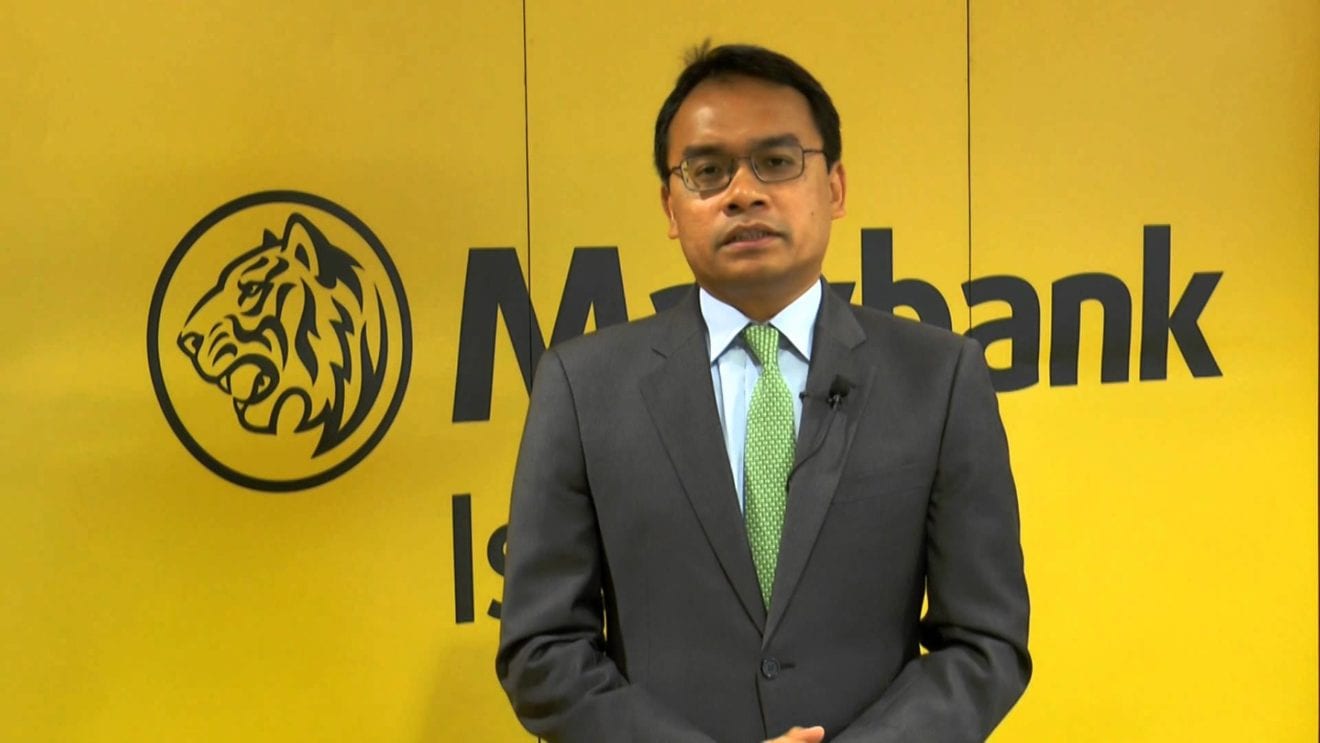
    Describing the IA business as “the evolution of the next phase of growth”, Maybank Islamic chief executive officer Datuk Muzaffar Hisham told StarBiz that demand for the IA business has shot up significantly, as the value of its mudarabah fund rose to RM18bil in the last six months of 2015.

    “Judging from this figure, we are confident that the fund will continue to grow, underpinned by strong demand from the Muslim and non-Muslim population as well as the benefits it offers.

    “We have a customer base of about 4.5 million, of which 50% comprises non-Muslims,” explained Muzaffar.

    The value proposition offered by the mudarabah IA is that MayBank Islamic could provide steady returns of between 4% and 5% per year to its customers.

    “We are confident that this fund will be a growth driver for us, moving forward,” he added.

    He pointed out that “the bank has put in place an effective and robust risk management framework for all of its products, including the new IA, which aims to provide capital preservation, financial security and steady returns through low risk and low to medium-risk investments.”

    Under the IFSA 2013, all banks are required to distinguish IA and Islamic deposit. This means that products with mudarabah (profit sharing) or wakalah (agency) features are considered IAs and are not-principal guaranteed and hence not protected by the Malaysia Deposit Insurance Corp.

    The classification aims to provide greater legal clarity on the types of syariah financial contracts. Customers will have a choice and will be able to differentiate between products that are principal guaranteed and those which are not that provide potentially higher risk returns like mudarabah.

    Besides garnering a pole position in terms of asset size, Maybank Islamic’s market share in the country is also the biggest in terms of financing at 33.6% and deposit at 27.9%.

    At group level, Maybank Islamic’s contribution to the Maybank Group is also significant, accounting for close to 30% in revenue and 48.7% in total loans and financing.

    All these figures were for the third quarter ended Sept 30, 2015 (Q3’15).

    Muzaffar said the bank is also looking to grow its Islamic banking business in the region, adding that the business in Singapore and Indonesia each accounted for about 5% of Maybank Islamic’s revenue.

    Although Indonesia has the highest Muslim population in the world, he noted that syariah banking was relatively still at its infancy stage unlike commercial banking.

    “The Islamic banking business in Indonesia accounts for close to 9% of the total banking business there.

    “In Malaysia, it is 25%. Hence, there is plenty of room for growth and we intend to grow and take advantage of this situation,” he added.

    According to Muzaffar, the challenge for the bank in venturing overseas will be the regulatory framework, in which Maybank Islamic has to operate in, as well as the uncertainties in the Basel III rules pertaining to its implementation in Islamic finance.

    On the corporate investment business, he said it would be dependent on the country’s economic growth, adding that the bank would continue to look at opportunities in the debt and initial public offering markets.

    As for its fourth-quarter results, he said Maybank Islamic hopes to maintain its performance in the preceding quarter, although much will be dictated by the external economic environment and market conditions.

    For Q3’15, the bank recorded a 13.2% year-on-year growth in pre-tax profit to RM1.23bil from RM1.09bil. The growth in earnings was on the back of strong financing growth, which grew by 23% to RM127bil.

    Total income for the period stood at RM2.98bil as opposed to RM2.46bil. Total capital ratio and return on equity for the period stood at 15.18% and 16.14%, respectively.

  • Indonesian Cities Now Charging Shoppers for Plastic Bags

    Indonesian Cities Now Charging Shoppers for Plastic Bags

    The policy is imposed on all retailers, including supermarkets, stores and vendors at traditional markets.

    Bandung is adopting a more conservative approach, charging customers the minimum Rp 200 per bag, mayor Ridwan Kamil said at the initiative’s launching ceremony in Jakarta. The world renowned architect said that by charging customers for plastic bags, the city will not only reduce waste but also generate revenue.

    “Buying plastic bags can generate Rp 1 billion a day for the city government. In a year we should have Rp 360 billion from plastic bag sales. That can be earmarked to buy dump trucks, build incinerators or a recycling plant,” he said.

    Bogor, in the outskirts of Jakarta, also demanded retailers and stores charge Rp 200 per plastic bag.

    “The government [central and local] have agreed that the lowest price for each plastic bag is Rp 200. What matters most is to reduce the use of plastic bags,” Bogor mayor Bima Arya said.

    “If we do not see a significant impact from the policy, then there might be a possibility to raise the price.”

    Roy Madey, chairman of the Indonesia Retailers Association (Aprindo), said that the association would also help the government educate the public about the negative environmental impact of plastic bags through various social media platforms and posters displayed at retail stores.

    During the public awareness campaign, retailers will subsidize each bag in order to maintain a price of Rp 200.

    “If the policy calls for the fee to go above Rp 200 per plastic bag, we are concerned that it will decrease the number of customers shopping at modern retail stores. The government has to protect every industrial sector to allow it to grow, including the retail industry,” Roy said.

    Indonesia is ranked the world’s second largest plastic waste producer, using 187.2 million tons each year according to a study published last year in the journal Science. China stands at number one, producing 262.9 million tons of plastic waste, most of which ends up in the ocean.

  • Indonesia’s MAP Group is the latest to venture into e-commerce

    Indonesia’s MAP Group is the latest to venture into e-commerce

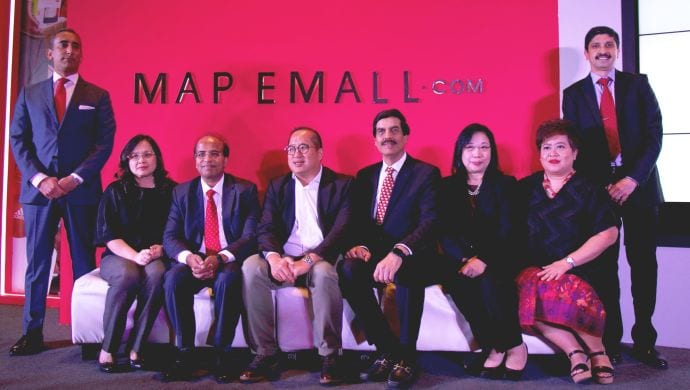
    Indonesian lifestyle retail company PT Mitra Adiperkasa (MAP Group) has launched a fashion products portal MAP EMALL, with an aim to capture the country’s robust e-commerce sector.

    Targeting the middle and upper class segment, the online store will sell fashion products from leading brands such as Marks & Spencer, Lacoste, Mango, Swatch, Birkenstock, Nike, Adidas, Reebok, and Converse.

    MAP EMALL plans to develop an O2O feature that will enable customers to pick up their products purchased online at MAP Group’s offline retail stores. This is in addition to the traditional home delivery services.

    MAP will also launch a mobile app in April this year.

    “MAP has a clear and strong roadmap to unite all of its assets to offer a reliable and wholesome omni-channel shopping experience for all our loyal customers,” said CEO VP Sharma during the launch event.

    The company also announced a partnership with Standard Chartered, which will be giving exclusive offers to credit card holders to shop on the new platform.

    The MAP Group has partnered with more than 150 global lifestyle brands, and has at least 2,000 offline retail stores in 60 cities across Indonesia.

    MAP Group is the latest major Indonesian business mogul to venture into e-commerce. In early February, MNC Group marked their entry into e-commerce by launching a fashion e-commerce portal BrandOutlet.

    Earlier, Lippo Group had forayed into e-commerce with MatahariMall.

    MAP EMALL is also one of the very few e-commerce platforms that target the middle- and upper-class segment, apart from Bobobobo.

  • Toyota ready to invest Rp5.4 trillion in Indonesia

    Toyota ready to invest Rp5.4 trillion in Indonesia

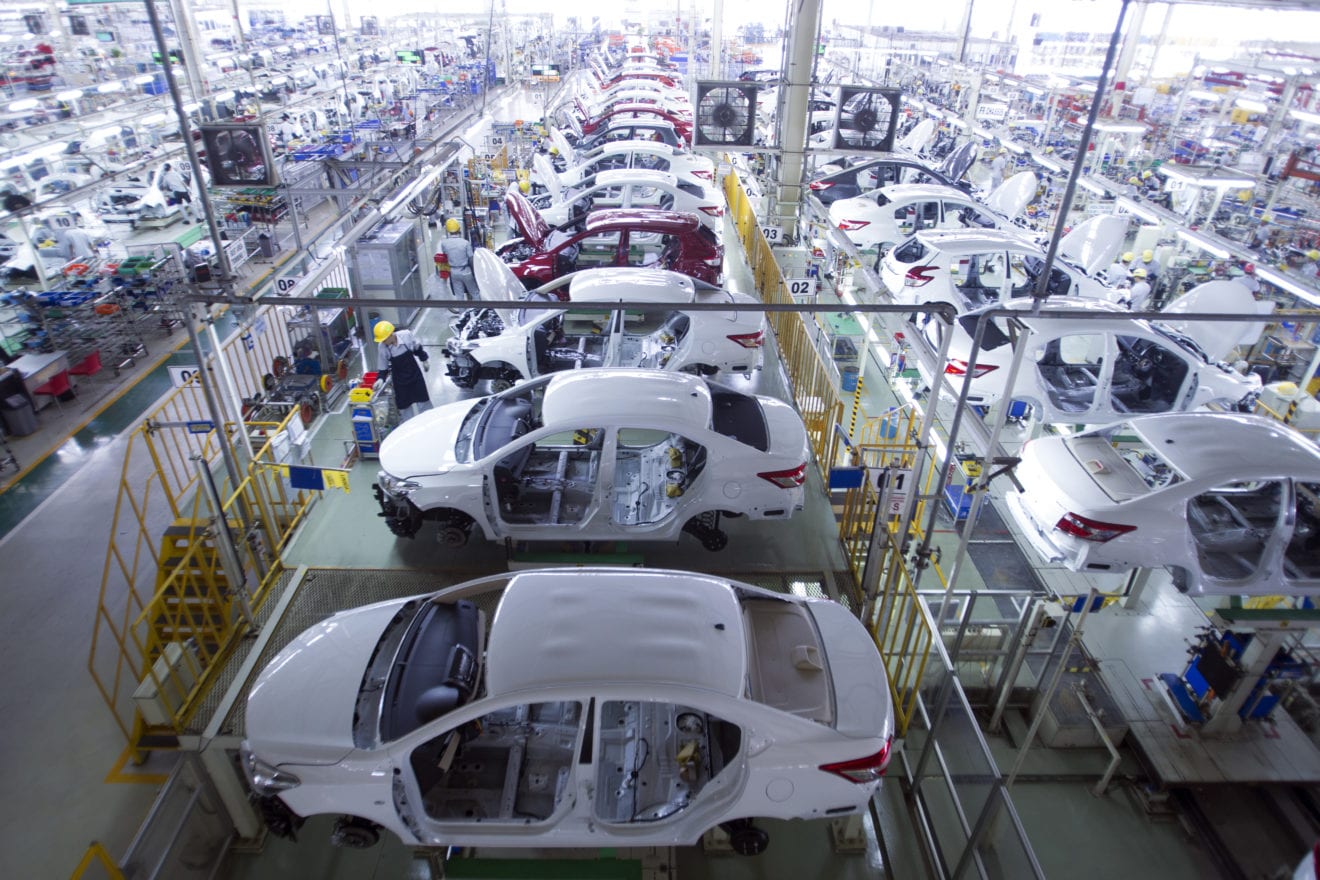
    The Toyota Motor Corporation (TMC) group is ready to invest Rp5.4 trillion in Indonesia this year, according to Industry Minister Saleh Husin.

    Husin received the pledge during a meeting with TMC Executive Vice President Seiichi Sudo in Nagoya, Japan, on Thursday.

    “Toyota is serious about doing business in Indonesia. This year, it will invest Rp5.4 trillion, following the Rp5 trillion worth of investment that the company made in 2015,” he noted in a press statement received here, Friday.

    This reflects that global investors still trust Indonesias investment climate and see prospects in the nations automotive industry, he noted.

    The minister has lauded Toyota for its trust and continued investment in Indonesia, after selecting the nation as one of its investment destinations and a Toyota car production base so far.

    He called on Toyota and its partners in Japan to increase investment in the automotive sector, particularly for the manufacturing of materials and spare parts.

    The minister also invited the company to conduct research and development activities in Indonesia to strengthen the structure of Japans existing automotive industry in Indonesia.

    Husin also urged Toyota to increase the production of cars in Indonesia, which has a population of over 250 million, including 74 million belonging to the middle class.

    The Toyota brand dominates around 31-32 percent of Indonesias domestic market.

    Within five years, from 2015 to 2019, Toyota has planned to invest a total of Rp20 trillion.

    Until 2014, Toyota had invested Rp40 trillion in Indonesia.

    Currently, the Japanese company is constructing an engine plant in Karawang, West Java.

  • Rip Curl accused of “slave labour” in North Korea

    Rip Curl accused of “slave labour” in North Korea

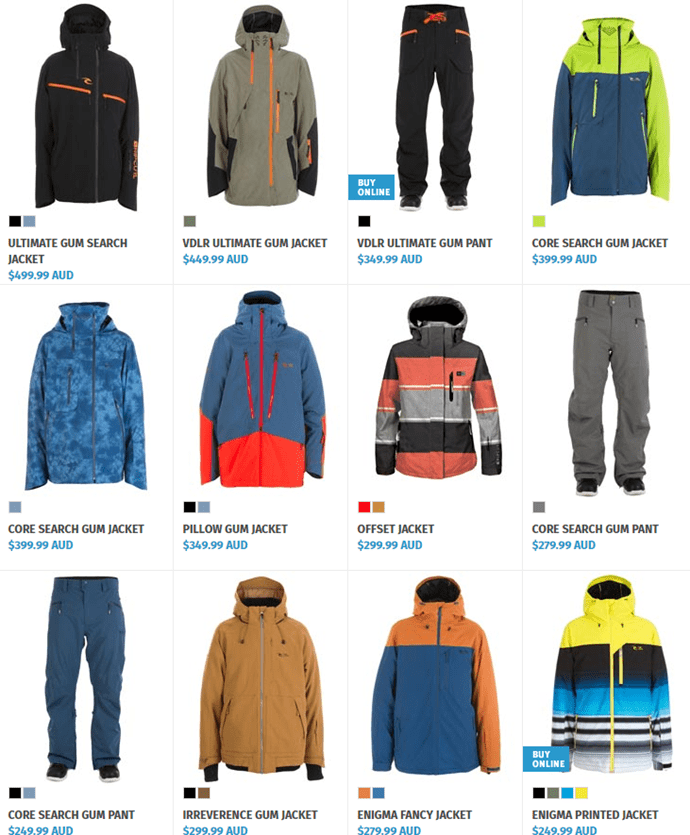
    An explosive Fairfax Media investigation has revealed that Aussie surfwear giant, Rip Curl, has been manufacturing garments out of North Korean factories where the workers are forced to withstand slave-like conditions.

    The range of winter garments were shipped to retail stores with a “Made in China” tag on them, which according to non-governmental agencies raises the likelihood that other large Australian clothing brands are doing this too.

    Rip Curl has blamed one of their subcontractors for the use of the Taedonggang Clothing Factory near the North Korean capital Pyongyang, with Chief Financial Officer, Tony Roberts stating:

    “We were aware of this issue, which related to our Winter 2015 Mountain-wear range, but only became aware of it after the production was complete and had been shipped to our retail customers.

    “This was a case of a supplier diverting part of their production order to an unauthorised subcontractor, with the production done from an unauthorised factory, in an unauthorised country, without our knowledge or consent, in clear breach of our supplier terms and policies.

    “We do not approve or authorise any production of Rip Curl products out of North Korea.”

    Rip Curl Mountainwear rangeRip Curl Mountainwear range

    Rip Curl Mountainwear range

    Factory conditions in North Korea are notoriously horrific, with North Korean defectors telling human rights activists that they are forced to work long hours with little to no pay. If they disobey they can be imprisoned in work camps.

    Being unaware is a paltry excuse, says Oxfam’s CEO, Dr Helen Szoke.

    “Australians would be shocked to hear that an iconic Australian brand with roots on the surf coast of Victoria can’t confidently track clothing produced within its own supply chain.

    “Rip Curl has no excuse for being unaware of what is happening. Companies are responsible for human rights abuses within their businesses – not only morally but also within international human rights frameworks,” Dr Szoke said.

  • Avon Asia woes continue

    Avon Asia woes continue

    Globally the beauty industry is growing, despite regional market challenges. “Unfortunately,” observes Neil Saunders, CEO of retail analyst Conlumino, “it’s not growth that Avon is currently benefiting from.”

    At the core of the brand’s troubles are Asia and Brazil.

    Avon’s Asia Pacific revenues shrank by 16 per cent overall and by 8 per cent on a constant currency basis.

    “The primary difficulty is China where, in a worrying sign that in a more challenged economic environment consumers are turning away from Avon, demand has fallen sharply,” explains Saunders.

    Avon’s financial results released last week were the first since the company decided to sell a majority stake of its North American operation to Cerberus Capital Management.

    “That decision was, in essence, an admission of defeat in the region following years of continuous decline,” says Saunders. “More positively, it has strengthened the group’s balance sheet and will allow it to focus on its potentially more lucrative overseas operations without the continuous distraction of trying to turn around an ailing part of the business.”

    Unfortunately for Avon the initial results from this smaller, more focused business proved disappointing with total revenue plunging by 20 per cent on a year-over-year basis. While much of that was down to the strong dollar, even on a constant currency basis a growth rate of 1 per cent provides scant comfort.

    Revenue in Latin America shrunk by a dramatic 26 per cent on a year-over-year basis, although in constant currency terms it ended up flat.

    “Even so, the difficult macroeconomic environment in Brazil – where average order size fell and where comparable sales shrank by 2 per cent – means that this once lucrative region is simply not delivering as it once did,” said Saunders.

    Thanks to Russia, where on a constant currency basis revenues rose by 29 per cent, the Europe-Middle East-Africa region posted a better performance with constant currency sales in positive territory. However, even here there are problem areas – in this case the UK where sales dropped by 7 per cent on a constant currency basis following a decline in active representatives.

    “Overall then, the state of the residual basis is fairly poor. Sales are shrinking, operating profit is weak, and the company remains loss making to the tune of around $331.9 million. In other words, hiving off the North American business has not solved Avon’s issues,” said Saunders.

    In the new fiscal year, Avon is planning to overhaul the cost structure of its business, expecting to save some $350 million over three years. Some of this will be reinvested, driving initiatives such as selling on social media.

    “From the scale of the savings it is obvious that they will not, in and of themselves, push the group into profitability; as such, driving top line growth will be absolutely critical if Avon is to remain viable,” said Saunders.

    “Top line growth requires a fundamental reappraisal of the business model – including the way Avon sells and distributes products. As important as the direct method of selling is, the rise of online has made the role of the representative less relevant than it once was.

    “This isn’t just about transactions, it is also about advice and information which increasing numbers of people are picking up from a growing array of beauty bloggers. In light of these changes Avon needs to reappraise, reassess and evolve.

    “The Tupperware playbook is a good example of how evolution can occur in a way that complements and is respectful to the heritage of the business,” concluded Saunders.

  • Another $3.5m funding for Grana

    Another $3.5m funding for Grana

    Hong Kong-based online clothing retailer Grana has secured an extra US$3.5 million in seed funding.

    This brings total funding to date to $6 million, with an additional Series A funding pending. The lead investor  is Golden Gate Ventures, with MindWorks Ventures and Bluebell Group also involved.

    Grana has just launched in the US market, and the extra funding will help the brand continue its international growth. The company offers clothing made from international fabrics including Chinese cotton twill and silk, French poplin, Irish linen, Italian merino wool, Japanese chambray and denim, Mongolian cashmere and Peruvian cotton. Designing in-house, Grana works directly with fabric mills to ensure the best possible prices.

    In its beta launch in March last year it sold 2000 Peruvian Pima cotton T-shirts in three weeks, shipping to eight countries. Month-over-month sales have been increasing by 40 per cent since the company launched in October 2014.

    As well as helping Grana ship to new markets, the new funding will support its entry to the China and US markets. The funds will also be critical to new product category launches such as leather goods, undergarments and activewear.

    “The support is critical to our US expansion, a priority market that already represents 20 per cent of our global sales,” says CEO and co-founder Luke Grana, an Australian based in Hong Kong.

    Grana opened a “fitting room” in San Francisco in December, and has also introduced the concept in Hong Kong, Singapore and Sydney. These outlets are designed as showrooms rather than retail shops, offering interaction with Grana Cheetahs (customer service representatives) and the chance to explore the website.

    “In a world where startups are disrupting established industries, Grana is disrupting how to build a global brand with bottom-up marketing from their biggest fans, city by city,” says Golden Gate Ventures managing partner Vinnie Lauria.

    Grana will also use the new funding to build its global team. It now has more than 40 employees in Hong Kong, and has just added team members in San Francisco.

  • JAJU continues quiet battle with Muji

    JAJU continues quiet battle with Muji

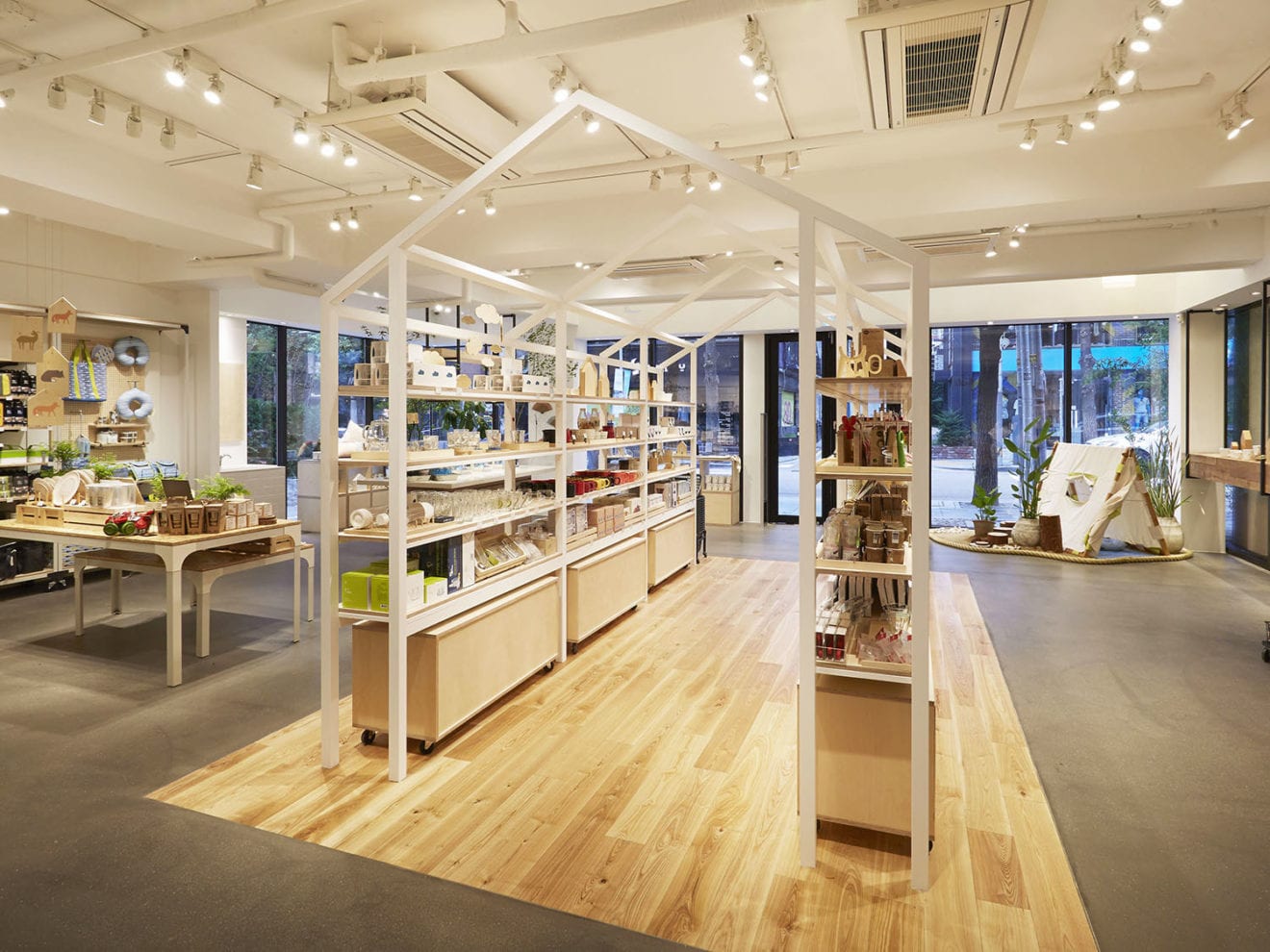
    The flagship store of JAJU, a retail brand by Shinsegae International, is all clean lines, muted colors and minimalist goods.

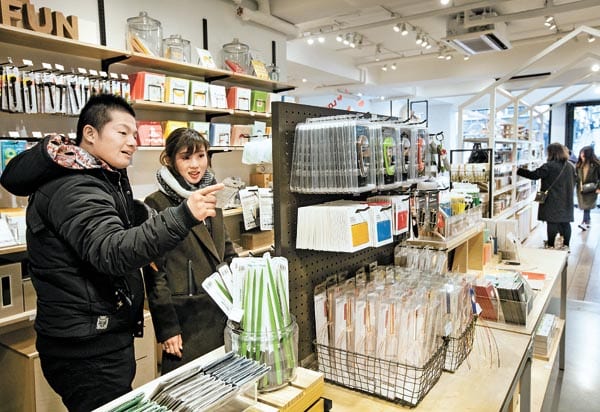
    Everything from notepads and diffusers to kitchen products, body cushions and clothes are on display for prices that make even the thriftiest shopper comfortable.

    JAJU is the first Korean lifestyle brand by a major conglomerate to offer a huge array of goods including housewares and daily supplies, a segment pioneered by brands like Japan’s Muji.

    Shinsegae International has never explicitly said it hopes to emulate the success of Muji, but the core brand concept – no-frills products at cheap prices – speaks for itself.

    The combination of simplicity, affordability and decent quality has boosted JAJU’s appeal among local consumers who appreciate a deal, but the similarities with Muji might hinder its expansion into the global market, which is Shinsegae’s ultimate goal.

    The five-story flagship store in the posh Garosu-gil area of Gangnam District, southern Seoul, symbolizes Shinsegae’s ambitions for the brand.

    “An average of 2,500 people visit this store each day on weekdays and some 4,000 to 5,000 people on weekends,” said Han Seung-min, head of the flagship store.

    In terms of sales, JAJU outperforms Muji in Korea thanks to its presence in stores like E-Mart, Shinsegae’s discount supermarket chain, and other shopping outlets.

    JAJU posted 175 billion won ($142 million) in revenue in 2014, while Muji Korea recorded 48 billion won.

    But the sales gap isn’t a big consolation for the local brand, since it operates a drastically larger number of stores.

    Muji has only 14 stores in the country whereas JAJU has 148.

    The brand maintained a humble presence only a few years ago, located solely inside of E-Marts.

    Until 2010, the brand name was Jayeonjui (which translates to “naturalism” in Korean) and was managed entirely by E-Mart.

    But since Shinsegae International, the fashion-oriented affiliate of Shinsegae Group, acquired the brand and changed its name to JAJU, the category of products has expanded.

    The company is also focused on diversifying the location of its stores beyond E-Mart to stave off the perception that JAJU is merely an in-house label.

    Along with the flagship store that opened in 2014, JAJU added an additional branch in the COEX Mall in Samseong-dong, southern Seoul.

    Still, E-Mart remains the largest channel, with 132 branches accommodating the shop.

    “We are looking for different properties to house JAJU to reach different customer bases,” said Park Cho-rong, a public relations representative of Shinsegae International.

    Appeal of simplicity

    The colors, patterns and materials of JAJU products are understated. But the plainness helps keep manufacturing costs low, resulting in lower prices.

    The prices of most goods at JAJU are low even compared to Muji, a major selling point of the brand.

    Muji’s socks start from 4,000 won ($3.25), but those at JAJU are in the 3,000 won range.

    Shinsegae said that the standard design and simple packaging pushes the prices lower, even though 90 percent of the products are made in Korea.

    And the plain-looking goods appear to be appealing to customers’ tastes.

    “When I place plain white dishes and cups together, it gives off a modern and pleasant vibe,” said Choi Hee-young, a 33-year-old woman who was perusing kitchenware at the JAJU flagship store.

    “Because they can form some kind of uniformity, they are easy to match together compared to fancy, carefully designed items with colors.”

    As part of its efforts to enhance design, Shinsegae tapped well-known designer Oh Joon-sik as the creative director for JAJU last year.

    Catering to Korea

    JAJU is trying to carve out a niche for itself by making its products more explicitly “Korean.”

    “Based on the understanding of the Korean lifestyle, JAJU tries to offer quality goods at affordable prices,” said Kim Woong-yeol, head of the sales division at JAJU.

    For example, the brand sells small onggi, or crock pots, designed to better keep traditional dishes such as kimchi and soybean paste. The pots typically come only in big sizes because they are placed outside in bulk.

    “This type of onggi is designed to keep temperatures so that the food inside is better preserved,” said Han, the head of the flagship store.

    “But now the size of households is becoming smaller, and we learned that there is a demand for smaller pots,” she said.

    JAJU stores gained insight into its consumers’ tastes by inviting stay-at-home moms to offer their opinions in the development stage.

    Their thoughts are particularly reflected in kitchenware and kids’ products.

    “Cooking spoons made by overseas manufactures are rather big, which is inappropriate for Korean users,” Han said, “So we surveyed the ideal size of cooking spoon for consumers and adjusted the size.”

    When the retailer revamped its brand in 2010, JAJU added a line of designer furniture, as well as items for kids and travel.

    To boost its furniture collection, JAJU teamed up with global furniture company Fritz Hansen and Sigga Heimis, a former designer for Ikea.

    Of its existing categories, JAJU has boosted aromatherapy, home decor and body care products in response to the growing demand.

    “With the rise of single-person households, we found that products used to decorate houses or as a little treat are really doing well,” Han said.

    “They are not essentials, but the items can cause a little joy or make for a more pleasant atmosphere.”

    Global ambitions

    Shinsegae International said in 2014 that it will develop JAJU into a global brand with annual sales of 500 billion won by 2020.

    The retail unit, headed by Chung Yoo-kyung, a daughter of Shinsegae’s founding family, has yet to elaborate on its global expansion plan.

    Some analysts predict JAJU will focus on local markets for the next year or two because the brand’s revenue drives sales growth for Shinsegae International.

    “JAJU plans to open 10 more stores by the end of this year,” said Yoo Jeong-hyun, an analyst at Daishin Securities.

    “Revenue that comes from each JAJU store is very high, and the combined sales account for 20 percent of Shinsegae International’s sales.”

    But industry insiders say JAJU needs a more distinctive identity and brand strategy to distinguish itself from the better-known Muji.

    The product categories overlap with those of Muji, and some products offer similar functionalities.

    “The key to success in the global market depends on how JAJU can create its own brand concept distinct from Muji,” said a retail analyst who requested anonymity.

    “But right now, the distinction is not enough to pull off the same success as Muji.”

  • Lotte in joint e-commerce venture in Indonesia

    Lotte in joint e-commerce venture in Indonesia

    Lotte Group is planning a joint effort to enter the e-commerce market in Indonesia, which has a population of almost 250 million people.

    The company plans to start building up the e-commerce venture with Indonesia’s biggest conglomerate, the Salim Group, during the first half of this year and expects to be in full operation by early next year.

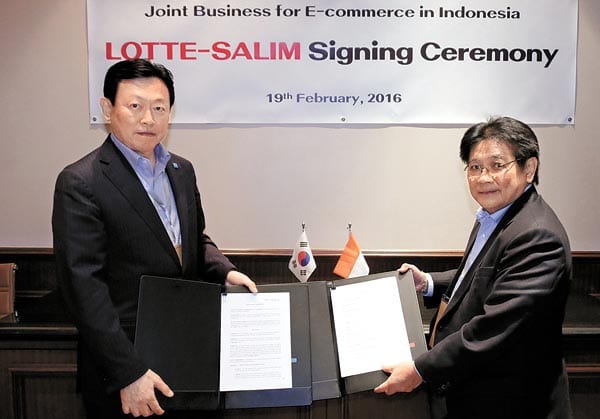
    According to the Korean retail giant on Sunday, the deal was agreed when Lotte Group Chairman Shin Dong-bin met with Anthony Salim, the chairman of Salim Group in Singapore on Friday, during the Asia Business Council meeting.

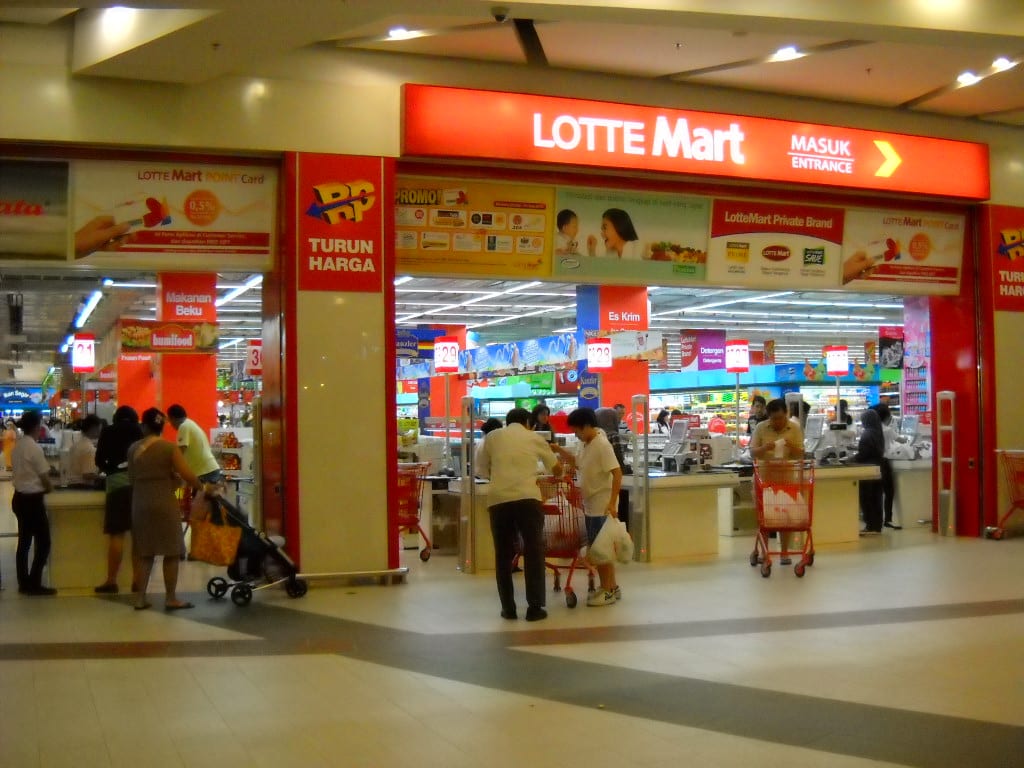
    Lotte hopes to secure a strong foothold in the e-commerce market in one of Southeast Asia’s biggest markets by employing an omnichannel retailing strategy and establishing a stable delivery service by utilizing the existing networks Lotte’s and Salim’s offline stores. Lotte has one department store in Indonesia but has 41 retail stores. Salim Group has 11,000 Indomaret convenience stores.

    The Korean retailer said it also plans to introduce selected products that are popular in Korea to the Indonesian market.

    Under Chairman Shin, Lotte Group has been aggressively expanding its overseas businesses and Indonesia has been considered one of its key strategic markets.

    The Korean retail giant first got involved in the Indonesian market in 2008 when it acquired 10 chain stores of the Dutch discount store Makro.

    The advance into e-commerce comes as Indonesia’s online market has been growing rapidly. The country’s online market, which is estimated to have been about 3.2 trillion won ($2.5 billion) in 2014 is expected to expand to about 25 trillion won by 2020. This is largely due to the growing internet distribution, which already has exceeded 30 percent of its population.

    Smartphone distribution, which speeds up the growth of e-commerce, was 21.3 percent in Indonesia as of 2014.

    This figure is expected to reach 40 percent by the end of this year as faster LTE service was adopted last year.

    The Salim Group is Indonesia’s biggest conglomerate that is involved in wide range of businesses from food, distribution, telecommunication, media, automobile manufacturing and property development. It is most famous for its instant noodles Indomie. Additionally Salim Group’s logistic company Indomarco ranks No.1 in Indonesia.

  • Apple Granted 4 Design Patents in Hong Kong

    Apple Granted 4 Design Patents in Hong Kong

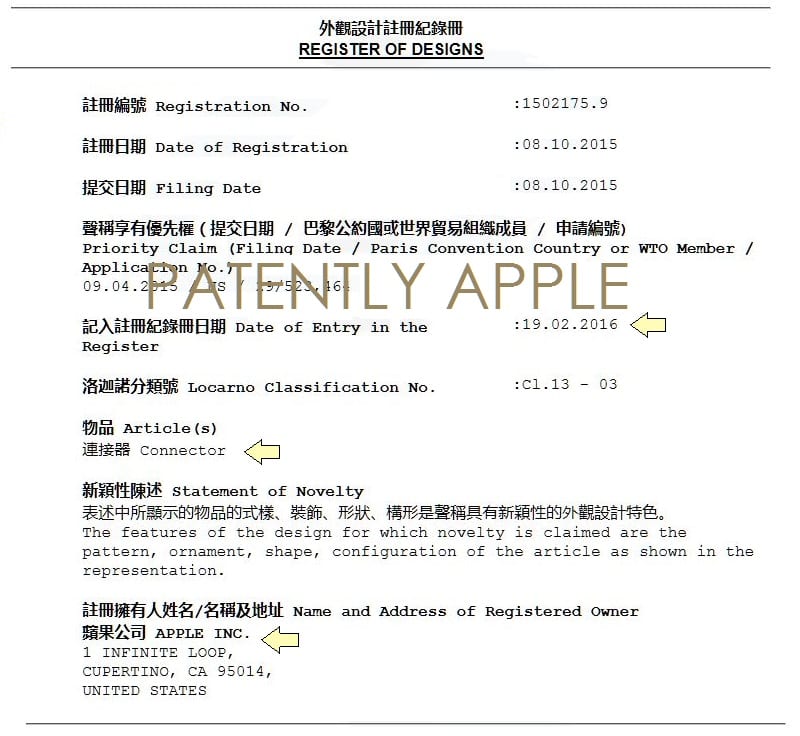
    Apple was granted four design patents yesterday in Hong Kong China covering the Apple Watch Sport’s retail packaging & a connector with an on-off switch at the top as noted in our cover graphic.

    Unlike “patent applications,” design patents published by the U.S. Patent and Trademark Office and/or any other Patent Office, don’t reveal pertinent information about a particular design. All we are given is a series of simple photos and/or line-art graphics of what was actually registered. The first design patent is a case in point. It’s a design patent for a ‘connector’ – but it’s not one that’s familiar. Without patent details, there’s no way to verify with certainty what the connector is for. .

    Design Patent: Connector

    Apple was granted a design patent in Hong Kong yesterday for a connector that is unidentified. If any reader is able to identify this connector, then please make note of it in our comment section below and we’ll update this report accordingly.

    2AF 55 CONNECTOR DESIGN PATENT

    Update 5:40 a.m.: Several comments suggested that the connector design was associated with the hidden data port. After going back to the design patent and conducting a more focused search online for this, I came a across a design for a charging strap as noted in the graphic below. It’s an accessory not made by Apple.

    Going back to the design patent there was a second part of the design, the male connector as presented below that’s to mate with the female connector as noted noted above. If this design is associated with the Apple Watch, then will Apple introduce this with the Apple Watch 2 design or are they licensing this design to accessory makers? Time will tell, but for now, it appears that our fan base may have had it right in suggesting the connector was for the hidden data port. Thanks to all who sent in comments on this in a timely manner. Cheers.

    2.88 AF 55 CONNECTOR

    3AF 55 CONNECTOR GRANTED DESIGN

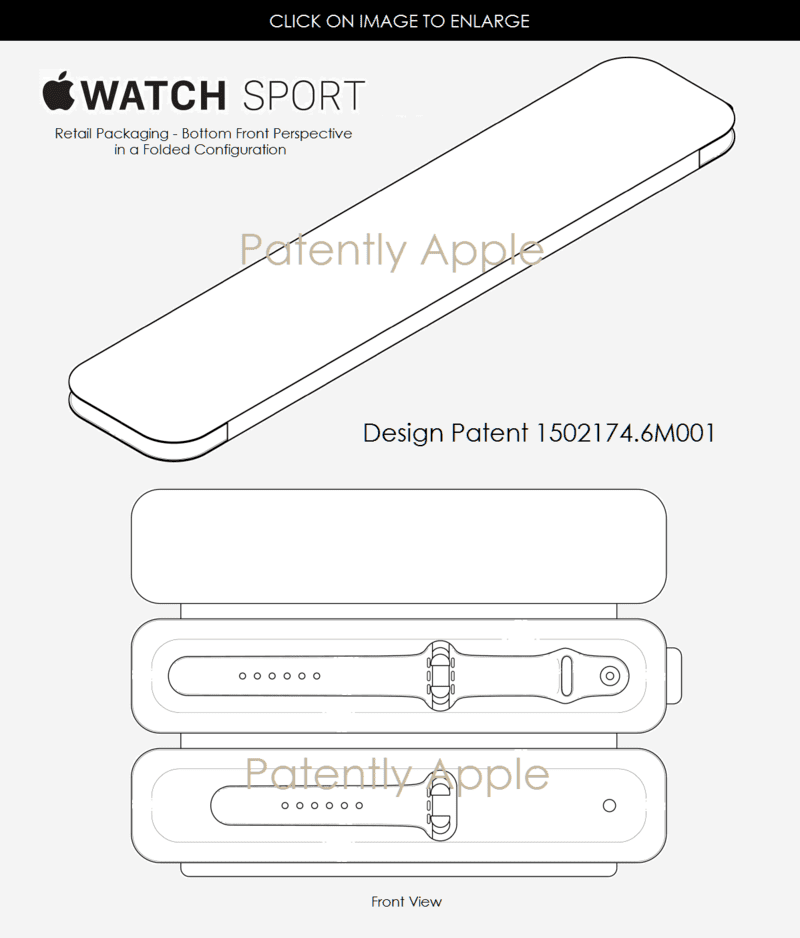
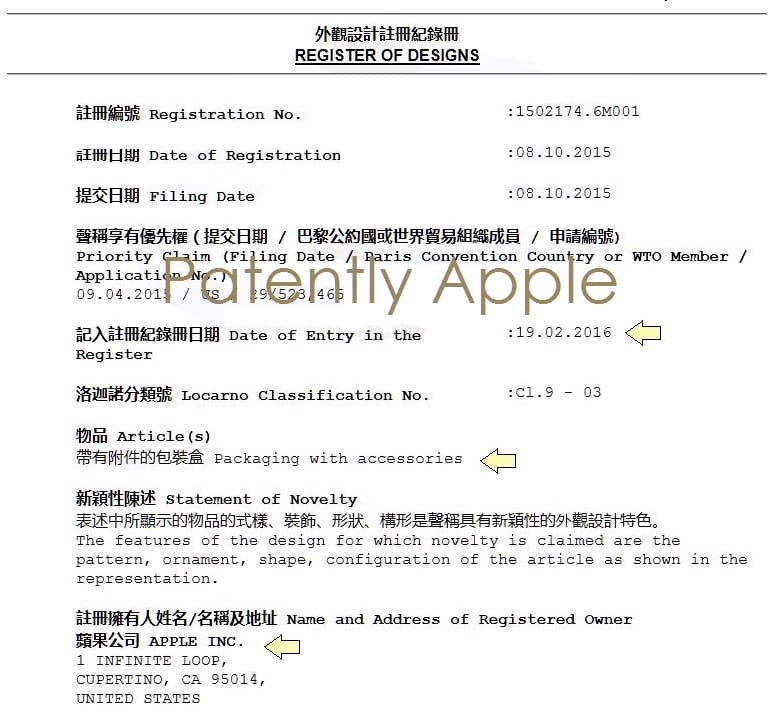
    Design Patent: Apple Watch Sport Retail Packaging

    Apple was granted three design patents yesterday in Hong Kong numbered 1502174.6M001 to .6M003 covering the retail packaging for the Apple Watch Sport as noted below.

    4af 55 apple watch sport retail packaging

    5af 55 apple watch sport granted patent

    6AF 55

  • HSBC to stop retail banking in Maldives

    HSBC to stop retail banking in Maldives

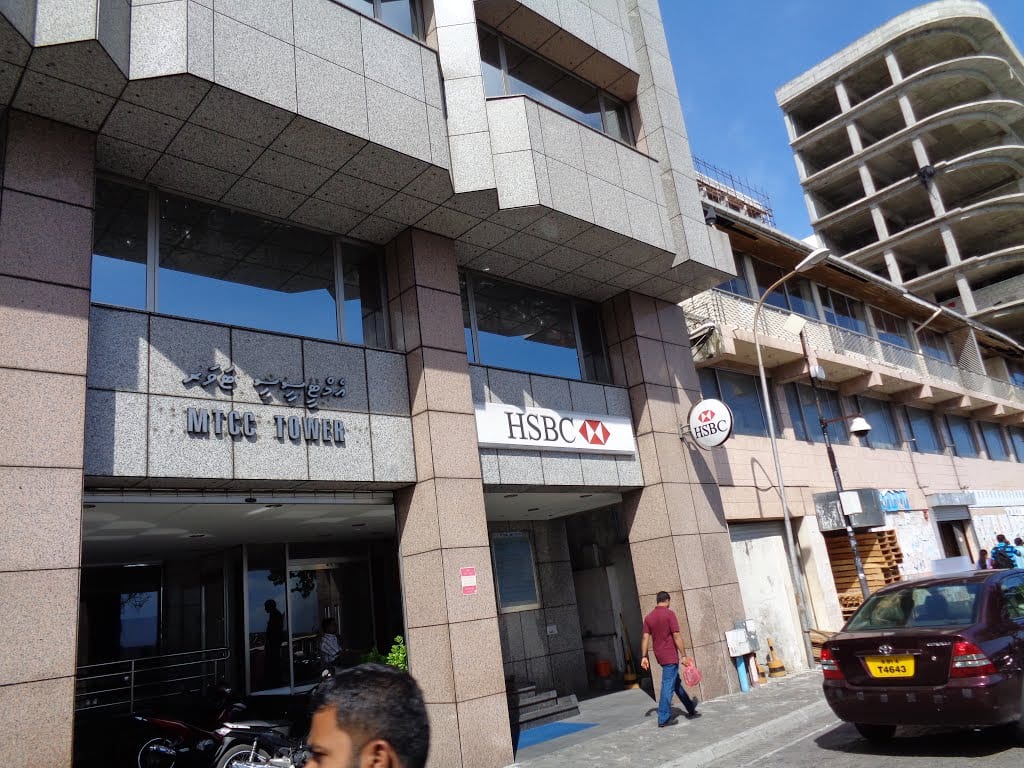
    Banking giant Hong Kong and Shanghai Banking Corporation (HSBC) is to cease retail banking services in Maldives from April. We understand that the Male branch of HSBC had decided to cease retail banking operations from April 28 and is now informing its customers.

    An official from the Maldives Monetary Authority (MMA) also confirmed the plans by HSBC’s Male branch to shift to corporate-only operations. The official, however, did not give details.

    HSBC was not available for comment.

    HSBC operates in Maldives as a trading desk of the HSBC branch in Sri Lanka.

    An account in HSBC has to be opened with an initial deposit of MVR 50,000; the highest initial deposit required of any bank that operates in Maldives. The bank also pays the lowest deposit interest rate at 1 – 1.75 percent. Deposit interest rate on US Dollar accounts is 0.10 percent.

    As the bank charges a high amount in fees, the bank mainly hosts Maldivian businesses.

    In May 2014, complaints mounted over the bank’s decision to close down accounts held by many small and medium businesses citing administrative reasons. The businesses had complained that the move was made without prior notice.

    The decision by one of the biggest banks in the world comes a week after it was revealed that the Maldives had lost a major international banker.

    President Abdulla Yameen Abdul Gayoom told residents of Gaafu Dhaal atoll Gadhdhoo on February 15 that one of the major correspondent banks had dropped Maldives from its client list, while another one is considering a similar move. The reason, according to the president, is false claims made about Maldives, including threats posed by home-grown jihadists.

    “When we make such claims without considering the repercussions, it’s the people of Maldives that has to suffer,” he said, after inaugurating a project to establish a clean water system in the island.

    The president did not identify the bank that had dropped the Maldives. Haveeru, however, understands that US-based JPMorgan Chase had terminated its dealings with Maldivian banks in 2013.

    A correspondent bank is a financial institution that provides services on behalf of another, equal or unequal, financial institution. It can conduct business transactions, accept deposits and gather documents on behalf of the other financial institution.

  • Mobile, millennials to drive retail innovation

    Mobile, millennials to drive retail innovation

    Mobile commerce, millennials and faster fulfilment will drive retail innovation this year, according to commercial supply chain specialist Manhattan Associates.

    It predicts a rapid migration to more personalised shopping, with mCommerce presenting big challenges as well as inspiring innovation.

    Emerging Asia is still the fastest-growing region of the global economy, says the company, with strong labour markets and a growth in disposable income expected, especially in Southeast Asia. This means a continued rise in consumer spending along with mounting pressure for retailers to keep up with consumers and their rising expectations.

    “Millennials particularly demand seamless experiences across multiple channels, as well as more and slicker order and fulfilment options,” says Manhattan’s Southeast Asia MD Richard Wright.

    This means retailers must make informed choices about not only what is right for the consumer, but also right for the business.

    Wright says retailers will have to make some fundamental changes this year to address growing consumer demand, expectations for a more personalised shopping experience and increased use of mobile technology.

    “We have identified five key areas in which retailers can focus attention, not only to achieve customer satisfaction but also to drive business growth and profitability.”

    He defines the five key areas as:

    • Making the shopping experience personal and frictionless,
    • Recognising the power of millennials,
    • Embracing mobile technology to achieve customer-centric retailing success,
    • Delivering faster; and
    • Being more flexible with returns.

    “The anonymous shopping experience has had its day,” says Wright. “On the back of digital personalisation success, retailers are turning their attention to the in-store experience, recognising both the rise in customer expectation and the differentiation personal service can offer.”

    He says this experience can range from recipe ideas and ingredients lists in supermarkets to intuitive, customer-inspired fashion recommendations. “Retails have the chance to transform the in-store engagement.”

    Research by the group last month has shown that tailored shopping experiences will encourage more shoppers to engage with the in-store experience. In a consumer survey, 49 per cent of respondents said they would interact more with store staff members if the shopping experience was personalised.

    “When a shopped reaches the point of sale, give them tailored discounts, recommendations based on their shopping history, and even style tips matched to their recent purchases,” the group suggests.

    Manhattan Associates also says personal shopping is back. “It is time for retailers to redefine the role of stores, embrace technological innovation that drives both service enhancements and operating margins, and engineer a cultural shift that will enable staff to reinforce brand value and deliver personalised service across every channel.”

    There is a need to redefine the role of the store assistant. As consumers become ever more connected, store assistants need the knowledge, skills and desire to offer the best possible shopping experience.

    Dissatisfaction impacts brand reputation

    “Failing to give customers what they want will result in dissatisfaction and more complaints, which can have a longer-term impact of brand reputation and sales.”

    In Malaysia alone, says the company, the National Consumer Complaints Centre received 41,531 complaints in 2014, a 28 per cent increase for the previous year.

    Retailers can avoid such dissatisfaction by educating their store staff, but more is needed than just product information, says Manhattan Associates.

    Frontline staff need access to stock levels across all stores, warehouses and distribution hubs so they can sell the entire network of available inventory rather than just the stock in an individual store.

    Having an overview of enterprise stock and being able to offer delivery alternatives will keep customers loyal.

    “We predict that many retailers will being emulating the experiences of companies like Parkson, and change their structure so the store assistant plays a fundamental part in the buying process from start to finish, and acts more as a personal advisor.

    “However, a cultural change such as this cannot happen unless it is championed from the top down. Board-level executives need to buy into the potential results possible from investment in staff and customer experience initiatives.”

    Manhattan Associates believes millennials, who constantly interact with the online world, are frequent yet demanding shoppers.

    “We think it is time for millennials to take the lead on what they would like from a retail experience, and help retailers drive new strategies and initiatives. With 40 per cent of Millennials happy to give up cash completely, and 91 per cent opting to use a self-service checkout, it is clear these 18 to 34-year-olds shop differently to the traditional retail model. They adapt to technology quickly and expect retailers to do the same.”

    Another finding from the company’s research is that customers shopping via mobile devices spend up to 66 per cent more than those solely shop in a store. But as mobile devices now play a more important role in not only browsing and buying, but also paying for goods, the potential is even greater.

    Manhattan Associates predicts that retailers will use more beacons this year to augment the in-store experience.

    “Not only are these devices cost-effective, they communicate directly with smartphones through Bluetooth, meaning stores can lure in passing customers with offers and discounts.”

    Store assistants can also use mobile technologies to enhance the shopping experience. Tablet devices can enable assistants to deliver a personalised experience. They can access an online product catalogue populated with a shopper’s purchasing history, wish lists, online shopping cart and return history, improving their ability to up-sell and cross-sell.

    Meanwhile, POS technology is transitioning from fixed-point transactions to mobile engagement, offering payment acceptance “on the go” for all of a customer’s orders in a single transaction. This can be by cash, cheque, credit or such systems as Apple Pay.

    Advanced mobile POS technology can handle the most complex return situation with the least amount of friction, regardless of which channel initiated the order or how the customer chooses to receive credit.

    While price is the main attraction for 67 per cent of shoppers, across both online and in-store shopping, fast delivery is important for 51 per cent, and flexible returns for 42 per cent.

  • Furla Asia-Pacific plans more flagships

    Furla Asia-Pacific plans more flagships

    Luxury Italian brand Furla is planning more flagship stores in Asia as the region delivers strong growth for the 89-year-old family-owned company.

    FURLA CEO_Eraldo PolettoIn an exclusive interview with Inside Retail Asia, Furla CEO Eraldo Poletto explains how the company has bucked the decline in luxury spending in core markets like Hong Kong and Singapore during the past year. Furla achieved 53 per cent growth in total sales (in euro at the current exchange rate) in Asia-Pacific, where it counts 14 markets – Australia, Cambodia, China, Hong Kong, India, Indonesia, Korea, Macau, Malaysia, Singapore, Taiwan, Thailand, The Philippines and Vietnam. Japan, a stand-alone territory in Furla’s accounts, saw sales grow 24 per cent.

    Even discounting sales from new stores, like-for-like growth for Furla Asia-Pacific reached 15.5 per cent last year, yet the region accounts for just 19 per cent of the company’s sales – about €64.4 million ($72.1 million) – suggesting strong growth potential ahead.

    “The consistent strategy we have implemented over the past four years – positioning ourselves as the only Italian and ‘Made-in-Italy’ brand in the premium segment, without accepting compromises in terms of quality – is paying off,” says Poletto.

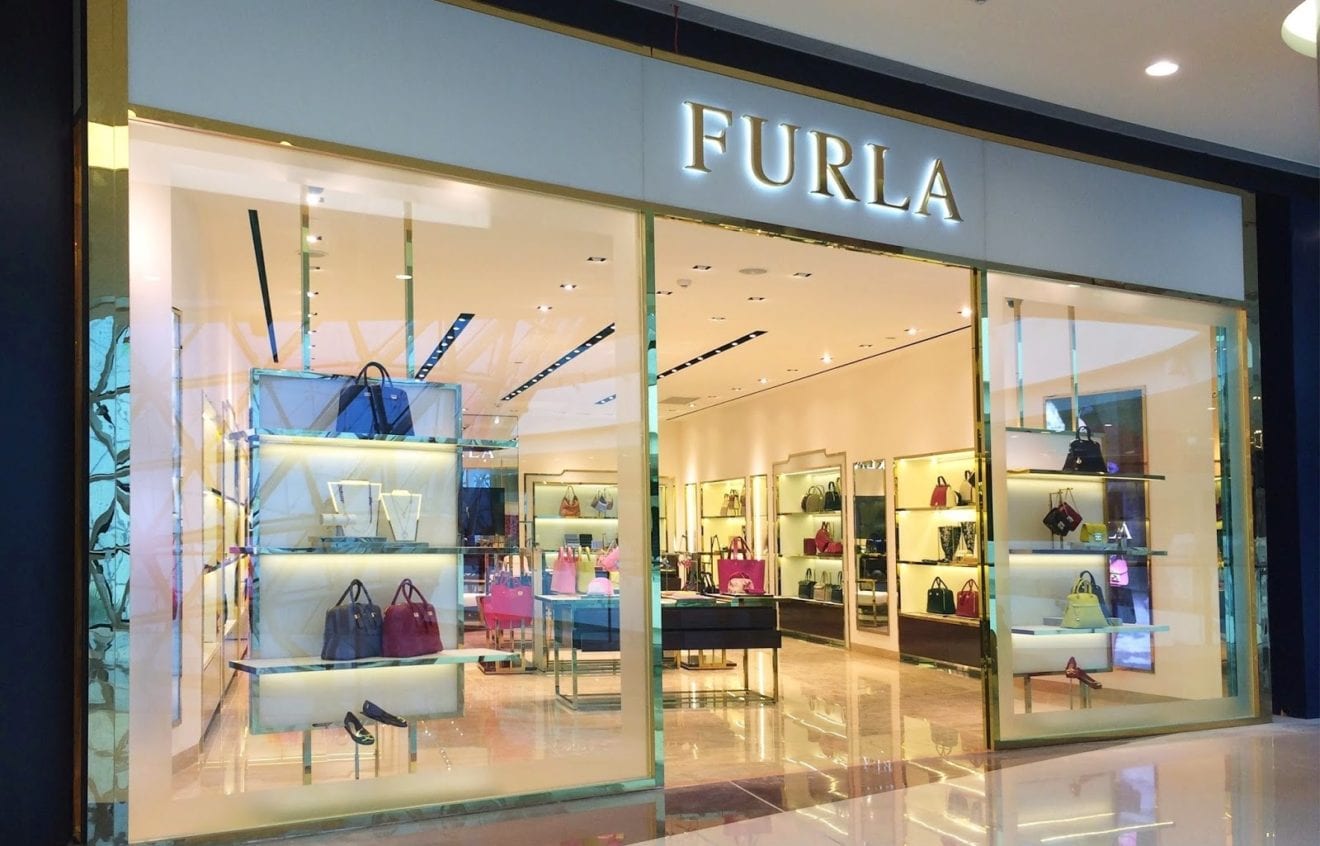
    “We are expanding our footprint with important flagships: Singapore Marina Bay Sands opened in September; Hong Kong Miramall and Shanghai Citic, each with a 300 sqm street facade, opened in December with a luxury retail concept showcasing our full ladies’ and men’s collections.”

    Furla China Flagship Store @ Shanghai Citic Square 4

    He says more flagships will open this year in Australia and Bangkok.

    “Flagships are meant to represent every aspect of the brand in terms of image and product range; however, we are not expecting to open more than five or six flagships in the region, as we are focusing on the profitability of our retail network, and prefer to penetrate the market extensively.”

    In what he terms a “capillary” approach, more standard-sized stores and points of sale will also open across the region.

    Furla China Flagship Store @ Shanghai Citic Square 7

    For the past two years the company has opened or renovated one store a week. It now has 172 points of sale in Asia-Pacific, along with 72 monobrand stores in Japan.

    “In terms of our retail format, our average store size is increasing together with Furla’s total-look collections. Malls and high-street locations complement each other, and in this period of time, rent levels in some markets have decreased substantially because of a drop in demand from luxury, watch and jewellery brands. We are always on the lookout for new opportunities to invest in,” says Poletto.

    “Our retail store concept is also quite special, as it wants to deliver a 360-degree luxury shopping experience while maintaining our the value-for-money approach.”

    Furla China Flagship Store @ Shanghai Citic Square 2

    Asians appear to be embracing Furla’s distinctive quality brand feel and shopping experience. Perhaps surprisingly, the brand has no strategy of differentiating its Asia-Pacific product range from those of other markets.

    “We believe that if a product captures customers’ hearts in one market, its appeal is universal. Our price and product range have always been appealing to a large spectrum of clientele; it is not by chance that our two best-seller styles – Metropolis and Artesia – represent the most affordable and the highest offer of our collection respectively.

    Furla China Flagship Store @ Shanghai Citic Square 6

    “In terms of branding, strong marketing investments – like our collaboration with Mario Testino and a more aggressive digital and outdoor media planning strategy – are making Furla far more visible.”

    Department stores are still an integral part of the Furla sales strategy, especially in China, where that sector is still in its infancy by western standards.

    “The department store culture in Greater China isn’t very strong yet, and there are very few players compared to the shopping mall retail model in western markets. There is most surely room for improvement in this region.

    Furla China Flagship Store @ Shanghai Citic Square

    “The situation is much more developed in Singapore and Australia, and obviously a priority in Korea with Shinsegae, Hyundai and Lotte, where we are present with 10 domestic stores and an aggressive development plan.”

    Furla is also experiencing strong growth in the travel retail sector, which is helping both top-line sales and brand awareness.

    “Travel retail will continue to fuel the growth in APAC,” says Poletto. “Total sales generated by the travel retail channel were up 27 per cent for 2015, and we opened five new locations. We see blooming opportunities in this channel as Asian customers shop worldwide while they travel: it is a great showcase for the brand.”

    In June, Furla will open a directly managed boutique in Hong Kong International Airport.

    Furla China Flagship Store @ Shanghai Citic Square 8

    Southeast Asian focus

    Furla’s strong growth in the region is coming not just from the established markets of Hong Kong, Singapore and Greater China.

    “We have witnessed a significant double-digit growth in Southeast Asia markets including Cambodia, Malaysia, Singapore, Thailand, The Philippines and Vietnam,” says Poletto.

    “In Indonesia, a fast-growing country with a population of 250 million, we have a capillary quality presence with 10 boutiques in five cities. As of today, Furla has 46 stores in Southeast Asia, and we will focus on strengthening our foothold in these markets this year.”

    Furla China Flagship Store @ Shanghai Citic Square 5

    In India, which Furla has entered in a joint venture with Genesis Luxury, the label has three boutiques – one each in Mumbai, Delhi and Calcutta.

    “They are all performing very well with a 50 per cent sales growth increase in 2015,” says Poletto. But the market has considerable challenges.

    “India is a market with very high potential, but also with a huge limits when it comes to infrastructures. There are not enough qualitative shopping malls to cover Indian clients’ high demand for fashion and luxury: this is why Indian consumers represent a key nationality in markets like Dubai, London or Singapore.

    “In terms of expansion, we will tap into all the new relevant real-estate projects.”

    Globally, Furla has 415 monobrand stores, of which 190 are directly owned and 198 franchised. It has 27 travel retail stores and more than 1200 outlets in department stores and multibrand outlets.

    Furla China Flagship Store @ Shanghai Citic Square 10

    Results released today show that Furla’s global turnover reached €339 million last year, up 30 per cent on 2014. The growth was driven across all Furla product categories, including the new men’s collection, women’s footwear collection and eyewear.

    Poletto says that being a family-owned business – an increasingly rare phenomenon in the model luxury retail business – has its advantages.

    “Being 89 years old gives us a great DNA to be around into the future: the real assets are the brand and its heritage, which are translated into equity. The Furlanetto family has very strong values – they have a long-term vision, instead of making opportunistic choices.”

  • Paul & Shark Korea opens first store

    Paul & Shark Korea opens first store

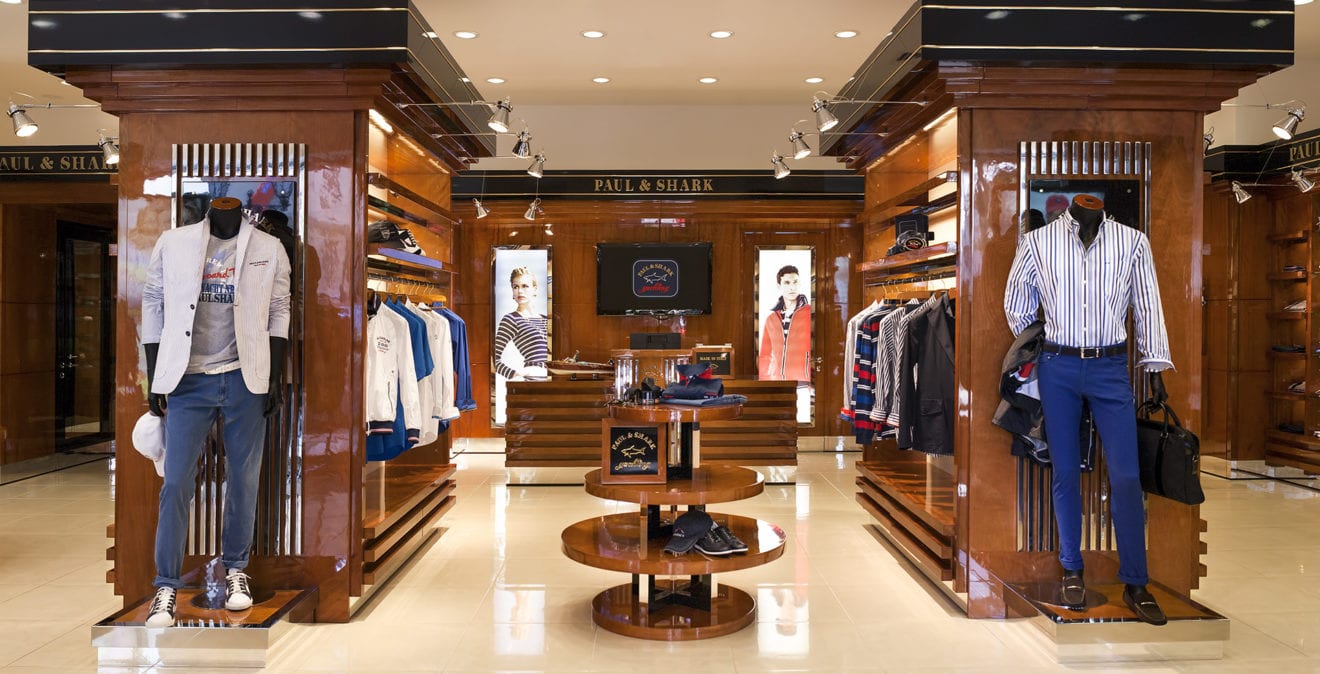
    Luxury Italian lifestyle brand Paul & Shark has opened its first boutique in South Korea, at Incheon International Airport.

    The new Paul & Shark Korea store, run in partnership with Lotte Duty Free, features the brand’s new collections.

    Another two openings are planned for Seoul in the first quarter of this year, according to Paul & Shark global travel retail director Catherine Bonelli.

    Founded in 1976 by the Dini family, Paul & Shark’s men’s, women’s, children’s and accessories collections are available in more than 60 countries.