Tag: asia

  • Garuda Indonesia Group to Join Singapore Airshow 2016

    Garuda Indonesia Group to Join Singapore Airshow 2016

    As part of its company synergy, the Garuda Indonesia Group will for the first time join Singapore Airshow, Asia’s largest aerospace and defence event. This is Garuda Indonesia’s first participation as a Group, as only one subsidiary, the Garuda Maintenance Facility AeroAsia, had participated in the past.

    M. Arif Wibowo, President & CEO, Garuda Indonesia, feels the presence of the Garuda Indonsia Group at Singapore Airshow 2016 is inline with the company’s “Group Synergy” program, as detailed in its strategic plan 2016.

    “The Garuda Indonesia Group is delighted to present itself as an integrated whole, presenting our business synergies as group action in providing service excellence to all customers, through each member’s strengths and main businesses,” Arif added.

    The presence of Garuda Indonesia Group at the Singapore Airshow follows Group strategy to develop brand image, to elaborate potential business, to enhance business relations with stakeholders, and to boost up the awareness to Garuda Indonesia Group’s strategic role as Indonesia’s trade envoy in international level.

    At the Singapore Airshow 2016, Garuda Indonesia Group – through Garuda Maintenance Facility AeroAsia – looks to several short-term and long-term business contracts, of a value reaching USD 100 milions.

    Singapore Airshow is one of three prestigious airshows in the world, along with Farnborough Airshow and Paris Airshow. During the airshow, Garuda Indonesia Group will hold several partnership and business deal signings, including an announcement of attainment; which expected to promote and stregthen Garuda Indonesia Group’s value in global market.

    Garuda Indonesia currently has 6 subsidiaries with diverse business sectors, comprised of:

    – Garuda Maintenance Facility AeroAsia, specialized in integrated aircraft maintenance, including engine and aircraft components repair service;

    – Citilink, a low cost carrier (LCC) airline projected for budget traveller;

    – Aerowisata, specialized in hospitality, transportation, catering and travel agent service;

    – Gapura, specialized in ground handling service, supported by cargo and warehousing service;

    – Asyst, specialized in IT and consultation service;

    – Abacus – which now has transformed to Sabre Travel Network Indonesia – specialized in technology provider service for global travel and tourism.

    As part of the fleet revitalization program, throughout 2016, the Garuda Indonesia Group will receive 16 new aircraft in total; 1 Boeing 777-300ER, 4 Airbus A330-300, 4 ATR72-600, and also 8 Airbus A320 to be operated by Citilink. By the end of 2016, Garuda Indonesia Group will operate a total of 188 aircraft; 144 aircraft for Garuda Indonesia and 44 aircraft for Citilink.

    To continue the positive growth reached by its “Quick Wins” program in 2015, Garuda Indonesia will execute a “Sky Beyond” strategy in 2016 for short-term company expansion, focusing on three ‘core strategies’ – company group synergy, effectiveness and efficiency, and service enhancement – to accelerate company achievement and performance.
  • Nakheel to double size of its Dubai retail complex catering to Chinese businesses

    Nakheel to double size of its Dubai retail complex catering to Chinese businesses

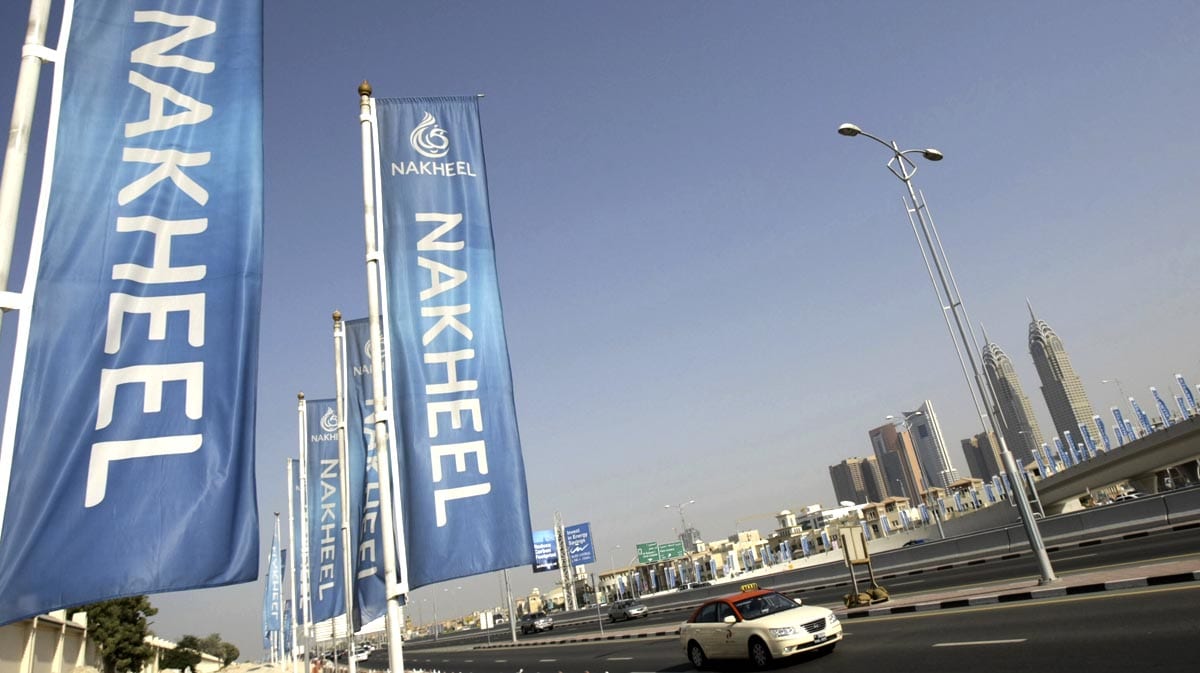
    The government-owned developer plans to expand the current 4,000-shop retail complex into a community named Dragon City by adding an extra 6.5 million square feet of shops, residential housing and hotels, increasing the total gross floor area to 11 million square feet.

    The expansion comes after the successful launch of the Dragon Mart phase one development which opened in 2014, and phase two of the development which opened in November last year.

    “Today, Dragon Mart is the world’s biggest Chinese trading hub outside mainland China with more than 5,000 Chinese businessmen operating there,” said chief executive Sanjay Manchanda, who declined to disclose the total investment cost.

    There are more than 4,000 shops, restaurants and entertainment outlets handling an average of 80,000 visitors daily, he said.

    In view of the strong demand for retail space at Dragon Mart phase one and two, which was built in the shape of a Dragon to appeal to Chinese investors, Manchanda said businesses were keen to lease the new retail space.

    According to the proposed expansion plan, the developer will add an extra 1.3 million square feet of showroom-style retail units, with sizes from 500 square feet to 10,000 square feet, as part of Dragon Mart phase three to phase six. The annual rental cost is from as low as US$75 per square foot.

    Located on Hatta Oman Road and easily accessible from Sheikh Mohammed bin Zayed Road, the entire development will comprise 5,700 stores when completed.

    Besides retail, Dragon City will include two residential towers housing 1,120 apartments and two 250-room hotels, plus 12,000 car parking spaces. The whole project is due for completion in three to five years.

    The developer participated in a three-day Dubai property exhibition last month to woo Hong Kong investors amid a slump in Dubai home prices which have declined for five consecutive quarters.

    But Manchanda rejected suggestions that home prices would undergo a downward adjustment due to an increasing supply of flats. For the latest launch of its 960-unit residential tower Warsan Village, 70 per cent of the units were snapped up by Chinese investors, according to Manchanda.

    Currently under construction, Warsan Village is located on a 47.5 hectare site about three kilometres from the recently expanded Dragon Mart retail hub. Each town house covers 2,000 square feet and comes with a maid’s room, three bathrooms, powder room, two balconies, private garden and parking for two cars. Prices start at around HK$3.7 million.

    Industry consultants Cluttons said in a report that Dubai home prices had recovered to near peak values in 2014 after falling by about half from 2008 highs.

    Cluttons is predicting residential prices will fall 3 to 5 per cent over the following 12 months because of a faltering global economy and an increasing supply of residential units.

    “We have even seen some Chinese buying plots of land near Dragon Mart and they plan to build homes for renters who are doing business there,” said Manchanda.

    In C-Suite on P3, Manchanda talks more about the property investment market in Dubai

  • Indonesian bank opens branch in Seoul

    Indonesian bank opens branch in Seoul

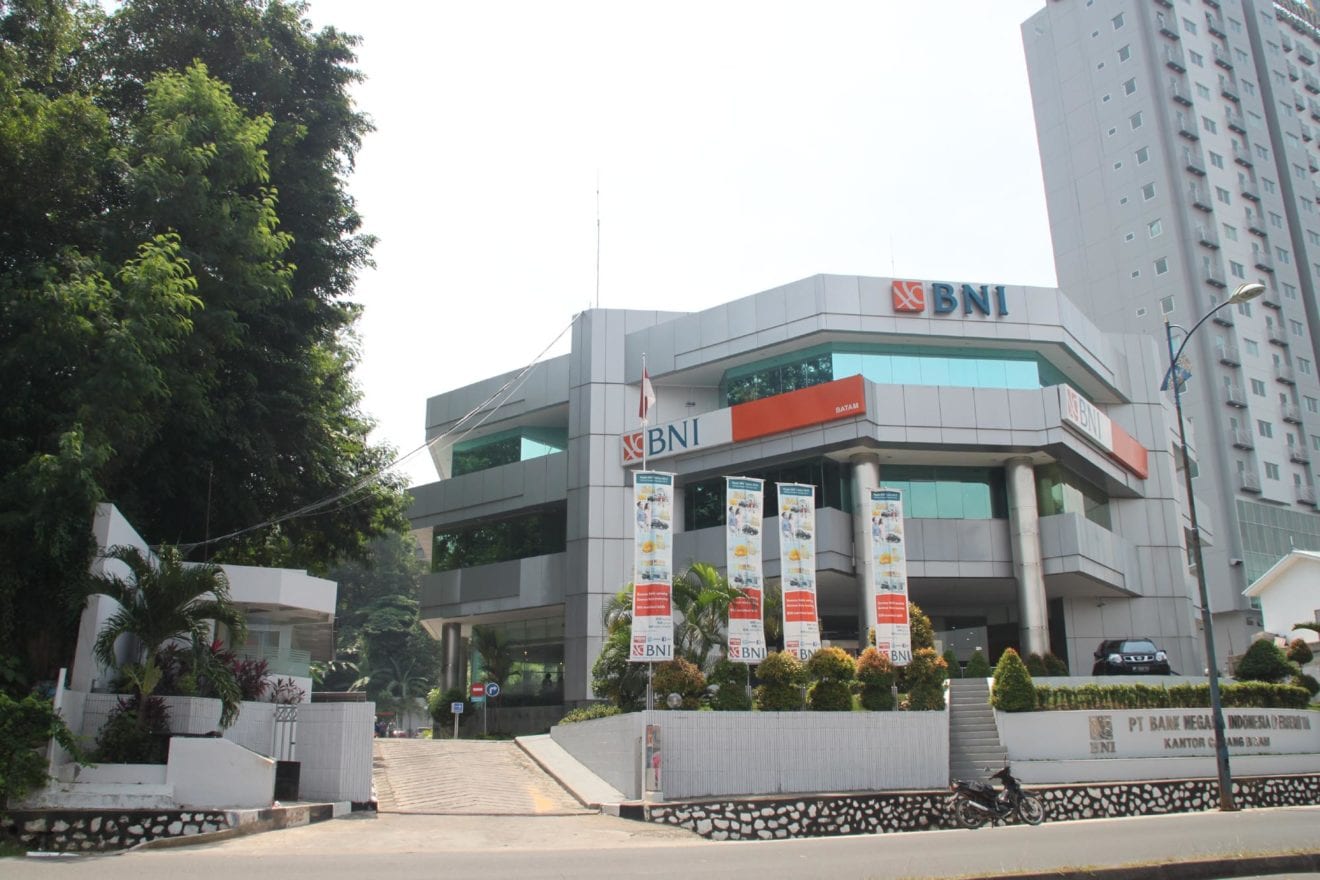
    An Indonesian bank, Bank Negara Indonesia (BNI) 46, opened a branch office in Seoul, South Korea, in Wise Tower, on Monday. It was inaugurated by the Ambassador of Indonesia to South Korea, John A Prasetio and Manager of BNI46 Seoul, Wan Andi Aryati. “The banking industry in South Korea is already shaken, but BNI46 still sees market potential,” Wan Andi said in a statement received by ANTARA here Monday. The BNI46 targets the domestic trade market according to her. “BNI Seoul wants to be a bridge to establish cooperation between Indonesia and South Korea by providing loans and other related banking services,” Wan Andi said.

    The BNI46 also provides services for South Korean businessmen who want to invest in Indonesia, she added.
    “We are also targeting the Indonesian labor market in South Korea, which now reaches 40 thousand people. We are committed to providing the best service for the Indonesias foreign exchange heroes,” she said.

    Meanwhile, Ambassador Prasetio stated that the world economy is still in a state of collapse. The stock market and the value of currency in some countries against the US dollar continues to decline.

    “This shows that the global sentiment has not been encouraging. Uniquely, the Indonesian economy is relatively solid in the middle of the uncertainty shocks,” the ambassador said.

    Cooperation in trade and investment between Indonesia and South Korea are still positive. The demand for Indonesian products and South Koreas investment in the country are progressive, according to him.

    “They respond positively on the economic policies of President Jokowi (Joko Widodo). I believe that the presence of BNI46 in Korea is very important to bridge cooperation between the two countries,” the ambassador said.

    Data from the Investment Coordinating Board (BKPM) shows that South Koreas direct investment in the country in the last five years is ranked fourth with a value of more than US$7 billion. Currently, there are 2,700 South Korean companies in Indonesia.

  • e-money transactions reach Rp5.2 trillion

    e-money transactions reach Rp5.2 trillion

    Electronic money (e-money) transactions conducted in the country in 2015 reached Rp5.2 trillion in value, up from Rp4.3 trillion in 2014, Governor of Bank Indonesia(BI) Agus Martowardojo said.

    “In 2009, electronic money transactions were valued at about Rp520 billion only, and now they have reached Rp5.2 trillion,” the central bank governor said while opening the National Non-Cash Movement (GNNT) in Kupang, the provincial capital of East Nusa Tanggara (NTT) here on Saturday.

    Agus said the non-cash transaction system, either using prepaid cards, credit cards or electronic money, is very useful because it makes the financial system more efficient.

    With non-cash transactions, the state could reduce the use of banknotes and coins, making transactions more efficient and saving money on printing currency.

    “We are convinced that the non-cash system would be safer, more practical and more efficient,” Agus said.

    After all, the non-cash payment system can be used widely, such as while purchasing cellular phone minutes, shopping at malls or paying electricity and tap water bills.

    He said the e-commerce and non-cash transactions are predicted to continue to increase.

    “Non-cash payments could also be for online-transactions, resulting in efficient usage of time and economizing,” he added.

  • Indonesia`s coffee output up 1% last year

    Indonesia`s coffee output up 1% last year

    Vice President M. Jusuf Kalla said Indonesias coffee production only rose one percent to 500 thousand tons last year.

    “Our coffee production has been stagnant. It only reached 500 thousand tons last year, just one percent increase,” he told a meeting convened to develop national coffee here on Saturday.

    Indonesia produces an average of 600 thousand to 700 thousand tons of coffee per year compared to Vietnam, whose coffee output reaches more than 2 million tons, he said.

    As a matter of fact, Vietnam once learned coffee farming from Indonesia, he said.

    He said Lampung province is the countrys largest robusta coffee producer with an annual production of 100 thousand tons per year.

    Also present at the meeting were Agriculture Minister Andi Amran Sulaiman, Lampung Governor M Ridho Ficardo, and a number of officials.

  • Debenhams poaches Body Shop Asia boss for international role

    Debenhams poaches Body Shop Asia boss for international role

    Smith will join Debenhams in May. He will also be appointed to the department store group’s executive committee. Smith, who is currently based in Singapore, has been with The Body Shop for five years and previously held the same position at Pepe Jeans. He has also spent time at VF Corporation, which owns fashion brands including Lee, The North Face and Vans.

    Outgoing chief executive Michael Sharp said that Smith’s “wide range of experience in growing International brands will play a key role in building our overseas presence”.

    Smith added: “The opportunities for global growth are very exciting for Debenhams. I look forward to building on what is already a well-established international business.”

    Former international director Francis McCauley left the retailer in June 2015 and was not part of the executive committee.

    In the eight months following his departure the role has been covered by directors within the international team including director of international franchise operations Phil Topham and director of business development John Scott.

    Debenhams’ management team has seen several changes at the top level in recent months.

    Sharp announced his intention to leave the business after five years at the helm last October. Since then, there has been no announcement regarding his replacement.

    The department store appointed former Kingfisher chief executive Sir Ian Cheshire as chairman last month.

    It announced a better than expected Christmas trading update last month. It has suffered volatile trading in recent years after a focus on discounting damaged margins.

  • Grana nabs $3.5 mln in seed funding

    Grana nabs $3.5 mln in seed funding

    Grana (grana.com), an online clothing retailer creating luxury fabrics and wardrobe essentials at guilt-free prices, announced today it has secured an additional $3.5 million U.S. dollars in seed funding. The lead investor is Golden Gate Ventures, along with investments from MindWorks Ventures and Bluebell Group, bringing their total funding to date to $6 million U.S. dollars, with additional Series A funding pending. Grana recently launched in the U.S. market, and the additional funding will help the brand continue its international growth and expansion.

    Grana offers timeless wardrobe essentials created from fabrics found around the world, including Chinese Silk, Mongolian Cashmere, Irish Linen, Japanese Denim, Peruvian Pima Cotton, French Poplin, Chinese Cotton Twill, Italian Merino Wool and Japanese Chambray. Grana designs its merchandise in-house and works directly with fabric mills in order to bring the highest quality clothing to customers at the best possible prices.

    Grana has grown extensively since its March 2014 beta launch, during which the brand sold 2,000 Peruvian Pima Cotton t-shirts in three weeks, shipping to eight countries directly from Hong Kong. Month-over-month sales are currently increasing by 40 percent since Grana launched in October of 2014.

    The new round of funding will expand Grana’s shipping to new markets as well as aid the entry into the U.S. and China markets. The funds will play a critical role in new product category launches such as leather goods, undergarments and activewear.

    “We’re pleased to receive financial backing from Golden Gate Ventures and MindWorks Ventures,” said Luke Grana, CEO and co-founder of Grana. “The support is critical to our U.S. expansion, a priority market that already represents 20 percent of our global sales. This new investment allows us to further disrupt the online clothing market and provide consumers with luxury-quality wardrobe essentials without the luxury price point.”

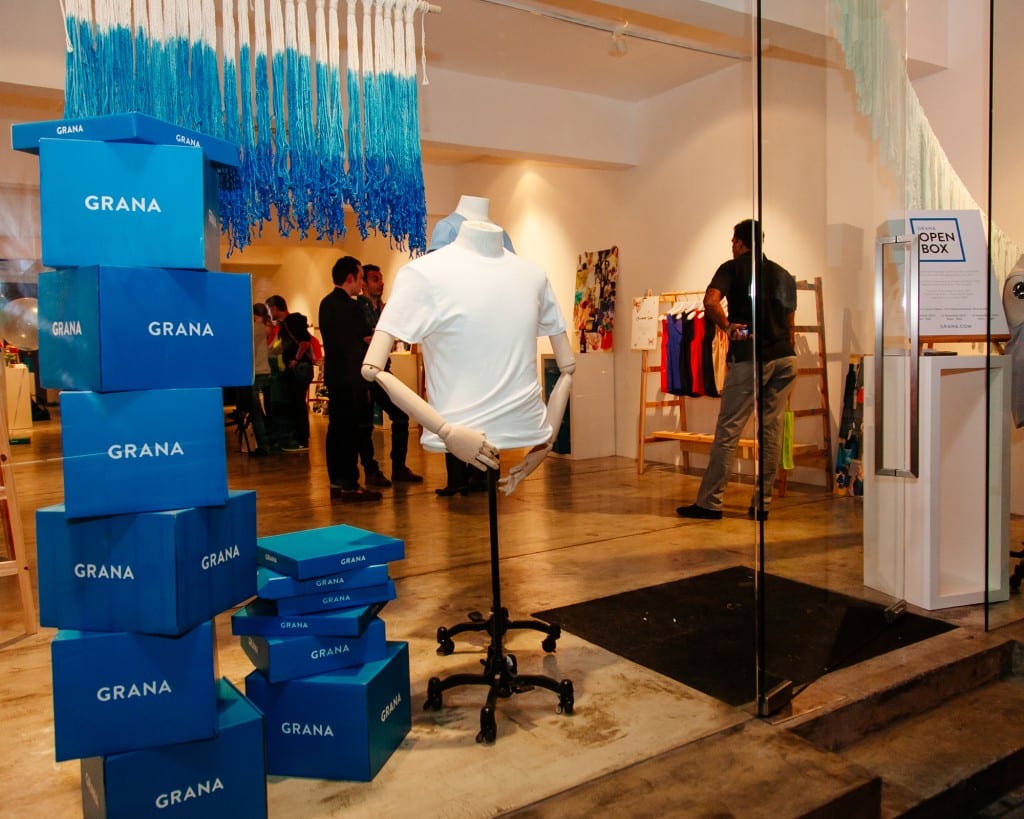
    Since launching, Grana has brought a number of “Fitting Rooms” to consumers across Sydney, Singapore, and Hong Kong, and mostly recently opened a U.S. location in San Francisco in December 2015. Designed as a showroom instead of a retail shop, customers can experience the brand personality in the space, interact with Grana Cheetahs (customer service representatives), and discover the website. Retail showroom spaces are increasing in popularity, and Grana’s Fitting Room model is helping to lead this global trend. The new funding will also allow Grana to open additional Fitting Room locations in the U.S. and provide support for a technological upgrade to the shops, reinventing the way people buy clothes in-store.

    “In a world were startups are disrupting established industries, Grana is disrupting how to build a global brand with bottom-up marketing from their biggest fans, city by city,” said Vinnie Lauria, Managing Partner at Golden Gate Ventures.

    “We envision Grana’s model of providing the highest-quality modern essentials at revolutionary price points as the future of retail,” said David Chang, Partner at MindWorks Ventures. “This investment round provides Grana with greater capacity to expand its growing Fitting Room network, and product range and develop its omnichannel strategy.”

    As part of its international expansion and growth in existing markets, Grana will also use the newly acquired funds to build out a global world-class team. Currently, Grana has more than 40 employees in Hong Kong, and most recently has added team members in San Francisco.

  • Thai fashion e-commerce goes from rags to riches

    Thai fashion e-commerce goes from rags to riches

    WearYouWant’s site has 500 fashion merchants offering some 14,000 products. The company plans to release a native mobile app next month as 50% of its website traffic comes from mobile phones.

    The online fashion sector in Thailand is drawing massive interest from global players eager to cash in on one of the fastest-growing markets.

    Competition in the interactive fashion stores is expected to be more intense this year, says Thai fashion marketplace WearYouWant.

    But it will be increasingly difficult for newcomers to find a place in the Thai market because existing players have established a strong foothold here, said Julien Chalte, co-founder and co-chief executive of WearYouWant, a four-year-old website.

    E-commerce accounts for about 1% of retail sales in Thailand but the market is expected to see steeper growth this year.

    Mr Chalte said e-commerce was an immensely motivating sector because of its versatility.

    Thai consumers are very conscious of shopping behaviour both offline and online, so it is essential to provide the best and widest selection of products, good prices and efficient delivery, he said.

    WearYouWant’s site has 500 fashion merchants including boutiques, distributors and brands that offer 14,000 products.

    Online merchants can sell directly to consumers but delivery is handled by the site, which earns revenue through commission on purchased products.

    WearYouWant secured Series B investment funding of US$3.5 billion last September, led by the leading fashion e-commerce player in Japan, Start Today, which operates Japan’s largest fashion e-commerce portal Zozotown.

    Mr Chalte said Bangkokians were no longer driving the growth of online fashion shopping.

    “The fastest-growing provinces are Nonthaburi and Chon Buri, and the trend seems to be continuing into 2016,” he said.

    WearYouWant plans to release a native mobile app by March because 50% of its website traffic comes from mobile phones.

    The company will also introduce new feature apps including an image recognition engine that allows user to take a photograph of an item in a store and instantly be presented with a good offer on the same or similar product.

    The trend this year will move towards more mobile payment options, but cash on delivery will remain the preference.

    Mr Chalte said the average age of the company’s customers was 32. They mainly live in Bangkok, with 65% of customers female.

    Customers spend an average of 3,000 baht on the website. Beauty products remain the best-selling product, with clothing, shoes and accessories experiencing significant growth.

    In 2015, WearYouWant’s annual revenue rose 200% from 2014, with a 150% hike in turnover generated by mobile devices.

  • BNOW.org In Preparation for Entrepreneur Now Awards 2016

    BNOW.org In Preparation for Entrepreneur Now Awards 2016

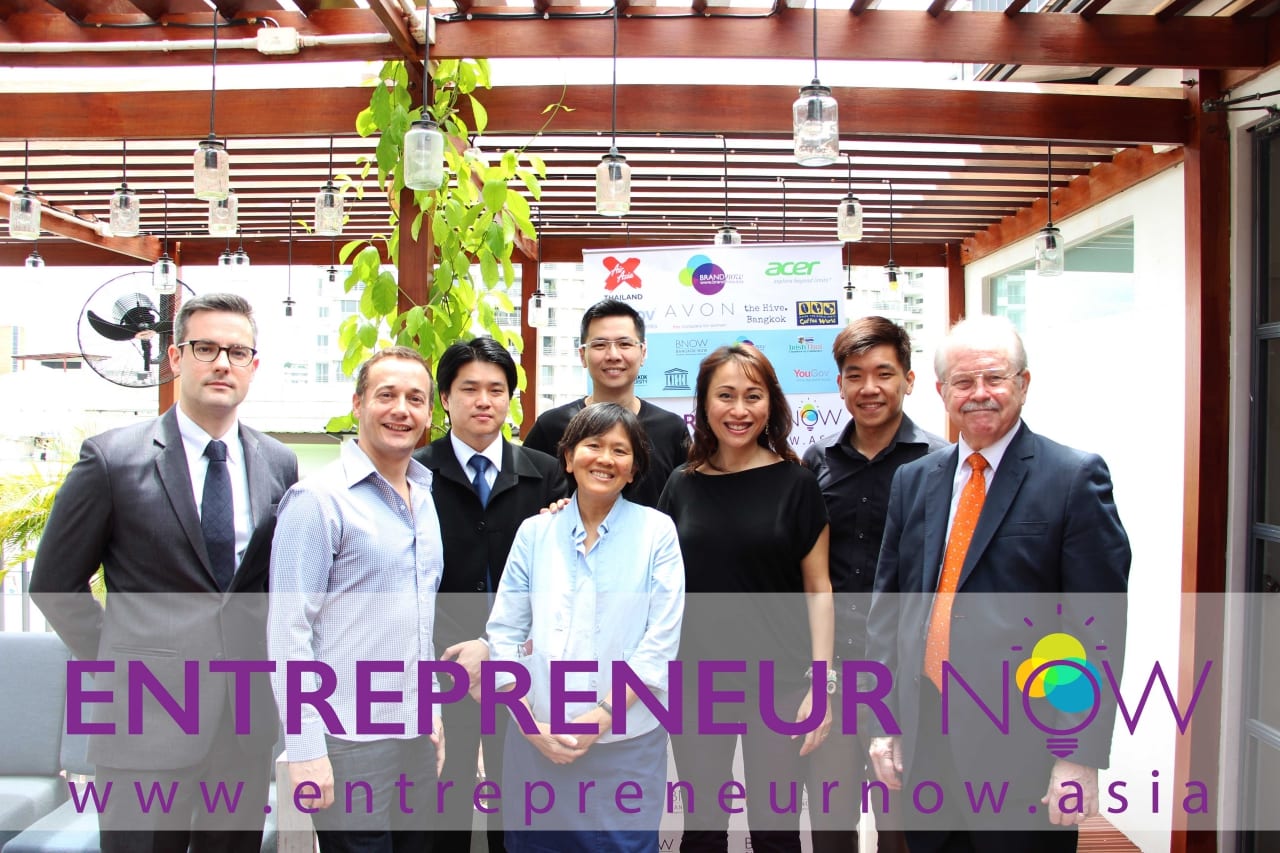
    Bnow.org  (Bangkok Now), a Bangkok networking community for startups, SMEs  and a registered social enterprise based in Thailand, announced during a media group interview today that preparations are under way for the Entrepreneur Now Awards  (ENA) 2016 scheduled to be held in October 2016.

    Last year, ten awards were presented to various Thai and non-Thai entrepreneurs and the event was presided over by Khun Salinee Wangtal, Director General of the Office of the Small and Medium Enterprises Promotion (OSMEP).

    Entrepreneur Now Awards is a program recognizing enterprising people and teams operating in the kingdom of Thailand. The objective of ENA is to promote entrepreneurism, attract investors to Thailand and ASEAN and revitalize the Thai economy and SME sector.

    “Last year ENA attracted over 100 Thai and non-Thai entrepreneurs with a registered business in Thailand, representing a wide range of industries including tech, F&B, health, fashion, education, FMCG, sports and construction, among others,” said Pacharee Pantoomano Pfirsch, Founder of  Bnow.org and Chairwoman of ENA, adding that this year she is looking  forward to see more entries.

    “According to the Federation of Thai Industries, there were about 2.7 million SMEs and start-ups in Thailand, providing more than 10 million jobs nationwide. These businesses are estimated to account for nearly 40% of the country’s GDP. FTI added that for the Thai economy to grow with stability, the country needs to balance it by boosting SME share of GDP to 40% in the future,” said Pacharee.

    “As a social enterprise, ENA aims to support the start-up and SME community in Thailand. We want to garner more involvement from the various chambers of commerce in Thailand, including the start-up community. We believe that working collaboratively with such organizations will facilitate the recognition of enterprising people and teams. Ultimately, it creates a better market place for all,” added Pacharee.

    “Our partners this year include Thai-Italian Chamber of Commerce, The Irish Thai Chamber of Commerce, Thai-Canadian Chamber of Commerce, GMASA, Creative Bangkok, Connecting Founders, Startup Bangkok, Travel Daily News and Brand Now.  More partners are expected to join and we will also be announcing the working committee and judges at the press conference slated for mid-2016.”

    This year, BNOW.org is organizing a series of knowledge sharing events related to SMEs and Startups, which will culminate at The ENA 2016 Awards Night in October 2016.

    These include:

    –  Feb 18th / 6.30pm-9pm at FCCT: Insight from investors and serial entrepreneurs: Why some start-ups success while others fail

    –  Mar 19th/11.30am-5pm at DraftBoard, Chidlom: Geek Girl Gathering:  A Workshop on Digital Marketing and Coding for non-coders

    –  April 26th/  Discussion: Tips and Advice for SMEs on “How to Export to Other Markets”

    –  May 26th/ 9am-5pm: Entrepreneur Summit at Bangkok University School of Entrepreneurship and Management

    –  June/ Announcement of ENA 2016

    –  July –Aug / Accepting Nominations for ENA 2016

    –  Aug/ Walkabout Bangkok : Several companies will open their doors to visitors who can meet the founders, entrepreneurial team, and get insights from some of most creative and innovative organizations in Thailand.

    –  Sept/ Networking Night for ENA nominees and judges

    –  October/ ENA Award Night 2016

  • How DBS Is Fronting And Doubling Down On The Push For Entrepreneurship In Singapore

    How DBS Is Fronting And Doubling Down On The Push For Entrepreneurship In Singapore

    We’ve all heard of DBS — after all, it’s the largest bank in Singapore and Southeast Asia. And, it has 280 branches all over the rest of Asia, including China, Hong Kong, Taiwan, India and Indonesia. Other than its extensive coverage, the bank recently launched a set of new initiatives to support entrepreneurs and the startup community here in Singapore.

    DBS Bay Area Series

    ernestine fu

    Venture Capitalist and DBS Advisor Ernestine Fu. Photo Credit: DBS.

    DBS kicked off their initiatives in late 2014 with a visit from Ernestine Fu, a venture capitalist and partner at Alsop Louie Partners in Silicon Valley. She has advised DBS on venture debt and their entrepreneurship programs. With her presence, DBS launched its inaugural entrepreneurship event and kicked off its prestigious “Bay Area Series” event.

    For those unfamiliar with Ernestine, she has been heralded as Silicon Valley’s youngest venture capitalist. She joined VC firm Alsop Louie Partners as a 20-year-old associate in March 2011 and has been making waves as a young VC in the bay area since.

    tim draper

    Third-Generation Venture Capitalist Tim Draper. Photo Credit: DBS.

    Tim Draper, founder and managing director at Draper Fisher Jurvetson (DFJ), joined the Bay Area Series in January of 2015. Tim Draper is a third-generation venture capitalist, and is well known for being one of the early investors in Skype, Baidu, Tesla, Theranos, Hotmail, Twitch.tv hundred of others. His grandfather co-founded one of the first venture capital firms in Silicon Valley. He shared with local entrepreneurs his visions and insights on venture investing when he was in Singapore too.

    The Bay Area Series provide an excellent opportunity for local investors and entrepreneurs to hear and learn from successful individuals from Silicon Valley.

    Disrupt @ The Bay Series

    disrupt bay

    Food & Beverage Event for Disrupt @ The Bay. Photo Credit: DBS.

    DBS also launched a series of events called “Disrupt @ The Bay” in 2015. The goal of these events is to foster relationships and synergies among local entrepreneurs and investors. We need to re-think how we “disrupt” current industry norms, and create exponential growth through new technologies and business ideas. Some of the events organized last year include the F&B Disrupt @ The Bay, Future of Retail Disrupt @ The Bay, as well as Future of Automotive Disrupt @ The Bay.

    future of retail

    Future of Retail Event for Disrupt @ The Bay. Photo Credit: DBS.

    disrupt automotive

    Future of Automotive Event for Disrupt @ The Bay. Photo Credit: DBS.

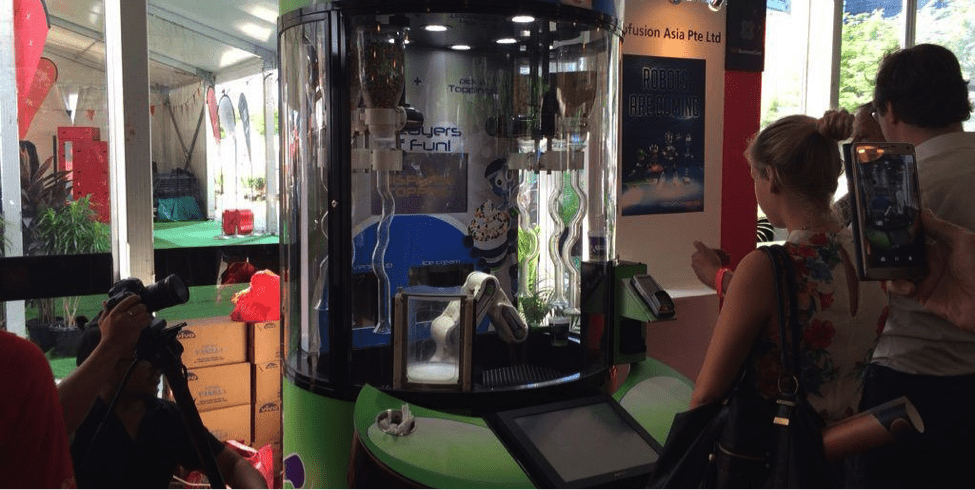
    The Disrupt @ The Bay events have attracted multiple large corporations, small businesses and startups, and venture capital firms. These organizations include: StarHub, StoreHub, Golden Gate Ventures, iChef, The French Cellar, Reimagine Food, The Oddle Company, Mobikon Technologies Pte Ltd, and Robofusion Asia Pte Ltd.

    The Disrupt @ The Bay Series is a good platform for like-minded business owners, investors, and entrepreneurs to connect. They can share information, exchange ideas, and form new partnerships.

    DBS Venture Debt

    venture debt

    DBS and Venture Debt. Image Credit: DBS.

    As part of these initiatives, DBS also introduced venture debt financing and is the first bank is Southeast Asia to do so. Venture debt is a way for the bank to financial support tech startups in the growth stage.

    Currently, venture debt applicants need to be Singapore-based, with primary operations in Singapore. The startup should have also raised at minimum of $1 million SGD in Series A funding.

    Image credit: Kauffman FellowsImage credit: Kauffman Fellows

    This initiative provides a unique later stage funding option to encourage the growth of technology startups in Singapore.

    DBS Mobile App

    dbs business class

    Image Credit: DBS.

    DBS also launched a mobile app called “DBS BusinessClass” to provide a networking platform for local entrepreneurs, investors, and advisors in Asia. Available on both iOS and Android, members can post questions, gain advice on their businesses, and join online discussions on startups topics.

    Since launching a year ago, the app grew to over 15,000 members and over 300 discussion topics.

    Overall, these new initiatives by DBS show great promise. The bank received the Asian Banker’s Best Social Media Engagement Project Award, along with multiple other awards. DBS has taken a comprehensive approach to positively impacting the local entrepreneurship ecosystem in Singapore.

    We are optimistic that DBS has a strong platform to expand and connect entrepreneurs and investors across the rest of Asia.


  • South Korea January dept, discount store sales seen rebounding from December

    South Korea January dept, discount store sales seen rebounding from December

    Annual sales at South Korea’s top department and discount stores in January were seen rebounding from the previous month, finance ministry estimates showed on Friday, backing recent policymaker comments that consumption is steadily recovering.

    Combined sales at department stores run by Hyundai Department Store, Lotte Shopping and Shinsegae rose 9.6 percent in January from a year ago, the finance ministry said in a monthly report.

    Sales at major discount stores were seen to jump 13.4 percent over the same period, the data showed.

    Figures from the trade ministry, which will publish confirmed numbers later in the month, had shown department stores’ December sales fell 5.7 percent and discount store sales had been down 5.1 percent on-year.

    The finance ministry data also showed gasoline and diesel sales in volume terms had gained 8.5 percent in January from a year ago, which was the fastest rise in three months and compared to a 4.3 percent rise in December.

    The ministry said in the report that domestic consumption had steadily posted positive growth while production and investment were showing signs of improvement. However, it noted that external risks to the economy were increased by slowing Chinese growth, geopolitical risks sparked by a rocket launch from North Korea on Sunday, falling oil prices, and jitters stemming from the direction of U.S. monetary policy.


  • Hong Kong’s Stocks Tumble to Three-Year Low After Trading Break

    Hong Kong’s Stocks Tumble to Three-Year Low After Trading Break

    Hong Kong stocks tumbled after a three-day holiday as a global equity rout deepened amid concern over the strength of the world economy.

    The Hang Seng Index plunged 4.3 percent at 9:31 a.m. in Hong Kong, heading for its lowest close since June 2012. The MSCI All-Country World Index dropped 2.1 percent since the city’s markets closed last week. Energy producers led declines after crude slumped 11 percent during the holidays. The Hang Seng China Enterprises Index retreated 5 percent, poised for its biggest loss since August.

    Hong Kong’s benchmark equity gauge tumbled 12 percent this year through Friday amid concern that capital outflows, a slumping property market and China’s economic slowdown will hurt earnings. Some speculators have been betting on an end to the city’s currency peg to the dollar. Tuesday’s riots in the shopping district of Mong Kok threatens to deter mainland visitors and worsen a drop in retail sales, according to UOB Kay Hian (Hong Kong) Ltd.

    “You can’t avoid a drop because everywhere has come down so much during this time and the same concerns are still there – oil price, global recession,” said Steven Leung, an executive director for institutional sales at UOB Kay Hian. “The image of Hong Kong as a metropolitan city has been hurt quite seriously” by the rioting, he said.

    Plunges in crude and concerns over the perceived creditworthiness of European banks has fueled uncertainty over the strength of the world economy this week. Oil fell to $26.91 a barrel in New York, compared with $31.72 a barrel at the close on Feb. 4. Kyle Bass, the hedge fund manager who successfully bet against mortgages during the subprime crisis, said China’s banking system may see losses of more than four times those suffered by U.S. banks during the last crisis.

    “The general tone of other markets has been quite soft,” said Tony Hann, who helps oversee about $270 million as head of equities at Blackfriars Asset Management in London. “It’s difficult to be optimistic” about Hong Kong, he said.

    The Hang Seng Index’s price-to-book ratio fell below one last month, a level unseen since the Asian financial crisis roiled regional markets and popped a domestic property bubble in 1998. All but two stocks on the 50-member gauge are down this year. Mainland financial markets remain closed for holidays until Monday.

    Police fired warning shots in Kowloon’s Mong Kok district early Tuesday after an effort by officials to clear illegal food stalls morphed into a riot. Almost 90 officers were injured, according to the police commissioner, and more than 60 people have been arrested, after protesters hurled bricks and set fire to barricades in the densely populated area. The clashes were more violent than anything seen during the “Umbrella Movement” of 2014, where protesters paralyzed downtown Hong Kong for more than two months to demand the right to pick the city’s leader.

    “This time the situation was quite different from Occupy Central: there was no peace and a lot of people were injured,”  UOB Kay Hian’s Leung said. “Overall it shouldn’t have very big impact but, of course, it will weigh on related sectors like retail, tourism.”

    Still, weaker global growth may reduce the likelihood of future interest-rate increases in the U.S., which raise borrowing costs in Hong Kong due to a currency peg, Leung said.

    While investor attention may shift toward corporate profits as companies unveil quarterly and annual results, analysts see little scope for optimism. They’re predicting a 12 percent drop in the Hang Seng index’s earnings per share over the next 12 months, according to data compiled by Bloomberg.

    The People’s Bank of China pumped four times as much cash into the financial system in the run-up to the lunar new year holidays than it did in 2015 as capital outflows added to pressure on the money market. Outflows increased to $158.7 billion in December, the most since September and were $1 trillion last year, according to estimates from Bloomberg Intelligence. That’s more than seven times the amount of cash that left in 2014.

    Should the Chinese banking system lose 10 percent of its assets because of nonperforming loans, the nation’s banks will see about $3.5 trillion in equity vanish, Bass, the founder of Dallas-based Hayman Capital Management, wrote in a letter to investors obtained by Bloomberg. The world’s second-biggest economy may end up having to print more than $10 trillion of yuan to recapitalize banks, pressuring the currency to devalue in excess of 30 percent against the dollar, according to Bass.

  • Cross-border deals, connected shoppers, and mobile payments

    Cross-border deals, connected shoppers, and mobile payments

    Black Friday, the day after the Thanksgiving holiday in the US (celebrated on the fourth Thursday in November), and Cyber Monday, the first Monday after Thanksgiving, mark the start of the year-end holiday shopping season.

    Figures from the United States National Retail Federation shows that over 151 million consumers made purchases online and in physical stores during the most recent Black Friday and Cyber Monday shopping seasons.

    The trend, however, is becoming global. In Asia, where connected shoppers are constantly searching for the best deals, often crossing physical and geographical boundaries, Black Friday and Cyber Monday have been integrated into the retail experience. This, despite the popularity of China’s own Single’s Day online shopping festival that is also being adopted by many retailers across the region.

    Warren Hayashi, President, Asia-Pacific, Adyen, said this is partly due to the growth of cross-border e-commerce, which is giving Asian consumers access to both US and European retailers, who market Black Friday and Cyber Monday promotions in the region and ship to Asia.

    The trend has also been driven by the growing reach of US e-commerce giants like Amazon, which has meant that e-commerce companies based in other markets, such as Lazada, Qoo10, Rakuten, Alibaba, and Zalora, are rolling out similar promotional periods.

    “An interesting effect of this trend is that rather than adversely affecting transactions during the non-promotion period, we are seeing that seasonal shopping promotions actually expand the size of the market. They provide consumers with even more opportunities to shop,” he explained.

    Ayden’s data shows that in Asia, sales volumes increased by 170 percent in a year-on-year comparison over the course of the Black Friday weekend. Meanwhile, shoppers in China spent twice the amount during Black Friday 2015 as compared to the same period in 2014. In Japan, the average transaction value increased by 50 percent.

    Interestingly, the payments industry for online and offline retail is also innovating to keep up with these developments in the retail scene. Ayden sees that companies are also going global with a payments first approach.

    “For example, we have Asian merchants expanding into Europe with their English-language website and local payment methods, such as iDEAL in the Netherlands (which accounts for over 60 percent of transaction volume in that market), SOFORT in Germany, and so on,” Hayashi shared.

    “Likewise, we have global customers selling in Asian markets from their global website, but offering targeted payment methods such as Alipay, which are dynamically offered at the checkout stage according to the shopper’s geographical location. This is a huge opportunity for retailers to expand globally,” he added.

    Interestingly, he said one of the most innovative payments technologies that is changing the user experience is the zero-click transaction – which takes place in the background, without any action required by the customer. An example is how Uber is accepting payments.

    “When passengers take an Uber, they do not need to take any specific action for the payment to be made, everything happens in the background. This kind of frictionless connectivity brings businesses closer to their customers and will spread rapidly,” he explained.

    In 2016, Hayashi sees the retail landscape in the region as going more on mobile, especially in the area of payments.

    Citing Ayden’s own data – tracked quarterly through the Mobile Payments Index – shows that Asia-based payment methods such as Alipay, UnionPay, and JCB have among the highest proportions of mobile payments globally.

    “With everything they do around payments, retailers should simply be asking themselves, how does this improve the customer experience? One key goal should be to provide a frictionless payment experience across channels,” he said.

    “For mobile, along with optimizing the size of the page, many merchants find that a “less is more” approach drives conversion increases, with page layout minimized to ensure the smoothest possible payment flow,” he continued. “It’s also important to remember that the checkout stage of the shopper should be the beginning of an on-going relationship with the consumer. Merchants that have created a frictionless checkout experience, regardless of the channel, see sustained increases in their repeat customers and purchases.”

  • Foreigners, beware of condo laws

    Foreigners, beware of condo laws

    If you are foreign and you marry a Thai, and you agree between you that all of your marital assets will be split 50:50 and designated as such, the Thai Government has found a way under which, even post marriage, part of this agreement can be completely excluded.

    This does not relate to the well-known exclusion of land, but to condominiums. Condominiums are much heralded as generally being available and favorable for foreign investment. Unfortunately, this is not always so.

    Most of my clients over the years have bought their condominiums outright with cash from overseas, or had the cash in Thailand, and due to the quirky rules on ensuring you have a ‘Foreign Exchange Transaction Form’ had to move monies out and then move those monies back into Thailand again with the bank fees and potential foreign exchange losses thrown in for good measure. I took out a loan many years back for my first condominium purchase in Thailand and the monies were loaned in foreign currency through HSBC Thailand which had its retail banking in Thailand taken over by the Bank of Ayudhya.

    We then decided to buy a condominium for rental investment purposes in Bangkok. We went through the mill when it came to applying for and obtaining a loan. We applied through seven banks. The first was the ‘favored’ bank of a well-known developer in Bangkok. They took literally every piece of financial information imaginable about me and my wife and looked at my various companies’ assets and credit history; tax payments and even the number of employees in my business. After three months, we were told we could obtain a loan only for an amount of 20 per cent of the outstanding balance due on the condominium. We then rushed out and made six further applications. One bank came through but the conditions were:

    (i) we had to take out a loan for furnishing the condominium

    (ii) we had to take out the hefty insurance premium through the bank’s ‘preferred’ insurer

    (iii) the loan had to be taken out by my wife because “she is Thai and you are a foreigner”

    Notwithstanding this, we was still expected to sign all the loan documentation and be involved.

    Fast-forward, and we were close to the transfer date. All of a sudden, I am informed that I must sign a ‘declaration of Sin Suan Tua’ (personal property). What is all that about, I thought – I have already made my agreement with my wife when I got married. Also Sin Suan Tua is by definition supposed to apply to all matters before marriage.

    Then the reality of the situation became apparent. Due to the fact my wife was borrowing the money from the bank, regardless of who would be making the mortgage payments, the authorities have found a way to exclude a marital asset from the marriage and adjust the entire concept of Sin Suan Tua.

    The Land Department insists that a foreigner must declare that a condominium belongs entirely to his/her spouse and that he or she (the foreigner) has absolutely no rights or interest in such condominium unless:

    (i) He/she pays for the unit and obtains a Foreign Exchange Transaction form – an impossibility if the monies are loaned in Thailand

    (ii) He/she has Permanent Residency – and many long term expatriates know how long and difficult that process is

    (iii) He/she is permitted to enter Thailand under the ‘Investment Promotion Act’ – which is very rare.

    So, if you believe being married to a Thai is somehow advantageous when it comes to investing in property as a foreigner, the reality is quite the opposite. The Land Office I attended in Bangkok was very helpful, efficient and polite while I signed the document confirming that our condominium would have nothing to do with me despite the fact of my marriage and that I’d paid the down payment.

  • Singapore retail chains look to Muslim market

    Singapore retail chains look to Muslim market

    Amid the rows of blue jeans lining the walls of apparel chain Uniqlo are headscarves, baju kurung and kebaya — part of the Japanese retailer’s new section in Singapore that caters mainly to Muslim shoppers.

    While these garments are usually sold at niche stores in Geylang Serai and Kampong Glam, they can now be found at Uniqlo stores in town or at neighborhood centers.

    Uniqlo is one of the first mainstream retailers in Singapore to turn its focus to the Muslim market.

    The current selection is the second collection launched by Uniqlo following a successful initial run last July. The range is carried at five of its outlets — 313@Somerset, Causeway Point, Jem, One KM and Suntec City Mall — and its website.

    Another retailer that has jumped on the bandwagon is Singapore-based online store Zalora. Each month, it introduces about 50 to 60 products such as long and flowy tops and dresses under its “Zalia” collection. Managing director Dione Song described these as “trendy yet modest” pieces.

    The budding trend here mirrors the global boom in Islamic fashion in recent years. Muslims across the globe spent SG$266 billion (US$188.77 billion) on clothing in 2013 — more than the combined spending in Japan and Italy on fashion. This is set to almost double to SG$484 billion by 2019.

    Observers say the market potential in Singapore is large, with 15 percent of the resident population being Muslims. Also, unlike certain ethnic or cultural wear that is seasonal, such as the cheongsam, this clothing is everyday wear for a substantial proportion of Muslim women.

    Uniqlo said that it is discussing expansion plans for upcoming fashion seasons. It “acknowledges that there is a need among the markets where we are present for stylish and comfortable modest wear.”

    The collection is also retailing in Malaysia, Indonesia and Thailand.

    There is yet to be a major international clothing brand for Muslim wear, but over the past two years brands such as DKNY, Tommy Hilfiger, Zara and Mango have started to offer Muslim-oriented collections in their Middle Eastern stores.

    Major retailers here like H&M, Topshop, Topman and Dorothy Perkins say they have not rolled out any cultural or religious products.

    Although many here have welcomed the greater diversity of choice for consumers, a handful of netizens have voiced their displeasure about Uniqlo’s sale of religious and ethnic wear.

    Associate professor Ang Swee Hoon of the National University of Singapore’s business school said a secular chain offering religious wear could raise eyebrows.

    But Ustaz Firdaus Yahya, manager of an Islamic learning center, said it “reflects their acknowledgement of diversity, and those who do not welcome it may be ignorant or have their own personal bias.”