Tag: asia

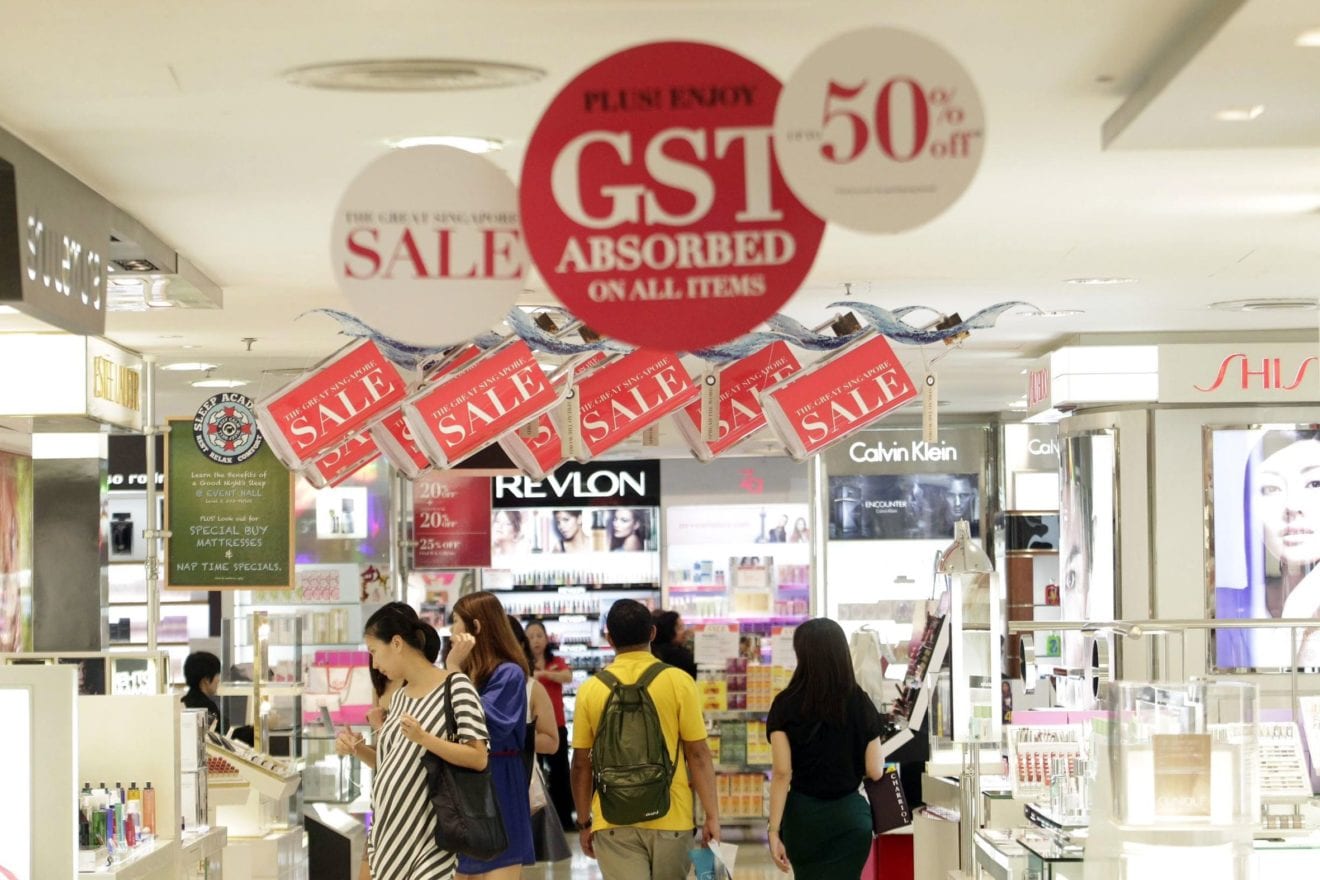
  • Hong Kong retailers feel the pain as China economic slump hits travelling, shopping

    Hong Kong retailers feel the pain as China economic slump hits travelling, shopping

    For Hong Kong, it’s been one thing after another.

    A series of anti-China and pro-democracy protests last year prompted stores to close and mainland tour groups to cancel bookings. Meanwhile, a slowing Chinese economy and President Xi Jinping’s anti-corruption and austerity campaigns have also made the Chinese more wary of buying pricey cognac and Gucci bags in the city.

    While still the biggest outbound destination for Chinese tour groups, Hong Kong is in danger of losing its lead. Mainland Chinese travellers to Hong Kong last year grew by the slowest pace since 2009, Bloomberg Intelligence data show.

    Suncorp notes that the declining AUD has brought in more short term arrivals to Australia, and Australian Bureau of Statistics data shows that it is the Chinese who are coming in increasing numbers with more than 1 million arriving in the 12 months through May, a 17 per cent increase year on year.

    The Aussie has declined almost 35 per cent against the US dollar in the past four years, increasing the purchasing power of tourists and encouraging Australians to holiday at home.

    “According to Tourism Australia, they spent $5.7 billion in 2014, and this is forecast to more than double to $13 billion,” says Suncorp. “China has now surpassed the US as the biggest spender on tourism last year. But Tourism Australia considers we need to do more to take advantage of this boom in tourism and that our attractions are outdated. While we had a massive investment in mining, there was an underinvestment in the not so appealing tourism industry. It is likely that further investment and polishing up our industry will take time, but it is an important step to achieving economic growth in the long-term for Australia, as key commodity prices unwind.”

    Back in Hong Kong, with fewer mainland Chinese staying overnight, average daily rates at Hong Kong’s hotels fell for a ninth straight month through June. The Pearl of the Orient also faces rising competition from regional rivals such as Thailand and South Korea, and mainland alternatives including Shenzhen and Shanghai.

    In addition, China slashed tariffs on products such as face creams and imported sneakers from June 1, reducing Hong Kong’s draw as a cheaper shopping destination.

    The effect on Hong Kong’s retailers has been immediate and painful. Retail sales fell in four of the five months through May, with jewellery, watches and other high-end gifts the worst hit.

    Burberry Group, whose stores in Hong Kong’s Causeway Bay and Tsim Sha Tsui shopping districts sell $HK18,500 ($US2400) handbags and $HK24,000 dresses, has said it may try and lower its rent bill to offset a worsening slump in Hong Kong, while Emperor Watch & Jewellery, which sells Cartier and Montblanc watches, said it may shut one or two of its Hong Kong stores when their leases end this year.

    And the news out of China doesn’t inspire much confidence. French distiller Remy Cointreau reported first-quarter sales that missed analyst estimates as Chinese wholesalers continued to hold back on cognac orders. Prada also reported first-quarter profit that trailed analyst estimates on slumping sales in China, while foreign carmakers including Audi have stepped up discounts to woo buyers.

    So there’s no relief in sight for Hong Kong. The tourism board forecasts overall visitor arrival growth to slow to 6.4 per cent in 2015 from 12 per cent last year, with mainland Chinese tourist arrivals expected to drop by half to 8 per cent. Hong Kong’s economy expanded 2.1 per cent in the first quarter from a year earlier, weaker than a revised 2.4 per cent expansion in October through December.

    “We’re just too exposed to China,” said Silvia Liu, a Hong-Kong based economist at UBS. “Structurally, until the tourism sector consolidates and Hong Kong finds new growth engines, I don’t see the way out yet.”

  • Snow Leopard Vodka makes Indian TR debut

    Snow Leopard Vodka makes Indian TR debut

    Snow Leopard Vodka has made its debut in Indian travel retail in May 2015, after hitting the shelves at Hyderabad Airport. Edrington Asia Travel Retail, which distributes the brand, believes this is evidence of a growing momentum in Asian travel retail.

    Ryan Hill, Managing Director of Edrington Asia Travel Retail said: “Snow Leopard Vodka continues to gain strong traction in Asia and we’re now excited to introduce it in India, where we see great potential for it.

    “With vodka sales in India up 14% in 2014, this is clearly a growth market and given Snow Leopard Vodka’s unique story and close ties to this region through conservation projects, we are confident that we have a strong opportunity here.”

    Snow Leopard Vodka’s launch in Indian travel retail will contribute to the work of The Snow Leopard Trust, particularly active in the region, as well as its local partner Nature Conservation Foundation (NCF).

    It has recently accelerated its awareness-raising and educational activities in India through NCF’s eco-camp programme, which help increase knowledge and understanding of local ecology and foster positive attitudes toward local wildlife.

    “2014 was an extremely positive year for the Snow Leopard Trust in India with over 350 children attending 11 camps throughout the year,” commented Siri Okamoto of the Snow Leopard Trust. “These eco-camps inspire and educate future generations, with many participants subsequently aspiring to become wildlife biologists. We look forward to growing this programme in 2015 and continuing our successful partnership with the team behind Snow Leopard Vodka.”

    Snow Leopard Vodka was created to help save the critically endangered snow leopards from extinction, says Edrington, which adds that 15% of all profits from Snow Leopard Vodka are donated to snow leopard conservation projects through the Snow Leopard Trust. Edrington’s goal is to raise US$1m for snow leopard conservation projects each year that will safeguard the snow leopard’s future.

  • Alibaba drive perks up China sperm donations

    Alibaba drive perks up China sperm donations

    Alibaba has used the internet to revolutionise China’s retail, banking and transport markets, and now the ecommerce juggernaut has turned its attention to the country’s sperm shortage.

    Amid spiralling infertility rates, sperm banks across China have been running dry. Worsening environmental conditions and hectic work schedules have taken their toll on male fertility in China, experts say.

    According to a 2012 study by the China Population Association, a state agency, 12.5 per cent of Chinese couples are infertile.

    Enter Alibaba, whose Groupon-like website Juhuasuan markets everything from underwear to insurance. The ecommerce group’s move into boosting sperm donation features a banner advertisement with a phallic cartoon candle exploding into a white cloud, bearing the Chinese character for “semen” in bold lettering.

    “Avid concentration” the ad reads, with a pun on the character jing which in Chinese means both mind and sperm. During the donation drive, Alibaba offered payments of up to $800 for successful sperm donations.

    Posted between July 15-17, the campaign garnered 22,000 new registrants for the seven participating provincial sperm banks — equivalent to nearly a year’s worth of traffic for some of the centres.

    “This exceeded all expectations,” said Wang Zhiqiang, director of the state sperm bank for Guanxi province. “On average, we get about 300 donors a year, but during the three days of the Juhuasuan event, more than 1,000 people signed up. Assuming 20 per cent of them will donate, that is 200 new donors.”

    The mismatch in supply and demand for sperm has prompted donation centres to overcome many taboos in tradition-bound China. In April, the shortage had become so dire in Hubei province that the regional sperm bank turned to Weibo, China’s equivalent of Twitter, to broadcast: “Stop wasting all that tissue paper!”

    “Under-achievers! This is your opportunity! Hubei Sperm Bank is badly in need of sperm,” it said.

    The shortage of sperm donations is partly caused by stringent requirements for donors — roughly one in five is acceptable — but mainly because men in China have “shyness about such topics”, according to Mr Wang. “We mainly try to get recruits by passing out flyers and holding awareness seminars, but we do not get enough qualified men.”

    But Alibaba has made a speciality out of taking dysfunctional markets and overcoming everything from supply bottlenecks to onerous government regulations to low demand — it has done so in areas such as finance and taxis.

    Matching sellers with the masses of online traffic is the company’s speciality, usually combining with a bit of fun, marketing savvy, big data and, most importantly in the case of sperm donation, anonymity.

    “People feel shy and embarrassed when we meet them face-to-face,” said Mr Wang. But he said that marketing via the internet added a layer of privacy that makes previously forbidden topics acceptable.

    “Online, when they don’t have to face a human being, they are more comfortable, and this is a major reason why this project is a success,” he said, adding: “We don’t know whether they will actually come in or not.”

  • Rents down, vacancy rate up for retail space in Q2

    Rents down, vacancy rate up for retail space in Q2

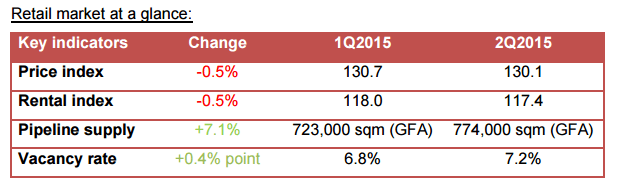
    Prices and rentals of retail space both dipped by 0.5 per cent in the second quarter of this year, according to data from the Urban Redevelopment Authority on Friday.

    It was the second straight quarter of rental decline and comparable to the level seen early last year. Prices had stayed stable in the first quarter.

    Vacancy rate of retail space rose 0.4 percentage points to 7.2 per cent for the second quarter, the highest in over four years.


    SOURCE: URA

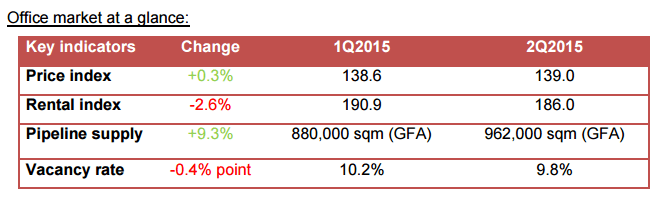
    Office rents also weakened by 2.6 per cent in the second quarter, after rising 0.6 per cent in the first quarter.


    SOURCE: URA

    Office prices rose 0.3 per cent in the quarter, after falling 0.1 per cent in the first quarter.

    Vacancy rate of office space dipped by 0.4 percentage points to 9.8 per cent for the second quarter.

  • Apple’s India test: how to gain volume and meet aspiration

    Apple’s India test: how to gain volume and meet aspiration

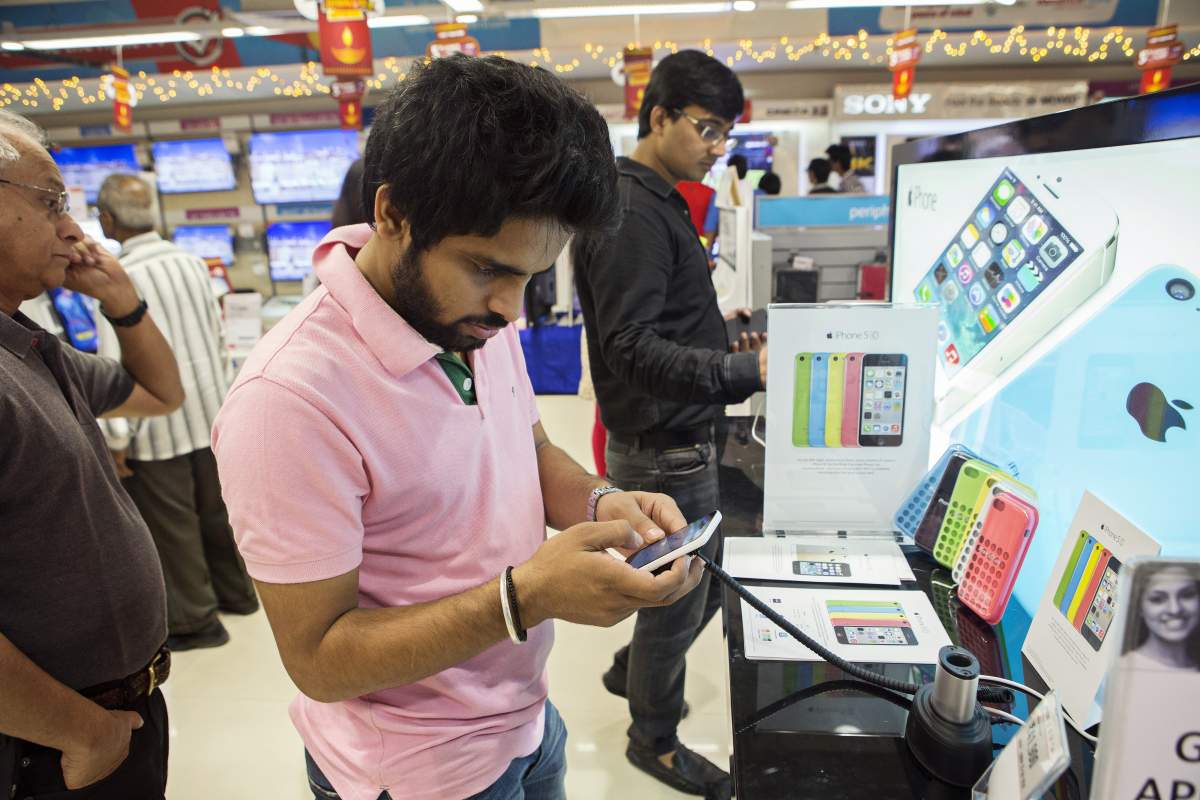
    With only a tiny share of the world’s fastest-growing major smartphone market, Apple Inc is stepping up its push into India, with a first targeted TV advertising campaign, expanded retail network and promotional financing schemes.

    For years, India has been a low priority for Apple as spending power is weaker than in China, where the company’s iPhones swiftly became must-have devices after their 2007 launch.

    But Apple is now looking to build on a 93 percent increase in its iPhone sales in India in April-June, which for the first time outpaced growth in China, of 87 percent – albeit from a low base. Apple has just a 2 percent share of India’s smartphone market, while South Korean rival Samsung Electronics accounts for around one third of volume sales with its range of Android phones.

    The India push coincides with Apple missing elevated expectations when it reported earnings earlier this week, prompting some investors to question how long double-digit growth can continue.

    “Apple is consciously expanding its distribution in India and pushing its products aggressively. The marketing spend too is a part of that,” said Jaideep Mehta, managing director for India and South Asia at tech research firm IDC.

    Executives at several electronics retail chains and Apple distributors said the Cupertino-based firm was chasing shelf space to make its gadgets more visible, and has more than doubled the number of distributors to five.

    Apple has also brought in a new senior executive to take charge solely of the Indian market, industry sources said, and has placed advertisements for a policy adviser to help it work with New Delhi’s bureaucracy.

    The company declined to comment on its India strategy.

    “Apple’s single-minded focus for India is on volume,” said a senior executive at an electronics chain store, who declined to be named. “They have increased distributors and want to reach out to smaller cities.”

    BALANCING VOLUME, ASPIRATION

    Analysts say much of the high growth in iPhone sales in India has come from earlier models such as the 4S, 5S and 5C, which are sold more cheaply.

    “Apple is an aspirational brand. They will (have to) balance their volume push with that to get growth,” said IDC’s Mehta.

    That could be tough in a market where you can buy around eight basic-level smartphones for the upwards-of-50,000 rupee (US$785) price of a new iPhone.

    Taking to Indian TV screens for the first time, Apple plays up the aspirational appeal of its phones, showing a glamorous Indian bride using Facetime, Apple’s video calling feature, to send coy flashes to her groom of a henna-ed hand or skirt hem before their wedding.

    In addition, Apple offers financing schemes where buyers of its latest iPhone 6 can pay in monthly instalments, and has launched Apple Music, a cloud-based music streaming service, for just 120 rupees (US$1.88) a month in India – a fifth of the price in the United States.

    The company has offered easy financing schemes in India before, but retailers say the focus on operations and marketing show Apple is now more seriously targeting the market.

    And there’s plenty of market for it to aim at.

    “The premium smartphone market will be close to 8 million units in 2015,” said Neil Shah, analyst at Counterpoint. “Apple has a lot of room to grow and capture a significant share of that,” he added, noting Apple sold just over a million iPhones in India in the year to April.

  • Bridgewater Clarifies China View After Client Document Leaks

    Bridgewater Clarifies China View After Client Document Leaks

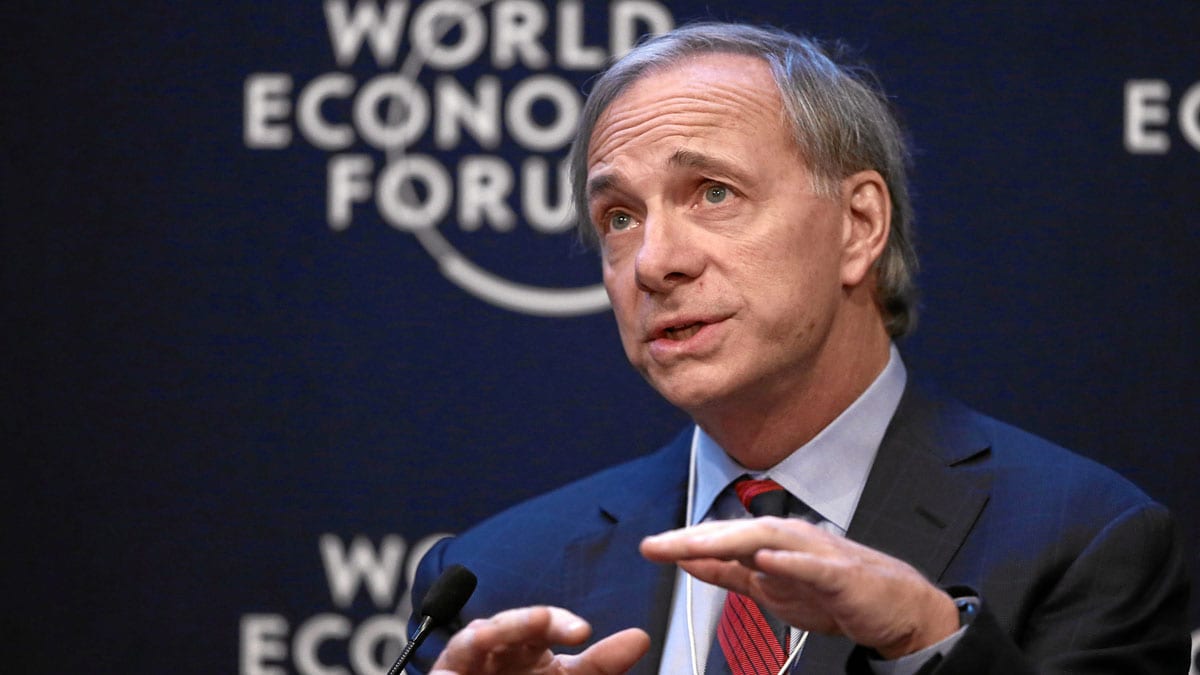
    “While the report to Bridgewater clients is a private communication which they want to continue to try to keep private, Ray Dalio and Bridgewater believe that too much has been made of the shift in their thinking and want to clarify their thinking,” the statement said. The Wall Street Journal first published an article based on a July 21 client memo that outlined their thoughts on China. ValueWalk later reported on the client memo based on a copy it had received, noting the retail focus and the fact that concern was expressed after a stock market crash.

    As the largest hedge fund in the world whose respected economic and political viewpoint has become increasingly important in public economic policy discussions, Dalio and his global analysis is in consistent demand from sophisticated institutional and high net-worth retail investors. Over the past year ValueWalk has published nearly two dozen articles chronicling the organization’s thoughts on significant economic matters.

    In regards to statements about China’s faltering economy and the odd focus on the retail investor, Bridgewater says they were simply and accurately noting a market fact that had repercussions. It was an observation not to be given an extraordinary amount of significance.

    “The observations that were made simply noted that falling stock prices have a negative wealth and negative psychological effect. When a classic stock market bubble (supported by unsophisticated investors buying stocks on a lot of margin) bursts there are negative growth effects,” the statement said, downplaying the significance of the retail aspect of the analysis in making forward looking projections.

    In the original Bridgewater analysis the firm was clear to point out that it was economic statistics that would determine their outlook going forward. “When combined with the debt and economic restructurings underway, that will most likely result in slower growth, and more simulative government policies to offset these downward pressures,” the report said.

    Rather than sound an entirely negative note, the world’s largest hedge fund looked on the positive side as well as considering the negative. “Bridgewater’s view that China faces debt and economic restructuring challenges, and that it has the resources and the capable leaders to manage these challenges, remains the same.”

    Two distinct approaches going forward: “Hunting time” and cautiously monitoring economic statistics

    For investors there appear to be two approaches.

    Goldman Sachs Group Inc said “its hunting time” in China, potentially being the first and most aggressive to call the low in the region. This comes at a time when certain algorithmic signals are also pointing to stock market normalization and the market experiencing a normal mean reversion retracement off a dramatic market move over the past year. Past performance is never indicative of future analysis, and algorithmic systems based on past performance statistics, like all investment analysis, is never perfect. In fact, when considering algorithmic investment signals degrees of probability are used to evaluate different future paths.

    Bridgewater appears to be rather pointing out issues with China that investors should consider and taking a wait and see attitude on economic numbers and the economic fallout before making such a bold claim. Its a fundamental, discretionary analysis that is watching for further impact.

    Who will be correct, Goldman and their early call on China or Bridgewater’s wait and see approach? Its hard to tell at this point, but the next several months could be an interesting time to watch as China, the potential withdrawal of quantitative easing and yes, even Greece, may all come into market focus this fall.

    The full Bridgewater Associates statement is below:

    While the report to Bridgewater clients is a private communication which they want to continue to try to keep private, Ray Dalio and Bridgewater believe that too much has been made of the shift in their thinking and want to clarify their thinking.

    The observations that were made simply noted that falling stock prices have a negative wealth and negative psychological effect. When a classic stock market bubble (supported by unsophisticated investors buying stocks on a lot of margin) bursts there are negative growth effects. When combined with the debt and economic restructurings underway, that will most likely result in slower growth, and more simulative government policies to offset these downward pressures.

    Bridgewater’s view that China faces debt and economic restructuring challenges, and that it has the resources and the capable leaders to manage these challenges, remains the same.

  • MasterCard expands in Myanmar

    MasterCard expands in Myanmar

    Its launch comes exactly three years on from the lifting of sanctions in Myanmar and affirms MasterCard’s commitment to  provide safer and easier ways for Myanmar residents to pay for their travels.

    The new prepaid card is also timely given the latest MasterCard survey on consumer purchasing priorities in travel indicates that three out of five Myanmar consumers surveyed intend to travel within the next 12 months (either as much, or more than they did in the past 12 months).

    The MAB Travel Prepaid MasterCard provides a secure way for consumers to make payment when travelling overseas for leisure, business or education, and also when shopping on e-commerce sites.
    “We know that leisure travel and shopping are on the rise among Myanmar citizens and we hope this product will help to meet their needs,” said Win Min Khine, managing director, Myanmar Apex Bank.

    MasterCard country manager, Thailand & Myanmar, Antonio Corro said: “Myanmar’s gradual opening up presents many opportunities for entrepreneurship and commerce to flourish, and their progressive participation in the global payments system that MasterCard enables not only aids the development of the local payments landscape, but also facilitates global connections.”

    Since 2012, MasterCard has launched prepaid cards together with Co-operative Bank, Kanbawza Bank, Ayeyarwady Bank and Myanmar Citizen Bank with 2C2P, the last of which was also Myanmar’s first smartphone-enabled Prepaid Card.

    At present, more than 2,000 restaurants, retail outlets and hotels in Myanmar accept payment cards.

  • Retailers remain pessimistic about industry prospects

    Retailers remain pessimistic about industry prospects

    Hong Kong’s retailers remain pessimistic about their industry prospects, with a survey from the Hong Kong Productivity Council suggesting that the sector’s business confidence is at three-year low.

    The Standard Chartered Hong Kong SME Leading Business Index showed the retail industry sub-index sliding to 43.1 for the third quarter from 49.9 in the preceding three months, marking the weakest level in three years.

    Meanwhile, the overall gauge of the SME Business Index stood at 49.6, up 0.6 point from the previous months but remaining below the 50 mark that separates positive and negative outlooks, the Hong Kong Economic Journal reported.

    The sub-index that reflects interest in hiring dropped below 50 to reach 48.5 for the first time, according to the survey which was conducted by the Hong Kong Productivity Council in association with Standard Chartered Bank Hong Kong.

    Kelvin Lau, senior economist for Asia at Standard Chartered, said slower growth in the number of mainland tourists and structural change in their consumption behavior have brought prolonged adverse impact on the city’s retail environment.

    He noted a 1.3 percent fall in mainland visitors as of the end of May this year, the largest decline since August 2009.

    However, DBS Bank Hong Kong economist Lily Lo said the actual impact is not so bad because 70 percent of retail sales in the city come from local consumers.

    Lo expects Hong Kong’s economy to expand at 2.5 percent rate this year, with retail sales likely to recover.

  • Singapore Press Holdings Limited Makes Big Splash In e-Commerce

    Singapore Press Holdings Limited Makes Big Splash In e-Commerce

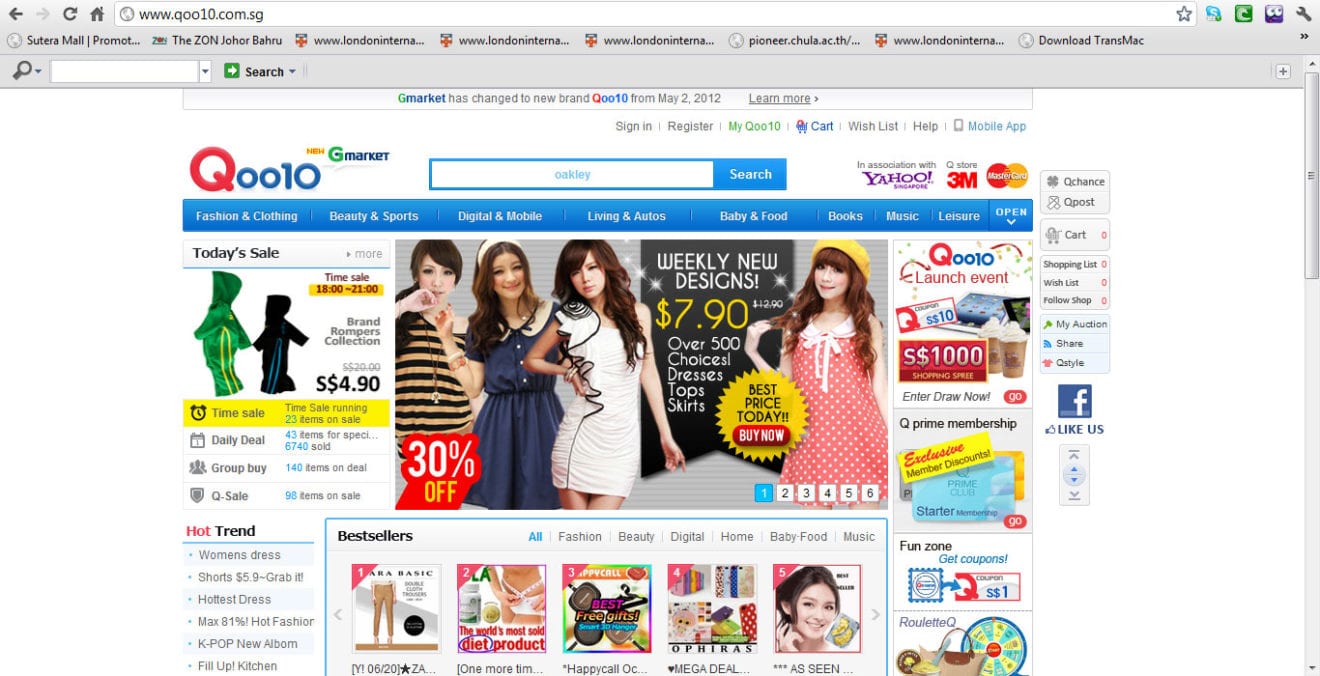
    For those of you who are shopping online regularly, Qoo10.sg might be a familiar name. According to Alexa, a website ranking company, Qoo10.sg is the second most popular e-commerce site in Singapore, behind only U.S. online retail giant Amazon.com.

    Qoo10 is a joint venture between South Korean e-commerce outfit Giosis Group and American online marketplace creator eBay Inc. Qoo10’s still a private company, but investors who believe in the potential of e-commerce and think that Qoo10 will be a strong beneficiary of this important trend will be happy to know that they can now get exposure to the firm.

    Earlier today, it was revealed that Qoo10 had just raised US$82.1 million from a group of investors who are led by newspaper publisher and property developer Singapore Press Holdings Ltd. Singapore Press Holdings has long been trying to diversify away from its traditional print business which might be facing structural challenges with more and more people obtaining their information online. This affects the circulation of the firm’s traditional print newspaper and would thus directly affect the firm’s advertising revenue.

    The negative impacts to Singapore Press Holdings’ business are already apparent with the firm’s total ad revenue from its newspapers falling in each year since its fiscal year ended 31 August 2011 (FY2011).

    As a result, Singapore Press Holdings has been actively investing into other types of businesses over the past few years. In particular, the company has been putting capital to work aggressively in the internet space. Currently, Singapore Press Holdings is owner of some of the most popular sites in Singapore such as hardwarezone.com, shareinvestor.com, and even stomp.com.sg.

    With an investment into Qoo10, Singapore Press Holdings has gained access to an e-commerce marketplace in six different territories (Singapore, Japan, Indonesia, Malaysia, Hong Kong and China).

    Qoo10 currently has about 17.6 million registered users and had achieved a gross merchandise value (GMV) of US$408 million in 2014. Interestingly, Singapore is currently Qoo10’s best performing market, with more than US$182 Million in GMV in 2014 with just 1.8 million registered users. However, there is no detail on whether Qoo10 is profitable or not at the moment.

    More synergy?

    With the new investment, there might be some synergies to exploit given Singapore Press Holdings’ distribution-reach on both its offline and online media properties.

    If Singapore Press Holdings is able to successfully promote Qoo10 within its audiences on its various media platforms, it might help boost growth for Qoo10 in the coming years.

    Foolish Summary

    The internet looks to be the way forward in the future. But, investors have to know that businesses that ply their trade on the web are engaged in extremely fierce competition.

    With low barriers to entry and having access to a global market at your fingertips, internet businesses need to dominate or else they might disintegrate. Clearly, Singapore Press Holdings has decided it wants a part of all these and its investment into Qoo10 is just another step in its longer term ambition to transform its business. Let’s hope it can compete successfully in this unforgiving landscape.

    For those of you who are shopping online regularly, Qoo10.sg might be a familiar name. According to Alexa, a website ranking company, Qoo10.sg is the second most popular e-commerce site in Singapore, behind only U.S. online retail giant Amazon.com.

    Qoo10 is a joint venture between South Korean e-commerce outfit Giosis Group and American online marketplace creator eBay Inc. Qoo10’s still a private company, but investors who believe in the potential of e-commerce and think that Qoo10 will be a strong beneficiary of this important trend will be happy to know that they can now get exposure to the firm.

  • Singapore Savings Bonds: Good intent, bad timing, say analysts

    Singapore Savings Bonds: Good intent, bad timing, say analysts

    Singapore’s plan to launch a savings bond to encourage long-term retail savings is unsettling domestic banks and economists who fear this bond will push interest rates up and suck cash out from an already anaemic economy.

    The new bond, which will begin selling in October, will have a term of 10 years. It will offer the same yields as government bonds or ten times the returns on bank deposits, and can be redeemed without penalty at any point.

    Such a juicy proposition could cause a flight of cash from bank deposits into these bonds and force interest rates higher as banks compete to attract savers.

    The government says it will issue a maximum of S$4 billion worth of bonds this year, which is still more than a fifth of deposit growth in 2014.

    The timing of these bonds, which are aimed at meeting a long-felt need for long-term investment options in the low-yielding economy, couldn’t be worse, say analysts.

    The economy contracted sharply in the second quarter as manufacturing slumped and is at risk of tipping into technical recession. Price pressures are subdued and expectations are building for the central bank to ease policy once again at a twice-yearly review in October.

    “Launching a retail savings bond now is almost like reverse QE,” said Chua Hak Bin, an economist with BofA Merrill Lynch in Singapore, referring to the unorthodox quantitative easing (QE) policies the United States and other major economies have pursued in the years since the 2007 financial crisis.

    Chua points to the already slowing deposit growth in the Singapore banking system, with just S$3.8 billion ($2.8 billion) of deposits being added in the first five months of 2015, just 20 percent of the total growth last year.

    He suspects the government would invest the savings bond flows overseas. That would further pressure loan growth, by tightening available cash and triggering a rise in deposit rates, he said.

    “So the timing is not ideal. The economy has stagnated in the first half and this will worsen the situation,” Chua said.

    Citibank analysts expect that of a total S$559 billion of deposits in the banking system, 36 percent are savings deposits held by households. If on average the MAS issued about S$6 billion worth of bonds each year, S$30 billion would flow from the deposit base into bonds over five years, they estimate.

    RISK-FREE AND REWARDING

    Singapore’s central bank, the Monetary Authority of Singapore (MAS), has set a cap of S$100,000 on individual investments in the bond.

    MAS Managing Director Ravi Menon played down fears the bond will cannibalise bank deposits.

    “The savings bonds issuance numbers pale in significance compared to the total size of the banking deposits,” he said at a news conference this week.

    Yet there is little doubt the bonds will draw savers from banks. Government bonds yield about 0.95 percent for one-year and 2.6 percent for 10 years. Bank deposits fetch around 0.25 percent for a year and just double that for 24 months.

    “The Singapore Savings Bond is bending the risk-reward paradigm in investors’ favor,” said Zal Devitre, head of investments at Citibank in Singapore.

    Devitre believes retail investors and consumers will be keen to buy the bonds, and yet thinks it is premature to be projecting the impact that will have on rates and banking system liquidity.

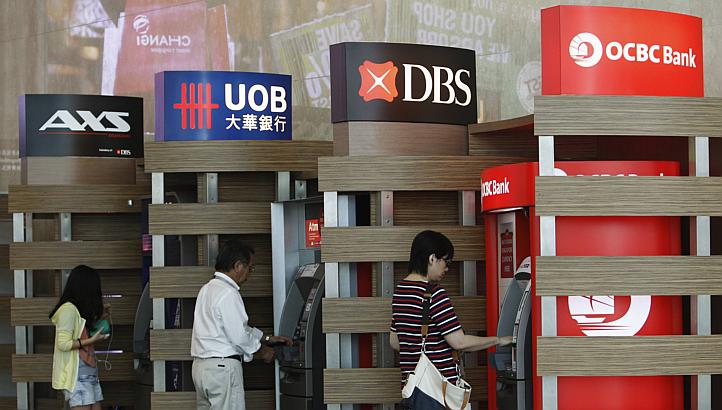
    Local banks such as DBS, Oversea-Chinese Banking Corporation and UOB are expected to be impacted if there is a heavy migration of deposits.

    But analysts also expect there will be more pressure on global banks such as Citibank, Standard Chartered, HSBC and Malayan Banking Bhd, which have been deemed systemically important by Singapore and therefore need to maintain higher capital than stipulated under the Basel 3 guidelines.

  • Hong Kong airport executes summer promotions

    Hong Kong airport executes summer promotions

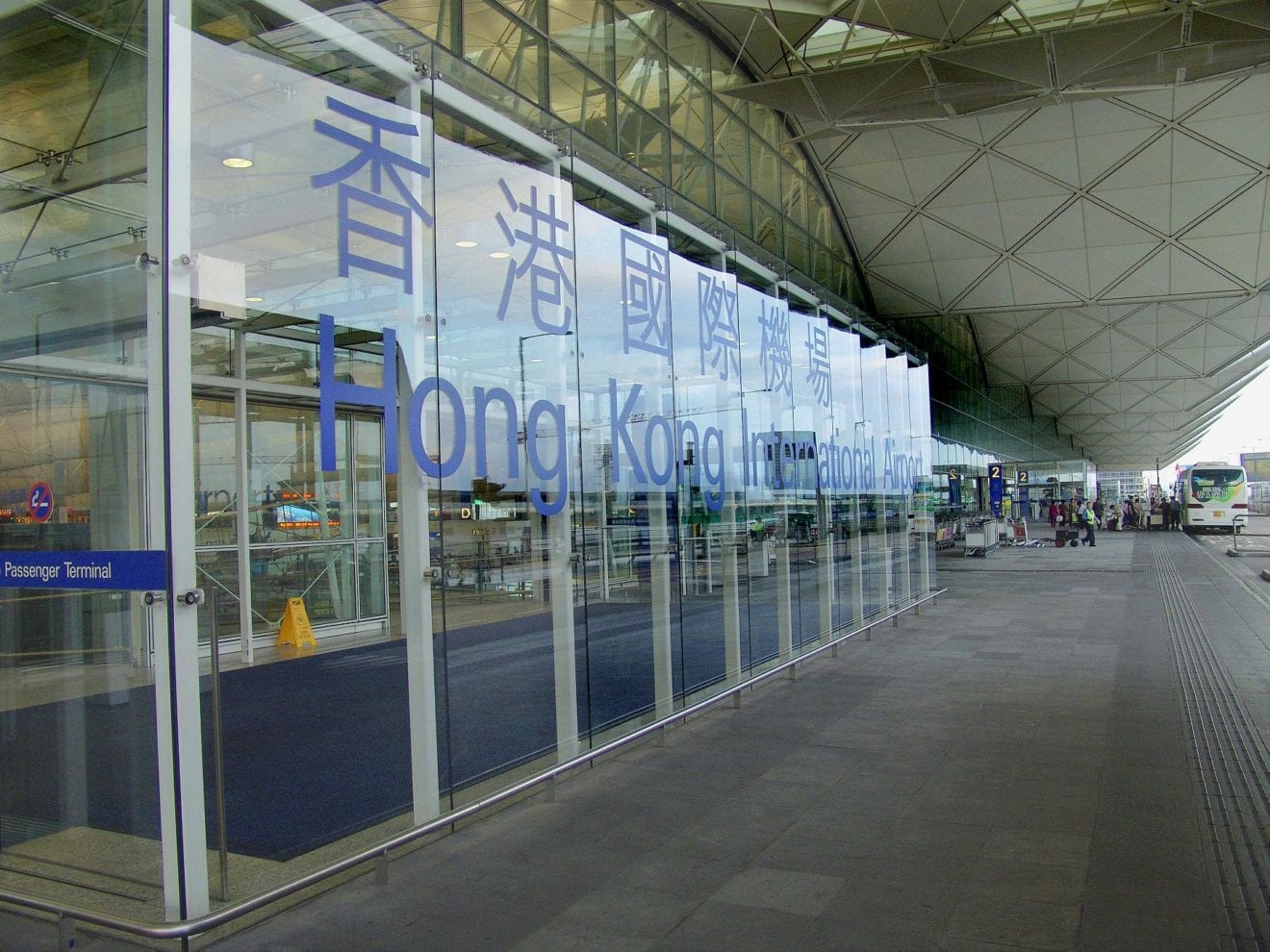
    Hong Kong International airport (HKIA) has welcomed the summer season with various promotions. These include special offers such as cash coupons with savings of up to HK$700 ($90) and complimentary local delivery service.

    From July 31 to August 11, travellers spending over HK$2,000, HK$5,000 and HK$10,000 by electronic payment can redeem HKIA cash coupons of HK$100, HK$200 and HK$600 respectively. Travellers using UnionPay cards to make purchases of over HK$5,000 and HK$10,000 can enjoy an extra HK$100 HKIA cash coupon.

    HKIA is also collaborating with retailers to provide travellers with exclusive shopping and dining offers and a selection of special complimentary gifts during the summer. Travellers spending with UnionPay cards can enjoy further offers. Details can be found by scanning QR codes on the promotional materials or by visiting https://www.hongkongairport.com/eng/shopping/special-offers.html.

    In addition, travellers spending over HK$1,000 in one single transaction at HKIA can enjoy complimentary local delivery service, while HKIA’s “Guaranteed Downtown Prices” mascot dresses up to welcome the summer and greet travellers. The mascot will make special appearances at terminal one and pose for instant photos with travellers and distribute  gifts. Travellers can also enjoy music performances while shopping in the Departures East Hall.

    HKIA has also teamed up with the Hong Kong Tourism Board as part of the Hong Kong Summer Fun campaign, providing travellers with two rounds of lucky draws. Travellers entering Hong Kong through HKIA can participate in the “Instant Mega Draw” until August 31. Before leaving Hong Kong, travellers can also enter the “Return to Hong Kong like a Millionaire” draw to win prizes, including a return-trip to Hong Kong.

  • Onions-for-One Help Korea’s GS Retail Survive Depressed Markets

    Onions-for-One Help Korea’s GS Retail Survive Depressed Markets

    Convenience store owners love people like Bae Moon Sung. The 34-year-old finance worker lives alone and shops for almost everything at his local minimart.

    “Onions, cucumbers, they come in compact packages at convenience stores, which is more suitable for a single-person household like me,” he said. “They’re open 24 hours and they’re everywhere.”

    People like Bae are driving an expansion in convenience store chains that’s helping them outperform in depressed markets. Shares of GS Retail are up 112 per cent this year through Wednesday versus a 13 per cent slump in a gauge tracking consumer companies on the MSCI Korea Index. The risk the operator of GS25 outlets won’t pay its debt on time has fallen to 0.08 per cent from 0.14 per cent at the end of 2014, according to a Bloomberg default-risk model. Shares in CU store operator BGF Retail have risen 165 per cent.

    The chains’ popularity is in stark contrast to the overall industry in Asia’s fourth-largest economy. Department store sales fell 3.9 per cent in the first quarter, and that was before a deadly respiratory virus sapped confidence. Smaller households in Seoul as the population ages and family sizes shrink means consumers aren’t buying in bulk at supermarkets.

    “Retailers are suffering from low economic growth and online price competition,” Yu Jung Hyun, an analyst in Seoul at Daishin Securities, said. “But convenience stores have their own market. People still need to buy basic items close at hand.”

    Sales at the four main convenience store chains — CU, GS25, 7-Eleven and Buy the Way — have risen every quarter since at least the second three months of 2013, Ministry of Trade, Industry & Energy data show. In May, sales were up 31.5 per cent from a year earlier thanks to more outlets and an increase in the price of cigarettes. Discount store sales meanwhile have dropped every quarter since the second quarter of 2012, the ministry’s data show.


  • Identifying Asia’s regional bank champions

    Identifying Asia’s regional bank champions

    Bank of China is seen as the strongest challenger for Asian leadership

    A swelling population, exponential economic growth and broad financial development are transforming Asia ex-Japan into a global finance hub.

    It is the opportunity to service retail and wealthy clients in Asia that has fired banks’ ambitions to extend their regional networks and boost their distribution power.

    But the odds are stacked against them. They have nowhere near the scale of the international players Citi, HSBC and Standard Chartered. This trio has resources, customer networks and relationships acquired from a century of operations in Asia.

    Asian banks, on the other hand, face constraints in their ability to expand cross-border, including fierce domestic competition and national protectionism.

    Nevertheless, they have become increasingly vocal about their regional ambitions, centred around expanding their wealth management businesses.

    Our leading contenders come from China, Malaysia and Singapore. Hong Kong banks appear content to focus on Greater China, where they will seek to be facilitators of trade flows rather than competitors in regional distribution.

    “From a geographical standpoint, the footprint of the Singaporean banks is wider,” said Michael Wu, senior equity analyst at Morningstar. “They might be in a better position to access Asia.”

    Bank of China is seen as the strongest challenger for Asian leadership. It has the balance sheet and is willing to suffer in the short term to expand, notes CLSA.

    BOC has a network of 11,514 offices, although 10,693 are onshore. Overseas, it has 628 offices in Hong Kong, Macau, Taiwan and in 37 other countries.

    It was first to offer private banking onshore in 2007 and now manages Rmb720 billion ($116 billion) for 74,000 private banking customers, with more than 7,000 wealth management centres and 34 private banking hubs. It has private banking operations in Singapore and Hong Kong and has ambitions to grow in Asia, including Australia, where it opened a branch in 2010.

    Singapore’s largest lender, DBS, has 280 branches across 15 markets in Asia. But Singapore and Hong Kong remain its major markets, despite its attempts for regional leadership. As CLSA points out, its operations in the growth markets of China, India and Indonesia have remained sub-scale.

    DBS is building wealth management/private banking operations. Its private banking business was bolstered by its $220 billion acquisition of Société Générale’s private banking business in Asia last October, boosting its AUM 22% to S$133 billion ($97.4 billion) as of December 2014. DBS’s total wealth management AUM stood at S$141 billion and its private bank AUM at S$95 billion.

    Maybank was a late-comer to private banking, but has been building a solid Asean network. Its regional operation only started 18 months ago, with Singapore as its hub. But it has been hiring aggressively and expanding its proposition, including launching a discretionary portfolio management service.

    Steven Seow, Asia head of wealth management at Mercer, pointed out that Maybank has succeeded in converting long-time Asian corporate banking entrepreneurs to its wealth management business. In terms of private banking assets, Maybank has S$6 billion in overall AUM, having added S$2 billion in new assets over the past year.

    Historically OCBC has focused on Southeast Asia. It has a strong position in Singapore and is one of the largest foreign banks in Malaysia, providing conventional and Islamic finance. Last year it acquired Wing Hang Bank in Hong Kong for $5 billion.

    That increased OCBC’s branches in Greater China from 25 to 120 and deepened its operations in the Pearl River Delta, although it paid a high premium given Wing Hang’s operations in Hong Kong and China were marginal.

    In private banking and wealth management, OCBC’s 2009 acquisition of ING Private Banking (renamed Bank of Singapore) for $1.46 billion has given it the scale to compete with DBS and global banks. The acquisition trebled its private banking AUM to $23 billion.

    As of March this year that AUM had since doubled to $51 billion. It enjoyed 15% year-on-year growth in wealth management income in 2014.

    Among Singaporean banks, UOB’s focus is on Southeast Asia, with universal banking operations in Malaysia, Thailand and Indonesia. But outside of Singapore its strength in Malaysia – it has the largest foreign bank network in the country with 45 branches – is not replicated in Thailand and Indonesia.

    Without the help of an international acquisition, UOB has invested in building its wealth management and private banking capabilities out of Singapore.

    It saw the combined AUM of wealth management and private banking grow 67% to S$80 billion in the four years to 2014, during which time the profit contribution of wealth management doubled to 47%.

    But while it has plans to offer private banking outside of Singapore, its current proposition is acknowledged as behind city-state peers DBS and OCBC.

    The full article appears in the July 2015 edition of AsianInvestor magazine

  • Walmart to boost its e-commerce investment in China

    Walmart to boost its e-commerce investment in China

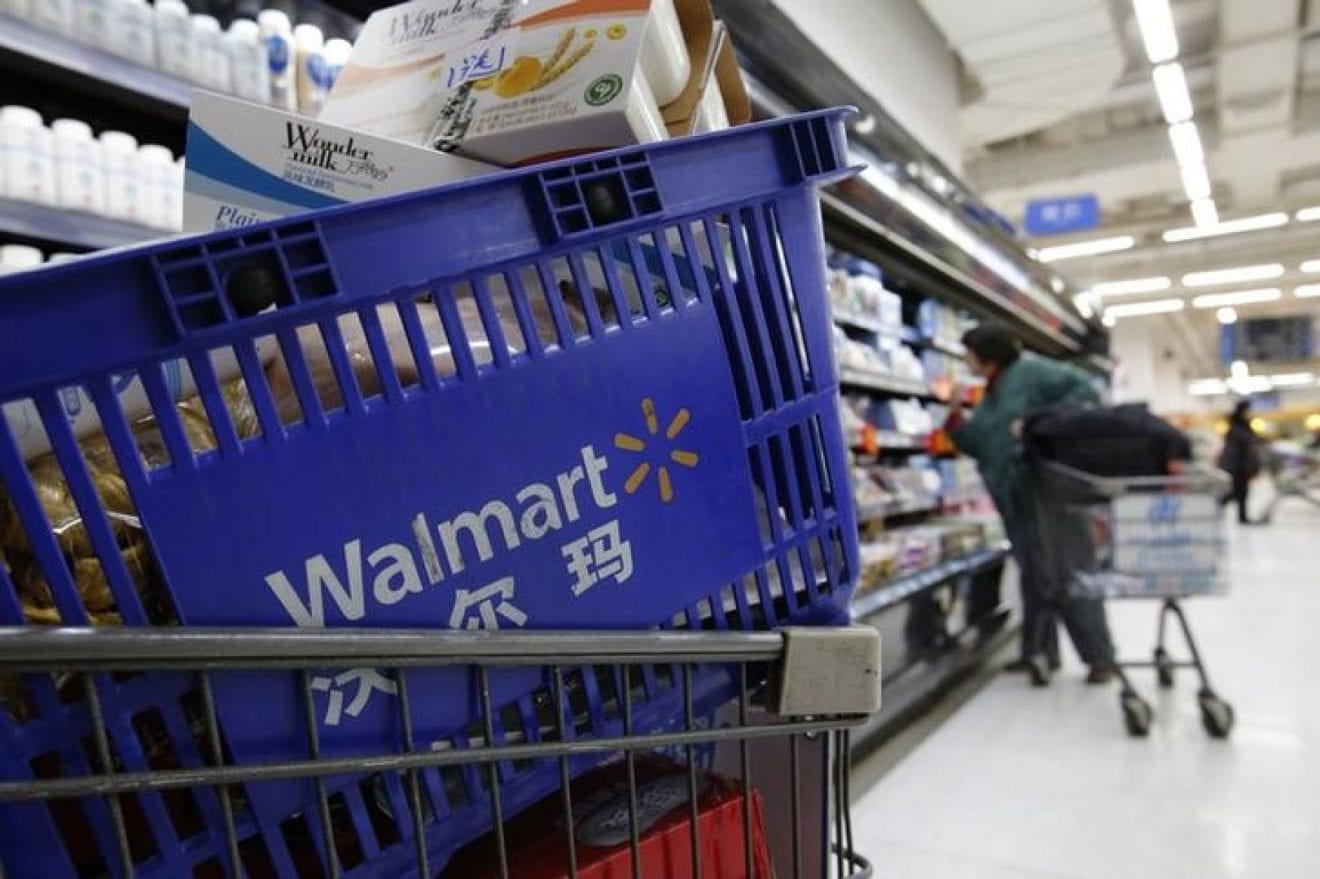
    China’s e-commerce market hasn’t been easy for Walmart to crack, but the U.S. shopping giant isn’t giving up. The company is investing even more in its e-commerce operations there, by taking full control of a Chinese online retailer.
    On Thursday, Walmart bought up the remaining shares of Yihaodian, after previously owning 51 percent in the Chinese company. Financial details were not announced, but the move will accelerate Walmart’s online expansion in China, the U.S. retail giant said.

    Walmart’s move was made possible by the Chinese government’s recent decision to open the e-commerce market to more foreign investment. Last month, a Chinese regulator removed restrictions that barred foreign investors from taking a 100 percent stake in any e-commerce operation in the country. Before that, foreign investors such as Walmart had to enter into joint ventures with local Chinese players.

    Although Walmart’s move could help the U.S. company tap the vast Chinese market, gaining ground against the existing competition will be tough. Other U.S. e-commerce players such as Amazon.com and eBay have all struggled to compete with Alibaba Group, the country’s leading online retailer.

    In China, Alibaba’s Tmall.com site has a 60 percent market share, according to Beijing-based research firm Analysys International. Amazon and Walmart’s Yihaodian site, however, each have about a 1 percent share.

    In spite of Alibaba’s dominance, Walmart’s Yihaodian site has been making gradual progress. It now has 100 million registered users, up from only 4 million back in 2010. Walmart’s goal is to now integrate their physical stores with Yihaodian’s mobile and online services for a better shopping experience.

  • After Toshiba scandal, foreign investors want tougher Japan governance steps

    After Toshiba scandal, foreign investors want tougher Japan governance steps

    Japan needs bolder measures such as harsher criminal sanctions for fraud and whistleblower protections to improve corporate transparency and prevent a repeat of the accounting scandal seen at Toshiba Corp, foreign investors and governance experts said.

    Toshiba’s chief executive Hisao Tanaka and a string of other senior officials resigned on Tuesday after an independent inquiry found he had been aware the company had inflated its profits by $1.2 billion over several years.

    The scandal is a major setback for the government of Prime Minister Shinzo Abe, who has made improving corporate governance a central theme in his bid to reinvigorate Japan’s economy and entice more foreign capital.

    “This is a negative headline in what’s been 18 months of positive momentum in Japan,” said Singapore-based David Smith, head of corporate governance at Aberdeen Asset Management, which owns Japan stocks. An Aberdeen affiliate had a very small equity holding in Toshiba as of end-May, Reuters data shows.

    “This is a black mark for corporate Japan in the face of positive news and strong markets. The government may want to act tough,” said Smith, who helps manage about $115 billion in Asia.

    Japan’s listed companies have long-had tense relations with their foreign shareholders, who have frequently blamed long-term insiders’ dominance of corporate boards for low returns and weak oversight.

    In response to this criticism, the Abe government last month introduced new rules requiring listed company boards to appoint at least two outside independent directors, but investors said this did not go far enough – Toshiba already had four independent directors as part of its 16-person board.

    “The Toshiba scandal further underlines the need for board training as well as a robust whistleblower protection system,” said Seth Fischer, chief investment officer at Hong Kong-based hedge fund Oasis Management and a corporate governance activist who successfully pushed for reforms at Nintendo Co Ltd.

    “Whistleblowers are ultimately performing a service to the company, its executives and the company’s overall mission – which is integrity of financial statements. They need to be rewarded as such,” he said.

    This week’s revelations come four years after a similar scandal in which camera-maker Olympus Corp concealed nearly $1.7 billion in losses from shareholders.

    Both scandals also raise questions about the quality of Japan company audits, which rate poorly compared with developed market peers, according to data compiled by Hong Kong-based GMT Research.

    “One of the problems is that audit fees are very low in Japan. It’s nonsense that auditors, on these fees, are doing any proper work,” said Robert Medd, a partner at GMT.