Tag: asia

  • US$2.7bil SMB cloud services industry in Indonesia by 2018

    US$2.7bil SMB cloud services industry in Indonesia by 2018

    The small and medium business (SMB) cloud services market in Indonesia is expected to grow at a compound annual growth rate (CAGR) of 30% in the next three years from Rp15 trillion (US$1.2 billion) in 2015 to Rp33 trillion (US$2.7 billion) by 2018.

    This growth will primarily be driven by SMBs moving business functions into the cloud as more tools and solutions are developed specifically for the SMB market, cloud computing specialist Odin said in a statement, citing its annual SMB Cloud Insights research report.

    The 2015 SMB Cloud Insights research for Indonesia reveals that infrastructure-as-a-service (IaaS) is the largest market opportunity for cloud services in 2015, accounting for 40% of the market at Rp 6.1 billion (US$$496 million).

    This segment – which includes virtual private servers, dedicated servers, and elastic computing – is projected to grow at a 24% CAGR and reach Rp11.7 billion (US$956 million) by 2018, driven largely by firms without any type of server moving into the cloud market for the first time, Odin said in a statement.

    The research also shows that business applications, or Software-as-a-Service (SaaS), will soon become the fastest growing cloud category in Indonesia, growing at a CAGR of 43%.

    Business applications such as file sharing and online backup are currently the most commonly used applications in Indonesia, and adoption is expected to increase, Odin said.

    Less commonly used business applications such as payroll and HR (human resource) applications, as well as customer relationship management (CRM) apps, are expected to see rapid growth in adoption over the next three years, it added.

    “As evidenced by this study, the Indonesian cloud market remains poised for rapid growth over the next few years – especially in the IaaS segment – underscoring a greater awareness and appreciation for cloud computing even in its early stages today,” said Pavel Ershov, Odin vice president and general manager, Asia Pacific and Japan.

    “Increasingly, more SMBs in Indonesia are using the cloud for their core business functions in order to compete with larger corporations.

    “This is a scenario we expect to see play out across today’s dynamic Asia Pacific business environment,” he added.

    Odin was formerly the service provider business of cloud and virtualisation specialist Parallels Inc, spun off in March this year. With offices in 15 countries, it supports more than 10,000 service providers in delivering applications and cloud services to more than 10 million SMBs, it claimed.

    Other highlights of the SMB Cloud Insights report for Indonesia include:

    • The market represents more than four million SMBs using cloud services. Security and control panels are two key areas for cloud services.
    • Unified communications – which includes hosted business voice services, email, and collaboration applications – is the second-largest category of the Indonesian cloud market (Rp4 trillion or US$324 million) and is poised for expansion.
      • Nearly 80% of Indonesian SMBs do not use email services. Of those which do, only 1% use in-house servers for email, another 7% use a service provider, and the remaining 12% use free email services.
      • Premium email security is a large concern – of the 20% of SMBs using email, an overwhelming 89% said that the increased need for email security was a purchase trigger for obtaining premium hosted email.
    • The Indonesian web presence market is valued at Rp1.6 trillion (US$128 million). Today, only 11% of Indonesia’s SMBs have websites. The market is set to double in the next three years to Rp4 billion (US$322 million).
      • Interestingly, 55% of Indonesian SMBs with websites have mobile-optimised sites. This compares to just 30% of SMBs in the United States and 25% of SMBs in Germany.
      • ‘Optimising mobile sites’ was ranked by respondents as the top feature, more than double the second priority of ‘displays on mobile without optimisation’ (22%), and ‘only displays properly on a computer’ (23%).
    • Almost three-quarters of all Indonesian SMBs purchase their services from just one or two service providers. One of the key reasons for this behaviour is that SMBs want to maximise the efficiency of their spending. This demonstrates the need for service providers to offer high-value, best-in-breed bundles and transparent pricing structures, Odin said.

    Odin said its SMB Cloud Insights report focuses on the cloud services that have the most current and future appeal for SMBs across four key categories: IaaS, web presence and web applications, unified communications, and business applications or SaaS.

    Research reports are available for 15 countries including Australia, Brazil, China, France, Germany, India, Japan, Mexico, the Netherlands, Poland, Russia, Spain, the United Kingdom, and the United States. Regional reports are also available for Europe and Asia Pacific.

    All SMB Cloud Insights reports are available for download here.
  • iPay to expand in India and Indonesia

    iPay to expand in India and Indonesia

    V Arundhati, 52, helps her son Srinivas in running a small kirana store in Himayatnagar in Hyderabad. Apart from selling soaps and sugar, she has begun placing orders on an e-commerce platform for her customers, who have never bought any product online. The duo has increased average daily revenue from ₹1,500 to ₹5,000.

    They are among the 600-odd street-corner outlets that have become part of the e-commerce platform for the uninitiated, giving ‘offers’ on products that range from home appliances to electronic gadgets.

    Daily sales

    On an average, they deliver goods worth ₹10-13 lakhs a day.

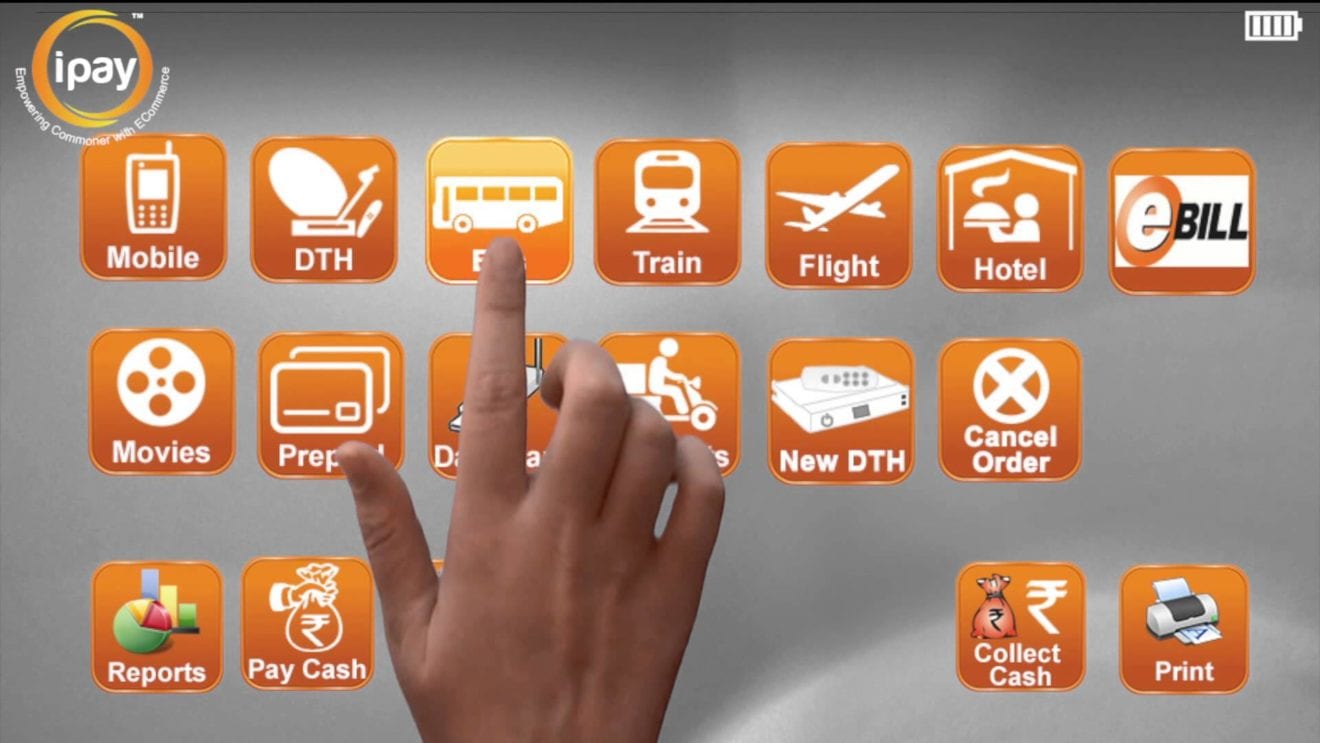
    This model, developed by tech start-up iPay, is going to make a foray into Indonesia where it has tied up with a major telecom player to replicate the idea there. Set up by serial entrepreneur Krishna Lakamsani, iPay’s platform ‘dukanline’ works on the premise that there is a huge potential in the retail industry in India that is not yet tapped by the e-commerce players.

    “They (the e-com players) reach only a small portion of those who have access to the Internet. There are about 1.3 crore mom-and-pop stores across the country who have built a loyal customer base over a period of time. These customers too are becoming aspirational and are willing to buy things that their urban peers buy,” Krishna Laksamsani, Chief Executive Officer of iPay Tech, told BusinessLine.

    Set up two years ago, the firm has just completed one year of operations, after doing market research and studying the pulse of the market in the 12 months preceding it. The stores buy kiosks priced at ₹8,888 that comprises a tablet, which gives an access to its e-commerce platform. It throws up a list of offers available for that particular day on the homepage. Besides, it gives a full list of products that can be bought online.

    Store payment

    “Customers pay cash at the store after surfing. They will get an SMS after the product is delivered to the store,” Krishna said.

    Krishna built and sold two firms in the United States before moving to Hyderabad to set up iPay. It is now planning to expand to Karnataka and Tamil Nadu. He has invested $2 million so far, including $1.2 million on technology. In the first year, it registered a gross merchandise value of $10 million through a network of ₹3,900.

    “We have tied up with an Indonesian telecom player. It wants to use our technology platform to provide the e-commerce channel to its customers,” he said.

    The firm is planning to raise $15 million in the next few months to fund its expansion in India.


  • Baidu raises $800,000 in a single hour

    Baidu raises $800,000 in a single hour

    Chinese language web search engine Baidu has raised US$800,000 in simply an hour in a charity undertaking aimed toward serving to critically sick orphans.
    Baidu teamed up with 800,000 web sites and 50,000 app suppliers to kick off this yr’s “One Hour,One Click on” marketing campaign on Might 29. Inside only one hour, the marketing campaign attracted four,978,267 on-line customers, raising4,978,267 yuan (approx.US$803,492) for orphans with critical sicknesses, making a high-speed car for the gathering of welfare donations by way of the web inChina.

    Orphans with critical sicknesses, targets of this marketing campaign, are a particular group, categorised as minors who’ve been recognized by their doctor as having not more than six months to stay.

    In response to knowledge, greater than 80,000 individuals on-line had participated within the marketing campaign inside one minute of the Might 29, 11 a.m. Beijing time kick-off time and almost 5 million yuan (approx. US$807,000) was raised inside the first hour.

    On the idea of an orphan with a critical sickness needing 100 yuan (approx.US$16) of nursing and medical care charges (together with 33 yuan (approx. US$5.25) in medical remedy charges) a day, the funds raised in such a brief interval can present 50,000 orphans with critical sicknesses with nursing and medical care charges for at some point. The marketing campaign raised on common 83,000 yuan (approx.US$13,400) per minute, an quantity enough to offer medical remedy for 2515 orphans with critical sicknesses a yr. The typical quantity raised per second is 1,388 yuan (approx. US$224), sufficient to offer medical remedy and look after one orphan with a critical sickness for multiple month.

    Launched by Baidu along with over 600,000 web site companions in 2012, “One Hour, One Click on” now boasts a community of 800,000 web sites (almost one fourth of all web sites in China) and 50,000 app suppliers, and has develop into the most important web public welfare platform for pediatric healthcare.

    From free lunches in 2012, free catastrophic medical insurance coverage insurance policies for youngsters in Ya’an in 2013 and help for youngsters with congenital coronary heart illnesses in 2014, to this yr’s saving the lifetime of orphans with critical sicknesses, this system continues to exhibit the facility of campaigns for the general public good.

  • Worth Retail in China Japanese alliance

    Worth Retail in China Japanese alliance

    Worth Retail – the creator and operator of the Village Assortment, 10 luxurious outlet buying Villages throughout Europe and China – is to launch a partnership with China Japanese Airways.

    The announcement was made on the ILTM Asia luxurious journey commerce present in Shanghai this week.

    The partnership means China Japanese’s frequent flyer program members can reap the benefits of particular privileges together with three miles for each £/€ or 10RMB spent throughout the Assortment. As well as, all through 2015, bonus miles promotions, VIP choices, buying packages and particular financial savings will probably be provided to members of China Japanese’s frequent flyer program.

    The alliance with China Japanese Airways is the newest journey and tourism partnerships shaped to advertise the Assortment of Villages to Chinese language friends. Earlier this yr, Worth Retail introduced a brand new partnership with Ctrip – China’s main on-line journey company, which offers journey providers by way of on-line and conventional channels – making the Assortment of Villages’ luxurious expertise accessible to a fair wider Chinese language viewers. Worth Retail can also be a associate of Air China. A present initiative means visitors can declare three miles for each £/€ or 10RMB spent within the Villages.

    The authentically European expertise on supply on the Villages, which mixes luxurious buying with artwork, tradition, gastronomy and particular occasions, is very widespread with Chinese language friends. In 2014 China was the top-contributing strategic marketplace for tax-refunded (non-EU) gross sales, accounting for 44 per cent of complete tax-refunded gross sales – a rise of 29 per cent yr on yr. To welcome Chinese language friends, particular providers have been launched throughout the Assortment together with Mandarin-speaking hosts and the acceptance of cost by UnionPay Worldwide in lots of boutiques.

    This distinctive outlet buying expertise is now obtainable in China, as Suzhou Village – the primary Village in China by Worth Retail – celebrated its first anniversary this month.

    The second Village in China, Shanghai Village, (pictured above), will open in spring 2016, adjoining to the Shanghai Disney Resort.

    Chinese language friends to Expo Milano 2015 can get a style of the distinctive experiences on supply on the Chinese language Villages by visiting Fidenza Village close to Milan. Particularly for the Expo interval, Fidenza Village has reworked into ‘The Embassy of Made in Italy’; a showcase of Italian artwork, trend, gastronomy and design, developed in collaboration with a number of prestigious companions and ambassadors.

  • how one can keep away from them 6 style sourcing perils

    how one can keep away from them 6 style sourcing perils

    Trend is a worldwide enterprise, and the world is a burgeoning market.

    The US$1.5 trillion trend commerce is on a double-digital progress trajectory pushed by creating economies, and large retailers will not be the one beneficiaries. Begin-ups and smaller entrepreneurs are discovering recent progress potential cross-border within the type of new clients, or distinctive finishes and componentry for clothes.

    Nevertheless, whether or not it’s style sourcing, manufacturing or promoting trend gadgets internationally, getting sensible on customs could make or break a budding empire.

    Shoe entrepreneur, Christy Ng, cites “recent design, distinct artisanship and aggressive pricing” as motivations for sourcing shoe charms, materials and uncooked supplies outdoors her residence of Malaysia for her eponymous model.

    For Juan David Martinez, proprietor of Industrias Suárez, a Colombian biking put on producer, the standard and pricing of abroad sourced zips, dyes, adhesives and reflective tapes are integral to their value mannequin and product integrity.

    Nevertheless, understanding customs guidelines earlier than you’re taking the leap into international sourcing, is a should, as Ng and Martinez will attest. Customs guidelines are fluid and differ markedly from nation to nation. Lengthy hold-ups and penalties can ensue if guidelines aren’t adopted. Ng has skilled the pitfalls first hand, the place complicated or altering customs guidelines have resulted in “unprecedented monetary losses with clothes left on the docks for weeks at a time.”

    In the event you’re a trend entrepreneur able to take the subsequent step of both sourcing or promoting gadgets internationally, listed here are some recommendations on navigating customs to get you began.

    1. Examine textile quotas and licensing necessities.

    The textile business has lengthy been the topic of worldwide commerce negotiations. Within the 1960s there was a posh international quota system, which has since been abolished. Nevertheless some nations nonetheless keep choose quotas, resembling Costa Rica, which controls commerce in sure wool materials. Markets reminiscent of Mexico require textile or materials importers to carry a license or visa.

    2. Assessment banned or restricted substances lists.

    Many textiles and supplies utilized by the style business include plastics or chemical compounds, that are topic to ban or restrictions, similar to textiles containing formaldehyde in Europe. Acquire an inventory of banned substances from native authorities, and verify with distributors that textiles and supplies move the check earlier than buying.

    three. Ensure valuations are correct and items are clearly labelled intimately.

    When importing or exporting items, be certain that to offer an correct valuation to calculate duties together with an in depth description of the contents of a cargo – for instance moderately than ‘bolt of silk’, the outline ought to learn ‘bolt of blue silk with embroidered element’.  These particulars will assist customs officers to calculate the duties and taxes to be paid on shipments.

    four. Examine the authenticity of products and report any counterfeit merchandise.

    It’s estimated the sale of counterfeit items makes up 10 per cent of trend commerce with belts, purses and footwear the preferred gadgets.  We’re not simply speaking closely branded luggage and clothes – at this time’s counterfeit items could be a lot more durable to detect. You could inadvertently end up sourcing (or being topic to) ‘knock-off’ merchandise to finish a seasonal line-up.

    5. Be clear on conventions and native guidelines prohibiting or proscribing sure animal merchandise.

    The Conference on Worldwide Commerce in Endangered Species (CITES) is a world governmental settlement prohibiting the commerce of untamed animals.  Along with this, many nations have supplemental legal guidelines that govern commerce of animal merchandise, which differ between markets. For instance, it’s unlawful to import canine or home cat hair to Europe nevertheless it’s permissible in some elements of Asia.

    6. Safe mandatory certification the place required.

    In some situations further certification to import items shall be required.

    Sourcing or promoting items internationally can appear complicated nevertheless there are a selection of organisations that may help, from authorities businesses to transportation companions. Open to Export, sponsored by UK Commerce & Funding, is a wonderful useful resource to get began on constructing your style model internationally. When you’re in your approach, speak to your transportation supplier to learn how instruments similar to FedEx International Commerce Supervisor may also help estimate duties and taxes, handle documentation and achieve up-to-date insights into native market circumstances.

  • Hong Kong retail gross sales slide eases

    Hong Kong retail gross sales slide eases

    Hong Kong retail gross sales in April slipped 2.2 per cent on a yr on yr foundation, proof that the decline in retail spending is stabilising.

    The Census and Statistics Division (C&SD) says the entire worth of retail gross sales in April 2015 is provisionally estimated at $38 billion. For the primary 4 months of 2015 taken collectively, complete retail gross sales decreased by 2.three per cent in worth in contrast with the identical interval in 2014.

    And after netting out the impact of worth modifications over the identical interval, the quantity of complete retail gross sales in April 2015 elevated by 2.four per cent over a yr earlier. The revised estimate of the quantity of complete retail gross sales in March 2015 elevated by zero.eight per cent and for the primary 4 months of 2015 taken collectively, complete gross sales elevated by zero.5 per cent in quantity in contrast.

    Retail gross sales efficiency remained subdued in April, primarily dragged by the marked fall within the gross sales of jewelry, watches and clocks and helpful presents, largely reflecting weaker customer spending on big-ticket gadgets. A authorities spokesman stated many different gadgets additionally confirmed sluggish gross sales efficiency.

    “But, shops promoting sure shopper sturdy items continued to register notable progress in gross sales and offered some buffer, primarily helped by the launch of sure smartphone fashions,” he stated.

    “The near-term retail gross sales efficiency will proceed to hinge on inbound tourism progress, though the secure labour market circumstances ought to render help to native shopper sentiment. We have to monitor intently whether or not the current slowdown in retail enterprise, in addition to the varied uncertainties within the exterior surroundings, would have an effect on the native financial system and job creation down the street.

    Jewelry, watches and clocks, and worthwhile presents gross sales decreased by an enormous 19.5 per cent in April in comparison with April 2014.

    Different declining classes have been attire (down 5.9 per cent in worth); commodities in supermarkets (down zero.9 per cent); medicines and cosmetics (down three per cent); commodities in malls (down three.6 per cent); different shopper items, not elsewhere categorised (down three.7 per cent); fuels (down 12.eight per cent); footwear and equipment (down three per cent); Chinese language medicine and herbs (down 7.7 per cent); and optical outlets (down zero.eight per cent).

    In distinction, the worth of gross sales of meals, alcoholic drinks and tobacco elevated by four.2 per cent in April. This was adopted by gross sales of electrical items and photographic gear (up eight.6 per cent in worth); miscellaneous shopper sturdy items (up 97.9 per cent); books, newspapers, stationery and presents (up four.1 per cent); and furnishings and fixtures (up zero.7 per cent).

    (Notice: these classes are listed in descending order of complete worth of gross sales; IE: the dimensions of the class).

    Extra detailed statistics are given within the Report on Month-to-month Survey of Retail Gross sales which could be downloaded free on the C&SD web site.

  • Koreans purchase Supra Footwear, KR3W Denim

    Koreans purchase Supra Footwear, KR3W Denim

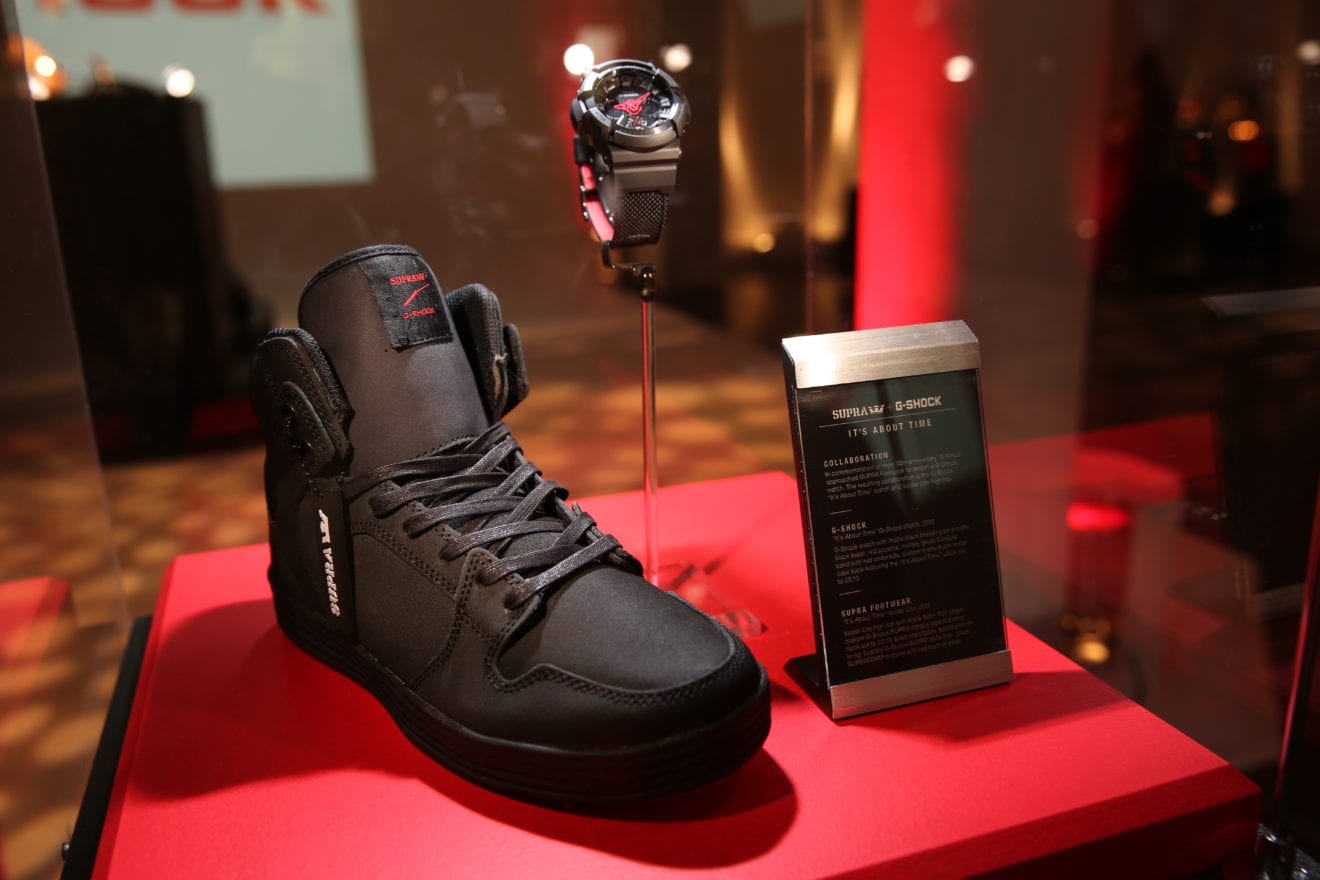
    South Korea’s E-Land Group has purchased two US style retail manufacturers – KR3W Denim Co and Supra Footwear.

    E-Land subsidiary Okay-Swiss International Manufacturers has purchased the 2 manufacturers’ father or mother One-Distribution, a skate-inspired attire and footwear producer.

    Based in 2006, Supra shortly turned one of many largest and most profitable unbiased sneaker manufacturers by way of innovation and elegance, fusing style, music, skateboarding, artwork and road to deliver basic silhouettes to those that demand distinctive designs.

    Supra has flagship shops in Tokyo, Santa Monica, New York Metropolis, Paris and Mexico Metropolis and distributes to over 60 nations by way of a community of choose skate outlets and high-end boutiques.

    KR3W, an attire model born from skate tradition, started in 2003, influenced by Southern California tradition. The model made its identify in denim, and altered the younger males’s denim paradigm with the introduction of its Okay Slim Denim Jean utilizing an progressive stretch material and a slender profile. KR3W has since expanded its attire vary, efficiently blurring the strains between skate and style, whereas sustaining its ‘Darkish Americana’ aesthetic.

    E·Land Group is a South Korean conglomerate headquartered in Chanjeon-dong Mapo-gu Seoul, South Korea.

    KSGB acquired the Fountain Valley, California-based agency from a gaggle of shareholders together with Bertram Capital, a San Mateo, personal fairness agency, and a small group of personal buyers together with One-Distribution Founders Scott VanDerripe, Angel Cabada and Scott Bailey. The worth was not disclosed.

    KSGB has appointed Robert ‘Cape’ Capener because the model president of each Supra and KR3W, reporting to Larry Remington, President and CEO of KSGB.

    “Having shaped KSGB simply two years in the past, we’re on an aggressive monitor to grow to be one of many world’s main multi-brand corporations,” stated KSGB President and CEO, Larry Remington.

    “Supra and KR3W are manufacturers that meet the distinctions we’re on the lookout for in our portfolio: authenticity, robust model consciousness, a monitor document of product innovation and alternatives for long-term, international progress. We’re excited to hitch forces with the One-Distribution group and to put a basis for the longer term.”

    This acquisition takes the KSGB portfolio to a complete of six globally distributed manufacturers, together with Okay-Swiss, Palladium, PLDM, OTZ Footwear, KR3W and Supra. E-Land Group, a $10 billion group of corporations with over 200 manufacturers, 10,000 retail shops and enterprise throughout attire, footwear, retail, lodges, leisure and leisure.

    One-Distribution at present has workplaces in California, Barcelona, Sydney and Dongguan, China.

  • China PE investor buys Ports

    China PE investor buys Ports

    Chinese language personal fairness firm Oriental Fortune has agreed to buy a 20 per cent stake in Hong Kong listed Ports HK.

    Ports HK is the subsidiary of Ports BVI which owns considerably all the group’s present trend and attire enterprise and is looking for to exit the attire and style enterprise.

    A Framework Settlement signed by each events offers for Oriental Fortune to introduce an unbiased third celebration purchaser to accumulate the remaining 80 per cent 90 days after the primary deal is settled.

    The 20 per cent stake will carry a money worth of HK$600 million (US$77.35 million).

    Ports plans to make use of the proceeds from the 20 per cent sale for funding in “associated sectors of the PRC financial system”.

    At this stage, no legally binding settlement has been reached relating to acquisitions, and Ports BVI says it’ll make additional bulletins referring to reinvestment later.

    Ports BVI is at present managed by personal fairness group Blackstone, CFS and PIEL who, mixed, maintain 79.three per cent, and have agreed to the sale.

    The seller says administration think about the longer term prospects of the normal style and attire enterprise are “troublesome and difficult”, mirrored within the downward development within the firm’s monetary efficiency over the previous few years.

    “The downward development has been brought on by numerous elements, together with shoppers’ transfer from conventional retailing to web purchases and the macro political surroundings within the PRC,” Ports BVI stated.

    The corporate says shareholders’ pursuits can be higher served by the corporate reinvesting in different areas of the PRC financial system which give shareholders with a greater return.

  • China leads L’Occitane progress

    China leads L’Occitane progress

    Hong Kong-listed L’Occitane says international gross sales elevated 11.7 per cent final monetary yr – largely pushed by Hong Kong and China.

    The skincare and cosmetics model achieved gross sales progress in each market in Asia and past.

    In Hong Kong, the place the corporate expanded its retailer community from 32 to 36, the corporate posted gross sales of euro 23.5 million, up 21.2 per cent in native foreign money.

    In China, the place it expanded its community by 25 to 161, its gross sales reached euro 23.1 million, up 28.9 per cent.

    Complete international gross sales topped euro 1.178 billion with similar retailer gross sales up 5.7 per cent. China and Hong Kong have been the quickest rising markets at fixed change charges as properly. Internet revenue rose 35.7 per cent to euro 125.6 million.

    The corporate attributed the constructive outcomes to cautious manufacturers positioning, pricing, on-line actions and beneficial trade charges.

    “The continued investments in product innovation, merchandising, digital and CRM initiatives, advertising in addition to gross sales distribution channels enabled the group to cater the rising demand for our top quality merchandise,” stated the corporate in its earnings assertion.

    “The administration has adopted a selective multi-channel strategy to spice up gross sales and expects investments within the digital and journey retail channels as key drivers of future progress. The continual upgrading and increasing of our retail community, selectively and punctiliously, by means of retailer renovations and relocations has began to bear fruits. All key markets delivered progress in native foreign money.”

    L’Occitane’s internet gross sales in Japan rose by six per cent, or by eight.eight per cent on fixed change price foundation, contributing 14.four per cent to general progress. The corporate stated Japan’s enchancment was the results of profitable product launches, new retailer openings and renovations, elevated media and advertising investments and an general improve in vacationer purchases.

    “The turnaround in Japan market mirrored administration’s endeavor in executing a constant technique up to now few years and to reinforce the model’s premium positioning in Japan which is the most important market of the group. The robust progress of Melvita in Japan additionally presents an ideal alternative to additional construct this rising model and unlock its full potential.”

    Taiwan’s internet gross sales rose 7.three per cent, or by2.6 per cent on fixed trade charges.

    The wholesome similar retailer gross sales progress was attributable to profitable new product launches, and an enchancment within the retail retailer community, the corporate stated.  Non-comparable shops, nevertheless, recorded a drop of 6.2 per cent, primarily because of the disposal of the Melvita enterprise to an area distributor in 2014.

    Plan to strengthen different manufacturers

    L’Occitane stated that with its ongoing dedication to a multi-brand technique, the group will particularly strengthen model recognition within the yr forward for its rising manufacturers like Melvita, L’Occitane Au Brésil and Erborian via efficient advertising campaigns.

    “The group will proceed to revamp its Melvita model and to introduce its Erborian model to extra markets, in flip additional develop its model portfolio.”

    The group additionally plans to implement a brand new advertising program to reinforce the L’Occitane model consciousness in international markets. It says it is going to undertake measures specializing in digital advertising, advertising communication, product sampling in addition to the opening of interesting flagships with optimised footfall and gross sales conversion. Extra particulars and progress shall be reported regularly.

    “The group will proceed to protect and improve the id of its star model L’Occitane en Provence in addition to different rising manufacturers via a number of channels. In addition to its instantly owned, renovated retail outlets, the group is specializing in retailing its pure ingredient based mostly well-being merchandise via journey retail, on-line market, in addition to environment friendly wholesale channels.

    “The booming development of journey retail all over the world and ever-growing eCommerce market in China permits us alternative for market outreach. The group will undertake efficient advertising approaches, on-line and offline, in an effort to additional raise up its model profile and to cater the rising demand in these platforms.”

  • On-line market Luxify enters Philippines

    On-line market Luxify enters Philippines

    Luxify, a web-based luxurious market for purchasing and promoting luxurious merchandise, is launching within the Philippines.

    The Hong Kong based mostly firm, which additionally has workplaces in London and Singapore, says it’s “notably excited” concerning the present “opportunistic occasions” in the Philippines.

    The Philippines is certainly a rising marketplace for luxurious merchandise,” says Alexis Zirah, co-founder of Luxify.

    Amidst usually testing occasions to the worldwide financial system, the Philippines has emerged with one of many biggest financial growths in Asia. From being as soon as touted because the “sick man of Asia” the nation is now unquestionably stronger, particularly after it emerged because the second quickest rising nation inAsia final yr.

    The reported financial progress of 6.1 per cent in 2014 can also be complemented by an inflow of high-end manufacturers and overseas corporations. The forecasts for the longer term are equally constructive, with corporations and shoppers displaying robust confidence.

    The current setup and success of luxurious manufacturers all through the Philippines has set the inspiration for different prosperous manufacturers to prosper.  Luxify says it’s assured of seeing extra prolific shoppers in the Philippines who’re hungry for luxurious and more and more influenced by eCommerce.

    “The spurt of progress in the Philippines could be very encouraging, particularly for classy manufacturers like ourselves,” says Zirah.

    “There’s nonetheless lots to discover on this market and with shoppers being extra open to luxurious, we now have an thrilling lineup forward. This month we’ve teamed up with Salcedo Auctions, the one public sale home in the Philippines to specialise within the sale of advantageous artwork, jewelry, ornamental arts and collectible equipment, for his or her upcoming Collectors’ Sale public sale, all of which enhance our imaginative and prescient and product vary splendidly,” he added.

    The forms of merchandise listed within the public sale embrace worldwide and conventional Filipino artwork items, basic furnishings, elegant jewelry, in addition to collectible books, maps, and work.

    Particulars of every merchandise are listed on Luxify’s web site and consumers might additionally go to Salcedo Public sale’s centre in Manila, for a particular preview till June 5, earlier than the public sale begins on June 6.

  • PopUp Immo set to take their retail revolution around the globe

    PopUp Immo set to take their retail revolution around the globe

    Often the most elegant and successful business ideas are the most straightforward ones. PopUp Immo is looking to address two pressing, basic needs –  brands’ need for visibility with customers at minimal financial investment and commercial real-estate owners’ need to fill their space. With their launch last year, they’ve quickly become the top marketplace in France connecting brands and advertisers with the commercial real-estate sector to create exceptional Pop Up store experiences.

    Fresh off their selection to top-notch acceleration program NUMA Sprint and making the finals last month at leading tech event B Dash Camp in Japan, PopUp Immo founder Mohamed Houache discusses their vision, the unique value they deliver both brands and commercial retail, and their plans to quickly ramp-up internationally, particularly in Asia.

    What is PopUp Immo about and what’s special about what you do?

    PopUp Immo is a retail revolution. What we do is enable brands, artists, designers to find retail space for short-term duration. Although it’s mostly an innovation of service rather than technology, we can say that we’ve been impacting the future of some brands. Before PopUp Immo there was essentially no cost-effective way for smaller brands or brands not based in Paris to engage directly with their customers at retail. What these brands really wanted to test the Paris or French market at low financial risk to them. To do this they needed flexibility as well as visibility on the cost of booking a boutique for two or three days.


    Prior to our launch there was no marketplace like this, meaning essentially that there was no transparency or efficiency around this type of service. As the leading marketplace in France offering rental of short-term retail space, we’re addressing a real, basic need. The ability to launch a Pop Up store also gives an edge to these brands because they can communicate and leverage social networks to bring their fans to their store and connect with them afterwards. In many ways we’re both an online-to-offline and an offline-to-online solution.

    Who specifically do you think is most drawn to what PopUp Immo can offer?

    Think about all the American brands that want to come to here to test the Paris market, all the ecommerce platforms who can’t meet their customers directly, or all the PR or advertising firms who are bidding for contracts with big brands and can offer them this approach which will give them better ROI that pretty much any online marketing campaign.

    Another advantage which we didn’t anticipate is that pop-up stores are also bringing more life back to particular areas of Paris. After we launch a Pop Up store and the brand does a good job at communicating and delivering an experience, people want to come back to the area. For example, last December we had a collective of 10 small men’s accessories brands come together to book a Pop up store on small street in the Sentier district. They promoted like it crazy and the store became the top Pop up store during that month. Following that success, we now we have all types of brands wanting to book that space.

    How are you reaching the owners of these spaces to get them on your platform?

    They’re now contacting us. We really are helping both sides of the marketplace. For private owners and real estate agents they have a few issues. Many really want to reinvent the DNA of the space. Others just want to rent the space temporarily until they can find a more permanent long-term tenant. So as with brands, we can offer owners and agents flexibility.

    What about all the services around it. Do you help in the conception of the Pop up store experience (design, promotion, etc)?

    Not yet. We’re still a very small team and if we expand into an agency business where we connect brands with designers, advertising agencies, etc, you can create an ecosystem around PopUp Immo. But the problem is that it’s not completely scalable, it requires more people and resources, and it really is a different type of business. It doesn’t mean we won’t expand into that in the mid-term, but for now we want to focus first on the marketplace.

    bdash camp


    I understand you were a finalist at last month’s B Dash Camp, an exclusive event for some of tech’s best and brightest in Fukuoka, Japan. Tell me a bit about that.

    I was proud and extremely happy to just have gotten the chance to attend, let alone to reach the final phase of the competition. Initially my plan in going was to test the market and show to the world that there is a French company offering an innovative solution for retail space.  The fact that I was a finalist was a big surprise because there were truly some other fantastic projects as well. Just being there for me was like the final. Being the only European company as a finalist and having such great feedback after the final was a big success for us. What I realized is that we’ve really developed a compelling story around the marketplace and that’s a unique angle.

    I understand you also traveled to Hong Kong during your visit to Asia last month. What are your thoughts on opportunity in Japan and elsewhere in Asia?

    I’ll start with the Japanese market, which is very unique and has several appealing characteristics for PopUp Immo. Customers have a lot of purchasing power. They love and enjoy brands. There’s a very high vacancy rate in Tokyo. When you bring these aspects together, it makes a really interesting opportunity for us. My biggest concern is to be able to find local expertise and be able to put in place PopUp Immo fully tailored to Japanese customers. I met some very skilled people on the VC-side, entrepreneurs and others that stressed that there was real market there for PopUp Immo. For example, we can be a bring between Europe and Japan just by offering retail space.

    I also spent time in Hong Kong. Very a different dynamic. High growth market, completely deregulated and very oriented to shopping malls. There is a lower vacancy rate in Hong Kong than Tokyo, but a lot of brands want to test Hong Kong prior to expanding to mainland China.

    Two amazing and viable options for PopUp Immo, but to grow in these markets we’re definitely going to need more resources, especially local talent.

    What about competition? I imagine there’s an increasing number of startups in this space?

    We’re really keeping our eye on the competition, particularly one in the UK that recently raised a lot of money and one in the US. So far, however, we have been able to do with few resources what our competitors have done with a lot more. I want to very quickly build on the interest we’re getting from increasingly large brands, as well expand to new markets such as London and East Asia, where we want to have the first advantage there.  We feel that in Asia, particularly where you have lots of shopping malls that look similar, Pop up stores offer them a great way to differentiate themselves.

  • Amazon Fresh expands into China

    Amazon Fresh expands into China

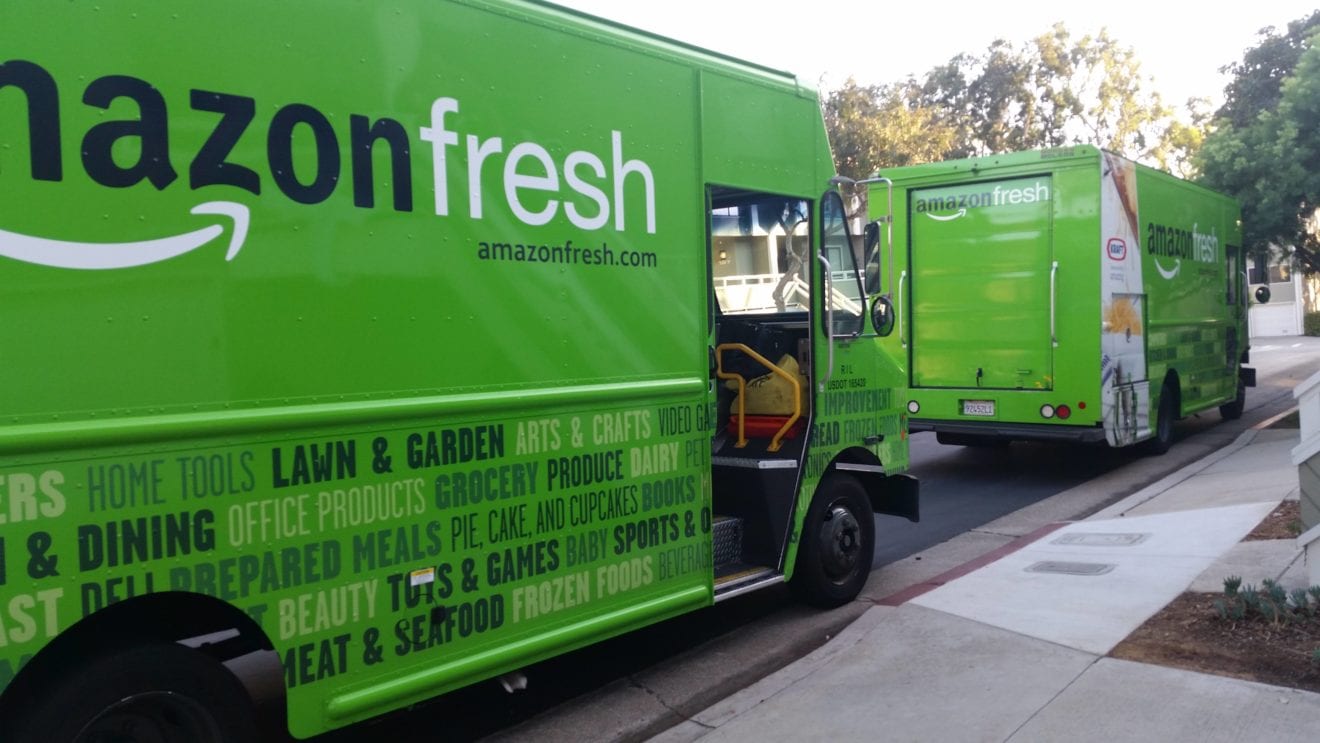
    Online retail giant Amazon has expanded its fresh food offer – Amazon Fresh – into China through partnerships with local distributors and suppliers.

    The new platform will offer fruit and vegetables for home delivery, alongside other groceries including meat, seafood and confectionary across a total of 600 fresh food SKUs, news outlet Tech in Asia and retail commentator IGD retail analysis have both reported.

    Unlike Amazon Fresh in the US, Amazon is not handling the logistics or using its own refrigerated vans for the fresh produce in China, Tech in Asia said, but instead will rely on suppliers to do this.

    Amazon’s larger e-commerce rivals in the country – such as Alibaba’s Tmall, JD, and Walmart’s Yihaodian – have been offering fresh produce for home delivery for some time.

  • Singapore cryptocurrency developer begins retail payment trials

    Singapore cryptocurrency developer begins retail payment trials

    Local blockchain solutions provider Tembusu Systems will begin its first real-world implementation of digital currency payments in Singapore using the TRUST framework on 10th June.

    The TRUST system, a proprietary platform based on the blockchain technology that drives cryptocurrencies and digital economies, makes payment using different currencies — real-world, digital or even gold and silver — possible.

    The system was developed to integrate traditional currency platforms with the emerging blockchain technology that drive today’s commonly known digital currencies.

    “We’re planning to try out several possible use cases with current payment systems in Singapore and the success of this trial will see the use of digital currency payment systems being extended into real-world context,” said Andras Kristof, Co-Founder and CEO of Tembusu Systems.

    A demo of the platform, conducted in local uptown bar The Spiffy Dapper, which also hosted Singapore’s first Bitcoin ATM in 2014, showed how the TRUST framework could be easily implemented. The trial implementation only requires a computer or mobile device to be attached to existing POS systems, and successful integration will see businesses having a simplified, self-auditing, cashless payment system with low-running cost.

    With blockchain technology keeping each transaction in check, businesses like The Spiffy Dapper can expect easier reconciliation of their accounts from their daily sales as well.

    Tembusu Systems said the core of the TRUST platform is a network of payment gateways which allows consumers to pay with any currency of their choice. The platform can also accommodate establishments with loyalty rewards programs such that users can pay using accumulated loyalty points.

    The company  will also be exploring human ATM applications as well; the TRUST platform allows consumers to withdraw cash through participating businesses by processing currencies from their digital wallets to the POS systems. Businesses will then be able to cash out the digital payment into cash for consumers over the counter.

    “Our goal is not to replace other payment systems like NETS and credit cards, or even cheques. In fact, we are hoping the TRUST platform can be developed to integrate with these other systems, to become an organic payment integrator in time to come,” explained Jarrod Luo, Co-founder and COO of Tembusu Systems.

  • Johnnie Walker House opens in Singapore

    Johnnie Walker House opens in Singapore

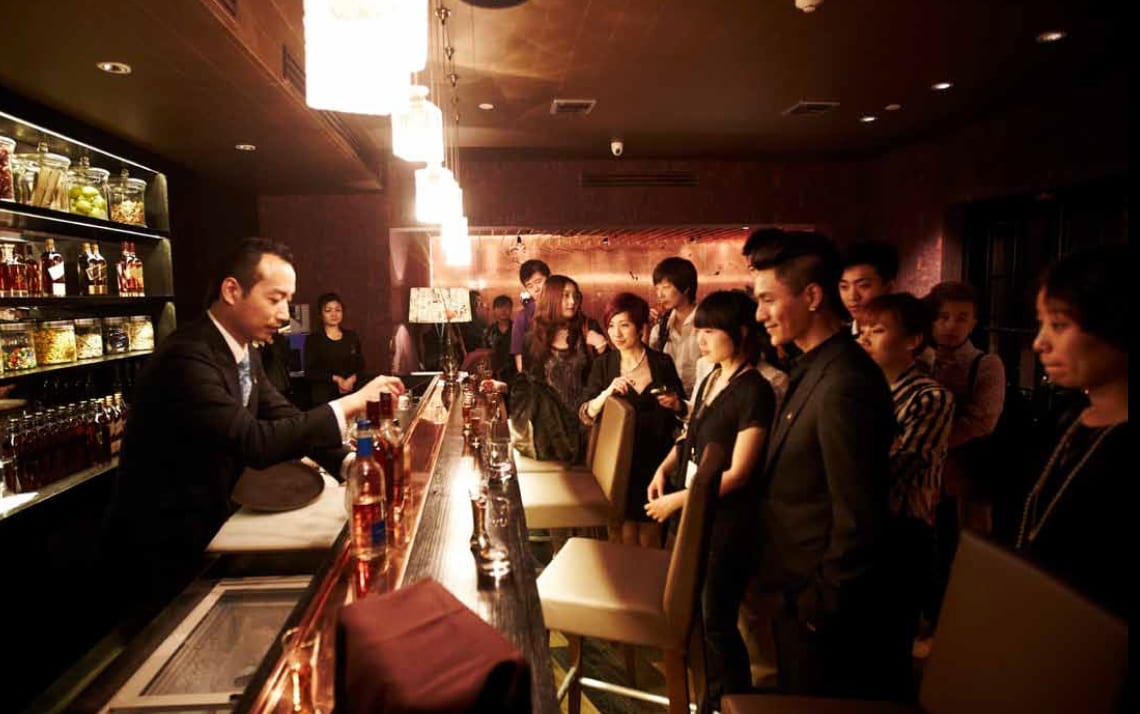
    Diageo partners DFS group to launch first Johnnie Walker House in southeast Asia at Singapore Changi airport.

    Diageo Global Travel together with DFS Group have launched the Johnnie Walker House retail showcase within DFS Group’s new wines and spirits flagship store in the central atrium of the departures concourse at Singapore Changi Airport, Terminal 3.

    The establishment of Johnnie Walker House Singapore marks the seventh addition to the expanding international network of whisky embassies.  This follows the success of existing flagships in Shanghai, Beijing, Seoul and Chengdu, as well as travel retail theatres in the airports of Taipei and Mumbai.

    The milestone also celebrates the first Johnnie Walker House in Singapore and Southeast Asia.

    “With global airport sales growing by more than 12% every year since 2009, and the strategic location of Singapore Changi Airport as a travel hub, Johnnie Walker House Singapore is set to be a game-changer for the luxury spirits segment,” says Doug Bagley, MD, Diageo Global Travel and Middle East. “We combine our revolutionary hospitality concept with our successful travel retail model – providing an enticing experience to modern luxury consumers during the ‘golden hour’ before they board.”

    The design of Johnnie Walker House Singapore is inspired by the combination of two elements.  The first draws from the rich, progressive travel heritage of epic ocean voyages that took Johnnie Walker from the four corners of Scotland to the four corners of the world, making it the world’s first global brand.  The second is the evergreen custom in luxury retail of using trunk shows to provide tailored, exclusive experiences to valued clients.

    “Our long partnership with Diageo has been instrumental in creating the ultimate destination for the best in wines, spirits and tobacco at Changi Airport. It is our shared vision to bring personalized and unique shopping experiences to the traveler. The Johnnie Walker House Singapore at DFS’s new wines & spirits flagship store represents these aspirations and we are delighted to unveil it today,” says Brooke Supernaw, senior VP global merchandising – spirits, wine, and tobacco.

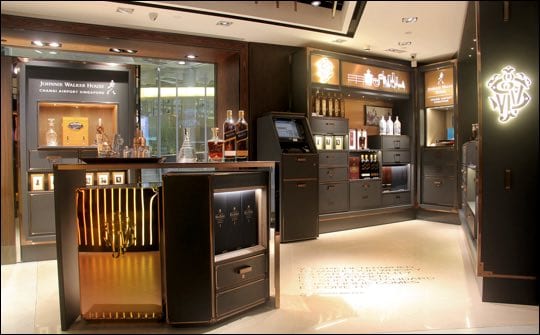
    When travellers step into Johnnie Walker House Singapore, they are transported into a retail theatre of a larger-than-life luxury steamer trunk.  Designed and built by award-winning Singapore-based design agency Asylum, the highly tactile environment of leather, copper, marble, bronze, wood and steel finishing, brings to life the history, provenance and pioneering spirit of Johnnie Walker with:

    • a multi-sensory retail setting, complete with a signature scent ambience emitting the six flavour characteristics of Johnnie Walker Blue Label instantly transporting travellers to the Scottish Highlands;
    • exclusive “theatrical mentoring” sessions, which are immersions in the Johnnie Walker brand and product universe, through a combination of education and entertainment, and storytelling and trial, led by brand ambassadors;
    • a tasting bar where clients can enjoy the pinnacle of whiskies from the Johnnie Walker Super Deluxe portfolio;
    • a ‘whisky constellation wall’ dedicated to the Johnie Walker heritage of the art of blending, and provides a comprehensive index for single malt Scotch whiskies; and
    • privileges extended to members of the Johnnie Walker House with the World of Privileges loyalty programme.

    To commemorate the inauguration of the Johnnie Walker House Singapore, a limited edition of the Johnnie Walker Blue Label will be exclusively available at Singapore Changi Airport. The ivory-coloured ceramic bottle puduced by Wade features the landscape of Scotland and the skyline of Singapore in the brand’s hallmark Willow design.  The collectible was illustrated by Dawn Ng and pictorially depicts the historic journey of Johnnie Walker from Scotland to Singapore – from the time John Walker & Sons was established in 1820, in Kilmarnock, to 1885, when the Johnnie Walker whiskies had made their way to Singapore as one of the world’s first modern luxury icons.

    Pictured above: the limited edition Johnnie Walker Blue Label bottle with the brand’s hallmark Willow design exclusively available at Singapore Changi Airport. Below is the interior of the Johnnie Walker House at Chaigi Airport

    Johnnie Walker Blue Label boutique opens in Taipei

    A multi-sensory Johnnie Walker Blue Label boutique has opened in the Terminal 2 Departures Concourse of Taoyuan Airport, Taipei.

    On first entering, travellers will experience the scents of honey and citrus fruits and brand ambassadors guide them through the flavours on a tasting journey of the whisky.

    The story of the casks is told on a wall of oak barrels. These explain how the brand has the largest reserves of Scotch whisky in the world but only 1 in 10,000 of these casks drawn from the four corners of Scotland contain whiskies of sufficient character to produce the signature taste.

    The craftsmanship is reflected on the second wall. It tells the story of the lineage of master blenders and how today’s master blender selects and blends.

    A video animation at the centre of the installation describes how the whisky is produced in limited quantities and how it evokes the authentic, powerful character and flavour of a traditional 19th century blend – 1867 Old Highland Whisky.

    Visitors can also take away a special memento of their travels – any bottle purchased in the adjacent travel retail unit can be engraved with a personal message, free of charge.

    Fairbrother explains: “Our aim is to provide shoppers with an extraordinary retail experience – this beautiful, multi-sensory retail activation follows the success of similar pop-ups in the Charles de Gaulle Airport in Paris and Johannesburg International Airport in South Africa last year.

    “This luxury boutique and the recent launch of our pioneering Johnnie Walker House in Taoyuan Airport is testament to our focus and commitment to innovation in travel retail in this region.”

    The store officially opened for business in March and it will welcome global travellers in the Terminal 2 Departures until the end of June 2015.

  • UP Town Center rises

    UP Town Center rises

    It’s the first and only university town center in the Philippines,” says Rowena Tomeldan, vice president and head of operations at Ayala Land. Since it opened two years ago, the UP Town Center has served as a vibrant hub of leisure activity for the large student population and academic community from the premier schools along Katipunan Avenue in Quezon City, such as the University of the Philippines, Ateneo de Manila University, and Miriam College.

    This May, just in time for school opening, more retail stores and casual dining outlets opened their doors, as well as a department store and supermarket on 26,000 sq. m. floor plan, as part of its second phase development. The first phase, covering 4,700 sq. m, consists primarily of restaurants and a couple of retail stores. The last phase, covering 37,000 sqm, which will house more retail stores, restaurants, four cinemas as well as offices, is expected to be completed in 2016.

    “Ayala Land first entered into a lease agreement with the UP to develop the 7.4 hectares located within the campus grounds, and to build the shopping complex where the UP Integrated School formerly stood,” Ayala Land director Antonio Aquino, noted. “We kept the trees that were there. At least 40 percent of the total land area is preserved as open space. The buildings are low rises.”

    The place is secure and parents can feel that their children are safe in the mall.”

    For its young target market, popular fashion brands which have opened shop at the UP Town Center include Bench, Penshoppe, Bratpack, Birkenstock, Rookie USA, Artwork, Bambu, Claire’s, Tickles, Shoe Salon, Flying Dutchman, Just G., Bucket Feet, and Coalitions.  While for sports apparel, gear and equipment, which they need for their active lifestyle, there’s Planet Sports, Arena, Grind, Saucony, Urbangiz, Titan and Urban Athletics.

    Gadgets and accessories are part and parcel of millennials’ lives and at UP Town Center, there are stores to meet every techie’s needs, such as Digital Walker, Datablitz, Wonder Photo Shop, and Take Your Pic. And for good old-fashioned stationeries, there’s National Book Store, Paper Stone, and Papemelroti.

    For personal grooming and head-to-toe pampering, there’s Nail Tropics, Hey Sugar, and Sports Barber. Even pets get special treatment in this pet-friendly mall, at Uptown Animal Center.  There’s Qualimed, the mall-based health care center as well as shops to cater to lifestyle needs such as Visions Expression and Sewing Room. Kids will also be glad to find Toys R Us among the newly opened stores.

    Of course, the UP Town Center is not only for students and faculty but also for their families as well as residents in the area, and even visitors coming from other parts of the metro. It offers a number of affordable dining options as well as new dining concepts such as Pepper Lunch, Recovery Food, Jamba Juice, Sbarro, Rita’s, Wing Stop, Crisostomo, Ramen Nagi, and The Clean Plate.

    Time was when students could count with their fingers the number of places they could go to nearby at lunch break or after school, to grab a bite or simply relax after long hours inside the classroom. There was the ordinary school cafeteria which left much to be desired, and one or two restaurants outside the campus that served predictable meals. Not anymore. UP Town Center changes all that. More than a destination, UP Town Center promotes a thriving community where its denizens gather to learn, play, and live.