Tag: asia

  • Tokyo is world’s hottest retail market

    Tokyo is world’s hottest retail market

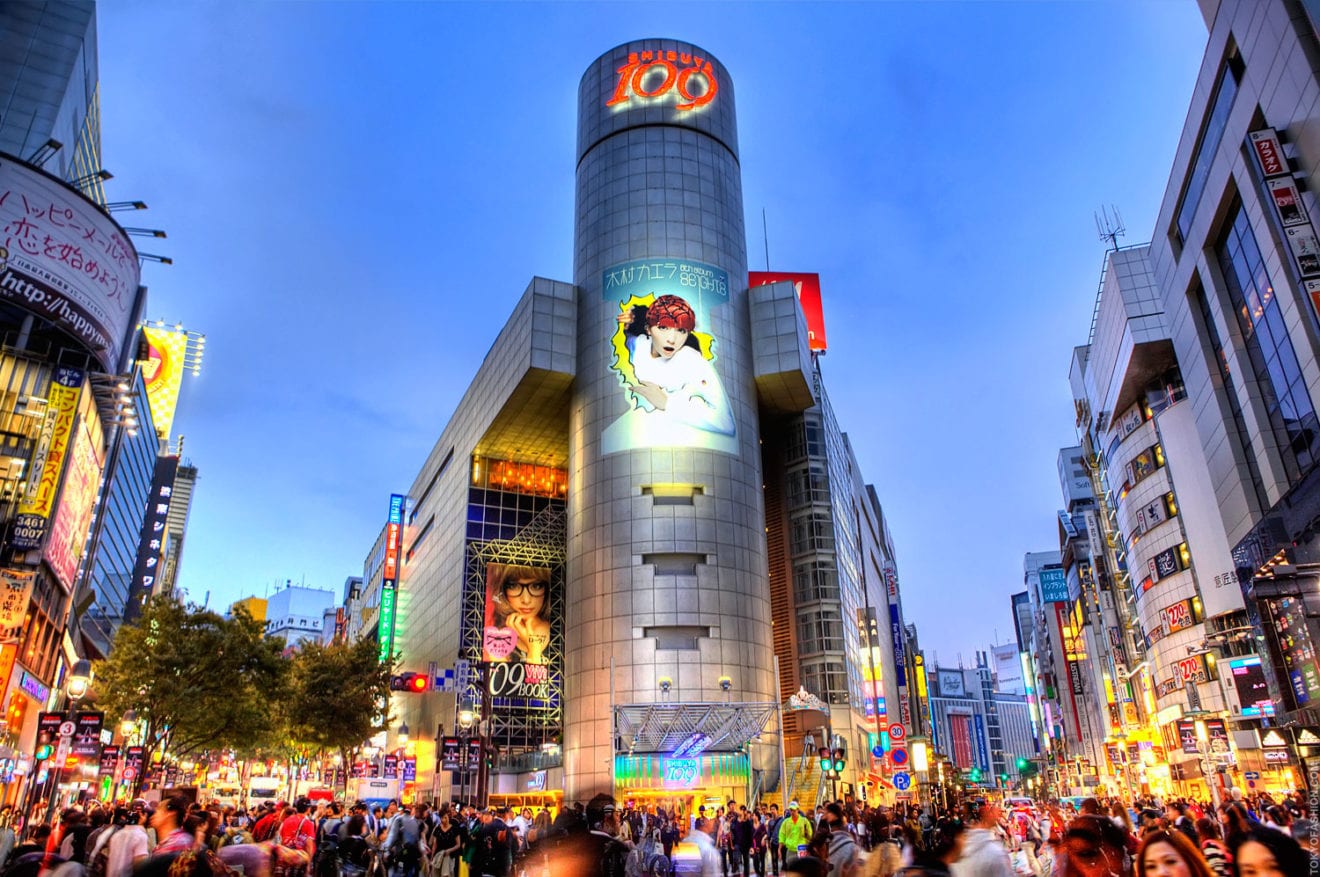
    Tokyo is the world’s hottest market for retail expansion, attracting 63 new brands last year as leasing momentum in core areas remained strong, despite mixed signals in the economy and an increase in the sales tax to eight per cent in April 2014, according to the latest report from CBRE Group, Inc., “How Global is the Business of Retail?” Toronto was the hottest market in the Americas, attracting 25 new international brands in 2014.

    According to the report – which tracks the target markets of new brands in 164 cities in 50 countries – US retailers are the most active when it comes to expanding into new global markets. In 2014, US retailers accounted for 26 per cent of cross-border expansion. Primary expansion targets for America’s retailers are Asia (41 per cent), Europe (33 per cent), and the Middle East and Africa (12 per cent).

    Italian retailers were the second most active, accounting for 14 per cent of cross-border expansion, followed by UK-based retailers (11 per cent) and French retailers (10 per cent). Globally, Europe accounted for 42 per cent of retailer expansion, followed by Asia with 39 per cent and the Middle East and Africa with 10 per cent. North America was only a target for three per cent of retailers.

    “The core elements of globalization, technology and demographic change, continue to have a dramatic impact on the business of retail. Demographic shifts in many countries have resulted in changes in both spending power and shopping habits. Technology enables retailers to enter markets and evaluate performance more swiftly,” said Brandon Famous, senior managing director, retail occupier advisory & transaction services, CBRE. “Consumer traveling patterns mean that many brands are well known before they even enter a market and the pent-up demand for the chance to purchase locally creates a ready-made market before entry.”

    Among the most active retail sectors globally, mid-range fashion retailers led the field, accounting for 21 per cent of global expansion, followed luxury and business retailers, with 20 per cent, and coffee and restaurant and specialist clothing, each with 16 per cent. When it comes to expansion into the Americas, luxury and business retailers were the most active at 26 per cent, followed by mid-range fashion representing 20 per cent of total activity, and specialist clothing representing 14 per cent.

    “Consumers continue to view the physical store as their preferred mode of purchase and perhaps more importantly, as a point of social interaction,” Famous added. “Consumers view shopping as a leisure activity and the continued expansion of brands and the development/improvement of shopping locations gives them the opportunity to embrace this.”

  • China’s Internet focus lifts online spending

    China’s Internet focus lifts online spending

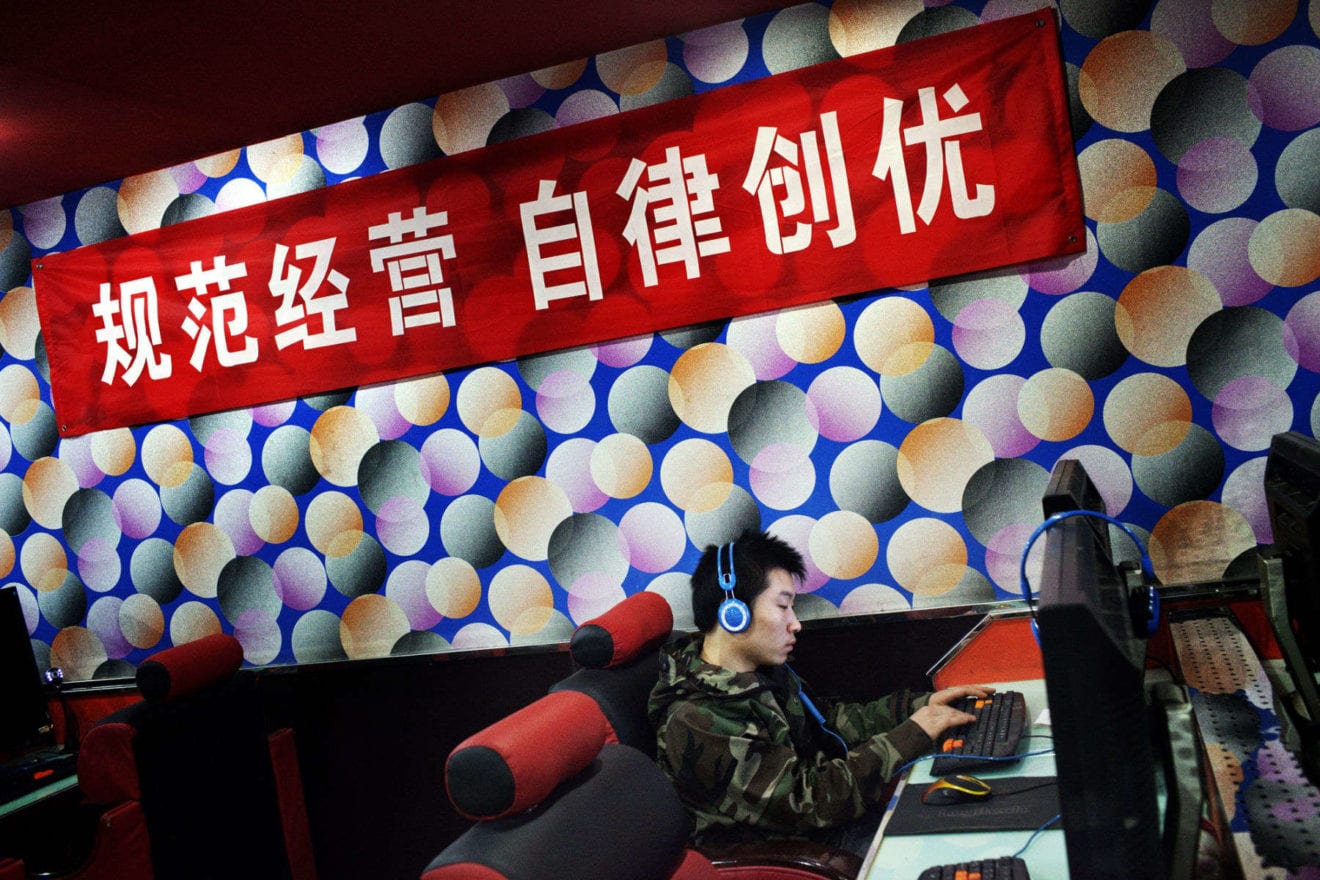
    In a strategy known as ‘Internet Plus’, China is integrating the Internet, big data and other technologies with traditional industries, like retail. This is boosting China’s already vast e-commerce market further. As the government looks to use the Internet to create more spending – and jobs.

    Denny Liu returned to Beijing after graduating from Wharton Business School in the United States.

    Last year, he and his wife set up Le Chun – or Le Pur, in English – selling yogurt, using only natural ingredients.

    Before opening a physical store, they shared their story and mission online.

    “That story actually went viral for a little bit and that got us our first 5,000 seed users. Who are all yogurt lovers.We didn’t know any good milk sources around Beijing, so we threw it to our community and said ‘do you guys know any good milk source around’ and about 10 people gave us leads. When we designed our logo and picked out the store location, we asked our followers,” Liu said.

    With 40,000 followers on WeChat, the Internet has played a key part in Le Chun’s success.

    In less than a year, the startup is making a profit.

    Most of their sales are online. Thanks to word of mouth, from social media fans.

    Now, the government is backing them too. With 100,000 yuan or roughly 15,000 dollars in funding. No strings attached.

    China wants consumer spending to be a central part of the economy. But malls like this one don’t exist in every city. So it’s supporting online stores to get more Chinese shopping.

    “Clothes, computer stuff, food. I buy about 80 percent of my things online,” Student Quan Jiujiu said.

    Retail expert, Professor Xiangdong Liu, says official data shows that last year, China’s online sales hit 2.79 trillion yuan. Taking 10 percent of its total spending.  And overtaking America’s.

    He says the government’s Internet focus will encourage e-commerce further.

    “The government will invest more in Internet infrastructure, cutting costs for surfing online. It’s also setting up pilot projects, to make Internet companies better, as well as encouraging companies to open online services, by providing subsidies and lower taxes. The government’s approach is first to let them mature, then unveil more policies to manage them,” Professor Liu said.

    This is changing brick-and-mortar giants, like electronics retailer, GOME. It launched its online store in 2011. Now with a mobile platform and App.

    But while their online options give customers a bargain, it’s been tough business.

    “10 percent of our sales are online. We predict GOME’s online consumers will grow faster, to exceed 20 percent in three years. Online customers pay more attention to price, so goods online have simpler functions and are cheaper. But since prices online are cheaper, many online businesses are making a loss,” Wang Junzhou, president of GOME Electrical Appliances Holding Ltd., said.

    While keeping costs down for niche retailers, like Le Chun. The Internet is proving costly for mainstream players.

    That’s likely to test China’s e-tail industry, in the years ahead.

  • How EpiCentre used iBeacon to integrate online and offline

    How EpiCentre used iBeacon to integrate online and offline

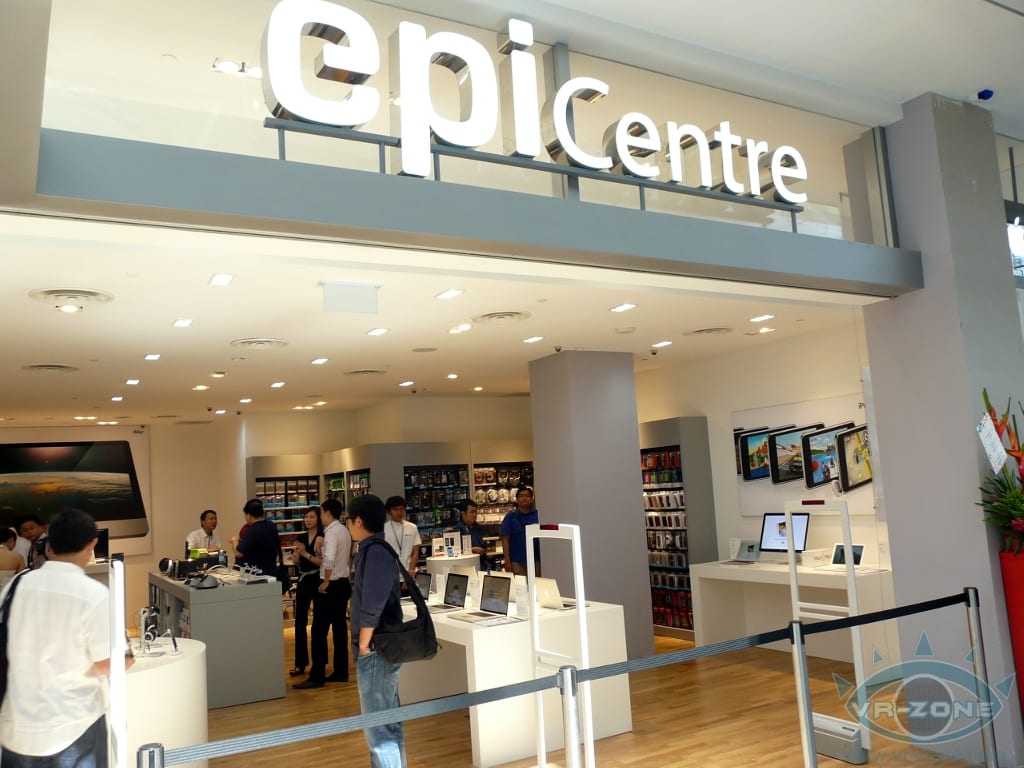
    In Singapore, location-based marketing is still largely a fringe activity, adopted mostly by marketers who are tech-savvy and risk-takers. Marketing spoke to one such risk-taker: Danielle Siauw, manager (CRM, m&e-commerce, new media) at Apple Premium Reseller EpiCentre.

    EpiCentre recently invested in Apple’s iBeacon technology. The iBeacon is a device that sends Bluetooth signals detectable by iOS software, allowing marketers to send location-targeted promotions and content to Apple users.

    The iBeacon functions as part of EpiCentre’s membership programme, allowing members to earn points through their mobile app when they visit stores. For example, members earn 10 points every time they step in to a store. EpiCentre also uses iBeacons to deliver location-targeted discount coupons to customers near their stores, amongst other uses. Currently, all 10 EpiCentre stores are iBeacon enabled, and the brand is looking into an iBeacon payment system as well.

    Marketing: Why did you choose to invest in location-based technology?

    EpiCentre started out as a brick and mortar retailer. Our core strength is still in retail stores. As all of us know, the retail scene is looking bleak in Singapore with more competition from e-commerce. To counteract this problem, we started to look into omni-channel strategies for sales and marketing. We started by revamping our CRM system for brick and mortar in 2013, then integrated our e-commerce site www.epilife.com.sg with our CRM system in early 2014. In late 2014 we tied our mobile platform, epiApp, with our CRM system and e-commerce site. In this way, we have successfully delivered a seamless membership programme that extends to both the online and offline channels; however, there is still a missing puzzle, which is how to use the mobile platform to drive footfall in our stores. For this, iBeacon becomes a natural choice.

    Marketing: Location-based marketing has been held up as a marketing goldmine over the past few years. Yet, still it’s not used on a mass scale. Why is this?

    One of the key issue is with the Personal Data Protection act. Location-based marketing through SMS or notifications are often seen as spam. To send users information via this mode requires opt-in. The customers who opt-out would be missed opportunities.

    Secondly, although the cost of doing location-based marketing is not high the expectation in terms of ROI (i.e. translating to actual sales) still does not match up.

    Lastly, location-based technology such as GPS and GSM do not render accurate results when used indoors. However, there are other location-based technologies that work indoors, such as geo-fencing and iBeacons. iBeacons are, however, very much much in-app, and customers still need to download and install the app on their phone. This can be cumbersome. Also, customers need to switch on the Bluetooth on their mobile devices to experience the iBeacon.

    Generally there is slow adoption by retailers for such technology in Singapore, especially among traditional retailers. One reason for this is low user adoption and education about such technologies. I think it boils down to a chicken and egg issue: Retailers need to find compelling reasons that location technology can complement their existing businesses.

    Marketing: How should retailers strike the balance between annoyance and genuine consumer value?

    I think whatever technology that we implement, we must always add value to our customers and stakeholders. Customers must find the technology useful; the technology has to solve a problem. We must first understand our own business and our customers, then formulate the right content and promotions to reach out to the customers. For example, offering relevant content, attractive offers and coupons, or as part of the company’s loyalty programme. We should also be mindful about the number of times the content is sent, and not be spammy. One advantage of iBeacons is that they allow for content and promotions to be tailored to individuals, based on past purchases and preferences.

    Marketing: Have you seen cases where iBeacons have been deployed effectively?

    Macy’s uses the iBeacon in 800 stores in the US. They can effective track customer behaviour and send out relevant promotions within the category through their mobile app. This cuts down the print materials required and allows them to update their promotions on the fly.

    Another innovative and practical use of the iBeacon is at Starwood. They use the iBeacon to greet guests upon arrival, allowing guests to skip the whole check-in process, go direct to their room and use the mobile phone to enter the room. Starwood also uses the iBeacon to let housekeeping staff know if guests are still in the rooms. This creates a seamless experience for the guests through their mobile app. This shows how the iBeacon can integrate the online and offline experiences in a way that adds genuine value.

  • Taipei a target for global retail brands

    Taipei a target for global retail brands

    Taipei ranked fourth as a target market for international retail brands last year as a willingness to try new dining and fashion is driving leasing activity across the Asia-Pacific region, a report by property consultancy CBRE Group Inc showed yesterday.

    The nation’s capital rose seven notches from its ranking last year, with 49 new brands establishing a presence in Taipei, compared with 29 in 2013, according to the annual report of hot target markets by CBRE.

    HOT SPOT

    The results left Taipei trailing only Tokyo with 63 entrants in first place, Singapore with 58 entrants in second and Abu Dhabi with 55 entrants in third, the survey found.

    “Taipei has become a hot spot for Japanese and [South] Korean fashion and cosmetics brands looking for overseas expansion,” CBRE Taiwan managing director Joseph Lin (林俊銘) said in the report.

    The property broker saw strong leasing momentum from mid-range and fast fashion retailers, with existing brands introducing new product lines such as GU, a Japanese fashion retail chain. New arrivals also included New York-based contemporary clothing company Alice + Olivia and US multinational clothing and accessories retailer The Gap Inc among others, the report said.

    OUTLET LOCATIONS

    High-profile units on main streets were in strong demand last year, and the lack of flagship prospects pushed retailers to seek opportunities in department stores, the major retail format in Taiwan, the report said.

    The number of new entrants located in shopping centers was relatively limited, but well-managed centers such as Breeze Center, Taipei 101 and ATT 4 FUN are gaining attention, the report said.

    The luxury and business fashion sectors contributed 20 percent of all new retail entrants to Asia-Pacific markets last year, the report said.

    The bulk of new entrants were second-tier luxury brands, since mainstream luxury groups are already well-established in the region, the report said.

    CAUTIOUS

    About 85 percent of luxury and business fashion retailers are looking at the region, although they are expected to adopt a cautious attitude toward expansion due to escalating operating costs, the report said.

  • China beef processor launches online store

    China beef processor launches online store

    Speaking during last week’s inaugural Beef Festival in Chongqing, China’s largest metropolis, Feng Jiyu, general manager of Hengdou Agriculture Co, which operates a beef processor of the same name, said the company had been establishing a nationwide network of warehouses which would allow it to deliver nationwide once the company’s website was set up.

    Hengdou, said Feng, had established a marketing headquarters in Beijing and branch offices in all the country’s key population belts, including northerly Shenyang but also the populous central province of Henan and the wealthy southern cities of Guangzhou and Shenzhen.

    The announcement about an own-name online retail operation came after Hengdou, in March, launched nine new packaged meat products, such as cooked liver, tripe and brisket, prepared in various Chinese styles and frozen for quick cooking. The firm already sells a range of frozen steaks and dried jerkies. These are retailed via key Chinese online sites such as Taobao.com, Tianmao.com and Jingdong.com. Hengdou sells 150g packaged frozen steaks online for RMB22 with five-steak packs selling for RMB178 on Jingdong.com, a food-focused online retailer.

    The firm gives consumers instructions on how to cook beef such as steaks in ‘Western’ ways: Chinese cooking tends to emphasise the use of stir-fried cubes of beef as well as clay-pot cooking of variety/offal cuts.

    According to Feng, Hengdou is keen to maximise online sales both of gift boxes and convenience snack products. But it is also looking to sell wines, olive oils and other high-margin imported food products which it currently markets in marketing material to educate customers on how to consume beef.

    “We will increase both our online and our offline presence,” Feng told journalists in Chongqing. Notably, the firm last month opened a brand-name store in Beijing’s fashionable Wangjing district. “It is vital to use offline stores to build brand recognition,” said Feng. His retail clients include Walmart, RT-Mart and Carrefour outlets in China.

    Traceability is a key marketing point for Feng, who said online customers would be drawn to the company’s ability to trace meat – all of which, Feng said, came from the company’s own 300,000 herd of Simmental and Chinese-native Luxi cattle, fed in feed-lots adjacent to company slaughtering facilities in northern and south-western China.

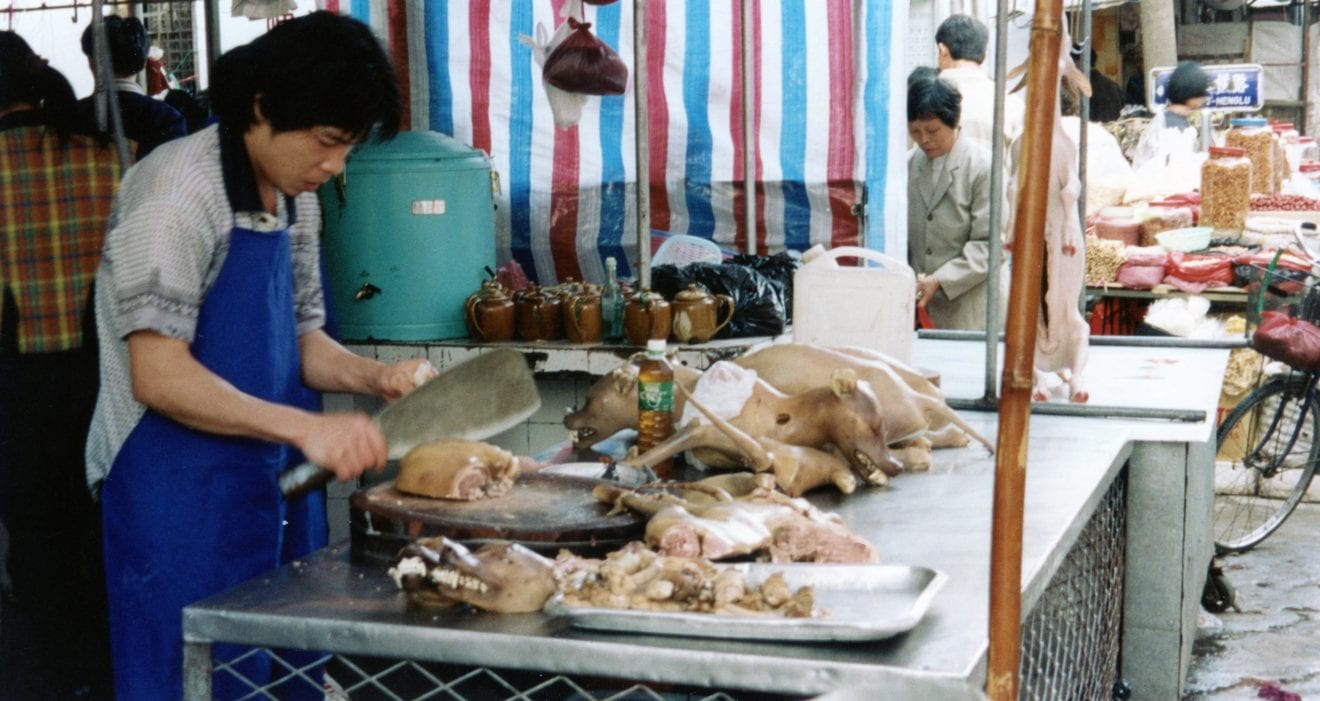
    Hengdou has seen online retail shake up China’s traditional retail market in the past few years, with consumers switching to frozen and convenience meals in a manner before unseen in China where wet markets – most without any refrigerated meat – and supermarkets have long dominated.

    Based in Sichuan, one of China’s fastest-growing regional economies, Hengdou stands to gain from rising beef consumption, according to Feng, who pointed to average per capita beef consumption of “5kg per capita in China compared to 45kg in developed countries”.

    Long-term, China has the potential to export branded beef products to Muslim and other countries, stated Liu Changde, head of the beef committee at the China Animal Husbandry Association (CAHA), a government body. CAHA and the Chongqing government teamed up with Hengdou to organise the Beef Festival, which saw demonstrations on how to cook beef as well as how to recognise “water-injected and fake beef” according to an invitation to the event sent to China-based journalists.

  • Launches and Deals Announced at CommunicAsia, EnterpriseIT and BroadcastAsia 2015

    Launches and Deals Announced at CommunicAsia, EnterpriseIT and BroadcastAsia 2015

    Asia’s leading infocomm technology and broadcasting industry event maintains its position as platform of choice for companies to announce major launches and partnerships

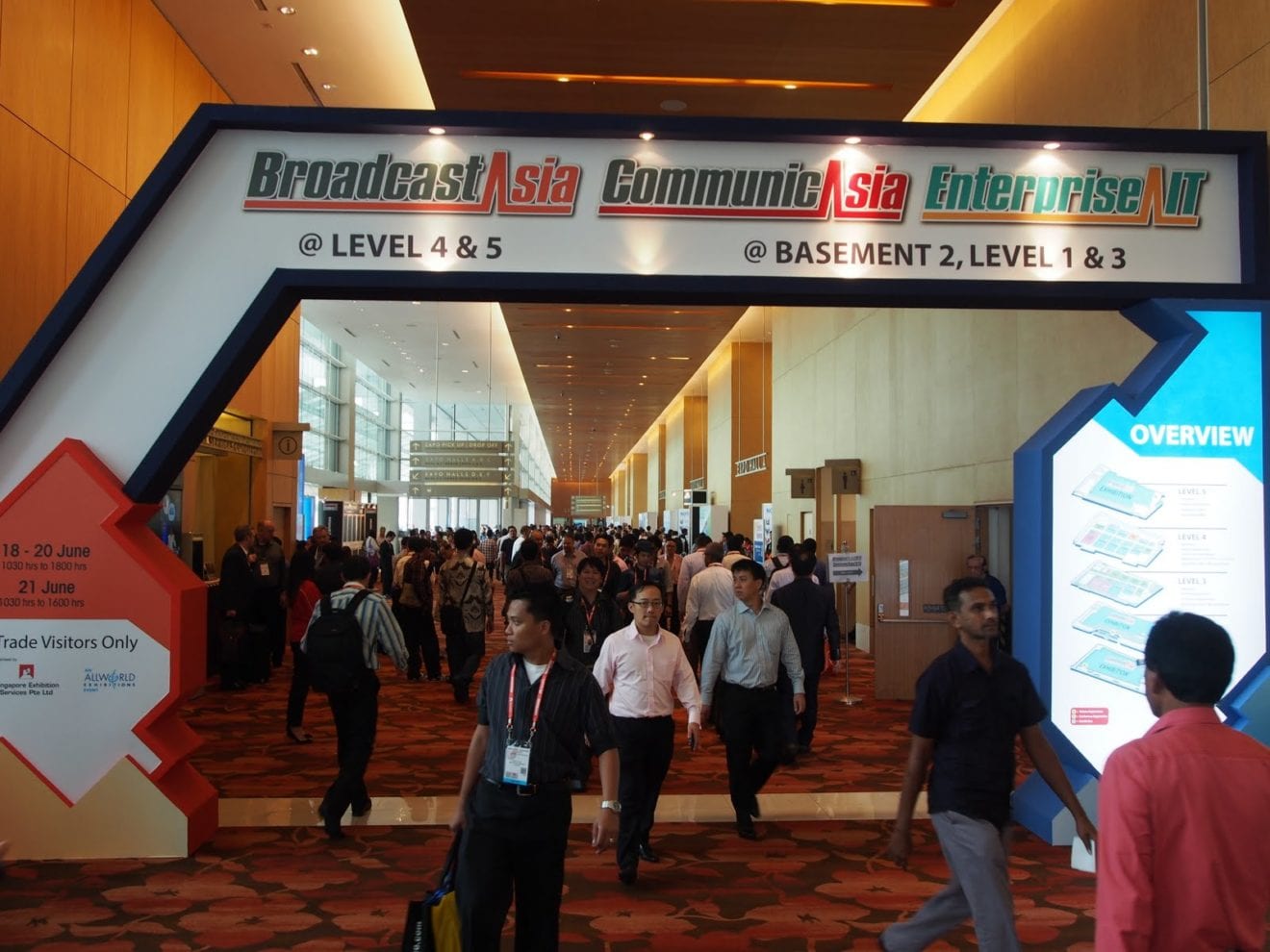
    Over the past four days, Marina Bay Sands has been abuzz with activity as CommunicAsia2015, EnterpriseIT2015 and BroadcastAsia2015 brought the movers and shakers of the infocomm technology (ICT) and broadcasting industry together under one roof.

    Dell, Panasonic, Samsung and Sony, household names renowned for their consumer electronics chose CommunicAsia, EnterpriseIT and BroadcastAsia to announce major launches in their B2B segments.

    Panasonic, an exhibitor at both CommunicAsia and BroadcastAsia, announced seven new business technology products and solutions for the Asia Pacific markets. These include the Toughpad FX-X1, a fully-rugged 5-inch tablet, the new AG-DVX200, the world’s first 4K integrated zoom lens camcorder and the world’s lightest 4K+ 3-Chip DLPTM Laser Projector alongside the latest in mobile surveillance technology, blu-ray data storage, and professional broadcast video equipment.

    “Asia Pacific is a fast-growing dynamic marketplace, and presents huge opportunities for Panasonic across all our B2B business segments from integrated solutions to audio visual products,” said Hiro Sakamoto, Managing Director of Panasonic System Solutions Asia Pacific. “Our commitment to delivering total end-to-end solutions in the region is an integral part of our growth strategy. CommunicAsia2015 and BroadcastAsia2015 was an ideal platform for us to launch new products and solutions for the Asia Pacific markets as part of our commitment to strengthen our B2B business.”

    At CommunicAsia, Dell launched its new Internet of Things Gateway, while at BroadcastAsia, Samsung unveiled the world’s first low temperature video wall, and Sony – their new HXR-NX100 professional camcorder.

    Handset makers Huawei, PHICOMM and RugGear also launched their flagships P8, P660 and GranTour Series – RG730 respectively at CommunicAsia.

    “CommunicAsia, EnterpriseIT and BroadcastAsia are cornerstone events in the Asia Pacific ICT and broadcasting industries. With experts and decision-makers from a wide range of fields, the events provide an important Asian platform for companies and industry leaders alike to announce new, best-of-breed launches, and deliver key announcements that not only signal a pivotal shift in how enterprises are embracing technology in the way business is conducted, it also demonstrates clearly how technology has become indispensable in the new generation of business growth strategies. We continuously aspire to deliver great, if not better, quality events as countries and regions make further inroads in their smart cities journey towards a hyper-connected digital world,” said Lindy Wee, Chief Executive of event organiser, Singapore Exhibition Services.

    “I had no idea how big CommunicAsia was. There are so many high profile companies and people here. It has been great to meet these people in person and develop new friendships and business relationships that are going to help my own business grow,” said CommunicAsia2015 Summit speaker and CEO of MCOI, Joshua Steimle.

    Smart Technologies to realise Singapore’s Smart Nation initiative Dr. Yaacob Ibrahim, Minister for Communications and Information announced at the opening ceremony of CommunicAsia, EnterpriseIT and BroadcastAsia that Singapore has entered the “build” phase of its Smart Nation initiative.

    In support of Singapore’s Smart Nation vision, local company ST Electronics launched the Intelligent Aggregation Gateway (iAG) Box – a key enabler to ubiquitous connectivity for smart cities. Facilitating sensor communication infrastructure on a single secure platform, the iAG box can be deployed in an urban environment to help with the management of a city’s key infrastructure for public safety, healthcare, transport, environment and utilities.

    Alongside major conglomerates, also playing a significant role in paving the way for Singapore becoming a ‘Smart Nation’ are start-ups like CtrlWorks, Neeuro and Zap!. At CommunicAsia, CtrlWorks showcased Axon, an intelligent robot powered by cloud robotics technology, easing manpower needs for areas such as logistics and hospitals. Neeuro pioneered an innovative EEG brainwave headgear that, when paired with Memorie – a mobile app with entertaining games suited for people of all ages, can train different aspects of the brain’s cognitive functions through completion of specific tasks, and enable them to apply the attained skills to daily activities. Another exciting product launch is Zap!, an ‘Uber’ courier service that offers less than two-hour deliveries from as low as S$5.

    Australian firms announced major deal at CommunicAsia2015

    On the international front at CommunicAsia, ICT companies from Australia marked a decade of participation. The 49-strong delegation from the Victoria region of Australia announced a range of new partnerships, expansions, licensing deals and international joint ventures centred on ICT health and medical technology industries. UnityHealth licensed its award winning eLearning platform, iTherapeutices, to Singapore based MIMS. Proximiti announced the expansion of company operations through two new regional hubs in Singapore and India. flexAnswer Solutions signed a five-year renewal contract with Changi Airport Group, and new contracts with seven Singapore government agencies.

    “Victoria has a strategy to help our ICT, health and medical technology companies to become part of global supply chains in knowledge creation, research, product development and commercialisation. The Andrews Labor Government is proud to be showcasing our state’s world class ICT capabilities at CommunicAsia2015, the most important ICT expo in South East Asia,” said Australian Minister of Training and Skills, Steve Herbert.

    Shifts in broadcasting economics addressed at BroadcastAsia2015

    With consumers increasingly taking control of where and when they want to access content, BroadcastAsia2015 responded by bringing together the latest in OTT and 4K technology, media asset management (MAM) and video analytics.

    ARRIS, a global innovator in IP, video and broadband technology gave BroadcastAsia attendees an exclusive first look of its 2015 Consumer Entertainment Index. It is one of the only global studies of its kind undertaken annually that looks at the evolution of entertainment through the lens of consumer engagement with content, connected devices, and each other.

    “This week at BroadcastAsia2015, we shared a first look of the findings of our ARRIS Consumer Entertainment Index. This event provided the perfect platform for us to talk about the evolving trends of consumers from across APAC. This year’s study revealed that while consumers’ consumption habits are changing, there are many frustrations, such as challenges with streaming and Wi-Fi connectivity, and experiencing quality mobile TV content through cellular and mobile Wi-Fi streaming services,” said Tim Gropp, Senior Vice President, Sales, Asia Pacific, ARRIS. “Understanding their concerns present significant opportunities for service providers. Beyond addressing these issues, businesses can look at developing new and differentiated offerings that would be most relevant to viewers.”

    “BroadcastAsia is THE meeting place for broadcasters in the region. The wide spectrum of products and variety of exhibitors allow me to choose the ideal digital solutions for our company’s ICT strategy,” said BroadcastAsia2015 visitor Alain Roger Poirier, Chief Operating Officer, Bloomberg TV Malaysia.

    Best Practices and Growth Potential – The Focus of Industry Discussions

    More than 1,000 industry leaders and professionals gathered at CommunicAsia2015 Summit, BroacastAsia2015 International Conference and the Creative Content Production Conference to discuss latest ICT trends, fundamental shifts in broadcasting economics, and digital media challenges.

    “BroadcastAsia2015 International Conference was a good combination of both technical and commercial aspects of cloud and virtualisation, as it applies to all video applications. Attendees were a good balance between IT, enterprises and those with broadcast experience,” said Ian Trow, BroadcastAsia2015 International Conference speaker and Senior Director of Emerging Technology and Strategy at Harmonic.

    “The social TV and second screen track was absolutely outstanding this year. 2014 and 2015 has seen some of the biggest changes in OTT, social media and the second screen and our panelists and speakers represented all different parts of the business. From gamification to analytics and video this year’s BroadcastAsia was truly enlightening when it came to understand the future of TV,” said BroadcastAsia2015 delegate and Senior Vice President of the Shorty Awards & Muck Rack, Natan Edelsburg.

    “The session was especially enlightening in terms of service providers’ business plans to leverage convergence to deliver cross platform services that are engaging to customers,” said Yuvarami T, Director, Media Development Authority, a CommunicAsia2015 Summit delegate.

    More than 48,000 attendees from 101 countries and regions, including visitors, exhibiting staff, conference speakers and delegates, and members of media, got to witness at CommunicAsia, EnterpriseIT and BroadcastAsia how technology could be harnessed to better connect cities, governments, enterprises and consumers.

    The event will return to Marina Bay Sands on 31 May – 3 June 2016.

    About CommunicAsia

    At CommunicAsia2015, the latest innovative technologies from Big Data, Business Analytics, Cloud technologies, IoT, to Zigbee will be unveiled. These advances are poised to change the way we live and work. www.CommunicAsia.com

    As Asia’s largest integrated ICT event, CommunicAsia2015 is held concurrently with EnterpriseIT2015 and BroadcastAsia2015.

    EnterpriseIT2015 is the leading event for businesses to source for the latest innovations and solutions that enable them to stay relevant in the rapidly digitalising and consumer-led business landscape. These innovations include connected home, smart office, wearable devices and technologies, mobile payment, mobile health and more. www.goto-enterpriseit.com.

    BroadcastAsia2015 is the largest representative integrated event for film, TV and entertainment industries. www.Broadcast-Asia.com.
  • Jack Ma enters Korean market to expand Alibaba empire

    Jack Ma enters Korean market to expand Alibaba empire

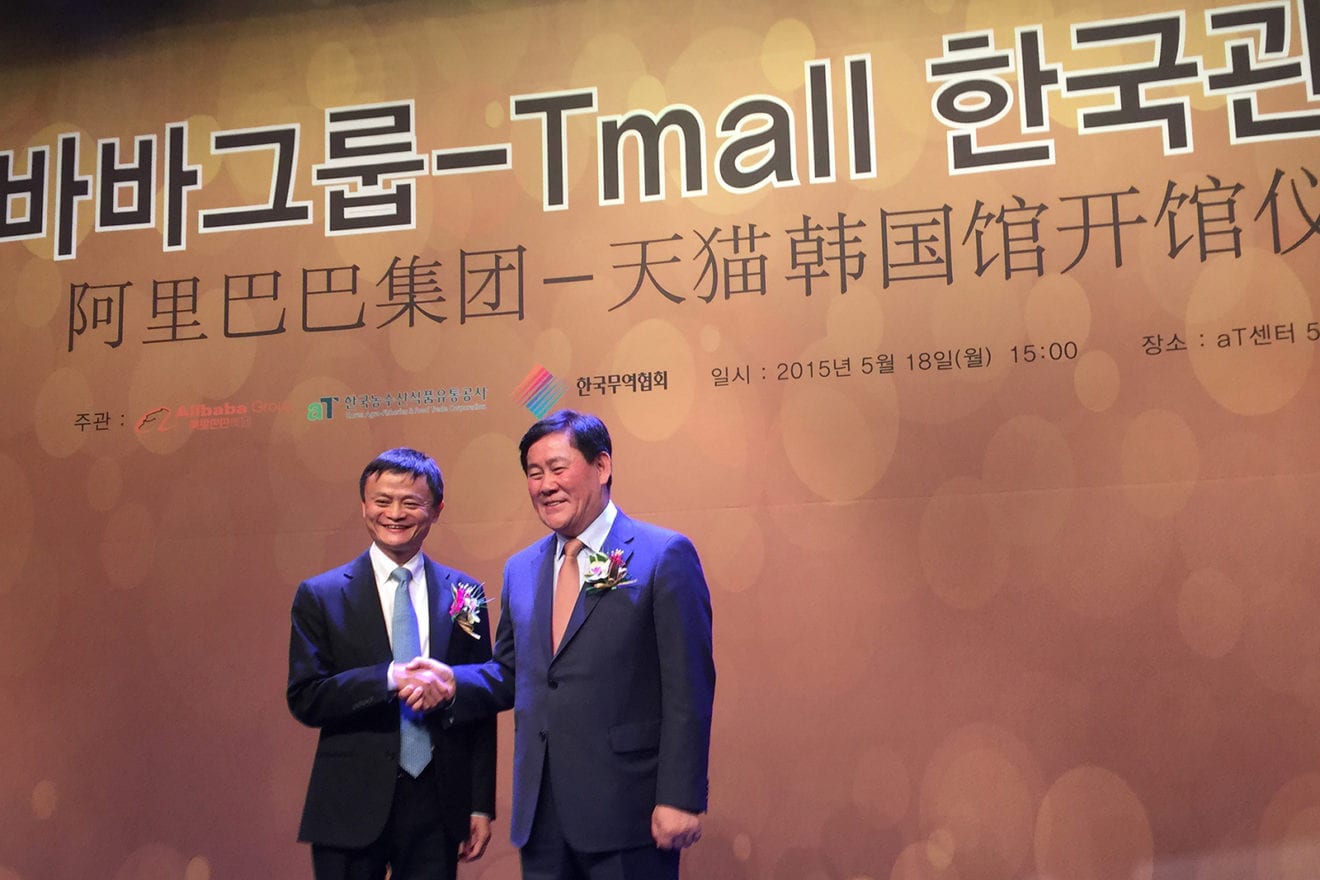
    Jack Ma, the chairman and founder of Alibaba Group Holding Ltd. who holds assets worth $36.4 billion, visited South Korea for the third time on May 17 to announce the launch of the Korea Pavilion on T-Mall, a business-to-consumer online retail channel.

    T-Mall is a profitable business for Alibaba Group Holding Ltd., with gross merchandise volume of 763 billion yuan (about $123 billion) last year.

    The Korea Pavilion, which opened May 18, deals with Korean retail items. The decision stems from the popularity of Korean products in China ― an employee at Alibaba Group Holding’s overseas business team stated that a Korean herbal cosmetics brand was their best-selling item during China’s Singles’ Day on Nov. 11 last year.

    But profit appears to be just one reason behind Ma’s decision to enter the Korean market. It appears that Ma has decided to use the Korean market as a testing ground to realize his vision of fostering Alibaba Group Holding Ltd. as a giant cultural empire beyond online retail.The T-Mall Korea Pavilion plans to attract Chinese customers by offering popular Korean products on their online retail website.

    At the Korea Pavilion opening ceremony held at the Korea Agro-Fisheries & Food Trade Corp. on May 18, Ma expressed delight in opening an online mall where Chinese customers can shop for authentic Korean products in one place.

    His use of the word “authentic” is noteworthy, showing his determination to use the Korea Pavilion to steer away from controversy over counterfeit products being sold through Alibaba channels.

    Alibaba has faced allegations that nearly half of the goods exchanged through several of their e-commerce sites are counterfeit.

    The Chinese government has also accused Alibaba Group’s e-commerce site Taobao of selling counterfeit products and failing to track them down effectively.

    Ma addressed the issue at the opening ceremony, stating that counterfeit products have been one of the biggest problems in the Chinese market, and adding that Alibaba Group has drastically reduced the sale of counterfeit goods through 10 years of effort.

    At the Asian Leadership Conference held last Tuesday at Hotel Shilla, Ma also said that “in order for corporations to survive for over 30 years, they must solve social issues,” and emphasized that Alibaba Group had created 14 million jobs. His statements reflect Ma’s additional plans for the South Korean market in addition to opening the Korea Pavilion.

    Ma appears interested in luring Korean youths as core followers of Alibaba, and announced that the group would offer a paid internship program in China specifically for Korean graduates, starting in July.

    Ma said Alibaba valued the potential growth of those in the younger generation who are setting out to create their own jobs, and that the program would target young Koreans in order to invest in their talent.

    Students who have gone through internships with Alibaba Group Holding Ltd. and start their own business are likely to sell their products through the T-Mall Korea Pavillion, as they would have learned how to best navigate the company’s online platform.

    Ma has also shown an interest in supporting tech start-ups run by young Korean entrepreneurs, signaling a possible cultural shift where Alibaba Group financially supports Korean start-up companies, while securing them as loyal customers.

    In addition to reinventing its image and finding new target audiences, Ma’s other business decisions seem to suggest that he views Korea as an eventual partner for his emerging cultural content business.

    Ma has been investing heavily in the sports and entertainment industry in China. Since March 2014, Ma has reportedly invested about $3.3 billion in cultural and entertainment-related businesses.

    Recently, Ma’s private equity firm Yunfeng Capital and Dalian Wanda Group chairman Wang Jianlin invested 800 million yuan ($129 million) on Chinese online entertainment company LeTV, specifically on LeTV Sports.

    LeTV Sports is one of the largest sports channels in China, with broadcasting rights for 121 international sports competitions.

    With the investment, Yunfeng Capital holds 7.8 percent of LeTV Sports’ shares, while Wang has 11.4 percent of the shares.

    Chinese investment experts speculate that Ma’s investments were a necessary component in building his “cultural empire,” and stated that Ma may likely be looking for an innovative business model in the sports and entertainment sectors.

    Jack Ma’s Korean entrance may simply appear to be an expansion into another major Asian market, but behind his decision is an elaborate plan to reinvent his company’s tarnished brand image, reaching out to potential customers through job creation and financial support, and branching out its business into new areas that include culture and entertainment.

    Ma’s plan has likely been in the works for a significant amount of time, evidenced by the wall-sized Alibaba Group Holding Ltd. advertisement at an exit of Myeongdong Station.

    The ad, which had been on display for several months, featured both Korean and Chinese slogans, signaling its intent to appeal to Koreans and Chinese.

  • Travel specialist DFS Group unveils store at Changi Airport

    Travel specialist DFS Group unveils store at Changi Airport

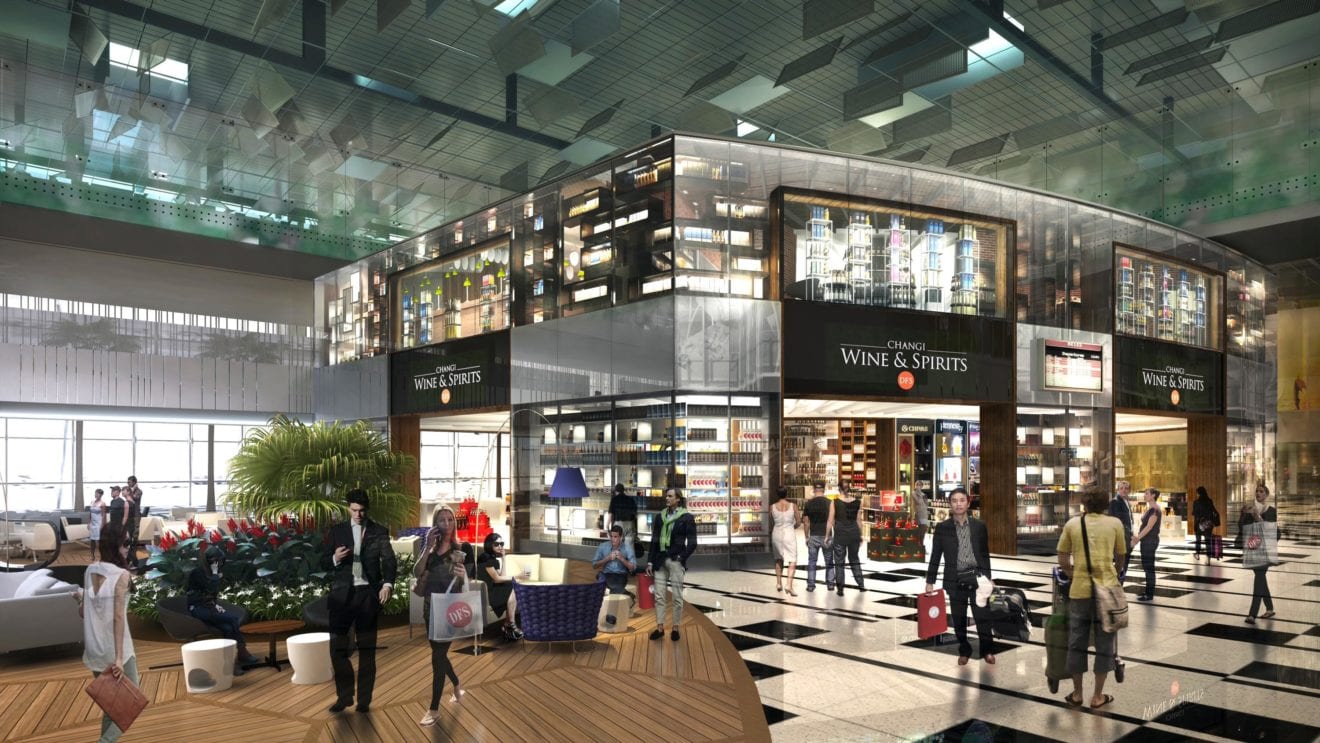
    Luxury travel specialist DFS Group has opened its largest global store: a wine, spirits and tobacco flagship at Singapore’s Changi Airport.

    The store, in the airport’s Terminal 3, covers 11,400 sq ft across two floors. Designed by award-winning interior designer Masamichi Katayama, the shop features the Raffles Long Bar, in collaboration with Singapore’s famous Raffles Hotel. The ground floor also includes atrium tasting bars and a private lounge.

    Drinks brands Absolut, Dom Pérignon, Glenfiddich, Hendrick’s, Hennessy, Johnnie Walker, The Macallan, Martell, and Penfolds are showcasing their heritage and products within individually designed boutiques.

    DFS Group chief executive and chairman Philippe Schaus said: “When we embarked on this unique project, we wanted to offer Singapore, the most renowned travel destination in Southeast Asia with the most modern airport, a wines and spirits store of a quality and richness unlike anywhere else in the world.

    “That is why we secured the collaboration of Masamichi Katayama to build this one-of-a-kind, two-level experiential store, drawing inspiration from the most stylish bars and restaurants around the world as well as from the traditional and historic cellars of France and Scotland.”

    Lee Seow Hiang, chief executive of Changi Airport Group, added: “The store – with its stunning façade and double-volume grandeur – is not only a design showpiece on its own, but the extensive range of products and unique boutiques truly enhance the overall retail experience.”

  • Japan’s Mitsui & Co picks up minority stake in Singapore retailer Triple

    Japan’s Mitsui & Co picks up minority stake in Singapore retailer Triple

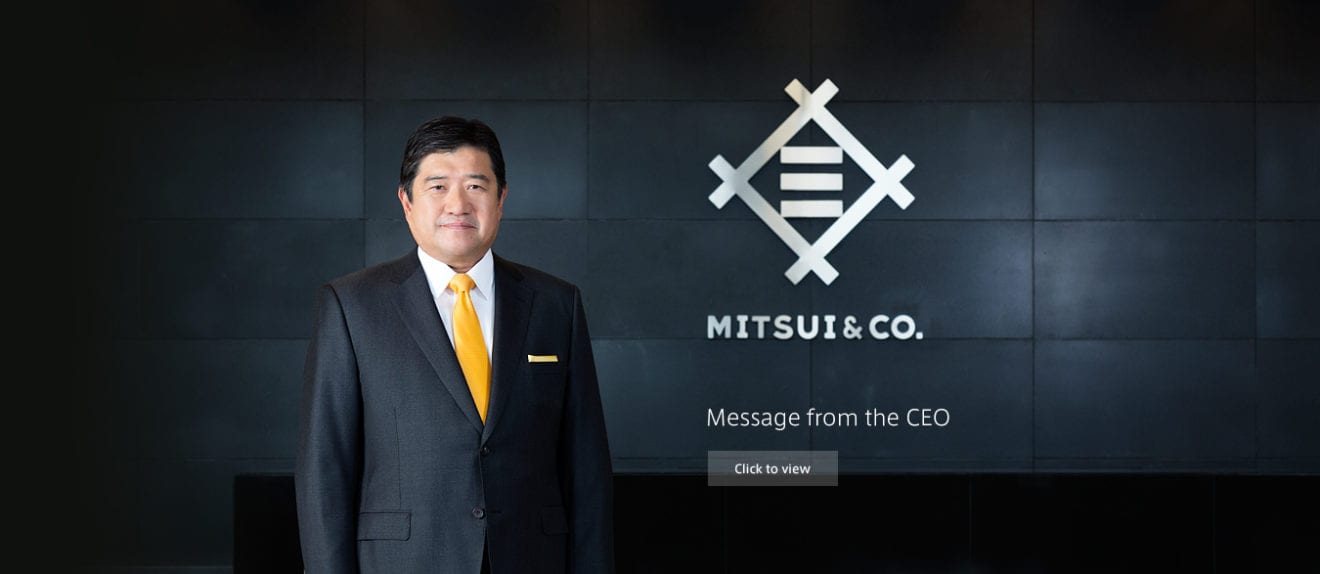
    Mitsui & Co, one of Japan’s largest general trading companies, has invested in Singaporean apparel retailer Triple, taking a minority stake in the omni-channel sports and lifestyle retailer that operates brand stores, shop-in-shop operations, wholesale distribution and e-commerce in key Southeast Asian countries.

    Dating back to 1876, Mitsui & Co is a Japanese company largely involved in the energy sector, though it also has businesses in fields ranging from chemicals and iron and steel, to transportation and communications systems and food products and services. It operates over 140 offices in 65 countries.

    Triple was launched in September 2013, primarily as a wholesaler for American sportswear brand Under Armour. It maintains exclusive distributorship for the brand in nine Southeast Asian countries.

    According to Triple’s CEO, Michael Binger, talks between both parties had gone on for approximately six to eight months before the deal was completed on May 18. Binger also said that Mitsui and Triple were hoping to leverage on the partnership to drive their expansion into e-commerce.

    “Mitsui’s current strategy focuses on brand marketing in downstream sector, among which sports and lifestyle is the key category judging from the global trend. Establishing the retail network in rapidly growing market such as South-east Asia is regarded as the key element to leverage this brand marketing strategy. Triple’s participation is the best fit to these points” said Toshi Sakurai, general manager of the consumer service business department of Mitsui & Co (Asia Pacific).

    Triple has opened five Under Armour stores and shop-in-shop outlets in Singapore, three in the Philippines and three in Malaysia, all within shopping malls in prime locations. Store expansion in core markets – Singapore, Malaysia and Thailand – will see four additional store open in 2015 and five to six stores in 2016.

    Triple also plans to enter Indonesia, Brunei and Vietnam via a network of partner stores and shop-in- shop executions. They intend to open five to six new stores and approximately 10 shop-in-shop locations tin 2016. By end-2018, Triple forecasts it will have a total store network of approximately 35 locations, including shop-in-shop executions for the Under Armour brand exclusively.

    Leveraging on their current landlord relations, Triple also hopes to expand their selection of brands and increase their overall number of stores. The global apparel market is estimated to be worth around US$1.7 trillion, with 6 percent annual growth.

    Southeast Asia is particularly dynamic with a 10 percent annual growth rate. This is due to an expanding consumer market and the growth of middle-class consumers. Coupled with greater interest in health and wellness, the sportswear category has emerged as a key driver for the apparel market.

    Commenting on the deal, Binger said, “Triple sees Mitsui as a strong long-term strategic partner with good complementary strengths. Mitsui has a network of relations with brands that are not yet represented in South-east Asia, and with the wide business interests of Mitsui and Triple’s rapid growth, there will be other areas of cooperation, including logistics.”

  • Starbucks baristas in China and Japan

    Starbucks baristas in China and Japan

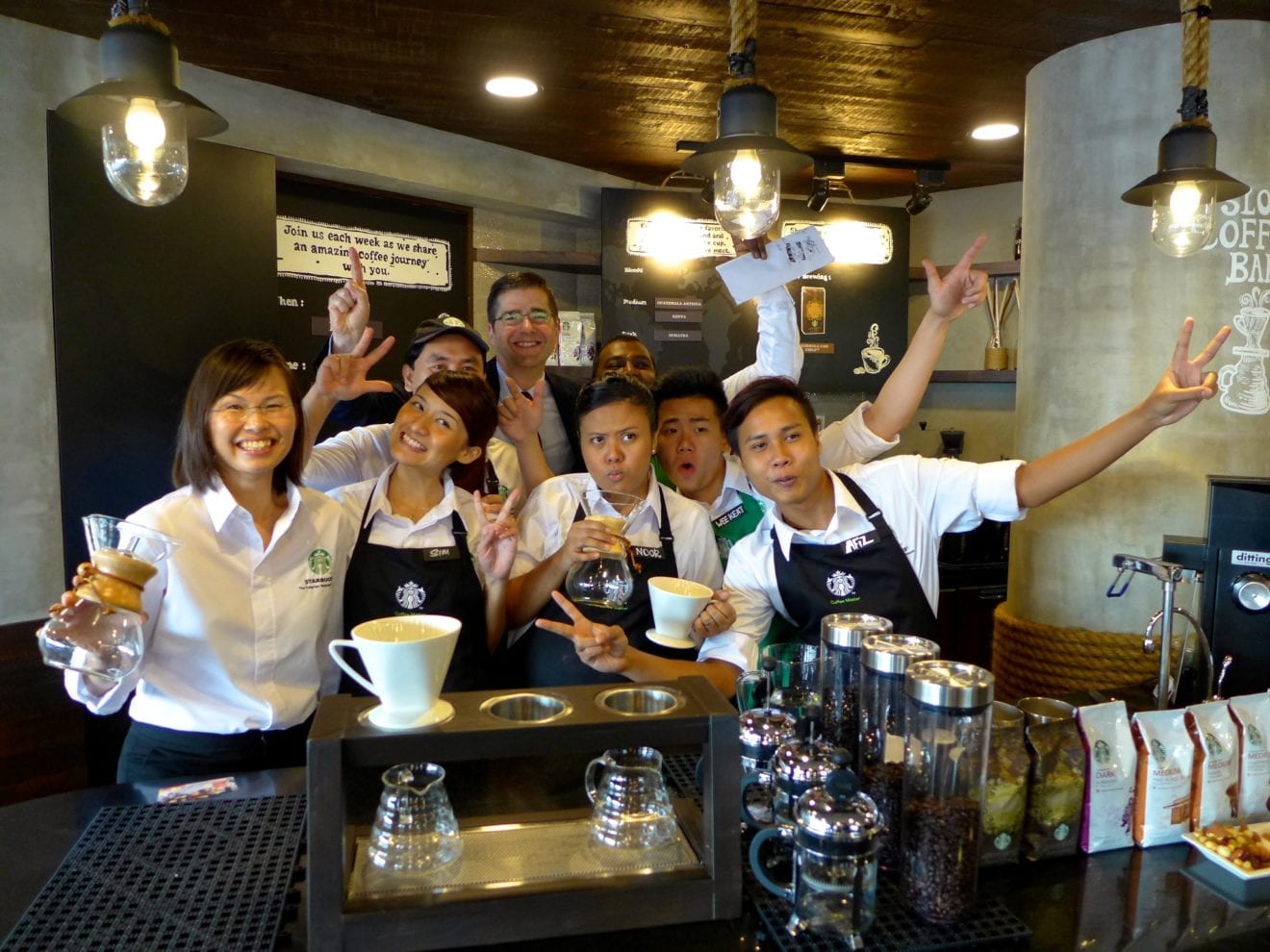
    From sourcing and roasting to crafting and innovating, Starbucks partners (employees) are passionate about brewing and handcrafting the world’s best coffee beverages. Starbucks baristas in China and Japan recently celebrated coffee artistry through competitions in pour-over brewing and latte art.

    The Starbucks coffee journey began in Asia nearly 20 years ago, with the company’s first store outside of North America opening in Tokyo in 1996, followed later in 1999 with the first store at the Beijing World Trade Centre. It started with the introduction of a cup of fresh-brewed coffee, followed by educating customers on the joy and indulgence of enjoying a handcrafted cup of espresso beverage, such as the Café Latte and Café Mocha.

    Today, customers in Japan and China have even more ways to enjoy their favorite cup of Starbucks coffee – through pour-over brewing or latte art – at more than 1,000 stores and more than 1,600 stores in Japan and China, respectively.

    Craftsmanship and Artistry in Each Cup of Starbucks Coffee

    “Every cup of Starbucks coffee, whether it’s our fresh brew or an espresso beverage, starts with sourcing the finest coffees from around the world. By extending our offerings to include the pour-over and latte art, we are showcasing these quality ingredients in a full-flavored coffee beverage,” said Belinda Wong, president, Starbucks China.  “More significantly, the craftsmanship and artistry that goes into each cup of Starbucks pour-over or latte art is highlighted in an exceptional way. We are excited to share this experience with our customers in China.”

    Most recently, Starbucks wrapped up the final event of its Starbuck China Third Annual Latte Art Throwdown Tour and Second Annual Pour-Over Competition, which covered six cities, including Shenzhen, Guangzhou, Xian, Beijing, Tianjin and Shanghai. A total of 79 Starbucks China baristas competed in the competitions.

    The idea of the tour and competitions began about three years ago as a way to build excitement and momentum around the launch of latte art as a standard offering in China.  Today, the tour and the competition leading up to these events has become a celebration of partners’ coffee artistry and genuine passion for coffee.

    “It was especially symbolic that while a group of our China partners were in Sumatra experiencing the ‘first 10 feet’ of the coffee bean journey, this competition was celebrating the work that our partners do every day to deliver the ‘last 10 feet’,” said Jeff Miller, vice president, retail and operations, Starbucks China. “I am certain that if the farmers could see how our baristas honor their work through the care they put into brewing these coffees, whether in a latte or a cup of pour-over, they would be as proud as we are.”

    The top four winners from each Starbucks China region will travel later this year to Chengdu to attend the Starbucks China National Latte Art and Pour-Over competitions.  These events will coincide with the China Coffee Ambassador Cup, where the winner will be crowned Starbucks China Coffee Ambassador, representing the pinnacle of coffee expertise.

    “As the leading coffee company in China, I am so excited to represent my North China region partners at this national competition. This is a dream come true for me and a firm demonstration of our dedication to only deliver the perfect Starbucks coffee beverage to our customers every time they visit our stores,” added Kevin Zhang from the Starbucks Beijing Kerry Center flagship store.

    Coffee Has Become an Important Part of ‘the Japanese way of life’

    In Japan, Starbucks partners also challenged each other and showcased their coffee passion and talent with the best baristas at the Starbucks Coffee Japan Annual Leadership Conference. As part of this gathering, Starbucks hosted the second “We Connect Cup” – a competition to demonstrate and highlight how Starbucks partners exercise the best services, operation, and connections with customers.

    “Since the opening of our first store in Ginza, coffee has become such an important part of the Japanese way of life,” said Jun Sekine, ceo, Starbucks Coffee Japan. “Over the past 19 years, our baristas have been pulling perfect espresso beverages for our customers, sharing our passion for the world’s most premium Starbucks Reserve coffee, and building individual moments of connections with customers. We want to continue to elevate their coffee experience whenever they come to a Starbucks store.”

    At the second We Connect Cup competition, Starbucks Coffee Japan partners from 13 regions pit their coffee skills and expertise in three categories – operational excellence, beverage routine and service basics.

    “It’s by perfecting these three combinations that will make Starbucks world class customer service vision a reality in Japan,” added Masayo Mameta, partner at the Starbucks Fukuoka University Hospital store.

  • Jaguar Land Rover profits down on slowing demand in China

    Jaguar Land Rover profits down on slowing demand in China

    Jaguar Land Rover became the latest casualty of a slowdown in Chinese auto demand, reporting its steepest drop in quarterly profit in two years after retail deliveries slumped in the world’s largest vehicle market.

    Profit fell 33 percent to 302 million pounds (US$465-million) in the three months ended March, the biggest decline since the quarter ended March 2013. That contributed to a worse-than-estimated drop in earnings at its parent, India’s Tata Motors, which also faced a prolonged slump in demand for commercial vehicles in its home market. Shares of Tata Motors declined.

    The result underscores the reliance of global automakers on China to drive profit growth and the extent of the slowdown in luxury demand after the government’s campaign to stamp out graft and extravagance. Jaguar Land Rover said the introduction of new models, and conditions in China and Russia, may lead to lower margins this year.

    “We see a certain slowdown in the market and we read that many competitors are going to reduce prices,” Ralf Speth, chief executive of Jaguar Land Rover, said on a call with investors. “I can assure you that we will not be the very first ones to reduce prices because we’re convinced we bring color to the Chinese market.”

    Jaguar Land Rover’s retail sales volume declined in the quarter, with deliveries in China falling 20 per cent. The company is seeing a changing Chinese market with more pricing pressure in more segments than in the past, Jaguar Land Rover chief financial officer Kenneth Gregor said on a separate call.

    China’s slowing economy has prompted BMW to cut production and prices in the country. Intense competition is putting pressure on prices, and the automaker doesn’t expect this trend to be reversed in the short term, Friedrich Eichiner, chief financial officer of BMW, said on May 6.

    General Motors cut its prices in China after reporting a decline in deliveries there last month, joining Volkswagen in stepping up discounts. Foreign automakers have also come under increasing pressure from local brands that are gaining market share by offering cheaper sport-utility vehicles.

    Besides discounts, foreign automakers are offering incentives such as subsidized insurance, zero down payment, interest-free financing and higher trade-in prices, according to Sanford C. Bernstein.

    Passenger-vehicle sales rose at the slowest pace in five months in April, with most of the expansion coming from local brands. Vehicle sales in China this year may rise by less than the 7 per cent projected in January, the China Association of Automobile Manufacturers said last month.

    Jaguar has said it plans to unveil 12 new products, including upgrades and variants, this year. A new version of its XF sedan will be introduced in 2015 and the F- PACE crossover in 2016, Speth said yesterday.

    “Jaguar Land Rover is more dependent on China than any other original equipment manufacturer, thanks to extraordinarily high pricing,” Max Warburton, an analyst at Sanford C. Bernstein in Singapore who rates the Tata Motors stock the equivalent of a hold, wrote in a note to clients today. “Slowing premium growth, deteriorating pricing, and falling dealer profitability in China are all issues.”

  • DHL providing E2E logistics for FC Bayern Munich’s online store

    DHL providing E2E logistics for FC Bayern Munich’s online store

    FC Bayern Munich is working with Alibaba’s Tmall Global and DHL eCommerce to launch an official FC Bayern Munich online flagship store for consumers in China.

    Through the new online store (https://fcb.tmall.hk), fans in China can now order a FC Bayern Munich jersey with their favourite player’s name and also purchase a variety of fan merchandise as well as “traditional German and Bavarian products”.

    Karl-Heinz Rummenigge, Executive Board Chairman of FC Bayern Munich, said: “Making our fan merchandise accessible is crucial to connect with our fans in China.”

    Jörg Wacker, Executive Board Member Internationalization and Strategy of FC Bayern Munich, added: “China continues to be our key focus market and plays an important role in our internationalization strategy. For our market entry in China, Tmall Global is the best platform since many of our fans already use the platform today. Together with our strategic partner DHL, we will ensure a fast delivery. This store is a big first step in expanding our touch points with our Chinese fan base and we will interact with our fans even more during our Audi Summer Tour China in July this year.“

    Jeff Zhang, President of China Retail Marketplaces of Alibaba Group, commented: “FC Bayern Munich, as one of the first football clubs launching their exclusive online flagship store on Tmall Global, will greatly reflect the diversity of brands and goods on the platform.”

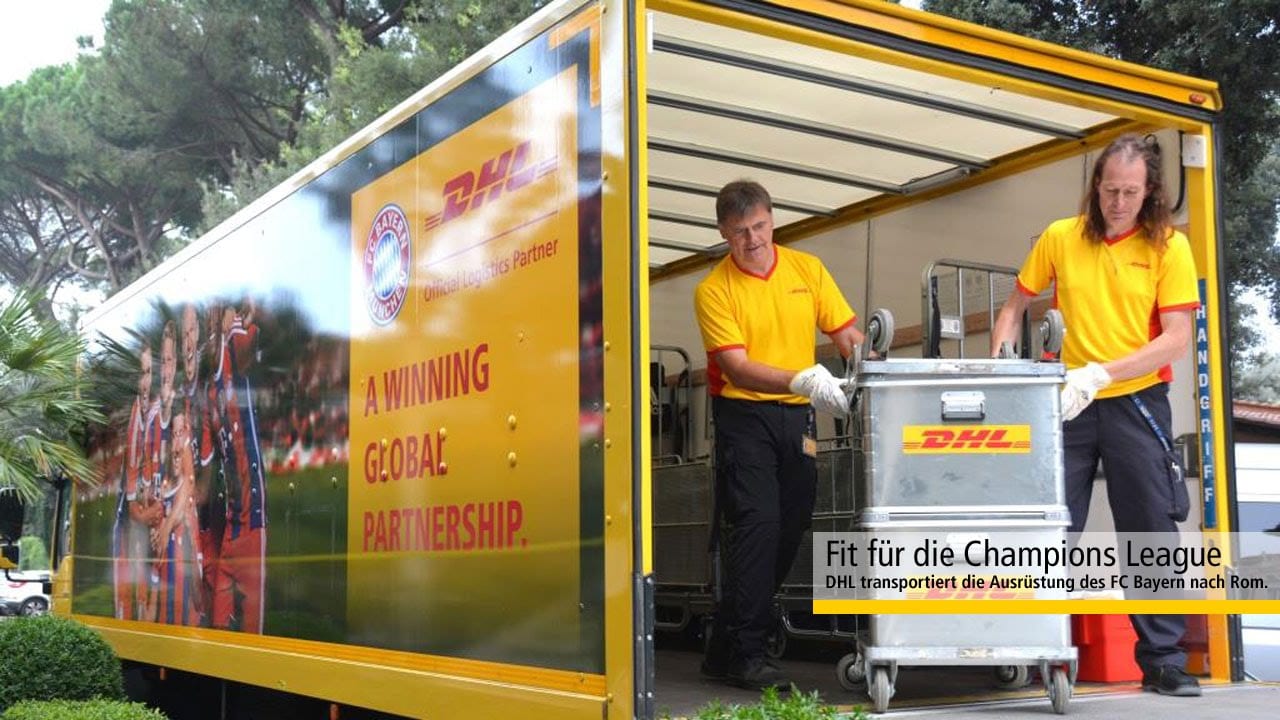
    The six-year partnership between DHL and FC Bayern Munich will see DHL acting as the club’s exclusive logistics partner and full service provider for international e-commerce starting in China in 2015 with a planned roll-out across the Asia-Pacific region. DHL eCommerce will manage many aspects of FC Bayern Munich’s merchandising in China – working with Tmall Global on product listing, order management, fulfillment of orders, local distribution and returns, local customer service and market entry support.

    Thomas Kipp, CEO of DHL eCommerce, said: “There couldn’t be a better opportunity to demonstrate our expertise in e-commerce such as fulfillment and end-to-end delivery than launching the online flagship store of the world’s biggest football club, FC Bayern Munich, on the world’s biggest marketplace in China. We also have the added bonus to work even more closely with Tmall Global, China’s leading online retail platform.”

    FC Bayern Munich are one of the world’s biggest football clubs with over 255,000 members. They are also one of the most successful, having won five Champions League Titles, three Club World Cup trophies as well as 25 national championships. FC Bayern Munich are planning to return to China for a summer tour in July, when they will play three games: in Beijing, Shanghai and Guangzhou.

  • E-Land ready to rumble for a duty-free license

    E-Land ready to rumble for a duty-free license

    Just a few days shy of the deadline to apply for a Seoul duty-free business license, E-Land announced plans to join the fray.

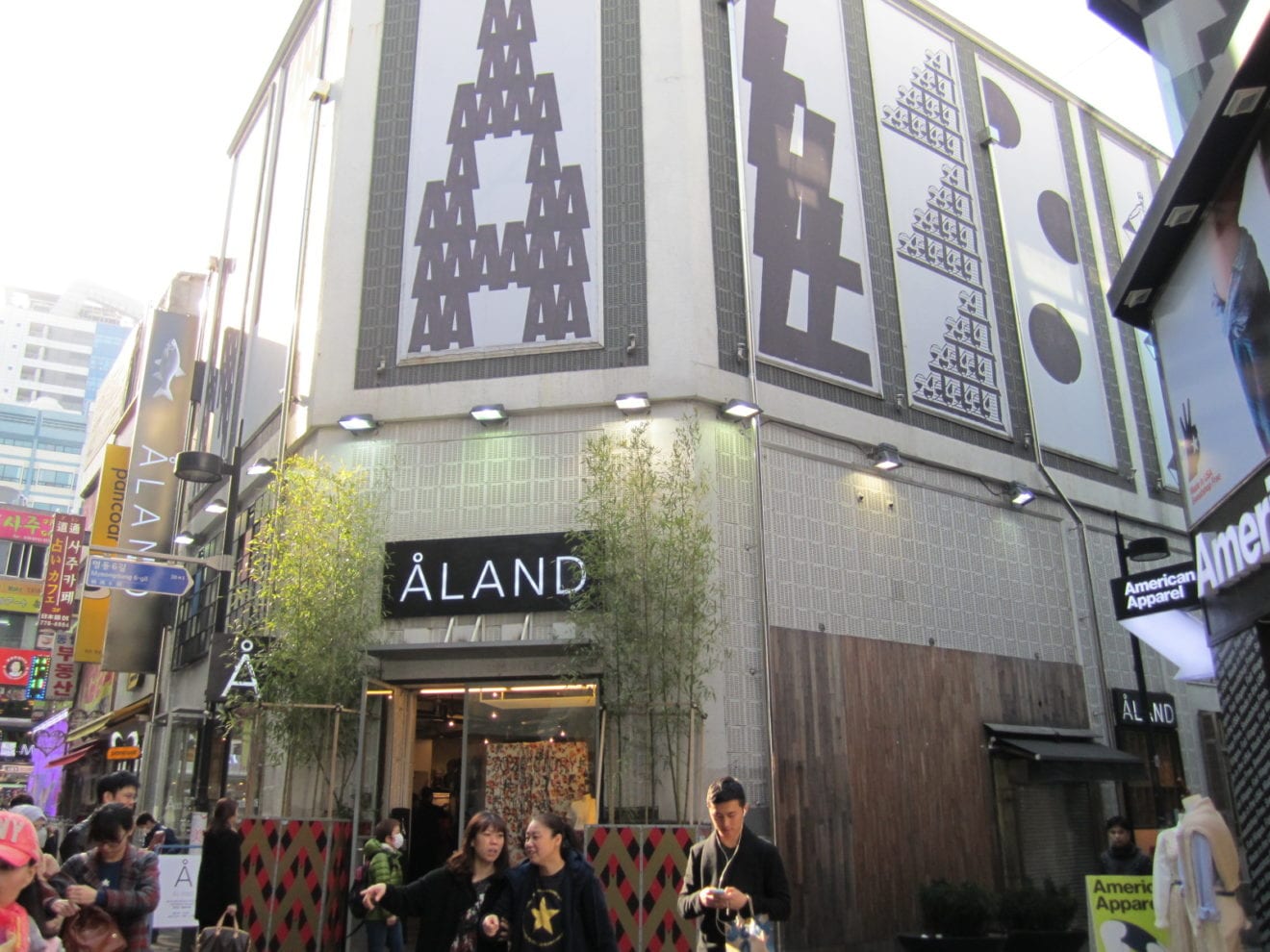
    The conglomerate, whose businesses span from retail and fashion to restaurants, said Thursday that it plans to build a duty-free shop at a property near the hip Hongik University area in Mapo District, northwestern Seoul, where it is currently working with GS Engineering & Construction to build a luxury hotel.

    The company will collaborate with the area’s 20,000 shop owners, street performers and artists to give a new perspective on duty-free shopping, setting itself apart from other competitors that have located their shops in larger, more commercial areas with other big-brand stores.

    It has plans to build an outdoor performance arena by the shop where young artists, independent bands and even K-pop stars will be invited to perform daily. E-Land will also work with the district’s well-known shops and restaurants to draw more foreign tourists to the neighborhood, the company said.

    It recently signed a memorandum of understanding (MOU) with Wanda Tourism and Dufry Duty Free for collaborations on its duty-free business. Wanda Tourism, a unit of Wanda Group, is one of the biggest tour agencies in China, and E-Land expects the partnership to help bring in more than 1 million VIP customers from the country per year. Dufry, a Swiss duty-free franchise and the world’s biggest duty-free store operator with over 2,000 worldwide, will share luxury retailing strategies with E-Land.

    “Around 70 percent of local duty-free sales come from the Chinese,” said an E-Land official. “As an influential brand in China with over 20 years of Chinese retail experience under our belt, we will expand the size of the local duty-free market.”

    The company currently operates 44 brands and 7,300 stores in China, ranging from restaurants to shops specializing in fast fashion brands.

    Competition for duty-free licenses is getting fiercer by the day, with almost every major conglomerate – including Lotte, Shinsegae, Hyundai, Samsung-affiliate Shilla, SK Networks and Hanwha – having submitted a bid.

    Sluggish sales at other retail outlets, including department stores and discount retail chains, have forced companies to shift their focus to duty free, which offers double-digit profit margins and growing sales. According to the Korea Customs Service, Korea’s duty-free market was worth 8 trillion won ($7.2 billion) as of last year, compared to 4.8 trillion won in 2010.

    Korea Customs Service is scheduled to make a decision about the licenses in July, two of which will be given to conglomerates and one to a midsize firm.

  • Bangkok retail lags in expansion

    Bangkok retail lags in expansion

    Space in core areas of Tokyo remained highly sought after despite the mixed signals in the economy and an increase in the sales-tax rate introduced in April, 2014.

    Singapore followed Tokyo with 58 new retail brands while Taipei came in fourth, climbing seven places from 2013’s new entrants’ rankings with 49 new brands last year compared with 29 the year before. Other cities in the region making up the top 15 markets included Hong Kong with 45 new entrants, Beijing with 34 and Manila with 24.

    London retained its position as the world’s most international shopping destination with 57.9 per cent of international retailers present there, which was closely followed by Dubai with 55.7 per cent of international retailers present and Shanghai with 53.4 per cent.

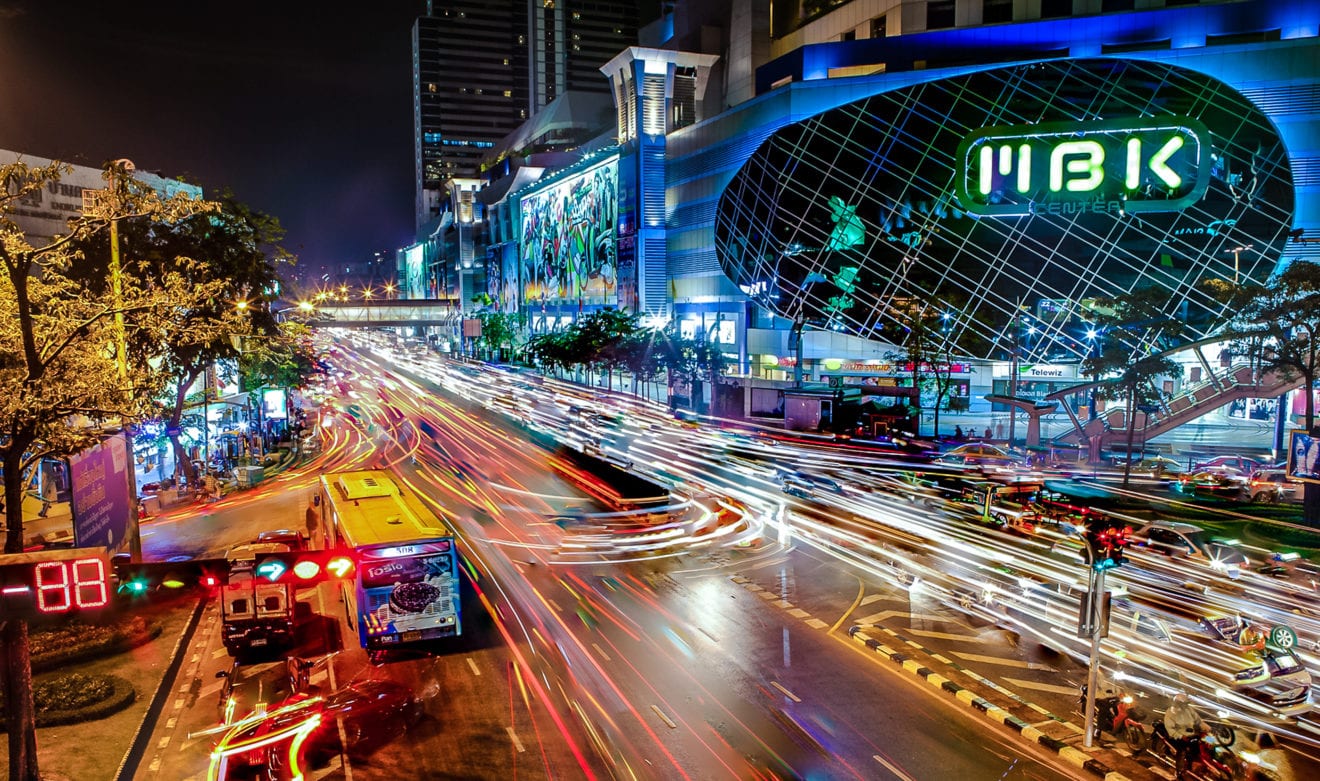
    James Pitchon, head of research and consulting at CBRE Thailand, said that in the first quarter of this year, the total Bangkok retail supply was 6.8 million square metres, increasing by 7.8 per cent year on year. The volume of occupied retail space increased by 4.8 per cent.

    The largest new retail development in the quarter was the 50,000sqm EmQuartier luxury shopping mall on Sukhumvit Road.

    Jonathan Hsu, head of occupier markets research for CBRE Asia Pacific, said the continued desire for expansion into new cities remained high for international brands.

    “We are seeing a great deal of expansion into Asia and in particular into Tokyo, Singapore and Taipei.”

  • Alibaba signs Equinix deal to take on Amazon’s cloud

    Alibaba signs Equinix deal to take on Amazon’s cloud

    Equinix deal gives Alibaba a better cloud story for multi-nationals wanting to do business in the U.S. and China. It might also be worrisome to U.S. cloud powers who want that business.

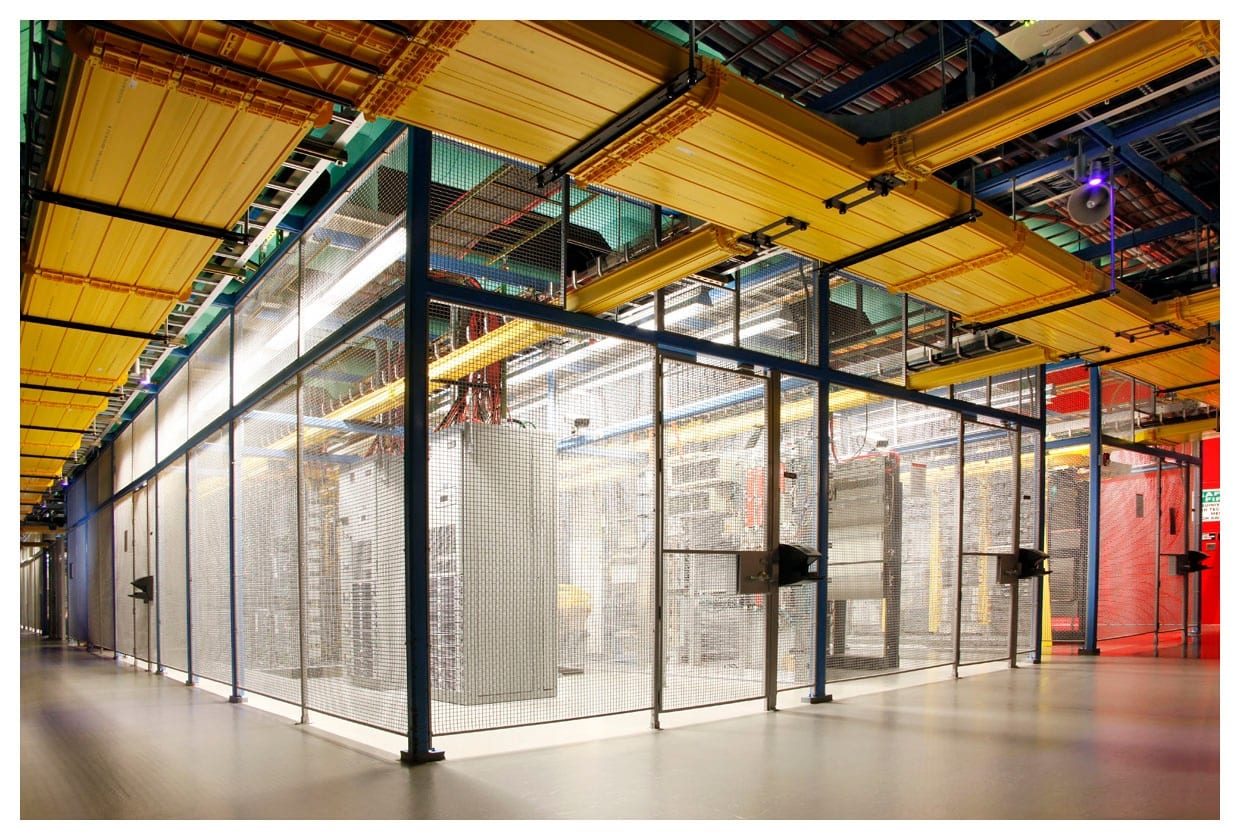
    Chinese retail giant Alibaba is going bigger in cloud thanks to a new partnership with Equinix, which operates more than 105 data centers around the world.

    The stated goal is to make it easier for multi-national corporations in the U.S. to conduct business in China and vice versa. Aliyun, is Alibaba’s cloud computing arm, just as Amazon Web Services is Amazon’s the cloud computing arm. Initially, Alibaba’s cloud services will be offered via Equinix Cloud Exchange facilities in Hong Kong and Silicon Valley, with additional rollouts planned for other Equinix sites worldwide, said Chris Sharp, vice president of innovation for Equinix, Redwood Shores, Calif.

    There is plenty of headroom for expansion in this deal. Equinix has data centers in 33 countries and many other interconnection points where different providers can hook into each others’ services. Even cloud providers that run their own data centers plug into Equinix interconnection facilities so they can offer fast links to outside services. Equinix will also gain 40 more data centers across Europe via its recently announced plan to acquire Telecity for $3.6 billion.

    U.S.-based cloud giants, especially Amazon, will doubtless watch the Alibaba-Equinix news carefully. Alibaba dominates the market in China, much as Amazon does in the U.S. In March, Aliyun opened its first stateside data center stateside at an undisclosed Silicon Valley site while Amazon opened up its first data center in China in late 2013.

    Alibaba and Alyun could be viewed as mirror images of Amazon and AWS so it’ s not hard to predict growing contention between the two camps as AWS pushes more into China via its new Beijing region and Aliyun does likewise in the U.S.

    Per its IPO filing last year, Alibaba claimed more than 980,000 “direct and indirect” cloud computing customers at the end of 2013. Last November, Amazon said AWS has more than a million “active” users.

    For its fourth quarter ending March 31, 2015, Alibaba’s cloud revenue came in at $63 million, up 82% from the year-ago quarter. For the full fiscal year, cloud revenue was $205 million, up 64% from last year.

    Amazon, which has been in the cloud business for nine years, broke out cloud results for the first time in its first quarter, also ending March 31. It logged $1.57 billion in cloud revenue, up 49% from the previous year. Operating income was $265 million for the quarter, up from $245 million a year ago. Chairman and CEO Jeff Bezos claimed the cloud represented a fast-growing $5 billion-a-year annual business.

    As for whether Amazon should be worried about Alibaba/Alyun’s incursion on its home turf, Ariel Tseitlin, a former Netflix executive who worked a lot with AWS, doesn’t think so. “AWS just has so many feature and services. Right now, the biggest threats to AWS are number one Microsoft and number two Google” he noted.

    More generally, the entrance of another viable contender in cloud is a good thing for customers, said Tseitlin, who is now a partner with Scale Venture Partners, a Foster City, Calif. based VC firm.