Tag: asia

  • CITIC Telecom CPC appoints new CEO

    CITIC Telecom CPC appoints new CEO

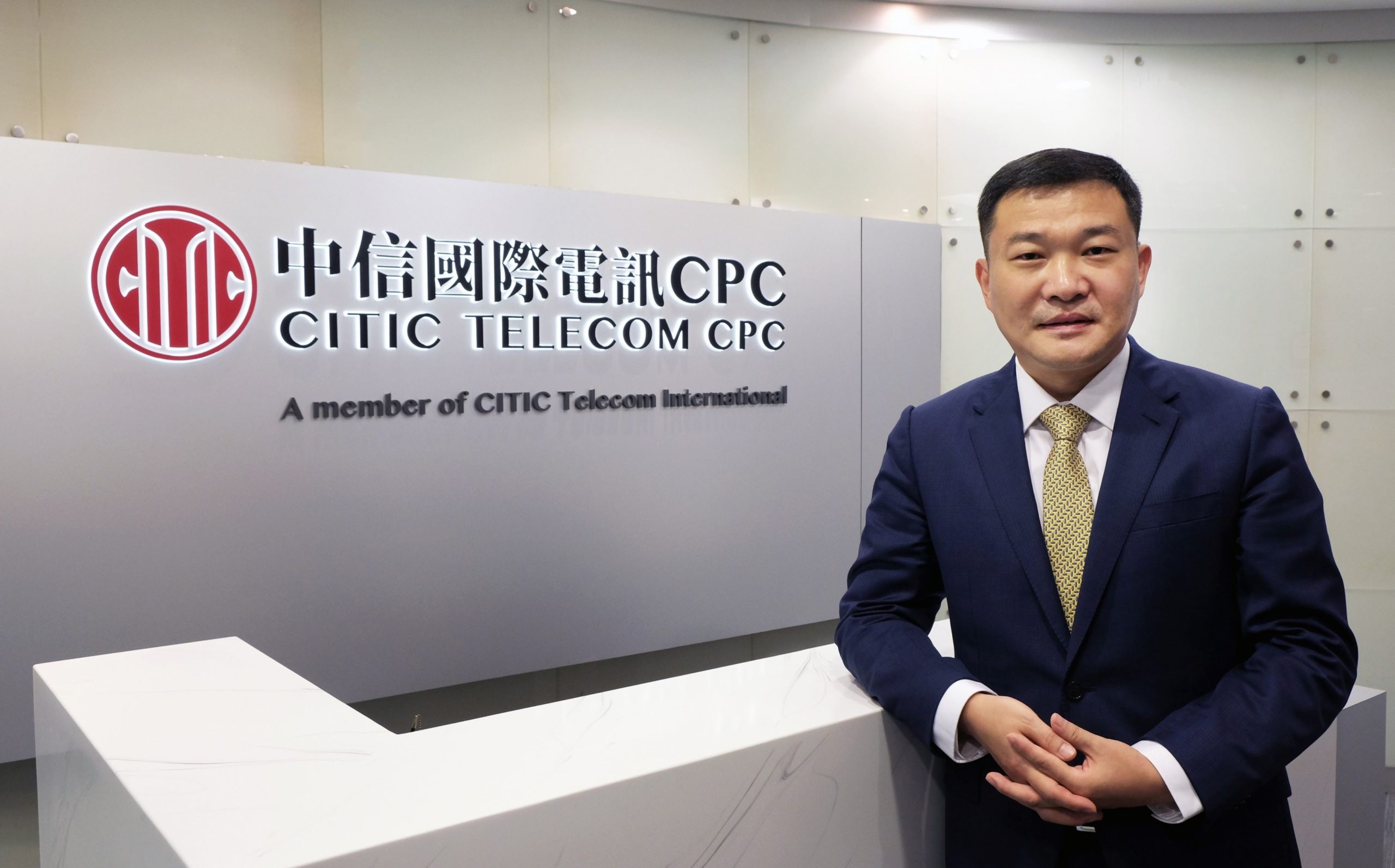
    CITIC Telecom International CPC Limited (CITIC Telecom CPC), a wholly-owned subsidiary of CITIC Telecom International Holdings Limited, announced that Brook Wong, vice president of CITIC Telecom has been appointed to the additional role of chief executive officer of CITIC Telecom CPC effective 1st February, 2022, succeeding Esmond Li who has decided to retire and step down from CEO of CITIC Telecom CPC after over 20 years of service in the Group.

    “Wong has long been a visionary in telecommunications, applying his tremendous insight, depth of experience, and passion for technology to the cause of creating the innovative and intelligent future,” said Frank Cai, vice chairman of CITIC Telecom CPC. “We are delighted to welcome Wong to CITIC Telecom CPC, and I’m confident that he will lead the team to continue pursuing our motto ‘Innovation Never Stops’ and to win in this fast-changing, dynamic industry. I believe that all of us will benefit from his leadership and expertise.”Wong is the vice president of CITIC Telecom, overseeing China market since 2008. He has extensive leadership experience working with various telecommunications companies. An expert in developing and executing strategies for the Greater China market. His ability to see the big picture, from crucial market development to macro strategic perspectives, will be invaluable to CITIC Telecom CPC’s customers.

    “I am honored and truly proud to be appointed to lead CITIC Telecom CPC. Under all the former managements’ leadership and accomplishments, together with its innovation, technology, and talents, it lays a solid foundation for a leading DICT service partner around the globe. We are committed to delivering the most innovative and intelligent solutions to propel the ICT industry forward,” said Wong. “Over the 14 years I have worked at CITIC Telecom, I have seen the many ways in which our people, product, and service create a rapidly growing and innovative company. I look forward to working closely with the management and the team, to continue promoting our company culture of ‘unity, collaboration, tolerance and caring’, to lead and accelerate CITIC Telecom CPC to be ‘best-in-class global-local intelligent DICT service partner”, to foster customer-oriented corporate culture, create a win-win situation with our partners, and strive for new heights.”

  • Thai cafe serves up crypto advice with coffee and cake

    Thai cafe serves up crypto advice with coffee and cake

    A cafe in northeast Thailand has become home to cryptocurrency traders, adding banks of screens showing the latest market moves and dishing out investment advice alongside coffee and cake.

    Behind a calm exterior of cherry blossom trees, customers of HIP Coffee & Restaurant stare at their laptops, supping nervously on iced coffee – part of a surging interest in digital assets in Thailand that has regulators worried.

    “It’s exciting for me to be here because I get to meet people who share the same interests,” said Detnarong Satianphut, a 35-year-old crypto trader.

    “We traders get to exchange information because in the trading world we are coming up against millions of people.”

    Cryptocurrencies have been gaining momentum in Thailand, with as much as 251 billion baht (US$7.62 billion) in digital asset traded in November, according to the latest official data.

    Earlier this month, Thailand said it would start to regulate the use of digital assets as payments, warning of potential risks to financial stability and the overall economic system.

    HIP cafe, which has been around since 2013, got its crypto makeover in 2020.

    Since then, according to staff, its customers have doubled. Manager Oakkharawat Yongsakuljinda said the cafe provides alternative investment opportunities for people in the surrounding Nakhon Ratchasima province.

    It offers free investment consulting and is planning on starting its own cryptocurrency coin.

    Its customers say trading in the cafe offers them the best chance of success in a volatile market, in which the most well-known cryptocurrency, bitcoin, hit six-month lows this week.

    “Having so many screens helps a lot … We immediately know and get to analyze crashing factors and whether we should buy,” said 23-year-old trader Apakon Putnok.


  • Vans owner slips as production delays, China curbs hit sales forecast

    Vans owner slips as production delays, China curbs hit sales forecast

    Vans shoe maker VF Corp cut its full-year revenue forecast on Friday as it struggles with material shortages, labor issues at factories, and a slump in sales in China due to COVID-related lockdowns, sending its shares down over 6 percent.

    Fresh pandemic restrictions and store closures late last year in many Asian countries, including China, took a toll on many US apparel makers that for years have relied on these countries for the bulk of their production and sales growth.

    VF Corp said the fast-spreading Omicron variant of the coronavirus was also impacting its sales across the world.

    “The latest virus surge across Europe has contributed to declining consumer confidence, deteriorating traffic, and stretched retail staff in our stores,” VF Chief Financial Officer Matt Puckett said on an earnings call.

    Despite facing labor and raw material shortages, VF said it expected manufacturing to return to near full capacity in the coming weeks.

    The company cut its fiscal 2022 revenue forecast to about US$11.85 billion from US$12 billion. It expects revenue for its “Active” unit, which houses the Vans and Supreme brands, to increase between 31 percent and 33 percent, compared with a prior range of 35 percent to 37 percent gain.

    The Denver, Colorado-based company’s total revenue rose 22 percent to $3.62 billion in the third quarter ended Jan 1, slightly ahead of analysts’ average estimate of US$3.60 billion, according to IBES data from Refinitiv.

  • McDonald’s faces massive court claim over ‘shameful’ worker treatment

    McDonald’s faces massive court claim over ‘shameful’ worker treatment

    Trade union SDA has lodged a multimillion claim in the Federal Court against McDonald’s Australia seeking compensation for about 900 current and former employees the union alleges have been denied paid rest breaks and misled about their rights.

    The action covers more than 110 restaurants across Australia directly owned and operated by the fast-food company and follows eight previous Federal Court claims lodged by the SDA against McDonald’s franchise operators.

    The claim, lodged in South Australia, is currently on behalf of 338 current and former McDonald’s staff employed across 92 restaurants, but the union is actively talking to others and has opened a website to recruit people who have worked for the company during the past six years, to join the action.

    SDA national secretary, Gerard Dwyer describes the case as the biggest of its kind in Australian history, and “a groundbreaking moment for some of the most vulnerable workers across the country”.

    “The fact that one of the largest employers of young Australians (on junior rates of pay) has been deliberately and systematically denying teenagers their breaks is astonishing. It takes a lot of courage to openly stand up and speak out against their employer and the SDA is proud to stand with them in ensuring these workers get what they’re owed.”

    He said the action has the potential to impact thousands of workers Australia-wide and lead to millions of dollars of compensation payments if successful.

    The union wants affected workers to be paid compensation for working through their breaks and for the company to be penalised by the court for breaching the Fair Work Act.

    It alleges that along with concealing employees’ meal break entitlements, many store managers told workers they could have a free soft drink in lieu of a paid rest break and that they didn’t receive the breaks as they could go to the toilet or have a drink whenever they needed to. The SDA says the law provides for a 10-minute break for any staff member who works a shift of four hours or more.

    “McDonald’s have been feeding crew members a cock and bull story about their break entitlements for too long,” said SDA South Australian branch secretary, Josh Peak.

    “Fast food restaurants are busy, hot and the work is exhausting – it’s shameful to think young workers have been denied their rightful breaks and told they don’t exist. Paid rest and drink breaks aren’t optional, they’re a right for all fast-food workers,” he said.

    “It shouldn’t have to take nine Federal Court claims for McDonald’s to clean up their act.”

  • Snickers unveils Creamy Peanut Butter bar in Australia

    Snickers unveils Creamy Peanut Butter bar in Australia

    Snickers has released its limited-edition Snickers Creamy Peanut Butter bar in Australia for the first time.

    The Snickers Creamy Peanut Butter bar is made with real peanut butter, silky smooth caramel and fresh ground peanuts, enrobed in the rich Snickers chocolate.

    Mars Wrigley Australia Marketing Director Ben Hill says the variation has been a smash hit overseas, and he’s excited for Australians to finally get their hands on the product.

    “We know how much our customers love the classic Snickers bar, with its satisfying layers of nougat, caramel, and the signature peanut crunch,” he says.

    “Now, thanks to this innovation in texture, our fans can get Snickers satisfaction in both crunchy and smooth – something that is sure to delight peanut butter fans of all kinds.”

    Snickers Creamy Peanut Butter is available in a 36g twin pack for RRP $2 from leading retailers including Woolworths, Coles, Metcash, 7 Eleven, Coles Express, BP, Ampol, ALDI and Big W.

  • Vietnamese tired of advertisements popping up online

    Vietnamese tired of advertisements popping up online

    Vietnamese Internet users find online advertisements tiresome and do not want to watch them, a survey by YouGov has found. In a poll of 2,429 digital users, last December the British online market research and data analytics firm found that 47 percent of respondents always skip or want to skip online ads and 43 percent find the ads “annoying.”

    Only 25 percent said they are “interesting.”

    Thue Quist Thomasen, CEO of YouGov Vietnam, said: “Our survey also shows that even though most people remember seeing online ads, they are significantly less likely to recall clicking on ads or buying products after seeing ads.

    “In my view, the online marketing industry in Vietnam is largely, and fairly, preoccupied with tracking ad frauds and viewability. But marketers often pay insufficient attention to the metrics that truly matter, such as impact and quality, which are the key elements that drive advertising success.”

    Soames Hines, CEO of Ogilvy Vietnam, one of Vietnam’s largest creative agencies, said:”The survey’s results confirm what I have been thinking about digital advertising in Vietnam: There are so many ads nowadays that it’s hard for scattered branded banners to be effective across different websites.

    “What brands want are great campaigns that win the hearts and minds of consumers. Tiny banners and seemingly haphazard five-second videos just won’t be enough for brands to get what they want.”

    With 21.5 percent average annual growth in 2020-25 digital advertising in Vietnam is a booming business, according to the ‘Vietnam Digital Marketing Trends’ report released last year by digital marketing firm Novaon Ads.

    Advertisers are expected to spend $934 million on digital advertising in 2022, according to Statista, a German company specializing in market and consumer data.

    Vietnam has among the highest number of Internet users in the Asia Pacific. According to Statista, as of January 2021 the country of 96 million had around69 million Internet users.

    “Advertisers are often too focused on delivering ads as efficiently as possible while forgetting about the creative aspect of digital advertising,” Carl Söderblom, vice president of operations & business development at Swedish company Adnami, said.

    “This, in turn, results in low impact, ineffective ads. With high-impact ads, advertisers can … ensure they… are effective at driving results as well.”

  • WhatsApp CEO hints at iPad app release

    WhatsApp CEO hints at iPad app release

    WhatsApp CEO Will Cathcart lent some hopeful words to fans of the messaging platform during an interview this week, when he announced that the company is looking into creating a native iPad WhatsApp app.

    WhatsApp users have long been nagging the Facebook-owned company to make a viable app for Apple’s iPad, but WhatsApp has been holding off—just like Instagram still lacks a native iPad app as well.

    The reason for this is that until now, the way that data was encrypted on the WhatsApp platform didn’t allow for the company to safely sync it across multiple devices while maintaining the same level of encryption. However, according to Will Cathcart, the underlying technology has been evolving, and WhatsApp has been hard at work to make this possible in the future.

    “We did a lot of work on the technology for supporting multiple devices,” Cathcart said in the interview.

    “Our web and our desktop apps now have that. If I have a multi-device on, I can turn my phone off or lose my network connection and still get messages on my desktop. That would be really important for a tablet app, to be able to use the app even if your phone isn’t on. So the underlying technology is there.”

    WhatsApp’s beta version of multi-device support, created last year, allowed users to link up to four devices at a time to their account. However, the downside was that you needed your phone to be connected to the internet the whole time for it to work—and even the beta version didn’t include any iPad support.

    With the new technology allowing for data to remain encrypted while syncing, and Cathcart’s positive outlook, it seems that a native WhatsApp app may just be looming on the horizon after all.

  • TikTok honors Holocaust Remembrance Day

    TikTok honors Holocaust Remembrance Day

    On Thursday, January 27, the world celebrated International Holocaust Remembrance Day—and viral media platform TikTok has joined in to do its part in memorializing the holiday, and combatting antisemitism on the platform.

    Yesterday, TikTok officially announced that it would be offering new tools and features to combat the spread of hate speech and marginalization, as well as provide users with educational content to counter any misinformation on the platform.

    To do this, TikTok has partnered with UNESCO and the World Jewish Congress to display a new banner across the screen, which users will see when they search for certain Holocaust-related phrases. The banner reads, “Remember to consult trusted sources to prevent the spread of hate and misinformation,” a text accompanied by a link to aboutholocaust.org.

    World Jewish Congress President Ronald S. Lauder, stated that “the World Jewish Congress is proud to partner with UNESCO and TikTok in making factual and reliable information about the Holocaust available to the TikTok community,” as recorded in TikTok’s official blog post.

    “TikTok allows us to reach a new audience,” he continued, “some of whom may be uninformed about the horrors of the Holocaust and therefore be potentially susceptible to misinformation. We welcome the platform taking responsibility and leveraging its reach to stop the spread of antisemitism and Holocaust denial.”

    January 27 marks the date of the liberation of Auschwitz-Birkenau—the largest Nazi concentration camp—in 1945. It is a day on which the whole world gathers to remember the millions of people who were killed in the Holocaust during World War II.

    However, TikTok’s decision to spread awareness about antisemitism isn’t limited to the Holocaust Remembrance Day holiday, nor to a week, or even month, after the event. According to the blog post, this will be a permanent change to the platform, implemented along with the provision of new educational reading material on TikTok’s main Discover page.

  • Apple Makes Easy Escape From Supply Crisis, But Others Like Tesla May Have To Wait

    Apple Makes Easy Escape From Supply Crisis, But Others Like Tesla May Have To Wait

    Apple Inc’s triumph over the global chips supply-chain shortage has signaled good news amid troubled markets around the world. Not so fast, say analysts. The iPhone maker, which had warned three months ago that supply issues would dent its holiday-quarter revenue, on Thursday posted record results largely boosted by sales of its premium phones. It sees an improving situation, if some remaining shortages.

    “Most of the supply-constrained issues are over for Apple, but not necessarily for everybody else,” said Bob O’Donnell, chief analyst at TECHnalysis Research.

    Companies from electric automaker Tesla Inc to wafer fabrication equipment supplier Lam Research have warned again that supply chain issues, which crippled several industries, would continue to limit production this year.

    Semiconductor companies tend to give priority to bigger players such as Apple, for its massive buying power, huge demand for its products, and the company’s ability to place custom orders for components used in its products. And Apple’s high-end chips are costly, an attraction for the chip makers.

    This essentially means Apple has an advantage and can procure components relatively faster than rivals.

    Still, while Apple got better service for more sophisticated chips, like many others, it faced troubles with some of the older technology chips, Daiwa Capital Markets analyst Lou Miscioscia said.

    Chips used in Apple iPads, which saw a 14% drop in revenue, use chips with older technology, and supplies of those older chips were particularly tight, Apple Chief Executive Tim Cook told analysts.

    Cook said the constraints on the older chips, or nodes, were very significant in the holiday quarter. “Overall, we do see an improvement in the March quarter in terms of the constraints going down versus what they were in the December quarter,” he said.

    Tesla CEO Elon Musk this week said supply chain woes would limit manufacturing output in all company factories. “So the chip shortage, while better than last year, is still an issue,” he told analysts.

    Semiconductor equipment maker Lam Research noted new supply challenges, with the Omicron surge adding more disruption to freight and logistics operations. The company said it was seeing scarcity of certain components and parts, including semiconductors, a few weeks into 2022.

    Analysts and market leaders in the semiconductor space held out hopes that supply issues would ease later this year.

    “That’s going to remain a concern for the industry, but Apple may be the exception to the rule,” said Romeo Alvarez, technology analyst at William O’Neil + Co.

  • GM Boss Mary Barra Felt Surrel In Cruise Robotaxi

    GM Boss Mary Barra Felt Surrel In Cruise Robotaxi

    GM’s CEO Mary Barra recently took her first ride in a self-driving car which was shown off in a YouTube video on Cruise’s official channel. Of course, Cruise is owned by GM and is its self-driving car service which also operates a robotaxi service in limited parts of the US. “Last week our friends from Detroit took a midnight ride straight over the moon,” said the message on the video.

    Barra was visibly impressed by the flawless nature of the ride which was her first one. The ride took place in San Francisco, not Detroit which is the home of GM as Cruise operates its service right now in California. Barra rode is. Chevrolet Bolt EV named Tostada with Cruise Co-founder, interim CEO, and CTO Kyle Vogt.

    Both rode in the back seat of the car with the vehicle driving itself. Barra noted while she knew this was always going to happen, experiencing it for the first time felt surreal. In another Bolt EV, GM’s President Mark Reuss called the ride mind-blowing as he was a combined by GM’s Vice President of communications Craig Buchholz.

    Cruise is one of the pioneers of autonomous car technology alongside Waymo. It is closely working with GM towards developing a commercial autonomous vehicle for personal use which GM estimates will launch by the end of the decade.

  • Japan Urges More Chip Tie-Ups With Taiwan At Trade Talks

    Japan Urges More Chip Tie-Ups With Taiwan At Trade Talks

    Japan called for greater collaboration with Taiwan on semiconductors at a bilateral economic and trade meeting on Tuesday. Japan-Taiwan Exchange Association Chairman Mitsuo Ohashi praised Taiwan Semiconductor Manufacturing Co Ltd (TSMC)’s plans to expand in Japan, saying, “I hope these collaborations can continue to expand, and positively impact the resilience of both Taiwan and Japan’s supply chains.”

    “Currently, even though the pandemic has blocked exchanges between Japan and Taiwan, the economic and trade relationships between Japan and Taiwan have continued to deepen,” Ohashi added via video.

    Although Chinese-claimed Taiwan and Japan do not have formal diplomatic ties, they have close unofficial relations. Both share concerns about China, especially its increased military activities near the two. The Taiwan-Japan Economic and Trade Conference has typically been held in Taiwan or Japan each year, but because of the pandemic, the two sides met virtually this week.

    TSMC, the world’s largest contract chipmaker, announced last year that it would set up a research and development in Japan, as well as a $7 billion chip plant with Sony Group. Tech powerhouse Taiwan is at the forefront of efforts to resolve a shortage of chips that has hampered auto production lines and affected consumer electronics makers around the world.

    Chiou I-jen, chairman of the Taiwan-Japan Relations Association, thanked Japan for supporting Taiwan’s bid in September to join the Comprehensive and Progressive Agreement for Trans-Pacific Partnership (CPTPP). He said Taiwan hoped both sides could start a “constructive dialogue” on Taiwan joining the trade pact as soon as possible. “Taiwan is of crucial importance to the world’s supply chain, economy and trade,” Chiou said, speaking at a Japanese hotel in Taipei. “If (Taiwan) can join the CPTPP, it will greatly increase the importance and visibility of this pact in the global economy.”

    Taiwan’s bid angered China, which views the island as one of its provinces with no right to the trappings of a state. Taiwan says it is an independent country and has vowed to defend its freedom and democracy.

  • Vingroup reports first-ever loss

    Vingroup reports first-ever loss

    Vingroup made after-tax losses of over VND7.5 trillion ($326 million) in 2021, its first-ever loss, citing funding for the pandemic fight and heavier investments in electric car development.

    Vietnam’s biggest private conglomerate’s net revenues stood at VND125.306 trillion last year, up 13 percent over 2020.

    Vingroup said some of its businesses, including real estate for rent, resort, and entertainment, were greatly affected by the prolonged social distancing campaigns in many localities. Vincom Retail, the retail real estate arm of conglomerate Vingroup, spent up to VND2.115 trillion assisting tenants, which also affected total revenues.

    Last year, the group sponsored Covid-19 prevention and other activities to the tune of VND6.099 trillion. It also decided to stop producing gasoline-powered cars from the end of 2022 to focus resources on electric vehicles.

    By the end of 2021, the group’s total assets were valued at VND427.3 trillion ($18.87 billion), up 1 percent from the beginning of the year.

    Recently the group adjusted its orientation, redefining three focus groups of activities, namely technology and industry, trade and service, and social charity.

  • Restaurant Brands sales exceed $1 billion, despite Covid-19 impact

    Restaurant Brands sales exceed $1 billion, despite Covid-19 impact

    Restaurant Brands NZ Limited reported a 19.7% increase in sales for the year ended 31 December 2021, making total sales of NZ$1.06 billion in 2021. While same-store deals stayed strong in the period, nearly NZ$100 million of the rise in annual sales came from the extra 8 months of trading from the California acquisition.

    The Group released sales numbers for Q4 FY21 on Thursday, reporting total sales of NZ$284 million for the period (+5.5% on pcp). All regions posted positive same-store growth despite the present COVID-19 impact.

    The Group faced COVID-19 impact strongly despite several government curbs, challenging trading atmosphere and altering consumer habits. Subsequently, RBD’s annual sales numbers surpassed NZ$1 billion, setting a robust footing for further growth in sales in all its 4 regions.

    RBD-owned store numbers increased by 11 in Q4 compared to the same period in the previous year to 359. This was majorly due to the purchase of 5 KFC stores in Sydney in early 2021as well as the present construction of new Taco Bell shops in Australia and NZ.

    Restaurant Brands is due to announce its year-end trading results on 28 February 2022.

  • Nestlé pledges to improve sustainable farming practices, end child labour

    Nestlé pledges to improve sustainable farming practices, end child labour

    Nestlé today announced a new plan to tackle child labor risks in cocoa production. At the center is an innovative income accelerator program, which aims to improve the livelihoods of cocoa-farming families, while also advancing regenerative agriculture practices and gender equality. A cash incentive will be paid directly to cocoa-farming households for certain activities such as enrollment of children in school and pruning among several others. Nestlé’s new plan also supports the company’s work to transform its global sourcing of cocoa to achieve full traceability and segregation for its cocoa products. As Nestlé continues to expand its cocoa sustainability efforts, the company plans to invest a total of CHF 1.3 billion by 2030, more than tripling its current annual investment.

    The income accelerator program (pdf, 11Mb) offers a novel approach to help support farmers and their families in their transition to more sustainable cocoa farming. The incentives will encourage behaviors and agricultural practices that are designed to steadily build social and economic resilience over time. With Nestlé’s new approach, cocoa-farming families will now be rewarded not only for the quantity and quality of cocoa beans they produce but also for the benefits they provide to the environment and local communities. These incentives are on top of the premium introduced by the governments of Côte d’Ivoire and Ghana that Nestlé pays and the premiums Nestlé offers for certified cocoa. This cocoa is independently audited against the Rainforest Alliance Sustainable Agriculture Standard, promoting the social, economic and environmental well-being of farmers and local communities.

    Cocoa-farming communities face immense challenges, including widespread rural poverty, increasing climate risks and a lack of access to financial services and basic infrastructure like water, health care and education. These complex factors contribute to the risk of child labor on family farms. Together with partners, including governments, and building on a promising pilot program, Nestlé’s new initiative sharpens focus on these root causes of child labor.

    “Our goal is to have an additional tangible, positive impact on a growing number of cocoa-farming families, especially in areas where poverty is widespread and resources are scarce, and to help close the living income gap they face over time,” said Mark Schneider, Nestlé CEO. “Building on our longstanding efforts to source cocoa sustainably, we will continue to help children go to school, empower women, improve farming methods and facilitate financial resources. We believe that, together with governments, NGOs and others in the cocoa industry, we can help improve the lives of cocoa-farming families and give children the chance to learn and grow in the safe and healthy environment they deserve.”

    Creating cash incentives to grow income substantially

    The program rewards practices that increase crop productivity and help secure additional sources of income, which aim to close the gap to living income and help protect children. By engaging in these practices, families can additionally earn up to CHF 500 annually for the first two years of the program. The higher incentive at the start will help accelerate the implementation of good agricultural practices to build future impact. This incentive will then be leveled at CHF 250 thereafter as the program starts delivering tangible results. It is not paid based on the volume of cocoa sold and is inclusive to provide smaller farmers meaningful support, leaving no one behind. In a departure from normal practice, the program also offers financial incentives for the farmer’s spouse, who is typically responsible for household expenses and childcare. By dividing the payments between the farmer and the spouse, the program helps empower women and improve gender equality. Examples of practices that Nestlé is incentivizing include:

    • School enrollment for all children in the household ages 6-16;
    • Implementing good agricultural practices, such as pruning, which increase crop productivity;
    • Performing agroforestry activities to increase climate resilience, like planting shade trees;
    • Generating diversified incomes, for example through growing other crops, raising livestock such as chickens, beekeeping or processing other products like cassava.

    Payments will be delivered via a secure mobile service transfer that will ensure traceability directly from Nestlé suppliers to the intended recipient. Because cash flow throughout the year is often a challenge, cash incentives will be distributed when they are needed most. Based on feedback from farmers, this includes the back-to-school period and before the rainy season. Third parties, including International Cocoa Initiative and Rainforest Alliance, will work with Nestlé to monitor participation.

    Helping farmers implement sustainable, scalable practices

    Building on the positive results of an initial pilot in 2020 with 1,000 farmers in Côte d’Ivoire, in 2022 Nestlé will expand the program to include 10,000 families in the country, before extending it to Ghana in 2024. It will then assess the results of that test phase and adapt where necessary, before moving to reach all cocoa-farming families in its global cocoa supply chain by 2030.

    Nestlé will help ensure farmers have the resources, training and social and financial structures to make lasting changes by:

    • Enhancing the existing monitoring and remediation system to help identify, prevent and address child labor risk and increase school enrollment;
    • Offering families training through the Gender Action Learning System and on household financial planning and entrepreneurship;
    • Organizing and training local groups to perform pruning and other beneficial agricultural tasks within a given cooperative each year;
    • Providing income diversification opportunities for farmers and their spouses;
    • Helping set up Village Savings and Loans Associations (VSLA), focused on women, to encourage savings and provide loans for small business opportunities.

    Feedback and input from farmers and farmer cooperatives, as well as ongoing data collection and evaluation by third parties, will be used to inform, modify and improve the program as it scales up to more communities. In addition, independent oversight will be provided by a multistakeholder strategic advisory committee managed by IDH-The Sustainable Trade Initiative, a leading foundation that works to improve the sustainability of international supply chains.

    Tracing all cocoa from origin to factory

    As part of the program, Nestlé will transform the global sourcing of cocoa to achieve full traceability and segregation of its cocoa products from origin to factory. This new effort will help transform the supply chain of Nestlé and the broader industry. Nestlé will introduce a range of products with cocoa sourced from this innovative program, offering consumers the opportunity to support the improvement of the families’ livelihoods and the protection of children. This will start with a selection of KitKat products in 2023.

    “Our actions can help catalyze change on an important topic that is so close to our hearts. They will drive accountability and transparency across the industry, at a time when customers, employees and communities increasingly expect companies to deliver on their shared values,” said Magdi Batato, Executive Vice President and Head of Operations. “By increasing traceability at scale, we will help build consumer trust in our products and respond to the growing demand for responsibly and sustainably sourced cocoa.”

    Today’s announcement builds on Nestle’s longstanding efforts to tackle child labor risks in cocoa production. The company has invested in sustainability through the Nestlé Cocoa Plan since 2009. Through a robust monitoring and remediation system (pdf, 3Mb) instituted since 2012, 149,443 children have been assisted to protect them against the risk of child labor, and 53
  • Ferns N Petals Reaches Another Touchpoint by Flowering Out in Malaysia

    Ferns N Petals Reaches Another Touchpoint by Flowering Out in Malaysia

    Ferns N Petals is India’s gifting brand that is taking mighty strides forward. After 28 years and marking a presence in 10+ countries, this renowned gifting brand is now operational in Malaysia too.

    From a single store in 1994 in Delhi (India), Ferns N Petals has now tapped into a global pool of customers because of its variety of gifting solutions. The customer can order flower bouquets to the budget-friendly gift items such as personalised cushions and indoor plants. All in all, it is a multi-category gifting brand attracting millions of customers.

    Other than India and Malaysia, the company is fully operational both online and offline in the UAE, Qatar, Singapore, Saudi Arabia, Philippines, etc. It is also providing its customers with multiple delivery options to provide a hassle-free experience. Moreover, their customer reviews say a lot about their impeccable services.

    Doesn’t matter whether you are in Kuala Lumpur, Johor Bahru, Putrajaya or Shah Alam, you can easily get the gift of your choice delivered to any part of the country, or even internationally” says a spokesperson of the company.

    Though there are many biggies in the field, Ferns N Petals has been able to maintain its position by anticipating the needs of its customers in the beginning stage. When COVID hit and almost all businesses took a backseat, the company came up with the concept of ‘Experiential Gifting’ with its virtual gifts. People were able to send their wishes while maintaining social distancing.

    With each passing day, the company is adding new categories and gift options such as premium gifts, balloon decoration services and seasonal/occasional gift hampers.