Tag: asia

  • Toyota Joins Opposition To Proposed US EV Tax Credit

    Toyota Joins Opposition To Proposed US EV Tax Credit

    Toyota urged Washington on Tuesday not to “play politics” with environmental issues by offering tax credits for US-made electric vehicles, joining a chorus of foreign opposition to the issue. President Joe Biden’s focus on helping blue-collar American workers led to a proposal in his Build Back Better legislation to offer $4,500 in tax credits for electric vehicles built in the United States by union workers.

    Toyota, with 10 US-based auto plants employing 36,000 workers, favors “incentives for the purchase of electric vehicles to speed the transition” to all-electric, the company said in a statement.

    However, the Japanese automaker said the proposed credits for union-made vehicles devalue the work of those who chose not to join a union, and send a message that promoting unions is more important than combating climate change.

    “Let’s not play politics with the environment, the American autoworker or the American consumer,” Toyota said.

    “This isn’t fair. This isn’t right.”

    Washington’s major trading partners Canada and Mexico also sent letters to American congressional leaders in the past week objecting to the tax credits, saying they violate US commitments under the United States–Mexico–Canada Agreement governing trade.

    Canadian Trade Minister Mary Ng also warned the action would undermine the highly integrated continental auto industry.

    “If passed into law, these credits would have a major adverse impact on the future of EV and automotive production in Canada, resulting in the risk of severe economic harm and tens of thousands of job losses in one of Canada’s largest manufacturing sectors,” Ng said.

    “US companies and workers would not be isolated from these impacts.”

    A letter from Mexico’s US ambassador Esteban Moctezuma Barragan and two dozen other ambassadors said the tax credit “conflicts with the goal of the quick deployment of new sustainable technologies” since it would apply to only two vehicles out of over 50 electric vehicles currently available.

  • Siri’s Konami Code Easter Egg has three different responses to tell you

    Siri’s Konami Code Easter Egg has three different responses to tell you

    A new Easter Egg has been discovered for iOS and the iPhone that is based on the Konami Code. The latter is a sequence of controller button presses that was created as a cheat by games developer Kazuhisa Hashimoto, who used to work for Konami. Hashimoto died last year at the age of 79 and one of the games he worked on was Gradius.

    The sequence of the Konami Code, Up Up Down Down Left Right Left Right B A, was used by video game players to power up their characters in Gradius and other games. Now, that sequence is an Easter Egg for iOS users. Simply activate Siri by saying, “Hey, Siri” and read the directions of the cheat to the Virtual Assistant.

    Siri will respond by calling you a “cheater,” or a “nerd. Or Siri might say, “I’m getting dizzy.” The Konami Code also works on other platforms. Try it with Alexa and Amazon’s voice assistant will say, “Super Alexa mode: Activated. Starting reactors: Online. Enabling advanced systems: Online. Raising dongers. Error: Dongers missing. Aborting…”

    Back in 2003, Hashimoto said that he created the code to make it easier for him to play-test the game. Another game called Contra gave 30 extra lives to those who used the Konami Code on their controller when the title screen appeared. Keep in mind that the code also worked with non-NES games. On the PlayStation, the code would be Up, Up, Down, Down, Left, Right, Left, Right, O, X.

  • New Samsung Internet Browser beta adds better tabs

    New Samsung Internet Browser beta adds better tabs

    Samsung released Internet Browser 16 beta back in September, which added several important improvements to the Android app. Today, the South Korean company revealed even more new features coming to the mobile app this week.

    Some of the most important changes introduced by Samsung Internet 16 include the updated Chromium engine and the improved user experience. If you haven’t tried Samsung Internet 16 beta, you can find it in the Google Play Store or Galaxy Store, but keep in mind that this is still a work in progress.

    Without further ado, here is what you can expect from the new beta version of Samsung Internet Browser:

    • Results that are pre-loaded domains or answer suggestions
    • Search suggestions related to the user input
    • Bookmarks & history suggestions

    Besides the enhanced search experience, Samsung Internet Browser 16 beta adds Smart Protect against transparent pixels, a type of malicious tracker where tracking sites use a very small image to see what websites a user visits across domains. Also, this beta version of the browser features page zoom support on both phones and tablets.

    Today, Samsung announced it has released another small iteration of its mobile browser, which includes a couple more improvements. The newest Samsung Internet Browser beta 16.0.2 brings some interesting improvements.

    For example, the address bar can now be moved to the bottom of the screen. Also, Samsung has added support for tab groups to make it easier to keep related tasks together. It will allow users to create, edit and delete tab groups.

    More importantly, developers announced that with the new version of Samsung Internet Browser beta users can switch on support for https, which is meant to make connections to websites more secure.

  • Vietnamese company seeks full divestment from LienVietPostBank

    Vietnamese company seeks full divestment from LienVietPostBank

    Vietnamese construction and real estate company Thaiholdings said it has registered to sell all 22.4 million shares of lender LienVietPostBank to restructure its portfolio.

    The transaction is scheduled to take place between Nov. 4 and Dec. 3 through order matching and put-through orders.

    With the LienVietPostBank (LPB) share trading at VND21,150 ($0.9) on Nov. 1, down nearly 30 percent against June. 3, Thaiholdings will get nearly VND474 billion if it successfully sells all the shares.

    In late October, State Securities Commission, Vietnam’s stock market watchdog, fined Thaiholdings to the tune of VND260 million for buying over 145,000 LPB shares in May and selling nearly 720,000 LPB shares in June without publicizing its plans regarding the two transactions in advance as stipulated.

    Nguyen Duc Thuy, Thaiholdings’ founder, is LienVietPostBank vice chairman, so the company is subject to publicize its planned share transactions.

    Now, the founder of Thaiholdings has no positions in the company, merely owning a 24.5 percent stake in the firm.

    LienVietPostBank reported pre-tax profits of over VND2.8 trillion in the first nine months of this year, posting a year-on-year surge of 60 percent. Its total assets stood at more than VND254 trillion.

  • MG Astor Deliveries Begin In India

    MG Astor Deliveries Begin In India

    MG Motor India has commenced the deliveries for the Astor compact SUV, which went on sale in the country last month. On the auspicious occasion of Dhanteras, the Chinese-owned British carmaker has delivered the first batch of over 500 units of the Astor to customers despite the ongoing chip shortage. The company plans to deliver about 4000 units to 5000 units by the end of next month. MG is now accepting bookings for the Astor for delivery in 2022. Prices for the SUV start from ₹ 9.78 lakh for the base Style variant, and go all the way up to ₹ 17.38 lakh for the top-of-the-line Sharp (O) (all prices are introductory ex-showroom, India).

    Announcing the commencement of deliveries, MG Motor India said, “After receiving a good response for Astor, India’s first SUV with personal AI assistant and first-in-segment Autonomous (Level 2) technology, MG Motor India has delivered the first batch of more than 500 vehicles to customers on the auspicious occasion of Dhanteras. This is particularly special considering the acute shortage of chips. The company is trying its best to improve the availability to meet its initial target of 4000-5000 deliveries by December end 2021.”

    The Astor is one of the most tech-laden SUVs from MG which comes with a personal AI assistant and Level 2 autonomous tech with ADAS features. The SUV is available in four variants – Style, Super, Smart, and Sharp with two engine options on offer – 1.5-litre VTi-Tech petrol and a 1.4-litre 220 Turbo AT petrol. The former is a naturally aspirated unit that makes 108 bhp at 6000 rpm with 144 Nm at 4400 rpm of peak torque. The motor comes mated to a 5-speed manual gearbox and an 8-speed CVT gearbox. The latter is a more powerful turbo petrol engine, which is tuned to produce 138 bhp and 220 Nm. It is paired with a 6-speed automatic torque converter unit as standard.

  • Netflix brings its thin mobile games library to all Android users

    Netflix brings its thin mobile games library to all Android users

    Netflix is pretty serious about games and while the company doesn’t have a pedigree when it comes to this part of the entertainment industry, it needs to start somewhere if it wants a seat at the big revenue earners’ table.

    After testing its games service in selected regions, Netflix announced today that its entire catalog of games is now available for all Android users who pay for a Netflix subscription. Although the library is quite thin, we’re promised more titles in the future.

    Starting today, Netflix subscribers can play five mobile games: Stranger Things: 1984, Stranger Things 3: The Game, Shooting Hoops, Card Blast, and Teeter Up. It’s important to mention that these games don’t feature any ads, additional fees and in-app purchases, so all you need is a Netflix subscription.

    Netflix subscribers will see a dedicated games row and games tab on their Android devices where they can select any game to download. These games can be played on multiple devices on the same account. Keep in mind that some games may require an internet connection, but there are some that you can play offline.

  • Shipping firms post profit surge

    Shipping firms post profit surge

    Many shipping companies have posted a year-on-year surge in profits in Q3, driven primarily by higher freight rates.

    The Vietnam Maritime Corporation (VIMC) has recorded third-quarter revenues of VND4.127 trillion ($179.4 million), up 71 percent year-on-year, and profits of VND760 billion, compared to nearly VND30 billion in losses during the same period last year.

    The VIMC’s ocean shipping operations transported over 18 million tons of cargo and earned profits of more than VND380 billion.

    The Vietnam Ocean Shipping Joint Stock Company (Vosco), a VIMC affiliate, posted a net profit of nearly VND186 billion in Q3, against net losses of over VND21 billion in the same period last year. Vosco’s total profits in the first nine months rose to VND409 billion, against losses of more than VND139 billion during the same period last year.

    Another VIMC affiliate, the Transport and Trading Services Joint Stock Company (Transco), recorded profits of VND9 billion in Q3, up from VND326 million in the same period last year.

    Meanwhile, Hai An Transport and Stevedoring Joint Stock Company (HAH) made net profits of VND476 billion, up 65 percent, and after-tax profit of over VND100 billion, up 370 percent on-year, the highest profit hike since it became a listed firm in 2014.

    In the first nine months of this year, HAH recorded net revenues of VND1.284 trillion and after-tax profits of VND284 billion, up 50 percent and double year-on-year, respectively.

    A surge in freight rates has been the main contributor to the profit surge, market observers say. The average cost for transporting a standard container from China to the West Coast of the U.S. is $20,586, nearly double that of July and double that of January, Fox Business reported.

    With Covid-19 outbreaks easing in many big economies, import and export activities are surging, and Vietnam is benefiting from the free trade agreements it has signed.

    According to the Vietnam Maritime Administration, seaports nationwide handled over 535 million tons of cargo in the first nine months of this year, a year-on-year rise of 3 percent.

  • Under Armour raises forecasts amid supply chain snafus

    Under Armour raises forecasts amid supply chain snafus

    Under Armour on Tuesday raised its full-year forecasts, alleviating investor concerns regarding holiday inventory shortages flagged by nearly all its peers and sending its shares up 16 percent.

    Factories in Vietnam, where Under Armour sources about one-third of its products from, have begun reopening after months-long shutdowns that have caused severe distress to many apparel brands.

    Bigger rival Nike Inc has cut its fiscal 2022 sales estimates, expecting delays during the holiday season, while Puma SE advised people to shop early for Christmas.

    “Nearly all factories that Under Armour does business with, including those in Vietnam are open,” finance chief David Bergman said, noting port congestion and container availability at some Asian ports have improved.

    Under Armour still had to cancel some spring/summer 2022 orders to ease pressure on the factories that will take until the year-end to ramp-up to full capacity, it said.

    It also warned of a hit to its revenue in the first half of 2022 before the challenges, including congestion at U.S. ports, start to dissipate.

    However, analysts have said Under Armour, which has deployed pricier air freight to bring in goods, is navigating supply-chain challenges well.

    They also believe the athletic wear boom that is helping Under Armour, Nike and Adidas AG could last at least through next year.

    Under Armour has also been spending more on marketing, pulling out of discounter stores and sharpening its focus on its own stores to elevate its brand image.

    “UA remains one of the few that successfully raised its pricing power, rather than simply enjoyed higher prices on lower industry promotions,” brokerage BMO Capital Markets said.

    The athletic wear maker said it expected 2021 adjusted per-share earnings to reach 74 cents, above Refinitiv IBES estimates of 55 cents, after it posted better-than-expected third-quarter results.

  • StanChart Profits Surge on Lower Credit Impairments

    StanChart Profits Surge on Lower Credit Impairments

    Significantly lower credit impairments coupled with positive business momentum led to a surge in Standard Chartered’s pre-tax profits for the third quarter.

    Standard Chartered posted $1.075 billion in pre-tax profits for the third quarter, according to its latest results, marking a 44 percent year-on-year increase.

    Not unlike its regional peers throughout the year, the reduction of credit impairments – 70 percent to $107 million compared to $353 million in the same period last year – was a significant contributor to the improved bottom line.

    In addition to an improved balance sheet, the broader business experienced positive momentum with net interest income up 7 percent to $1.735 billion and other income also up 7 percent to $2.03 billion.

    We delivered a return to top-line growth in the third quarter and achieved further progress against our strategic priorities, with a strong performance in our Financial Markets and Trade businesses and ongoing positive momentum in Wealth Management, said Standard Chartered chief executive Bill Winters.

  • Nike manufacturers in Vietnam resume operations

    Nike manufacturers in Vietnam resume operations

    Nearly 200 Vietnamese contract manufacturers for Nike have resumed production after a period of suspension due to Covid-19, a company executive told Vietnamese Prime Minister Pham Minh Chinh.

    Nike is committed to further investing and expanding in Vietnam, the company’s chief sustainability officer, Noel Kinder, told the PM Tuesday at a meeting on the sidelines of the 2021 United Nations Climate Change Conference in the U.K.

    The fourth wave of Covid, which began at the end of April, forced factories, especially in the south, to restrict production and impose stringent curbs to contain its spread.

    On October 1, HCMC allowed most commercial and business activities to resume as rapidly increasing vaccination rates helped bring the outbreak under control.

    Vietnam’s purchasing managers’ index (PMI) surpassed the 50-point threshold in October after four months of decline, indicating expansion in manufacturing.

  • HSBC Singapore Rolls Out Dart Platform for Corporates

    HSBC Singapore Rolls Out Dart Platform for Corporates

    The bank’s new online platform for corporate customers simplifies receivables collection and improves transparency and monitoring capabilities.

    HSBC Singapore is launching another digital solution for corporate customers – Dart, or the Digital Accounts Receivables Tool, which connects businesses to their customers by enabling the exchange of invoice and payment information, the bank said in a statement on Tuesday.

    According to the bank, receivables reconciliation remains a key challenge for treasury functions that receive and process large volumes of payments on a daily basis, particularly when identifying payers and matching with invoices.

    Supply chain resilience has become synonymous with digitization, and the receivables reconciliation process is a prime candidate for transformation, Winnie Yap, HSBC Singapore head of global liquidity and cash management, said.

    Digital Capabilities

    HSBC has rolled out a number of digitally-driven solutions for its corporate customers in recent months, including a multi-currency digital wallet for corporate customers, Omni Collect – a one-stop digital solution for all payment collections needs.

    The bank said it will progressively widen the capabilities available on Dart, as it optimizes its digital services to support customers.

  • UOB Posts Quarterly Profit Growth

    UOB Posts Quarterly Profit Growth

    The bank rode on loan growth and fee income, as well as lower credit allowance, to post modest growth amid slower-than-expected economic recovery across the region.

    UOB’s net profit after tax for the third quarter of 2021 was 4 percent higher quarter-on-quarter to reach S$1.05 billion ($780 million), according to financial results published on Wednesday.

    During the quarter, cross-border revenue remained stable while loan-related, wealth and fund management, as well as credit card fees, saw strong growth, UOB said. Its credit outlook remains stable, with its CET1 ratio remaining at 13.5 percent.

    Compared to last year, the quarter’s profit was 57 percent higher and year-to-date, the bank’s performance grew 37 percent to S$3.06 billion, amid improved business sentiment and rising income.

    In a statement on Wednesday, the bank highlighted its connectivity, digital and sustainability capabilities, as well as its initiatives in areas such as decentralized finance and digital assets, as well as its unified digital platform TMRW, as areas that would help it build on its growth momentum.

    Amid near-term uncertainties, the gradual reopening of borders bodes well for business flows and we remain positive of strong activities along the Greater China-Asean trade corridors. Our strong fundamentals enable us to continue investing to deepen our capabilities in connectivity, digital innovation and sustainability – areas that are set to drive Asia’s growth for the decades to come,» Wee Ee Cheong, deputy chairman and CEO, said.

  • OCBC Profits Climb Higher on Lower Allowances

    OCBC Profits Climb Higher on Lower Allowances

    OCBC’s posted a robust profit increase in the third quarter, which was fueled by a significant reduction in allowances.

    OCBC registered S$1.22 billion ($904 million) in net profit for the third quarter, according to its latest results, marking a 19 percent year-on-year increase.

    A significant reduction of allowances by 54 percent to S$163 million due to an improved credit outlook was a major contributor to profit growth.

    Total income was flat at 1 percent growth to S$2.56 billion while operating expenses and associates grew 8 percent and 33 percent, respectively. As a result, pre-allowance operating profit was flat, decreasing 1 percent to S$1.576 billion.

    Overall wealth management income – including insurance, premier and private banking, asset management and stockbroking – was down 7.4 percent to S$897 million.

    OCBC’s private wealth arm, Bank of Singapore, saw assets under management increase 6 percent to S$167 billion ($123 billion) driven by inflows of net new money and positive market valuations.

    Our third-quarter results were resilient, despite the challenging conditions associated with the Delta virus variant,» said OCBC chief executive Helen Wong. We remain positive on the long-term outlook but are watchful of the near-term headwinds from the pandemic.

  • AirAsia X shares sink as much as 21% amid going concern doubt

    AirAsia X shares sink as much as 21% amid going concern doubt

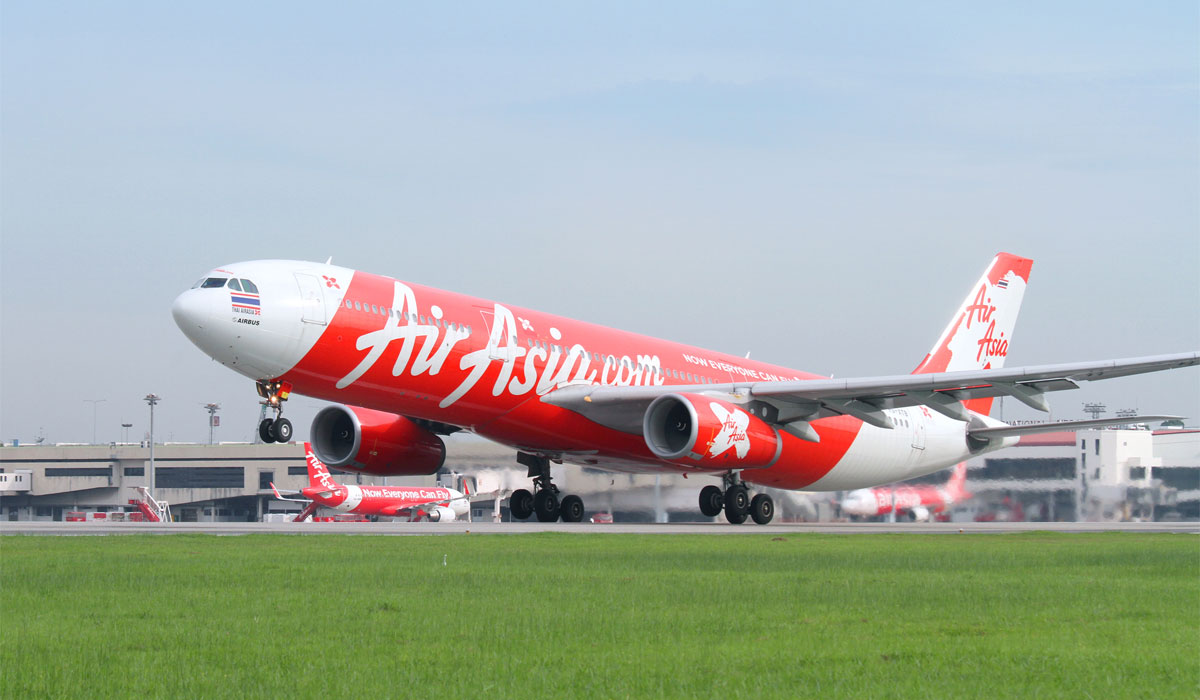
    AirAsia X’s shares dived by the most in more than a year after the long-haul budget airline was officially categorized as a financially distressed firm, which gives the company a year to recast its finances or risk losing its Malaysian listing.

    The stock tumbled as much as 21.1 percent to 7.5 sen on Monday (Nov 1), set for the steepest drop since August last year. The shares traded at eight sen at 10:40am amid volume that was six times the average for this time of day.

    On Friday, AirAsia X’s auditor Ernst & Young issued a disclaimer of opinion on the airline’s audited financial results for the 18-month period ended June this year, citing threats that cast “significant doubt” on the firm continuing as a going concern, the airline said in a filing. AirAsia X said it has a year to recast its finances, failing which it will be delisted from Bursa Malaysia.

    “AirAsia X continues to face severe liquidity constraints and all hopes are on successful debt restructuring and new equity funding from existing and new investors to provide sufficient capital to restart operations when international borders reopen,” Public Investment Bank wrote in a note on Monday. The brokerage maintained its stock-target price of one sen.

    “The company is taking the necessary steps to address its Practice Note 17 status,” AirAsia X said on Friday, referring to its categorization as a financially distressed company.

    AirAsia X is one of the many airlines in the Asia-Pacific region to have been hit by travel restrictions imposed to curb the coronavirus pandemic. It has grounded most of its aircraft fleet since March last year and has deferred payment to creditors.

    AirAsia X recently offered to pay creditors only 0.5 percent of the more than US$8 billion (S$10.8 billion) total debt they are owed and terminate all existing contracts as it tries to restructure after it triggered events of default for various agreements.

    AirAsia is set to meet its creditors to vote on its restructuring proposal on Nov 12 and it would require at least 75 percent of each class of scheme creditors in the meeting to vote favorably for its proposed debt restructuring exercise to carry.

  • Red China – up-and-coming wineries gain recognition

    Red China – up-and-coming wineries gain recognition

    Chinese winemaker Legacy Peak, which started producing grapes more or less by accident in 1997, symbolizes the rapid growth of an industry that now wins accolades in global markets, but it once came close to giving up.

    “We wanted to pull out all the vines and call it quits,” said Liu Hai, its second-generation owner, recalling early struggles to cultivate a barren plot received from a local government in payment for construction work.

    His family knew nothing about farming when they got the land in the arid north-central region of Ningxia on condition that it be devoted only to grapes, but they started making wine a decade ago, after wineries that used their fruit won several awards.

    Since then, Liu says the winery has won awards and found export markets in France, Germany, and Southeast Asia, despite the annual output of fewer than 100,000 bottles.

    From the rolling hills of coastal Shandong province to the desert heights of Ningxia and the deep valleys of southwestern Yunnan, Chinese vineyards and wineries are winning recognition.

    “China is an up-and-coming fine wine producer, and its best wines can compete on the world stage,” said wine educator Edward Ragg, who is a reviewer for the influential Robert Parker Wine Advocate.

    The products of wineries such as Chateau Nine Peaks in Shandong, Silver Heights and Grace Vineyard in Ningxia, and Ao Yun in Yunnan, are rated as “outstanding wine of exceptional complexity and character” by Parker’s newsletter.

    Some, such as Nine Peaks and Legacy Peak, are finding export markets in Asia and Europe.

    China’s wine market is the sixth-largest in the world, with event organizer Vinexpo saying it consumed $14.8 billion worth of wine in 2018, and forecasting sales of $18 billion by 2023.

    But domestic wineries must battle an image problem, as consumers at home can be suspicious of their quality and often put off by high prices.

    “It was always easier to sell to foreigners because they are more open-minded, but it has been a tough sell with Chinese customers,” said Liu.

    Other problems are high production costs and erratic weather that can hamper efficiency and quality, while a slowing economy and the COVID-19 pandemic have hit China’s wine consumption since 2018.

    Modern winemaking in China dates fromg the 1980s, when French firms, such as the precursor of Remy Cointreau, began investing after the door was opened to foreign businesses by then-leader Deng Xiaoping.

    While the French influence persisted in a market dominated by reds and a glut of Bordeaux imitations, quality began improving in the early 2000s.

    That was a time when vineyards focused on growing healthier grapes just as incomes grew sharply, with more people traveling abroad and drinking more wine.

    Now home-grown wineries can allay the suspicions of some consumers, such as Yang Lu, who owns a restaurant in the Chinese capital.

    “I was amazed by how the aroma was full of nice fruits and flowers,” said Yang, describing her experience last year of first sampling the Mountain Wave label produced in Ningxia.

    “It had a nice color and was smooth with a long finish.”

    Until then, Yang, who is in her 30s, educated overseas, and widely traveled, had almost always ignored domestic wines, uncorking only imports such as New Zealand wines made from pinot noir.

    Some winemakers, such as Ian Dai, 33, who is behind the Ningxia brand Xiaopu, priced in the range from 168 yuan ($26) to 300 yuan ($47), are turning away from industrial methods in the search for a Chinese signature variety.

    Dai said he was looking to more natural methods, such as fermenting without commercial yeast or leaving acidity and tannin levels unadjusted to “let grapes express themselves”.

    An independent with no vineyards or winemaking equipment of his own, Dai is in his fifth year of winemaking after dropping out of college in Sydney and spending a decade in wine sales.

    Dai hopes to find grape varieties for a wine that represents China.

    “As a winemaker I should have the ego to make the best wine in this climate with grapes grown here,” said Dai, who expected it would take two decades to produce such a wine in China.

    Chinese wineries are also experimenting with alternative grape varieties, such as marselan, aglianico and saperavi. Marselan, a cross between cabernet sauvignon and grenache embraced years ago by Legacy Peak and others, offers high yields and a fruitiness much needed by Chinese reds, experts say.

    “Marselan could one day become China’s signature wine grape, like malbec is to Argentina,” added Ragg, a holder of the Master of Wine qualification