Tag: asia

  • PayPal says it is not pursuing Pinterest acquisition

    PayPal says it is not pursuing Pinterest acquisition

    PayPal is not pursuing an acquisition of Pinterest at this time, the online payments provider said on Sunday, responding to market rumors.

    Earlier in the week, it was reported that the payments behemoth had offered to buy digital pinboard site Pinterest for US$45 billion, or about $70 per share, mostly in stock.

    Pinterest did not immediately respond to a Reuters request for comment outside of business hours.

  • Auchan set to sell Taiwan business to local rival

    Auchan set to sell Taiwan business to local rival

    French supermarket group Auchan is set to quit Taiwan after 24 years in the market, completing its withdrawal from greater Asia.

    Taiwan News has reported that local operator PX Mart will take over the RT-Mart hypermarket joint venture between Auchan and the Ruentex Group by mid-next year. Auchan is the majority partner in the venture, with a 65-per-cent share.

    The company was in May reported by Bloomberg to be in talks over the divestment of its Taiwanese business, said to be seeking somewhere between US$300-400 million.

    According to Taiwan News, PX Mart said it planned to buy buildings, land, distribution rights and the RT-Mart brand. No price was revealed and Auchan has not commented on the report.

    The RT-Mart brand was created by Taiwanese tycoon Samuel Yin’s Ruentex Group, which owns 20 hypermarkets and two convenience stores. PX Mart operates 1056 stores and plans to expand its network to more than 1100 next year.

    The reported deal marks another step in an ongoing reshuffle within Taiwan’s supermarket industry. Last year, French rival Carrefour bought the Wellcome Taiwan business from Singapore-listed Dairy Farm International, including the Jasons Marketplace brand, giving it control of 224 supermarkets. There have since been whispers that Carrefour is considering selling its enlarged Taiwan business.

    Auchan exited Vietnam in 2019 closing some stores and selling the remaining business to local operator Saigon Co-op. Last October it sold its stake in China’s Sun Art Retail Group to Alibaba Group in a transaction valued at $3.6 billion.

  • Facebook criticizes App Tracking Transparency on iPhones

    Facebook criticizes App Tracking Transparency on iPhones

    When Apple introduced App Tracking Transparency back with iOS 14.5, a feature that allows iPhone users to opt-out of ad-related activity tracking on their phones, Facebook was not happy with it. Back then, Facebook criticized the new privacy feature claiming it would hurt small businesses’ advertising. Now, Mark Zuckerberg is at it again.

    On Monday, Facebook reported its third-quarter financial results that showed $29.1 billion in revenue from advertisements. Despite these results though, the company’s CEO Mark Zuckerberg has remained upset about Apple’s privacy changes that prevented ad tracking if the user didn’t want to be tracked. Reportedly, he stated in an investor call that Apple has been hurting not only Facebook but “millions of small businesses” with these changes.

    Zuckerberg stated that Facebook experienced “revenue headwinds” because of Apple’s App Tracking transparency and its impact on the advertising business. He criticized the iOS privacy features stating that they affect small businesses that rely on ad platforms in the “difficult times”.

    He also said that despite the impact these changes had on the social media platform, the company will learn to navigate the “headwinds” over time with investments Facebook is making today.

    Another participant in the investor call was Facebook COO Sheryl Sandberg stated that the iOS privacy changes advantaged Apple’s own advertising business. Additionally, Sandberg stated that now it is more difficult to target an ad or measure campaign results when it comes to iPhone and iPad users.

    Apple’s App Tracking Transparency, which was introduced back in April with iOS 14.5. The feature presented iPhone users with a prompt to opt-out of advertisement tracking on apps. If people wanted, they could click on a button and thus prevent tracking so they won’t receive targeted apps. Understandably, a large number of iPhone users opted out of tracking.

    Companies such as Facebook which rely heavily on advertisements disagreed with the new change ever since it was introduced back in April. Facebook criticized Apple on the move, stating multiple times that this change was hurting small businesses.

    It was not only Facebook complaining though. Last week, Snap’s CEO also stated the company’s revenue from Snapchat was affected by the new App Tracking Transparency technology. However, Snap’s CEO stated that these changes might be positive in the long run.

    By September of this year, according to data from analysis firm Statista, only 21% of iPhone users have decided to opt-in for app tracking and to allow for their activity to be tracked in order to receive targeted ads. The remaining percentage is, understandably, for iPhone users that have opted out and prevented apps from tracking them for ads.

    The App Tracking Transparency feature has now started to change the advertising market across the mobile industry. Right now, many advertisers focus primarily on Android devices, as many iPhone users have decided that they do not wish to be tracked for targeted ads.

    Apparently, it’s not only advertisers like Facebook that are affected by this change. A couple of months ago, we reported that the new App Tracking Transparency feature is also changing the mobile game industry and is influencing the way game makers have to go about in order to advertise in games, as they cannot be targeted to specific users.

    Recently, we reported on another fact: Apple’s in-house advertisement business has been experienced growth since the change. Apple has an ad service named Search Ads and it has grown since App Tracking Transparency was introduced on iOS devices.

  • Apple releases iOS 15.1 with hot new features

    Apple releases iOS 15.1 with hot new features

    Apple has released iOS 15.1 this morning which adds some new features for iPhone users. The first feature is SharePlay which allows users to share experiences with others over FaceTime. You can stream television episodes, movies, and even listen to streaming music while connected over FaceTime with your pals.

    For example, let’s say that you and your friends are big fans of The Voice. You can stream episodes over Hulu, sharing the fun of watching the show together with your friends over FaceTime. You can also share the experience of streaming music via FaceTime as well. Not all streamers are compatible with the feature, but so far Disney+, ESPN+, HBO Max, Hulu, MasterClass, Paramount+, Pluto TV, TikTok, and Twitch will work with the platform.

    With Share Play, which Apple calls a “new way to share synchronized experiences in FaceTime,” each user has controls allowing him/her to pause, play, rewind, or fast forward content. And when someone starts to talk, an electric shock is sent to shut that person up a feature called Smart Volume automatically reduces the volume of the streaming television show, movie, and music.

    The update also adds the ProRes feature to the iPhone 13 Pro and iPhone 13 Pro Max. This is a feature that compresses video into small files without losing much of the image quality. It is used for editing videos and supports video resolution up to 8K. And with iOS 15.1, if you’re among those who don’t like how the ultra-wide cameras on the iPhone 13 Pro models turn Macro Mode on automatically when moving in close to take a photo or shoot a video, the update will allow you to disable this feature.

    With the iOS 15.1 update, you can keep your COVID-19 vaccine card in the wallet app so that it will always be with you (assuming that you always carry your iPhone in your pocket). The devices receiving the update include: iPhone 13, iPhone 13 mini, iPhone 13 Pro, iPhone 13 Pro Max, iPhone 12, iPhone 12 mini, iPhone 12 Pro, iPhone 12 Pro Max, Phone 11, iPhone 11 Pro, iPhone 11 Pro Max, iPhone XS, iPhone XS Max, iPhone XR, iPhone X, iPhone 8, iPhone 8 Plus, iPhone 7, iPhone 7 Plus, iPhone 6s, iPhone 6s Plus, iPhone SE (second-generation) iPhone SE (first-generation) and the iPod touch seventh-generation.

    To update your iPhone to iOS 15.1, go to Settings > General > Software Update. Following those directions will also allow iPad users to update to iPadOS 15.1.

    Apple has also released watchOS 8.1. The update features enhanced algorithms to detect falls during workouts. Following the installation of the update, you’ll also be able to enable fall detection during workouts only. You must have an Apple Watch Series 4 and later to add this health-related feature. With fall detection, the Apple Watch detects when the user has suffered a hard fall and can summon emergency help while leading them directly to your location.

    The Wallet app on your Apple Watch will show proof that you’ve received your COVID-19 vaccination just like the Wallet app on the iPhone will show the same information after you’ve installed the iOS 15.1 update on the handset. WatchOS 8.1 will give Fitness+ subscribers the opportunity to invite up to 32 people to work out together through a FasceTime call using iPhone, iPad, or Apple TV.

    The update also exterminates a bug that caused the Always-On feature to display the wrong time when users’ wrists are down. This bug was found on the Apple Watch Series 5 and later (excluding the Apple Watch SE). To install the update, make sure that the Apple Watch is connected to its charger. It also needs to be in the range of users’ iPhone models. The handsets must also be connected to a Wi-Fi signal.

  • Seafood exports edges up to 2,4Bln

    Seafood exports edges up to 2,4Bln

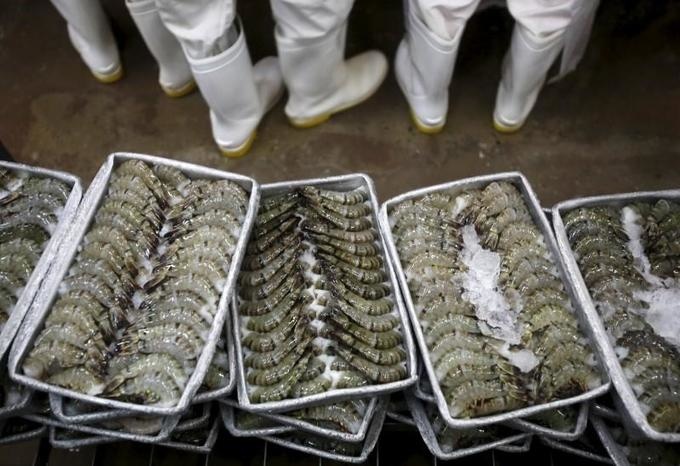
    Seafood exports rose by 2.8 percent year-on-year in the first nine months of the year to US$2.4 billion, according to the Vietnam Association of Seafood Exporters and Producers.

    Tuna, squid and octopus accounted for the highest proportion of the exports.

    Bivalve mollusk exports soared 39 percent to $99.6 million.

    The five biggest markets for squid and octopus were Korea (accounting for 41 percent), 11 member countries of the CPTPP (24 percent), Thailand (11 percent), EU (10 percent), and China (7 percent).

    In September alone, exports fell by 24 percent year-on-year, after falling by 24 percent in August, due to social distancing restrictions.

    VASEP expects the figure to also decline in October.

  • With no Apple shop, mono stores mushroom in Vietnam

    With no Apple shop, mono stores mushroom in Vietnam

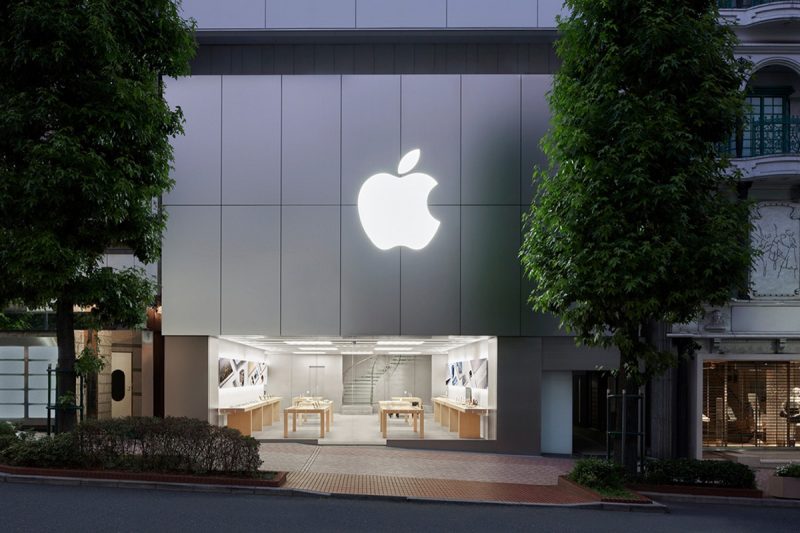
    Vietnam has no Apple store, so resellers are opening mono store chains in the country for consumers to experience an “Apple-standard shopping space.”

    An Apple mono store is a shop that exclusively sells Apple products. There are two kinds of mono stores – the AAR (Apple Authorized Reseller) with a minimum area of 50 sq.m., and APR (Apple Premium Reseller) with an area of 180-220 sq.m.

    “Vietnam and many other Southeast Asian countries are yet to house Apple stores, while the number of Apple users in these countries is getting bigger and bigger. We have opened the TopZone chain (Apple mono stores) for consumers to experience Apple-standard shopping space,” said The Gioi Di Dong (Mobile World) CEO Doan Hieu Em.

    The company will have a total of 50-60 TopZone stores by the first quarter of next year, he said.

    According to FPT Shop, another major electronics retailer that has established 15 Apple mono stores called F.Studio, sales of Apple products in Vietnam have posted two-digit growth rates in recent years. Authorized resellers will establish set up more Apple mono stores in the coming months.

    ShopDunk inaugurated five Apple mono stores on Oct. 22, the day iPhone 13 was launched in Vietnam. It plans to open another 50 stores in the next six months.

    Some other Apple authorized resellers in Vietnam, including CellphoneS and Minh Tuan Mobile, have also said they are planning to set up more Apple mono stores.

    In mid-2020, Apple had posted recruitment notices for many important positions in Vietnam, but it has made no further move since then. Experts have said that relatively small sales in Vietnam was the main factor in the absence of an official Apple store in the country.

  • Tesla Zooms Past $1 Trillion Market Cap On Bet That The EV Future Is Now

    Tesla Zooms Past $1 Trillion Market Cap On Bet That The EV Future Is Now

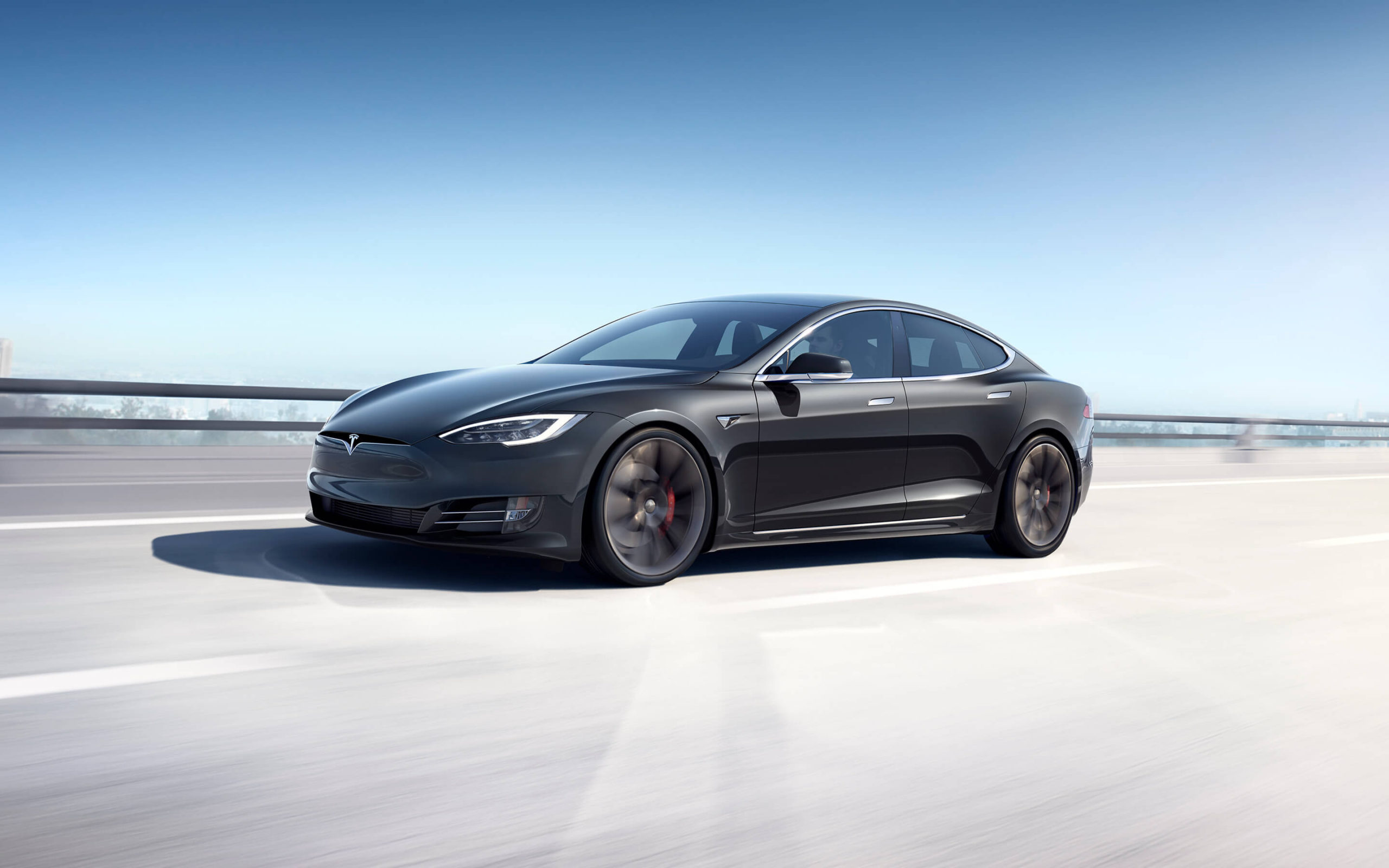
    Tesla is the first carmaker to join the elite club of trillion-dollar companies that includes Apple Inc, Amazon.com Inc, Microsoft Corp and Alphabet Inc.

    Most automakers do not boast about sales to rental car companies, often made at discounts to unload slow-selling models. But for Tesla and its investors, Hertz’s decision to order 100,000 Tesla vehicles by the end of 2022 showed electric vehicles are no longer a niche product, but will dominate the mass car market in the near future.

    “Electric vehicles are now mainstream, and we’ve only just begun to see rising global demand and interest,” Hertz interim Chief Executive Officer Mark Fields told Reuters.

    Tesla Chief Executive Elon Musk has set an annual sales growth target of 50%, on average, eventually reaching 20 million vehicles a year. That would be more than twice the volume of current sales leaders Volkswagen AG and Toyota Motor Corp.

    Consumer demand for electric vehicles is turning a corner in some major markets. The Tesla Model 3 was the best-selling vehicle of any kind in Europe last month, consulting firm JATO Dynamics reported Monday.

    Tesla also appeared on Monday to be making progress resolving regulatory problems that threatened its business in China. The company said it had opened a new data and research center in Shanghai to comply with government requirements that data collected from vehicles in China stay in the country.

    However, Tesla faced new U.S. regulatory pressure on Monday. The National Transportation Safety Board’s new chief sent Musk a letter questioning why Tesla was rolling out its “Full Self Driving” software even though the company has not officially responded to the NTSB’s questions about the automated driving system’s safety.

    “It (the Hertz order) puts an exclamation point under guidance for 50%+ growth in deliveries,” Roth Capital analyst Craig Irwin said. “Another solid piece of evidence EVs are going mainstream.”

    Tesla now faces the daunting day-to-day challenge of becoming a high-volume automaker growing at a rate not seen since the early 1900s when demand exploded for Henry Ford’s Model T.

    Tesla is coping with an order backlog for its vehicles and extended supply chain disruptions. Tesla Chief Financial Officer Zachary Kirkhorn cautioned investors during a call last week that Tesla’s near-term production goals will hinge on resolving those disruptions and ramping up two new, huge assembly and battery plants in Austin and Berlin.

    “There is quite an execution journey ahead of us,” Kirkhorn said.

    Rivals are not sitting still. Daimler AG’s Mercedes-Benz brand, General Motors Co, Ford Motor Co, and startups such as Lucid and China’s Xpeng are all battling Tesla with new electric cars or trucks.

    Investors and analysts, for now, are looking past the near-term challenges. Morgan Stanley boosted its Tesla price target by 33% to $1,200 as the brokerage expects the electric carmaker to surpass 8 million deliveries in 2030.

    The Hertz deal also underscored the power of the Tesla brand, as the rental car company emerges from bankruptcy and aims to revive its once-dominant brand. Hertz’s rescue is led by a group of investors including Knighthead Capital Management, Certares Opportunities and Apollo Capital Management.

  • Melbourne retail to reopen last Friday

    Melbourne retail to reopen last Friday

    It’s been a grueling 20 months for many Victorians who have gone in and out of lockdown, but on Friday the state is set to welcome a raft of new freedoms — and will potentially say goodbye to some COVID-19 restrictions once and for all.

    As the state reaches its 80 percent double-dose vaccination milestone, regional Victoria and metropolitan Melbourne will follow the same rules, while gyms, retailers and entertainment venues will reopen to the fully vaccinated.

    Leanne Walsh, an instructor and co-owner of a small martial arts school in Craigieburn to Melbourne’s north, said she was excited to welcome students again.

    “We’re just looking forward to opening up when we can,” Ms Walsh said.

    “During the lockdown, we lose contact with our students and obviously then have to rebuild our student base.”

    Her center has been closed for most of the year, but she said it has been “coping very well” thanks to business grants provided by the state government during the pandemic.

    But Ms Walsh said questions remained around the reopening of her business and said it would be a challenging journey to “COVID normal” as her martial arts school negotiated new policies like the vaccine mandate.

    “I don’t know that we can open on Friday, as I need to clarify if the students need to be double-vaccinated,” she said.

    “It’s really just the vaccinations that are a little unclear as we don’t fall into the mainstream gym or community sport.”

    The Victorian government has said it will move into a “vaccinated economy” once 90 percent of people over the age of 16 receive their two doses, with only fully vaccinated people allowed to go to gyms, retail stores, theatres, and other venues.

    At that 90 percent milestone, expected on November 24, caps and density restrictions will also be scrapped and masks w

  • Rubber firms report surge in profits

    Rubber firms report surge in profits

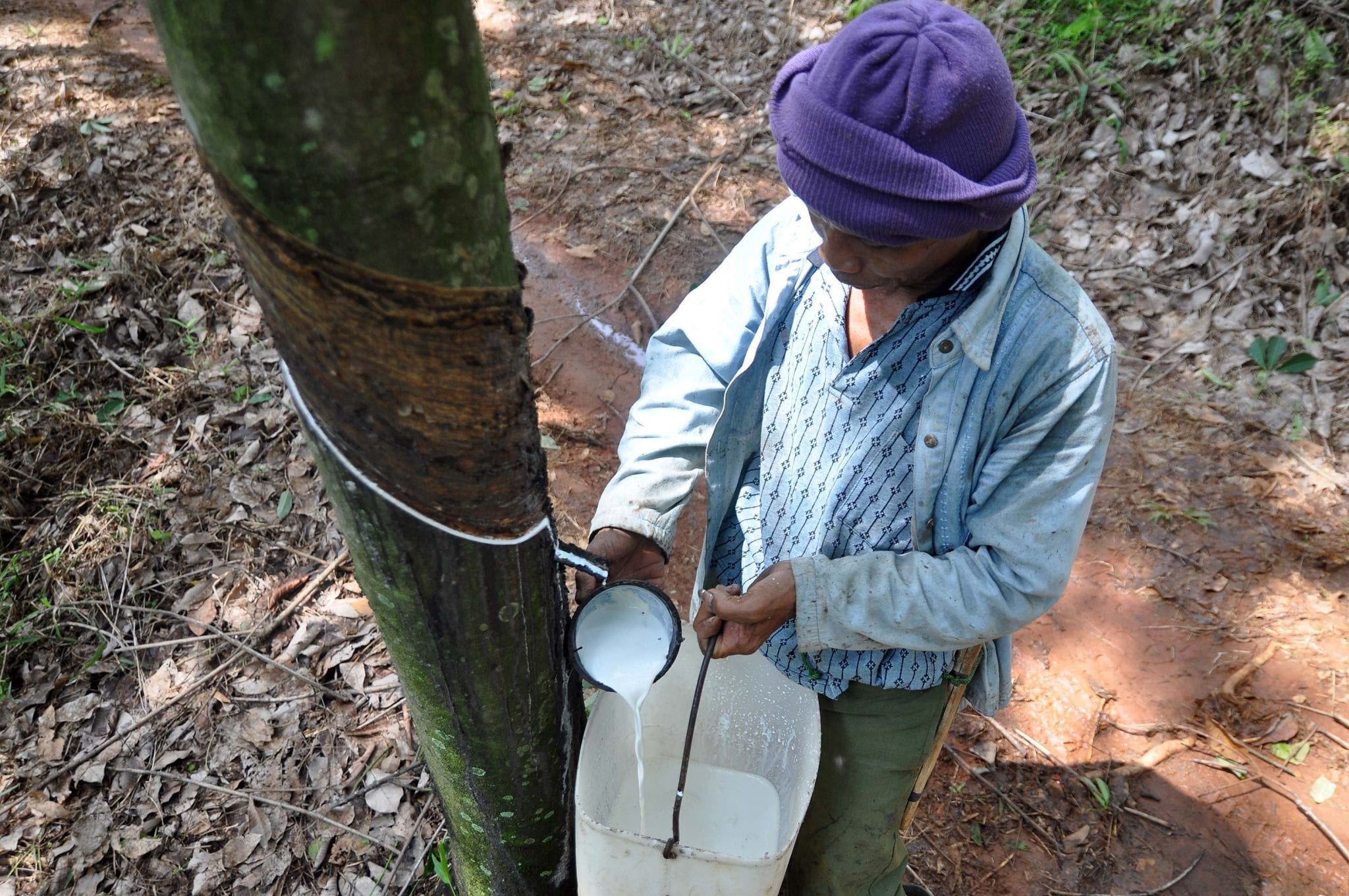
    Rubber prices have soared by 30-50 percent this year, driving up profits for companies in the industry by triple digits in Q3.

    Subsidiaries of the Vietnam Rubber Group such as Daklak Rubber JSC, Tan Bien Rubber JSC, Ba Ria Rubber JSC, Phuoc Hoa Rubber JSC, and Dong Phu Rubber JSC saw profits surge by over 300 percent.

    Thong Nhat Rubber reported a rise of 466 percent.

    Vietnam’s rubber exports increased by nearly 24 percent to $970 million in Q3, according to data from the Ministry of Industry and Trade’s import-export department.

    Exports in the year-to-date were up 50 percent to $2.17 billion.

    A recent report by the Association of Natural Rubber Producing Countries said global demand for natural rubber would grow by 9 percent to more than 14 million tons this year.

    China, which buys over 70 percent of Vietnam’s rubber exports, is expected to import 1.7 million tons between September and December and another two million tons in the first four months of 2022, according to the ministry.

  • Telstra partners Australian government to buy Digicel Pacific

    Telstra partners Australian government to buy Digicel Pacific

    Telecommunications giant Telstra announced on Monday that it has partnered with the Australian government to buy Digicel Pacific for $1.6 billion.

    This is widely viewed as a political move to curtail China’s influence in the region, following interest shown by China’s biggest telecommunications operator to buy over Digicel Pacific.

    The biggest mobile operator in the South Pacific region, Digicel Pacific has 1,700 employees and around 2.5 million subscribers from retail customers through to large enterprises. Digicel Pacific has operations in Papua New Guinea, Fiji, Samoa, Tahiti, and Vanuata – important markets in Papua New Guinea.

    In a press release, Telstra stated that the Australian government will contribute $1.33 billion, while Telstra will contribute $270 million in equity. Telstra will own 100% of the ordinary equity and receive strategic risk management support from the government.

    This move is also aligned to Telstra operations in Papua New Guinea, where Telstra has been a licensed operator since 2012 and one of the biggest providers of voice and data services connecting the South Pacific to the rest of the world.

  • iPhone 13 sees record sales in Vietnam

    iPhone 13 sees record sales in Vietnam

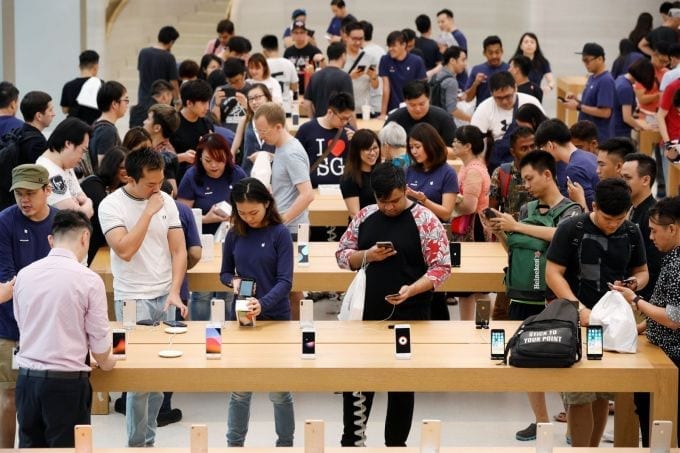
    Tens of thousands of iPhone 13 phones have been sold in Vietnam within days of its launch, with numbers exceeding those of Apple’s previous offerings.

    FPT Shop sold nearly 5,000 phones for nearly VND200 billion ($8.79 million) on the first day of sales on Oct. 22, breaking previous iPhone records, Nguyen The Kha, director of the chain’s mobile telecommunications division, said.

    Last year it sold 4,500 iPhone 12s on the first day.

    CellphoneS sold nearly 3,000 iPhone 13s compared to around 1,000 last year.

    Minh Tuan Mobile, which began selling Apple products for the first time this year, sold 1,000 iPhone in two days.

    Industry insiders said the large number of incentives that Apple is offering users this year is causing more buyers to go to authorized stores instead of buying them from sellers who pick up the devices in other countries and sell them in Vietnam.

    “Apple almost did not seem to care about the Vietnam market before,” a seller in HCMC’s District 1 said. “But now it offers a lot of support and commission to distributors and incentives to buyers, which makes the unauthorized market less appealing.”

    Another factor is that the iPhone 13 arrived in Vietnam one month earlier than the iPhone 12 last year, which came on Nov. 26.

    ShopDunk, a distributor of Apple products, said it opened five new Mono Stores (exclusively selling Apple products) on the first day of iPhone 13 sales.

    It also saw the number of pre-orders triple to 15,000.

    A spokesperson for Minh Tuan Mobile said only 50 percent of orders could be met so far, and others have to wait.

    iPhone 13 mini, the smallest and cheapest in the iPhone 13 lineup, is being sold in Vietnam at around VND18.4 million.

    The remaining models cost VND21.5-VND31.9 million.

  • Aldi removes 2,000 tonnes of plastic from its shelves

    Aldi removes 2,000 tonnes of plastic from its shelves

    The sustainability focus in Belgium and Luxembourg is currently on reducing food waste and improving the sustainability of packaging. We provide our customers with sustainable products, while transforming our stores and distribution centres to be more energy-efficient and climate-friendly.

    To reduce food waste, we have strengthened our collaboration with the Belgian foodbanks. We started freezing food surpluses, which enabled us to increase donations. With this strategy, the ALDI companies enable redistribution of food over a longer period of time to those in need. As a result of our initial EOY charity action, we donated 50,000 euros’ worth of freshly prepared meals to the Foodbanks with the help of our customers.

    In 2019, the National Packaging Policy was launched for Belgium and Luxembourg with the aim of reducing and optimising the recyclability of our packaging. We strive towards 100 per cent recyclable packaging by the end of 2022 and aim to reduce the total amount of packaging materials by 10 per cent by the end of 2025. As of 2019, these goals are monitored by our newly founded sustainable packaging team. Furthermore, we have taken initiatives to reduce single use plastics such as cotton ear buds and carrier bags.

    Our products make a stop at our distribution centres before being distributed to individual stores. To reduce our carbon footprint, we have retrofitted all our distribution centres with energy-efficient LED lighting and solar panels. The new centre in Turnhout meets the latest sustainable building standards, for which it has received a BREEAM outstanding certification as the most sustainable distribution centre in Belgium. In 2019, we started working with a hub for suppliers, which enables us to reduce the amount of driven kilometres saving CO2 emissions.

  • HCMC firms have difficulty resuming operations

    HCMC firms have difficulty resuming operations

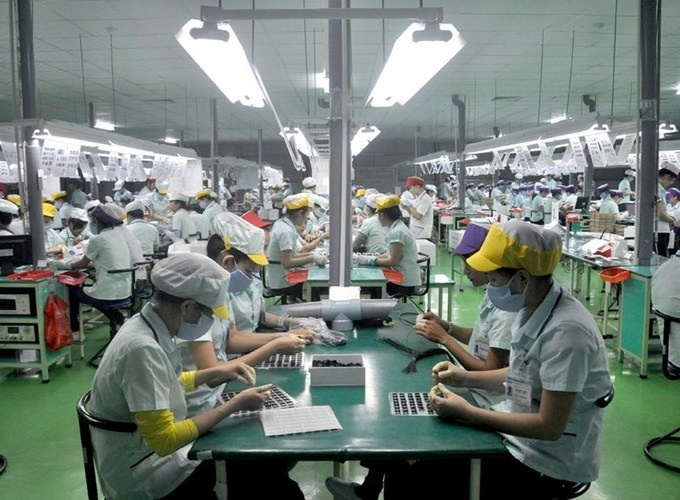
    Enterprises in HCMC that have resumed business said they are still facing high production costs, difficulties in inter-provincial transport and labor shortages.

    A survey of 100 enterprises both inside and outside industrial parks by the Southern Institute of Social Sciences this month found that 44 percent plan to resume full production, 29 percent plan to operate at close to full capacity and the rest are adopting a wait-and-see policy.

    More than 46 percent said they are facing difficulties, especially high production costs since they still have to take anti-Covid measures and a shortage of workers.

    Some 35 percent said their biggest difficulty is being unable to repay debts.

    Around 35 percent said they have benefited from the electricity tariff reduction, 19 percent from the labor union fee waiver, 18 percent from loan rollover and interest reduction, and 9-15 percent from other forms of assistance.

    Many wanted authorities to announce detailed policies for economic recovery, clearly define criteria and conditions for resuming business activities and inter-provincial travel, and loosen pandemic-related restrictions.

    Nguyen Van Thu, general director of GC Food Company, said anti-Covid regulations should be loosened, especially for fully vaccinated people, so that workers could travel easily.

    Labor-intensive businesses said some new regulations such as one toilet for every 10 employees are not feasible.

    Dang Nguyen Anh, head of the Vietnam Academy of Social Sciences, said HCMC’s safe production criteria are still inclined toward a ‘zero Covid’ approach, which make compliance with them impossible for businesses.

    Tran Van Khuyen, Party committee secretary of the city’s Hoc Mon District, said 480 local businesses have resumed operations since Oct. 1, and many are worried about the high cost of Covid testing and lack of resources.

  • Starbucks Korea faces probe over US$153 million in prepaid card takings

    Starbucks Korea faces probe over US$153 million in prepaid card takings

    Starbucks has been the subject of growing speculation as a number of Korean banks express their concerns over the US coffeehouse chain’s potential move into the competitive financial services industry.

    The global chain itself has not announced its plans to edge into financial services, but the booming success of the company’s prepaid gift card and mobile app – which Starbucks announced collectively had $1.56 billion in stored value by the end of 2019 – suggests there is a path emerging for the company to become a bank if it wanted to.

    Despite the enticing $1.56 billion figure, 3,900 US banks have less than $1 billion in total assets according to the Federal Deposit Insurance Corporation (FDIC).

    Starbucks revealed on a recent earnings call that its rewards program in the US had grown to 18.9 million active members at the end of 2019, up 16% year-over-year. “This is important because we know from experience that when customers join our rewards program, their total spend with Starbucks increases meaningfully,” he said on the call.

    South Korea’s Hana Financial Group is acutely aware of Starbucks’ competitive potential. Its chairman Kim Jung-tai said in his New Year address: “Technologies have allowed coffee companies like Starbucks to be our rivals. It will be fine to call Starbucks an unregulated bank, not a mere coffee company.”

    One year prior, South Korea’s KB Financial Group, KB Kookmin Bank and NongHyup Financial Group all mentioned Starbucks in their New Year’s addresses too. “The most-used mobile payment app in the US was the Starbucks app, not Google or Apple Pay,” KB Financial Group’s chairman Yoon Jong-kyoo said last year.

    “About 40% of its payments were made with the app, and the amount of cash loaded onto its prepaid cards and apps surpassed the amount of cash that some provincial banks had,” Jong-kyoo added. Industry experts believe Starbucks might move into asset management through its prepaid cards, as well as into the loan, insurance and currency exchange sectors.

    “Starbucks has been regarded as a fintech firm, not a coffee company, over the past few years,” an unnamed bank official said. “The removal of the word coffee from its signboard also proves this.”

    The coffeehouse partnered with cryptocurrency trading platform Bakkt at the end of last year. In the first half of 2020, Starbucks and Bakkt will test a consumer app “to make it easy for consumers to discover and unlock the value of digital assets”, Bakkt’s chief product officer Mike Blandina said in October.

    These recent movements by Starbucks against the backdrop of its prepaid card success have spurred the Korean financial industry to call for regulators to put controls on the coffeehouse. “Regulations are needed for prepaid service providers to maintain a certain level of capital adequacy ratio,” Hansung University’s economics professor Kim Sang-bong said.

    The global chain has plenty of capital to start up its own bank. According to Statista, its revenue in 2019 was roughly $26.51 billion. With Big Techs such as Amazon, Facbook, Uber and Grab all planting their flag in the space, it seems imaginable that a similarly well-known brand such as Starbucks might be able to do the same.

    But if regulators decide to clamp down on the company in certain regions, then its currently speculative appetites for a financial play could easily be curbed or at least put on hold.

  • Nokia deploys 5G standalone core network for Taiwan Mobile

    Nokia deploys 5G standalone core network for Taiwan Mobile

    Nokia announced that it has deployed its 5G standalone core network for Taiwan Mobile Co. to enable the operator to provide the most advanced 5G applications for enterprises and businesses, and to strengthen its network services and performance.

    The timely deployment includes Nokia’s voice core, cloud packet core, subscriber data management, signaling, network exposure, policy controller, cloud infrastructure, and security management for radio transport. With a 5G standalone core network, Taiwan Mobile can readily provide the most advanced 5G services such as network slicing and smart city solutions that require ultra-low latency and reliability.

    Nokia and Taiwan Mobile are long-standing partners and Nokia, as the sole supplier of Taiwan Mobile’s 5G network, is supporting the operator’s ‘Super 5G strategy’ focused on sustainability and digital transformation.

    Nokia leads the market in core network deployments, with 25 of the top 40 communication service providers relying on its core network products.

    Tom Koh, Senior Vice President and Chief Technology Officer, Technology Group, Taiwan Mobile, said: “Introducing SA to unleash the full potential of 5G beyond high-speed to further realize innovative use cases enabled by ultra-low latency and massive IoT is our strategic mission in the 5G era. We are delighted to reach this milestone with Nokia to bring the first true 5G network into Taiwan. Owning the agility of network slicing to swiftly customize the network for accommodating different use cases, Taiwan Mobile will be able to accelerate time-to-market to provide a wide variety of services for everyone and everything and to free enterprises to embrace Industry 4.0. The SA technology is built from cloud architecture, infrastructure-agnostic by design, which paves a critical step to a full software agile virtualization network. It unlocks the use cases with distributed cloud for low latency service with local breakout needed. Taiwan Mobile’s true 5G network will become the innovative engine for consumers to experience as well as verticals to deploy applications without limits.”

    Susanna Patja, Head of Cloud & Network Services, Greater China, Nokia, said: “We are very pleased that the Nokia 5G Standalone Core network is now up and running, on schedule, for Taiwan Mobile. This provides Taiwan Mobile with exceptional capabilities in terms of machine-to-machine communication, extreme automation, and reliability that enables critical 5G uses for enterprises; and does so with the knowledge that this standalone network will continue to function seamlessly with non-standalone networks.”