Tag: asia

  • India court quashes Amazon, Walmart’s Flipkart bid to stall antitrust probe

    India court quashes Amazon, Walmart’s Flipkart bid to stall antitrust probe

    An Indian court on Friday dismissed appeals by Amazon.com and Walmart’s Flipkart that sought to stall an antitrust investigation into their business practices, dealing a major setback to the U.S. firms in a key market.

    The Competition Commission of India (CCI) last year ordered an inquiry after allegations from brick-and-mortar retailers that the U.S. firms promoted select sellers on their e-commerce platforms and used to business practices that stifle competition.

    The investigation was on hold for more than a year after companies challenged it, denying wrongdoing and arguing that the CCI lacked evidence, but a court allowed it to continue in June. On Friday, the High Court in southern Karanataka state rejected the U.S. firms’ appeals.

    “By no stretch of imagination can inquiry be quashed at this stage. The appeals are nothing but an attempt to ensure that action initiated by the CCI … does not attain finality,” a two-judge bench said while reading the decision in court. “The appeals are devoid of merit, and deserve to be dismissed.-

    The two firms are likely to appeal the decision at India’s Supreme Court, according to people familiar with the case. Amazon did not immediately respond to a request for comment.

    Flipkart said in a statement it would review the court’s order, adding that it remains in compliance with Indian laws.

    Abir Roy of Sarvada Legal, which filed the antitrust case against Amazon and Flipkart on behalf of a trader group, said the court’s decision “further reinforces that the CCI investigation should continue promptly.”

    The CCI investigation is the latest setback for Amazon and Flipkart, which are grappling with prospects of tougher e-commerce regulations and accusations from brick-and-mortar retailers that the companies circumvent Indian law by creating complex business structures.

    The companies face several allegations in the case, including exclusive launches of mobile phones, promotion of select sellers on their websites and deep discounting practices that drive out competition.

    Trade minister Piyush Goyal last month lashed out at U.S. e-commerce giants for filing legal challenges and failing to comply with the CCI’s investigation, saying “if they have nothing to hide … why don’t they respond to the CCI?”
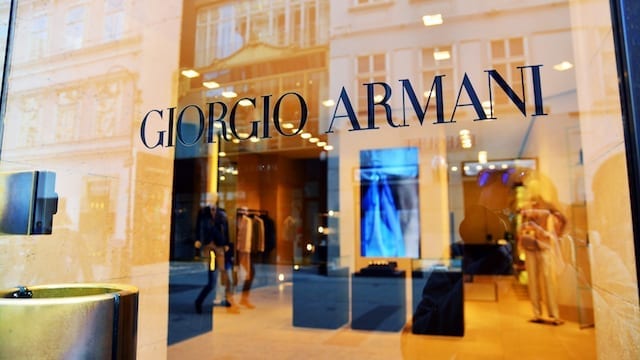

  • China sales help Armani bounce back from pandemic

    China sales help Armani bounce back from pandemic

    Sales at Giorgio Armani jumped 34% in the first half of 2021 as business in China and the United States helped the Italian fashion group bounce back, although it said it could be next year before it fully recovers from the pandemic.

    “The goal is to return to pre-pandemic levels by 2022, with… over 2 billion euros in direct consolidated revenues,” Chairman and CEO Giorgio Armani said on Sunday in a statement announcing 2020 results and the trend for January-June.

    The luxury group said consolidated net sales had fallen 25% last year to 1.6 billion euros ($1.9 billion), with most of the decline occurring in the first half of 2020.

    Luxury goods sales around the world fell sharply last year for the first time in years as the pandemic forced shop closures and brought international tourism to a virtual halt.

    “The drop in revenues in 2020 should be read not only as a consequence of the pandemic but also in line with Giorgio Armani’s own strategic principle of ‘less is more’,” said Armani Deputy Managing Director Giuseppe Marsocci.

    The Milan-based group did not give the value of total sales in January-June but said the positive sales trend so far this year pointed to a much better profitability scenario for 2021.

    For the whole of last year the group made a consolidated net profit of 90 million euros but an operating loss (EBIT) of 29 million euros.

    It also said on Sunday that its financial position improved significantly in the first half with net cash and cash equivalents of 1.088 billion euros “ensuring the financial resources necessary for the Group’s medium to long-term stability and growth”.

    Speculation about succession plans at Armani has come to the fore recently, especially after the 87-year-old designer said he could consider teaming up with another Italian company.

    Sources said earlier this month that John Elkann, scion of Italy’s Agnelli family, had explored a possible tie-up as part of plans to build a luxury conglomerate.

  • Volkswagen India Rolls Out New Brand Design And Logo Across Dealerships Ahead Of Taigun Launch

    Volkswagen India Rolls Out New Brand Design And Logo Across Dealerships Ahead Of Taigun Launch

    Volkswagen recently rolled out its new brand design and logo across the company’s 150 dealerships across the country. The new brand logo was first unveiled at the 2019 Frankfurt Motor Show and it was showcased in India for the first time at the 2020 Auto Expo. The company is using a phase-wise approach for implementing the new brand design and logo. The first phase will have 30 touchpoints get the same, while the remaining outlets will get the flat two-dimensional logo in the coming weeks.

    Commenting on the announcement, Ashish Gupta, Brand Director, Volkswagen Passenger Cars India said, “The implementation of new brand design across our dealerships marks a new era for Volkswagen in India. By implementing the new brand design and logo, we aim to create a 360-degree customer experience, that is intriguing and contemporary across all channels and appeals to our customers.”

    Through the implementation of the new brand design, Volkswagen aims to make its dealerships more human, attractive and emotional, the company said in a statement. The brand will also provide behavioral training to its entire staff including the salesmen and service advisors to make them more customer-oriented. The automaker also introduced ‘Sarvottam 2.0’ to amp up its digital efforts and offer a more transparent purchase and ownership experience to customers

    The rollout comes right in time as Volkswagen India gears up to introduce the new Taigun compact SUV. The brand new offering that has been specifically designed for India is the first model from the automaker under the India 2.0 strategy. It follows in the footsteps of the Skoda Kushaq that’s based on the same MQB A0-IN platform and will be sold only with petrol engine options. We will be driving the Volkswagen Taigun very soon. So make sure to keep watching this space for all the action.

  • US gets its way as Vietnam agrees not to devalue currency

    US gets its way as Vietnam agrees not to devalue currency

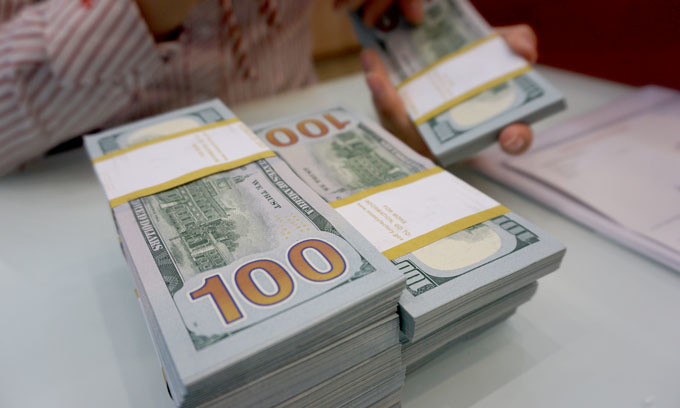
    The U.S. Trade Representative’s office has determined that no tariff action is warranted against Vietnam after its central bank agreed to refrain from “competitive devaluation” of the dong.

    “I commend Vietnam for its commitment to addressing U.S. concerns with its currency practices,” U.S. Trade Representative Katherine Tai said in a statement.

    The recent agreement between the U.S. Treasury and the State Bank of Vietnam “provides a satisfactory resolution of the matter subject to investigation and accordingly that no trade action is warranted at this time,” the statement said.

    Under the agreement, Vietnam committed not to devalue its currency for trade advantage and to make its monetary and exchange rate policies more transparent.

    The deal follows months of U.S. pressure and a rising trade surplus with that country.

    The U.S. had declared Vietnam a currency manipulator and threatened to impose punitive tariffs on its exports.

    Vietnam rejected this repeatedly, saying it did not manipulate its currency for unfair trade advantages.

  • Steelmakers protest proposed tariff adjustments

    Steelmakers protest proposed tariff adjustments

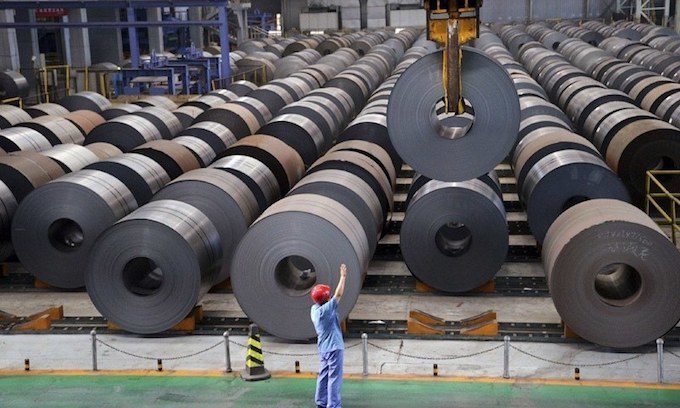
    The Vietnam Steel Association (VSA) has protested the latest proposed adjustments to tariff rates on steel products saying they will hurt domestic manufacturers.

    Under the proposal made by the Ministry of Finance, export tariff for billets would rise from zero percent to 5 percent, while the most favored nation (MFN) import rates for certain steel products would be reduced to 10 percent from 15 percent.

    The proposal is aimed at cutting the prices of construction steel, which have shot up 40 to 50 percent compared to early 2020.

    VSA has protested the proposal, arguing that the prices were impacted by the global raw materials market rather than the current tariff policies, or any trade remedies applied to steel products.

    VSA chairman Nghiem Xuan Da noted that most of the input materials for steel production are imported. A price hike in these materials will immediately affect domestic manufacturers, causing output prices to skyrocket.

    However, global steel prices have declined since late May.

    Vietnam reaped steel export earnings of $4.9 billion in the first half of this year. Meanwhile, it produced 16 million tons of steel, up 37 percent over the same period last year.

  • Seaport, maritime transport firms more profitable

    Seaport, maritime transport firms more profitable

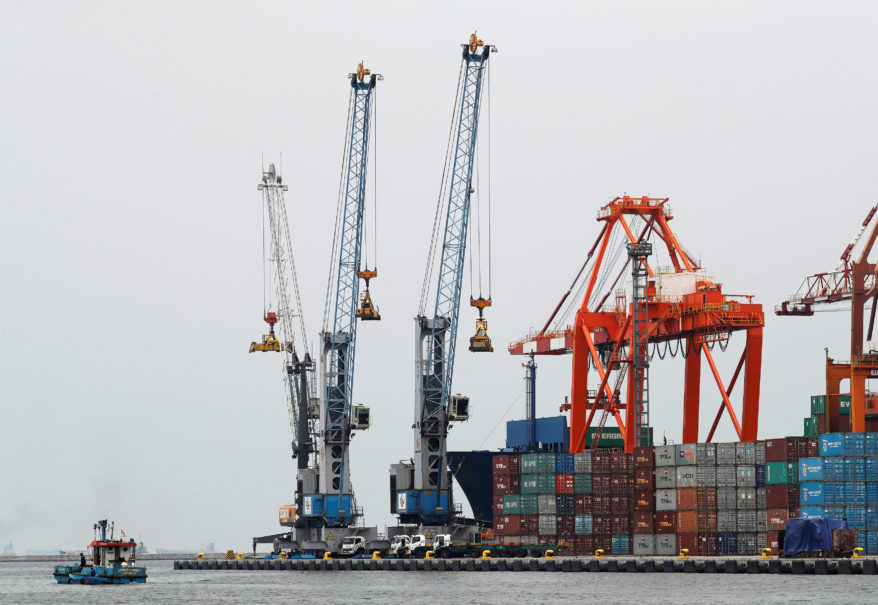
    Market recovery and larger freights helped Vietnamese seaport and maritime transport enterprises, both state-owned and private, gain bigger profits in the first half of this year.

    Vietnam National Shipping Lines (VIMC) made consolidated revenues of more than VND6.2 trillion (nearly $269.6 million), a 20 percent increase, and consolidated profits of over VND1.1 trillion, doubling against the same period last year.

    Meanwhile, net profits of HCMC-based Saigon Port JSC surged 155 percent year-on-year. The company currently runs many ports in the city, including Tan Thuan, Tan Thuan 2, Nha Rong, Khanh Hoi and Sai Gon-Hiep Phuoc.

    Dong Nai Port JSC in the southern province of Dong Nai saw revenues and profits increase 38 percent and 35 percent, respectively between January and June.

    Profits of Cam Ranh Port JSC in the central province of Khanh Hoa, and of Quy Nhon Port JSC in the central province of Binh Dinh surged 118 percent and 93 percent, respectively.

    Gemadept Corporation’s management board estimated its first-half revenues at over VND1.4 trillion, up 19 percent, and pre-tax profits of some VND390 billion, up 38 percent. The firm owns four ports in the northern region, one port in the central area and three ports in the south. It plans to increase its share in the Vietnamese port market from 11 percent in 2020 to 19 percent in 2021, and 23 percent in 2025.

    Like seaport operators, maritime transport service providers turned profits in the first half of this year, mainly thanks to market recovery and larger freights.

    Maritime transport units of VIMC started making profits after a long period of losses. Vietnam Ocean Shipping JSC (Vosco), which suffered losses of nearly VND120 billion in the first half of last year, recorded after-tax profits of more than VND220 billion in the first half of this year, the highest since 2009.

    Meanwhile, Hai An Transport and Stevedoring JSC, has been estimated to see pre-tax profits in the first half of this year more than double.

    According to VIMC, the quick recovery of Chinese, U.S. and European economies amid Covid-19 outbreaks led to bigger demand for goods and materials, positively affecting the international sea transport market.

    Data from the General Statistics Office showed Vietnam’s import-export turnover stood at nearly $320 billion in the first half of this year, increasing over 32 percent against the same period last year. The volume of goods through seaports surged, with container outputs rising 24 percent.

    In early July, Drewry World Container Index (for container freight) stood at $8,399, surging 346 percent against the same period last year.

    According to the Vietnam Association of Seafood Exporters and Processors, at some ports, freight in mid-2021 doubled that of late 2020 and rose nearly six times against early 2020.

  • Let shippers deliver food, says Grab

    Let shippers deliver food, says Grab

    Delivery app Grab wants food delivery services resumed in Hanoi since they help reduce the number of people gathering to fulfill various needs.

    “Since Hanoi authorities have been limiting the number of people at supermarkets and retail locations to lower the risk of contagion, services like GrabFood, GrabMart and GrabExpress have provided valuable assistance,” it said in a proposal, referring to its food, retail and parcel delivery services.

    They could help meet the city’s desire to ensure adequate supply of essential goods, it said.

    It assured its delivery people would meet social distancing requirements and it would limit delivery to essential items.

    Hanoi on Saturday ordered five ride-hailing and delivery platforms, Grab, Gojek, Be, MyGo and FastGo, to suspend their services, but still let other delivery platforms operate.

    Grab said the decision was inconsistent with the city’s policies and feared could cause unfair competition.

    Hanoi began a 15-day social distancing order starting 6 a.m. Saturday amid rising coronavirus concerns in both the capital and nationwide.

    It has recorded over 900 cases in the latest wave.

  • BNP Paribas Nets Ex-Credit Suisse NRI Banker

    BNP Paribas Nets Ex-Credit Suisse NRI Banker

    BNP Paribas Wealth Management has hired an ex-Credit Suisse banker to oversee the non-resident Indian market.

    Aditya Chauhan will join BNP Paribas Wealth Management as a market head for non-resident Indians (NRI), sources said, and he is expected to be accompanied by a team of bankers. Based in Singapore, Chauhan will oversee all NRI bankers in the city-state and Hong Kong.

    Chauhan was most recently working for Credit Suisse where he was also an NRI banker that reportedly began coverage of the Sri Lanka market in 2018 with a team of relationship managers. A spokesperson for the bank declined to comment.

    In 2021, BNP Paribas Wealth Management has made a number of senior private banking hires in Asia.

    In addition to Chauhan, it added longtime Citi banker Kevin King as its China market head in March and ex-Standard Chartered banker Michael Yong-Haron as its Hong Kong CEO earlier this year.

  • J.P. Morgan Opens Crypto Fund Access to All Wealth Clients

    J.P. Morgan Opens Crypto Fund Access to All Wealth Clients

    J.P. Morgan has reportedly allowed all of its wealth management clients to access cryptocurrencies via funds.

    J.P. Morgan’s wealth management clients gained access to five crypto products, effective July 19.

    Four of the products are from Grayscale Investments and one is from Osprey funds.

    According to the memo, J.P Morgan advisors will only execute unsolicited crypto trades for clients, including those who use the bank’s Chase trading app.

    J.P. Morgan is the latest U.S. bank to ramp up its digital currency offering following global custodian BNY Mellon’s entry into a crypto consortium that includes State Street and six other banks.

  • Singapore Wealth Fund Posts Best Performance Since 2015

    Singapore Wealth Fund Posts Best Performance Since 2015

    Strong asset performance amid the pandemic and exits through initial public offerings by portfolio companies boosted the fund’s performance.

    GIC, whose investment performance is measured using a rolling 20-year real rate of return, posted an annualized USD nominal rate of return of 6.8 percent for the period that ended 31 March 2021, or 4.3 percent accounting for inflation, it said in the announcement. In 2015, it recorded a return of 4.9 percent.

    Asia excluding Japan took up 26 percent of GIC’s portfolio, up from 19 percent a year earlier, while emerging markets comprised 17 percent, up from 15 percent. At the same time, its Japan exposure fell to 8 percent, from 13 percent the year before, according to its annual report. Its largest region by exposure continued to be the U.S., at 34 percent. The fund manages in excess of $100 billion in assets, though exact figures are not available.

    GIC said it is cautious about the macro outlook in the long term, given rising inflation, elevated asset valuations, more fragile fundamentals in the global economy and less policy room.

    Chow Kiat, GIC chief executive officer, said GIC is positive on the micro prospects, given new areas of growth that are driven by increasing emphasis on sustainability, accelerating technological transformation, and growing needs for businesses to reconfigure their supply chain.

    Earlier this year, GIC opened its 11th office globally in Sydney, Australia, saying it would be seeking investment opportunities in the country.

    The fund has also been loading up on crypto assets of late. So far this year, GIC has taken stakes in U.S. based digital asset bank Anchorage; BC Group, the parent company of regulated crypto exchange OSL; and blockchain analysis company Chainalysis.

  • Burberry opens new London flagship

    Burberry opens new London flagship

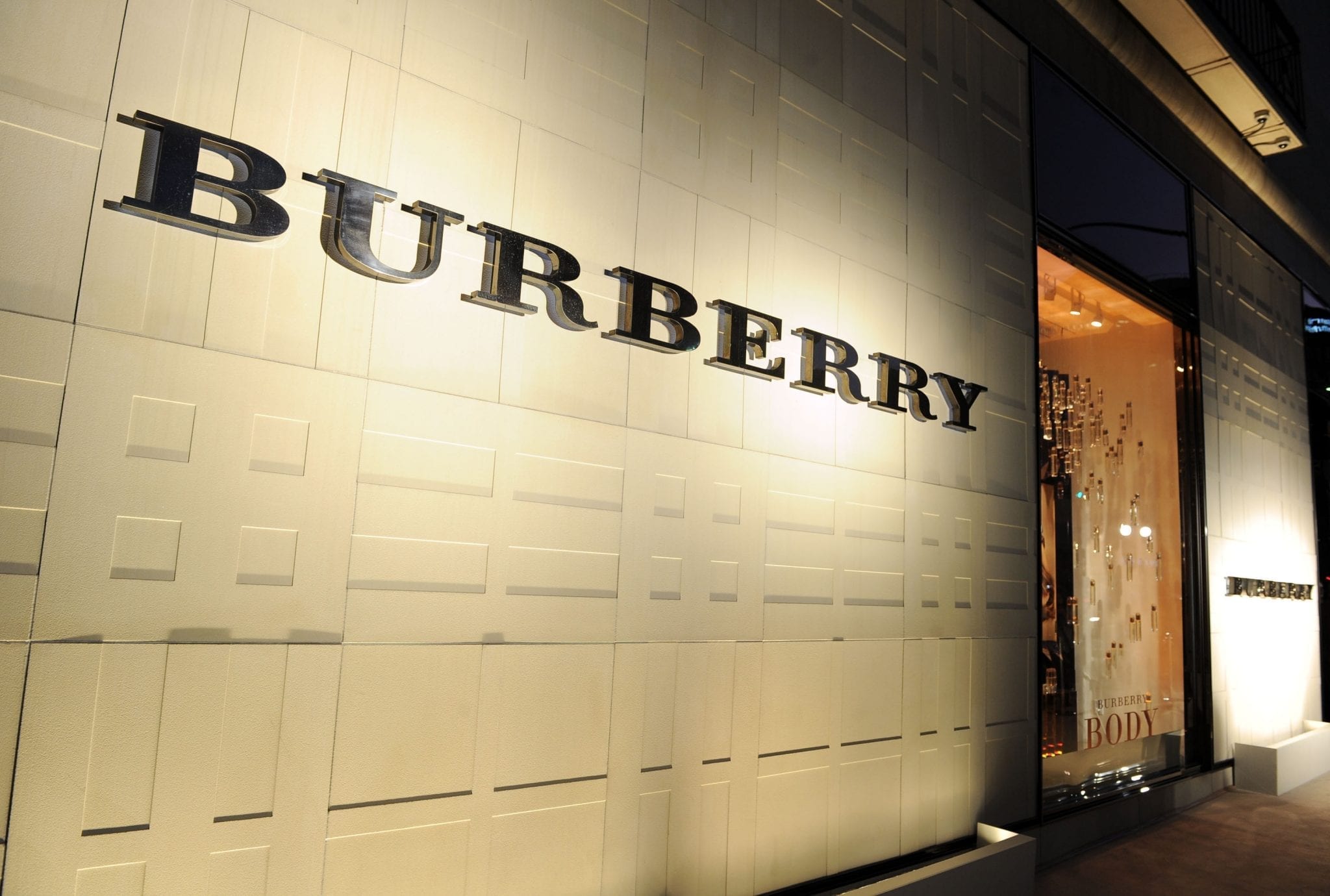
    Change is afoot at Burberry. Since 2018, the British heritage brand’s Chief Creative Officer Riccardo Tisci has been reimagining the label with the goal of finessing its high-end luxury status. Working closely with CEO Marco Gobbetti, who recently announced he’ll be stepping down from his role at the end of the year, Tisci has revamped Burberry’s aesthetic image. From a logo rebrand by Peter Saville to a CGI campaign with Nick Knight and Tom Wandrag, Tisci’s collections have modernized house codes and staples such as the trench coat, whilst also setting a more conceptual agenda, as seen in the S/S 22 menswear collection. Now, Burberry debuts its new flagship store at No.1 Sloane Street, London, inviting the world to experience the Burberry universe afresh.

    Despite the digital race towards virtual living and surge in online shopping during the pandemic, placing a focus on real-life stores remains a priority for luxury big dogs like Burberry. In 2020, the brand opened a hybrid physical-digital store in Shenzhen, China, to cater to local shoppers as the country slowly reopened ahead of the West. As stores worldwide begin inviting shoppers back in, brands must be mindful of where they’re placing their bets on consumers making a physical trip to the store after months of placing orders online. The new Burberry flagship offers a unique shopping experience, telling the stories behind the brand’s latest collections and drops such as the signature Olympia and TB bags to entice visitors back to the physical.

    Designed with the renowned architect Vincenzo De Cotiis, the store merges Burberry’s past, present and future. Architecture references British classicism and brutalism, whilst the Burberry house check can be found throughout the space, such as on mirrored lighting grids in the ceiling. A dedicated area on the ground floor spotlights the trench coat made from gabardine, which the brand’s founder Thomas Burberry invented in 1879. Head upstairs to womenswear and menswear, and you’ll find sculptural furniture, seating and fixtures, in a space that offers the ultimate luxury experience.

  • Bally signs up Johnny Huang as brand ambassador

    Bally signs up Johnny Huang as brand ambassador

    Bally is underlining the strength of the Chinese consumer with its latest campaign as it has signed up Chinese actor and model Huang Jingyu, also known as Johnny Huang, as the campaign’s star and as its brand ambassador more widely.

    “The award-winning Chinese actor will reinterpret our pioneering spirit with his signature style and edge,” the company said. In its 170th anniversary year, it’s also planning plenty of major activities with the celebrity.

    The company has 60 stores in China and a dedicated webstore there, as well as a prominent presence on e-tail sites like Tmall and on local social media.

    Buit it’s not all about China, of course, with the actor also being known internationally. In fact, his appointment is the first time a Chinese personality has acted as global face for the label.

    The company said its new spokesmodel is “a formidable actor” with a “dynamic personality and modern sense of style” that works well with Bally.

    As well as fronting the AW21 campaign alongside model Zhao Jiali, he will continue as the brand’s ambassador for its SS22 imagery and will appear at Bally events such as store openings like that for the planned Bally Hike pop-up in Beijing. That store will feature a dedicated hiking clothing and accessories collection.

  • Ben & Jerry’s wades into Palestine controversy unexpected

    Ben & Jerry’s wades into Palestine controversy unexpected

    Ben & Jerry’s has said it will stop selling its ice cream in Israeli settlements in the occupied West Bank and East Jerusalem. The US company said sales “in the Occupied Palestinian Territory (OPT)” were “inconsistent with our values”. Israeli Prime Minister Naftali Bennett said the move was “morally wrong” and would prove to be “financially wrong”.

    The West Bank and East Jerusalem have been under Israeli control since the 1967 Middle East war.

    More than 600,000 Jews live in about 140 settlements there. Most of the international community considers the settlements illegal under international law, though Israel disputes this.

    “We have a longstanding partnership with our licensee, who manufactures Ben & Jerry’s ice cream in Israel and distributes it in the region,” the statement said.

    “We have been working to change this, and so we have informed our licensee that we will not renew the license agreement when it expires at the end of next year.”

    Ben & Jerry’s also runs two “scoop shops” in Israel and said it would distribute its goods in Israel through a different agreement, the details of which would be announced “when we’re ready”.

    UK firm Unilever, which has owned Ben & Jerry’s since 2000, says the decision was taken and announced by Ben & Jerry’s and its independent board, but it remained “fully committed” to maintaining a presence in Israel.

    Ben & Jerry’s Israeli licensee was quoted by the Haaretz newspaper as saying: “Global Ben & Jerry’s decided not to renew the agreement with us in another year and a half in light of our refusal [to comply] with their demand and stop selling throughout Israel.”

    “We call on the Israeli government and consumers not to permit a boycott of Israel… Ice cream is not part of politics.”

    Israeli politicians reacted furiously to the announcement.

    “The boycott of Israel – a democracy surrounded by islands of terror – reflects a complete loss of bearings. The boycott does not work and will not work, and we will fight it with all our might,” Mr Bennett said.

    Foreign Minister Yair Lapid called Ben & Jerry’s move a “disgraceful capitulation” to anti-Semitism and the Boycott, Divestment and Sanctions (BDS) movement, which calls for a complete boycott of Israel over its treatment of the Palestinians.

    “Over 30 states in the United States have passed anti-BDS legislation in recent years. I plan on asking each of them to enforce these laws against Ben & Jerry’s,” he said.

    A spokesman for BDS, Mahmoud Nawajaa, it welcomed Ben & Jerry’s decision and called on the company “to end all its procedures with the apartheid Israel”.

    Ben & Jerry’s – which was founded in 1978 by best friends Ben Cohen and Jerry Greenfield – has a track record of campaigning on social issues such as LGBTQ+ rights and climate change.

  • Leading milk tea brands plot Australian expansion

    Leading milk tea brands plot Australian expansion

    Major milk tea brands Gotcha and Chatime have disclosed Australian expansion plans and their focus during the next few years.

    The assistant MD of Gotcha, Christy Chen said that the brand is set to open 20 new stores by the end of the year.

    “Gotcha will continue to focus on the interior of our stores to deliver an elevated level of design,” Chen said.

    Launching in 2018, the brand now operates more than 20 stores across the country. Gotcha aims to expand to Saudi Arabia, New Zealand and Singapore this year, and is expanding its store network in Indonesia.

    “We are very confident the bubble-tea market will continue to grow, especially as we expand into international regions.”

    Meanwhile, rival Chatime, said it will add 29 more stores to its existing 126 franchises in Australia this year.

    “As of right now, we currently have over 50 percent of our target locked in,” said Andrew Benefield, chief development officer at Chatime.

    The company expects the market will consolidate to just two to three key players including itself. Chatime’s goal is to hit 250 stores across the country during the next five years. At the same time, it will shift its focus to be more environmentally friendly and reduce plastic waste.

    “Chatime is currently working on Project Happy Turtle, which aims for us to completely eradicate single-use plastic within our stores across Australia,” Benefield said. “We’ve tried this through the introduction of reusable bubble-tea cups, as well as paper straws across the network.”

  • Select HBO Max full pilot episodes now available on Snapchat

    Select HBO Max full pilot episodes now available on Snapchat

    It looks like HBO Max is stretching its arms to create new partnerships and reap new benefits. Today, the streaming service has teamed up with Snapchat and made it possible to watch full-length pilot episodes of select shows on the social media platform.

    Some examples include Looney Tunes, Gossip Girl, and even the all-popular Game of Thrones. The option is available through the Snap Minis feature, which debuted last year. Snapchat Minis is a way for third-party developers to showcase their product inside the social platform.

    One of the more popular channels to make use of this feature was Headspace. HBO, however, is the first of its caliber to upload full episodes.

    The main aim of this deal is obviously to attract more people to subscribe to HBO’s program, but it is more than that. The most noteworthy part of HBO Max’s Snapchat minis is having the ability to invite up to 63 people to watch the content together. What’s even better is that all participants can chat and share Bitmoji reactions during the show.

    No HBO Max subscription is required to watch any of the shows, but don’t go thinking there are no catches laid out for you. At the end of each pilot episode, users who are 18 years or older will receive a pop-up prompting an HBO Max subscription.

    The new Snapchat feature is available both on Android and iOS, and the pilot episodes on display will be refreshed in intervals yet to be announced. It would be interesting to see if competitors like Netflix and Disney+ follow in HBO’s footsteps. If so, this could prove to be a great benefit for Snapchat, maybe developing the trend into something more in the future.