Tag: asia

  • Korean court orders Netflix to pay for network usage

    Korean court orders Netflix to pay for network usage

    Netflix has been ordered by a Seoul court to pay network usage fees to mobile carriers. This decision was reached after Netflix brought SK Broadband, the internet protocol subsidiary of SK Telecom to court, following a complaint filed against Netflix with the Korea Communications Commission in November 2019. Netflix had asked the court to review if the US-based over-the-top (OTT) content provider is obligated to pay for SK Broadband’s network usage.

    After the review, the court ruled in favor of SK Broadband citing: “According to the principle of freedom of contract, whether to conclude a contract and what price to pay is a matter to be decided through the negotiations of the concerned parties.”

    “Netflix is at least receiving network services, including management of the network quality, at a cost.”

    This ruling is seen as a precursor for OTT content providers to pay for bandwidth usage fees in South Korea as the principle of net neutrality is losing relevance amid growing streaming audience and traffic. This is likely to impact the strategy of other OTT content providers such as Disney+ and Amazon Prime who are also looking to penetrate the market.

    According to reports, Netflix accounted for 4.8% of all network traffic in South Korea in the last quarter of 2020. Last year, Netflix’s sales in South Korea reached US$356 million, while operating profits totaled US$7.54 million. Year-on-year revenues grew nearly threefold from the preceding year.

  • Canoo Reveals Renders Of Manufacturing Campus In Oklahoma, USA

    Canoo Reveals Renders Of Manufacturing Campus In Oklahoma, USA

    Canoo, the electric car startup which went public recently via a SPAC merger has shared renders of its manufacturing campus that will be built in Oklahoma. Canoo calls it the mega micro-factory and it is scheduled to be opened up in 2023. In the Tulsa region, it is expected to create more than 2000 jobs. Canoo recently lost both its co-founders, with one, Ulrich Kranz, who led the development of BMW’s i3 and i8 electric cars and then moved to Faraday Future has joined Apple. In fact, Canoo was of great interest to Apple with the company interested in its skateboard. But Apple being Apple wanted to acquire Canoo while the team at Canoo wanted to retain its independence.

    “Oklahoma has always been a pioneer in the energy industry, and this partnership with Canoo shows that our state is an innovation leader in electric vehicle technology,” said Governor Stitt.

    “We are thrilled to partner with Canoo and Chairman & CEO Tony Aquila to provide high-paying jobs for Oklahomans and position America as the global leader for vehicle manufacturing for decades to come,” he added.

    It is developing an all-purpose delivery van and a modular pickup truck. It has a 400-acre campus which will be Tulsa. In a tweet, Canoo shared a 55-second video showcasing the concept design of the campus that it will start building soon.

    As per the tweet, it is right now in a design phase and remains on track to be up by 2023. It expects the facility to be over 1 million square feet. It plans on beginning production and delivery of its first vehicles by Q4 2022 with the help of a third-party manufacturer.

    “We invested millions of dollars to find the right location for our manufacturing facility. We’re proud to be American-made and to bring more than 2,000 jobs to Oklahoma,” said Tony Aquila, Investor, Chairman & CEO, Canoo, Inc.

  • Sweaty Betty opens first Singapore store

    Sweaty Betty opens first Singapore store

    British activewear retailer Sweaty Betty has made its Singapore debut, more than two years after entering Asia.

    Located in the city’s Ion Orchard mall, Sweaty Betty Singapore offers a full range of its lifestyle and activewear, including Pride Collection and Halle Berry x Sweaty Betty Collection.

    The Singapore launch is part of Sweaty Betty’s plan to expand and strengthen its presence in the Asian market. The brand, often referred to as a rival to Canada’s Lululemon, first entered Asia in 2019 opening a store in Hong Kong’s IFC mall.

    Founded in Notting Hill, London in 1998 by Simon and Tamara Hill-Norton, Sweaty Betty is renowned for its bum-sculpting leggings, innovative prints, and technical high-performance fabrics.

    The retailer now operates more than 60 outlets, mostly across the UK and the US.

  • Logistics Company Cogos To Add 2500 EVs To Its Fleet Over Next 24 Months

    Logistics Company Cogos To Add 2500 EVs To Its Fleet Over Next 24 Months

    Bengaluru-based logistics platform, Cogos, has announced that it will be adding 2500 electric vehicles (EV) to its delivery fleet across Bangalore, Hyderabad, Delhi, and Gujarat, and later in Maharashtra and Tamil Nadu. The company claims that it wants to reduce the carbon footprint of its fleet, and this move will help it achieve a reduction of 15000 tonnes of CO2 when running at full capacity, per year. The EVs will be added to the company’s fleet in a phased manner, over the next 24 months. Cogos has partnered with electric vehicle manufacturers like Altigreen, Mahindra, and Piaggio among others procure these EVs.

    Talking about the development, Prasad Sreeram, Co-founder and CEO, Cogos said, “It is important for us, as a logistics company, to focus not just on efficiency and cost, but also on sustainability. With this fleet augmentation of 2500 EVs, we are on track to achieve as much as 30 percent of our revenues from green technologies by 2023. We want to give customers a significant edge in efficient and responsible distribution and last-mile delivery solutions. EV is the future of mobility and city logistics have higher operating costs and lower traveling distances, hence are best suited for EV adoption for the logistics sector.”

    While currently, the company operates with three-wheeler commercial vehicles that have a payload capacity of 500 kgs, it is already working with the OEMs for four-wheeler EVs with a capacity of 1 tonne. The EVs will be used for the e-commerce, grocery, distribution, and mobility sector. Cognos has already entered into deployment agreements of 500+ vehicles for leading E-Com Enterprise and another 300+ with Food, FMCG, and Mobility enterprises.

    Cogos aims to strengthen the ecosystem by promoting EV ownership and creating a pool of fleet-owning entrepreneurs focused on sustainable growth. The company says that it will have a special focus on women empowerment through entrepreneurship and upskilling, along with evangelizing the benefits of EV to finance providers. To realize that, the company has entered into a tripartite agreement with the owner-operator and the financing entity, to support better financing for driver-partners. Cogos is also educating potential fleet owners on the benefits of EVs, like the fact that the cost of operating a commercial EV is only 50 paise per kilometer, which is multiple times lesser than fossil-fuel-based vehicles.

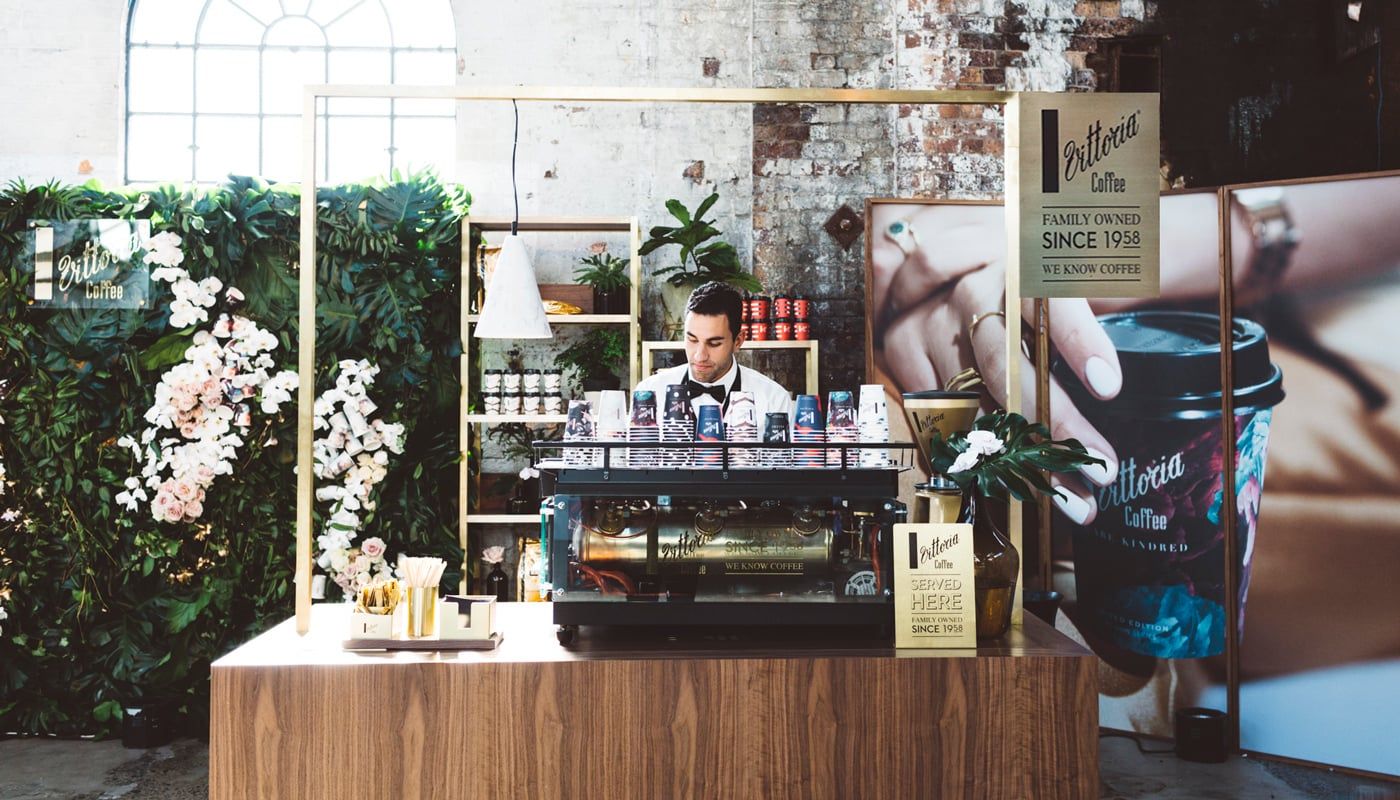
  • Vittoria Coffee launches first instant coffee in its 64-year history

    Vittoria Coffee launches first instant coffee in its 64-year history

    Vittoria has launched its first range of instant coffee since the company’s inception in 1947.

    The company says the new range capture the richness and balance of a traditionally prepared coffee in the convenience of an instant.

    Made from freeze-dried Arabica beans, Vitoria Instant Coffee is available in 100g jars or single-serve bags that roast in a 3-minute steep.

    The 100g instant coffee jar comes in four different blends – Original Classic, Italian, Latte, and Mountain Grown. While the single-serve coffee bag is available in four 20-serve bags in Espresso, Italian, Mountain Grown, and Long Black.

    “We set out to create new, easier coffee experiences for all our customers,” said Rolando Schirato, MD, Vittoria Coffee. “These new products deliver on the distinctive Vittoria taste and offer our customers the convenience to enjoy our legendary 100-per-cent Arabica blends”.

    Vittoria Instant Coffee is available in all Woolworths supermarkets nationwide.

  • Online marketplace YesAsia launching Hong Kong IPO

    Online marketplace YesAsia launching Hong Kong IPO

    Online marketplace YesAsia is set to raise US$17 million in an IPO launch in Hong Kong.

    The company aims to offer 39,540,00 new shares, 90 percent of which will be available for placing with institutional and professional investors while 10 percent will be available for subscription by the public in Hong Kong.

    Founded in 1988, YesAsia offers Asian fashion & lifestyle, beauty, and entertainment products to global customers. The company launched its key opinion leader initiative in 2018, and subsequently its YesStyle Influencer Program in 2019.

    Revenues generated from its influencer marketing initiatives accounted for 1.2 percent, 7.9 percent, and 17.4 percent of the total revenue of YesStyle for the three years ended last December, respectively.

    “We had been able to achieve above-industry revenue growth during the Track Record Period even in the midst of the Covid-19 pandemic, mainly due to our continuous effort in strengthening our marketing strategy to support customer retention and acquisition as well as long-term ecosystem development,” said Lau Kwok Chu, founder and executive director and CEO at YesAsia.

  • L’Occitane posts record profit as China becomes its largest market

    L’Occitane posts record profit as China becomes its largest market

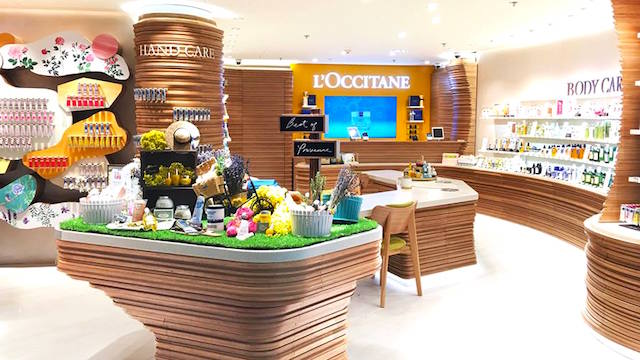
    Beauty products retailer L’Occitane International has reported sales and profit beyond expectation after successfully adapting to the challenges of selling products during a global pandemic.

    Despite the Covid crisis, like-for-like net sales of US$1.83 billion were down just 1.1 percent against the previous year, but net profit grew by 36.3 percent to a record $187 million, representing 10.2 percent of net sales.

    China is now the company’s largest market, with year-on-year growth of 36 percent.

    The overall performance was largely driven by a strong focus on online sales in the absence of travel retail business and long periods of physical store closures – more than 75 percent of the company’s outlets were closed at the peak of the pandemic. Global e-commerce turnover soared 69.2 percent and accounted for more than one-third of overall sales.

    Social selling was a key component of the online push, with 68 projects in Europe alone, including personal shopping concierge services, live streaming, and online consultation services.

    “Thanks to the group’s agility and adaptability in a socially distant world, the strong sales recovery in the second half of the year helped recover most of the ground lost earlier in the year, resulting in only a slight sales decline,” said chairman Reinold Geiger in a Hong Kong stock exchange filing.

    “Importantly, the group made tremendous progress in expanding its bottom line – recording an operating margin of 14.3 percent with contribution from its online channels, excellent performance in key markets in Asia, strong results from its newer brands, as well as greater operational efficiency.”

    He put the strong performance down to the group adhering to five pillars of its strategy to build trust, sustainable growth and profitability: empowering teams; executing fundamentals, especially in a retail context; adopting an omnichannel, mobile and digital approach; engaging customers; and strengthening brand commitments.

    Geiger said China was undisputedly the group’s best-performing market, coinciding with it being among the first to emerge from Covid-19. During the fourth quarter, L’Occitane International’s China sales grew by more than 50 percent, boosted by successful Chinese New Year and Women’s Day promotional campaigns, as well as a low base the previous year. Physical roadshows during Chinese New Year encouraged product sampling and conversion.

    Meanwhile, Geiger says two major restructuring activities will help the business achieve greater efficiency in future years.

    Last October, the company announced a reorganization that led to the loss of some 300 positions globally from its 9000-strong workforce, mostly at corporate offices. And in January, its US subsidiary, L’Occitane, Inc, commenced voluntary Chapter 11 bankruptcy protection in order to accelerate its store rationalization process. By the end of March, 25 underperforming US stores were closed. The Chapter 11 process is expected to achieve savings of up to $12 million annually for the next four to five years.

  • Cebu Pacific cautiously optimistic on 2022 recovery

    Cebu Pacific cautiously optimistic on 2022 recovery

    Budget carrier Cebu Pacific, operated by Cebu Air, Inc., is sticking to its forecast of returning to pre-pandemic levels next year, saying it is “cautiously optimistic” given the current pace of vaccine rollout in the country.

    “To be honest, initially, when it started rolling out and we were monitoring the inoculation rate, we were pleasantly surprised with the 130,000 a day. Now, with the A4 (priority) and private vaccinations, we’re cautiously optimistic,” Candice A. Iyog, Cebu Pacific vice-president for marketing and customer service, said at an online briefing on Thursday.

    “We’d like to stick to what we’ve said before, 2022, but again so many things can still happen,” she added.

    Cebu Pacific currently operates flights to 32 domestic destinations.

    To recall, the number of flights Cebu Pacific had in 2020 was 71% lower at 41,804. The number of passengers it carried last year also dropped 78% to five million.

    Ms. Iyog said flights from Manila to Boracay will be five times daily starting June 21, while flights to Bohol will also operate daily.

    As of June, it operates flights to Dubai, Hong Kong, Seoul, Tokyo, and Singapore.

    “When demand comes back, there will be higher expectation from us to be more digital and to provide more contactless options for our passengers because we understand that ‘contactless’ is somehow part of safety,” Ms. Iyog noted.

    “Yesterday (June 16), we successfully launched our new website and our iOS and Android booking channels,” she added.

    The airline has partnered with GCash, GrabPay, and PayMaya for cashless payment options for new bookings.

    The budget carrier will be implementing starting July this year a new policy for passengers who want to make voluntary changes to their flights.

    “Starting July 1, the travel fund option for voluntary flight changes will only be available for passengers who pre-purchased the CEB Flexi add-on during initial booking as this new and improved product allows passengers to cancel their flights for free, up to two hours before departure, and store the value of the booking in a Travel Fund for as low as P499,” Cebu Pacific said in a statement on Wednesday.

    “The amount in this virtual wallet is valid for two years and may be used to book new flights or purchase other add-ons such as seat selection, additional baggage allowance, or travel insurance,” it added.

    As for passengers who want to change their bookings voluntarily without purchasing CEB Flexi, the budget carrier said: “They can make use of the Unlimited Rebooking option of CEB and rebook as many times as they want up to two hours before their scheduled time of departure.”

    The low-cost carrier said it permanently removed change fees since March.

  • Burberry CEO resigns to lead rival luxury retailer

    Burberry CEO resigns to lead rival luxury retailer

    Marco Gobbetti is to give up his role as CEO of Burberry after leading the brand and business for almost five years.

    According to a report, Gobbetti will return home to Italy to lead rival luxury goods group Ferragamo.

    Gobbetti will stay with Burberry until the end of this year while the company searches for a successor, and to ensure an orderly transition.

    “Gobbetti has had a transformative impact and established a clearly defined purpose and strategy, an outstanding team, and strong brand momentum,” said Gerry Murphy, chairman of Burberry. “The board and I are naturally disappointed by Marco’s decision but we understand and fully respect his desire to return to Italy after nearly 20 years abroad”.

    Gobbetti became CEO and joined Burberry’s board in 2017, succeeding Christopher Bailey who left the group the following year. Prior to Burberry, Gobbetti was chief executive of Moschino and Givenchy before holding executive positions at French brand Celine in 2008.

    “With Burberry re-energised and firmly set on a path to strong growth, I feel that now is the right time for me to step down,” said Gobbetti. “I would like to thank my colleagues as well as Gerry and the board for their partnership.

    “I am fully committed to supporting them through the transition and I have every confidence that the creativity and strong values that define Burberry will continue to drive the company’s future success.”

  • Google Messages will become the default messaging app for AT&T Android users

    Google Messages will become the default messaging app for AT&T Android users

    RCS (Rich Communication Services) is not something new, it’s just that many smartphone users don’t have access to the feature. AT&T and Google want to change that by making Messages the default messaging app for all the carrier’s customers in the United States who use Android phones.

    Google announced that it has teamed up with AT&T to upgrade the SMS experience with enhanced messaging features included in Messages. That means that AT&T Android users will benefit from expanded chat features based on RCS, as well as other enhanced features.

    Just to recap, RCS makes it possible for users to send higher-quality videos, share full-resolution pictures, send and receive messages over Wi-Fi or data, as well as participate in group chats that are easy to manage. Also, with the Messages app, users can see when someone is replying to a text.

    But wait, there’s more! Google confirmed that it’s now rolling out end-to-end encryption for one-on-one RCS conversations between people using Messages and those who have chat features enabled, another step forward to making messaging more secure for everyone using Android devices.

  • Bauhaus ekes profit out of store closures, refocuses on profitability

    Bauhaus ekes profit out of store closures, refocuses on profitability

    Fashion group Bauhaus saw turnover fall 58.1 percent to $47.9 million during the year to 31 March 2021, pushing gross profit down 55 percent to $31 million.

    The group was able to deliver a net profit result of $12.8 million – a vast improvement on last year’s $18 million loss – though this was primarily attributable to government subsidies and the cash gained in selling off over half of its retail stores.

    “The novel coronavirus outbreak in 2020 has severely hit not only local retail sectors but also depressed many economic activities worldwide,” the business wrote in an update to its investors.

    “The same-store-sales growth rate fell to about -40 percent for the year under review. In addition, to confront with ongoing challenges brought on by Covid-19, the group made essential strategic moves to refocus resources on its familiar markets.”

    In December, Bauhaus said it would close all stores in all markets outside of Hong Kong and Macau by the end of March 2021 in order to focus on profitability. This has led the brand’s store count of 102 in 2020 to plummet to 49 in 2021.

    During FY21, its Hong Kong and Macau segment saw sales fall 45.6 percent, compared to its other regions which fell by 89 percent. Hong Kong and Macau accounted for approximately 92 percent of the group’s total turnover.

    Given that the threat of Covid-19 still resonates in many parts of the world, the business expects strong headwinds for the year ahead, and is anticipating a “prolonged path to thorough recovery”.

    “The group will maintain a manageable scale of operations at a reasonable profitability level and does not intend to aggressively do fast and quantitative expansion in the near future until seeing strong signs of sustainable economic activity,” the business said.

    Instead, Bauhaus will focus on making its now-lean business profitable.

  • Playboy owner to acquire Aussie lingerie brand Honey Birdette

    Playboy owner to acquire Aussie lingerie brand Honey Birdette

    PLBY Group is to buy racy Australian luxury lingerie brand Honey Birdette for approximately US$333 million. PLBY Group CEO Ben Kohn said he is “thrilled by the brand’s potential to become a multi-million-dollar luxury lifestyle franchise”.

    “Our plan is two-fold: to leverage PLBY Group and the Playboy brand’s global operations to accelerate Honey Birdette’s expansion into new territories and product categories, and to take advantage of Honey Birdette’s superior product design, sourcing, and direct-to-consumer capabilities to accelerate our Playboy-branded lingerie, loungewear, swimwear, and sexual wellness go-to-market plans targeting the masstige consumer,” Kohn said.

    “This acquisition is expected to further our mission to become the leading pleasure and leisure lifestyle platform and our commitment to deliver long-term value to our shareholders.”

    Honey Birdette is forecast to generate $73 million in revenue this financial year, representing growth of over 40 percent. The acquisition will help the brand expand its leadership in the sexual wellness category and its shared sourcing and product design capabilities. The transaction is expected to close in the third quarter of 2021.

    Honey Birdette was first launched in 2006, when its first boutique opened in Brisbane, selling glamorous lingerie and adult toys. It has since expanded to more than 60 stores across Australia, the US, and the UK, and flagship stores are slated to open in the coming months in Dallas, Miami, and New York. Meanwhile, loungewear and swimwear will soon be added to the Honey Birdette product range.

    “When I founded Honey Birdette 15 years ago, my ambition was to build a brand for women, by women; a brand that would serve as a platform for confidence and sexual and body empowerment,” said Eloise Monaghan, founder and managing director of Honey Birdette.

    “Today is a momentous and proud day for the Honey Birdette team as we enter into partnership with one of the world’s most iconic brands and the lifestyle platform it represents. I’m thrilled to join Ben and the whole PLBY Group team on a mission to build a lifestyle of pleasure for all.”

  • AT&T to move its 5G mobile network to Microsoft’s Azure cloud

    AT&T to move its 5G mobile network to Microsoft’s Azure cloud

    Microsoft and AT&T announced they inked a deal to provide the carrier with increased productivity and cost-efficiency of its 5G network services. Under the new partnership, AT&T will move its 5G mobile network to the Microsoft Azure cloud, while the Redmond-based company will gain access to the carrier’s intellectual property and technical expertise to grow Azure for Operators, its top-tier telecom offering.

    Furthermore, Microsoft confirmed that it will purchase AT&T’s Network Cloud platform technology, which the carrier’s 5G core network runs on. Furthermore, Microsoft will buy AT&T’s engineering and lifecycle management software that is typically used to design and deploy network cloud platforms specifically made for carriers.

    Regardless of the acquisitions announced today, AT&T will continue to operate its network and manage customer relationships, it’s just that it will now use Microsoft’s infrastructure.

    Naturally, Microsoft will be responsible for deploying both the software development and the carrier’s Network Cloud, as well as for bringing AT&T’s existing network cloud to Azure over the next three years. The announcement mentions that neither company is disclosing details on financial terms.

  • Another forex trading platform swindles hundreds of thousands of dollars

    Another forex trading platform swindles hundreds of thousands of dollars

    Yet another fraudulent foreign exchange trading platform that cheated people out of hundreds of thousands of dollars has been exposed in HCMC. Nga, a resident of HCMC’s District 7 spends most of her time these days reading updates about FXTradingMarkets in a Facebook group with 4,200 members.

    On June 25, the group received a screenshot of a notice believed to be from the Lion Group, which ran the platform, that it would cease to operate from the next day onwards. Nga has invested VND1.4 billion ($60,700) in the platform; and many others have also invested billions of dong. Now, they do not know how they can get back the money.

    A month earlier, the HCMC police had warned people not to trade on currency trading platforms, saying there was a high risk of losing their money. They had found that four people from the Lion Group were hosting forums in various places to talk about how to get rich quick.

    Since 2019, the group has been advertising FXTradingMarkets as a platform headquartered and licensed in the UK and linked to another platform called UKTrade.

    An investor had to deposit at least $1,000 and would get its equivalent in FXT, a cryptocurrency the platform uses to trade.

    Investors would bet on whether a currency would rise or fall within the next 30 seconds. If they were right, they got 95 percent of the bet as profit, but lose everything if they were wrong.

    However, the platform also advertised that everyone could earn one percent a day on their investment if they allowed “experts” to make the bet on their behalf.

    Investors also got a commission if they introduced new clients.

    At first, the investors could trade the FXT currency with their leader for cash, but starting at the end of February, the platform no longer allowed this trade, and investors had to trade in other cryptocurrency markets with a rate of 1 FXT equals $0.3, meaning a 70 percent loss.

    “When similar platforms crashed, we were concerned, but the managers told us not to worry,” Nga said.

    Many celebrities endorsed FXT and so investors continued to place their trust in it, she said.

    Earlier this month the platform posted a notice saying “upgrade ongoing” and did not allow investors to see their account balance. On June 25, when the leaders gave their final notice, 1 FXT was worth $0.0022.

    That means Nga’s investment of $60,000 was then worth only $133, or a 99.78 percent loss.

    The other platform UKTrade also crashed on June 26.

    Tam of Thu Duc District said he invested VND2.8 billion in UKTrade in April but “most of the money is now gone,” adding that thousands of investors lost 95 percent of their money on May 10.

    “Because of the pandemic, our experts were not able to analyze the market,” the leaders told investors, asking them to either pour more money in to recover the loss or be removed from the system.

    Tam and around 10 other investors joined together to report the platform to the police. Together, they have lost a total of VND6 billion.

    Vo Thi Dieu Hien in the central province of Binh Thuan in early May invested VND319 million, but in less than a week she saw all her cryptocurrency gone.

    The leaders asked her to submit another 30 percent of her capital to “save” her account and promised higher profits. She did not, and her account was locked right after.

    “That’s when I realized I was tricked, so I reported it so others won’t fall into the same trap.”

    HCMC and Binh Thuan police said they have received the reports and have done initial investigations. They found that FXTradingMarkets was registered and has servers in the U.S.

    There are signs that the administrators are setting up a new website with similar user interface and functions at sp500stock.com, the police said. The website was no longer available at the time of publishing.

    This is the latest of many of forex trading platform frauds that have been uncovered in Vietnam of late. Thousands of investors have been duped, even though authorities have repeatedly warned them that these platforms are illegal and highly risky.


  • Gentle Monster opens another flagship store

    Gentle Monster opens another flagship store

    South Korean luxury eyewear brand Gentle Monster has unveiled its latest themed store in Starfield Hanam, Seoul.

    Dubbed ‘Self Similarity’, the theme reinterprets the mathematical concept through visual and spatial elements. The Starfield Hanam storehouses various artwork, images, and installations representing “the infinite possibility of ‘expansion’” through repeating geometric structures, such as fractals, Mandelbrot sets, and Julia sets.

    The newly opened flagship features The Probe, the brand’s six-legged walking robot which can also be seen in the Haus Dosan outlet.

    “The kinetic installations located at the facade, repeatedly expanding and contracting, and artwork that expresses infinite proliferation show Gentle Monster’s unique and artistic perspective on the concept of self-similarity,” the company described.

    Meanwhile, Gentle Monster chose Starfield Hanam to land Nudake’s second store in South Korea, offering a range of artistic desserts.