Tag: asia

  • General Motors To Supply Electric Batteries, Hydrogen Fuel Cell Systems For Wabtec Locomotive

    General Motors To Supply Electric Batteries, Hydrogen Fuel Cell Systems For Wabtec Locomotive

    General Motors Co will supply electric batteries and hydrogen fuel cell systems for rail supplier Wabtec Corp’s locomotives, in a move extending the No. 1 U.S. automaker’s reach outside the automotive sector. Wabtec, based in Pittsburgh, is developing locomotives powered by electric batteries and hydrogen fuel cells in response to rail industry demand to eliminate carbon emissions. It has a test electric locomotive model and intends to build a second-generation version, with deliveries starting in 2023. “The rail industry is on the cusp of a sustainable transformation with the introduction of batteries and hydrogen to power locomotive fleets,” Wabtec Chief Executive Rafael Santana said in a statement.

    Under the nonbinding memorandum of understanding, GM will supply Ultium electric batteries and Hydrotec hydrogen fuel cell power cubes. Terms of the deal were not disclosed. “Wabtec’s decision to deploy GM’s Ultium battery and Hydrotec hydrogen fuel cell systems further validates our advanced technology,” GM President Mark Reuss said. Ultium is a key part of GM’s strategy to roll out efficient and cost-effective electric vehicles, and closing a deal with Wabtec would help spread development costs over a larger volume of batteries. GM is developing a hydrogen fuel-cell-powered commercial truck with truck maker Navistar.

    GM’s Ultium batteries will be built by the company’s joint venture with South Korea battery maker LG Energy Solution, which is building plants in Ohio and Tennessee. The hydrogen fuel-cell systems will be assembled by GM’s joint venture with Honda in Brownstown, Michigan.

    Last month, Wabtec announced that its FLXdrive all-electric locomotive, during a test program with BNSF Railway in California, delivered more than an 11% average reduction in fuel consumption and greenhouse gas emissions for the entire train – the equivalent of over 6,200 gallons of diesel fuel saved and about 69 tons of CO2 emissions reduced. It is also developing hydrogen fuel-cell-powered locomotives.

    The 430,000-pound electric locomotive, with a battery capacity of 2.4-megawatt hours (MWh), uses 18,000 lithium-ion battery cells, Wabtec’s chief technology officer, Eric Gebhardt, said in a recent interview. It generates its energy largely through regenerative braking.

    The company intends to build a second-generation electric locomotive with a battery capacity of more than 6 MWh, a level it says can reduce fuel consumption and carbon emissions by up to 30%. Gebhardt compared that capacity to 100 Tesla vehicles.

    Wabtec expects to begin shipments of the second-generation electric locomotive in mid-2023, he said. The company has not disclosed volume targets.

  • FedEx To Test Package Deliveries With Self-Driving Startup Nuro

    FedEx To Test Package Deliveries With Self-Driving Startup Nuro

    FedEx Corp and robotics company Nuro on Tuesday announced a multi-year agreement to test self-driving vehicles in the package delivery company’s network, starting with a pilot program in Houston. The partnership comes as parcel companies race to reduce the cost of last-mile delivery, which surged during the pandemic. The companies will target delivery scenarios where Nuro’s low-speed, unmanned vehicle can provide “the biggest bang for your buck,” Cosimo Leipold, Nuro’s head of partnerships, told Reuters in an interview.

    That will likely include inefficient tasks like late-night pickups in out-of-the-way places, said Rebecca Yeung, FedEx vice president for advanced technology and innovation. “Instead of dispatching a driver to get those packages, a device like Nuro could be super helpful,” said Yeung, who called the FedEx/Nuro tie-up a “very serious, long-term commitment” that aims to reduce headaches, not human drivers.

    Nuro vehicles are already making deliveries for U.S. supermarket operator Kroger Co and Domino’s Pizza Inc in the Houston area. Nuro continues to test its technology in Arizona. Nuro, whose R2 unit has space for delivery cargo but not a human driver, said last year it has raised $500 million. In a separate project, FedEx is using DEKA Research & Development Corp’s smaller robot, dubbed “Roxo,” for on-demand, same-day deliveries in Plano, Texas.

    Nuro vehicles are already making deliveries for U.S. supermarket operator Kroger Co and Domino’s Pizza Inc in the Houston area.

    Rival United Parcel Service Inc is centering its unmanned delivery efforts on drones. UPS has ordered electric delivery vans from British startup Arrival. Those vehicles are fitted with sensors and cameras that should gradually enable autonomous features, but will still require a human driver.

    Transporting people via self-driving taxis is proving more difficult and expensive than delivering packages and food. As a result, freight and logistics companies are exploring ways to roll out the technology on predictable and simple routes, including on highways.

  • Thailand Reins in Speculation in Digital Assets

    Thailand Reins in Speculation in Digital Assets

    The country’s finance regulator is banning licensed digital asset exchanges from trading meme coins, fan-based tokens, NFTs, and social coins as part of its ongoing regulatory action against crypto trading.

    The Thai Securities and Exchange Commission (SEC) is prohibiting exchanges in the country from providing services related to utility tokens or cryptocurrencies to ensure customer protection and ward off attempts by anyone using digital assets to operate a grey business, the regulator announced on Friday.

    As a result, meme coins like Doge, which has attracted the interest of investors in the past year as its price surged by as much as 10,000 percent this year, will no longer be allowed to be traded in Thailand. The SEC said such coins have «No clear objective or substance or underlying, and whose price runs on social media trends.

    According to «The Bangkok Post,» the move came amid reports that publicly listed mobile phone retailer Jay Mart was making plans to launch the country’s first non-fungible tokens (NFTs) linked to nine local stars and celebrities. However, Jay Mart said it would go ahead with the launch this week as planned, though the NFTs will be listed on foreign exchanges.

    NFTs have garnered increasing popularity in recent months, particularly as a way to sell and invest in digital artworks as verification of authenticity and ownership are stored on the blockchain

  • Technology Banker Returns to UBS

    Technology Banker Returns to UBS

    Swiss bank UBS enticed a key technology banker back, after a six-month stint at Wells Fargo.

    UBS is hiring Paul McEwen as its head of technology services. McEwen had previously overseen the Swiss bank’s cloud services before leaving six months ago for Wells Fargo, which hired him as head of the infrastructure.

    He will be back at UBS next month, the newswire reported, and report to Mike Dargan, who was recently elevated into UBS’ top management.

    Dargan now oversees technology as well as UBS’s group corporate services. CEO Ralph Hamers has called the new job crucial in differentiating UBS.

  • Citi to End Small Biz Banking in Singapore

    Citi to End Small Biz Banking in Singapore

    The bank will shut its consumer unit serving small businesses in Singapore in mid-August.

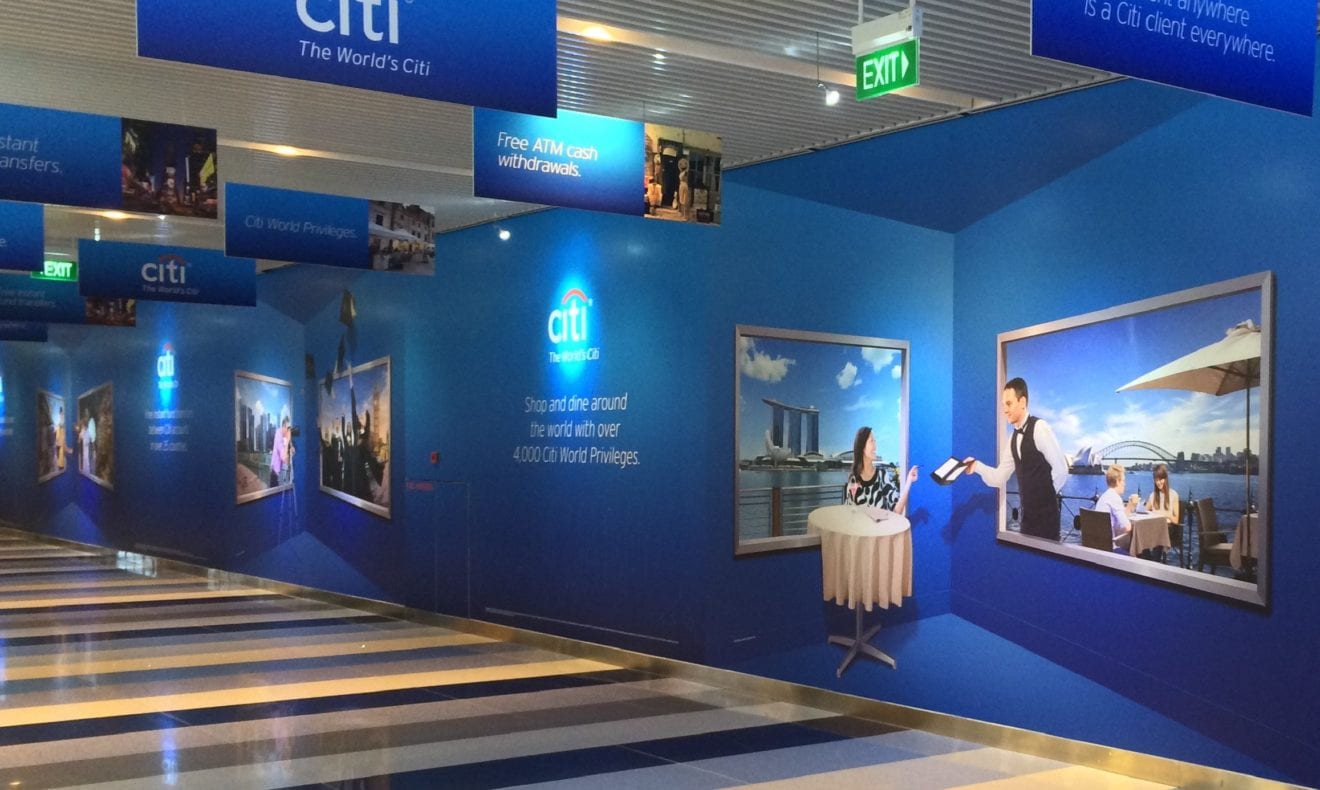
    Citibank has decided to close its Citibusiness unit, which will affect some 2,000 customers, following an ongoing strategic review of the business.

    About 20 to 30 staff will be affected by the changes, saying that Citi would be re-allocating its resources and our people to support other growth areas and sharpen its client focus.

    Citibusiness, which serves small-sized businesses, is part of its consumer banking division. The bank will continue to serve small and medium-sized enterprise (SME) clients through Citi Commercial Bank.

    Singapore is a priority market for Citi. We continue to invest and focus on growth areas of the bank including the SME and commercial banking business,» the spokesperson said.

    Citi recently announced that it is considering downsizing its consumer business worldwide, with an eye on selling some of its businesses in the Asia Pacific region.

    At the same time, the U.S.-headquartered bank has placed its bets on four wealth hubs, which includes Singapore, as it consolidates its operations globally.

    It aims to double its wealth management market share in Singapore from the current 5 percent and triple the number of clients by 2025. To achieve this, it is looking to hire over 330 relationship managers.

  • Simple methods to gain customers on Instagram

    Simple methods to gain customers on Instagram

    Do you have a brand-new Instagram account and want to know how you can gain new followers as quickly as possible? Are you trying to promote your business or brand on Instagram but have no idea how to gain more followers?

    Social media is a large part of our culture, and it has taken many shapes in recent years. TikTok, for example, is an app on which users can watch short videos or clips posted by other people. Instagram has become one of the most popular social media platforms with approximately 1 billion active monthly users and an incredible interface with so many different features and ways to post.

    As we all know, the size of your followers on Instagram can have a big impact on how successful you are. The more followers you have, the more people see what you post and the better the chance for them to follow suit. This is why many brands and businesses have begun using growth services like Growthoid to get Instagram followers, as it gives them the head start when creating new accounts on the platform. We all want to be popular on social media but it’s not always easy to get new followers on your account without some serious hustle. If you need help gaining customers, here are a few methods to do just that.

    Use hashtags and influencers

    One tool that far too many businesses, brands, and individuals, don’t seem to be taking enough advantage of is hashtags. Hashtags are one of the most misused and underrated tools that social media has to offer and are a fantastic way to gain more customers and followers, when used correctly.

    People tend to think that hashtags are just fun little words that you can include at the end of your posts to liven them up a little. Or some people think that by just adding the most popular hashtags they can find; they will see success. However, you need to be very particular about the hashtags you are choosing in order to receive the benefits from them. When choosing hashtags, they must always be relevant to your content otherwise they will be useless. Of these relevant hashtags you should choose the most popular ones, as these will allow you to reach a much bigger audience. Last but not least, you should limit it to around 4 or 5 hashtags per post so that you don’t come across as spammy or annoying.

    Create quality content follow trends

    When it comes to marketing on social media and trying to grow your audience and customer base, there are a few things that you need to consider and keep in mind in order to be successful. The very first step you should be taking is following the trends.

    Trending content is by far the most popular content that you will find on Instagram and it won’t hurt you to take inspiration from it. Not only is that a fantastic way to reach more people who will be interested, but it also makes your life that much easier because you don’t always have to be thinking about original content all the time.

    Engage and use services

    If you are looking to have a successful Instagram account for your business and gain both followers and new customers, you need to think about how to do this. One of the best ways to go about doing this is by engaging with your audience and other users. Engagement is one of the key factors to having a successful marketing campaign, and the best ways to receive engagement is by dishing it out too. You can engage with your followers and other users in a variety of ways from responding to direct messages, replying to comments on your content, liking and sharing other users’ content, and even following other users that you would like to follow you.

    Understand the audience

    If you are trying to gain more customers from your audience, you need to know and understand who your audience is and what they like. One of the best ways to do this is by looking at your analytics on Instagram, and it is also an efficient way to gain followers. Here you will see exactly what kind of content your audience likes the best, what content they engage the most, how they engage on the various different features, and even what times they are most active on social media.

  • The History of Solidarity Between Asian and Black Americans 

    The History of Solidarity Between Asian and Black Americans 

    Recently, a targeted shooting took place in Atlanta, killing Paul Michels, Xiaojie Tan, Chung Park, Delaina Ashley, Hyun Jung, and more. After the incident, an initiative dubbed “Stop AAPI Hate” was founded to provide information and resources on ways to offer support to the Asian community.

    There has been a discourse around gender-based violence, with the main target being the Asian-American community. The solidarity between Asian and Black Americans has a long history, with Asian-American activists and leaders demanding policy initiatives to address the major anti-Asian racism.

    https://www.pexels.com/photo/successful-multiethnic-business-colleagues-in-modern-office-6457579/

    The racism concerns

    The murder of George Floyd by police raised global concerns where racist violence conversations dominated the news. The reckoning against racism targeting the anti-blacks has caused cases of comparisons between corporate and mainstream responses to the ‘stopAsianHate” and the black lives movement.

    Whereas solidarity has existed between these movements, there have been demands for statements to be made by corporates as it happened after the killing of Floyd. The black Americans are concerned with the response by the Asian community regarding the issuance of corporate statements.

    Most of the crimes of hate targeting Asians living in America have been perpetrated by the whites. However, concerns about violence against Asians have been actively raised through social media.

    The calls of solidarity

    Asian-American solidarity has existed since 1955, when the Bandung conference was held. Representatives from African and Asian continents congregated to discuss the issues of decolonization. Within the Imaginary of American, the interest was in maintaining a good relationship between the Asian and Black American communities.

    Cultural diversity has been a major concern among communities today and academicians are doing lots of research in this area.

    Black Lives Matter and diversity issues essays

    Racism and discrimination are a major concern today because they affect the relationships between communities and the countries at large. There is a need to conduct research about why “Black Lives Matter” as mentioned in these essays on diversity on EduZaurus. From the essay samples, students in universities can get inspired to write essays addressing the issues of diversity. They can arrive at conclusions and give recommendations regarding what should be done to promote solidarity between communities.

    Tension between communities

    Tension has existed between Asian Americans and Black Americans such that Asians feel like slaves in America. A great American racial discourse move is the ability to manage the racial injustices and differences between the two communities using unique approaches.

    What is needed most is a conversation regarding the differences in the experiences between Black Americans and Asian Americans. Understanding the significance of the blacks in society can be achieved through writing essays on “Black Live Matter.”

    https://www.pexels.com/photo/focused-diverse-colleagues-analyzing-project-together-in-office-6238186/

    Black Live Matter Essays

    Students in college can succeed in their education if they are able to write well-researched and quality essays. A student wishing to do research in the area of black lives can find essay examples to get meaningful ideas. One of the best ways of finding writing inspiration is by reviewing the Black Lives Matter college essay examples by WritingBros. All they need to do is to study the free essays to get some insights into research gaps and proceed with their research.

    Women promoting solidarity

    Fighting for justice requires the contribution of leaders and activists from diverse communities. Activist and scholar, Akemi Kochiyama, has played an important educational role in building a multicultural community.

    She is a director at the Manhattan school that is committed to educating the community on matters of equality, social justice, and diversity. Akemi is inspired by modern artists, activists, human and civil rights activists, and educators who are committed to practicing a wider and multicultural solidarity vision.

    Moni Tep is a black community organizer and a leader of Creative Justice. Creative Justice is a program that offers a healing platform for young people using an art-focused approach. Under Moni’s leadership, mentors pay more attention to the significance of anti-racism, skill-building, collaborative work, and social justice.

    Emily Akpan is also a community leader who works alongside the Tsuru for solidarity organization. This organization advocates social immigration policy implementation and solidarity within communities dealing with violence and racist issues.

    Conclusion

    Activists, leaders, and educators are concerned with the enslavement of Asians in America and they consider this a nuisance. A lot has been said about racism concerns and the key players, including women, have played an active role in promoting solidarity. What the anti-racism groups do to address the situation is what can determine how possible it is for Asians and Americans to live in harmony.

    Author’s Bio:

    Michael Turner is working for an educational app company and his role is to test and review the apps and provide feedback to the development team. Besides that, he’s an academic writer and helps students write and learn the techniques behind winning essays. When he’s free, he catches up with his friends, watches action flicks and reads novels.


     

  • Paris Baguette enters Cambodia

    Paris Baguette enters Cambodia

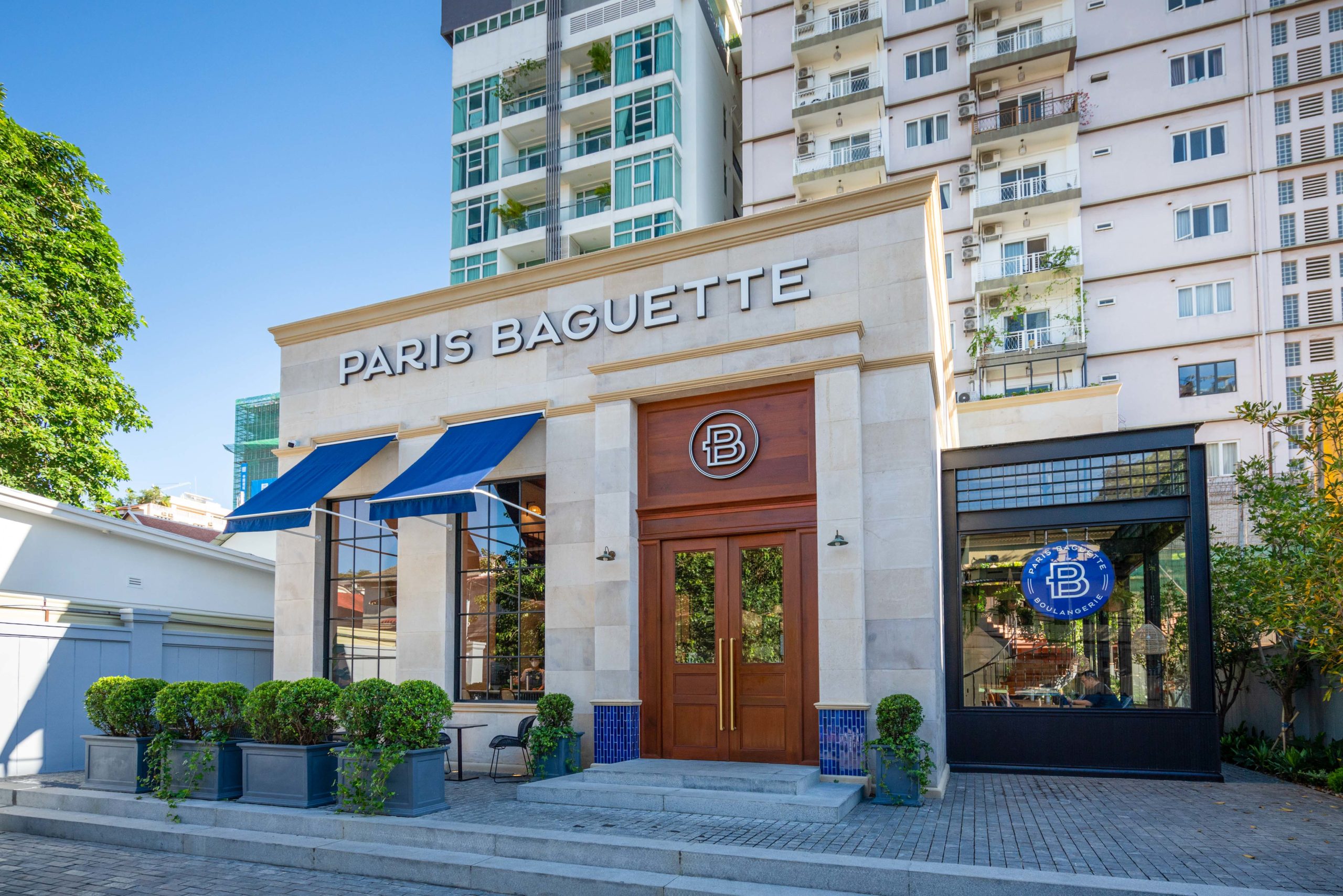
    SPC Group is launching the Paris Baguette bakery franchise in Cambodia, opening the first branch in the country‘s capital city, the company said Wednesday.

    According to SPC Group, the Korean firm behind bakery brand Paris Baguette, it forged ties with Cambodia’s HSC Group to open the first Paris Baguette store in Phnom Penh.

    Cambodia is the sixth country in which Paris Baguette has launched, and it is the first time the bakery operator has formed a joint venture for its overseas business, SPC Group said.

    For the business partnership, Paris Baguette’s affiliate in Singapore established a joint venture, dubbed H.SPC, with HSC Food&Beverages, an affiliate of the Cambodian conglomerate, SPC Group said.

    With the launch of Paris Baguette in Cambodia, SPC Group aims to penetrate into the Southeast Asian market.

    “SPC Group is committed to expanding business in Southeast Asia,” an SPC Group official said.

    “We recently met with a Malaysian senior minister to discuss establishing a halal-certified food factory there, and we are reviewing plans to tap into Indonesia, which has the biggest market in the region. We also plan to enter the Middle East market in the future.”

    The first Paris Baguette store in Cambodia is located in the central area of Boeung Keng Kang in the capital city, occupying the entire space of a three-story building.

    SPC Group operates about 430 Paris Baguette stores overseas in six countries — China, the United States, France, Vietnam, Singapore and Cambodia.

  • SunRice launches cook-in flavour rice sachets

    SunRice launches cook-in flavour rice sachets

    Australian rice company SunRice has launched Flavour Your Rice, the brand’s first range of cook-in flavor rice sachets.

    The easy-to-use paste sachet adds flavor to ordinary rice by using it as a base during the cooking process, making an easy side dish or a meal on its own, said SunRice.

    Flavor Your Rice is available in three different flavors – Indian Spice, Thai Coconut, and Lemon, Chicken, and Herb.

    “Aussie consumers are increasingly looking for products that offer taste and convenience, without compromising on quality,” said Andrew Jeffrey, Head of Marketing, SunRice.

    “Flavour Your Rice is a quick and easy flavor solution bringing authentic Indian and Thai flavors to Aussie tables,”

    There are three sachets per pack and the product is sold in Woolworths and independent grocers nationwide.

  • Oriental Watch profit soars as Chinese shop at home instead of travel

    Oriental Watch profit soars as Chinese shop at home instead of travel

    Most readers would already be aware that Oriental Watch Holdings’ stock increased significantly by 37% over the past three months. As most would know, fundamentals are what usually guide market price movements over the long term, so we decided to look at the company’s key financial indicators today to determine if they have any role to play in the recent price movement. Specifically, we decided to study Oriental Watch Holdings’ ROE in this article.

    Return on equity or ROE is an important factor to be considered by a shareholder because it tells them how effectively their capital is being reinvested. In short, ROE shows the profit each dollar generates with respect to its shareholder investments.

    The ‘return’ is the profit over the last twelve months. That means that for every HK$1 worth of shareholders’ equity, the company generated HK$0.05 in profit.

    So far, we’ve learned that ROE is a measure of a company’s profitability. Depending on how much of these profits the company reinvests or “retains”, and how effectively it does so, we are then able to assess a company’s earnings growth potential. Generally speaking, other things being equal, firms with a high return on equity and profit retention, have a higher growth rate than firms that don’t share these attributes.

    On the face of it, Oriental Watch Holdings’ ROE is not much to talk about. We then compared the company’s ROE to the broader industry and were disappointed to see that the ROE is lower than the industry average of 8.5%. However, we were pleasantly surprised to see that Oriental Watch Holdings grew its net income at a significant rate of 42% in the last five years. So, there might be other aspects that are positively influencing the company’s earnings growth. Such as – high earnings retention or efficient management in place.

    Next, on comparing with the industry net income growth, we found that Oriental Watch Holdings’ growth is quite high when compared to the industry average growth of 8.5% in the same period, which is great to see.

    The basis for attaching value to a company is, to a great extent, tied to its earnings growth. What investors need to determine next is if the expected earnings growth, or the lack of it, is already built into the share price. This then helps them determine if the stock is placed for a bright or bleak future. Is Oriental Watch Holdings fairly valued compared to other companies? These 3 valuation measures might help you decide.

    The three-year median payout ratio for Oriental Watch Holdings is 45%, which is moderately low. The company is retaining the remaining 55%. So it seems that Oriental Watch Holdings is reinvesting efficiently in a way that it sees impressive growth in its earnings (discussed above) and pays a dividend that’s well covered.

    Moreover, Oriental Watch Holdings is determined to keep sharing its profits with shareholders which we infer from its long history of paying a dividend for at least ten years.

  • UBS Remains in Race for Dutch Asset Manager

    UBS Remains in Race for Dutch Asset Manager

    The Swiss bank is among the suitors remaining for Dutch asset manager NN. The competition for NN is strong – but UBS may have an ace up its sleeve.

    The sale of Dutch money manager NN is entering the next round with UBS, DWS, Prudential, and U.S.-based Nuveen submitting bids. None of the reported suitors nor the target commented.

    The potential acquirers are in the midst of due diligence, according to the newswire, though the deadline to place bids for the 300 million euro ($363 million) asset manager is July 1. The other firms which had expressed interest in buying – including Allianz, Generali, and The Royal London Group – have retreated.

    NN aims to take in as much as 1.6 billion euros by selling. UBS has somewhat of an inside track on NN because ING spun it off in 2014 – under then-CEO Ralph Hamers, who moved to the UBS top job last November.

  • Citi to End Small Biz Banking in Singapore

    Citi to End Small Biz Banking in Singapore

    The bank will shut its consumer unit serving small businesses in Singapore in mid-August.

    Citibank has decided to close its Citibusiness unit, which will affect some 2,000 customers, following an ongoing strategic review of the business.

    About 20 to 30 staff will be affected by the changes, a bank spokesperson said, saying that Citi would be re-allocating its resources and our people to support other growth areas and sharpen its client focus.

    Citibusiness, which serves small-sized businesses, is part of its consumer banking division. The bank will continue to serve small and medium-sized enterprise (SME) clients through Citi Commercial Bank.

    Singapore is a priority market for Citi. We continue to invest and focus on growth areas of the bank including the SME and commercial banking business, the spokesperson said.

    Citi recently announced that it is considering downsizing its consumer business worldwide, with an eye on selling some of its businesses in the Asia Pacific region.

    At the same time, the U.S.-headquartered bank has placed its bets on four wealth hubs, which includes Singapore, as it consolidates its operations globally.

    It aims to double its wealth management market share in Singapore from the current 5 percent, and triple the number of clients by 2025. To achieve this, it is looking to hire over 330 relationship managers.

  • Casino operator targets ending losing streak

    Casino operator targets ending losing streak

    Royal International Corporation, which operates a casino in the northern Quang Ninh Province, has set itself a profit target of $500,000 this year after two years of losses.

    It seeks to double revenues to $10.3 million, $5.8 million from the casino and the rest come from its hotel and villas.

    The corporation will continue with last year’s business strategy of targeting foreigners working in Vietnam who are unable to return to their home country due to the Covid-19 pandemic.

    It plans to cut costs and adopt a flexible pricing strategy to attract Vietnamese customers once the pandemic passes.

    It posted a VND82 billion ($4.3 million) loss last year, and said casinos are a unique business that rely on chance but also pointed to the increasing number of casinos in the north, which cut into its revenues.

    RIC, which has a charter capital of $22 million, is listed on the Ho Chi Minh Stock Exchange.

  • MV Agusta May Resurrect Cagiva Elefant Name

    MV Agusta May Resurrect Cagiva Elefant Name

    MV Agusta may revive the Cagiva name, with the iconic Cagiva Elefant adventure bike making a comeback. In an interview to an Italian publication, MV Agusta CEO Timur Sardarov spoke about the motorcycle brand’s future plans, including new products, as well as two new engines that the brand is working on, a 550 cc and a 950 cc, which will include new models. More importantly, Sardarov also talked about a new adventure bike, with the name Elefant, taken from the iconic Dakar-winning Cagiva Elefant adventure bike.

    MV Agusta owns the Cagiva name, but so far it’s not clear whether the Elefant name will be introduced under the MV Agusta brand or as a separate Cagiva Elefant model. In fact, a few years ago, it was widely reported that MV Agusta will revive the Cagiva motorcycle name, but that it will be launched as an electric mobility brand. The latest comments from MV Agusta’s top boss seems to suggest that Cagiva could also be a sub-brand, under the MV Agusta umbrella.

    “Cagiva is a brand that belongs to MV Agusta. Our marketing department is evaluating the possibilities of products with the Cagiva brand and we are also considering whether to define Elefant as a ‘sub-brand’ of MV Agusta or as Cagiva Elefant. The decision has not yet been made,” Saradrov is quoted as having said in the interview.

    Cagiva is an Italian motorcycle manufacturer founded in 1950 by Giovanni Castiglioni in Varese. The brand has a rich history and at one point even owned Ducati and MV Agusta, as well as Moto Morini. In the late 1990s, MV Agusta became the main brand comprising Cagiva and Husqvarna. The brand has been inactive for more than a decade, and with fresh impetus and growth to the MV Agusta brand, Cagiva may just as well make a comeback in the next few years.

    The Sardarov family originally came on board as investors in MV Agusta, but assumed full control in 2019, signaling the end of the Castiglioni family’s historic ownership of the MV Agusta and Cagiva brands. Under the Russian businessman’s leadership, the MV Agusta brand has slowly stabilised, and made appreciable moves to address concerns regarding reliability and ownership experience. Currently, MV Agusta is busy updating its Euro 5 range, and once that is completed, new models will be developed, in the 550 cc and 950 cc platforms.

  • Bank of Singapore Loses Russian Heavyweight

    Bank of Singapore Loses Russian Heavyweight

    A key private banker covering the Russian market has left Bank of Singapore.

    Vadim Bondarev, head for Russia and Eastern Europe, is leaving Bank of Singapore (BoS), sources familiar with his exit said.

    A spokesperson from the bank confirmed this information.

    Bondarev joined BoS in 2014 and was responsible for covering ultra-high-net-worth clients from Russia and CIS. He lately relocated from Singapore to build up the European headquarters of BoS in Luxembourg.