Tag: asia

  • Bank of Singapore Nets Ex-UBS Wealth Planning Veteran

    Bank of Singapore Nets Ex-UBS Wealth Planning Veteran

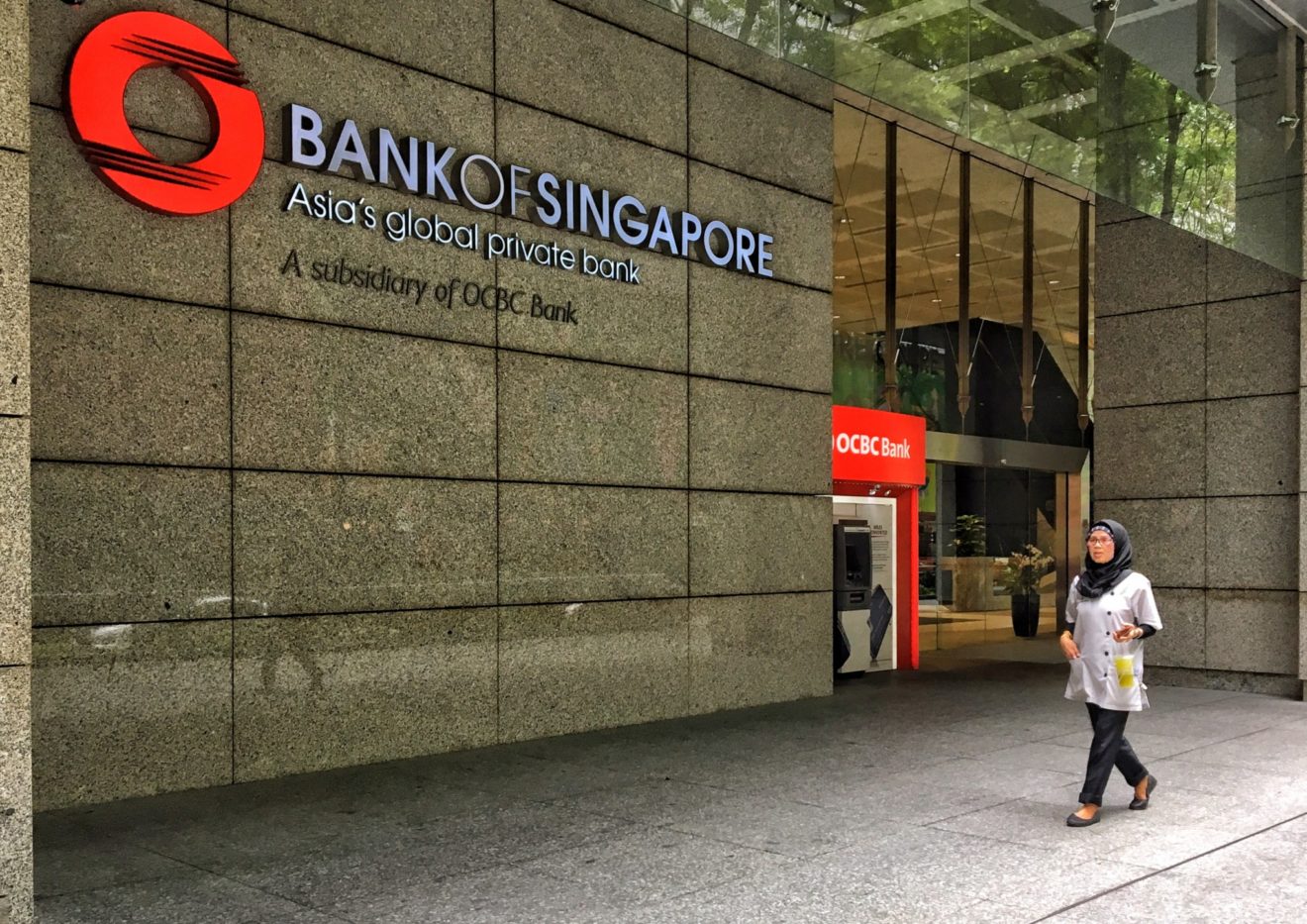
    Bank of Singapore bolsters its business with the hire of a 30-year wealth planning veteran from UBS.

    Bank of Singapore hires Paul Chua as its global head of wealth planning, according to a statement, effective June 28 this year.

    In his Singapore-based role, Chua reports to global head of products Lim Leong Guan.

    Chua succeeds Tariq Salem who remains with the bank to focus exclusively on his role as head of structured solutions group.

    Chua has over 30 years of tax and wealth planning experience in advising ultrahigh net worth and multi-generational families on the structuring of their estate, succession, and wealth transfer strategies.

    He was most recently with UBS where he spent 19 years, last as its Singapore head of wealth planning.

    Aside from exemplary leadership qualities, Chua is known as an industry veteran who extends a personal touch when dealing with clients, said Lim, who also joined Bank of Singapore from UBS last year. We are confident that he will be a key addition to our wealth planning team to help develop deeper and more meaningful relationships with our clients.

    At a minimum net worth of $250 million, Bank of Singapore is increasingly focused on the family office segment which has seen clients onboarded triple in 2020 compared to 2019.

    The bank also hired Carrie Ng as head of single-family office advisory – a newly created role – in March this year and Joanna Ho as the Greater China and North Asia head of wealth planning last year.
  • Kraft Heinz gives away bulk ketchup to Melbourne small businesses

    Kraft Heinz gives away bulk ketchup to Melbourne small businesses

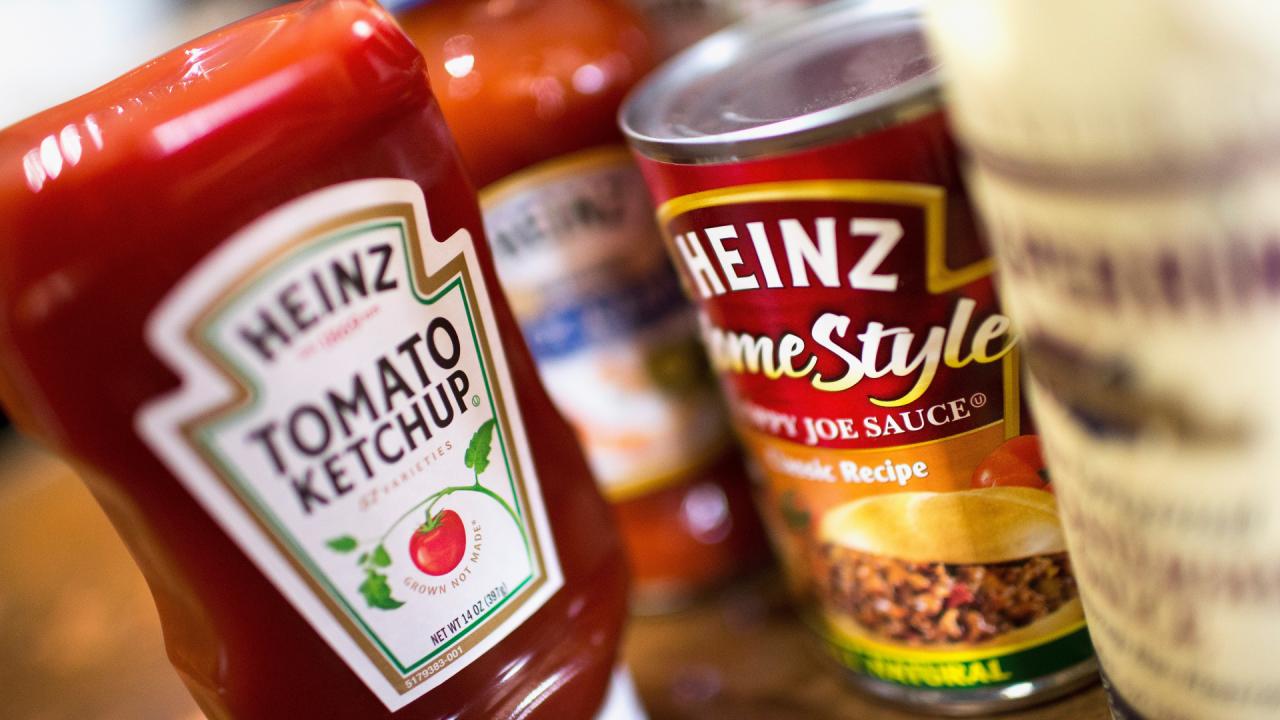
    Food and beverage company Kraft-Heinz is giving away 12-liter cartons of Heinz Tomato Ketchup to small business owners in Melbourne, including burger restaurants and other quick-service restaurants.

    As restrictions ease across Victoria, the company says it wants to help business owners affected by Covid-19 lockdowns get back on their feet with complimentary product deliveries. 

    “We know that the Melbourne restaurant industry has been hit hard by the latest lockdowns, with small, independent businesses particularly impacted,” said Marisa Jones, head of marketing foodservice ANZ at Kraft Heinz.

    “Whether you’re a burger bar, cafe owner or run another quick-service restaurant, we want to provide our foodservice community with an offer of assistance,” she said. 

    Eligible businesses are those located in the Melbourne metropolitan area, of 30 employees or less, privately owned and not part of a franchise group. The offer will be limited to one carton per business, who do not have to be an existing customer of Kraft Heinz.

    Business owners can apply for this offer from Kraft Heinz here until June 30 or until supplies last. Each delivery will consist of a carton of Heinz Tomato Ketchup containing three 4-litre bottles. 

  • Citi Hires Ex-EY Partner for Asia Digital Payments

    Citi Hires Ex-EY Partner for Asia Digital Payments

    Citi has hired a former partner from Ernst & Young to lead the upcoming launch of a new digital payment solution in the region.

    James Lloyd joins the treasury and trade solutions (TTS) unit as its Asia Pacific head of Spring by Citi – upcoming digital payments offering – according to an internal memo.

    In his Hong Kong-based role, Lloyd reports to Sanjeev Jain, APAC head of payments and receivables, TTS, and Anupam Sinha, global head of domestic payments and Receivables, TTS.

    Lloyd joins from EY where he was a partner within the strategy and transactions practice, leading the firm’s dedicated regional fintech capabilities and serving as APAC leader for its global payments practice.

    Spring by Citi

    The Spring by Citi offering aims to help corporate and institutional clients reach end-customers by enabling digital payments across preferred methods, be it credit cards, instant payments or digital wallets.

    The offering is scheduled for launch in the fourth quarter this year starting with Singapore, Australia and Hong Kong before adding more markets in 2022.

    A spokesperson for the bank confirmed the new appointment.

  • UOB Pilots Digital Signature Authorization

    UOB Pilots Digital Signature Authorization

    The initiative will remove one of the roadblocks – the need for physical signatures – in fully digitalizing the documentation process.

    UOB is starting a 12-month trial to test the use of Government Technology Agency’s (GovTech) Sign with Singpass among its retail and corporate customers, which will be used to confirm transactions such as individual wealth planning services and the PayNow Corporate application using a customer’s digital signature, the bank announced on Thursday.

    The features feature enables customers to use Singpass – the digital identity for Singapore residents that is identifiable and uniquely linked to the user – to sign electronic documents digitally via the Singpass app.

    The bank said it is pushing this innovation as research shows that COVID-19 has accelerated the move to online services, with more than 65 percent of customers expecting banking services to be digital by default.

    The change in customer expectations and experience during COVID-19 has made it imperative that we explore and extend our digital capabilities across more of our financial services and products, Susan Hwee, UOB head of group technology and operations, said in the announcement.

    UOB plans to expand the service to include more of its products and services for both the retail and wholesale segments in Singapore, and to expand its electronic signature capability to the region from 2022.

    One benefit from the move to e-signatures is its reduction of paper usage – more than 2 million multi-page hardcopy documents each year, which in turn will save more than 700 trees per year, once rolled out across its markets.

  • Crypto Exchange Searches Blocked in China

    Crypto Exchange Searches Blocked in China

    Chinese users were reportedly unable to find results for popular cryptocurrency exchanges on major search engines in the country.

    Keyword searches for trading platforms such as Binance, OKEx and Huobi yielded no results, according to various media outlets.

    The searches were conducted on major search engines like Baidu, Sogou, Zhihu, and Weibo.

    This marks yet another sign of further tightening on cryptocurrencies, especially with regards to online content.

    Earlier this month, multiple popular Weibo accounts featuring related content were reportedly suspended or shut down over violation of the social media platform’s rules.

  • Ex-J.P. Morgan Exec Joins UBS Private Markets Unit

    Ex-J.P. Morgan Exec Joins UBS Private Markets Unit

    UBS Global Wealth Management has hired a former J.P. Morgan executive to join its direct investment group.

    Edith Chan joins UBS Global Wealth Management as its Greater China head of direct investment group distribution, according to an internal memo effective June 21. A spokesperson for the bank confirmed the hire.

    Chan rejoins the Swiss bank after previously serving in a similar role as its Greater China head of private markets distribution. She was most recently with J.P. Morgan where she also focused on private markets between 2018 and 2020. She previously worked with various private banks and asset managers including HSBC Private Bank and Deutsche Bank.

    UBS’ direct investment group focuses on investing in private companies via direct participation in primary and secondary equity share placements.

    It is also active in private debt and credit placements as well as real estate and infrastructure funds.

    UBS sources such deals globally from its investment bank, asset manager, and network of blue-chip financial sponsors.

  • Apple manipulated App Store search to favor its own apps over the competition

    Apple manipulated App Store search to favor its own apps over the competition

    Back in 2019, after investigations done by the New York Times and the Wall Street Journal, it appeared that Apple was ranking its own apps ahead of competitors’ similar apps in the App Store search feature. This is an issue that lawmakers are seriously concerned with and it has been associated with other companies that sell their own products alongside third-party brands such as Google and Amazon. Apple denied that it had done anything wrong. The company pointed to a secret algorithm it uses with 42 variables to prevent it from manipulating the App Store search results.

    But now it appears that Apple did boost App Store search results. Email that was released during the Epic vs. Apple lawsuit showed that the tech giant apparently admitted that it had boosted the placement of its own Files app above listings for the competition during a time period that lasted 11 months. Apple app search lead Debankur Naskar hinted that some hanky panky was going on at Apple when he wrote in an email “We are removing the manual boost and the search results should be more relevant now.”

    Naskar was responding to an email from Epic Games CEO Tim Sweeney who was a major Apple partner at the time. Sweeney had “confronted” Apple after the latter’s Files app landed first in the App Store’s search results when he searched for Dropbox. While you might not be able to tell the executive’s tone from written words, you can imagine Sweeney sounding incredulous when he emailed Apple to say that “Dropbox wasn’t even visible on the first page of search results.”

    Apple explained away the issue by telling The Verge that its Files app had a Dropbox integration. Thus, Apple included “Dropbox” in the metadata for its Files app and as a result, Files was always ranked ahead of Dropbox. This response doesn’t match Naskar’s comments about “removing the manual boost.”

    Dropbox has been a problem for Apple going back to 2009 when then Apple CEO Steve Jobs said that iCloud would help kill off Dropbox after Jobs could not convince Dropbox CEO Drew Houston to sell what was then a start-up company to Apple.

    One engineer at Apple changed the algorithm for App Store search in July 2019 dropping the placement of Apple’s own app in the search results. The New York Times back in September 2019 showed how those searching the App Store for “music” would see streamer Spotify at the top of the list with Pandora eighth. Repeating the same search in 2016 resulted in Apple Music appearing at the top of the list with Spotify fourth.

    Two years later, the top six results under “music” consisted of Apple’s own music-based apps. Pandora remained in eighth place. By December 2018, the first eight search results were all for Apple’s own apps, some unrelated to music: (Apple Music, Garage Band, iTunes Remote, Music Memos, Logic Remote, iTunes Store, iMovie, Clips) while Spotify was number 23.

    After Spotify complained to European regulators, the results for April 2019 were much different with iTunes and Apple Music numbers 1-2, but with Spotify fourth and YouTube Music fifth. Apple had no other apps appearing under a search in the App Store under “music.”

    Apple released a statement to The Verge that says, “We created the App Store to be a safe and trusted place for customers to discover and download apps, and a great business opportunity for all developers. App Store Search has only one goal — to get customers what they are looking for. We do that in a way that is fair to all developers and we do not advantage our apps over those of any developer or competitor. Today, developers have many options for distributing their apps and that’s why we work hard to make it easy, fair and a great opportunity for them to develop apps for our customers around the world.”

  • Vietnamese rice faces competition from India in Philippines

    Vietnamese rice faces competition from India in Philippines

    The Philippines is set to import a lot of rice from India at $100 cheaper per ton than Vietnamese rice as it diversifies its supply sources.

    A report by the Agricultural Products Processing and Development Department (Agrotrade) shows that in the first five months of this year, Vietnamese rice exports reached 2.7 million tons at $1.48 billion, down 11.3 percent in volume and 5 percent in value over the same period last year.

    There’s no significant demand by foreign traders as they wait for the summer-autumn harvest season, the report said.

    On the other hand, the price of Vietnamese rice is much higher than that of India and Thailand. A ton of Vietnamese rice is $20 higher than that of Thai rice and over $100 per ton over Indian rice.

    On average, Vietnam’s rice export price in the first four months of this year reached $543 per ton, up 15.4 percent year-on-year. The Philippines is Vietnam’s largest rice-consuming market, accounting for 35.6 percent, but export to this market decreased 20.7 percent in volume and 4.9 percent in value over the same period last year. Similarly, rice exports to Indonesia also decreased sharply by 71.1 percent year on year.

    According to Agrotrade, market demand in the coming time will be high, but Vietnamese rice will face competition in the international market when the prices of Thai and Indian rice are more attractive to buyers.

    Recently, the Philippines eliminated import duties for ASEAN, non-ASEAN, and “Most Favored Nation” (MFN) nations with the goal of increasing imports of cheaper rice from India and Pakistan.

    Specifically, the Philippines has lowered import duties for MFN on rice to a single rate of 35 percent. It had previously imposed a 40 percent in-quota tariff rate and 50 percent out-of-quota tariff rate.

    On June 7, Philippines Finance Minister Carlos Dominguez announced that the country would seek more rice from countries outside Southeast Asia with the goal of diversifying supplies and keeping import prices at a reasonable price. Accordingly, India is a country with cheaper rice that can become a main supplier.

    Vietnam has been the main rice supplier to the Philippines so far. In addition, the Philippines also buys rice from Thailand and India, apart from other countries outside Southeast Asia.

    Vietnam is set to produce 43 million tons of paddy and export 6.5 million tons of rice this year, according to the Ministry of Agriculture and Rural Development.

    The nation was the world’s second-largest rice exporter last year at 6.25 million tons.

  • Google’s Android app returns blank search results thanks to bug

    Google’s Android app returns blank search results thanks to bug

    Over the last few weeks a bug has affected the Google app on Android. When conducting a search, the user gets a blank response. The bug work its magic on several devices including handsets made by Samsung, Google, and OnePlus.

    If this happens to you, you could get annoyed, jump up and down on your phone and start cursing out the Google app. Or, you can handle this like the calm, cool and collected person that you are and request the search for a second time. You might also consider force closing the Google app since that appears to solve the issue, at least temporarily.

    Additionally, it appears that using the Chrome URL bar to run a search doesn’t result in a blank response, so you might want to use the search feature on Chrome if getting a blank response is not what you’re looking for from your search request. We should point out that receiving blank search results has nothing to do with the strength of your network or Wi-Fi connection.

    Dare we assume that Google is aware of this bug and hopefully is working on an update to exterminate this rather strange issue?  Yes we do because Search is Google’s most important business unit and was responsible for $104 billion in revenue for the company last year. That made up 71% of Google’s advertising gross and 57% of parent firm Alphabet’s total 2020 revenue.

  • Volkswagen, Ford To Exit Auto Finance Business In India

    Volkswagen, Ford To Exit Auto Finance Business In India

    The auto financing arms of Volkswagen AG and Ford Motor Co plan to stop giving new credit to car buyers and dealers in India and will exit from the country, sources aware of the development told Reuters. Volkswagen Finance Private Ltd, the German carmaker’s finance arm, stopped giving loans to car buyers in India last year and in May told dealers of all VW brands, which includes Volkswagen, Skoda and Audi, to find another financing, two sources with direct knowledge of the talks said.

    As some customers failed to make repayments, the finance unit has suffered losses, and will close for business by Dec. 31, the sources said.

    More than 50% of Volkswagen group dealers use credit from the finance arm, they said.

    Volkswagen Finance Private Ltd said in a statement that it had acquired a major stake in Indian loan brokerage portal KUWY Technologies to service its retail customers.

    It is in talks with dealers and will review its business strategy by the end of the year, the company said.

    The auto finance arms are classified as non-banking financial companies (NBFCs) and they compete with banks for providing credit. But banks have access to cheaper funding so can offer loans at lower rates than those offered by NBFCs or shadow lenders.

    To offset the disadvantage, Volkswagen and Ford would offer incentives to those dealers who have used their credit finance, the sources said.

    Dealers typically need credit to buy cars from automakers which they then sell on to customers.

    Volkswagen’s plan to exit the financing business has surprised dealers, coming weeks ahead of the launch of Skoda’s new sport-utility vehicle (SUV) to boost sales in India, the two sources said.

    Skoda dealers have been asked to find new financing by the end of the month – a tight deadline ahead of a new model launch, one source said.

    Ford Credit, the automaker’s financing arm, stopped lending to car buyers at the end of last year and will cease credit to dealers by June 30, two separate sources said.

    The decision to exit the financing business comes at a time when Ford is finalizing a new strategy for India after ending ties with Mahindra & Mahindra on Dec. 31.

    A Ford Motor India spokesperson said the company regularly assesses market conditions for its credit business and the decision to discontinue was conveyed to dealers in October – before it made any announcement on the Mahindra partnership.

    “We are confident the auto financing sector in India can support Ford customer and dealer new financing needs. Our team continues to service our existing book of business,” the spokesperson said, adding that 25%-30% of its dealers do business with Ford Credit.

  • UniCredit Hires from Commerzbank for Korea Coverage

    UniCredit Hires from Commerzbank for Korea Coverage

    Milan-headquartered UniCredit has bolstered its Asia business with the hire of a head of Korea coverage from Commerzbank.

    Jaeho Mike Hyun joins the Italian lender as its head of Korea coverage, according to a report from «GlobalCapital», to oversee financial institutions and corporate clients for the market.

    In his Hong Kong-based role, Hyun reports to Asia Pacific chief executive Michele Amadei.

    Hyun was most recently Commerzbank’s head of Korea coverage, capital markets, after joining the German lender in 2013. Previously, he had also worked for Deutsche Bank in Seoul and Singapore in both in asset management and debt capital markets origination.

  • Apple previews tech for passwordless website sign-up using just Face ID or Touch ID

    Apple previews tech for passwordless website sign-up using just Face ID or Touch ID

    Apple is set on making things simple for its users and now, a new feature announced during a developer session will make it possible for your to sign up on websites using just Face ID or Touch ID, no passwords required.

    The developer session is part of the WWDC 2021, and introduces the new technology in order to make the user experience more intuitive while at the same time, assuring security.

    The new tech is called Passkeys and will make it possible for you to sign up for services and websites without the need for a password. Of course, the website will have to support this new tech, and when you enter your username of choice during the signup process, you will be able to use Face ID or Touch ID to authenticate yourself.

    iPhone, iPad, and Macs will have this tech in a preview coming later this year, and it will be off by default.

    Passkeys is a part of the iCloud keychain, providing a secure method for authentication and at the same time, protecting you against phishing attacks. However, if you use other devices apart from Apple ones, you may still need to use passwords.

  • Singapore and Hong Kong Set Review Date for Travel Bubble

    Singapore and Hong Kong Set Review Date for Travel Bubble

    An announcement on the launch date for the travel bubble is expected in early July, following a review by both sides.

    The latest developments come in view of the COVID-19 epidemic situation in Singapore, which has been stabilizing since early June, the Hong Kong government said in an announcement on Thursday.

    Both consider that it is prudent to keep the developments under review to ensure the epidemic situation is sufficiently stable before deciding in early July on the way forward for the ATB, the announcement said.

    The travel bubble between two business hubs, planned since October 2020, has been beset by numerous delays.

    On Thursday, Singapore also announced the easing of curbs to control the spread of Covid-19, to take place from June 14.

    The city-state brought back stricter social distancing measures in early May amid growing community infections, but new cases have since stabilized in the low single digits.

  • Auto sales down in Vietnam

    Auto sales down in Vietnam

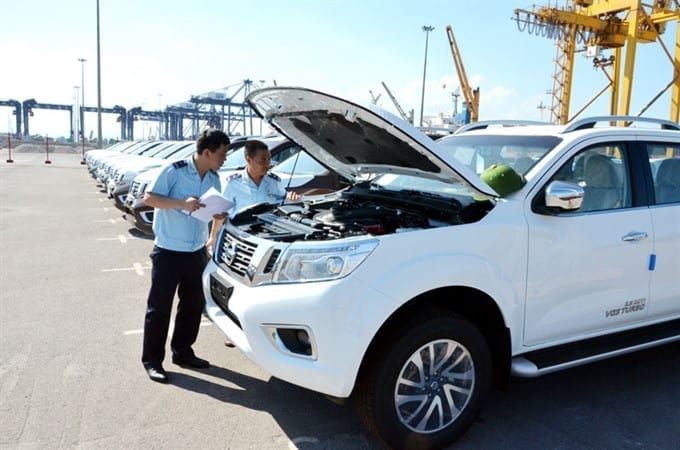
    Auto sales rose 53 percent year-on-year in the first five months to 126,894 units.

    Passenger vehicles accounted for 70 percent and commercial and special-purpose vehicles for the rest, according to the Vietnam Automobile Manufacturers Association (VAMA).

    Truong Hai Auto Corporation, which manufactures its own vehicles and assembles foreign brands such as Kia and Mazda, led with nearly 44,000 units, a 67 percent rise.

    It was followed by Toyota with over 24,100 units, up 16 percent.

    Mitsubishi, Honda and Ford made up the top five.

    Last year sales had fallen by 8 percent to 296,634 units as the Covid-19 pandemic badly affected the economy, hitting people’s incomes and discretionary spending.

  • Vietnam Airlines cleared for 12 repatriation flights from US

    Vietnam Airlines cleared for 12 repatriation flights from US

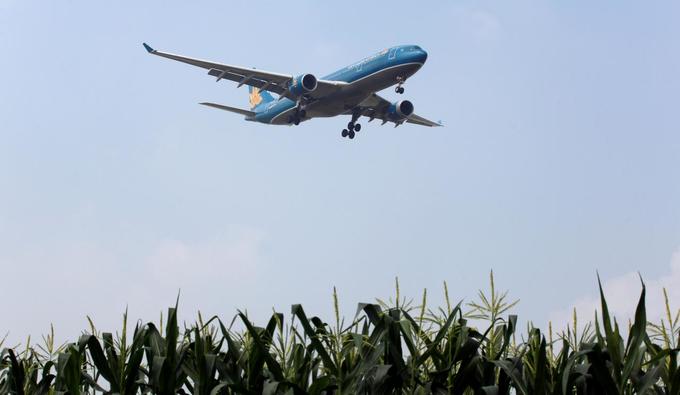
    National flag carrier Vietnam Airlines has received permission from U.S. authorities to conduct 12 repatriation flights this year, the first of which is scheduled for this month.

    The first flight will leave Hanoi on June 22 for Washington D.C. with a stop in Alaska before returning to Vietnam on June 24.

    The airline will use its biggest wide-body aircraft – the Boeing 787 or the Airbus A350 for these flights.

    It remains the only Vietnamese carrier to receive flight permits from the U.S. Transportation Security Administration (TSA), which is said to have stringent requirements. The examination process for the 12 flights took one month.

    Vietnam Airlines expects the flights to help evaluate the possibility of conducting regular flights between the two countries after the Covid-19 pandemic has been contained.

    Last year, it conducted 20 flights between Vietnam and the U.S. to serve Vietnamese citizens and U.S. experts, and to transport goods.