Tag: asia

  • Hulu app finally adds support for higher resolutions on Android TV

    Hulu app finally adds support for higher resolutions on Android TV

    It’s hard to understand why Hulu has been limiting streaming resolutions to 720p on Android TV until now, but just about every other streaming service offers at least support for 1080p. Not to mention that most of its competitors in the US have already upgraded their streaming services to 4K resolution at no additional costs.

    Thankfully, Hulu has decided that it finally time to upgrade its streaming service and offer customers at least the same level of quality the competition currently offers. The Hulu app for Android TV now features two additional streaming options: 1080p and 4K.

    Keep in mind though that to benefit from these improvements, your Android TV device must support these resolutions. There’s no official word on the changes, but many Reddit users that own Android TV devices like the 2019 Shield TV noticed Hulu can now stream at 1080p resolution.

    At least one 2017 Sony Bravia TV user confirmed the Hulu app now supports 4K streaming. It looks like these improvements are slowly rolling out to Hulu customers across the US, so we’re not sure when exactly they’ll be available to everyone.

  • DBS Adds Public Sector Veteran as Board Member

    DBS Adds Public Sector Veteran as Board Member

    DBS has named a senior civil servant and former top aide to the Singapore Prime Minister to be a non-executive director on its boards.

    Chng Kai Fong will join the boards of DBS Holdings and DBS Bank, according to a statement, effective March 31 this year. He will also serve as a member of DBS’ audit committees and nominating committees.

    As part of the Singapore bank’s renewal process, longstanding board members Euleen Goh, Ow Foong Pheng and Andre Sekulic will step down on March 30.

    According to DBS chairman Peter Seah, Chng’s appointment is expected to help further DBS’ status in global banking and digital leadership.

    Chng, 42, is currently the managing director of the Singapore Economic Development Board (EDB) after first taking on the role in October 2017. Prior to joining the EDB, he was the principal private secretary to the Prime Minister of Singapore.

    Chng also serves on the boards of EDB Investments Pte Ltd, EDBI Pte Ltd, Manakin Investments Pte Ltd, Singapore Israel Industrial Research and Development Foundation (SIIRD), Singapore Symphonia Company Limited, and Agency for Science, Technology and Research (A*STAR).

    He is also an advisory board member of Singapore Management University’s Lee Kong Chian School of Business, Shell Gas & Power Development B.V.’s New Energies Advisory Board as well as a member of the Board of Trustees of Singapore University of Technology and Design.

  • Mercedes-Benz EQS Cabin Revealed

    Mercedes-Benz EQS Cabin Revealed

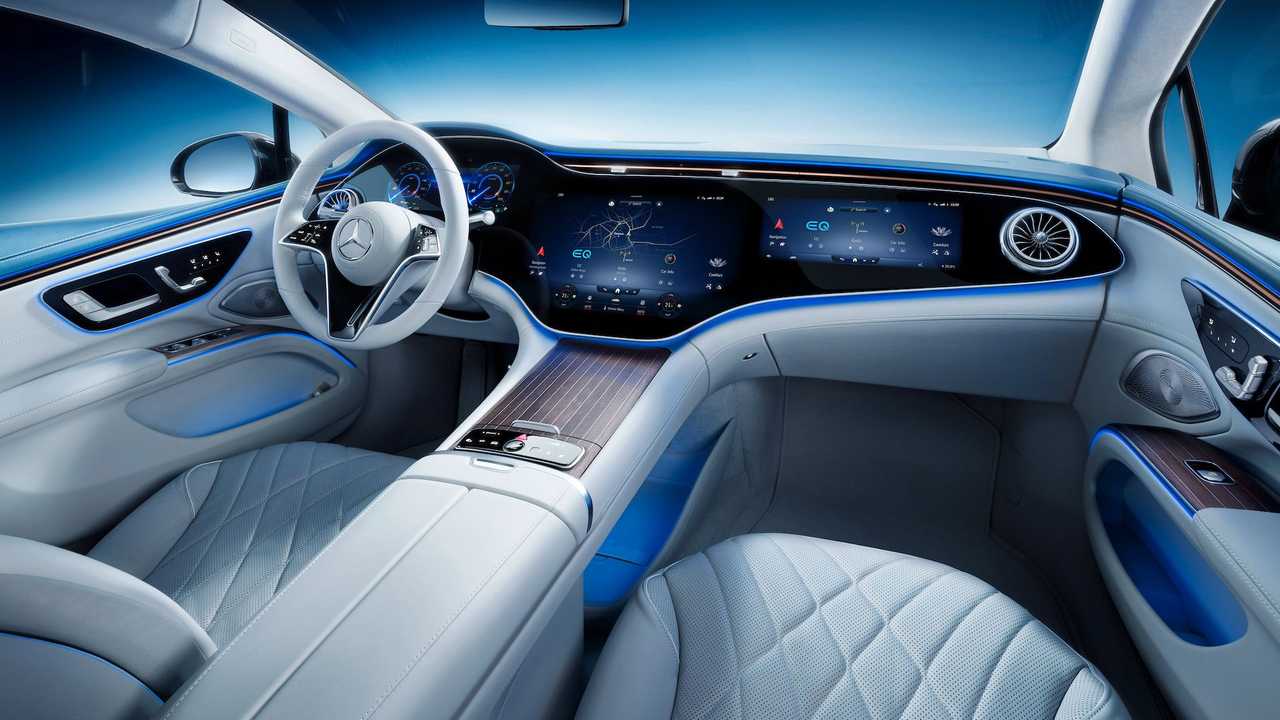
    The EQS is the luxurious and avant-garde top-of-the-range model from Mercedes-EQ and while we’ve seen teasers from the company, we are looking forward to see what the car is actually like and come April 15, we’ll see the what it looks like. But the company has now revealed what the cabin of the EQS looks like and we have to say it looks something from outer space and the reason we say this is because of the MBUX Hyperscreen that is showcased in the car.

    Though optional, the entire instrument panel is one ultimate widescreen. This determines the aesthetics of the entire cockpit and interior. The real glass appears to drape itself in three dimensions over the entire width of the vehicle like a wave – a unique feature in automotive construction to date.

    The high-resolution screens merge seemingly seamlessly under the shared glass cover. The graphic appearance of their MBUX content is tailored to each other. The MBUX Hyperscreen is integrated into the instrument panel in minimalist fashion. The MBUX Hyperscreen is surrounded only by a thin silver shadow frame, a vent band and a narrow leather frame, reminiscent of the lower volume body of classic instrument panels.

    The vent band spans across the entire width at the top and is very slim at the same time. These extreme proportions, together with the glass wave of the MBUX Hyperscreen, create the avant-garde architecture of the cockpit. For further details on the MBUX Hyperscreen, see separate chapters.

    The front section of the center console joins the instrument panel and stands freely in space. Flowing leather surfaces with intricate seam patterns create a lot of storage space in combination with a large cover made of real wood. The visual impression is both modern and luxurious.

    The base model without MBUX Hyperscreen has a slightly different center console. There is a soft armrest in the rear section. It is first visually interrupted before being transitioned into the floating central display.

    The design of the door panels borrows from the interior design of modern living spaces. Doors and their center panels emerge from behind the MBUX Hyperscreen to span the space. A surface-mounted modular body floats like a sideboard in front of the door panel. It accommodates all necessary door elements such as armrest, door module, pull handle, and map pocket. Circular ambient lighting completes this floating, avant-garde aesthetic in the dark.

    In combination with the AMG Line interior, the EQS is fitted with sports seats. They are characterized by a slim and monolithic shape. The seat surfaces are designed in such a way that they give the impression of draped-on leather blankets. The technical term is “layering”.

    Common features of the seats are the dynamic graphic patterns with highly elaborate, positioned perforations. Here, too, you will find the typical Mercedes-EQ combination of the highest standards in materials, ambiance and workmanship as well as state-of-the-art technology.

    Avant-garde, as well as traditional materials and colors, give the interior a special atmosphere. Eight coordinated color combinations in the interior emphasize the generous feeling of space. The EQS is immersed in a progressive and luxurious color world of warm and cool tones. Colors such as balao brown-neva grey and space grey-macchiato add the finishing touches to the soft and emotive design. The color rosé gold, derived and evolved from the electric coil, emphasizes the design of the vent band and is used as a contrasting color.

    The shape of both seats is outlined by illuminated piping. This creates a unique night-time ambiance. The innovative trim elements make a decisive contribution to the aesthetics in the EQS. Two examples: the anthracite 3D relief-look trim elements feature tiny metal pigments. The different lighting situations in the vehicle subtly change the appearance and create a subtle value appeal.

    Visually, all graphics are designed in a new color world of blue/orange throughout. The classic cockpit display of the two-round dials has been reinterpreted with a digital laser sword in a glass lens. All content relevant to driving can be accessed between the round dials.

    The “sporty” display from the S-Class has been converted into a three-dimensional performance bar and emotively and impressively conveys the respective driving status (Drive, Accelerate, Charge). The central object here is a “G-force puck”, which dynamically moves freely in space in line with the acceleration forces.

    The appearance of the screens can be individualized with three display styles (discreet, sporty, classic) and three modes (Navigation, Assistance, Service).

    In the EQS, the content of the displays is reduced as much as possible and coordinated with the colour change of the ambient lighting in seven screen color worlds. In “Assistance” mode, important events such as lane changes or target distance control as well as the infrastructure and detected other road users (cars, motorbikes, trucks) are displayed.

    Head-up displays are available in two sizes. They contribute to relaxed driving because the driver does not need to look away from the road. The large augmented head-up display is the highlight here, as it shows relevant information and actions three-dimensionally in the actual driving situation and environment.

  • Vietnam targets $10 bln worth of fruit, vegetable exports

    Vietnam targets $10 bln worth of fruit, vegetable exports

    A fruit and vegetable sector development plan approved by the government seeks to increase exports to $8-10 billion by 2030.

    Processed fruits and vegetables are expected to account for at least 30 percent of this, with two million tons expected to be shipped abroad, double the volume in 2020.
    The plan also seeks to attract investment to establish 50-60 medium and large-scale fruit and vegetable processing facilities with modern technologies that can compete in the international market.

    The government will offer incentives for such investment

    Existing fruit and vegetable warehouses and processing facilities will be upgraded, and farms, processing plants and distribution channels will be linked.

    Exports of fruits and vegetables fell by 13 porcent last year to $3.26 billion due to the impact of Covid-19, according to the Ministry of Agriculture and Rural Development.

    But exports to some countries with stringent quality standards, such as the U.S, South Korea and Japan, increased by 5-11 percent.

  • Need for high-speed rail arguments continue unabated

    Need for high-speed rail arguments continue unabated

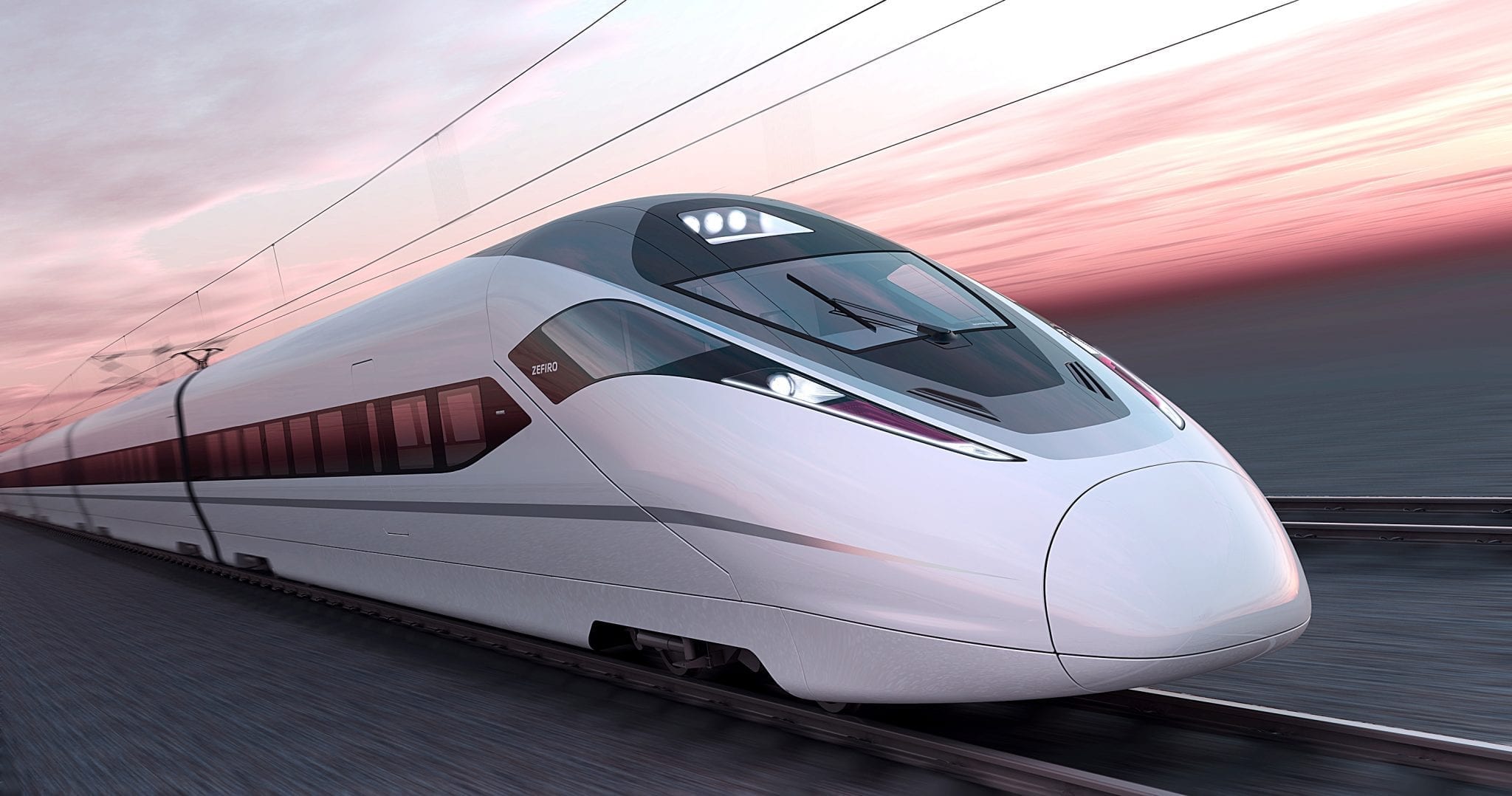
    More than 10 years after they were first proposed, high-speed railroad plans remain mired in concerns and disagreement over speeds and cost.

    Three high-speed routes are currently under study or have been proposed: north-south, Ho Chi Minh City-Can Tho and Hanoi-Lang Son.

    A final report by consultancy consortium CCTDI-TRICC-TEDI, comprising three Vietnamese construction firms, on the master plan for railroad development for 2021-30 sets out two options.

    The more ambitious one envisages the completion of phased investment for two north-south high-speed railways, Hanoi-Vinh and HCMC-Nha Trang by 2030.

    The two railways have a total length of 651 km and might cost VND561 trillion ($24.18 billion) to be built.

    The other is to complete them by 2032 at a cost of VND375 trillion. The consultants forecast a maximum of 14 million passengers using the high-speed trains annually at that time.

    They expect an average of 44.7 million passengers using north-south railroads annually by 2050.

    An expert who asked not to named said however that these options are “overly optimistic,” if not downright unfeasible.

    He said 10 years would not be enough to complete these projects, considering the approvals that need to obtained at various levels, the money that needs to be raised and carrying out the work.

    There is also a continuing debate on whether the trains should run at 200 kph as proposed by the Ministry of Planning and Investment and some experts or 350 kph as suggested by the Ministry of Transport and the consultants.

    That may prolong the time required for getting National Assembly approval.

    Dang Huy Dong, director of the Planning and Development Institute, said building infrastructure for trains running at 350kph would be prohibitively expensive, and the resultant high fares would also make the entire thing unviable.

    It is economically efficient to have passenger trains running at a speed of 150kph and freight trains at 100kph, he told local media.

    The State Appraisal Council is in the process of identifying an agency that would assess the feasibility of the various options for the north-south routes.

    Recently the Lang Son Province people’s committee proposed building the Hanoi-Dong Dang high-speed rail starting in 2030, saying is necessary to enhance rail transport between ASEAN countries and China. The proposed route will go on up to Nanning in Guangxi, China.

    Earlier this year the Ministry of Transport ordered the Railway Project Management Board to complete a pre-feasibility study on the HCMC-Can Tho link by 2022.

    The South Construction Technology Science Institute wants high-speed trains on the route with a 1.43-meter double track serving both passenger and freight trains traveling at 200 kph and 100 kph.

    It expected it to cost around $10 billion.

    A Ministry of Transport official said the route might be necessary, but many issues need to be sorted out first. For instance, the 150-km distance might not be ideal for a high-speed train, he said.

    Vu Anh Minh, chairman of Vietnam Railways, said flying from Hanoi to HCMC takes around five hours in all while a high-speed train traveling at 300 kph would take six hours.

    “Considering the nature and geography of Vietnam, the development of a high-speed network is imperative, and we are losing socioeconomic development opportunities every day without it.”

  • Facebook’s First transpacific subsea cable Echo and Bifrost

    Facebook’s First transpacific subsea cable Echo and Bifrost

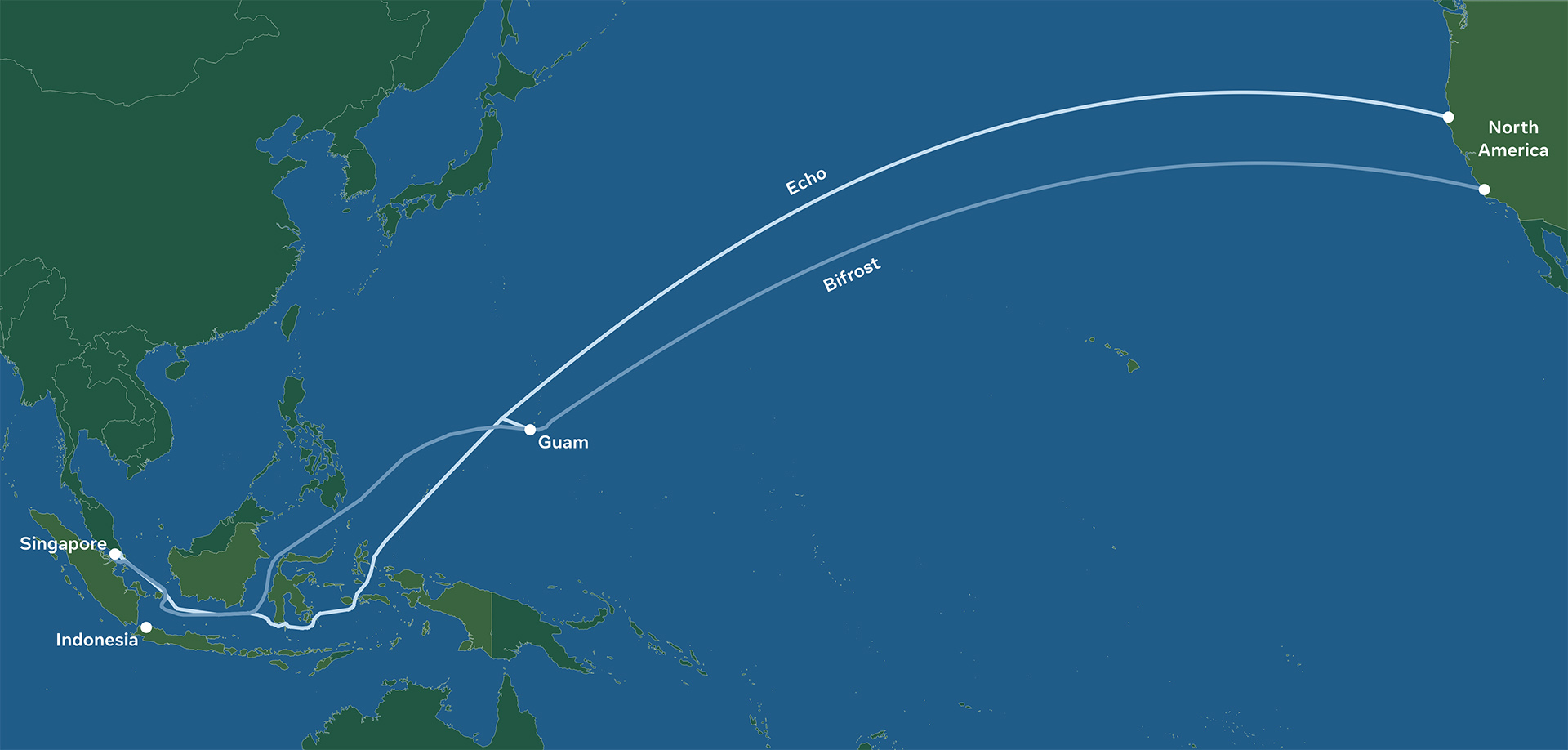
    Advancing connectivity between the Asia-Pacific and North America regions, Facebook is set to build two new subsea cables — Echo and Bifrost — with leading regional and global partners.

    These subsea cables will connect Singapore, Indonesia, and North America, making it the first transpacific cables through a new diverse route crossing the Java Sea. Moreover, it will increase the overall transpacific capacity by 70 percent and deliver increased internet capacity as well as network redundancy and reliability.

    The demand for 4G, 5G, and broadband access is rapidly increasing within the Asia-Pacific region. Thus, Echo and Bifrost will support further growth by ensuring a widely accessible internet for people and businesses.

    According to Facebook Vice President of Network Investments, Kevin Salvadori, Echo is being built in partnership with Alphabet’s Google and Indonesian telecommunications’ company XL Axiata while Bifrost is being done in collaboration with Telin, a subsidiary of Indonesia’s Telkom, and Singaporean conglomerate Keppel. These two are set to be completed between 2023-2024.

    “These new projects add to our foundational regional investments in infrastructure and partnerships to improve connectivity to help close the digital divide and strengthen economies,” the American technology conglomerate declared on its statement.

    As of the moment, the two new ventures are still subject to regulatory approvals.

  • Singtel and Hyundai Motor to develop Singapore’s smart manufacturing and mobility technologies

    Singtel and Hyundai Motor to develop Singapore’s smart manufacturing and mobility technologies

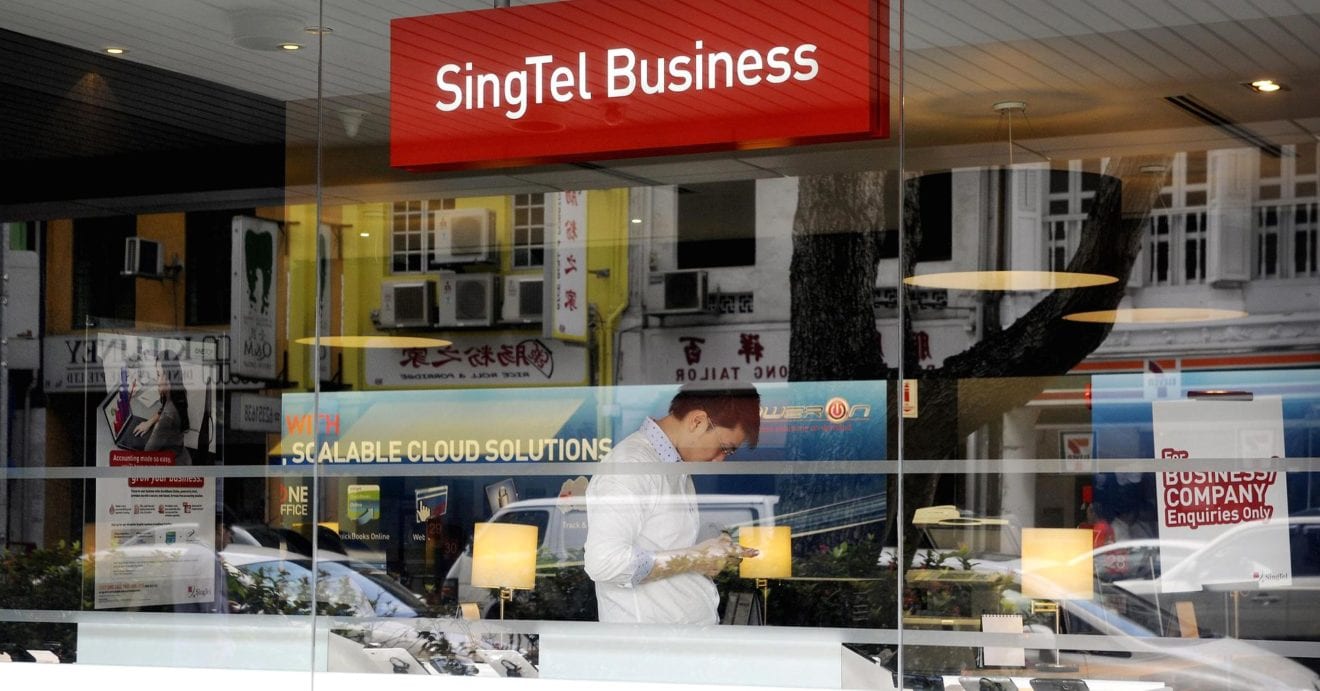
    Hyundai Motor Company and Singtel today signed a Memorandum of Understanding (MOU) to collaborate on a range of ventures to support smart manufacturing, connectivity for electric vehicle battery subscription service. The MOU follows Hyundai Motor Group’s announcement in October 2020 that it is setting up a new state-of-the-art Hyundai Motor Group Innovation Centre Singapore (HMGICS) to conduct studies on future mobility and explore innovative solutions, services and disruptive technologies to revolutionize commuters’ transport experience.

    Hyundai Motor will combine its expertise in developing innovative automotive and manufacturing solutions with Singtel’s capabilities in 5G, Internet of Things (IoT), and next-generation info-communications technologies and solutions to develop Industry 4.0 advanced digital solutions to   transform the way vehicles are currently manufactured. The parties will develop and pilot a 5G-enabled smart factory use case for HMGICS’ intelligent manufacturing platform, and potentially scaling it up for deployment across Hyundai’s manufacturing plants globally.

    “Hyundai is delighted to work with Singtel, implementing next-generation communication solutions that will enhance mobility experiences for our customers,” said Hong Bum Jung, Senior Vice President of HMGICS at Hyundai Motor Company. “We also hope to explore future innovative solutions and business opportunities with Singtel to help realise Singapore’s Smart Nation vision.”

    Hyundai and Singtel will also work together on an IoT communications solution for the batteries powering Hyundai’s electric vehicles (EVs) in Singapore. The IoT system enables Hyundai to monitor the telemetry, or automatic data transmission, of the batteries’ real-time status and performance.

    The data-driven insights can enhance the EVs’ reliability, advancing Singapore’s EV ecosystem and Smart Nation vision of connected and sustainable mobility solutions.

    Andrew Lim, Managing Director, Government and Large Enterprise, Group Enterprise at Singtel said, “Our collaboration with Hyundai Motor is timely given the Singapore Government’s decision to phase out internal combustion engine vehicles by 2040 and the recent Budget announcement on new policies to encourage more Singaporeans to switch to driving electric vehicles. By pushing the boundaries of what is possible with 5G, IoT and other advanced technologies, we also want to build up Singapore’s smart manufacturing and Industry 4.0 capabilities and strengthen its innovation ecosystem.”

  • ZTE assists in first 5G local traffic offloading pilot in China’s mining industry

    ZTE assists in first 5G local traffic offloading pilot in China’s mining industry

    ZTE Corporation, a major international provider of telecommunications, enterprise and consumer technology solutions for the Mobile Internet, together with China Unicom and Shandong Energy Beidou Tiandi, today has completed the first 5G local traffic offloading pilot in the mining industry in Shandong Province, China.

    With private network coverage as the test target, the pilot employs “5G+NodeEngine” base station-level local offloading, customized for China Unicom Shandong Branch, to bring the mining services a private network. The pilot, in bid to ensure data transmission security and nearest local access, has tested and verified two major functions of ZTE’s NodeEngine solution: local traffic offloading of base station and local inter-connection with eBridge.

    The video monitoring data is sent to the underground integrated control center directly through the intelligent offloading module, so as to reduce the latency by more than 50%. At the same time, ZTE’s NodeEngine solution, combined with the air-interface keep-alive strategy, ensures that the core production services will not be affected when the underground and ground optical fibers are disconnected. Moreover, local inter-connection with eBridge can realize control and equipment management among production devices and between the control end and remote terminals.

    By virtue of ZTE’s NodeEngine solution, ZTE’s 5G base station has been empowered with powerful computing capability to offload the local traffic. Meanwhile, the NodeEngine solution helps further strengthen the data transmission security, safeguard the production when the optical fibers are disconnected, and realize the fast and low-cost service provisioning.

    Moving forward, the three parties will be committed to the customer and demand-oriented innovation investment, expecting to accelerate the in-depth development and expansion of 5G technology in the mining industry and assist enterprises achieve fast deployment of digital application.

  • HBO Max to offer at least 6,000 hours of described content by March 2023

    HBO Max to offer at least 6,000 hours of described content by March 2023

    HBO Max has big plans for 2021, as the streaming giant is ready to implement lots of major enhancements to its service. One of the first important changes coming to HBO Max this week is aimed at visually impaired users.

    Starting this week, HBO Max will roll out newly 1,500 hours of audio described content on the web and mobile platforms including select HBO originals, Max Originals, Warner Bros movies, and some acquired content, WarnerMedia announced earlier today.

    The new feature will run as a separate audio track that offers a verbal description of visual elements on the screen. Apart from that, HBO Max will include a new Audio Description category in the navigation menu.

    HBO Max also announced that other improvements to the accessibility will be added this week to the Android and iOS apps for visually impaired users that take advantage of the screen reader software to browse the service’s digital content.

    Finally, HBO Max revealed that it will make audio descriptions available across all supported Internet-connected TVs later this year. Also, by March 2022, HBO Max users should expect to get 3,000 hours of described content and at least 6,000 hours by the end of March 2023.

  • South Korean retail sales record double-digit growth

    South Korean retail sales record double-digit growth

    Department store sales jumped 40 percent in February against a year-ago period in the biggest year-on-year gain since the data became available from 2005 to suggest a rebound in private consumption in South Korea.

    According to the Ministry of Strategy and Finance’s monthly economic review, department store sales jumped 39.5 percent on year in February, a record-high growth rate since monthly records became published.

    Sales at discount stores also gained 24.2 percent, the largest increase since the 34.8 percent gain in Feb 2015.

    Domestic credit card spending last month rose 8.6 percent from a year ago, rebounding for the first time in three months.

    The boost in consumer spending was spurred by the Lunar New Year’s holiday in early February in a pent-up demand after protracted social distancing measures, the finance ministry noted.

    The figure also goes against poor numbers a year ago when the country was swept up in the first wave of Covid-19 outbreak.

    In Feb last year, the department store sales fell 30.6 percent. Discount store revenue declined 19.6 percent, the biggest drop since Jan 2015 when the figure was down by 24 percent.

    An official from the finance ministry said that the low base effect from last year may have made the February figures look better than they really are.

  • Cebu Pacific operator lists convertible preferred shares at stock exchange

    Cebu Pacific operator lists convertible preferred shares at stock exchange

    Cebu Air the listed operator of budget carrier Cebu Pacific, announced on Monday that 328.95 million of its convertible preferred shares with a par value of P1 per share are now ready to be traded on the main board of the Philippine Stock Exchange (PSE).

    “Despite the numerous challenges that airlines are currently facing, Cebu Pacific was able to raise approximately P12.49 billion ($256 million) from existing shareholders,” Cebu Air said in a disclosure to the stock exchange on Monday.

    The listed company added that the success of its fund-raising activity is “reflective of the belief that shareholders have, not only in the long-term prospects of Cebu Pacific, but also its vital role in the economic recovery of the Philippines.”

    The company has said the amount raised would help it address financial liabilities, including repayment of an advance by JG Summit Philippines Ltd., aircraft operating lease payments, principal debt repayments, and passenger refunds, among others.

    Cebu Air recently announced that its board approved a P16-billion, 10-year loan from local banks.

    The loan would be used to fund its capital expenditures and other general corporate purposes.

    The loan should also provide a cushion against “unexpected working capital requirements that may stem from fuel price and foreign exchange rate volatility,” Cebu Air said in an announcement.

  • 70% of Australian Casual Workers More Likely to Get COVID-19 Vaccine If It’s Recommended by Employer

    70% of Australian Casual Workers More Likely to Get COVID-19 Vaccine If It’s Recommended by Employer

    As Australia’s COVID-19 vaccine roll-out strategy ramps up across the nation, 70% of casual workers have indicated that they would be more likely to receive the vaccine if it was recommended by their employer.

    The research by Humanforce, a provider of intelligent workforce management solutions, also revealed that the vast majority of casual workers – 71% – think that employers have a right to ask their workers to be vaccinated.

    However, only 29.60% of these casual staff worked for employers who had said being vaccinated for COVID-19 would be a requirement to secure shifts in the future.

    “Given the scale of disruption the pandemic has caused for so many workplaces across Australia, there was a lot of talk even prior to the vaccine arriving in Australia and being rolled out, about whether workplaces would make it mandatory for staff to be vaccinated,” said  Clayton Pyne, founder and managing director of Humanforce “Many employer groups have publicly advocated for businesses to be able to direct staff towards being vaccinated to help avoid future outbreaks and workplace disruptions, and most casual workers are clearly supportive of this, which is a positive finding for safe work places and business continuity in 2021.”

    Many casual workers (67%) said they had been concerned about their health in the workplace throughout the COVID-19 period. These concerns were likely the reason 64% of workers said they would get the vaccine when it was available to them, while 24% were still undecided and 12% said they did not intend to get the vaccine.

    Interestingly, 79% of casual workers indicated that they would prefer it if their colleagues were vaccinated, which was higher than the number who said they would get the COVID-19 vaccine themselves. A high number (67%) of casual workers were also supportive of their employers requiring customers and visitors to the workplace to show they had been vaccinated.

    “It’s very apparent that casual workers are concerned about COVID-19 and their health at work, and that they expect their employers to step in and take charge of protecting them and others while in the workplace,” added Clayton. “That’s why employers must now ensure they are prioritising the fine tuning of their organisation’s position on COVID-19 vaccines. Engaging casual workers early on is vital in clearly communicating with them your organisation’s position, as well as expectations of them and others when it comes to the COVID-19 vaccine. It’s also important to have the right systems in place to effectively communicate with staff and track staff vaccination information, should it be required by your organisation.”

    About Humanforce: The intelligent platform for your shift-based workforce. Almost every shift has its no-shows, late arrivals, and special requests, but, you’ve also got to deal with the big shifts in how people work – everything from new employee expectations to new technologies, new regulations, and other major changes. Humanforce brings a whole new approach to managing your teams where you can simplify the process, see everything at once, and stay ahead of the curve. That’s why thousands of businesses of all sizes – hotels to hospitals, resources to recreation, stadiums to shops and more – use Humanforce to get ready for the next shift. www.humanforce.com


  • Burberry – the first luxury brand to suffer Chinese backlash over Xinjiang

    Burberry – the first luxury brand to suffer Chinese backlash over Xinjiang

    British designer Burberry is the first luxury brand to be targeted in China in a backlash against western sanctions imposed over alleged human rights abuses in the Xinjiang region, following on from retailers including H&M and Nike that were boycotted by Chinese shoppers this week after they voiced concerns about cotton sourced from the Chinese region, one of the world’s top cotton producers.

  • Victoria’s Secret owner raises profit target again on stimulus boost

    Victoria’s Secret owner raises profit target again on stimulus boost

    VICTORIA’S Secret owner L Brands raised its current-quarter profit forecast for the second time this month as customers use stimulus checks to buy everything from scented candles to lingerie, sending its shares to a three-year high.

    The company on Friday also cited the unusual shifts in spending patterns and relaxation of COVID-19 restrictions for the upbeat first-quarter forecast.

    Analysts have said that retailers are set to benefit from the $1.9 trillion aid bill passed earlier this month that included $1,400 checks for eligible families.

    The company’s Bath & Body Works business has boomed in recent quarters as a sharper focus on hygiene standards and increased interest in skin-care by home-bound customers during the pandemic lifted demand for soaps, lotions, and sanitizers.

    This prompted L Brands to raise its profit target for the current quarter earlier this month.

    The Ohio-based company’s shares, which have gained about 60% since the start of the year, rose as much as 8% to a near three-year high of $64.08 on Friday.

    L Brands, which is separating its Victoria’s Secret business later this year, has managed its inventory well to avoid heavy discounting that has plagued some U.S. retailers.

    The company said on Friday it expects an adjusted profit of 85 cents to $1 per share in the first quarter, up from its previous raised forecast of 55 cents to 65 cents per share.

    Analysts were expecting 62 cents per share, according to IBES data from Refinitiv.

    Still, L Brands cautioned that it was not sure whether these improved trends would extend into the future.

    The company is scheduled to report its first-quarter results after markets close on May 19.

  • China says H&M should look into Xinjiang issue seriously amid boycott

    China says H&M should look into Xinjiang issue seriously amid boycott

    H&M, Burberry, Nike and Adidas and other western brands have been hit by consumer boycotts in China since last week over comments about their sourcing of cotton in Xinjiang. The growing rift comes as the United States and other Western governments increase pressure on China over suspected human rights abuses in the western region.

    Chinese social media users last week began circulating a 2020 statement by H&M announcing it would no longer source cotton from Xinjiang.

    H&M said at the time the decision was due to difficulties conducting credible due diligence in the region and after media and human rights groups reported the use of forced labor in Xinjiang – a charge that Beijing has repeatedly denied.

    Xu Guixiang, a spokesman for the regional government of Xinjiang, told reporters that a company should not politicize its economic behavior and said H&M won’t be able to make money anymore in the Chinese market because of its statement.

    Elijan Anayat, another Xinjiang government spokesman, said during the briefing that Chinese people do not want the products of companies such as H&M and Nike that have boycotted Xinjiang’s cotton. He invited companies to take trips to the region’s cotton fields to see for themselves what is happening.

    Washington on Friday condemned what it called a “state-led” social media campaign in China against U.S. and other international companies for committing not to use cotton from Xinjiang.

    The wave of consumer boycotts in China has coincided with a coordinated set of sanctions imposed by Britain, Canada, the European Union and the United States last week over what they say are human rights abuses taking place in Xinjiang. The U.S. government has publicly accused Beijing of genocide against the Uighur Muslim ethnic minorities in the region.

    Xu repeatedly rejected accusations of genocide and human rights abuses in the region and accused the Western powers of engaging in political manipulation to destabilise China with the sanctions.

    The United States in January announced an import ban on all cotton and tomato products from the area due to allegations of forced labour from detained Uighur Muslims.

    Western governments and rights groups have previously accused authorities in the far-western region of detaining and torturing Uighurs in camps, where some former inmates have said they were subject to ideological indoctrination.

    China has repeatedly denied all such charges and say the camps are for vocational training and combating religious extremism.