Tag: asia

  • Volkswagen Clarifies That It’s Not Rebranding To Voltswagen In The US

    Volkswagen Clarifies That It’s Not Rebranding To Voltswagen In The US

    Earlier today we told you about Volkswagen’s plan to change its name to Voltswagen in the US. Volkswagen US in fact issued a statement that it had changed from Volkswagen of America to ‘Voltswagen of America’ to show the clear emphasis on the brand’s electric aspirations in the market.

    The news clearly had a big impact given that there were official quotes from the company’s top management and soon, there was a lot of confusion about how the shares were going to be transferred to the new name. The announcement also saw Volkswagen’s stock price rise by 5 percent on Tuesday as well.

    Scott Keogh, president and CEO of Volkswagen of America, said in the release, “We might be changing out our K for a T, but what we aren’t changing is this brand’s commitment to making best-in-class vehicles for drivers and people everywhere,”

    However, it’s come to light now, that the company had intended it as an ‘April Fools’ post. VW issued a statement confirming that it won’t be changing its brand name to ‘Voltswagen’. The company sent out a statement saying that “The renaming was designed to be an announcement in the spirit of April Fool’s Day,”

    Volkswagen clearly fooled retail news as well like the many other media houses around the globe and kudos to the team for it. However, it will be interesting to see if the rise in the stock price of the company will prompt an inquiry from the SEC in the US.

  • Lululemon warns of demand risks from potential virus resurgence

    Lululemon warns of demand risks from potential virus resurgence

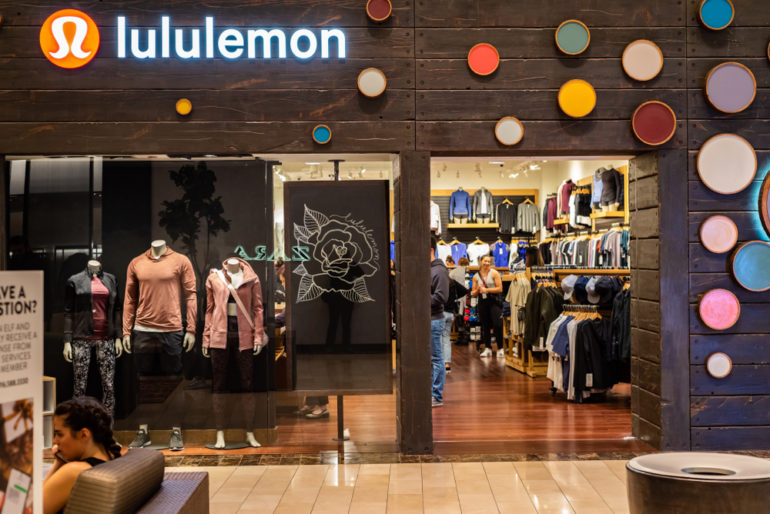
    Lululemon Athletica on Tuesday warned of more store closures and risks to demand from a potential resurgence in COVID-19 cases, even as it forecast first-quarter revenue above analysts’ estimates.

    The company said any surge in cases, including the new variants, could hamper demand and disrupt the supply chain at a time its stores are struggling with capacity restrictions, sending its shares down 1.6% in extended trading.

    The company’s stock, however, has gained 64% over the past 12 months, as Lululemon saw a surge in demand for its leggings and sports bras from stuck-at-home consumers looking for comfortable apparel.

    “Regardless of vaccines, the sense of comfort will continue to sell and Lululemon has found a very strong assortment in between comfort and activewear,” said Jessica Ramirez, retail analyst at Jane Hali & Associates.

    The company is also banking on its home fitness startup acquisition, Mirror, to provide an additional revenue stream this year, and expects its top line to rise as much as 65% to $275 million in 2021 on the booming demand for online workout classes.

    Lululemon said it would ramp up investments in the startup, which offers subscriptions for live workout classes on mirror-like video monitors, to sustain its growth. The Canadian company forecast first-quarter revenue of $1.10 billion to $1.13 billion, above analysts’ estimate of $999.5 million, according to IBES data from Refinitiv. It expects first-quarter adjusted earnings per share of 86 cents to 90 cents, above estimates of 82 cents.

    Lululemon’s full-year earnings per share expectations of $6.30 to $6.45, however, were below estimates of $6.72.

    Net revenue rose 24% to $1.73 billion in the fourth quarter, beating estimates of $1.66 billion, as online sales jumped 92% on a comparable basis.

  • Another huge loss for AirAsia in 2021

    Another huge loss for AirAsia in 2021

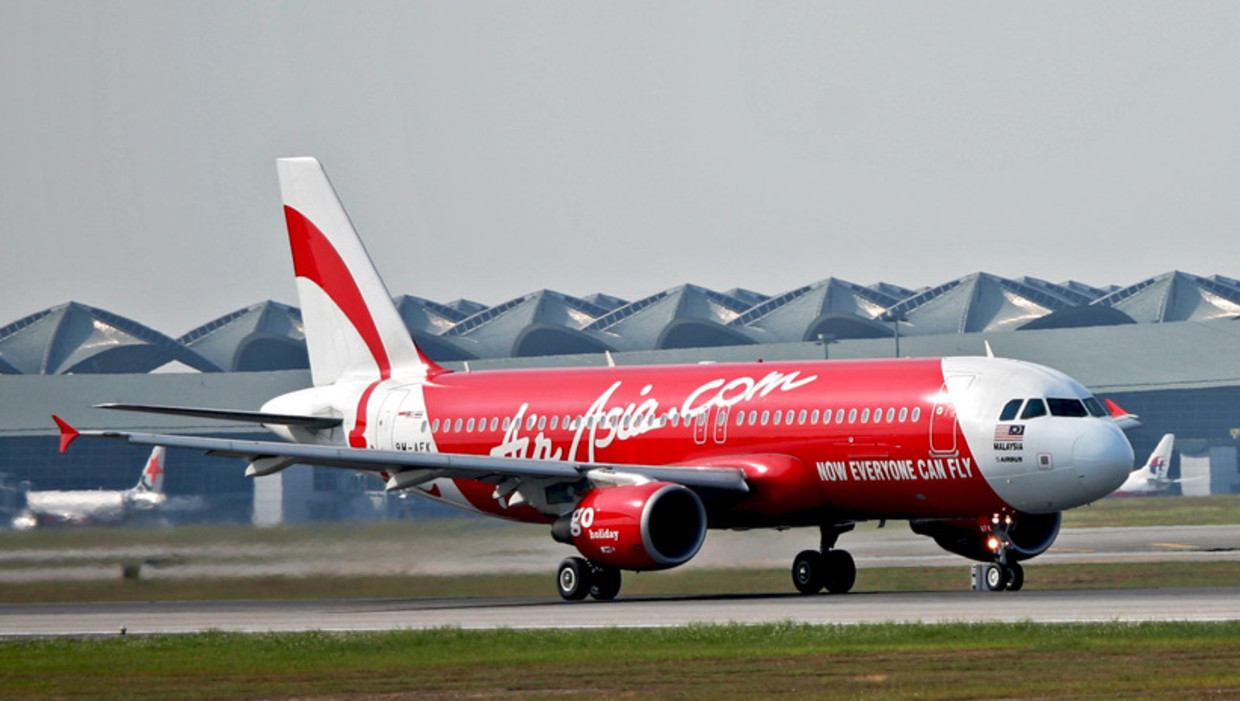
    AirAsia Group is expected to report another huge loss in its 2021 earnings on prolonged closure of borders and a slower-than-expected recovery in tourism.

    Affin Hwang Capital said AirAsia had posted a record headline net loss of RM2.44 billion in the fourth quarter (Q4) of 2020.

    This was due to weak revenue, large impairment charges on right of use assets/receivables, fuel hedging losses and the recognition of deferred tax, partly cushioned by forex, disposal, and derivatives fair value gains.

    The firm expects AirAsia to report core net loss of RM1.4 billion this year due to the reimplementation of movement control order during the first quarter (Q1) 2021, prolonged closure of borders, and longer-than-expected timeframe for the Covid-19 immunization program.

    “We now anticipate AirAsia to report net loss of RM92 million in 2022 earnings (from net profit of RM238 million) due to slower-than-expected recovery in international tourism,” it said.

    Sequentially, Affin Hwang said AirAsia’s Q4 revenue from Malaysia’s airline operation had slipped by 68 percent quarter on quarter to RM113 million.

    This was after the reimplementation of movement control orders while the revenue from Indonesia and the Philippines had improved by 413 percent and 60 percent respectively.

    While the results were grossly below expectations, the airline’s management made good progress in private placements, Affin Hwang said, adding that AirAsia would have sufficient liquidity for 2021.

    The firm maintained a “Sell” call on AirAsia with a higher target price of 75 sen from 50 sen previously.

  • Deliveroo confirms IPO Offer Price

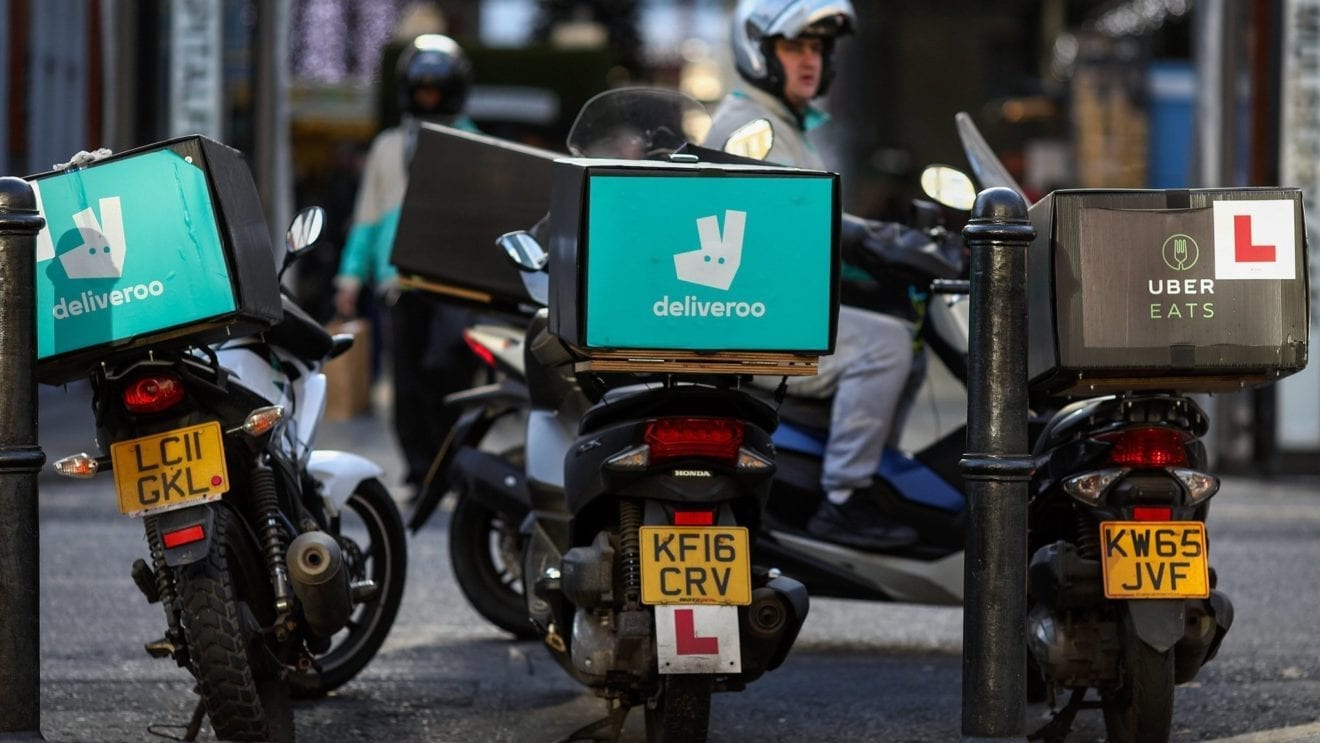
    Deliveroo confirms IPO Offer Price

    The Offer Price has been set at £3.90 per Share, equating to a market capitalisation at Admission of £7.59 billion (excluding any over-allotment shares).

    • Commencement of conditional dealings on the London Stock Exchange is expected to take place at 8 a.m. (UKT) on 31 March 2021 under the ticker “ROO” (ISIN: GB00BNC5T391).
    • Deliveroo intends to use the net proceeds from the issue of the new Shares to continue to invest in the growth opportunities available:
    • Bringing the food category online represents an enormous market opportunity. The way we think about it is simple: there are 21 meal occasions in a week – breakfast, lunch, and dinner – seven days a week. Right now, less than one of those 21 transactions takes place online. We are working to change that.
    • We have executed well, from a growth, expansion, and profitability perspective, but we are just truly starting our journey.
    • We will continue to invest in the innovations that we believe will further enhance our core marketplace for consumers, restaurants and grocers, and riders, while also continuing to further develop our growth businesses, in particular, Editions, Plus and Signature.

    Will Shu, Founder and CEO of Deliveroo, said: 

    “I am very proud that Deliveroo is going public in London – our home. As we reach this milestone I want to thank everyone who has helped to build Deliveroo into the company it is today – in particular our restaurants and grocers, riders and customers. In this next phase of our journey as a public company we will continue to invest in the innovations that help restaurants and grocers to grow their businesses, to bring customers more choice than ever before, and to provide riders with more work. Our aim is to build the definitive online food company and we’re very excited about the future ahead.”

  • Japan’s retail sales fall for third straight month

    Japan’s retail sales fall for third straight month

    Japanese retail sales fell for the third straight month in February as households kept a lid on expenditure amid the coronavirus emergency, underscoring the fragile nature of the economy’s recovery from last year’s slump.

    Analysts expect Japan’s economy sharply contracted in the first quarter, as lacklustre consumer spending and weakening exports create challenges for policymakers who have already rolled out massive stimulus.

    Retail sales lost 1.5% in February from a year earlier, government data showed on Tuesday, a smaller fall than the median market forecast for a 2.8% drop.

    But it marked the third straight month of declines following January’s 2.4% fall and a 0.2% drop in December.

    “That the coronavirus isn’t subsiding is a major reason to worry about a delay of an economic recovery,” said Atsushi Takeda, chief economist at Itochu Economic Research Institute.

    “Clothes aren’t selling because people aren’t going out,” he said. “People are not really returning to commercial facilities, the trend is for them to go shopping at supermarkets in their neighbourhoods.”
    The broader decline in retail sales was driven by falls in spending on items such as clothing, toiletries and general merchandise, the data showed.

    Compared with the previous month, retail sales rose 3.1% on a seasonally adjusted basis.

    Separate data showed the nationwide seasonally adjusted unemployment rate was steady at 2.9%, lower than the median forecast of 3.0%.

    There were 1.09 jobs per applicant in February, down from the previous month’s 1.10, labour ministry data showed.

    The world’s third-largest economy is set to contract by an annualised 6.0% in the current quarter, which would be the first decline in three quarters partly due to sagging consumer spending, according to the latest Reuters poll data.

    Some analysts are worried that a longer contraction in household spending and weakening exports raise the prospect of a slower economic recovery than initially thought.

  • New Ripple Acquisition to Enhance Cross-Border Payments in APAC

    New Ripple Acquisition to Enhance Cross-Border Payments in APAC

    Its investment in an Asia-focused cross-border payments specialist aims to address challenges associated with cross-border payments in Southeast Asia’s fragmented payments landscape.

    Ripple has acquired a 40-percent stake in Tranglo, which will allow the blockchain payments company to meet growing customer demand in the region and expand the reach of on-demand liquidity (ODL), the company announced on Tuesday.

    ODL uses digital asset XRP to send money instantly. As Ripple broadens its regional footprint, RippleNet customers using ODL will be able to leverage Ripple’s line of credit to free up working capital and scale cross-border payments into more markets, the announcement said.

    Southeast Asia is the fastest-growing region for RippleNet adoption, according to the company. Tranglo will play a «critical role» in supporting existing corridors, such as the Philippines, and introducing new ODL corridors within its current network.

    Founded in Malaysia in 2008, Tranglo operates a cross-border payment hub that provides smart services for mobile airtime top-ups, as well as foreign remittance and business payments.

    Following the completion of the transaction, which is expected later this year, Amir Sarhangi, VP of product and delivery at Ripple and Brooks Entwistle, the company’s new regional managing director, will join Tranglo’s board of directors. TNG Fintech Group will remain the majority shareholder in Tranglo.

  • First quarter sees 16 percent rise in business closures

    First quarter sees 16 percent rise in business closures

    Around 23,800 are temporarily closed, up 28.2 percent, and more than 5,000 have permanently ceased to do business, a 26.4 percent increase, while 11,300 others are completing dissolution procedures.

    The majority are small, newly-established companies that were vulnerable to the impacts of the Covid-19 pandemic.

    Some 29,300 enterprises were established during the quarter, down 1.4 percent, and 14,700 others resumed operations after temporarily closing.

    A survey of the manufacturing sector by the GSO found 68.6 percent of firms saying their business situation is better than in the previous quarter, and 85 percent believing it would improve next quarter.

    The majority said strong competition was the main factor affecting their business. Other factors included low demand, resource crunch, raw material shortage, and lack of human resources.

    Only 27.8 percent of firms reported an increase in the number of domestic orders from the previous quarter, and 25 percent said there was an increase in exports.

  • Starbucks opens with new Japanese store design

    Starbucks opens with new Japanese store design

    There are several unique and beautiful Starbucks stores in Japan including the traditional Machiya style store in Kyoto and the Edo-style wooden house store in Kawagoe City, and they have been popular tourist attractions nowadays.

    In 2020 spring, Starbucks Japan opened another unique branch, featuring the tiled roof traditional Japanese house with historic stone lanterns. The “Starbucks Coffee Shinshu Zenkoji Nakamise Street Store” opened in March 2020 as the first regional landmark store in Koshinetsu Region, situated on the Nakamise Street, an approach/shopping street leading to Shinshu Zenkoji Temple in Nagano Prefecture.

    The store is set in the historical district near the magnificent temple, and feature very unique and fascinating architectural design with motifs of a traditional Japanese house.

    5 types of Nagano wood are used for the interior that warmly welcomes visitors and express the connection to the local community. The 2nd floor presents the beauty of the lights and shades of Japanese houses with Shoji (wooden-framed paper window) and skylights delivering gentle light to the space.

    In addition, there are several historical essences that present good old Japan such as stone lanterns and wooden beams. At this new Starbucks store, visitors can spend a little bit more quality and luxurious time while enjoying aromatic coffee!

  • AEON to build $190-mln shopping mall in northern province

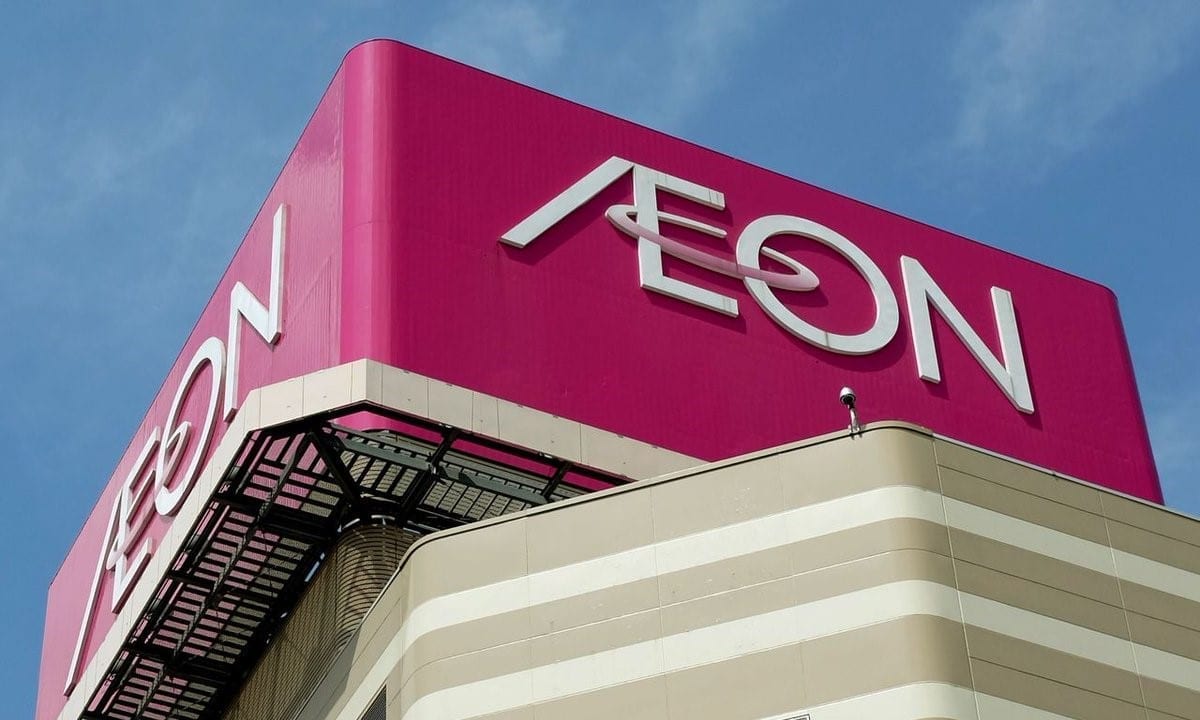
    AEON to build $190-mln shopping mall in northern province

    Vice-chairman of Bac Ninh People’s Committee, Vuong Quoc Tuan, said the province would provide support for the key project to get underway as soon as possible.

    General director of AEON Mall Vietnam, Nakagawa Tetsuyuki, said the Bac Ninh Province’s traditional products and farm produce would be sold at the outlet and possibly be exported to Japan. Around 3,000 jobs would be created, he added.

    In February AEON had signed an MoU with Thua Thien-Hue to do market research for opening an AEON mall in the central province. It is likely to cost $160 million.

    AEON has six malls in HCMC, Hanoi and Hai Phong and the southern province of Binh Duong.

    It plans to have 20 across the country by 2025 with the total investment of $2 billion.

  • Qualcomm scores a major legal victory that might hurt phone manufacturers

    Qualcomm scores a major legal victory that might hurt phone manufacturers

    Back in 2019, Judge Lucy Koh ruled in favor of the Federal Trade Commission over chipmaker Qualcomm. The judge said that the way Qualcomm does business, from its “no license, no chips” mantra, to its refusal to license standards-essential patents with other chipmakers on a Fair, Reasonable, and Non-Discriminatory (FRAND) basis, and the way it calculates royalties based on the retail price of an entire device (instead of the much smaller price of Qualcomm’s components) were anti-competitive. While Qualcomm gets the majority of its revenue from selling chips, the bulk of its profits come from licensing its library of telecommunication patents. The FTC accused Qualcomm of obtaining excessive licensing fees from those manufacturers.
    Phone manufacturers had testified against Qualcomm during the brief trial since they were the ones being subjected to monopolistic behavior on the part of the San Diego-based outfit. In her 2019 ruling, Judge Koh said that she ignored the testimony of Qualcomm executives as the judge noted that their testimony was contradicted by emails and notes written by others at the company.
    But Qualcomm, whose entire process of selling chips was on the line, was not going to go down so easily. It filed an appeal and won over a three-judge panel in California’s Ninth Circuit; the trio tossed out the original decision. The Ninth Circuit shot down each charge against Qualcomm stating that each one was not anticompetitive. For example, it said that since the company had no duty under antitrust law to license chips to competitors, the company’s licensing at the manufacturer level was legal. The appeals court also ruled that Qualcomm’s “no license, no chips” policy is not anticompetitive and does not “undermine competition.” As for its inability to offer standards-essential patents at FRAND (Fair, Reasonable and Non-Discriminatory) terms, the appeals court said that a remedy can be found by filing a different type of lawsuit with a different court. The FTC asked that the appeals court decision be reheard, last August it was turned down.
    And that brings us to Monday when FTC Acting Chairwoman Rebecca Kelly Slaughter announced that she has decided not to petition the U.S. Supreme Court to review the case. In a statement, Slaughter said, “Given the significant headwinds facing the Commission in this matter, the FTC will not petition the Supreme Court to review the decision of the Court of Appeals for the Ninth Circuit in FTC v. Qualcomm. The FTC’s staff did an exceptional job presenting the case, and I continue to believe that the district court’s conclusion that Qualcomm violated the antitrust laws was entirely correct and that the court of appeals erred in concluding otherwise. Now more than ever, the FTC and other law enforcement agencies need to boldly enforce the antitrust laws to guard against abusive behavior by dominant firms, including in high-technology markets and those that involve intellectual property. I am particularly concerned about the potential for anticompetitive or unfair behavior in the context of standard setting and the FTC will closely monitor conduct in this arena.”
    Slaughter was not a member of the FTC when the lawsuit was originally filed in January 2017 during the waning days of the Obama administration. Now that the FTC has decided not to take the case to the Supreme Court, it can be considered a complete vindication for the chip maker whose style of doing business was criticized by the entire mobile industry. The company would always defend itself by noting that it used licensing fees and royalties to fund its R&D to help it create faster and improved components for its customers.
    Qualcomm, of course, was pleased by the agency’s decision to drop the case. Don Rosenberg, general counsel of Qualcomm, stated, “Qualcomm got to where it is today by investing tens of billions of dollars in R&D and inventing technologies used by billions of people around the world. Now, more than ever, we must preserve the fundamental incentives to innovate and compete.”
  • Bamboo Airways secures flight slots in London

    Bamboo Airways secures flight slots in London

    Bamboo Airways has got a slot allocated at London’s Heathrow Airport to fly six times a week from Hanoi and HCMC starting in May.

    The flights would be operated using the airline’s long-haul Boeing 787-9 Dreamliner aircraft.

    The carrier had stated its intention to fly to the British capital and Frankfurt in Germany in the first quarter of 2021, but was delayed due to the closure of Vietnamese borders to keep out Covid-19.

    It has announced plans to make an initial public offering this year and raise VND6.3 trillion ($2.73 million).

  • Thai fuel player bets US$1.5 billion on coffee

    Thai fuel player bets US$1.5 billion on coffee

    The head of Thailand’s biggest gas station network has US$1.5 billion that says motorists will soon be stocking up on a different kind of fuel – coffee.

    That’s the bet that Jiraporn Kaosawad, Chief Executive of PTT Oil and Retail Business (PTTOR), is placing on rolling out thousands of coffee shops at home and abroad, along with other non-oil businesses, as global auto and fuel players gear up for a near future dominated by electric car growth.

    A month on from Thailand’s biggest initial public offering of the year, Jiraporn’s plans for the Cafe Amazon business – already the no.1 Thai coffee shop chain – present PTTOR’s take on the task facing oil majors from BP to Total: how to maximise profit from fuel networks as drivers of the near future wait for their electrics cars to be charged up.

    These strategies are dependent on mass-scale take-up of electric vehicles (EV), now being promoted by governments and international organisations as one key to capping and ultimately reducing the emissions that stoke climate change.

    “Our investments and partnerships have to build on the company’s strength, and align with consumer demand,” Jiraporn told Reuters in a recent interview. “Charging EVs takes about 20 minutes, while you wait you can have a meal, buy things in the service station.”

    PTTOR’s network now stands at 2,000 gas stations across Thailand: it plans to add another 500 by 2025, and to rapidly ramp up the number that are equipped with EV charging points, to 300 by 2022 from just 30 currently. That surge will come as the Thai government seeks to implement plans to have 1.05 million EVs on the road by 2025, up from current levels of about 200,000.

    To be sure, PTTOR’s expansion plans beyond oil require heavy investment, with oil business still accounting for 90% of its revenue. Some point out that its dominance within Thailand won’t do anything per se to further its international ambitions.

    “The retail business has had a competitive advantage in Thailand,” said Maybank Kim Eng analyst, Kaushal Ladha. “This advantage of course will be significantly reduced if it goes to international markets.”

    Still, PTTOR has deep pockets and strong backing. State-owned energy giant PTT Pcl retains a 75% stake in the company after it raised $1.8 billion in its listing last month.

    Jiraporn said PTTOR’s plan to invest 74 billion baht ($2.39 billion) over five years to expand will be heavily skewed toward non-oil operations, which last year carried an operating profit margin of nearly 20%, compared to a skinny 1%-2% for oil sales.

    “The investment will be heavily used in the first two years,” she said, with 65% allocated to its non-oil business, overseas expansion, and new ventures, while 35% would be for oil.

    Though not alone, coffee is PTTOR’s best-known product line outside oil.

    Cafe Amazon started out in 2002 as outlets offering coffee, cookies and other goods for motorists at gas stations, before expanding into a 3,000-store Starbucks-like chain, including shopping mall and standalone outlets. PTTOR’s goal is to expand that to 5,200 in the next five years, Jiraporn said.

    Abroad, it operates a store in Singapore’s Jewel Changi Airport as it seeks insights into adapting business for international customers. It also counts branches in Cambodia, Japan, Oman, Vietnam and China.

    PTTOR’s investments beyond coffee include 500 million baht for a 20% stake in an organic food restaurant, Ohkajhu, and it has announced a partnership for cloud kitchens – spaces where restaurateurs cook meals solely for delivery – with a food delivery platform Line Man Wongnai.

    For investors, though, the main point of interest and appeal in the PTTOR model, remains the retail network of stations that can provide more than gas.

    “The attraction is the station, not the oil,” said prominent Thai investor Niwes Hemvachiravarakorn, who doesn’t own shares in PTTOR.

    “The gas stations have become a centre for travellers and through this they can add products and services continuously to expand business – use the real estate to sell fried chicken.”

  • PCCW Global selects Telco Systems to expand managed SD-WAN services

    PCCW Global selects Telco Systems to expand managed SD-WAN services

    Telco Systems, a leading provider of innovative Network Edge solutions for communications infrastructure and service management, announced that PCCW Global has selected Telco Systems’ NFVTime uCPE solution to enrich its managed SD-WAN service portfolio and VNF-based service offerings.

    PCCW Global is a leading global telecommunications carrier, providing scalable, reliable and cost-effective software-defined networking solutions to multinational enterprises and communication service providers.PCCW Global will use Telco Systems’ NFVTime uCPE solution to offer managed SD-WAN, router, and firewall services through its global network of nearly 200 wholesale partners operating in over 160 countries. NFVTime will provide PCCW Global with a complete environment for quick service deployments, centralized management and ongoing orchestration of virtualized network functions (VNFs) running on a diverse range of white-box devices.NFVTime features zero-touch provisioning that ensures all new white box devices and third-party VNFs are configured, up-to-date and fully operational within minutes. With a rapid BYOD onboarding process for any white box, PCCW Global will be able to select devices based on the local availability, reducing the time to activation. For PCCW Global, this will ensure diversity in sourcing, lowering overall costs and improving performance over time.

    “We are proud to welcome PCCW Global as a new customer and provide the technology innovation for its ambitious strategic plans for rolling out NFV services across its international operations,” explained Ariel Efrati, CEO at Telco Systems. “We are confident that as we continue to develop industry-leading virtualized edge solutions, we will further enable PCCW Global to deliver additional innovative services for connectivity, edge computing and 5G applications.”

    “We are excited about the expansion of our SD-WAN services to include uCPE and NFV technologies and the benefits they will bring to our users,” said Jordick Wong, Senior Vice President of Innovation, Planning and Procurement at PCCW Global. “Our service already brings a true end-to-end managed global SD-WAN solution that is fully supported by our international network.”

    In addition, Telco Systems reports that the analyst firm STL Partners recently recognized the company as one of the top Edge computing companies to watch in 2021. Telco Systems was recognized by STL Partners for its NFVTime uCPE solution for allowing service providers to rapidly deploy scalable and customized VNF services from the Network Edge.

  • Mastercard expands digital convenience and security for premium cardholders in Asia

    Mastercard expands digital convenience and security for premium cardholders in Asia

    Focusing on digital convenience and security, Mastercard is delivering more perks in more markets for premium cardholders in the Asia Pacific region with a comprehensive online portal, hassle-free e-commerce insurance and enhanced benefits.

    As people make a lasting shift to online spending, Mastercard has created a seamless and secure digital experience for Platinum, Titanium, World and World Elite cardholders wherever and whenever they choose. The journey begins right at home, where cardholders can shop online with peace of mind.

    Mastercard’s e-commerce insurance protection automatically covers incomplete or non-delivery of items and the delivery of wrong or improperly functioning items from local and international online sellers. Mastercard has expanded this benefit to more markets and offers coverage of up to US$1,000 per year. Cardholders get the convenience of a digital claims process, eliminating the need to send paper forms.

    Via the Mastercard Travel and Lifestyle Services portal, cardholders can access special deals, redeem lifestyle benefits and search, book and pay for trips all in one place. Certain card types can also enjoy digital access to Priority Pass airport lounges and complimentary data roaming when travel resumes.

    Cardholders can make direct reservations and enjoy 1-for-1 deals at more than 400 restaurants with Mastercard’s One Dines Free program in 10 markets. Premium credit cardholders can also book staycations, explore local activities and enjoy up to 10% discounts with Mastercard online travel partners Agoda and Klook.

    “While global travel has yet to return to normal, there is pent-up demand for when the time comes and great opportunities in the meantime for domestic tourism in many places,” said Sandeep Malhotra, Executive Vice President, Products & Innovation, Asia Pacific, Mastercard. “With these enhanced benefits in Asia Pacific, Mastercard is offering a range of digital tools and solutions to help premier cardholders shop, pay and travel with even more safety, security and flexibility.”

    For card issuers, the expanded program enhances benefits that can be offered to cardholders and improves the overall cardholder journey as part of Mastercard’s industry-leading initiatives to drive digital commerce with frictionless and secure payment experiences.

    See the Priceless Specials site for the full range of offers and experiences – from travel, dining and culture to sports, shopping and entertainment – curated by Mastercard.

  • Ooredoo Group Announces USD750 million Deal for Sale of More Than 4,200 Telecoms Towers in Indonesia

    Ooredoo Group Announces USD750 million Deal for Sale of More Than 4,200 Telecoms Towers in Indonesia

    Ooredoo  today announced that its Indonesian operating company, PT Indosat Tbk. (“Indosat Ooredoo”), has signed a sale and leaseback agreement with PT EPID Menara AssetCo (“Edge Point Indonesia”) for more than 4,200 telecommunications towers.

    PT EPID Menara AssetCo is an Indonesian subsidiary of Edge Point Singapore, which is wholly owned by Digital Colony, a leading global digital infrastructure investor with extensive experience owning and operating cellular towers.

    Indosat Ooredoo has agreed to sell this portfolio of towers in a transaction valued at USD 750 million, including a supplementary offer, making it one of the largest deals of its kind in Asia. The sale will unlock capital to create value for shareholders and continue to build Indosat Ooredoo’s strong growth momentum through improvements to network performance and the launch of innovative new digital solutions to enhance the customer experience.

    The sale is part of Ooredoo Group’s strategy to move to a more efficient and flexible asset light model and unlock the trapped value of its infrastructure portfolio. Prior to this deal, Ooredoo had a global portfolio of approximately 27,000 owned towers, representing an infrastructure portfolio of significant value for the Group. Monetising these assets to create more value for both shareholders and customers is a key focus of Ooredoo’s current strategy.

    Aziz Aluthman Fakhroo, Managing Director of Ooredoo Group, said: “Congratulations to Indosat Ooredoo on this sale and leaseback agreement with Edge Point Indonesia, which aligns perfectly with our new strategy and its focus on creating more value for shareholders and customers. This strategy incorporates a shift towards an asset-light model that will help us unlock significant capital and enable us to focus on our core mission of delivering outstanding digital and enterprise services to our customer base. I extend our gratitude to the Government of Indonesia for its progressive policies that leave a positive impact on the industry, its operators and its people.”

    Edge Point Indonesia was declared the winning bidder of a competitive tender process conducted by Indosat Ooredoo. The transaction is expected to close in Q2 2021 subject to customary conditions, including shareholder approval by Indosat Ooredoo at an EGM, which is planned to be held on May 6th. Indosat Ooredoo will lease back space on the towers for a period of 10-years to meet its ongoing requirements.

    President Director and Chief Executive Officer of Indosat Ooredoo, Ahmad Al Neama, added: “I am delighted that Indosat Ooredoo has agreed this deal, which furthers our strategy to create more value from our infrastructure assets. The deal marks the third and final sale of assets from our high-quality tower portfolio and continues our transition into a leading digital telecoms company. We are confident the leaseback agreement, with its attractive terms, will continue to meet our ongoing tower needs, while the capital that we have unlocked will provide further fuel to power our growth momentum. Indosat Ooredoo and Edge Point Indonesia will work closely together going forward and build a strong and long-lasting strategic partnership.”